Island of Death (1976)

GR
HORROR FILM Thriller
UK censorship history DPP · Successful prosecutions
Runtime
108 min
Release
April 26, 1976
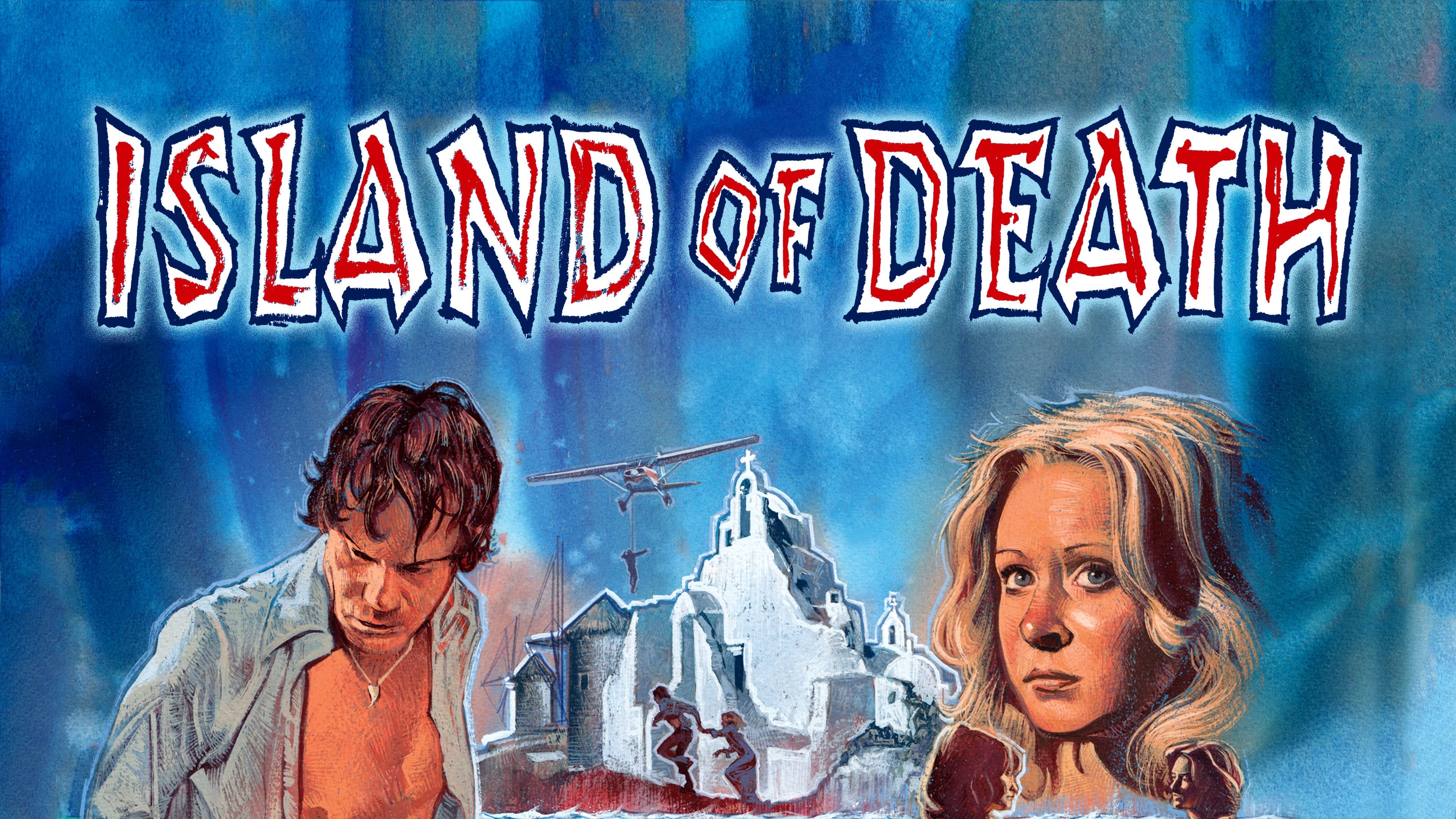
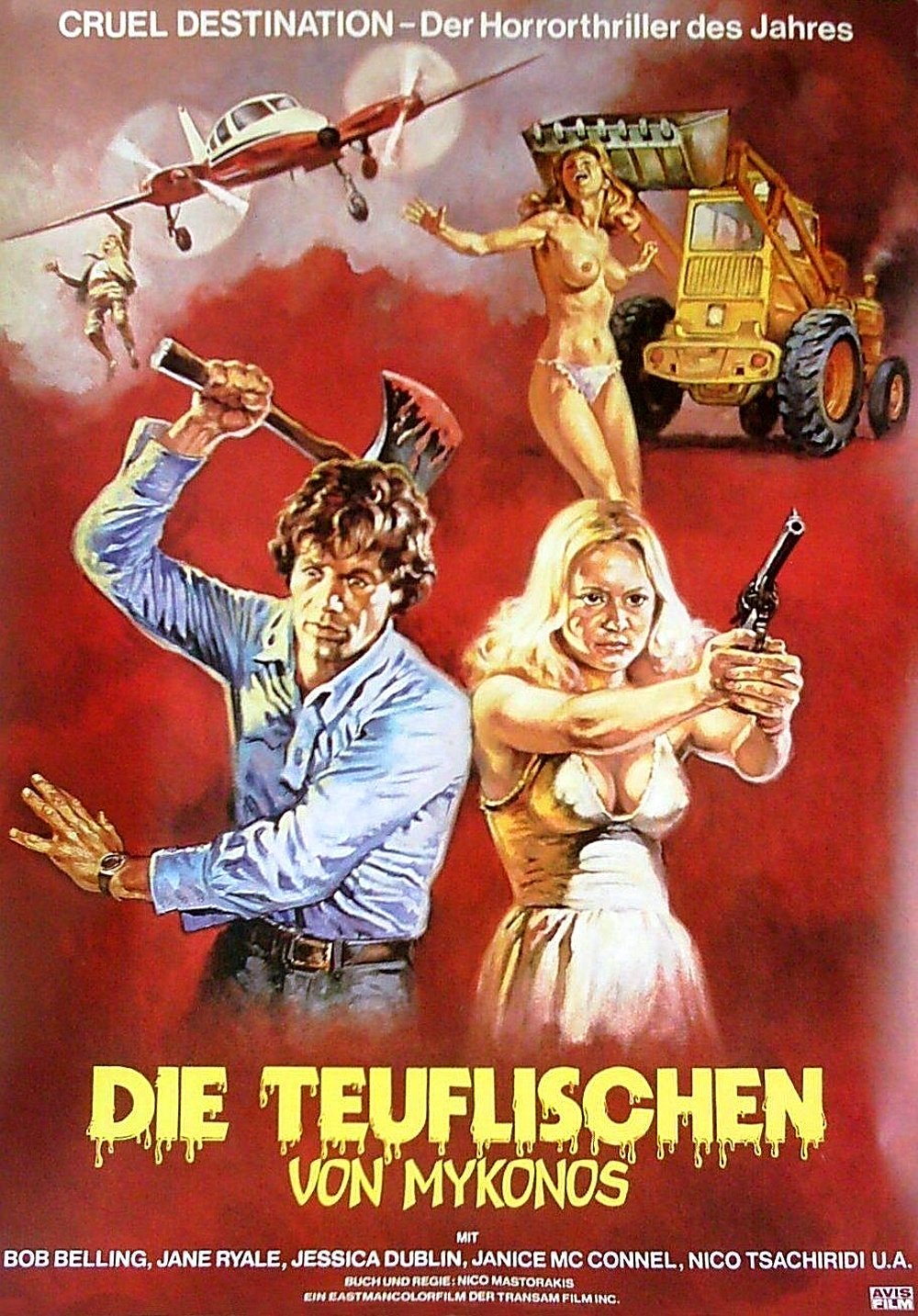
Island of Death (1976) poster
Director
Production Company
Omega Pictures
Plot

A British couple on a break on a small Greek Island spreads terror beyond anything the Islanders could ever have imagined, only stopping every once in a while to shag anything that moves, be it man, woman or animal. But will they go unpunished, or will the inspector from London be able to put an end to their killing spree?

Alternative Titles
A Ilha da Morte (Brazil) — Portuguese 死岛 (China) — Chinese Die Teuflischen der Insel (Germany) Die Teuflischen von Mykonos (Germany) — German Ta paidia tou diavolou (Greece) 死島 (Hong Kong SAR China) — Chinese Halálsziget (Hungary) — Hungarian Destination - Il leggero fruscio della follia (Italy) — Italian
Show all 12 alternative titles 죽음의 섬 (South Korea) — Korean Wyspa Śmierci (Poland) — Polish A Ilha da Morte (Portugal) — Portuguese Остров смерти (Russia) — Russian

Trailers & Videos

1 video

Film Guide & Analysis

Nico Mastorakis's 1976 Greek exploitation horror: its low-budget production on Mykonos, international distribution, contested American release history, British video nasties censorship and restoration of the original negative.

Island of Death (1976), originally titled Ta Paidia tou Diavolou and also circulated as Devils in Mykonos, is a Greek exploitation horror film written, produced and directed by Nico Mastorakis. Shot on the island of Mykonos in 1975 with limited financial resources, it combines an attractive Mediterranean setting with systematic violations of sexual and social taboos. Its place in horror history is closely associated with the British video nasties controversy, but the production also belongs to a distinctive period of Greek low-budget cinema in which filmmakers increasingly pursued international markets through provocative material. Mastorakis developed the project in response to the commercial success of The Texas Chain Saw Massacre (1974), deliberately constructing a film around material he believed would attract audiences through shock.

The circumstances of its creation and distribution are unusually well documented for a small Greek exploitation production. Film historian Johnny Walker reconstructed its theatrical history through contemporary trade publications, newspaper evidence and surviving distribution records, while Mastorakis discussed its financing and filming methods in an extensive 2015 interview. These sources establish a production organized around a brief location shoot, nontraditional casting and the director's involvement in several technical departments. They also reveal significant discrepancies concerning the film's American circulation. Its subsequent censorship history, including a rejected British video submission in 1987 and an uncut classification in 2010, demonstrates how a comparatively obscure theatrical release acquired lasting international notoriety through the videocassette market.

Commercial Origins and the Greek Exploitation Industry

Island of Death originated from Mastorakis's interest in the commercial possibilities of low-budget horror. In a 2015 interview with David Paul Hellings, the director identified the financial success of Tobe Hooper's The Texas Chain Saw Massacre as the decisive influence on his decision to make the film. He believed that a production combining graphic violence with deliberately provocative sexual material could reach an international audience without requiring substantial investment. His later recollections indicate that the screenplay was developed over a weekend, with different forms of taboo behavior selected as material for the project. These comments establish an explicitly commercial intention, although the film's subsequent meanings cannot be determined entirely by the motives described by its creator.

The project was Mastorakis's second feature. His preceding film, Death Has Blue Eyes, had combined paranormal suspense with elements of European thriller cinema. Mastorakis was already experienced in television, radio and journalism, having worked extensively within the Greek broadcasting industry. He later explained that his transition into features was partly motivated by the desire to establish a career independent of state-controlled television. The experience accumulated in television production also gave him practical familiarity with cameras and the organization of rapid shoots. Island of Death extended this experience into a production designed specifically for foreign distribution, using an English-language cast and a subject considered commercially adaptable across national markets.

Johnny Walker places the film within the Greek exploitation industry of the mid-1970s. During this period, several low-budget productions employed sexual material and provocative themes to secure exhibition opportunities beyond Greece. Walker identifies films such as Diamonds on Her Naked Flesh (1972), Girl of Passion (1974) and The Pervert (1975) as part of this commercial environment. Island of Death adopted elements of that market while introducing a more sustained emphasis on violent transgression. Its proximity to Greek sexploitation is historically more specific than simply describing it as an imitation of American horror. The production combined an internationally recognizable horror formula with working practices and commercial conditions already present in the Greek film industry.

Financing, Mykonos Locations and the Eighteen-Day Shoot

In his interview with Hellings, Mastorakis identified the production budget as approximately $30,000, raised with the assistance of friends who considered the financial risk manageable. He recalled that this amount covered Kodak film stock, accommodation, food and a crew of approximately twenty people. The production used a large sound-blimped Arriflex camera that Mastorakis personally operated for part of the shoot. Walker dates principal photography to early 1975 and reports a shooting period of eighteen days. These accounts establish the limited scale of the operation and the unusually broad practical responsibilities assumed by its director. They do not provide a complete production ledger or independently documented breakdown of expenditure.

Mykonos was selected for both practical and visual reasons. Mastorakis recalled that the island offered immediately attractive photographic environments, with white buildings, open landscapes and recognizable Mediterranean architecture. The production was undertaken outside the busiest tourist season, making locations more accessible. He stated that the crew could work in areas including an empty monastery without encountering the permission difficulties that might have complicated a larger production. The island's appearance was also integral to his conception of the film. He specifically wanted the seemingly innocent surroundings to contrast with the concealed violence of the principal characters. The juxtaposition was therefore a deliberate visual choice rather than simply the consequence of inexpensive location photography.

The casting process was similarly adapted to the available resources. Mastorakis described recruiting performers through local modeling agencies and encounters with people in the street. Robert Behling brought previous acting experience, while Jane Lyle was making her screen debut. The director also took a small acting role after finding that the performer originally considered for the part was too expensive. His recollections characterize the shoot as relatively straightforward despite its extreme material. The involvement of inexperienced performers and the concentration of work into a short schedule help explain the production's unusual performance style. The finished film nonetheless presents a variety of accessible locations and changing exterior environments, distinguishing it visually from exploitation productions confined primarily to a single interior.

Visual Contrasts, Moral Hypocrisy and Transgressive Horror

The visual organization of Island of Death depends upon the contrast between Mykonos as a desirable holiday destination and the violence committed within its apparently peaceful surroundings. Sunlit streets, coastal views and whitewashed buildings provide a setting normally associated with leisure and tourism. Their presentation creates a deliberate contradiction with the brutality of the central characters. The effect was recognized by a contemporary reviewer for Screen International, whose assessment is discussed in Walker's historical study. The reviewer singled out Mastorakis's use of the island's scenery to establish a contrast between the physical environment and the psychological condition of its principal characters. This response indicates that the film's visual construction attracted critical attention during its original period of circulation.

Religious justification and moral intolerance provide a recurring framework for the violent behavior. The principal characters present themselves as enemies of conduct they consider immoral, while engaging in the very forms of transgression they condemn. The resulting contradiction permits readings concerned with hypocrisy, authoritarian morality and the regulation of sexuality. The film's victims include people targeted because of their sexual orientation or behavior, placing discrimination within the structure of its exploitation material. These elements can be examined as features of the finished work without claiming that Mastorakis intended a coherent political allegory. His interviews repeatedly emphasize the desire to produce a provocative commercial film, while acknowledging the legitimacy of interpretations developed independently by critics.

The film's impact derives extensively from the variety and accumulation of its disturbing material. Its practical violence is frequently constructed through performance, editing and the suggestion of injury rather than prolonged anatomical detail. The score by Nick Lavranos and songs credited jointly to Lavranos and Mastorakis create an additional contrast between the bright environment and the threatening action. The original soundtrack and the later restoration documentation also reveal the importance of post-synchronized dialogue. These formal elements contribute to a presentation that can shift abruptly between apparently casual behavior and brutality. The combination of attractive locations, unstable tone and deliberate violations of taboo distinguishes the production from the more physically enclosed American horror film that inspired its development.

International Distribution, British Exhibition and Contemporary Reception

The film circulated internationally under several different names, including Devils in Mykonos, A Craving for Lust, Cruel Destination and Island of Perversion. These titles reflect the different markets in which distributors attempted to position the production. The original British theatrical classification was issued on April 13, 1976, with cuts recorded for versions identified as Devils in Mykonos and A Craving for Lust. Walker established that its London theatrical engagement actually began in November 1977, when Winstone Film Distributors presented it at the Cinema Moulin under the latter title. It was shown alongside Her Naked Flesh, another Greek exploitation production. The distinction between the original classification date and the documented theatrical engagement is essential to establishing the chronology of its British release.

Walker examined contemporary Screen International box-office reporting and found that the film remained at the Cinema Moulin for approximately one month. The engagement generated £50,901 in reported receipts. Its initial performance exceeded that of the preceding week's program, but the run did not develop into a sustained commercial success. Walker considered several possible explanations, including limited advertising and the alterations required for British exhibition. These are historical interpretations rather than demonstrated causes of the financial result. His investigation also identified contrasting contemporary reviews: Monthly Film Bulletin dismissed the production as routine exploitation, whereas Screen International considered its technical presentation and use of location photography stronger than much of the material with which it would compete.

The American distribution history is more difficult to establish. Mastorakis recalled selling the film to Bryanston Film Distributors and dealing directly with Louis Peraino, who paid a licensing fee in cash. He also stated that the film received theatrical exhibition before the company's financial and legal difficulties disrupted its operations. Walker reconstructed a more complicated sequence involving the original acquisition of American rights by film advertiser Merwin Bloch, their transfer to Bryanston and a proposed auction of film materials through Cineffects Color Laboratory in August 1976. The auction did not proceed, and the rights reportedly reverted to Bloch. Walker was unable to confirm a regular American theatrical engagement from contemporary newspaper listings. The director's recollection and the surviving documentary record must therefore be distinguished rather than combined into an unsupported definitive release history.

Video Nasties, Alternative Versions and BBFC Classification

Island of Death entered a new phase of circulation when AVI released it on British videocassette in 1982. The title Island of Death became particularly associated with this version, distinguishing its home-video identity from the earlier British theatrical presentation as A Craving for Lust. During the video nasties controversy, the film appeared on the Director of Public Prosecutions list and became associated with successful obscenity prosecutions. This process operated within the legal framework of the Obscene Publications Act and must be distinguished from decisions made by the British Board of Film Classification. Its growing reputation was closely connected to the circumstances of videocassette distribution and the public controversy surrounding material that had previously circulated in more restricted theatrical settings.

The BBFC examined another home-video submission on April 15, 1987, under the misleading title Psychic Killer II. The proposed version ran approximately ninety minutes, but the Board refused classification. The title did not establish a narrative relationship with the earlier American film Psychic Killer. On July 1, 2002, a new submission received an 18 classification after compulsory alterations. The official record identifies cuts involving sexual violence, sexualized brutality and degrading sexual activity. The classified version ran 98 minutes and 22 seconds. Because these records describe separate submitted masters, their running times cannot simply be subtracted to calculate the total footage removed from a single unchanged original version.

A further classification decision on September 23, 2010, marked a major change. The BBFC approved a presentation running 101 minutes and 42 seconds without recording compulsory cuts, allowing the film to circulate in Britain in an uncut edition. This was followed by high-definition distribution using newly restored materials. The decision reflected a different classification environment from that of the original theatrical period and the video nasties campaigns. Mastorakis consistently opposed restrictions on adult viewing, describing censorship as an unacceptable limitation on creative expression. His arguments document the filmmaker's position, while the sequence of BBFC decisions provides independent evidence of the changing treatment of the film. The distinction between theatrical censorship, obscenity proceedings and later home-video classification remains fundamental to its history.

The Original Negative, 2K Restoration and Historical Reassessment

The restoration undertaken by Arrow Films provided unusually detailed evidence about the survival of the original materials. The original camera negative was scanned in 2K using an ArriScan and graded with the Baselight system. According to the technical documentation accompanying the restoration, the negative had accumulated dirt, scratches, unstable cement joins and physical deterioration. The fifth reel presented a particularly serious problem. Solvent contamination trapped inside the film roll had contributed to chemical deterioration, discoloration and distortion of the support. After testing alternative methods, the restoration team scanned the damaged reel manually without pin registration, reducing the risk of further physical damage. No suitable replacement film element was available for the affected material.

Some missing frames were replaced using a previous standard-definition transfer, and the original opening titles had to be reconstructed from surviving reference materials. Alternative title sequences associated with Devils in Mykonos and Island of Perversion were also recreated. The original mono soundtrack, transferred by Mastorakis before the restoration, retained certain defects resulting from the condition of the source and the film's post-synchronized performances. The restoration consequently preserved evidence of the production's original technical limitations alongside the recovered image detail. These circumstances explain why defects remain visible in certain sections of the restored version and why the reconstruction cannot be described as an entirely uniform photographic element.

The availability of restored material also permitted a more detailed historical reassessment. Walker's study placed the film within the commercial practices of Greek exploitation, examined its uncertain American distribution and recovered contemporary criticism that differed significantly from its later reputation. Mastorakis himself expressed surprise at favorable interpretations of a work he had conceived principally as commercial entertainment. Its subsequent recognition as a cult film is documented by repeated international releases, renewed interviews and the investment required to restore its original negative. These developments demonstrate the endurance of interest in the production, while its disputed distribution records and changing censorship history remain more historically revealing than claims of influence upon later filmmakers that have not been independently established.

References

  1. Johnny Walker / Arrow Films A Cruel Destination: The History and Legacy of Island of Death

    Substantial historical essay supported by contemporary trade reporting, archival research and distribution records. Reconstructs the film's production, Greek exploitation context, British theatrical engagement, uncertain American distribution and original critical reception. The accompanying technical report documents the 2K restoration of the original negative.

  2. Haddonfield Horror Interview with Nico Mastorakis — David Paul Hellings

    Extensive May 2015 interview with the writer-director covering the commercial inspiration, financing, $30,000 budget, Mykonos locations, eighteen-day shoot, camera equipment, casting, American distribution difficulties and his involvement in the restoration.

Cast

View Full Cast & Crew →

Release & Distribution

Production Companies (1)

  • Omega Pictures GR

Release History (2)

Release DateTerritoryRelease TypeFormatDistributorCertificationNotes
1976-04-26 Spain Theatrical — — —
1978-06-01 United States Theatrical — — R
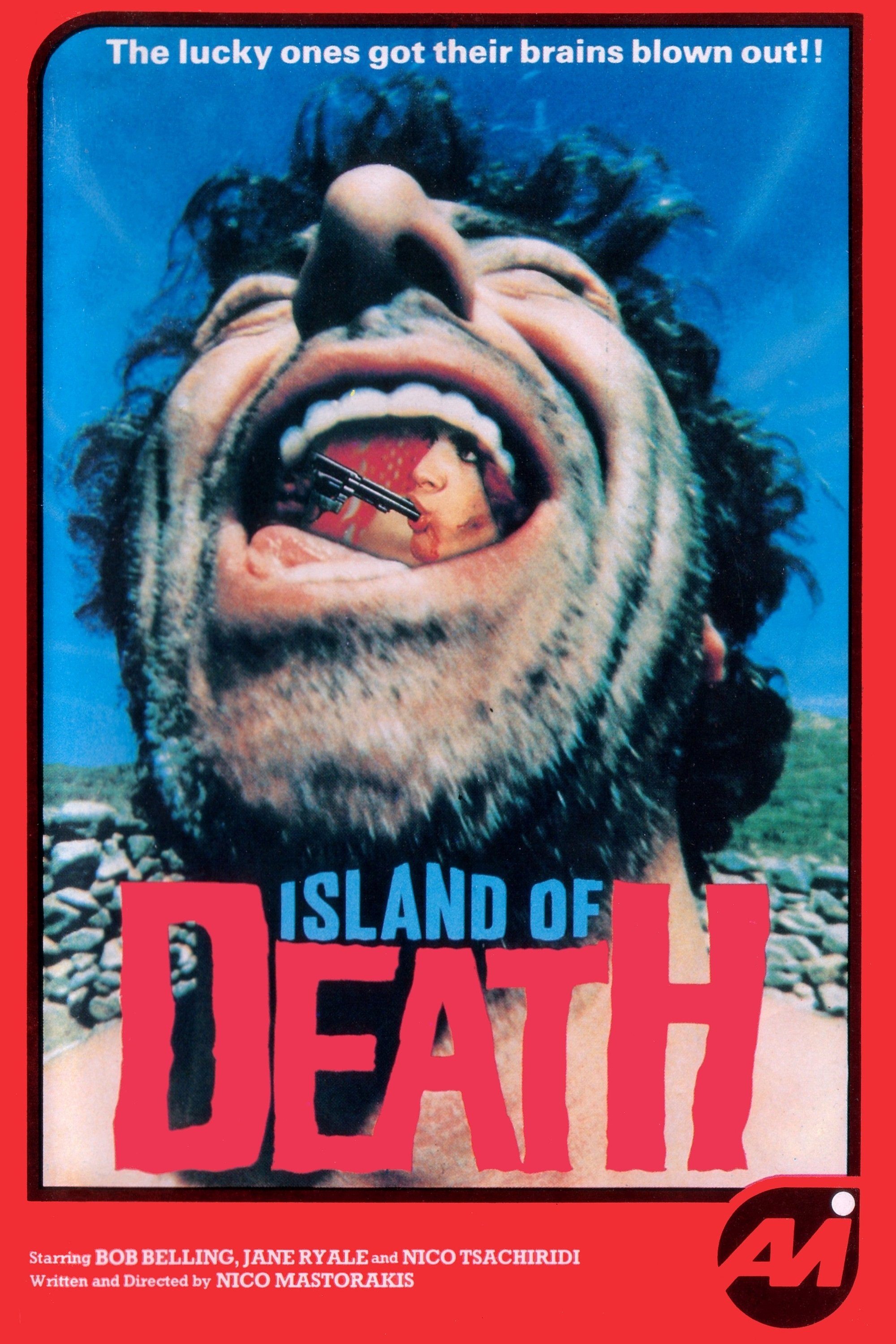
The lucky ones got their brains blown out!!