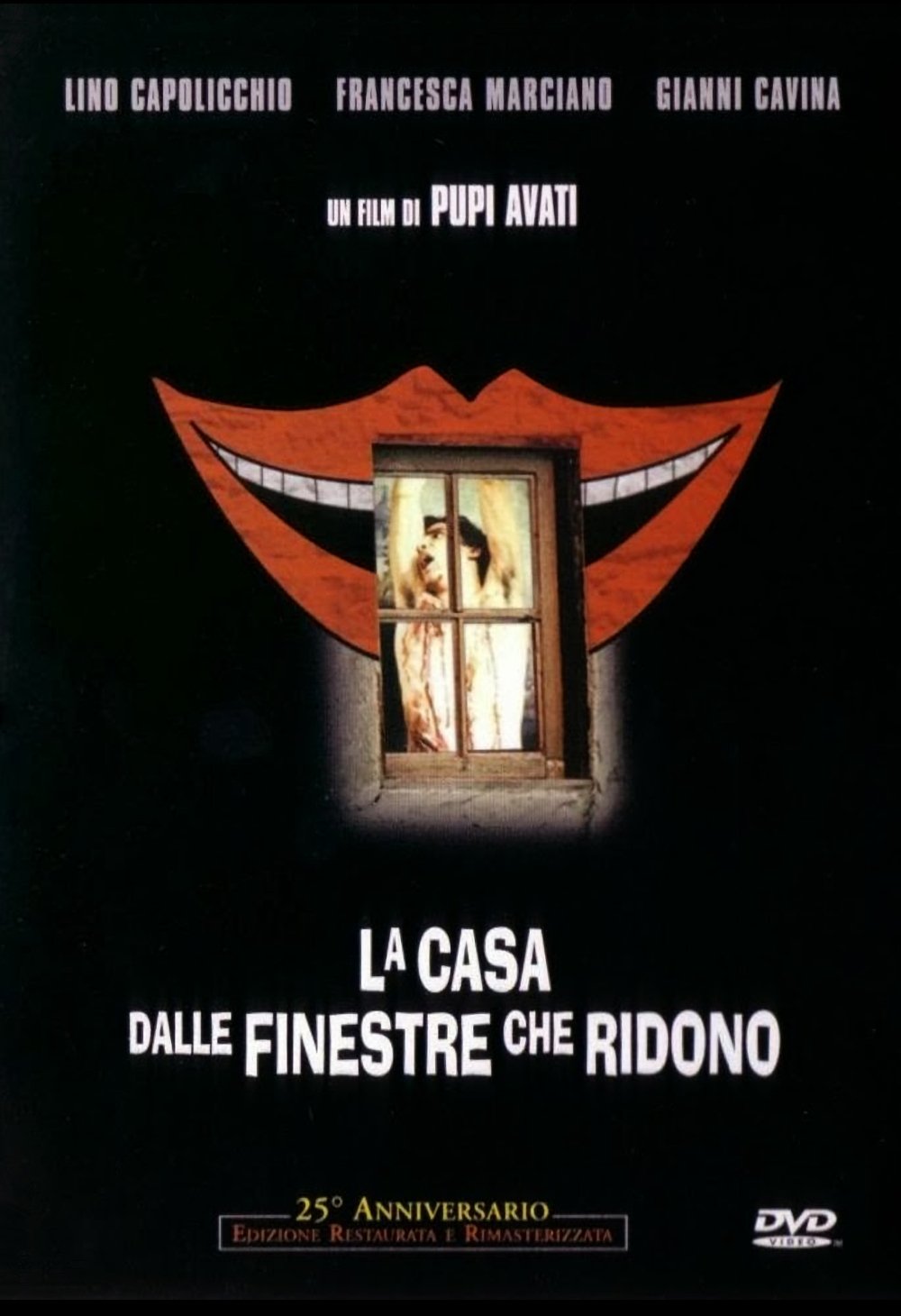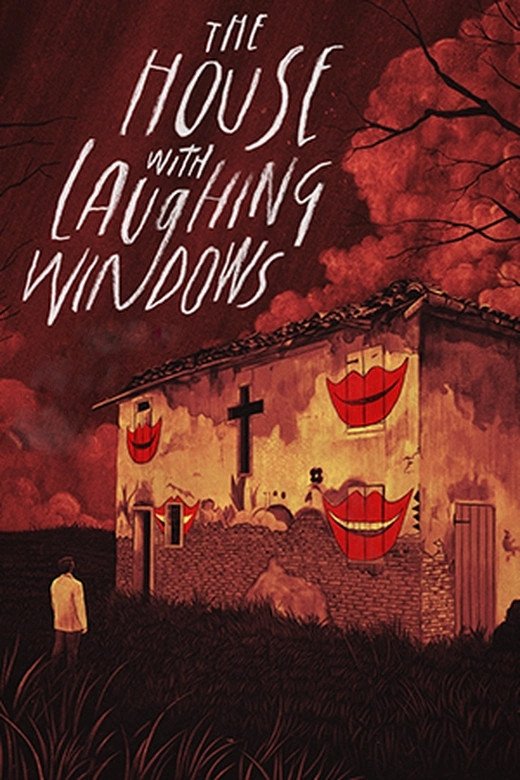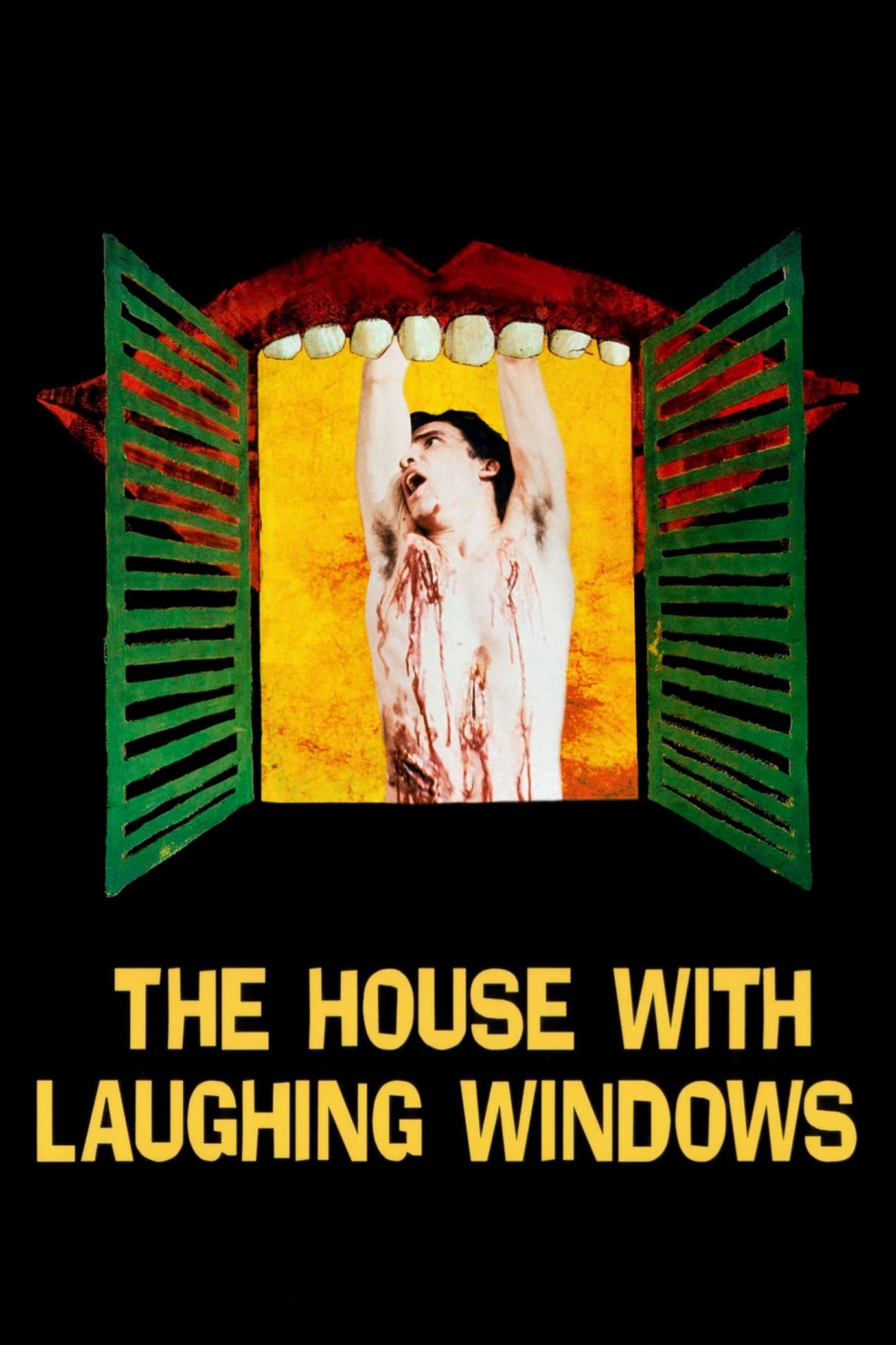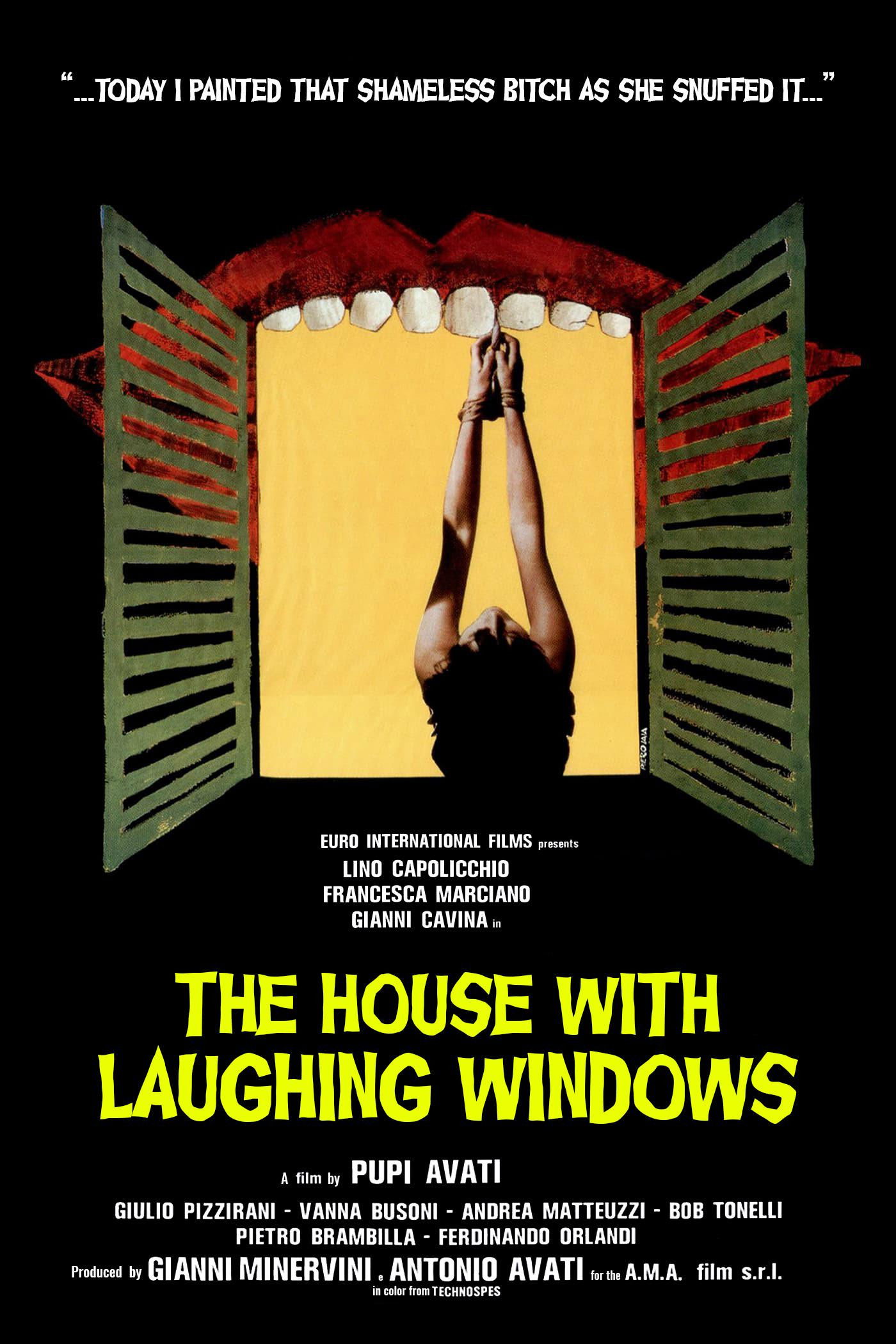
The House with Laughing Windows (1976)

IT
Runtime
110 min
Release
August 20, 1976
Budget
$61,974
Revenue
$432,647
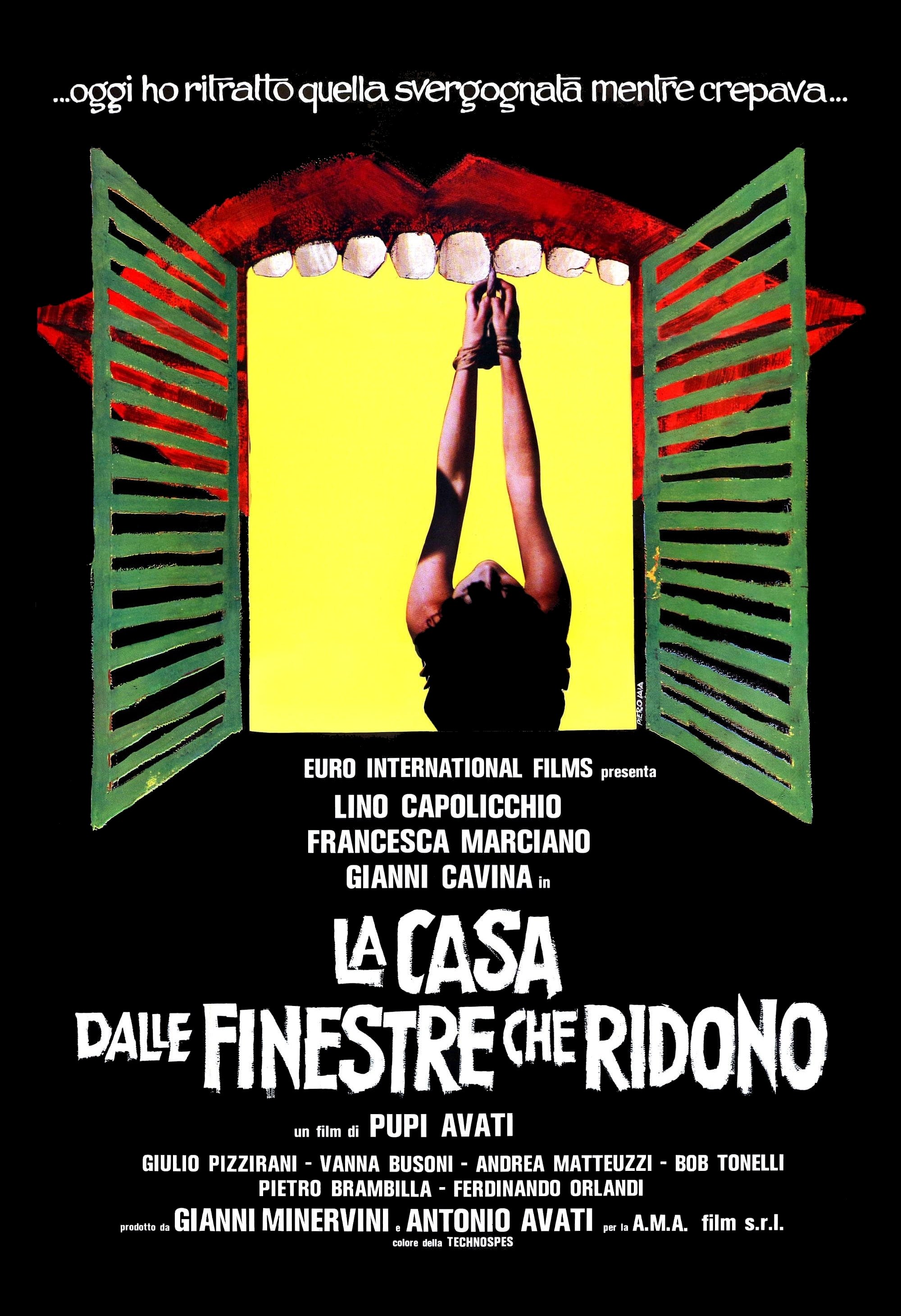
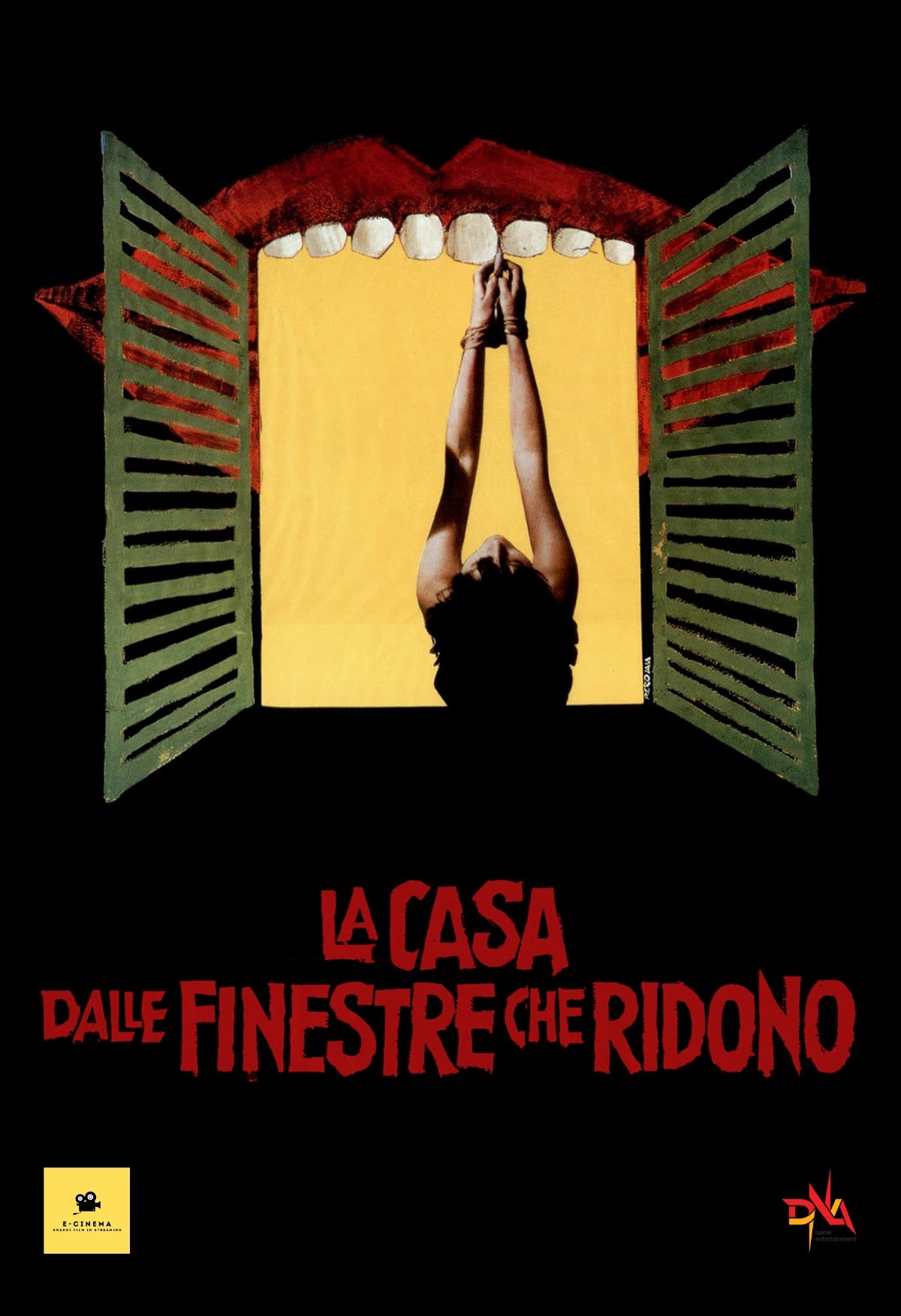
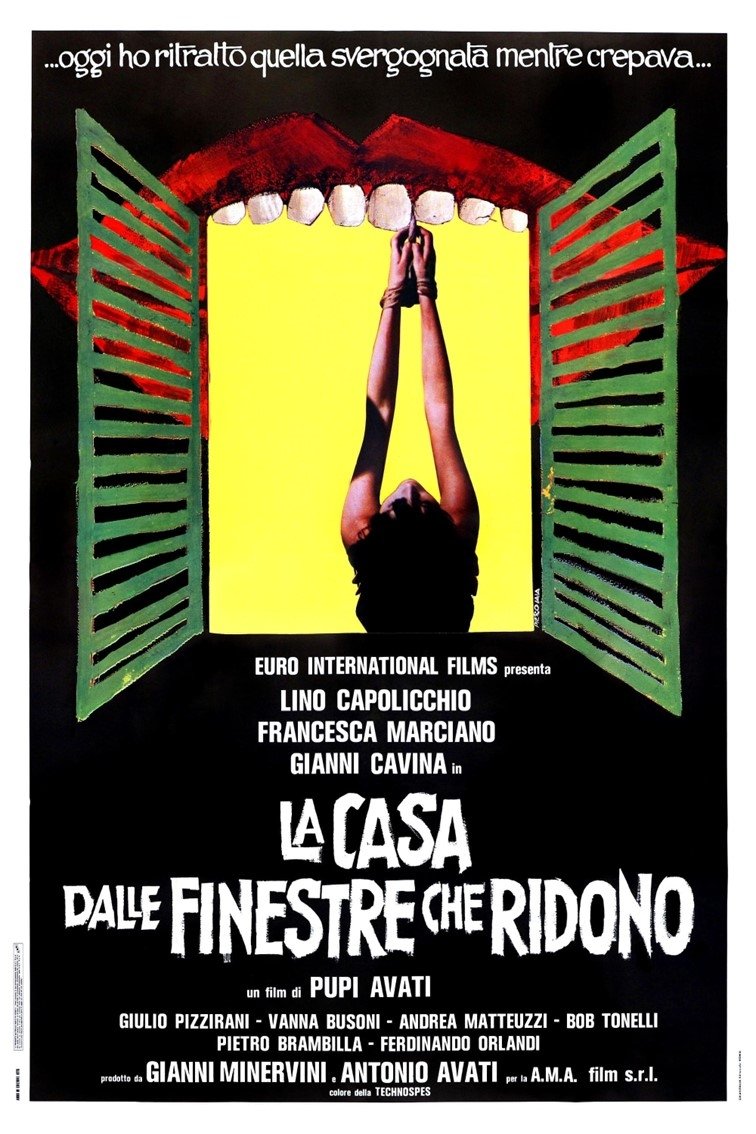
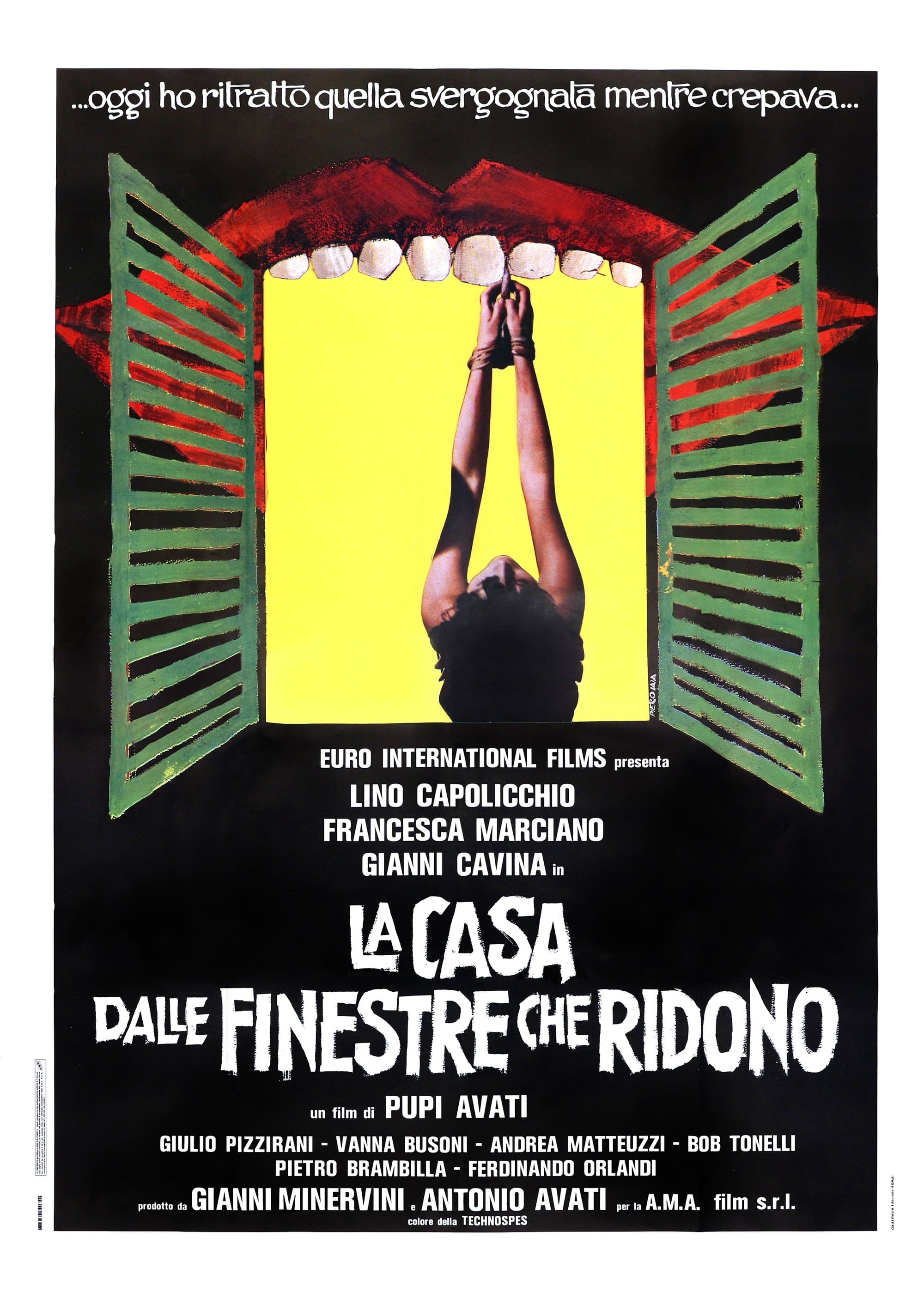
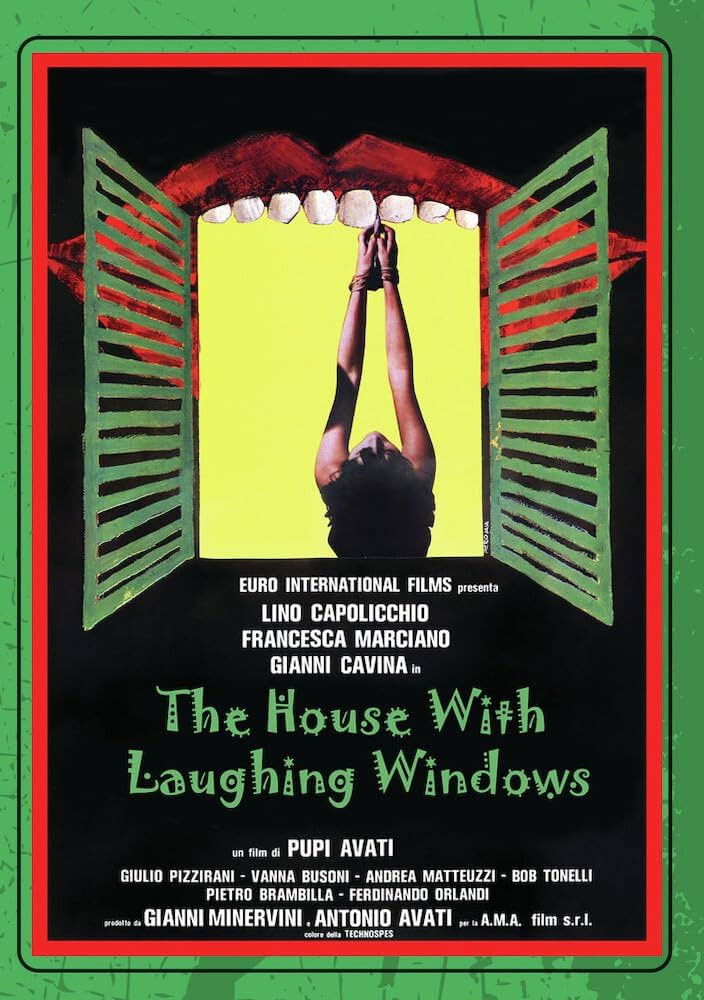
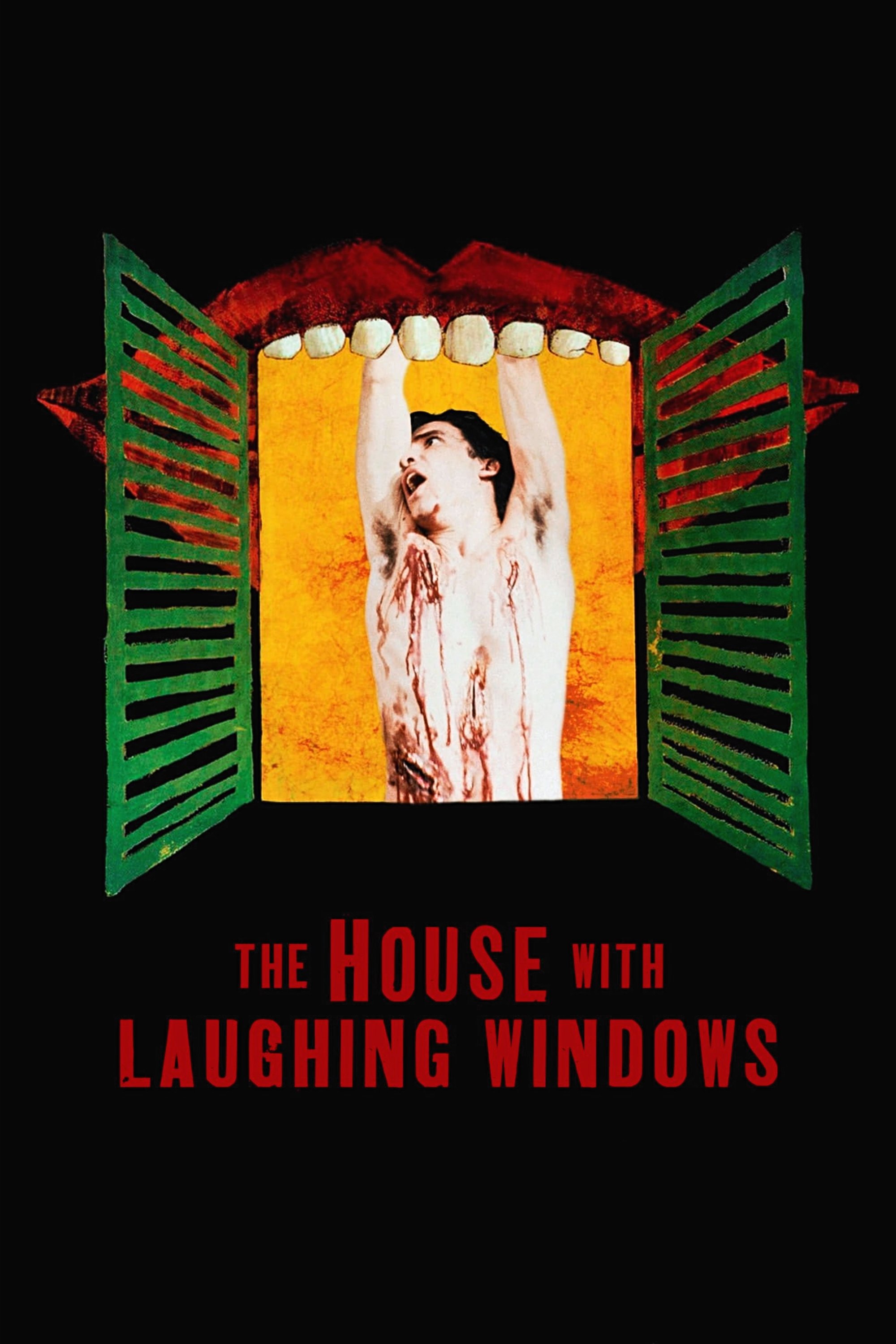
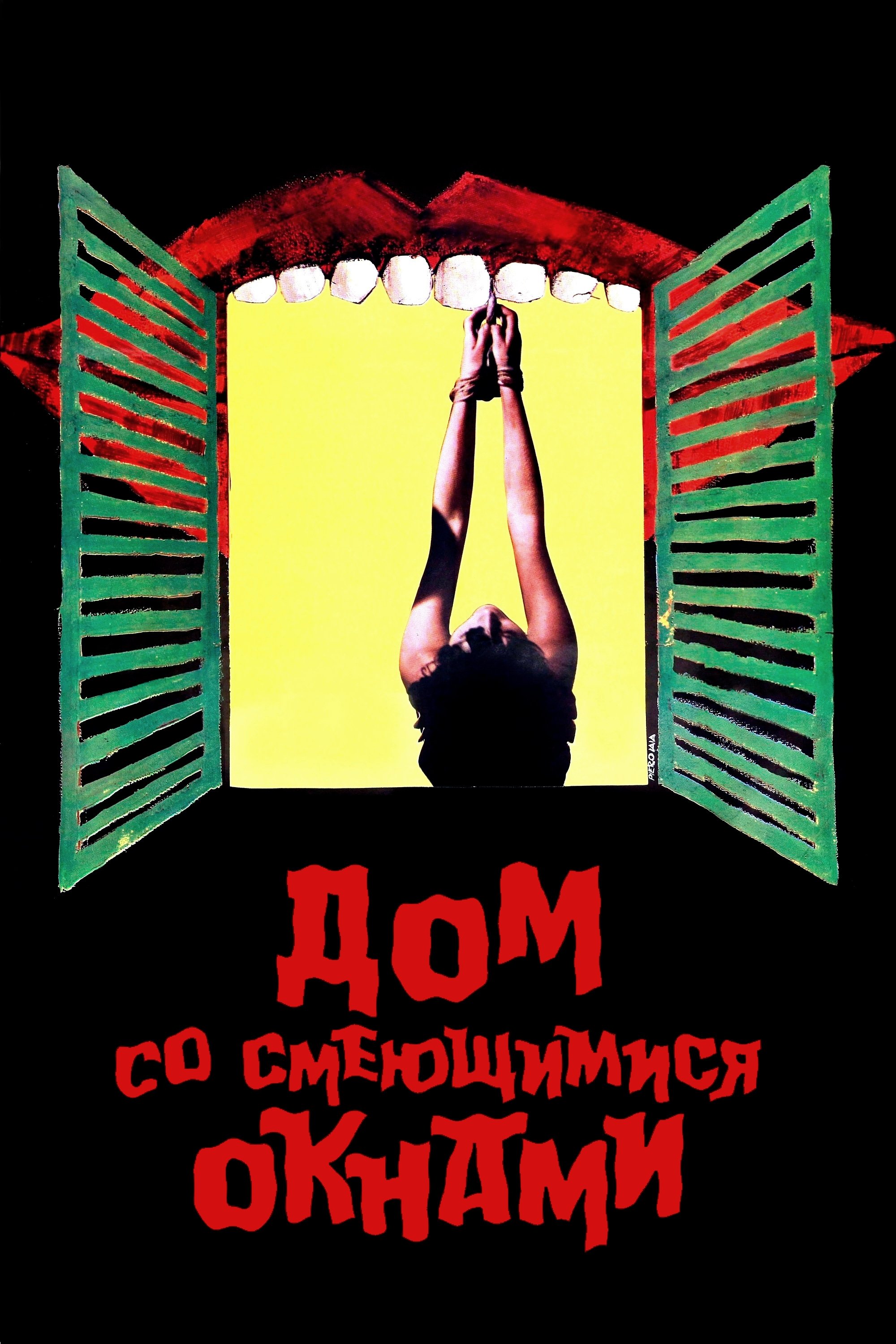
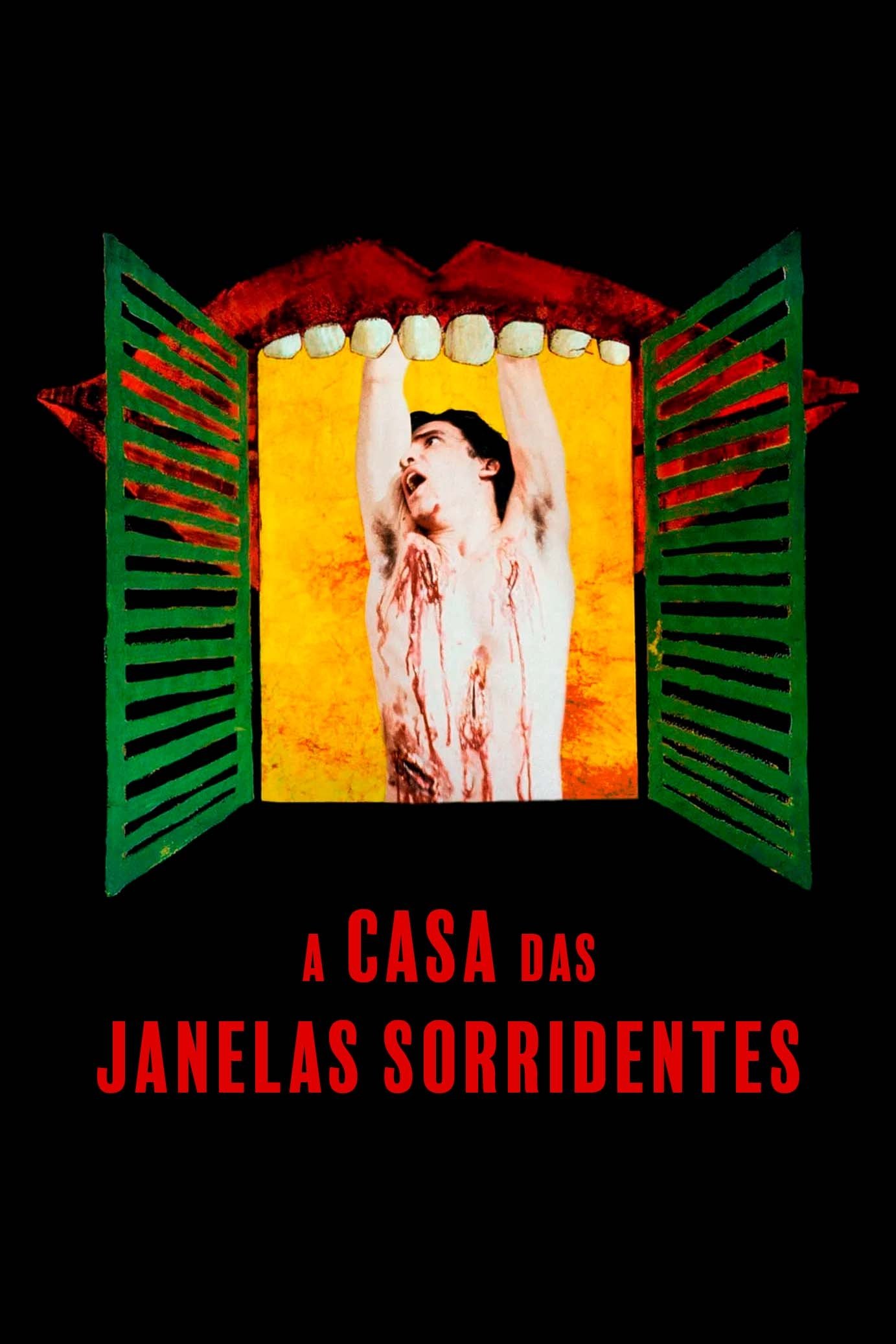
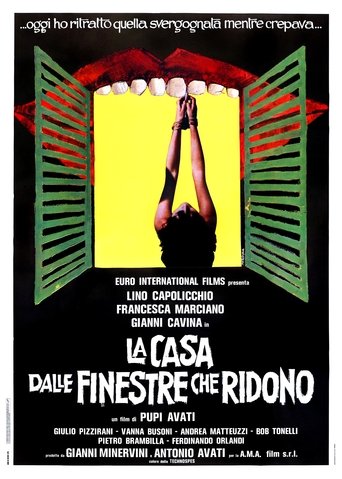
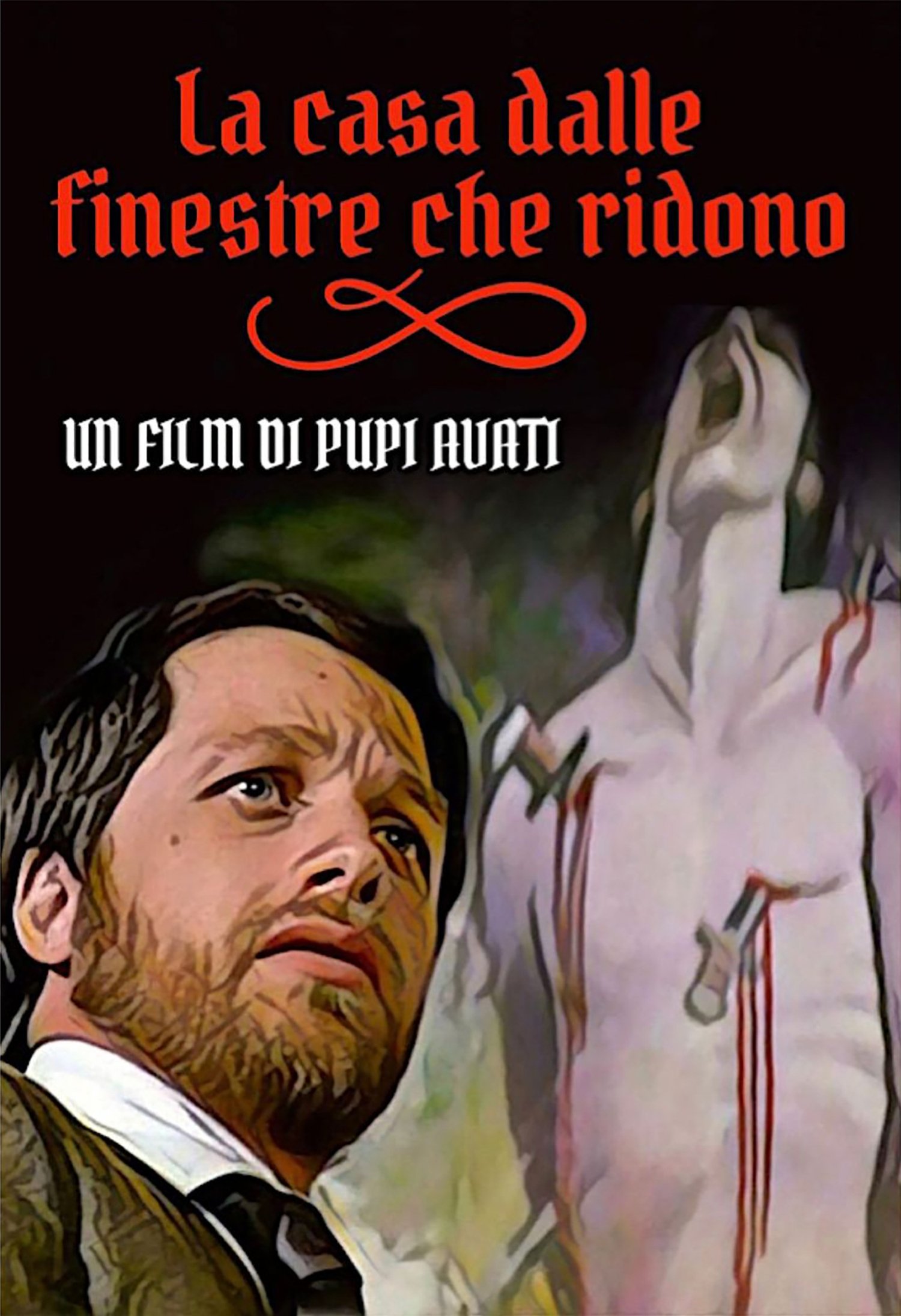
The House with Laughing Windows (1976) poster
Director
Production Company
A.M.A. Film
Plot

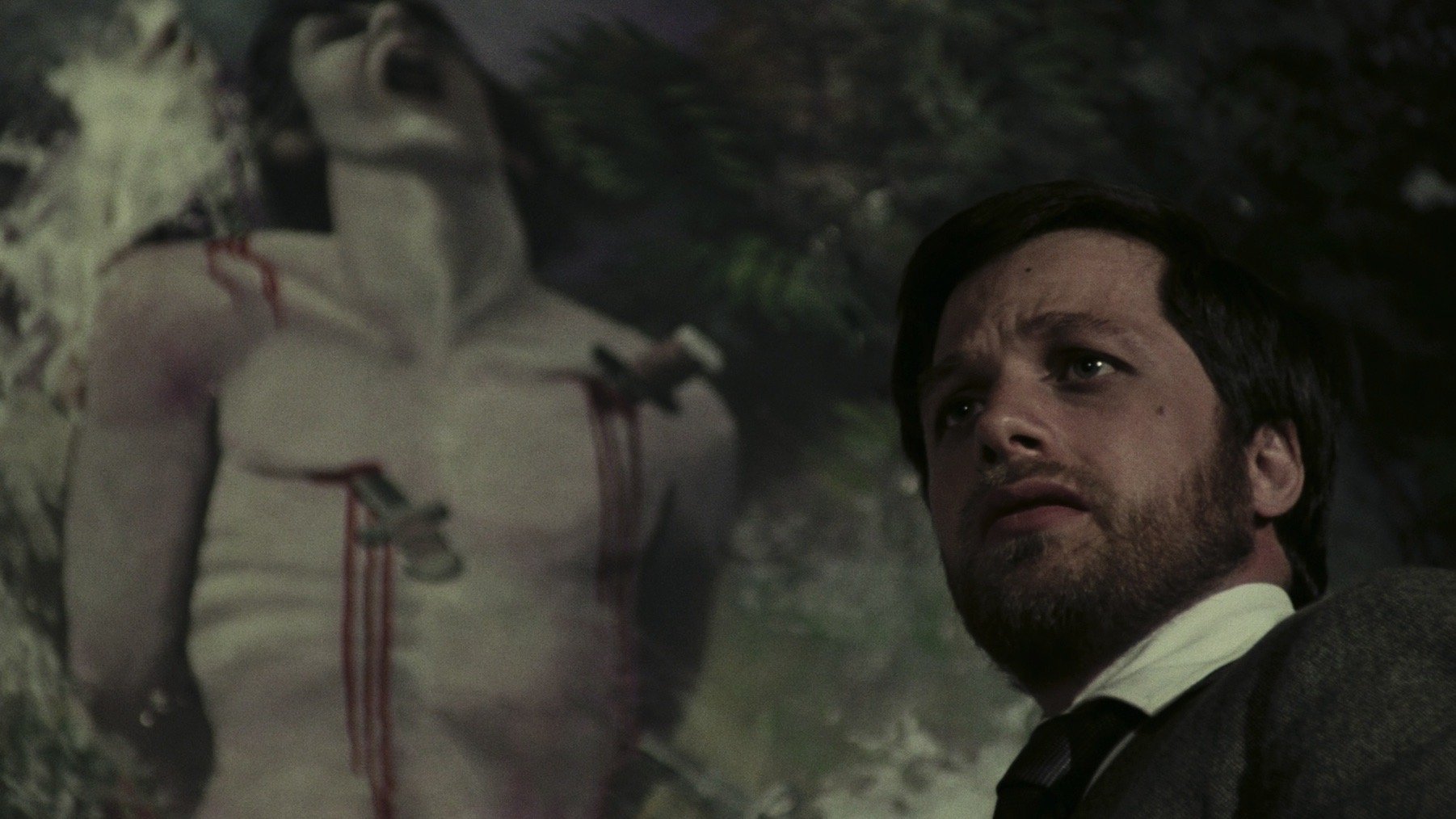
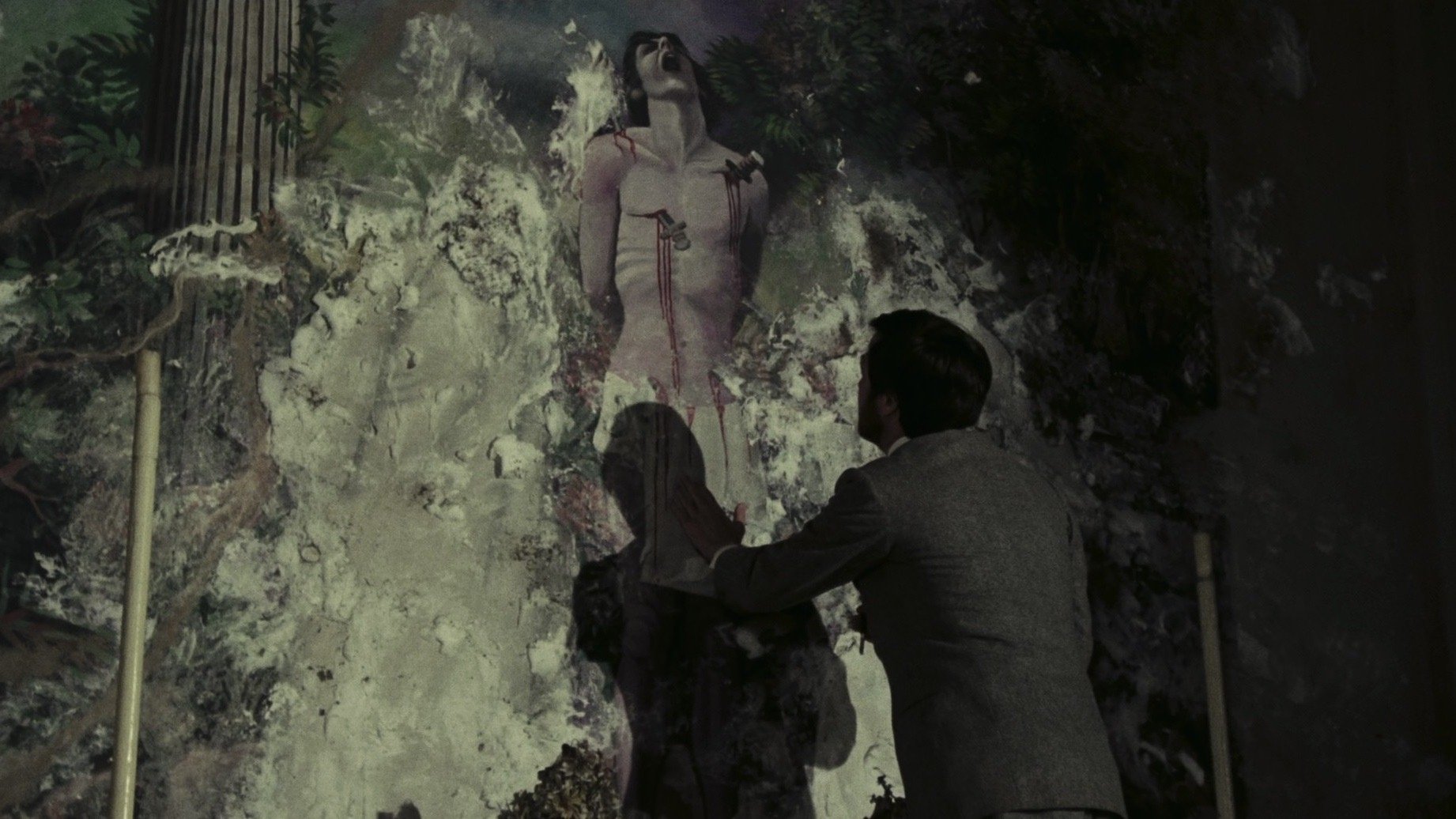
A young restorer is commissioned to save a fresco representing the suffering of St. Sebastiano, which was painted on the wall of a local church by a mysterious, long-dead artist.

Alternative Titles
A Casa das Janelas Sorridentes (Brazil) — Portuguese 笑窗之屋 (China) — Chinese Das Haus der lachenden Fenster (Germany) Contrato de Sangre (Spain) La casa de las ventanas que ríen (Spain) — Spanish La maison aux fenêtres qui rient (France) Το Σπίτι με τα Γελαστά Παράθυρα (Greece) — Greek 笑窗之屋 (Hong Kong SAR China) — Chinese
Show all 13 alternative titles A nevető ablakos ház (Hungary) — Hungarian 웃는 창문이 있는 집 (South Korea) — Korean Het Huis met de Lachende Vensters (Netherlands) Дом со смеющимися окнами (Russia) — Russian The House of the Laughing Windows (United States)

Trailers & Videos

3 videos

Film Guide

Pupi Avati and the Po Valley giallo: childhood legend, Saint Sebastian fresco, rural secrecy, the Legnani family and the 4K restoration.

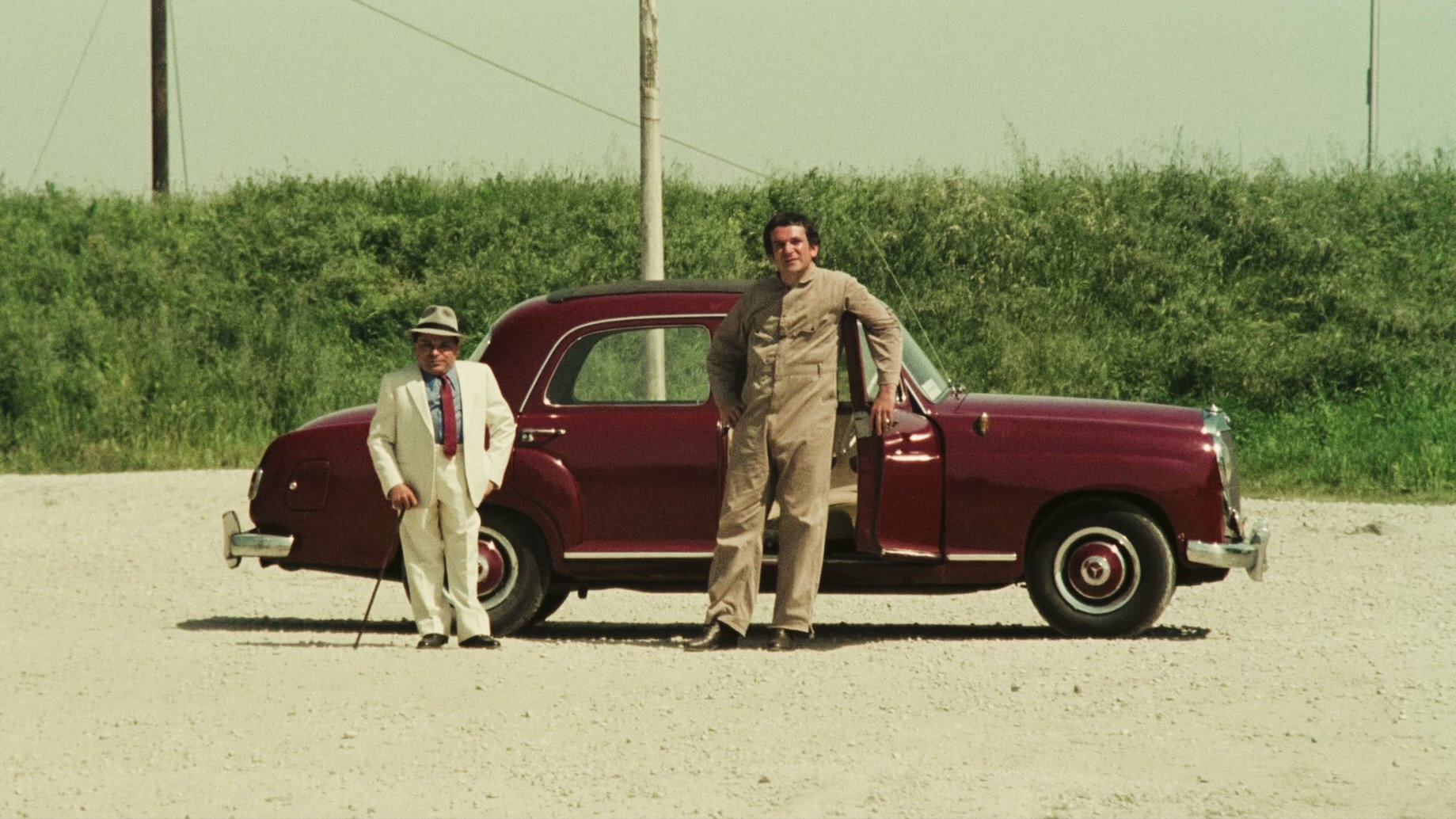
The House with Laughing Windows (1976), directed by Pupi Avati and released in Italy as La casa dalle finestre che ridono, relocates the investigative machinery of the giallo to the flat, waterlogged countryside of the Po Valley. Stefano, an art restorer played by Lino Capolicchio, arrives in a small community to uncover and conserve a church fresco depicting the martyrdom of Saint Sebastian. Its painter, Buono Legnani, was notorious for representing human agony with disturbing precision. As Stefano learns more about the artist, warnings, unexplained deaths and the hostility of seemingly ordinary residents make the restoration itself increasingly dangerous. The film draws its terror from the distance between a tranquil rural appearance and the violence concealed beneath it.

Avati made the film with limited resources after difficulties surrounding his previous production, Bordella (1976), yet the resulting picture developed a distinctive identity within Italian horror. Its visual language depends on real villages, deserted waterways, bright exterior light and interiors burdened by the past. The mystery also concerns the power of images: restoring a damaged painting threatens to recover knowledge that a community has spent years suppressing. Unlike gialli structured around flamboyant urban murders, the film allows small gestures and prolonged uncertainty to dominate before revealing a history of ritualized cruelty. Its fiftieth anniversary brought a new 4K restoration and renewed theatrical circulation in 2026.

Origins and the Childhood Legend

Avati has traced the story to tales heard during his childhood in the village of San Leo, where his family spent part of the Second World War. In a 2026 interview with la Repubblica, he recalled a local legend concerning the exhumation of a parish priest whose remains were said to belong to a woman. The story had frightened him long before he considered making the film. His account is evidence of a remembered local legend and its influence on his imagination, not independent confirmation that the alleged exhumation occurred as described. The eventual screenplay transformed that childhood fear into a mystery rooted in a remote religious community.

The filmmaker also associated the project with a difficult professional period. His previous film, Bordella, had encountered legal and censorship problems, leaving him and his brother Antonio in an uncertain financial position. Avati later described proposing a modest production as a way of continuing to work rather than abandoning filmmaking. The personal origin and the commercial circumstances belonged to different parts of the process: the remembered story supplied a disturbing image, while the need for a manageable project determined the scale on which it could be developed. Their combination encouraged a form of horror in which recognizable places carry much of the atmosphere.

The screenplay credits bring together Pupi and Antonio Avati, Gianni Cavina and Maurizio Costanzo. In a separate interview, Avati described their writing meetings as informal exchanges that gradually determined the direction of the story, after which he prepared pages himself. Such recollections provide insight into the collaborative working method without allowing each individual idea to be assigned confidently to a particular writer. The narrative finally gives its central investigator the professional task of revealing a picture that has been partly obscured. That premise supplies a practical reason for his arrival while bringing the action of interpretation into the heart of the horror.

Independent Production and Performances

The House with Laughing Windows was made through A.M.A. Film with Antonio Avati and Gianni Minervini as producers. In interviews marking its fiftieth anniversary, the director described a working group of roughly a dozen people, many of whom performed more than one job. Cesare Bastelli, who served as assistant director and helped find locations, independently recalled the unusually compact crew and a production schedule reconstructed from surviving daily paperwork. The importance of these accounts lies in the practical arrangement of the shoot: the filmmakers worked in accessible buildings and settlements instead of constructing an extensive artificial town. A tight schedule made the crew's advance selection of locations and shared practical responsibilities especially important.

Lino Capolicchio was already an established actor when he accepted the role of Stefano. Avati later emphasized the importance of securing his participation when the director's recent commercial record offered little reassurance. Capolicchio plays the restorer as an observant visitor who is initially capable of dealing with local suspicion through professional courtesy. His growing agitation is tied to the loss of people willing to answer questions and to the increasingly direct danger surrounding the painting. The performance avoids turning Stefano into an omniscient detective: even after gathering evidence, he cannot determine who will protect him or whether an apparently helpful encounter is another trap.

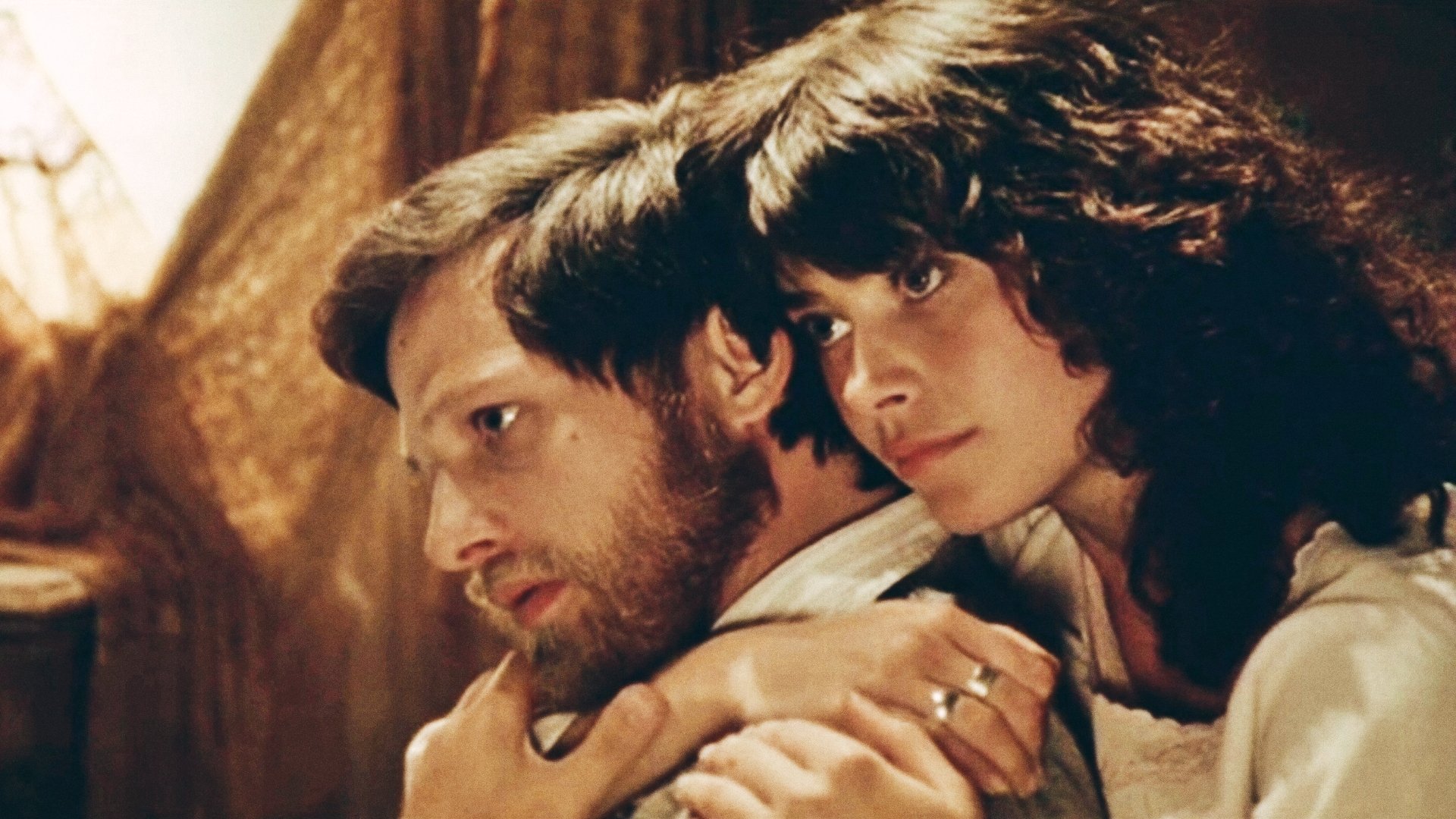
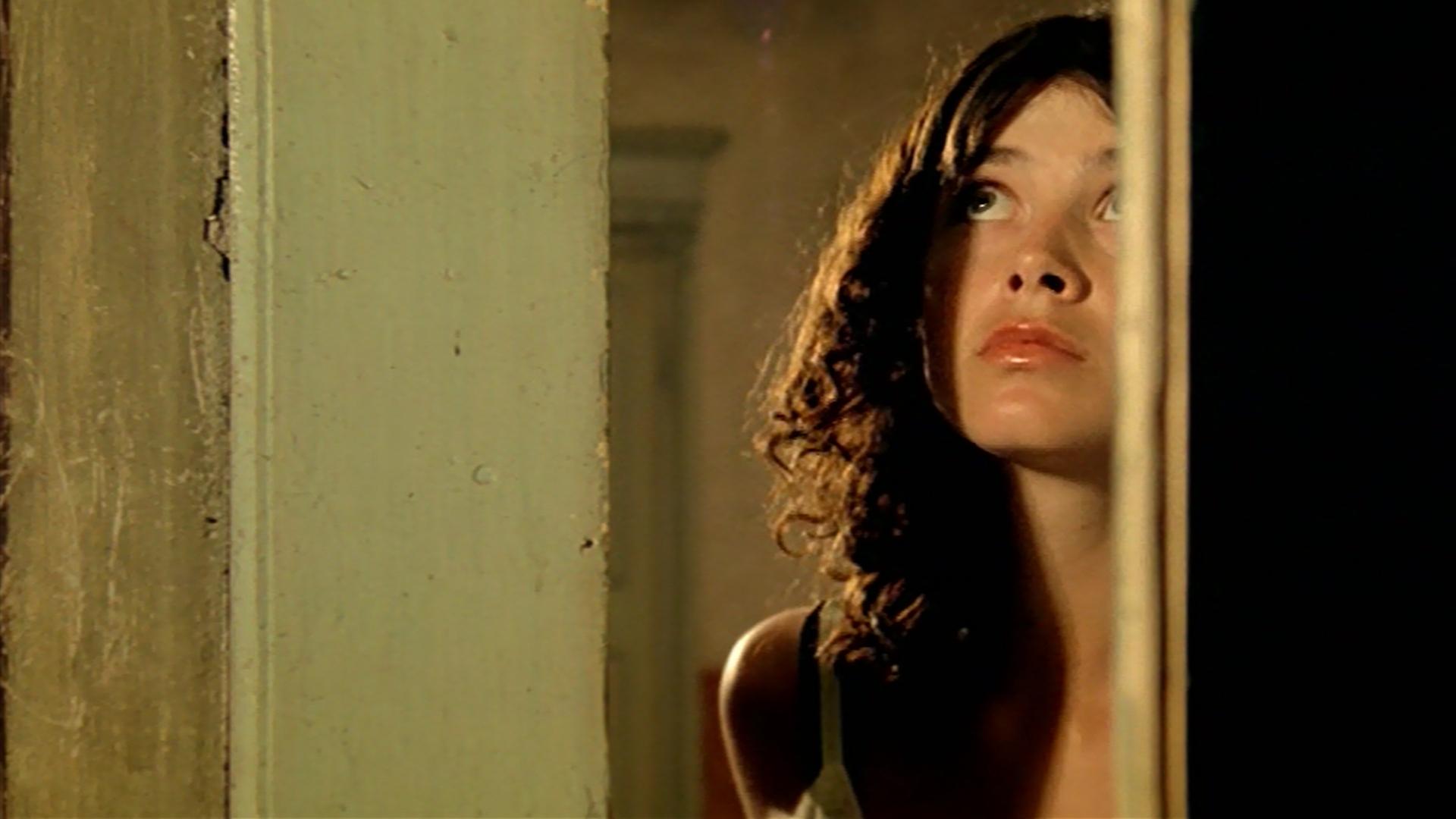
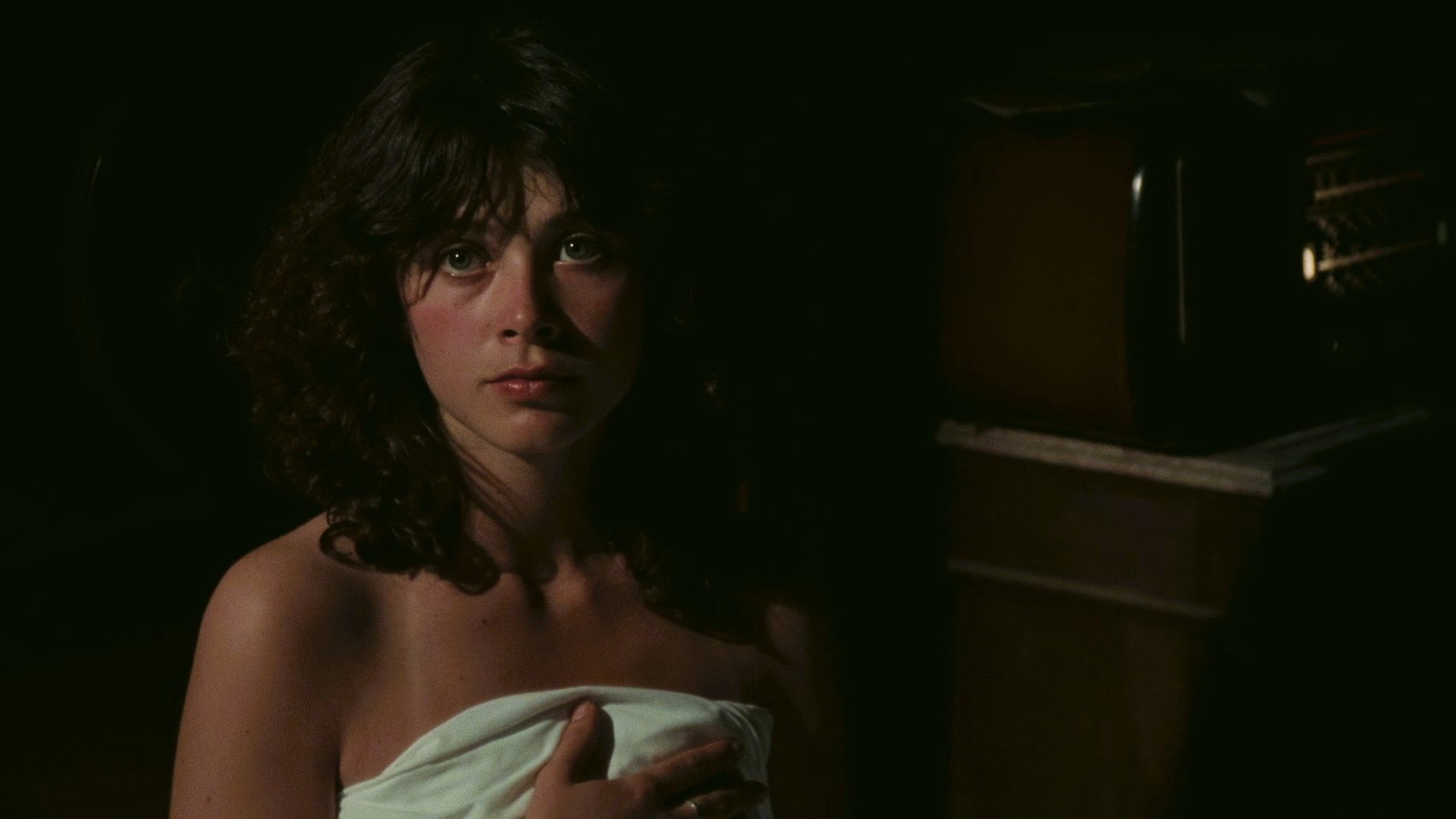
Francesca Marciano plays Francesca, a young woman whose relationship with Stefano gives his stay a personal stake beyond the commission. Gianni Cavina appears as Coppola, one of the figures who connects the outsider to local knowledge. The supporting cast includes Giulio Pizzirani as Antonio Mazza and Bob Tonelli as Mayor Solmi. Their roles create different degrees of access to information: some characters actively investigate, others discourage questions, and others appear more concerned with preserving ordinary appearances. A series of modest interactions establishes the social environment in which the later acts of violence become possible.

Po Valley Locations and Visual Style

The production made extensive use of Comacchio, its surrounding lagoons and the southern Polesine. Research published by the Po Delta visitor network identifies the riverbanks near Porto Tolle and Ca' Venier in the arrival sequence, while streets in Comacchio provide the fictional town's public spaces. Villa Boccaccini, near San Giuseppe, was used as the imposing residence associated with the Legnani family. Interiors and exteriors were not always photographed in the same building: the hotel facade in Comacchio, for instance, was paired with interior work elsewhere. These choices assembled a coherent fictional geography from actual places across the region.

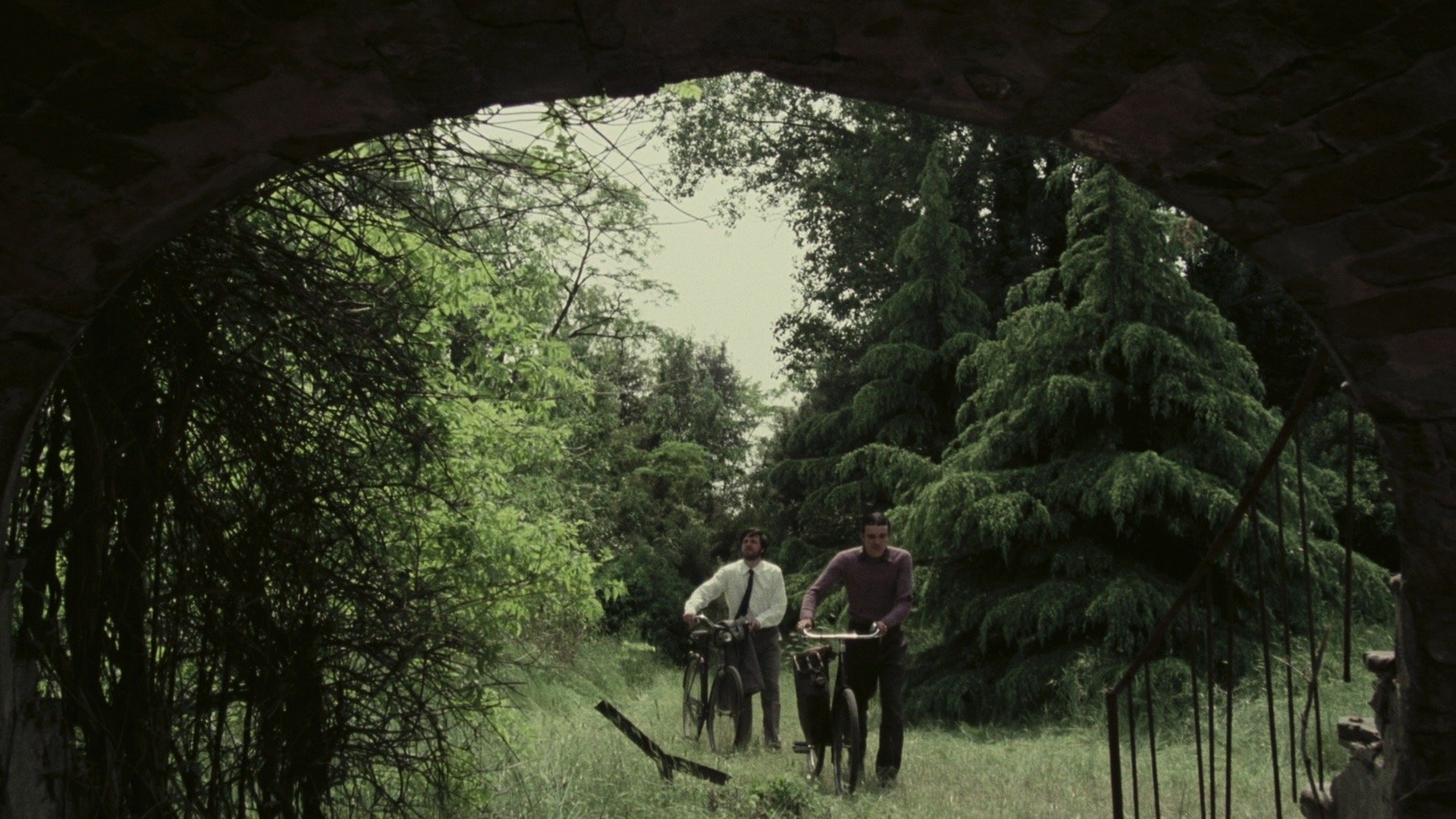
Pasquale Rachini's cinematography frequently uses broad daylight, empty paths and the long horizontal lines of the landscape. The waterways provide physical separation, while open views offer little reassurance because the investigator cannot tell where danger originates. In the book Pupi Avati: Sogni Incubi Visioni, quoted by the Cineteca di Bologna, Andrea Maioli emphasizes how the director displaces the giallo from familiar metropolitan settings into a sparsely populated countryside. The spaces may appear boundless, but the limited routes between them make the settlement feel isolated. That visual contradiction is observable in Stefano's repeated crossings of bridges, embankments and deserted streets.

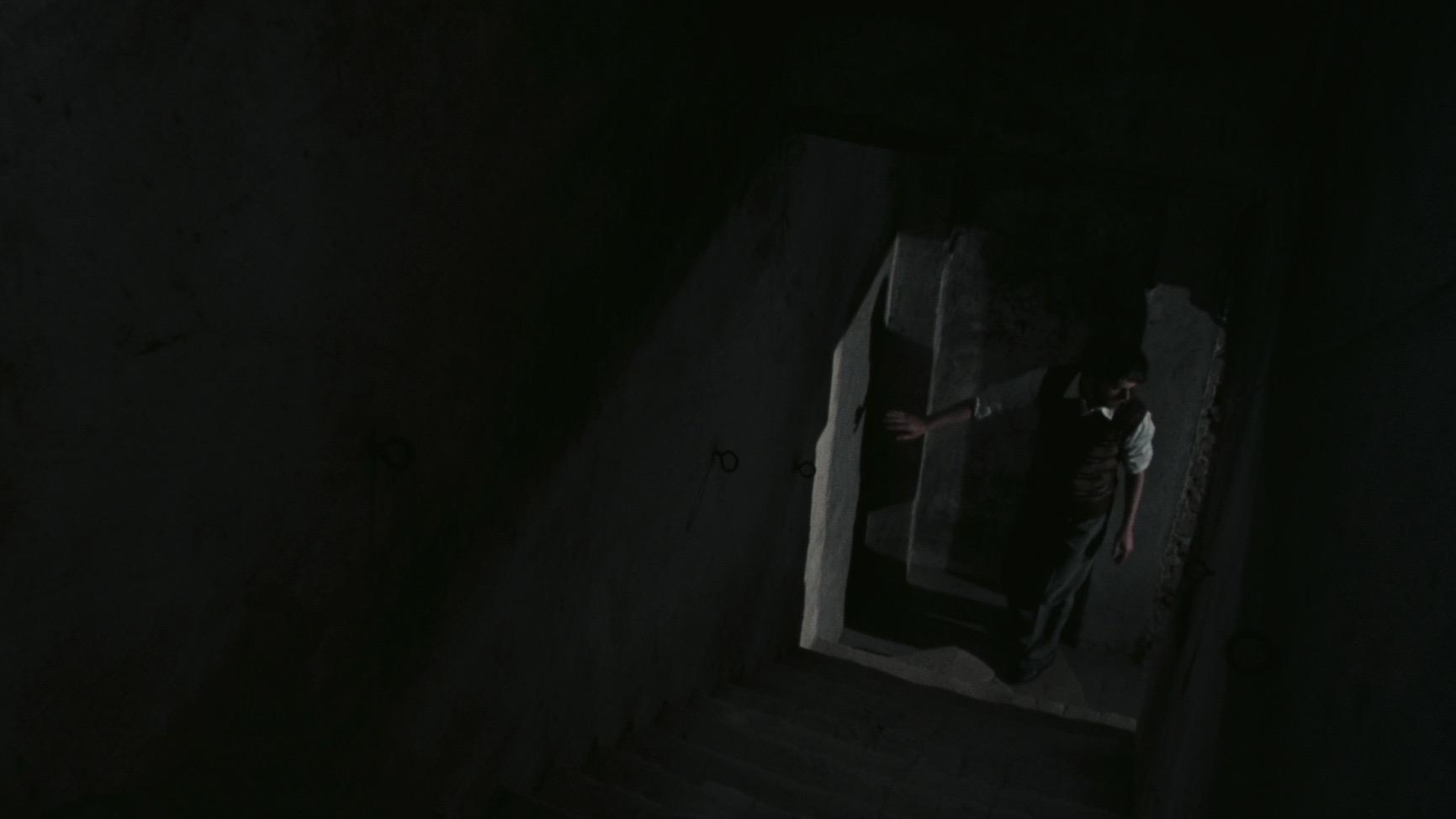
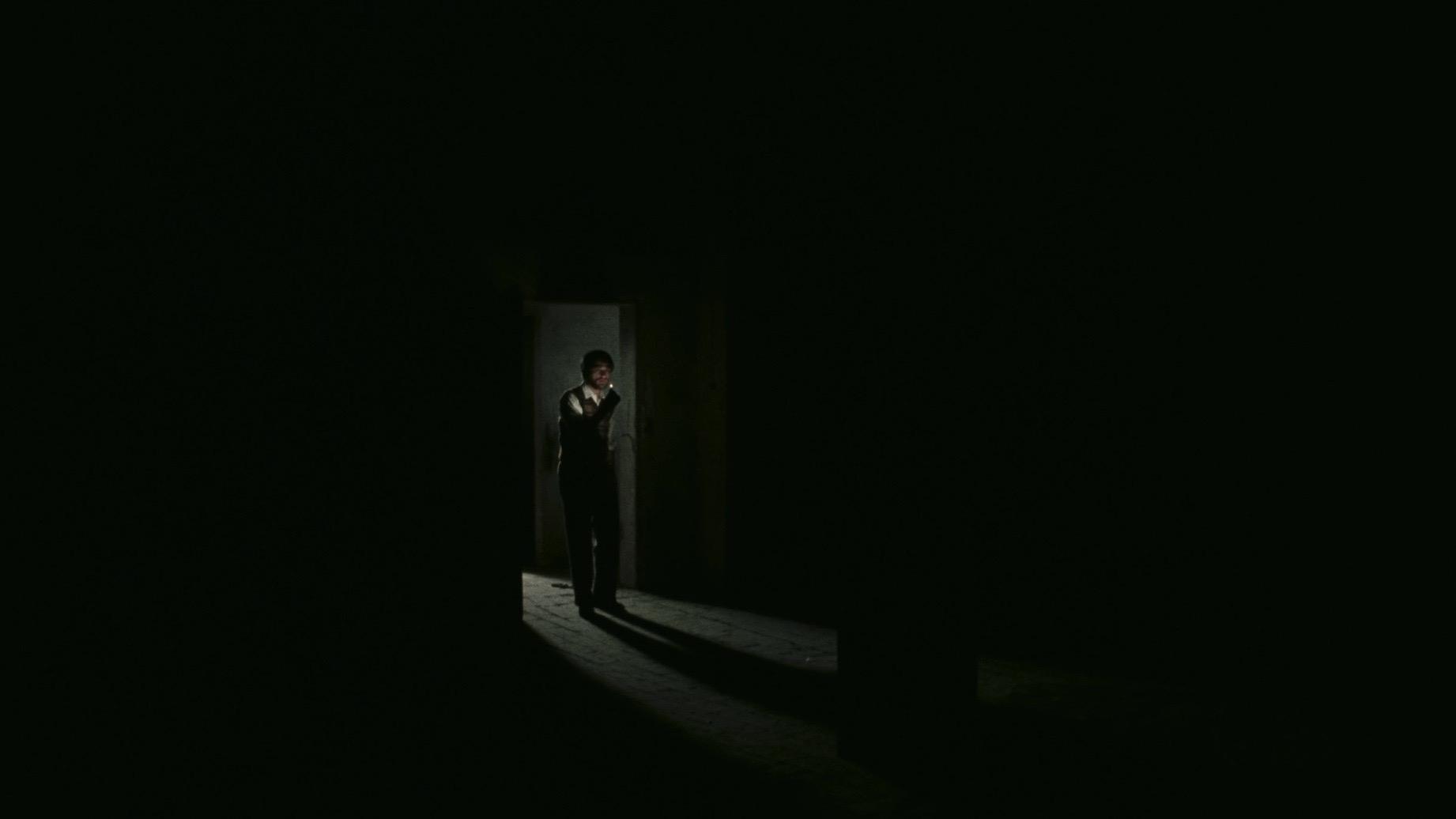
The village exteriors are complemented by old interiors where corridors, staircases and shutters conceal movement. A disused residence becomes threatening without the elaborate Gothic architecture typical of earlier Italian horror. Avati later recalled discovering the decaying villa with Bastelli and immediately recognizing its usefulness as a place in which terrible events could plausibly have occurred. The testimony concerns the director's response to the location, not evidence that the building possessed a supernatural history. In the film, changes in light and the absence of people often become more disturbing than a conspicuous display of horror effects.
The Fresco and the Art of Agony

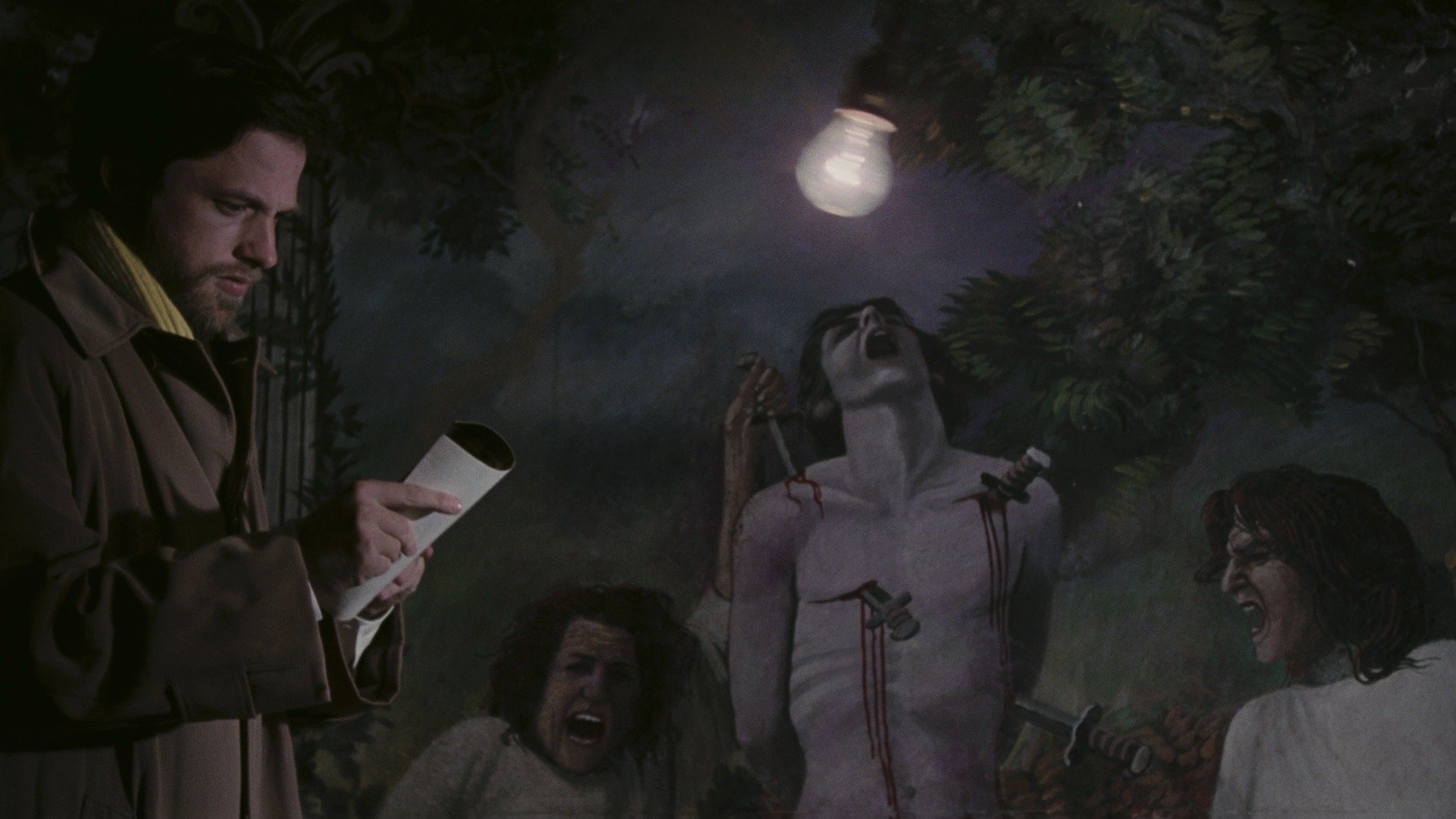
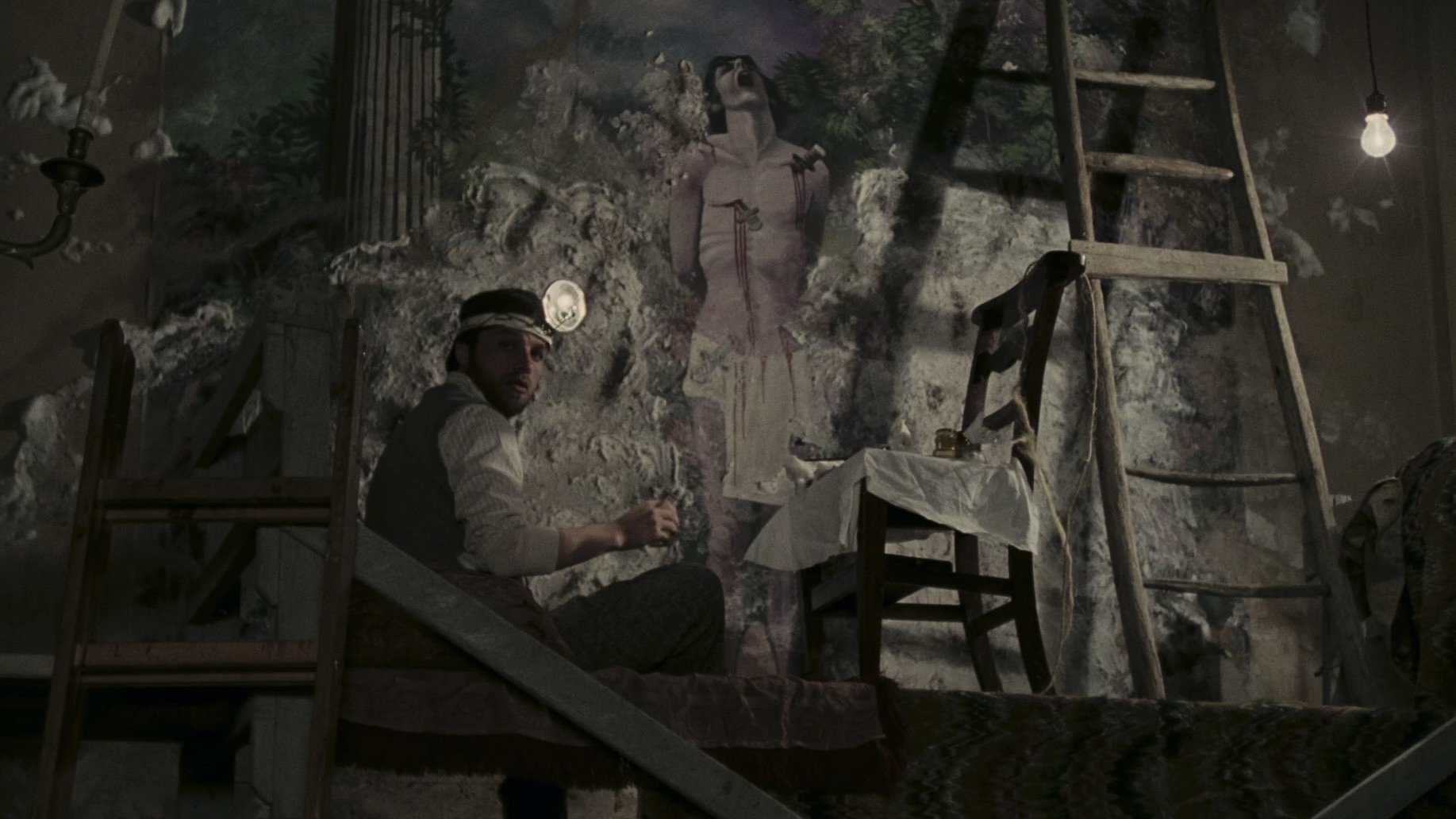
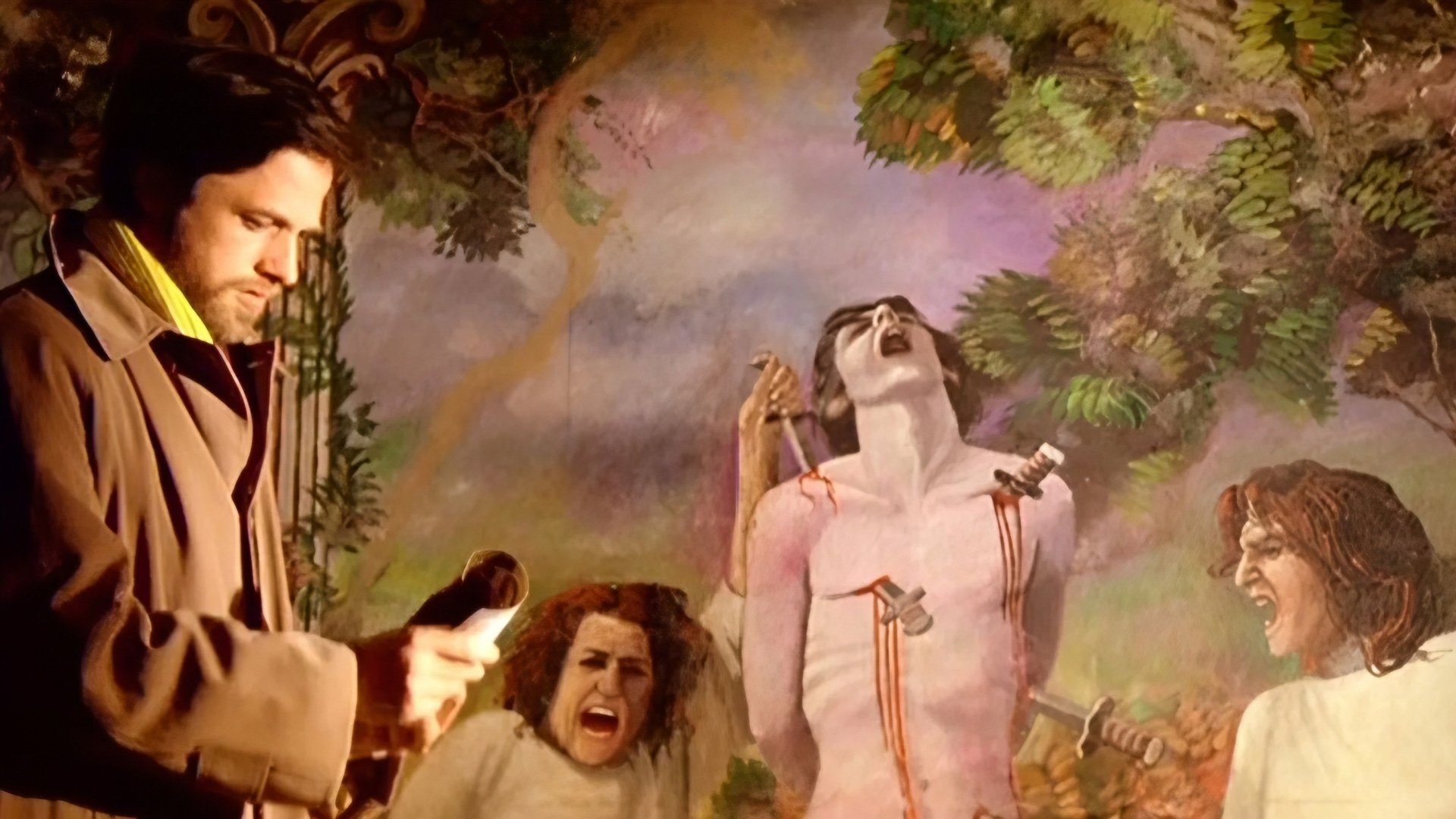
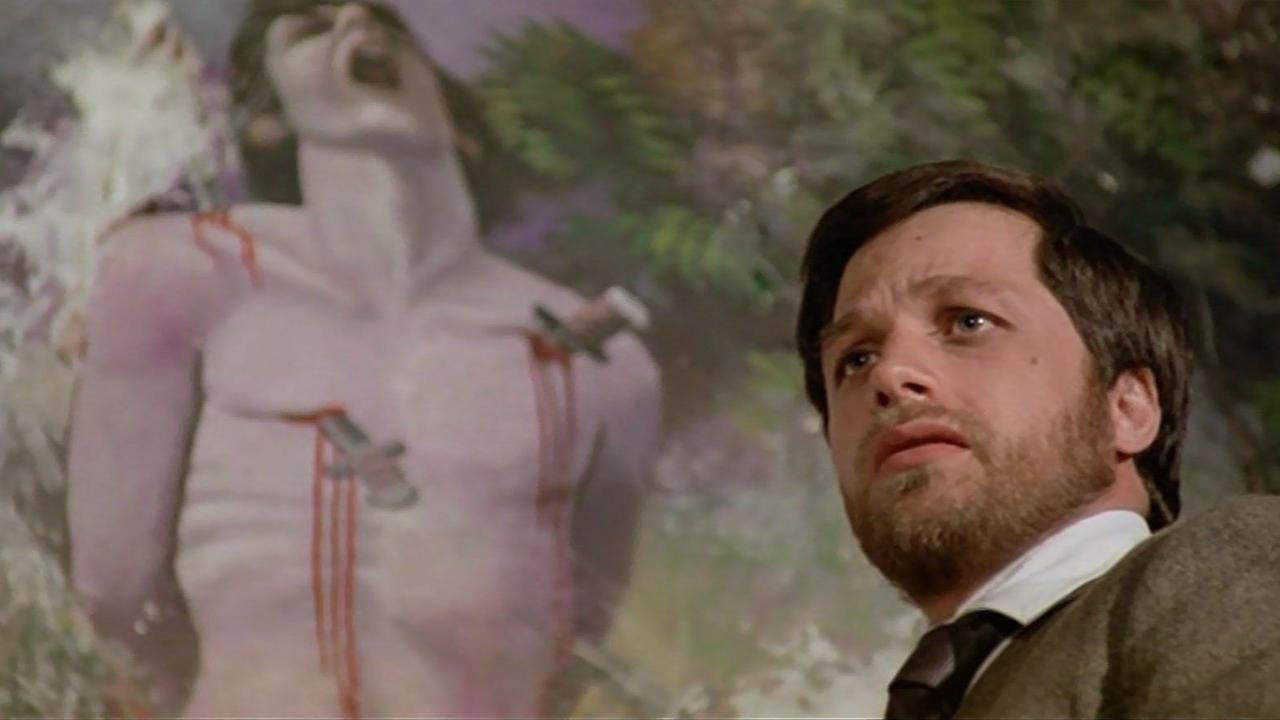
The fresco that brings Stefano to the village represents Saint Sebastian, traditionally shown as a young man suffering a violent martyrdom. In Legnani's rendering, that image is connected to the painter's reputation for recording the expressions of people at the moment of death. The opening sequence associates a bound, tortured body with a voice speaking obsessively about color and suffering. Because the artist's words reach the audience before the investigation begins, the later restoration carries an immediate suggestion of criminal violence. Removing damaged or obscuring material from the painting becomes a way of exposing the circumstances in which its imagery was made.

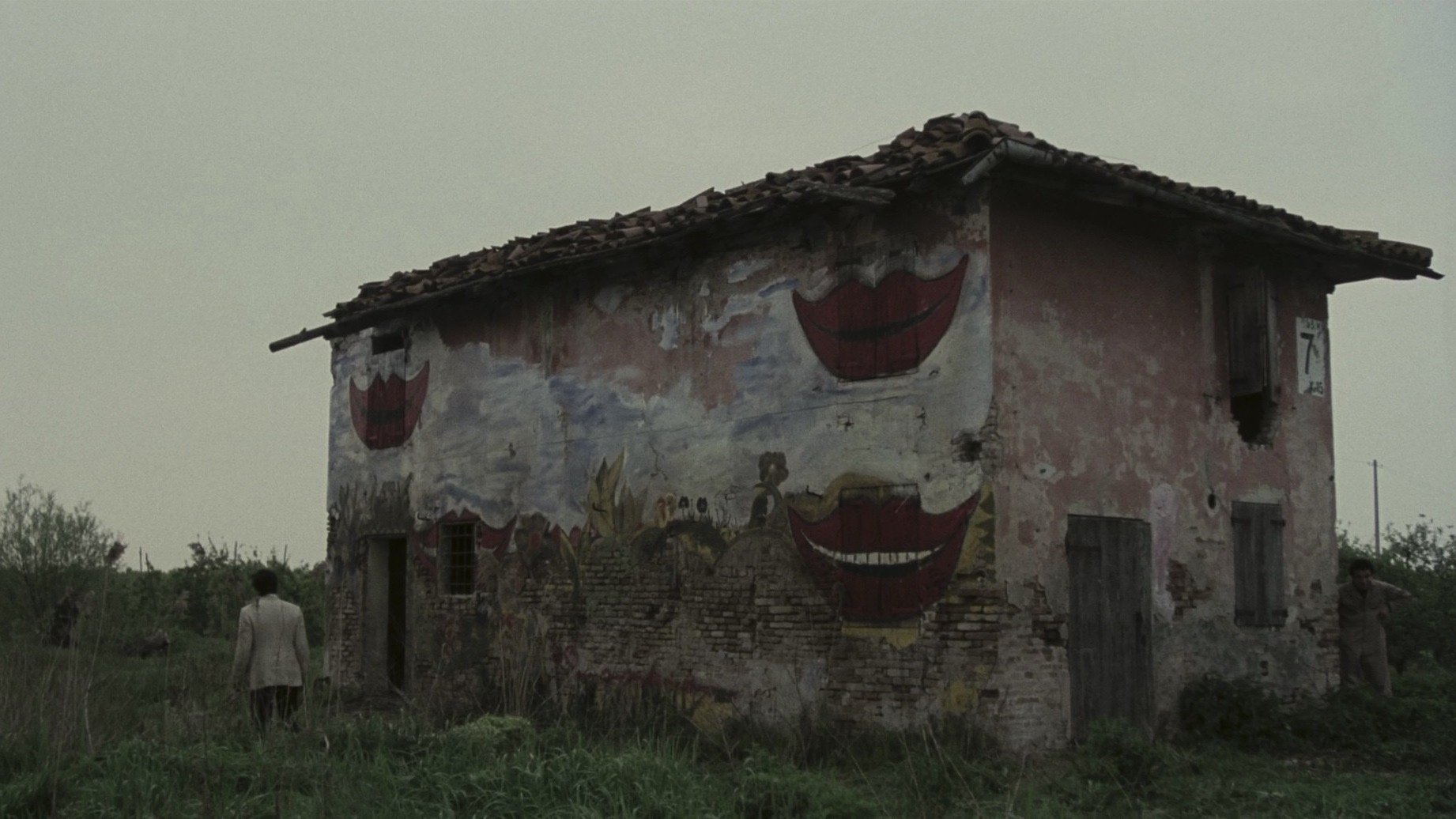
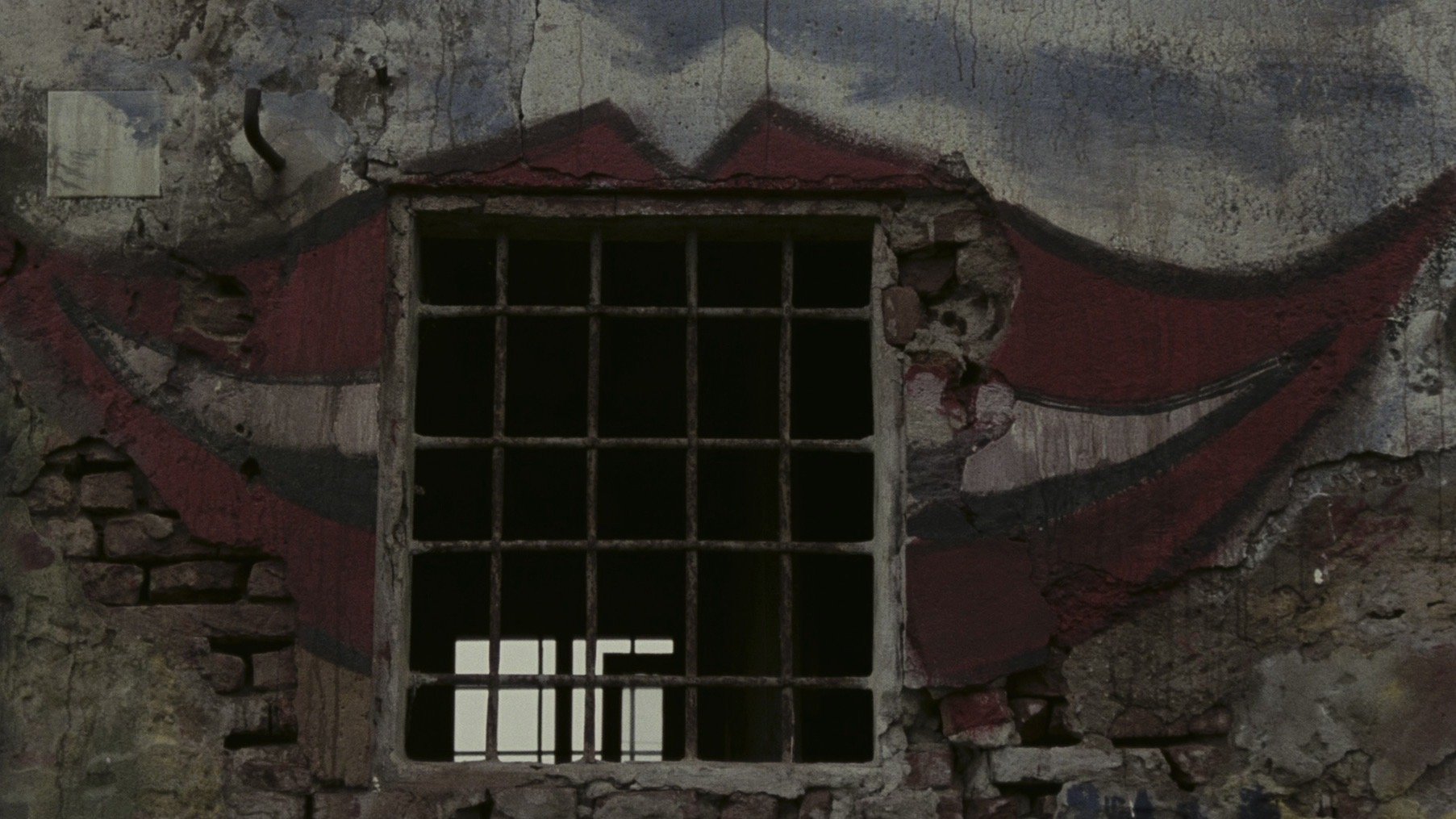
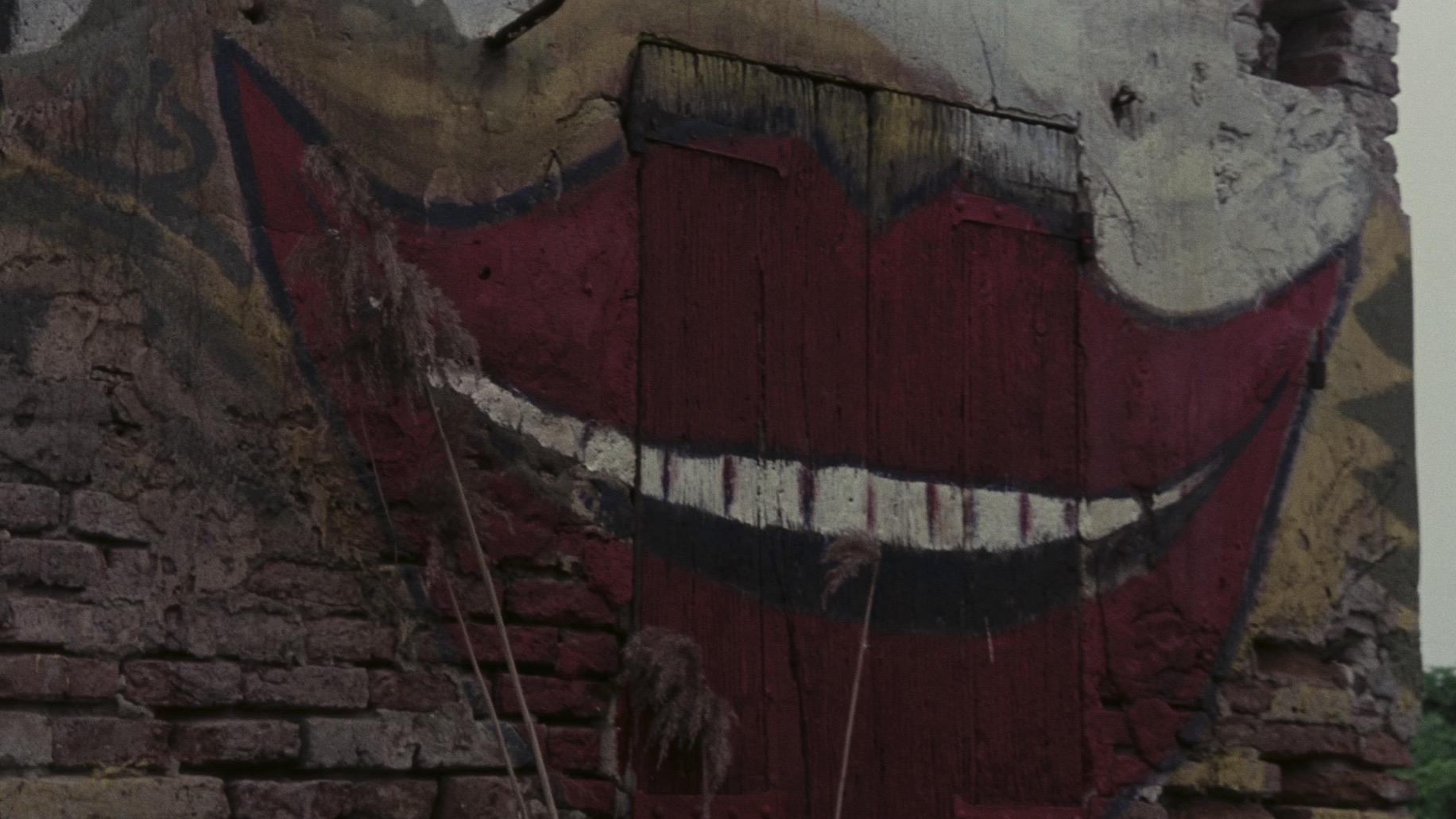
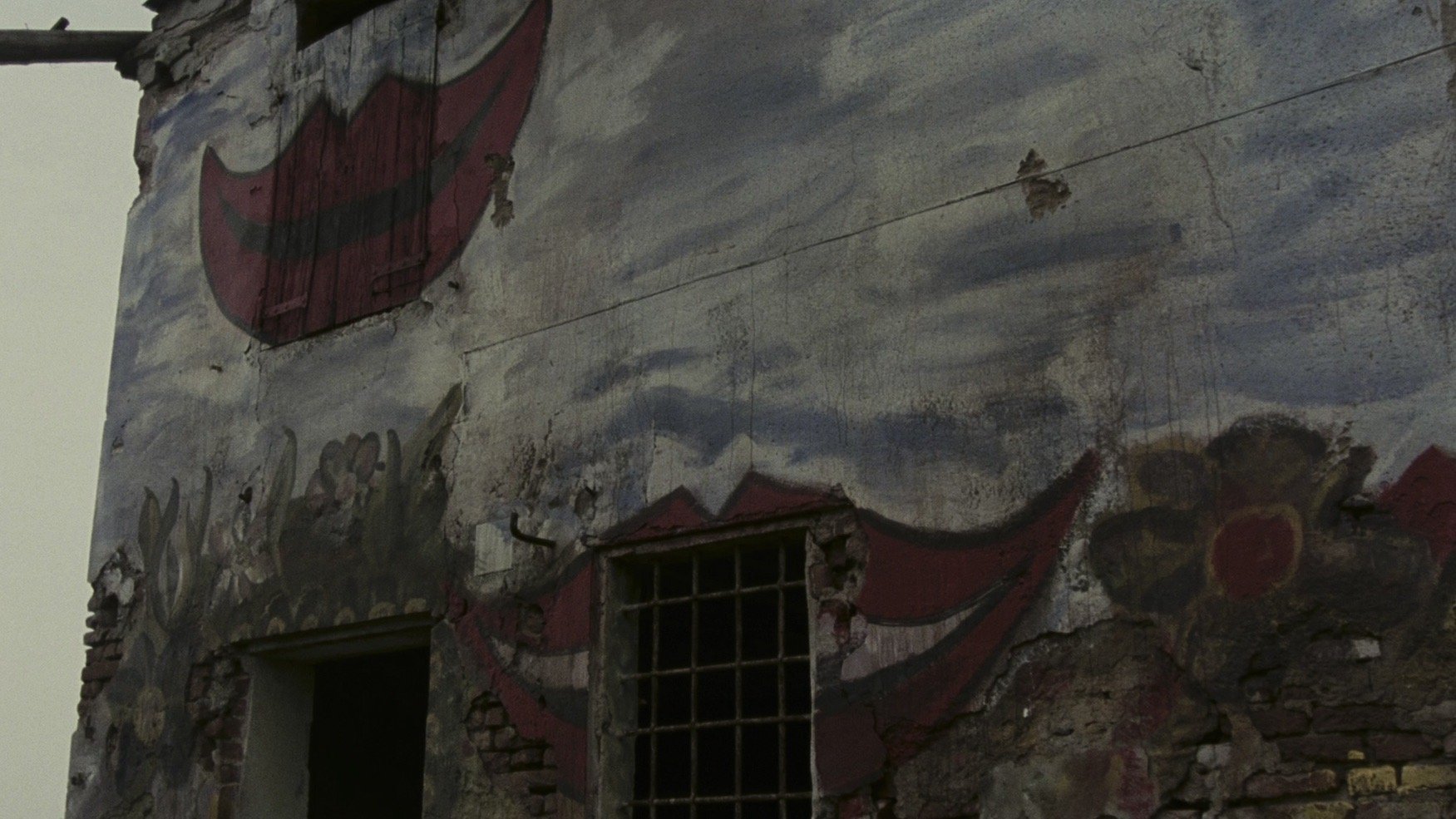
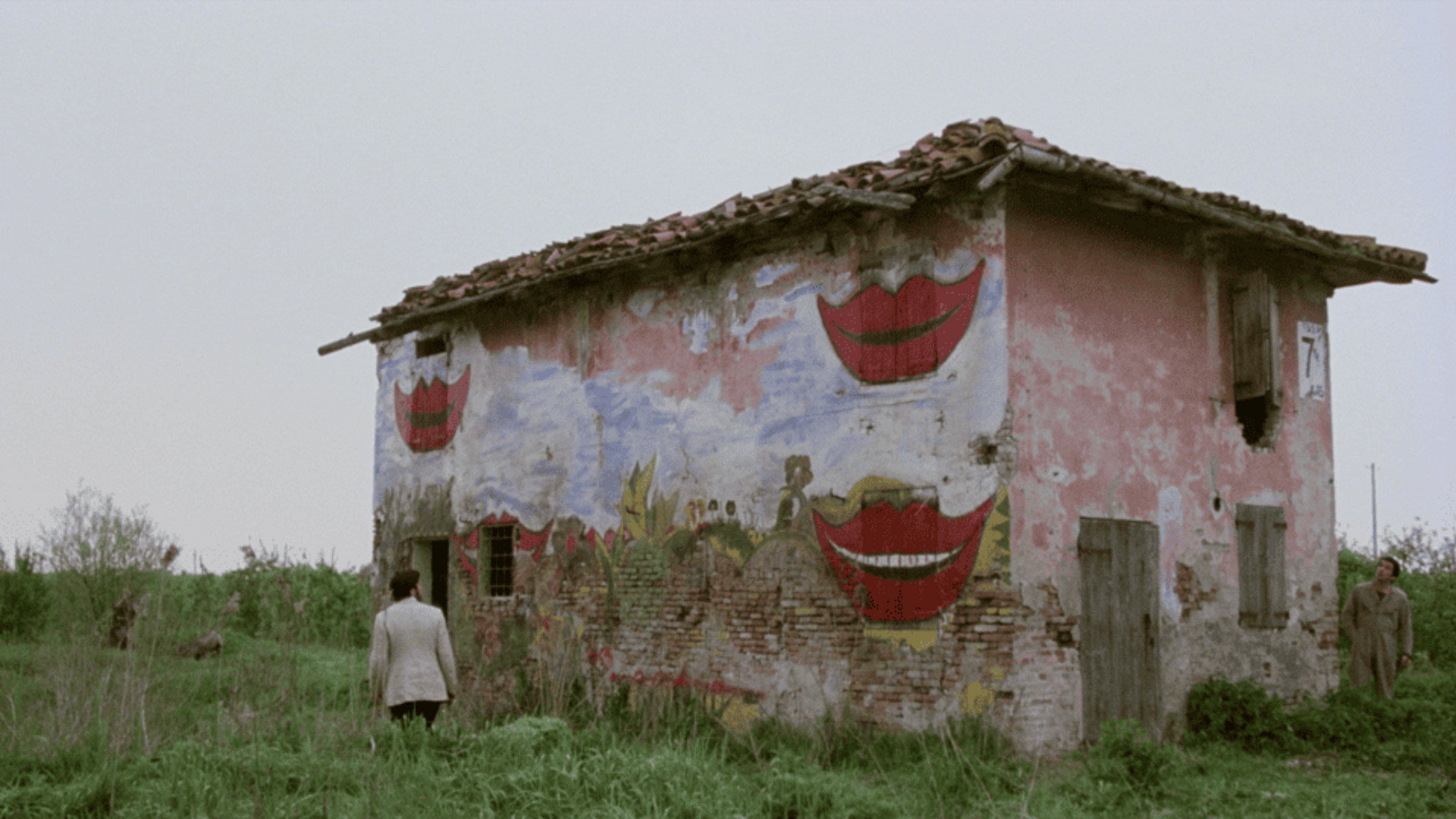
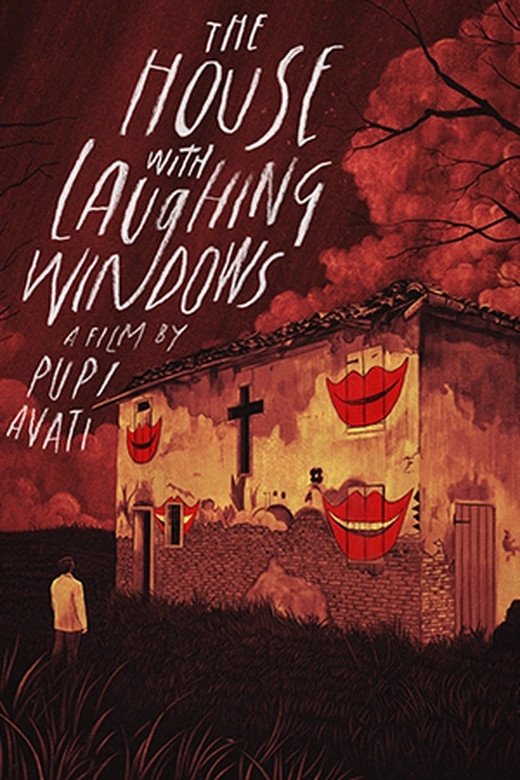
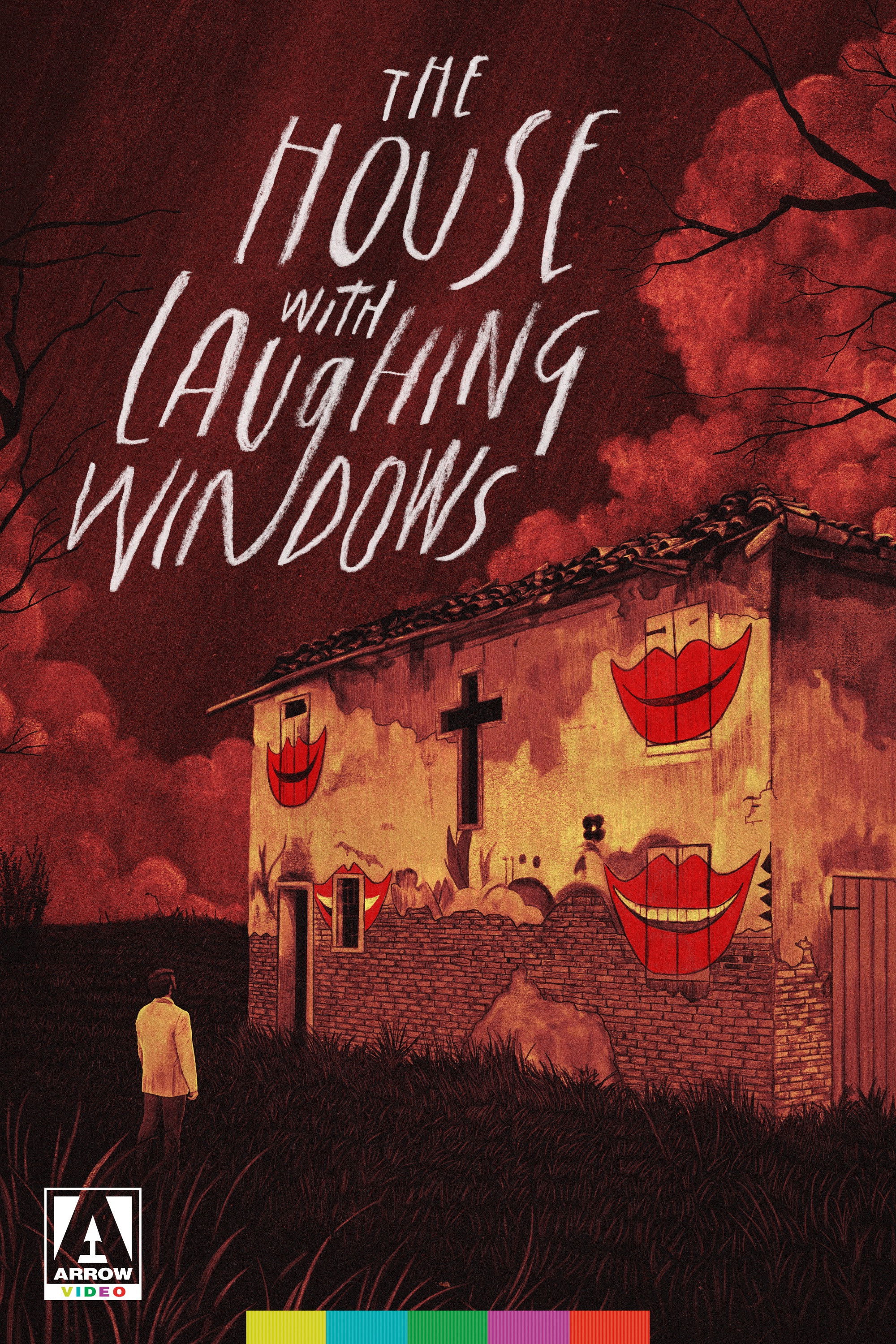
Legnani's paintings circulate beyond the church. His name survives in village recollections, possessions and stories of a house marked by painted mouths around its windows. Stefano encounters traces of an artist whose apparent death has left an unusually active legacy. The film makes the provenance of an artwork a matter of bodily danger: the question is no longer simply who painted the fresco, but who suffered while the painter worked and who now benefits from concealing that knowledge. The correspondence between sacred iconography and deliberate torture brings religious imagery into direct contact with human cruelty.

Sound is an important part of the painter's continued presence. Recorded speech, threatening calls and fragments of testimony repeatedly interrupt Stefano's attempts to establish a reliable account. They provide evidence while also making the absent artist seem close to the present action. Film scholar Xavier Mendik has examined the opening imagery and recorded voice through the relationship between artistic creation, male suffering and the recurrence of violence. That is a critical interpretation rather than a demonstrated statement of Avati's intention. The film itself makes the connection concrete by returning to the fresco as fresh deaths and suppressed memories begin to illuminate its origin.

The Investigation and the Village's Silence

Stefano's inquiry advances through partial disclosures instead of a steady sequence of solved clues. Antonio Mazza appears to know more about Legnani's past than he can safely reveal; other residents respond to direct questions with evasions or warnings. A sudden death places the investigator in a position where even apparent evidence can be disputed. Mayor Solmi's interest in the painting as a potential attraction also sits uneasily beside the community's reluctance to discuss its history. The competing responses make it difficult for Stefano to distinguish ignorance, fear and deliberate concealment, and they deprive him of dependable allies at the moments when help matters most.

This method differs from the pace of many celebrated early-1970s gialli. The film contains menacing calls, suspicious figures and violent revelations, but its suspense is distributed across ordinary conversations and apparently uneventful travel. What initially looks like a professional visit becomes a test of whether an outsider can interpret a society whose members share relationships he does not understand. The silence surrounding Legnani is not uniform: individuals possess different pieces of the history, and some take risks by approaching Stefano. The danger lies partly in the inability to recognize whose knowledge is trustworthy until it is too late.

The period setting deepens that uncertainty. The landscape bears traces of the Second World War, and village recollections suggest an uneasy continuity between past violence and the present investigation. Critics have read the setting as a reflection on communities reluctant to confront their history, including the wounds of wartime occupation. Such readings are grounded in details of the film but should remain identified as interpretations, not as proof of an explicit political allegory stated by the director. The horror functions at the level of the plot through a secret sustained by relationships and institutions that Stefano cannot safely challenge.

The Legnani Sisters and the Ending

The mystery culminates in the discovery that Legnani's two sisters have continued a pattern of lethal violence after the painter's death. His remains have been preserved, while new victims are subjected to rituals connected with the works he once produced. Stefano's growing understanding of the past arrives too late to protect Francesca, whose death deliberately recalls the suffering represented in the fresco. The return to the house brings together objects and events that had appeared disconnected during the investigation. Its horror is grounded in the persistence of a familial practice, with the preserved body providing a material focus for the sisters' devotion.

Stefano escapes the immediate attack but finds that his injuries and isolation make assistance uncertain. The final encounter with the seemingly trustworthy parish priest reveals that the cleric is one of the Legnani sisters living under a male identity. Avati traced the germ of this revelation to the childhood legend of a priest whose remains were believed to be those of a woman. The revelation collapses the distance between a trusted religious authority and the violence he has struggled to expose. The reversal closes the last refuge available to the protagonist after other sources of help have failed him.

The film stops before clearly establishing Stefano's fate or providing a complete account of what the arriving authorities will do. That refusal matters because it leaves the surrounding community's relationship to the murders unresolved. The ending offers a specific explanation for the violence while withholding a reassuring restoration of justice. Mendik interprets the revelation as part of a broader pattern of rural Gothic anxiety about family structures, identity and concealed transgression. His argument provides one scholarly reading of the conclusion; the narrative itself establishes the sisters' acts and the protagonist's predicament, leaving wider symbolic conclusions open to criticism.

Release, Critical Reassessment and Restoration

Euro International Films distributed The House with Laughing Windows in Italy in August 1976. Its running time is generally listed at approximately 110 minutes, although archival program notes and individual editions sometimes record slightly different durations. Those differences should not automatically be treated as evidence of a separately edited version. The production began with limited expectations, according to Avati and Bastelli, but the film subsequently became one of the director's most frequently discussed works. Their later recollections establish surprise at its durability; they do not provide a complete contemporary box-office record or justify an exact lifetime revenue figure without additional accounting evidence.

Its critical standing rests partly on its unusual relationship with Italian genre conventions. Andrea Maioli's study, excerpted by the Cineteca di Bologna, describes the film's movement between giallo, noir and horror and emphasizes the claustrophobic effect of a broad, apparently empty landscape. Mendik analyzes it in the context of Italian rural thrillers, focusing on the uneasy relationship between provincial settings and concealed social violence. These are complementary but distinct approaches: the first concentrates on atmosphere and generic form, while the second investigates cultural and psychological themes. Their existence demonstrates sustained critical interest rather than a uniform interpretation of every disturbing image.

For the fiftieth anniversary, SND and the Cineteca di Bologna prepared a 4K restoration at L'Immagine Ritrovata using original negatives made available by ACEK. CG Entertainment and Cat People returned the restored film to Italian cinemas in July 2026. Separate home-video presentations have also drawn attention to surviving production material, including photographs and scheduling documents retained by Bastelli. The restoration permits the details of the muted color photography, real architecture and painted surfaces to be examined more closely. It also marks a new stage in the preservation of a film whose reputation developed through decades of screenings, critical discussion and changing access to its original visual presentation.

References

  1. la Repubblica Puti Avati: Abbiamo ancora paura di quelle finestre che ridono

    Arianna Finos interview with Pupi Avati about the childhood legend of the priest, the writing process, the small crew and the discovery of the rural house.

  2. Il Resto del Carlino La Casa di Pupi Avati torna a ridere. Bastelli: Restaurata e in versione inedita

    Firsthand production memories from assistant director Cesare Bastelli concerning the crew, location scouting, surviving daily records and restoration materials.

  3. Cineteca di Bologna La casa dalle finestre che ridono

    Cineteca screening notes quoting Andrea Maioli from Pupi Avati. Sogni Incubi Visioni (2019) on the Po Valley landscape and the film between giallo and horror.

  4. Birmingham City University Open Access Bodies of Desire and Bodies in Distress: The Golden Age of Italian Cult Cinema 1970-1985

    University repository for Xavier Mendik scholarly study, especially the chapter on rural giallo, the fresco, recorded testimony and the film final revelation.

  5. Italy for Movies La casa dalle finestre che ridono, la favola nera della bassa padana di Avati torna in versione restaurata

    Institutional production and location research with verified details of the 2026 4K restoration and theatrical return.

Cast

View Full Cast & Crew →

Release & Distribution

Production Companies (1)

  • A.M.A. Film IT

Distributors (1)

  • Euro International Film IT

Release History (2)

Release DateTerritoryRelease TypeFormatDistributorCertificationNotes
1976-08-20 Italy Theatrical — — —
1976-08-26 Italy Theatrical — — — Rome
Today I portrayed the shameless one as she died...