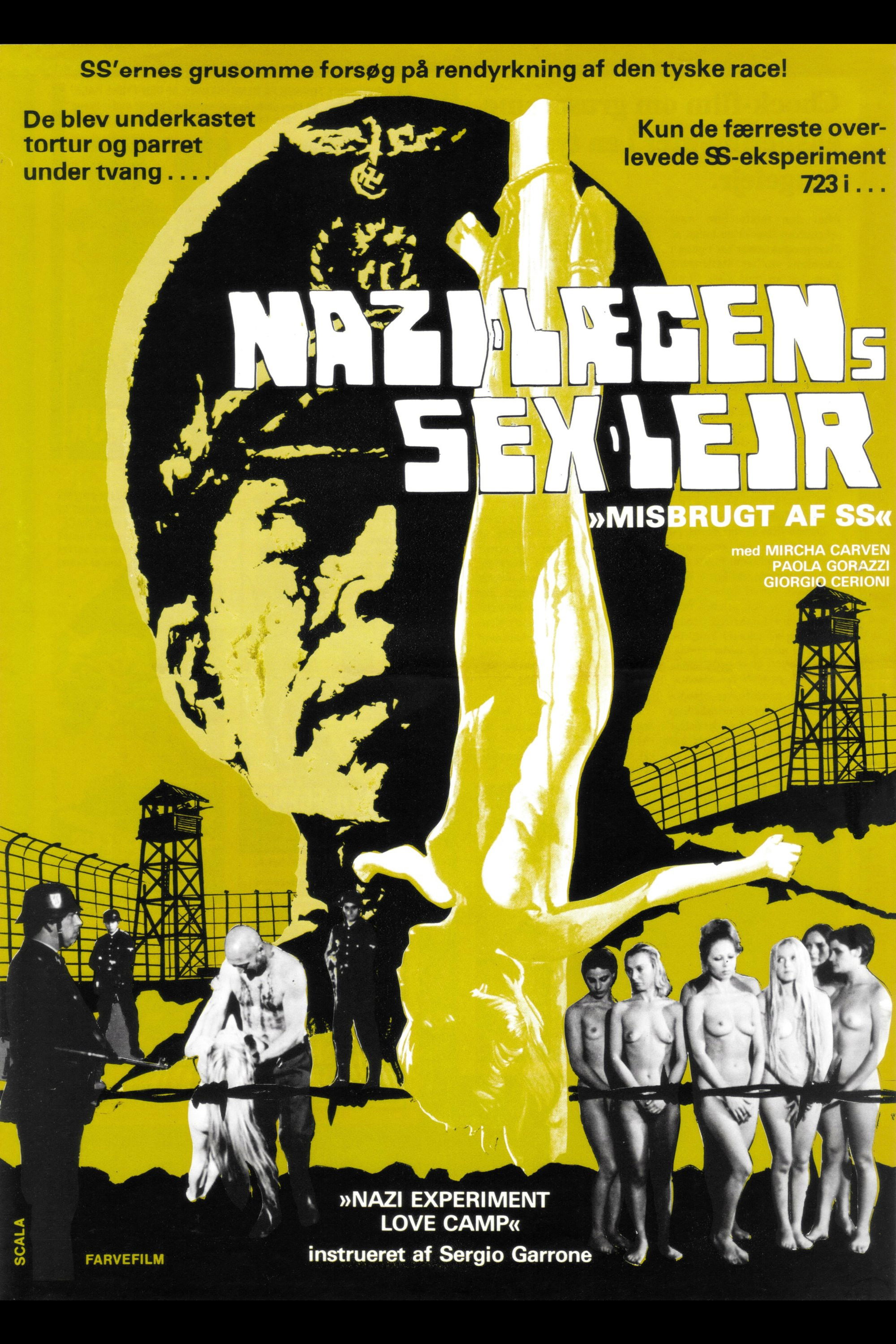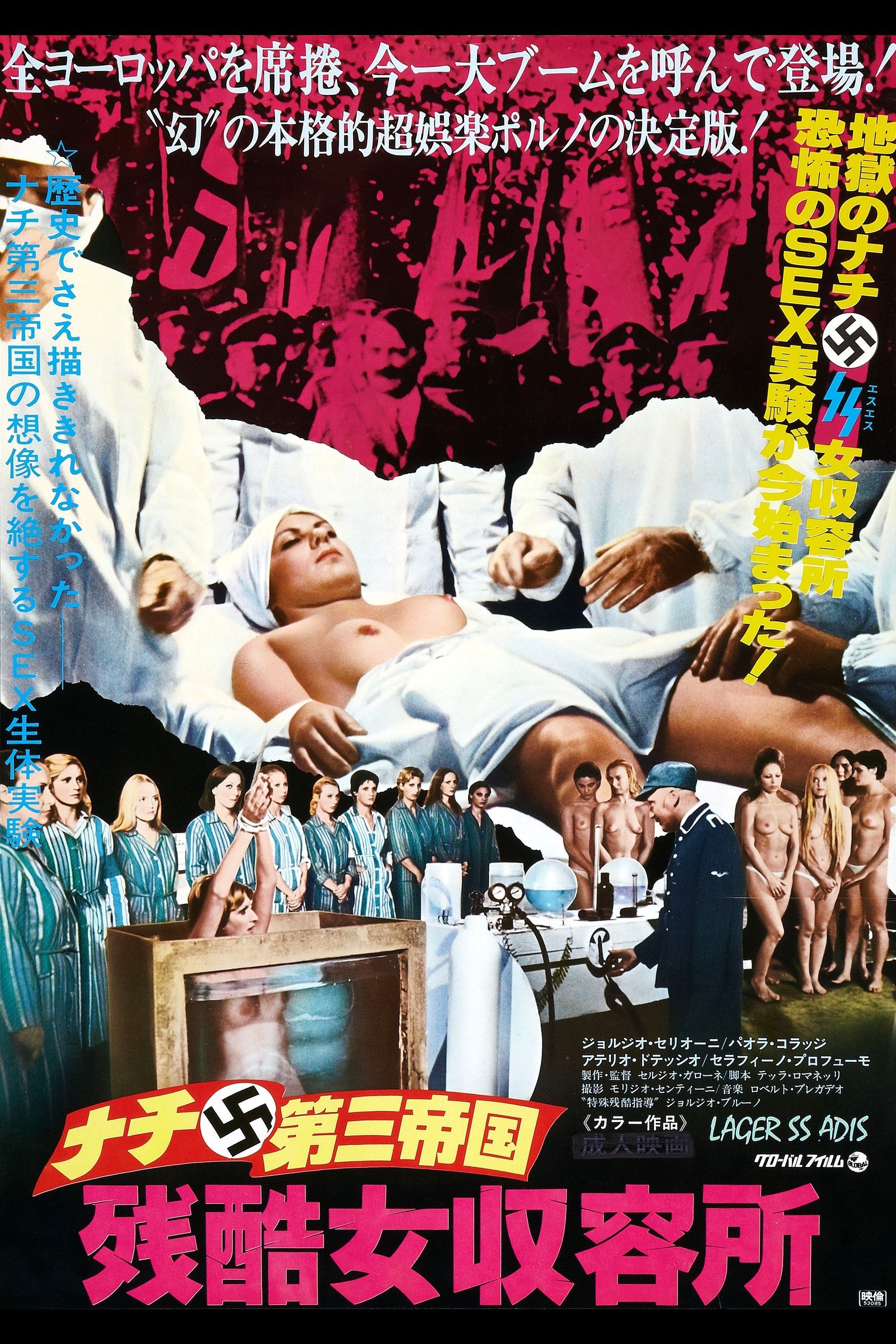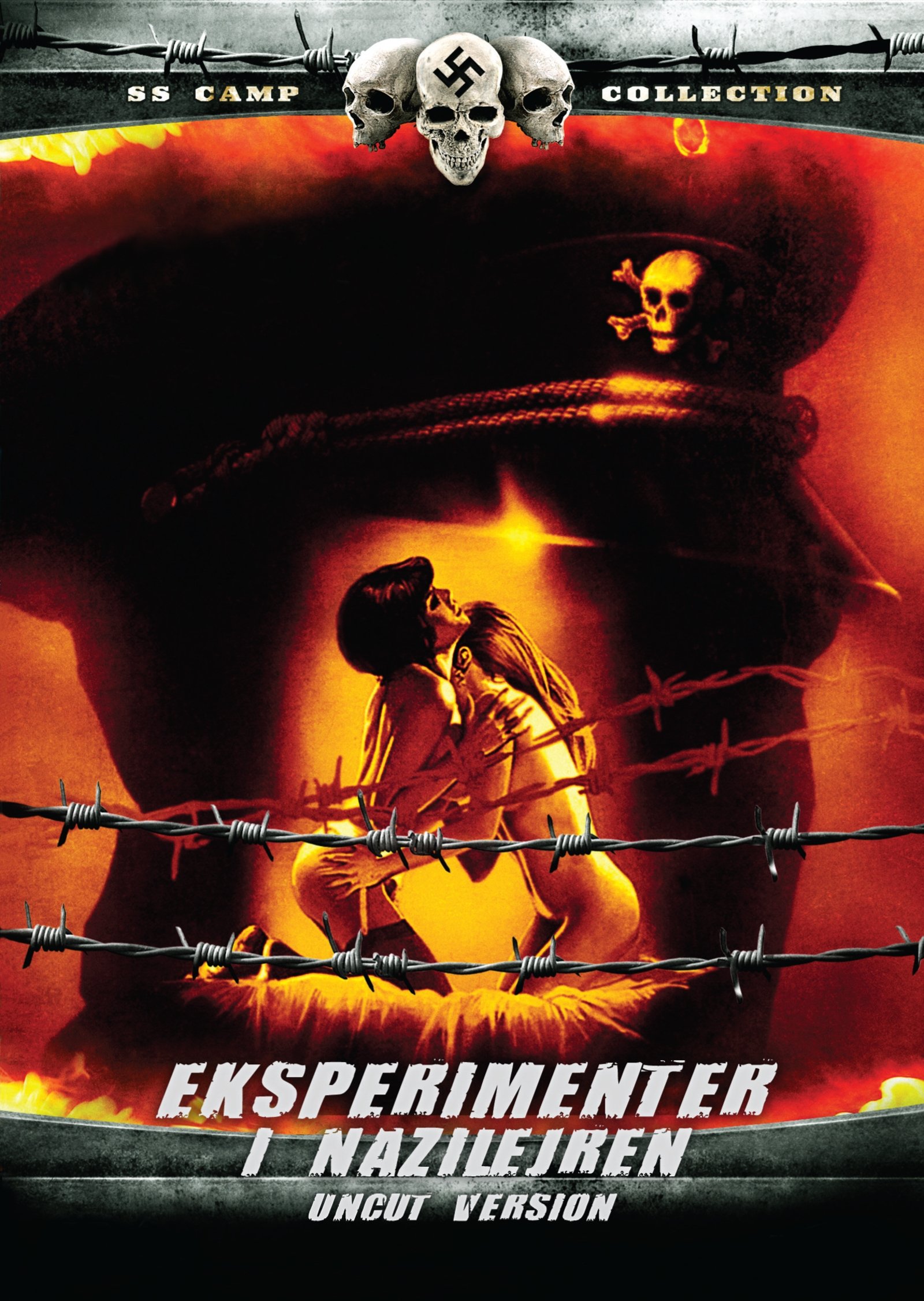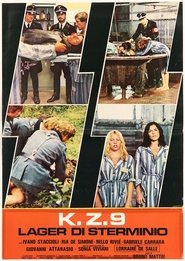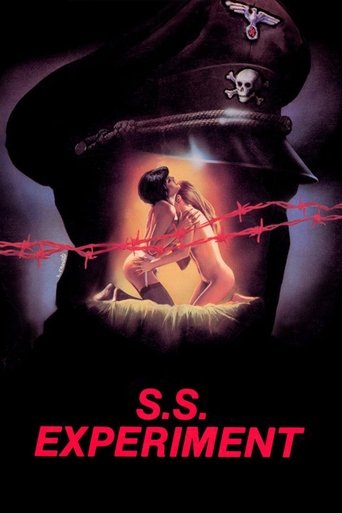
SS Experiment Love Camp (1976)

IT
Runtime
94 min
Release
November 16, 1976
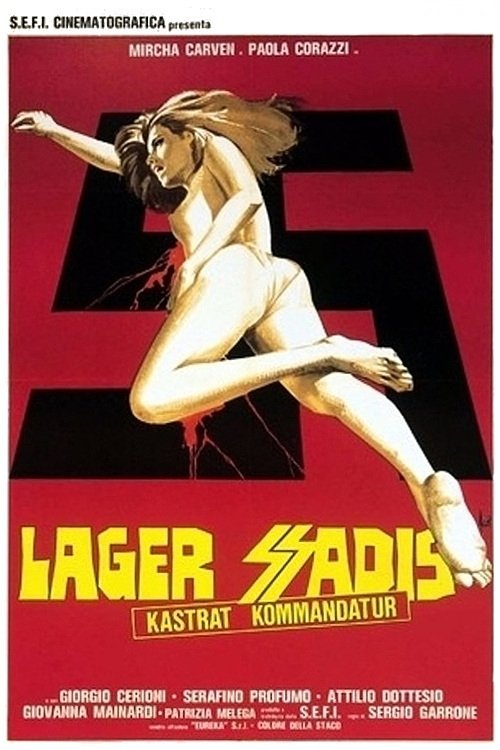
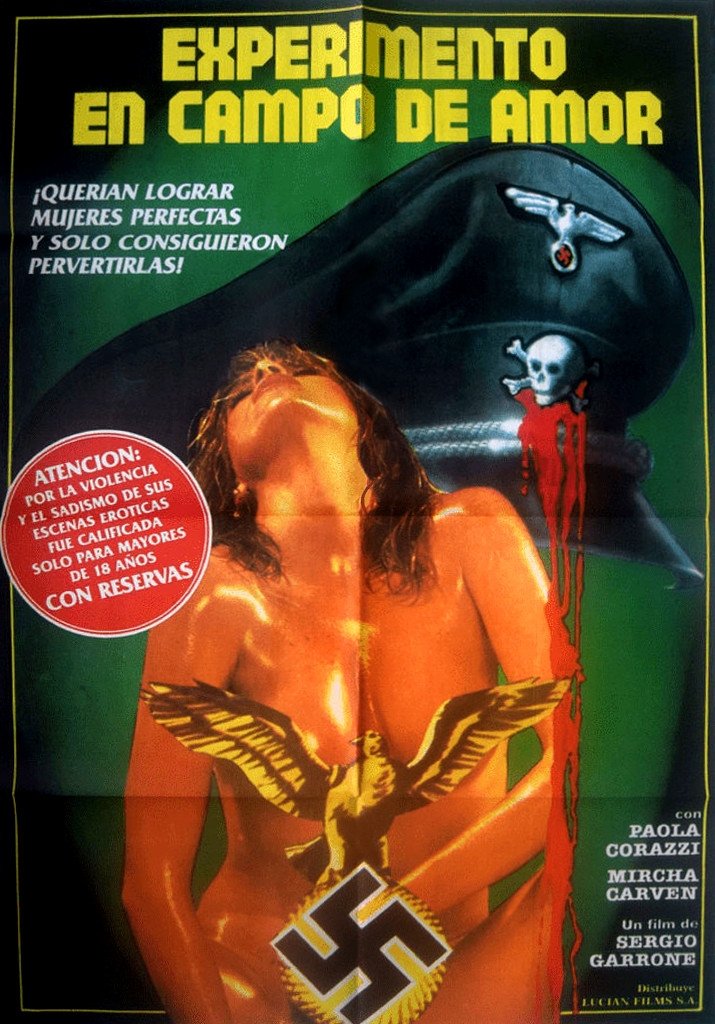
SS Experiment Love Camp (1976) poster
Director
Production Company
Società Europea Films Internazionali Cinematografica (SEFI)
Plot

Near the end of WW2, prisoners of war are used in experiments to perfect the Arian race.

Alternative Titles
Het Kamp der Verloren Meisjes (BE) — Flemish title Le camp des filles perdues: Sadisme SS (BE) — French title 纳粹军妓血泪史 (CN) — translation:zh Sadistický experiment (CZ) — translation:cs Eksperimenter i nazilejren (DK) Nazilægens sexlejr (DK) — translation:da Horreurs nazies (FR) — translation:fr Dachau no 2 (GR)
Show all 15 alternative titles 나찌 마루타 (KR) — translation:ko Sadismo (PE) O Campo Nazi do Amor (PT) Экспериментальный лагерь СС (RU) — translation:ru Captive Women II: Orgies of the Damned (US) S.S. Experiment (US) SS Experiment Camp (US) — DVD box title

Trailers & Videos

1 video

Film Guide

Sergio Garrone's 1976 Italian Nazisploitation film: parallel production with SS Camp 5, medical horror, the GO Video advertising controversy, British video nasties and the 2008 parliamentary debate.

SS Experiment Love Camp (1976), originally titled Lager SSadis Kastrat Kommandatur and widely circulated as SS Experiment Camp, is an Italian Nazisploitation film directed by Sergio Garrone. Produced during the rapid expansion of Nazi-themed exploitation cinema in the mid-1970s, it combines the women-in-prison formula with fictional medical experimentation, sexual coercion and the iconography of Nazi concentration camps. Garrone made the film alongside SS Camp 5: Women's Hell, using a closely connected production team and shared facilities. Its international reputation developed principally through British videocassette distribution, where provocative advertising helped transform a relatively obscure Italian production into one of the most frequently cited examples of the video nasties controversy.

The film occupies an important position in the history of Italian exploitation because its original production circumstances and later British notoriety are unusually distinct. Its treatment of institutional violence belongs to the sadiconazista cycle, which adapted elements of European art cinema and international sexploitation for lower-budget commercial filmmaking. Its British history subsequently involved advertising complaints, obscenity proceedings, an uncut classification in 2005 and renewed parliamentary controversy in 2008. These developments provide a documented example of how the public reputation of an exploitation film can be shaped by distribution and political debate as substantially as by its original cinematic content.

The Italian Nazisploitation Cycle and Its Cinematic Origins

SS Experiment Love Camp appeared during a period in which Italian filmmakers rapidly adapted successful international formulas into inexpensive genre productions. The emergence of sadiconazista cinema followed several commercially visible treatments of fascism, sexual domination and wartime persecution. Luchino Visconti's The Damned (1969), Liliana Cavani's The Night Porter (1974), Pier Paolo Pasolini's Salò, or the 120 Days of Sodom (1975) and Tinto Brass's Salòn Kitty (1976) had approached related subjects through differing artistic methods. American exploitation productions, particularly Ilsa, She Wolf of the SS (1975), supplied another important commercial reference. These films did not constitute a single unified movement, but their overlapping imagery created opportunities for producers working within the Italian exploitation industry.

Garrone entered the cycle after establishing himself as a director of popular Italian genre pictures, particularly spaghetti westerns. His earlier work included No Room to Die (1969) and Django the Bastard (1969), followed by Gothic horror productions such as The Hand That Feeds the Dead and Lover of the Monster (both 1974). This background provided experience in economical production and the organization of violence within conventional genre narratives. In later interviews Garrone acknowledged the importance of The Night Porter, Salò and Salòn Kitty to his approach. These references help establish the commercial and cinematic environment in which he worked, although they do not mean that every scene in SS Experiment Love Camp was derived from a specific earlier film.

The resulting production adopted the familiar structure of confinement and institutional domination from women-in-prison cinema. Nazi uniforms and references to racial ideology gave that framework a historically recognizable identity, while medical experimentation supplied the principal horror imagery. The relationship between these elements is essential to its classification within the genre. The concentration-camp environment is presented through the conventions of exploitation entertainment rather than through documentary reconstruction. The film therefore belongs to a commercial tradition that appropriated images associated with real persecution while reorganizing them around fictional captivity, bodily vulnerability and sensational violence.
Sergio Garrone and the Production of Two SS Films

The production of SS Experiment Love Camp was closely connected with Garrone's subsequent SS Camp 5: Women's Hell. Both pictures were made for S.E.F.I. Cinematografica and relied upon substantially overlapping production personnel. Garrone later recalled shooting the films consecutively, using the same principal sets and completing the combined work within approximately seven weeks. This arrangement allowed the production to distribute the costs of locations, construction and technical resources across two separate features. Such methods were consistent with an Italian exploitation industry in which filmmakers often worked on compressed schedules and sought to maximize the commercial use of available facilities.

The overlap extended to several performers and departments. Giorgio Cerioni, Paola Corazzi, Attilio Dottesio, Patrizia Melega and Serafino Profumo appeared in both films, sometimes in substantially different fictional roles. Cinematographer Maurizio Centini and editor Cesare Bianchini were also associated with the productions. The same architectural environments consequently appear in stories organized around different characters and dramatic circumstances. These shared elements should not be interpreted as proof that SS Camp 5: Women's Hell is a direct narrative continuation. The two productions have distinct screenplay credits and separate Italian censorship records, despite their closely connected working arrangements.

The official Italian film industry archive identifies Sergio Chiusi as responsible for the original subject of SS Experiment Love Camp, with Garrone and Vinicio Marinucci credited for the screenplay. The distribution was handled by Indipendenti Regionali. The Italian censorship certificate, number 69321, is dated November 11, 1976. SS Camp 5: Women's Hell received its own certificate, number 69565, on December 22 of the same year. These records establish the close chronological relationship between the productions without revealing the complete daily filming schedule. They also demonstrate that the projects were separately submitted and distributed, despite the considerable sharing of personnel and production resources.

Garrone's retrospective comments require some caution when reconstructing individual creative decisions. In interviews prepared for later home-video editions, he emphasized the speed of his working methods and described moving almost immediately from one production to another. He also suggested that the accumulation of projects left little opportunity to revisit completed films. The existence of multiple retrospective statements does not establish detailed responsibility for every scene. The strongest documented conclusion is that SS Experiment Love Camp emerged from a highly economical production arrangement whose shared resources directly influenced its physical environments and the subsequent film made by the same director.

Nazi Medical Horror, Sexual Domination and the Exploitation of History

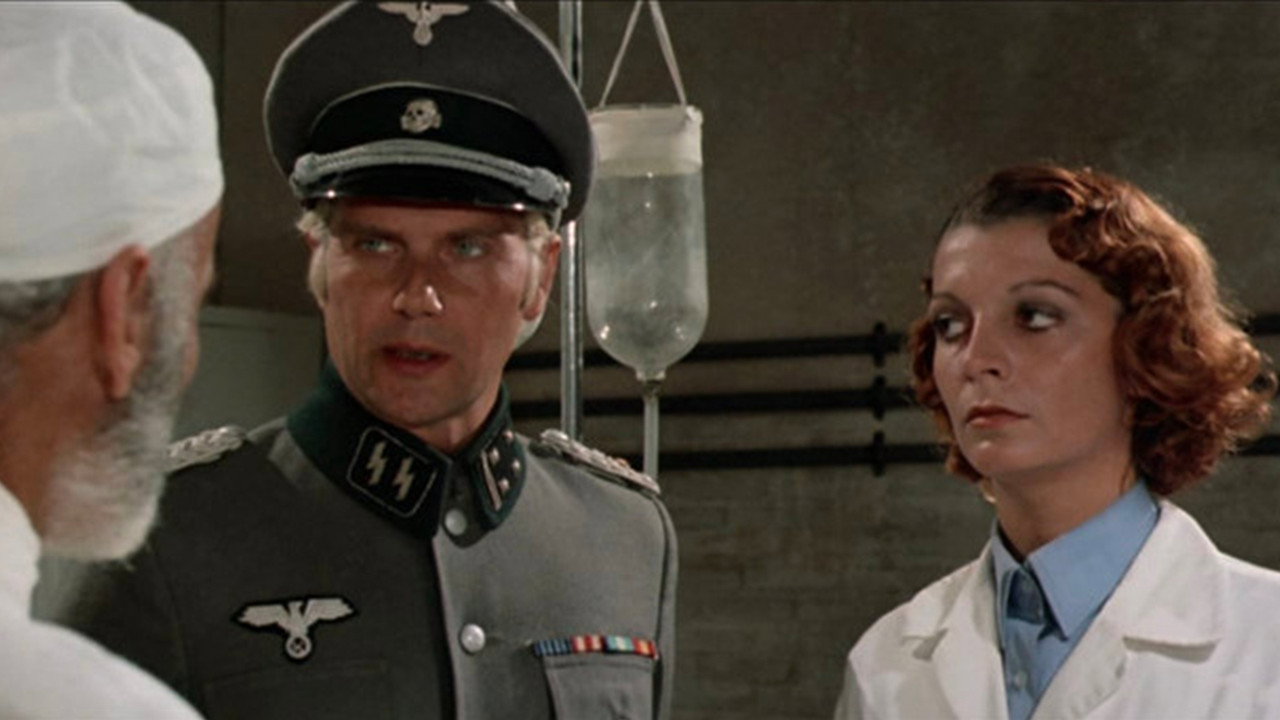
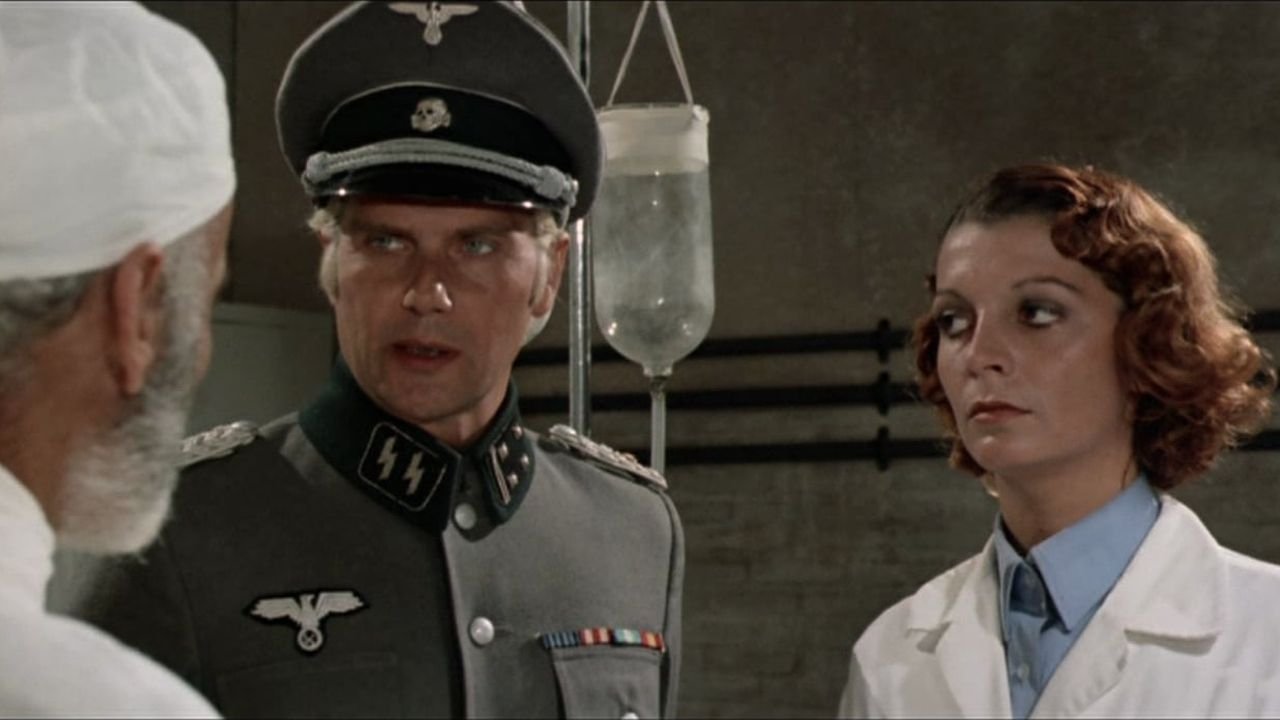
The film organizes its horror around the authority of a fictional Nazi officer, Colonel von Kleiben, and the medical experiments undertaken within his camp. The narrative combines a program ostensibly concerned with racial reproduction with the personal physical obsessions of its commander. This arrangement gives the language of medical research an important role in legitimizing the abuse of prisoners within the fictional institution. Scientific terminology and military hierarchy are repeatedly used to transform individual acts of cruelty into supposed duties of the state. The medical material belongs to exploitation fantasy and should not be represented as a reconstruction of specific documented wartime experiments.

Sexual coercion forms another central element of the film's institutional environment. The treatment of female prisoners is organized around categories imposed by their captors, including physical appearance, compliance and perceived reproductive value. The guards and medical personnel exercise control over the prisoners' bodies through threats and the authority of the camp. This framework connects the film to the women-in-prison and roughie traditions, both of which frequently used confinement to stage unequal relationships of power. Its historical setting intensifies that formula by associating fictional sexual abuse with the imagery of Nazi racial persecution. Any interpretation of apparently voluntary behavior must therefore account for the coercive environment represented on screen.

The physical construction of the film reinforces its institutional setting. Military uniforms, laboratory instruments, examination spaces and detention areas provide immediately recognizable visual distinctions between prisoners and the authorities controlling them. Repeated interior locations create an atmosphere of confinement, while the clinical equipment links bodily vulnerability with supposed scientific expertise. Some of the violence relies upon simple practical effects and optical combinations rather than elaborate anatomical appliances. The use of superimposed imagery during sequences involving fire illustrates the technical methods available within the restricted production. These choices can be identified in the finished film, although surviving documentation is insufficient to assign every individual effect to a particular technician.

The use of Holocaust imagery presents an ethical problem distinct from the effectiveness of the physical effects. Nazi imprisonment and medical crimes were historical realities, whereas the film employs selected images of persecution within an invented commercial spectacle. Garrone later suggested that his intention was to provoke horror and revulsion through the presentation of brutality. That explanation documents the director's retrospective position, but does not determine the reception or political meaning of the completed film. Its place in exploitation history requires recognition of both the conventions it employed and the historical suffering from which those conventions borrowed their visual authority.

GO Video, the 1982 Advertising Campaign and the Video Nasties

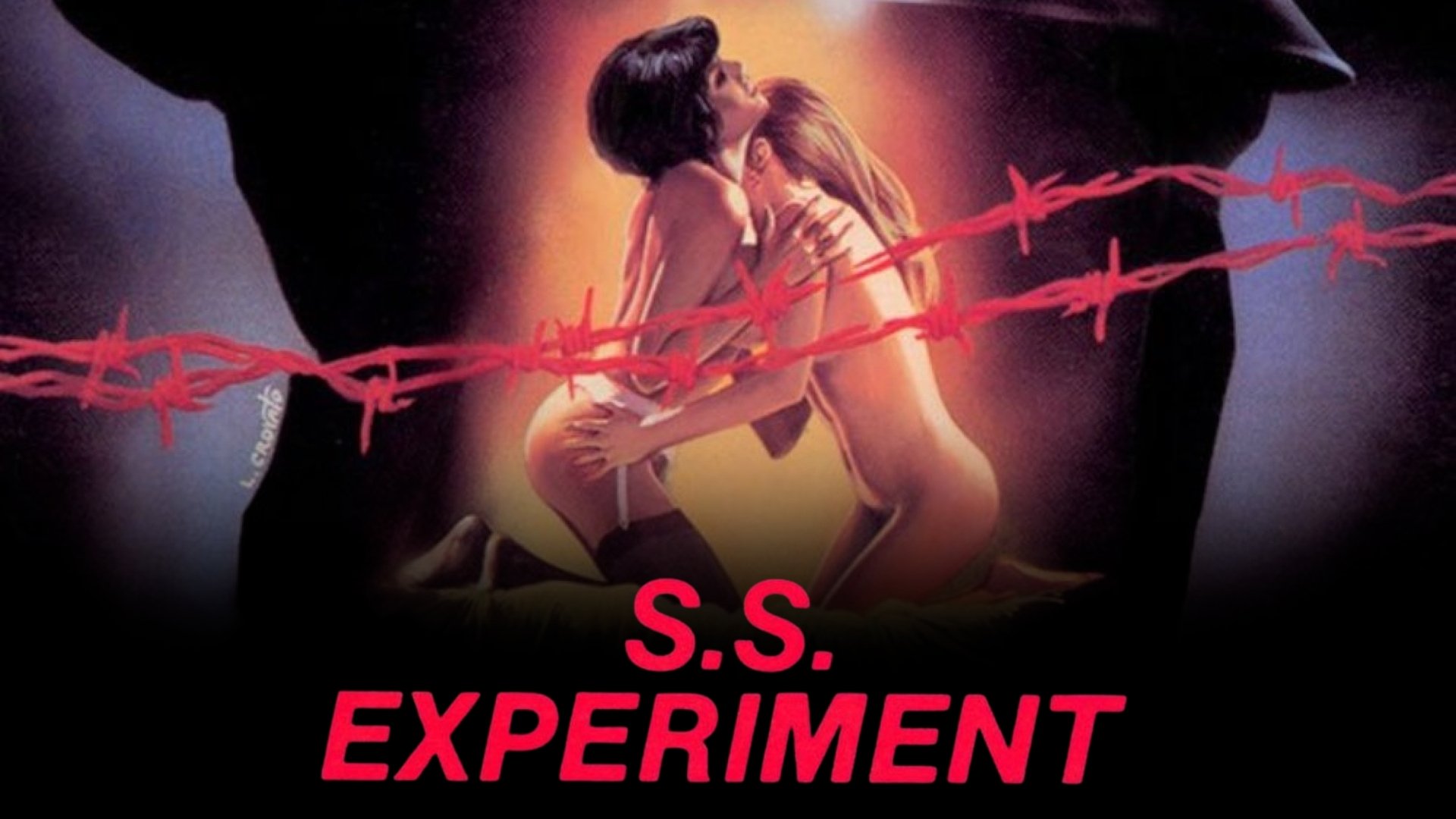
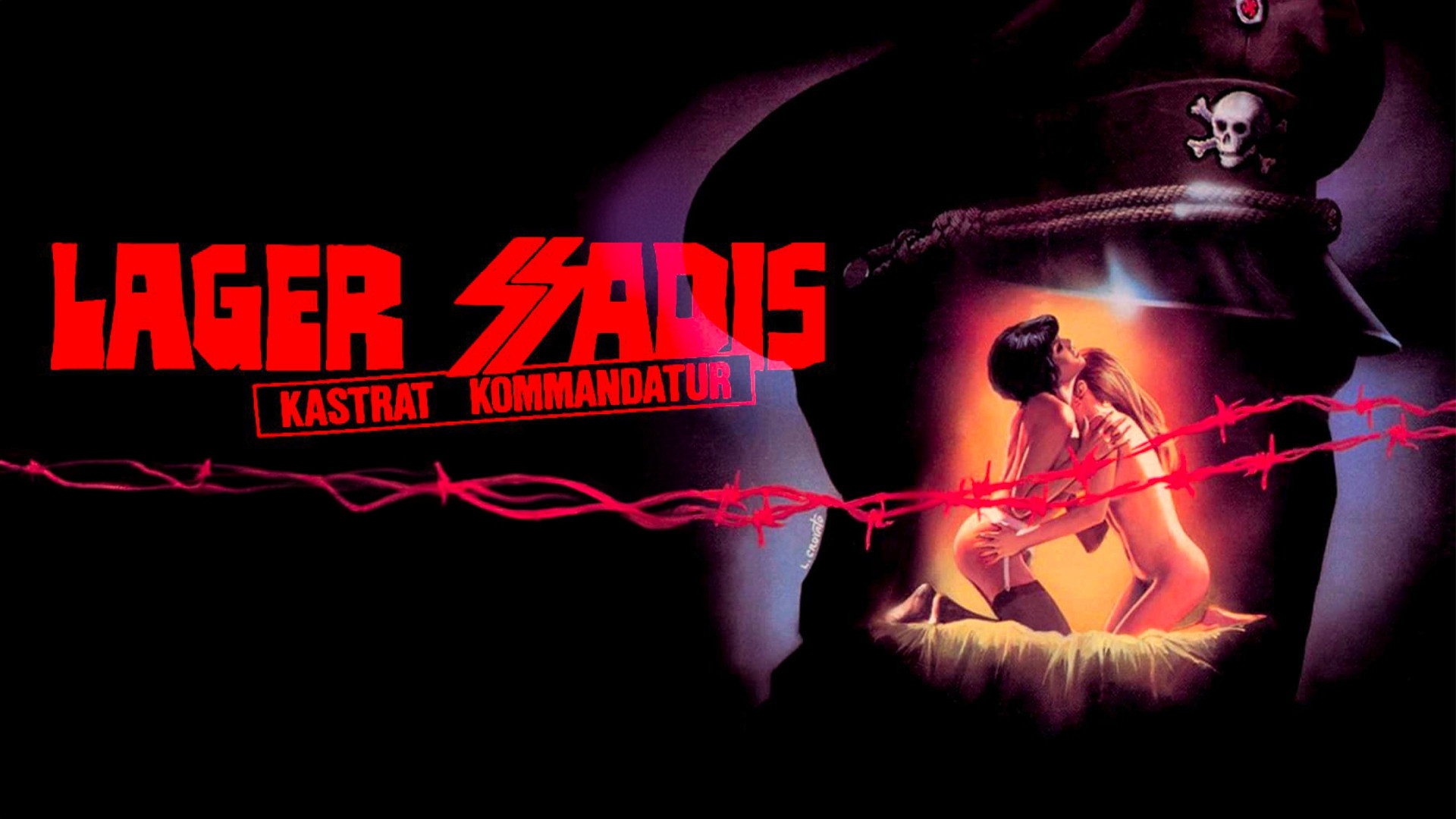
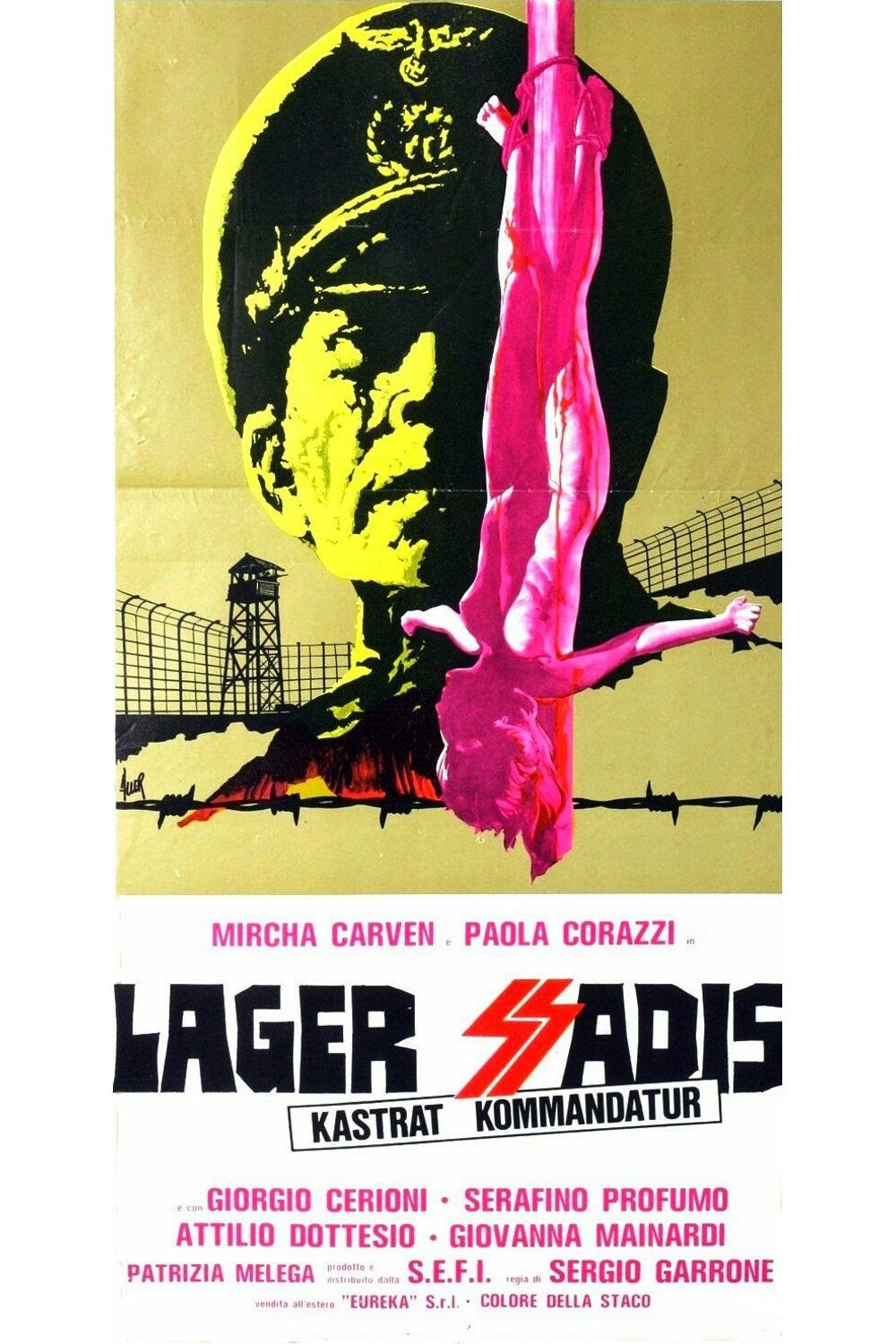
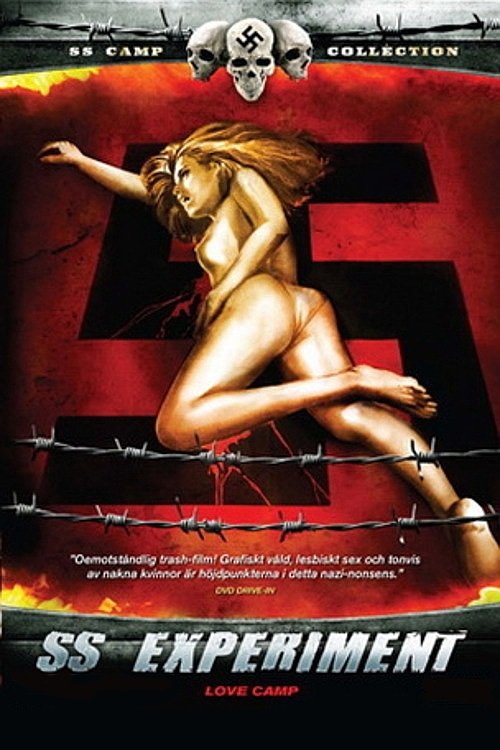
The film's most significant international controversy developed after its release on British videocassette by GO Video. During the early 1980s, the rapidly expanding home-video market created opportunities for independent distributors to acquire foreign exploitation productions that had little previous visibility in British cinemas. With major Hollywood companies initially cautious about licensing their most valuable films for videocassette distribution, smaller businesses competed through distinctive packaging and aggressive advertising. GO Video promoted SS Experiment Camp with imagery emphasizing Nazi symbols and the exposed body of a suspended woman. The artwork became substantially more recognizable than the film itself and appeared repeatedly in subsequent reporting about extreme videocassettes.

A full-page advertisement in the January 1982 issue of Television and Video Retailer became one of the early focal points of the controversy. Objections to advertisements for SS Experiment Camp, Cannibal Holocaust and The Driller Killer were discussed in the video trade press and attracted the attention of the Advertising Standards Authority. The authority subsequently criticized the presentation of the material. Historical research has questioned simplified accounts of precisely who first complained and how those complaints reached the authority. What is documented is that advertising practices became a public issue before the later video nasties campaign developed into a broader debate over the content of the films themselves.

The promotional strategy was particularly effective because the artwork condensed the film's controversial historical and sexual imagery into a single advertisement. Its use of a Nazi camp setting made the campaign especially sensitive, while the new videocassette market allowed the material to be encountered in newspapers, video shops and trade publications without viewers necessarily seeing the film. The resulting publicity therefore operated independently of its dramatic construction or the intensity of its filmed violence. By the spring of 1982, advertisements for several independent horror releases had become recurring examples in press coverage concerned with the regulation of home entertainment.

The controversy contributed to the political environment in which the Director of Public Prosecutions began examining videocassettes under the Obscene Publications Act. SS Experiment Camp became one of the titles associated with successful obscenity prosecutions. Those proceedings must be distinguished from formal classification by the British Board of Film Classification. Before the Video Recordings Act 1984, the sale of videocassettes operated under a regulatory system different from theatrical exhibition. The subsequent requirement for video classification changed the conditions under which previously controversial material could legally circulate. The film's place in this history is particularly striking because the advertising campaign became one of the most familiar visual symbols of the entire controversy.

The 2005 Uncut Classification and the 2008 Parliamentary Debate

The film returned to official British classification more than two decades after the original video nasties controversy. The British Board of Film Classification examined an edition submitted by Blackhorse Entertainment and granted an 18 certificate on August 26, 2005. The recorded running time was 93 minutes and 58 seconds, with no compulsory cuts. The BBFC distinguished the objectionable premise and historical setting from material it considered sufficiently harmful to require intervention. In its annual report for that year, the Board explained that the sexual activity was presented as consensual for classification purposes and that the potentially eroticized violence was comparatively limited. This was a regulatory assessment of the submitted version, not an endorsement of the film's historical representation.

The decision produced further controversy after the film became available through ordinary British retail channels. On February 29, 2008, it was discussed extensively in the House of Commons during consideration of the British Board of Film Classification (Accountability to Parliament and Appeals) Bill. Conservative MP Julian Brazier used SS Experiment Camp as an example in his argument that the classification system required stronger parliamentary accountability. He criticized the representation of torture and sexual degradation within a concentration-camp setting, questioning whether such material should be permitted for general adult distribution. His argument concerned the BBFC's authority and the possible social consequences of extreme screen violence, rather than the discovery of previously unknown footage.

Other participants in the debate reached different conclusions. John Whittingdale stated that he had watched the film and found it offensive and poorly made, but did not identify a scene that he believed justified prohibition. He argued that the film was less disturbing than certain examples of graphic violence in contemporary mainstream cinema. The disagreement revealed differing views of the relationship between artistic quality, historical offensiveness and the legal threshold for censorship. Whittingdale also warned that renewed political controversy could inadvertently increase public curiosity about a relatively obscure production. His intervention demonstrates that opposition to a film's content and support for its legal availability could coexist within the same parliamentary position.

Margaret Hodge, speaking for the government, also addressed the film after attempting to watch it in preparation for the debate. She criticized its historical implausibility, particularly the representation of concentration-camp prisoners in circumstances inconsistent with the realities of Nazi imprisonment. Drawing upon her family's experience of the camps, she distinguished the seriousness of the historical subject from what she regarded as a crude fictional depiction. Nevertheless, she did not support the conclusion that the film should automatically be prohibited. The exchange provides an unusual primary record of a single exploitation production being examined directly by British legislators, whose disagreements concerned both the interpretation of its images and the responsibilities of the classification authority.

The parliamentary discussion took place decades after the promotional campaign that originally made SS Experiment Camp notorious. In 1982, the film had been a prominent object of concern within the emerging videocassette market; in 2008, it became evidence in a dispute about the limits of adult classification and the accountability of film regulators. The difference between those controversies is important to its historical interpretation. Its original publicity, prosecution history and subsequent classification were separate developments occurring under changing regulatory conditions. The film remains a particularly well-documented case of how exploitation marketing can produce a public identity that persists long after the circumstances of its original release.

References

  1. UK Parliament - Hansard British Board of Film Classification (Accountability to Parliament and Appeals) Bill - House of Commons, 29 February 2008

    Complete official parliamentary debate containing substantial first-hand discussion of SS Experiment Camp by Julian Brazier, John Whittingdale, Margaret Hodge and other MPs. Documents the disagreement surrounding its 2005 classification, historical representation and the legal limits of film censorship.

Cast

View Full Cast & Crew →

Release & Distribution

Production Companies (1)

  • Società Europea Films Internazionali Cinematografica (SEFI)

Release History (2)

Release DateTerritoryRelease TypeFormatDistributorCertificationNotes
1976-11-16 IT theatrical — — —
1976-11-16 US theatrical — — —
Sex experiments in pursuit of a better tomorrow!