Gestapo's Last Orgy (1977)

IT
HORROR FILM Drama War
SUBGENRES SEXUAL
UK censorship history DPP · Successful prosecutions
Runtime
81 min
Release
January 21, 1977
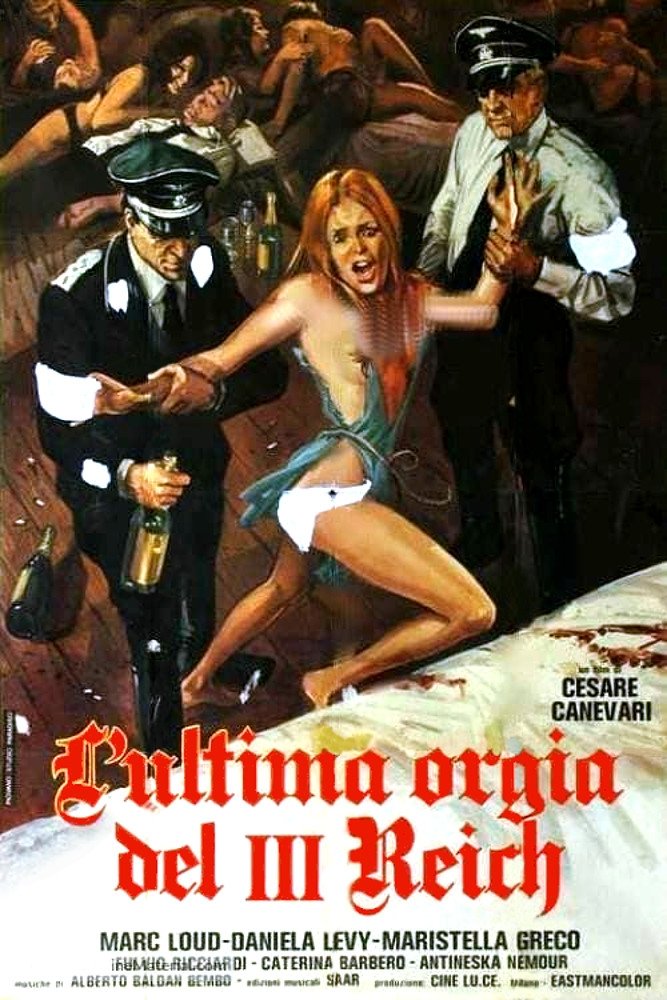
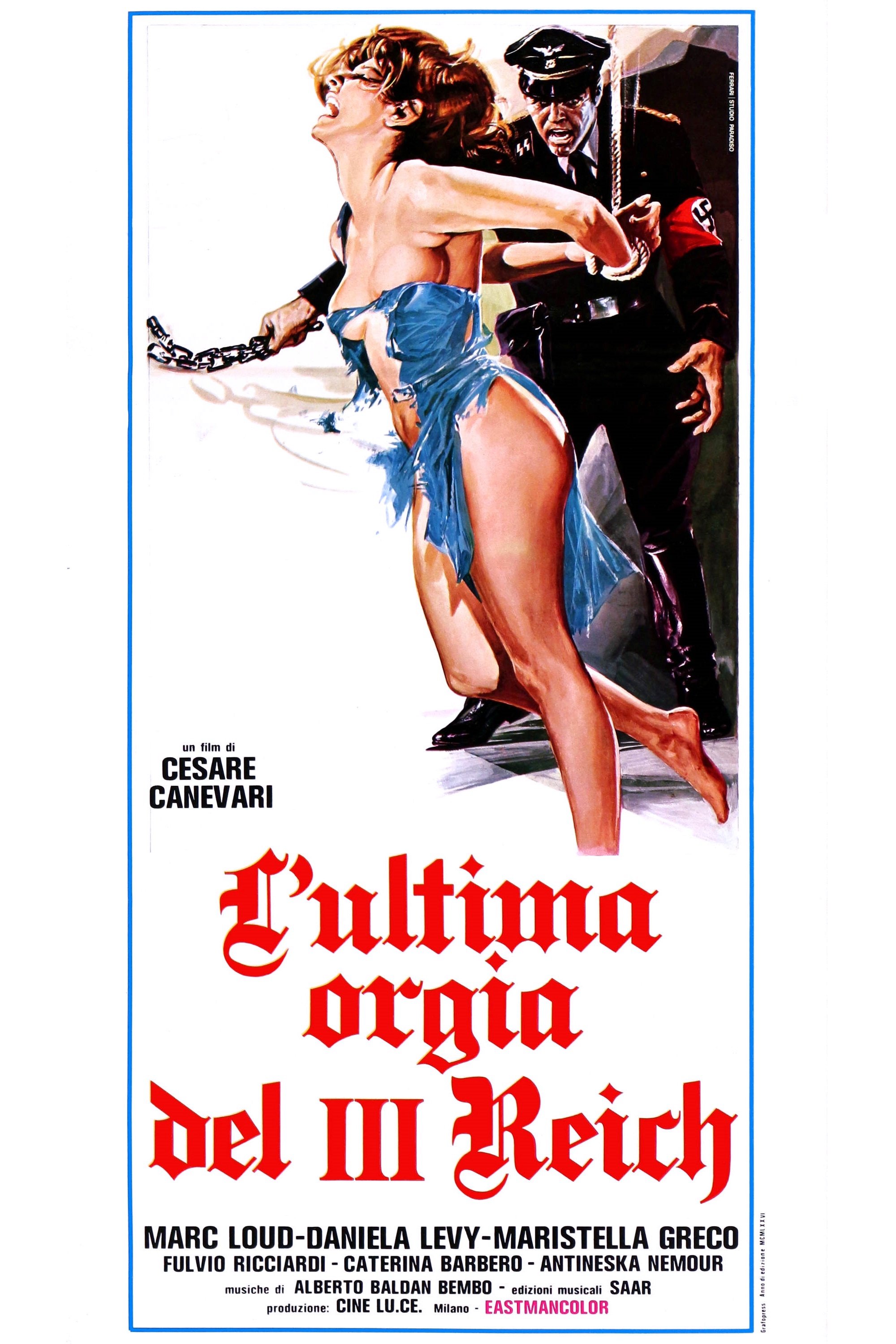
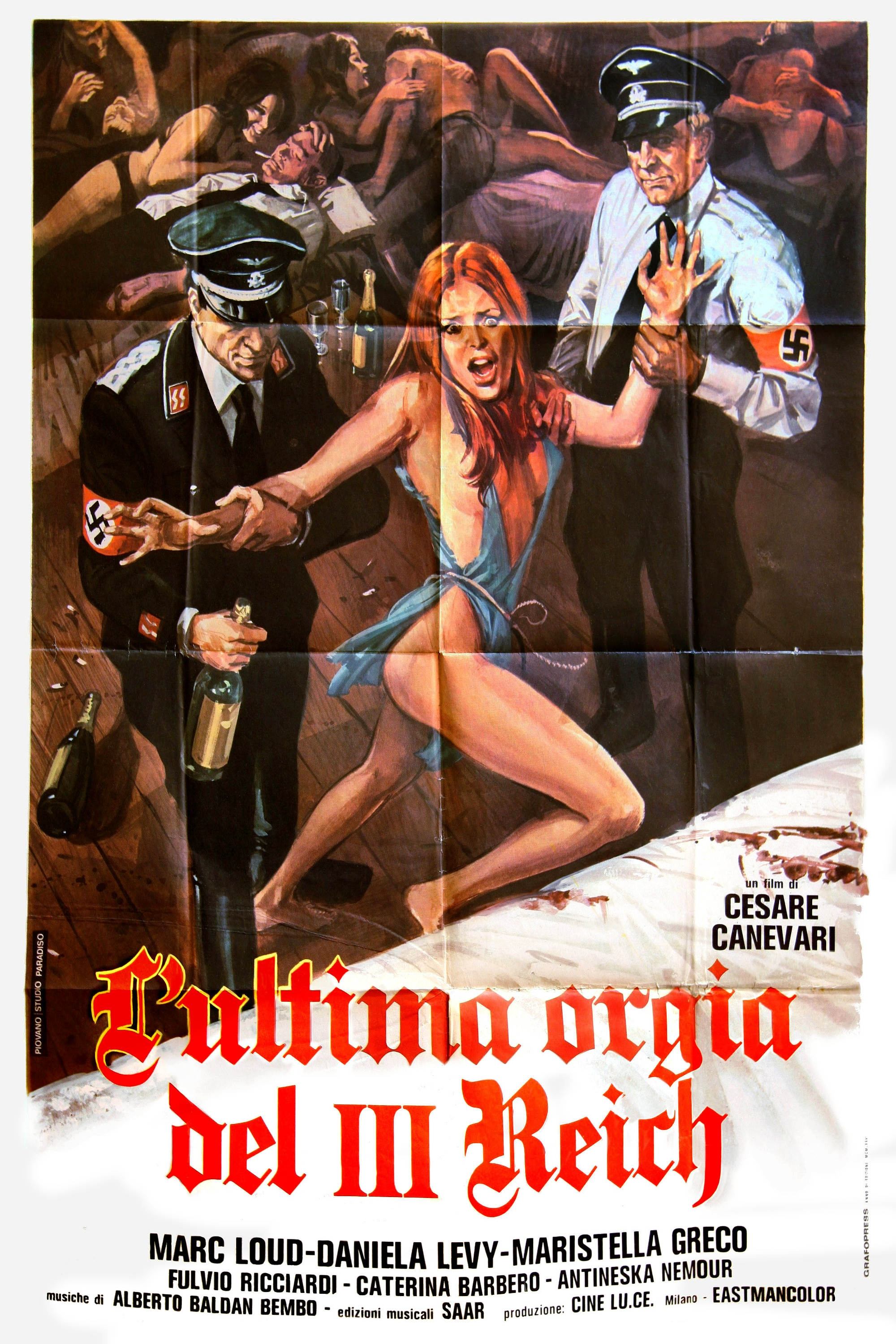
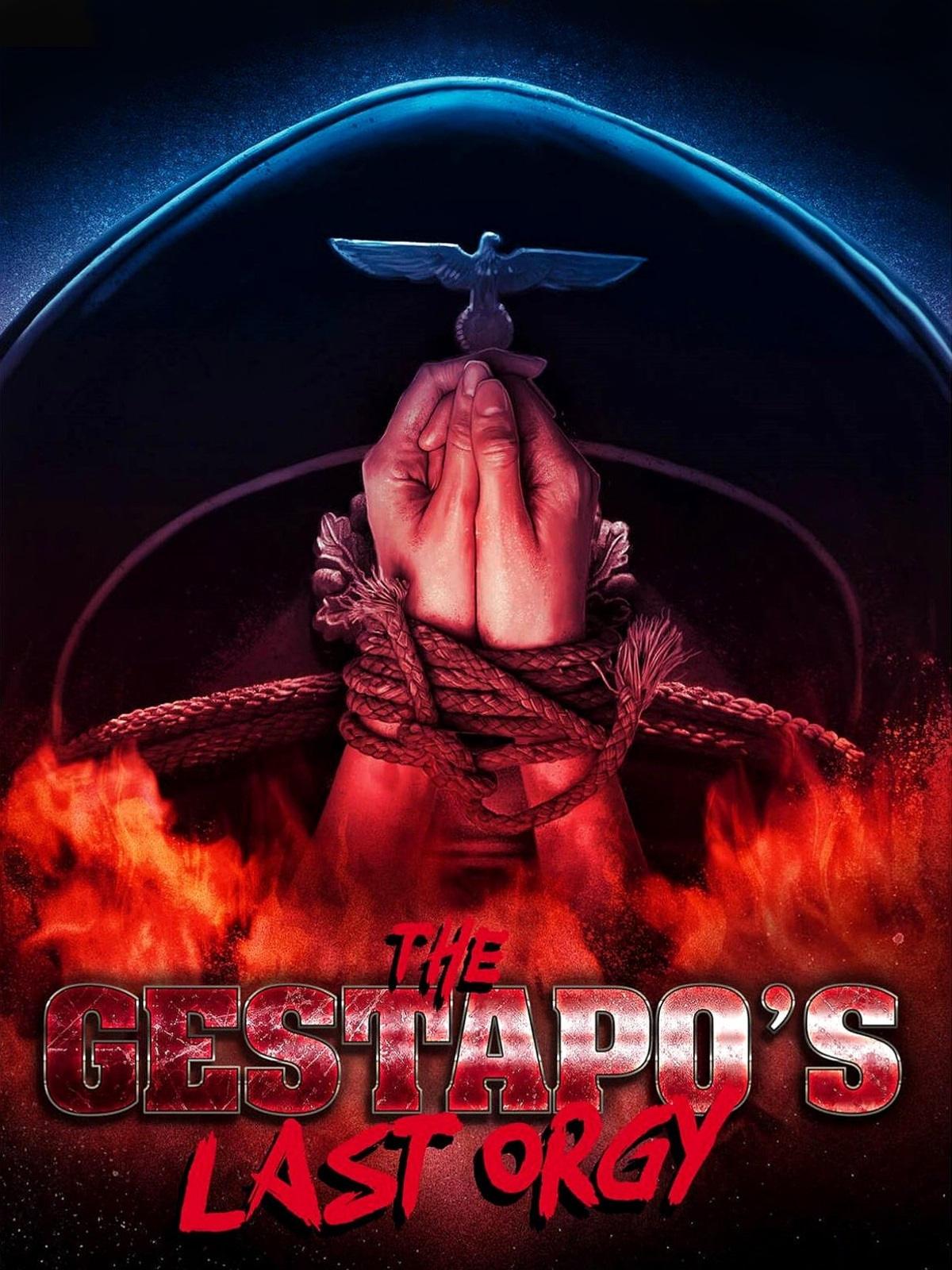
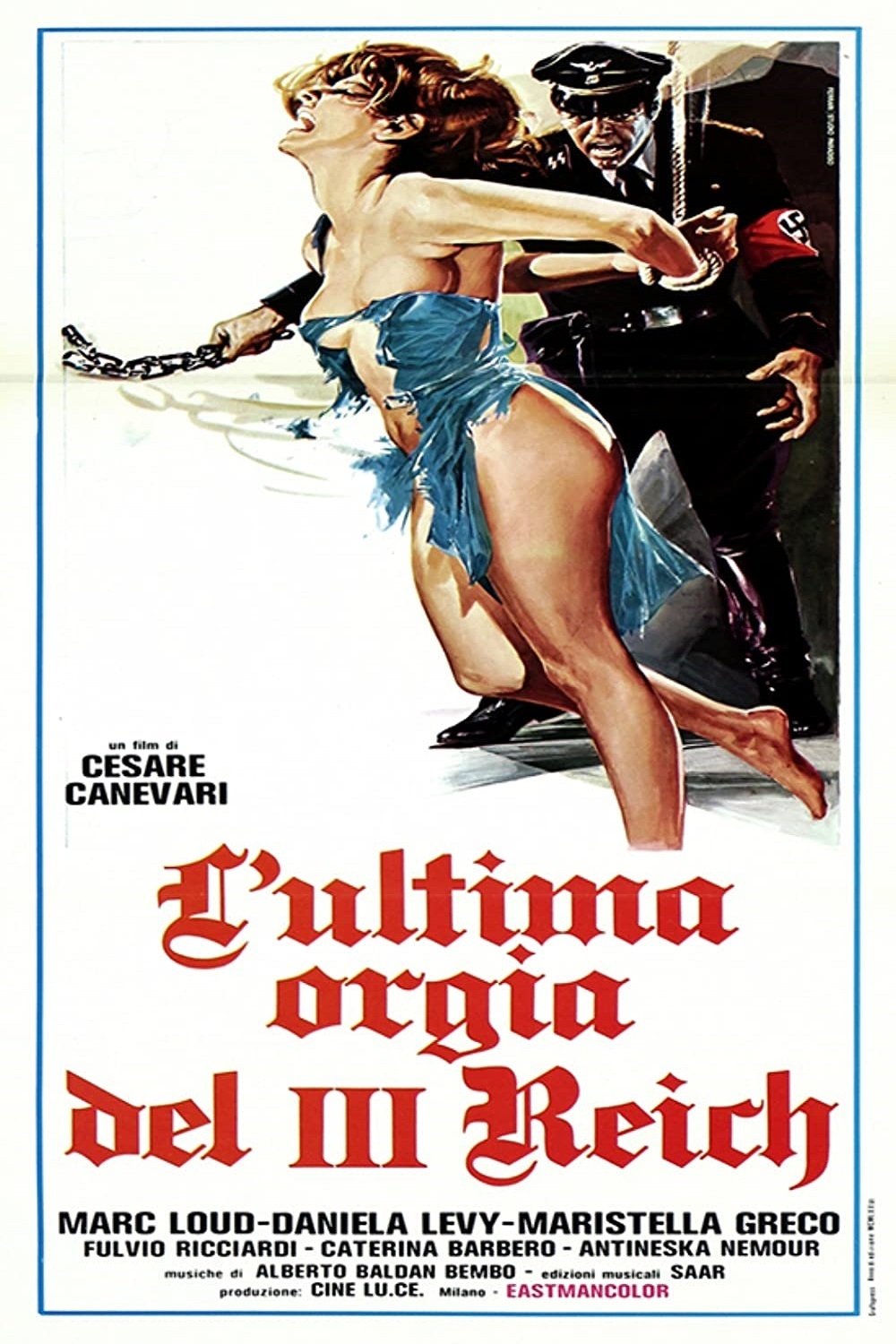
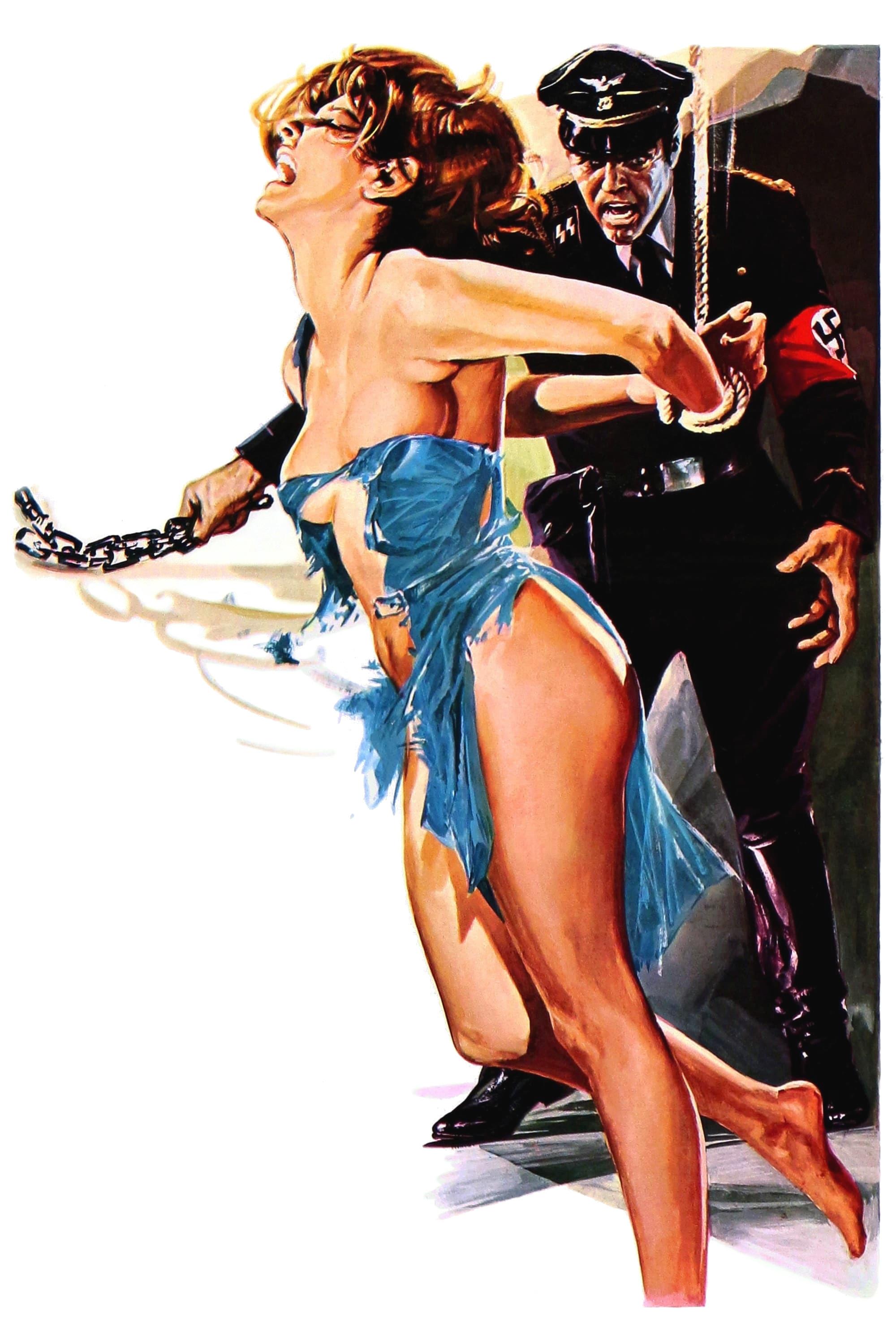
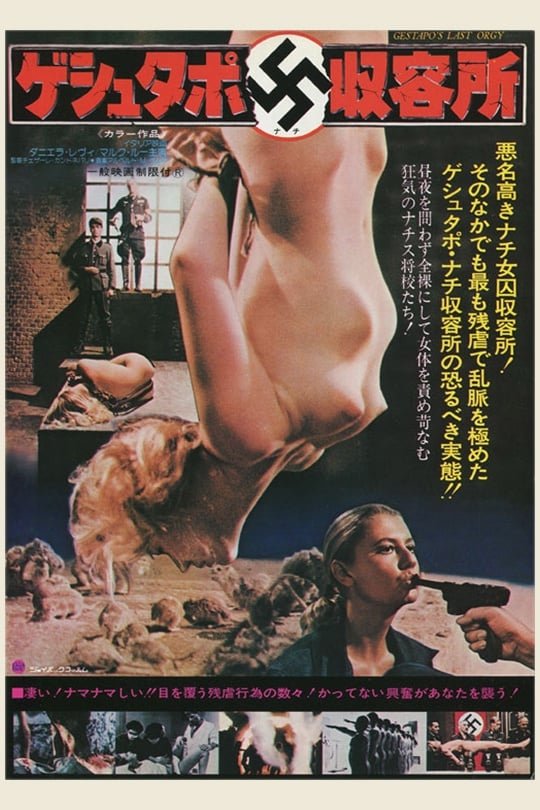
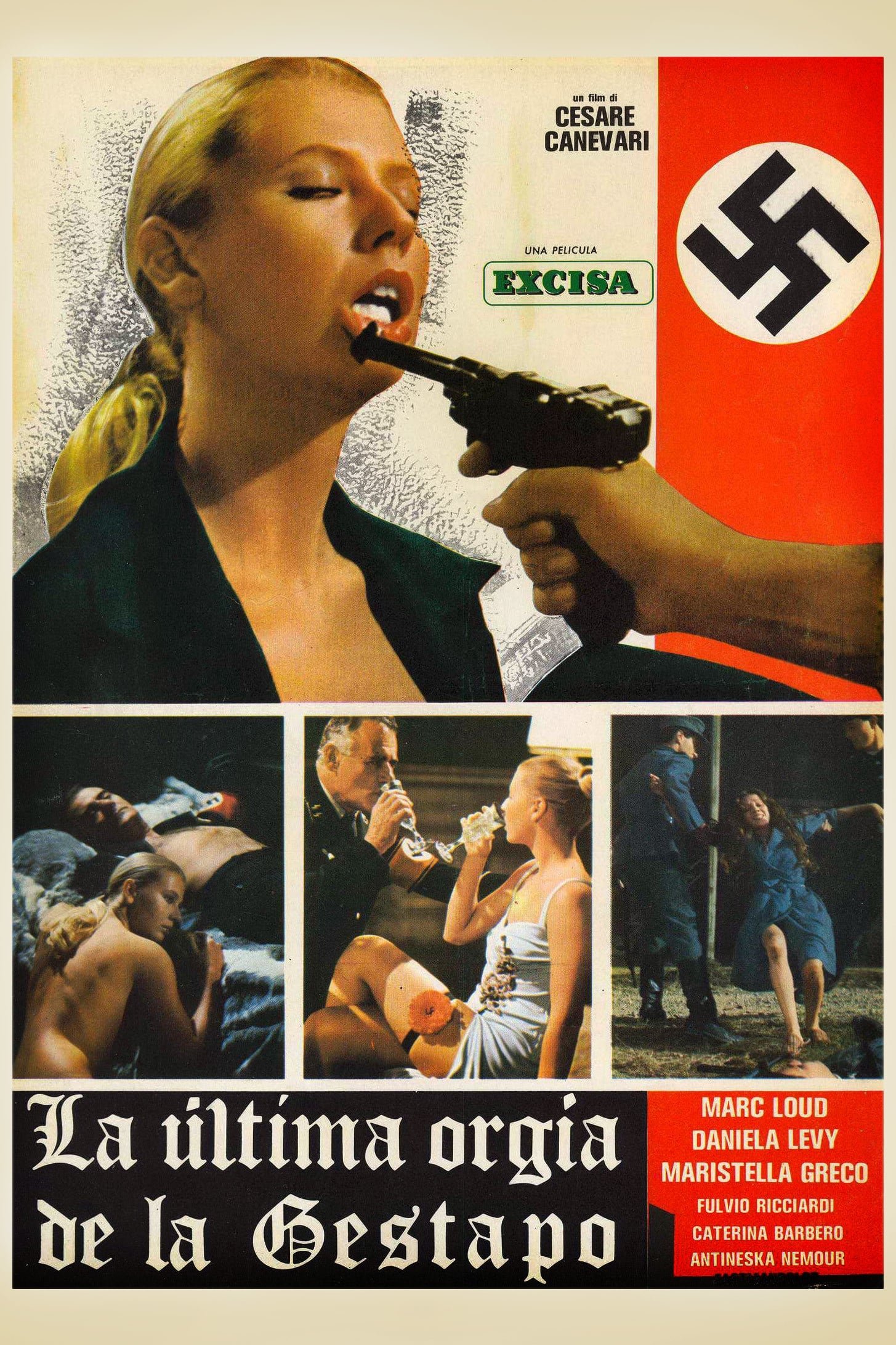
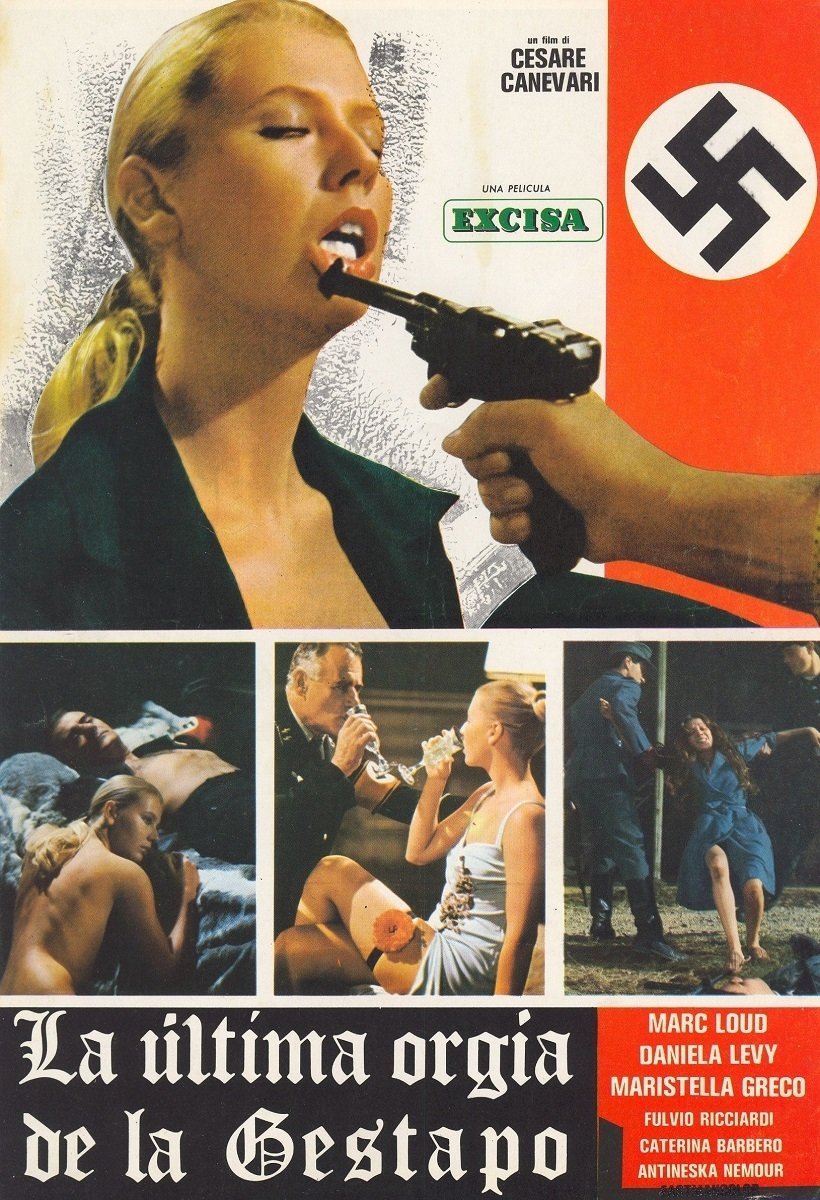
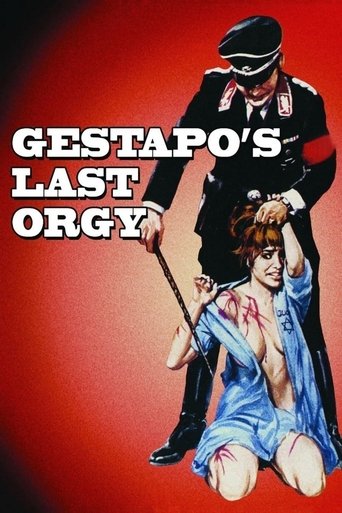
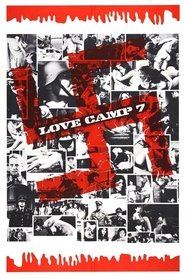
Gestapo's Last Orgy (1977) poster
Director
Production Company
Cine Lu.Ce.
Plot

Lise Cohen is taken to a special prisoner-of-war camp for female Jews, a camp run as a bordello to entertain the German officers and troops going in to battle. The camp is run with an iron fist by Commandant Starker and his minion Alma. Starker becomes frustrated when Lise demonstrates no fear, and devises cruel experiments to scare her, to no avail. Once she realizes her guilt is unfounded, Lise begins to play Starker's game, but even though she begins living a better life, she doesn't forget the atrocities she has seen and experienced.

Alternative Titles
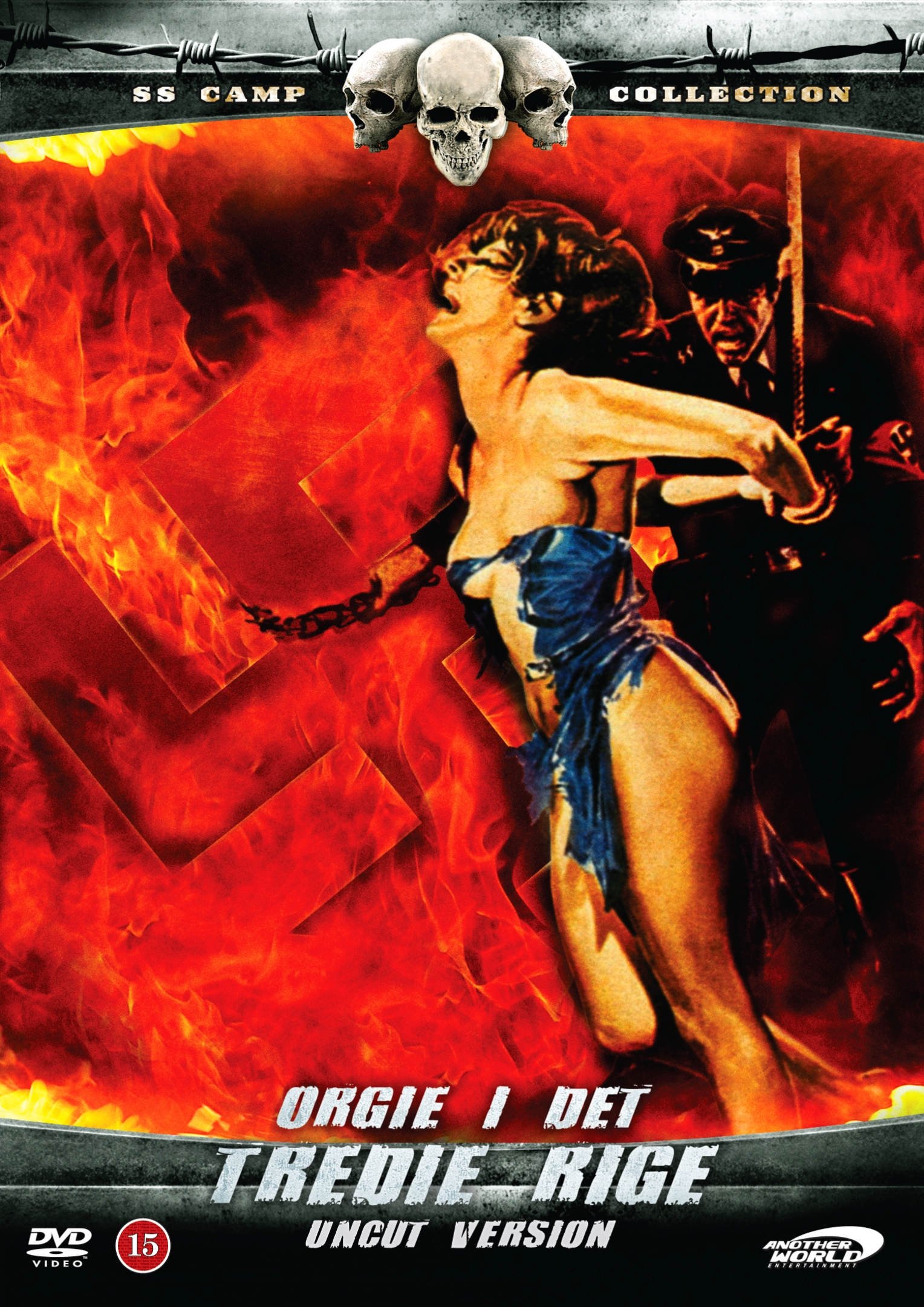
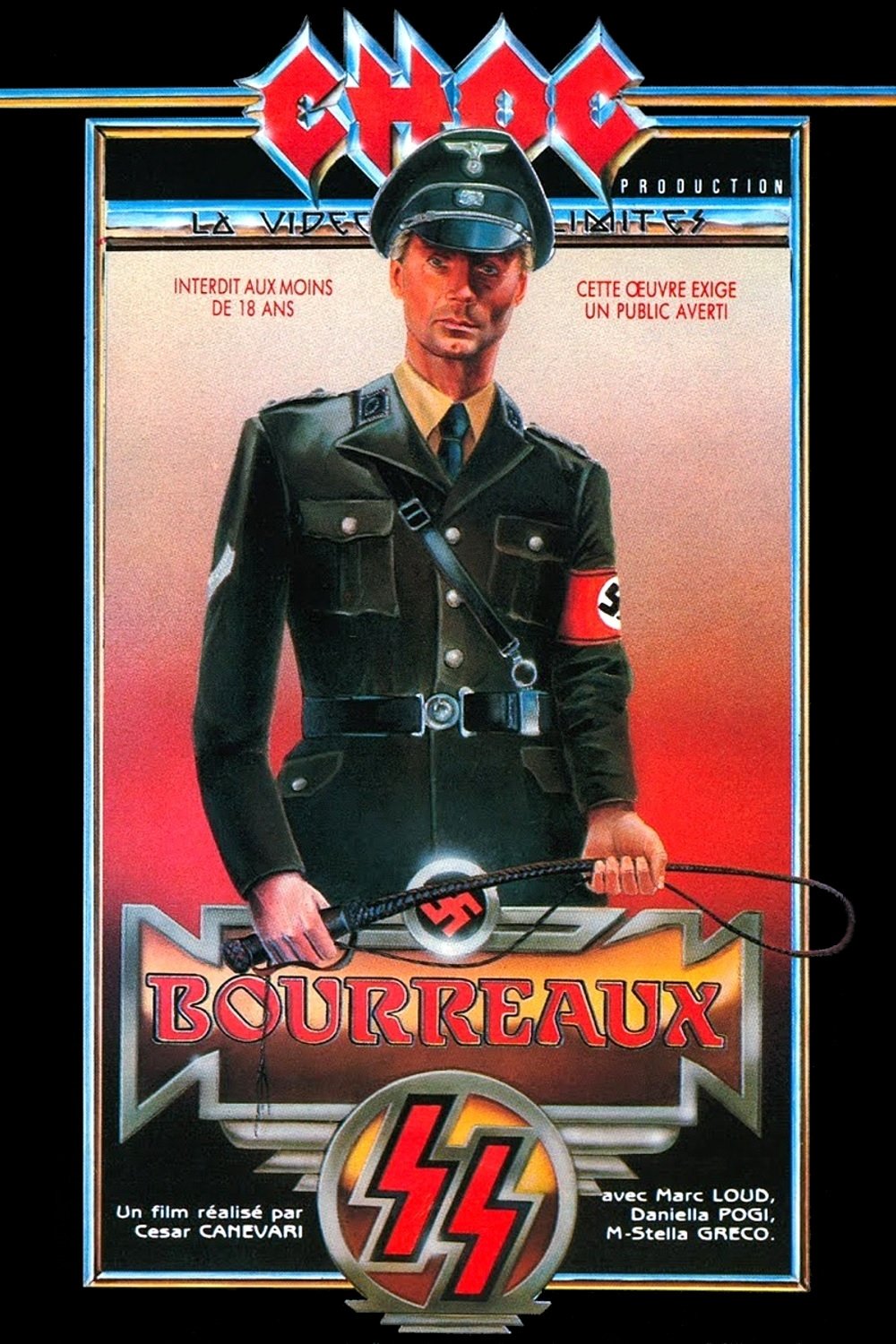
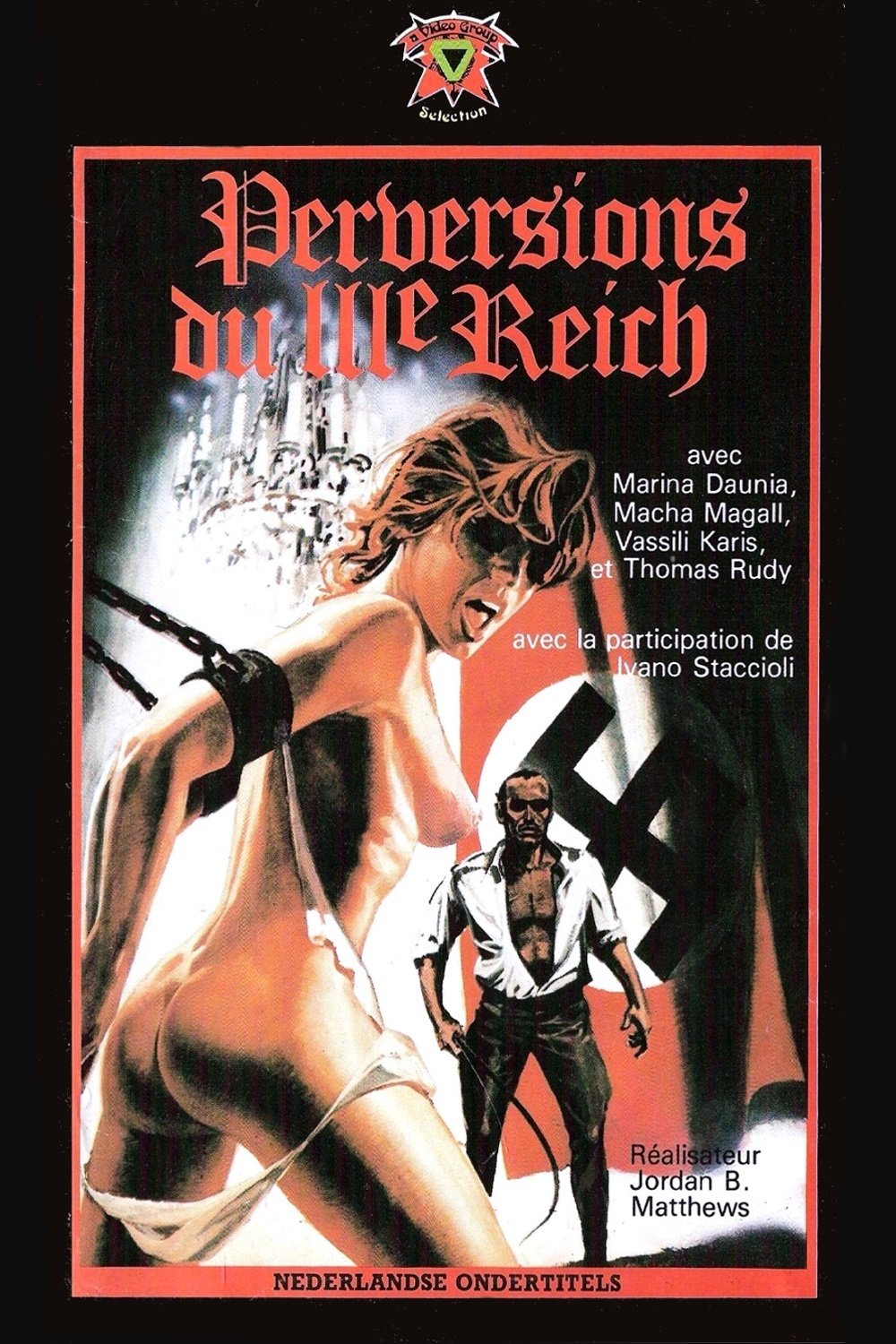
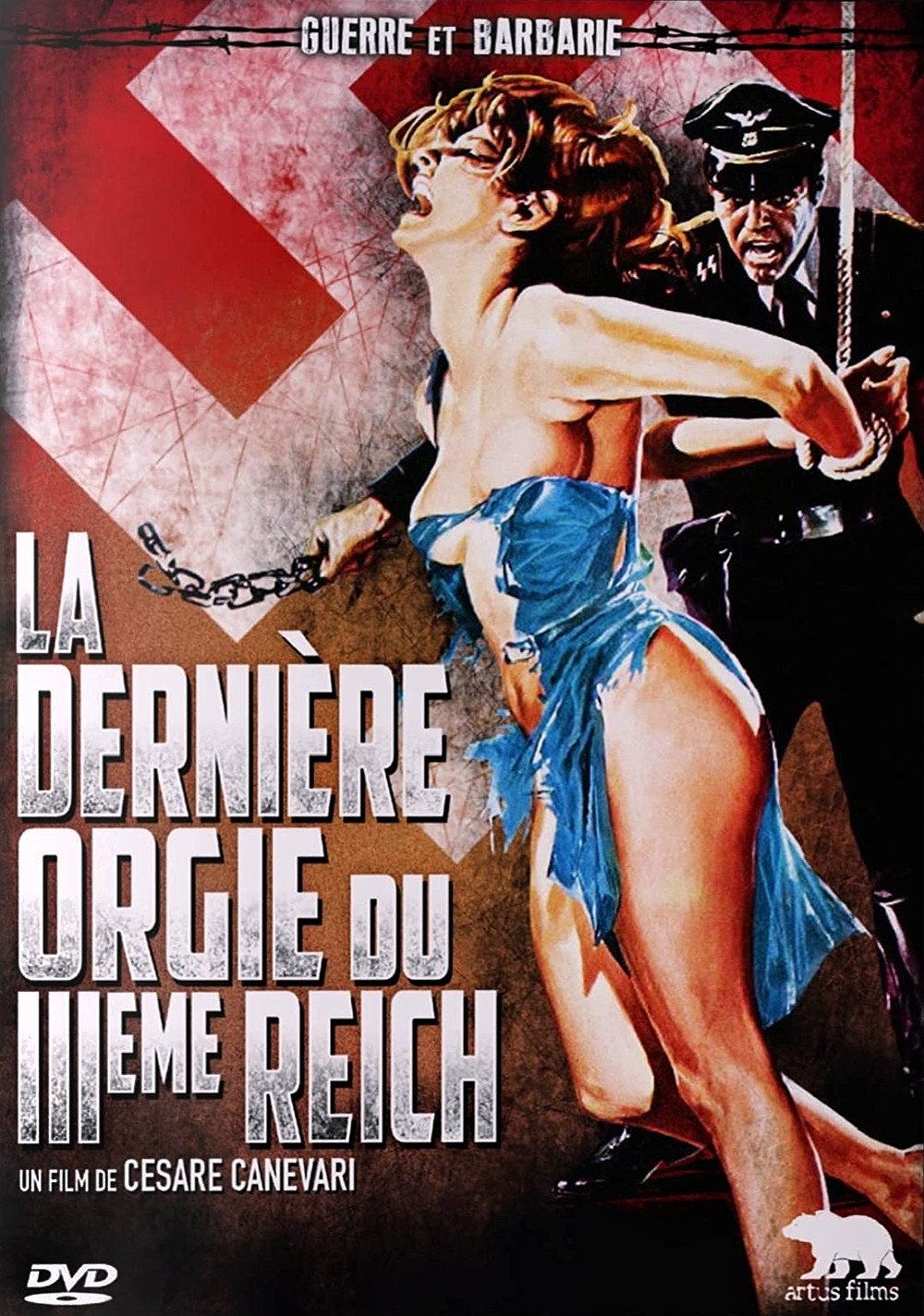
As Condenadas (Brazil) — Portuguese La sequestrée des SS (Canada) — French title 第三帝国最后的纵欲 (China) — Chinese Orgie I Det Tredie Rige (Denmark) — Danish La última orgía de la Gestapo (Spain) Bourreaux SS (France) — Home Video Title Des filles pour le bourreau (France) Deux filles pour le bourreau (France)
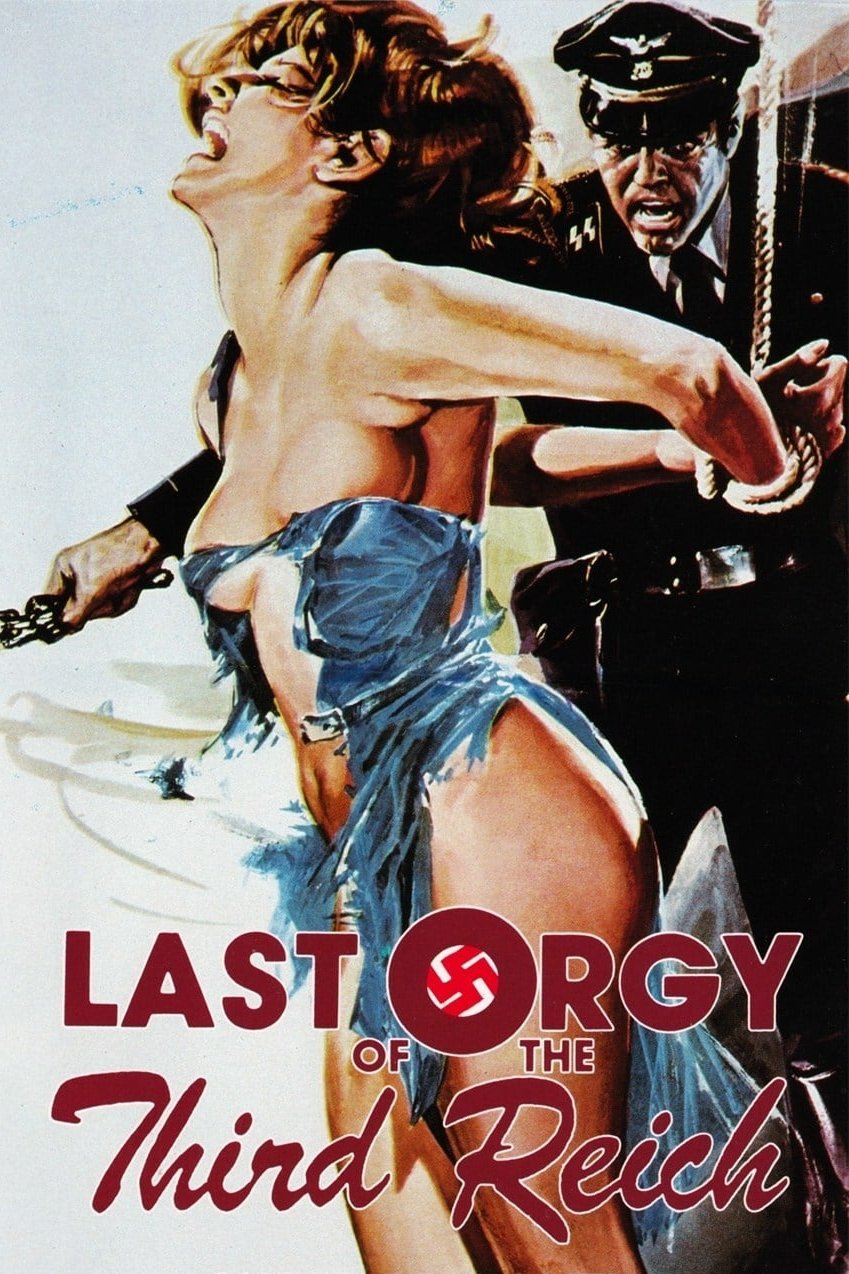
Show all 20 alternative titles Filles pour le bourreau (France) La Dernière Orgie du IIIeme Reich (France) — French Last Orgy of the Third Reich (United Kingdom) The Gestapo's Last Orgy (United Kingdom) 第三帝國最後的縱欲 (Hong Kong SAR China) — Chinese Caligula Reincarnated as Hitler (Italy) ゲシュタポナチ収容所 (Japan) ゲシュタポ卍収容所 (Japan) — Japanese Ostatnia orgia gestapo (Poland) — Polish A Última Orgia do III Reich (Portugal) — Portuguese The Gestapo's Last Orgy (Sweden) — Swedish Последняя оргия третьего рейха (Russia) — (Russian title)

Trailers & Videos

1 video

Film Guide & Analysis

Cesare Canevari's 1977 Nazisploitation film: Italian genre history, its relationship with The Night Porter, Daniela Poggi's testimony, disputed versions and British censorship.

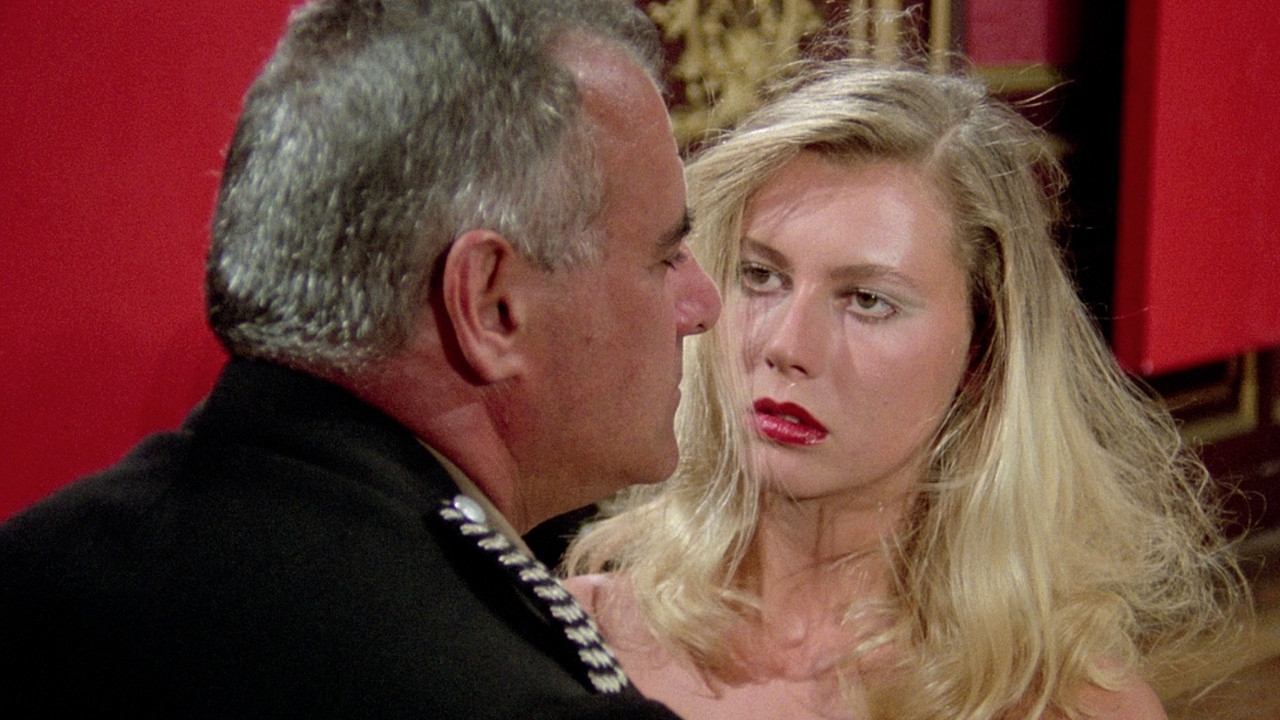
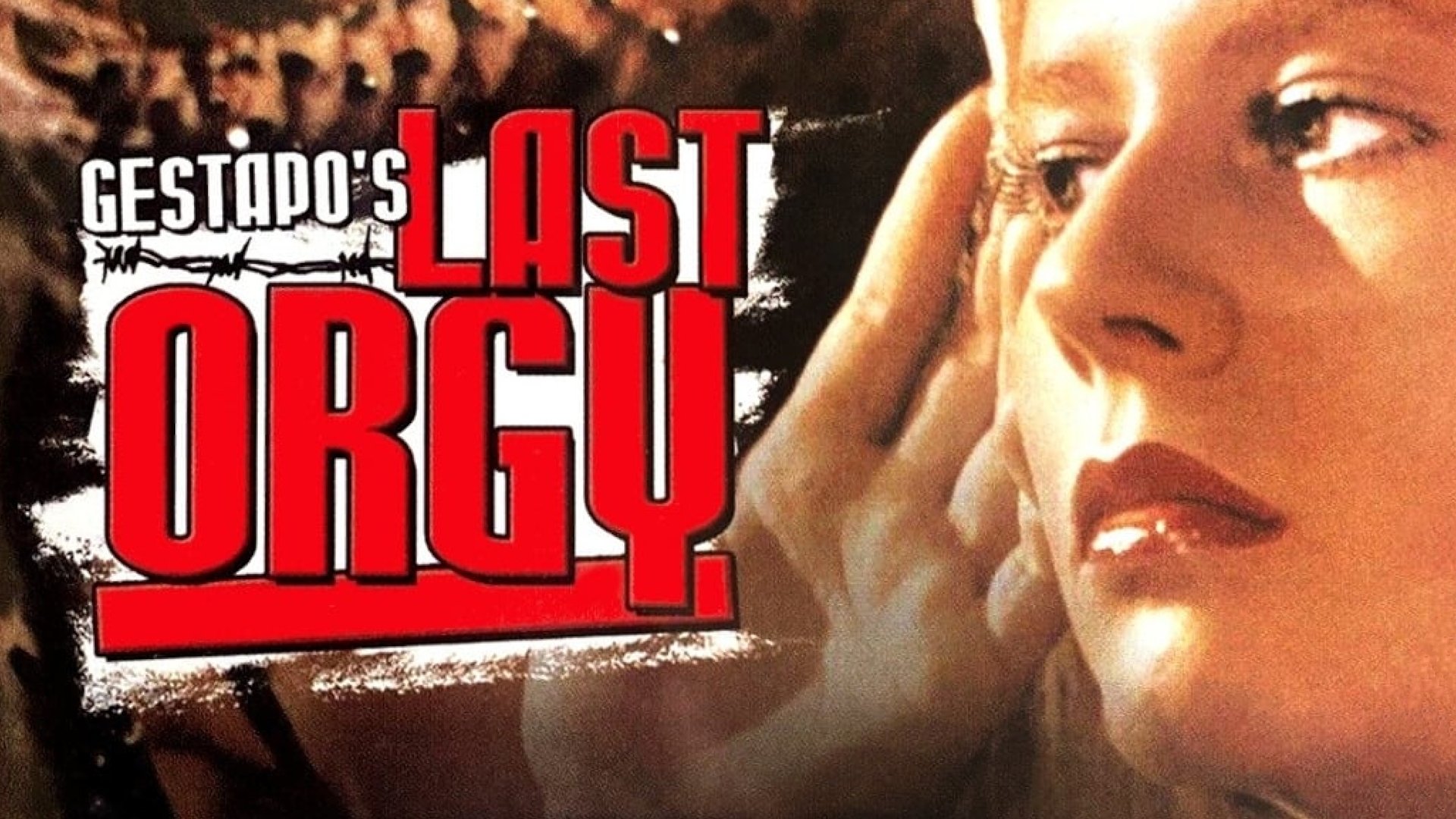
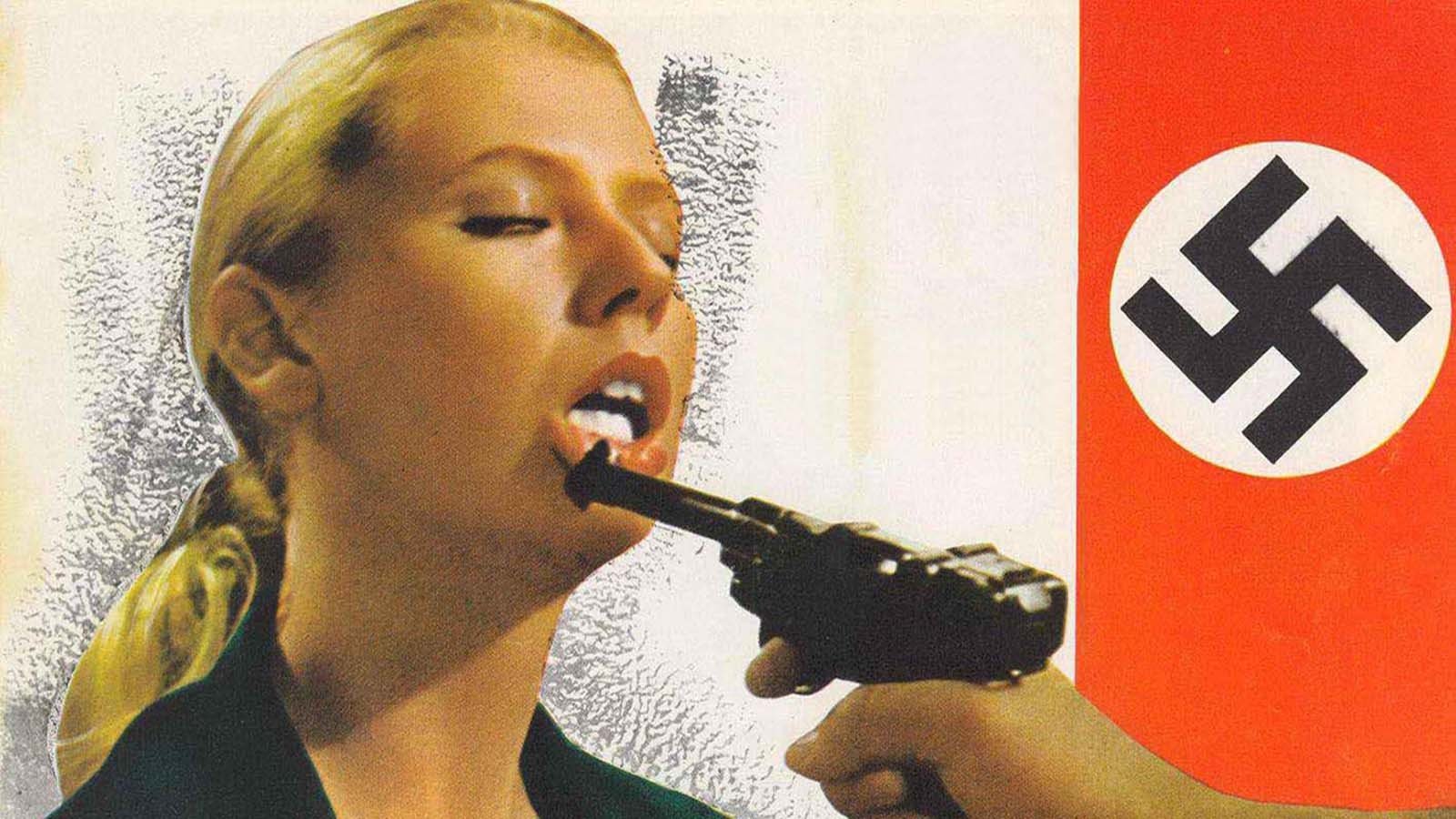
Gestapo's Last Orgy (1977), originally titled L'ultima orgia del III Reich, is an Italian Nazisploitation film directed by Cesare Canevari and written by Canevari and Antonio Lucarella. It belongs to the brief concentration of Italian productions that employed Nazi imprisonment, institutional terror and sexual violence as the principal material of exploitation cinema. Its importance within this cycle comes from the intensity of its representation of persecution and its unusually direct relationship to Liliana Cavani's The Night Porter (1974). Film scholar Mikel J. Koven has examined this relationship in detail, identifying shared narrative structures while distinguishing the two films through their treatment of memory, spectatorship and sexual abuse.

The film also occupies a documented place in the history of British censorship. After becoming associated with the video nasties controversy of the 1980s, it was refused classification by the British Board of Film Classification in 2021, when a 97-minute version was submitted for home entertainment distribution. The surviving Italian industry records, a retrospective interview with actress Daniela Poggi and academic research into the Nazisploitation cycle provide separate forms of evidence about its production and historical position. They also reveal the limitations of several frequently repeated claims concerning additional footage and alternative versions.

The Italian Nazisploitation Cycle of the 1970s

Gestapo's Last Orgy emerged during the short expansion of Italian Nazi sexploitation cinema in the middle and late 1970s. Mikel J. Koven identifies a succession of earlier films that provided material for the cycle, including Luchino Visconti's The Damned (1969), Liliana Cavani's The Night Porter (1974), Pier Paolo Pasolini's Salò, or the 120 Days of Sodom (1975) and Tinto Brass's Salon Kitty (1976). Their artistic purposes and production circumstances differed considerably, but each contributed to a cinematic environment in which fascist authority, sexual domination and institutional brutality could become subjects of increasingly explicit representation. Italian exploitation filmmakers adapted selected elements of that environment for lower-cost genre productions.

Koven distinguishes between films organized around Nazi brothels and those centered on the coercion of women imprisoned in fictional camps. Gestapo's Last Orgy belongs to the latter group, in which confinement provides the setting for recurring spectacles of violence and humiliation. The broader cycle included productions such as SS Experiment Camp, SS Camp 5: Women's Hell and SS Girls, alongside international examples including Ilsa, She Wolf of the SS. These productions shared a commercial interest in Nazi iconography but differed in their use of historical settings, erotic material and horror conventions. Their common subject matter should therefore be understood as a recognizable exploitation formula rather than evidence of identical filmmaking intentions.

The historical context has received further examination from Anthony Page, whose 2025 doctoral research at King's College London studies nine Italian Nazi exploitation films, including Canevari's. Page places the cycle within Italian debates about the Second World War, the political violence of the Years of Lead, changing gender relations and the relationship between popular cinema and contemporary art filmmaking. His approach treats Nazisploitation as a specifically Italian cultural phenomenon requiring historical analysis, while recognizing its reliance on imagery of sexual abuse and persecution. These connections provide a framework for understanding the cycle without assuming that individual productions were conceived as deliberate statements about every political issue surrounding them.

Cesare Canevari, Antonio Lucarella and the Production

The Italian film industry archive maintained by ANICA identifies Cesare Canevari as director and Antonio Lucarella as the author of the original subject, with both men credited for the screenplay. The production company was Cine Lu.Ce., and distribution was handled by Indipendenti Regionali. These records establish the film's principal production identity independently of its later international packaging. They also document the use of alternative professional names within the cast: Adriano Micantoni appeared as Marc Loud, while Daniela Poggi was credited as Daniela Levy. Such details are relevant to the identification of surviving prints and documentation, since different release materials may use different forms of the performers' names.

The available industry documentation records Claudio Catozzo as cinematographer, Enzo Monachesi as editor and Alberto Giromella as production designer. Although these credits identify the departments responsible for the finished images, they do not establish the particular methods used to construct individual scenes or the reasons for every production decision. Claims concerning precise budgets, shooting schedules and uncredited technical contributions consequently require evidence beyond the published credits. The film's treatment of imprisonment depends heavily on its physical environments, restricted interior spaces and assembled groups of guards and prisoners, but those visible features should not be confused with a documented account of the production process.

A significant retrospective source is the testimony of Daniela Poggi. Interviewed by Rosanna Scardi for Corriere della Sera in December 2012, Poggi recalled that she was working as a model when her agency encouraged her participation. She also stated that material not anticipated in the original production had been added and criticized the eventual title. Her account is particularly important because it comes from a principal performer discussing the circumstances of her involvement rather than from later promotional material. It establishes her dissatisfaction with aspects of the finished production, although it does not identify a complete alternate edit or specify the provenance of every disputed scene.

Narrative Structure and the Relationship with The Night Porter

The strongest documented critical comparison concerns the film's relationship with Liliana Cavani's The Night Porter. In his 2004 study of Italian Nazi sexploitation cinema, Mikel J. Koven argues that Canevari directly reworks the earlier film's narrative framework. Both productions organize their material around events during Nazi imprisonment and a later encounter between a former prisoner and a man associated with her persecution. The movement between historical periods creates a structural resemblance, but Koven emphasizes that the purpose and presentation of the retrospective material differ substantially. In Canevari's film, the later encounter provides an organizing device for extended depictions of past brutality.

Koven's comparison becomes more specific in his discussion of cinematic point of view. He observes that Cavani frequently presents fragments of the past through the contrasting memories of different characters, including sequences in which the same event is perceived from opposing positions. In Gestapo's Last Orgy, the historical material is presented much more directly, with less emphasis on the instability or subjectivity of recollection. Koven describes the resulting spectacle through a comparison with Grand Guignol theatre. His argument concerns the cinematic treatment of traumatic experience: the spectator is repeatedly placed before staged acts of cruelty rather than invited to reconstruct the past through competing memories.

This distinction is central to the film's position within horror history. Its retrospective structure gives the material a relationship to memory and historical responsibility, yet its presentation concentrates attention on the immediate visibility of suffering. The resulting tension between narrative justification and spectacle is characteristic of the most controversial works in the Nazisploitation cycle. Koven treats that tension as a substantial difference between Canevari and Cavani, rather than as a question of whether the two works contain similar acts of violence. It also provides a firmer basis for formal analysis than claims that Gestapo's Last Orgy simply reproduces the earlier film without meaningful changes.

Institutional Violence, Dehumanization and Horror

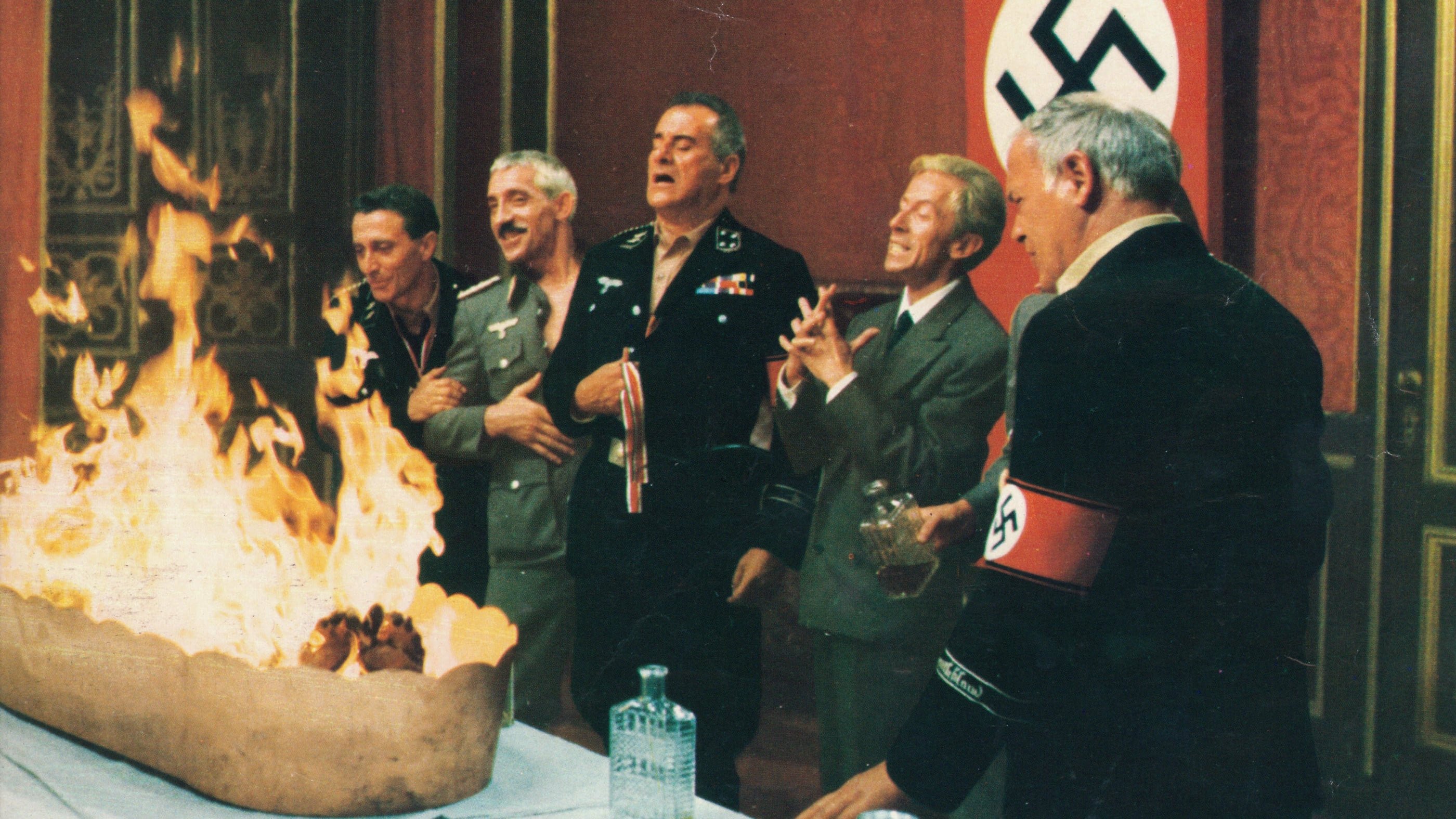
The horror of Gestapo's Last Orgy is organized around imprisonment and the exercise of unchecked institutional power. Military hierarchy, racial persecution and the treatment of prisoners as disposable bodies provide the framework for its scenes of intimidation and abuse. Sexual violence is presented as a recurring instrument of domination, while the camp environment gives individual cruelty the appearance of an organized system. The film uses elements associated with concentration-camp history, but its fictional events cannot be treated as documentary evidence of specific wartime incidents. Its relationship with the Holocaust belongs to the problem of how exploitation cinema appropriates historical atrocity for sensational representation.

The distinction between historical subject and cinematic exploitation has been central to scholarly discussion of the subgenre. Koven examines how films dealing with Nazi persecution moved between art cinema and increasingly explicit commercial exploitation, questioning the different purposes served by apparently related images. Gestapo's Last Orgy occupies an especially difficult position because its treatment of Jewish prisoners and Nazi violence places imagery associated with genocide within a framework of sexual spectacle. An interpretation of the film must therefore consider the way its visual attractions operate, rather than assuming that the presence of atrocities automatically establishes a critical or antifascist intention.

Anthony Page's research offers a broader historical approach to these films. His study investigates how Italian Nazi exploitation cinema reflected conflicts surrounding national memory, gender politics and the violent climate of 1970s Italy. This does not mean that Gestapo's Last Orgy provides a coherent political analysis of those subjects. Its historical significance also comes from the contradictory ways in which popular entertainment incorporated imagery drawn from fascist persecution. The film belongs to a form of horror in which human cruelty and the abuse of authority replace the supernatural monster, while the commercial emphasis on degradation raises persistent questions about the representation of victims.

Italian Certification, International Titles and Version Questions

The film's Italian release documentation provides a secure starting point for its distribution history. ANICA records censorship certificate number 69720, dated January 28, 1977, and identifies Indipendenti Regionali as distributor. The certificate establishes an official administrative milestone, although it does not by itself prove the date of every initial public screening. The original title, L'ultima orgia del III Reich, was subsequently accompanied by several international alternatives. The English-language Gestapo's Last Orgy became particularly prominent, while other circulating titles included Last Orgy of the Third Reich and Caligula Reincarnated as Hitler. ANICA separately records the French title Des filles pour le bourreau.

The surviving release information also requires caution over running times. Some film listings describe editions of approximately 81 minutes, whereas the British Board of Film Classification examined a 97-minute version submitted in 2021. These figures refer to different published records and cannot establish, without examination of the relevant materials, which footage was absent or present in each edition. Different running times may reflect editing, source materials or other presentation differences. The existence of multiple titles likewise does not establish a distinct cut for every territory. Poggi's retrospective assertion that scenes were added is relevant evidence, but it cannot independently resolve the complete editorial history or authenticate claims about a separate explicit version.

British Video Nasties and the 2021 BBFC Refusal

Gestapo's Last Orgy became associated with the British video nasties controversy during the early 1980s and formed part of the group of titles connected with successful prosecutions under the Obscene Publications Act. The controversy developed around the availability of violent and sexually explicit films on videocassette, at a time when home-video distribution operated under a different regulatory system from theatrical exhibition. Its position in this history should be distinguished from later decisions made by the British Board of Film Classification. The original obscenity proceedings and a subsequent refusal of classification arose under different legal and administrative circumstances.

The film received renewed regulatory attention when 88 Films submitted a 97-minute edition for British home entertainment classification. The BBFC record identifies the submitted work as a two-dimensional version intended for physical media and digital distribution. On May 28, 2021, the Board refused classification. Its published explanation identified sustained sadistic violence, humiliation and non-consensual sexual activity within an explicitly antisemitic context. The BBFC considered these elements central to the work and concluded that their extent prevented the concerns from being adequately addressed through cuts. The decision concerned the submitted version and should not be described as a newly imposed worldwide prohibition of the film.
The refusal is particularly significant because it occurred decades after the original video nasties controversy and after many other controversial horror productions had obtained British classifications. The decision documents the continuing importance of context to British film regulation: the Board assessed the relationship between sexual violence, degradation and the representation of persecuted Jewish prisoners, rather than measuring the film solely by the quantity of violent imagery. The published BBFC record provides a specific and verifiable explanation for the 2021 decision. Together with the original Italian documentation and academic examination of Nazisploitation, it establishes the principal grounds on which the film continues to be discussed within the history of exploitation horror and censorship.
References

  1. University of Worcester The Film You Are About to See Is Based on Documented Fact: Italian Nazi Sexploitation Cinema — Mikel J. Koven

    Academic study originally published in Alternative Europe in 2004. Provides a direct comparative analysis of Gestapo's Last Orgy and The Night Porter, examining narrative framing, traumatic memory, cinematic perspective and the Italian Nazisploitation cycle.

  2. King's College London Representation of Nazisim Within Italian Popular Cinema — Anthony Page

    2025 doctoral research examining nine Italian Nazi exploitation films, including Gestapo's Last Orgy, in relation to Italian wartime memory, the Years of Lead, gender politics and the relationship between art cinema and exploitation.

  3. British Board of Film Classification The Gestapo's Last Orgy — 2021 Classification Decision

    Official BBFC decision concerning the 97-minute version submitted by 88 Films, documenting the May 2021 refusal and the grounds relating to pervasive sadistic and sexual violence in an antisemitic context.

Cast

View Full Cast & Crew →

Release & Distribution

Production Companies (1)

  • Cine Lu.Ce.

Release History (4)

Release DateTerritoryRelease TypeFormatDistributorCertificationNotes
1977-01-21 Italy Theatrical — — —
1978-08-02 Spain Theatrical — — 18 "S"
1978-12-10 United States Theatrical — — NR
1984-02-01 Portugal Theatrical — — M/18
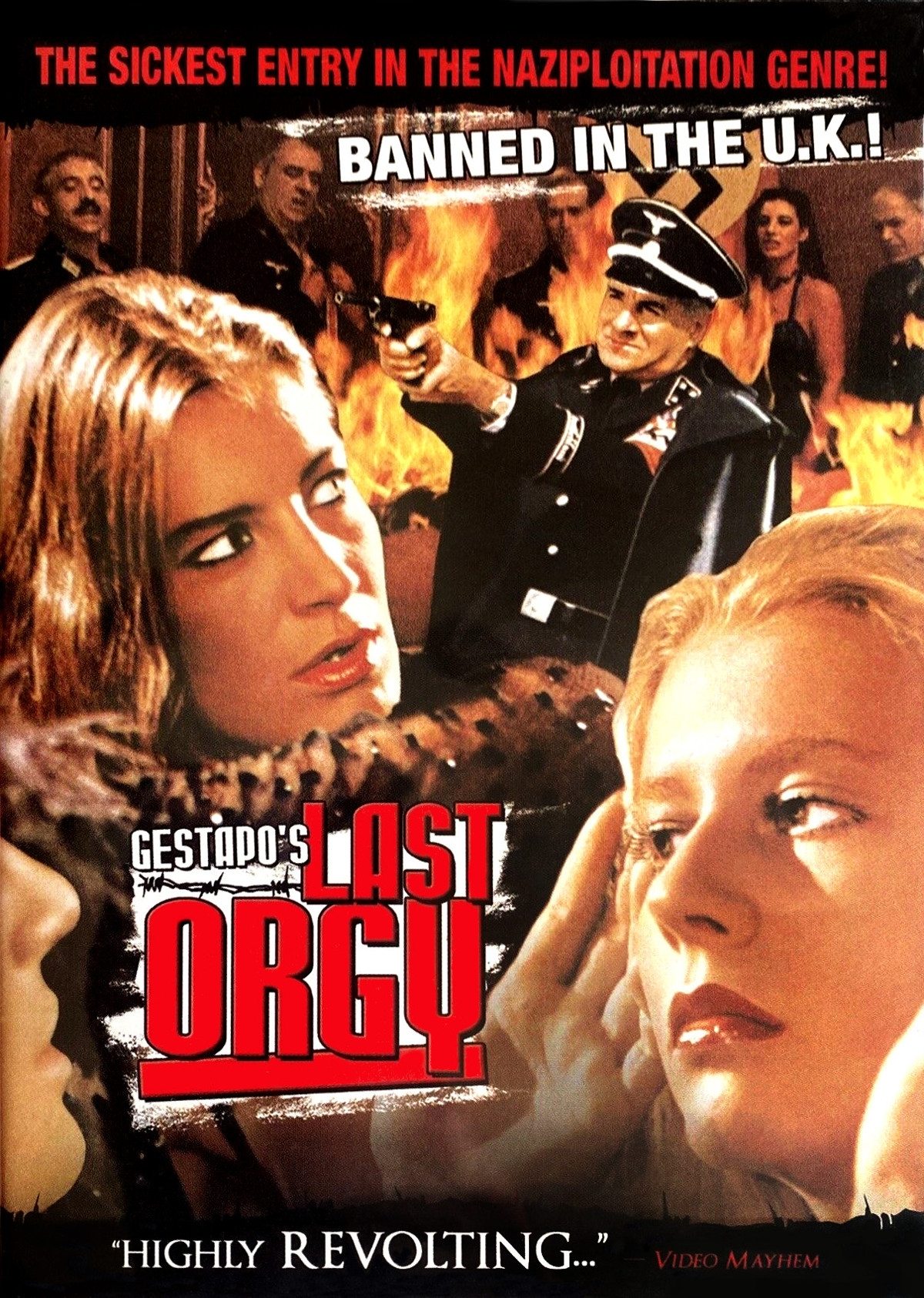
The Sickest Entry in the Nazisploitation Genre!