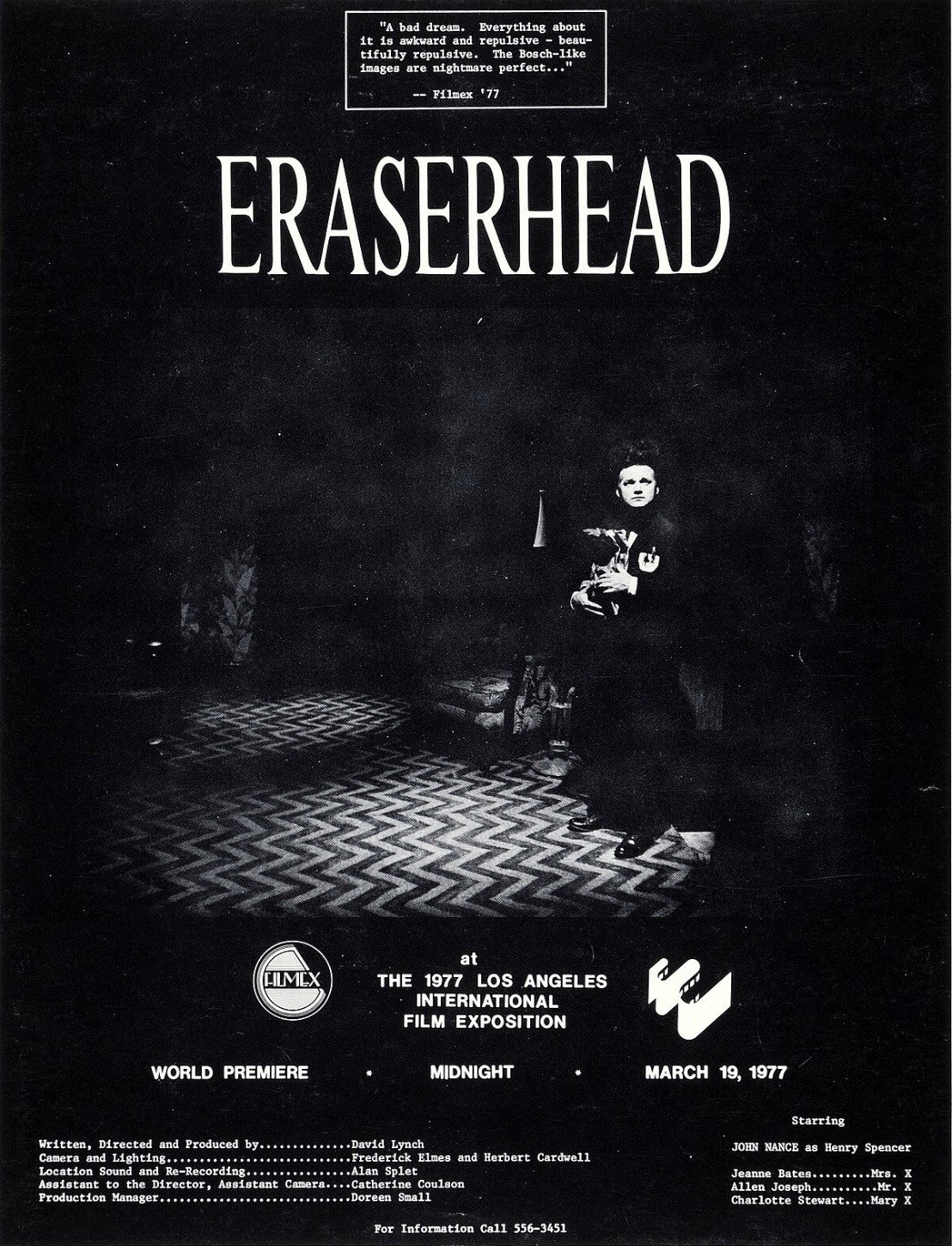
Eraserhead (1977)

US
HORROR FILM Science Fiction Fantasy
SUBGENRES BODY HORROR
Runtime
89 min
Release
September 28, 1977
Budget
$100,000
Revenue
$7,100,000
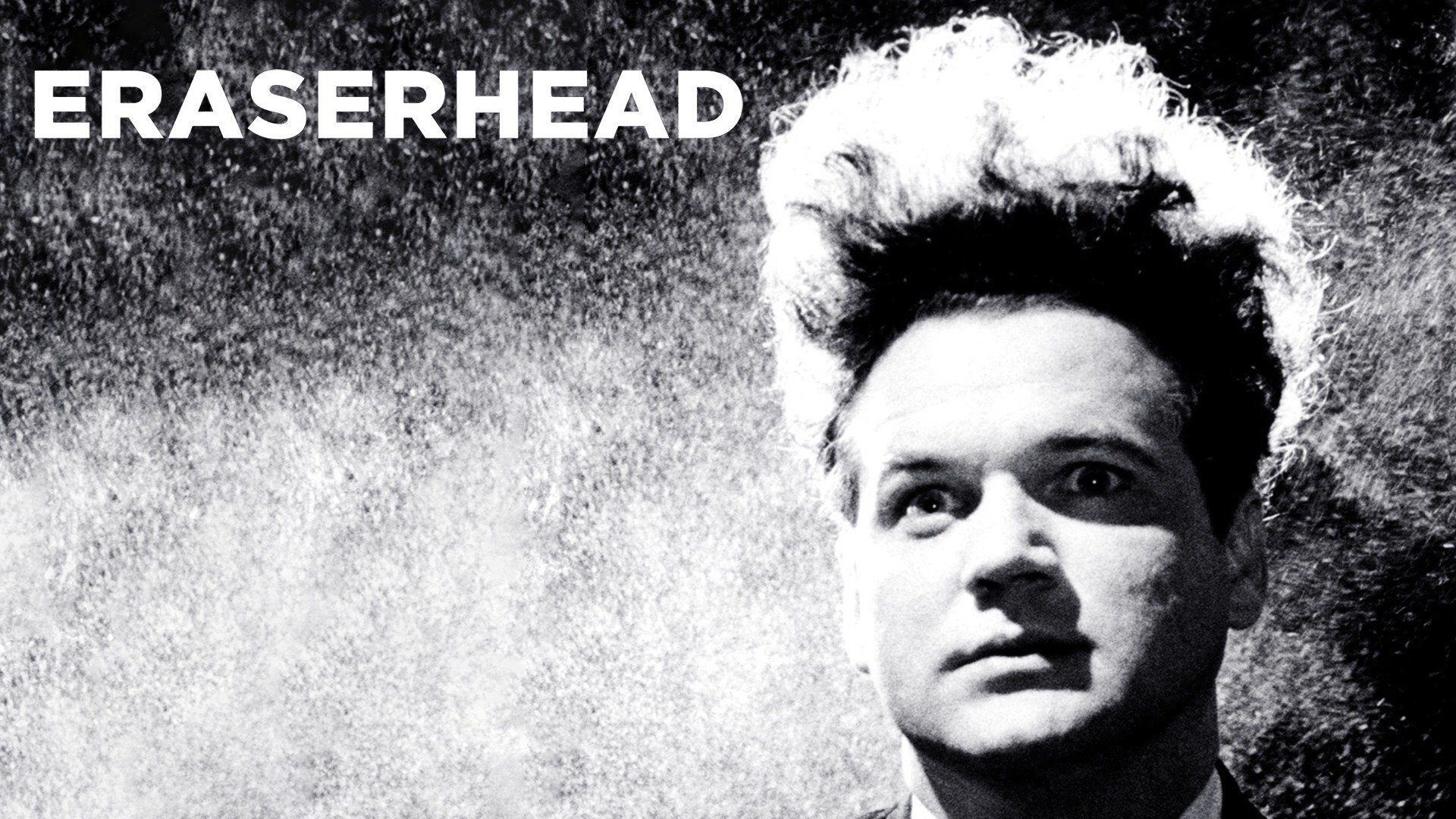
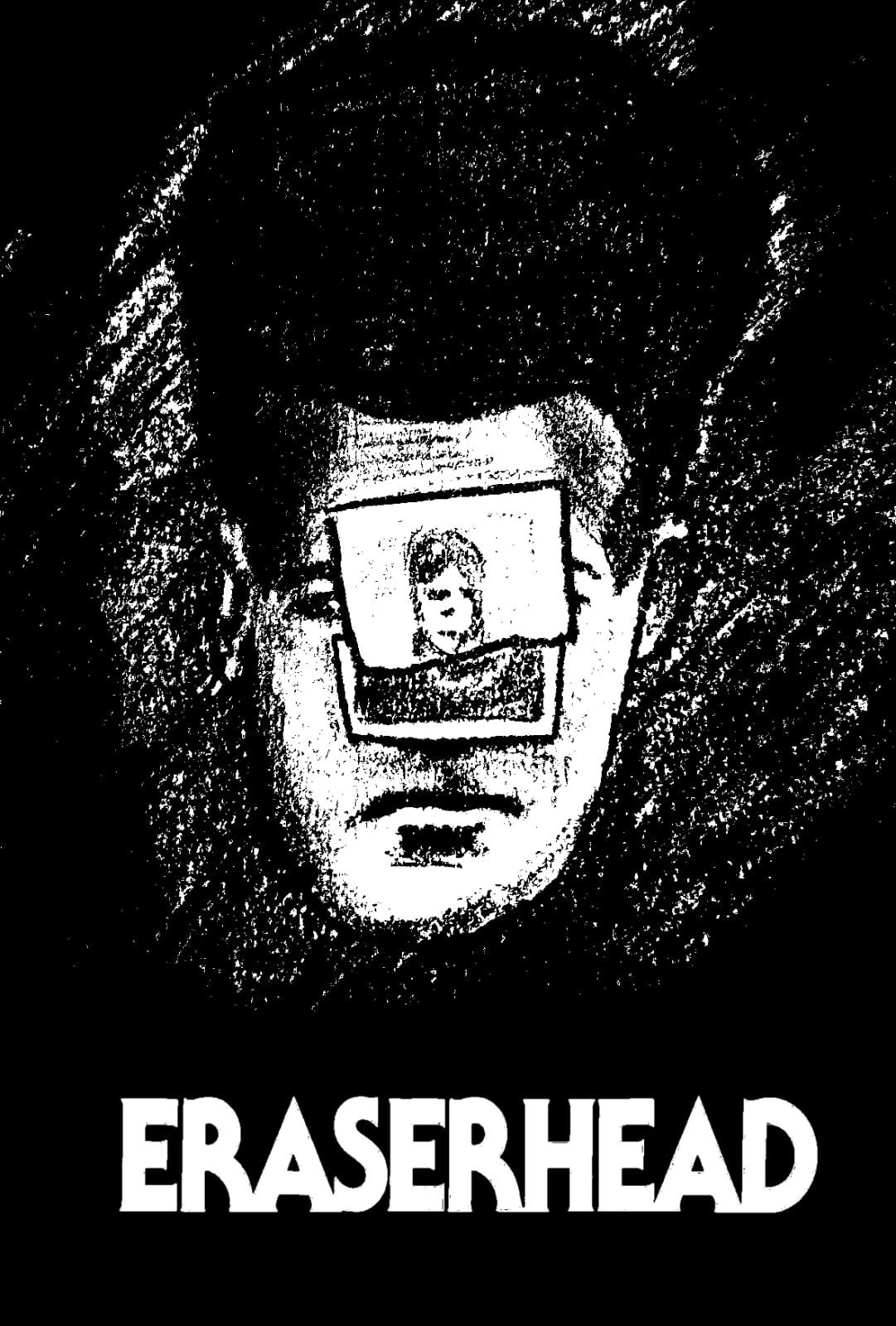
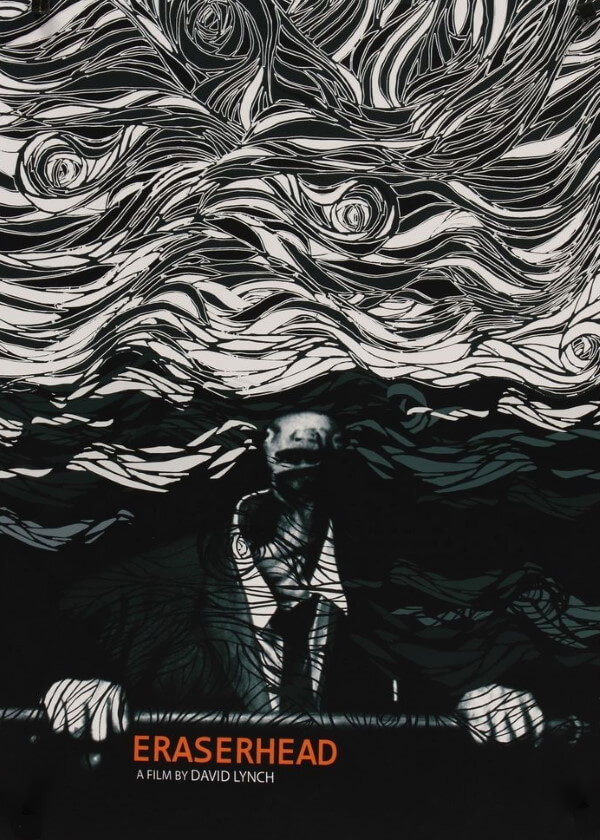
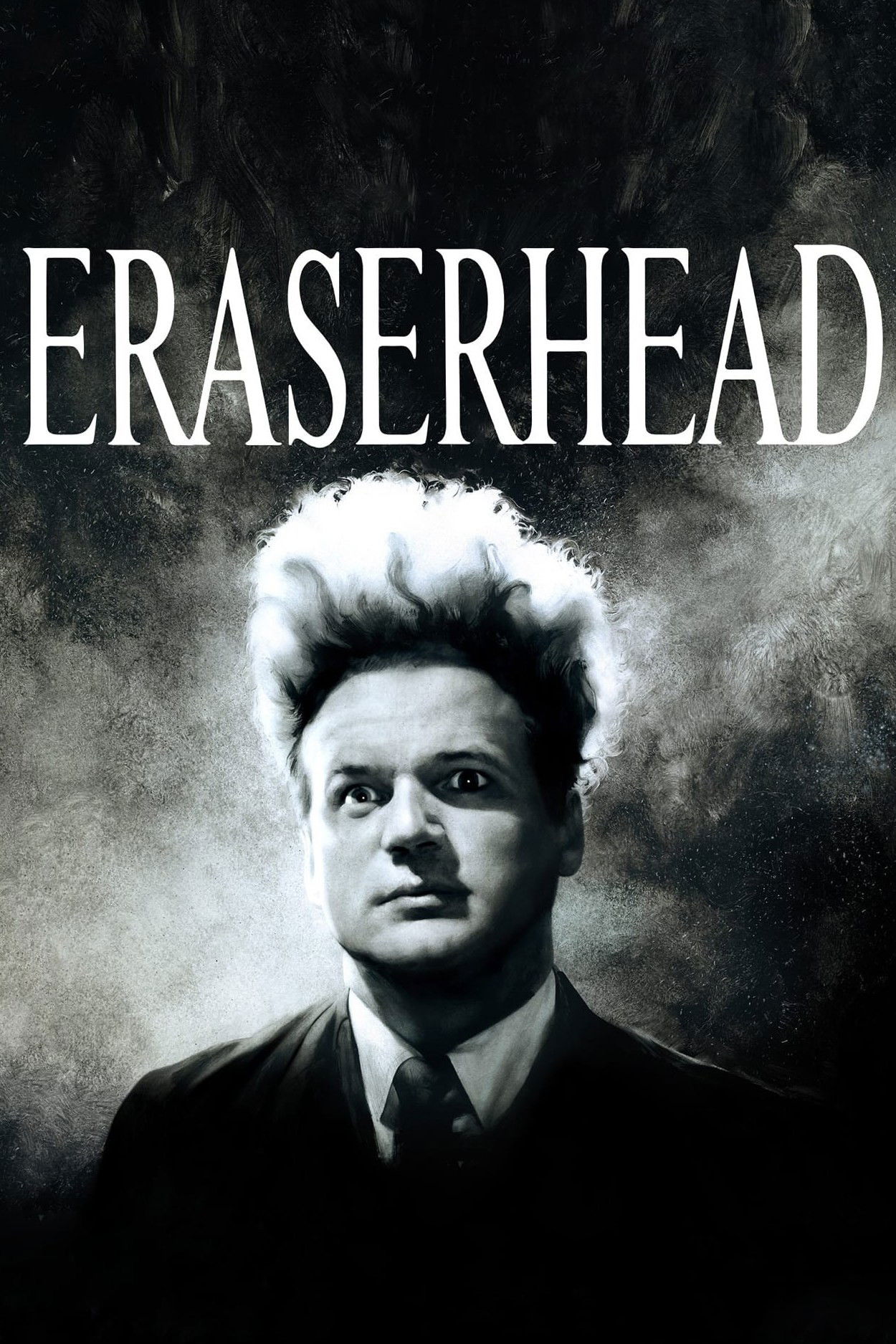
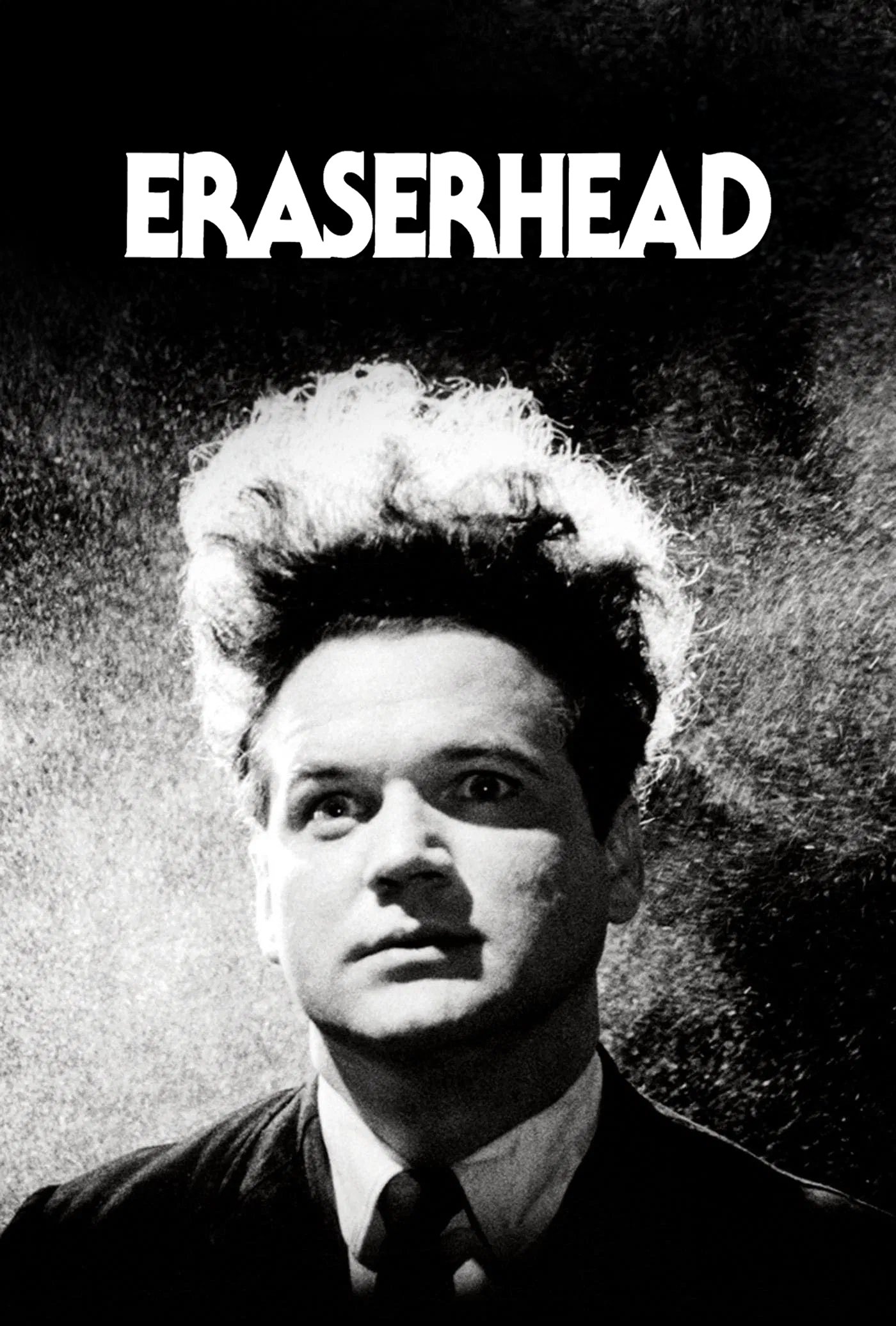
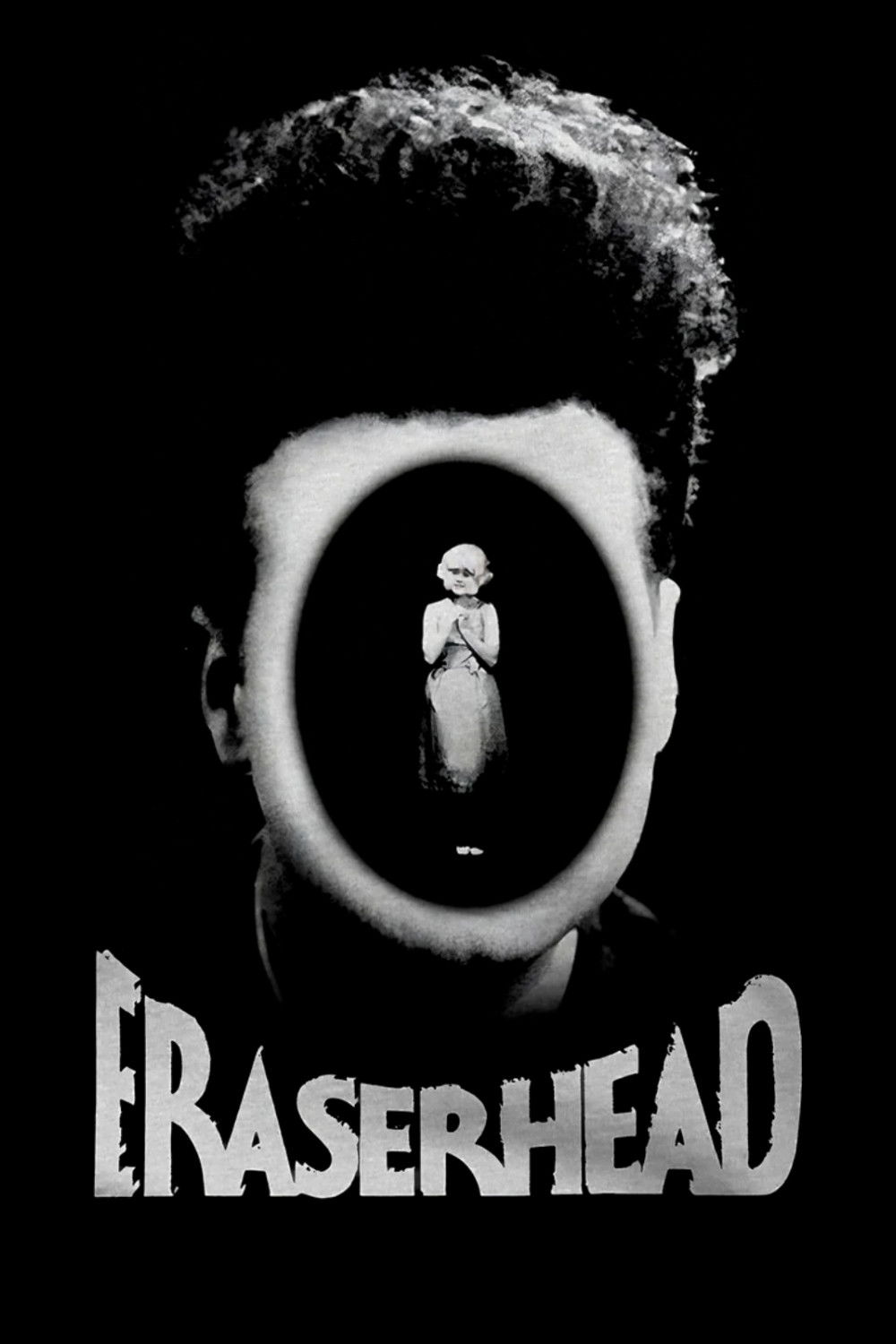
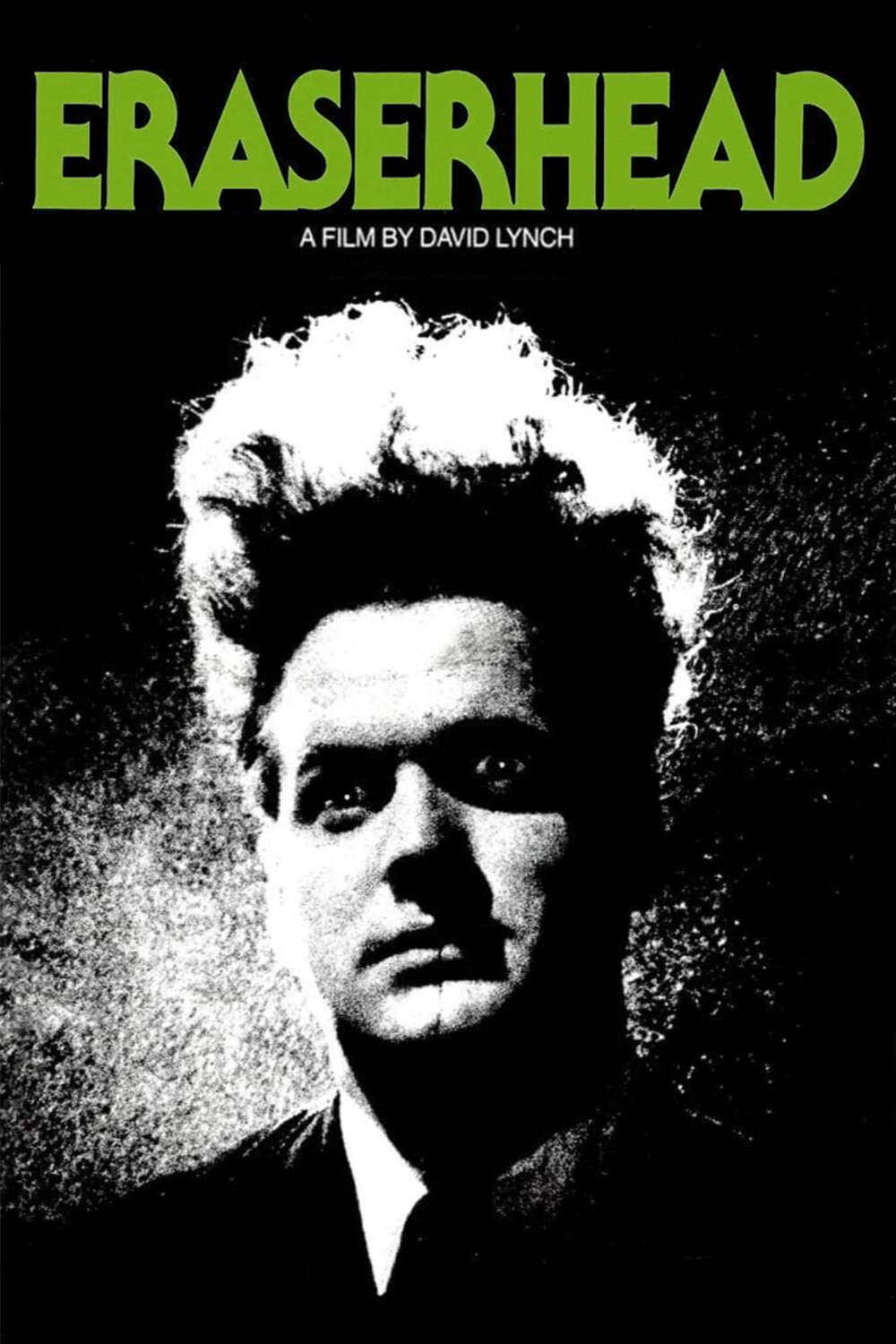
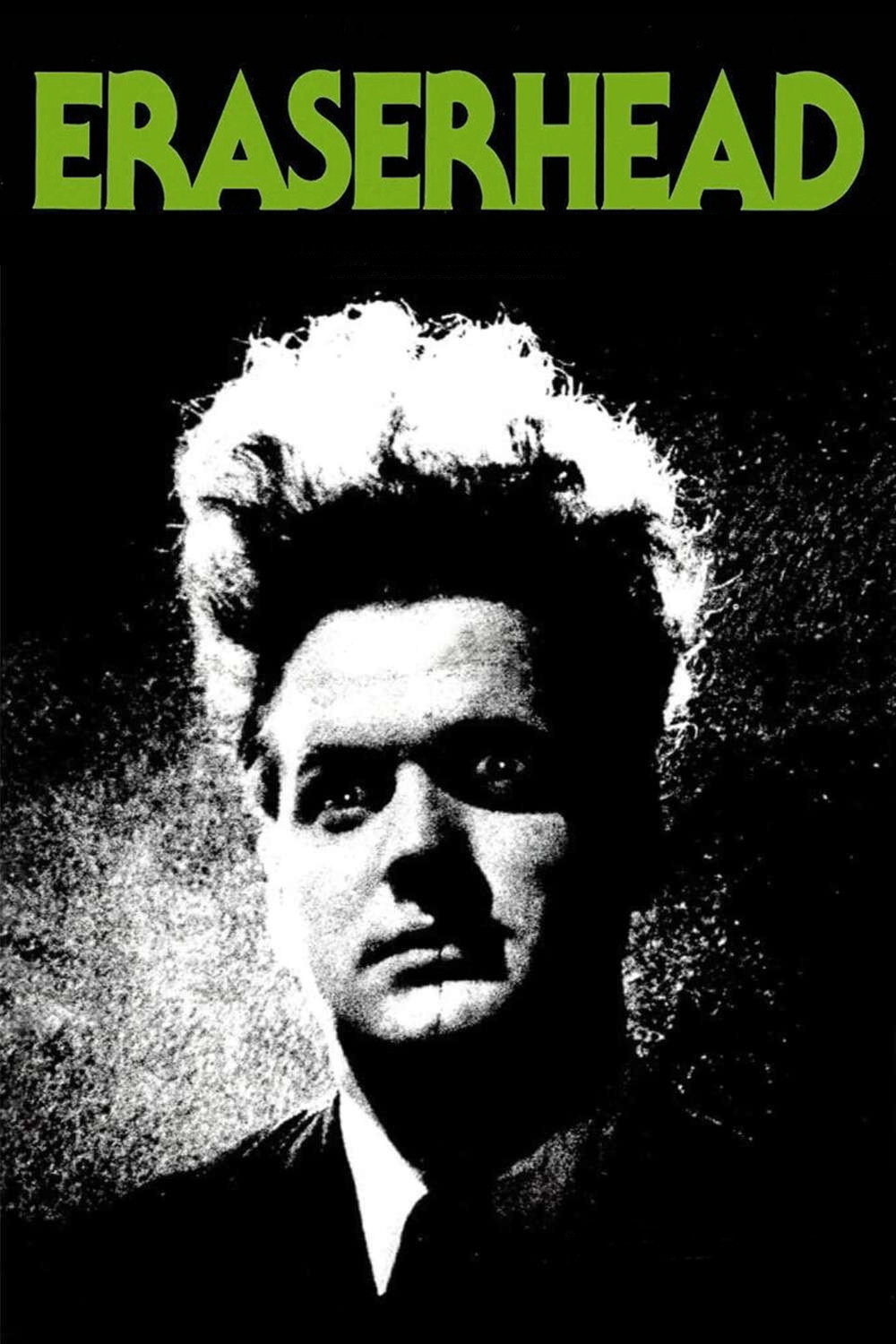
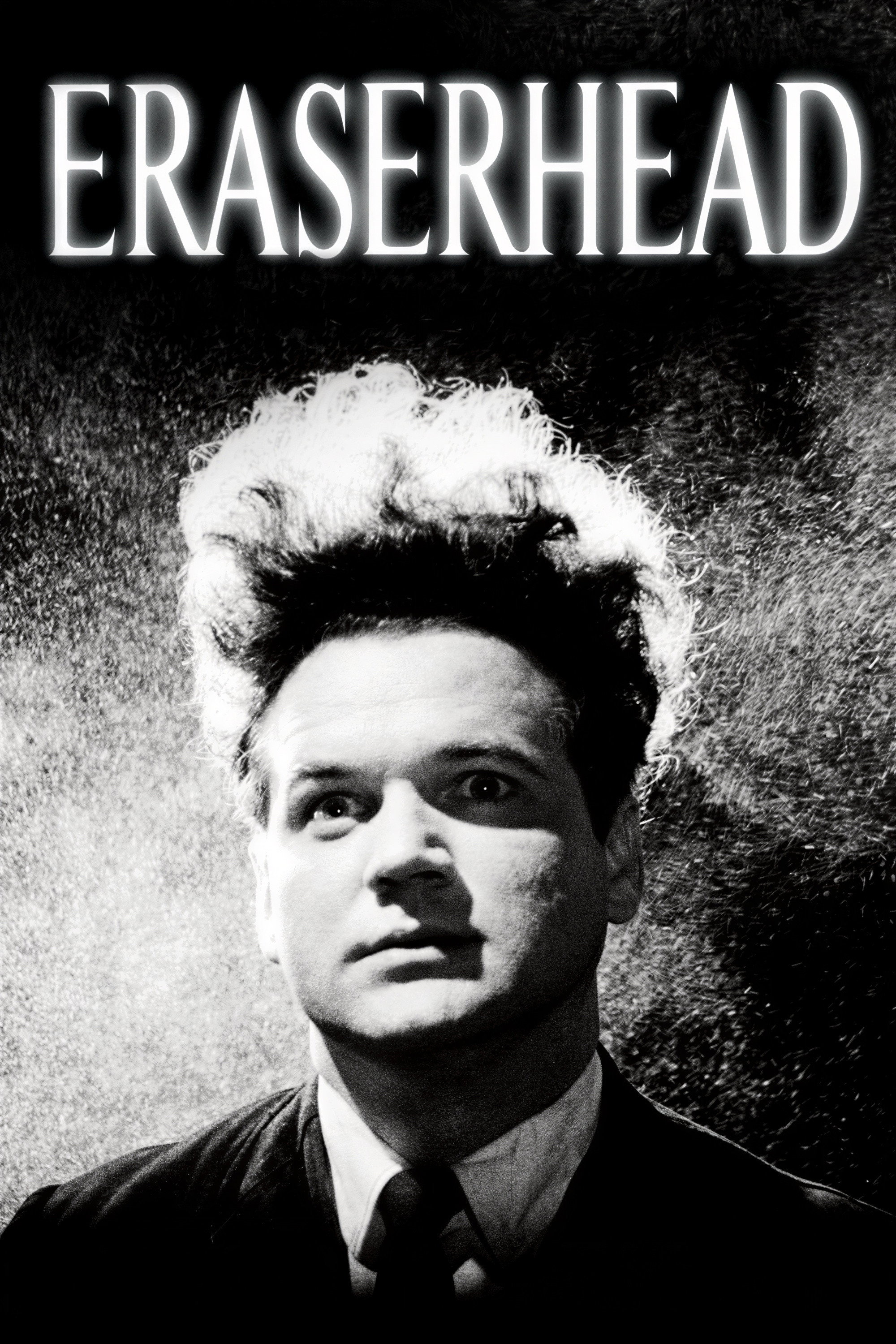
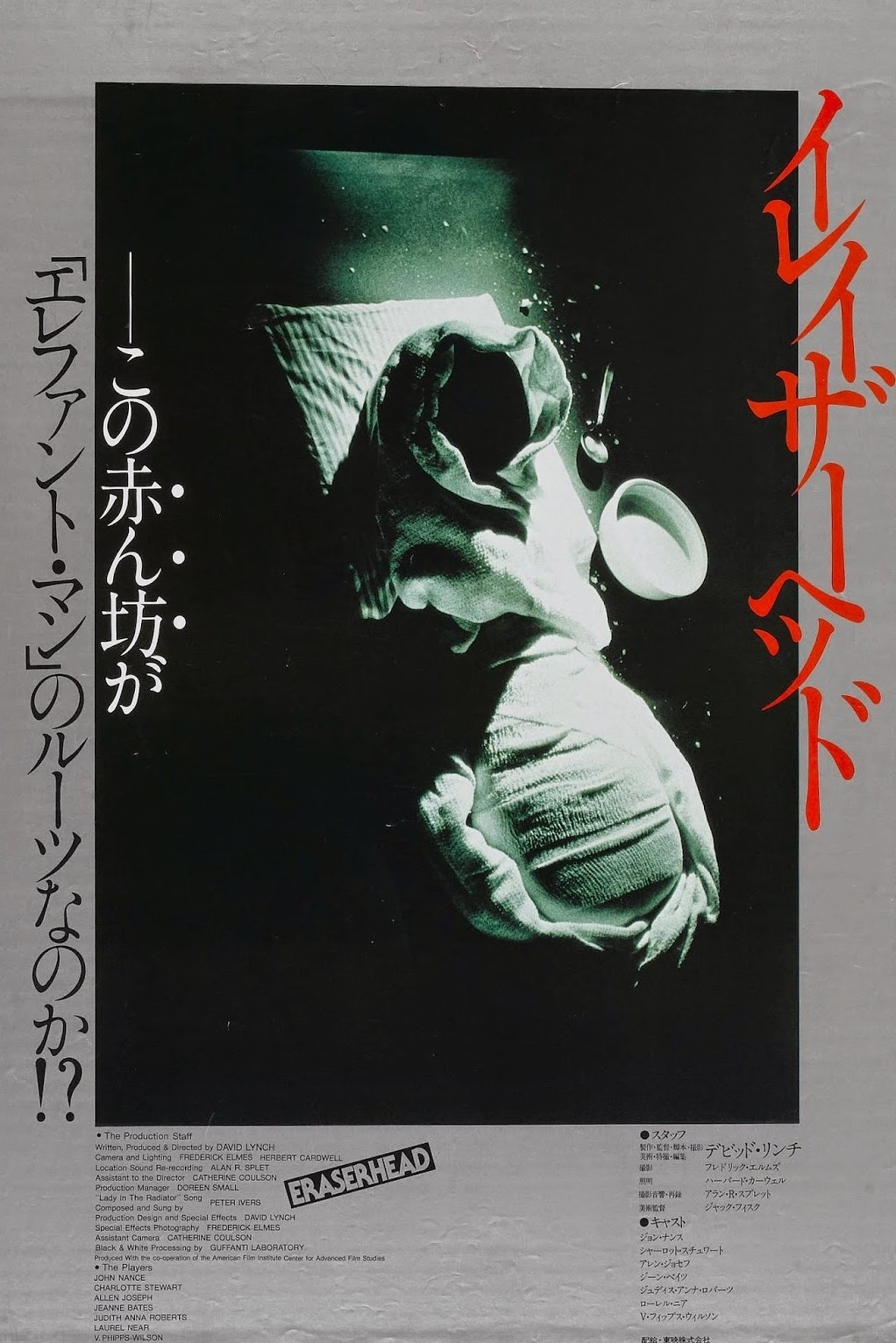
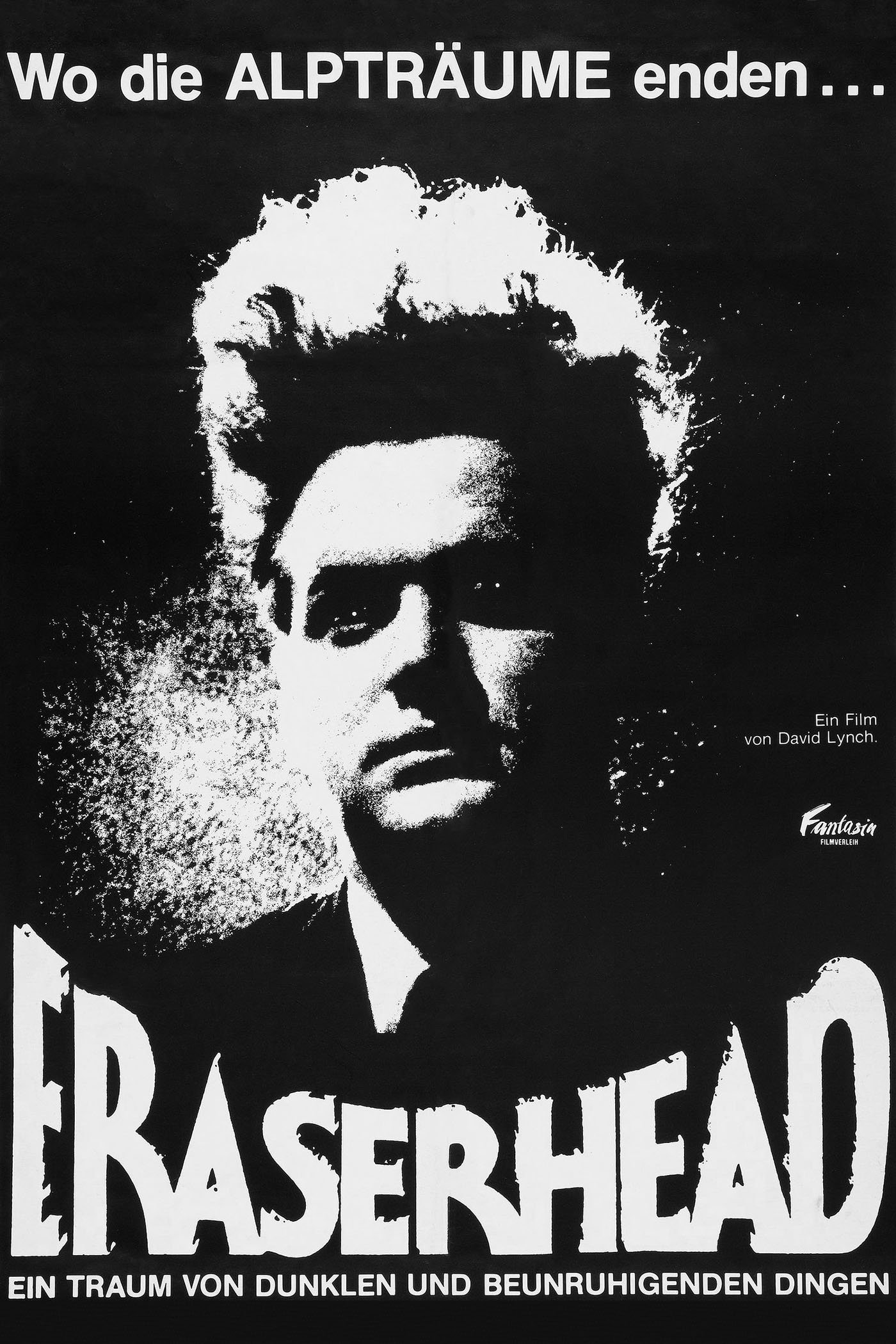
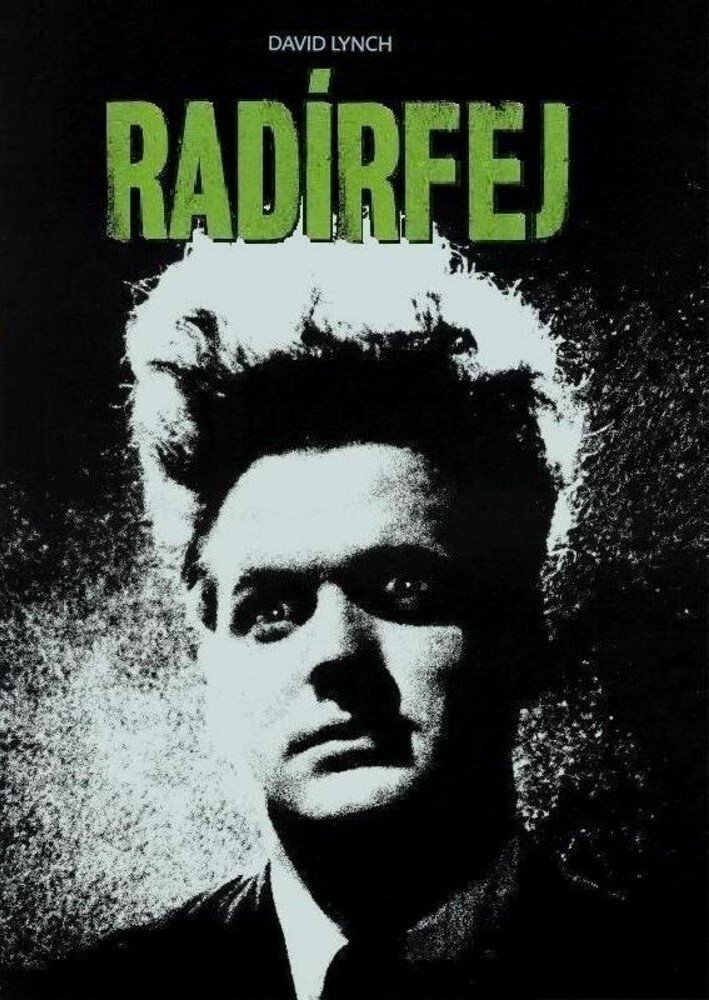
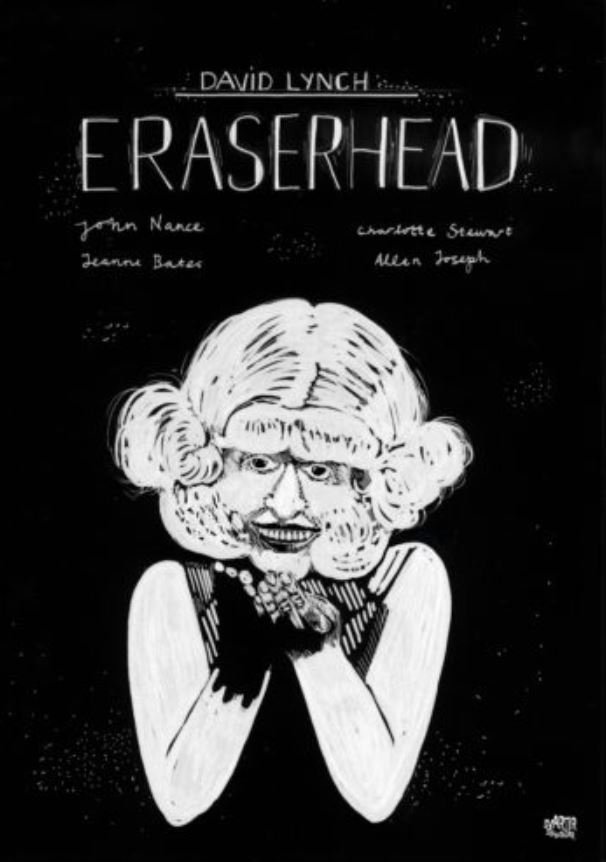
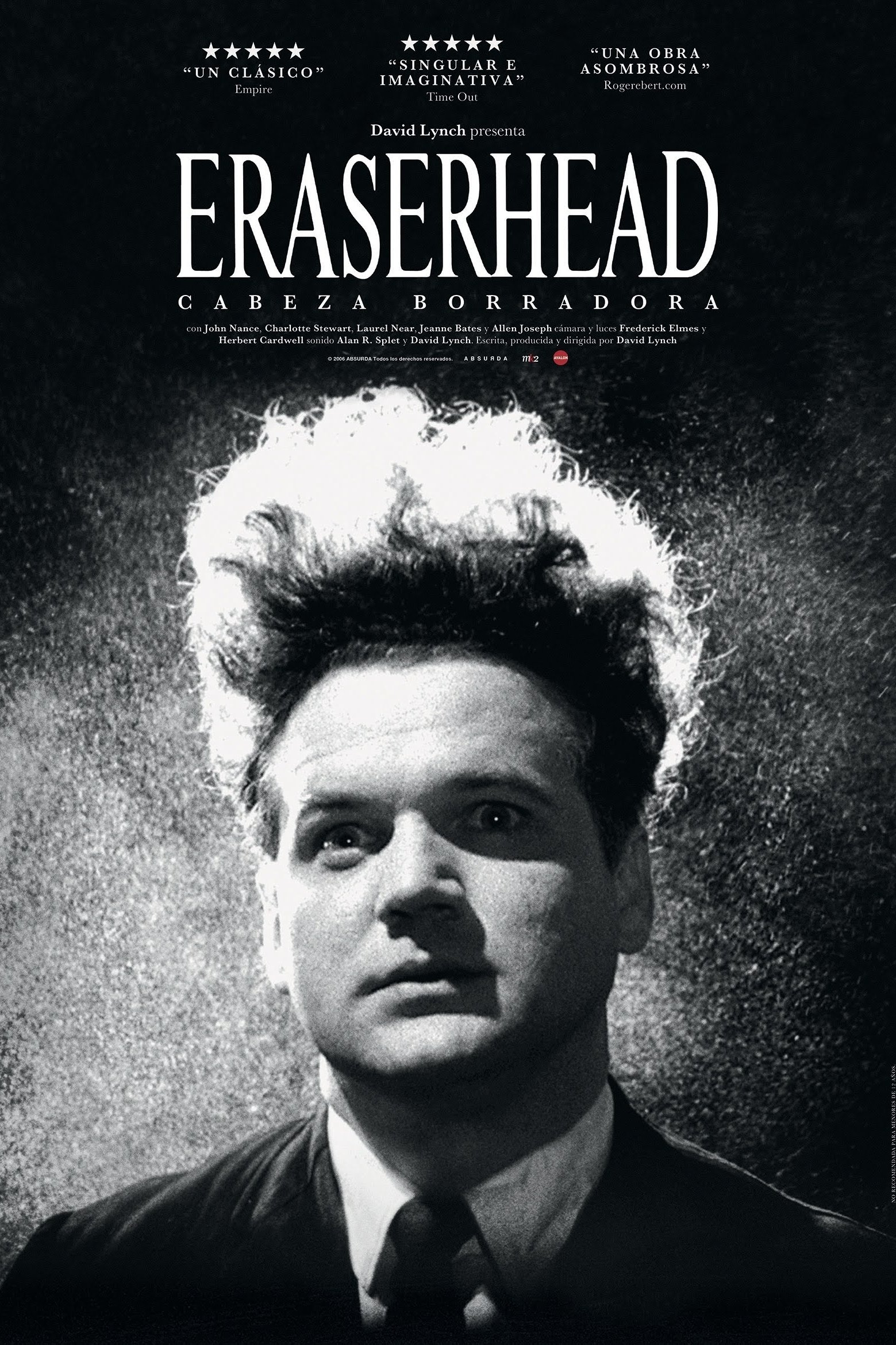
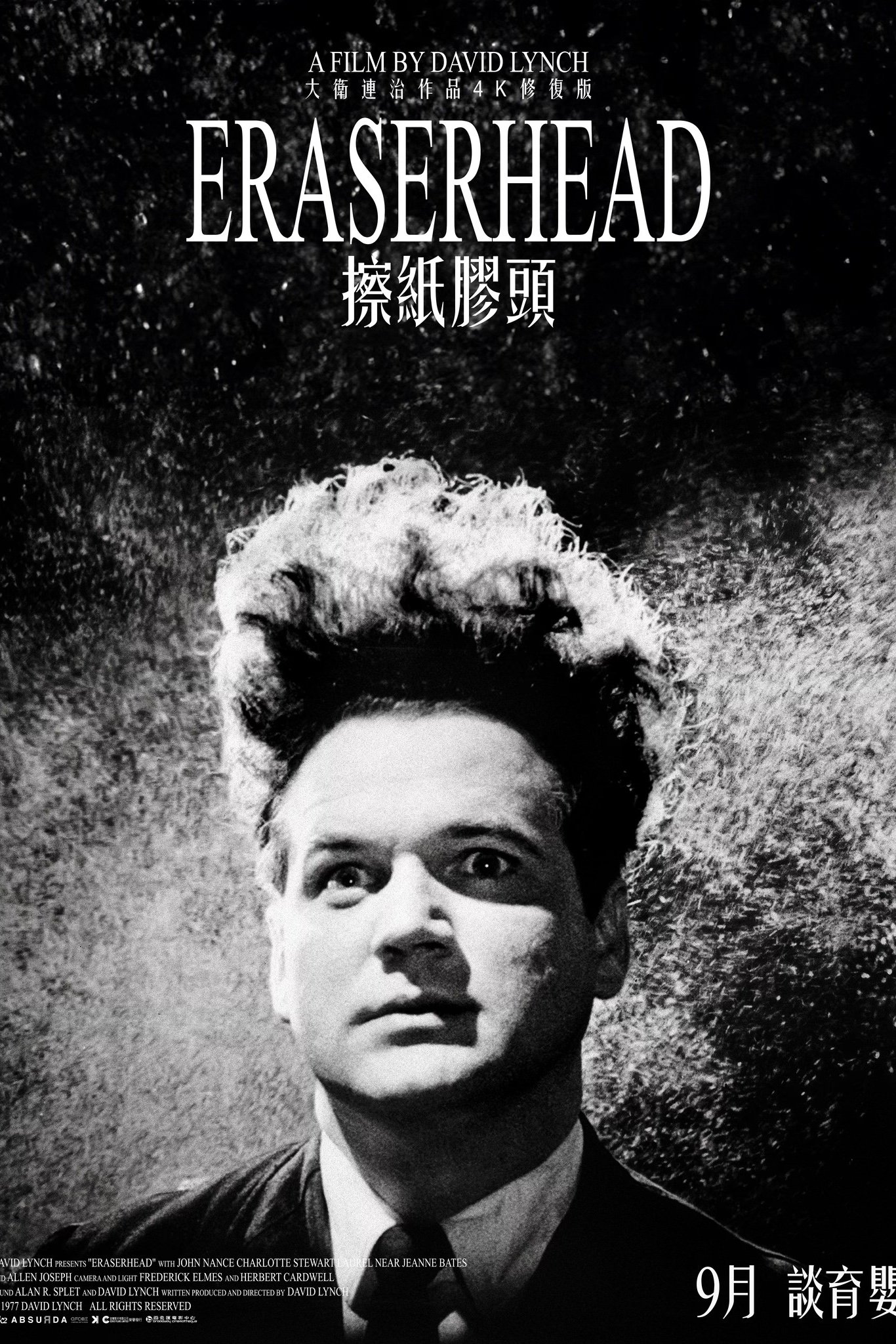
Eraserhead (1977) poster
Director
Writer
Production Company
AFI
Plot

First-time father Henry Spencer tries to survive his industrial environment, his angry girlfriend, and the unbearable screams of his newly born mutant child.

Alternative Titles
Гумена глава (Bulgaria) — Bulgarian 橡皮头 (China) — Chinese Mazací hlava (Czechia) — Czech Kustukummipea (Estonia) — Estonian Cabeza borradora (Spain) Labyrinth Man (France) 擦紙膠頭 (Hong Kong SAR China) — Chinese Radírfej (Hungary) — Hungarian
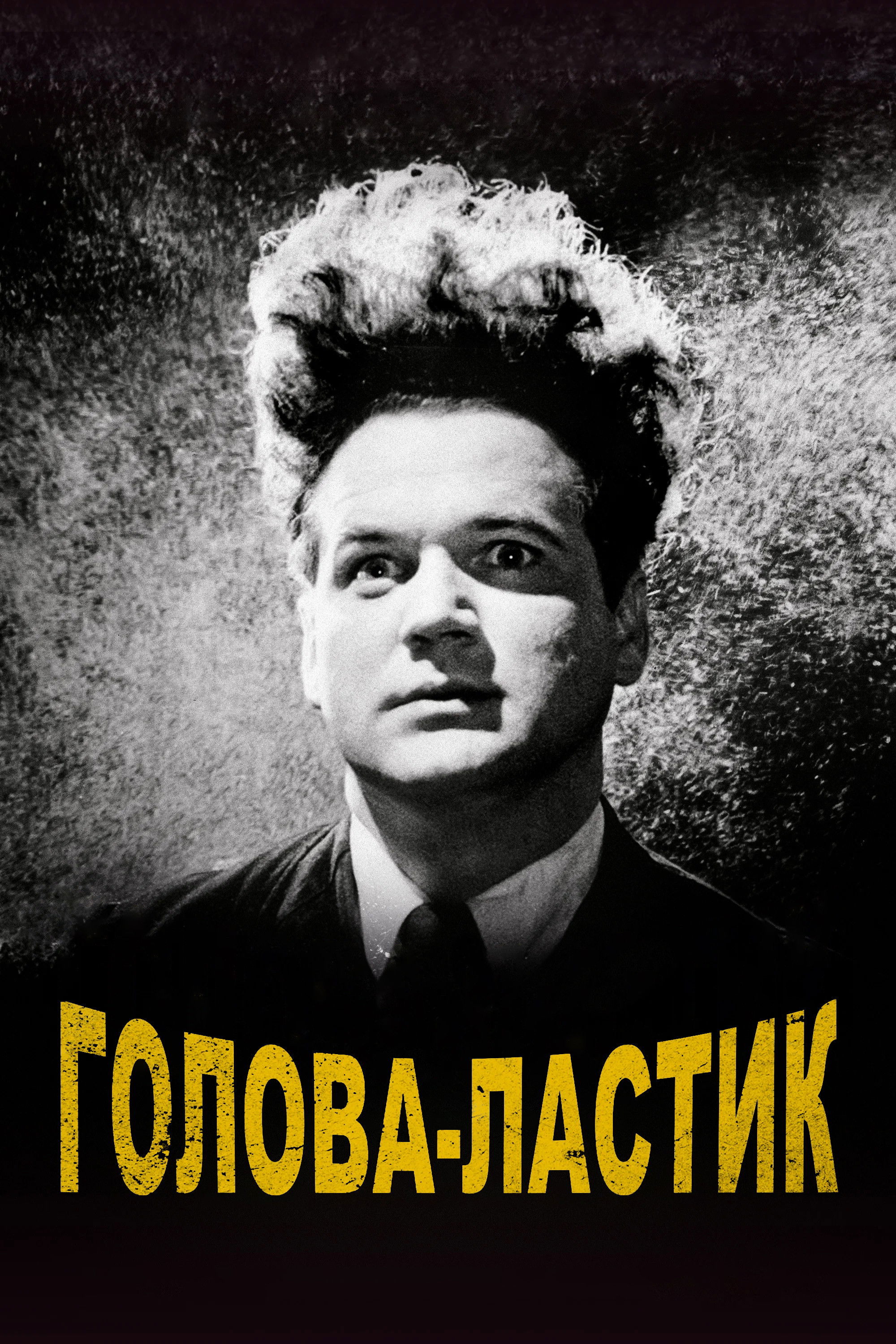
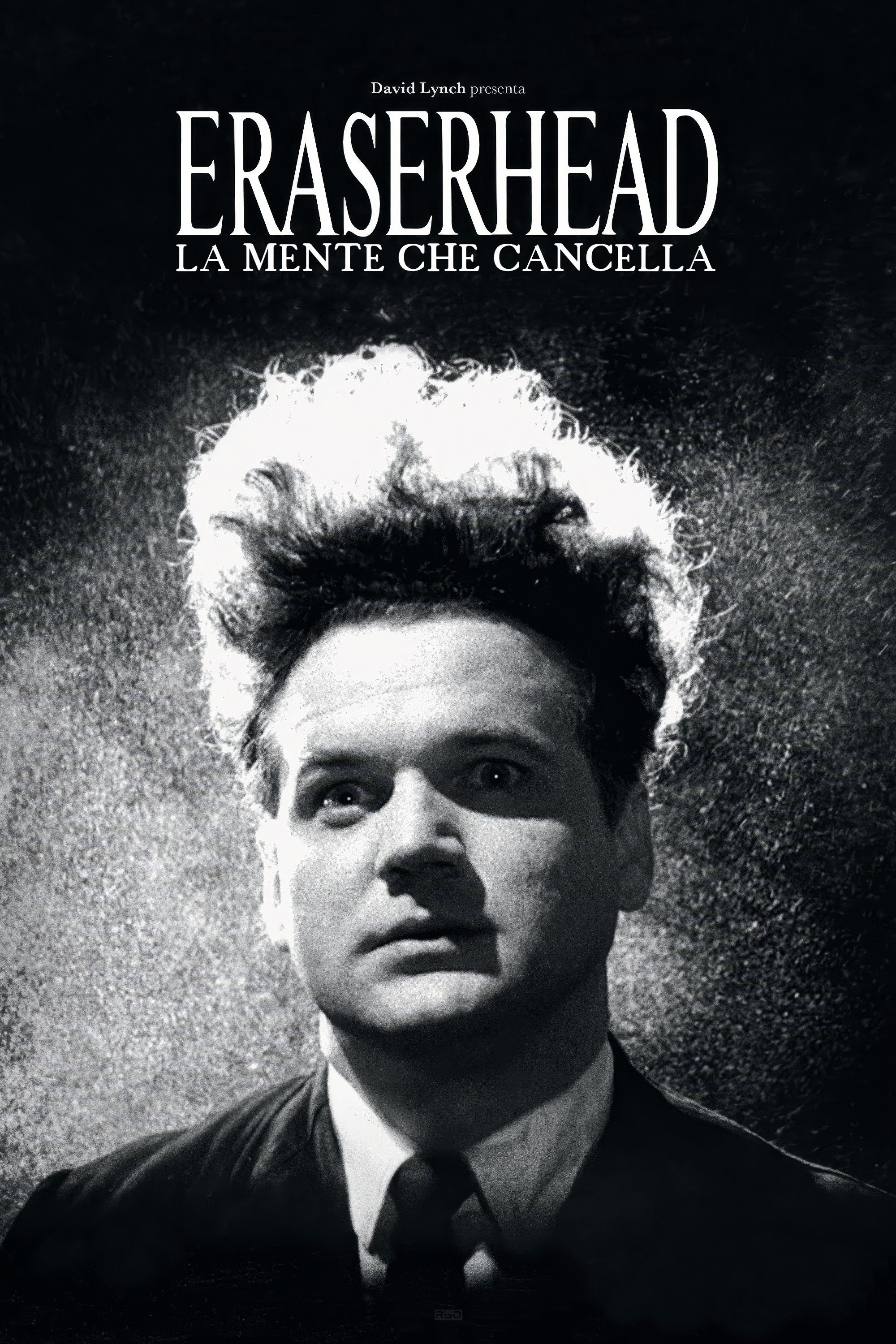
Show all 25 alternative titles ראש מחק (Israel) — Hebrew Eraserhead - La mente che cancella (Italy) — Italian イレイザーヘッド (Japan) — Japanese 이레이저 헤드 (South Korea) 이레이저헤드 (South Korea) Trintukas (Lithuania) — Lithuanian Dzēšgumijgalva (Latvia) — Latvian Cabeza Borradora (Mexico) — Spanish Cabeza de borrador (Mexico) Głowa do wycierania (Poland) — Polish No Céu Tudo É Perfeito (Portugal) — Portuguese Глава за брисање (Serbia) — Serbian Голова-ластик (Russia) — Russian Silgi Kafa (Türkiye) — Turkish title 橡皮頭 (Taiwan) — Chinese Голова-гумка (Ukraine) Гумкоголовий (Ukraine) — Ukrainian

Trailers & Videos

5 videos

Film Guide & Analysis

David Lynch turns industrial decay, parenthood, body horror, black-and-white imagery and radical sound design into one of American experimental cinema's defining nightmares.

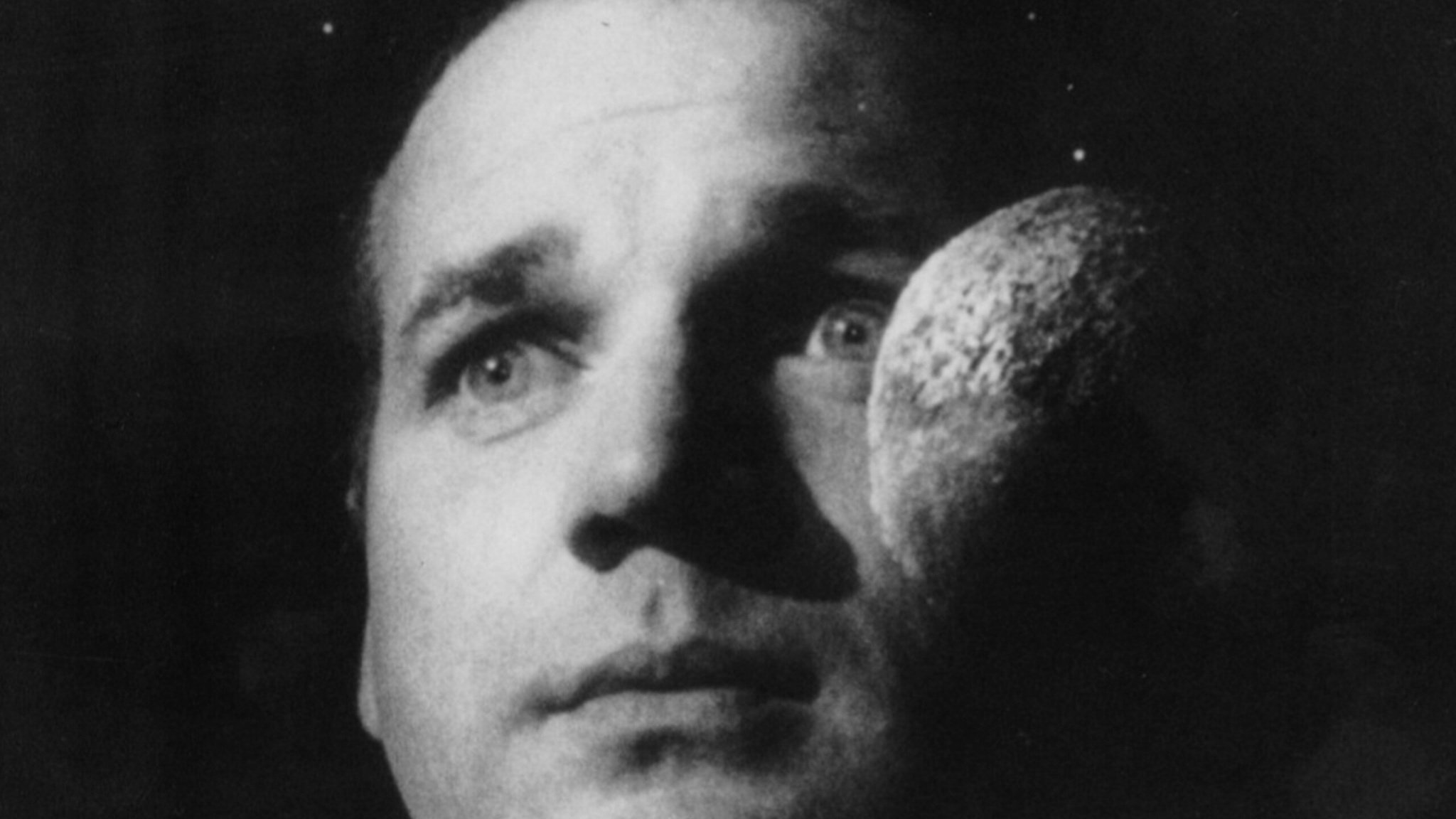
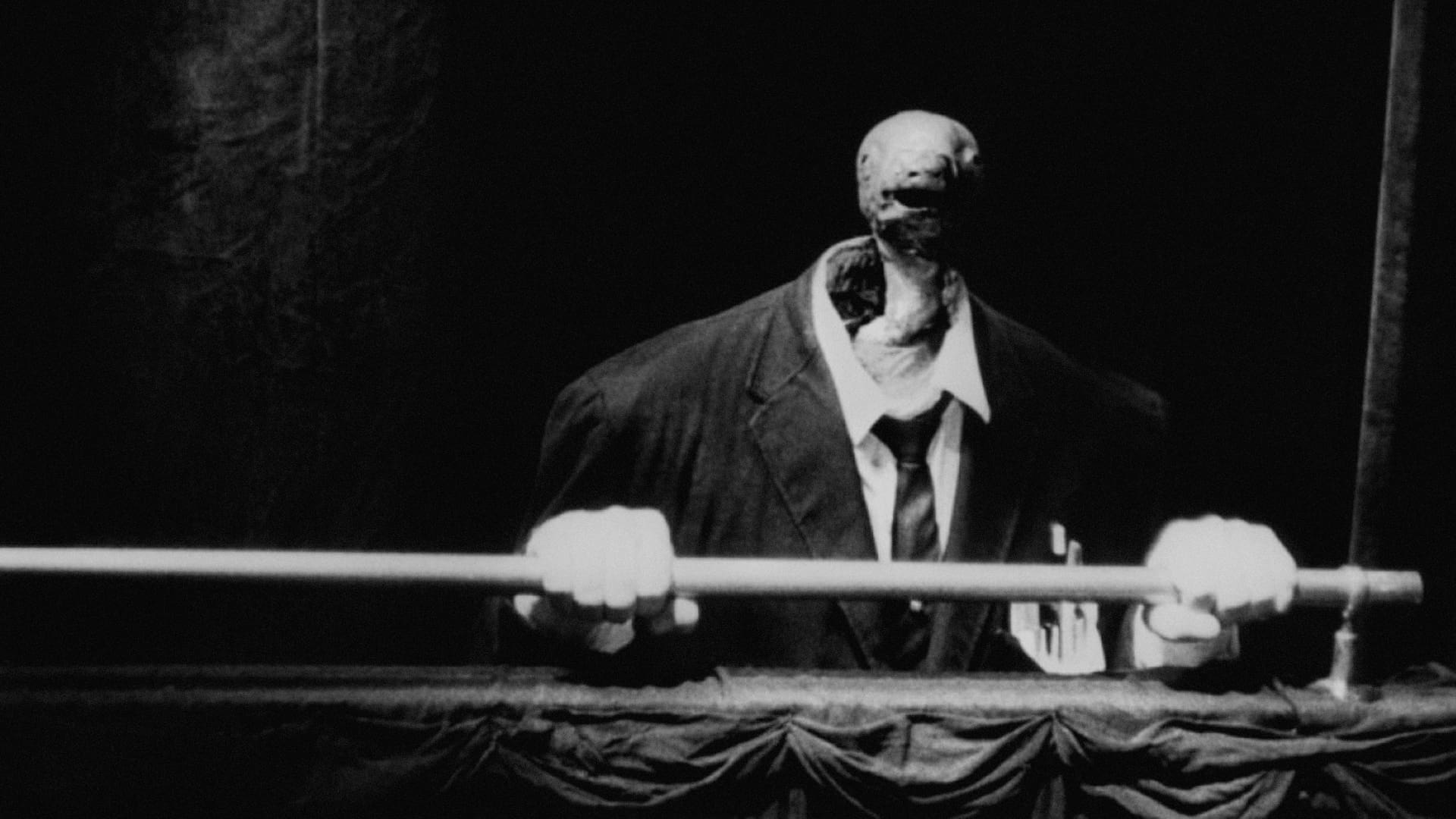
Eraserhead is a 1977 American experimental horror film written, directed, produced and edited by David Lynch. Jack Nance plays Henry Spencer, a withdrawn printer living in an industrial wasteland who learns that his former girlfriend Mary has given birth to a severely malformed child. Henry attempts to build a domestic life around the endlessly crying infant, but ordinary reality gradually collapses into visions involving a woman living inside his radiator, a mysterious figure operating machinery inside a planet and increasingly disturbing transformations of bodies and objects.

The film established many of the elements that would later become associated with Lynch's cinema: industrial spaces that seem psychologically alive, domestic normality contaminated by grotesque physical detail, humour existing beside terror, characters trapped between waking life and dream logic, and sound treated as an equal partner to the image. Yet Eraserhead was created under conditions radically different from Lynch's later productions. Shot over several years with a tiny crew on the American Film Institute's Greystone campus, it developed slowly enough for sets, sounds, performances and images to evolve together. The result is less a conventional story about a strange child than a complete enclosed world in which anxiety, sexuality, parenthood and industrial decay become physically inseparable.

Development, AFI & Five Years of Production

Lynch entered the American Film Institute's Center for Advanced Film Studies after completing experimental shorts including The Alphabet and The Grandmother. His initial feature project at the Center was a screenplay called Gardenback, derived from one of his paintings, but he abandoned it after becoming dissatisfied with attempts to expand the idea into a longer conventional script. Eraserhead developed as a different project. Lynch submitted a comparatively short screenplay for a feature whose meaning depended less on conventional narrative detail than on atmosphere, image and sound.

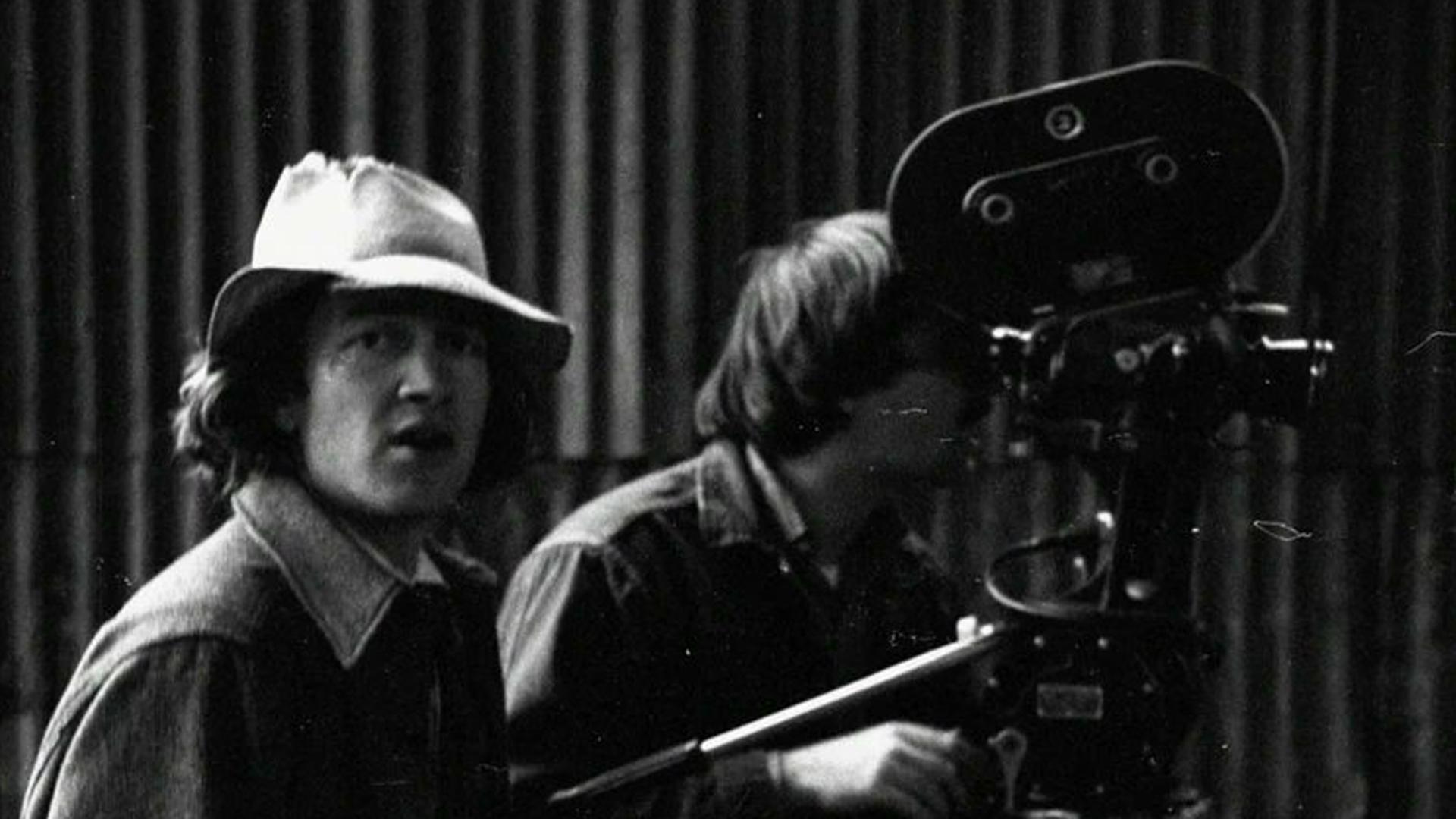
AFI provided institutional support and access to facilities, but the production quickly became something far more extended than a normal student project. Lynch later described working on the film from roughly 1971 until 1976. Actual shooting stretched across approximately four years, often at night, while the total process took around five. The crew could be as small as six or seven people. Herbert Cardwell initially handled camera and lighting before Frederick Elmes took over photography, while Catherine Coulson became one of the project's essential all-purpose collaborators.

The production operated from former stables on the AFI's Greystone estate in Beverly Hills. Lynch gradually occupied several rooms, garages and a hayloft, turning the location into something close to a private studio. Sets, camera equipment, editing facilities and production materials could remain in place for long periods, allowing the film to develop without the constant dismantling required by ordinary location production. The extended schedule was partly creative and partly financial. Money regularly disappeared, forcing production to stop and restart.

Members of the crew took outside jobs, contributed labour and in some cases helped financially. Coulson later became emblematic of that collective commitment, working elsewhere during the day and returning with money and food while also handling boom, camera-assistant duties and other production responsibilities. The extraordinary duration ultimately became an advantage. Lynch could inhabit the film. Ideas such as the Lady in the Radiator developed during production, emerging from the physical spaces already constructed. Eraserhead became less a screenplay being photographed than a world being gradually discovered.

Philadelphia, Industrial Space & the World of Henry Spencer

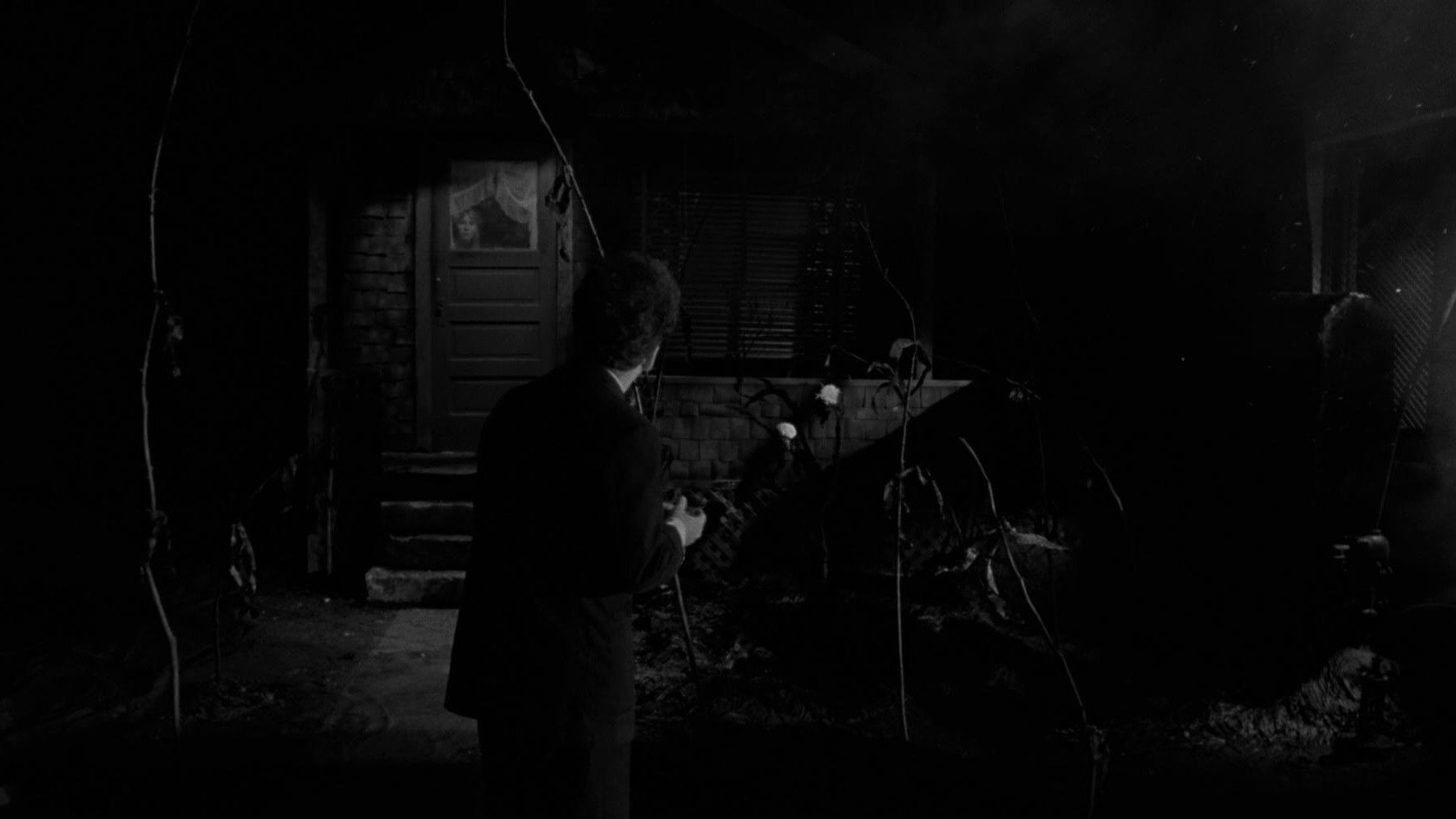
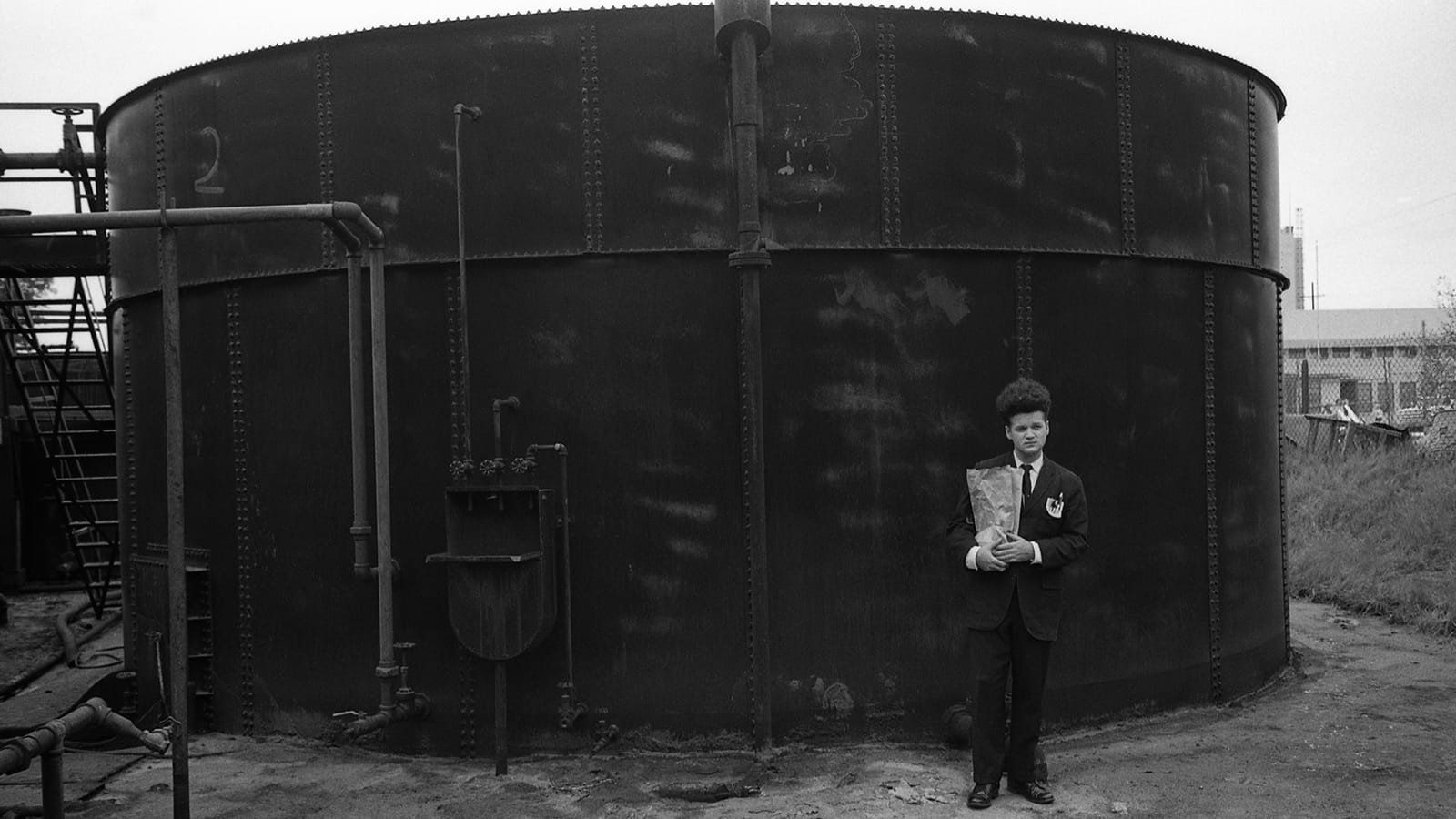
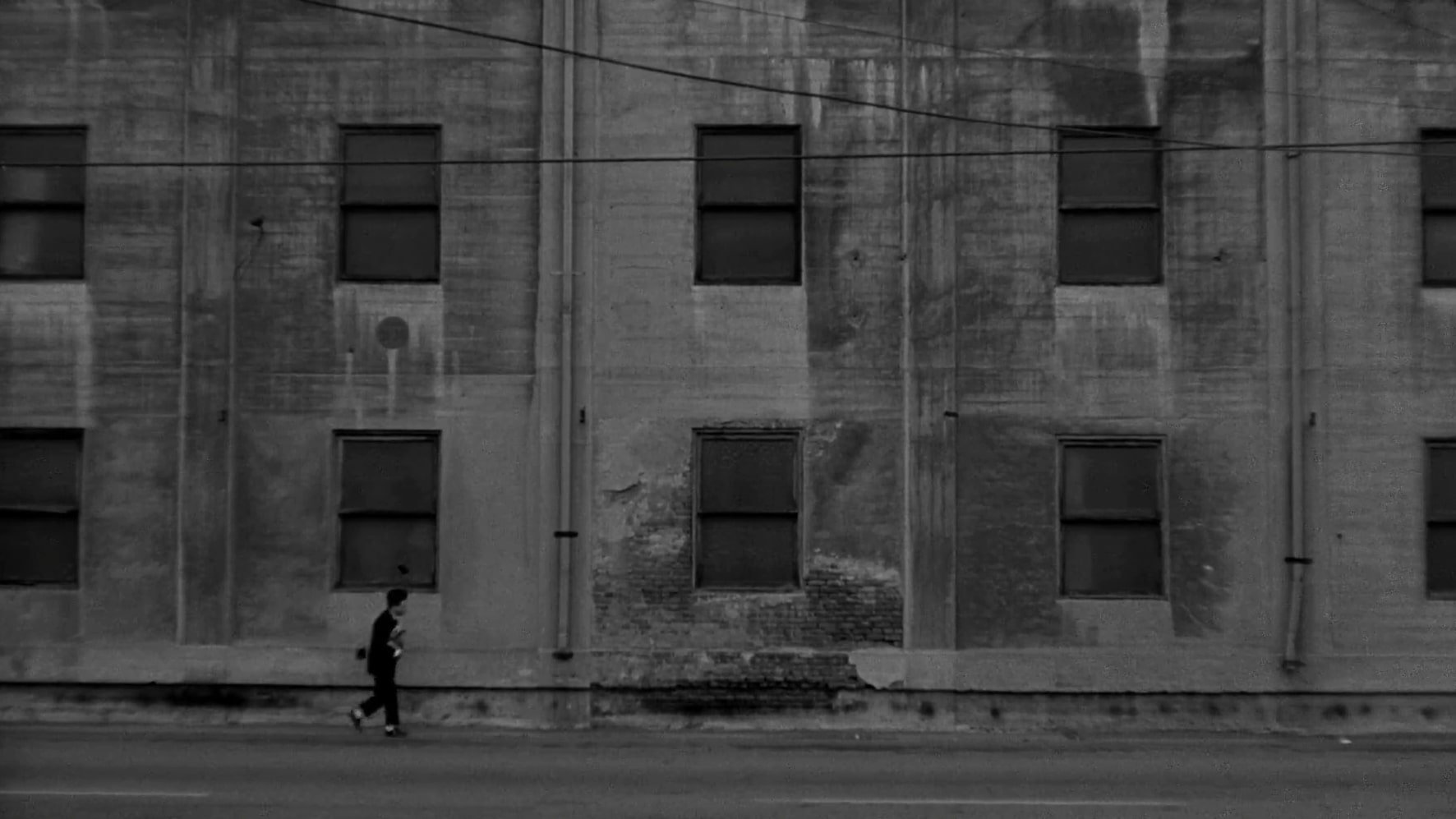
Lynch repeatedly connected Eraserhead to his years living in Philadelphia during the late 1960s. He had moved there to study painting at the Pennsylvania Academy of the Fine Arts and encountered a city marked by industrial decline, crime, abandoned buildings and environmental decay. He later called Philadelphia one of the greatest influences on his life and jokingly described Eraserhead as his own “Philadelphia Story.” The film does not attempt to reproduce Philadelphia geographically. It reconstructs an emotional memory of industrial urban life. Henry walks past concrete walls, machinery, vacant lots, pipes, puddles and structures whose purpose is rarely explained.
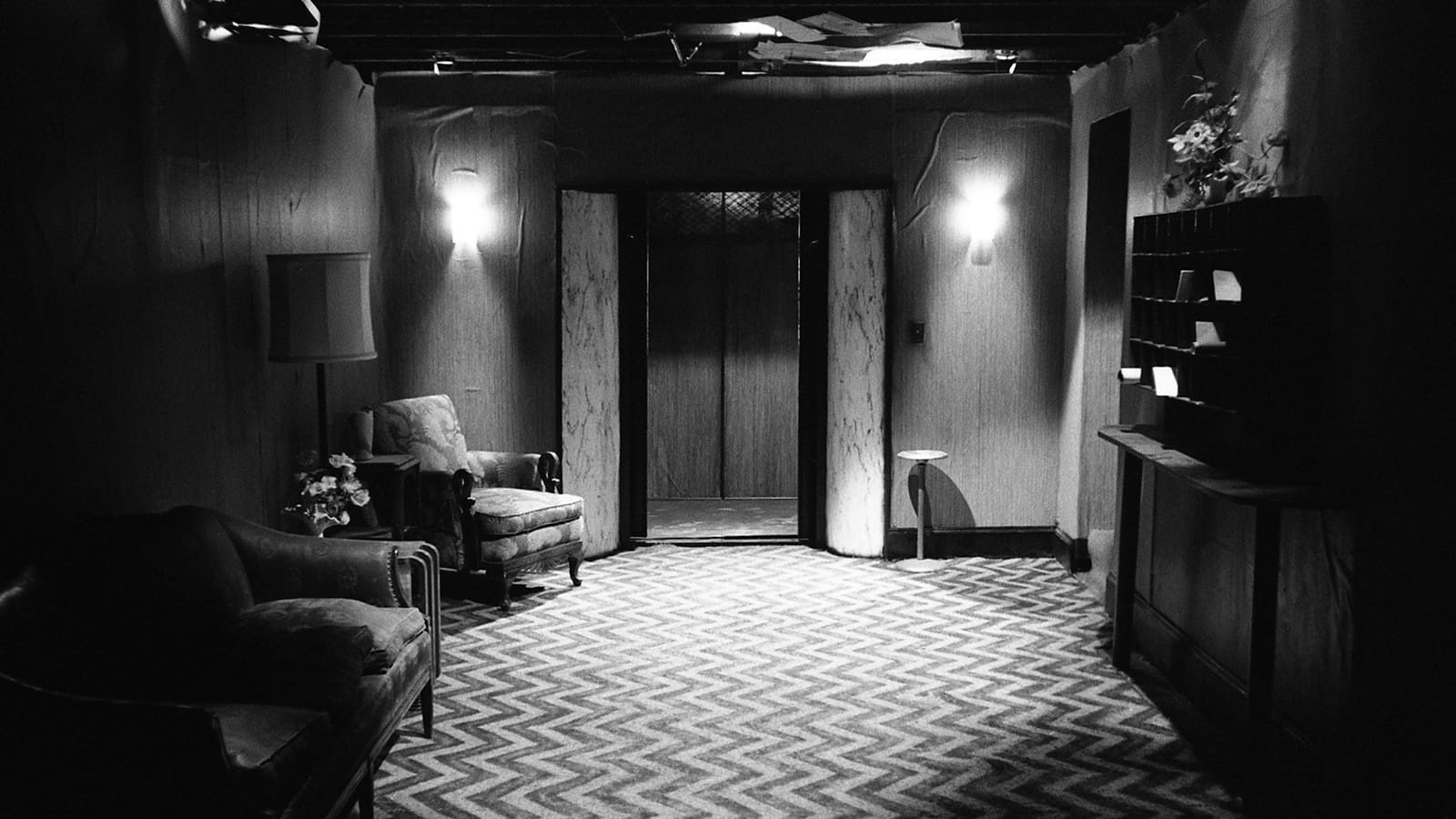
The landscape seems to continue beyond the frame as an enormous industrial system operating without visible human supervision. Lynch described imagining the film's world as somewhere between a factory and a factory neighbourhood. Few people occupy it, windows are dim, streets appear almost empty and machinery can be heard even when its function remains unseen. The environment therefore exists less as a realistic city than as an industrial state of mind. The apartment building extends that condition indoors. Henry's room is small and enclosed, yet industrial noises continue to penetrate it. Pipes, radiators, electrical equipment and distant mechanical sounds prevent the home from becoming separate from the world outside.
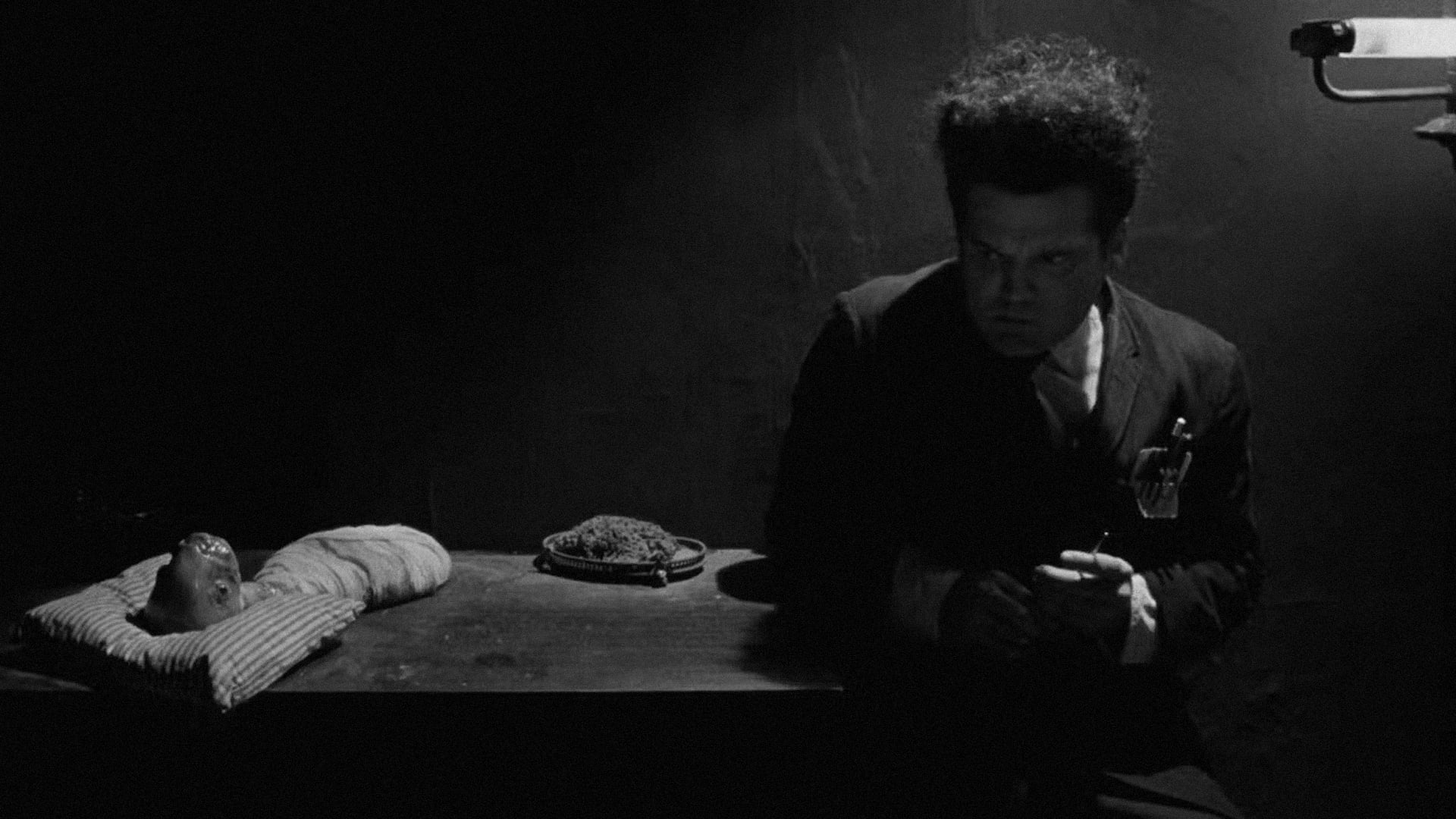
This connection between industry and domestic space becomes fundamental once the baby arrives. Parenting does not occur inside a protected family home. It happens within the same system of mechanical drones, darkness and decay that surrounds Henry's daily existence. The distinction between biological process and industrial process gradually becomes difficult to maintain. The visual world also reflects Lynch's origins as a painter. Walls, smoke, light, hair, skin and organic surfaces frequently function as textures before they function as narrative information. Objects can be contemplated for their shape or material quality in much the same way that Lynch had approached painting and sculpture before moving into filmmaking.

Herbert Cardwell, Frederick Elmes & Black-and-White Photography

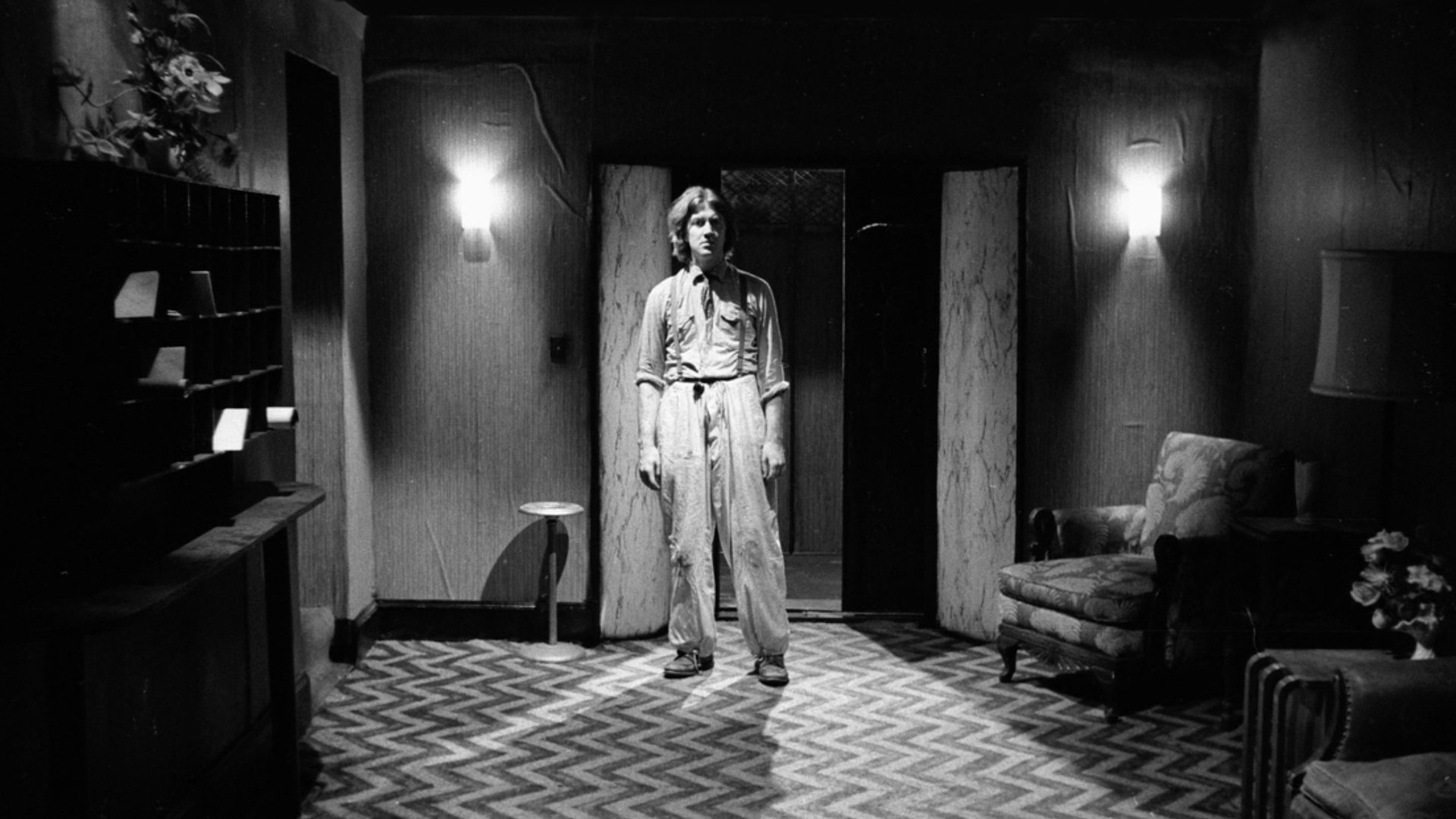
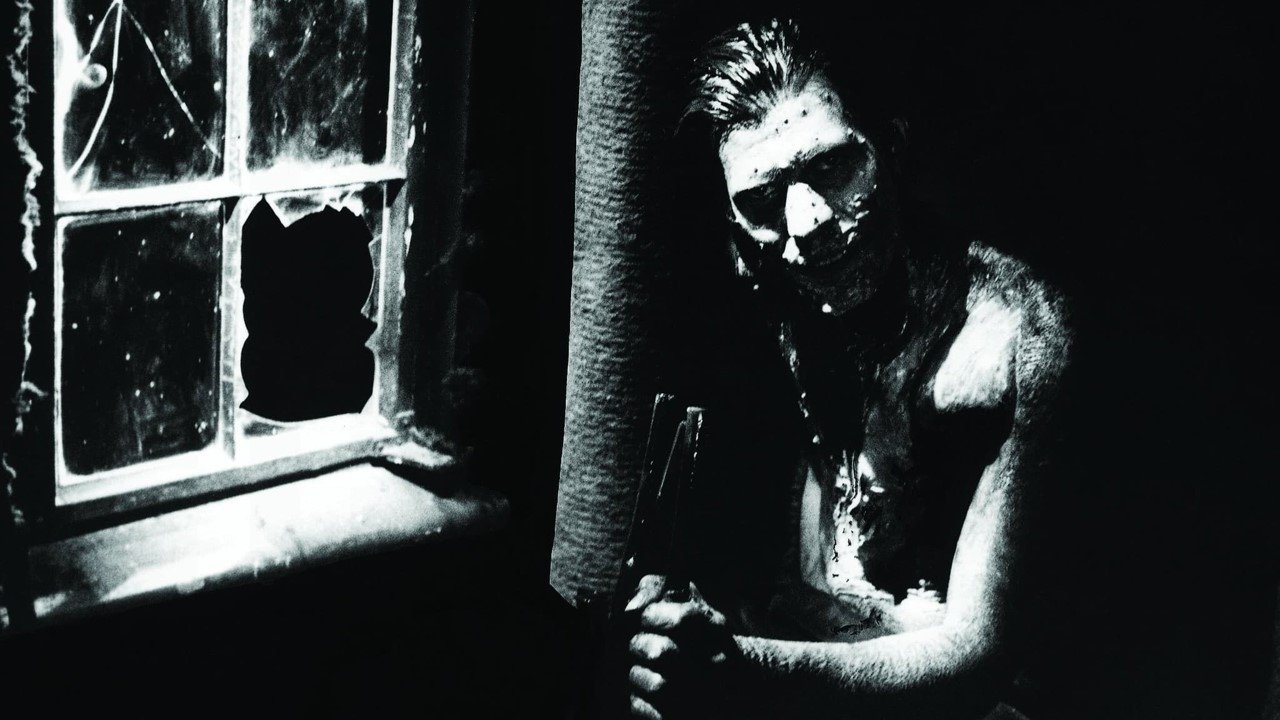
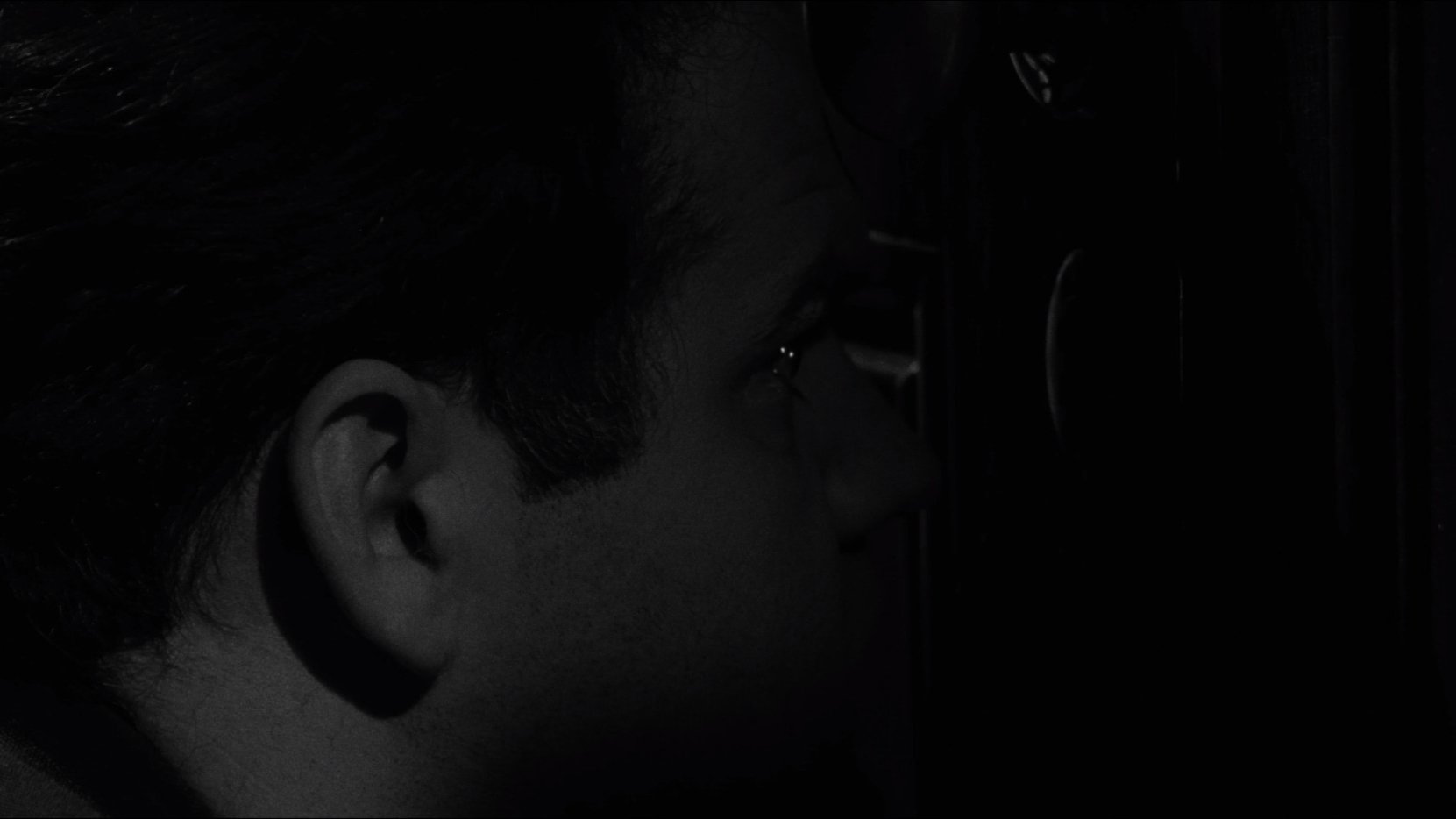
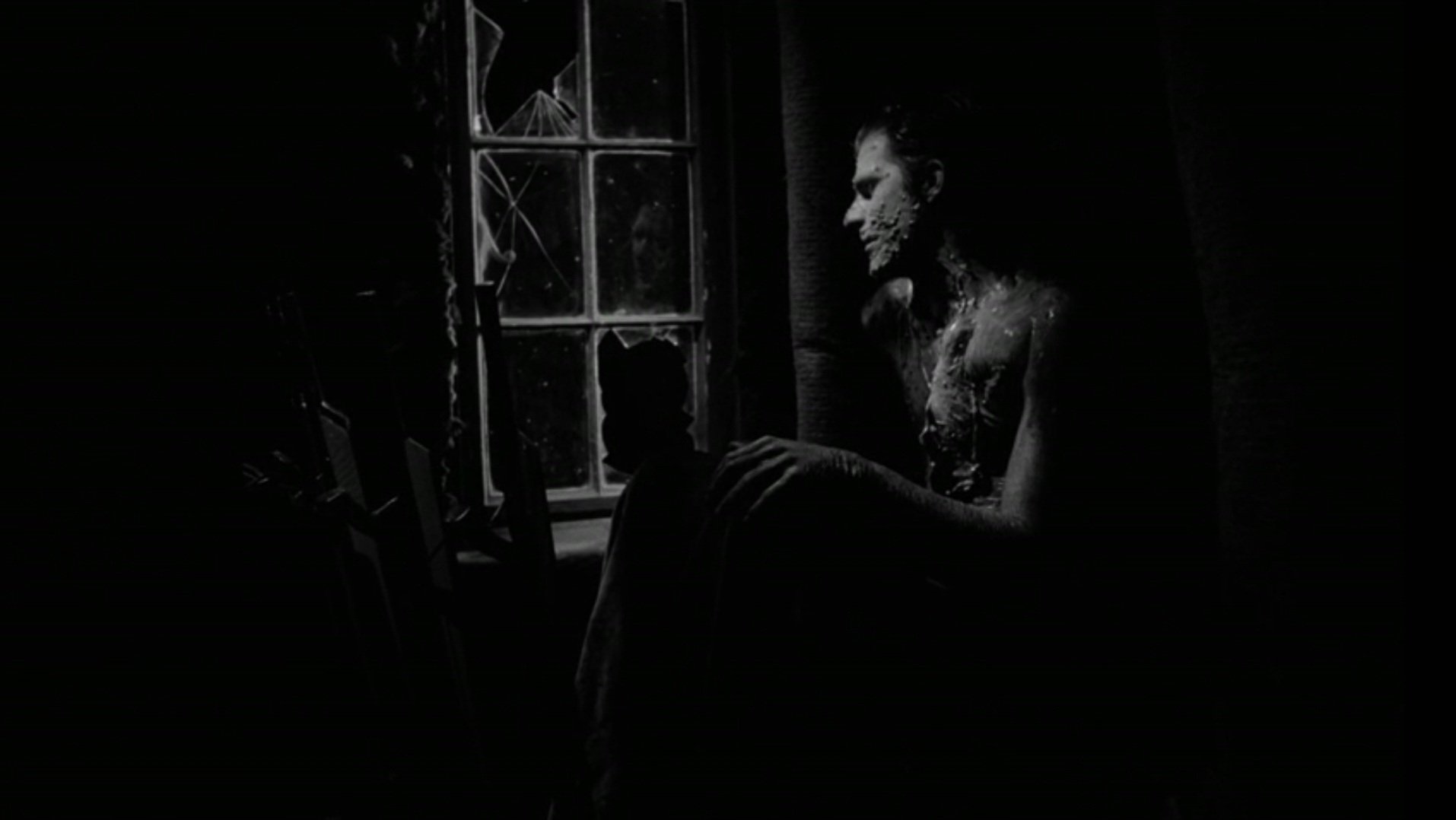
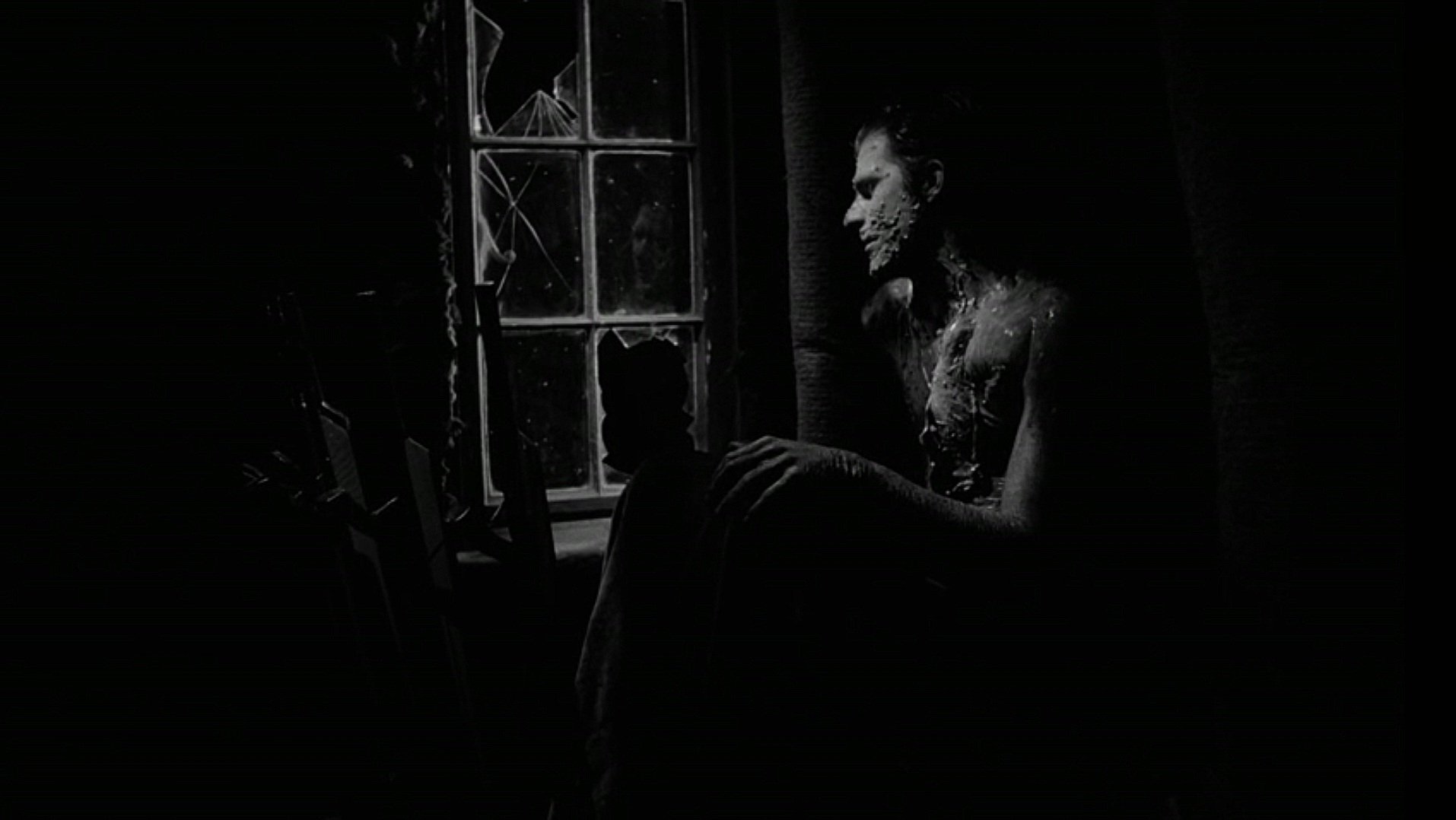
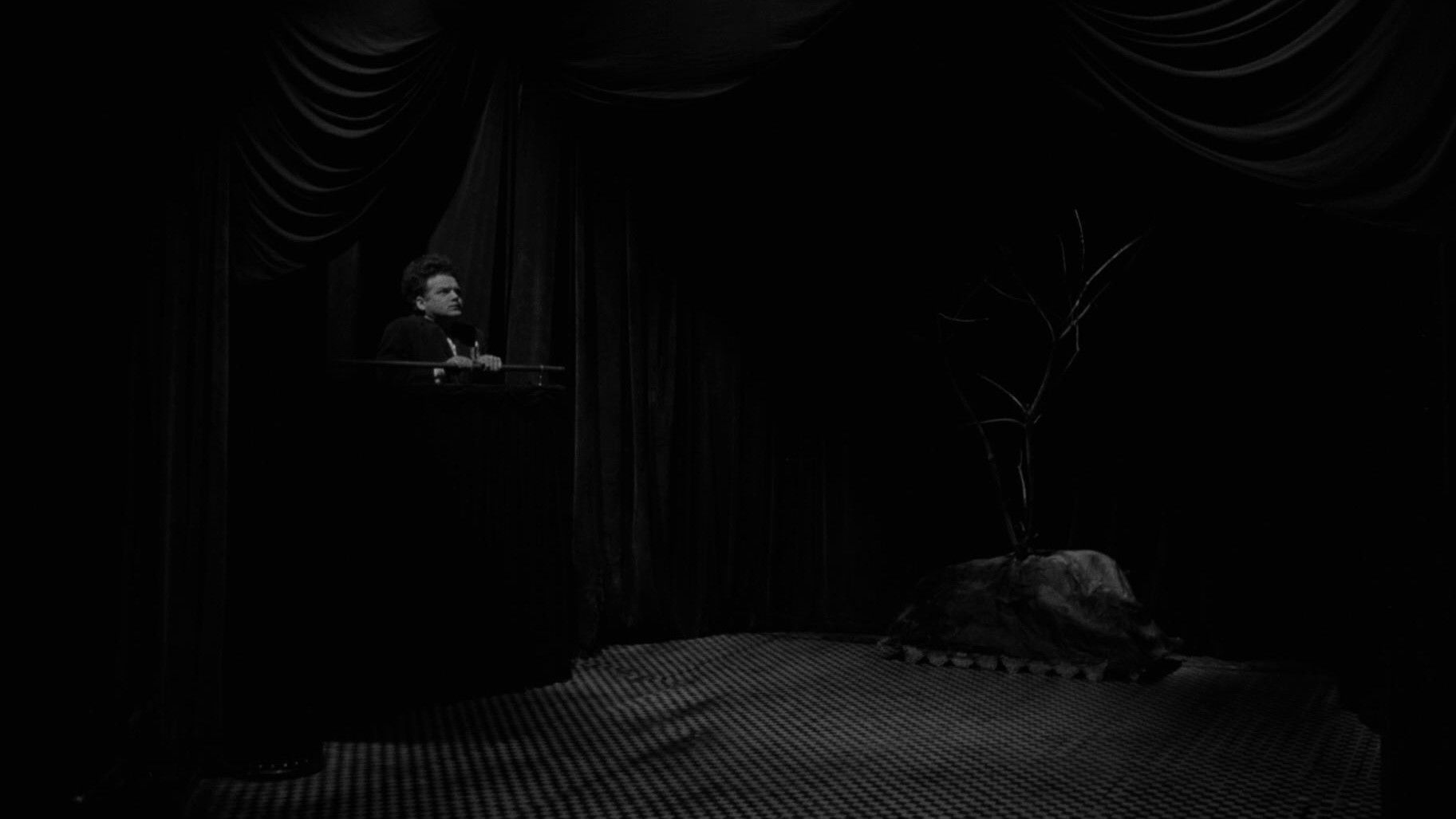
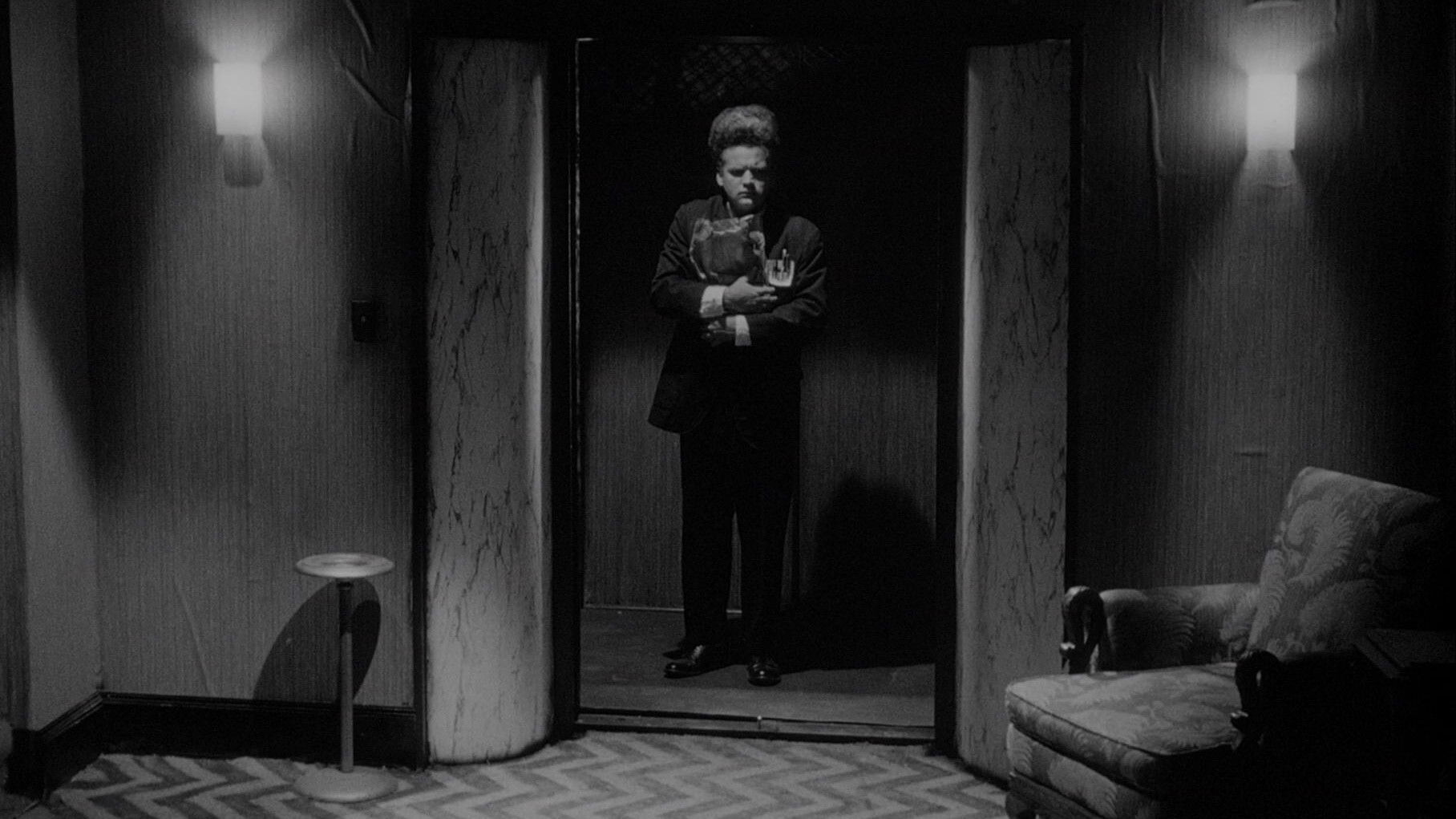
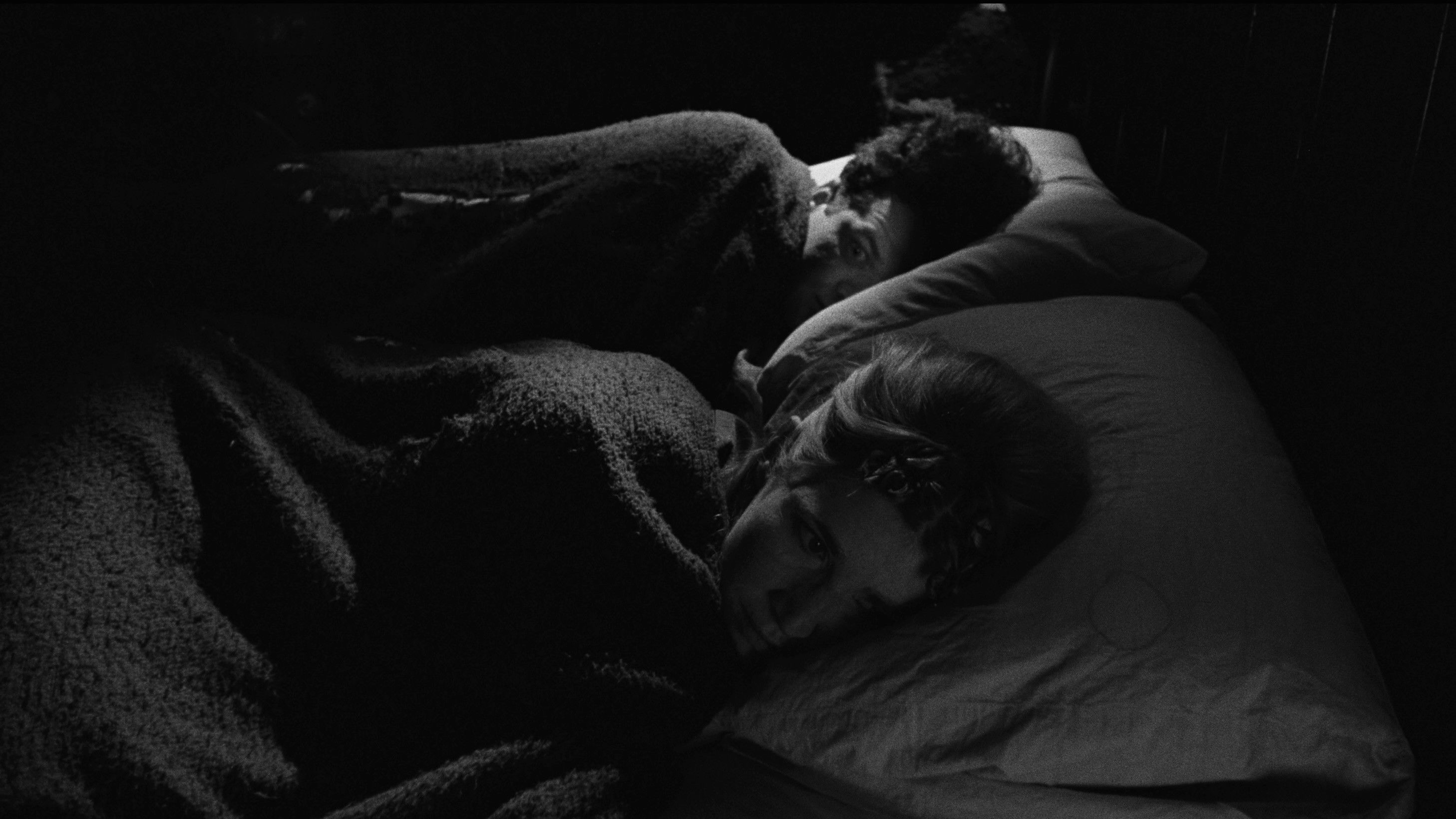
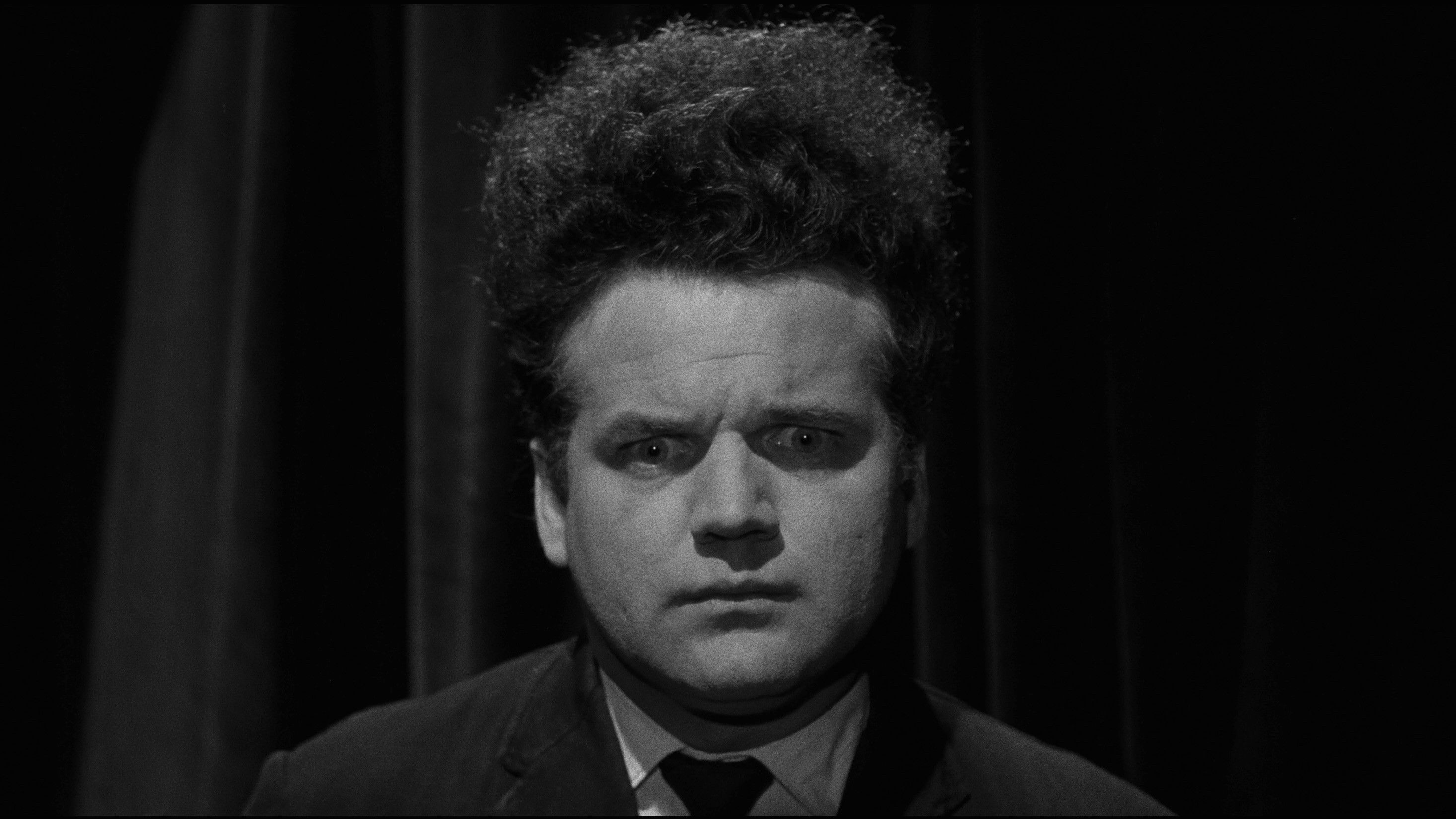
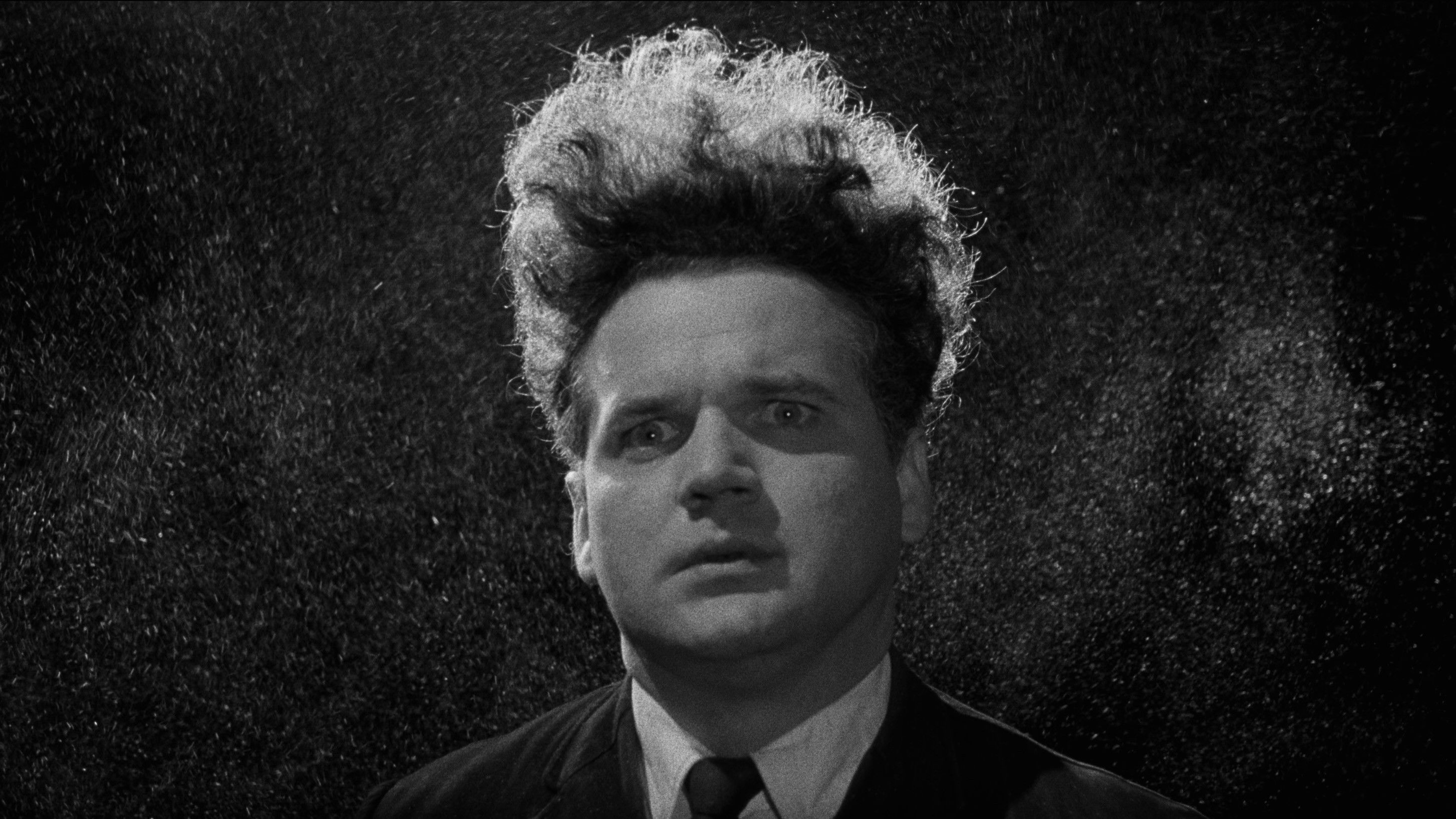
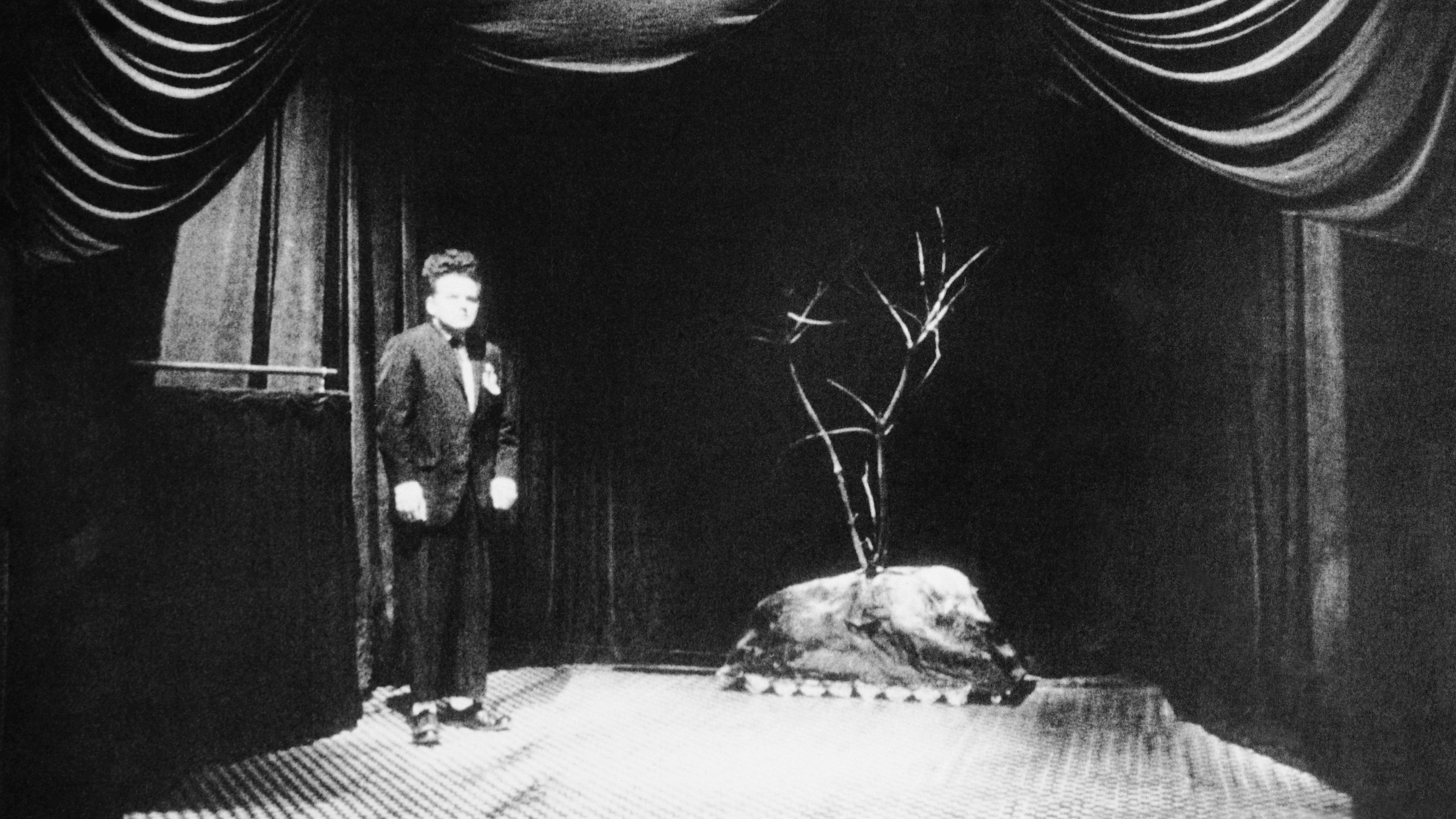
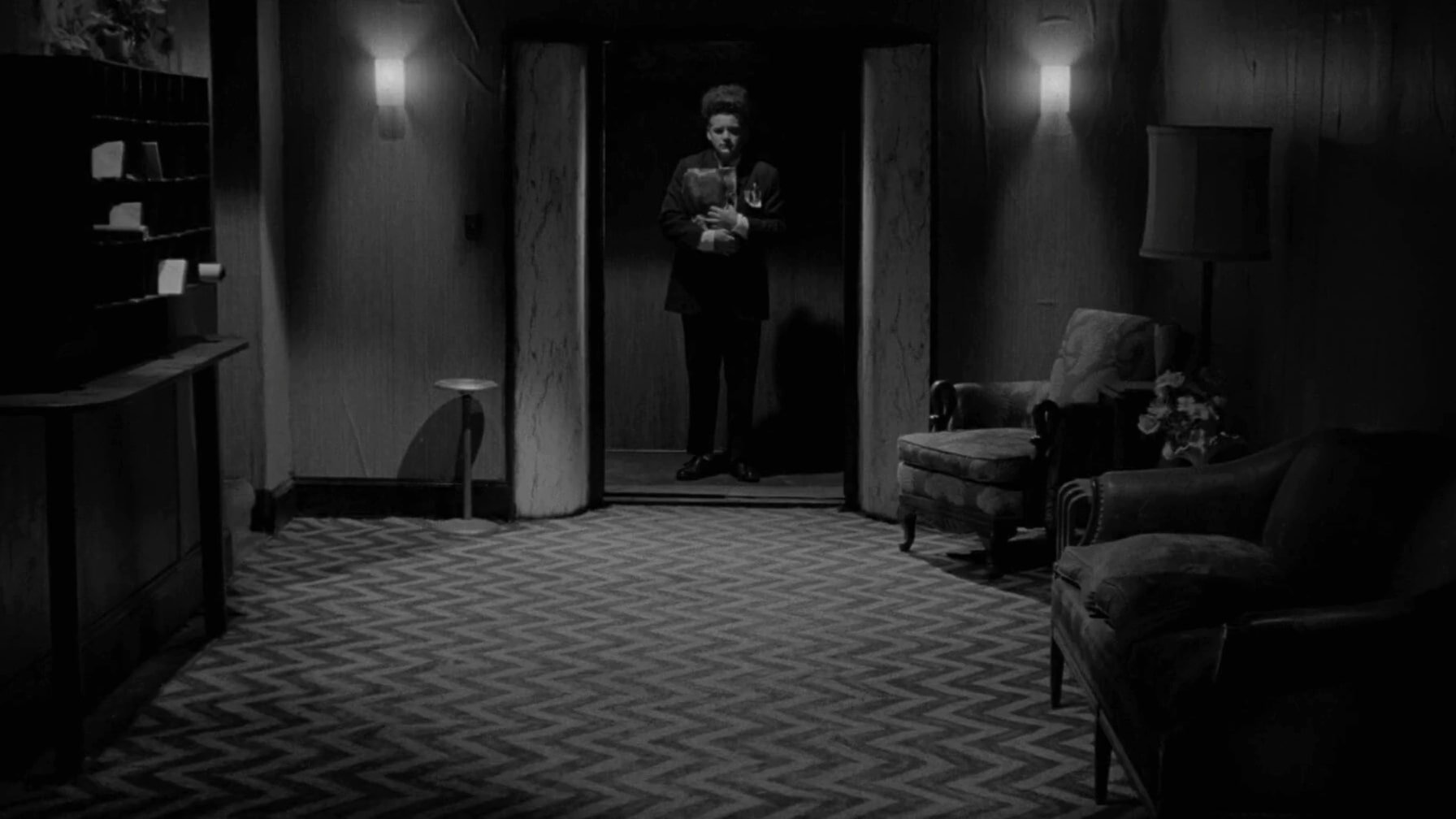
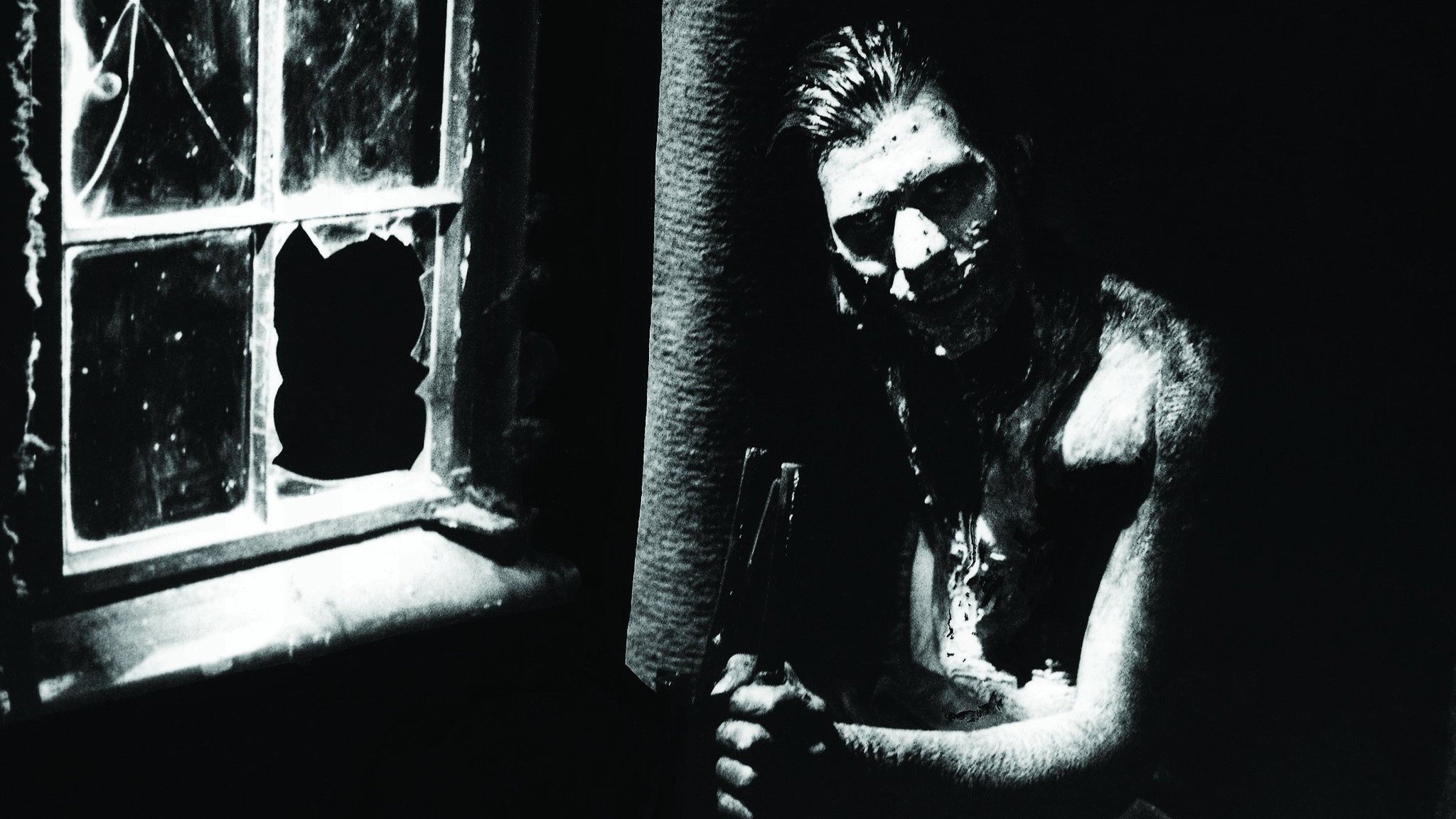
The film credits both Herbert Cardwell and Frederick Elmes for camera and lighting. Cardwell worked on the earlier stages of production, while Elmes joined after Cardwell departed and remained closely involved through much of the long shoot. The black-and-white photography was built around extreme control of light and darkness. Large portions of the frame can disappear almost completely into black, while faces or objects emerge from precisely defined areas of illumination. Elmes later described Lynch's commitment to darkness as fundamental rather than something to be corrected through additional fill light. This approach creates an unusual relationship between set and image.

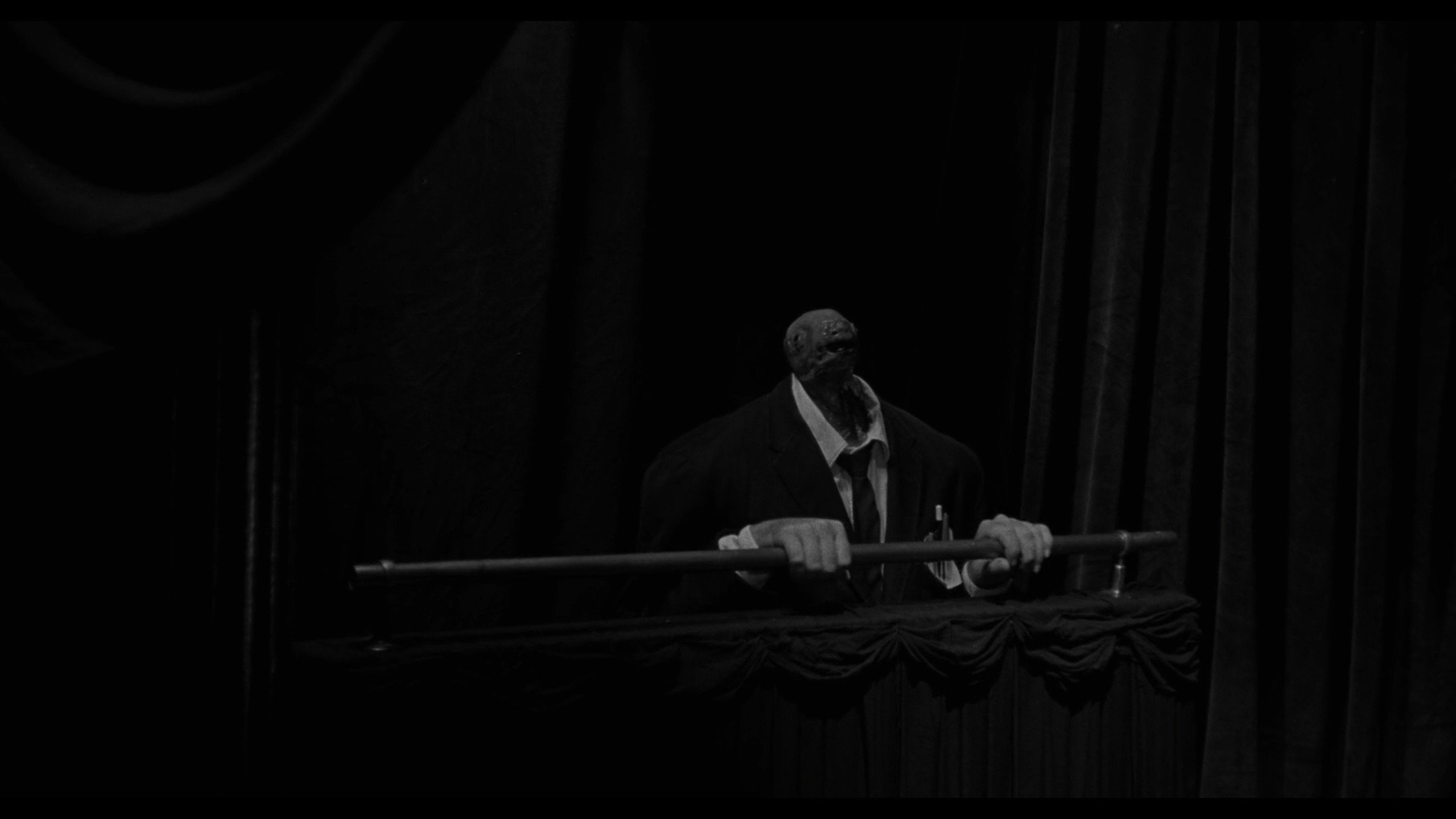
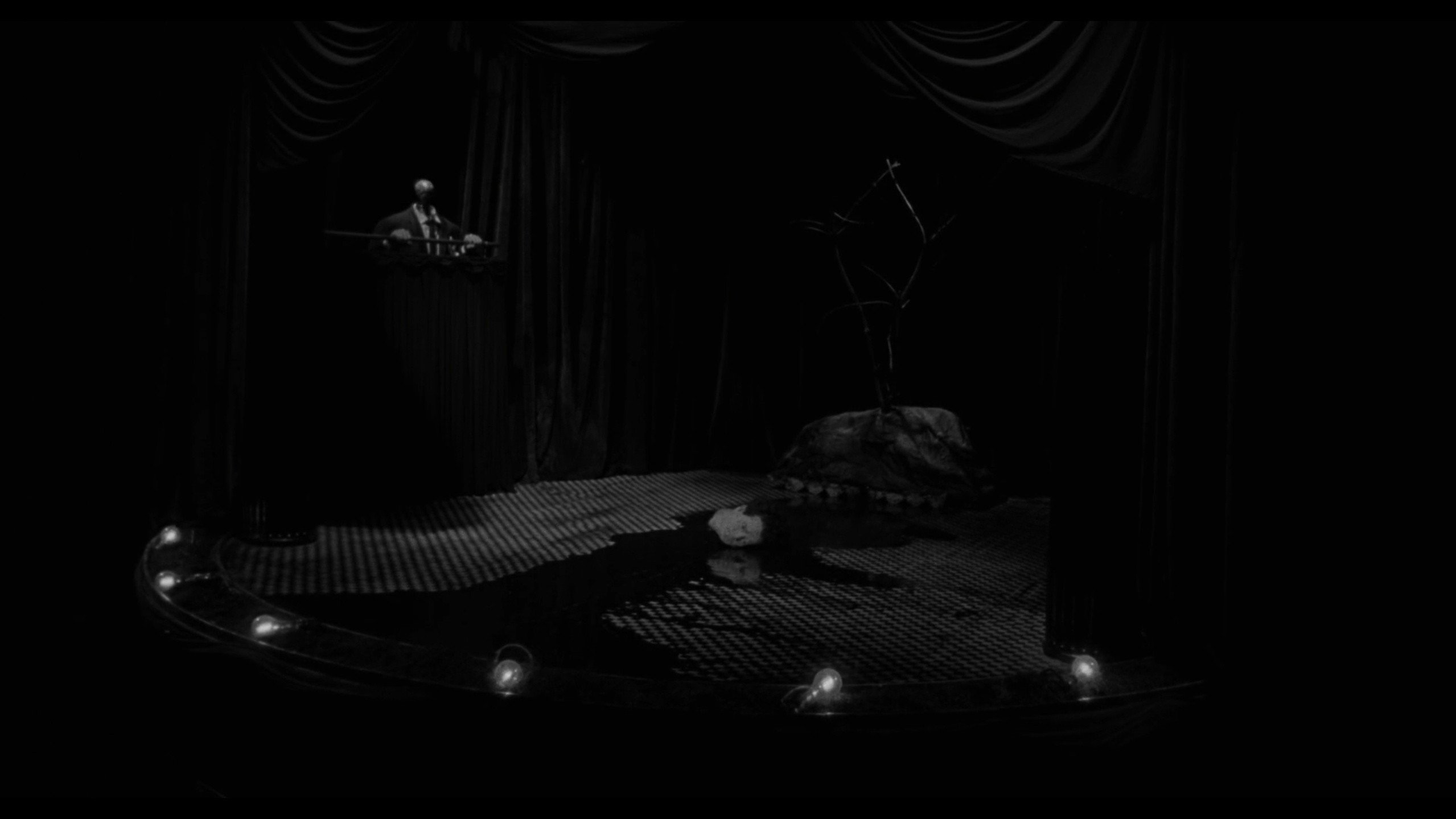
The audience often cannot determine exactly where a room ends. Darkness removes walls and boundaries, allowing Henry's apartment or the radiator stage to exist within apparently unlimited black space. The technique also gives mundane objects an abstract quality. A radiator, electrical socket or mound of dirt can become visually dominant simply because the lighting isolates its surface. The film repeatedly asks viewers to examine ordinary material as though encountering it for the first time. Camera movement is comparatively restrained but carefully designed. With such a small crew, elaborate moves required rehearsal because nearly everyone available might be involved in operating or pushing equipment.

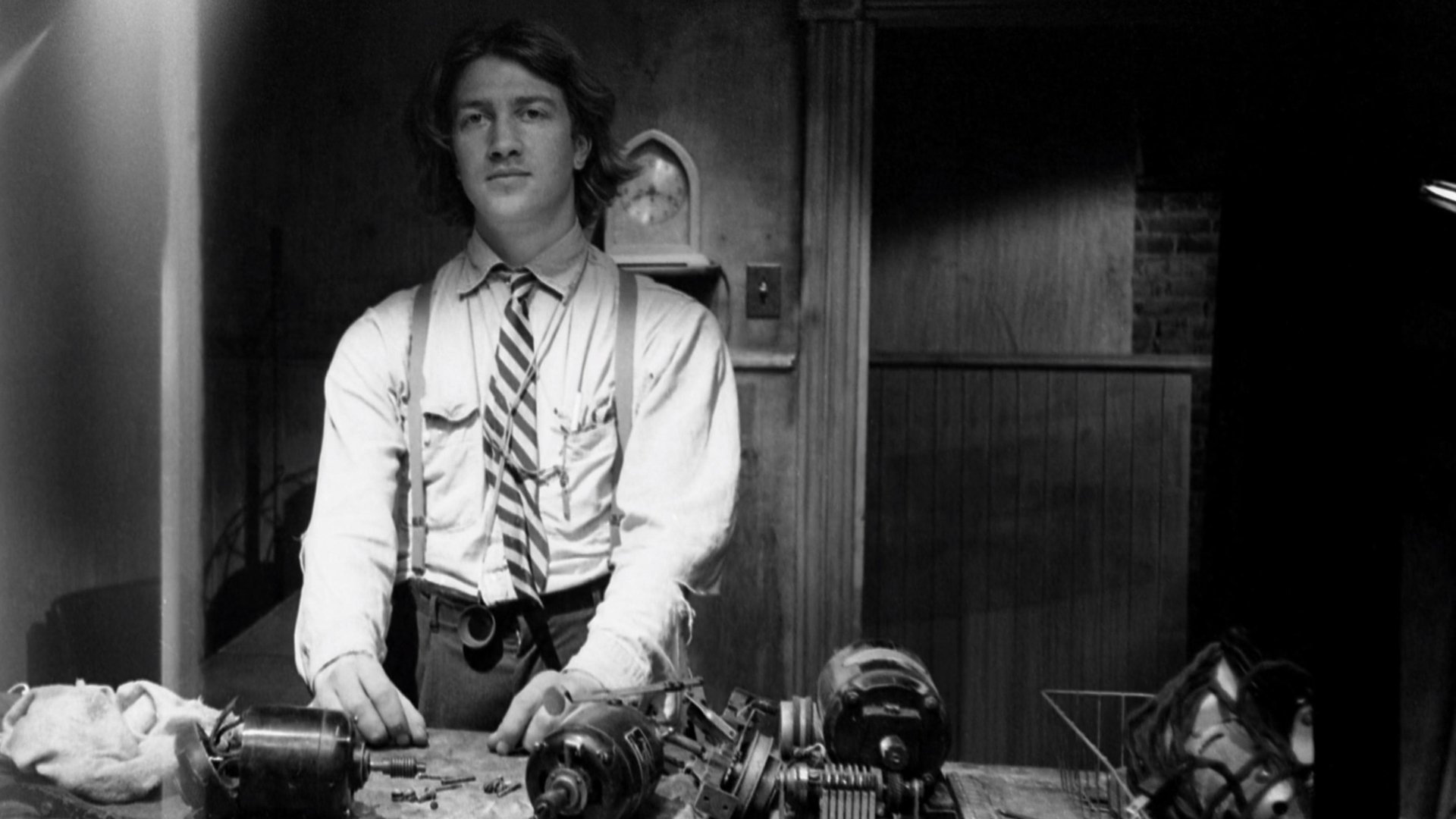
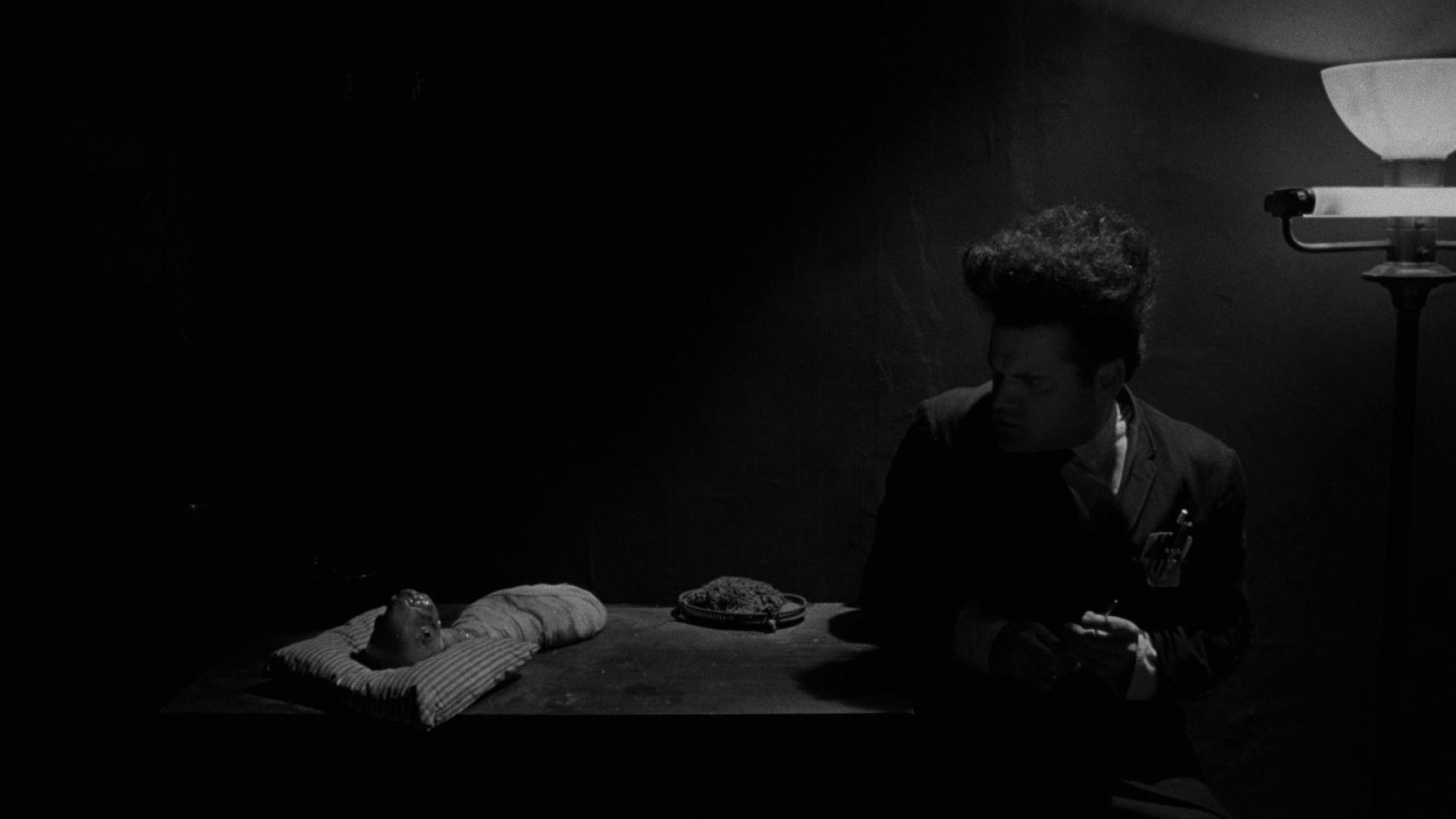
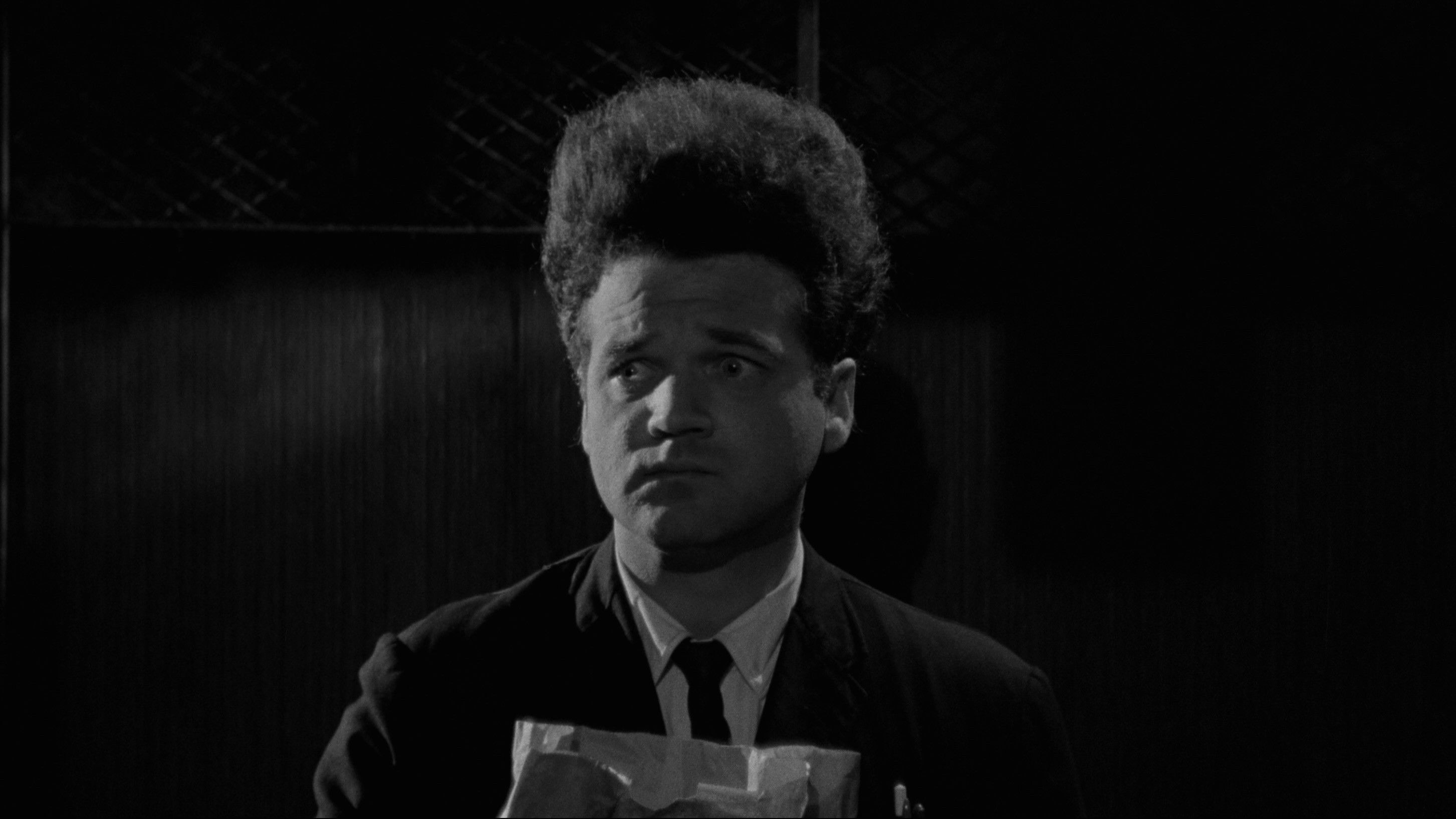
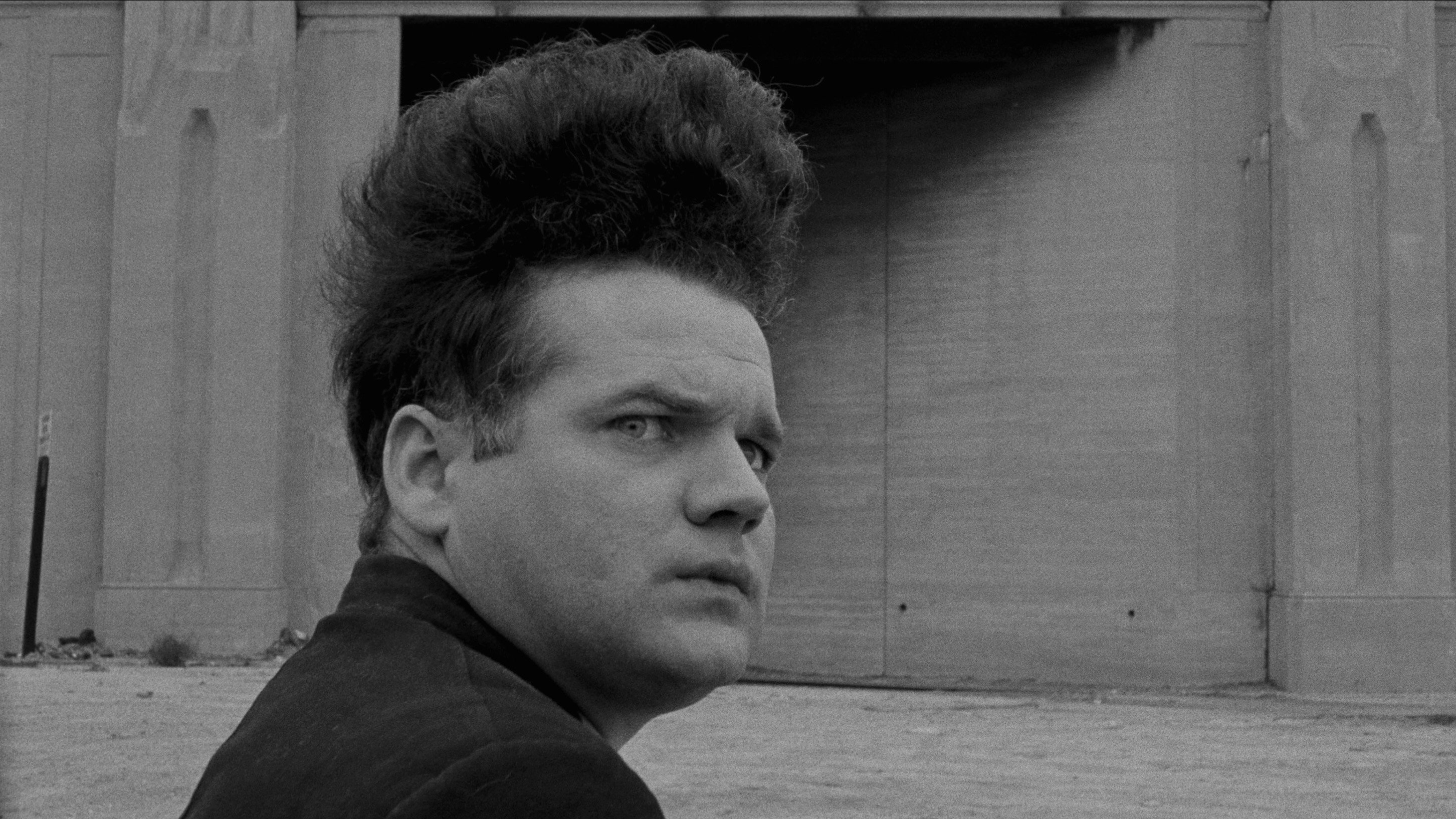
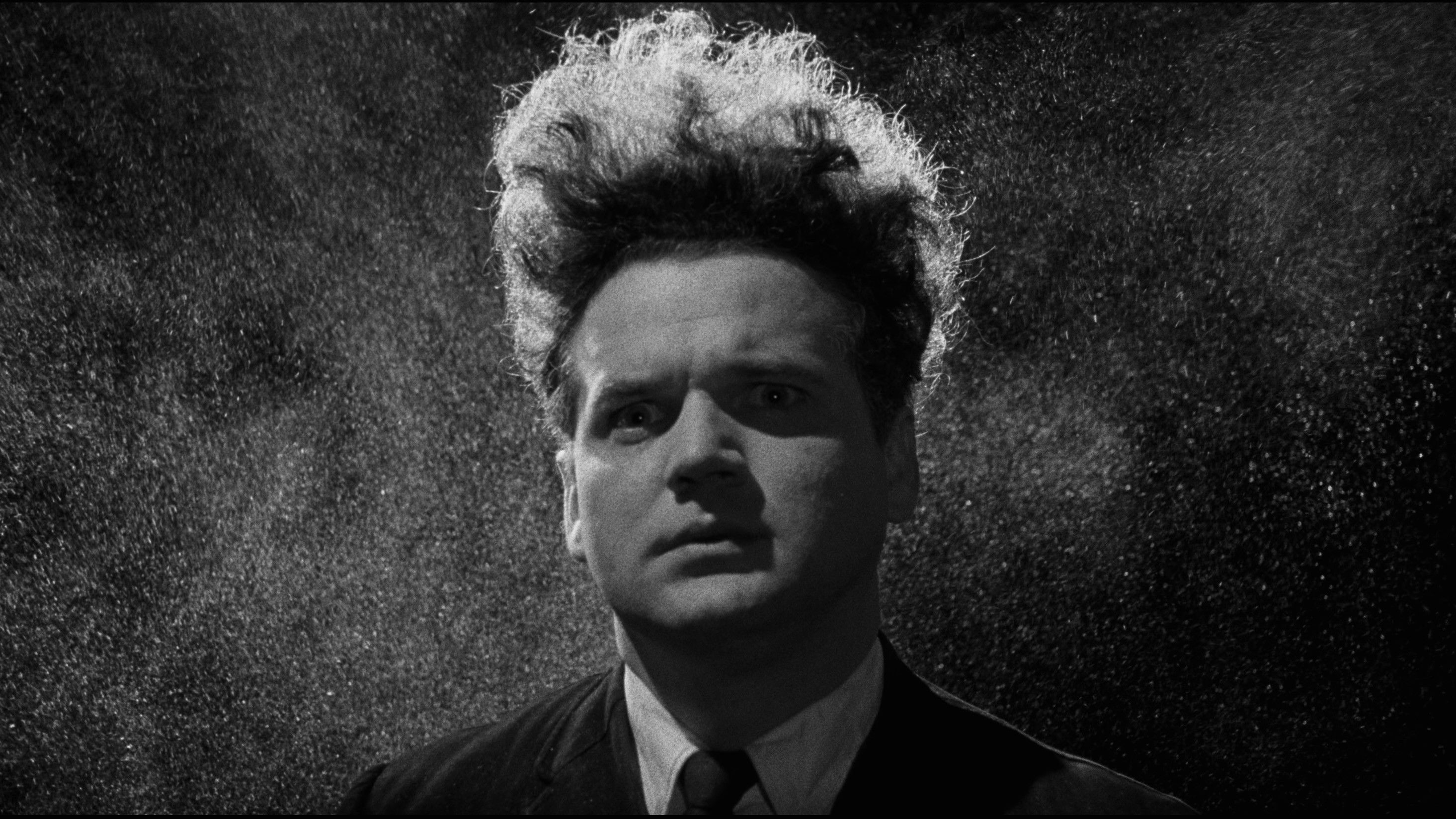
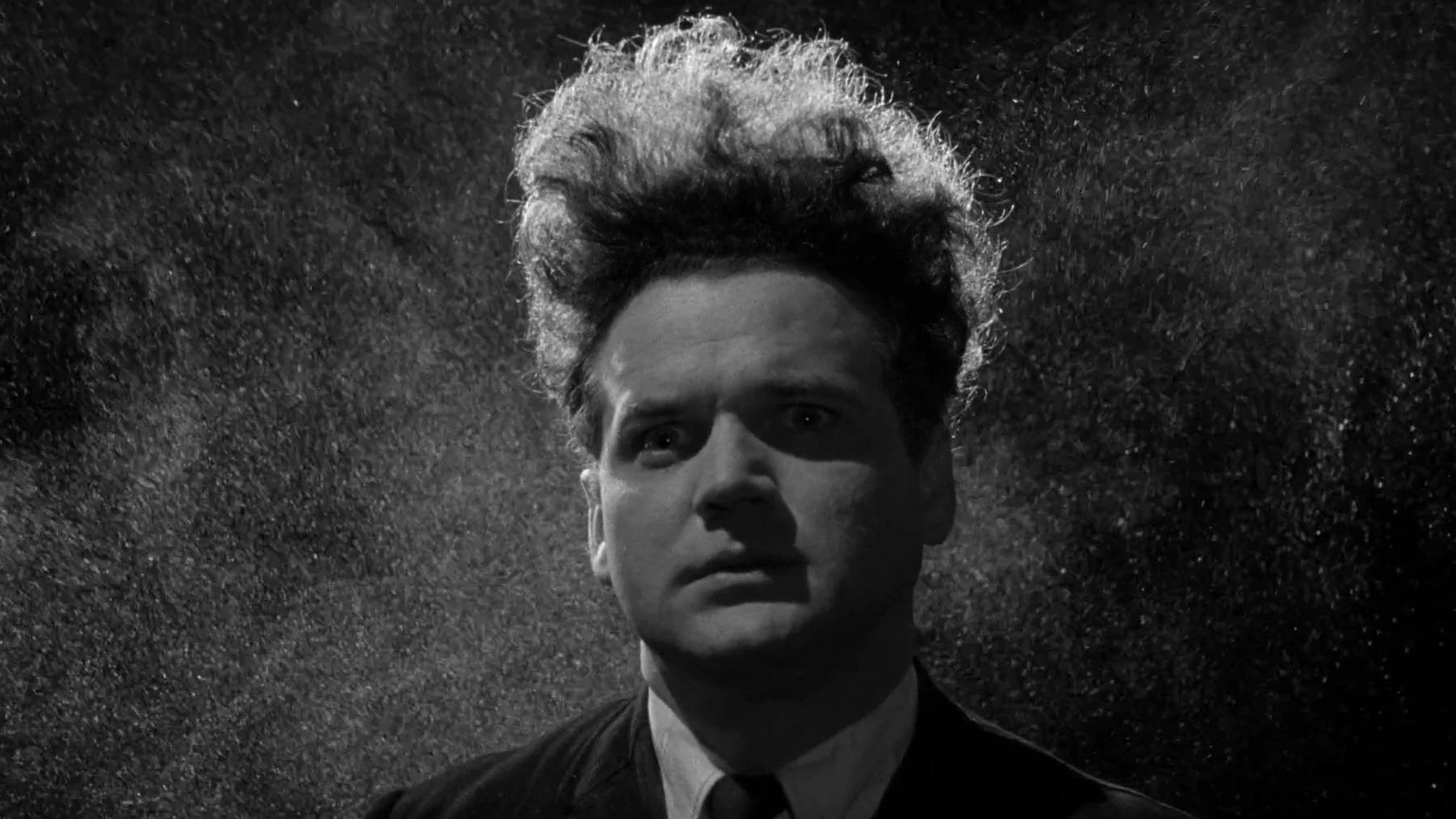
Lynch later remembered Cardwell's insistence on smooth dolly movement as an important lesson that remained with the team. The resulting photography combines precision with apparent primitiveness. The world looks damaged, dirty and improvised, yet compositions are highly controlled. Henry's vertical hair, pale face and dark suit can become almost graphic elements against the surrounding blackness. That combination became central to the film's enduring visual identity. Eraserhead looks neither like polished classical Hollywood black-and-white photography nor like casual documentary footage. Its darkness feels constructed as a physical substance through which characters move.

Henry, Parenthood & Domestic Body Horror

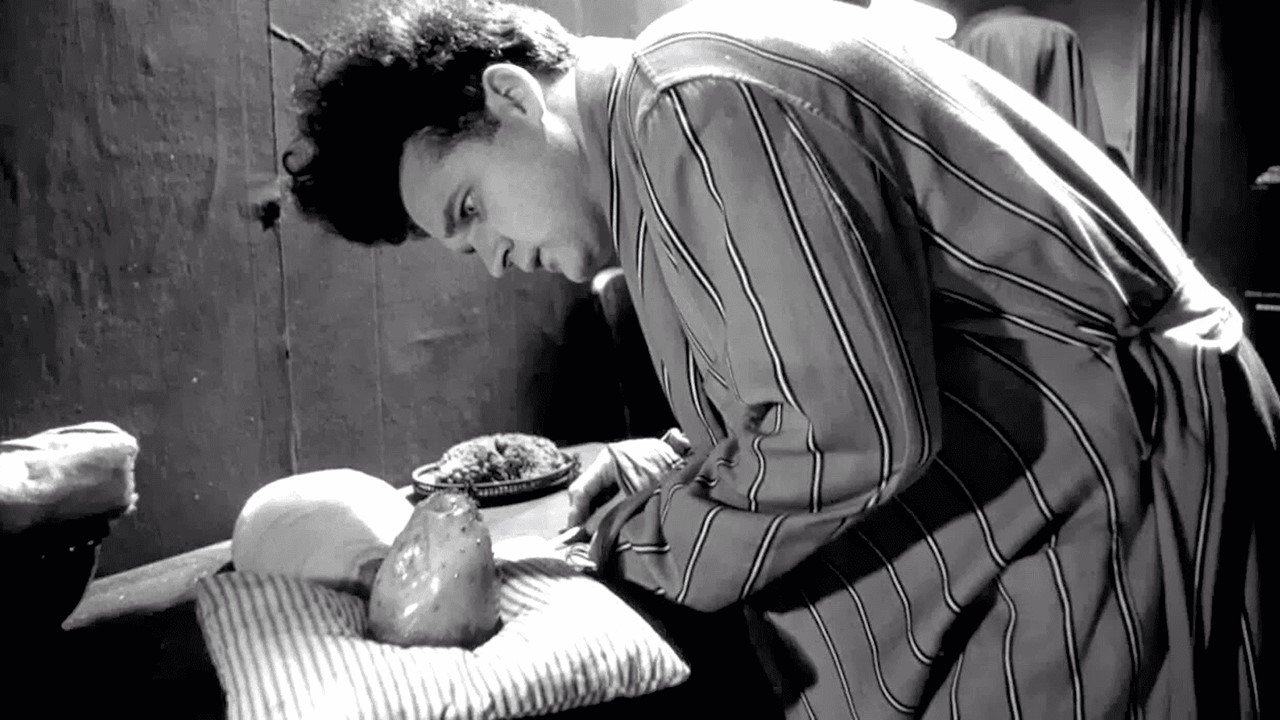
The arrival of the baby transforms the film's abstract industrial unease into domestic crisis. Henry and Mary do not experience parenthood as fulfilment or social stability. They are placed inside a tiny apartment with a child that cries continuously, becomes ill and requires constant attention. The film has often been interpreted through Lynch's own experience of becoming a father while still a young art student. Lynch acknowledged that personal experience inevitably contributes to creative ideas, but he resisted reducing Eraserhead to a literal autobiography or treating the baby as a direct representation of his daughter. The distinction is important.

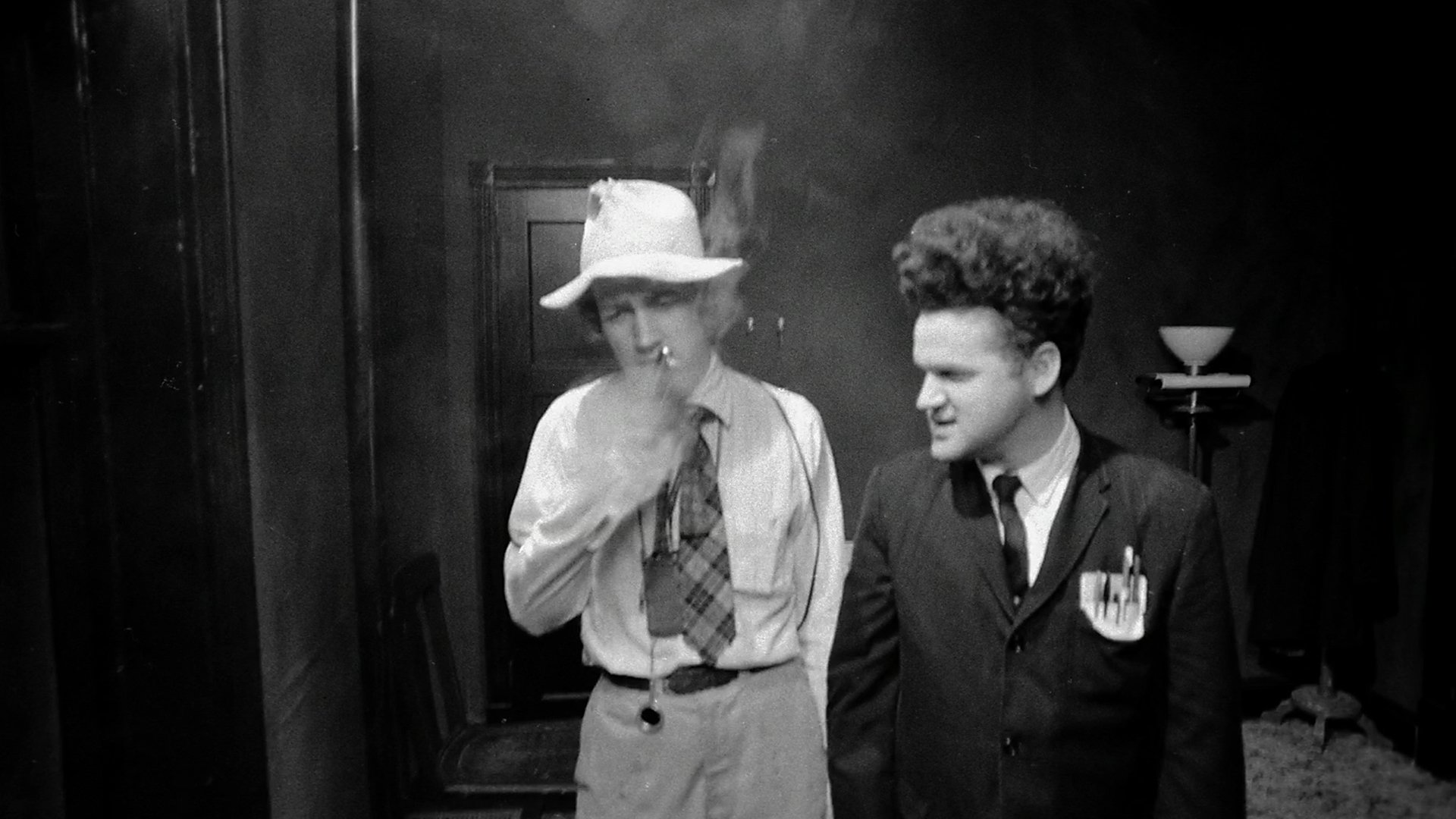
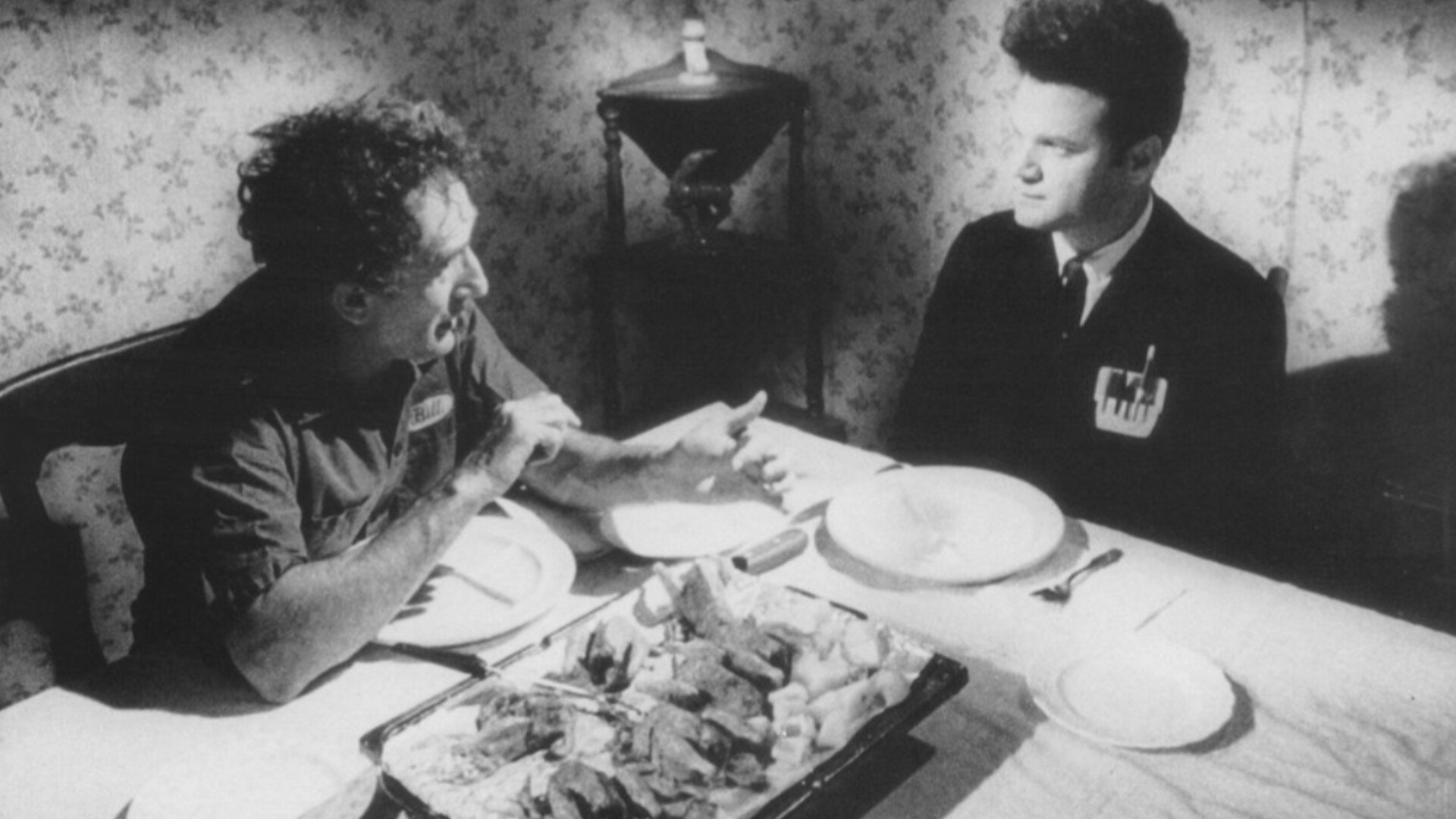
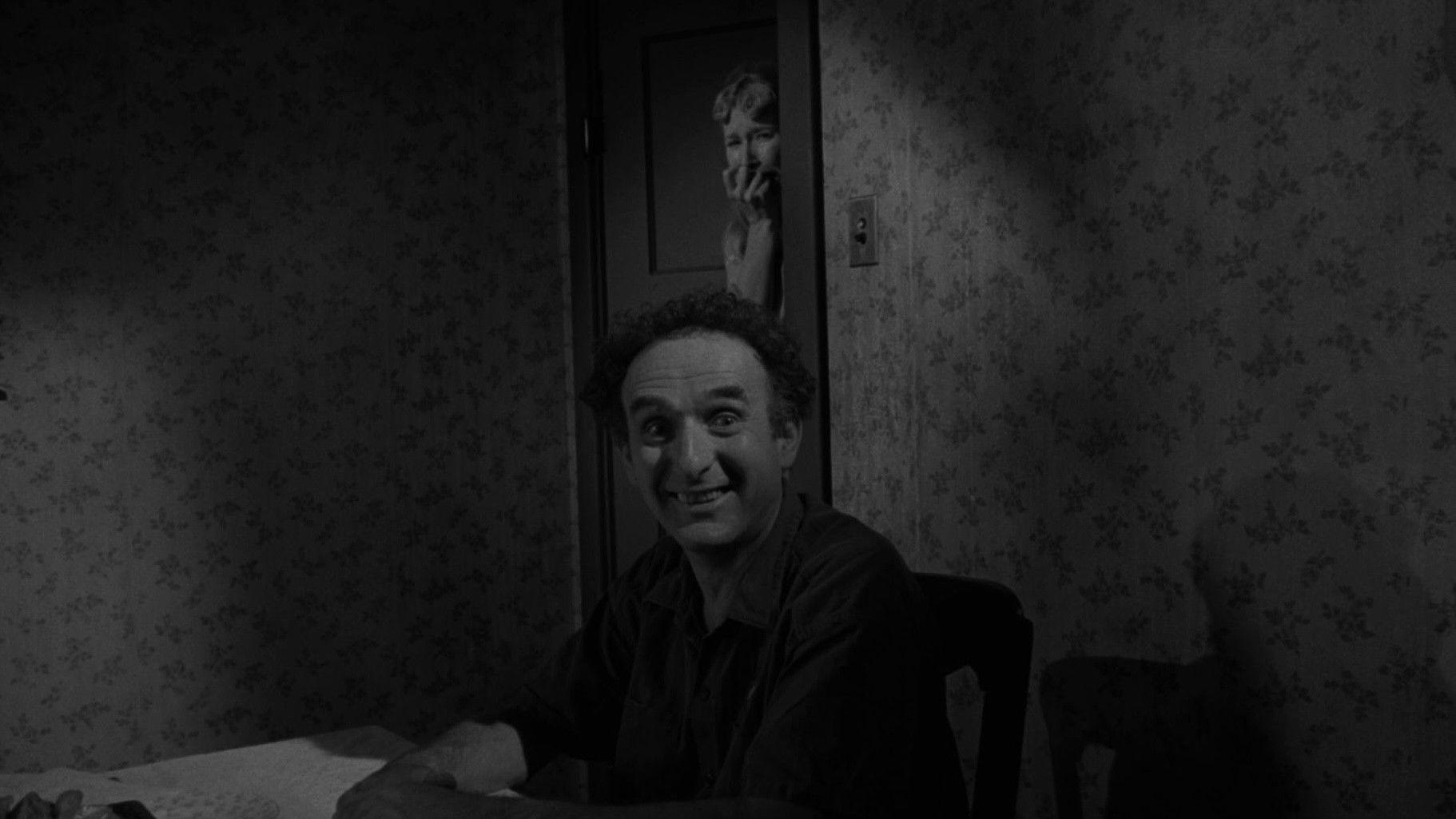
The film works because the anxiety is broader than one biographical event. Parenthood becomes one part of a larger fear involving sexuality, responsibility, reproduction and the possibility that adult life may suddenly become irreversible. Henry appears particularly unprepared for that transition. Jack Nance plays him as permanently uncertain about how to respond to other people. He rarely acts with authority and frequently seems to wait for events to explain themselves. The dinner with Mary's family establishes this condition before the baby appears. Ordinary social rituals become physically unstable: artificial chickens move on the plate, bodily fluids erupt and conversation becomes increasingly invasive.

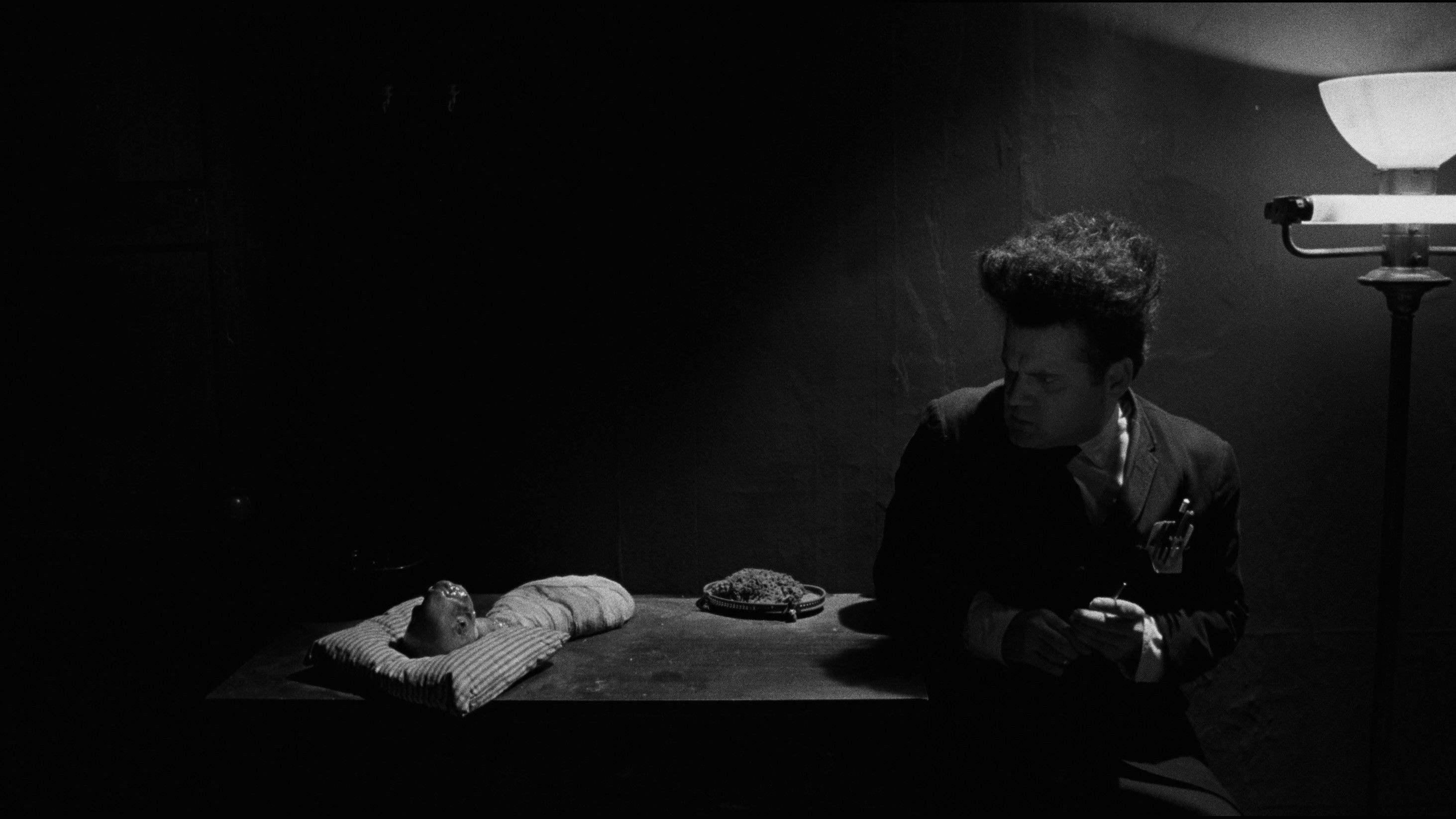
Family life is introduced not as refuge from the industrial nightmare but as another form of it. Once Mary leaves Henry alone with the child, the domestic environment becomes more oppressive. The baby is helpless and dependent, yet its appearance makes ordinary tenderness difficult. Henry alternates between responsibility, fear, irritation and fantasy. The film therefore turns parenthood into body horror without reducing the child simply to a monster. Its vulnerability is essential. The infant cries, becomes feverish and appears incapable of surviving without care. Henry's horror is intensified precisely because something repulsive is also something for which he is responsible.

The Baby, Physical Effects & Deliberate Secrecy

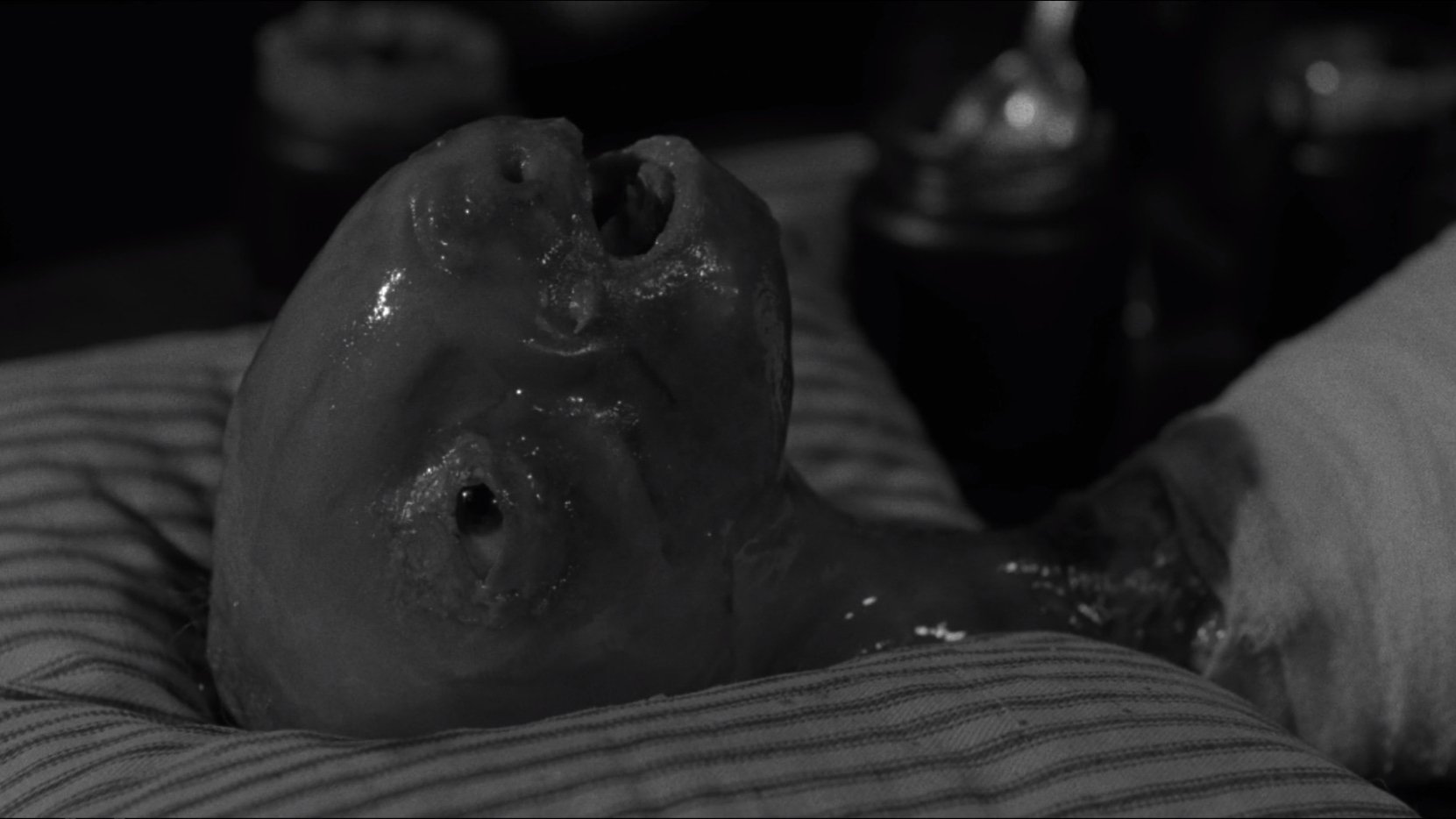
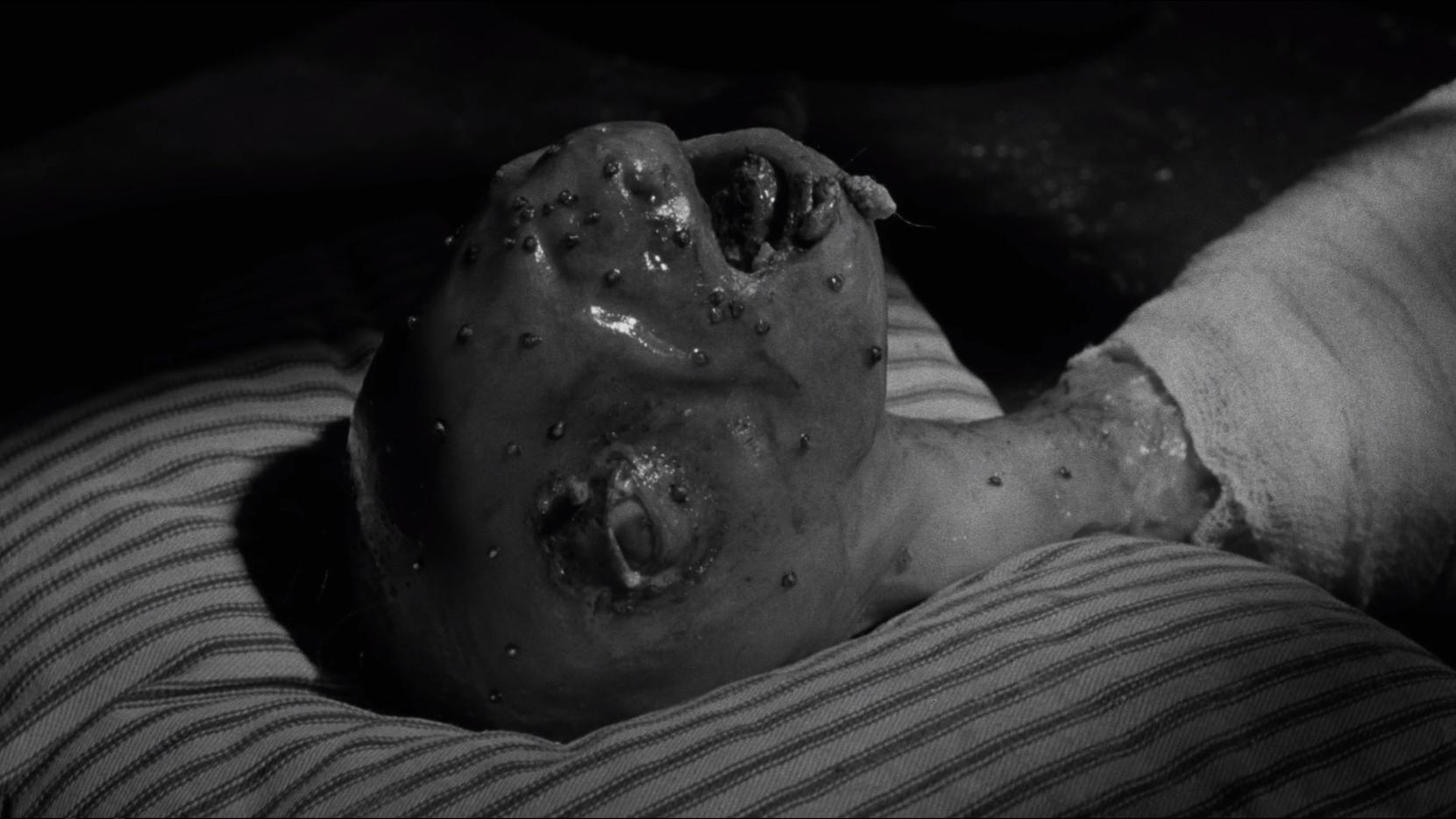
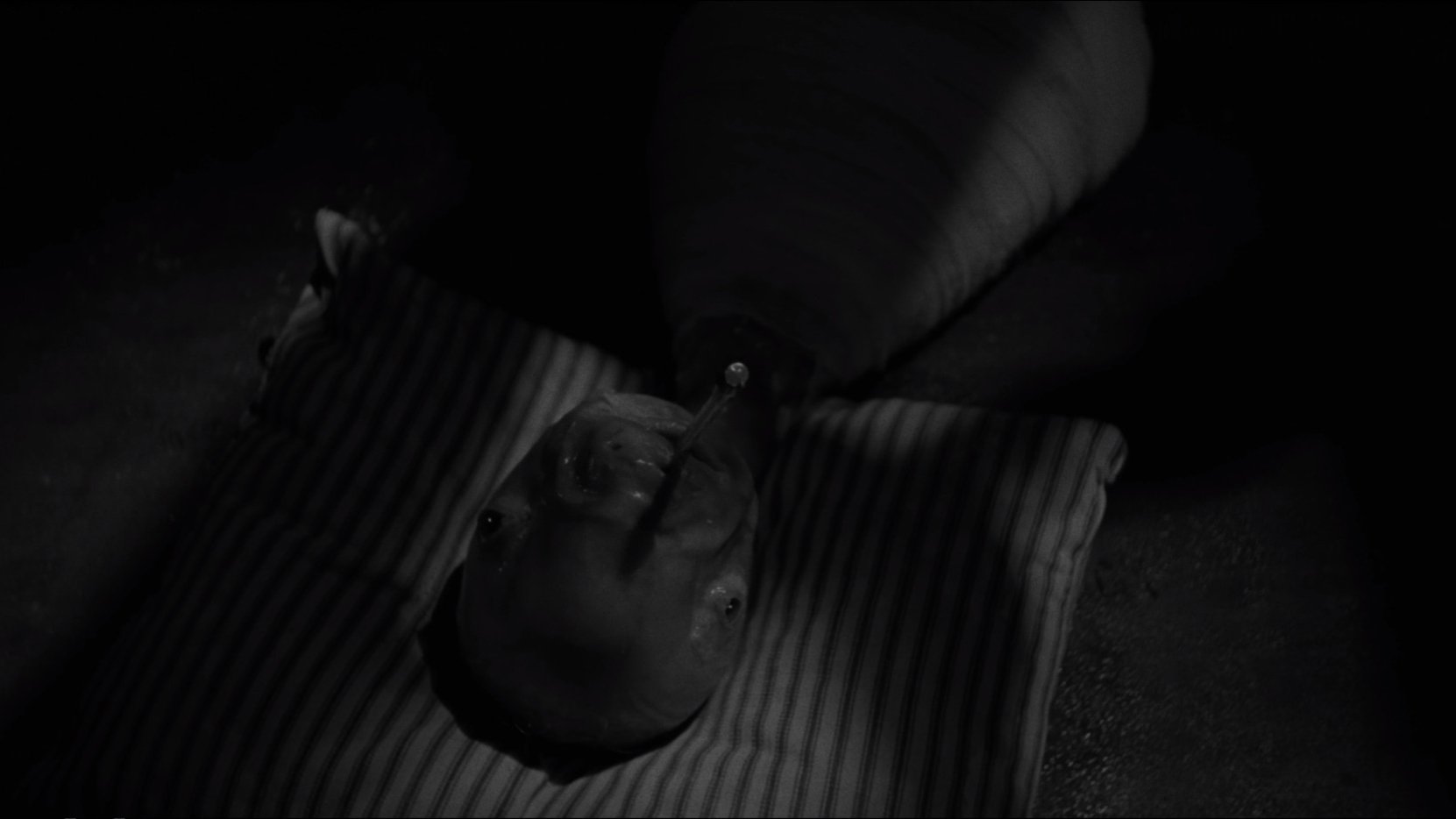
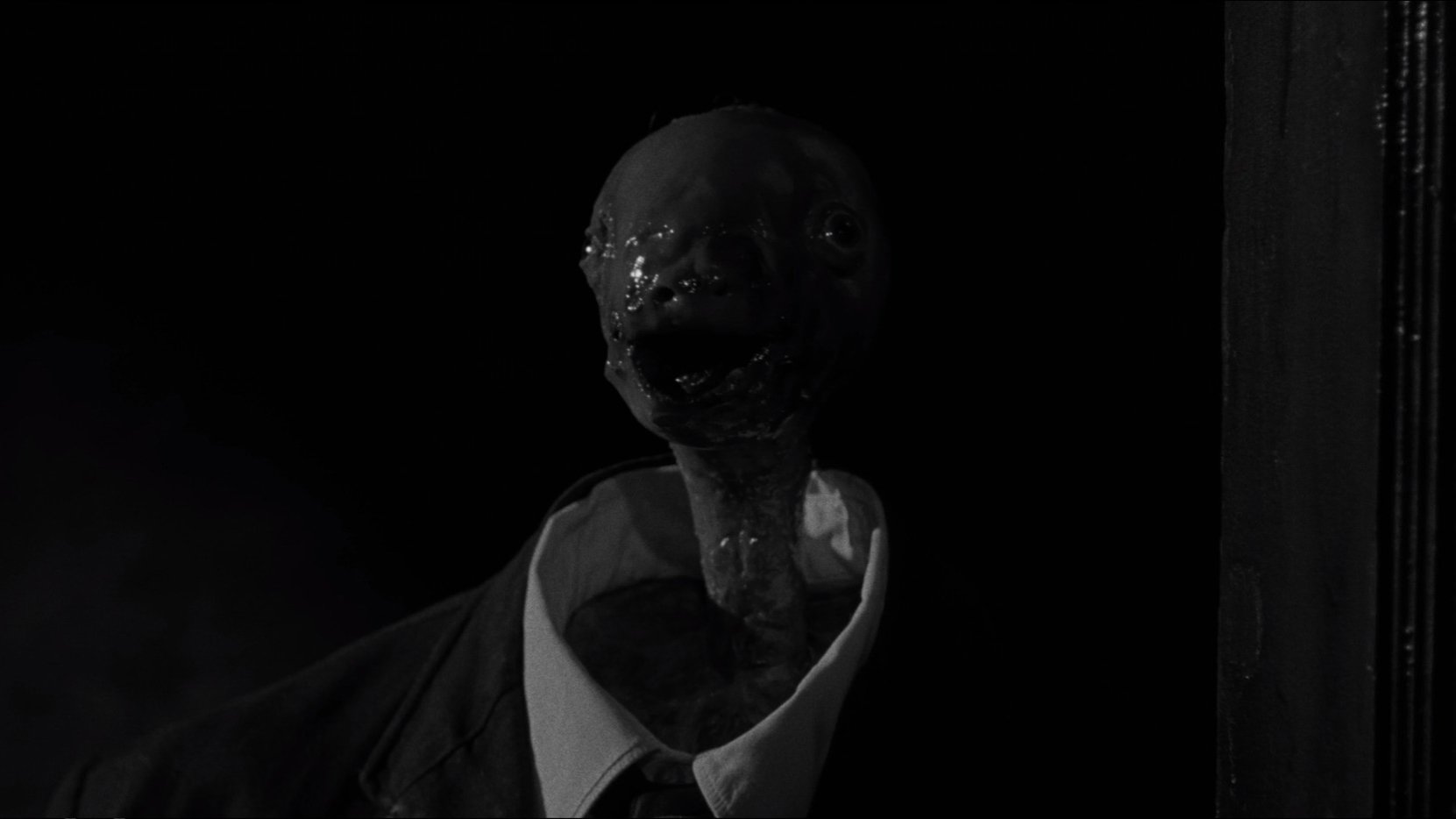
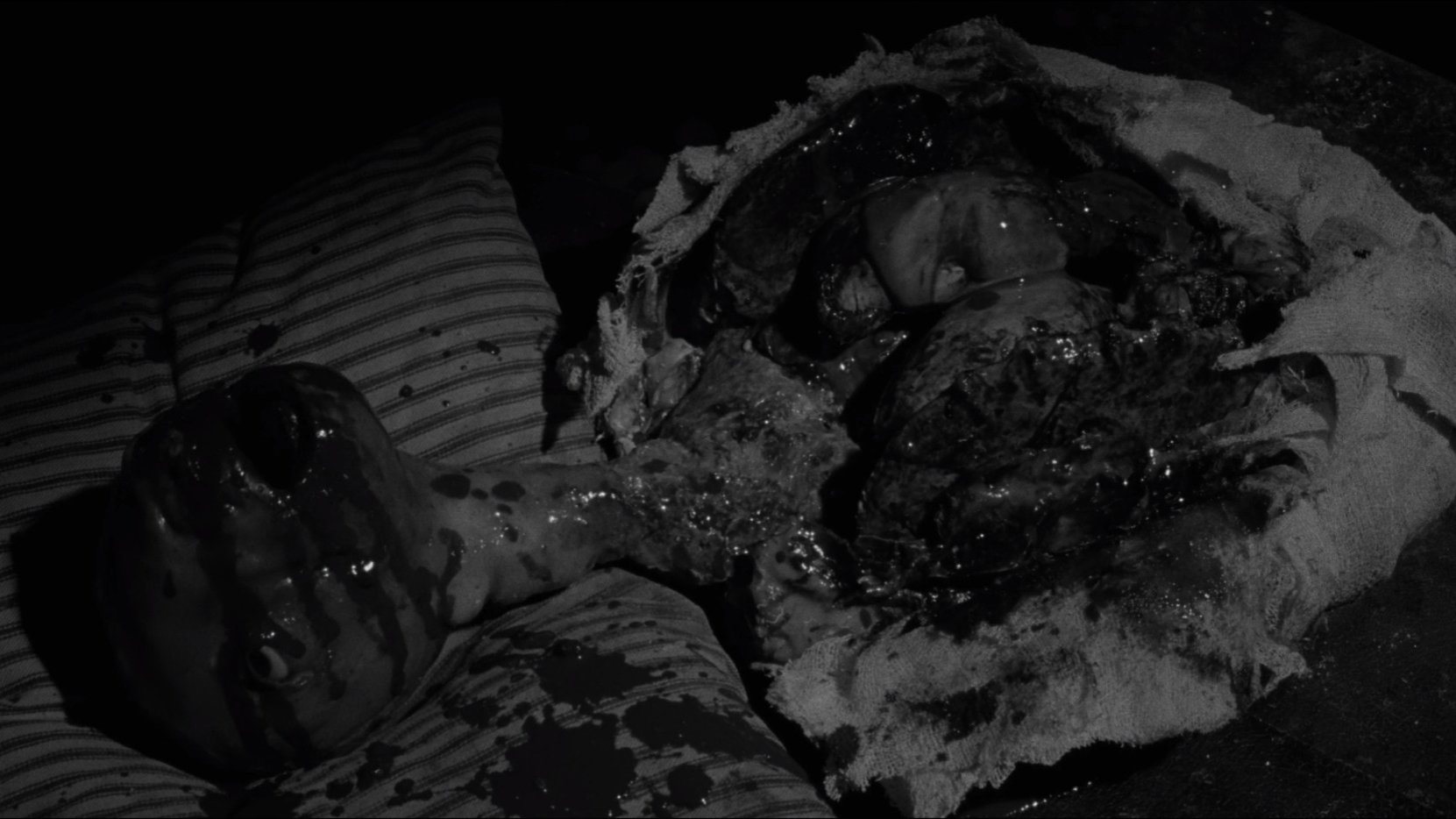
The baby is the central physical effect in Eraserhead, yet its construction remains one of the most deliberately protected secrets in modern film effects history. Lynch consistently refused to describe exactly how it was created. That refusal was not accidental evasiveness. Lynch believed that explaining the mechanical construction of an image destroyed part of its power. When asked repeatedly about the baby, he argued that audiences gain little by discovering the practical trick behind something that functions precisely because it appears impossible. As a result, numerous theories have circulated about animal tissue, preserved specimens and other materials.

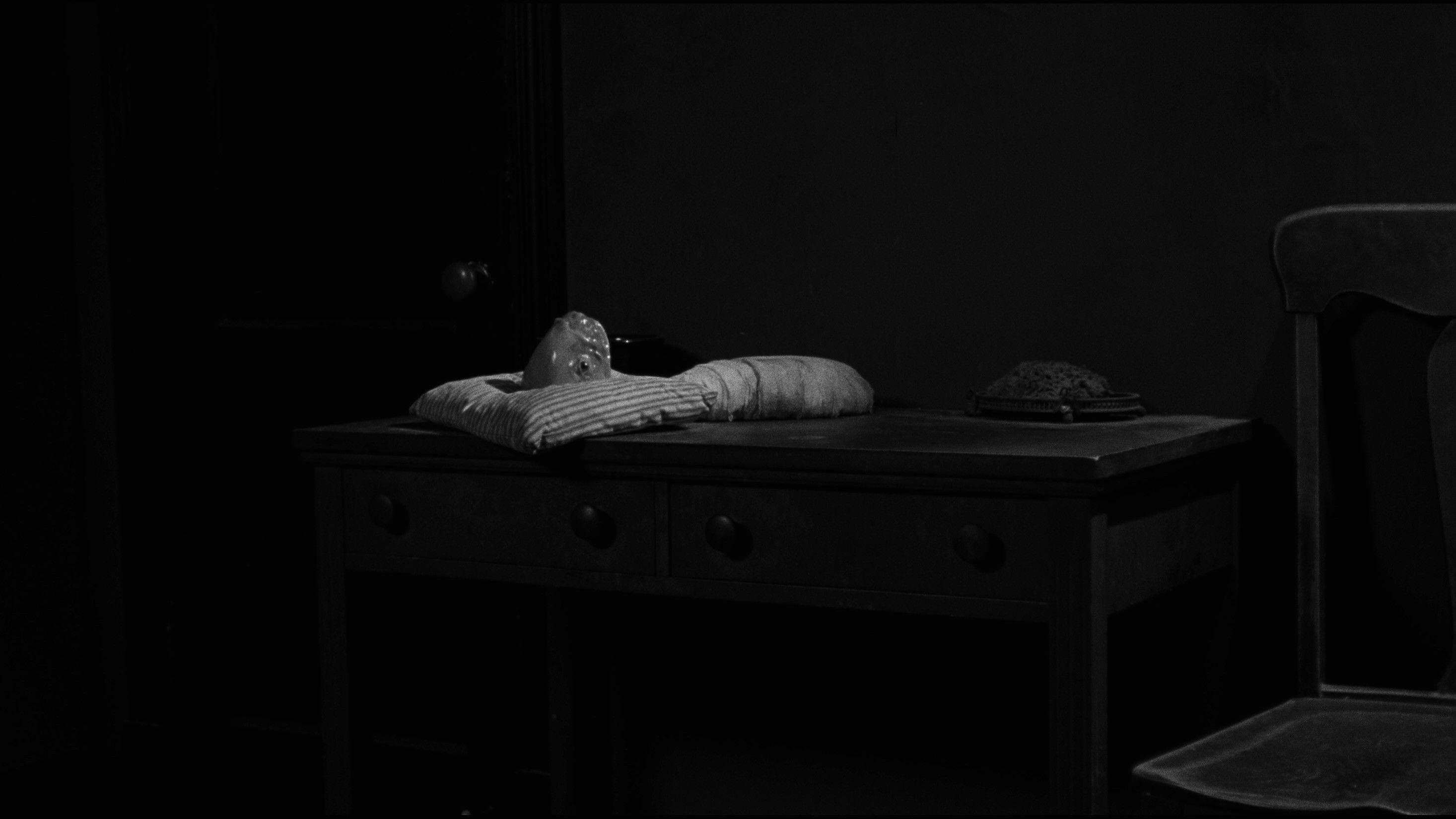
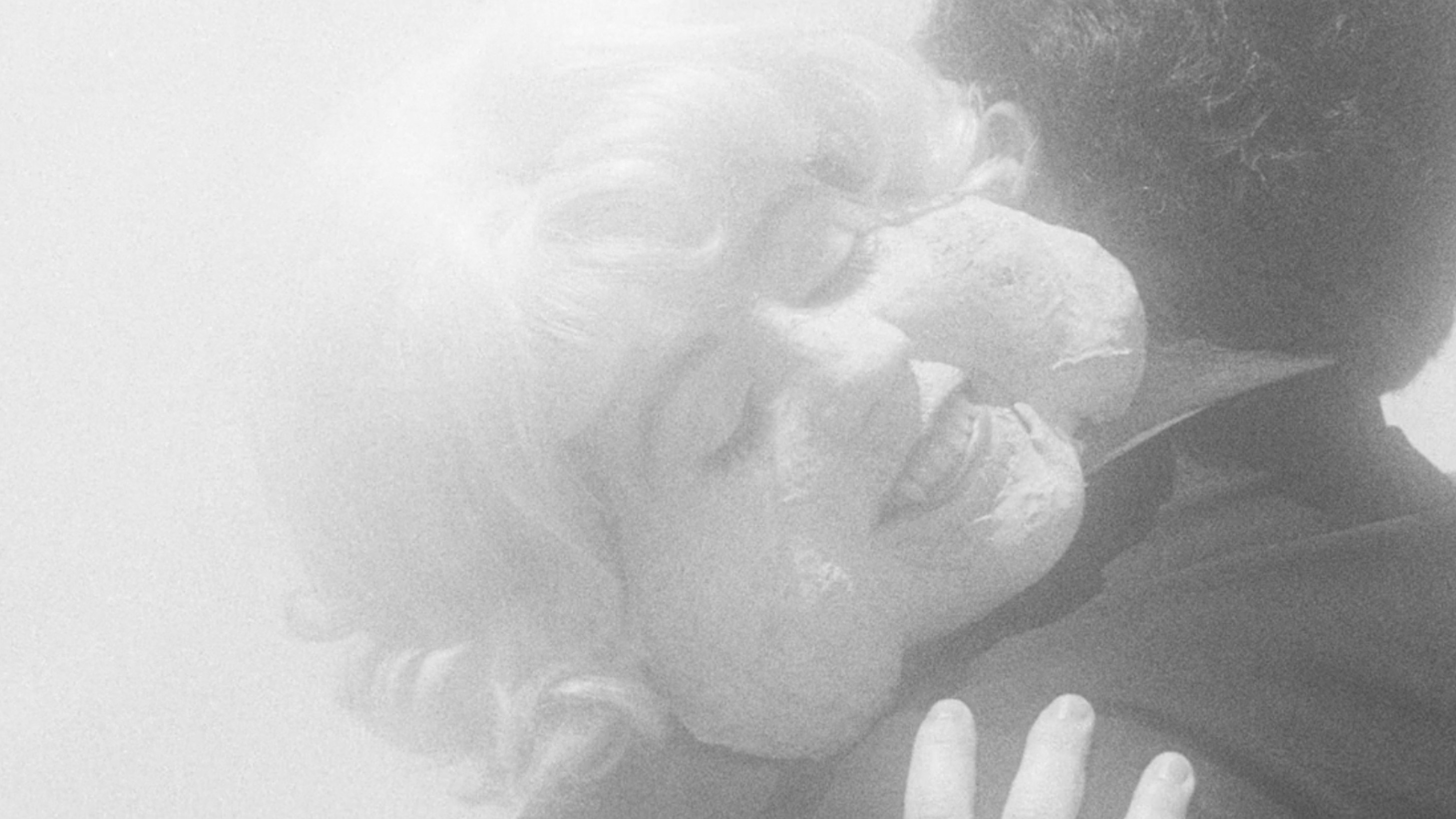
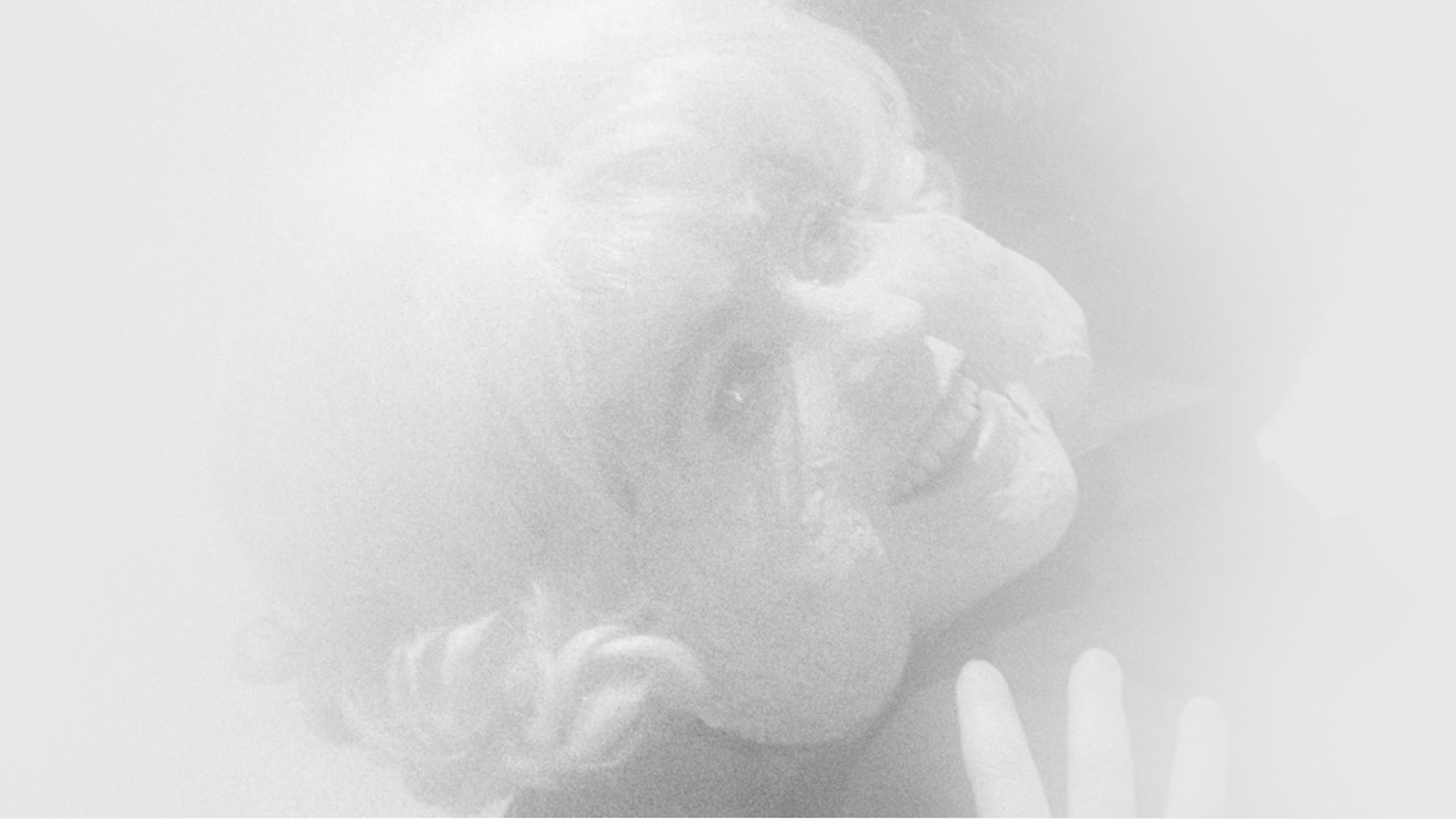
None should be treated as established production history. What can safely be said is that the creature was physically present during filming and capable of movement sufficient to interact with actors and camera. Its design is effective because the body does not correspond clearly to a known animal or human developmental stage. The long neck, small head, exposed-looking skin and wrapped lower body offer enough anatomical information to suggest life while withholding enough to prevent easy classification. The swaddling is particularly important. For most of the film the body is concealed, allowing the viewer to imagine what exists beneath the bandages.

The eventual revelation that its apparent covering is intimately connected with its physical structure turns an ordinary image of infant care into a deeply disturbing anatomical discovery. Lynch's visual-effects credits and Elmes's special-effects photography indicate how closely practical effects remained integrated with ordinary production. The creature does not belong to a separate effects spectacle. It lies on Henry's table, shares frames with Nance and participates in the same lighting environment as every other character. That integration prevents the baby from becoming merely a showcase object. Its importance lies less in proving how convincingly a prop can move than in making something impossible appear to occupy the same mundane apartment as Henry.

Alan Splet, Industrial Sound & “In Heaven”

Sound is arguably as important to Eraserhead as photography. Alan R. Splet handled location sound, re-recording and sound editing, while Lynch and Splet are both credited with sound effects. Their collaboration established an approach to sound that Lynch would continue developing throughout his career. Lynch became fascinated by room tone — the low-level presence that remains underneath dialogue. In Eraserhead, those presences become extraordinarily dense. Air, electricity, machinery, wind and low-frequency rumbling create the sense that an enormous environment exists beyond what the camera can show.

The sounds were frequently manipulated rather than recorded and reproduced naturally. Later accounts of Lynch and Splet's methods describe slowing recordings, reversing them and capturing ordinary machinery in unconventional ways. One remembered experiment involved recording a Bolex camera through an air vent and then slowing the result. The effect is difficult to divide into music and sound design. Mechanical drones can behave rhythmically, while ostensibly musical passages can feel like extensions of the industrial environment. Lynch later said he thought of these sounds as a way of building the world.

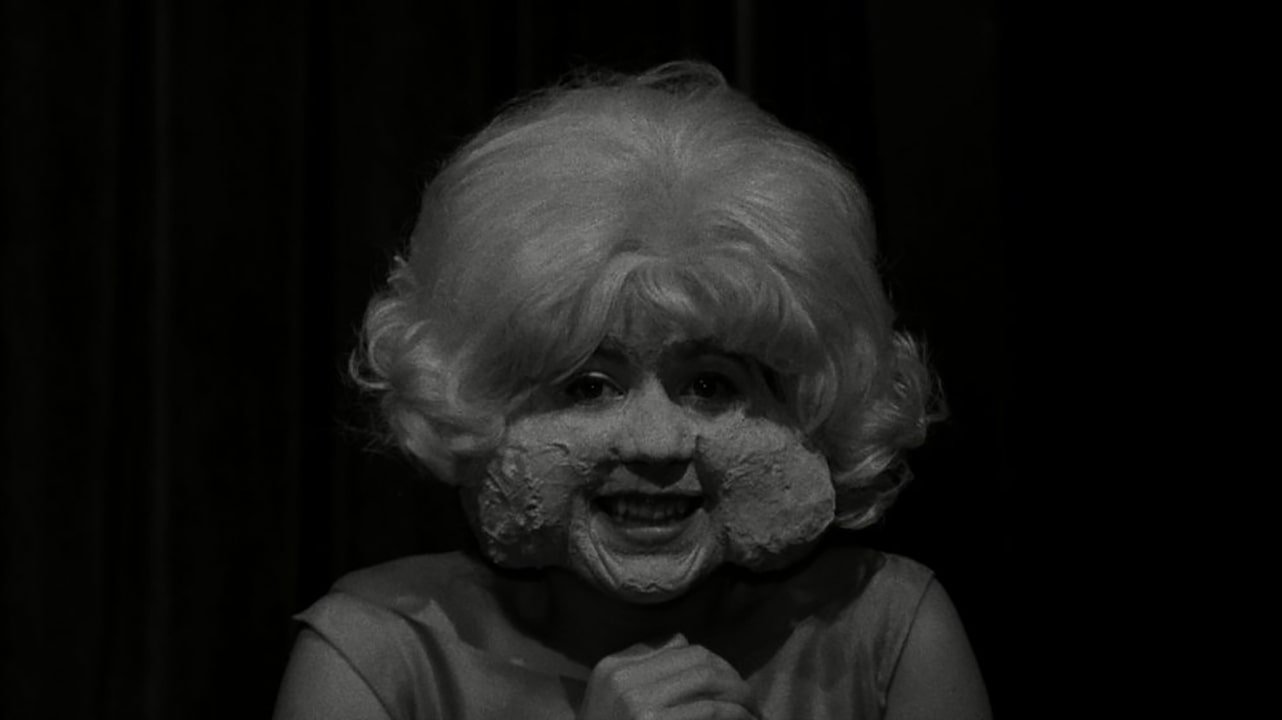
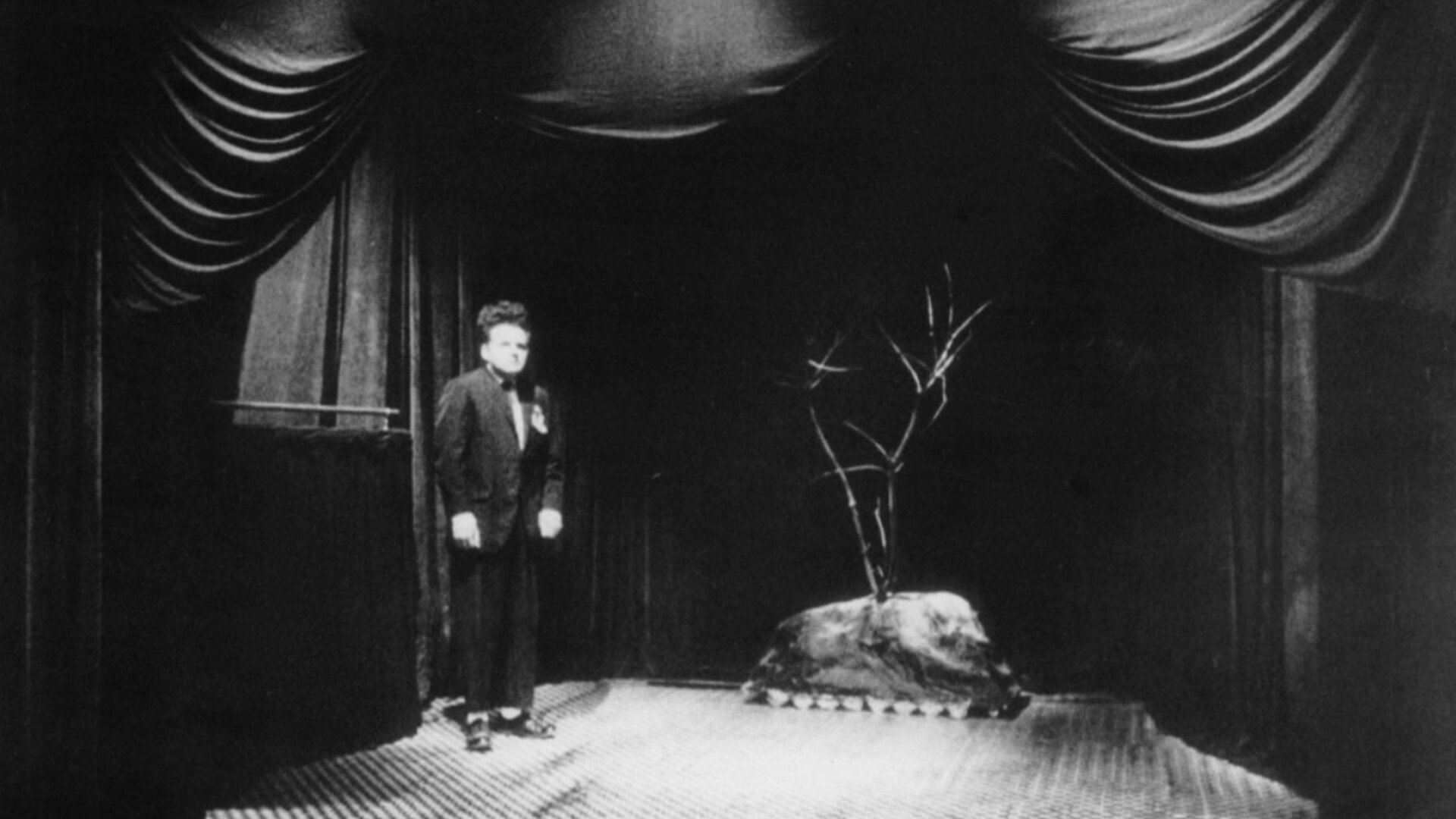
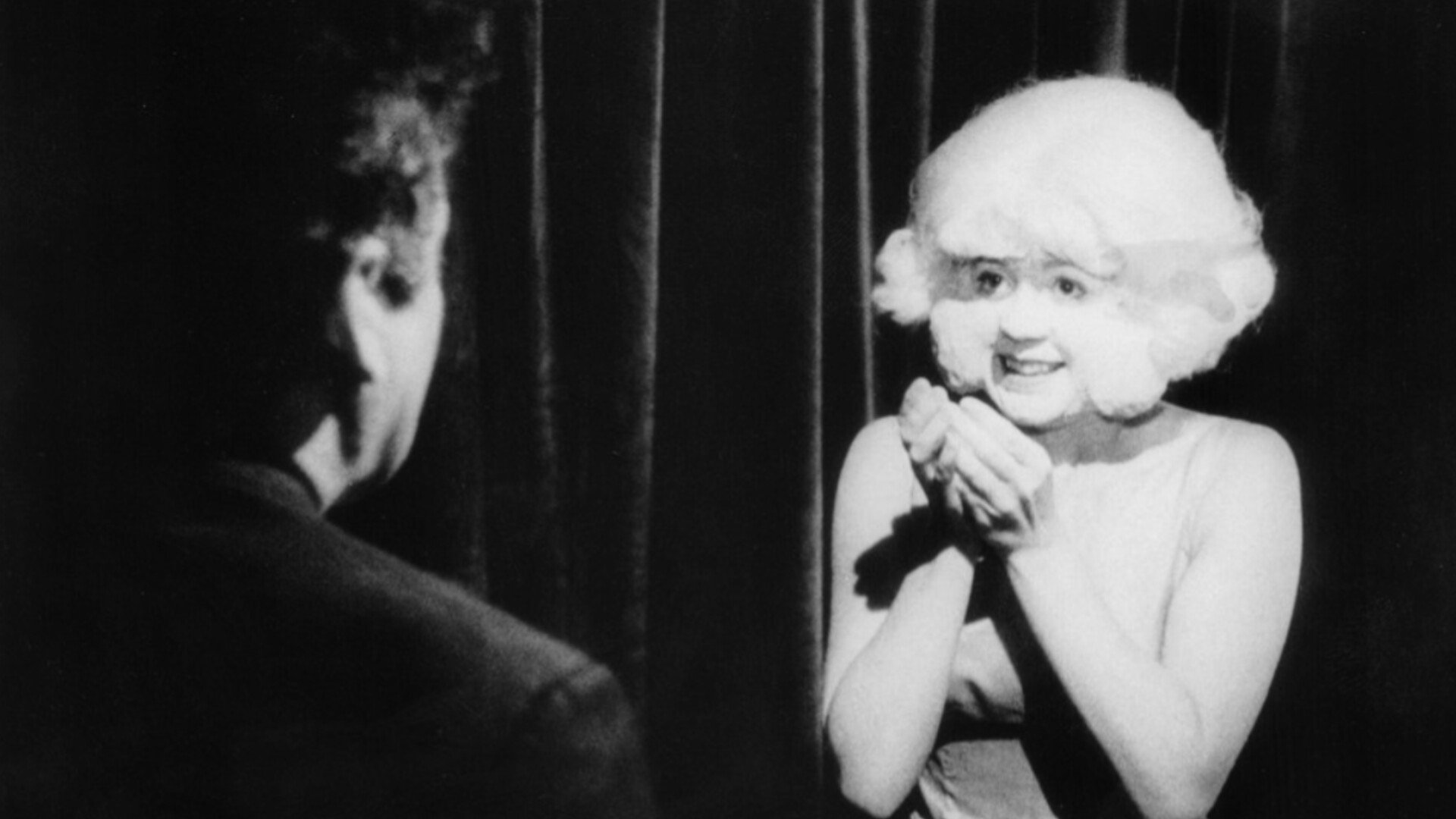
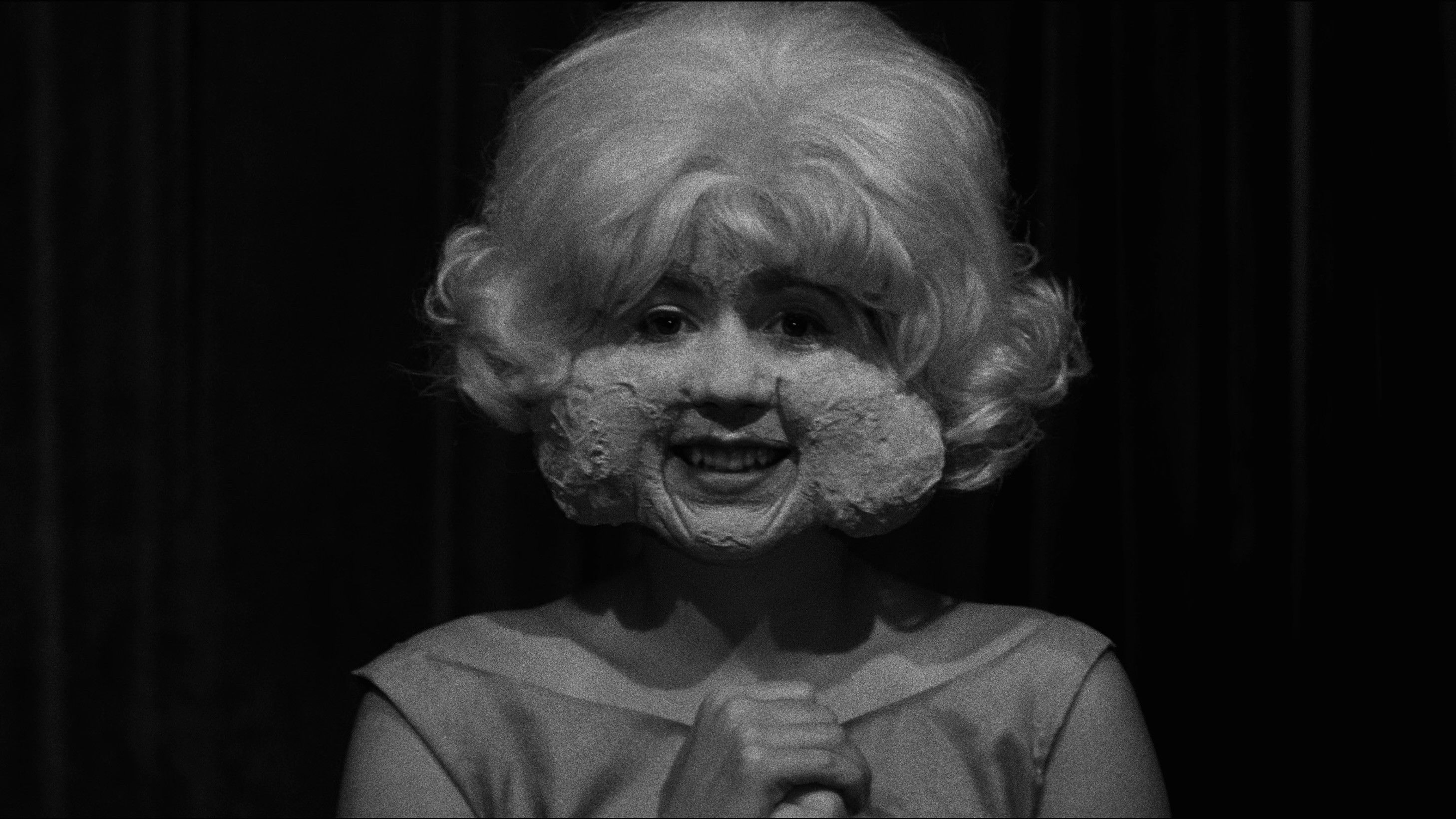
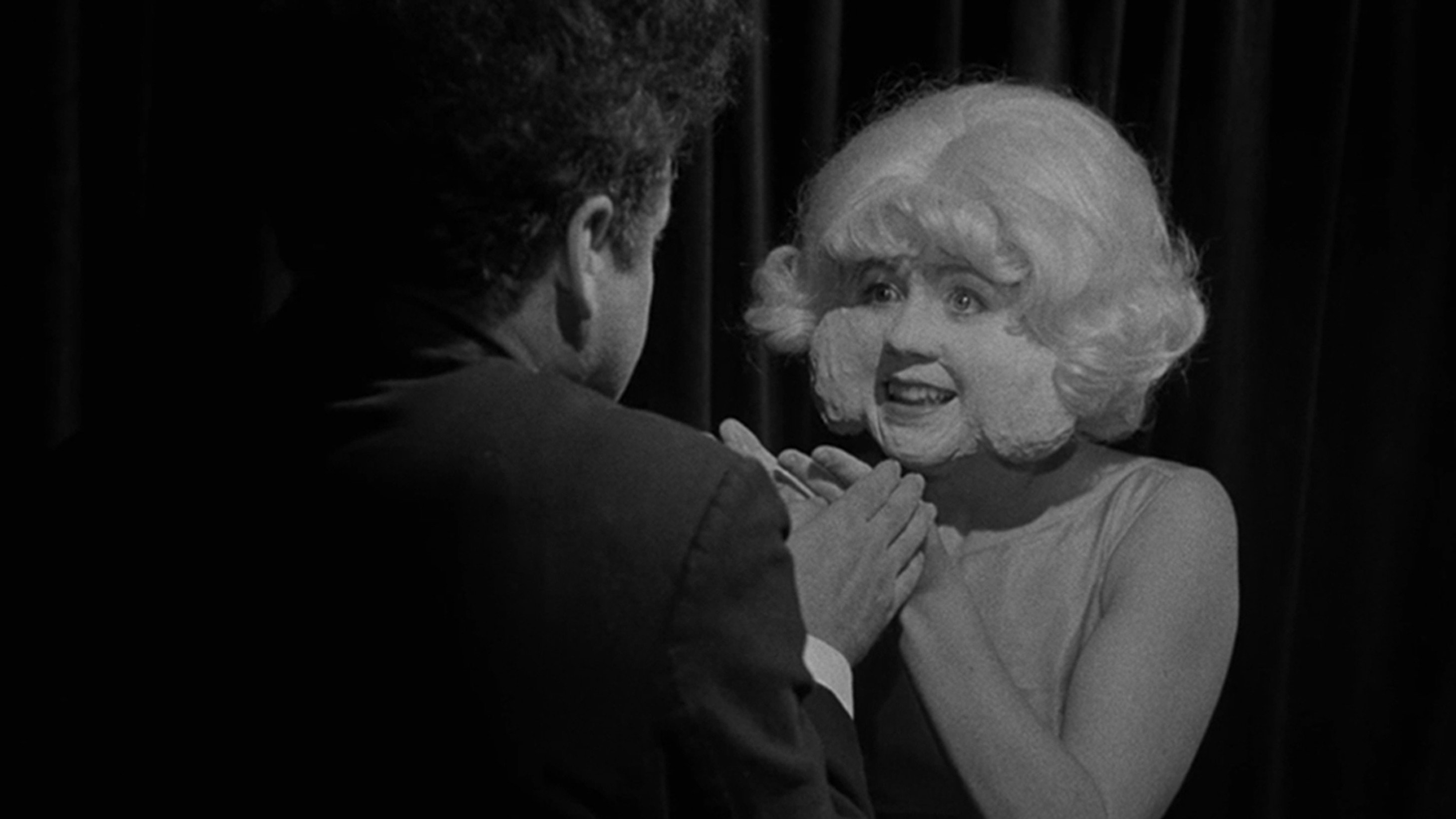
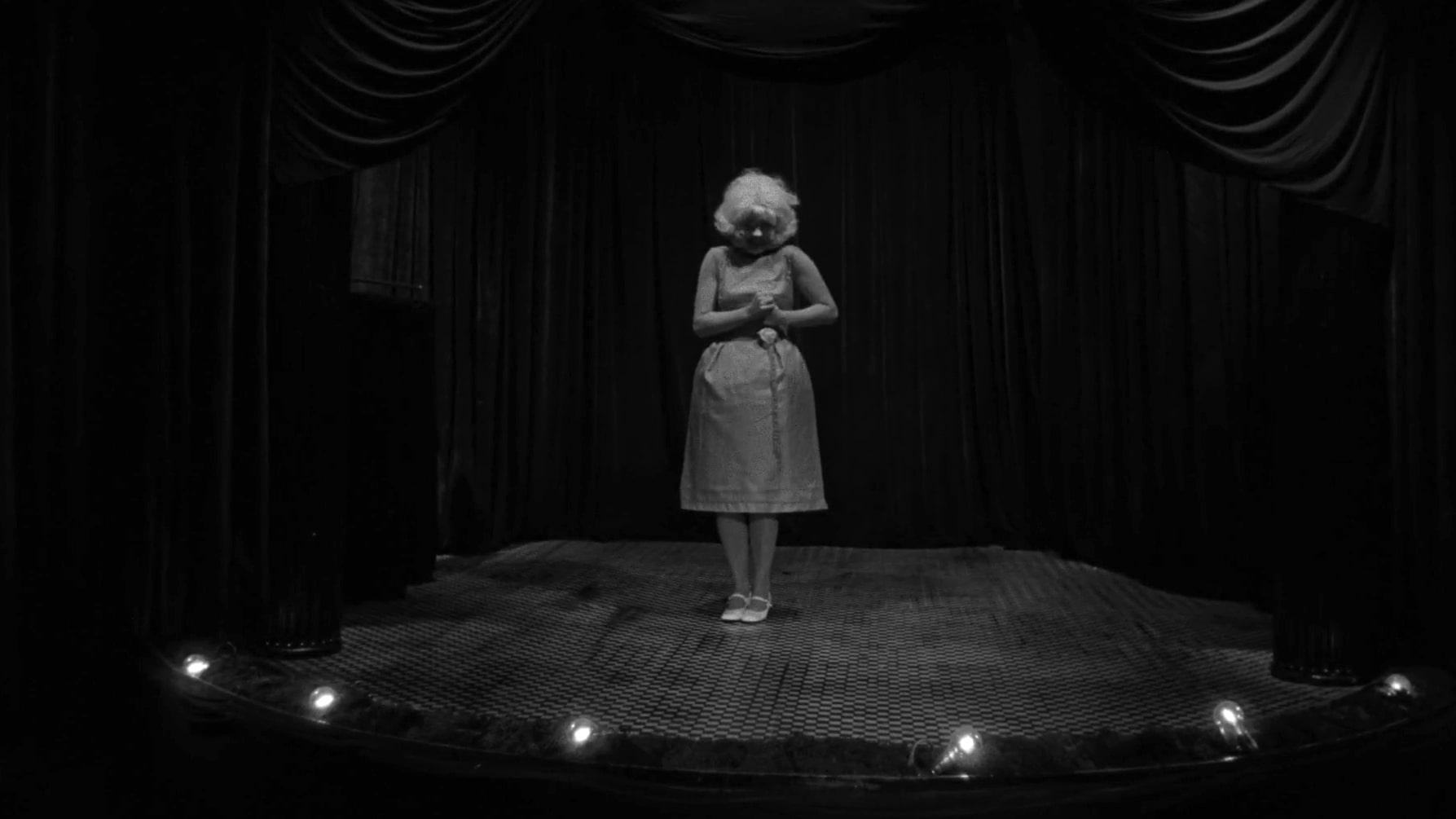
Peter Ivers provided the music associated with the Lady in the Radiator. The song commonly known as “In Heaven (Everything Is Fine)” becomes one of the film's few moments of apparent reassurance. Its simple repeated promise offers an alternative to Henry's physical reality, but the artificial stage inside the radiator makes that comfort ambiguous. The contrast is central to the film. Industrial sound is nearly continuous, suggesting machinery that never stops operating. The Lady's song instead imagines a place where suffering disappears and everyone is fine.

Sound therefore performs a narrative function without explaining anything. The industrial world feels oppressive before the film identifies any specific danger, while the radiator feels potentially comforting before the viewer can understand what it represents. Later critics and musicians identified the soundtrack as an important precursor to dark ambient and industrial approaches to recorded sound. Whether or not Lynch and Splet understood it in those genre terms at the time, their work demonstrated that sustained environmental noise could construct a cinematic world as powerfully as conventional musical scoring.

Filmex, the Nuart & the Midnight-Movie Circuit

Eraserhead was completed in 1976 and screened at the Los Angeles International Film Exposition, commonly known as Filmex, in 1977. Contemporary critical response was divided almost immediately. Some reviewers dismissed the film as deliberately unpleasant, slow or grotesque, while others recognised the control of sound and imagery and the emergence of an unusual filmmaker. That division was unsurprising because the film offered few of the narrative structures through which experimental imagery was normally made accessible to mainstream audiences. Its real commercial life developed through midnight screenings rather than conventional first-run exhibition.

In February 1978 it opened at Los Angeles's Nuart Theatre, where it became a long-running Friday-night attraction. The midnight circuit provided an ideal environment. Audiences did not need the film to compete with ordinary narrative releases or conform to traditional theatrical expectations. Repeated viewing, word of mouth and cult reputation allowed spectators to encounter its images and sounds as an experience rather than a puzzle requiring immediate resolution. Eraserhead joined a broader midnight-movie culture in which films such as El Topo, Pink Flamingos and The Rocky Horror Picture Show could build audiences outside conventional distribution patterns.

Its success was gradual rather than explosive. That slow growth mattered enormously for Lynch. The film remained visible long enough for industry figures to encounter it after its initial release. Producer Jonathan Sanger saw it while developing The Elephant Man, and Mel Brooks subsequently watched the film before approving Lynch as director. Lynch also retained rights to Eraserhead, giving him unusual control over its later circulation. Decades afterward he was still personally involved in how the film was presented and distributed.

Restoration, Recognition & Legacy

The reputation of Eraserhead expanded far beyond the midnight circuit. What had initially appeared to some critics as an obscure experimental shock film increasingly became recognised as the foundation of an important American directorial career. Many of Lynch's later formal concerns are already present: electricity, curtains, singers appearing inside impossible spaces, industrial drones, bodily transformation, domestic terror and transitions between reality and dream without explanatory boundaries. Yet the film is more than a catalogue of motifs that Lynch would reuse. Its importance lies in how completely those elements already function together. Its influence also spread outside Lynch's own work.

Filmmakers and musicians responded to its sound design, black-and-white imagery and refusal to distinguish clearly between psychological and physical space. Stanley Kubrick became a famous admirer; Lynch later recalled learning that Kubrick had shown Eraserhead privately and called it a favourite film. The Library of Congress selected Eraserhead for the National Film Registry in 2004, recognising it as culturally, historically or aesthetically significant. The decision formalised the extraordinary change in status of a film that had begun as a slowly financed AFI project made by a tiny crew. Preservation and restoration have allowed the film's visual and sonic construction to become increasingly clear.

Criterion's director-approved edition uses a 4K digital restoration supervised by Lynch together with an uncompressed stereo soundtrack. Such restoration is especially important for a film whose meaning depends on precise blacks, subtle grey values and layers of low-level sound. The restoration does not make the film less mysterious. If anything, improved presentation reinforces how much of its power comes from material detail: the texture of Henry's skin, smoke moving through darkness, electrical flicker, the surfaces of the baby and the nearly subliminal noise surrounding apparently quiet rooms. Almost half a century after its first screenings, Eraserhead remains difficult to categorise precisely.

It can be described as experimental cinema, surrealism, body horror, black comedy or a nightmare about parenthood, but none of those labels contains the whole film. Its greatest achievement is the creation of a world whose logic feels complete even when its meaning cannot be translated into a simple explanation. Lynch once described his attraction to the film as an attraction to its world. That remains the most useful way to understand it. Eraserhead does not ask the audience merely to follow Henry Spencer's story. It asks them to live for ninety minutes inside a place where machinery, biology, domestic life and dreams have become parts of the same organism.

Cast

View Full Cast & Crew →

Release & Distribution

Production Companies (1)

  • AFI

Distributors (1)

  • Nocturno

Release History (40)

Release DateTerritoryRelease TypeFormatDistributorCertificationNotes
1977-03-19 United States Premiere — — — Filmex Festival
1977-09-28 Denmark Theatrical — — 15
1977-09-28 Norway Limited Theatrical — — 18
1977-09-28 Sweden Theatrical — — 15
1977-09-28 United States Limited Theatrical — — NR
1978-02-03 Brazil Theatrical — — 18
1978-02-03 Romania Limited Theatrical — — 18+
1978-02-03 United States Theatrical — — NR
1978-06-07 France Theatrical — — 16
1979-03-29 United Kingdom Theatrical — — — Rated X
1980-04-11 Australia Theatrical — — M
1981-05-13 Spain Theatrical — — —
1981-09-01 Japan Theatrical — — R18+
1982-01-30 Italy Theatrical — — —
1983-12-22 Netherlands Theatrical — — 16
1986-06-16 United Kingdom Physical VHS — 18 VHS
1993-09-03 United Kingdom Theatrical — — 18 re-release
1994-02-25 Finland Theatrical — — K-18
1995-11-03 Poland Theatrical — — —
1996-07-13 South Korea Theatrical — — 19
1998-01-22 Czechia Limited Theatrical — — 15+ Projekt 100
2001-01-08 United Kingdom Physical DVD — 18 DVD
2006-01-10 Brazil Physical — — 18 IMDB
2008-08-03 Netherlands TV — — 16 Nederland 2
2011-02-28 Germany Physical — — 16 OmU
2011-09-15 Netherlands Theatrical — — 16 Re-release
2012-04-04 United Kingdom Physical Blu-ray — 18 Blu-ray
2012-12-04 Netherlands Physical DVD, Blu-ray — 16 DVD, Blu ray
2017-05-18 Russia Theatrical — — 18+
2017-05-31 France Physical — — 16
2017-06-28 Italy Limited Theatrical — — — Limited 4k restoration rerelease
2017-11-23 Netherlands Theatrical — — 16 Re-release
2018-09-15 United Kingdom Digital — — 15
2019-08-16 United Kingdom Premiere — — — HOME Manchester, Manchester International Festival
2020-09-06 Greece Digital — — — Cinobo
2020-10-19 United Kingdom Physical Blu-ray — 18 The Criterion Collection Blu-ray
2025-02-20 Brazil Limited Theatrical — — 18 São Paulo, São Paulo, CineSesc (Retrospectiva Do Onírico ao Real – Uma Homenagem a David Lynch) (4K Restored Version)
2025-09-11 Hong Kong SAR China Theatrical — — IIB 4k restoration
2026-02-05 Russia Theatrical — — 18+ Re-release
2026-02-17 Belgium Theatrical — — 18
Where your nightmares end...