Nosferatu the Vampyre (1979)

FR
5.4/10 5 votes
Runtime
107 min
Release
January 17, 1979
Budget
$1,400,000
Revenue
$3,451
Nosferatu the Vampyre (1979) poster
Director
Production Companies
Werner Herzog Filmproduktion , Gaumont , ZDF
Plot

A real estate agent leaves behind his beautiful wife to go to Transylvania to visit the mysterious Count Dracula and formalize the purchase of a property in Wismar.

Alternative Titles
Носферату: Фантомът на нощта (Bulgaria) — Bulgarian Nosferatu, o Vampiro da Noite (Brazil) — Portuguese 诺斯费拉图:夜晚的幽灵 (China) — Chinese Upír Nosferatu (Czechia) Nosferatu - vampyren (Denmark) — Danish Nosferatu: öö fantoom (Estonia) — Estonian Nosferatu, fantasma de la nit (Spain) — Catalan title Nosferatu. Vampiro de la noche (Spain) — Spanish
Show all 29 alternative titles Nosferatu – yön valtias (Finland) — Finnish Nosferatu, fantôme de la nuit (France) — French Νοσφεράτου: Το Φάντασμα της Νύχτας (Greece) — festival title Το Σπέρμα του Βρυκόλακα (Greece) — Reissue title 諾斯費拉圖:夜晚的幽靈 (Hong Kong SAR China) — Chinese Nosferatu, az éjszaka fantomja (Hungary) Nosferatu - Il principe della notte (Italy) — Italian ノスフェラトゥ (Japan) — Japanese 노스페라투 (South Korea) — Korean Nosferatu: Nakts rēgs (Latvia) — Latvian Вампирот Носферату (North Macedonia) — alternative title Nosferatu, el vampiro (Mexico) — Spanish Nosferatu wampir (Poland) — Polish Nosferatu - O Vampiro da Noite (Portugal) — Portuguese Nosferatu: Fantoma nopții (Romania) — Romanian Носферату: Призрак ночи (Russia) — Russian Nosferatu - nattens vampyr (Sweden) — Swedish Vampir Nosferatu (Türkiye) — Turkish Носферату: Привид ночі (Ukraine) — Ukrainian Nosferatu (United States) Werner Herzog's Nosferatu the Vampyre (United States) — promotional title

Trailers & Videos

8 videos

Film Guide

Werner Herzog's 1979 vampire film: its connection to Murnau, international production, Klaus Kinski's transformation, practical effects, plague sequences, Popol Vuh soundtrack and restored language versions.

Nosferatu the Vampyre (Nosferatu – Phantom der Nacht, 1979) is a West German-French Gothic horror film written and directed by Werner Herzog, starring Klaus Kinski as Count Dracula, Isabelle Adjani as Lucy Harker and Bruno Ganz as Jonathan Harker. Conceived as a tribute to F. W. Murnau's Nosferatu (1922), it reconnects the vampire with the imagery of German silent cinema while giving the supernatural figure a markedly different psychological identity. Herzog's Dracula is physically repulsive and responsible for an epidemic of death, yet his existence is characterized by loneliness and the inability to escape immortality. The film brings together recognizable elements of Bram Stoker's novel and Murnau's adaptation with the director's characteristic attention to landscape, human isolation and collective catastrophe.

The production represents a major undertaking in Herzog's career, involving international financing, filming across several European countries and a difficult location shoot in the Netherlands. Its visual identity was shaped by cinematographer Jörg Schmidt-Reitwein, production designer Henning von Gierke and elaborate makeup for Kinski, while music by Popol Vuh contributed to its distinctive treatment of the supernatural. The film also has an unusually well-documented production history through contemporary interviews, an extensive eyewitness account published in Sight and Sound in 1978 and materials preserved by the Deutsche Kinemathek. Its original German and English-language presentations and later high-definition restorations have maintained its visibility within international horror cinema.

Werner Herzog, F. W. Murnau and the Origins of the Project

Werner Herzog approached Nosferatu through his relationship with the history of German cinema. In interviews conducted during and after production, he repeatedly identified F. W. Murnau as one of the filmmakers who provided a necessary artistic connection to a cultural tradition interrupted by National Socialism and the Second World War. Herzog belonged to a generation of German directors who had grown up without direct professional continuity with many of the filmmakers working before 1933. He considered the cinema of Murnau, Fritz Lang and their contemporaries an essential inheritance. Returning to Nosferatu offered a concrete means of establishing that relationship through a new production.

In a January 1979 interview with Jacques Siclier for Le Monde, Herzog recalled that the immediate suggestion to make Nosferatu had come from a friend. He initially dismissed the idea before becoming convinced that it should be his next project. The director described an instinctive connection to the original film that could not be reduced to commercial calculations. He was particularly interested in the relationship between the supernatural and the world of dreams, which he associated with German Romantic literature. The project emerged during a period when his films, including The Enigma of Kaspar Hauser (1974), Heart of Glass (1976) and Stroszek (1977), had established his international critical standing.

The production was developed through Werner Herzog Filmproduktion with participation from the German television broadcaster ZDF and the French company Gaumont. Beverly Walker, who assisted with English dialogue and observed the filming, reported that Herzog secured unusually substantial financial support and retained extensive artistic autonomy. Twentieth Century Fox was involved in the international distribution arrangements. The production also received the endorsement of film historian Lotte H. Eisner, whose scholarship on Weimar cinema was important to Herzog. Eisner visited the locations during photography, and images of her presence survive in the Werner Herzog Archive. This connection gives the film a documented relationship with the historical study of the cinema it sought to revisit.

Production Across Europe and the Difficult Delft Shoot

Principal photography took place between May 1 and July 6, 1978, according to German filmographic records. The production operated across the Netherlands, West Germany and Czechoslovakia, using Delft, Schiedam, the North Sea coast, Lübeck, the Partnach Gorge and Pernštejn Castle among its locations. The High Tatra mountains near the Czechoslovak-Polish border supplied additional landscape imagery. These places were selected to construct different parts of the fictional journey between Wismar and Transylvania. The shoot was logistically demanding because it required the production to move between historic urban environments, coastal settings and remote mountain terrain while retaining a consistent nineteenth-century atmosphere.

Delft was particularly important to the film's appearance, providing canals, historic streets and recognizable Dutch architecture for the port town of Wismar. The shoot there also created serious difficulties. In a contemporary account published in Sight and Sound in autumn 1978, Beverly Walker described hostility from local authorities over the filmmakers' plans to use large numbers of rats. Herzog publicly appealed for permission, but the municipality imposed restrictions and demanded financial guarantees. Walker also described limited access to exterior locations and growing local resistance fueled by newspaper coverage. Her account is valuable as eyewitness testimony, although individual confrontations are reported from the perspective of someone directly involved in the production.

The difficulties extended beyond municipal negotiations. Walker recalled scheduling problems, physical injuries and severe weather during the two-month shoot. Bruno Ganz was injured after falling from a horse, while Kinski participated in demanding material involving a boat on the North Sea. The crew continued working by rearranging scenes around the availability of performers and suitable conditions. Walker also appeared in the film as an abbess, illustrating Herzog's practice of assigning minor roles to members of his working group. Her account portrays a production in which creative decisions often responded to immediate circumstances, yet the completed photography maintained the visual continuity necessary to connect its widely separated locations.

Jörg Schmidt-Reitwein, Production Design and Visual Composition

The film's visual design was developed through Herzog's collaboration with cinematographer Jörg Schmidt-Reitwein and production designer Henning von Gierke. Its widescreen Eastmancolor photography, presented at approximately 1.85:1, emphasizes the physical characteristics of locations rather than transforming them entirely through artificial sets. Historical buildings are photographed with attention to their surfaces and spatial relationships, while mountain landscapes frequently reduce the human figure to a comparatively small presence. The approach recalls aspects of Murnau's landscape photography while reflecting Herzog's own interest in environments capable of conveying psychological states. The sustained compositions and measured camera movements produce a noticeably different rhythm from contemporary action-oriented horror.

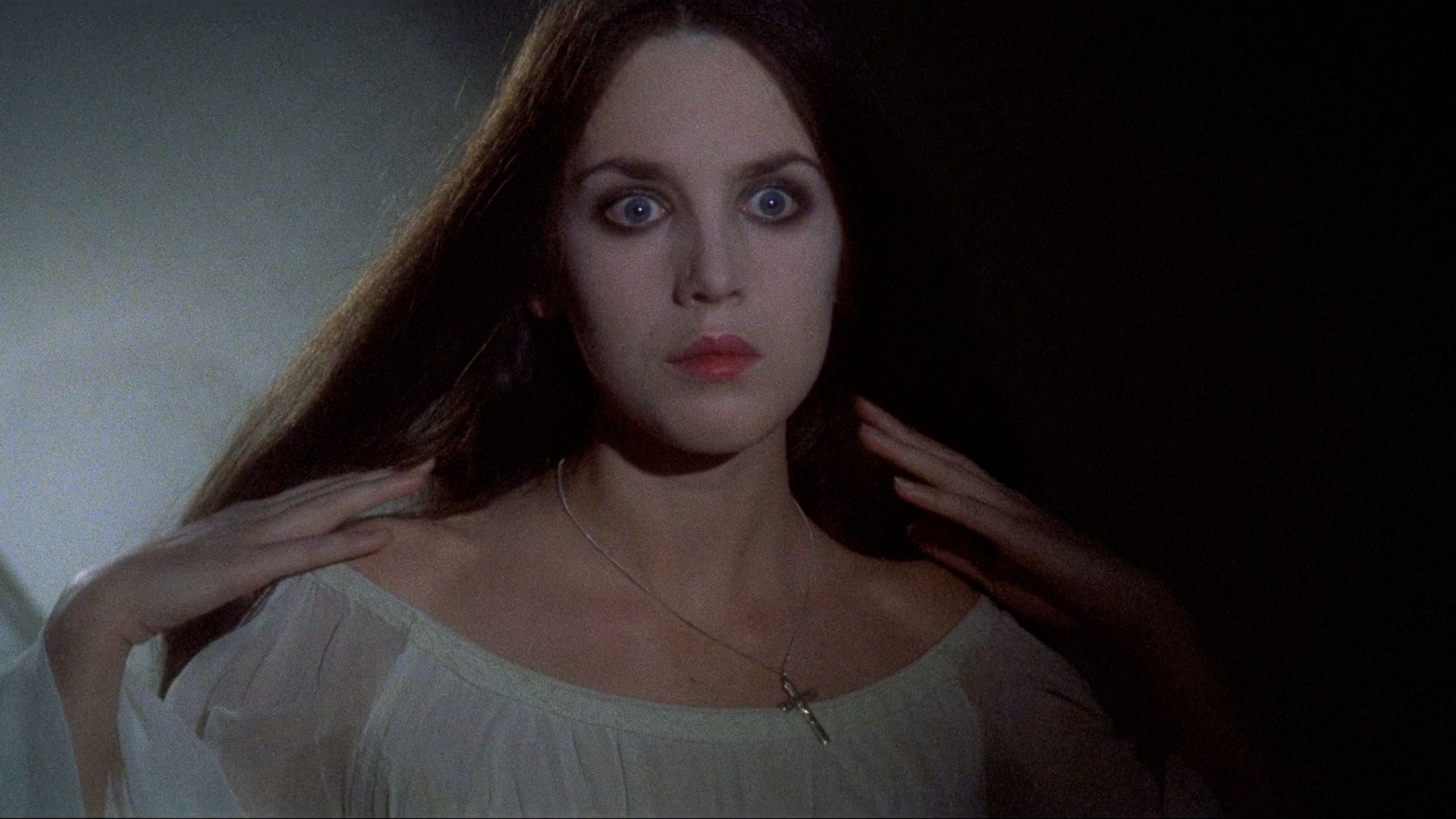
The cinematography also involved specific techniques documented by Herzog during the original release period. Speaking to Le Monde in January 1979, he described the use of unusual violet filters to create the pale appearance associated with Dracula and Lucy. He emphasized the close relationship between makeup and photography in establishing the figures' shared visual identity. The interaction of skin tones, costumes and surrounding color therefore formed part of the conception of the characters. The film frequently places pale faces within muted environments, allowing modest changes in light and contrast to become especially noticeable. These choices help preserve the unsettling appearance of the vampire without requiring frequent displays of elaborate physical effects.

Production design contributed equally important material details. The Deutsche Kinemathek preserves an elaborate mechanical wall clock built for Dracula's castle by special-effects technician Cornelius Siegel and decorated by von Gierke. Its mechanism includes a moving representation of Death, doors opening during the striking of the hour and additional animated decorative features. The museum has documented the object alongside production reports, scripts, shooting schedules and photographs from the Herzog archive. The original workmanship helps explain the physical detail of the castle interiors. At the 1979 Berlin International Film Festival, von Gierke received a Silver Bear for his outstanding artistic contribution to the production design.

Klaus Kinski, Isabelle Adjani and the Vampire's Physical Identity

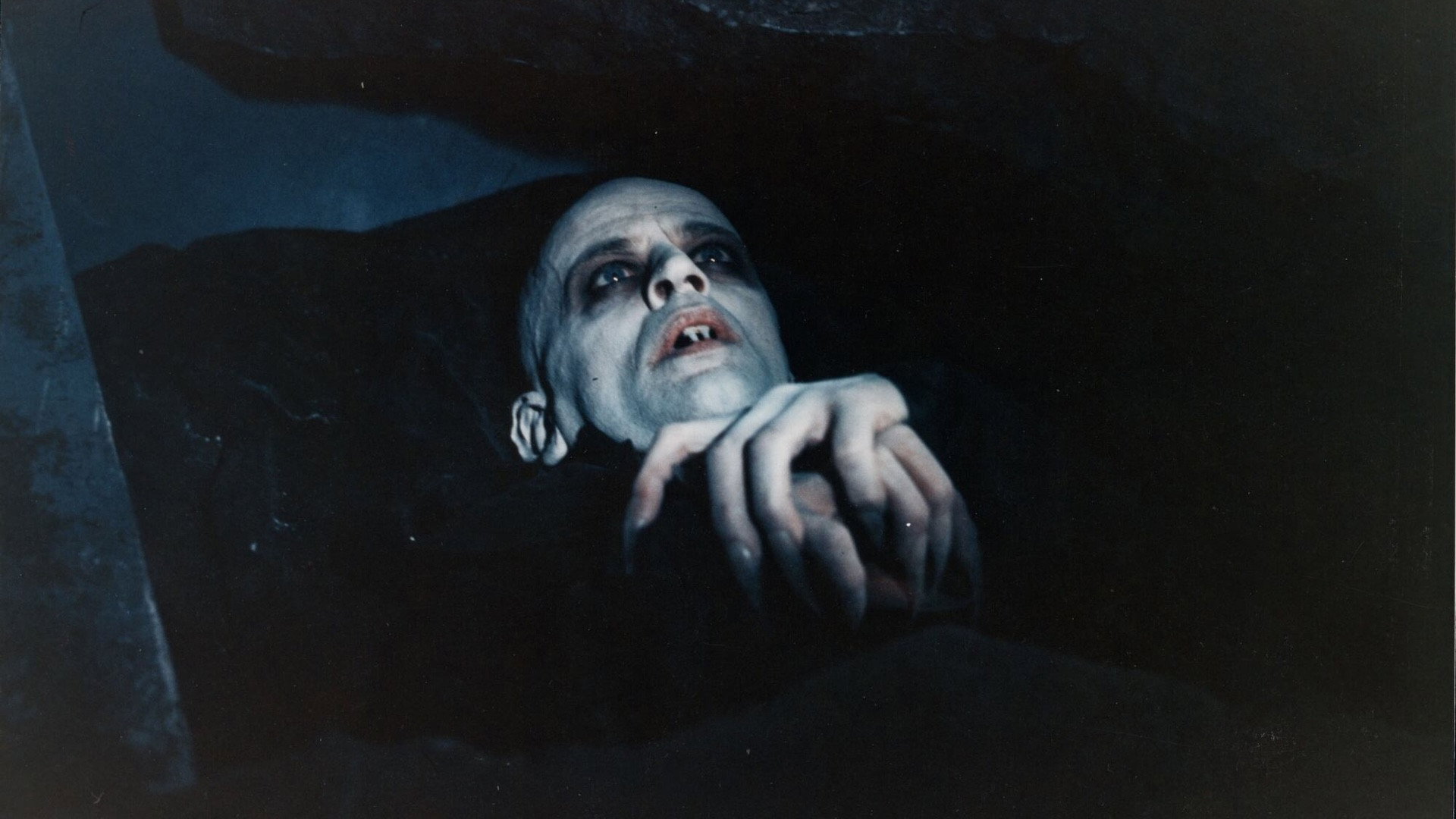
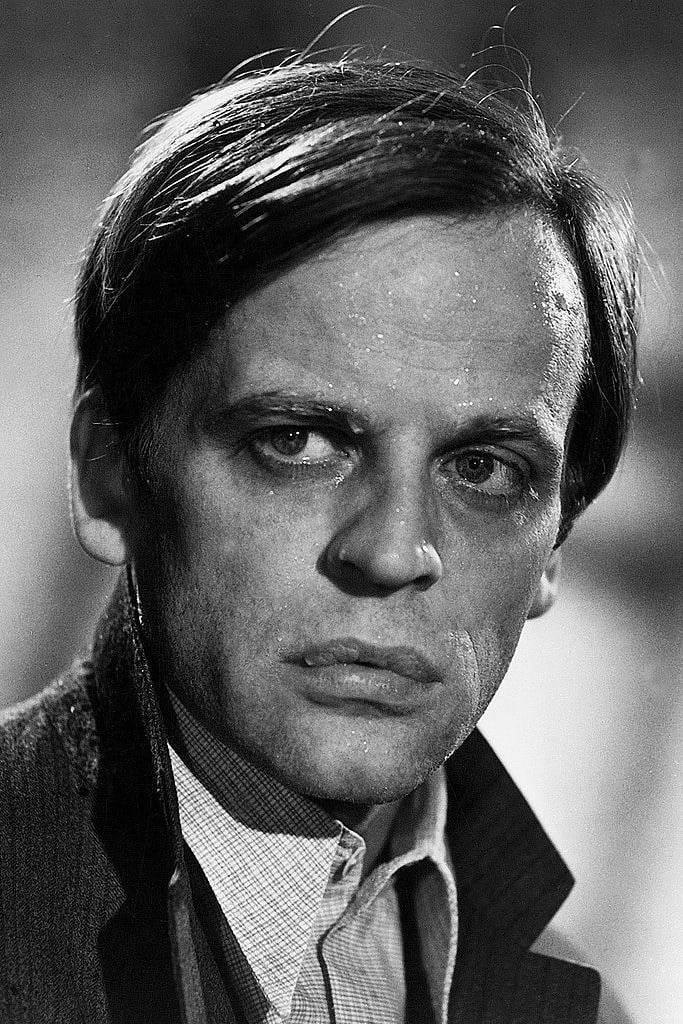
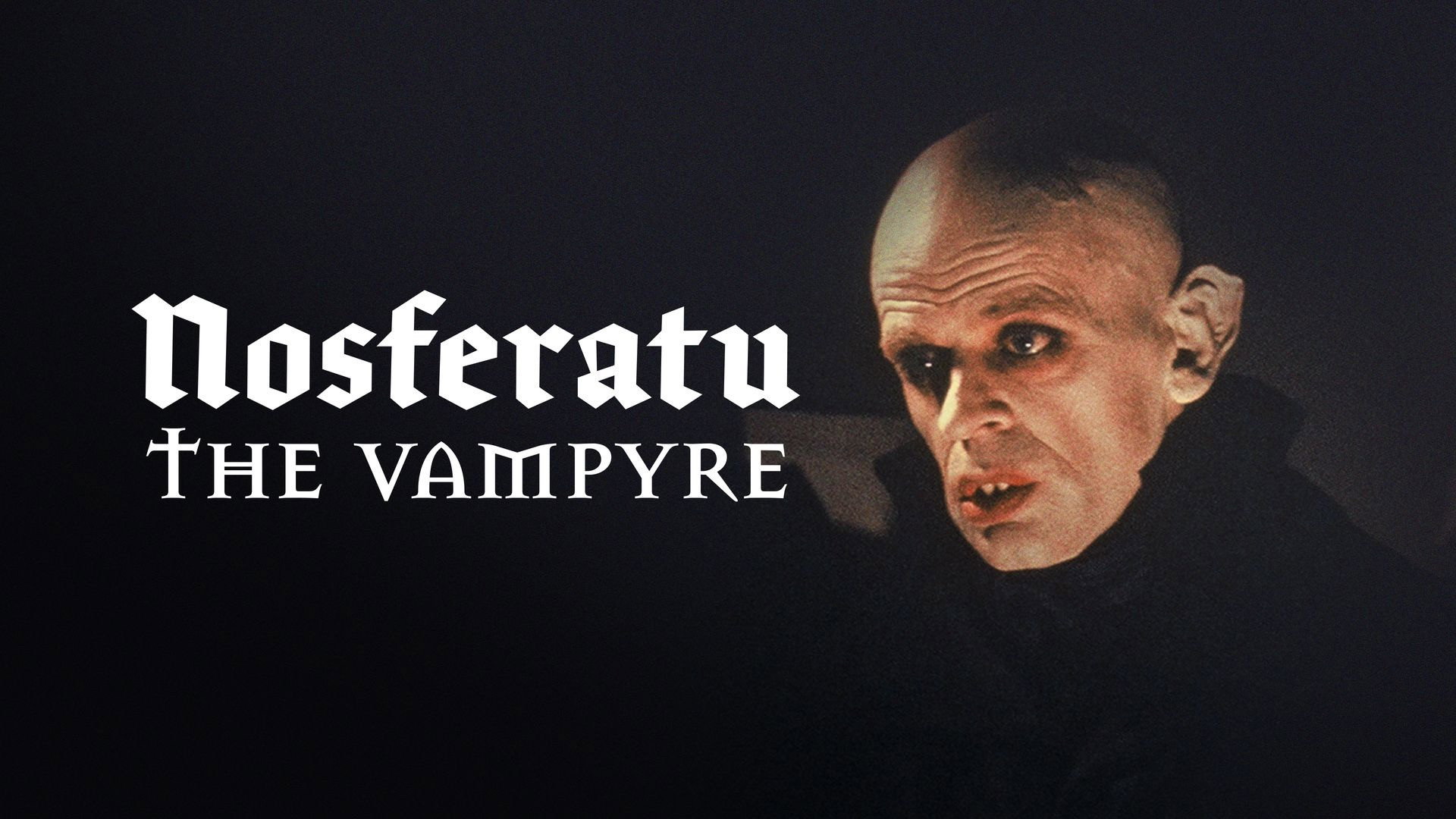
Klaus Kinski's Dracula retains the principal visual characteristics of Max Schreck's Count Orlok: a hairless head, pointed ears, prominent teeth, extended fingers and an emaciated silhouette. The resemblance was deliberate, but Herzog developed a markedly different interpretation of the character. In his 1979 interview with Le Monde, the director described his intention to make the vampire simultaneously terrifying and sorrowful. He also explained that Kinski initially doubted the possibility of conveying those qualities together. Herzog encouraged the actor to accept the role as an unusually complete transformation, and Kinski shaved his head in preparation well before filming began.

The makeup process was exceptionally demanding. Herzog later recalled that Kinski required approximately four hours of preparation before appearing in front of the camera. The production involved false ears, prosthetic teeth and elongated fingernails, while elevated footwear further changed his silhouette. Contemporary eyewitness Beverly Walker described the difficulty of performing while wearing these appliances. The makeup credits identify Reiku Kruk and Dominique Colladant, while the surviving testimony establishes the close coordination required between performance and photographic presentation. Kinski's unusually restrained behavior during preparation also became part of Herzog's retrospective account of their working relationship, contrasting with the tensions documented on several of their other collaborations.

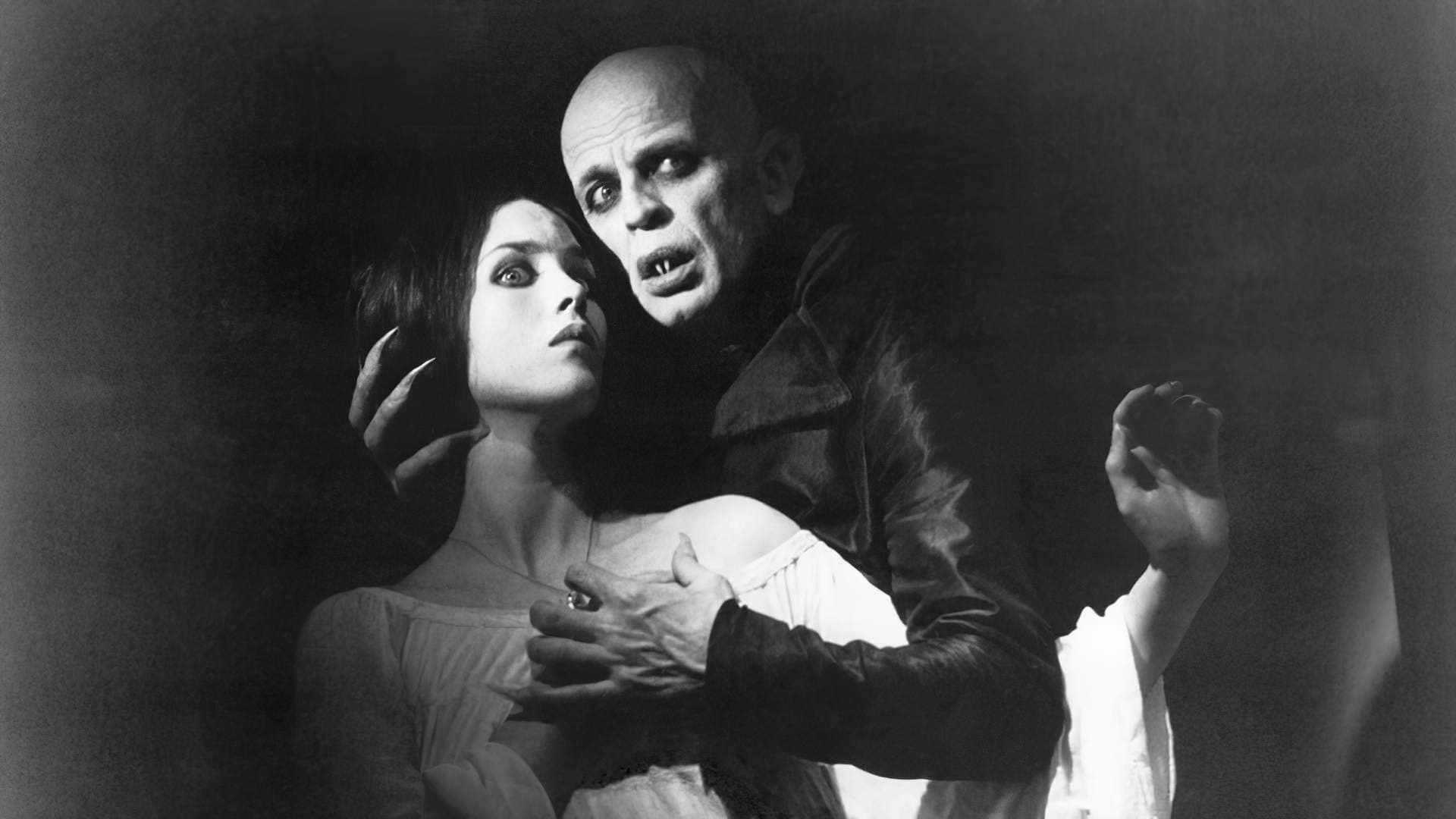
Isabelle Adjani's Lucy provides the principal human counterpart to the vampire. Herzog deliberately created visual similarities between the two figures, particularly through their pale complexions. The director regarded the relationship between Lucy and Dracula as central to the film's emotional construction, with desire and the expectation of death occupying the same dramatic space. Walker recalled Adjani performing calmly during scenes involving large numbers of live rats, despite the physical discomfort of the situation. Bruno Ganz approaches Jonathan Harker differently, initially presenting him as an ordinary man whose rational assumptions prove inadequate. The contrasting performances give the film a connection between the supernatural and human vulnerability without relying on extensive dialogue to explain the characters' feelings.

The Rats, the Plague and the Horror of Collective Death

The mass appearance of rats is central to Herzog's treatment of the vampire as an agent of collective destruction. Murnau had associated Count Orlok with epidemic disease, but Herzog considerably expanded the physical presence of the animals. The film repeatedly shows rats occupying the spaces of the living. The resulting imagery changes the scale of the supernatural danger. Dracula's arrival no longer threatens only an individual household; it disrupts the functioning of an entire town. The sight of deserted streets and abandoned possessions gives the epidemic a visible social dimension beyond the deaths of individual characters.

The production used approximately ten thousand laboratory rats, according to Walker's contemporary account. Their presence became a source of conflict with municipal authorities in Delft, where the filmmakers faced strong objections to releasing animals for photography. Walker described arrangements for housing the rats outside the city and later difficulties retrieving them from the property where they were being kept. Her report includes a violent confrontation involving the production team and people controlling access to the animals. These details document the extraordinary practical demands of filming the plague sequences, although the account does not provide a complete independently verified record of animal treatment or all the conditions under which individual scenes were photographed.

The film's plague imagery begins even before Dracula reaches Wismar. Its opening sequence presents mummified bodies filmed in Mexico, material Herzog had encountered during an earlier visit to a museum. The images establish a relationship between physical death and the history of epidemic catastrophe. As the film progresses, the town's inhabitants confront the failure of ordinary institutions to explain or control what is happening. The famous public meal held amid the rats and abandoned streets presents an especially disturbing image of social behavior continuing after collective order has collapsed. Critical interpretations differ over the precise meaning of this sequence, but its place within the film establishes the extent to which Herzog expanded the vampire story into an account of a community experiencing catastrophic disintegration.

Reinterpreting Murnau, the Dracula Myth and the Ending

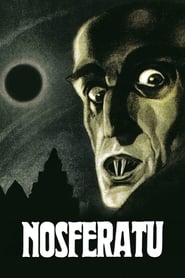
Herzog's screenplay draws upon both Bram Stoker's Dracula and the 1922 film directed by Murnau. Unlike the earlier production, which changed names in an unsuccessful attempt to avoid copyright claims, the 1979 film uses the names Dracula, Jonathan Harker and Lucy. Nevertheless, the principal relationships and much of the visual organization follow Murnau more closely than the full structure of Stoker's novel. Herzog retained the journey through an increasingly unfamiliar landscape, the vampire's relocation by sea and the association of his arrival with plague. Several compositions deliberately recall the silent film, including architectural arrangements that emphasize the vampire's angular figure and encounters across confined interiors.

The psychological differences are equally significant. Max Schreck's Orlok is principally a threatening supernatural presence, whereas Kinski's Dracula speaks of immortality as a condition of deprivation. His desire for Lucy involves the possibility of intimacy that his existence has made unattainable. This characterization introduces a degree of vulnerability into a monster who remains responsible for widespread death. Herzog discussed the relationship with Le Monde in terms of shared physical appearance and an attraction that emerges instinctively rather than through a systematic theory of the vampire. The film consequently places more emphasis on the experience of endless existence than the traditional association of vampirism with power over others.

Herzog also changes the conclusion in a manner that substantially alters the meaning of the earlier story. Lucy succeeds in delaying Dracula until morning, allowing the vampire to be destroyed by daylight. Jonathan, however, has already undergone a transformation, and the final sequence reveals that the supernatural contagion continues through him. This development removes the possibility of treating the destruction of one creature as the definitive end of the threat. It also gives the film a narrative connection between the vampire's physical death and the persistence of his condition. Herzog's treatment of the material therefore preserves the sacrificial structure of Murnau's ending while replacing its final resolution with the continuation of vampirism.

Popol Vuh, Florian Fricke and the Musical Soundscape

Music by Popol Vuh, the German group led by Florian Fricke, plays an important role in the film's soundscape. Herzog had already collaborated with Fricke on productions including Aguirre, the Wrath of God and Heart of Glass. For Nosferatu, music associated with the group contributes to the presentation of the vampire and the movement between ordinary and supernatural environments. Its sustained choral passages and extended instrumental textures support the deliberately measured rhythm of the photography. The film also uses other musical material, including classical compositions and vocal performances, so its soundtrack should not be described as consisting exclusively of newly composed Popol Vuh music.

The relationship between the film and the group's recordings is more complicated than the title of its commercially released soundtrack might suggest. Specialist discographic research published by the Popol Vuh archive identifies material drawn from Brüder des Schattens – Söhne des Lichts, including the title composition and Höre, der du wagst. Other passages are associated with In den Gärten Pharaos and recordings circulated under the Nosferatu title. The research distinguishes music actually heard in the picture from tracks included on related albums. Such distinctions are important because the commercially available records do not constitute a simple sequential transcription of the soundtrack as heard during a theatrical screening.

The 1978 album Brüder des Schattens – Söhne des Lichts documents the participation of musicians including Daniel Fichelscher, Alois Gromer and Bob Eliscu, alongside choral performers. Its original recording notes place the sessions at Bavaria Musik Studios in Munich in August 1978. These credits provide evidence for the musical materials associated with the film without establishing that every recorded piece was used in its final sound mix. The soundtrack also incorporates compositions by Richard Wagner and Charles Gounod, together with other vocal music. The combination of separately sourced recordings forms part of the film's distinctive acoustic identity, supporting its mixture of historical setting and supernatural events without depending on conventional orchestral horror scoring throughout.

Language Versions, Release, Critical Reception and Restoration

Nosferatu the Vampyre was developed as an international production and exists in both English and German-language presentations. Herzog later explained that English served as the principal working language during photography, while a German-language version was prepared separately. These presentations should not be confused with unrelated narrative cuts merely because of differences in dialogue or published running times. The film received an early Paris screening at the Cinémathèque française on January 8, 1979, followed by its German festival presentation at the Berlinale on February 23. West German theatrical distribution began on April 12, 1979. Contemporary German filmographic records give a certified length of approximately 103 minutes, while modern editions commonly list around 107 minutes.

The contemporary response included both admiration and reservations about Herzog's unusual interpretation. Writing in Le Monde in January 1979, Jacques Siclier discussed the director's emphasis on dream imagery and the relationship between Lucy and Dracula. German responses frequently compared the film with Murnau's original, with some critics objecting to its contemplative pacing and the departure from conventional horror expectations. The production nevertheless received significant institutional recognition, including the Silver Bear awarded to Henning von Gierke for production design at the 1979 Berlinale. Klaus Kinski also received recognition at the German Film Awards for his performance. Later BFI criticism, including an extended essay by Geoff Andrew, emphasized the importance of Herzog's personal interpretation rather than treating the production primarily as an exercise in reproducing the silent original.

The film's home-video history has helped preserve its two language presentations and original widescreen composition. The British Film Institute released restored high-definition editions in 2014, followed by a separate English-language DVD in 2015. In September 2025, the BFI issued a 4K Ultra HD edition presenting the film at approximately 107 minutes, with the German and English-language versions available and additional archival material. A United States 4K release followed through Shout! Studios in October 2025, using a new transfer from original 35mm camera negative elements. These editions include material documenting the production, including Herzog's commentary and a contemporary behind-the-scenes featurette. The film remains an important work in the history of vampire cinema because its production and reception provide a documented example of a major filmmaker revisiting an established horror text while substantially changing the characterization of its central monster.

References

  1. BFI / Sight and Sound Adventures on the Set of Werner Herzog's Nosferatu — Beverly Walker

    Original eyewitness production report from autumn 1978, documenting European locations, the difficulties filming with thousands of rats, Kinski's makeup, Adjani's working conditions, the relationship with Lotte Eisner and the international financing arrangements.

  2. Deutsche Kinemathek Werner-Herzog-Archiv — Von Sachen, die an die Öffentlichkeit gehören

    Institutional archival study describing surviving scripts, production reports, original props and photographs, with a detailed examination of the mechanical castle clock created by Cornelius Siegel and Henning von Gierke and the documentation of the 1978 shoot.

  3. Le Monde Le Monde des esprits — Jacques Siclier

    Contemporary January 1979 interview with Werner Herzog examining his relationship with Murnau, German Romanticism, the use of landscapes, the shared visual identity of Lucy and Dracula, special photographic filters and Klaus Kinski's performance.

  4. BFI Past Lives: Werner Herzog's Nosferatu the Vampyre — Geoff Andrew

    Extended critical analysis of the film's relationship with Weimar cinema, its transformation of the vampire myth and the themes of immortality, mortality and collective catastrophe.

  5. Popol Vuh Nosferatu — Music Used in Werner Herzog's Film

    Specialist discographic research identifying the Popol Vuh compositions actually used in the film, distinguishing musical excerpts from the contents of the related commercial soundtrack albums.

Cast

View Full Cast & Crew →

Release & Distribution

Production Companies (3)

  • Gaumont FR
  • Werner Herzog Filmproduktion DE
  • ZDF DE

Release History (18)

Release DateTerritoryRelease TypeFormatDistributorCertificationNotes
1979-01-17 Canada Theatrical — — PG
1979-01-17 Finland Limited Theatrical — — K-16
1979-01-17 France Theatrical — — TP Visa CNC 49385
1979-01-17 Norway Limited Theatrical — — 15
1979-01-17 Sweden Limited Theatrical — — 15
1979-02-15 Italy Theatrical — — VM14
1979-02-25 Germany Premiere — — — (West Germany) Berlin International Film Festival
1979-03-15 Netherlands Theatrical — — 6
1979-03-26 Denmark Theatrical — — 15
1979-04-12 Germany Theatrical — — 16
1979-04-14 Spain Theatrical — — 12
1979-10-01 United States Premiere — — — New York Film Festival
1979-10-05 United States Theatrical — — PG New York
1979-10-12 Brazil Theatrical — — 16
1994-06-01 Czechia Physical — — —
2010-08-01 Netherlands TV — — 6 Nederland 2
2015-01-19 Netherlands Physical DVD — 6 DVD
2026-04-18 China Premiere — — — Beijing International Film Festival
It is fear and fun. It is a scream of horror and a cry of delight. It is Nosferatu, the Vampyre.