Don't Go in the House (1979)

US
Runtime
82 min
Release
November 1, 1979
Budget
$250,000
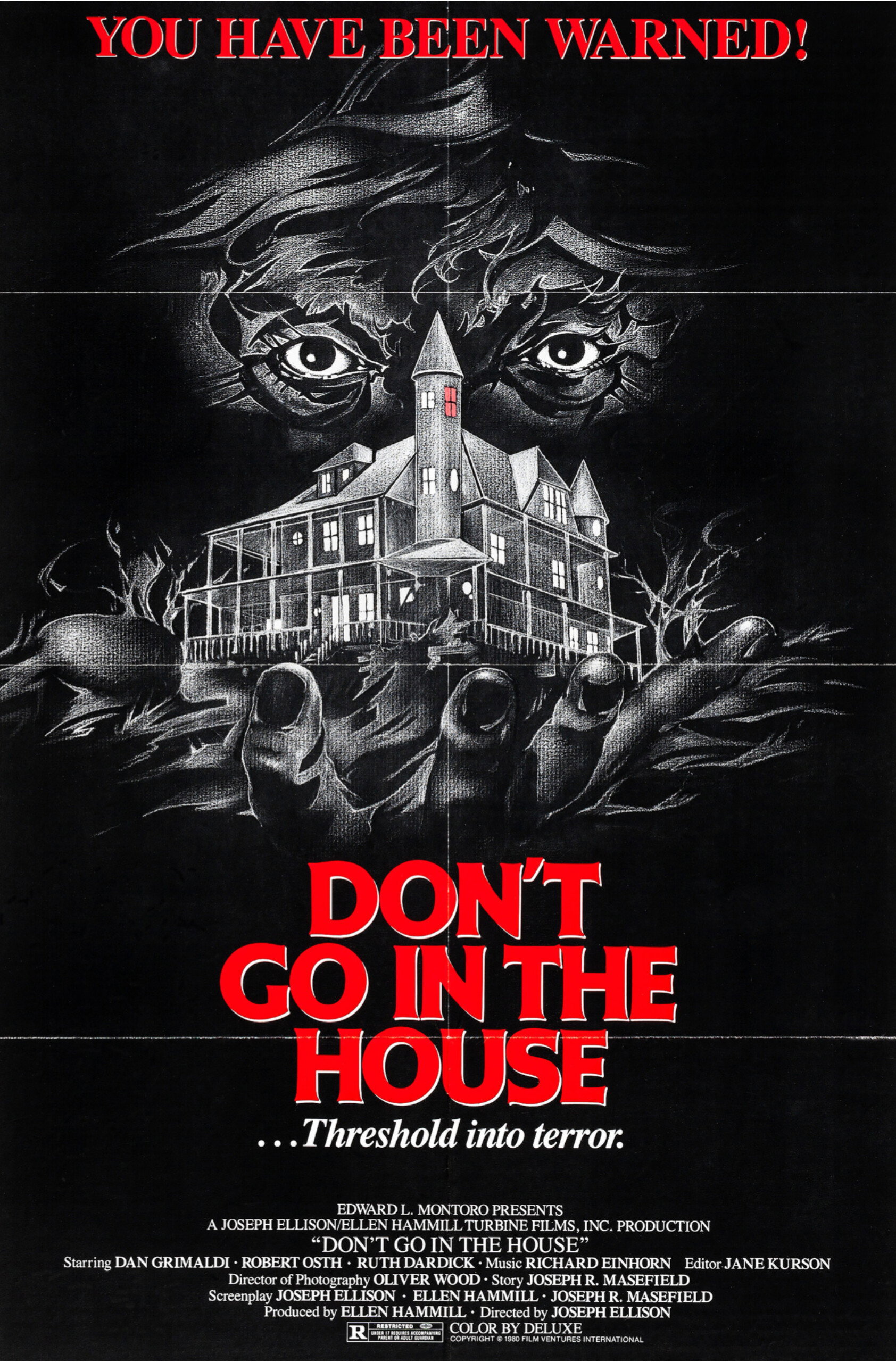
Don't Go in the House (1979) poster
Director
Production Companies
Turbine Films Inc. , Film Ventures International
Plot

As a child, Donald was tormented by his mother who used fire as a punishment. Now a deranged adult, Donald stalks women at clubs, then takes them home where he kills them with a flamethrower.

Alternative Titles
As Chamas do Inferno (Brazil) — Portuguese 不要进屋 (China) — Chinese Poslední oběť (Czechia) — Czech Das haus der lebenden leichen (Germany) La casa del terror (Spain) — Spanish Pyromaniac (France) 恐怖の火あぶり (Japan) 돈 고 인 더 하우스 (South Korea) — Korean
Show all 13 alternative titles La casa del terror (Mexico) — Spanish Nie chodź do tego domu (Poland) — Polish A Casa do Terror (Portugal) — Portuguese Не заходи в дом (Russia) The Burning (United States) — TV version

Trailers & Videos

10 videos

Film Guide

Joseph Ellison's fire-centered American horror film explores an abusive household, a steel death chamber and the British video-nasty controversy.

Don't Go in the House (1979) is an American horror film built around a sealed domestic space and the spectacle of fire used as an instrument of murder. Joseph Ellison follows Donald Kohler, a socially isolated worker whose mother's death is followed by the abduction and killing of women inside their deteriorating family home. A steel-lined room and a flamethrower supply the film's most notorious images, but its larger structure follows Donny's increasingly unstable attempts to live without the authority that governed his childhood. The story places the audience close to the perpetrator, making his everyday movements an uncomfortable source of suspense.

The production belongs to an early period of American slasher cinema when filmmakers were still experimenting with the relationship between serial murder, psychological horror and exploitation spectacle. Its New Jersey house, electronic score and contrasting nightclub sequences give it a particular atmosphere. Contemporary criticism was often hostile, and British censorship subsequently created several different release histories. Interviews preserved in later editions illuminate a difficult low-budget shoot, while restored versions reveal material absent from the widely circulated theatrical cut.

Development, Titles & Filming

The project began within the independent production company Turbine Films. The screenplay is credited to Joseph Ellison, Ellen Hammill and Joseph R. Masefield, with Masefield also receiving a story credit. Later accounts by participants describe a script conceived during the late-1970s expansion of inexpensive American horror. The film was developed under the titles The Burning Man and The Burning, names that emphasized its central method of killing before the more cautionary Don't Go in the House was adopted for theatrical marketing. A December 1979 Hollywood Reporter notice, documented by the American Film Institute, independently identifies The Burning as the production title.

The production used the Strauss Mansion in Atlantic Highlands, New Jersey, as Donny's family home, with other locations in the New York metropolitan area. Its imposing rooms provided much of the visual scale that the financing could not purchase through elaborate new construction. Later interviews with Ellison and Hammill, discussed in restoration coverage, recall location scouting, severe cold and the practical challenges of staging violent scenes in the building. The director and producer later described a 29-day shoot disrupted by severe winter weather. The location and tight timetable shaped the staging of the enclosed scenes and placed considerable demands on the cast and crew.

Dan Grimaldi was entrusted with the demanding central role, and later recounted his preparation and the difficult circumstances of acting opposite performers portraying the victims. The film asks him to move from awkward silence to sudden aggression, sometimes in the same scene. His performance anchors episodes that would otherwise be separate attacks. The focus on one character's routines also helps distinguish Ellison's approach from slasher stories constructed primarily around an investigation or a group of potential victims.
The Mansion, Space & Confinement

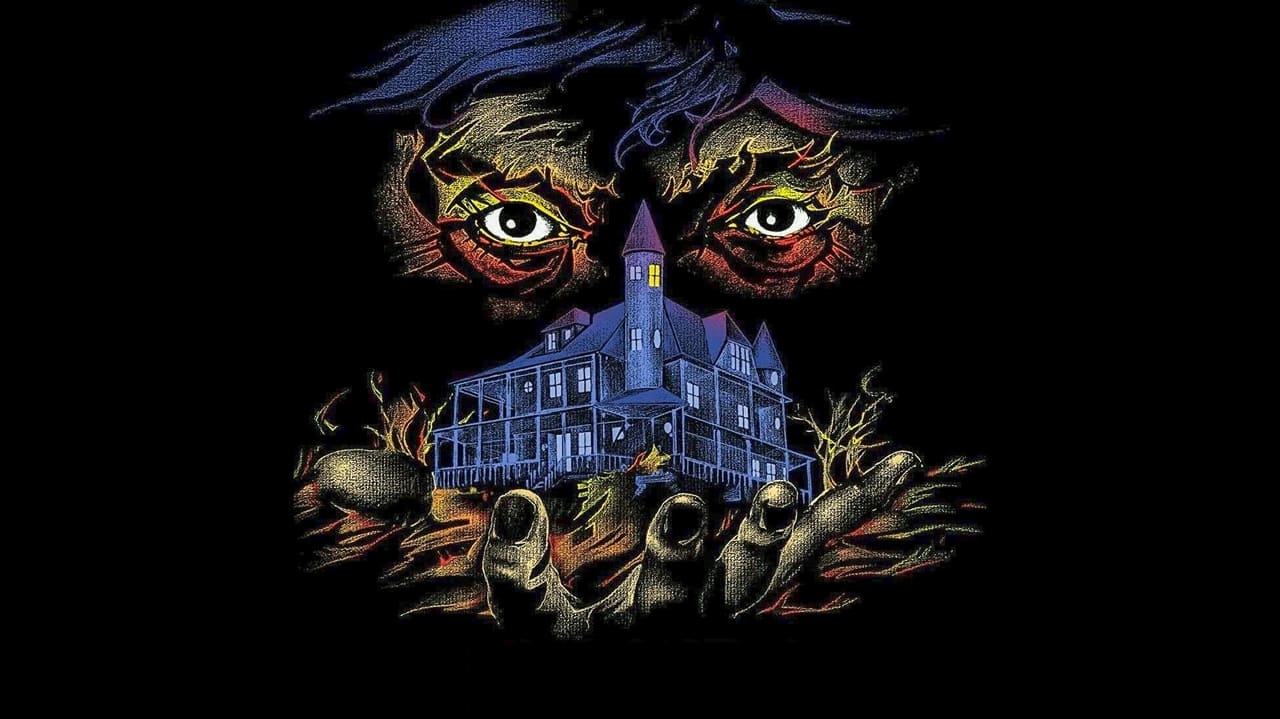
The mansion is the film's principal horror environment. Long corridors, dark stairways and rooms filled with the possessions of Donny's dead mother create the impression of a household from which ordinary life has slowly withdrawn. He continues to inhabit the building as though maternal authority remains intact, even after the person who enforced it has died. The camera repeatedly separates its public areas from upstairs rooms where visitors cannot see what has been prepared for them. That division allows a seemingly helpful invitation to become an entry into a private system of captivity.

The steel-lined chamber is the building's most disturbing alteration. Donny transforms an existing room into a bare enclosure with reflective metal surfaces, chains and little visual connection to the rest of the house. When the door closes, the surroundings no longer resemble a domestic interior. The metal walls make the location appear designed for a specific ritual, concentrating attention on the helplessness of anyone brought inside. The treatment of the room differs from the older mansion around it: one is cluttered with traces of family life, while the other has been stripped down to the mechanics of killing.

The story periodically leaves the house for work, shops and a disco, and those excursions are important to its geography. Donny approaches women in recognizable public settings where ordinary politeness can conceal a dangerous invitation. The nightclub sequence introduces loud music, crowded movement and awkward attempts at social contact. Returning to the mansion then removes those protective crowds, making the journey from public space to a locked room central to the film's pattern of threat.

Childhood Abuse & Killer-Centered Horror

Donny's violence is connected in the narrative to memories of his mother burning his arms as punishment. Flashbacks place those injuries inside a punitive household where religious language was used to justify abuse. His reaction to a workplace fire at the beginning of the film links the adult worker to an earlier experience that the viewer has yet to understand. After his mother's death, his apparent freedom is overtaken by hostile voices and a need to repeat the punishment. These events are elements of the screenplay's fictional psychology, not a clinical account of how childhood abuse causes adult violence.

The film spends considerable time with Donny between attacks. He speaks to his mother's remains, hears accusatory voices and arranges the charred bodies of his victims as a grotesque substitute household. The bodies are dressed and placed in chairs, turning the surrounding rooms into an extension of his fantasies of family and control. These scenes shift attention from the moment of killing to the effort to maintain a private world after each murder. They also allow the house's familiar furniture to acquire a macabre function, so ordinary rooms become disturbing even when no attack is underway.

Bobby, a concerned coworker, and Father Gerritty offer potential routes back to outside society, although neither fully understands what is occurring in the mansion. Their attempts to intervene give the later scenes a limited rescue narrative. The film nonetheless remains organized around Donny's actions, a choice that attracted ethical objections at the time. Its visual attention to captive women and extended suffering creates a tension between the stated theme of abusive punishment and the violent spectacle offered to the audience.

Fire, Physical Effects & Sound

The burning of Kathy Jordan is the film's defining effects sequence. Donny enters the metal room wearing protective clothing and uses a flamethrower against a restrained victim. Its duration and staging make the scene harder to assimilate as a brief slasher shock: the victim remains visible within a controlled enclosure while the killer methodically prepares the attack. Associate producer Matthew Mallinson later discussed a split-prism technique used in the burning effect. His account identifies an optical method behind an image presented as continuous violence. The interviews also recall intense cold inside the location, an obstacle for performers and crew preparing this difficult scene.

The film extends its bodily horror through the presentation of blackened remains and Donny's conversations with the corpses. Their continued presence turns the aftermath of violence into part of the set design. Fire also figures in the opening workplace accident and childhood memories, connecting separate periods of the character's life through the same physical danger. That recurrence supplies a coherent visual motif without making the individual assaults less exploitative. The contrast between heat, damaged flesh and the cold-looking steel chamber shapes the film's particular form of serial-killer horror.

Richard Einhorn's score supports the instability with electronic textures and abrupt changes of mood. The surviving archival recordings were later assembled for soundtrack release, giving the music a documented history beyond the original film mix. The soundtrack also uses disco numbers for the nightclub material, allowing popular music to occupy scenes where Donny is exposed to a social world he cannot navigate comfortably. Within the house, sparse musical passages and the voices he hears create a different acoustic environment. The movement between dance-floor energy and isolated domestic space reinforces the film's divided geography.

Release, Reception & British Censorship

Although generally identified as a 1979 production, the feature has documented American theatrical activity in 1980. The AFI records a trade review in Daily Variety dated 6 June 1980 and a hostile Hollywood Reporter response published on 27 August. The earlier review criticized the combination of explicit violence and nudity while acknowledging the film's condemnation of child abuse. The later critic described laughter and walkouts at a Hollywood screening. Such accounts document reactions by particular reviewers and audiences, without establishing the response in every city where the film played.

Its release coincided with a broader American debate about screen violence against women. In November 1980, Daily Variety reported on a Chicago Tribune editorial criticizing a group of sex-and-gore features; the AFI identifies the film among works discussed by Gene Siskel and Roger Ebert on Sneak Previews. The objection concerned the viewer's alignment when a story repeatedly follows a murderer during assaults. This reception history is essential to understanding the film's early reputation and should be kept distinct from later enthusiasm for its atmosphere and unusual construction.

British exhibition produced a separate sequence of cuts and classifications. The BBFC records a cinema submission approved with cuts on 13 November 1980, under distributor G.T.O. Films, at 81 minutes and 6 seconds. Julian Petley's scholarly compilation lists the film among the changing Director of Public Prosecutions video-nasty titles and notes its earlier X classification with cuts. Appearance on the DPP list does not mean the film was successfully prosecuted for obscenity. Later cassette versions varied, with material removed from the prolonged burning scene; the public records and surviving edits need to be considered separately when comparing those releases.

The BBFC later recorded a physical-media classification dated 23 December 2011, while subsequent submissions included a 2021 version titled The Burning and a 2022 release. Restoration work has made the distinction between theatrical, television and expanded cuts particularly clear. The original theatrical version runs about 83 minutes, the television assembly adds scenes while altering some violent content, and an integral version combines material from both into roughly 92 minutes. These lengths describe different edits, not three successive censorship decisions. A 2K restoration from the camera negative allowed contemporary viewers to assess the mansion's visual texture and the longer character passages without the limitations of worn videotape copies.

References

  1. AFI Catalog Don't Go in the House - Production and Reception History

    Archival research from contemporary Hollywood Reporter, Daily Variety and trade coverage documenting the working title, 1980 reviews and controversy surrounding screen violence.

  2. Mondo Digital Don't Go in the House

    Extensive study of production interviews, the Strauss Mansion, soundtrack, historical formats, differing cuts, and the 2022 restoration.

  3. British Board of Film Classification Don't Go in the House - Classification History

    Official classification record documenting the cut 1980 theatrical submission, later British home-video certifications and alternate title The Burning.

  4. Cambridge Core Appendix: The DPP List of Video Nasties

    Julian Petley distinguishes the changing DPP list from individual legal outcomes and records the earlier UK X cinema classification with cuts.

  5. Blueprint: Review Don't Go in the House (Aka The Burning)

    In-depth assessment of the 2022 release, including firsthand participant commentaries on the 29-day shoot, location conditions and split-prism fire effects.

Cast

View Full Cast & Crew →

Release & Distribution

Production Companies (2)

  • Film Ventures International US
  • Turbine Films Inc.

Distributors (1)

  • Film Ventures International US

Release History (4)

Release DateTerritoryRelease TypeFormatDistributorCertificationNotes
1979-11-01 France Theatrical — — — Paris Festival of Fantastic Films
1980-03-28 United States Theatrical — — R
1980-10-03 Germany Theatrical — — 18
2016-12-05 United States Physical Blu-ray — — Blu-ray; 92-minute extended cut
In a steel room built for revenge they die burning... in chains.