Development & the Russell Hunter Story
The original story was supplied by Russell Hunter, a musician and writer who claimed to have experienced supernatural disturbances while living in a house near Cheesman Park in Denver, Colorado, during the late 1960s. According to Hunter, the property contained a concealed room, a child’s belongings and evidence of a boy whose death had been hidden by his family. He described unexplained sounds, the appearance of a red ball and a séance that supposedly revealed the child’s identity. These recollections provided recognizable elements of the eventual screenplay, particularly the hidden room, the restless spirit and the investigation of an inheritance concealed through the substitution of one child for another.
The historical accuracy of Hunter’s account requires considerable qualification. In 2013, Katie Rudolph of the Denver Public Library examined city directories, genealogical records and the history of the house identified in the story. The research could not independently establish that Hunter had rented the property during the period he described. More significantly, the historical owners, Henry Treat Rogers and his wife Kate, had no children of their own, although they provided accommodation for younger relatives. The investigation therefore found serious inconsistencies between the documented occupants and the supposed murder of a disabled son. Hunter’s narrative remains an account of claimed paranormal experiences rather than a verified historical crime.
William Gray and Diana Maddox developed the screenplay, transferring the action from Denver to Seattle and introducing a grieving composer as its protagonist. Producers Joel B. Michaels and Garth H. Drabinsky organized the Canadian production with Mario Kassar and Andrew Vajna as executive producers. Peter Medak became involved after earlier directing arrangements failed to proceed. He responded to the screenplay’s traditional ghost-story structure but sought to reduce its dependence upon obvious shocks. The resulting film concentrated on the investigation of a hidden crime and the gradual disclosure of supernatural evidence, allowing the haunted residence to become an active presence within an otherwise recognizable contemporary environment.
Bereavement & the Haunted House
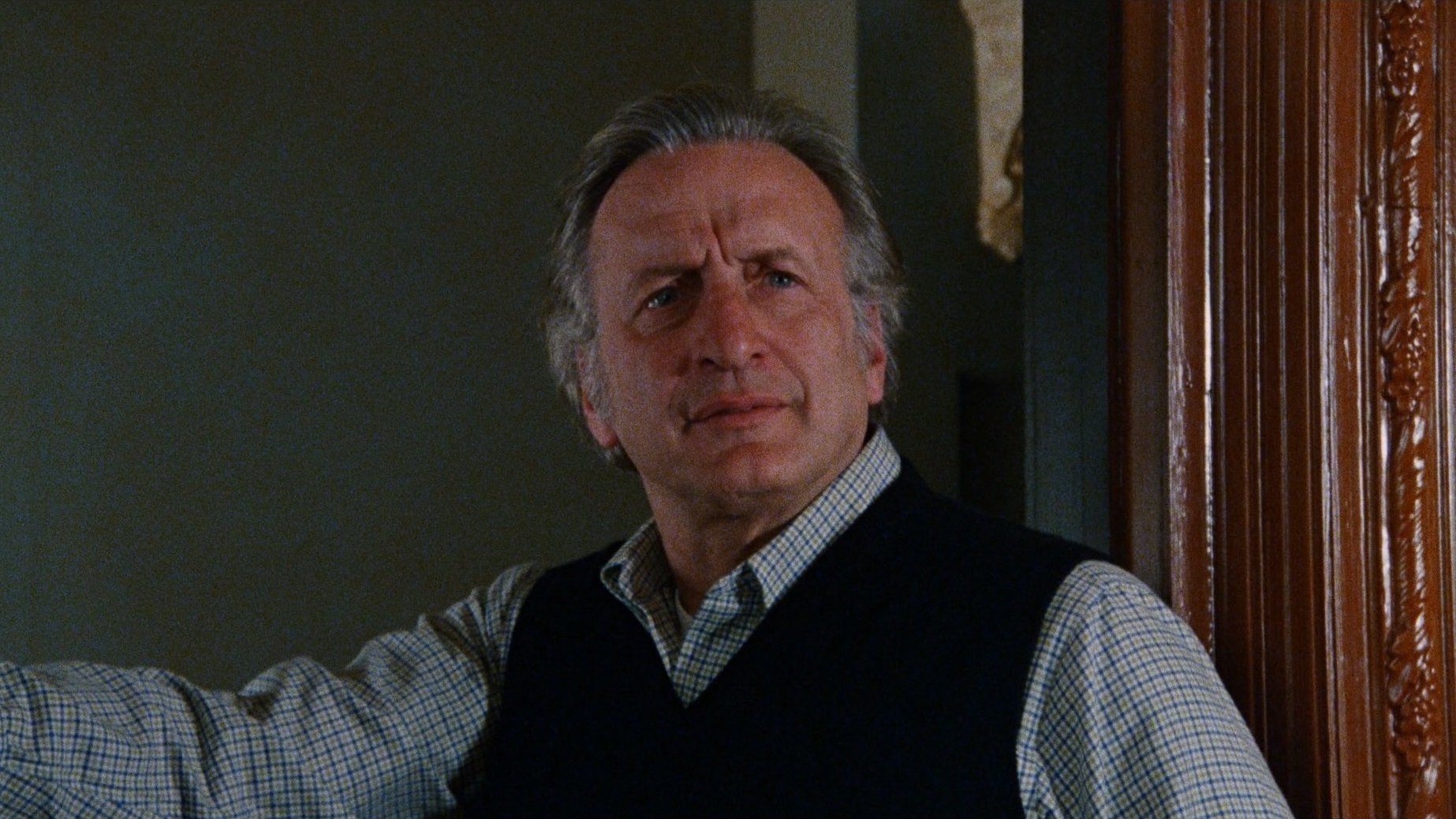
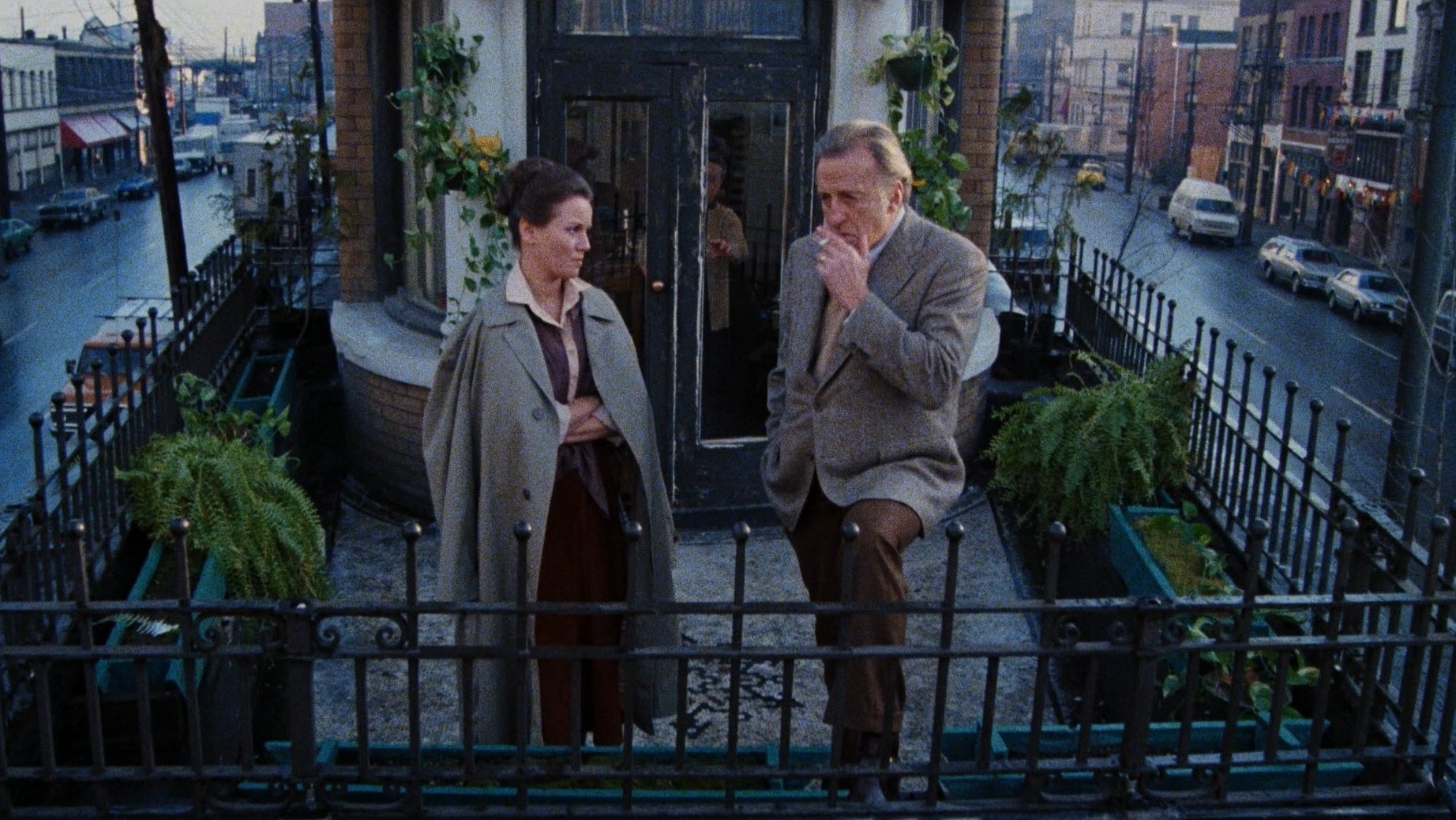
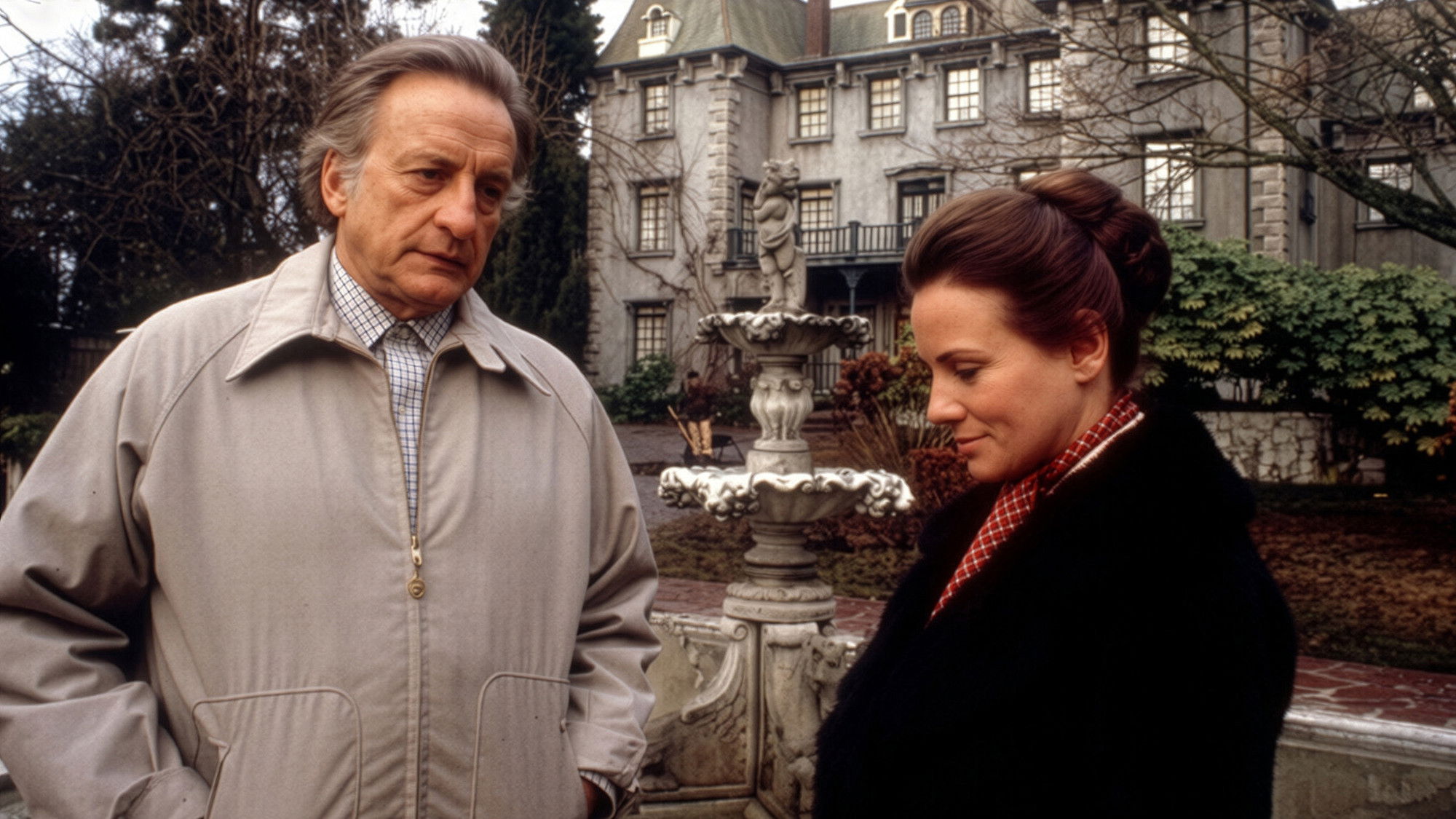
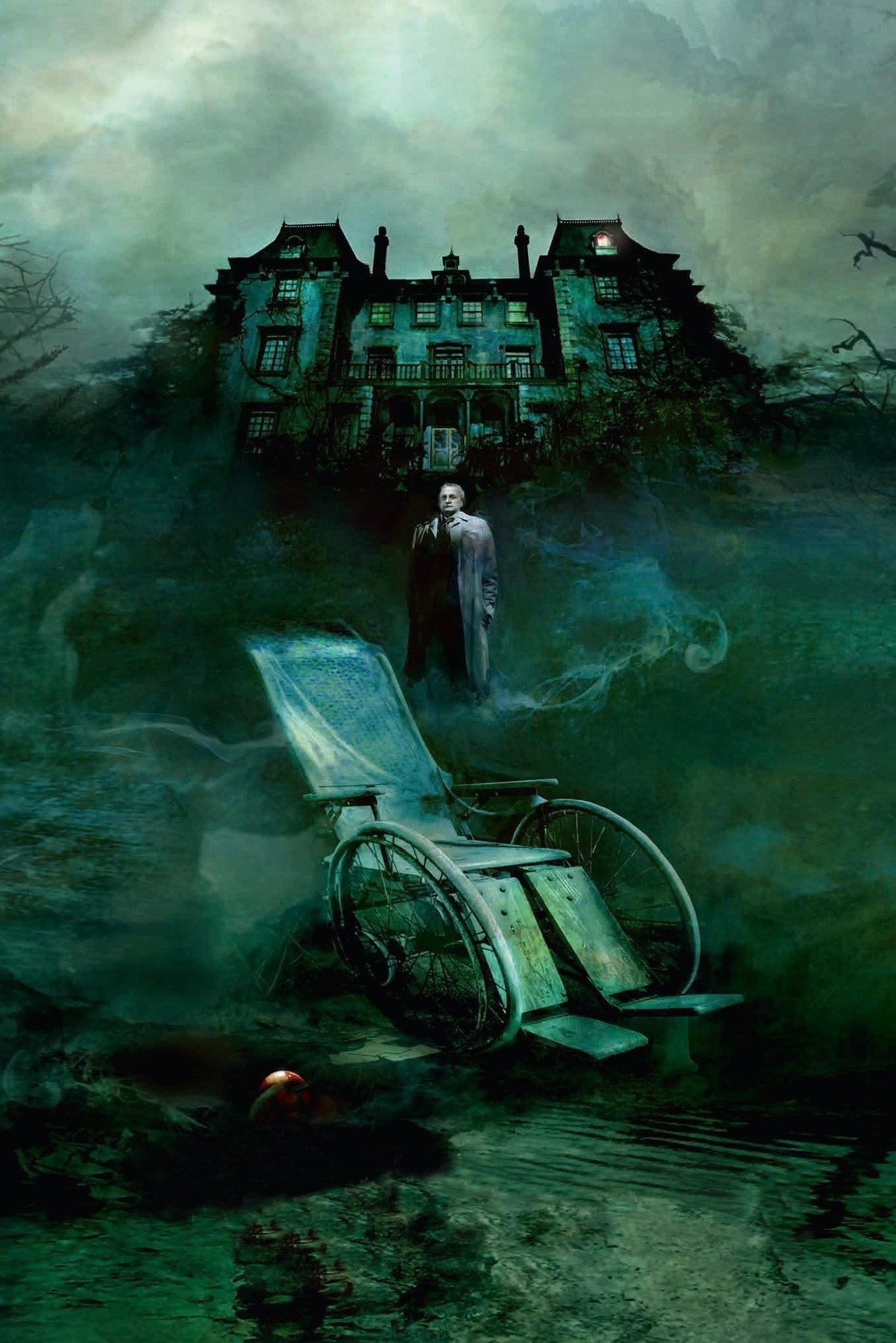
The opening establishes John Russell’s bereavement through an automobile accident that kills his wife Joanna and their young daughter Kathy. The sudden destruction of his family precedes any supernatural occurrence, giving the subsequent haunting a personal significance. John leaves New York and accepts a teaching position in Seattle, where he hopes to resume composing. Claire Norman, played by Trish Van Devere, helps him rent a large residence known as the Carmichael mansion. Its isolated grounds and extensive rooms appear to offer the privacy he requires, although the property has remained unoccupied for an unusually long period.
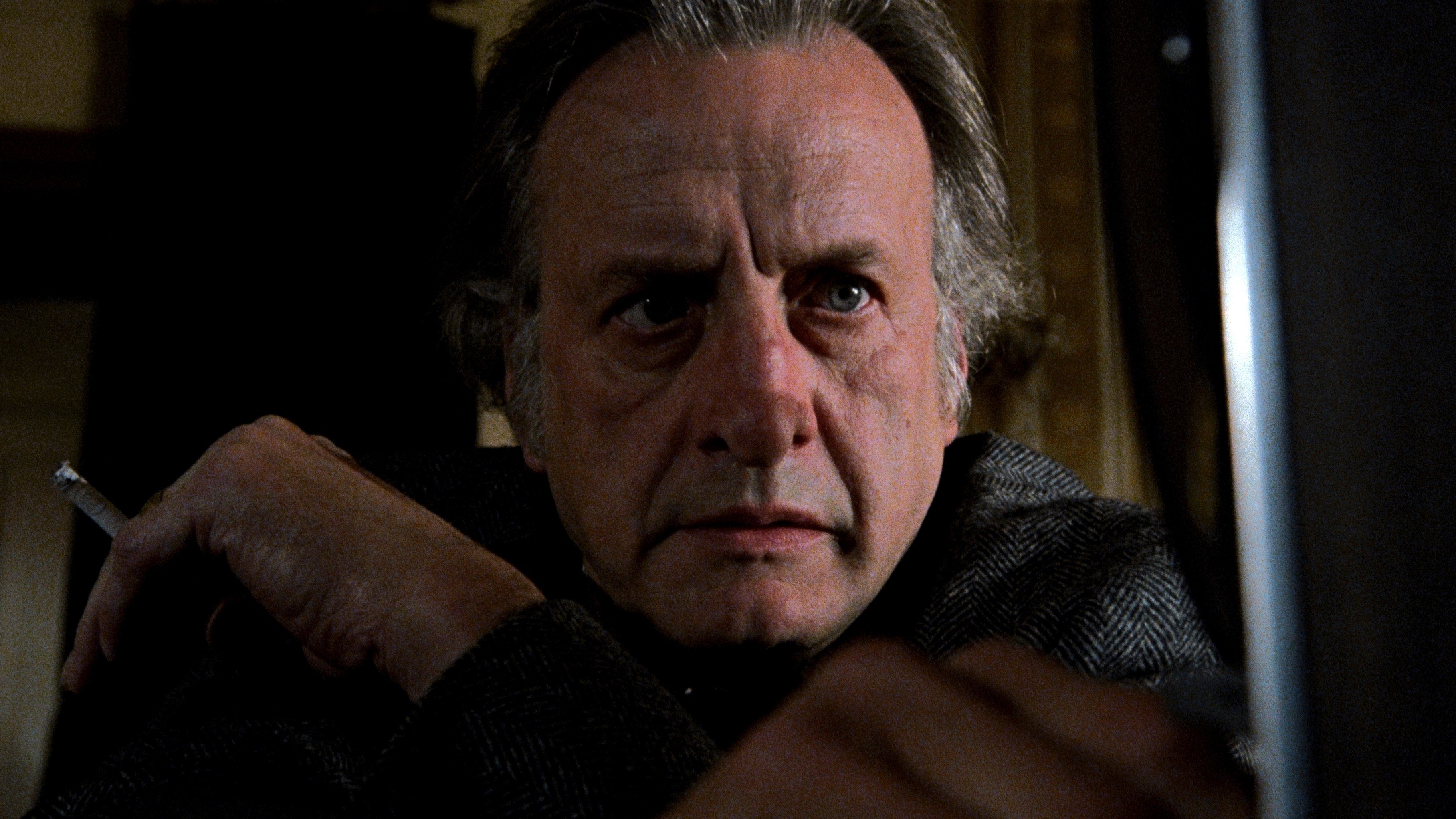
The disturbances begin with sounds whose source cannot be identified. Loud impacts recur within the building, while objects move without an apparent physical cause. John initially attempts to explain the events through the ordinary mechanisms of an old house, but their repetition suggests deliberate communication. His professional interest in sound becomes important because he begins recording and examining the activity. The haunting consequently develops through observation and evidence rather than through immediate confrontation with a visible apparition. John’s willingness to investigate also distinguishes him from characters who respond to supernatural disturbances by abandoning their surroundings.
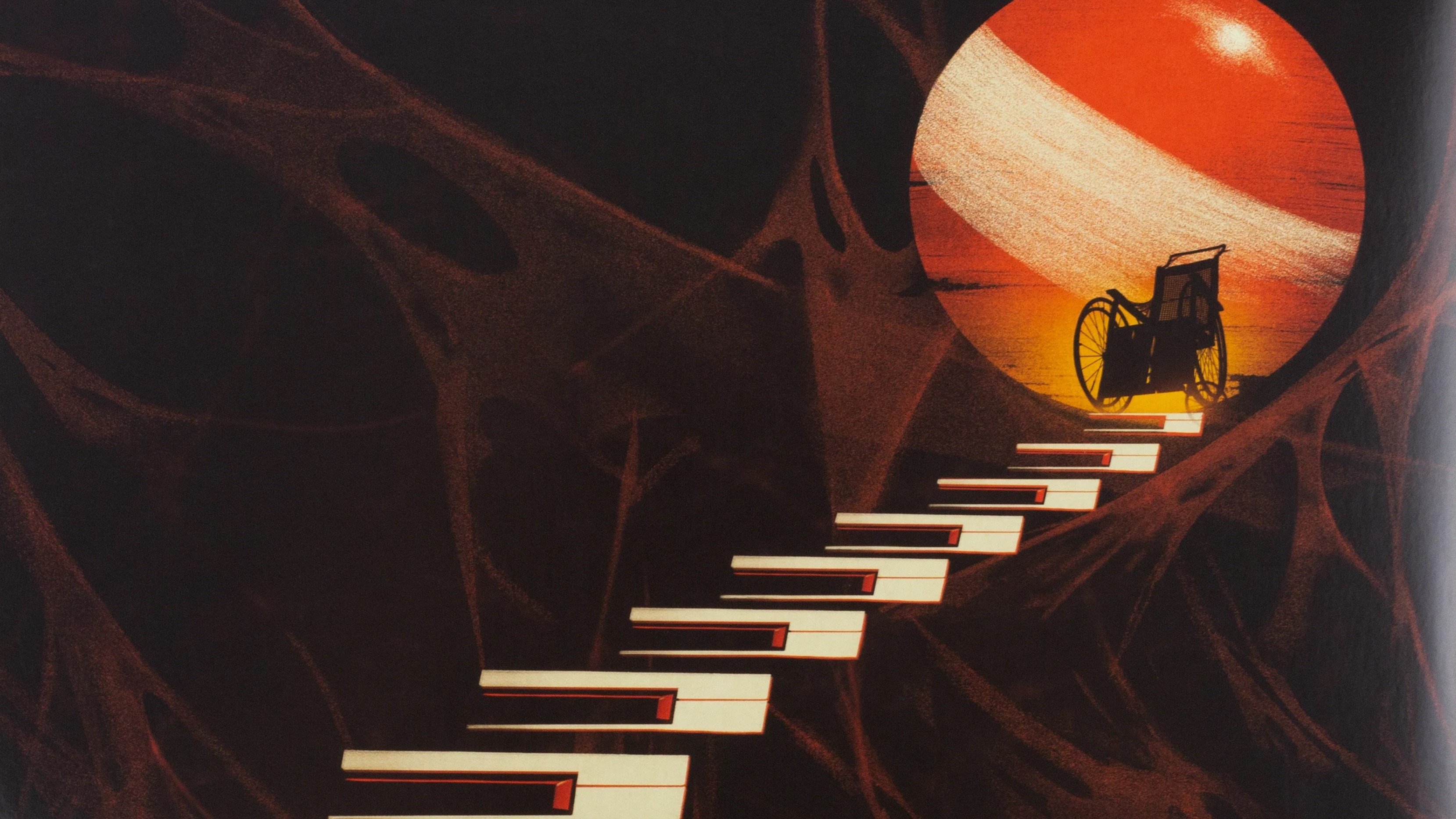
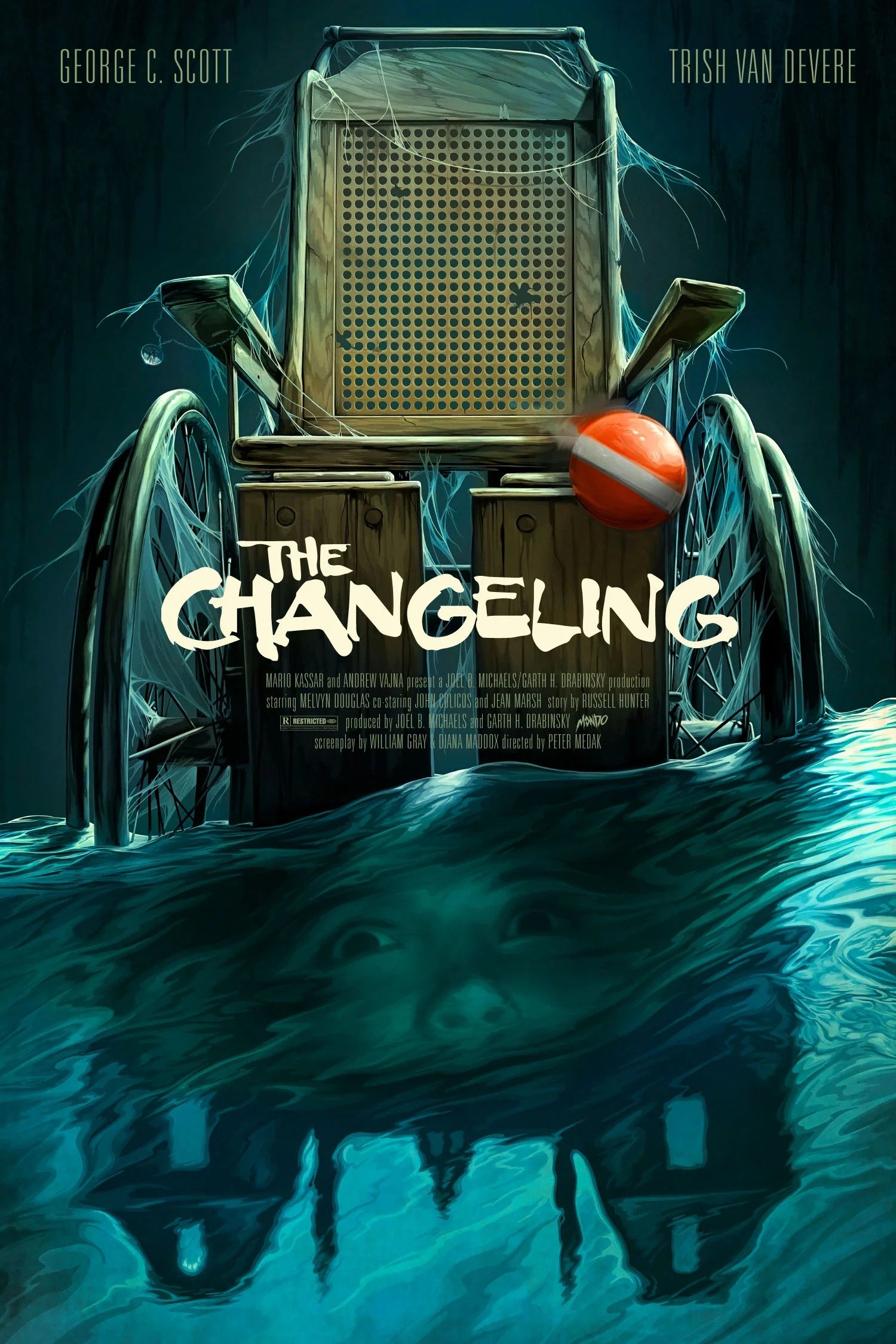
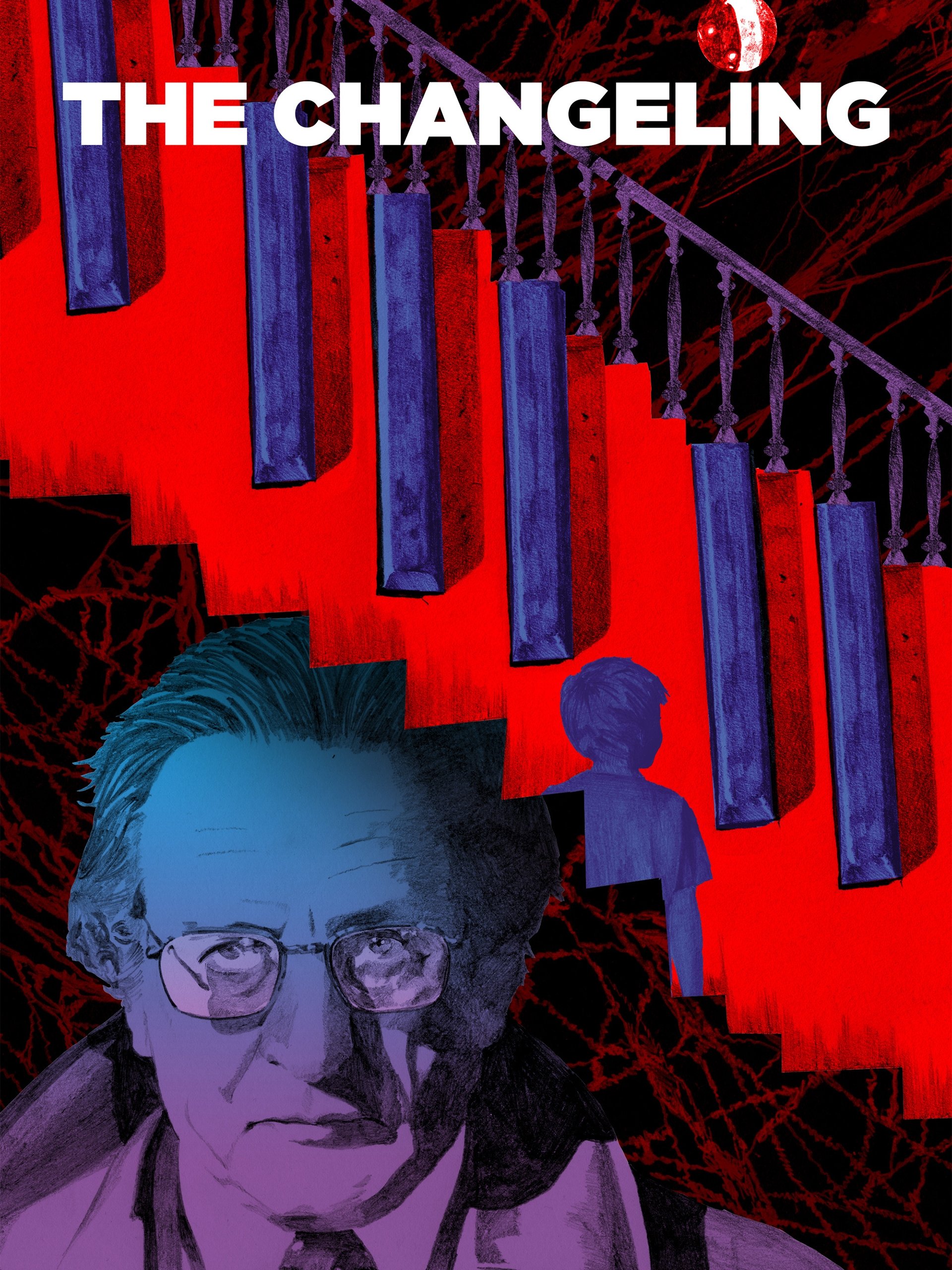
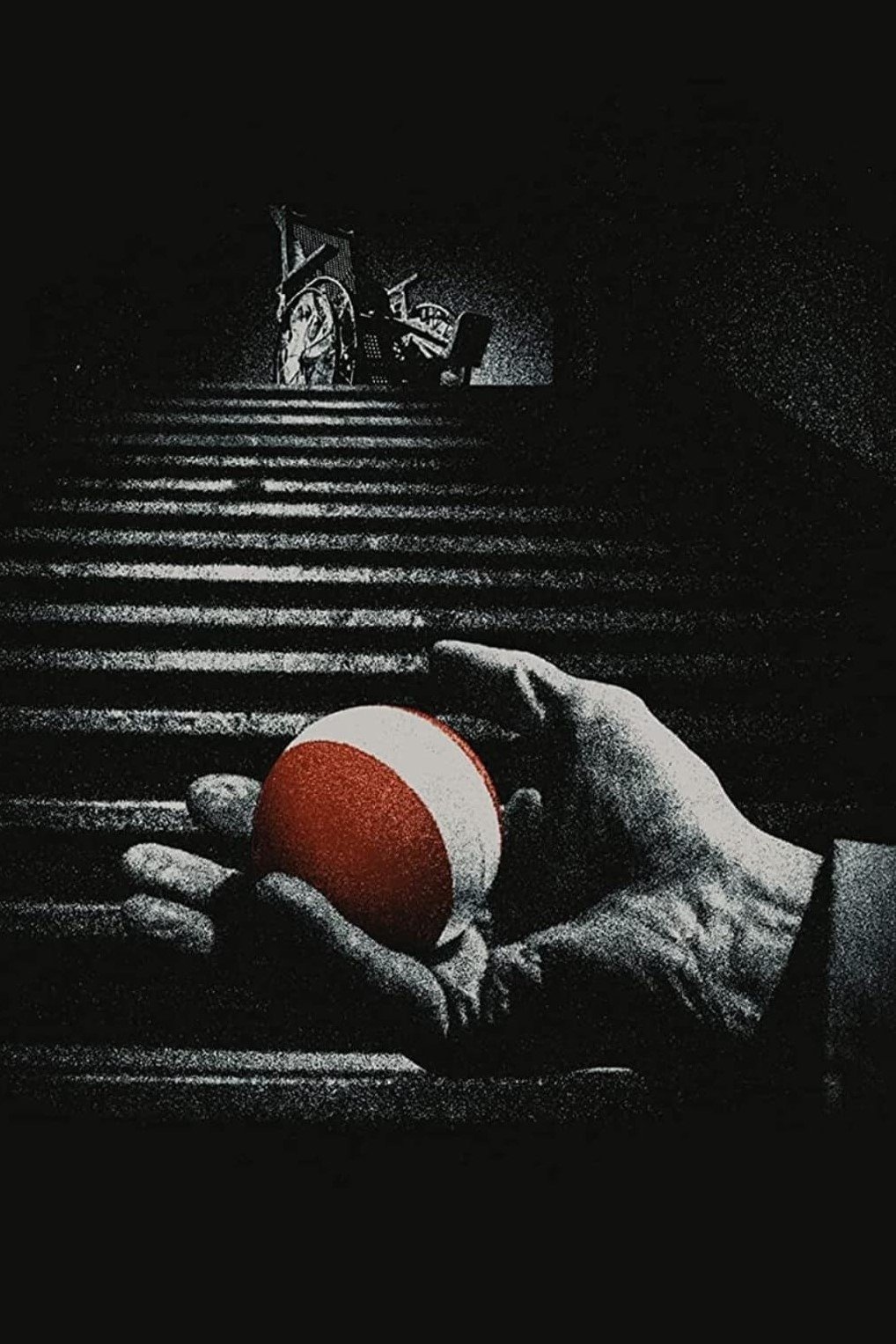
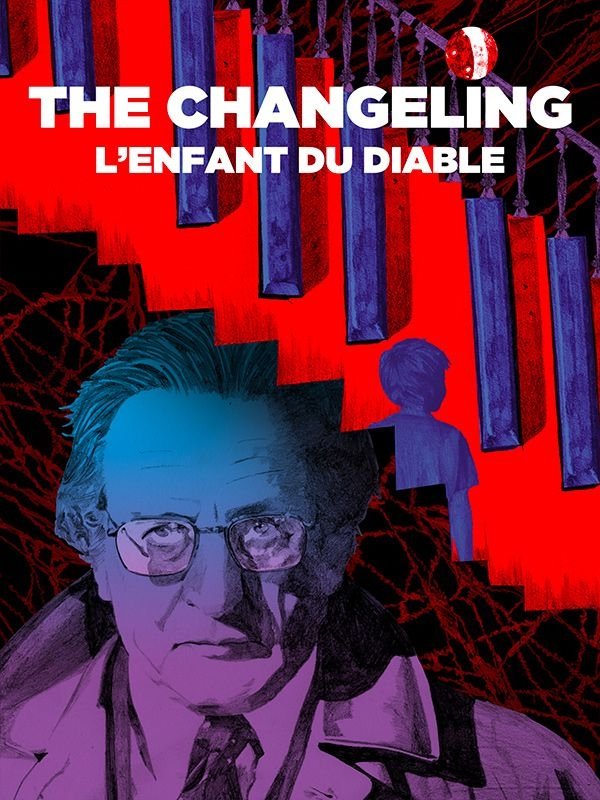
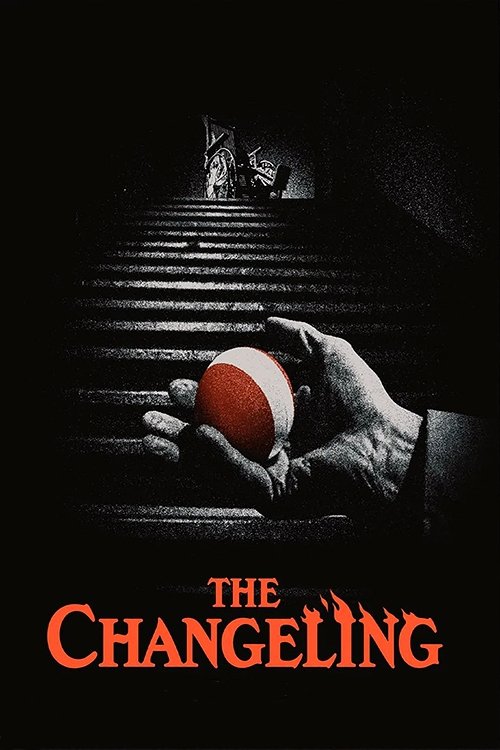
The red ball provides one of the film’s most unsettling connections between the haunting and John’s personal loss. After discovering an object resembling his daughter’s toy, he throws it from a bridge, attempting to separate the present disturbances from memories of Kathy. The ball subsequently returns, bouncing down the mansion’s staircase despite having been discarded. Its reappearance suggests that the force occupying the house can manipulate objects beyond their ordinary physical circumstances. The sequence also makes John’s grief particularly vulnerable to exploitation: a familiar childhood possession becomes evidence of another dead child seeking recognition.
The S?ance & the Concealed Murder
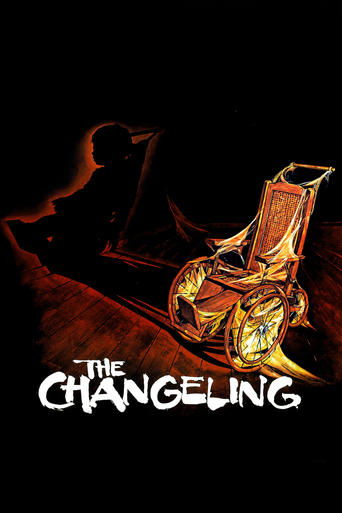
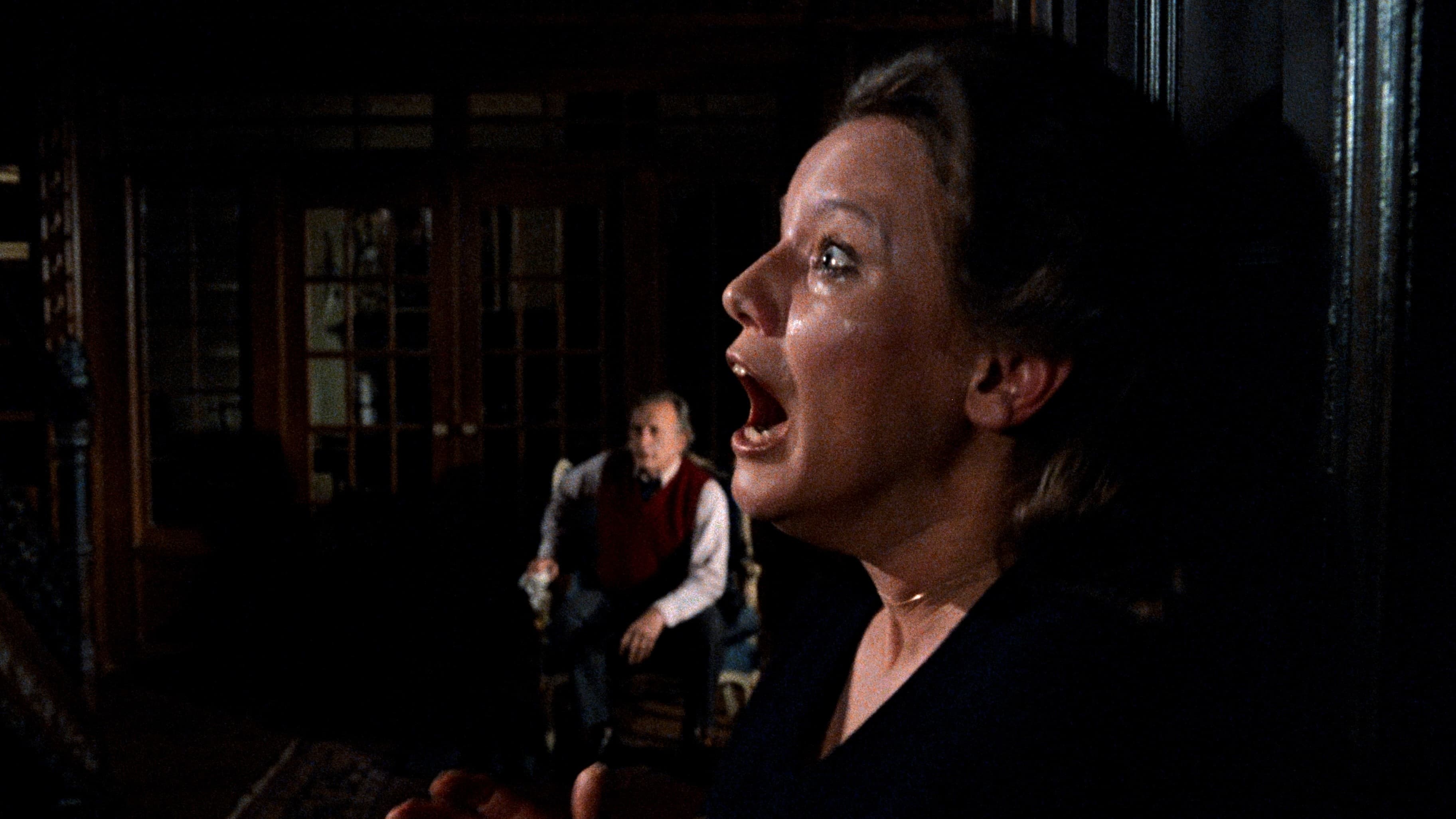
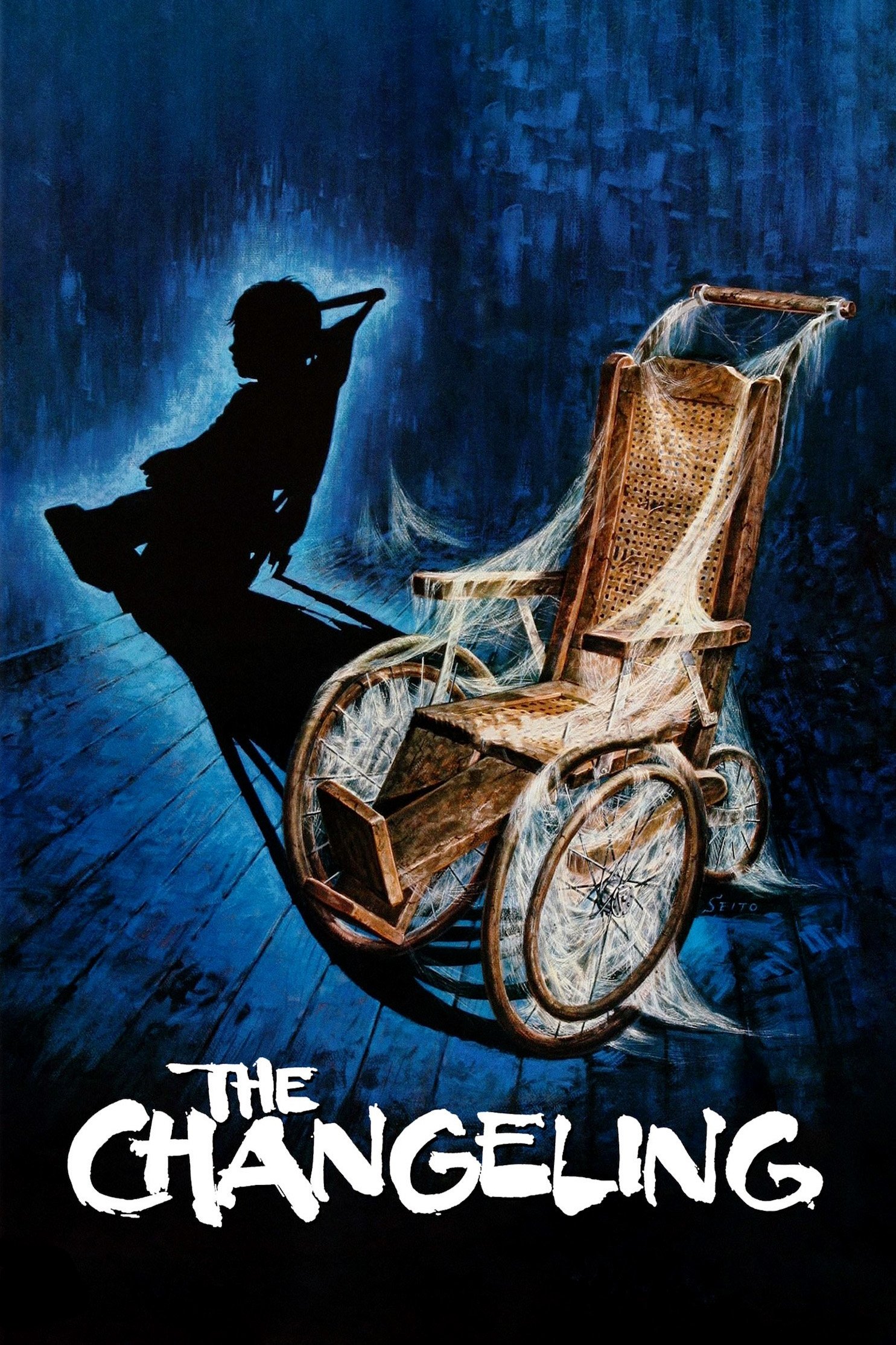
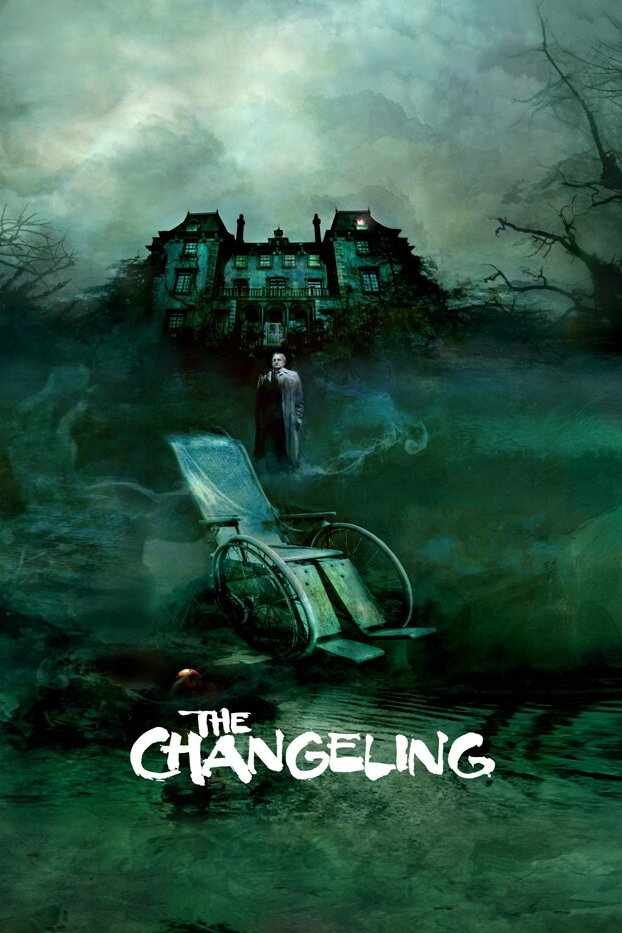
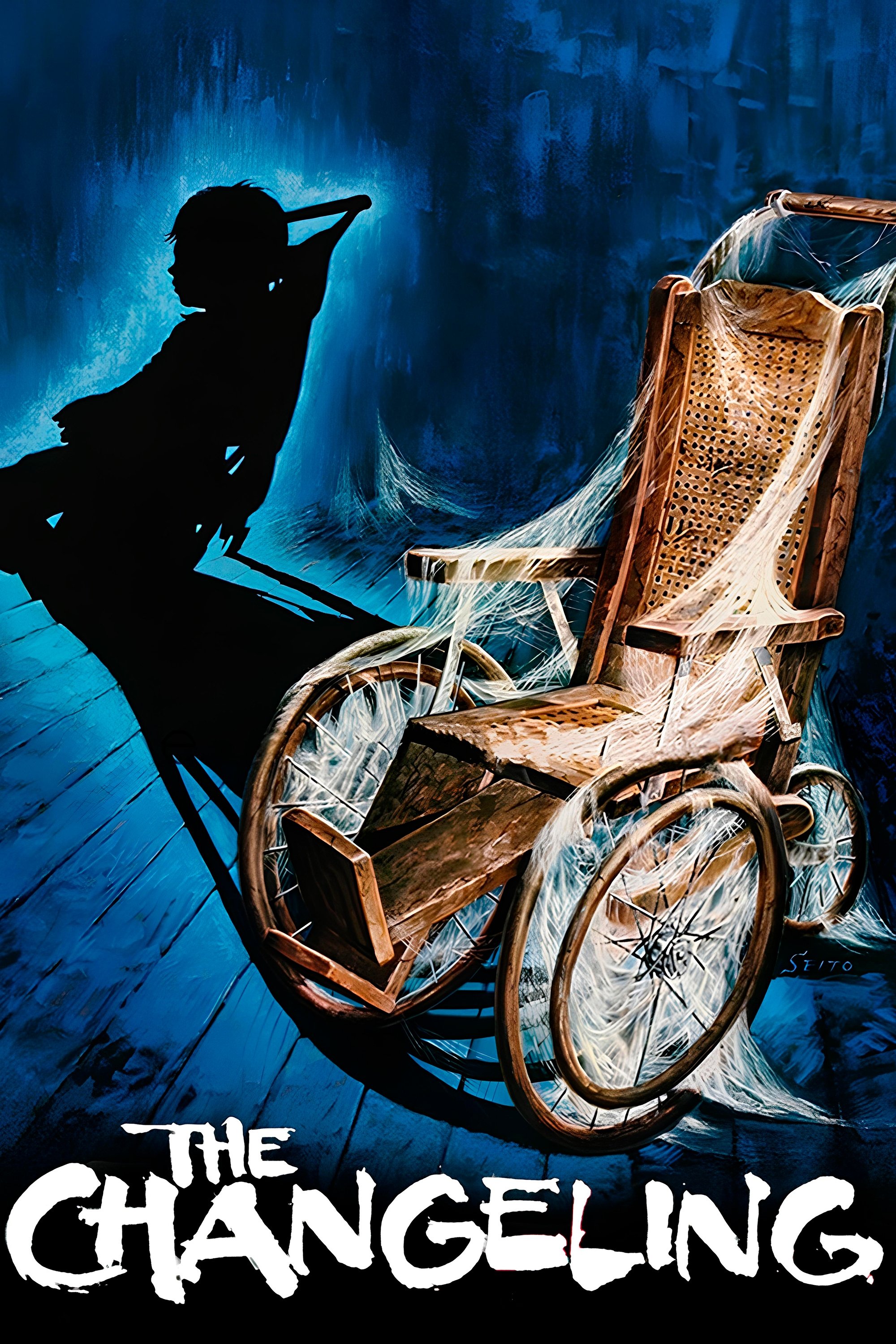
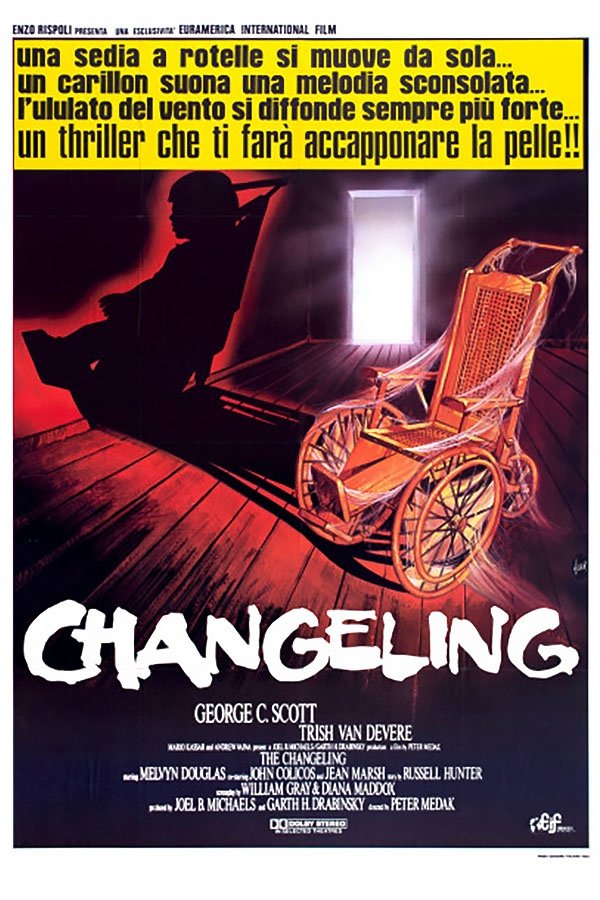
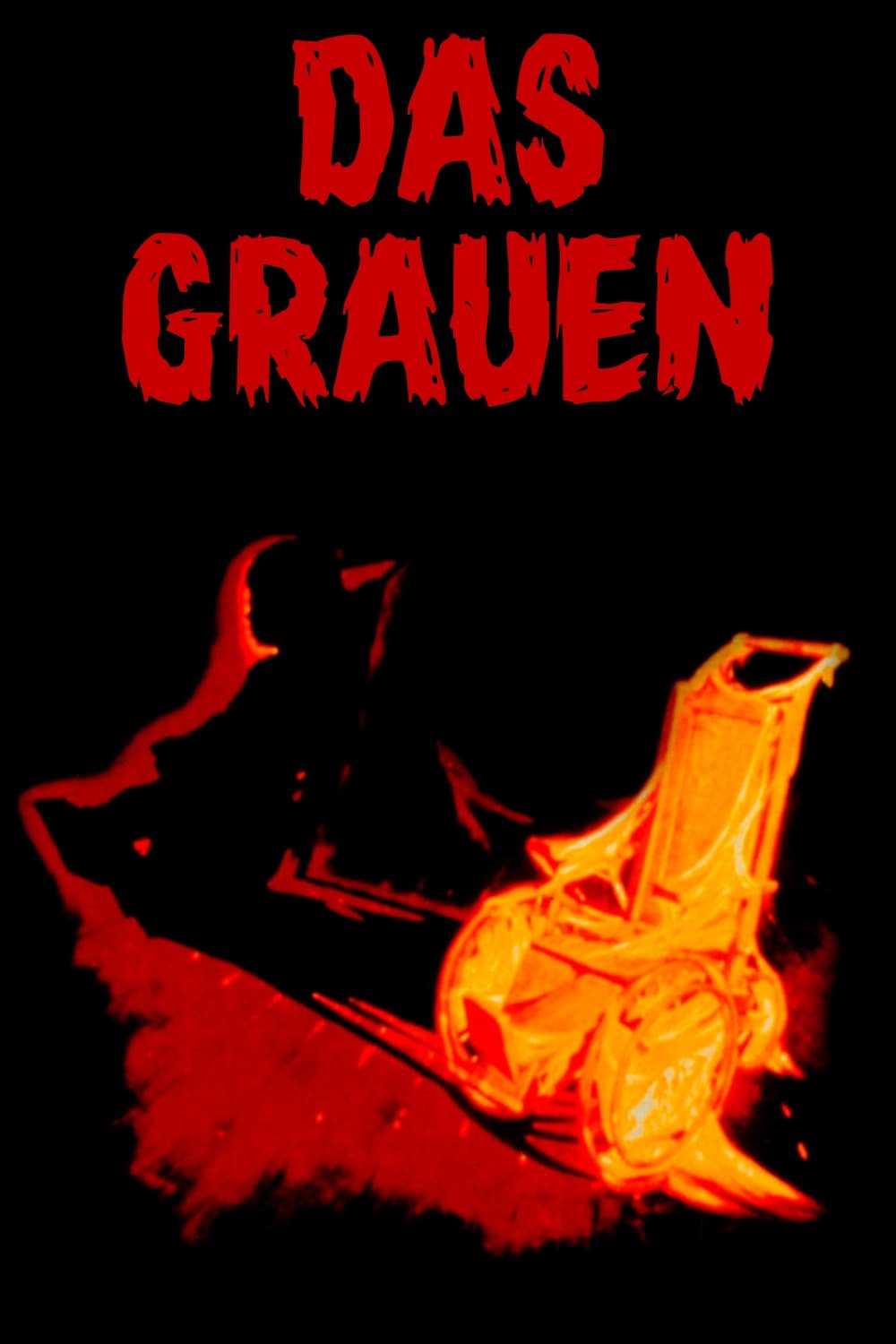
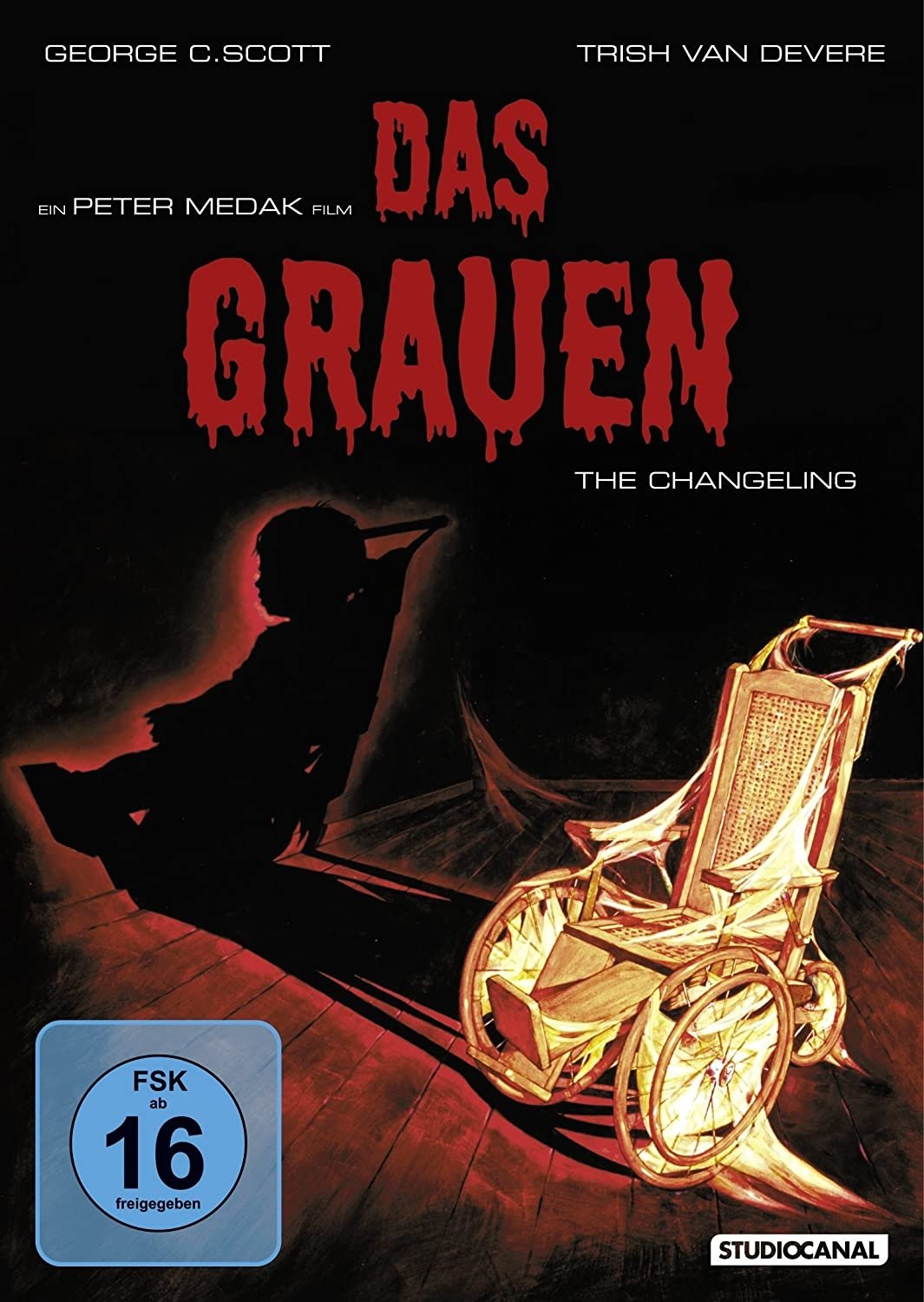
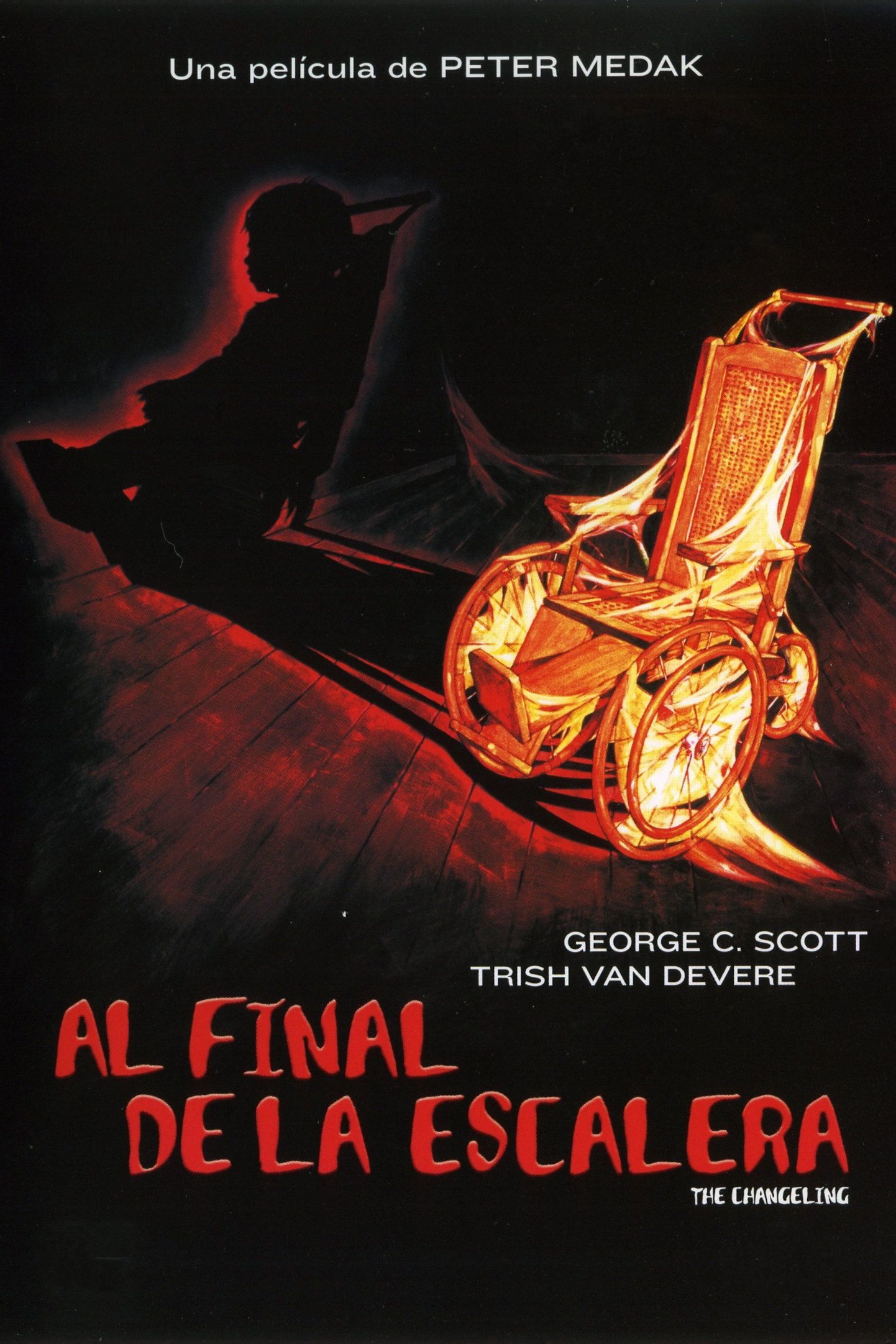
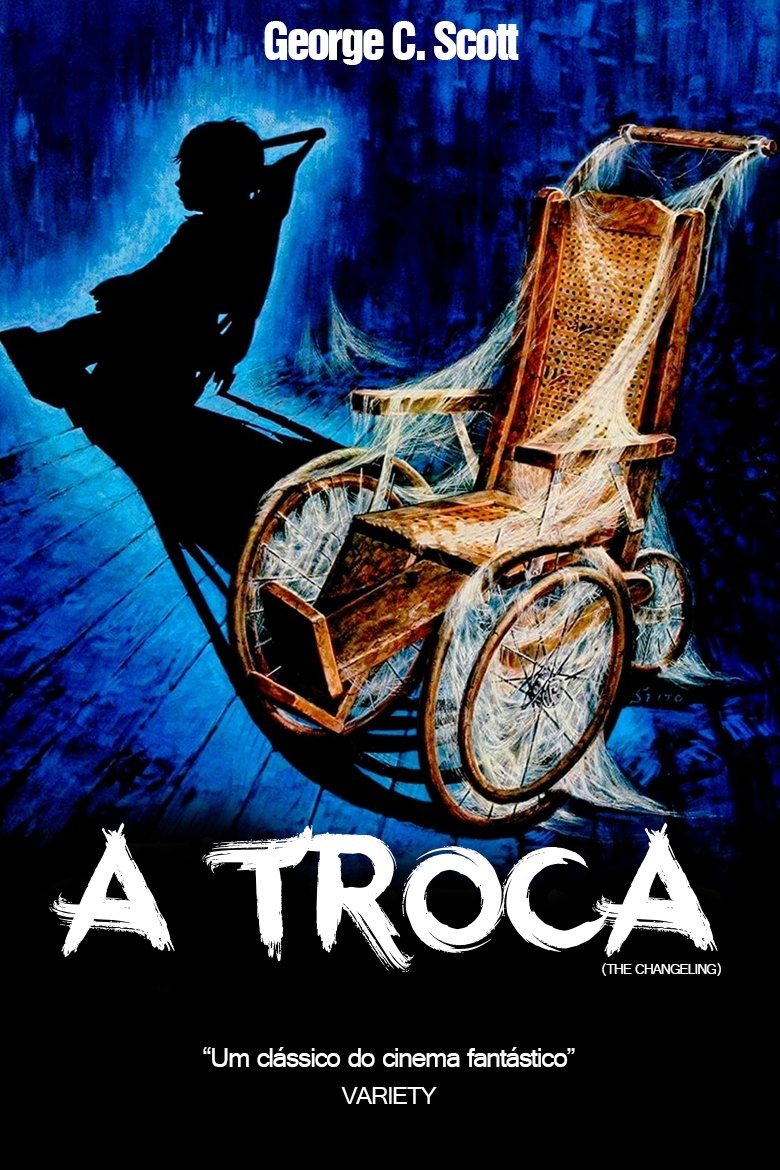
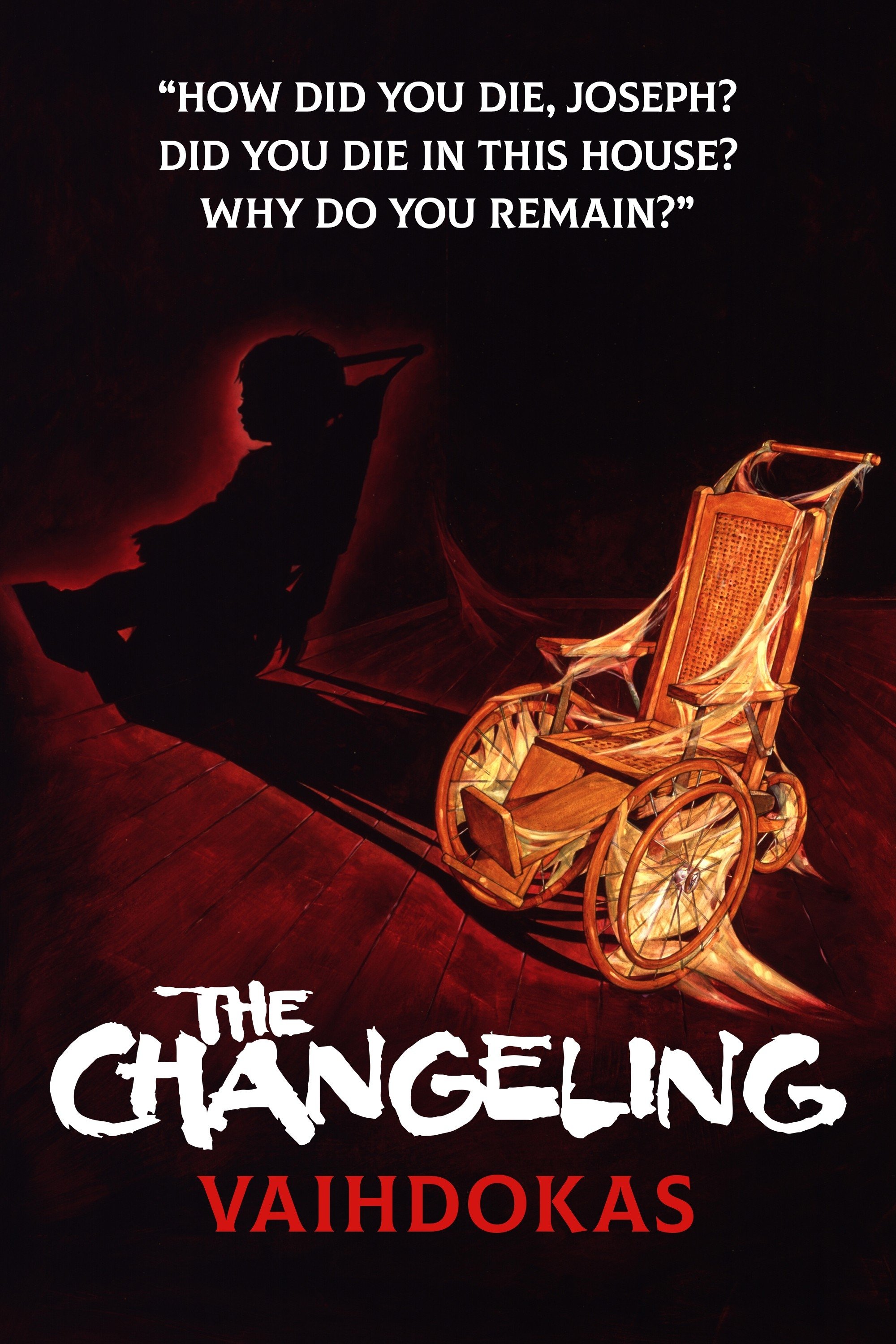
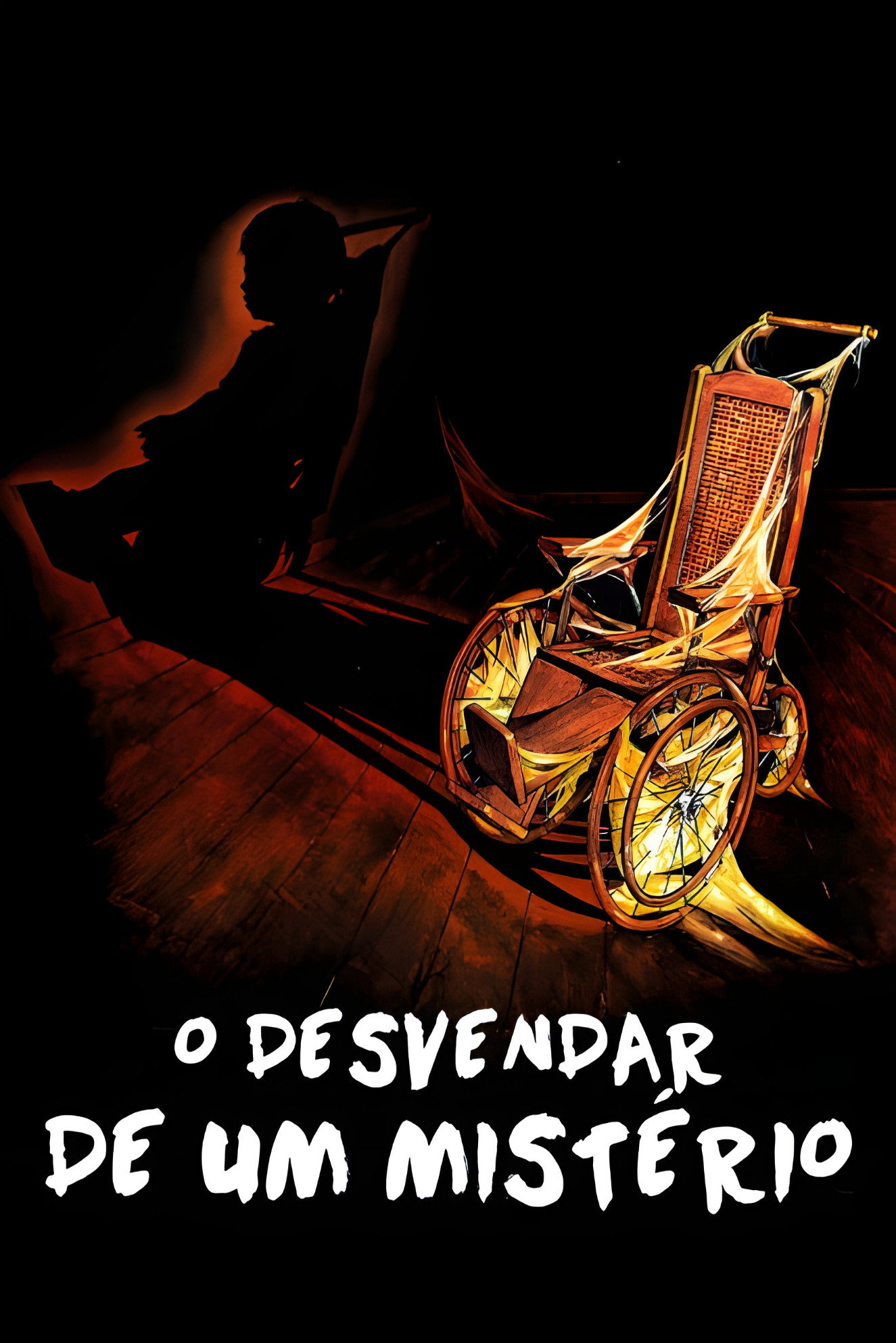
The investigation develops when John discovers a concealed attic room containing a small wheelchair and objects associated with a child. The room’s isolation suggests that its former occupant was deliberately kept apart from the rest of the household. Claire assists in locating historical information about the property, while John arranges a séance with the medium Leah Harmon, portrayed by Helen Burns. During the session, Harmon enters a trance and communicates through automatic writing. The sequence creates suspense through her increasingly uncontrolled movements and the responses of the participants rather than through the appearance of a conventional ghost.
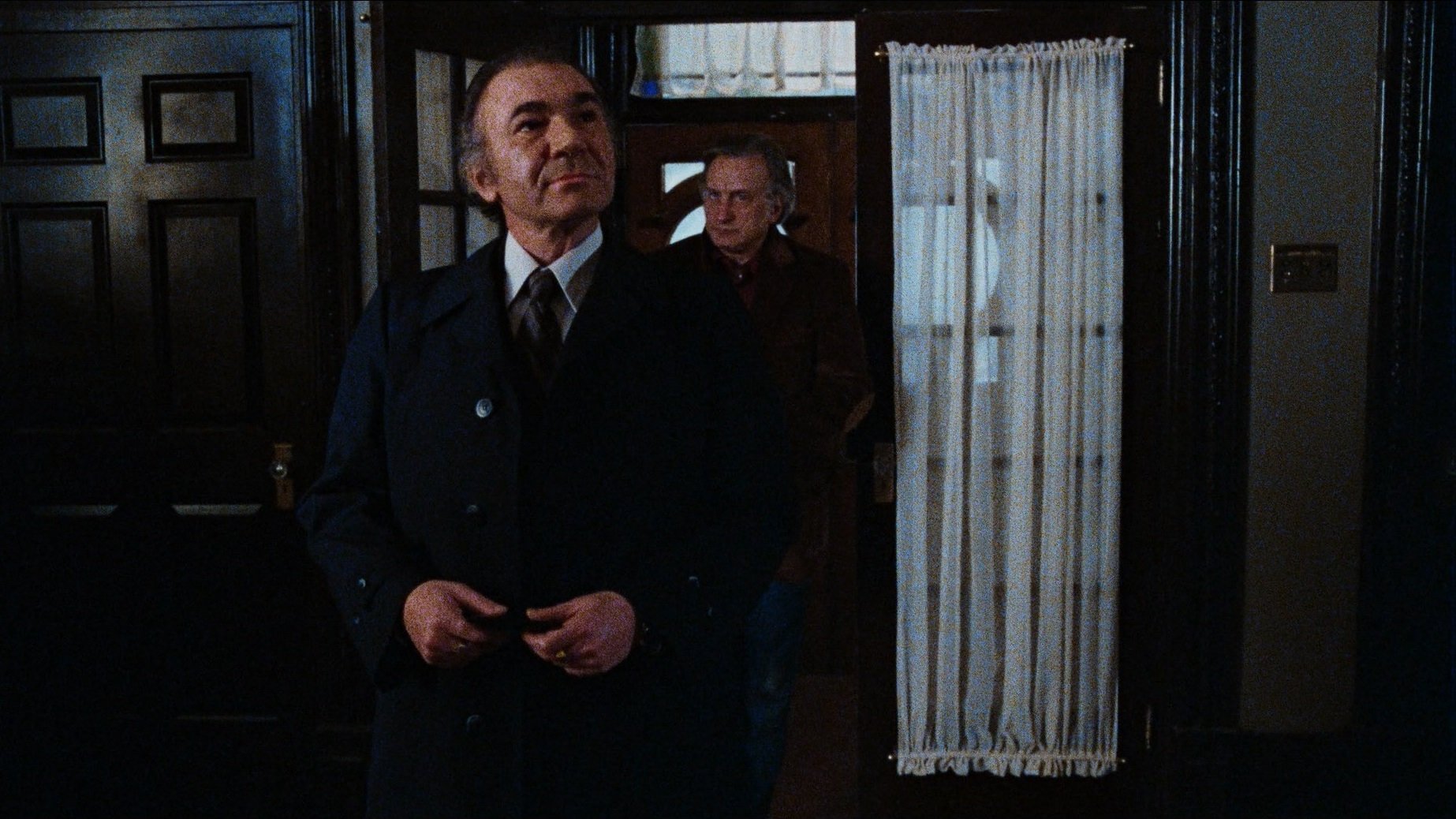
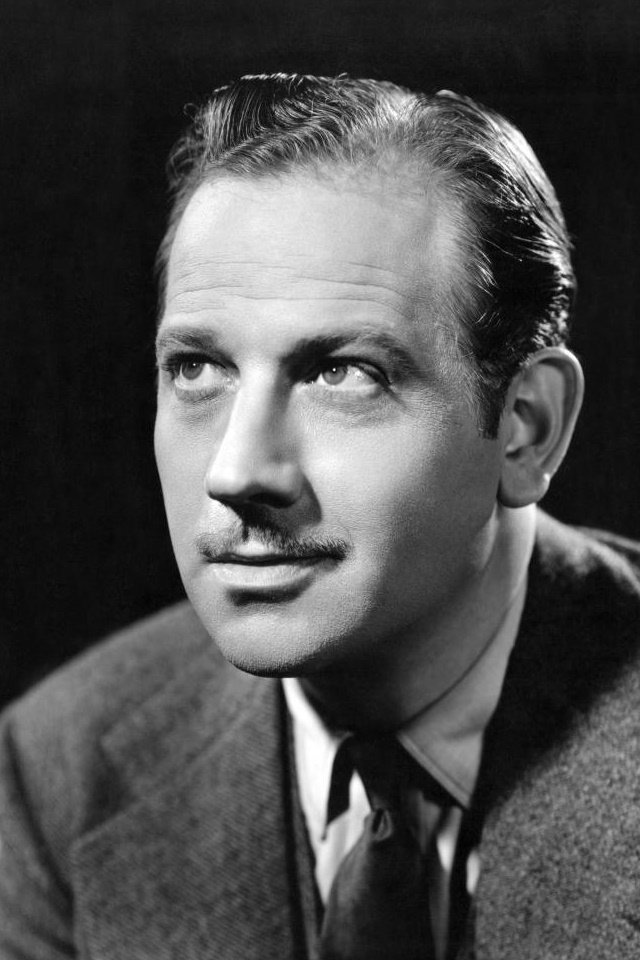
The recording of the séance supplies a further disturbance. When John listens to the tape, he discovers an additional voice apparently communicating alongside the medium. The sound establishes a form of evidence that was unavailable to the participants during the original encounter. John subsequently learns that a disabled child named Joseph Carmichael died under suspicious circumstances and that his apparent identity had been assumed by another boy. The story leads toward Senator Joseph Carmichael, played by Melvyn Douglas, whose public position and inheritance are connected to the concealed events of the previous century.
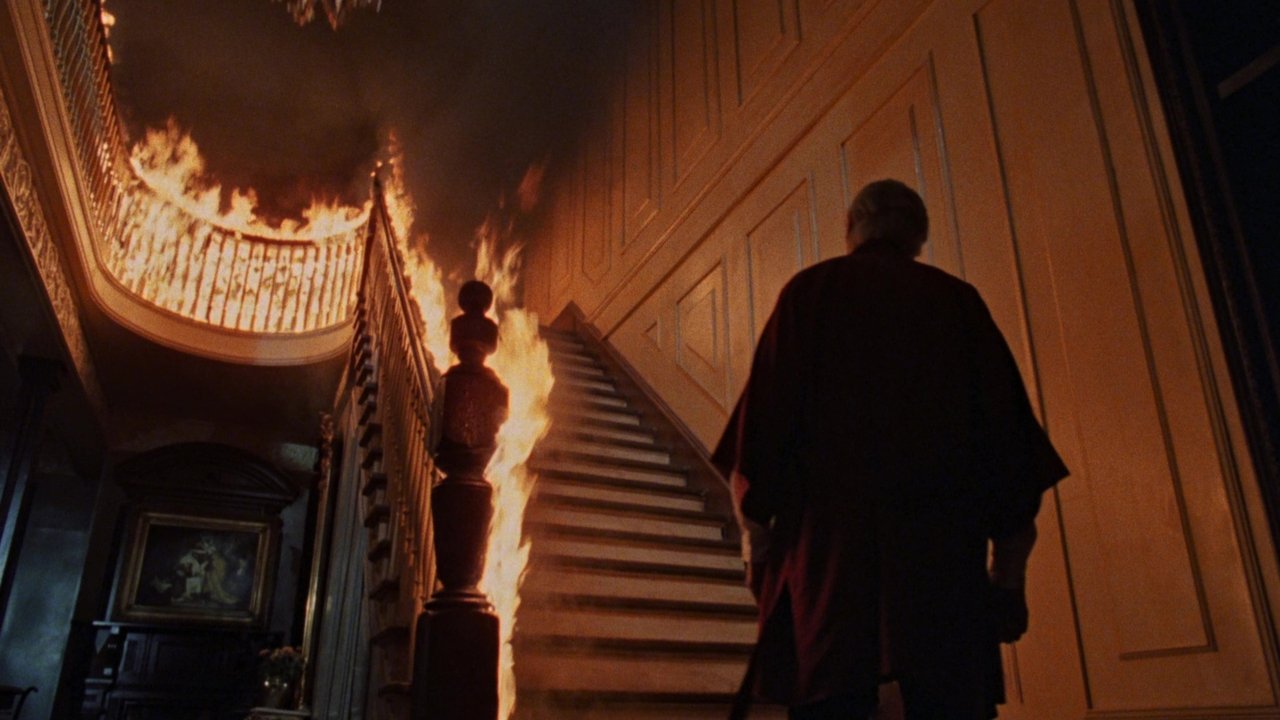
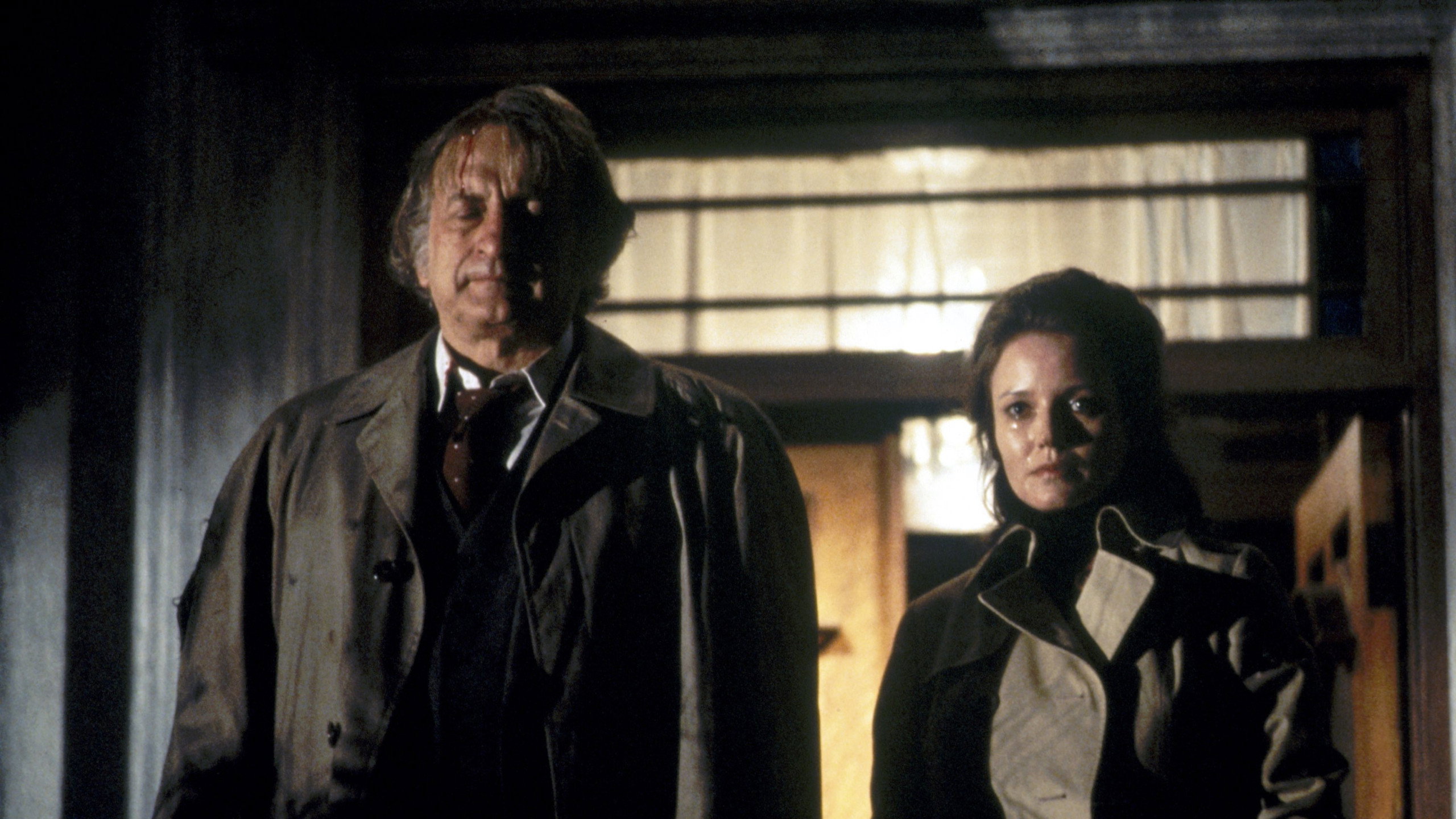
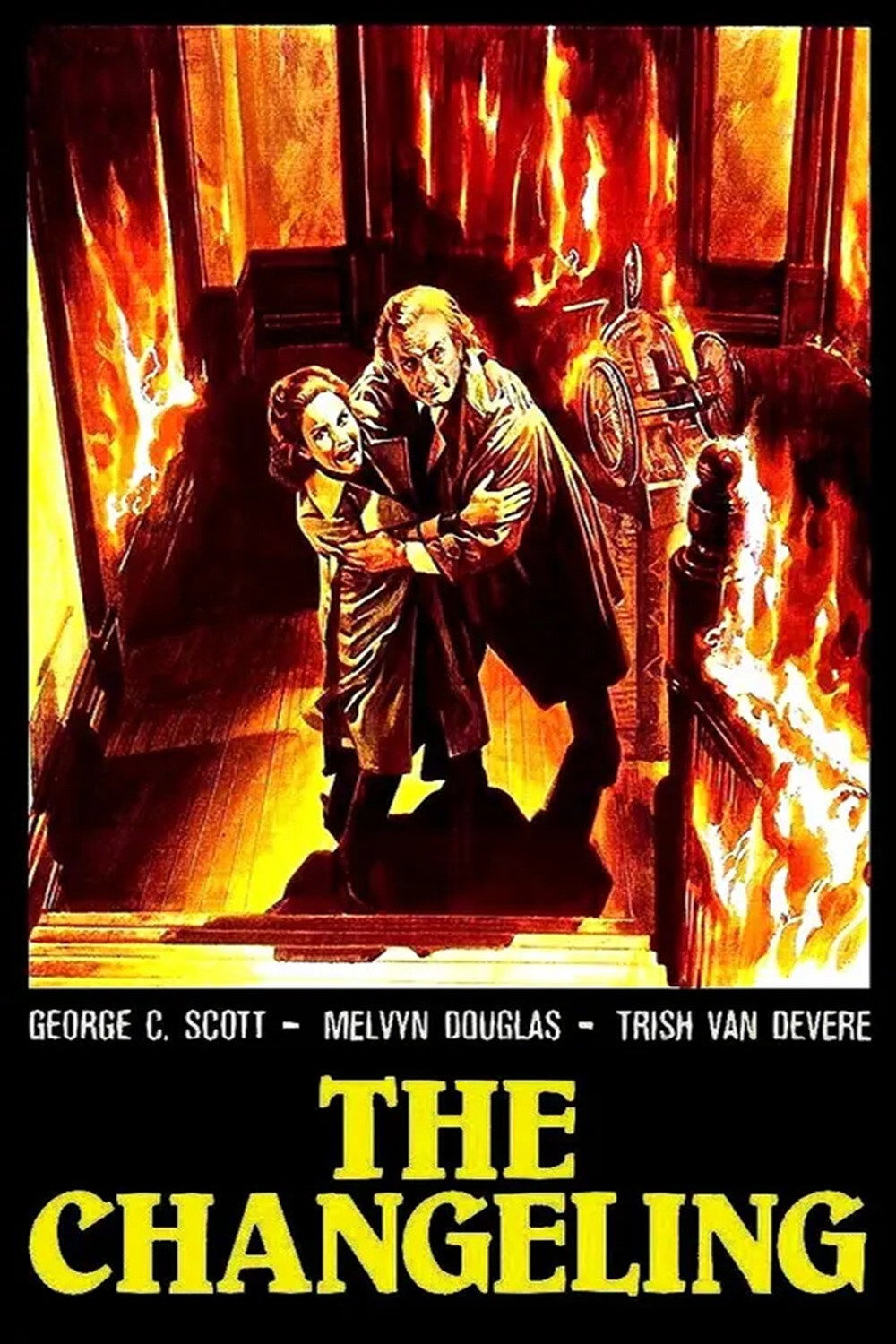
The revelation establishes that the original Joseph was murdered by his father and replaced by another child who inherited his name and social position. The ghost’s continuing presence is therefore associated with a deliberate crime involving family wealth and the destruction of personal identity. John’s discovery forces the surviving beneficiary to confront the history upon which his adult life was constructed. The supernatural violence eventually extends beyond the mansion, culminating in the senator’s death and a destructive fire within the house. The resolution links the ghost’s desire for recognition to the exposure of a crime whose consequences have persisted across generations.
Canadian Production, Locations & Set Design
Principal photography began in December 1978, with most of the production taking place in British Columbia. Vancouver provided the principal filming environment, while additional locations were used in Victoria, Seattle and New York. The project belonged to a period when Canadian tax incentives encouraged investment in domestically organized features employing international stars. Film historian Sam Wiebe has situated The Changeling within the development of British Columbia’s production industry, identifying it as an important example of Vancouver representing an American city. The production’s financial and organizational structure gave Canadian filmmaking facilities a prominent role in a commercially ambitious supernatural thriller.
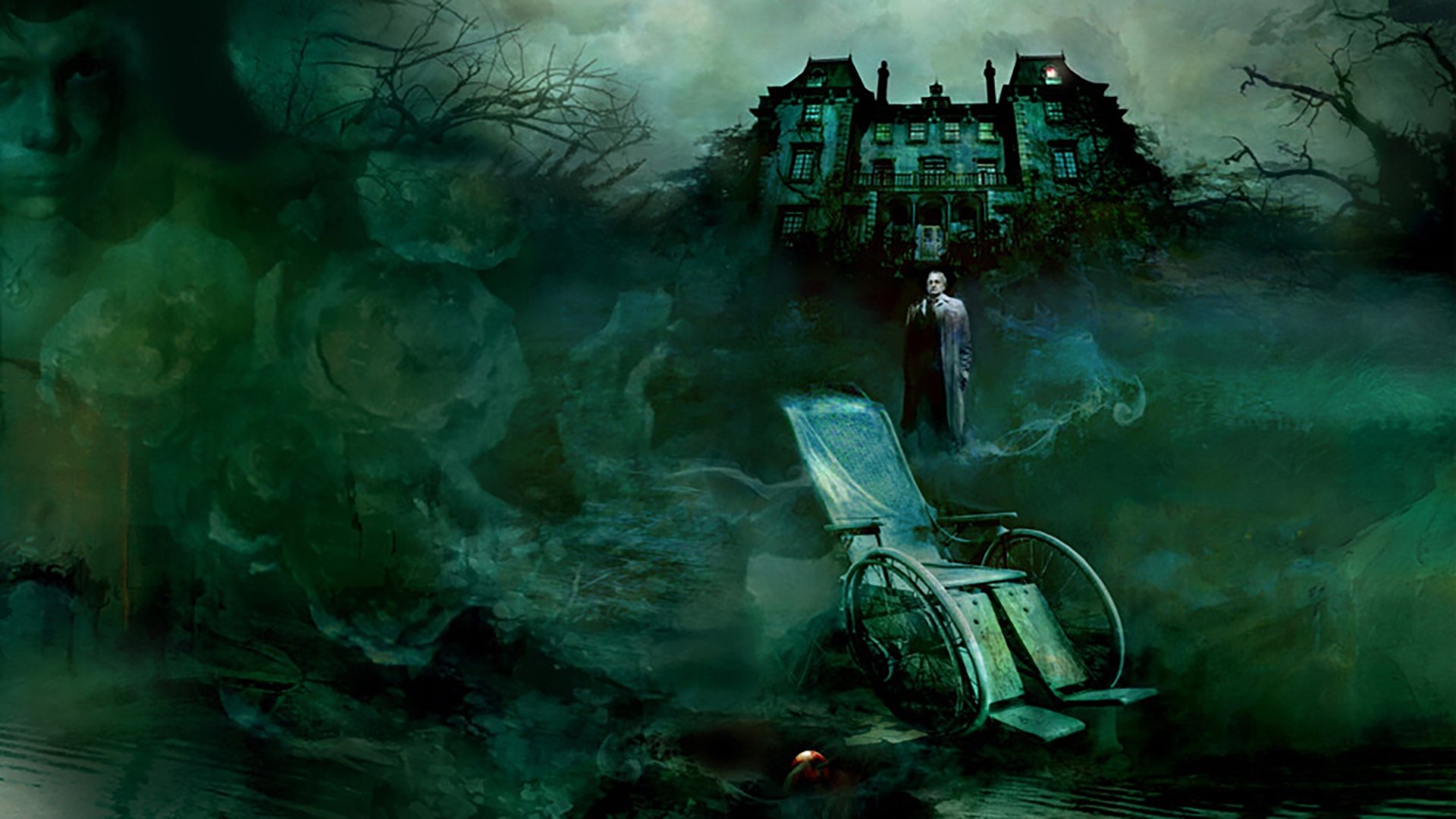
The central mansion was largely a construction rather than a single existing residence. Art director Reuben Freed recalled that the filmmakers were unable to find a suitable building with the imposing Gothic appearance required by Medak. The production therefore erected a substantial exterior façade around a property in Vancouver’s Oakridge neighborhood. Working doors, illuminated windows and surrounding vegetation helped conceal the construction. Trevor Williams supervised the production design, while the mansion’s interiors were created at Panorama Studios in West Vancouver. The sets were planned to maintain a convincing relationship with the exterior, allowing the audience to understand the building as a continuous architectural space.
Other locations contributed to the film’s geographical variety. Victoria’s Hatley Castle represented Senator Carmichael’s residence, while Vancouver’s Hotel Europe supplied the historical society’s building. The Orpheum Theatre accommodated a concert sequence involving the Vancouver Symphony Orchestra, conducted by Kazuyoshi Akiyama. The Granville Bridge appears during John’s attempt to dispose of the red ball. These locations established recognizable surroundings beyond the haunted residence while maintaining the narrative’s fictional Seattle setting. Their use also demonstrates the production’s combination of practical location photography and constructed environments, a method central to the developing Canadian film industry during the late 1970s.
Cinematography & Practical Horror Effects
Cinematographer John Coquillon photographed the film in color on 35mm, working with Medak to create an atmosphere dominated by architectural depth and restricted visibility. The mansion’s corridors, staircases and high ceilings provide opportunities for compositions in which apparently empty space becomes threatening. Rather than repeatedly display a supernatural figure, the camera encourages attention toward objects and areas whose significance remains uncertain. Long views of the interior make the building appear unusually large in relation to its occupants. The effect is particularly strong when John moves through rooms whose ordinary domestic purpose has been obscured by decades of abandonment.
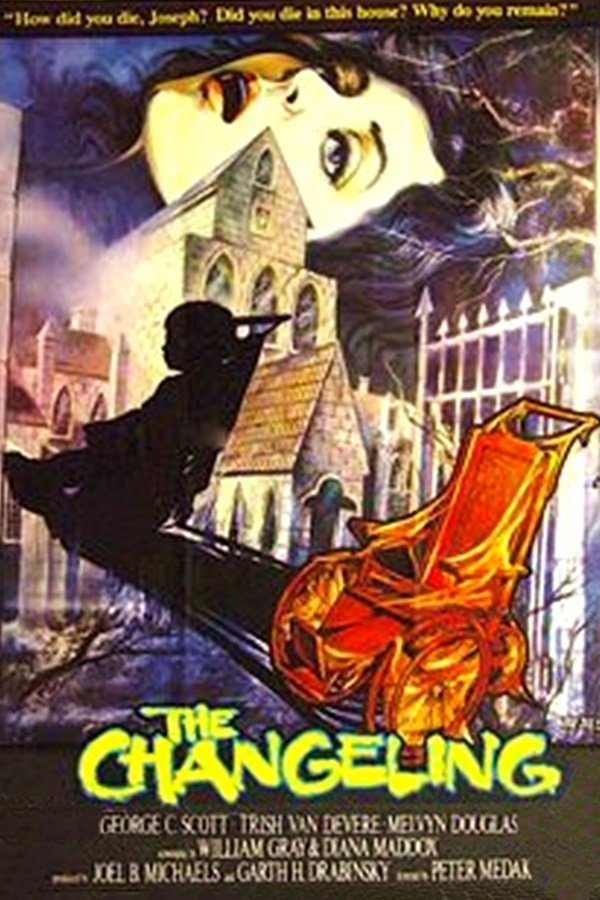
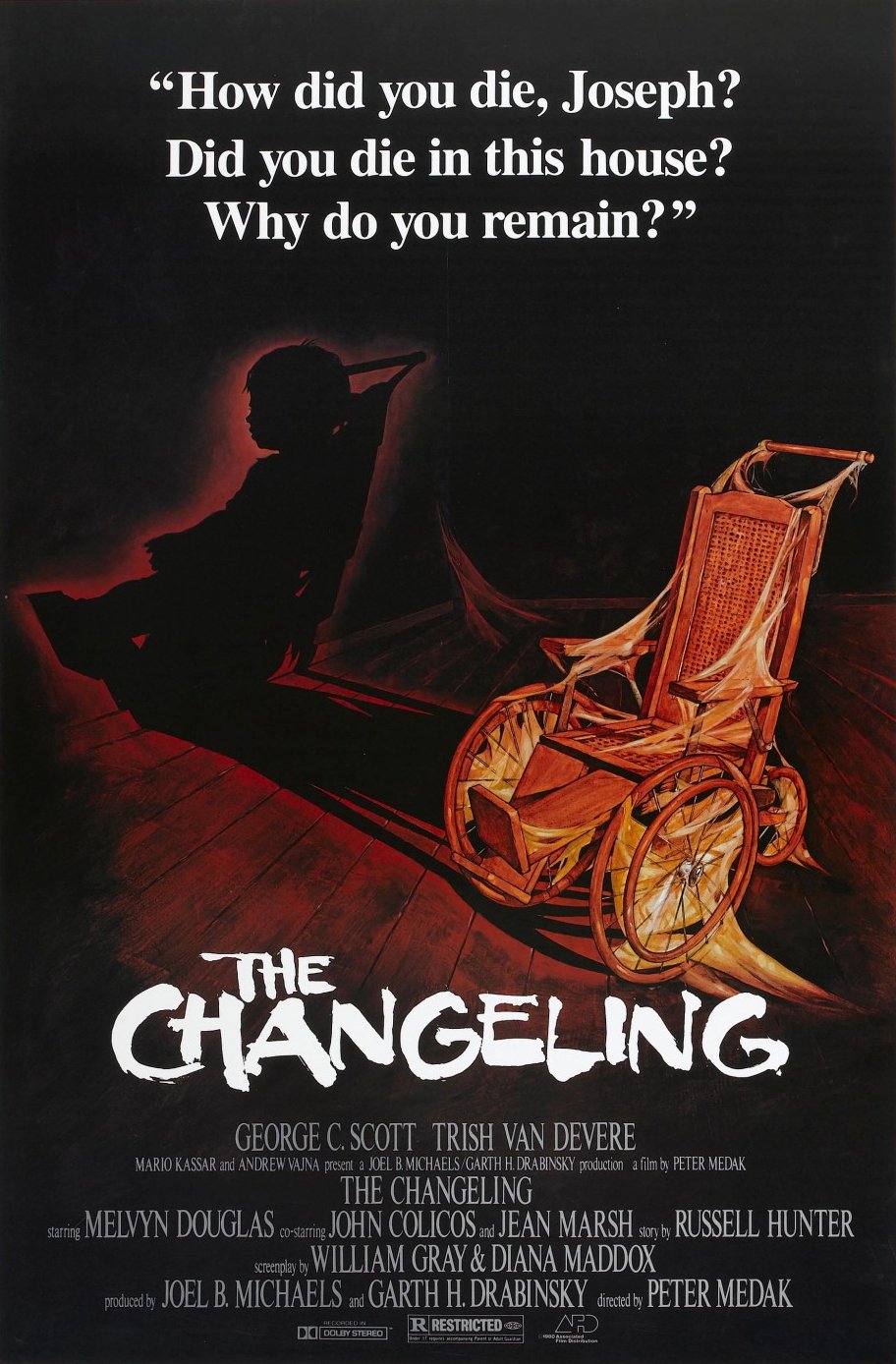
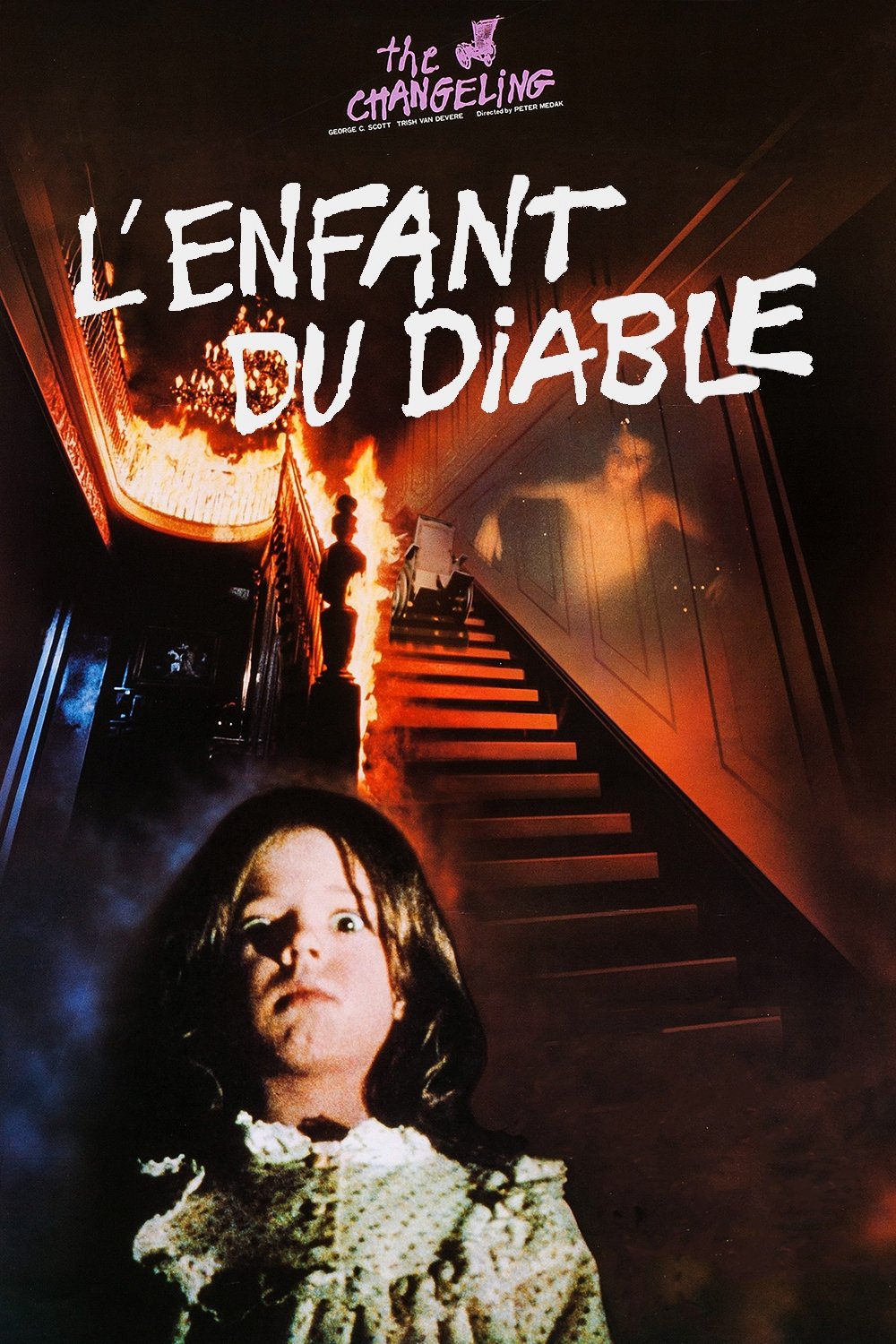
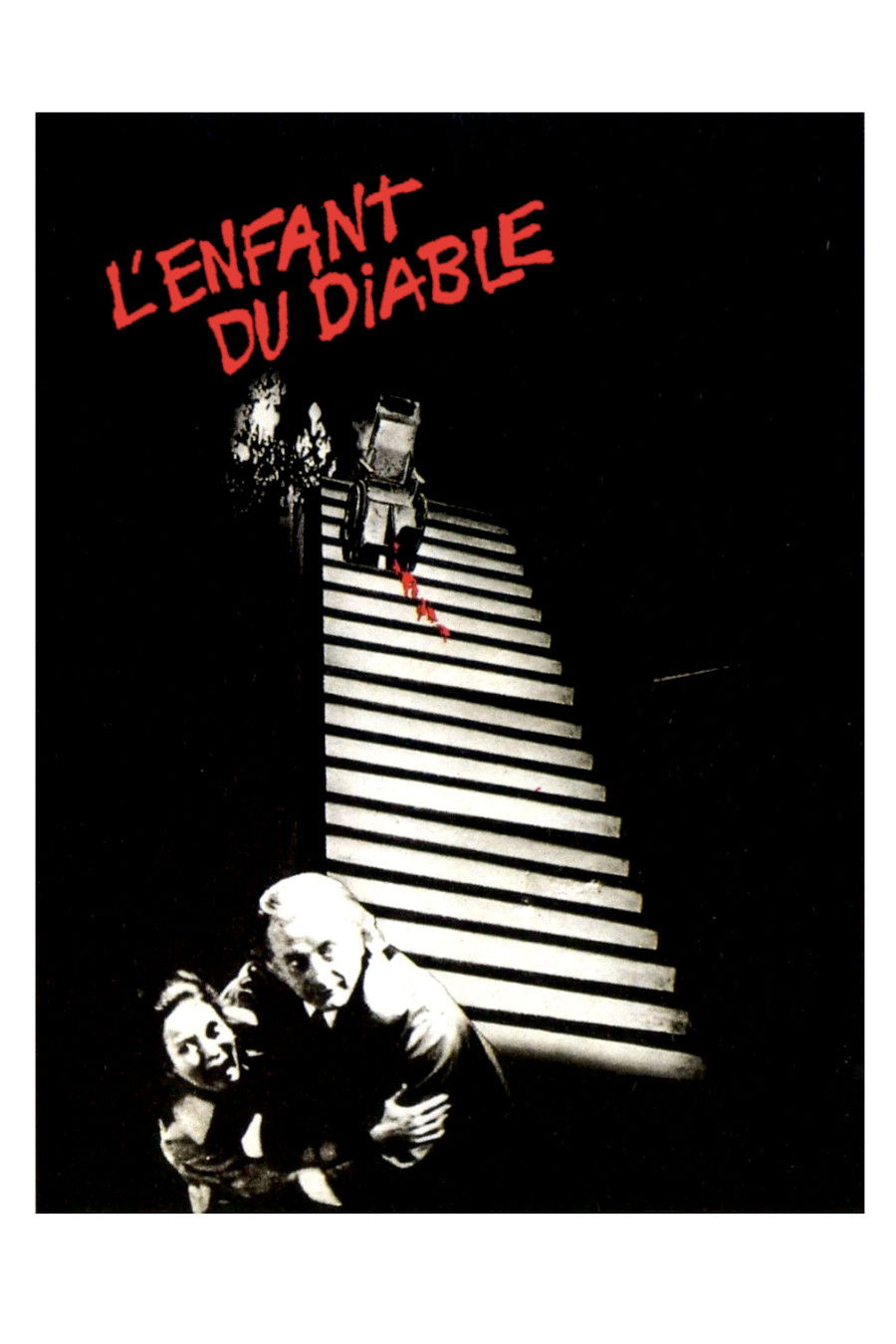
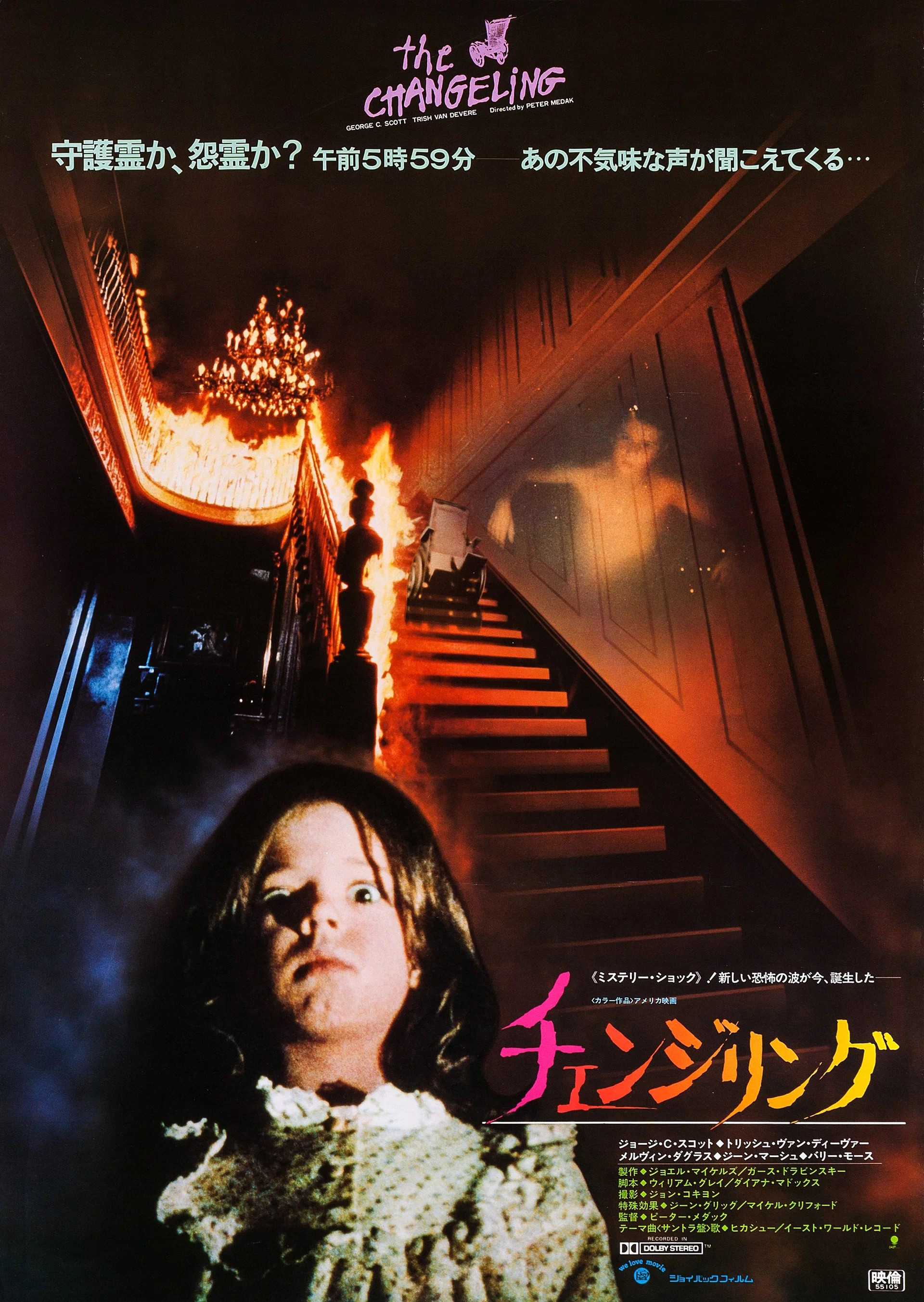
Medak relied heavily on physical movement and carefully staged practical effects. The wheelchair’s unexplained motion, opening doors, moving objects and the returning ball establish supernatural activity through recognizable materials. Their apparent simplicity is important because the audience can identify the objects and understand how they should behave. The disturbance arises from their violation of ordinary physical expectations. The staircase becomes especially prominent because it allows an object to enter the frame through repeated movement, creating tension before the source of that movement can be established. The final destruction of the mansion increases the physical scale of the supernatural events without abandoning the building’s established geography.
The film also uses changes in pacing to distinguish investigation from direct manifestations of the haunting. Editors Lilla Pedersen and Lou Lombardo organize extended periods of observation around brief incidents that alter John’s understanding of the house. The séance is particularly effective because the camera remains attentive to the medium’s behavior and the reactions of witnesses. In his contemporary Washington Post review, Gary Arnold identified the automatic-writing sequence and the subsequent playback of its recording as especially successful examples of atmospheric horror. The film’s effects consequently depend upon editing, performance and sound as much as upon mechanically manipulated objects.
Music, Sound & Supernatural Communication
Music is unusually important to The Changeling because its protagonist is a professional composer. John’s performances and attempts to work at the piano give musical activity a recognizable place within the narrative. Rick Wilkins received the principal screen credit for the original score, while Kenneth Wannberg contributed to its musical realization. Their work supports the film’s movement between private grief, historical investigation and supernatural confrontation. The soundtrack also incorporates performances associated with classical concert music, connecting John’s professional identity to the wider musical environment represented by the film.
The central music-box melody was composed separately by Howard Blake. On his official website, Blake recalled that Medak originally intended him to compose the entire score, but the larger assignment subsequently went to musicians working in Canada. Blake created the theme first for celesta and then developed it into a complete piano composition. He also recorded a concert version in London, although that particular performance was not used in the finished film. The composition became associated with the mysterious music box discovered during John’s investigation, allowing a short melodic figure to acquire significance as evidence of the child’s concealed history.
The soundtrack’s treatment of supernatural activity frequently depends upon environmental sound rather than continuous musical emphasis. Repeated impacts, footsteps, moving furniture and changes in the apparent acoustics of the mansion suggest the presence of an unseen occupant. The recording discovered after the séance gives this approach a narrative function, because a voice becomes audible only when John examines material preserved on tape. The film’s sound department included Austin Grimaldi, Karl Scherer, James Pilcher, Joe Grimaldi and Dino Pigat. Its construction of a haunting through objects and sounds contributes to the tension between John’s professional familiarity with music and his increasing inability to explain what he hears.
Release, Reception & Restoration
The Changeling entered North American theatrical distribution on 28 March 1980, following an early festival presentation in Dallas. Associated Film Distribution handled its American release, while Canadian distribution involved Pan-Canadian Film Distributors. The film received an R classification in the United States and ran approximately 107 minutes. Its production budget has been reported at approximately $6.6 million, with historical accounts placing theatrical receipts around $12 million. These estimates concern the original commercial period and should not be confused with later home-video revenue or independently audited worldwide totals. The film became an unusually successful Canadian production during an era when tax incentives supported numerous features designed for international audiences.
Contemporary reviews acknowledged its visual sophistication but differed over the plausibility of the mystery. In The Washington Post, Gary Arnold praised the careful staging, cinematography and production design while finding several narrative developments unintentionally amusing. He nevertheless regarded the recurring red ball, the wheelchair and the séance as memorable supernatural incidents. The Canadian Film Encyclopedia likewise records a mixed original reception, contrasting that response with the film’s considerable domestic industry recognition and subsequent popularity. These assessments distinguish the craftsmanship of its haunted-house sequences from disagreements over the credibility of the story’s eventual explanation.
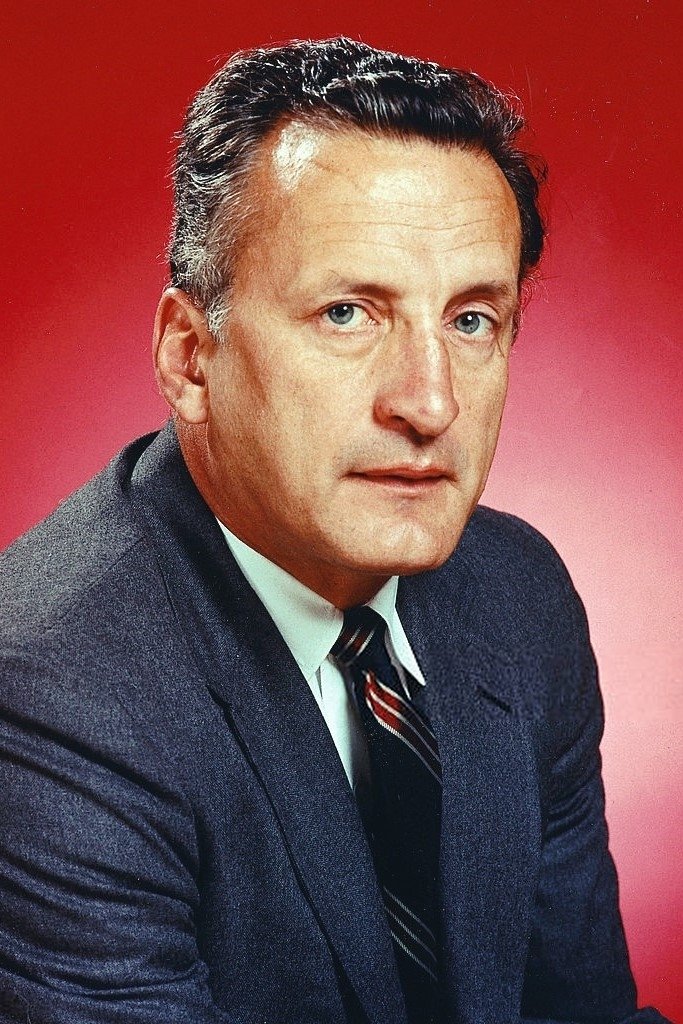
At the inaugural Genie Awards in 1980, The Changeling received nine awards, including Best Motion Picture, Adapted Screenplay, Cinematography, Art Direction and honors for George C. Scott and Trish Van Devere. It also received the Golden Reel Award associated with box-office performance. The recognition established its importance within contemporary Canadian cinema and contributed to the professional standing of producers Garth H. Drabinsky and Joel B. Michaels. The film’s use of Vancouver as Seattle has subsequently attracted historical attention as an early example of the region’s growing role in international screen production.
Its reputation within supernatural horror strengthened through television, home-video circulation and later restorations. Severin Films issued a restored Blu-ray edition in 2018, followed by a 4K Ultra HD release in 2022 using a scan of an internegative. The editions included interviews with Medak, members of the production team and specialists examining the story’s alleged paranormal origins. Retrospective attention has particularly emphasized the film’s controlled atmosphere and the emotional force of Scott’s performance. Its importance to haunted-house cinema is closely associated with the use of simple objects, recorded voices and domestic architecture to suggest a supernatural presence whose motives emerge gradually through investigation.