
01.01
Episode 1
Episode synopsis not yet available.
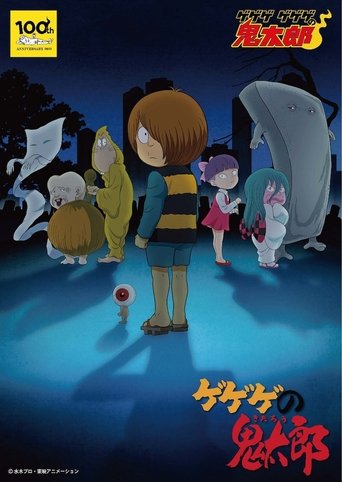
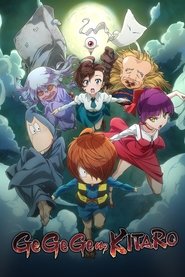
Kitarou, a ghost, spends his afterlife helping humans in need of his skills by thwarting the plans of evil spirits who live to torment humanity. A manga series created in 1959 by manga artist Shigeru Mizuki, Cackling Kitarou is best known for its popularization of the folklore creatures known as yōkai, a class of spirit-monster to which all of the main characters belong. It has been adapted for the screen several times, as anime, live action and video games. A new anime series has been made every decade since 1968. The title of the original story is Hakaba no Kitarō, literally meaning "Kitarō Graveyard". This story was an early 20th-century Japanese folk tale performed on kamishibai. The name "Ge Ge Ge..." was applied to Mizuki's particular telling of the Kitarō story when a Toei Animation series based on the characters of his comic was created. In January, 2008, the original comic was finally adapted into an animated series, running in Fuji TV's noitaminA slot.
Explore episode plots and credits without leaving this series page.

Episode synopsis not yet available.
Episode synopsis not yet available.
Episode synopsis not yet available.
Episode synopsis not yet available.
Episode synopsis not yet available.
Episode synopsis not yet available.
Episode synopsis not yet available.
Episode synopsis not yet available.
Episode synopsis not yet available.
Episode synopsis not yet available.
Episode synopsis not yet available.
Episode synopsis not yet available.
Episode synopsis not yet available.
Episode synopsis not yet available.
Episode synopsis not yet available.
Episode synopsis not yet available.
Episode synopsis not yet available.
Episode synopsis not yet available.
Episode synopsis not yet available.
Episode synopsis not yet available.
Episode synopsis not yet available.
Episode synopsis not yet available.
Episode synopsis not yet available.
Episode synopsis not yet available.
Episode synopsis not yet available.
Episode synopsis not yet available.
Episode synopsis not yet available.
Episode synopsis not yet available.
Episode synopsis not yet available.
Episode synopsis not yet available.
Episode synopsis not yet available.
Episode synopsis not yet available.
Episode synopsis not yet available.
Episode synopsis not yet available.
Episode synopsis not yet available.
Episode synopsis not yet available.
Episode synopsis not yet available.
Episode synopsis not yet available.
Episode synopsis not yet available.
Episode synopsis not yet available.
Episode synopsis not yet available.
Episode synopsis not yet available.
Episode synopsis not yet available.
Episode synopsis not yet available.
Episode synopsis not yet available.
Episode synopsis not yet available.
Episode synopsis not yet available.
Episode synopsis not yet available.
Episode synopsis not yet available.
Episode synopsis not yet available.
Episode synopsis not yet available.
Episode synopsis not yet available.
Episode synopsis not yet available.
Episode synopsis not yet available.
Episode synopsis not yet available.
Episode synopsis not yet available.
Episode synopsis not yet available.
Episode synopsis not yet available.
Episode synopsis not yet available.
Episode synopsis not yet available.
Episode synopsis not yet available.
Episode synopsis not yet available.
Episode synopsis not yet available.
Episode synopsis not yet available.
Episode synopsis not yet available.
Episode synopsis not yet available.
Episode synopsis not yet available.
Episode synopsis not yet available.
Episode synopsis not yet available.
Episode synopsis not yet available.
Episode synopsis not yet available.
Episode synopsis not yet available.
Episode synopsis not yet available.
Episode synopsis not yet available.
Episode synopsis not yet available.
Episode synopsis not yet available.
Episode synopsis not yet available.
Episode synopsis not yet available.
Episode synopsis not yet available.
Episode synopsis not yet available.
Episode synopsis not yet available.
Episode synopsis not yet available.
Episode synopsis not yet available.
Episode synopsis not yet available.
Episode synopsis not yet available.
Episode synopsis not yet available.
Episode synopsis not yet available.
Episode synopsis not yet available.
Episode synopsis not yet available.
Episode synopsis not yet available.
Episode synopsis not yet available.
Episode synopsis not yet available.
Episode synopsis not yet available.
Episode synopsis not yet available.
Episode synopsis not yet available.
Episode synopsis not yet available.
Episode synopsis not yet available.
Episode synopsis not yet available.
Episode synopsis not yet available.
Episode synopsis not yet available.
Episode synopsis not yet available.
Episode synopsis not yet available.
Episode synopsis not yet available.
Episode synopsis not yet available.
Episode synopsis not yet available.
Episode synopsis not yet available.
Episode synopsis not yet available.
Episode synopsis not yet available.
Episode synopsis not yet available.
Episode synopsis not yet available.
Episode synopsis not yet available.
Episode synopsis not yet available.
Episode synopsis not yet available.
Episode synopsis not yet available.
The 1996–1998 fourth television adaptation returns Shigeru Mizuki's yōkai mythology to darker folklore while marking an early transition from cel coloring to digital production.
GeGeGe no Kitarō (1996–1998), also circulated internationally under the English title Cackling Kitarou, is the fourth Japanese television anime adaptation of Shigeru Mizuki's supernatural manga. Broadcast on Fuji Television for 114 episodes, the series revisits a world where yōkai occupy forests, abandoned places, shrines, and other spaces that modern society tends to overlook. Its central figure, Kitarō, is the surviving boy of the Ghost Tribe, accompanied by his father Medama-oyaji and a circle of supernatural companions. The stories repeatedly place him between frightened humans and creatures whose anger may have been provoked by human intrusion.
Produced by Toei Animation under series director Daisuke Nishio, this adaptation made a deliberate return to Mizuki's eerie folklore after the more action-oriented third television incarnation of 1985–1988. Its historical significance also extends to television-animation production: beginning with episode 64, the series adopted computer-based coloring in place of traditional cel coloring. Toei identifies the change as a pioneering step toward digital Japanese television anime. The contrast between its renewed interest in old ghost stories and this mid-run technical change gives the 1996 version a distinct position within the franchise.
The character's path to the 1996 series began decades earlier. Mizuki developed Kitarō through kamishibai storytelling and rental manga, drawing on earlier Japanese ghost narratives before the character reached television in 1968. The Shigeru Mizuki Memorial Museum traces the boy's unusual origins to a surviving member of an ancient ghostly people, born after his mother's burial and watched over by a father reduced to a single eye. That background underlies the later television adventures even when they shift the emphasis toward helping humans. By 1996, three distinct anime productions had already explored different balances of horror, comedy, and adventure.
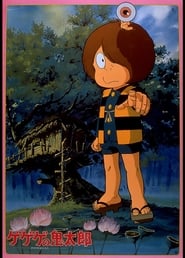
The third series, launched in 1985, had presented a more overtly heroic Kitarō and introduced the human girl Yumeko as a conspicuous recurring presence. Toei's retrospective describes the fourth version as an intentional return to the atmosphere of Mizuki's comics, with the designs and behavior of the monsters once again central to the experience. Nishio served as series director within a production made for Fuji Television and Yomiko Advertising. The writing staff included Junki Takegami, Hiroshi Hashimoto, Shun'ichi Yukimuro, and others, while novelist Natsuhiko Kyōgoku, whose fiction was strongly influenced by Mizuki, was also brought into the series' original storytelling.
The fourth adaptation uses conflict over territory as one of its foundations. Humans expand into woods, fill in wetlands, or disturb sites with religious and supernatural associations; yōkai respond because places they inhabited or guarded have been damaged. The resulting attacks can appear inexplicable to the people involved. Kitarō's position is consequently complicated. He is a yōkai himself, and his interventions recognize the existence of grievances on the supernatural side, but he also rejects the indiscriminate punishment of ordinary people. The broadcaster's description explicitly frames his actions around the possibility of coexistence between the two worlds.
That structure places environmental disruption alongside a more traditional repertoire of Japanese ghost-story imagery. The uneasy distinction between a dangerous monster and an aggrieved resident of the landscape prevents the premise from becoming a simple catalog of creatures to defeat. Mizuki's world accommodates deceptive spirits, supernatural punishment, apparitions, and alliances among beings whose motives differ considerably. Comedy remains part of its texture, particularly through the opportunistic Nezumi-otoko, but the production's stated return to its source material gives room to uncanny encounters and to the fear produced by forgotten obligations toward places and their unseen inhabitants.
The first episode, 'Yōkai! Miage-nyūdō,' aired on January 7, 1996. Its setting is a contemporary elementary school near a wooded hillside undergoing construction. Bulldozers and trucks destroy vegetation, alter a swamp, and crush a small shrine. Workers then vanish, and a girl who witnesses the disturbances is abducted by Miage-nyūdō, the supernatural figure angered by the damage. Her classmates appeal to Kitarō through the yōkai post, which summons him into an investigation that soon becomes physically dangerous. The Broadcasting Library preserves the episode's transmission details and its account of this introductory story.
The opening is unusually direct about the connection between the creature's violence and a human action. A damaged shrine functions as both a physical sign of desecration and the trigger for a supernatural emergency. Kitarō enters after the consequences have already reached the local community, so the narrative begins in the familiar register of missing persons and threatening incidents before identifying their folkloric cause. Across a long weekly run, the series could return to different entities and settings without requiring a single continuous mystery. Its supernatural framework supplies a recurring means of examining what happens when contemporary daily life encounters an older world.
The fourth production's visual identity was shaped by character designers and chief animation directors Shingo Araki and Michi Himeno, with art design by Mataji Urata. Contemporary broadcaster materials emphasize the decision to portray many yōkai closer to Mizuki's manga designs. One especially specific change concerns Nezumi-otoko's clothing, which was assigned the color associated with the original comic. Such choices matter in a long-running adaptation whose recognizable characters can otherwise acquire markedly different appearances from one generation of viewers to another. The return to earlier character designs accompanied the broader attempt to recover the work's supernatural tone.
The premiere provides a clear example of how that approach works within a modern setting. The elementary school and heavy construction machinery establish everyday spaces, while a neglected shrine and a rising dark presence introduce an incompatible visual order. The threatening figure of Miage-nyūdō, described in the broadcast archive as enlarging until even Kitarō is swallowed, makes human-scale surroundings seem suddenly fragile. These elements serve the series' ghost-story material through contrasts of scale, environment, and bodily danger. The design program thus supports the horror premise at the level of visible forms rather than relying solely on the characters' inherited cultural familiarity.
The production changed its coloring process partway through its run. According to Toei Animation's historical account, episode 64 marked the introduction of computer coloring in place of the conventional painted-cel method. Chiba Television's retrospective repeats that episode number and identifies the series with an early period of digital production in Japanese television animation. The transition is particularly notable because it happened within an existing weekly adaptation rather than as a complete visual relaunch of the property. The first portion and the later episodes therefore belong to different stages of the studio's transition between manufacturing methods.
Toei presents the change as a pioneering national milestone, while an account of the franchise's fiftieth-anniversary stage event in 2018 likewise singles out the 1996 series for its adoption of digital techniques. These sources establish the production's role in the industry's shift, although their descriptions are not a detailed technical breakdown of every stage of the animation pipeline. The specifically documented procedure is computer-based coloring, and it should be distinguished from an unsupported claim that the whole run was drawn digitally. The technological development sits alongside a more conservative artistic objective: preserving the atmosphere and creature iconography of an established folk-horror property.
The fourth version renewed the principal voice ensemble while preserving an important link with earlier productions. Yōko Matsuoka voiced Kitarō, Shigeru Chiba took the role of Nezumi-otoko, and Chinami Nishimura voiced Neko-musume. Isamu Tanonaka continued as Medama-oyaji, a role associated with him across the franchise's first five television incarnations. The supporting supernatural household included Sunakake-babaa, Konaki-jijii, Ittan-momen, and Nurikabe. Their sharply differentiated appearances and roles give the series a recurring set of responses to a world where yōkai can be antagonists, allies, or inconvenient companions.
Kaoru Wada composed the series' background music, while the blues group Yūkadan performed its opening and closing themes. The 1996 arrangement of the familiar 'GeGeGe no Kitarō' theme helped identify this television incarnation within a franchise that repeatedly returned to the same central song. The score and songs formed part of a weekly production that moved between supernatural menace and broad comic incident, but the surviving public credits provide limited information about individual scoring sessions or recording methods. The musical contribution is therefore most securely discussed through its documented personnel and the established theme-song tradition rather than an invented account of compositional techniques.
GeGeGe no Kitarō premiered on Sunday, January 7, 1996, in Fuji Television's 9:00–9:30 a.m. slot and concluded on March 29, 1998, after 114 episodes. The Broadcasting Library records the first program's duration as 23 minutes within its half-hour transmission. The series followed the 1985–1988 television incarnation and preceded another major remake in 2007. It belongs to a franchise whose versions should be cataloged as separate productions, because their casts, creative teams, aesthetics, and sometimes their treatment of recurring characters change. The 1996 adaptation's particular narrative and technical choices would otherwise disappear inside the chronology of the entire property.
Later institutional retrospectives have consistently identified two defining features of this fourth television production: the decision to make the yōkai stories unsettling again and the adoption of digital coloring during its broadcast. A 2018 fiftieth-anniversary presentation singled it out when reviewing the changing character of successive adaptations. Its place in horror animation is consequently tied both to a persistent Japanese storytelling tradition and to the methods by which that tradition was televised in the 1990s. The production offers a concrete record of an established supernatural series changing its manufacturing technology while restoring earlier elements of its fictional world.
The studio retrospective explains the fourth adaptation’s return to a yōkai-centered atmosphere, its use of novelist Natsuhiko Kyōgoku, the principal voices, and computer coloring introduced with episode 64.
The Japanese broadcast archive documents the original January 7, 1996 transmission, production credits, and the opening episode’s construction-site, destroyed-shrine, and Miage-nyūdō storyline.
A broadcaster retrospective details the intended return to Mizuki’s designs, Nezumi-otoko’s costume coloring, key creative personnel, the original premise, and the mid-series adoption of digital coloring.
The museum’s historical exhibition traces the character’s kamishibai and rental-manga origins and documents his Ghost Tribe background, birth narrative, and the development of different versions.
A March 2018 report from an anniversary presentation places the 1996–1998 adaptation among earlier television versions and identifies its darker yōkai tone and early digital animation techniques.


 Original
Spooky Kitaro
1968
 Franchise
Spooky Kitaro
1968
 Franchise
Cackling Kitarou
1971
 Franchise
Spooky Kitaro: The All Seeing Eye
1980
 Franchise
Monday Drama Land: Gegege no Kitaro
1985
 Franchise
Cackling Kitarou
1985
 Franchise
Gegege no Kitaro
1985
 Franchise
Gegege no Kitaro: The Great Yokai War
1986
 Franchise
Gegege no Kitaro: The Strongest Ghost Army! Landing in Japan!!
1986
 Franchise
Gegege no Kitaro: Clash!! The Great Rebellion of the Yokai from Another Dimension
1986
 Franchise
Gegege no Kitaro Yokai Kiden Mateki Elohim Essaim
1987
 Franchise
Gegege no Kitaro: The Great Sea Beast
1996
 Franchise
Gegege no Kitaro: Ghost Night Game
1997
 Franchise
Gegege no Kitaro: Yokai Express! The Phantom Train
1997
 Franchise
Spooky Kitaro
2007
 Franchise
Kitaro
2007
 Franchise
Graveyard Kitaro
2008
 Franchise
Kitaro and the Millennium Curse
2008
 Franchise
Gegege no Kitaro: Japan Explodes!!
2008
 Franchise
GeGeGe no Kitaro
2018
 Franchise
The Birth of Kitaro: The Mystery of GeGeGe
2023


