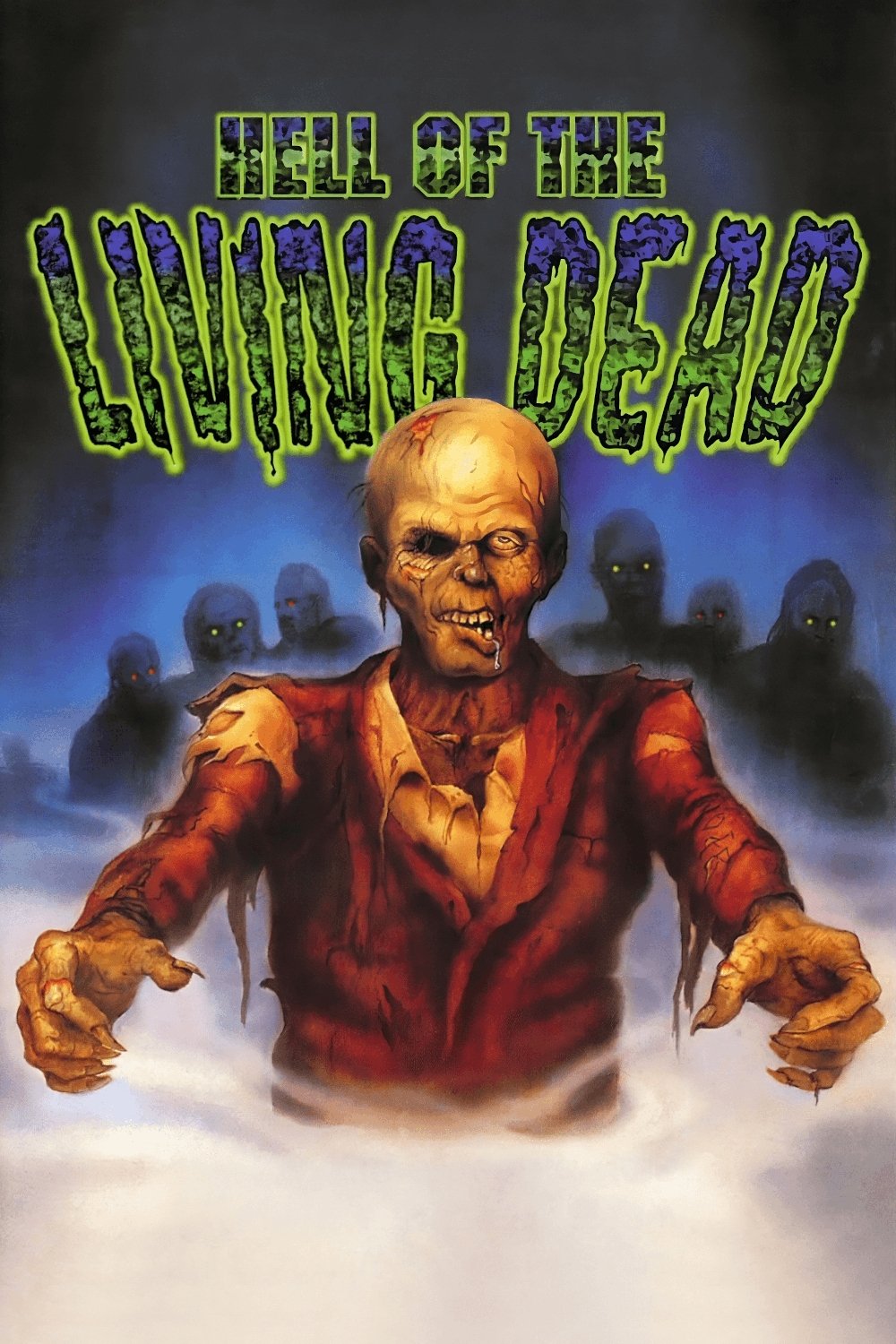
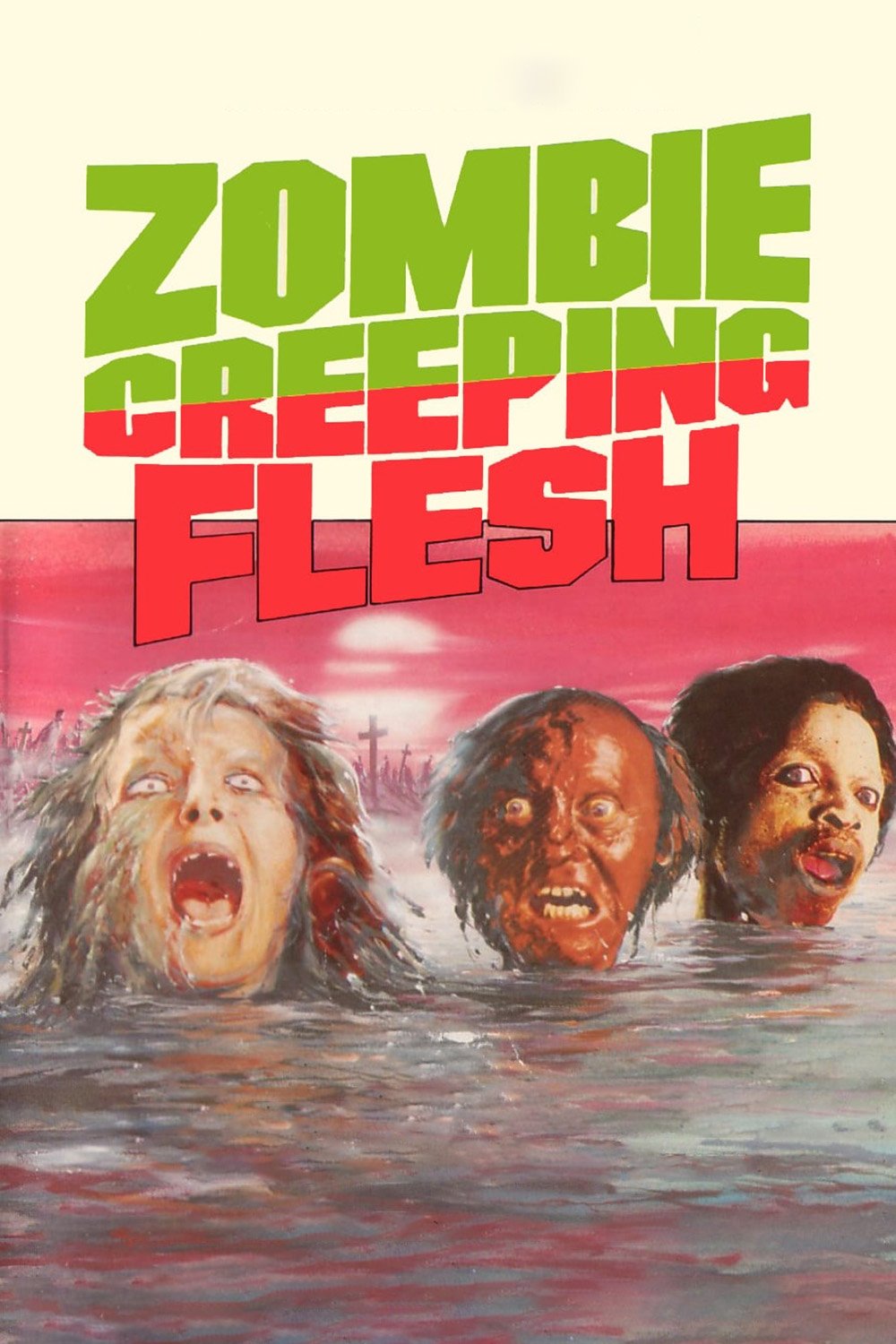
Hell of the Living Dead (1980)

IT
HORROR FILM Science Fiction
SUBGENRES SPLATTER ZOMBIE
UK censorship history DPP · Withdrawn / unsuccessful
4.3/10 3 votes
Runtime
99 min
Release
November 17, 1980
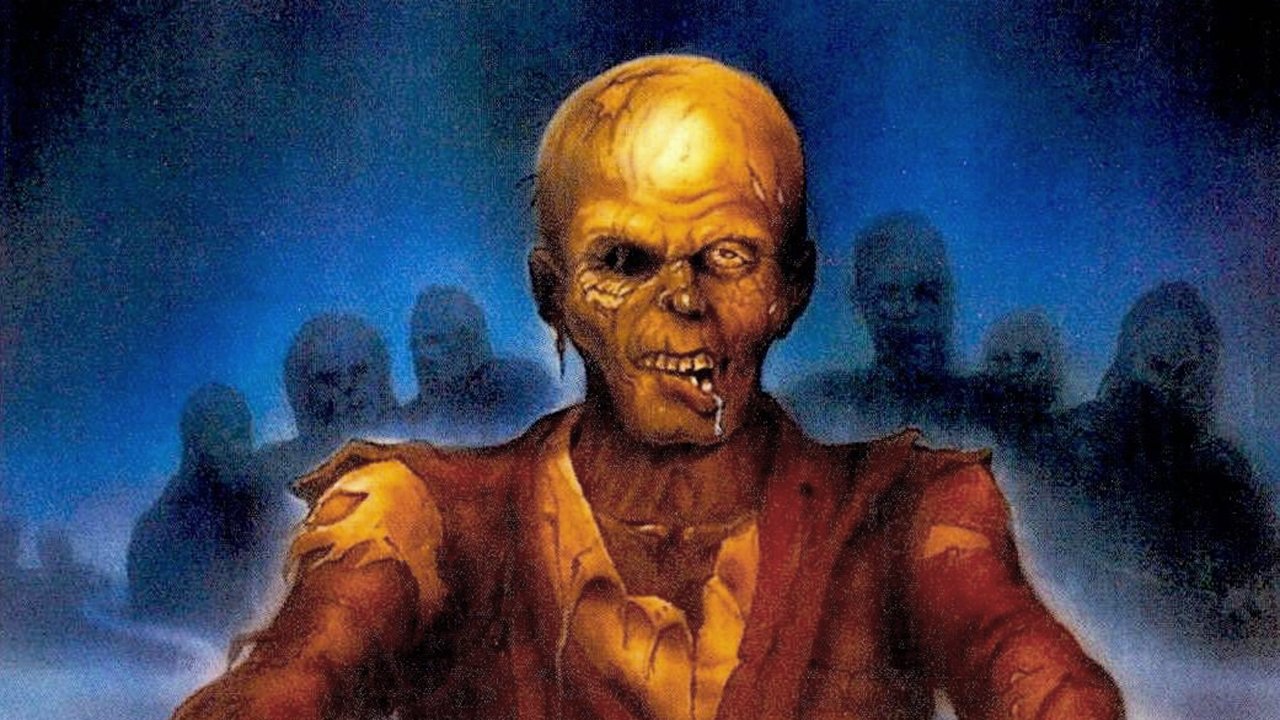
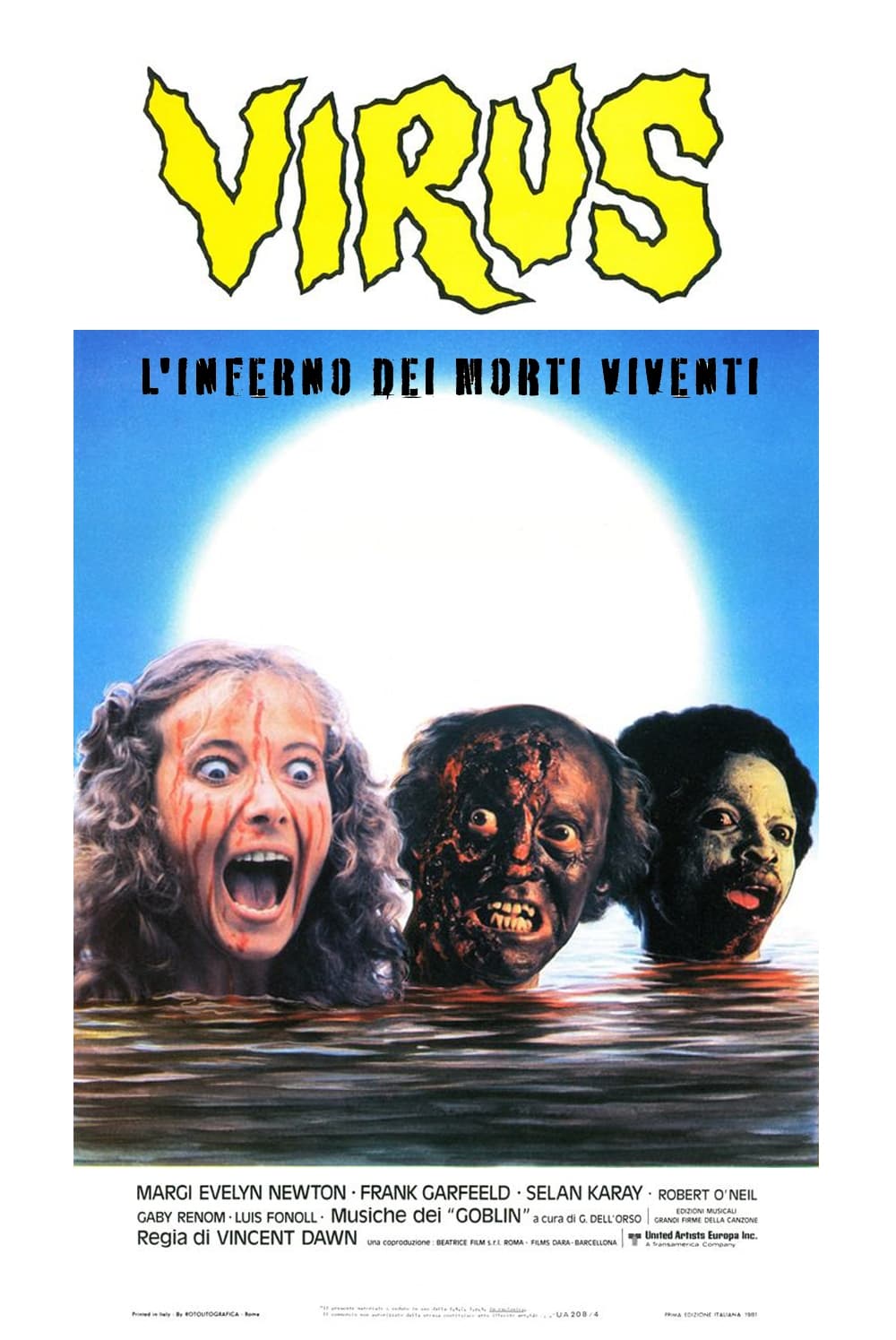
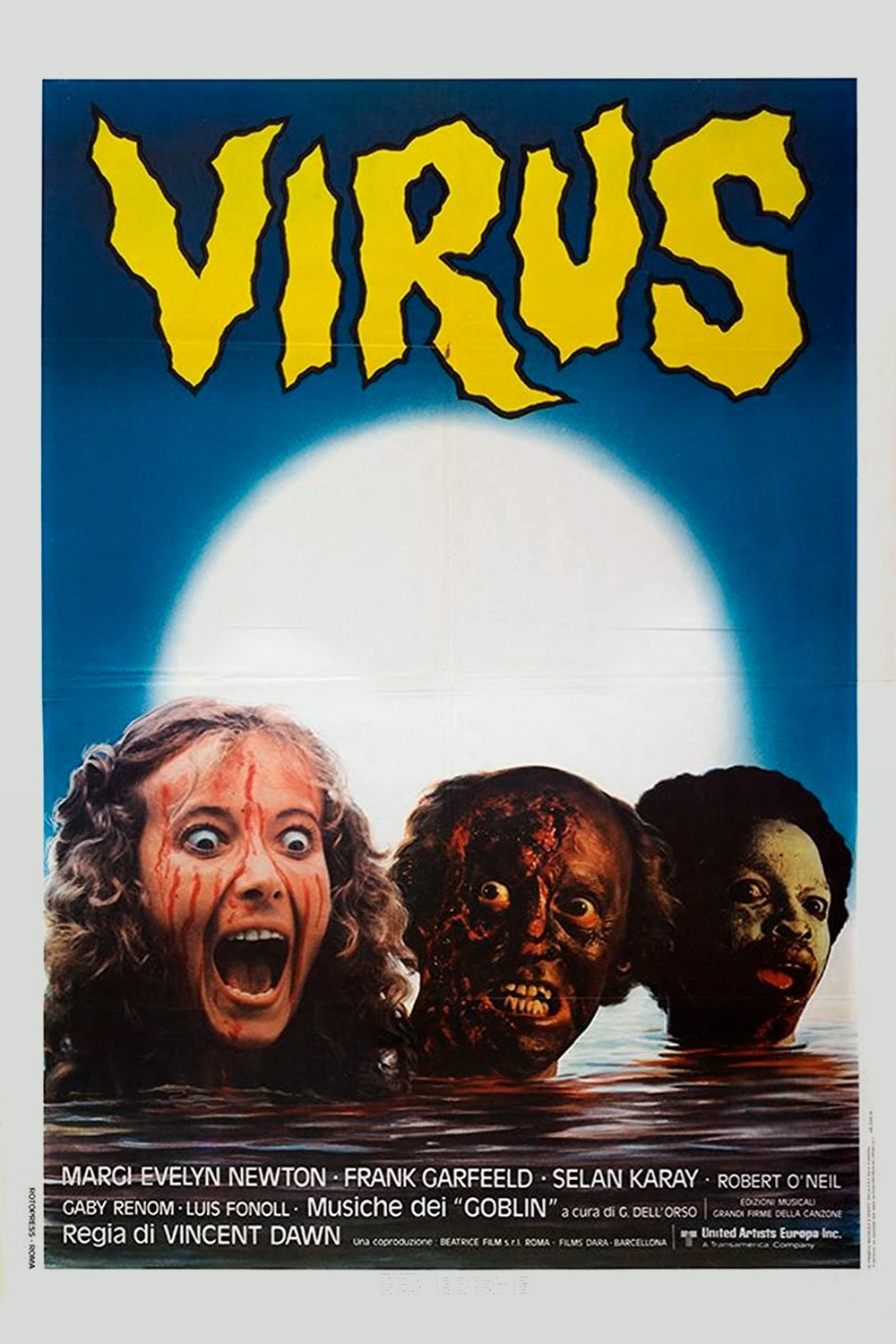
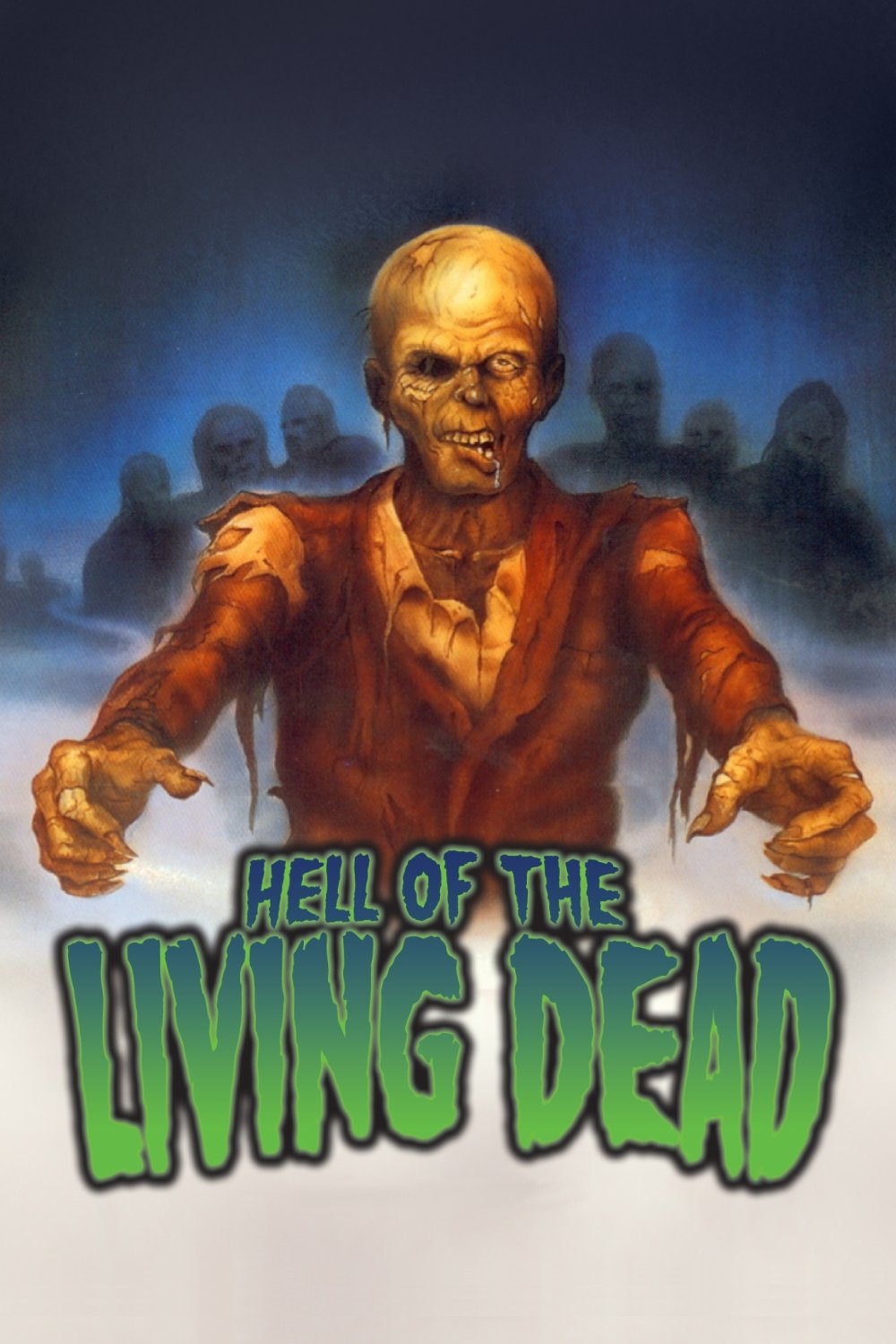
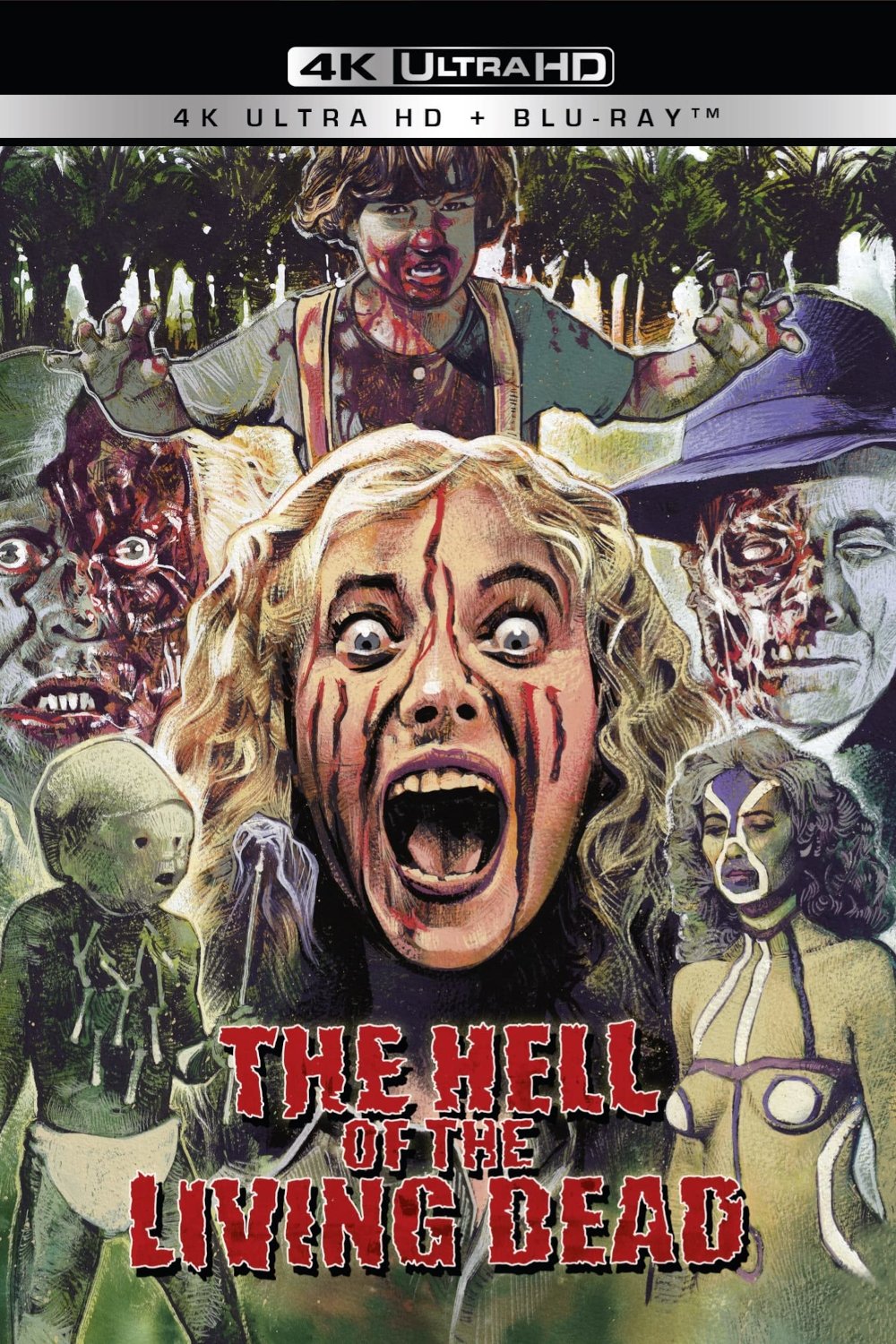
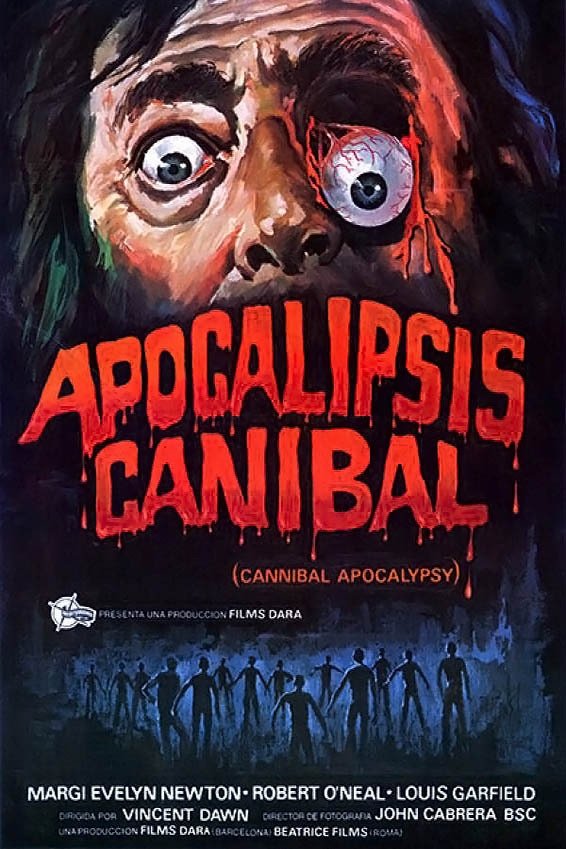
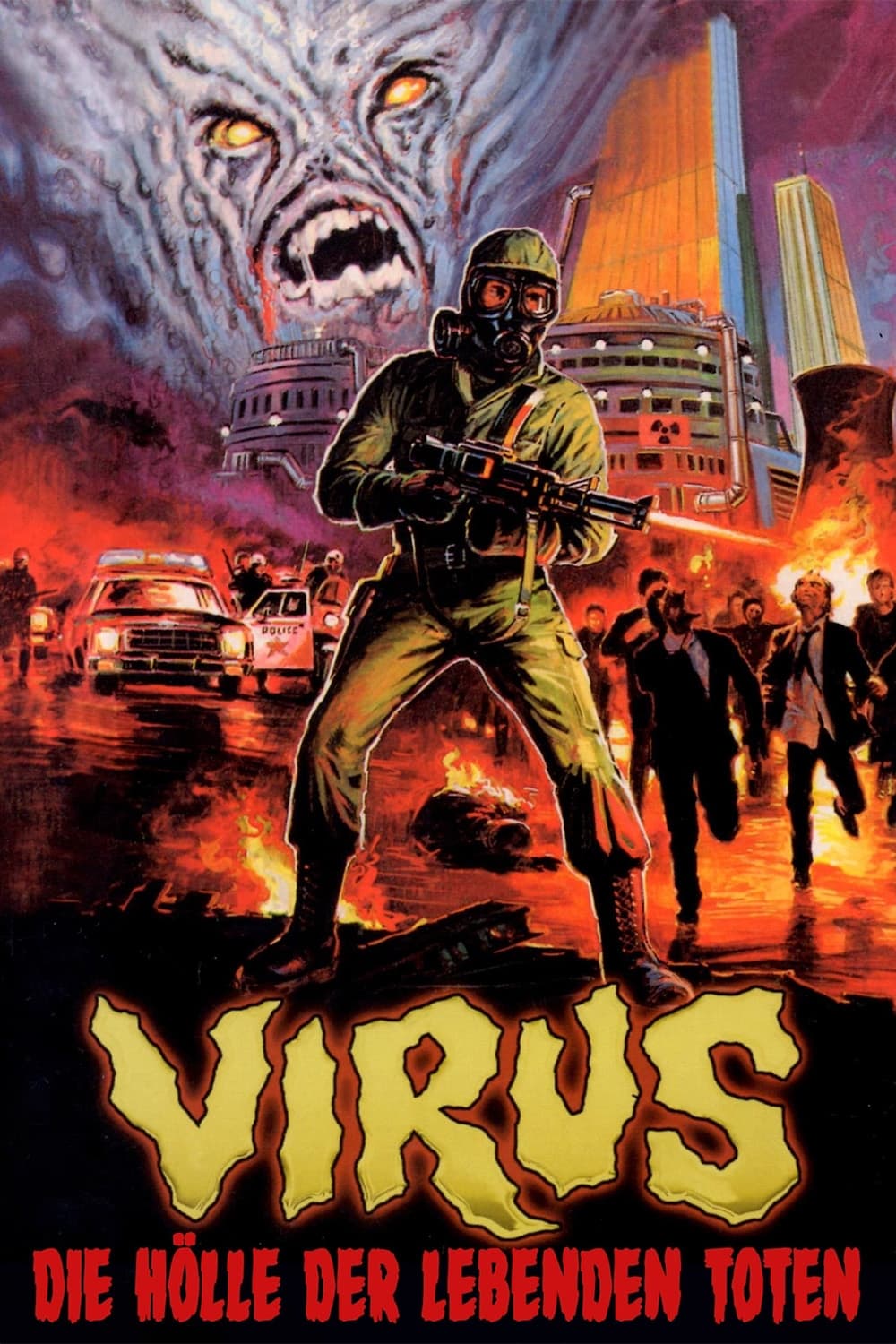
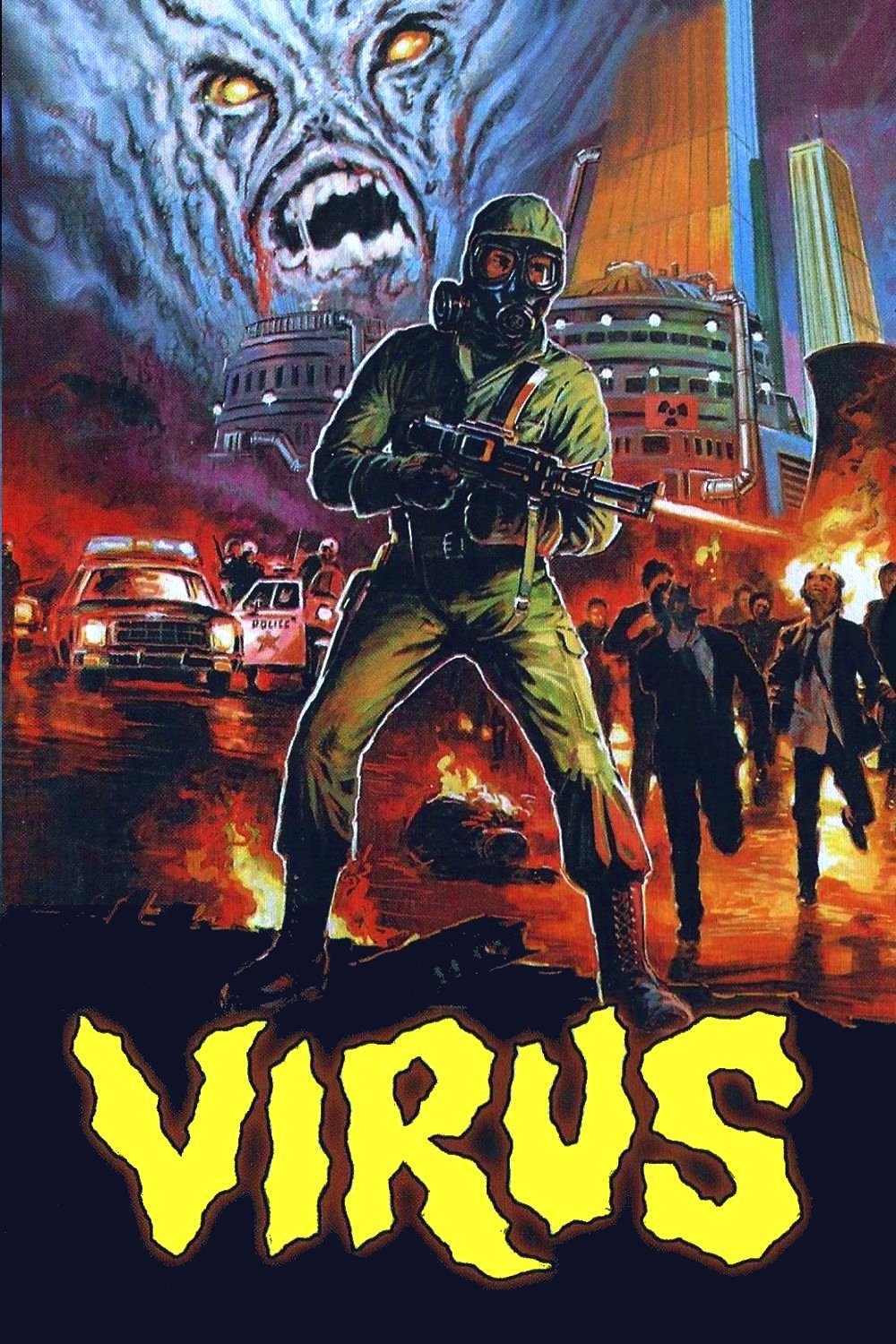
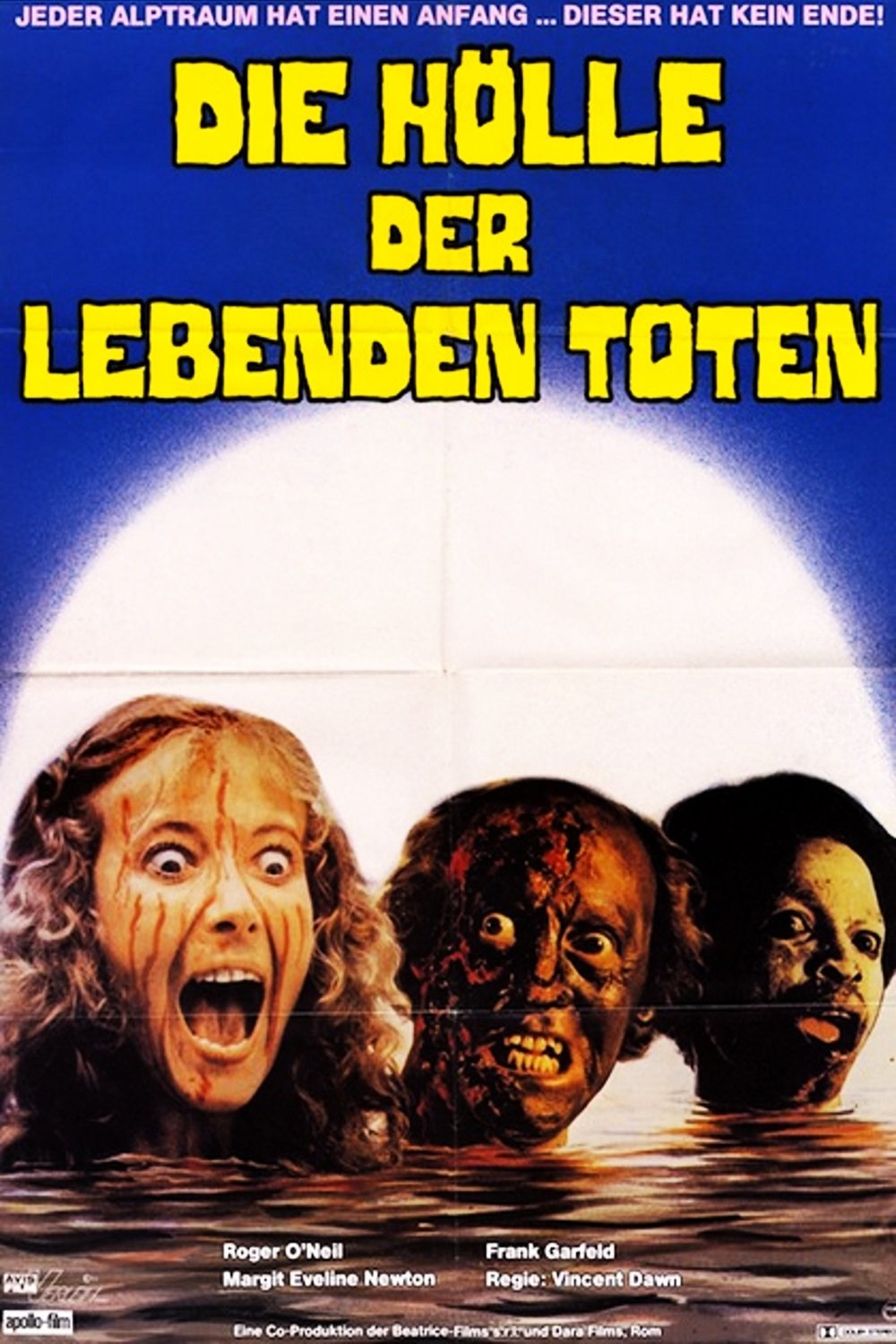
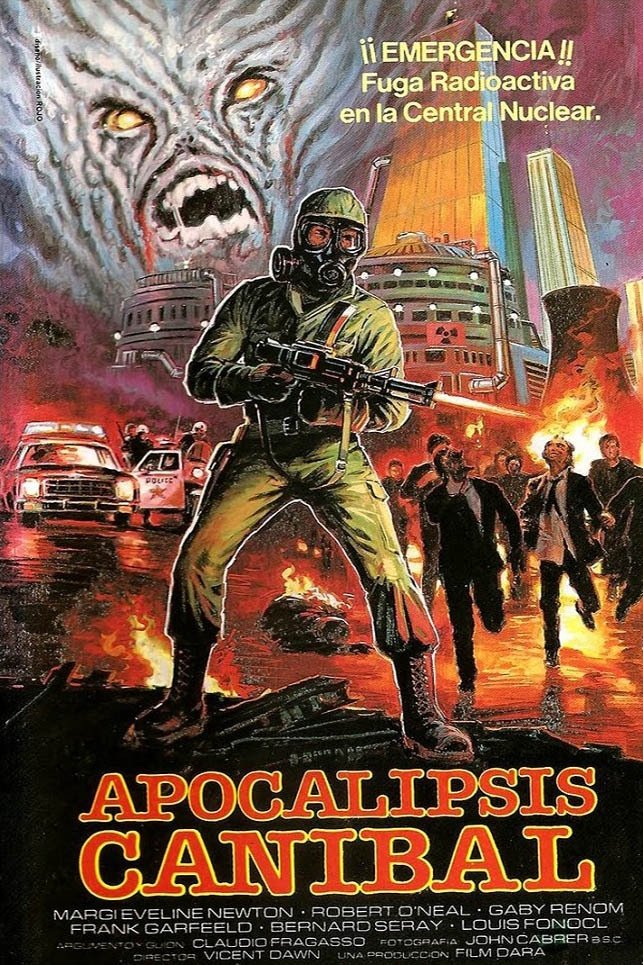
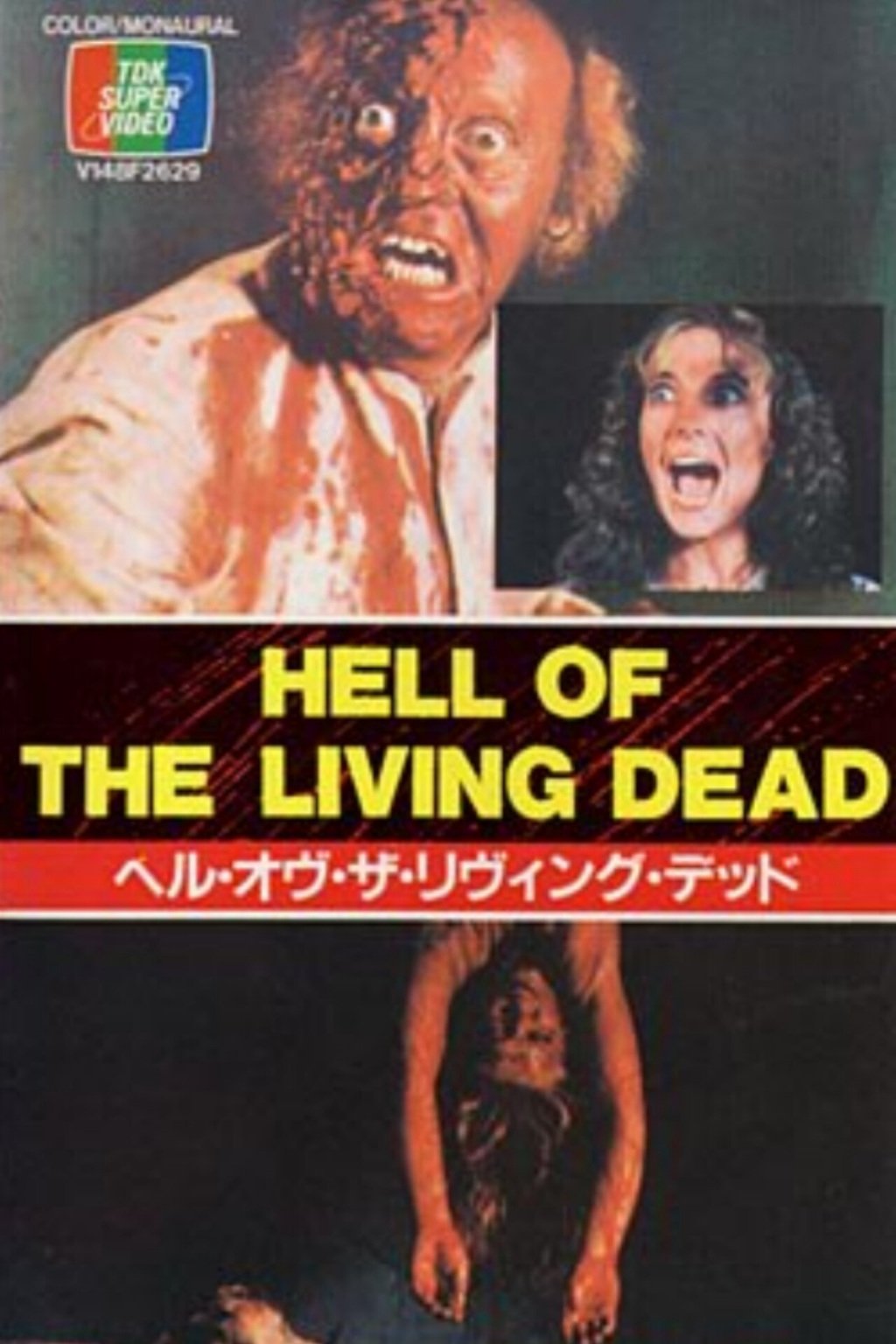
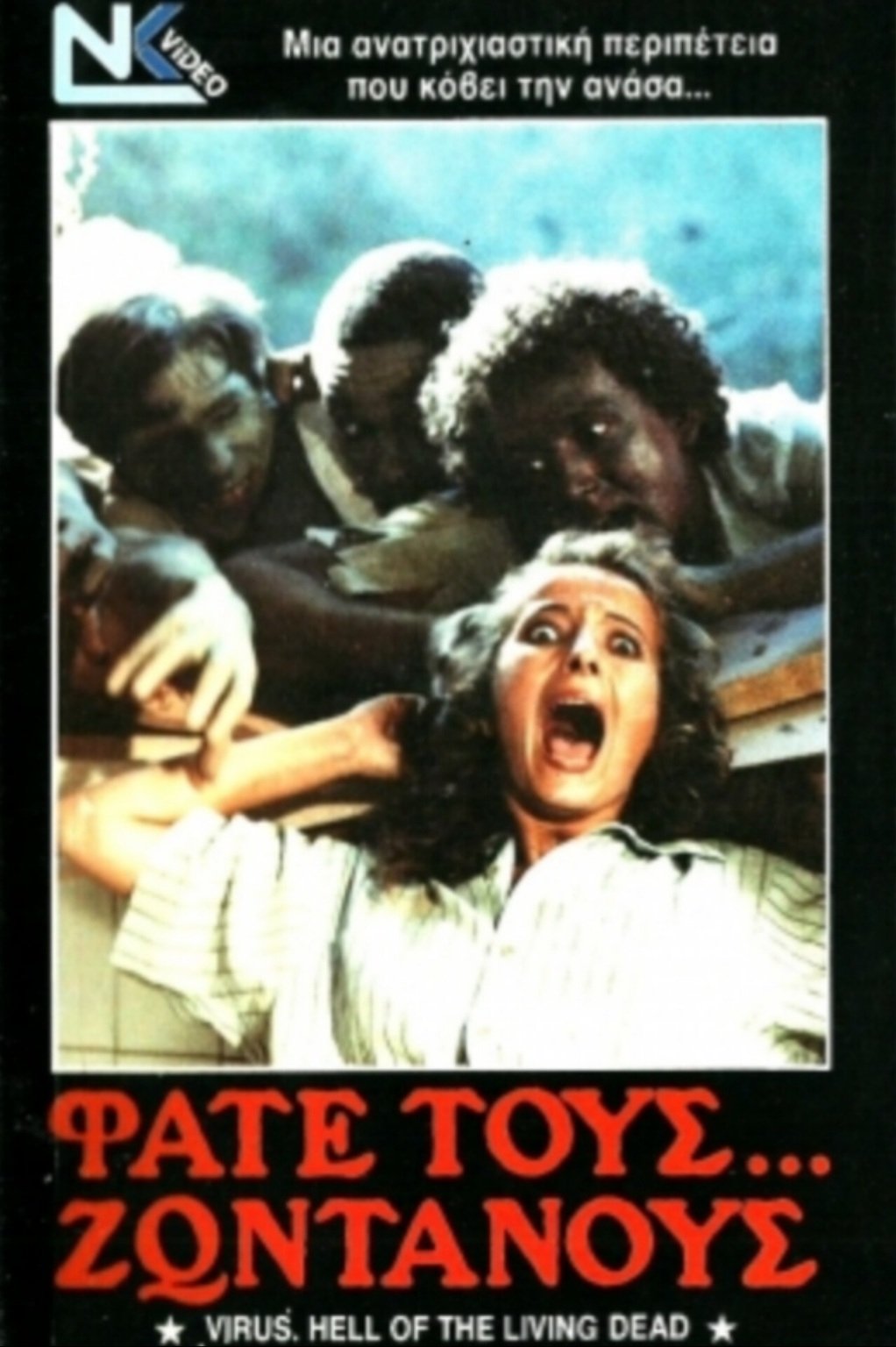
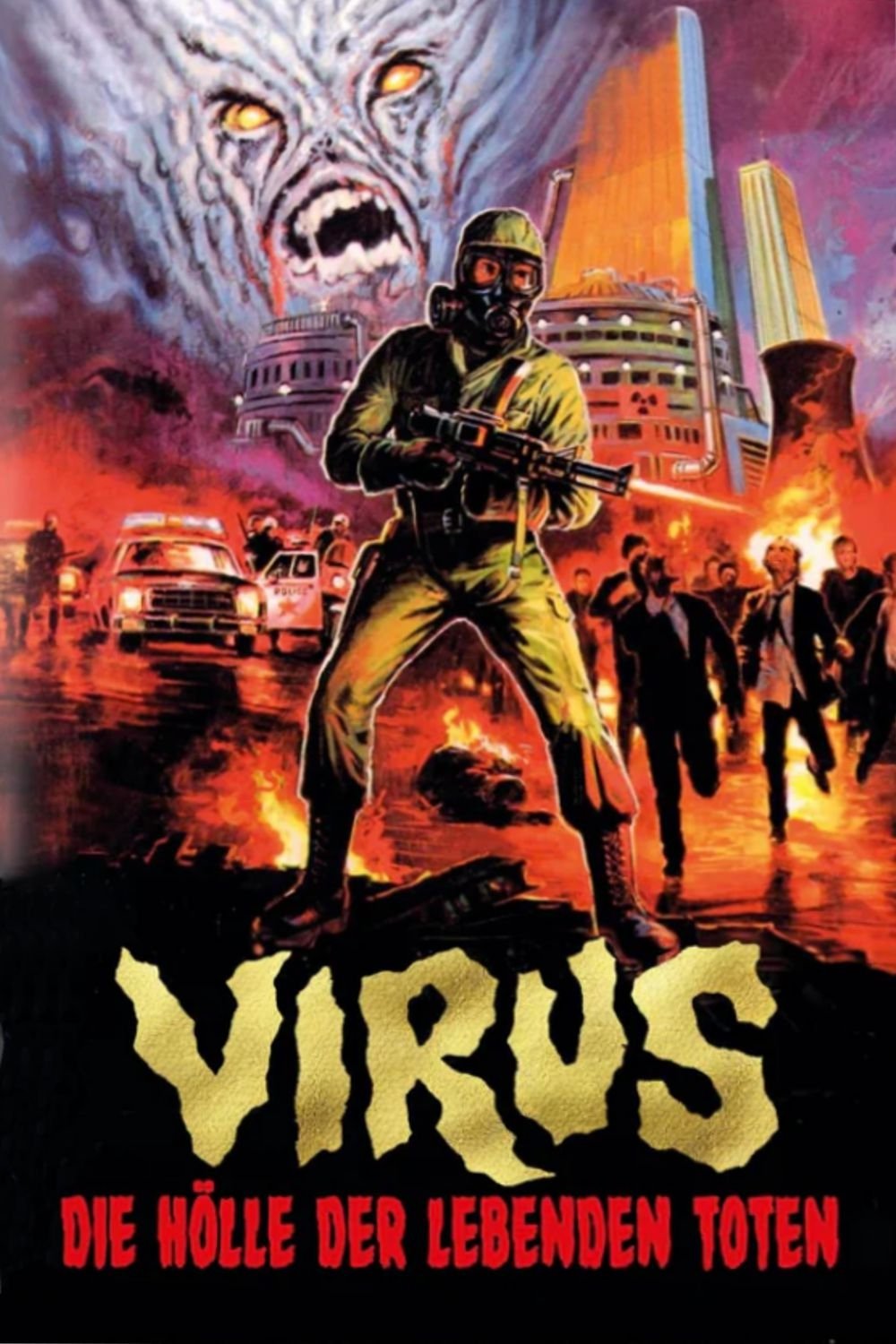
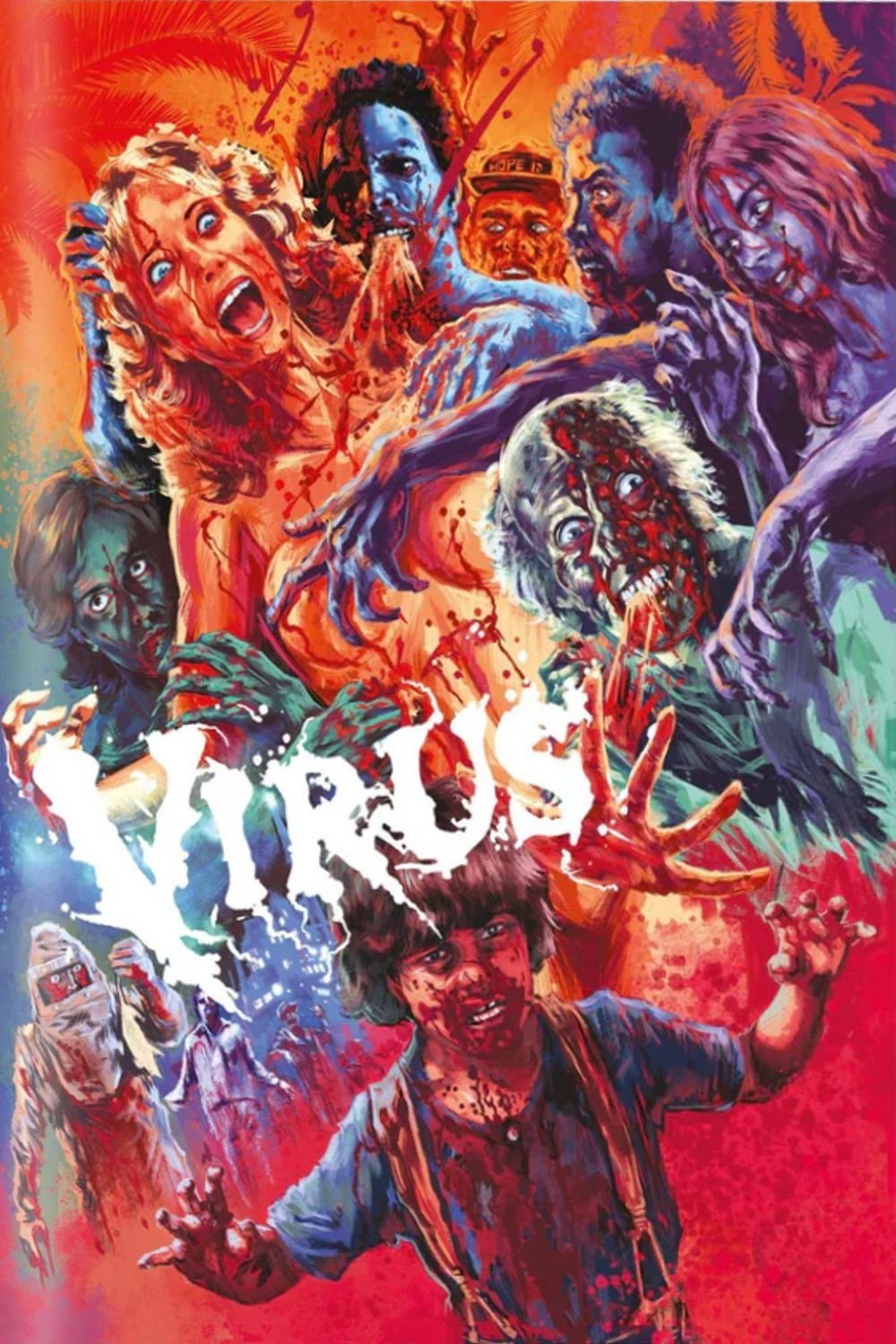
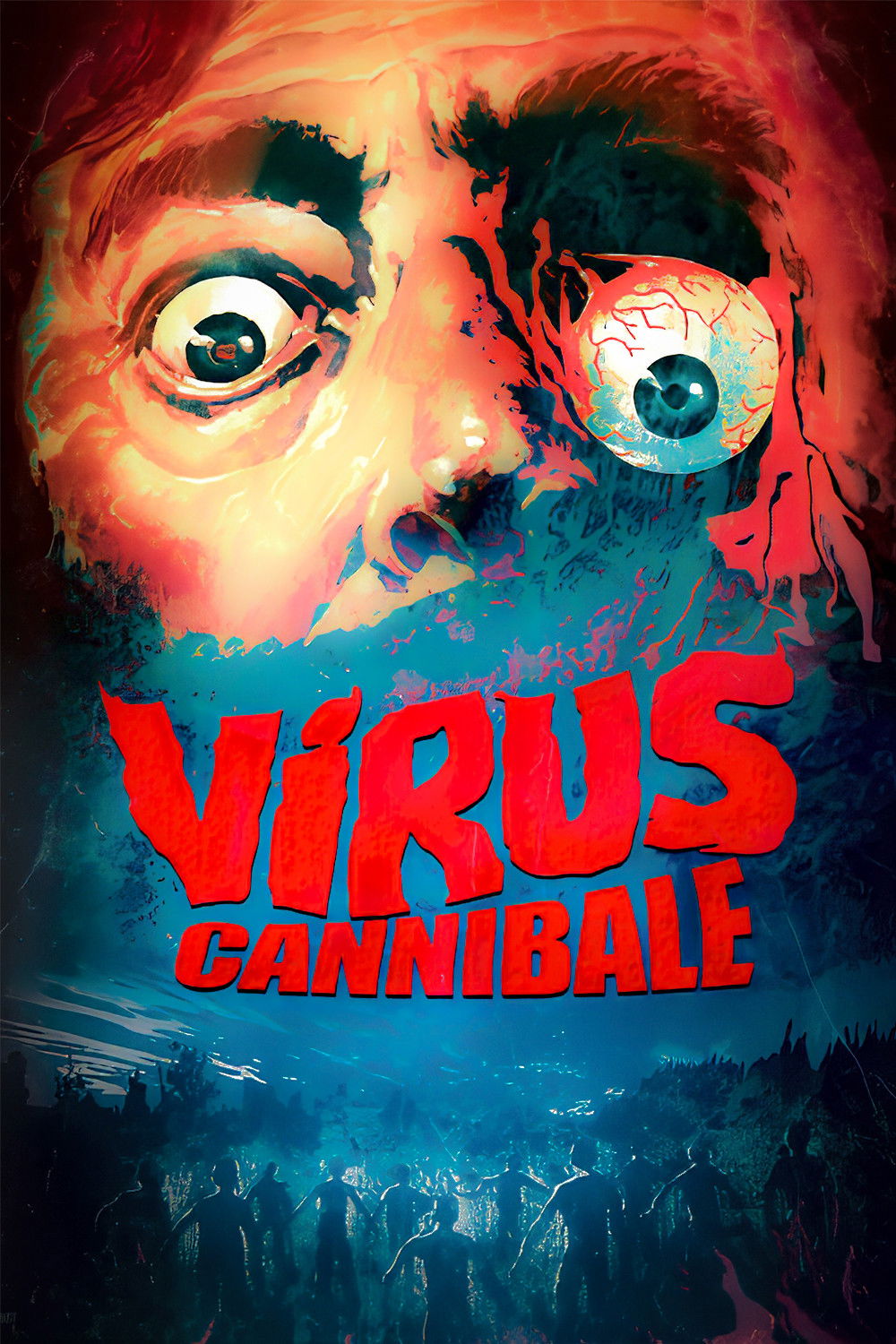
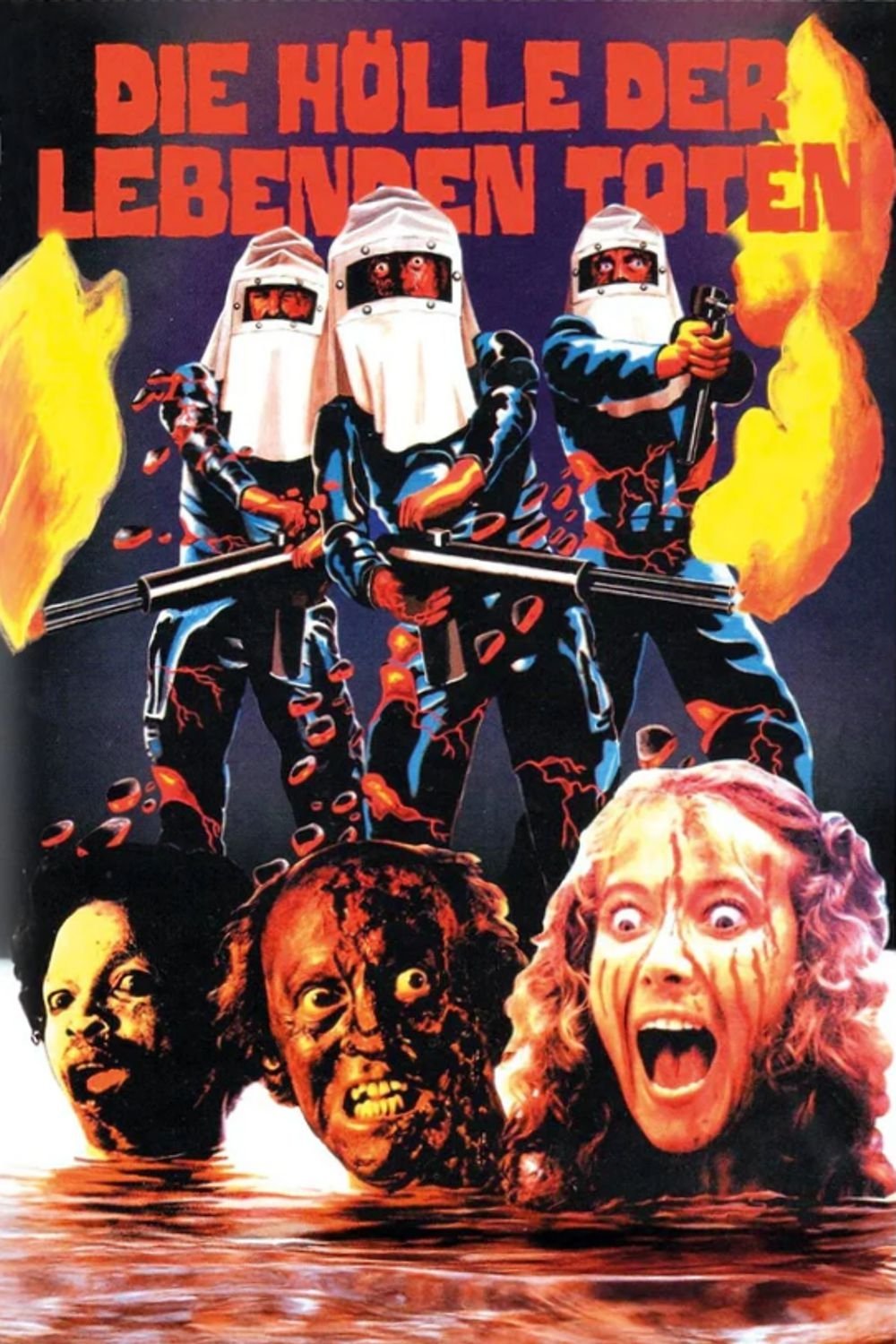
Hell of the Living Dead (1980) poster
Director
Production Companies
Films Dara , Beatrice Film
Plot

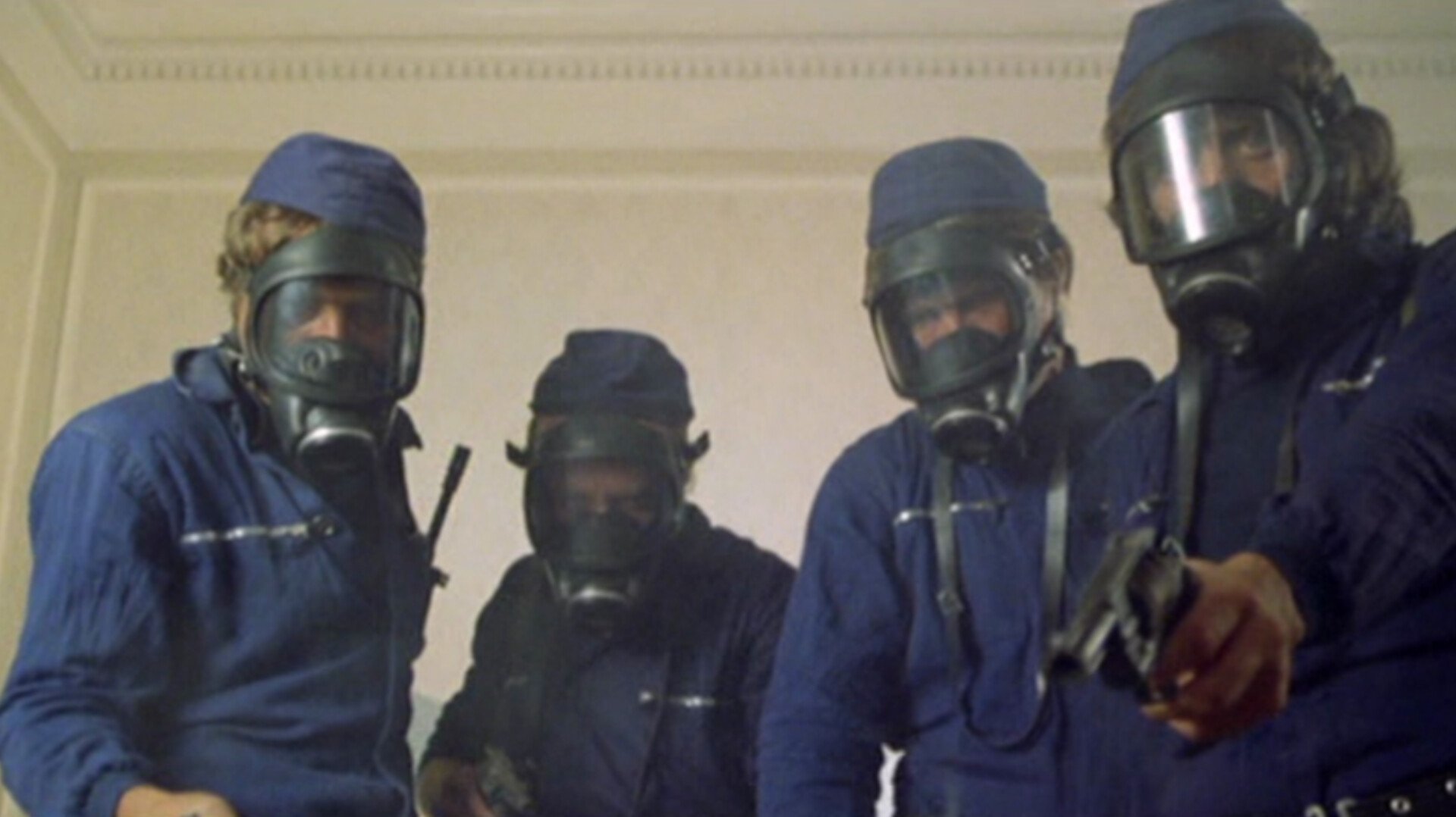
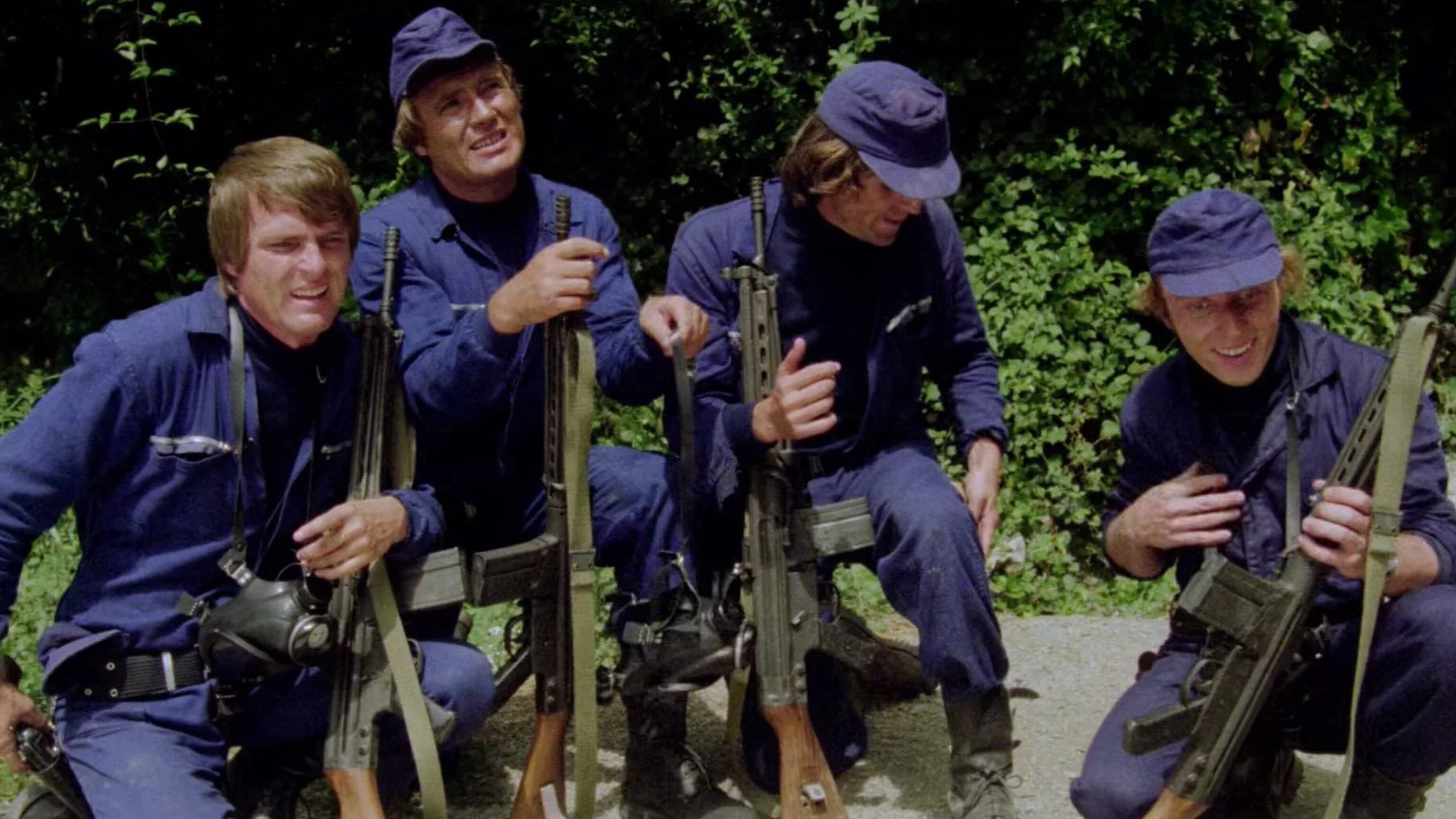
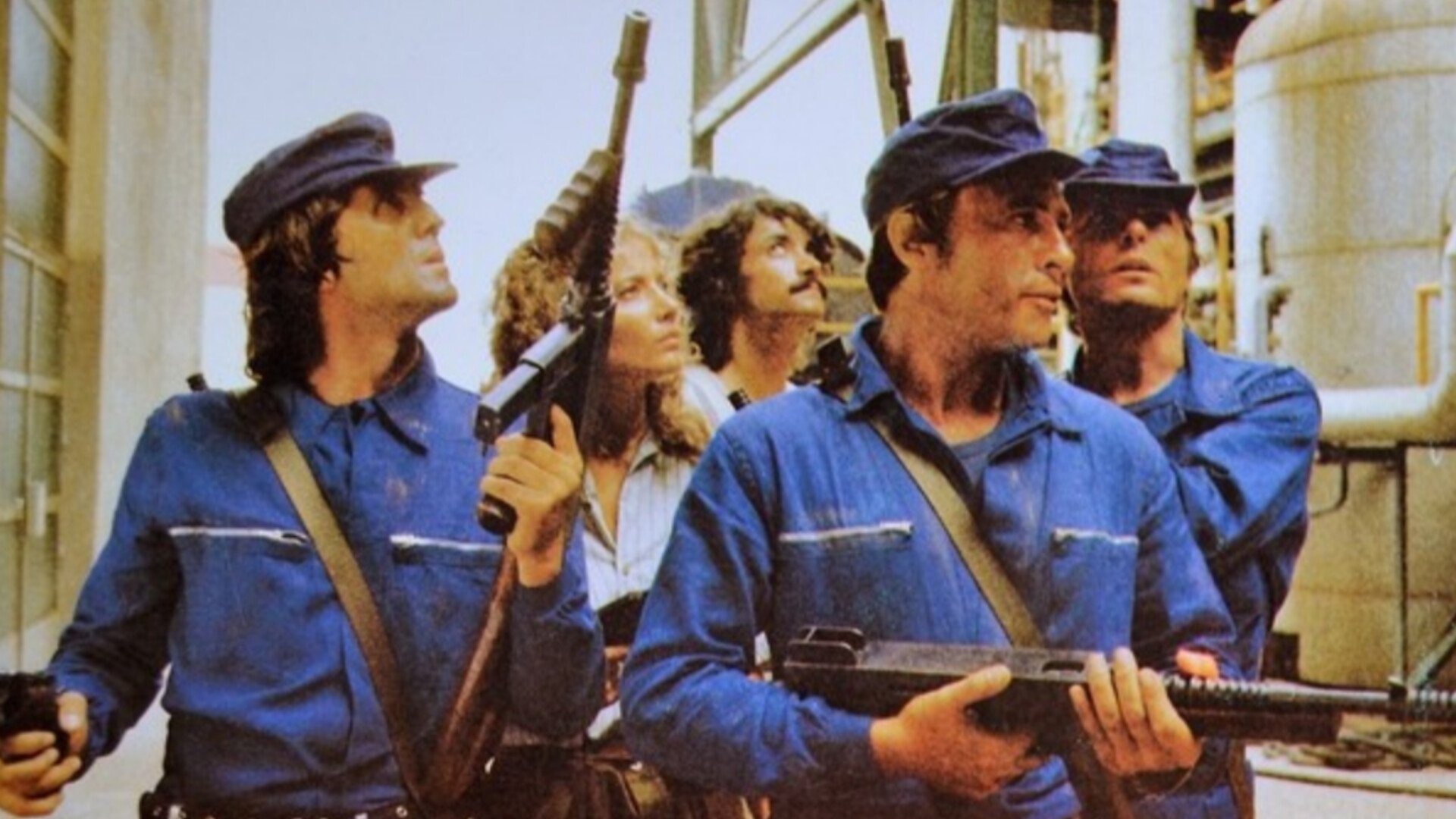
A tough female reporter and her cameraman boyfriend team up with a four-man commando unit in the New Guinea jungle whom are fighting flesh-eating zombies. NB: Not to be confused with the 1981 American-made film with the same title.

Alternative Titles
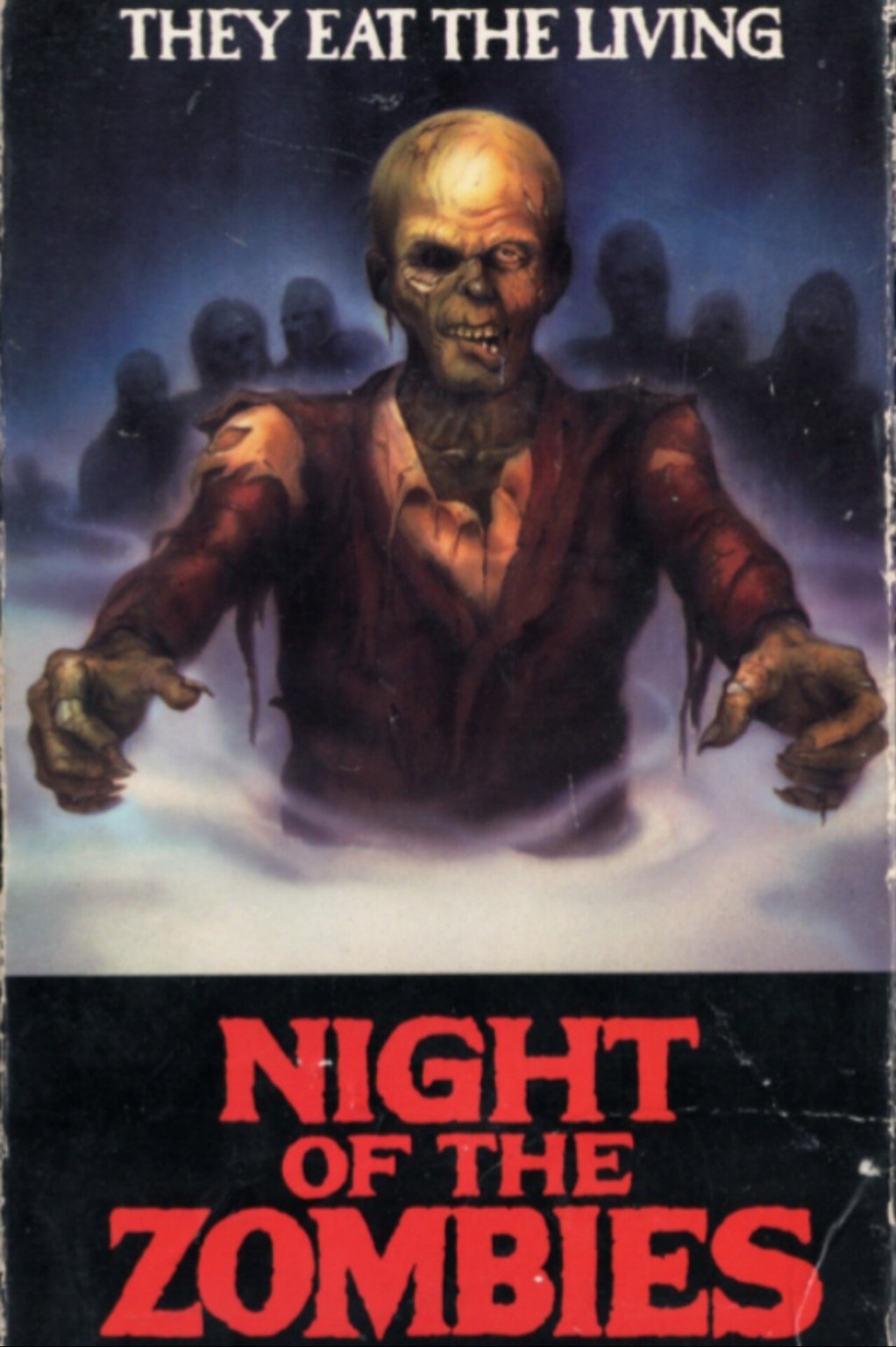
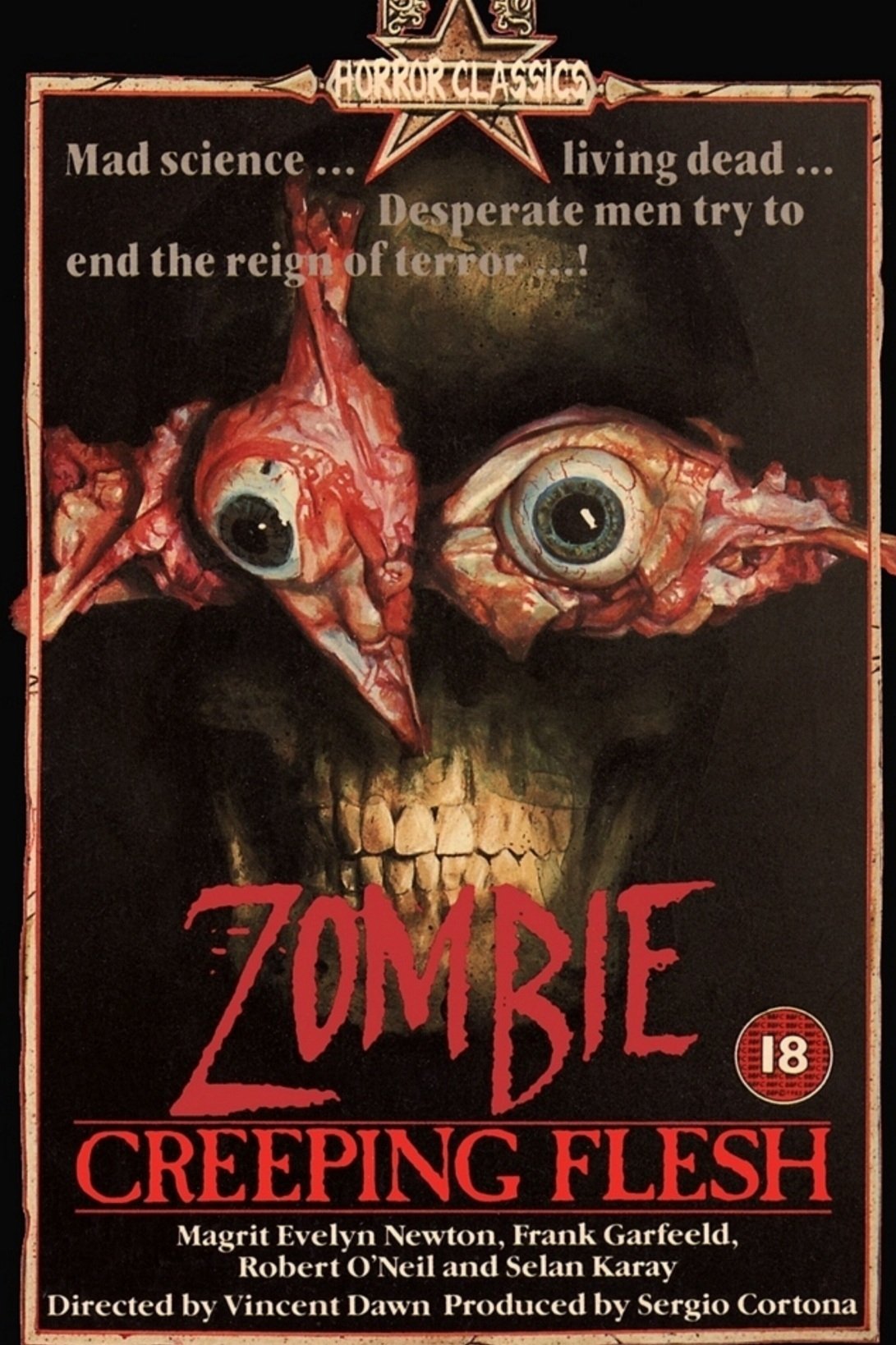
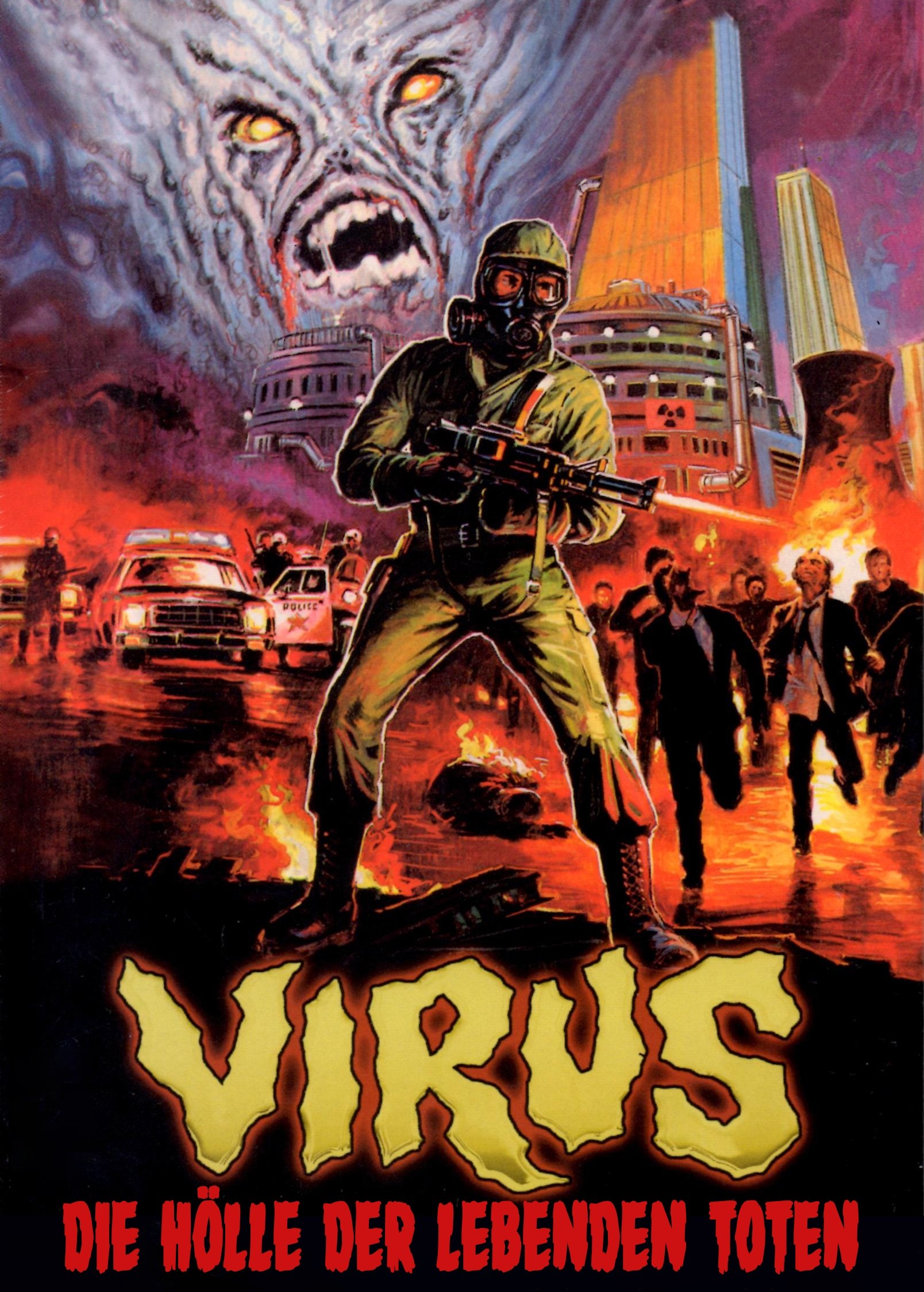
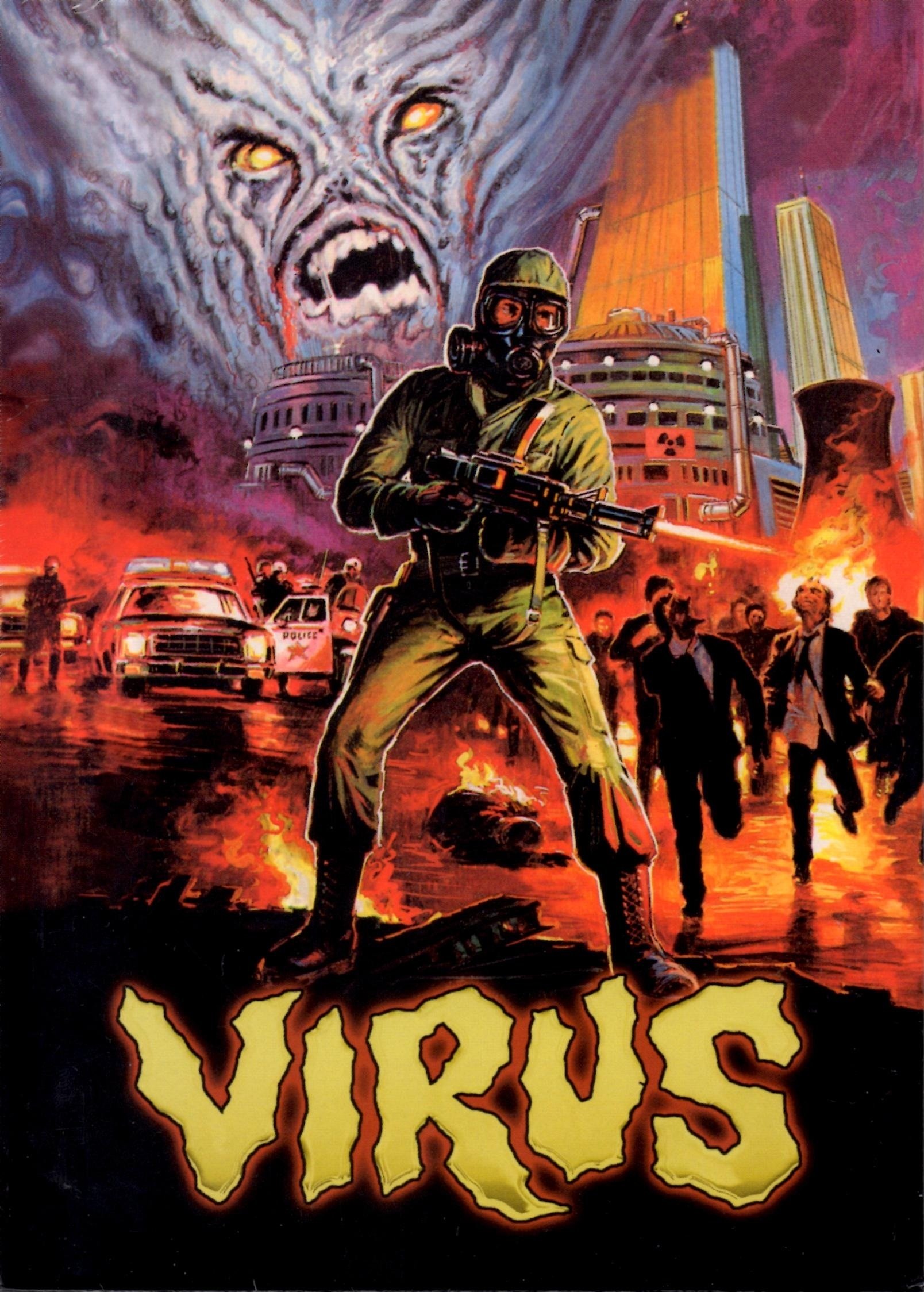
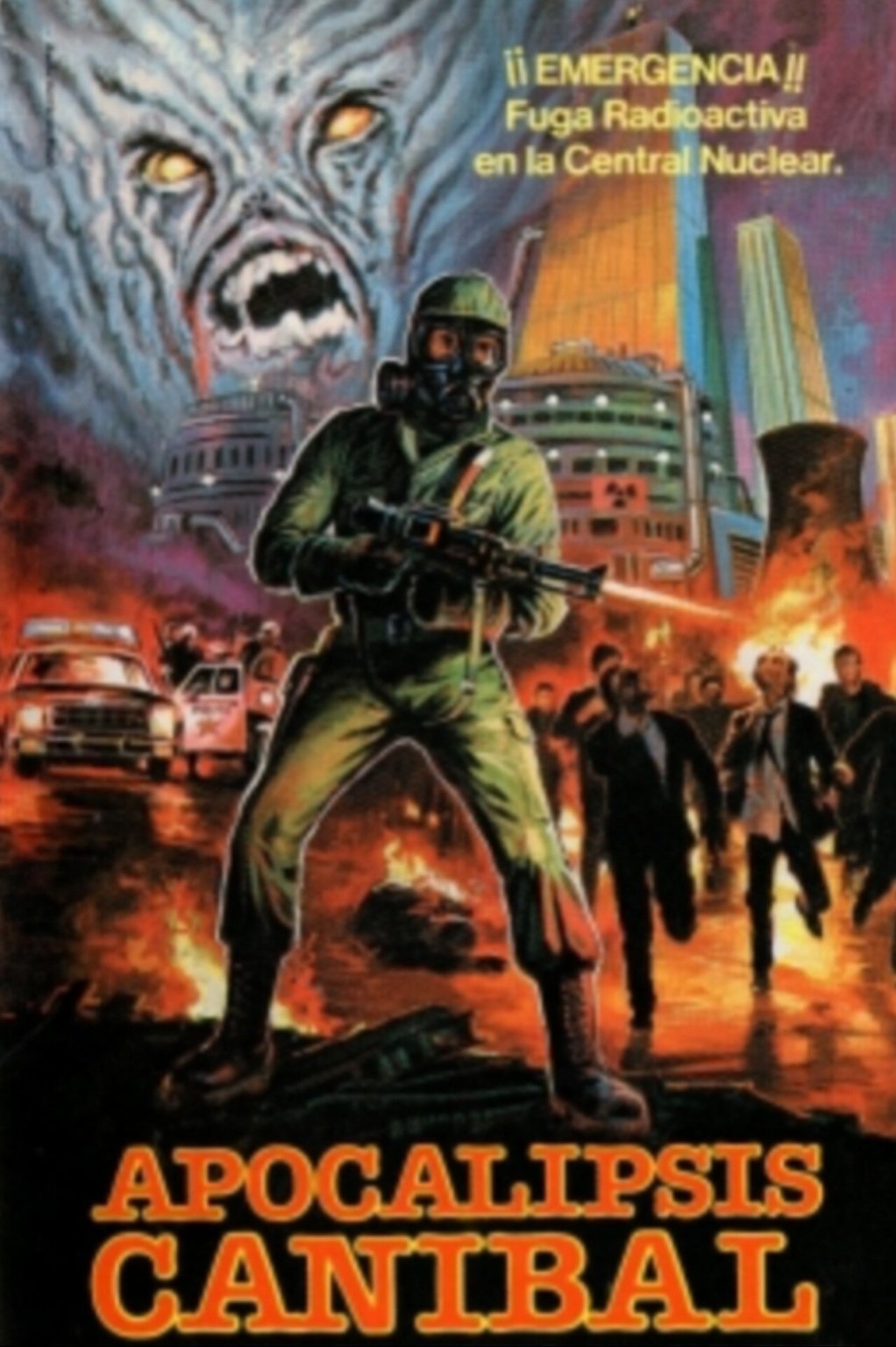
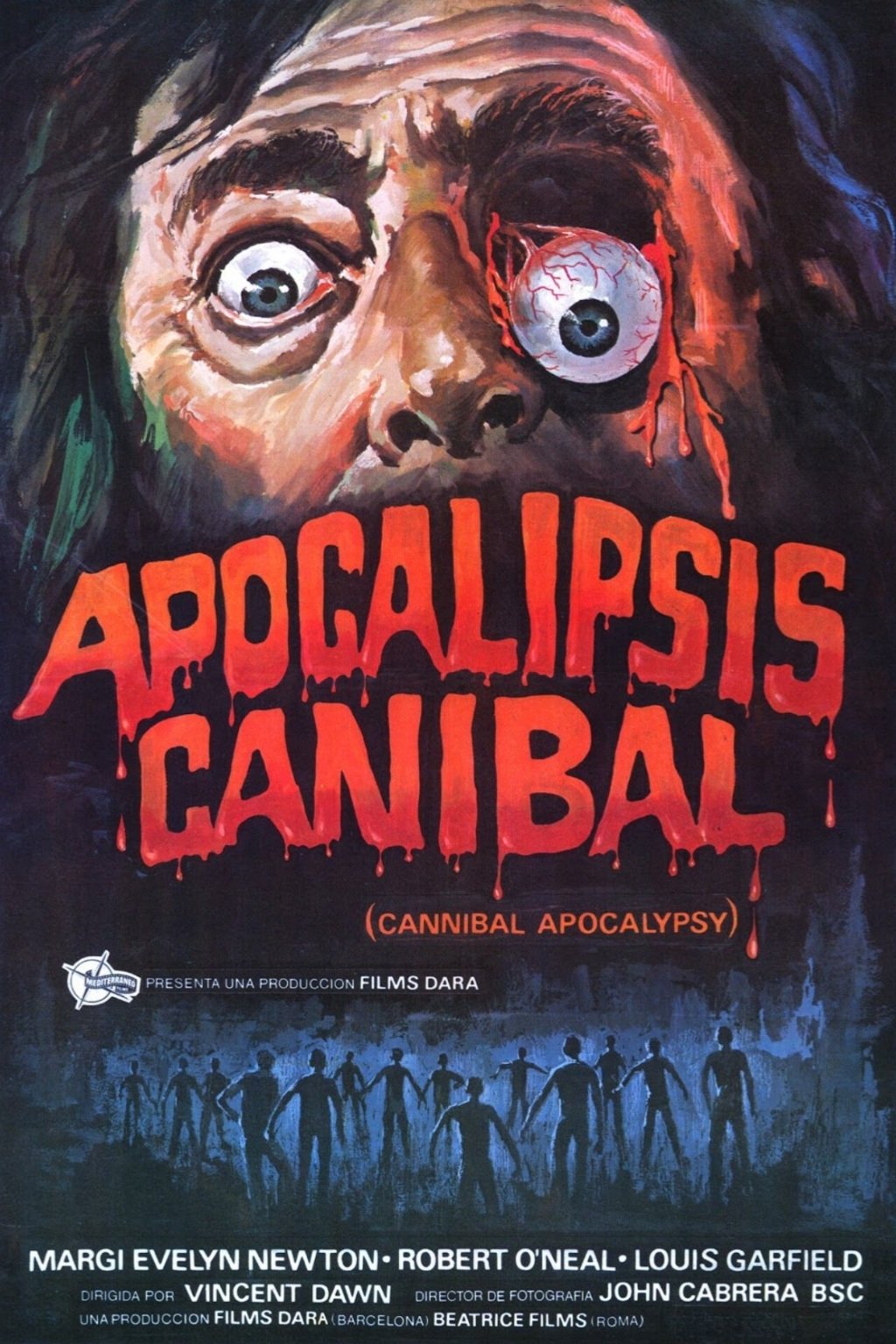
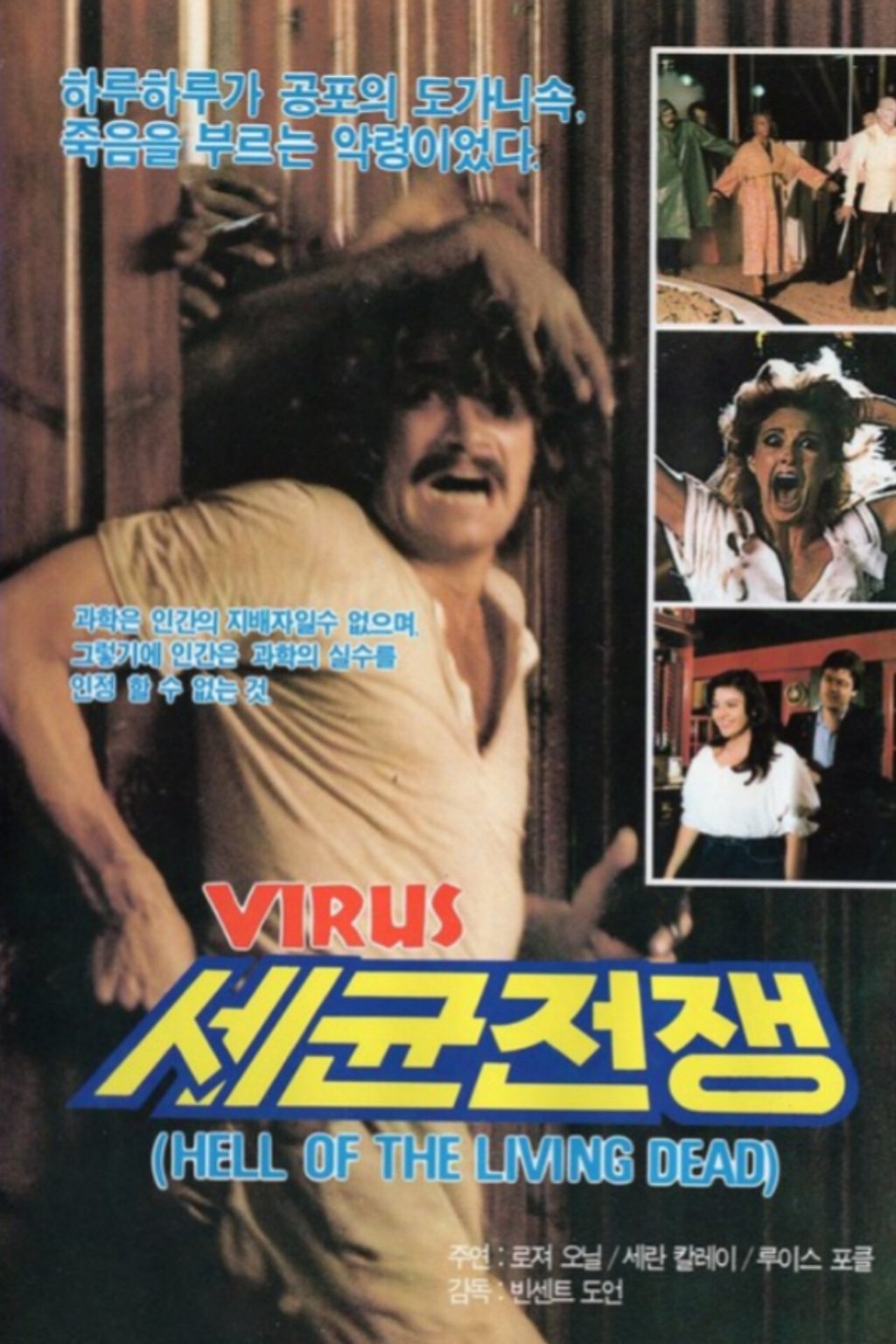
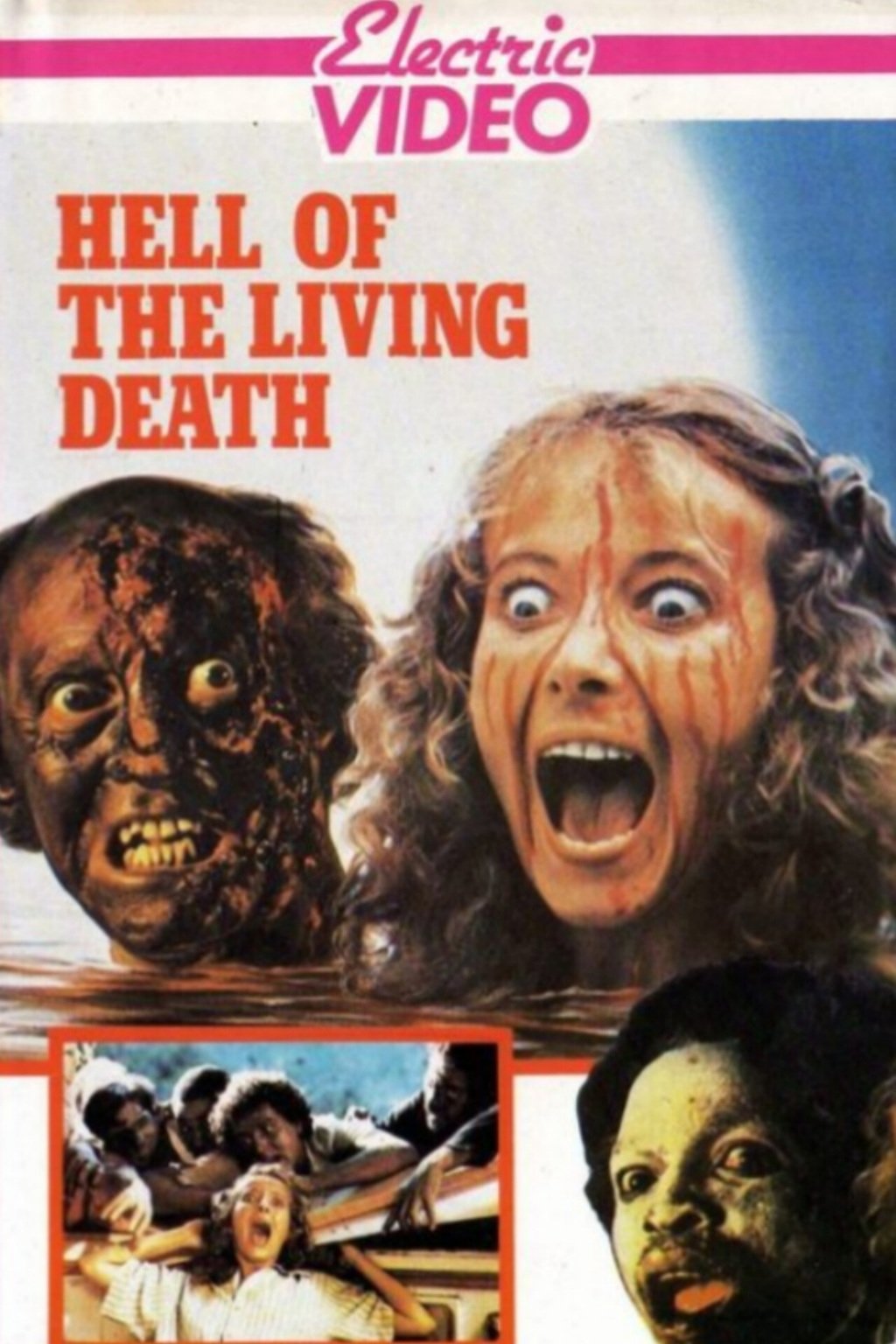
Zombilərin Gecəsi (Azerbaijan) Os Predadores da Noite (Brazil) 地狱活死人 (China) — Chinese Die Hölle der lebenden Toten (Germany) — German Apocalipsis caníbal (Spain) L'enfer des morts vivants (France) Virus cannibale (France) — Home Video Title Zombie Creeping Flesh (United Kingdom)
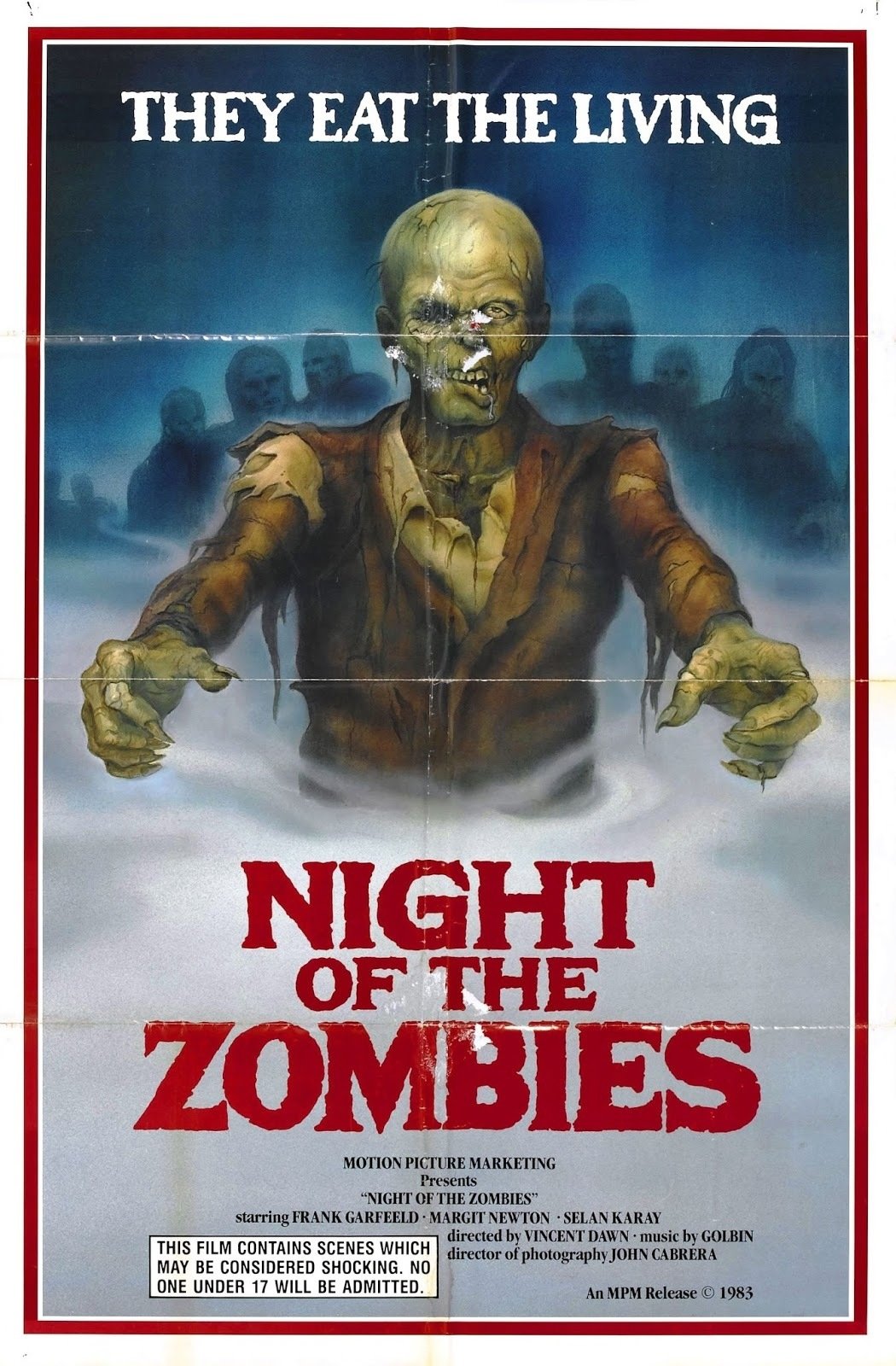
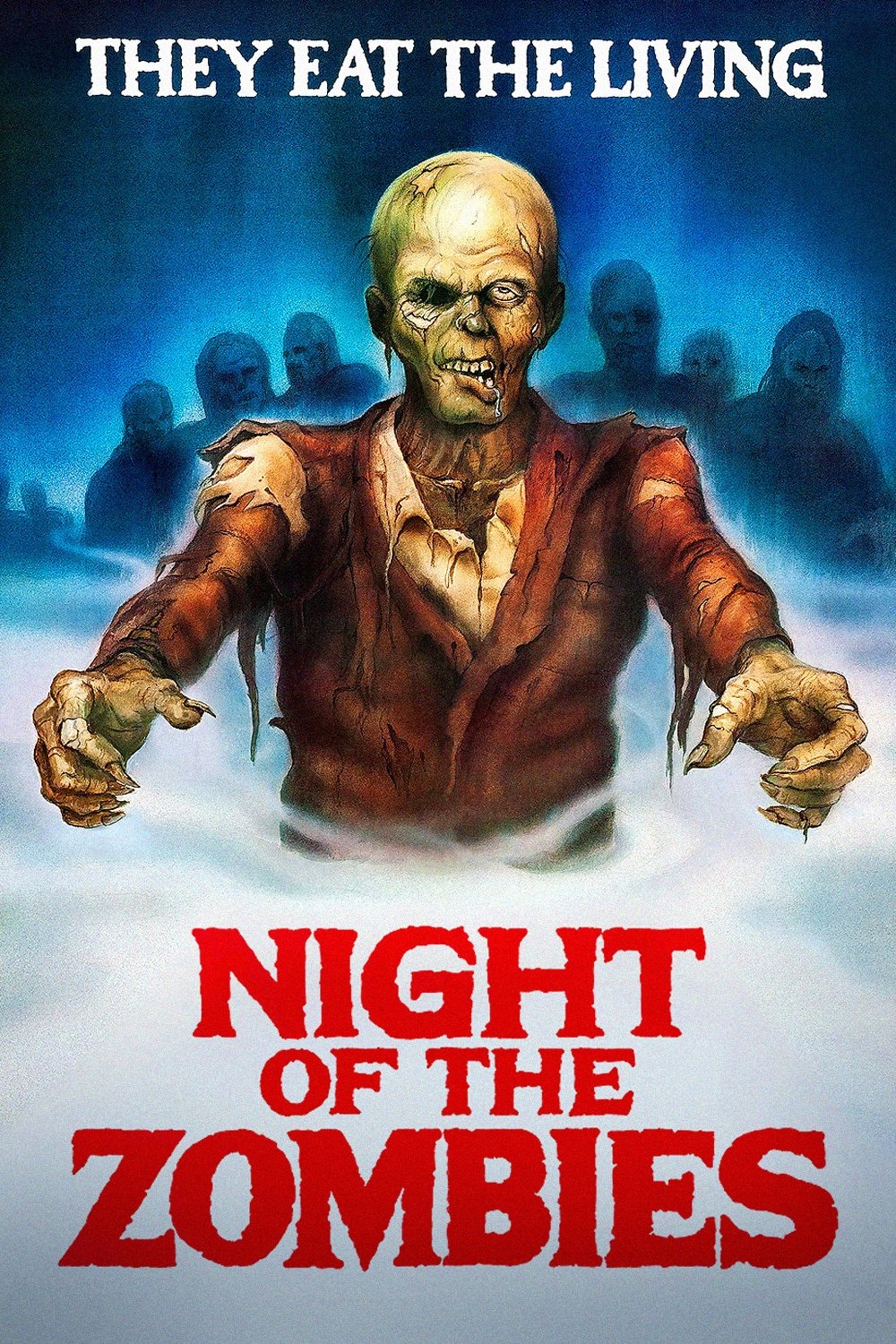
Show all 23 alternative titles Ζόμπι Εναντίον Καννιβάλων (Greece) — Greek Φάτε τους... Ζωντανούς (Greece) — Home Video Title 地獄活死人 (Hong Kong SAR China) — Chinese Az élőhalottak pokla (Hungary) — Hungarian Virus - L'Inferno dei morti viventi (Italy) — Italian Virus: L'inferno dei morti viventi (Italy) — Home Video Title La noche de los zombies (Mexico) — Reissue Title Virus, el infierno de los muertos vivientes (Mexico) Night of the Zombies (Norway) El infierno de los muertos vivientes (Peru) Os Predadores da Noite (Portugal) — Portuguese Ад живых мертвецов (Russia) — Russian Ад живых мертвецов (Russia) — Russian Title Night of the Zombies (United States) Zombi 4 (United States) — Pre-release Title

Trailers & Videos

1 video

Film Guide & Analysis

Bruno Mattei combines an industrial zombie outbreak, practical gore, recycled Goblin music and documentary imagery in an Italian-Spanish exploitation film.

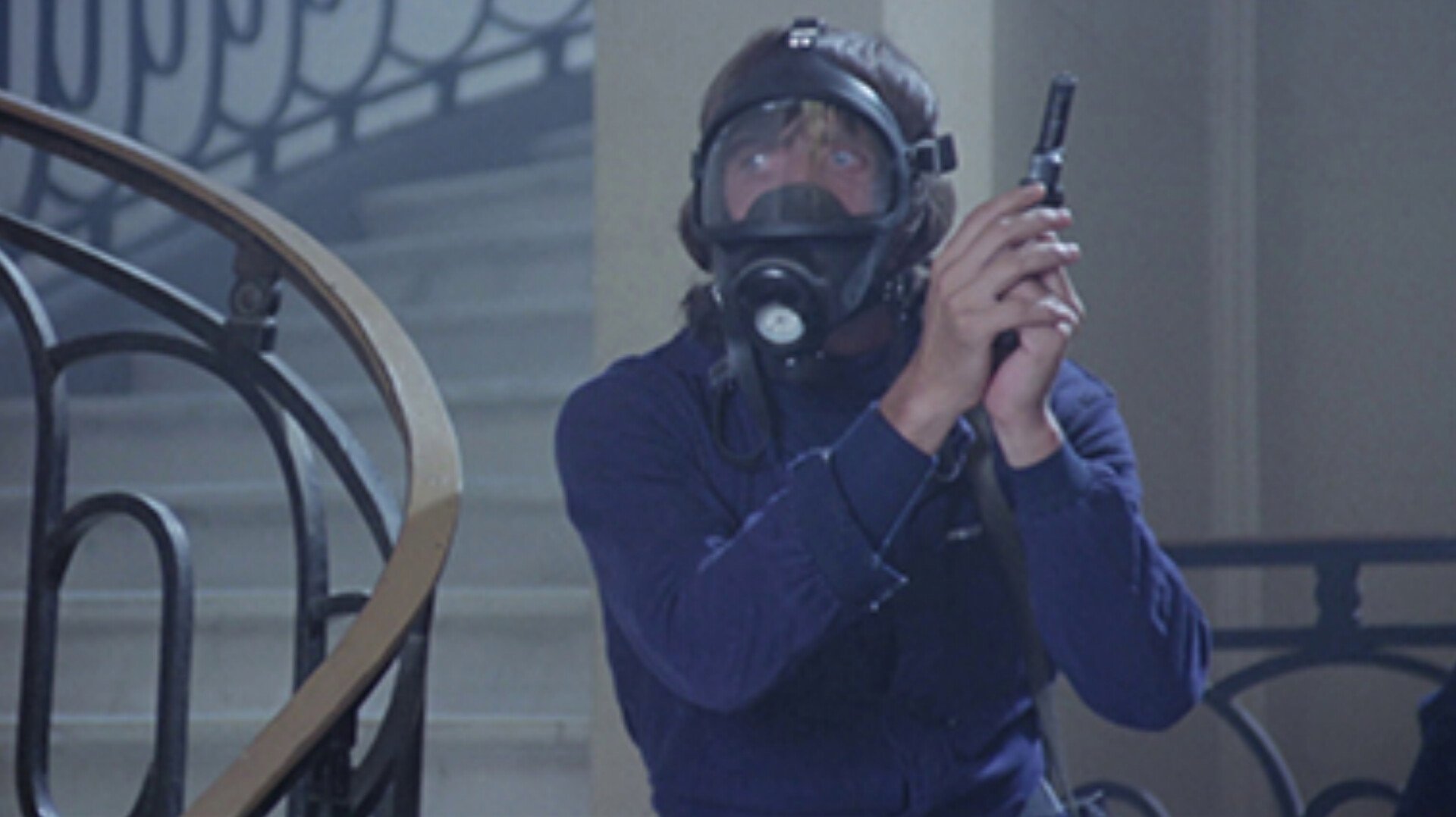
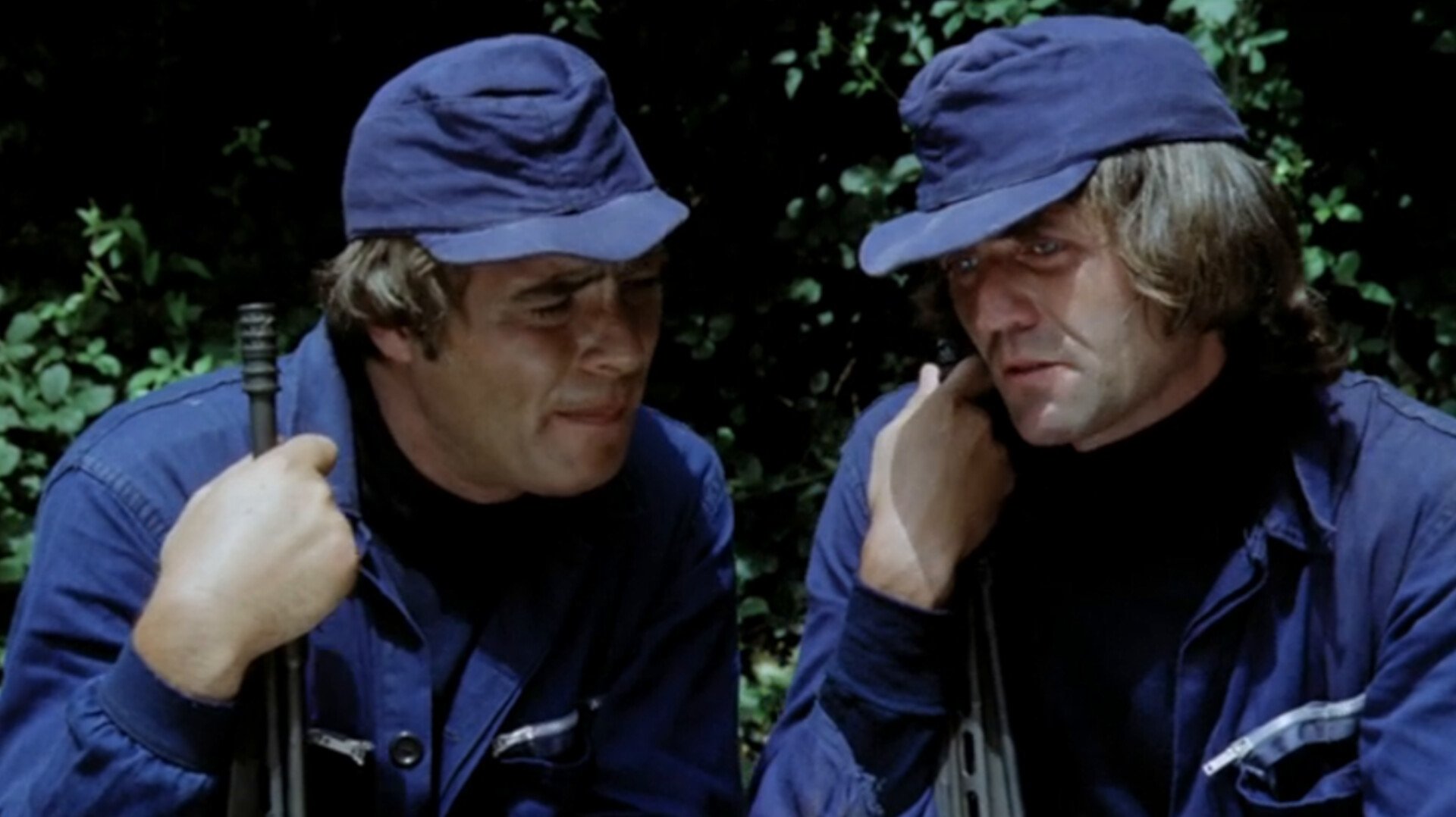
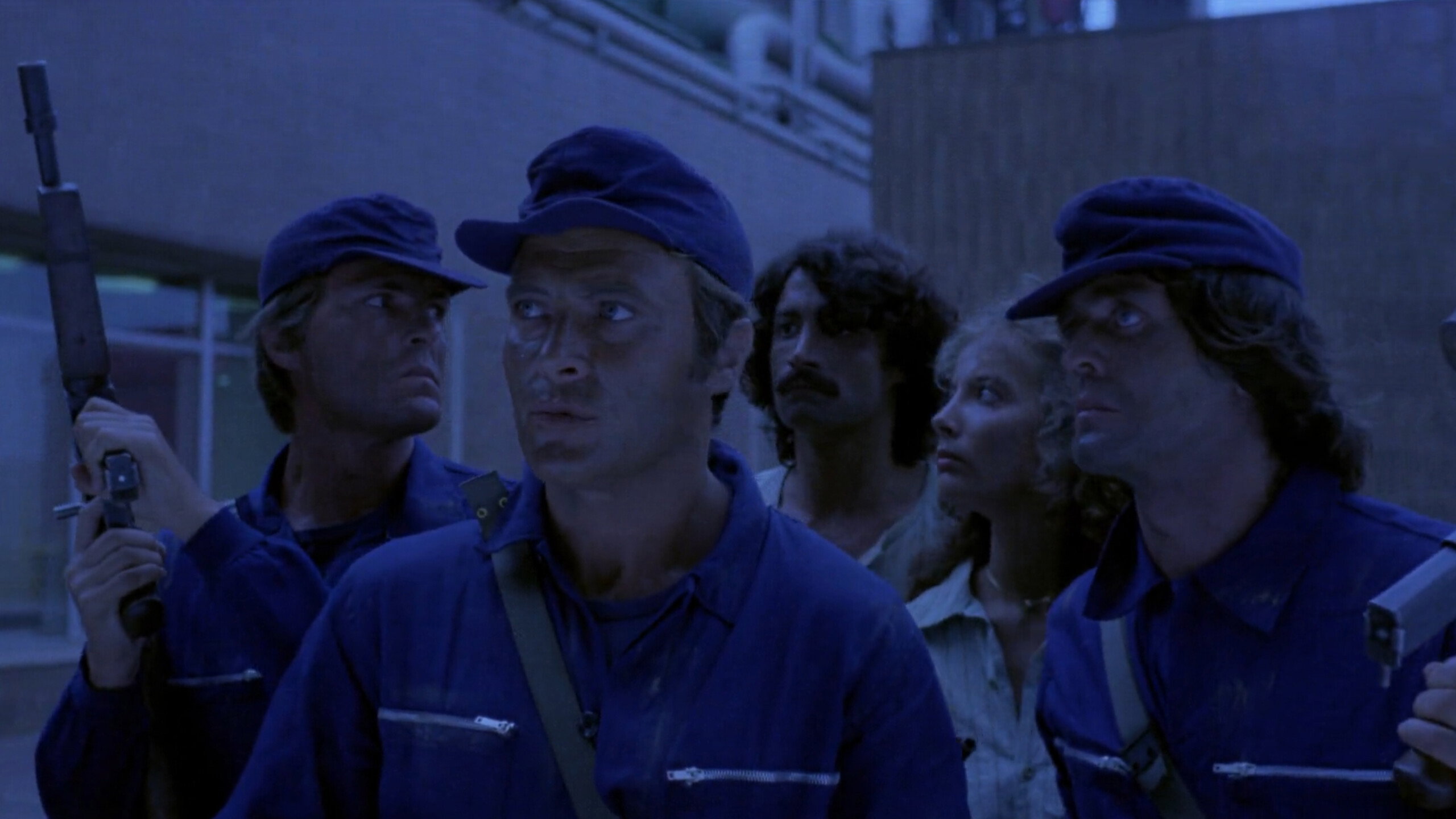
Hell of the Living Dead (1980), made by Bruno Mattei under the name Vincent Dawn, follows a chemical disaster that reanimates corpses around a research facility in Papua New Guinea. An international commando team and television reporter Lia Rousseau investigate the spreading catastrophe while officials struggle to contain its consequences. The film joins the zombie epidemic to a program presented as an answer to global hunger, placing manufactured death beneath the language of humanitarian science.

An Italian-Spanish production associated with screenwriter and assistant director Claudio Fragasso, the feature became known internationally as Virus, Zombie Creeping Flesh and Night of the Zombies. It draws conspicuously on the armed survivors and gruesome attacks of Dawn of the Dead, while using documentary inserts, existing Goblin recordings and improvised locations to create its New Guinea setting. Fragasso later described the finished picture as a diminished version of a larger political story he had wanted to tell.

Development and the Italian Zombie Boom

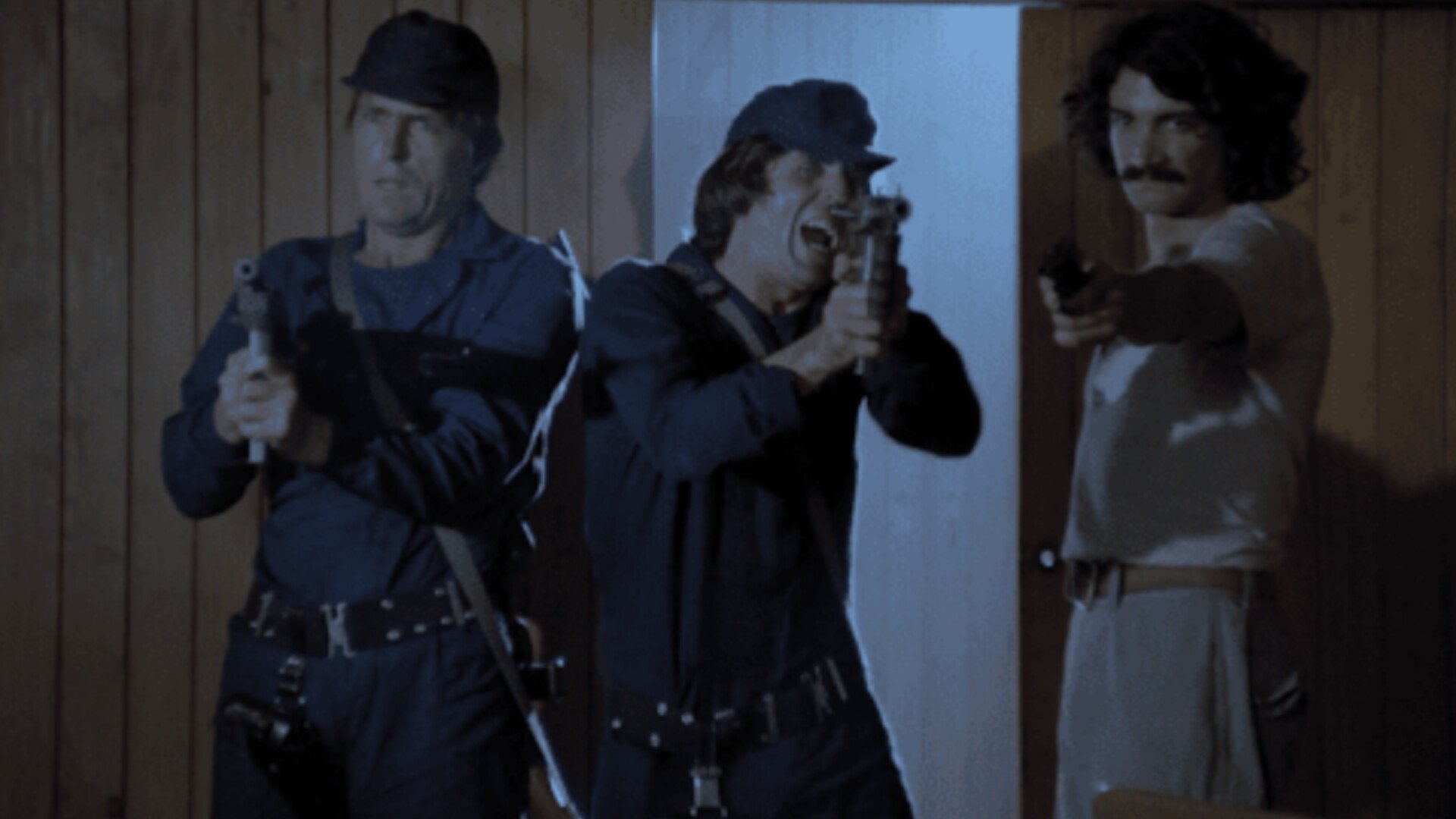
The success of George A. Romero's 1978 zombie epic encouraged Italian producers to finance films centered on mass resurrection and increasingly graphic attacks. Lucio Fulci's Zombie Flesh Eaters had already demonstrated the commercial possibilities of the subject. The production belongs to that period of rapid filmmaking, when international distributors could market a picture through familiar undead imagery and an English-language title. Mattei's direction uses military action and siege scenes recognizable from Romero's work.

Claudio Fragasso offered a more ambitious account of the project's origins in a lengthy interview published by Giorgio Brass in 2005. He said he and Rossella Drudi developed a more expansive script influenced partly by Apocalypse Now and Soylent Green. Earlier material is also associated with credited screenwriter José María Cunillés. In this version, an industrialized world confronted the consequences of a plan to address hunger through the destruction of populations in poorer countries. The writer recalled that the producers admired the screenplay but that the money available when filming began was far below what its scale required. His testimony describes the intention behind the script, although it does not establish that every political element was successfully represented in the final cut.

The production took place largely in Barcelona and its surrounding area, with a small number of additions photographed in Rome. Fragasso recalled five weeks of Spanish shooting and two days in Italy. He also claimed to have directed a substantial proportion of the material, while explicitly acknowledging Mattei as the film's credited director. Their different contributions should be distinguished from the single official directing credit. Limited resources dictated the available locations, the number of extras and the revised narrative. The completed picture preserves traces of the abandoned epic through references to a multinational research program and to the vulnerability of communities outside the wealthy nations.

The Hope Centre and the Outbreak

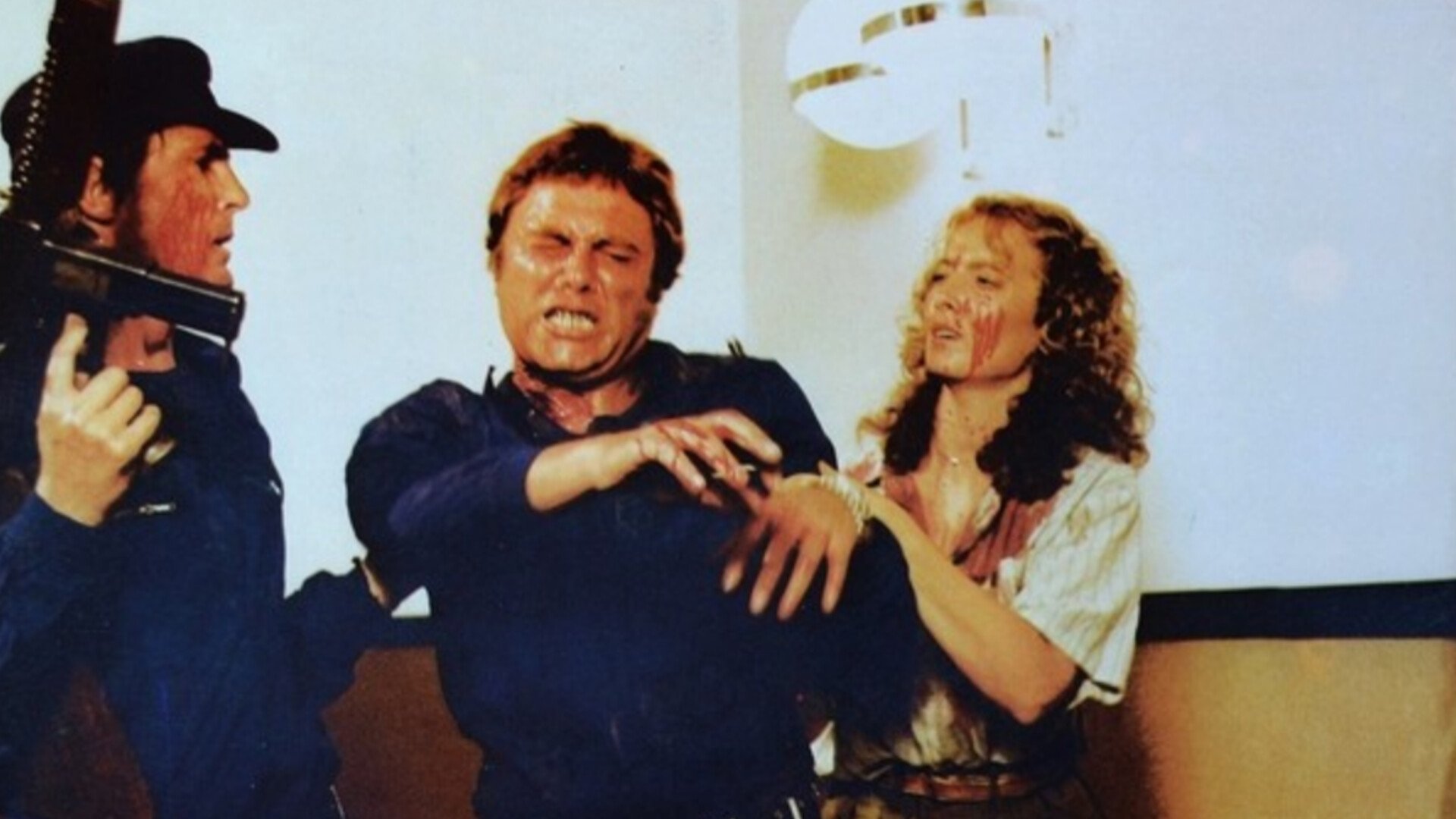
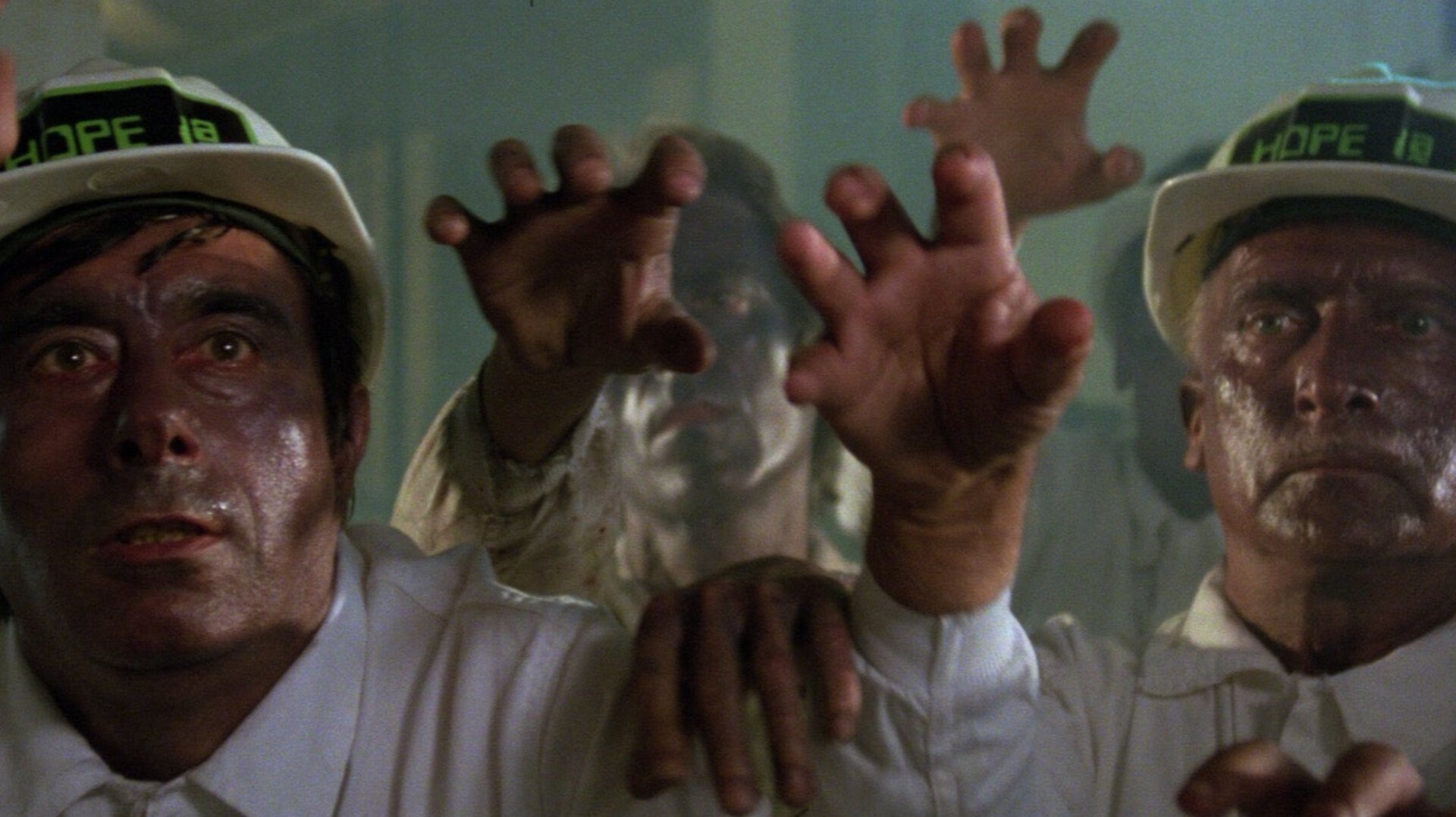
The disaster begins at the Hope Centre, a supposedly advanced facility in New Guinea. A dead rat revives during an inspection, a technician releases a dangerous substance, and the staff soon attack one another as reanimated corpses. Professor Barrett's attempt to isolate the affected section fails. This opening provides the viewer with knowledge that the characters outside the compound do not possess. The word Virus in some release titles is imprecise: the catastrophe begins with a chemical release whose effects are described through the film's fictional scientific vocabulary. No real-world medical explanation supports its mechanism.

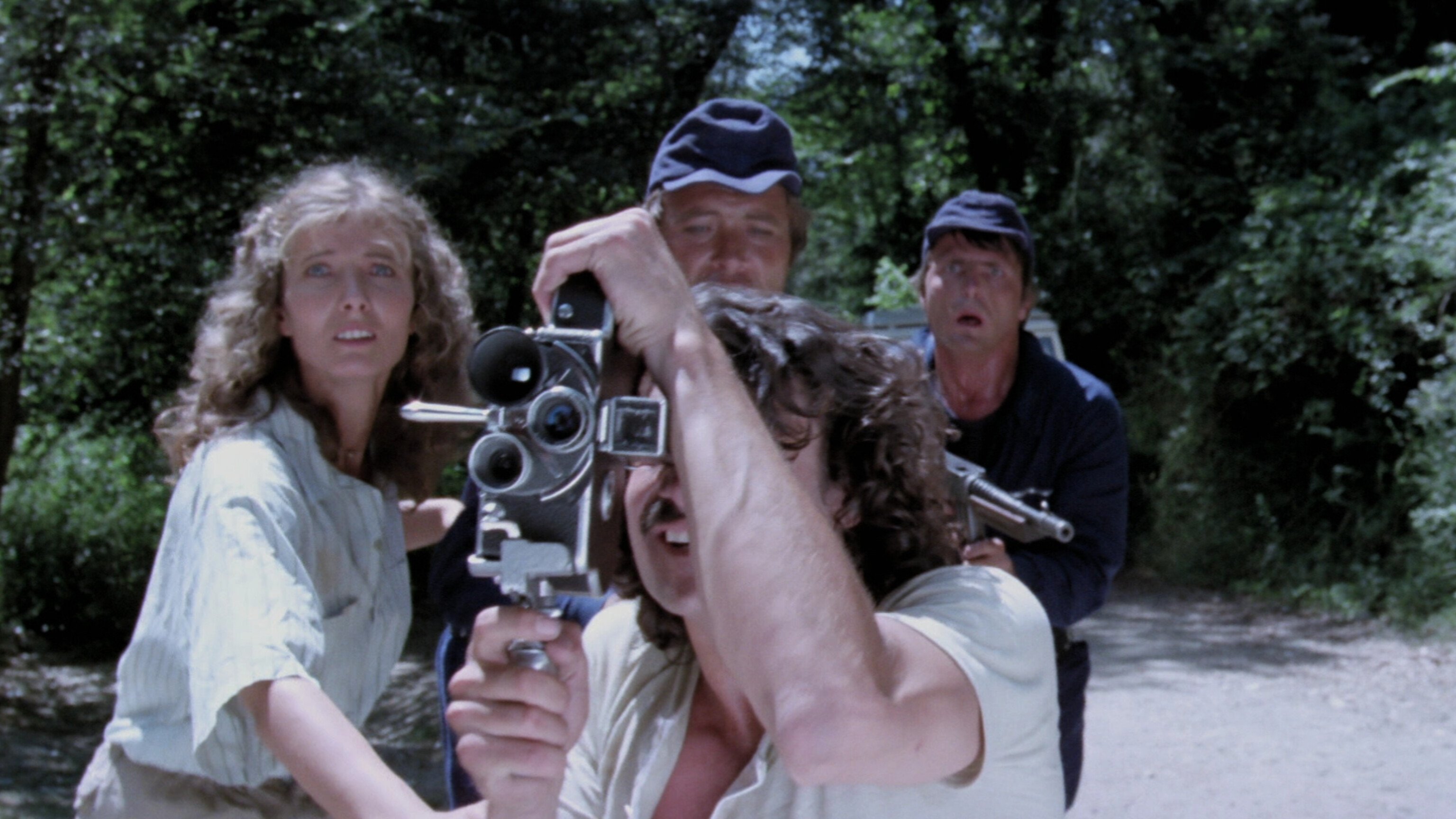
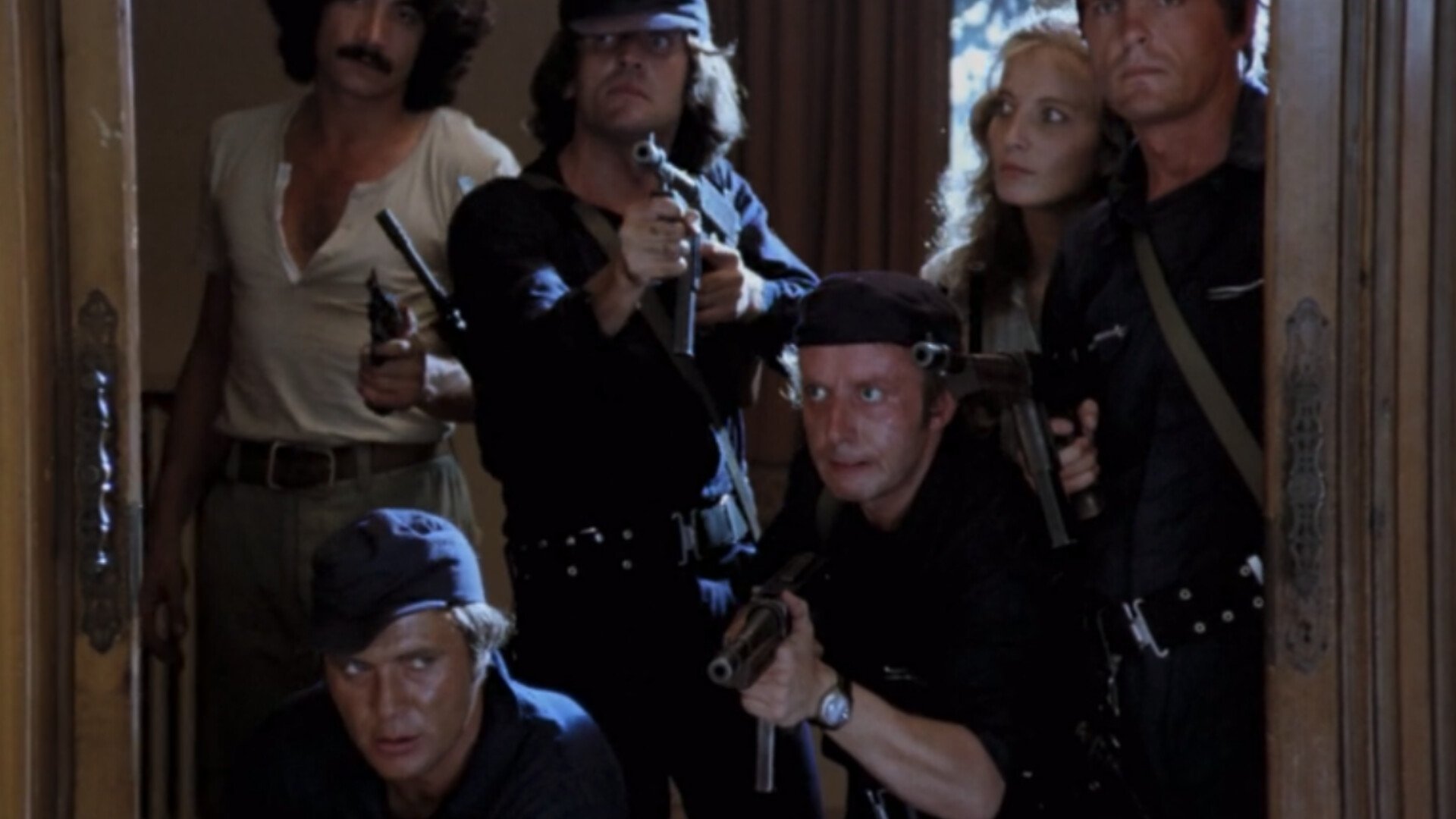
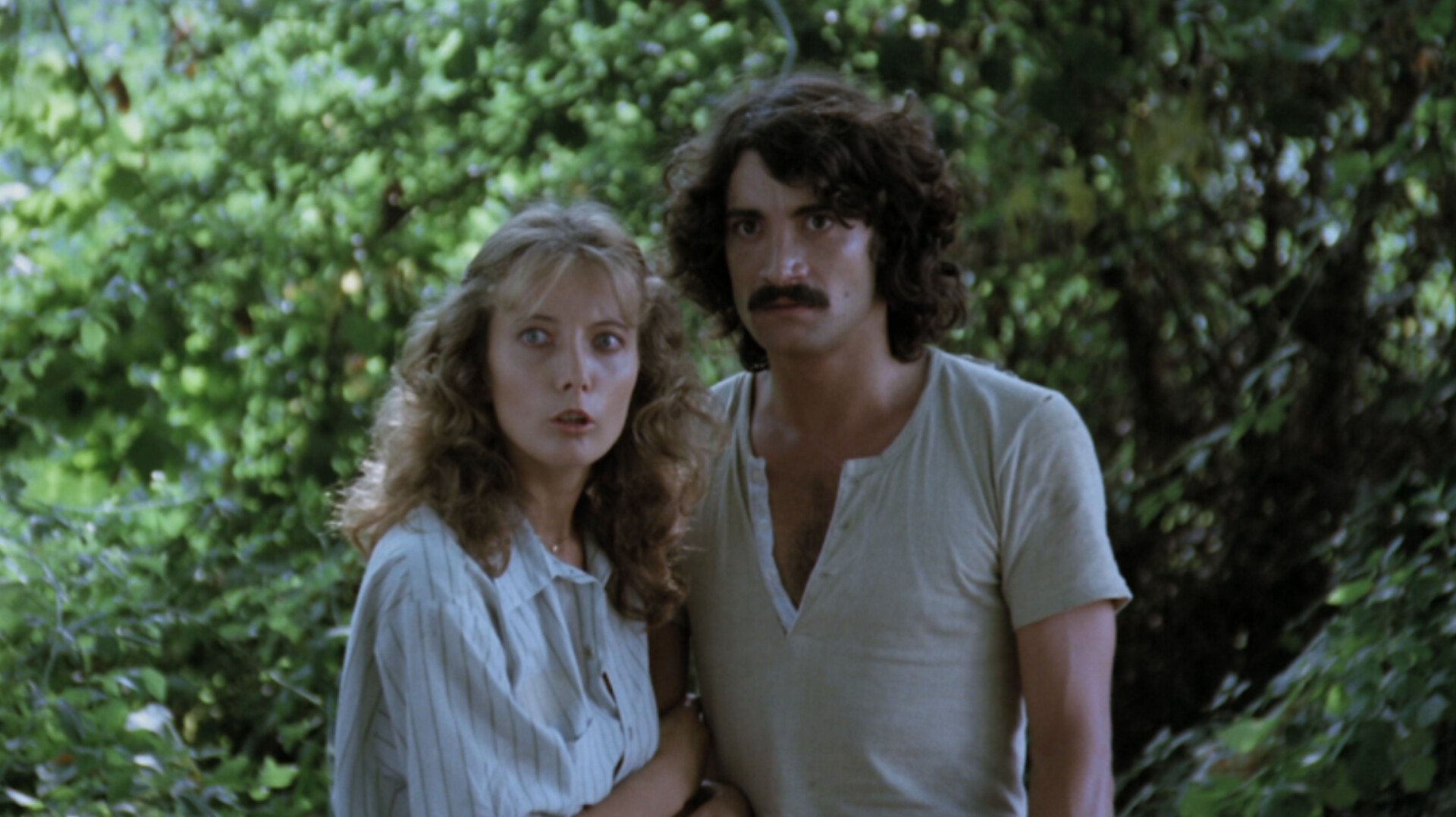
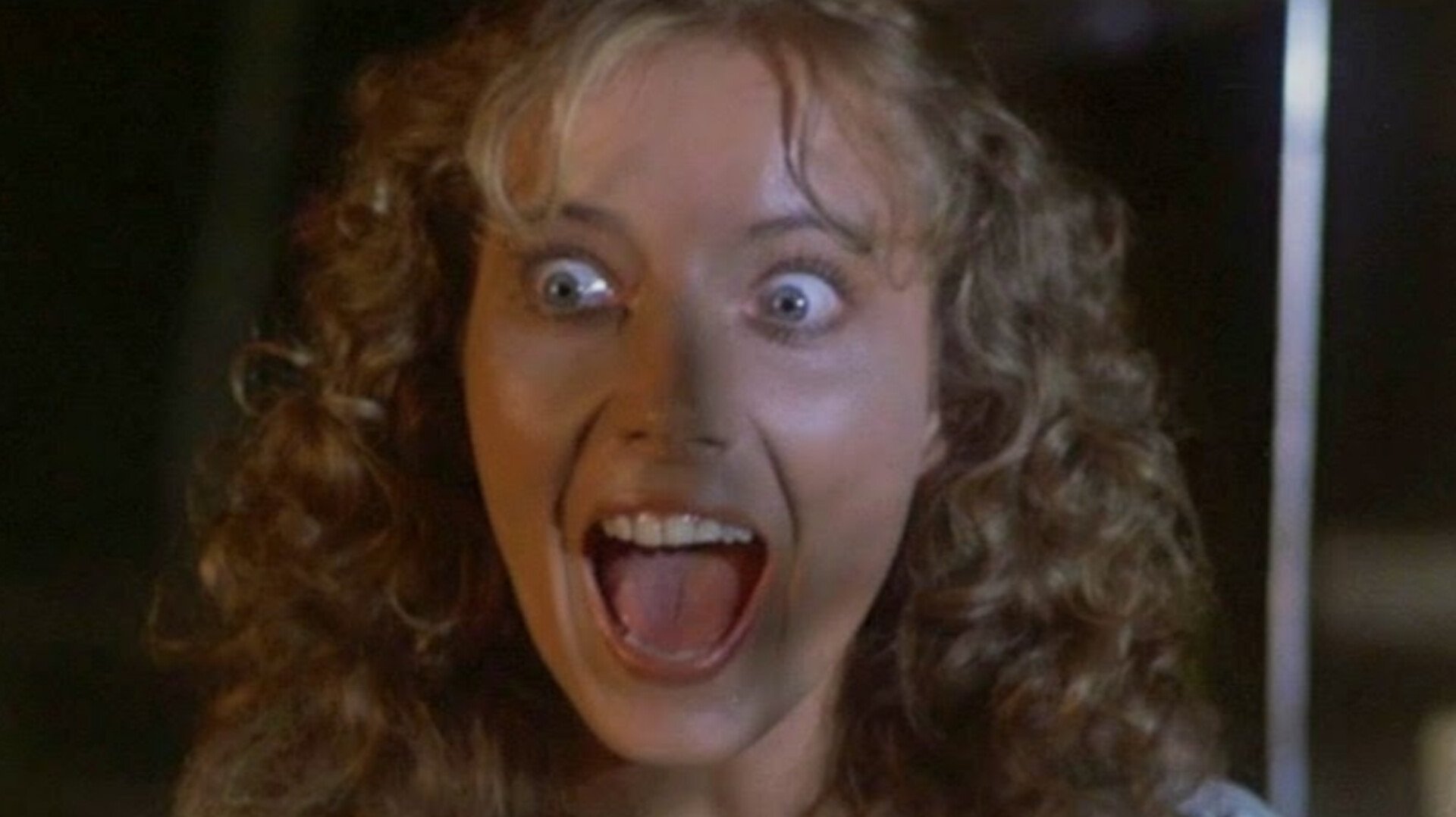
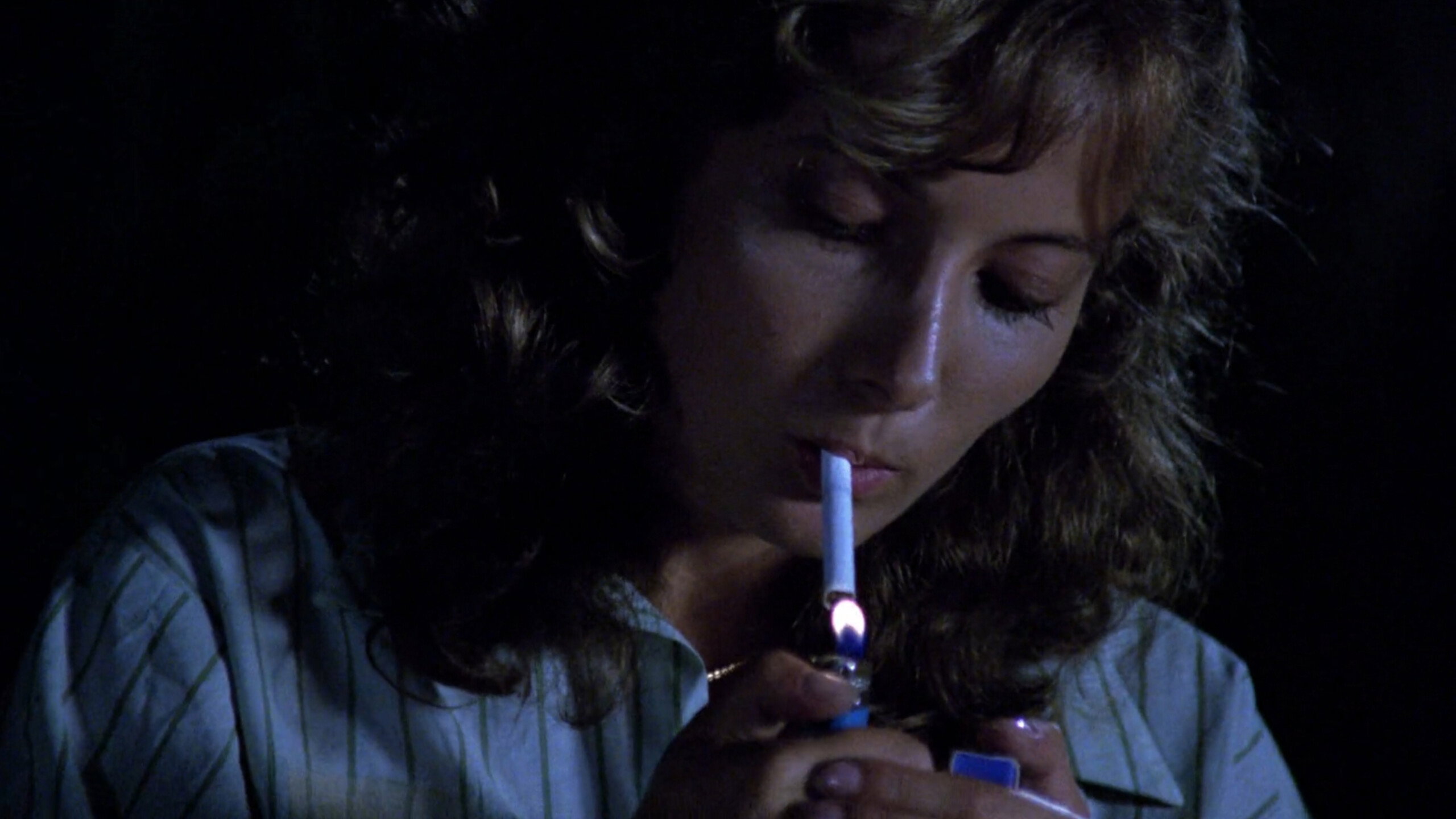
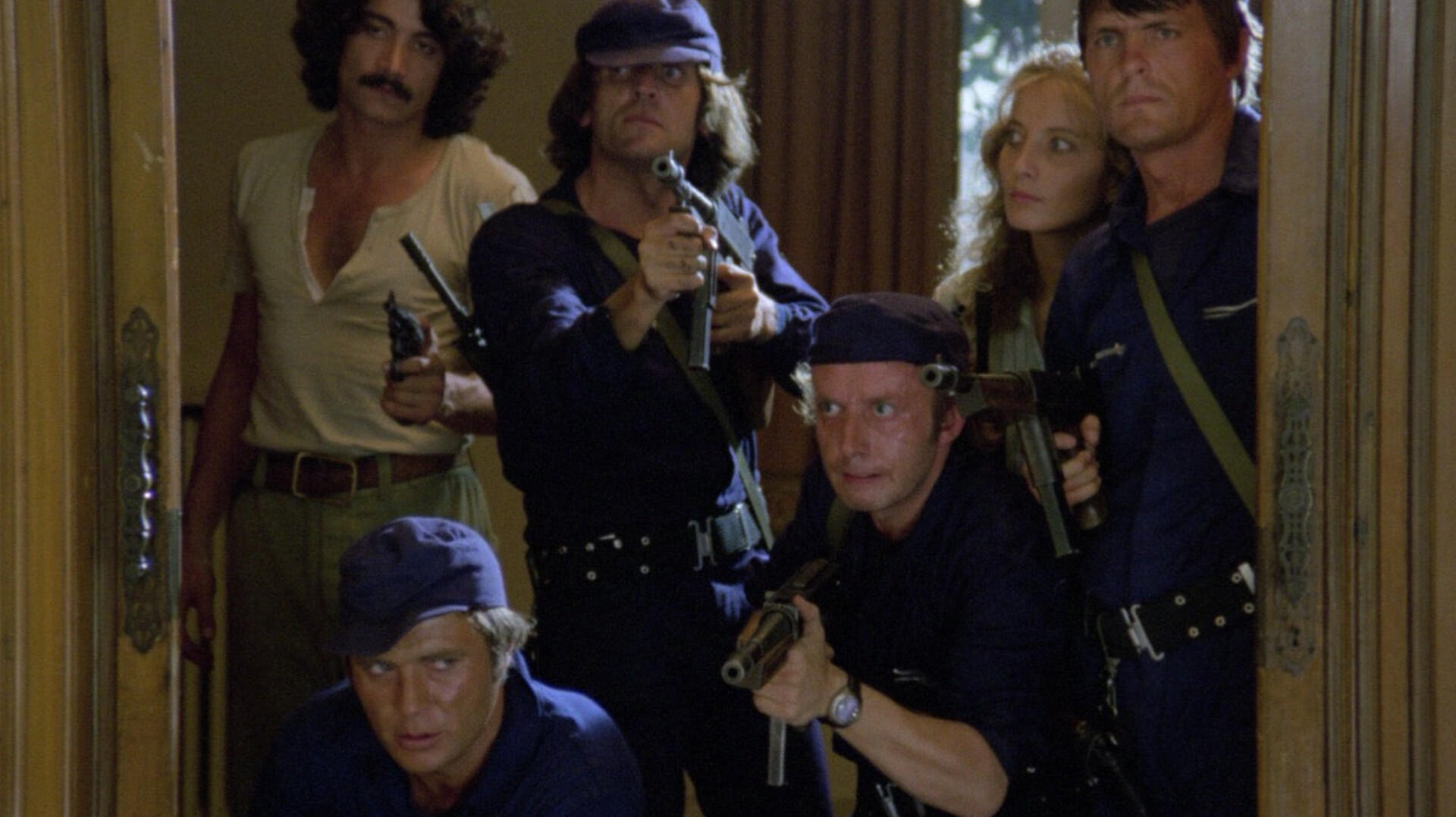
A hostage incident involving opponents of the Hope Centres introduces the commandos before their assignment overseas. The protesters warn of catastrophe, giving their cause an apparent justification once the nature of the experiment is revealed. In New Guinea, the soldiers encounter Lia Rousseau, played by Margit Evelyn Newton, and her cameraman Pierre, who have already witnessed signs of the disaster. The characters move between settlements and isolated buildings as successive outbreaks destroy opportunities for help.

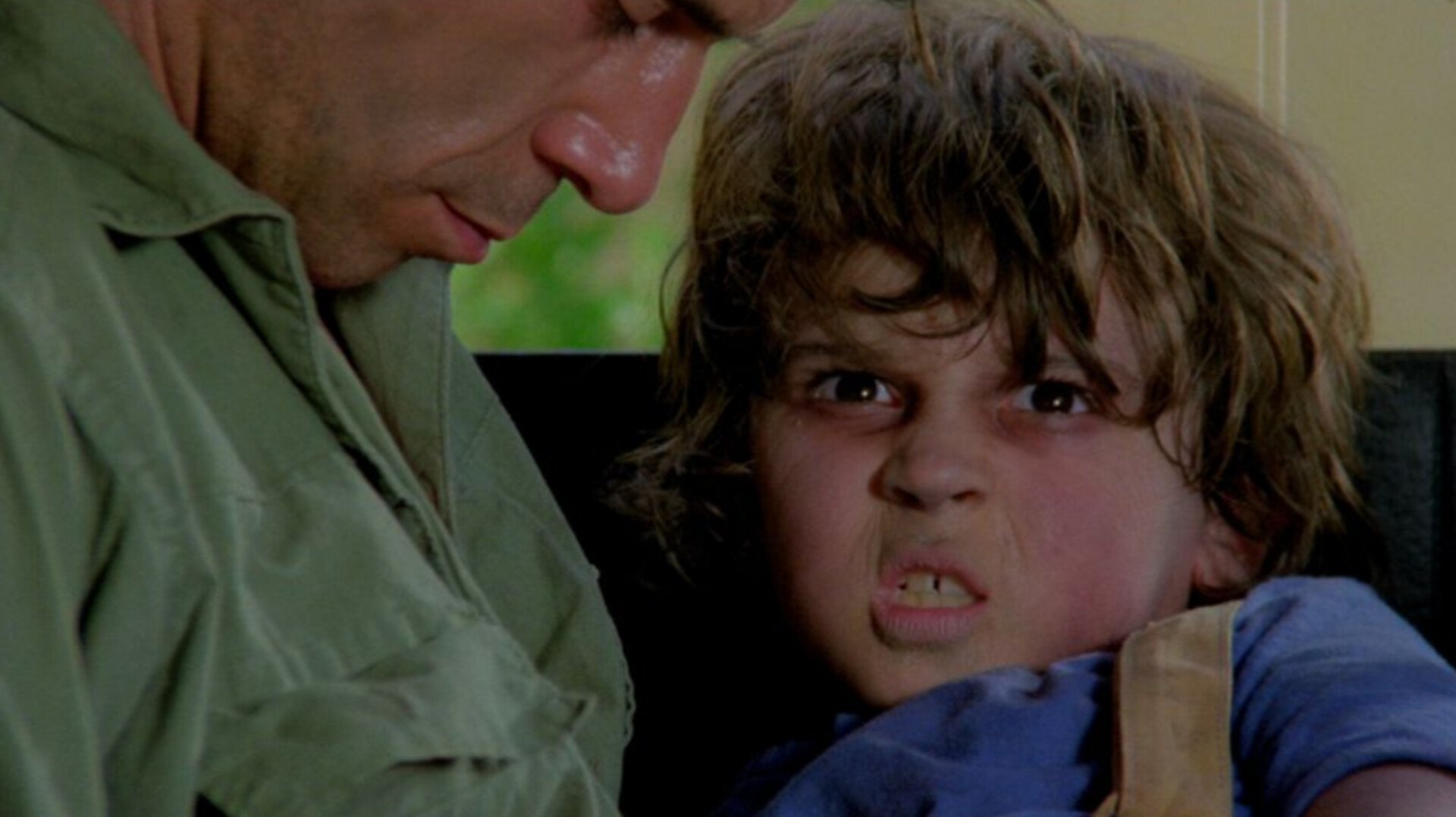
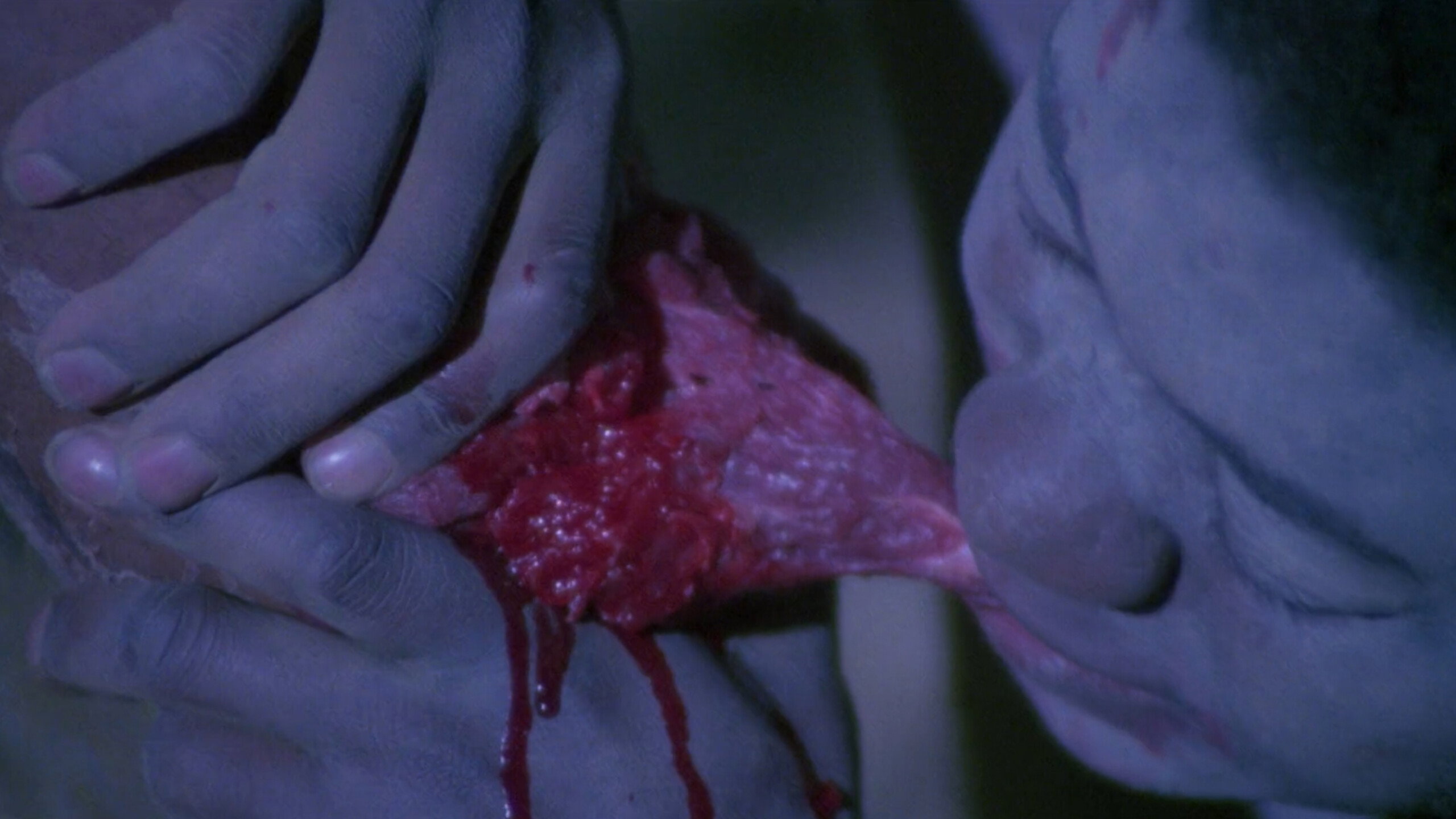
The attacks at the mission turn expected sources of protection into instruments of fear. A priest is discovered among the dead, and an infected child becomes violent within his own family. Fragasso recalled in the 2005 interview that the sequence involving the child biting his father was expanded during shooting because the young performer handled the effects convincingly. Sausage pieces, he explained, were used for the exposed entrails, a practical detail that demonstrates how the film achieved shocking images with inexpensive materials.

Documentary Images and the Invented New Guinea

Some of the most conspicuous passages are taken from other productions. Long views of animals, landscapes and indigenous ceremonies interrupt scenes photographed with the principal cast. A detailed retrospective study by the writer behind And You Call Yourself a Scientist identifies material from Barbet Schroeder's The Valley, the documentary Des Morts and the Italian-Japanese film New Guinea: Island of Cannibals. The inserts offer geographical scale without requiring a unit to travel to Papua New Guinea. They also expose the seams in the construction: changes in photographic texture, performers and setting can be visible from one shot to the next.

Fragasso was unusually critical of the decision in his later interview. He remembered producers pushing for available footage as an economical way of increasing running time, and said the film would have improved without those passages. The inserts were consequently a production expedient, incapable of establishing actual conditions at the fictional Hope Centre. Actual ritual and funeral imagery is repurposed as background to a story of cannibalistic violence, an editorial choice that raises serious questions about the presentation of real people and ceremonies as spectacle. Its use should not be confused with fictional gore effects created for the actors.

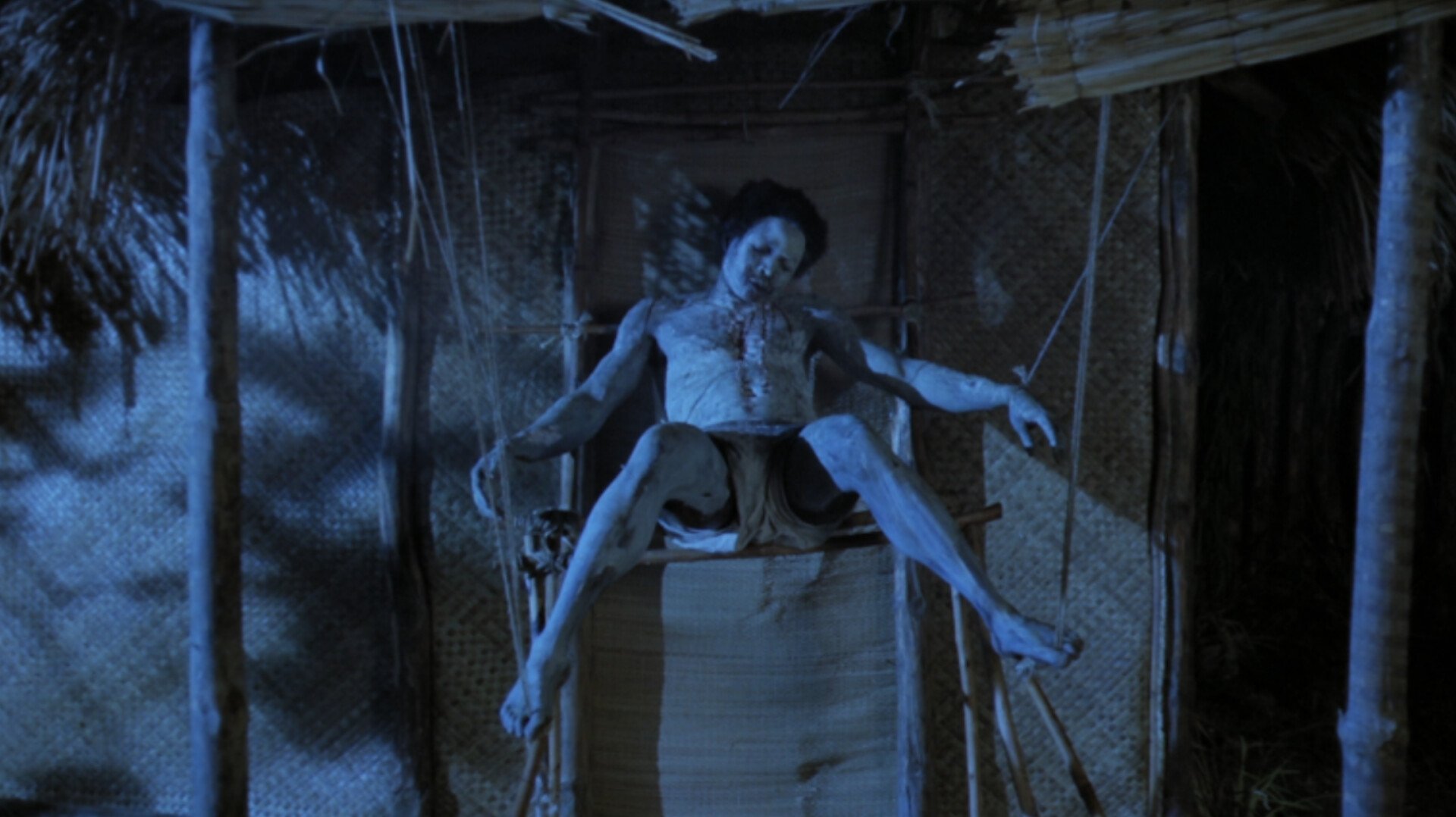
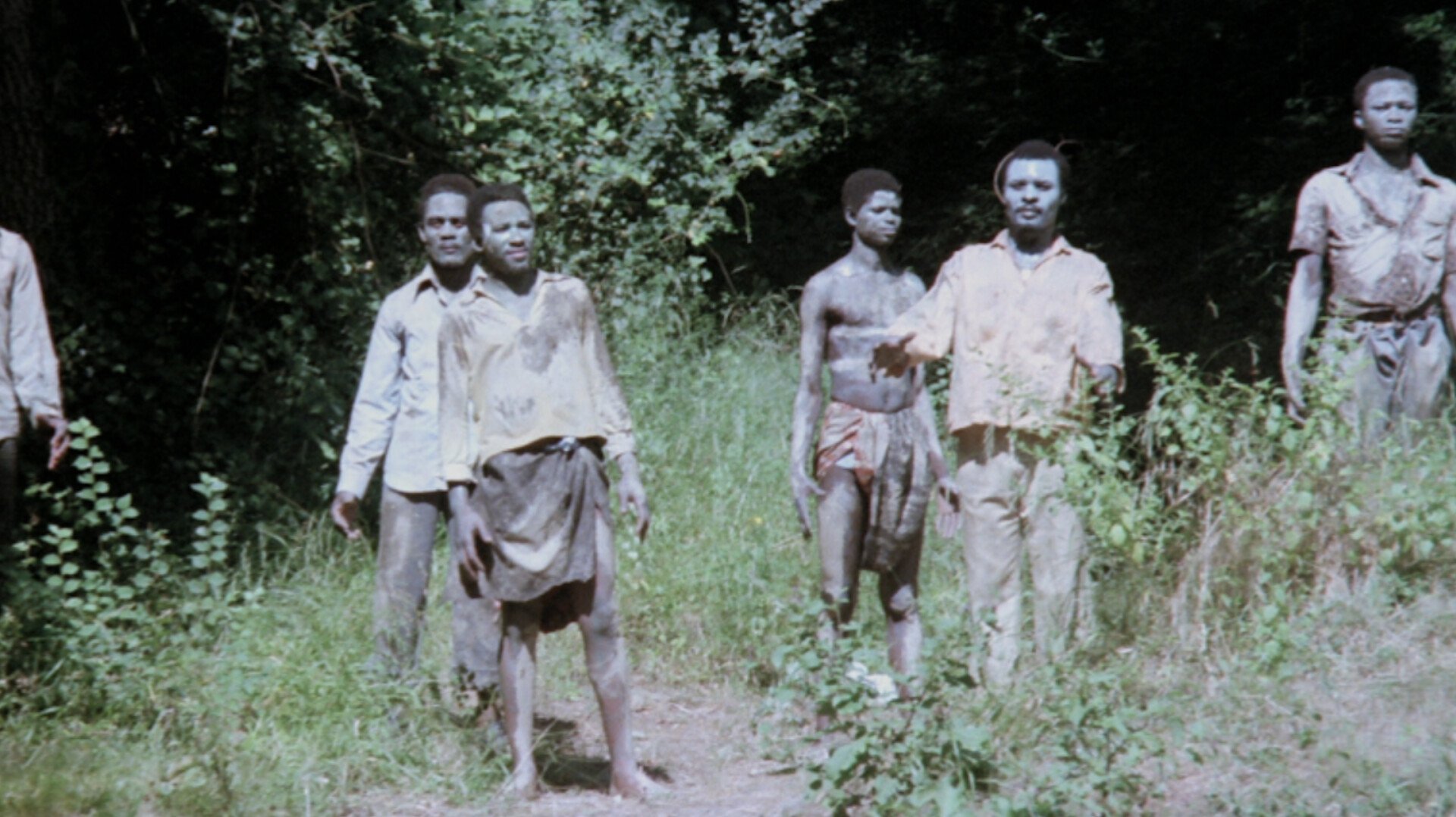
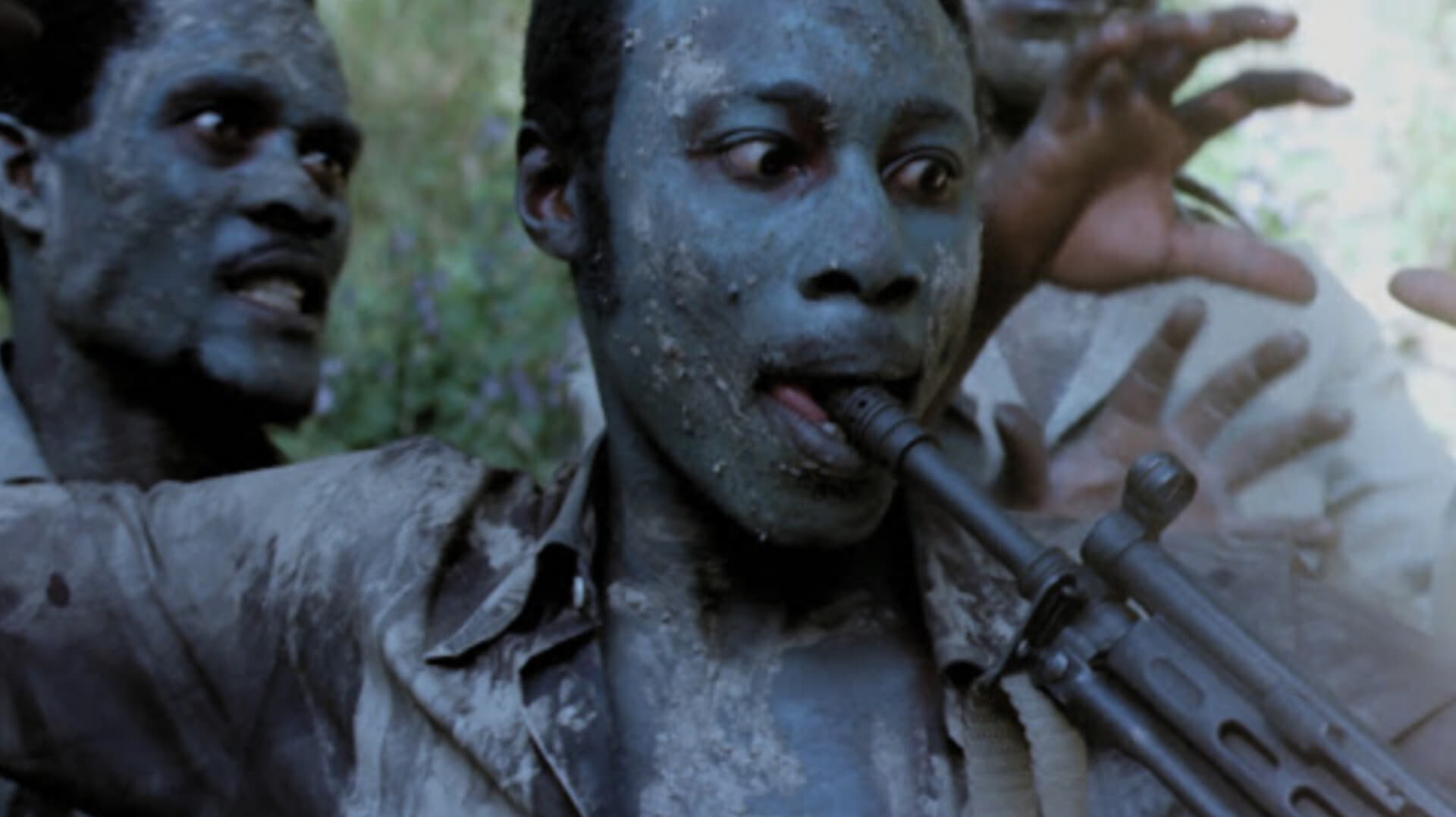
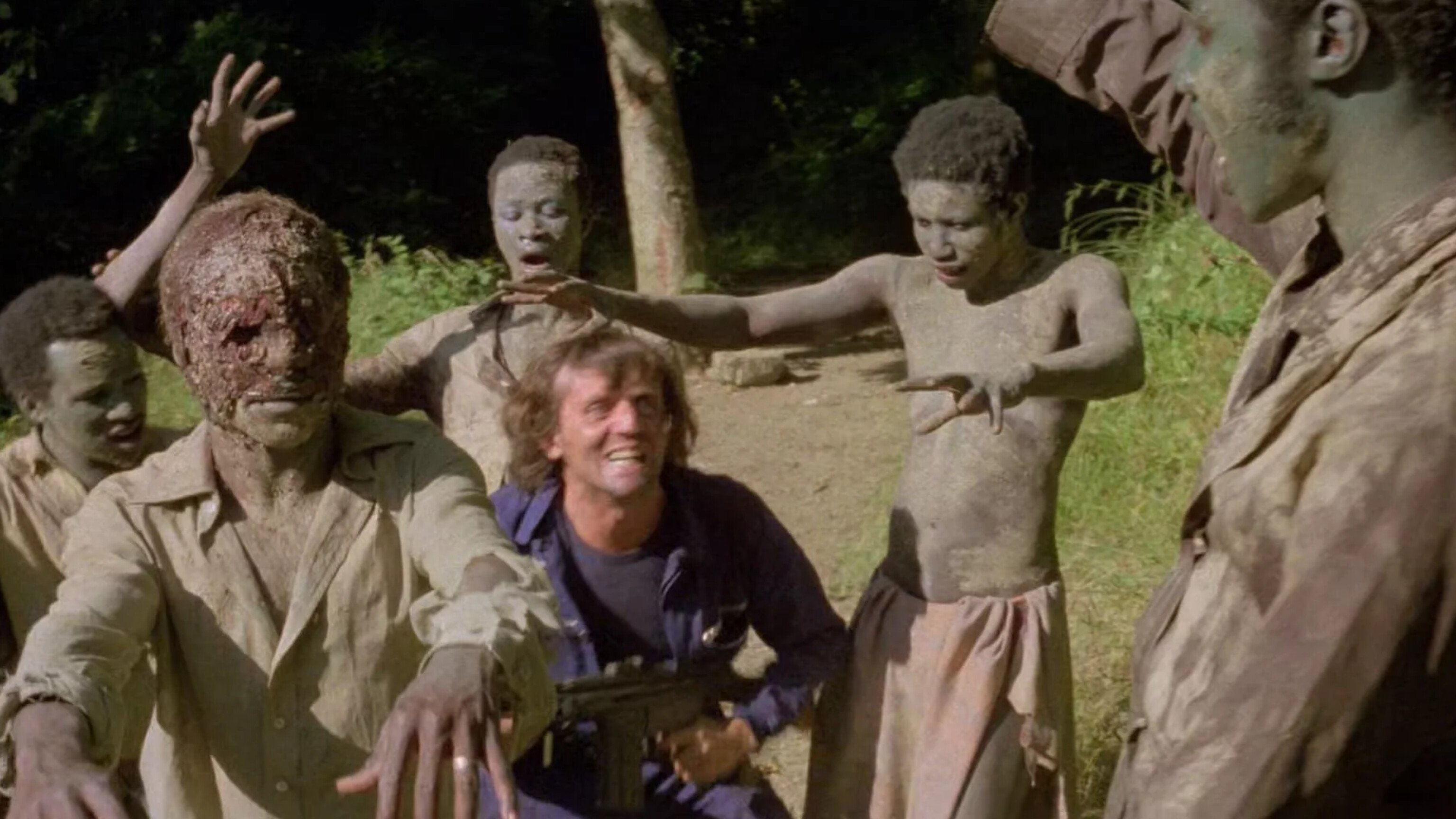
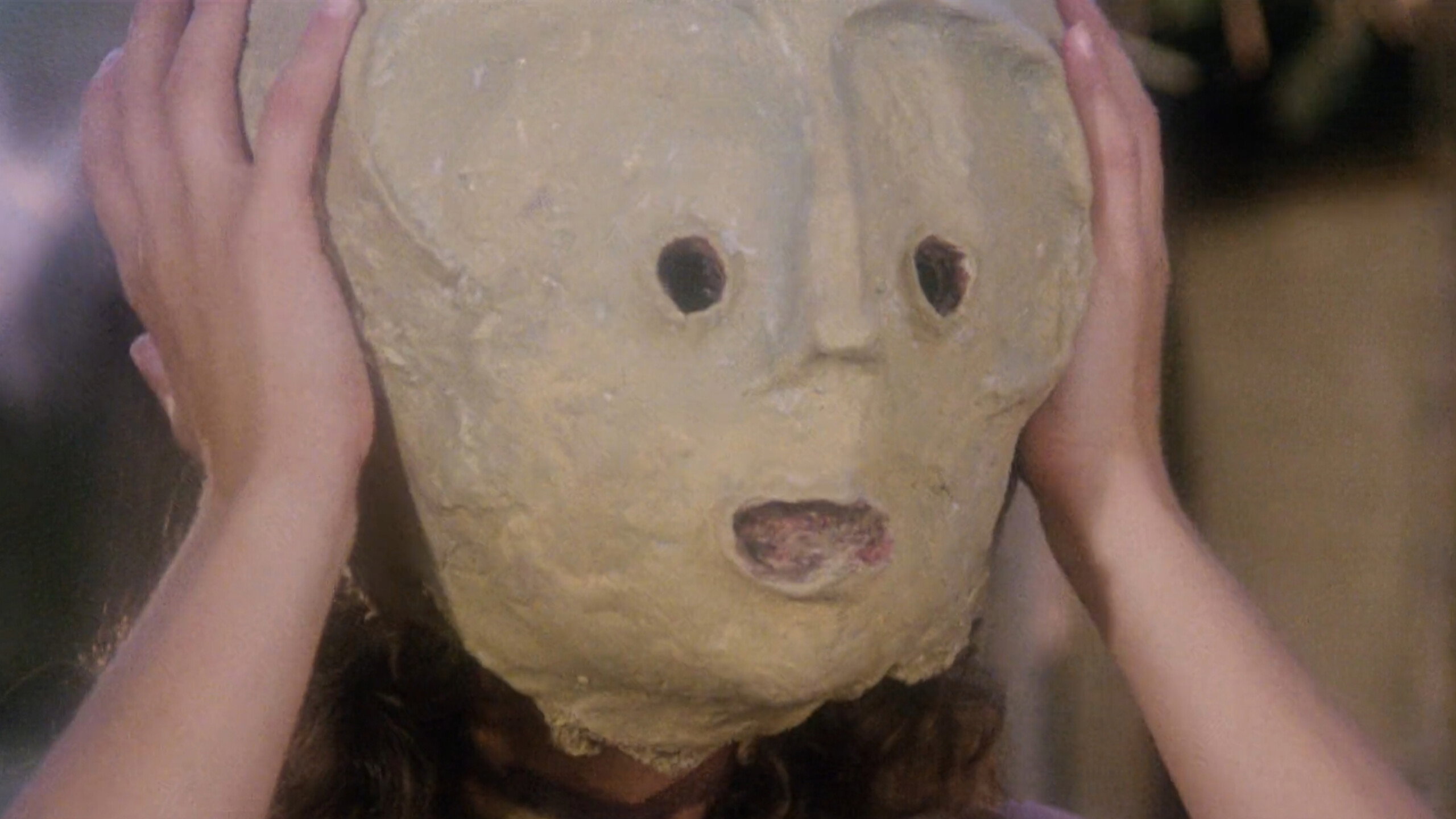
Lia's attempt to blend in by applying body paint compounds the representational problem. The scene assumes that unfamiliar local communities can be treated as a single exotic culture, even though the film's geography is assembled from unrelated sources. The imagery fits a tradition of Italian exploitation cinema in which documentary fragments could promise forbidden sights and geographical authenticity. Here it sits awkwardly beside Fragasso's declared criticism of the wealthy world's exploitation of poorer populations. That contradiction is visible in the completed movie and provides a stronger basis for interpretation than assigning the picture an unqualified anti-colonial message.
Zombie Makeup and Graphic Violence

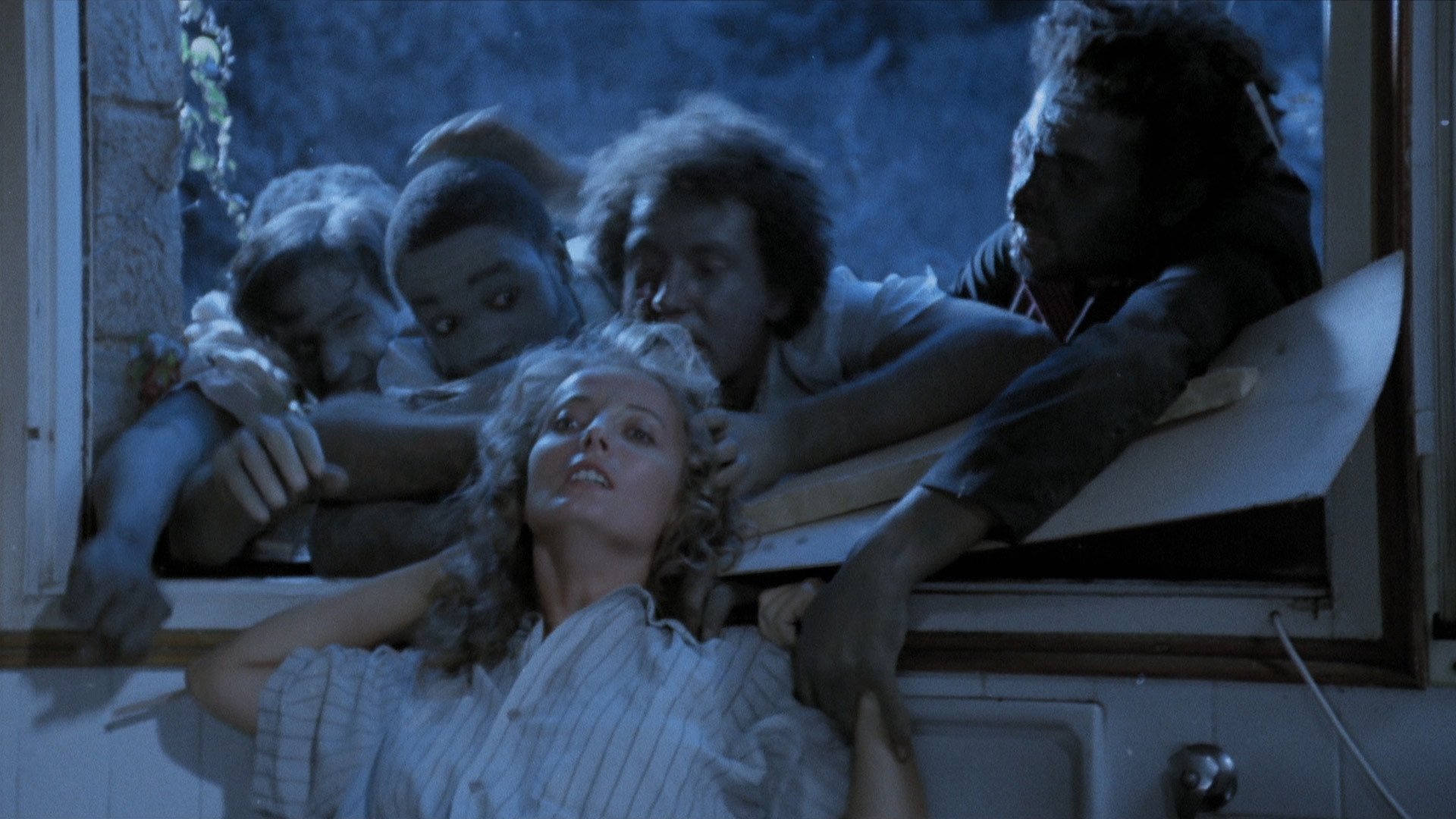
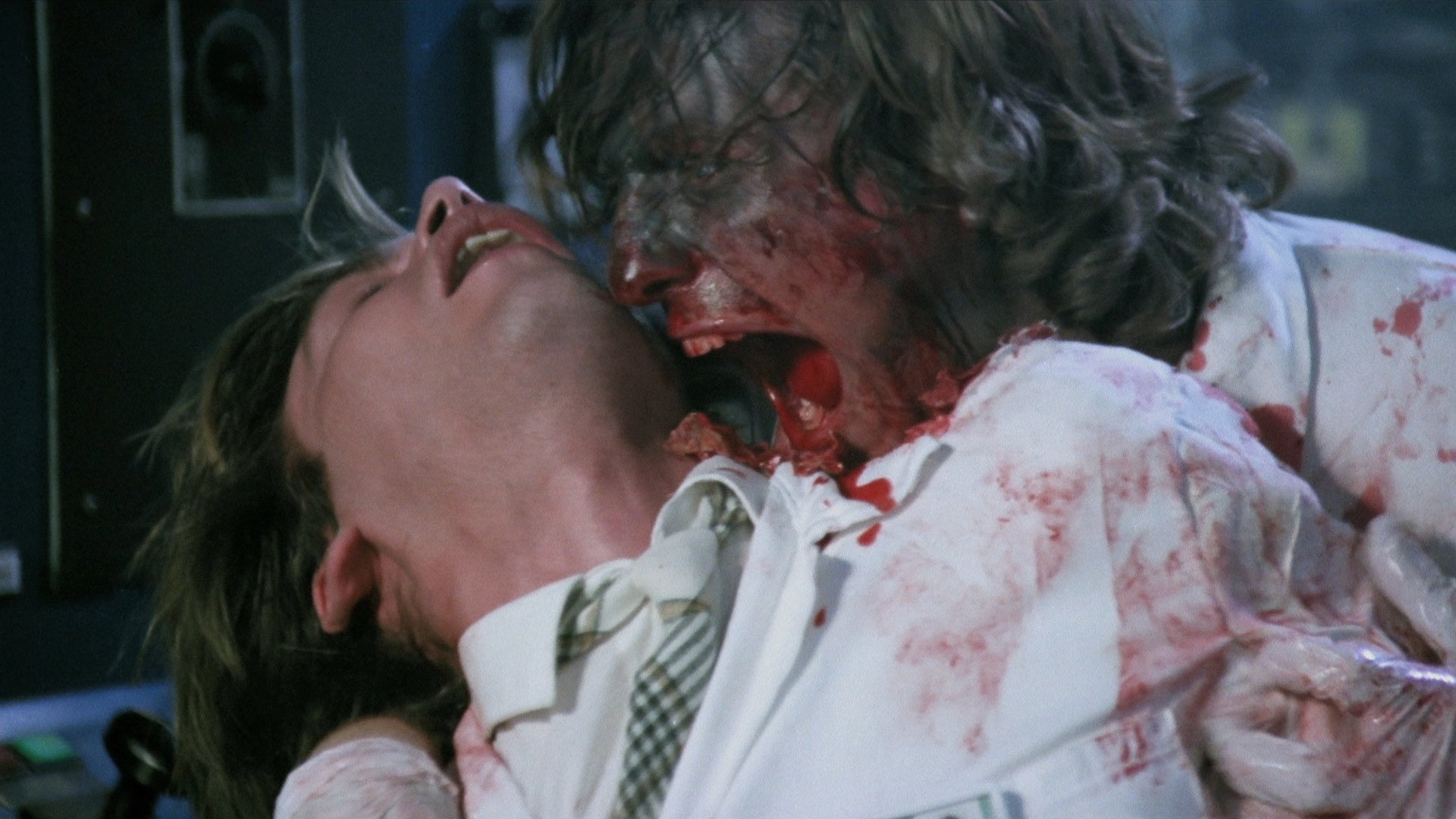
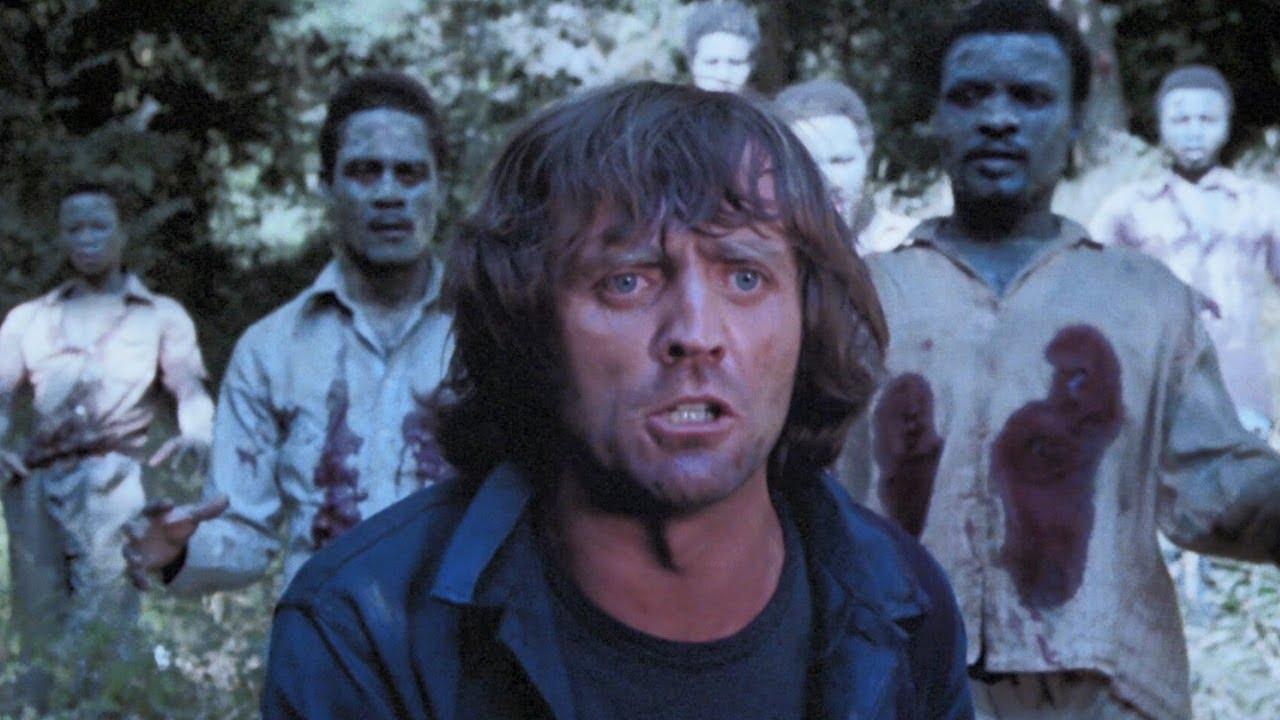
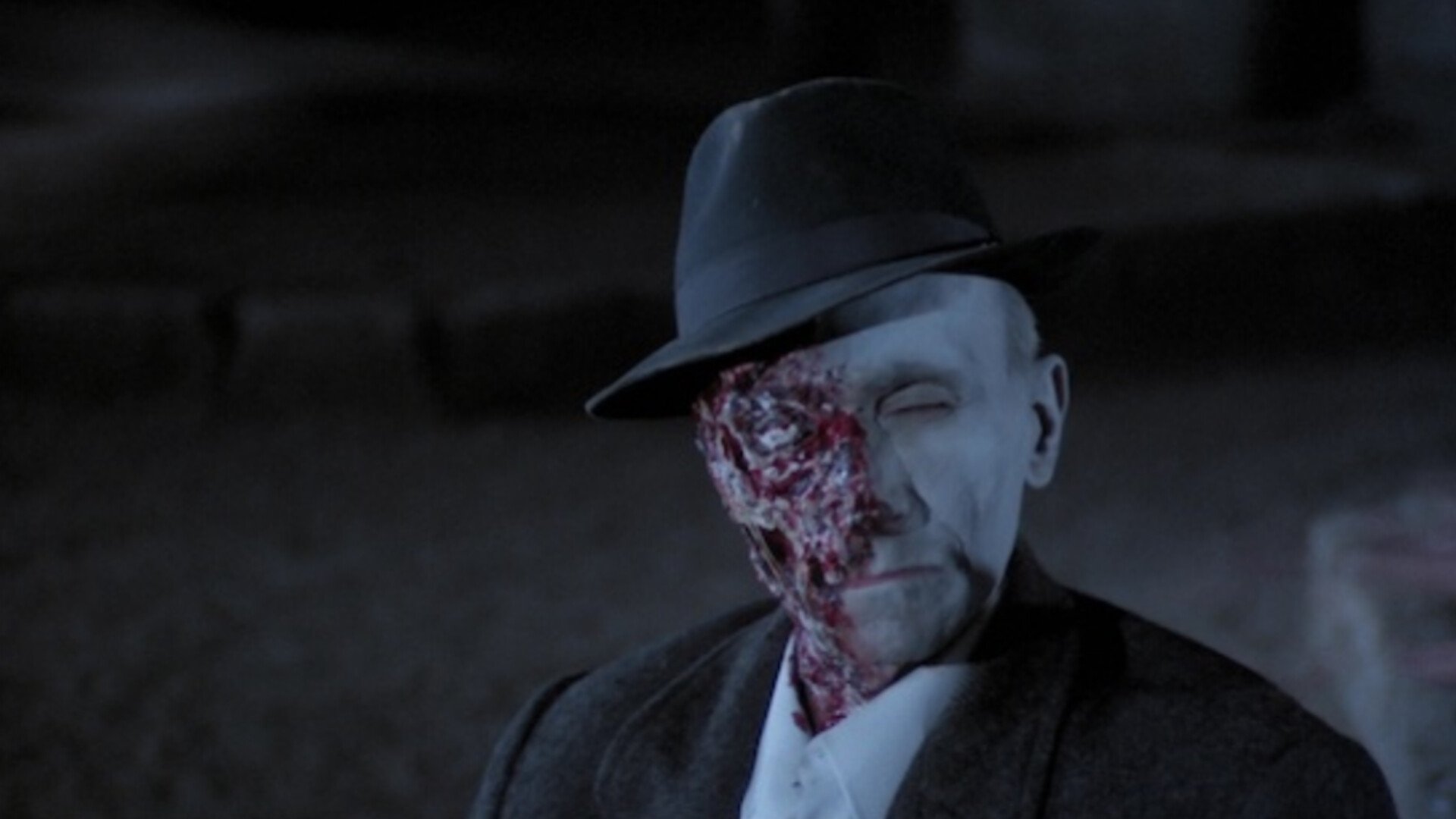
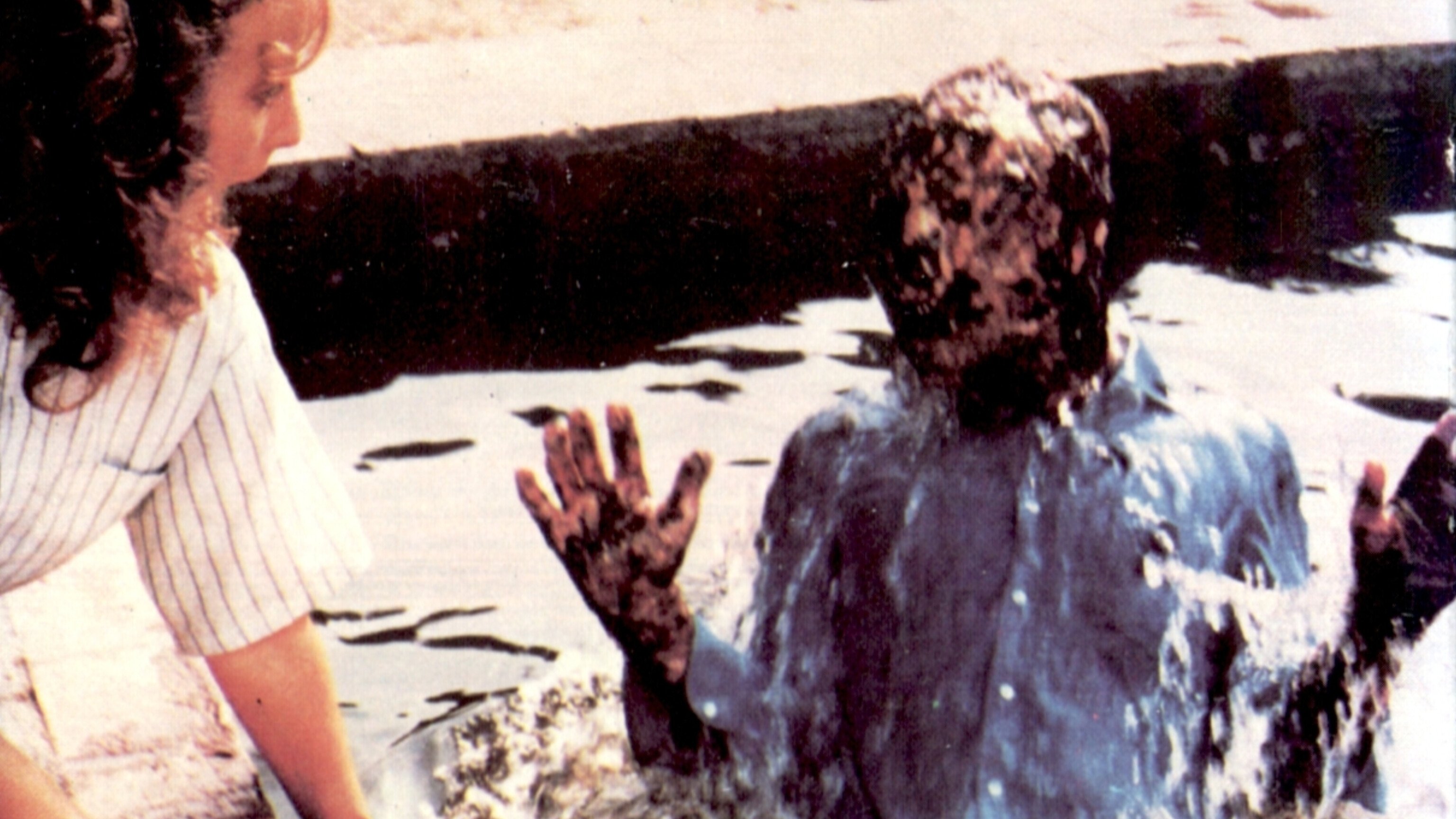
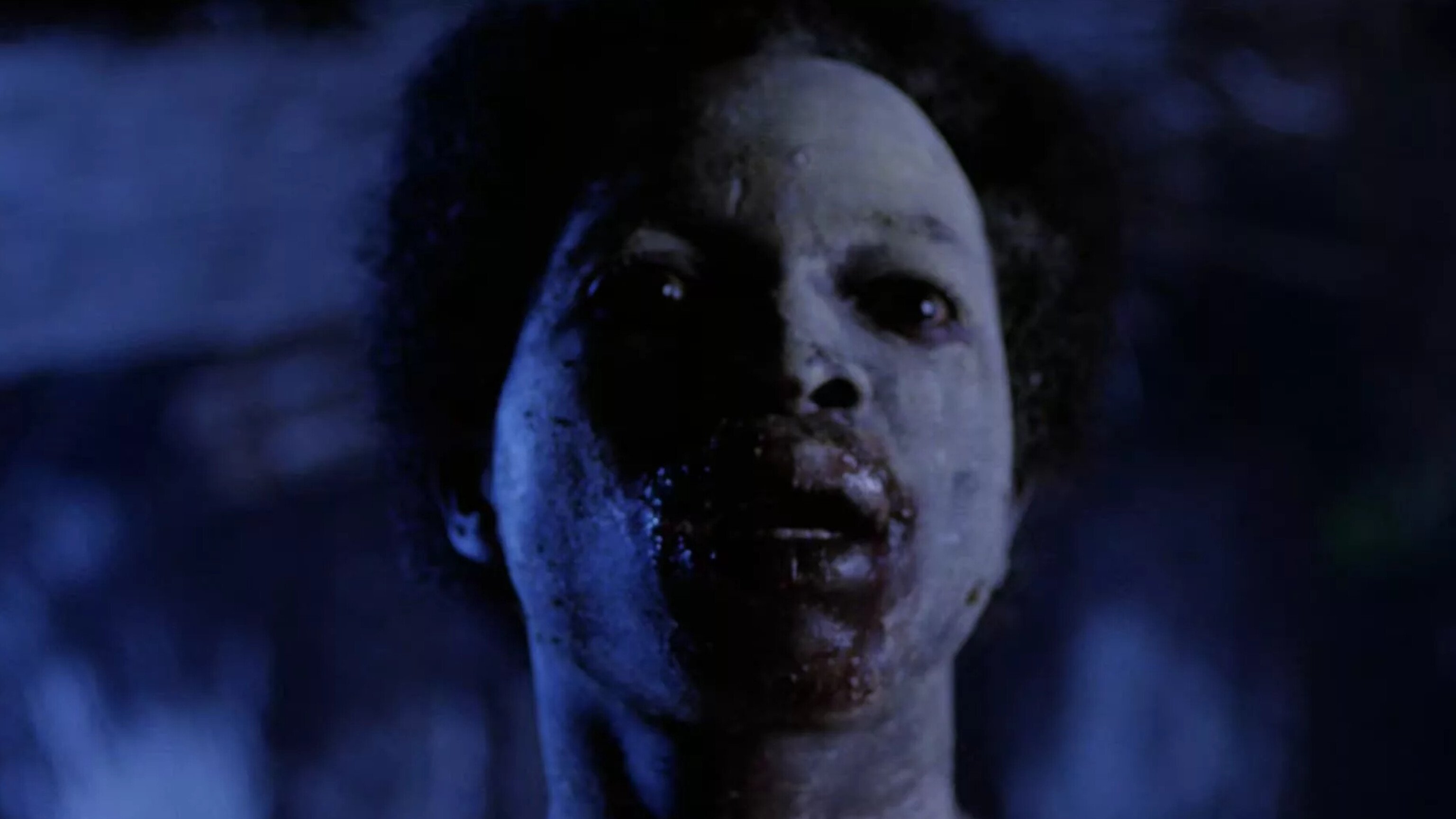
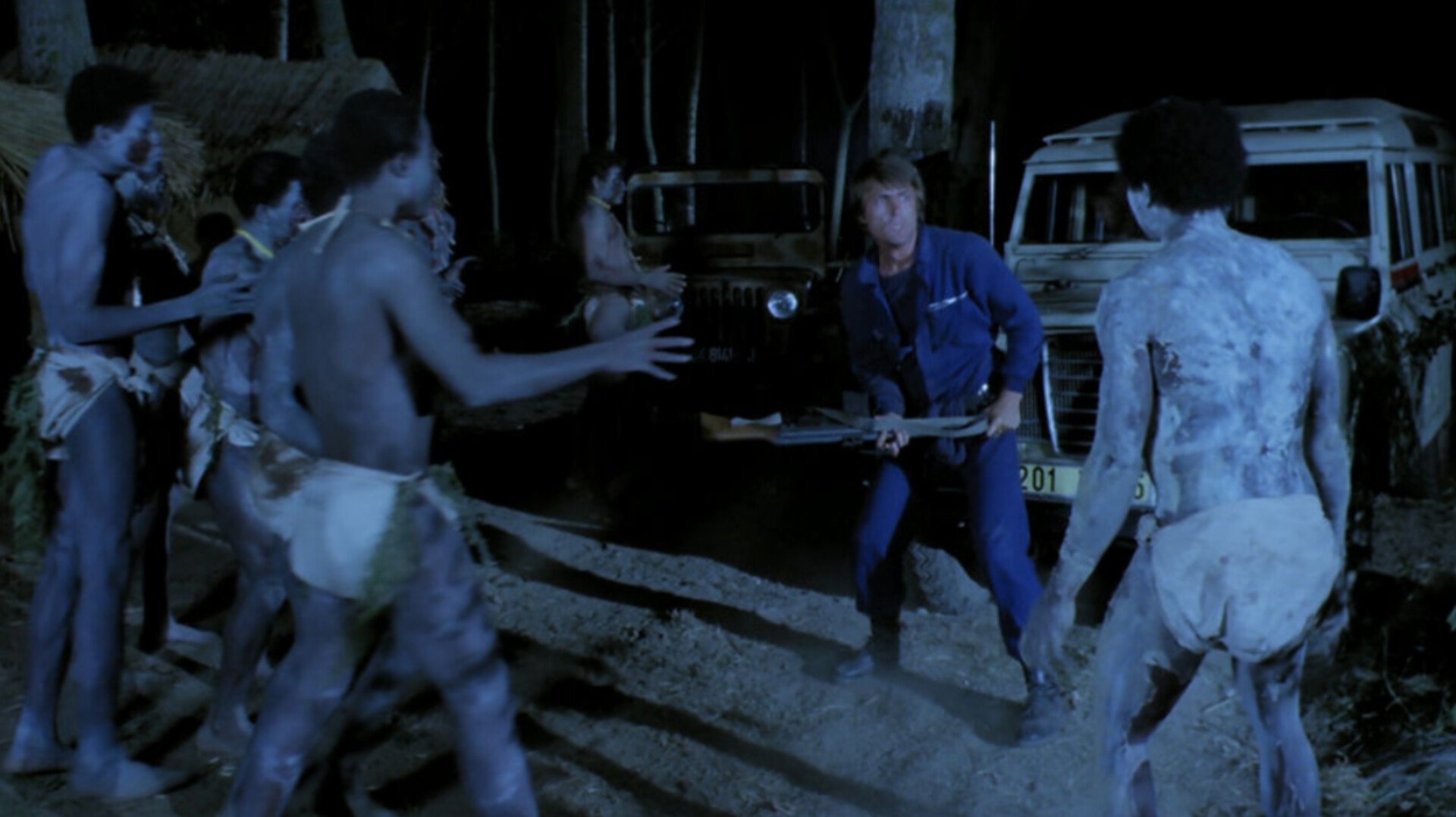
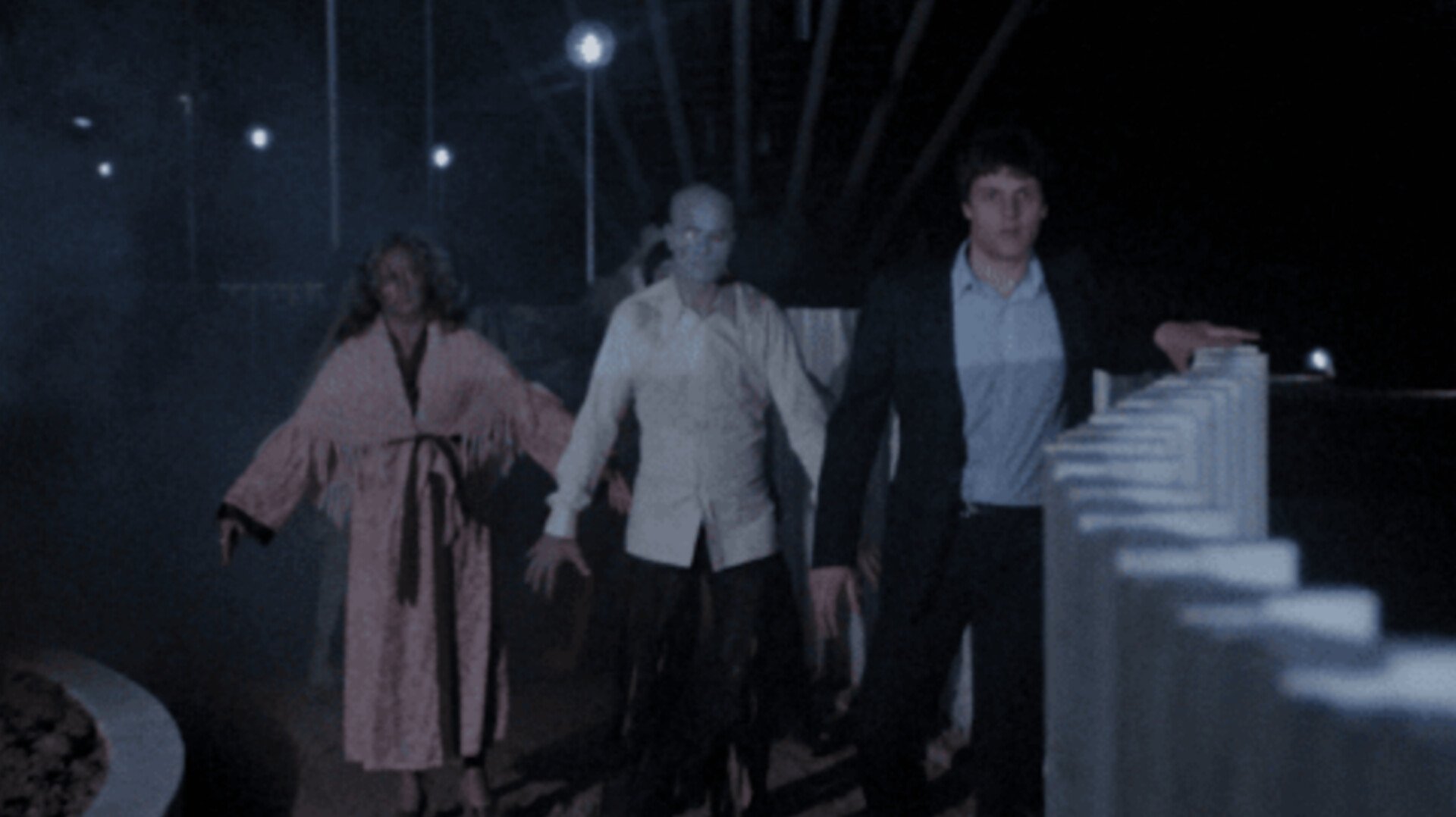
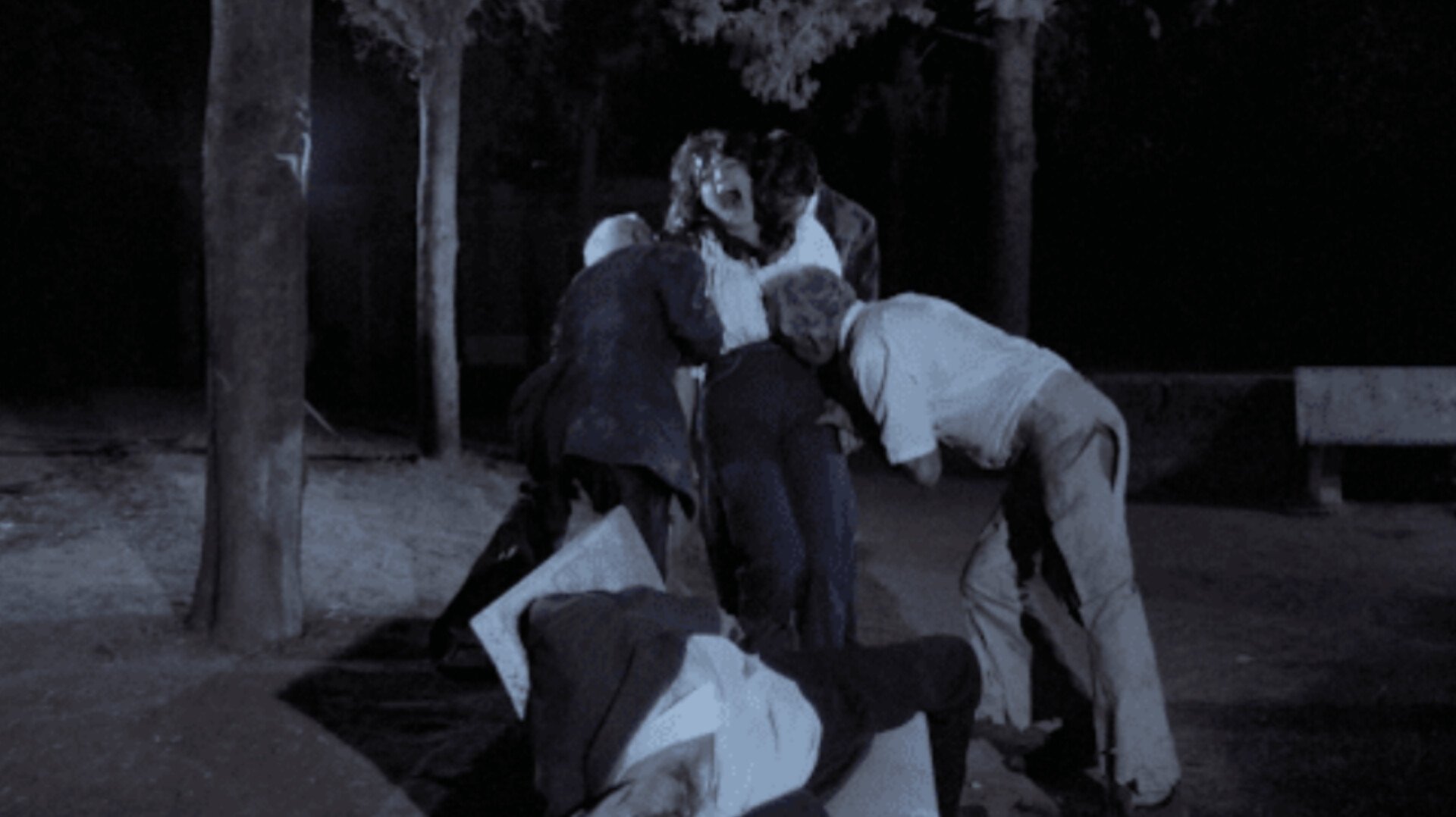
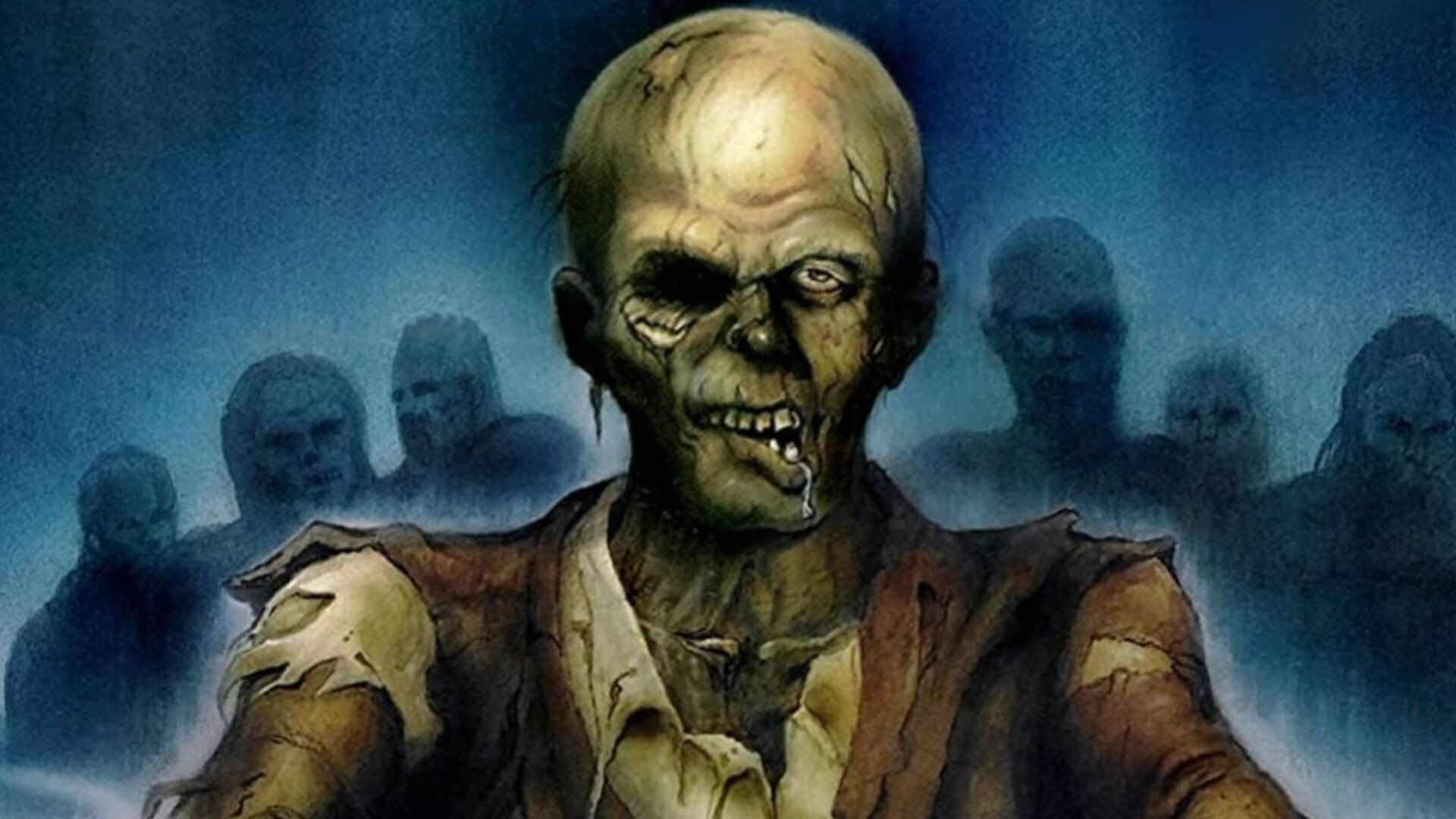
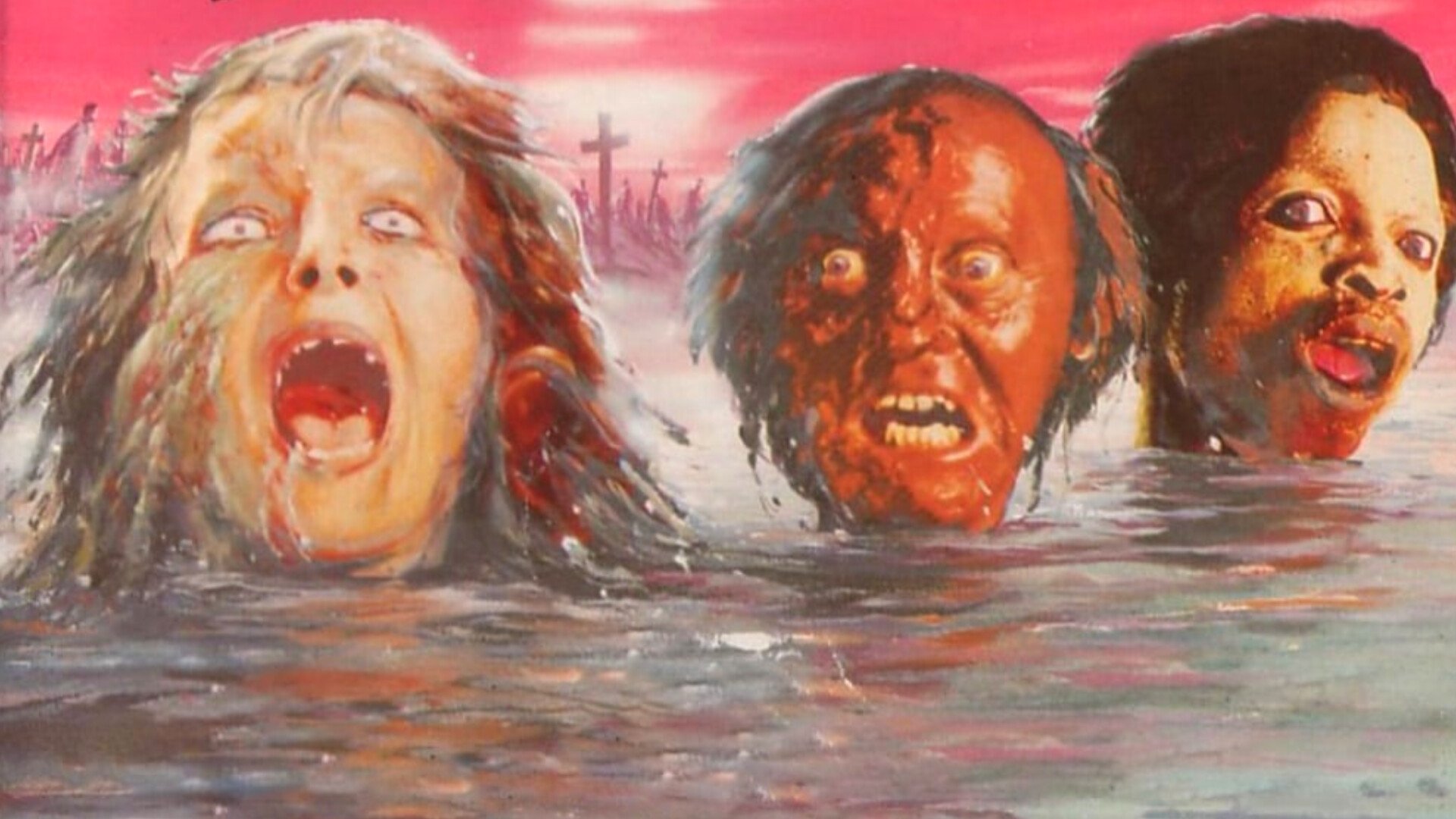
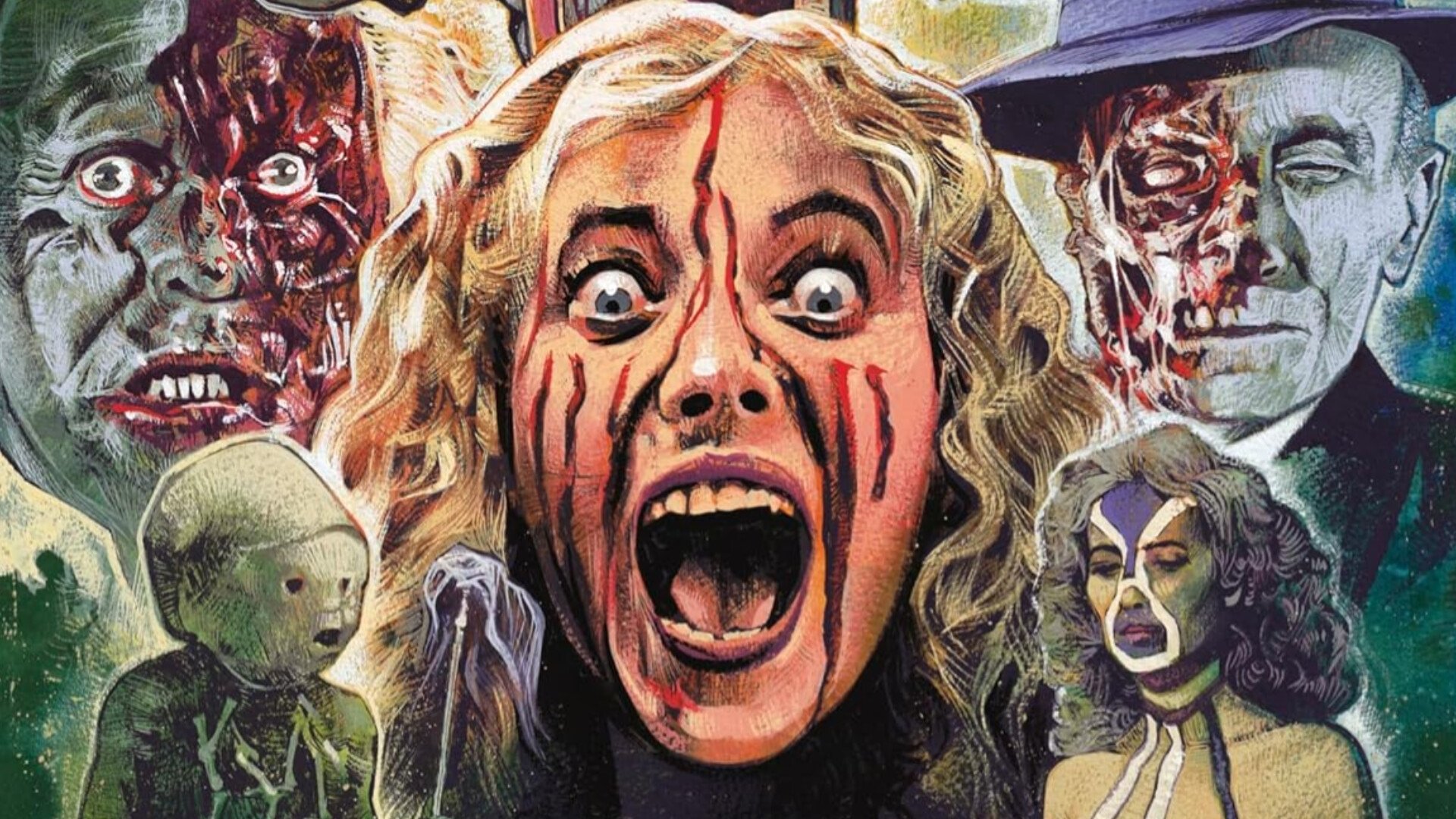
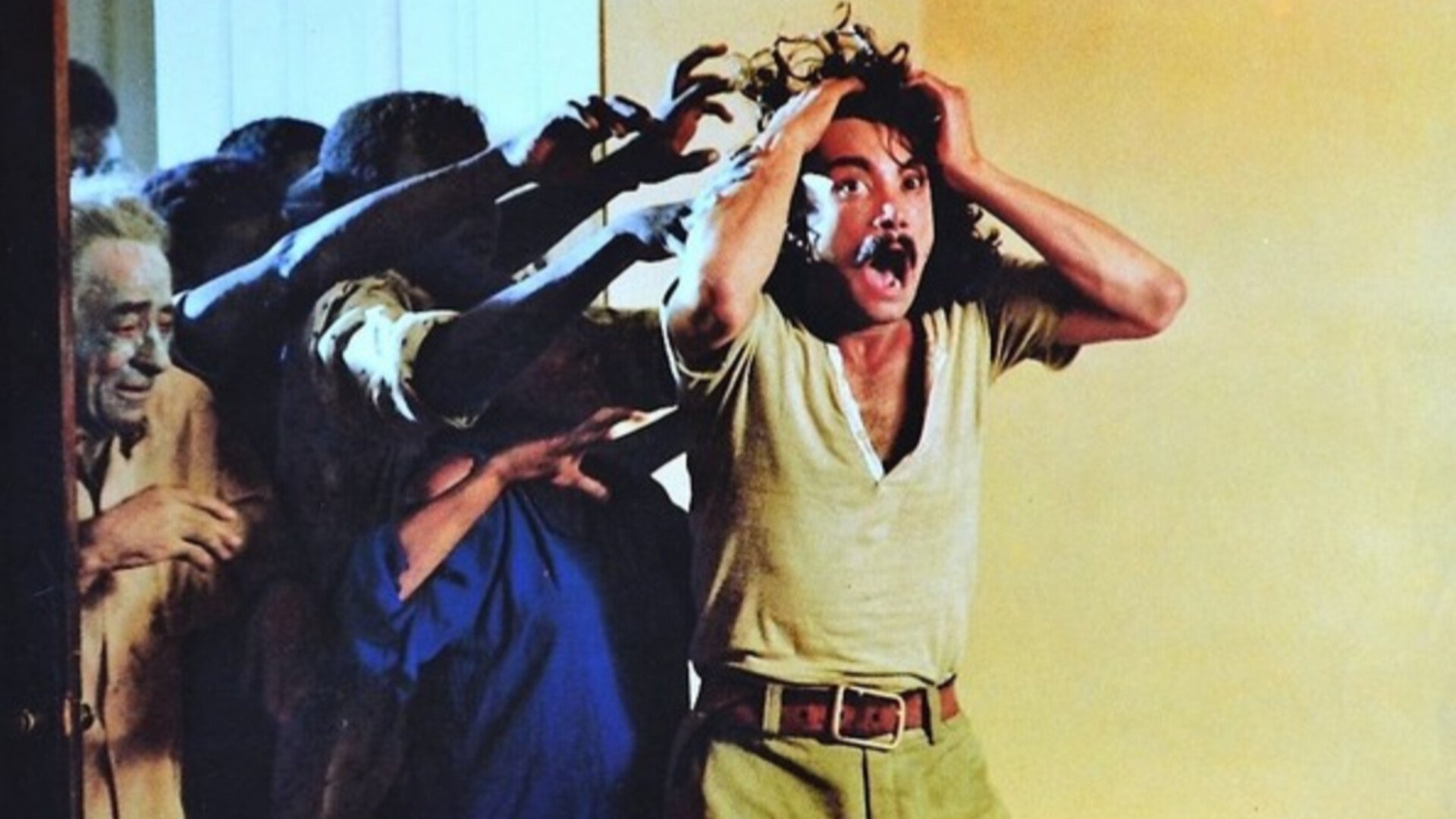
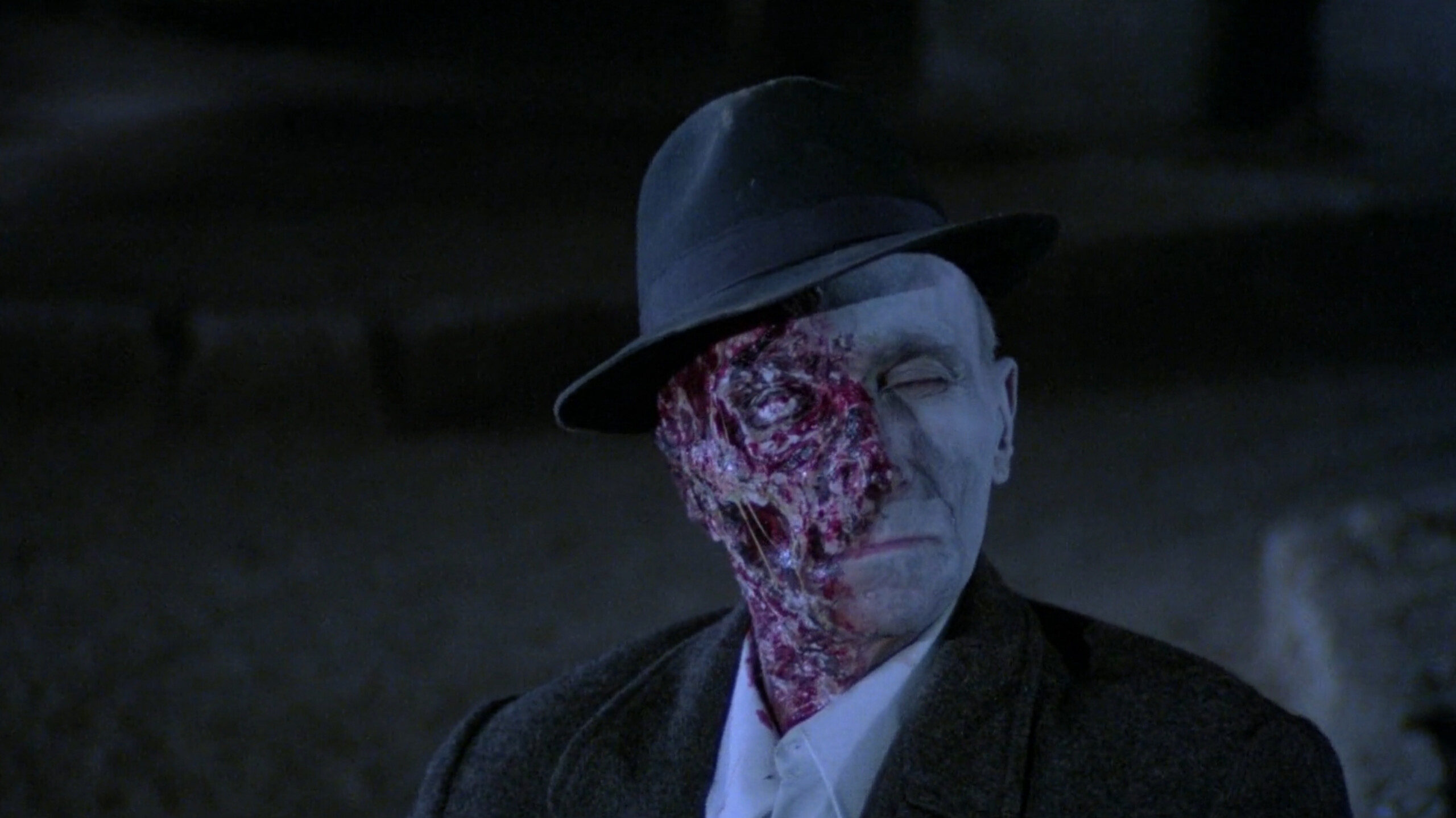
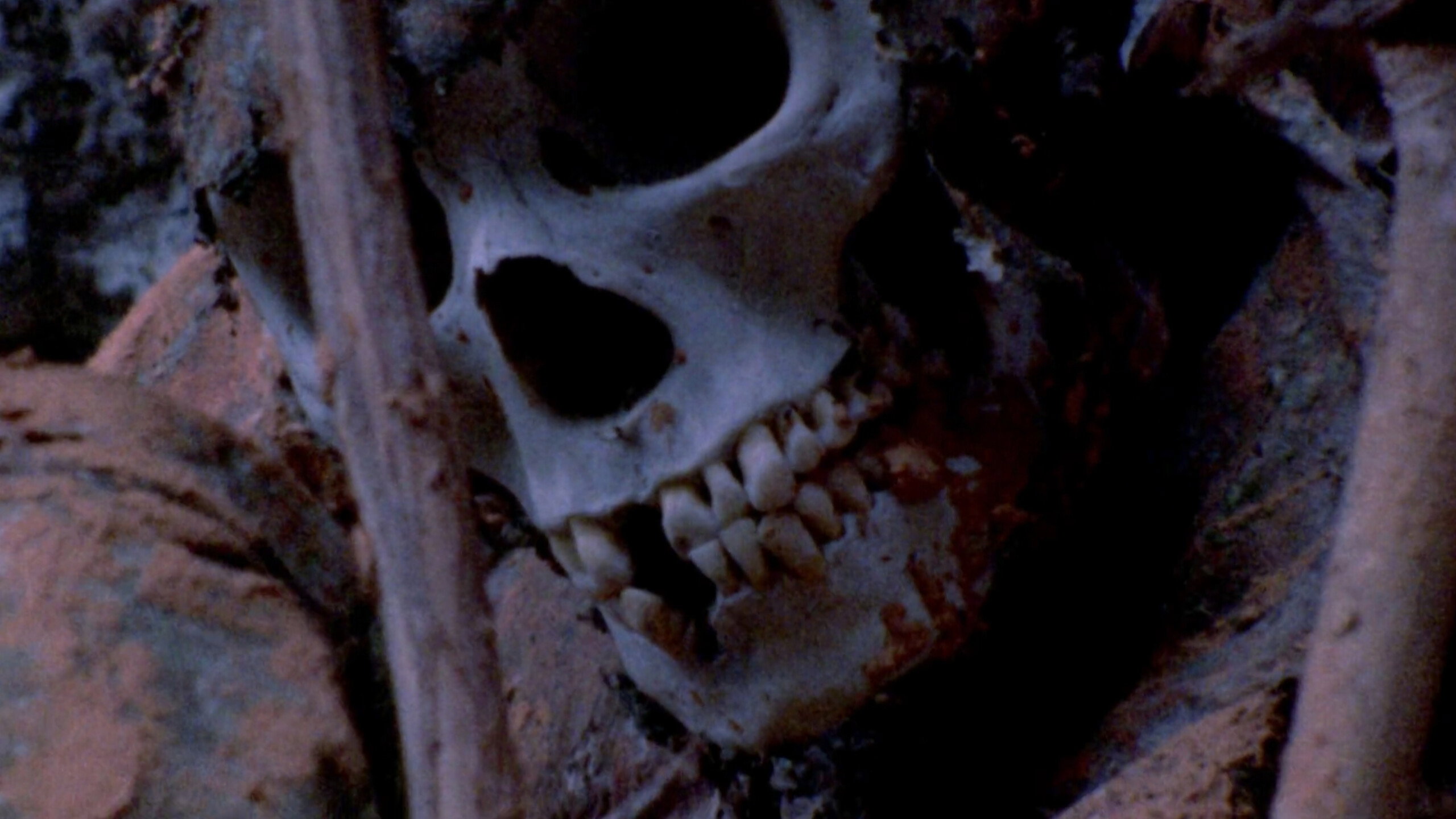
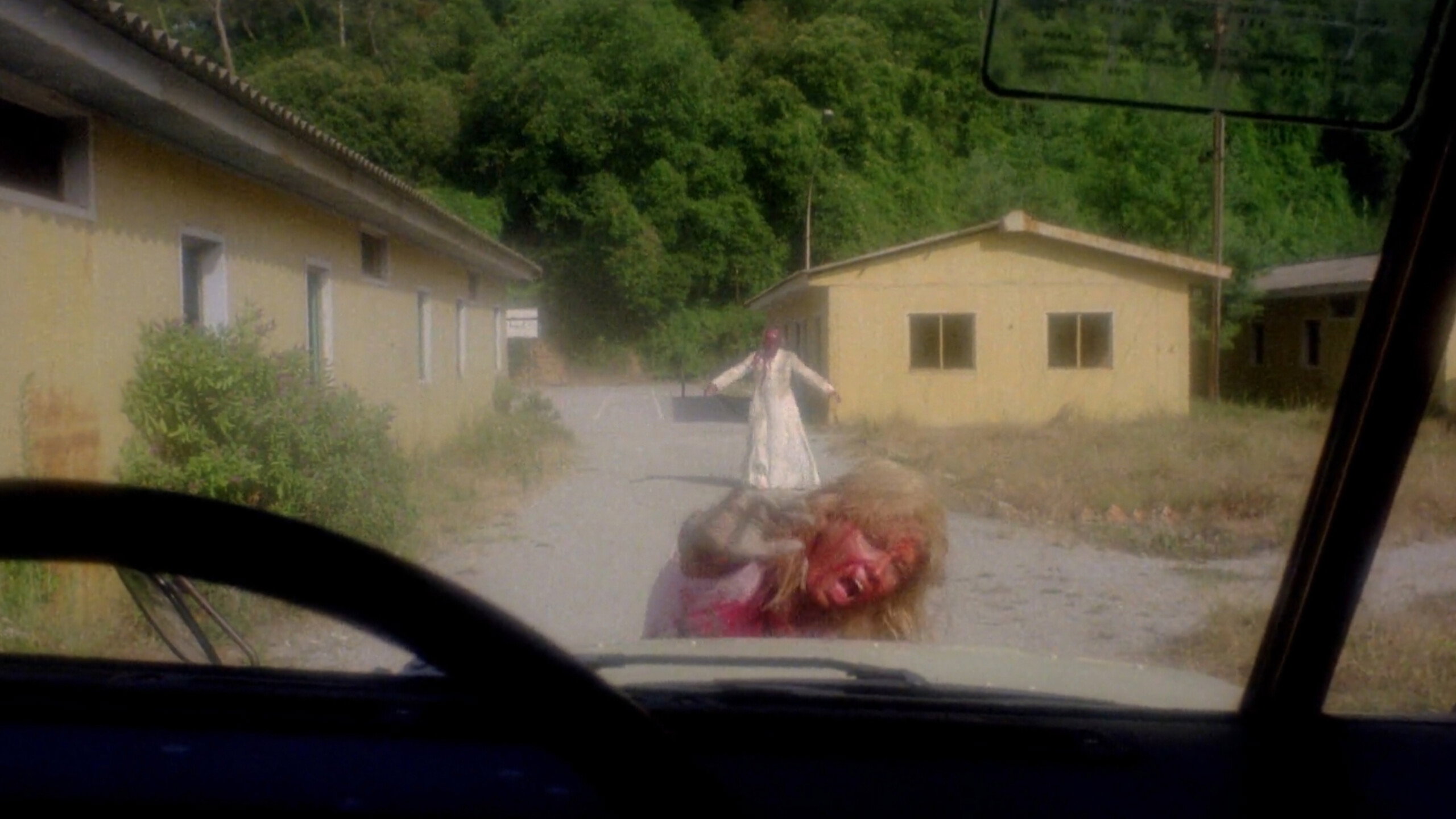
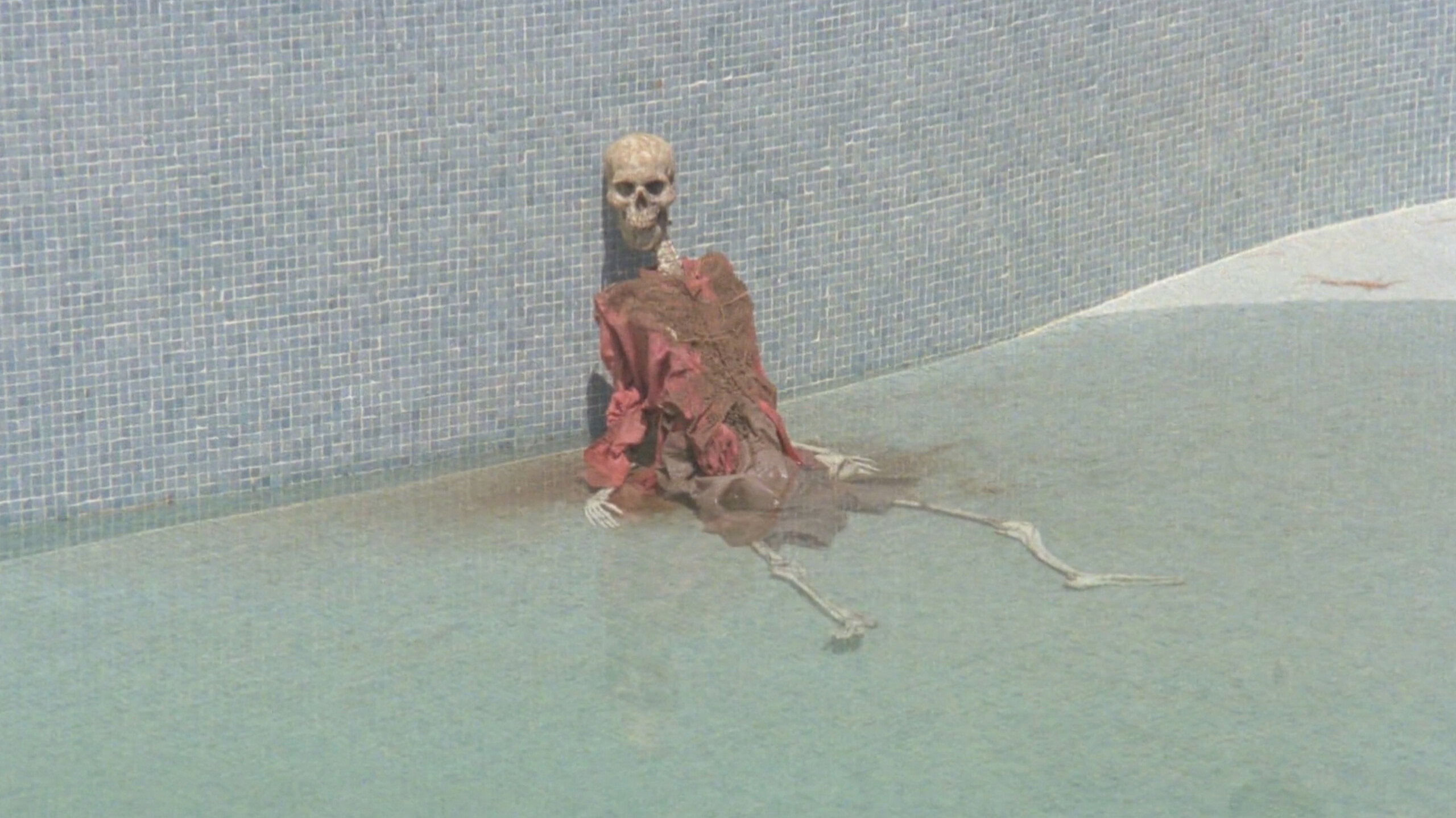
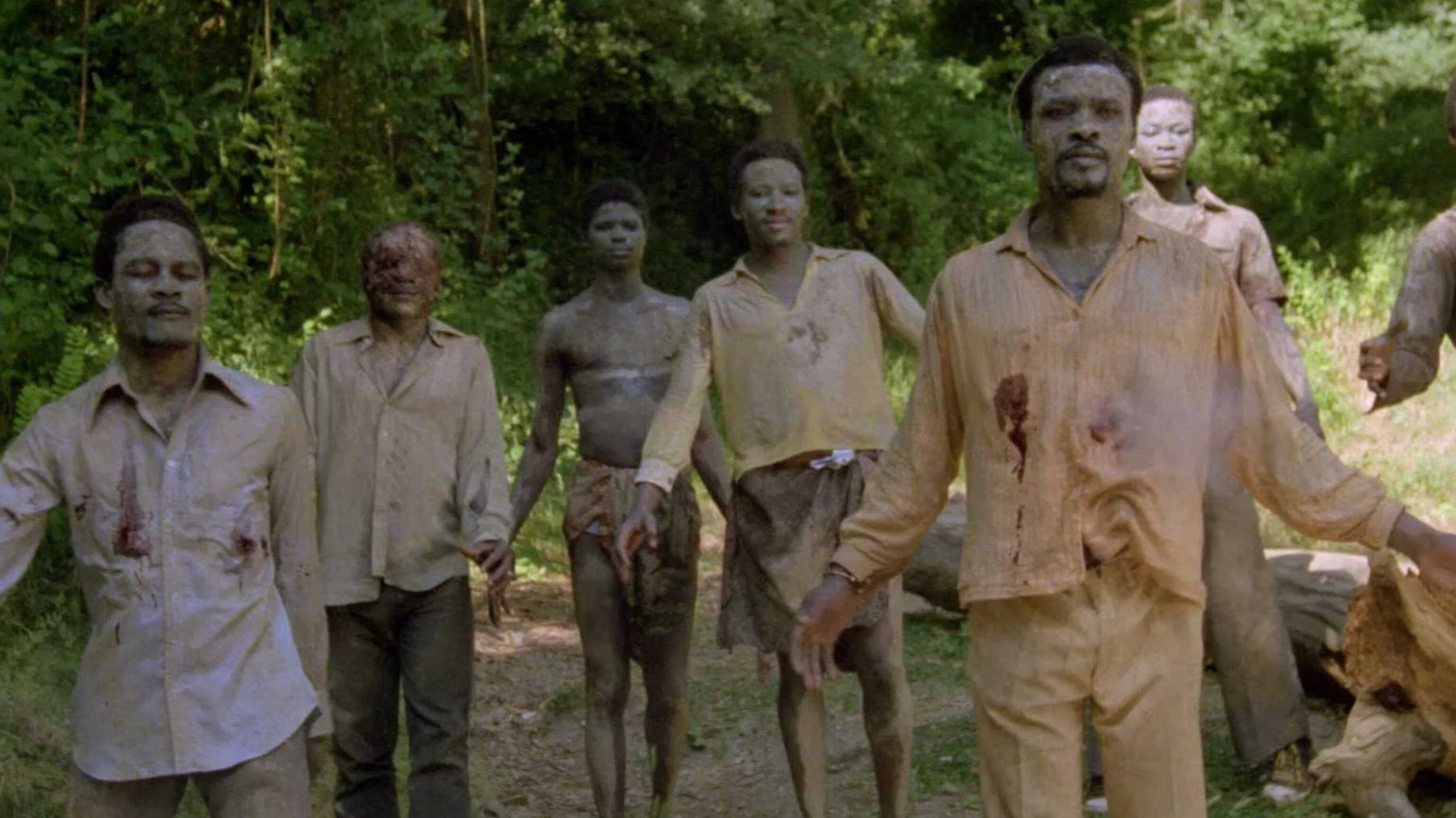
Its most immediately recognizable horror comes from practical makeup and staged bodily destruction. Corpses display discolored skin, damaged faces and exposed tissue, while attacks end with the tearing of flesh and the consumption of organs. The special effects remain variable in their finish, a consequence of material and production limitations as well as the large number of encounters. Faces and hands often establish a zombie's identity before a graphic insert supplies the wound. The killings therefore rely on editing between performers in makeup and separately staged gore details, a method capable of producing an abrupt shock without elaborate mechanical creatures.

The child attack is one of the production's best documented effects scenes because Fragasso described its filming directly. Other set pieces include the dead missionary and the discovery of an older woman's body containing an unexpected animal. The film eventually inflicts a particularly explicit injury on Lia in its final passages. These moments belong to the international escalation of zombie gore after the late 1970s, when filmmakers could distinguish their entries through new combinations of organs, mutilation and visible consumption.

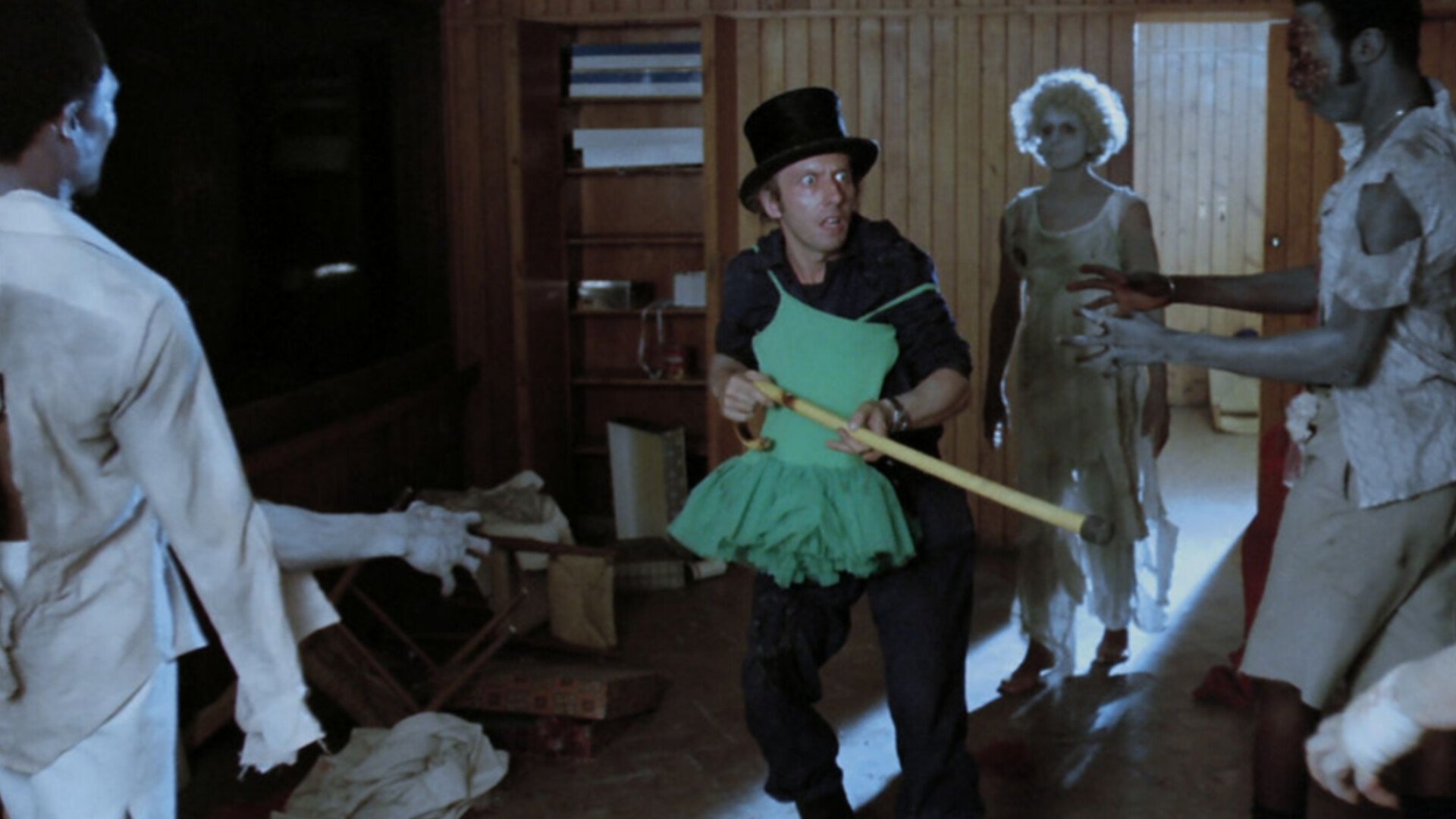
Franco Garofalo's commando Zantoro is central to the feature's tonal instability. His panicked behavior, jokes and sudden outbursts sit beside moments of serious bodily threat. Fragasso singled out a brief comic dance to Singin' in the Rain as a scene he insisted on preserving when the production changed direction. The sequence does not remove the danger surrounding the group; it interrupts the established rhythm in a way that some critics have read as unintentional comedy.

Reused Goblin Music and Film Rhythm

The soundtrack credits Goblin, but the music heard in the feature was largely assembled from recordings already associated with other productions. Its sources include cues from Romero's zombie picture and Beyond the Darkness, alongside material from the group's existing repertoire. Fragasso recalled that the filmmakers had approached Goblin about an original score and found the proposed cost beyond their means. They arranged to reuse repertoire, making minor adjustments, according to Fragasso. The distinction matters because describing the soundtrack as an original Goblin composition for this production would misrepresent its production.
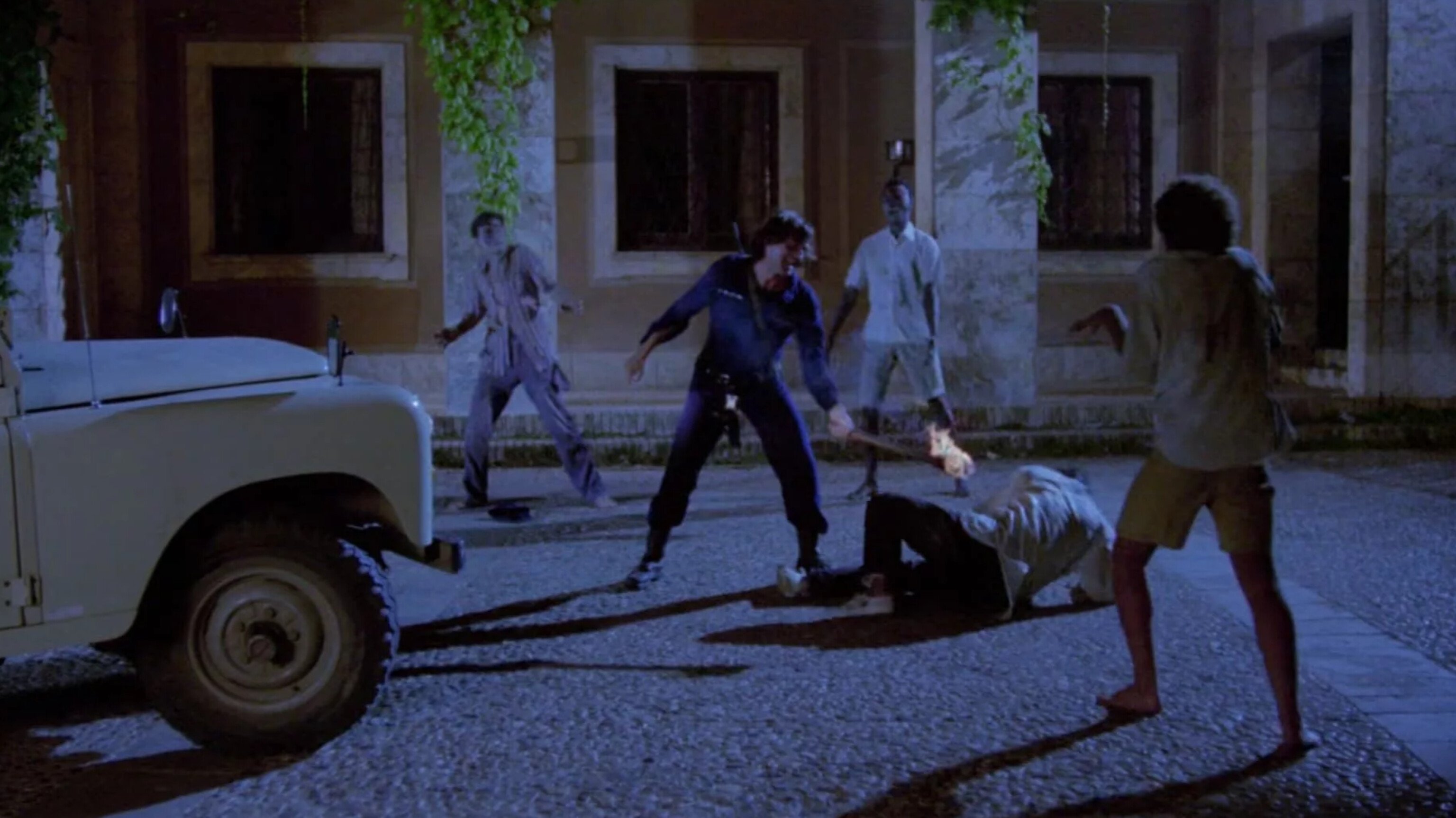
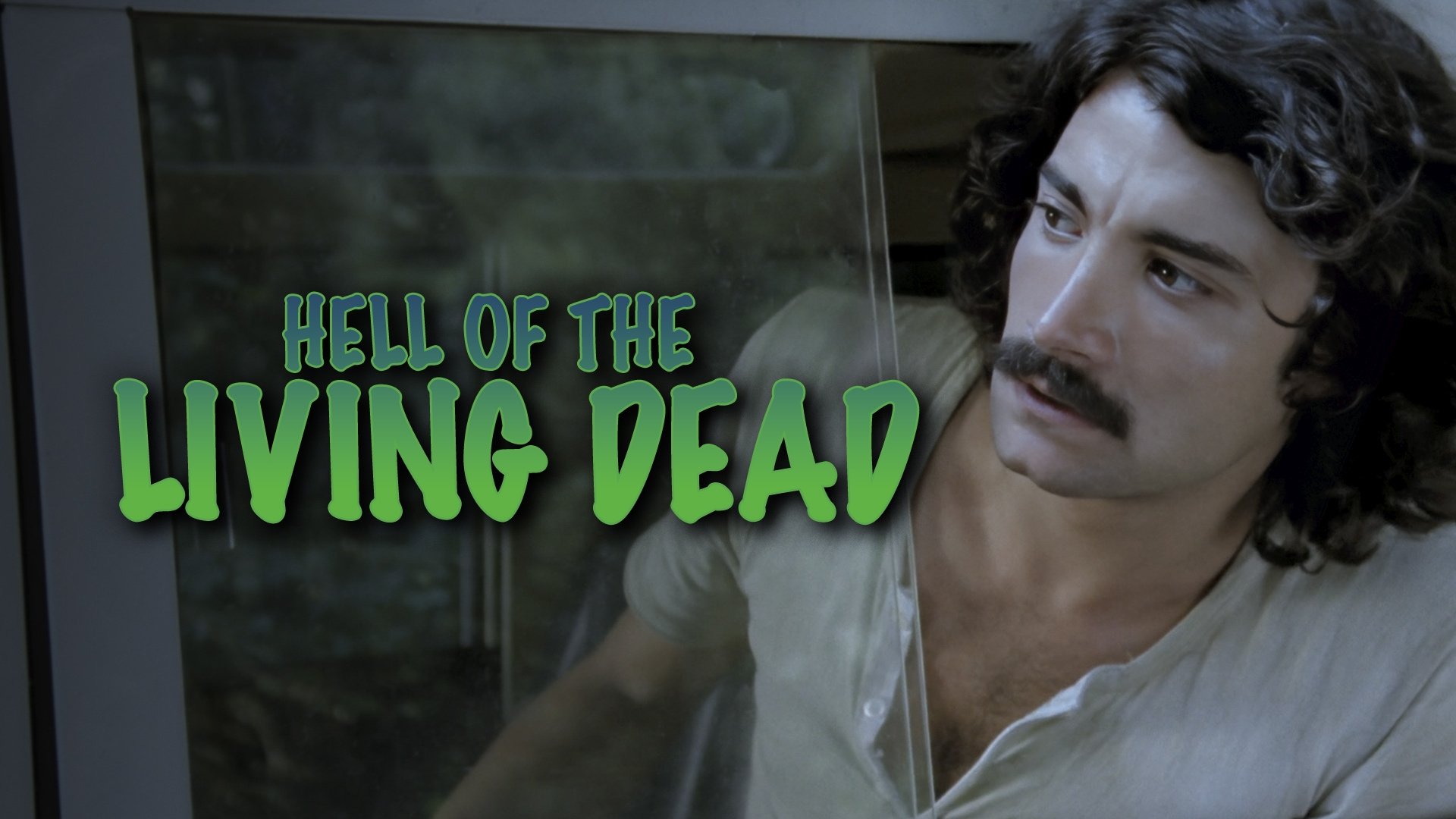
Existing cues bring energetic synthesizers, driving rhythms and abrupt changes in atmosphere into scenes that were photographed and edited under severe constraints. The musical associations with Romero's film intensify the resemblance between the works, especially when armed men confront advancing corpses. Sometimes a forceful passage accompanies action whose physical scale is comparatively modest, creating a noticeable disparity between sound and image. That result can be examined without claiming the recordings were illegally appropriated: the direct production testimony describes an agreement to use earlier material.
Release, British Censorship and Afterlife

The film is ordinarily dated to 1980, with a Spanish release recorded in November of that year and Italian circulation following in 1981. Its extensive list of alternative titles reflects marketing across national borders, where the labels used in Spain, Britain and America could each suggest a different emphasis. The British Board of Film Classification records a cinema submission as Zombie Creeping Flesh on 10 May 1982, with a running time of 99 minutes 12 seconds. The public record does not label that entry as cut, but specialist version histories report that the submitted print had already been shortened for violent material before classification.
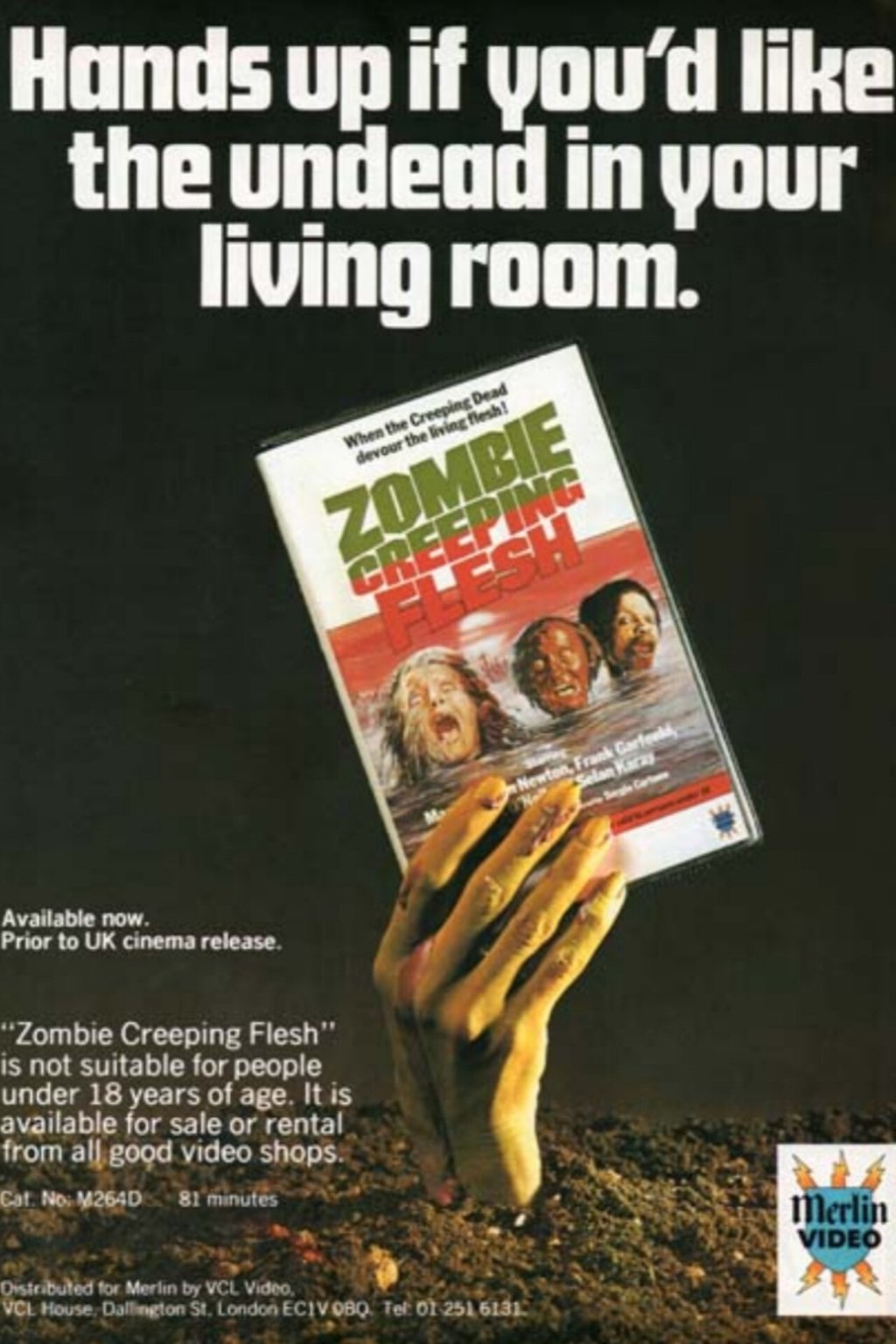
British VHS history involves another, significantly shorter edition. Melon Farmers' film-specific comparison describes a Merlin videotape released in 1982 after roughly fourteen additional minutes had been removed for length and content. That version entered the controversy over video nasties in 1983, and the specialist chronology records its removal from the changing DPP roster in 1985. The history concerns a particular circulating tape and its legal treatment, not a blanket prohibition of every version of Mattei's film. The BBFC subsequently classified a physical-media submission on 10 January 2002, listing a duration of 96 minutes 23 seconds. Differences among film and PAL video running times must be interpreted with attention to playback speed as well as editing.

Later editions restored access to versions closer to the original presentation, while critical discussion continued to return to the documentary inserts and the borrowed musical cues. The picture's commercial identity within the zombie boom is clear, but its ambitions are best understood through the gap between Fragasso's stated political scenario and the fragments preserved onscreen. Its significance resides in a documented example of Italian exploitation production reshaping an expansive story through location substitution, stock footage and practical gore.

References

  1. Gente di Rispetto Intervista a Claudio Fragasso (Giorgio Brass, 2005)

    Full original interview with Claudio Fragasso on the intended political story, filming in Spain, reused documentary footage, effects scenes, music rights and contested directing contribution.

  2. And You Call Yourself a Scientist Hell of the Living Dead (1980)

    Extended film-specific historical and critical study identifying documentary sources, the construction of New Guinea, narrative developments and the use of earlier music.

  3. British Board of Film Classification Zombie Creeping Flesh - Classification History

    Official records of the 10 May 1982 theatrical submission and 10 January 2002 physical-media classification, with separate running times.

  4. Melon Farmers Zombie Creeping Flesh - UK Cuts and Versions

    Film-specific comparison documenting the pre-cut cinema print, further shortened Merlin videotape, DPP-list chronology and later release history.

Cast

View Full Cast & Crew →

Release & Distribution

Production Companies (2)

  • Beatrice Film
  • Films Dara

Distributors (1)

  • United Artists US

Release History (6)

Release DateTerritoryRelease TypeFormatDistributorCertificationNotes
1980-11-17 Spain Theatrical — — 18
1981-08-21 Italy Theatrical — — —
1981-11-27 Germany Theatrical — — 18
1982-10-01 United Kingdom Physical VHS — 18 VHS (cert X)
1983-01-20 United States Theatrical — — NR
1985-05-10 Canada Theatrical — — —
When the Creeping Dead Devour the Living Flesh!