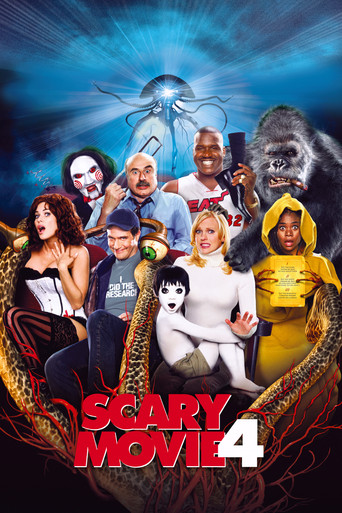
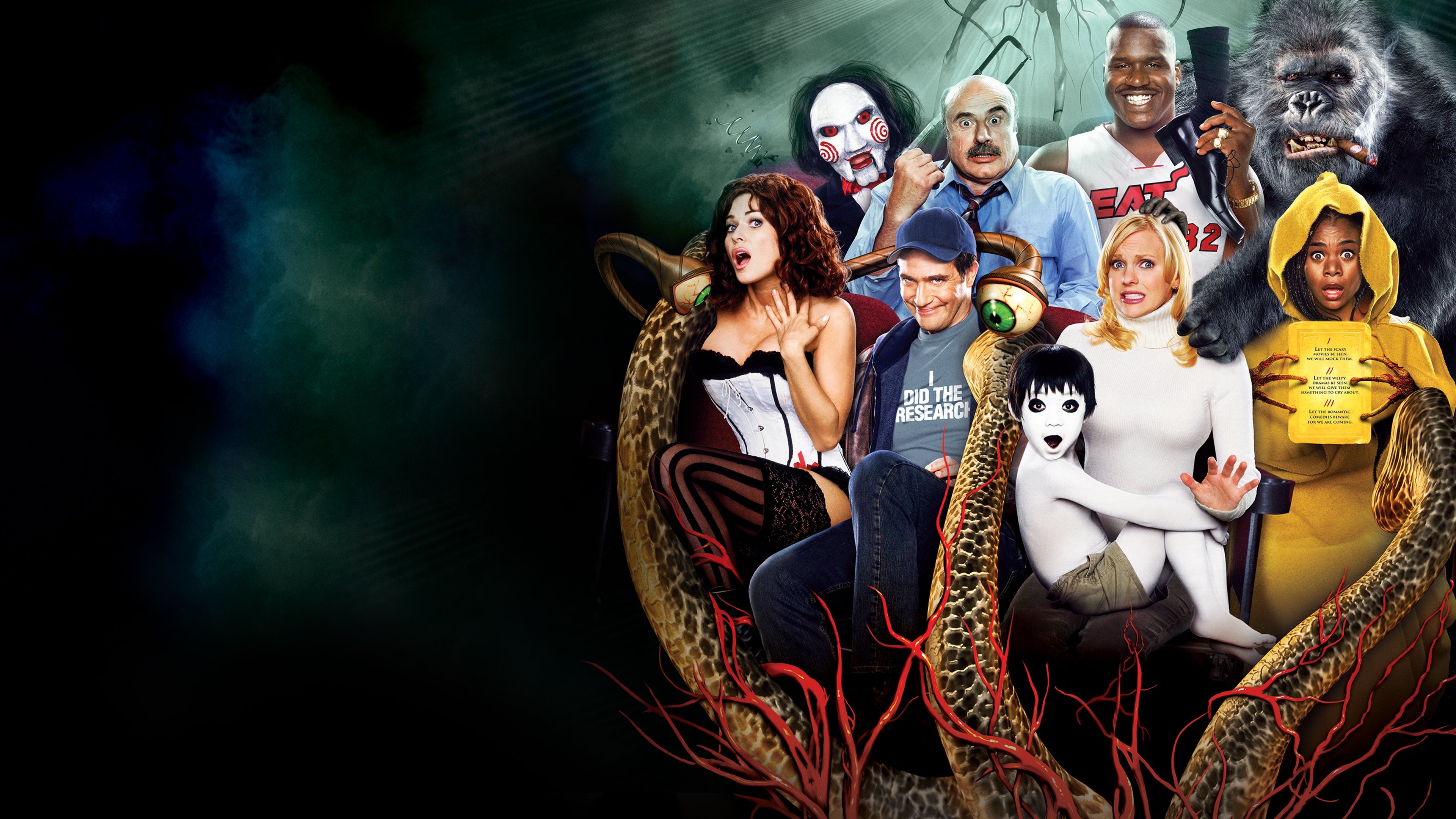
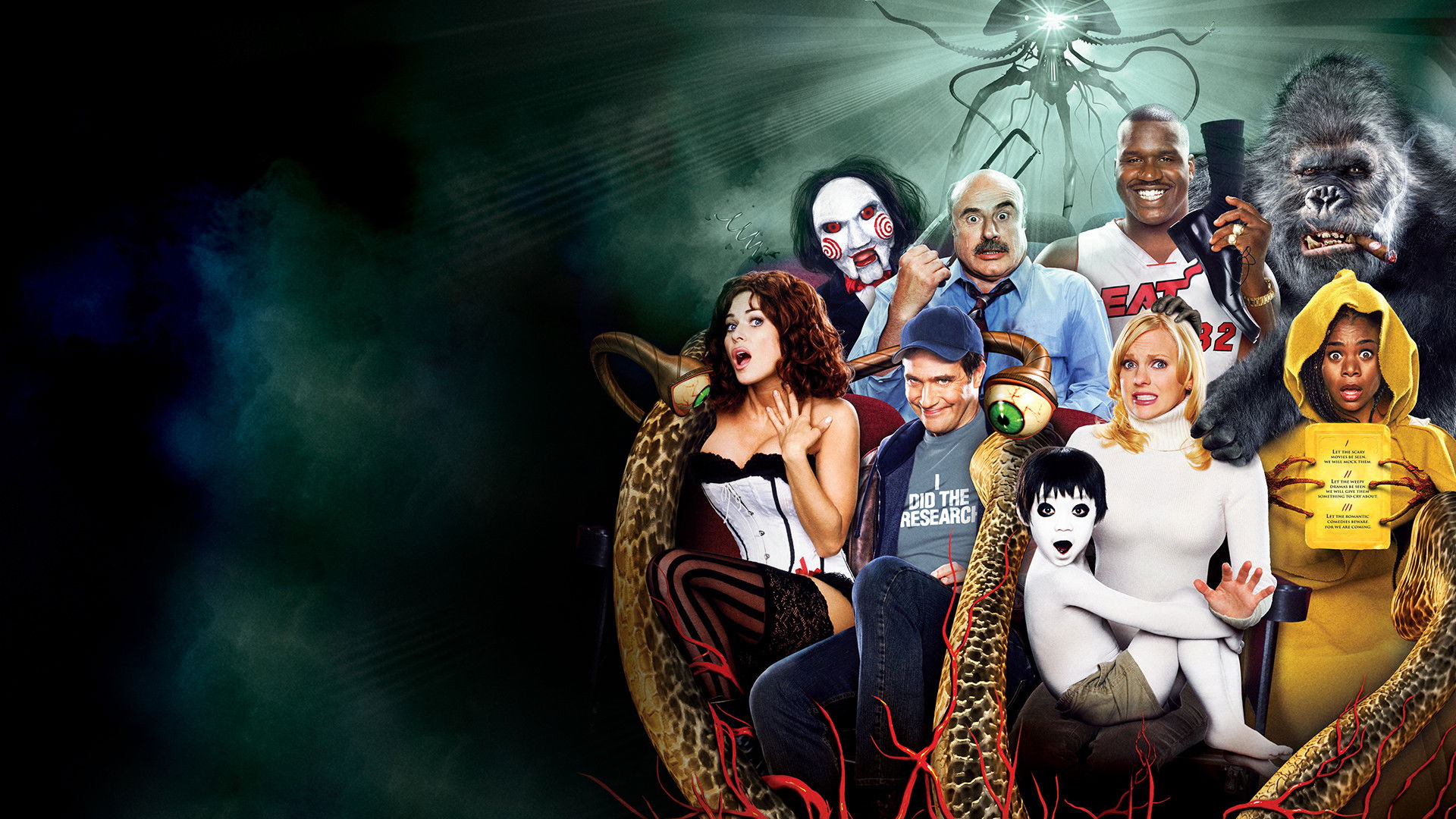
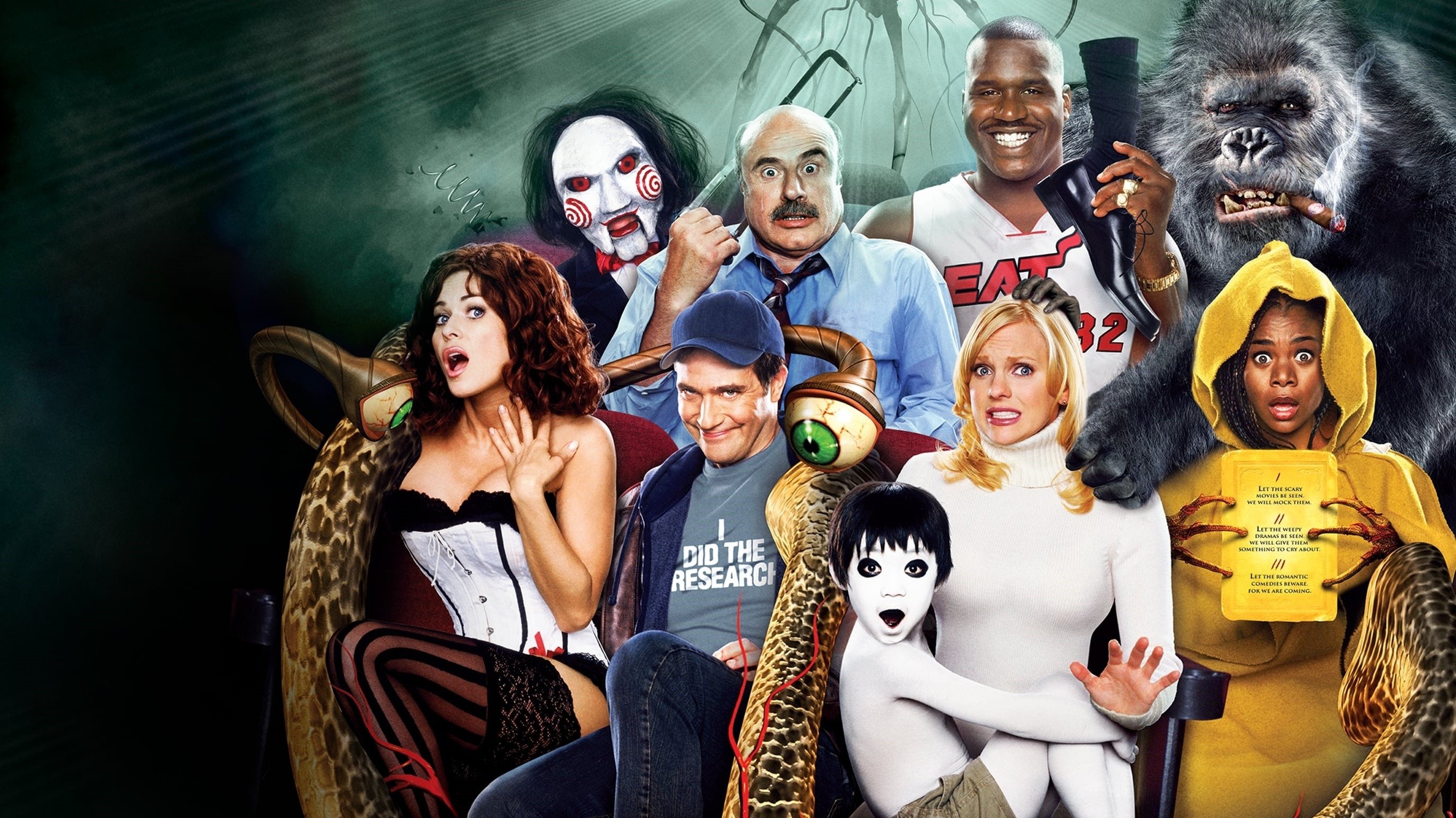
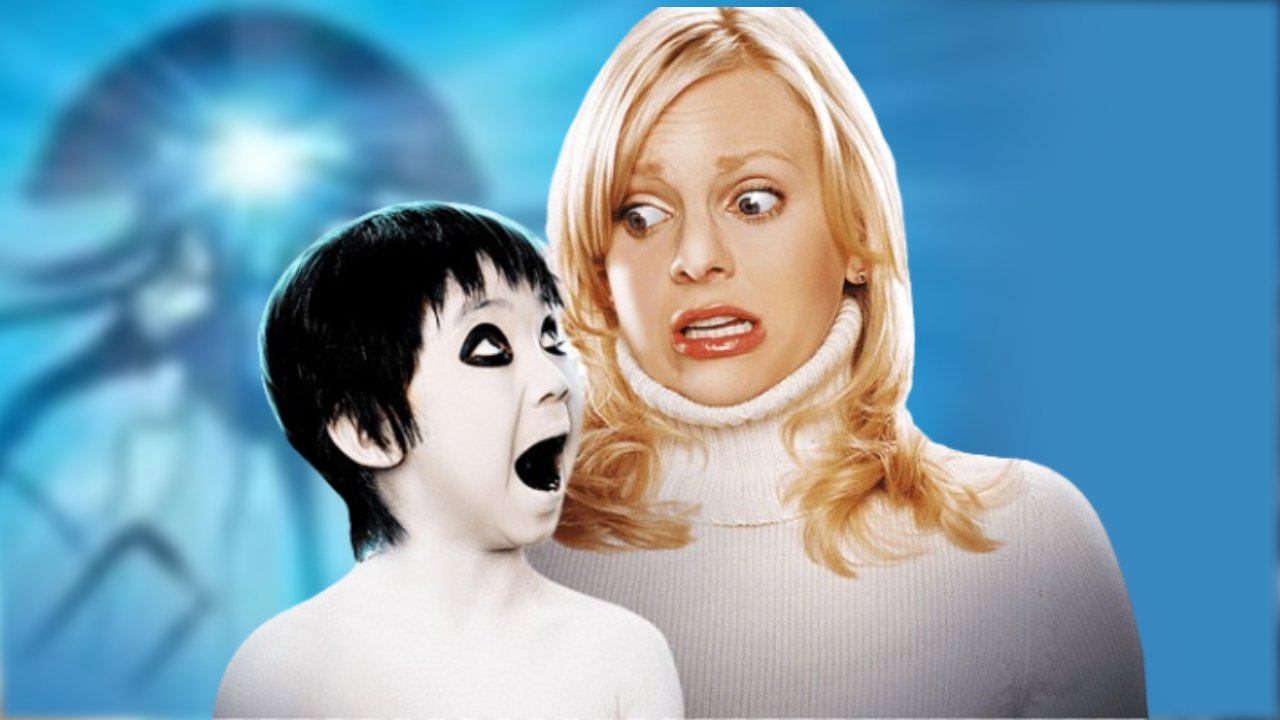
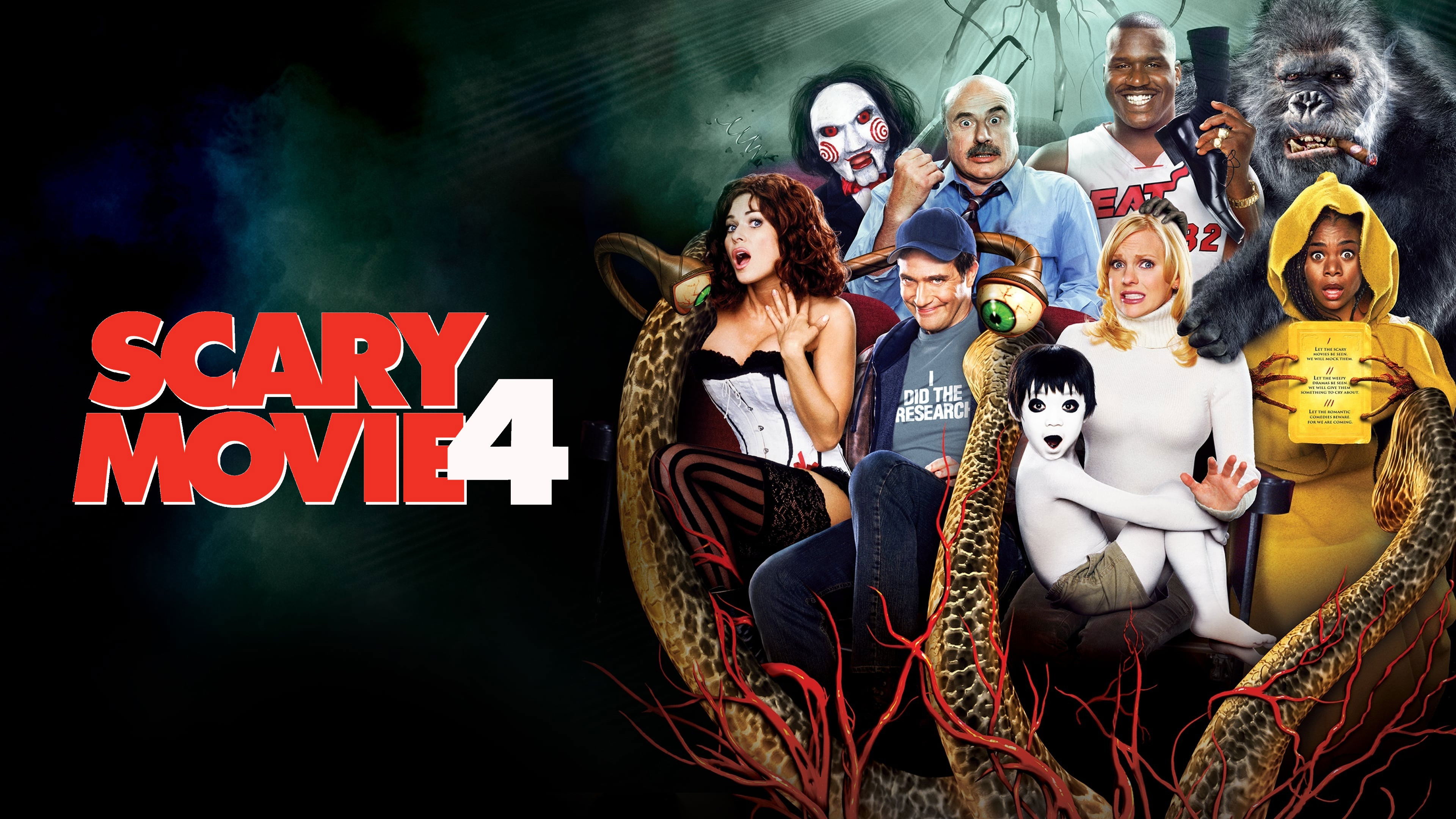
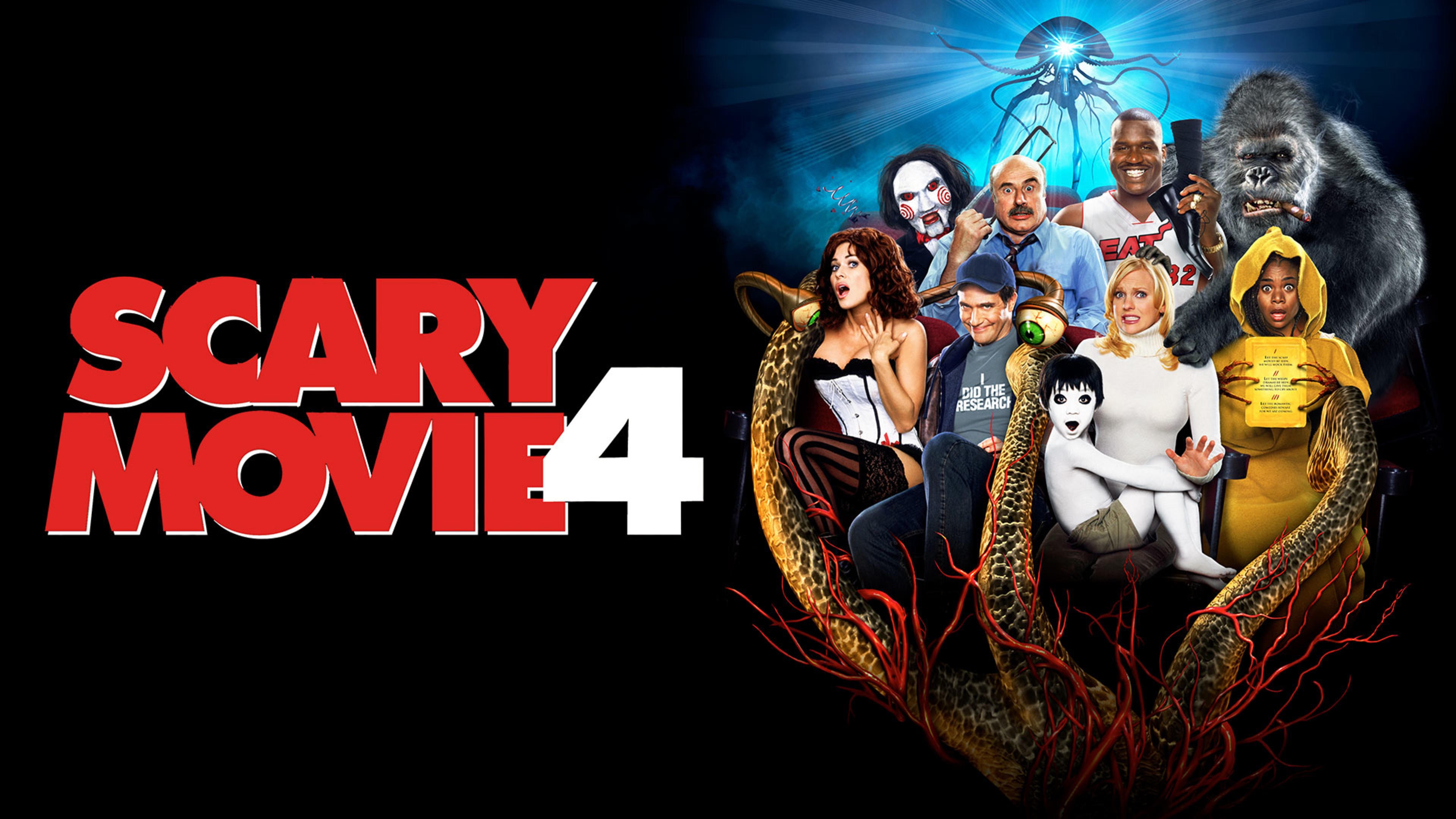
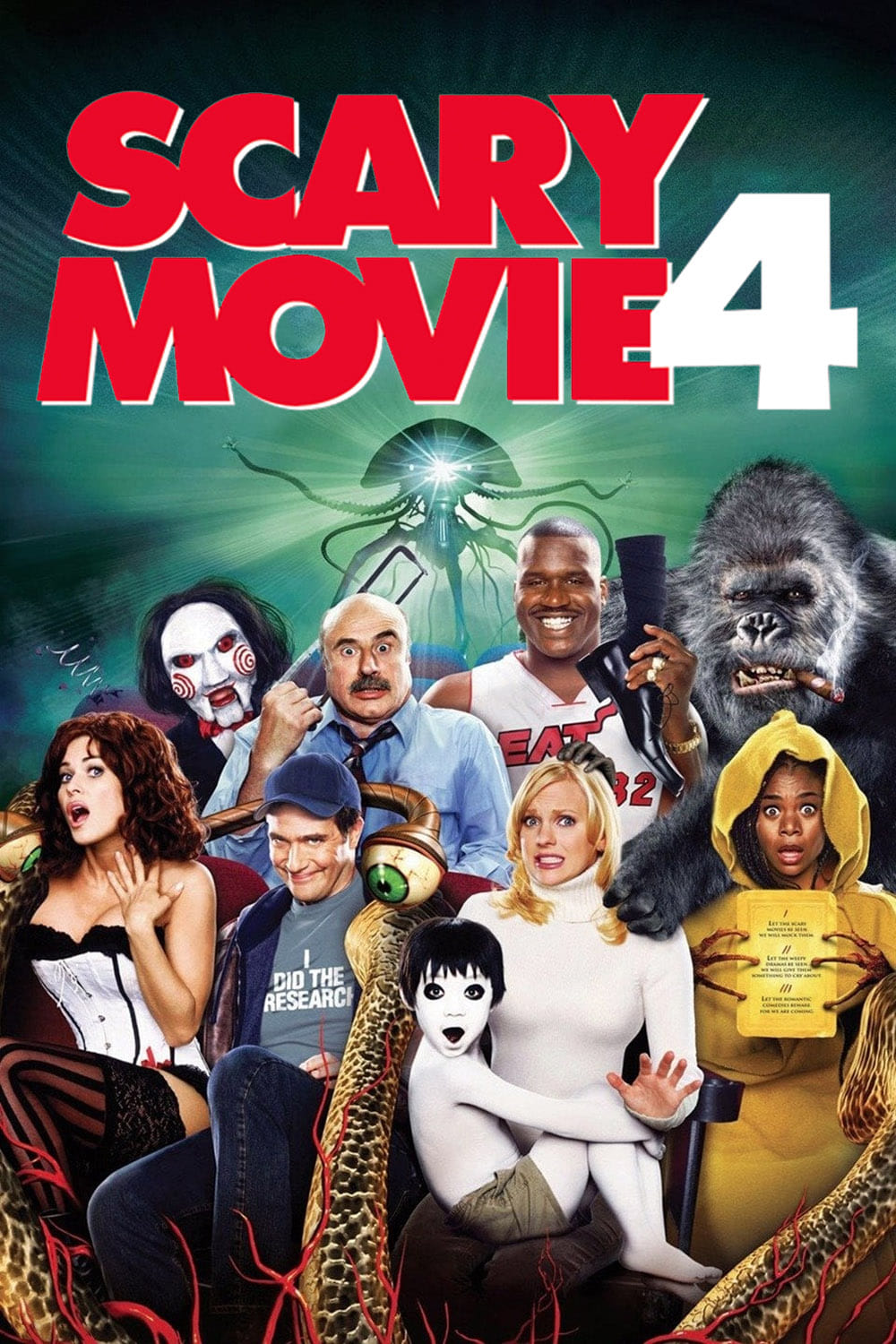
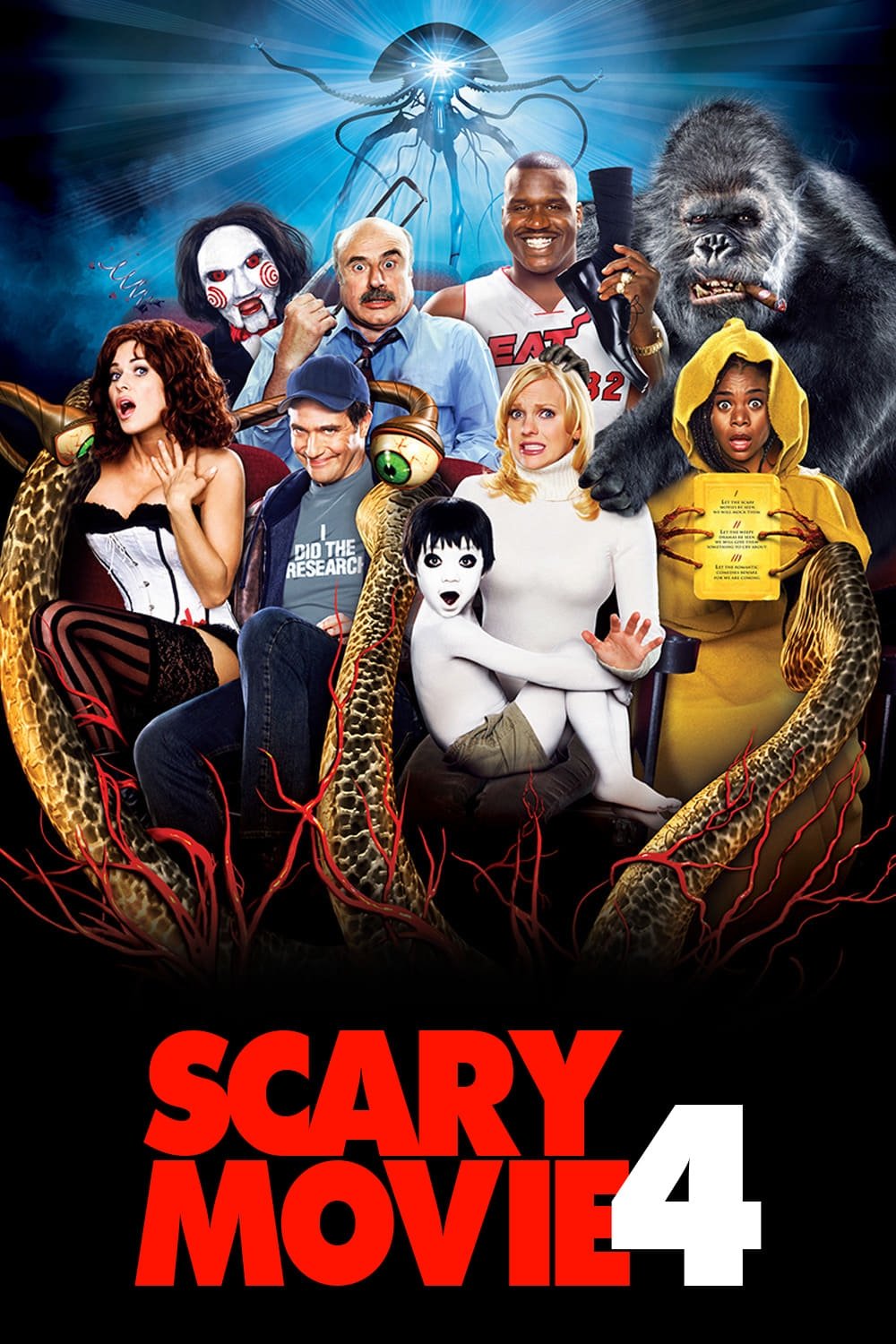
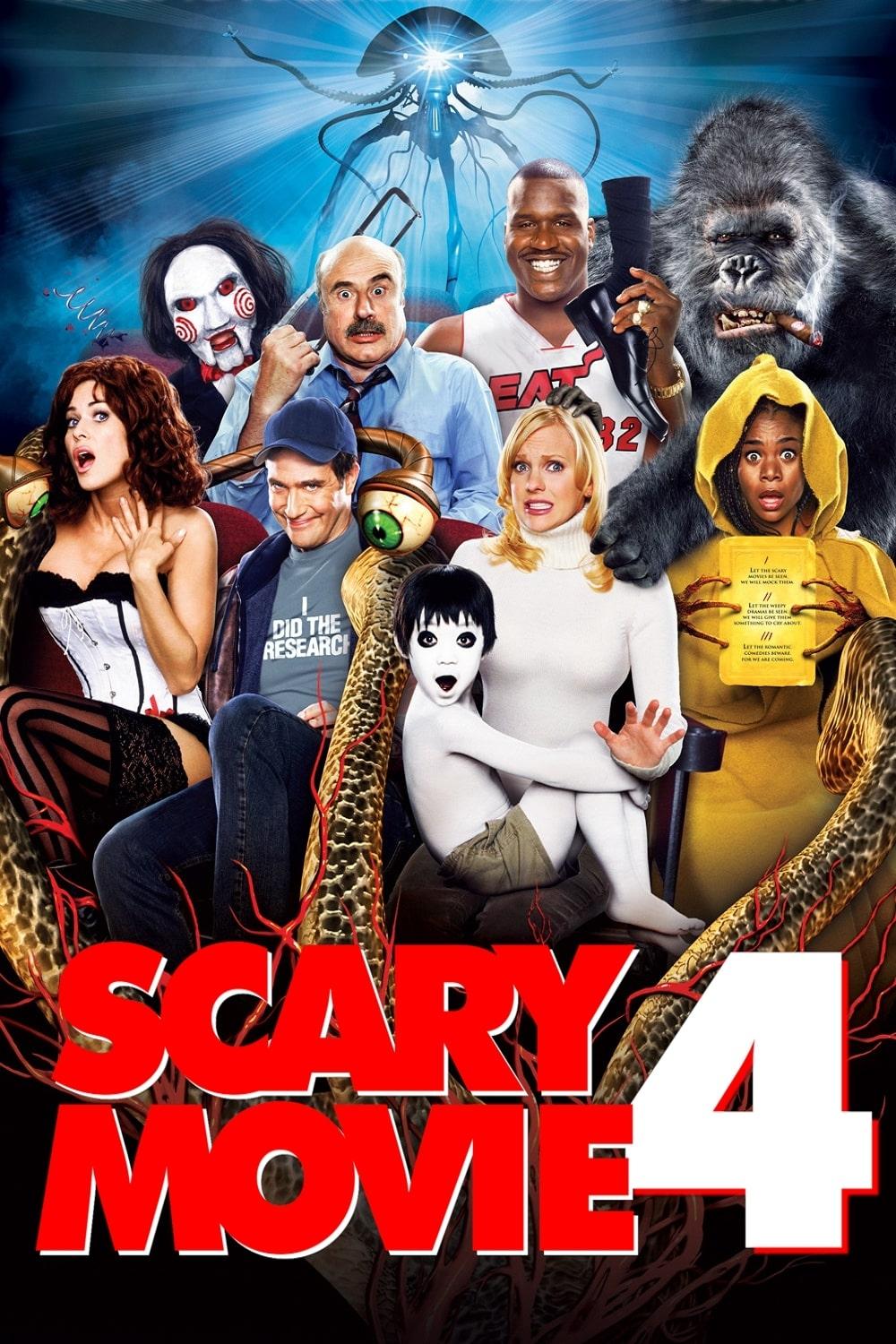
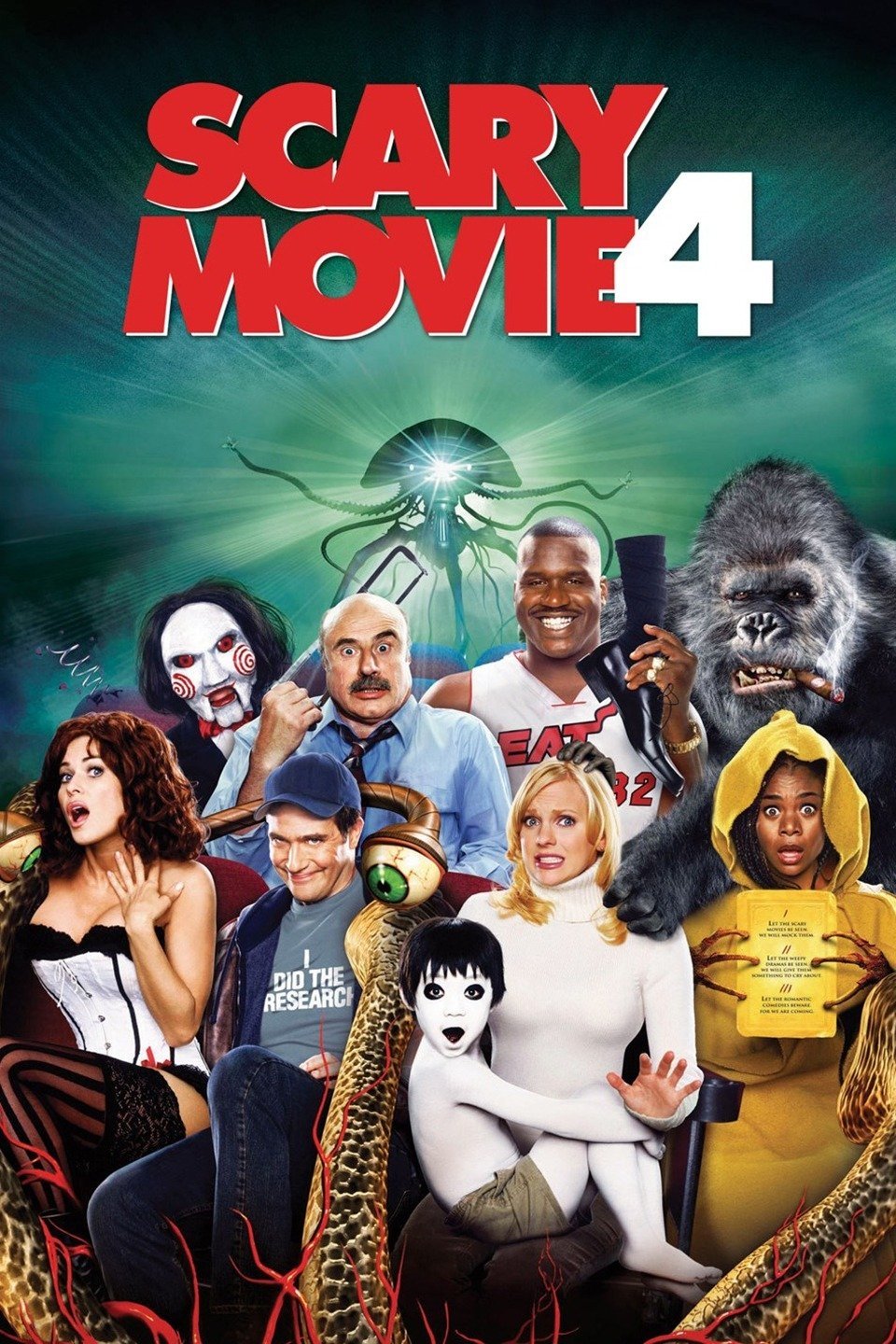
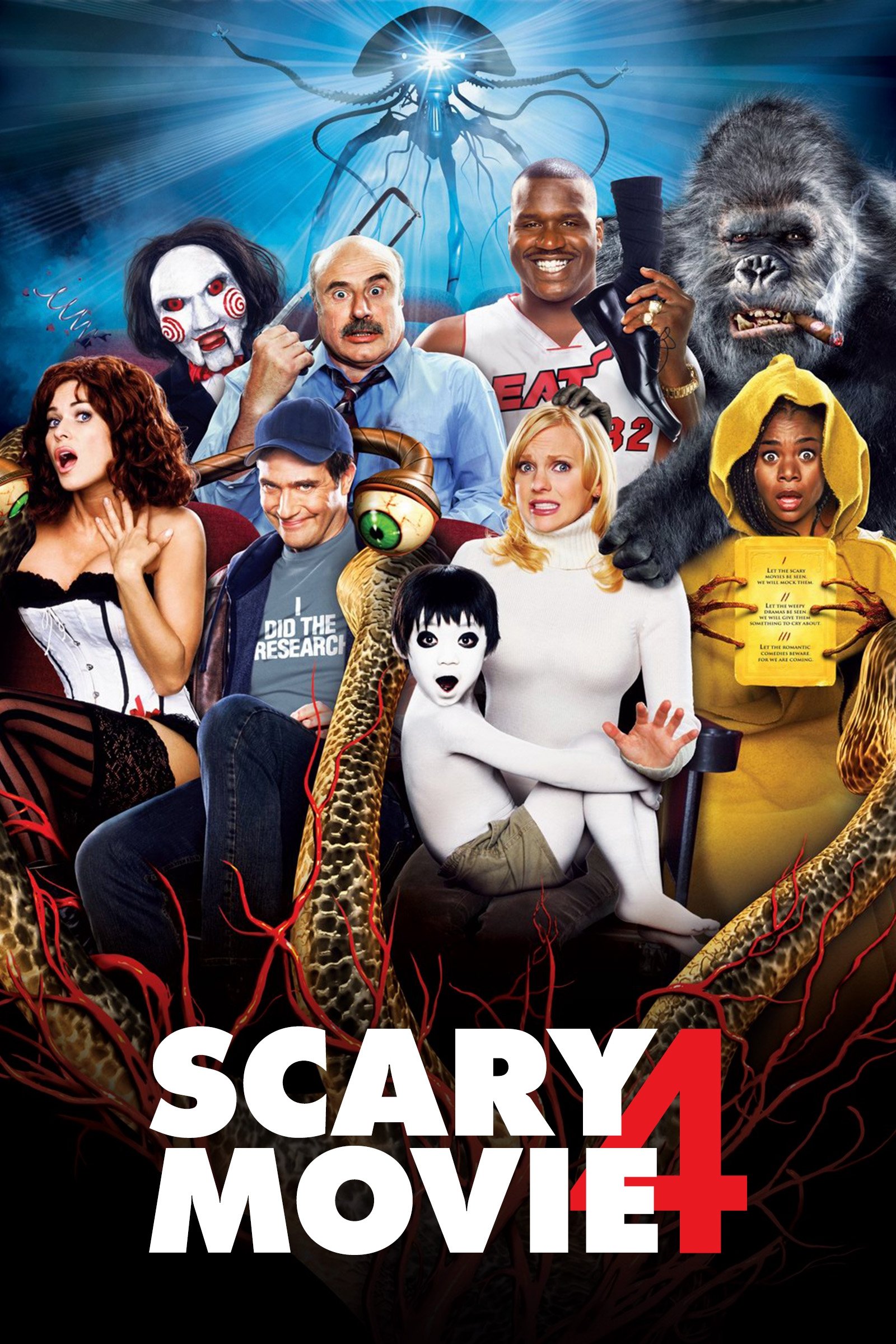
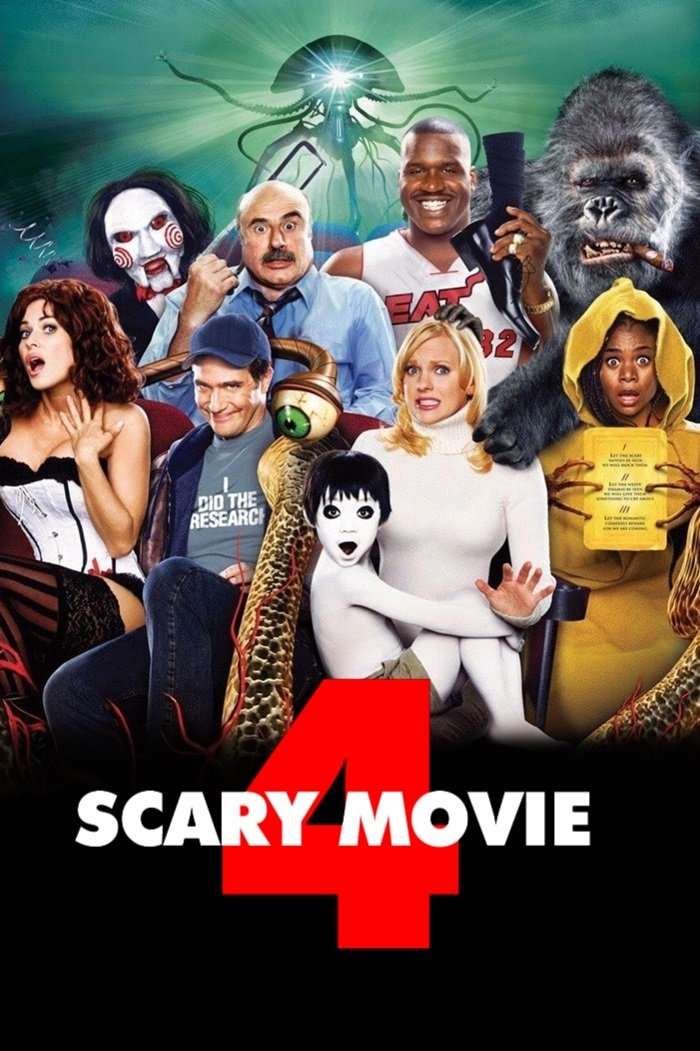
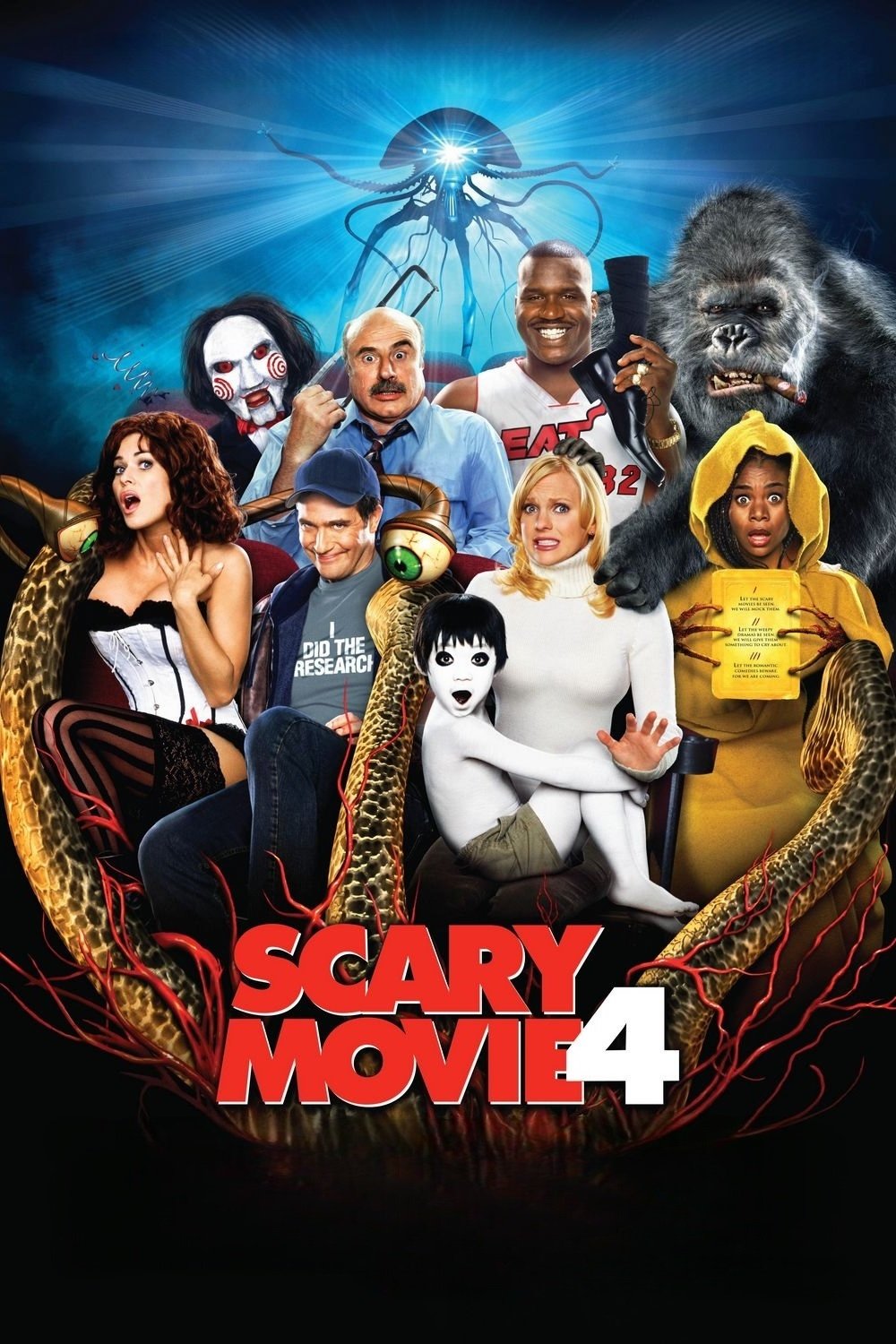
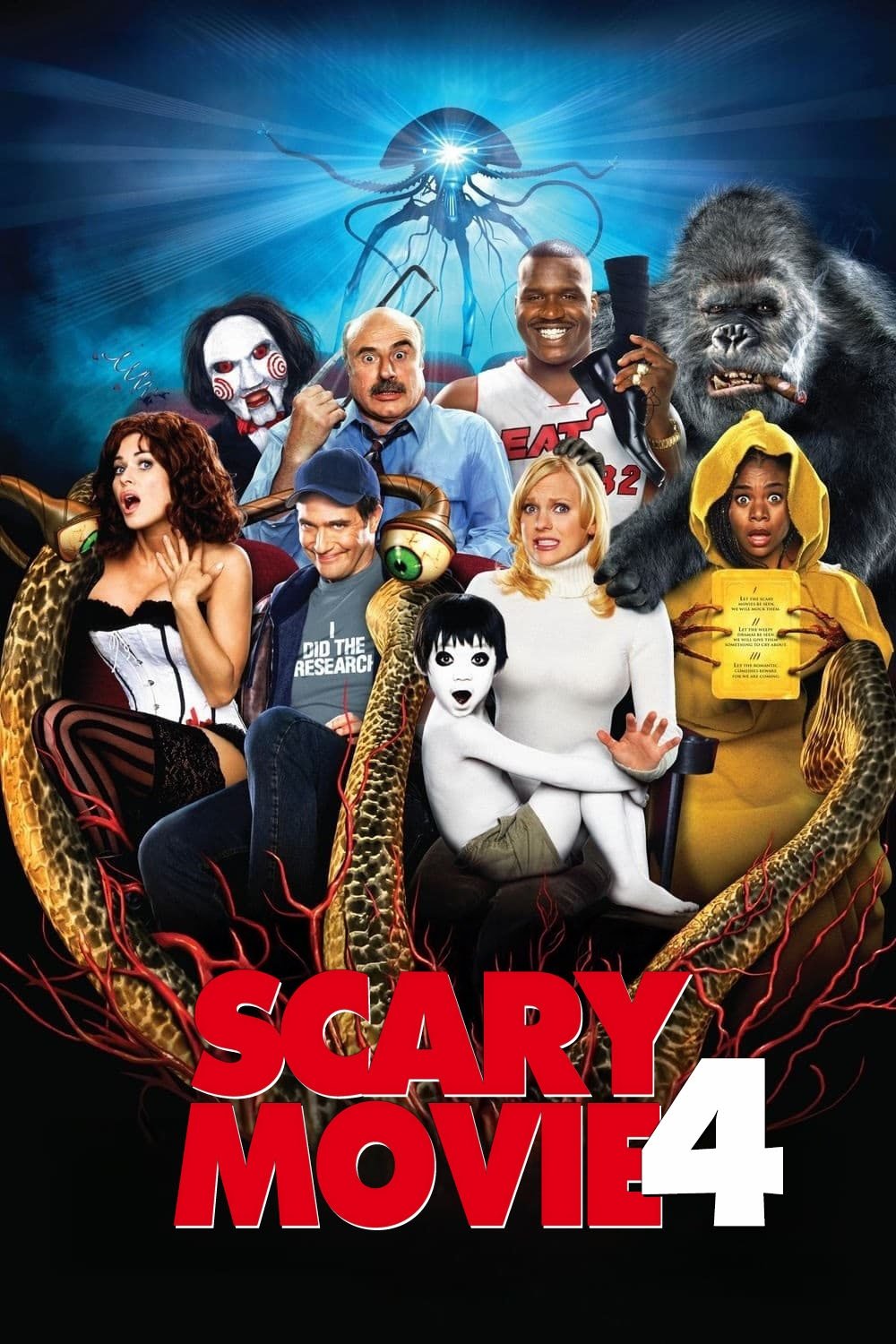
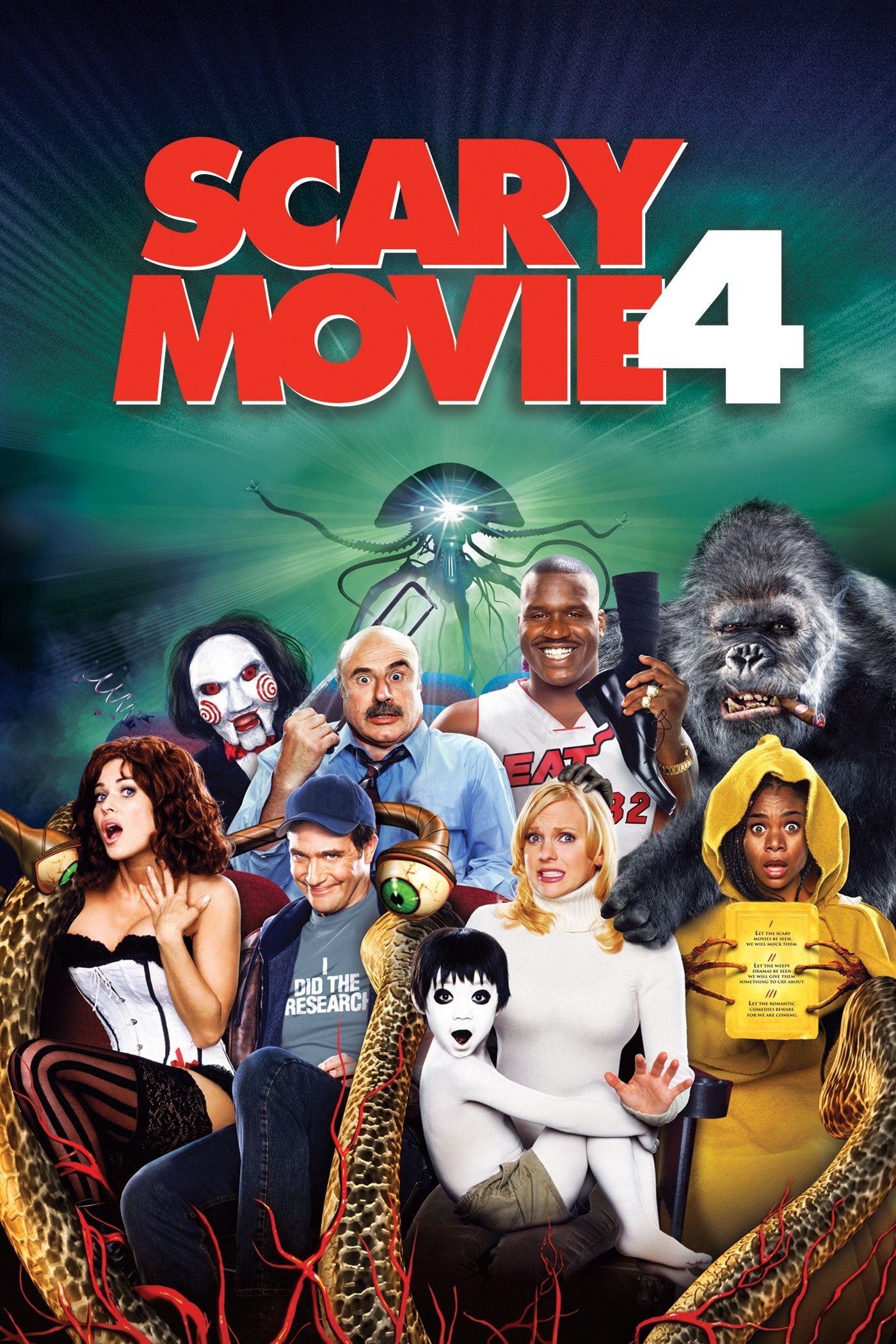
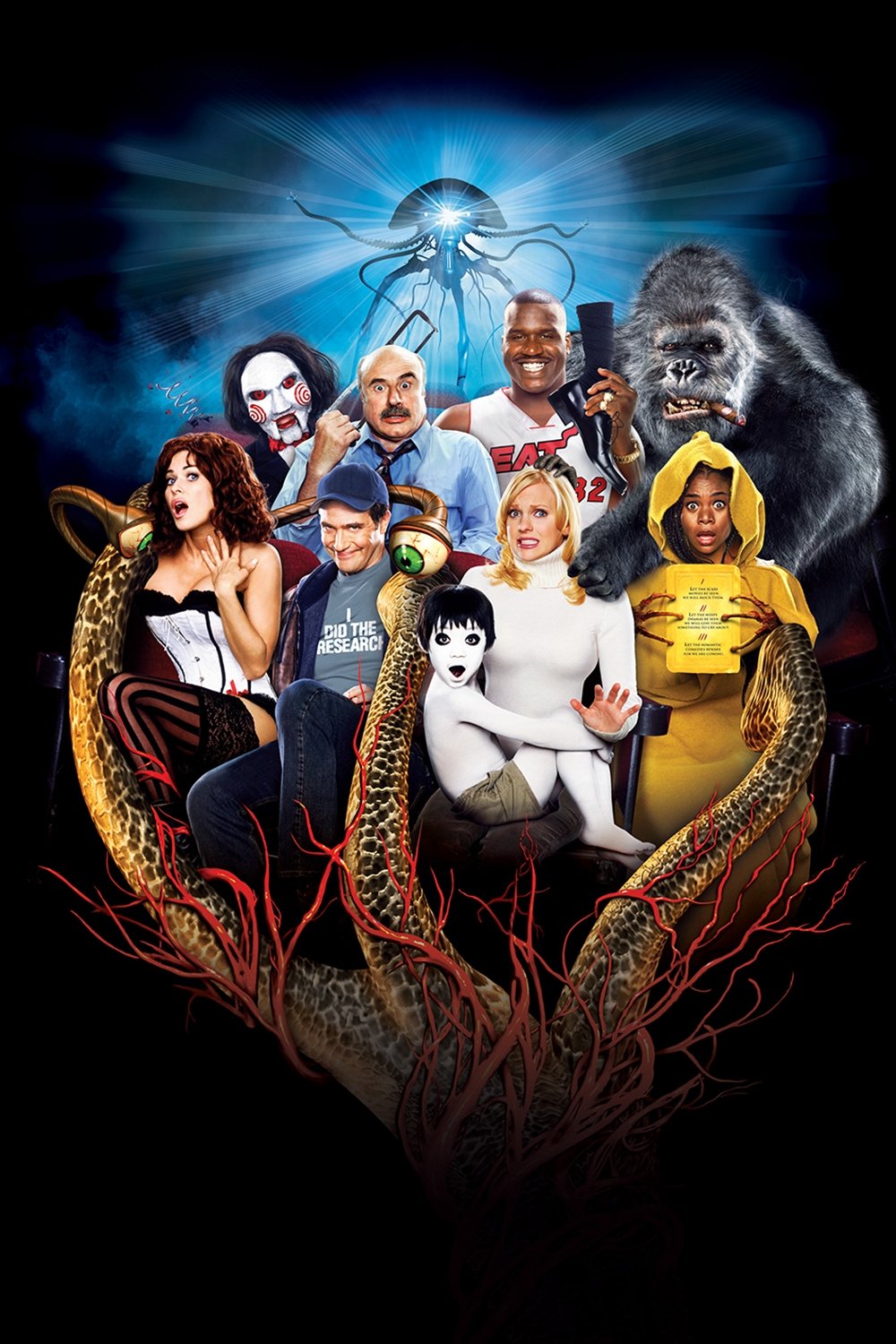
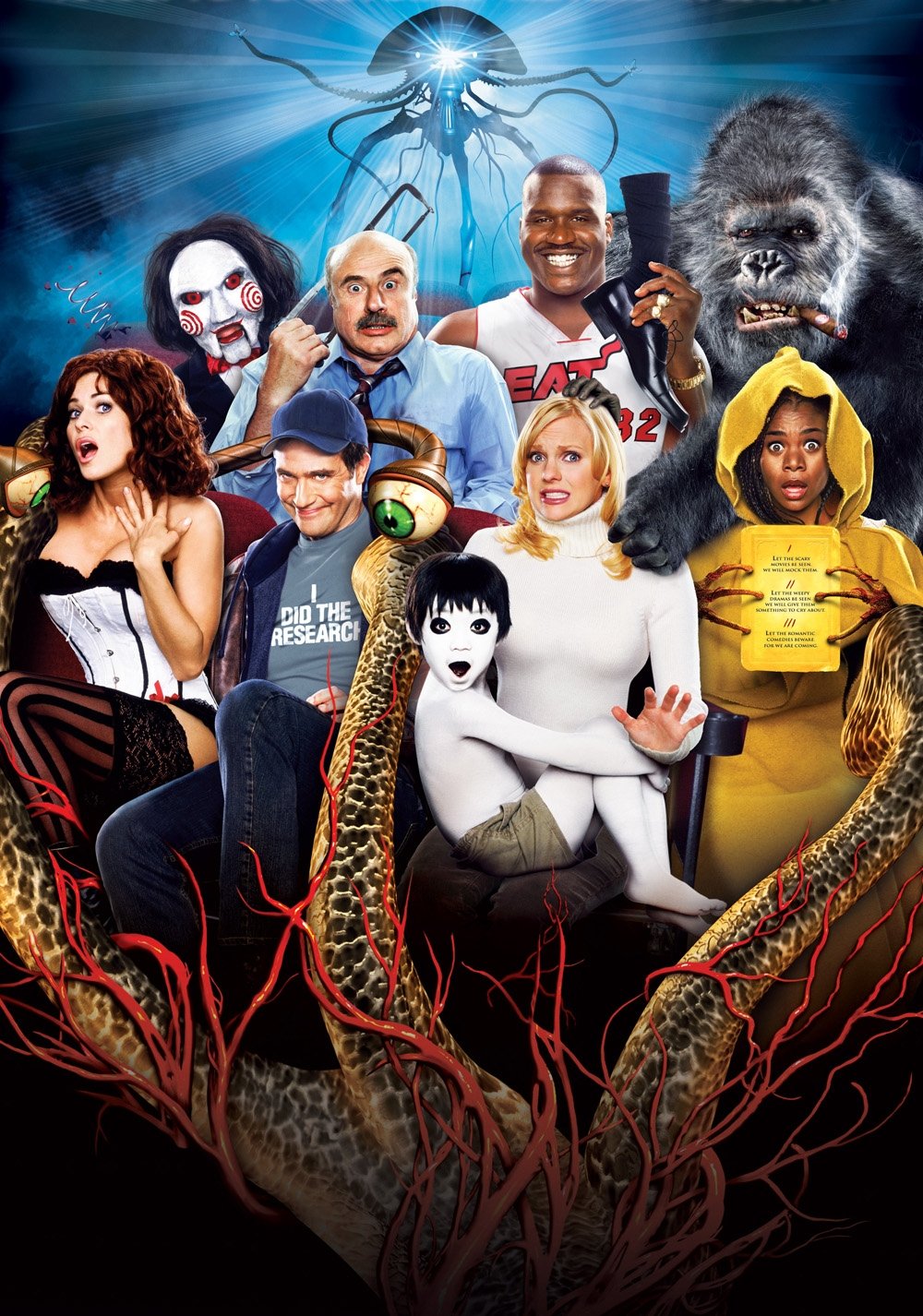
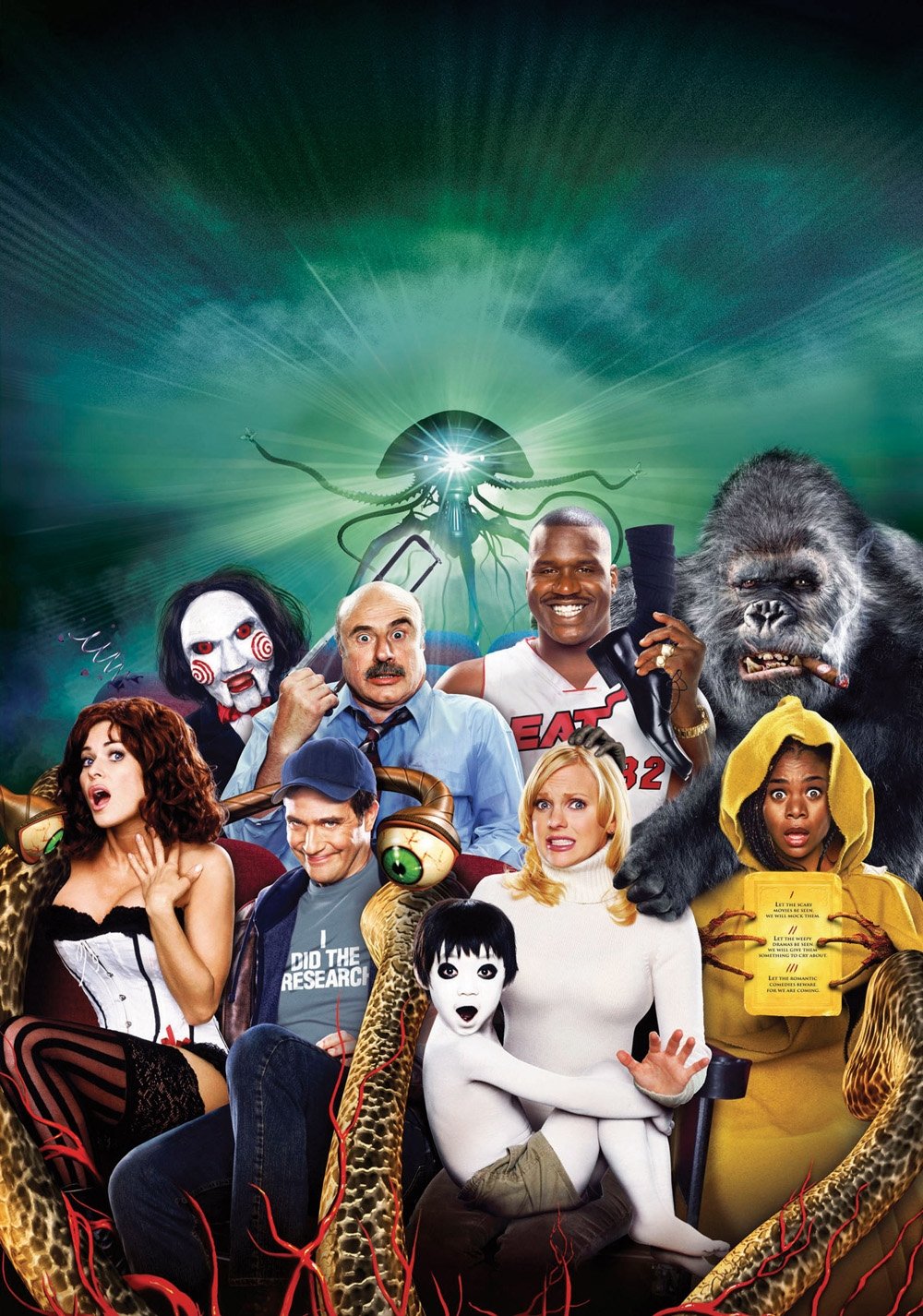
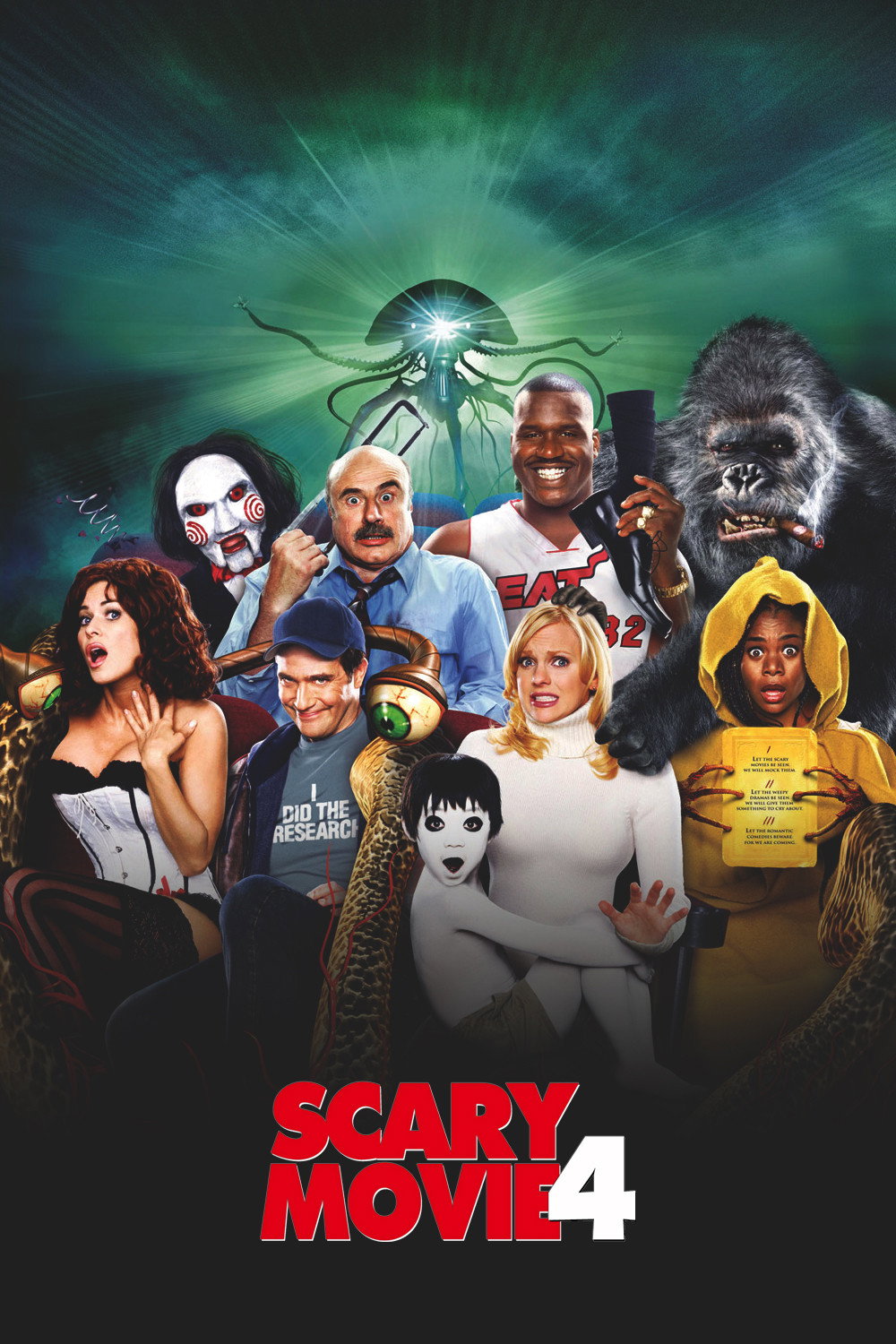
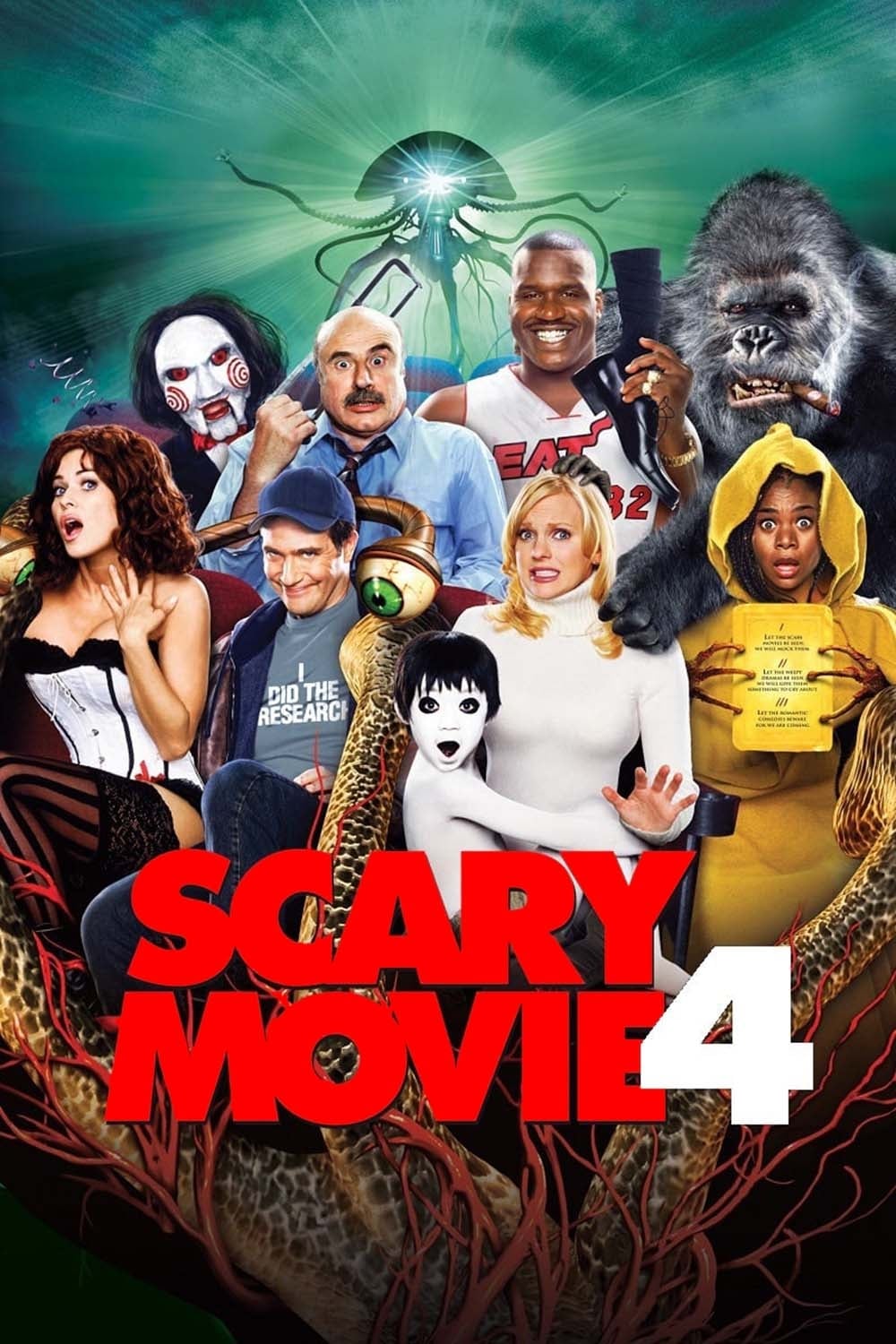
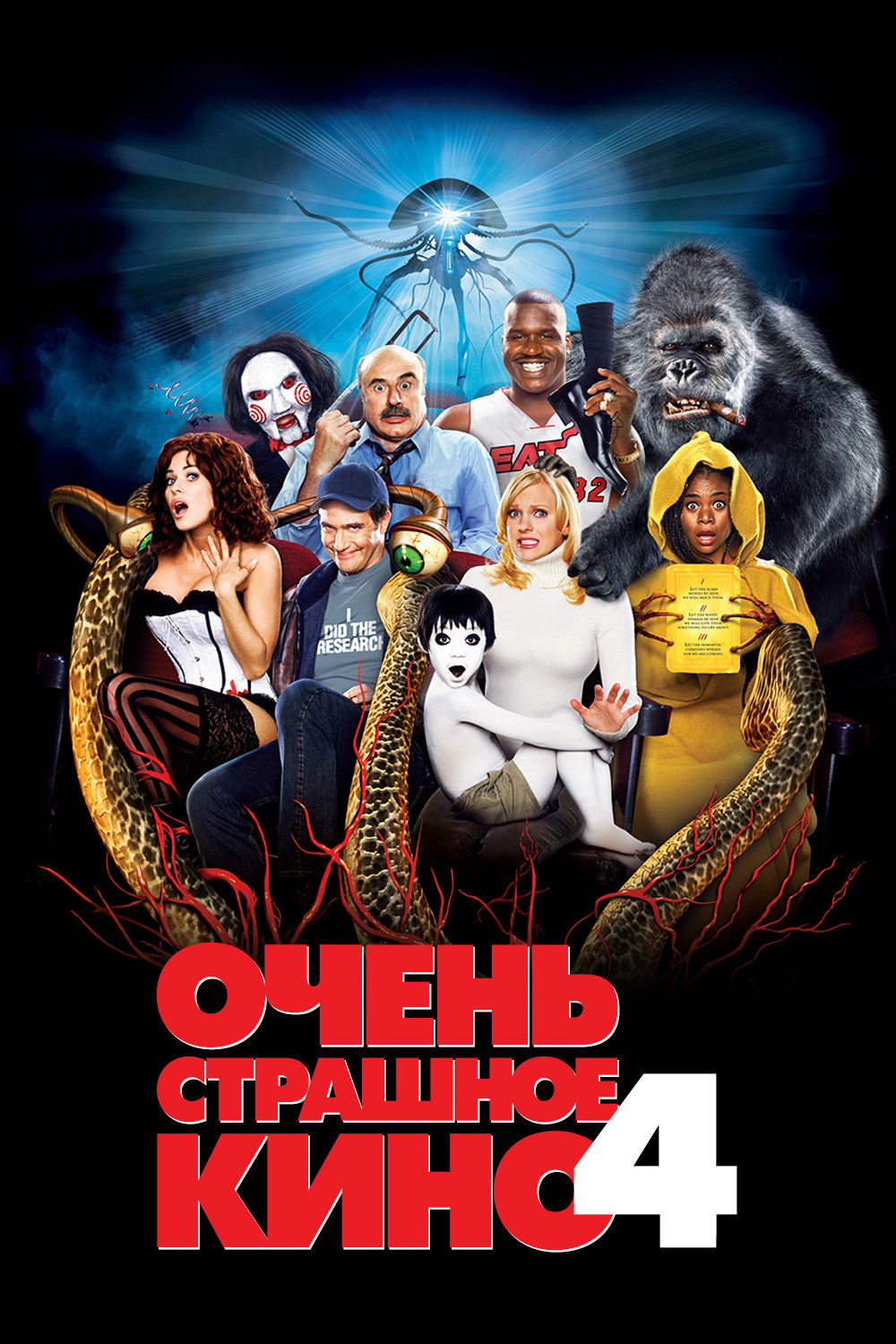
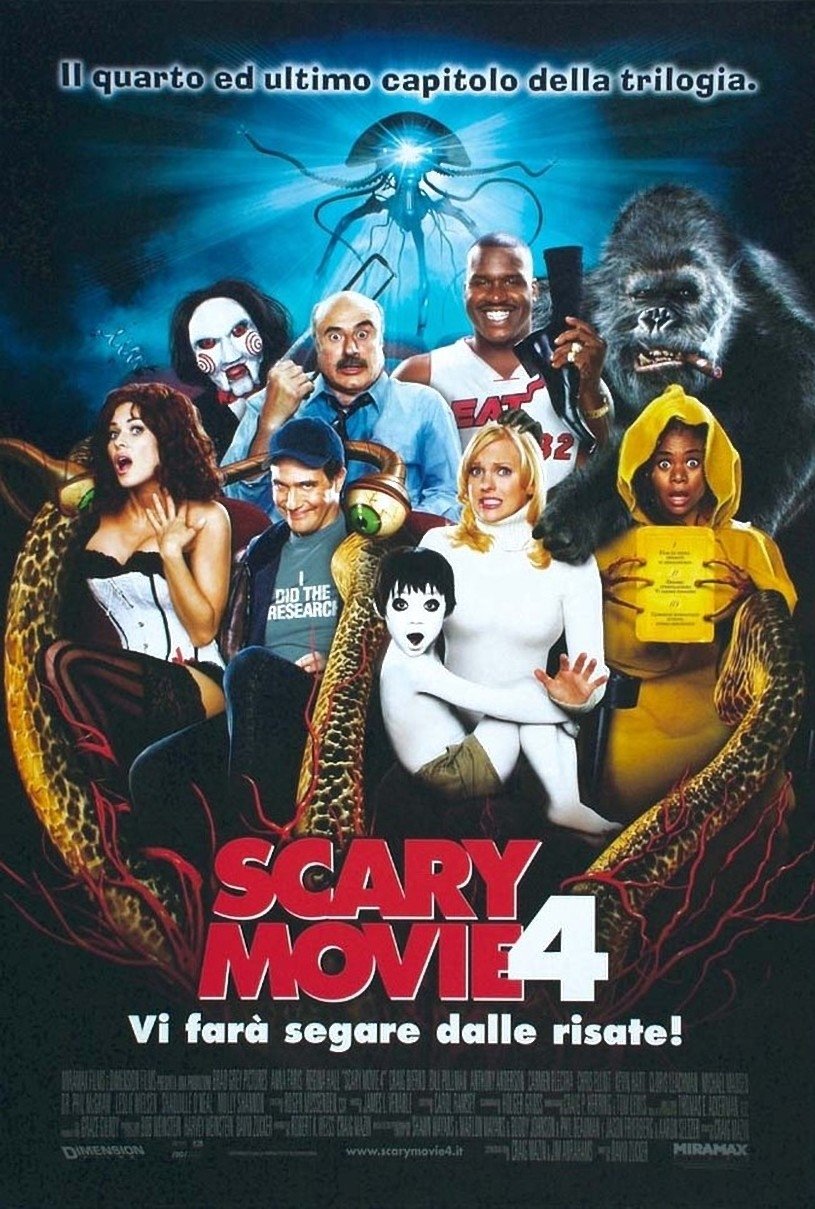
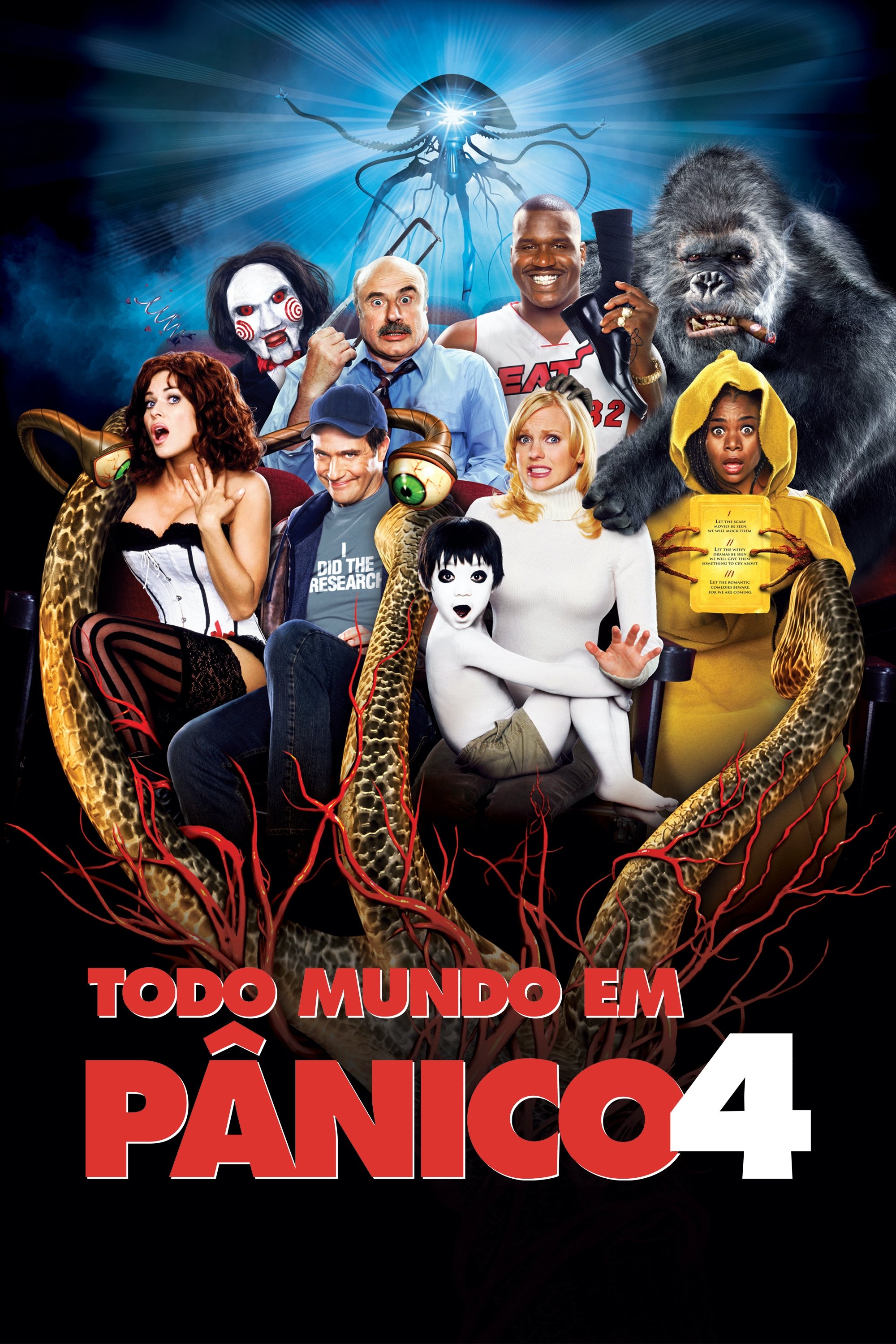
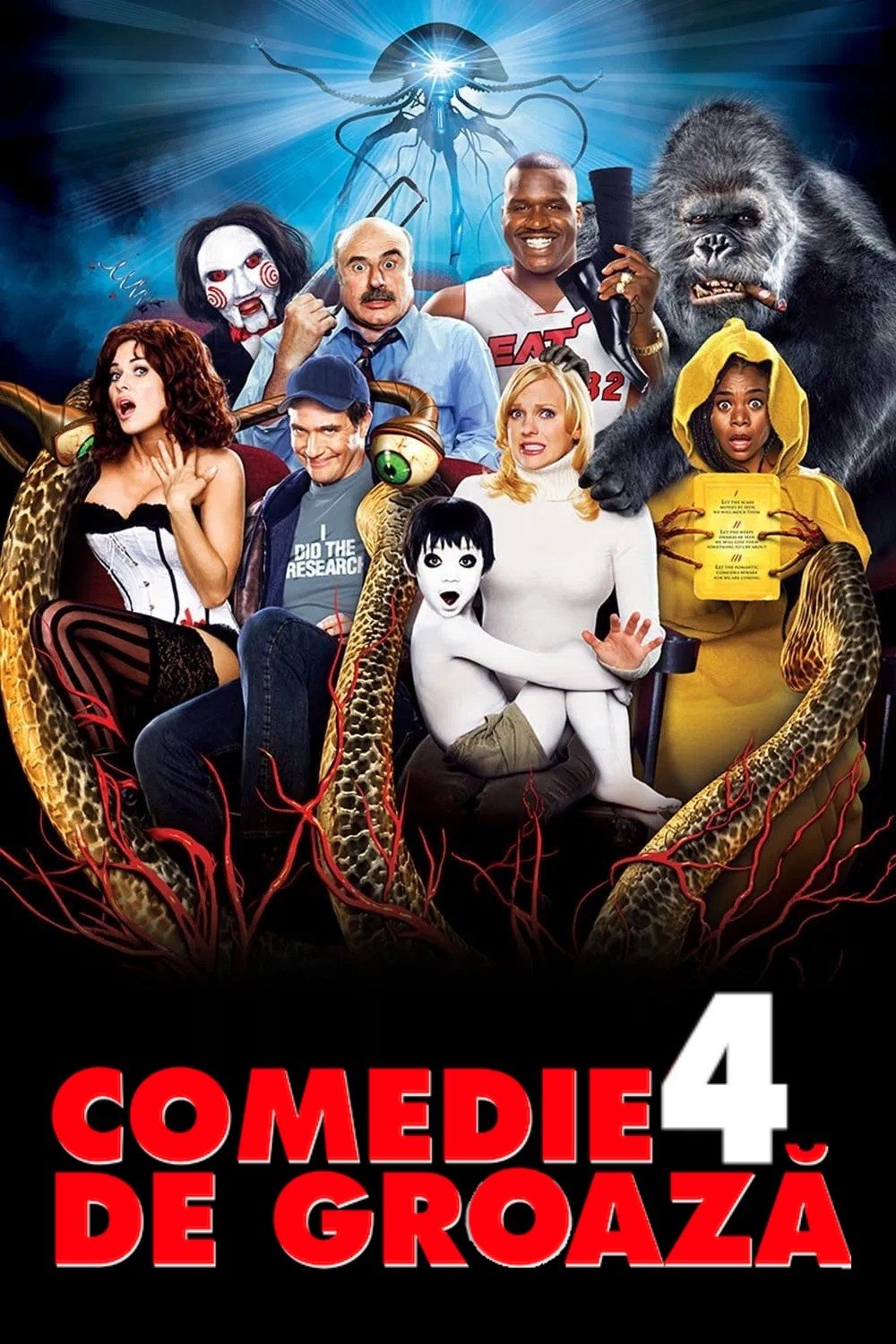
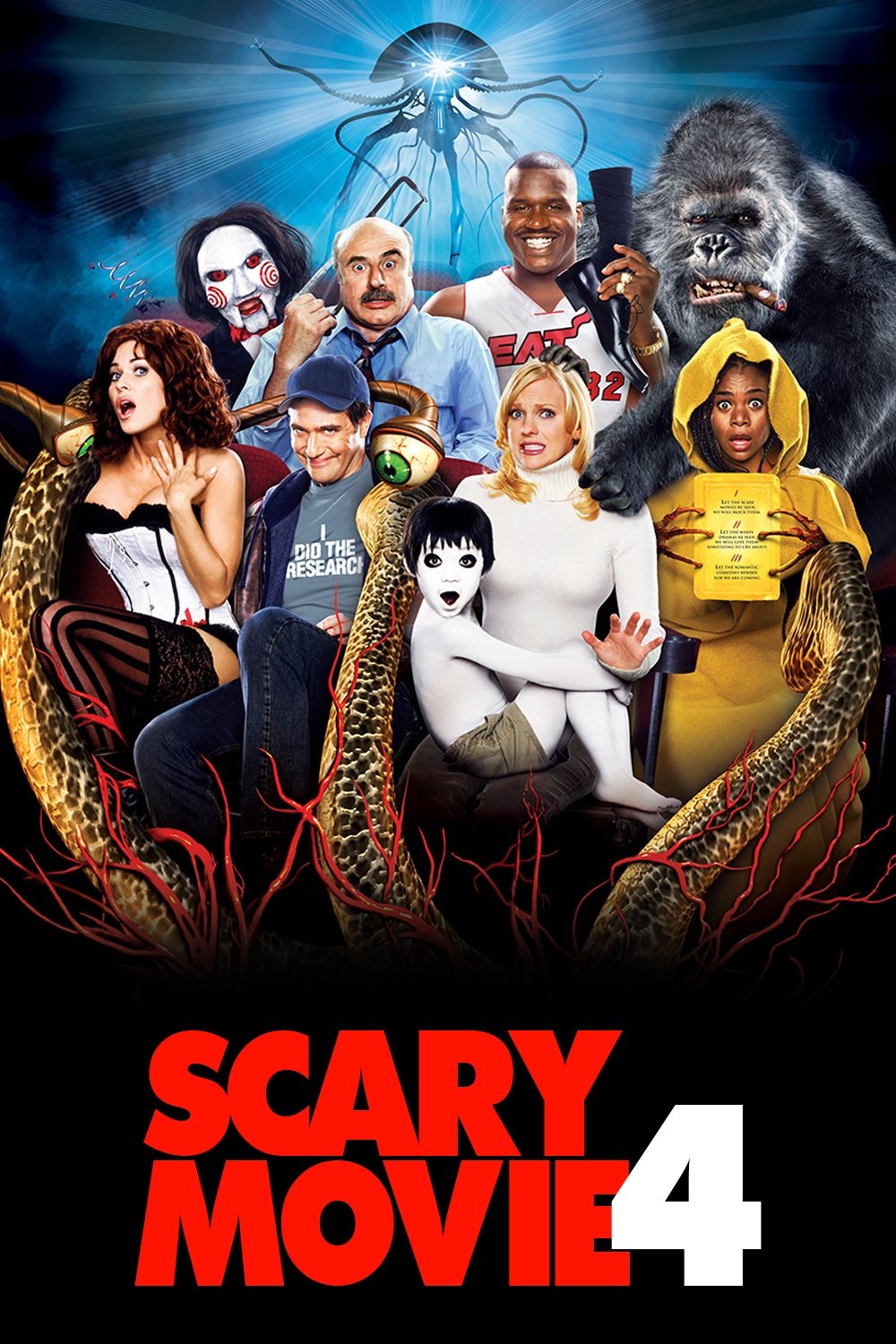
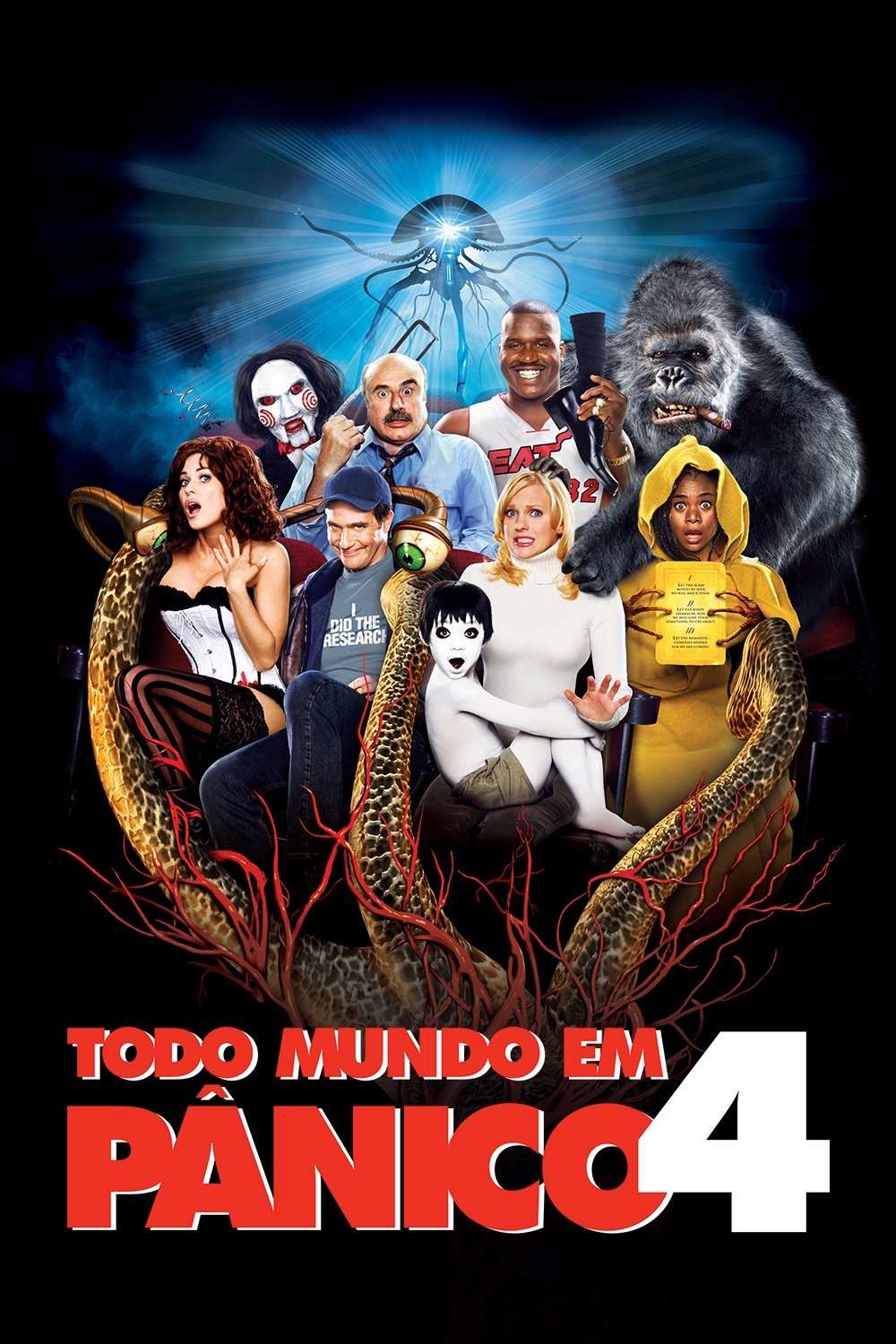
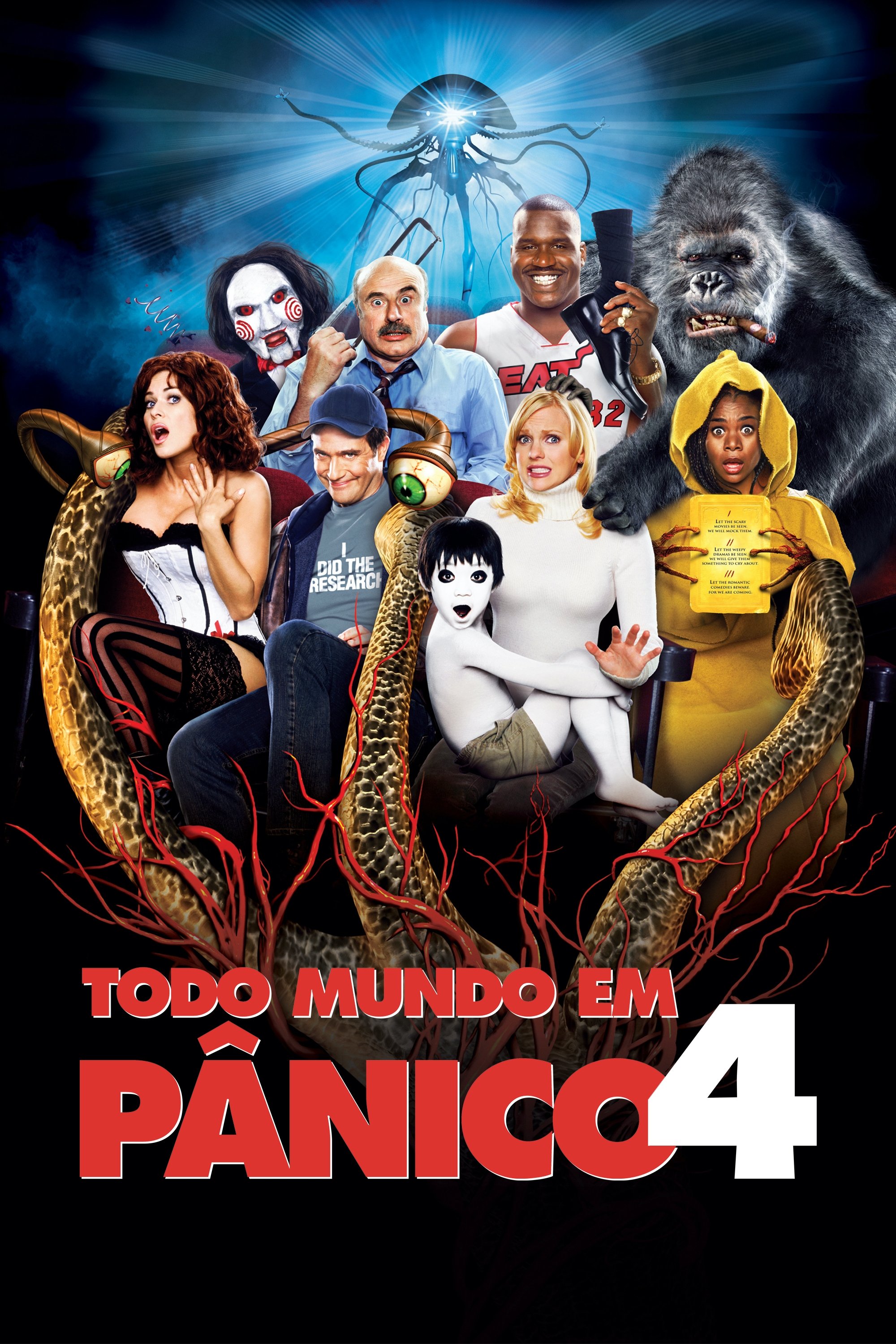
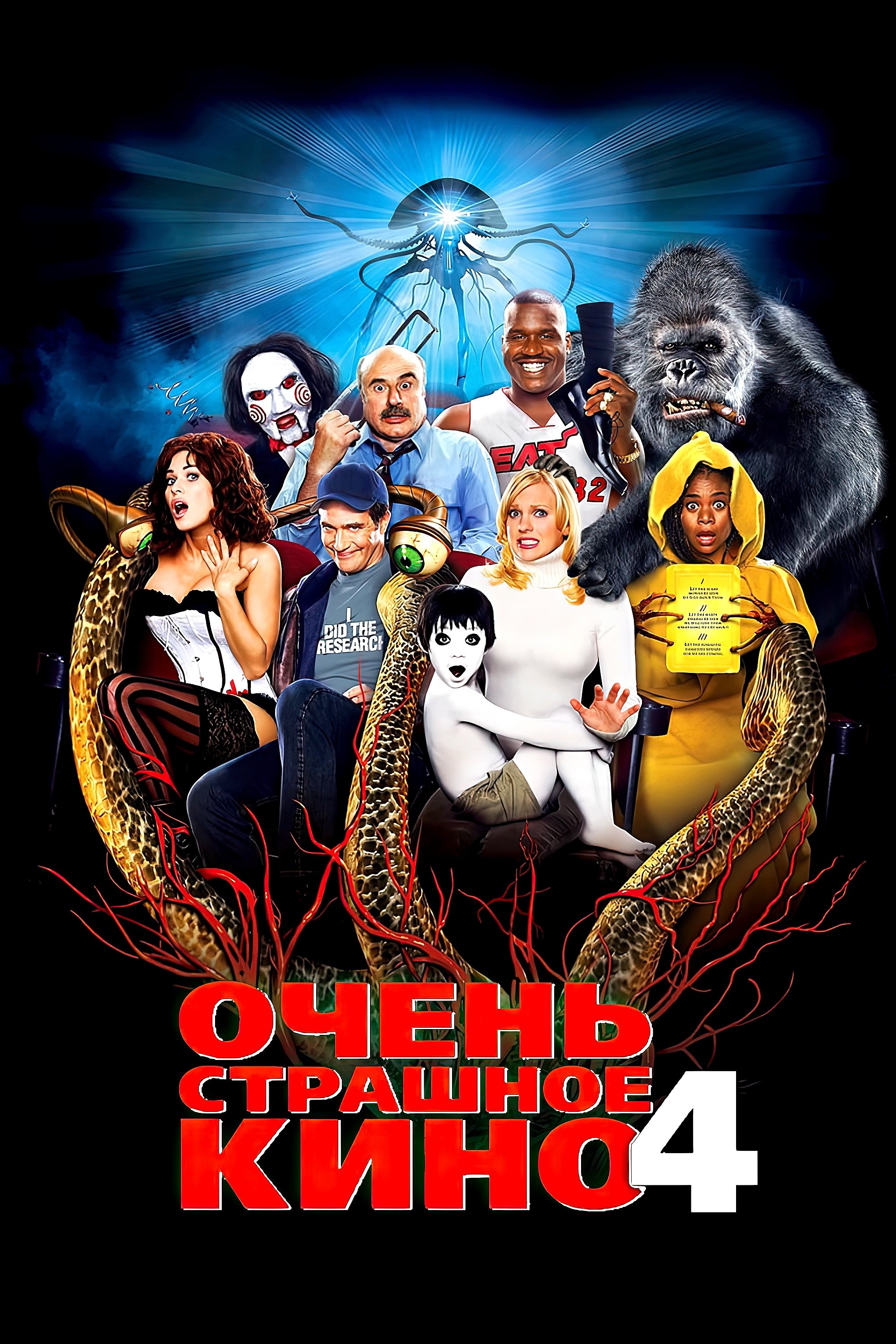
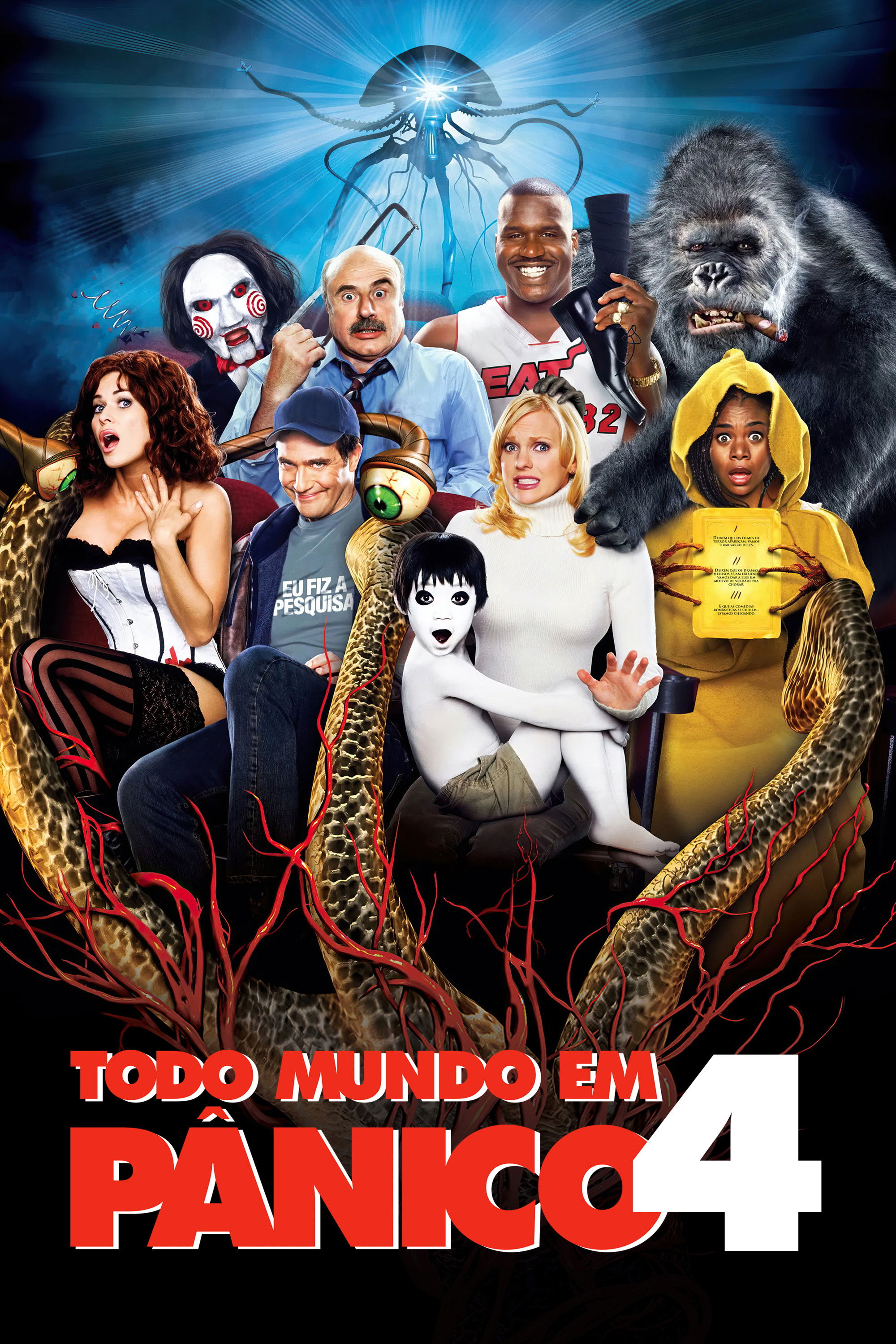
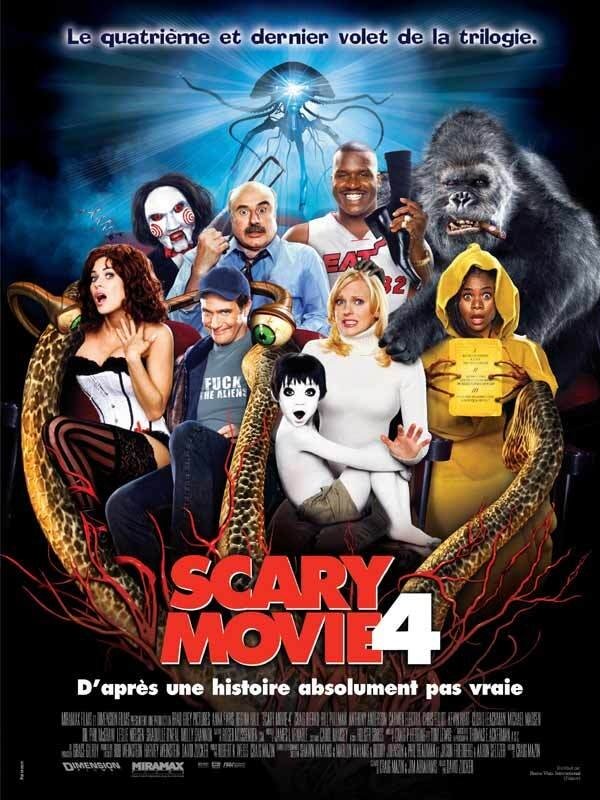
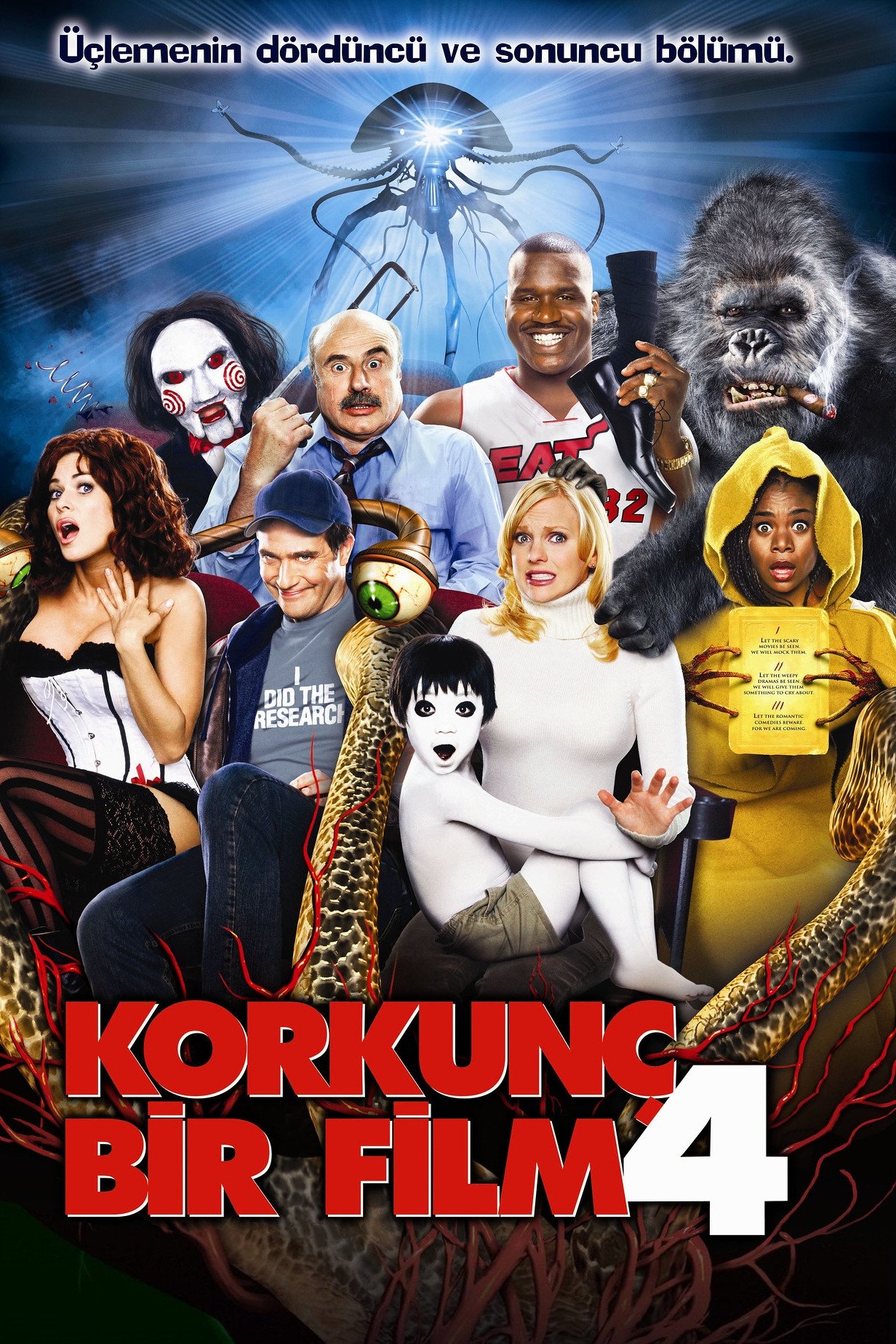
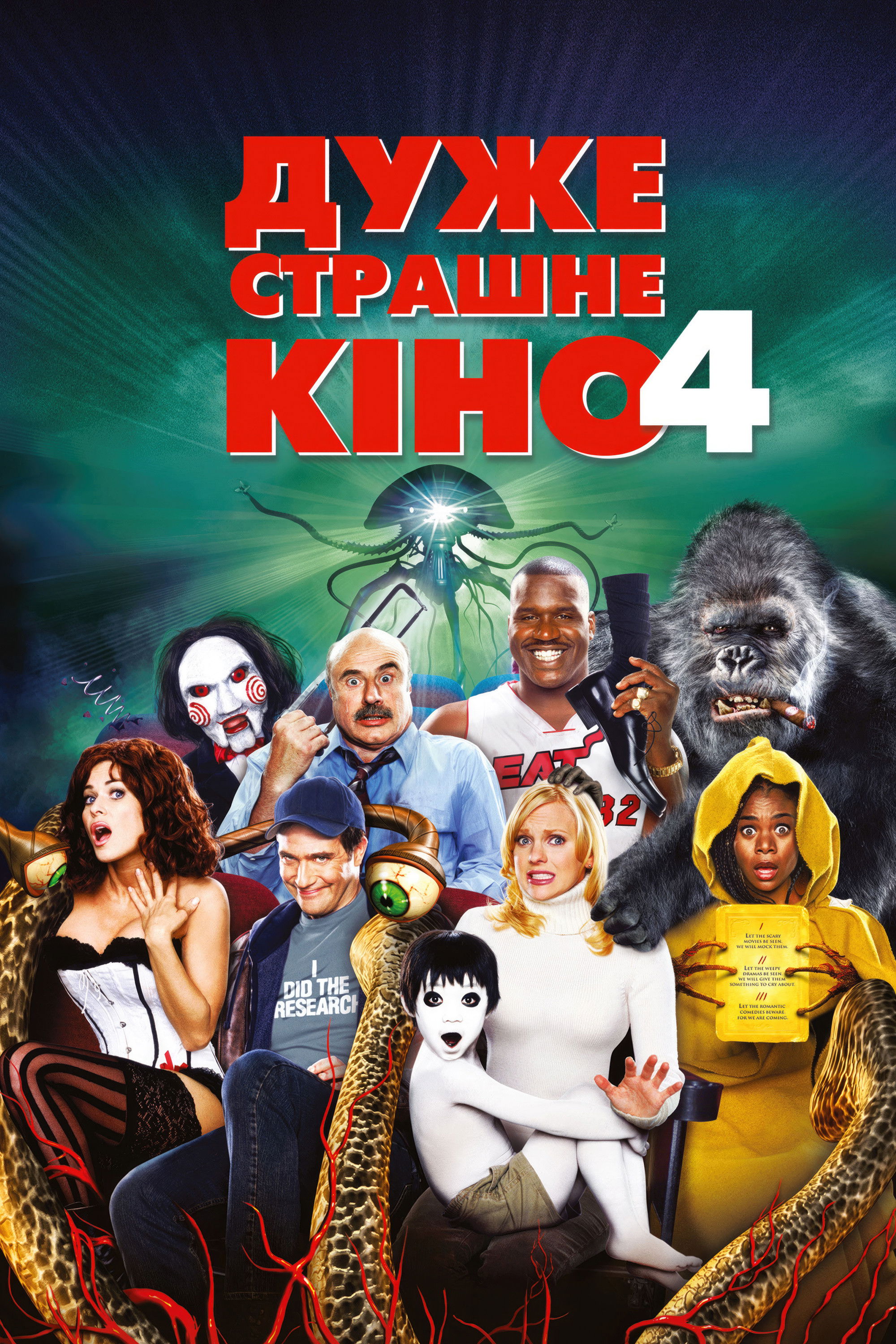
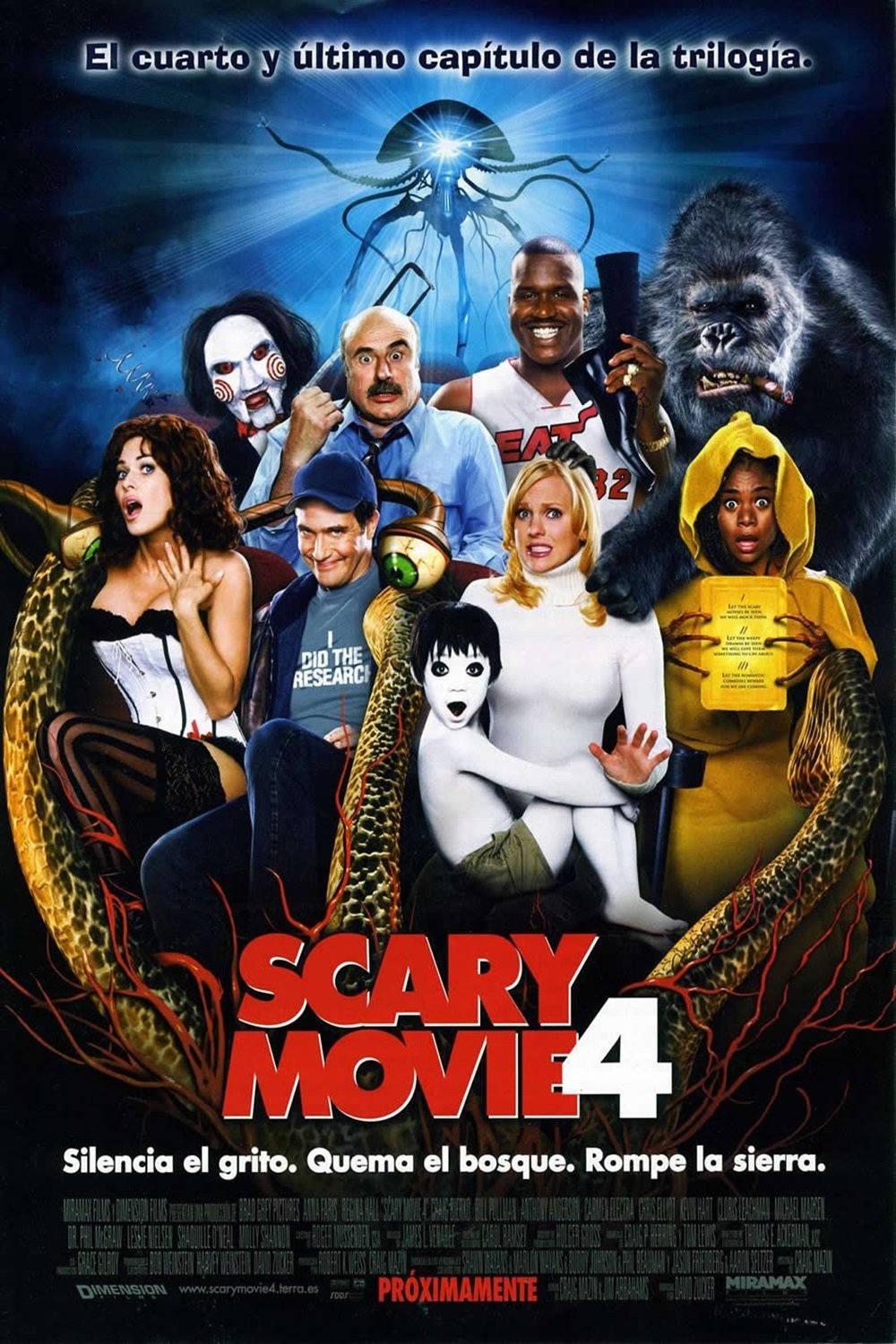
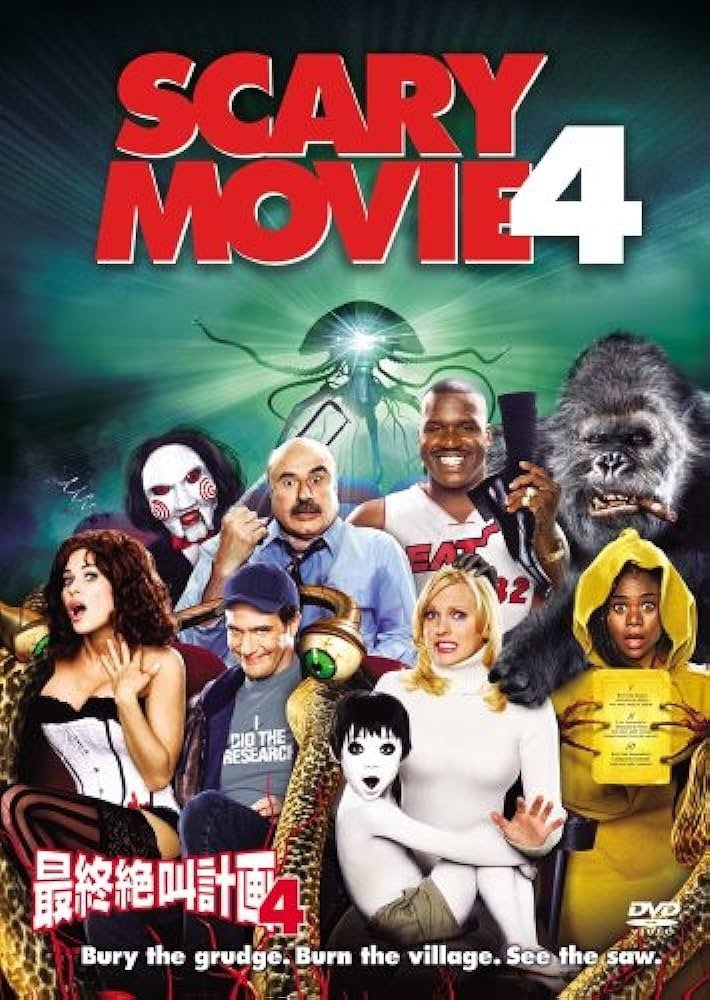
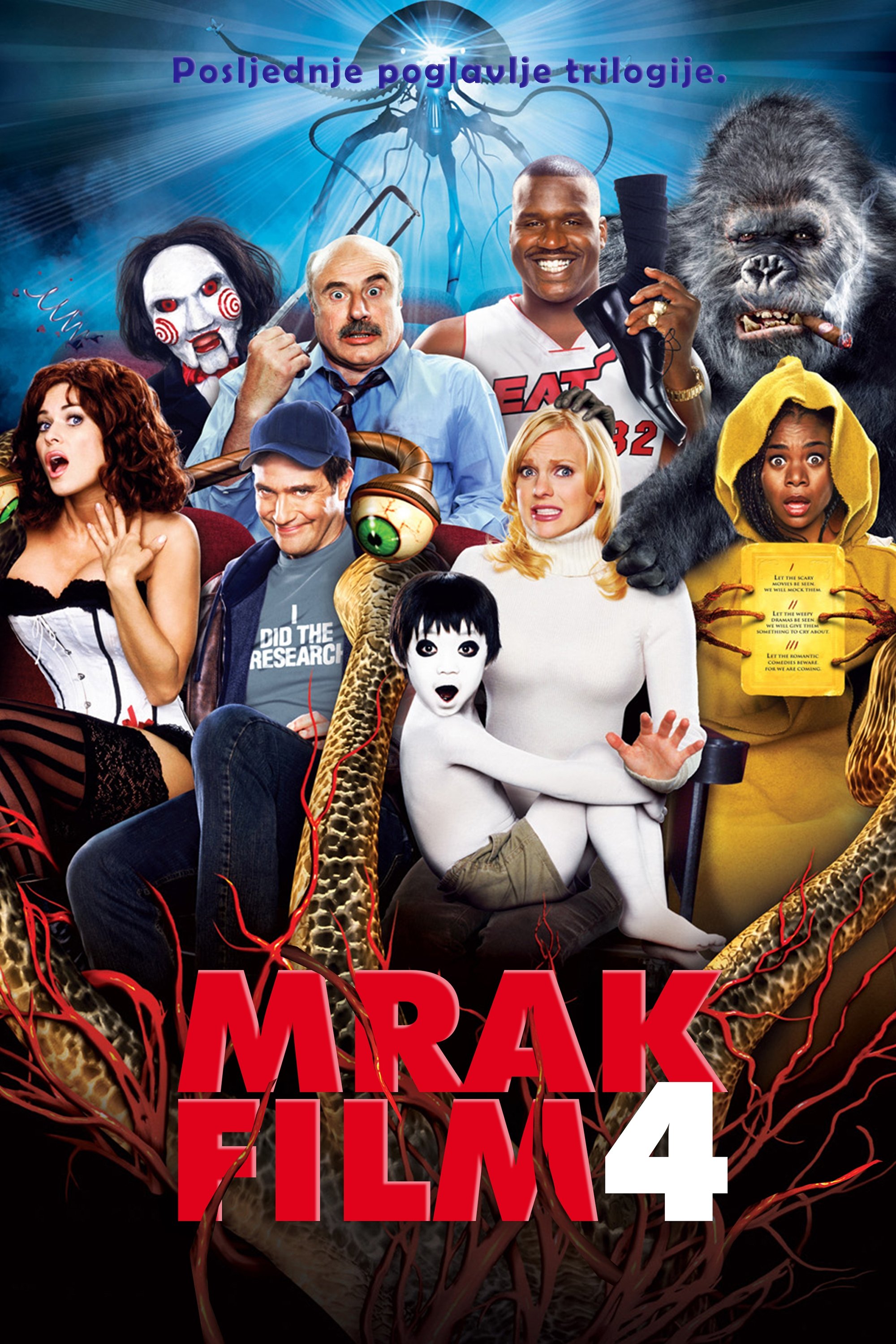
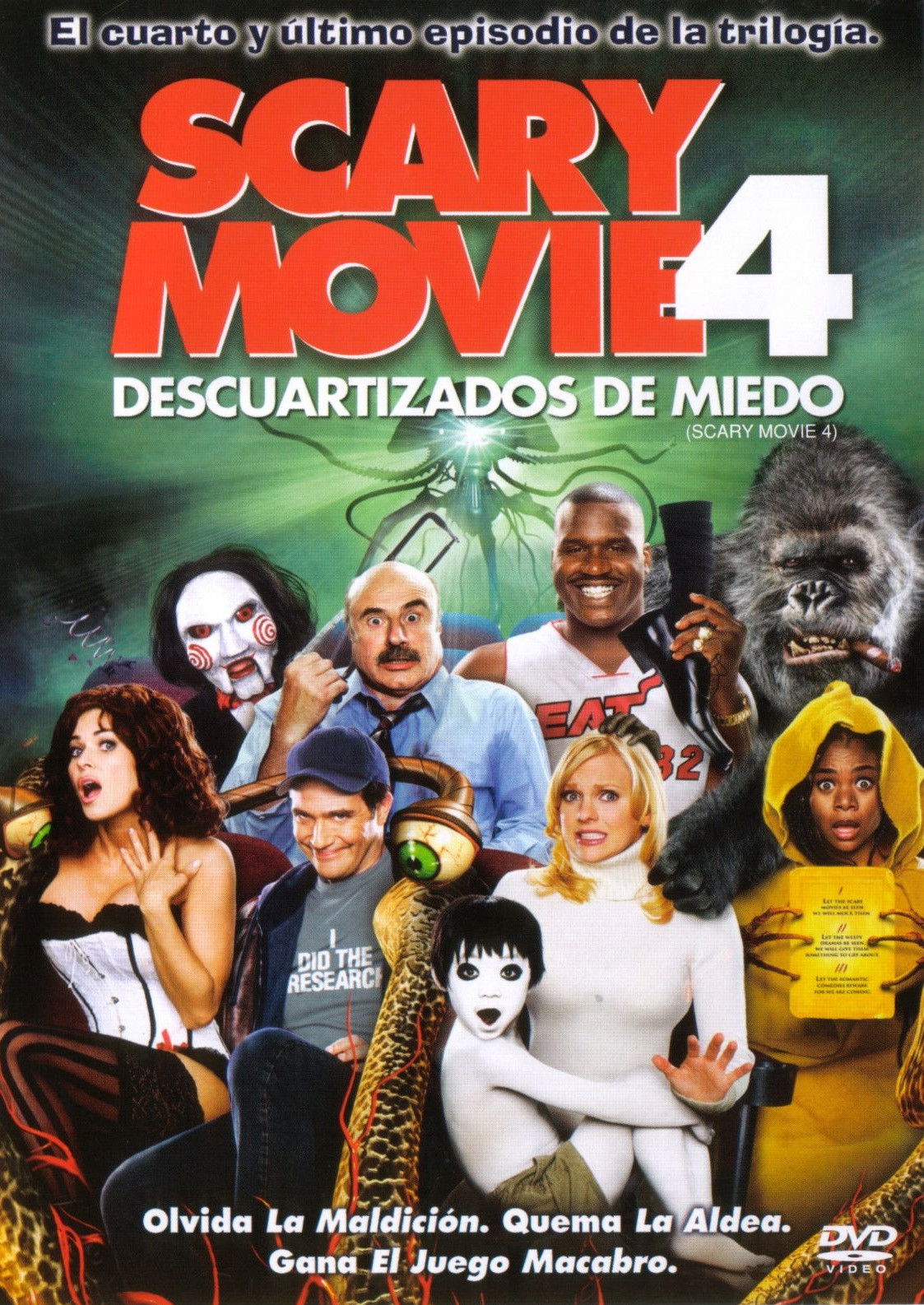
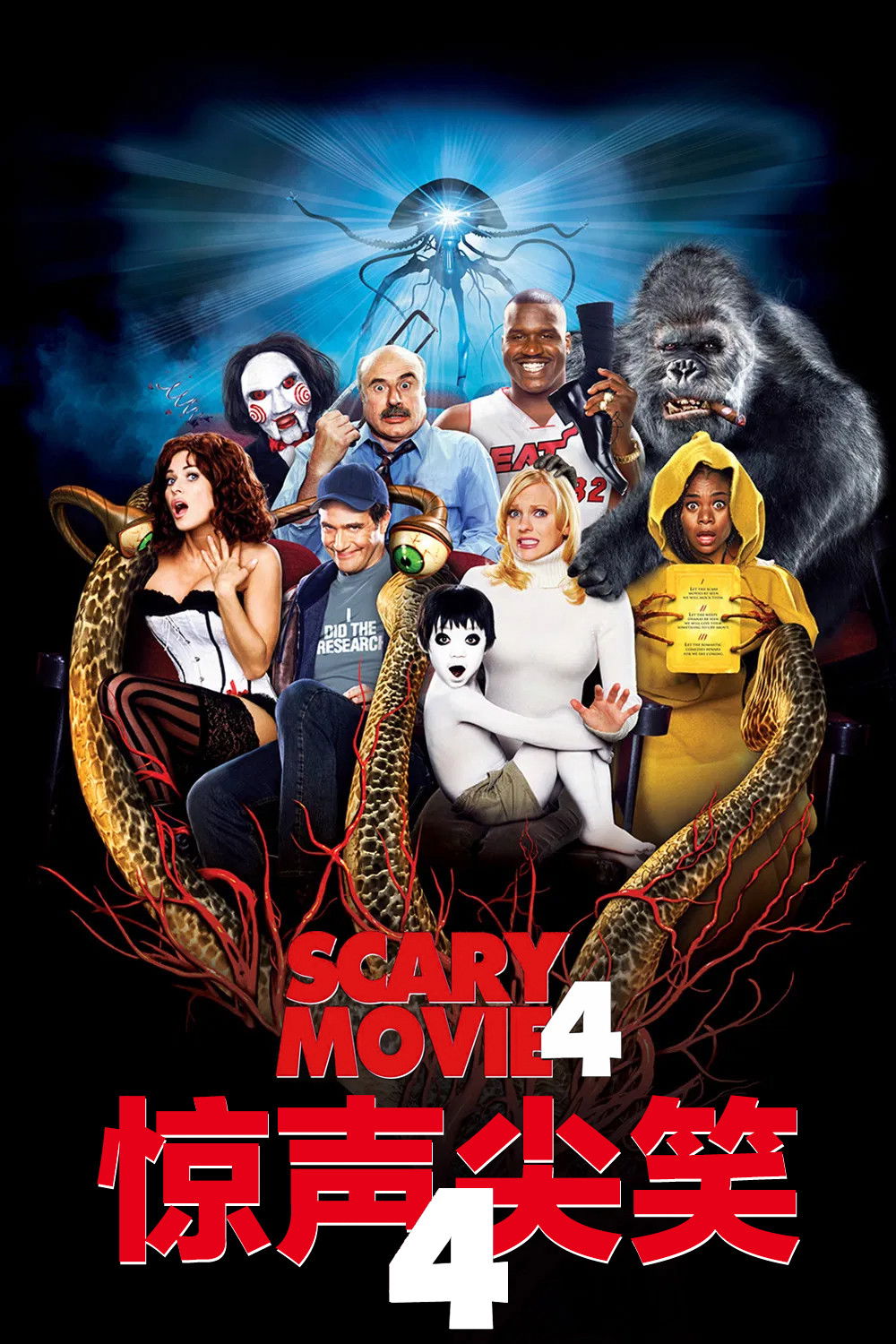
Cindy Campbell takes a job caring for an elderly woman in a house haunted by the apparition of a young boy. While looking for answers about the child's death, she meets Tom Ryan, a divorced father whose family becomes caught in a sudden alien invasion. Enormous machines attack cities, forcing the survivors to flee as Cindy follows clues that may connect the haunting to the wider catastrophe. Her journey brings together parodies of The Grudge, War of the Worlds, Saw and other contemporary horror films, with supernatural encounters unfolding alongside the chaos of an invasion.
Alternative Titles
Scary movie 4 - Descuartizados de miedo (AR) Çox qorxulu film 4 (AZ) Qorxulu kino 4 (AZ) — translation:azСтрашен филм 4 (BG) — translation:bgTodo Mundo em Pânico 4 (BR) — translation:ptFilm de peur 4 (CA) 惊声尖笑4 (CN) — translation:zhÕudne film 4 (EE) Show all 30 alternative titlesძალიან საშიში კინო 4 (GE) — translation:ka搞乜鬼終極奪命雜作 (HK) — translation:zhMrak film 4 (HR) Horrorra akadva 4. (HU) — translation:huמת לצעוק 4 (IL) — translation:he最終絶叫計画4 (JP) — translation:ja무서운 영화 4 (KR) — translation:koPats baisiausias filmas 4 (LT) Šausmenīte 4 (LV) — translation:lvScary Movie 4: Descuartizados de miedo (MX) — translation:esStraszny Film 4 (PL) — translation:plScary Movie 4 - Que Susto de Filme! (PT) — translation:ptComedie de groază 4 (RO) — translation:roMrak film 4 (RS) Очень страшное кино 4 (RU) — translation:ruFilm, da te kap 4 (SI) — translation:slยำหนังจี้ หวีดล้างโลก (TH) — translation:thKorkunç Bir Film 4 (TR) — translation:tr驚聲尖笑4 (TW) — translation:zhДуже страшне кіно 4 (UA) — translation:ukQo‘rqinchli kino 4 (UZ) — translation:uzPhim Kinh Dị Hài Mỹ 4 (VN)
A topical horror spoof combining haunted-house imagery, alien invasion spectacle and celebrity satire under a compressed production schedule.
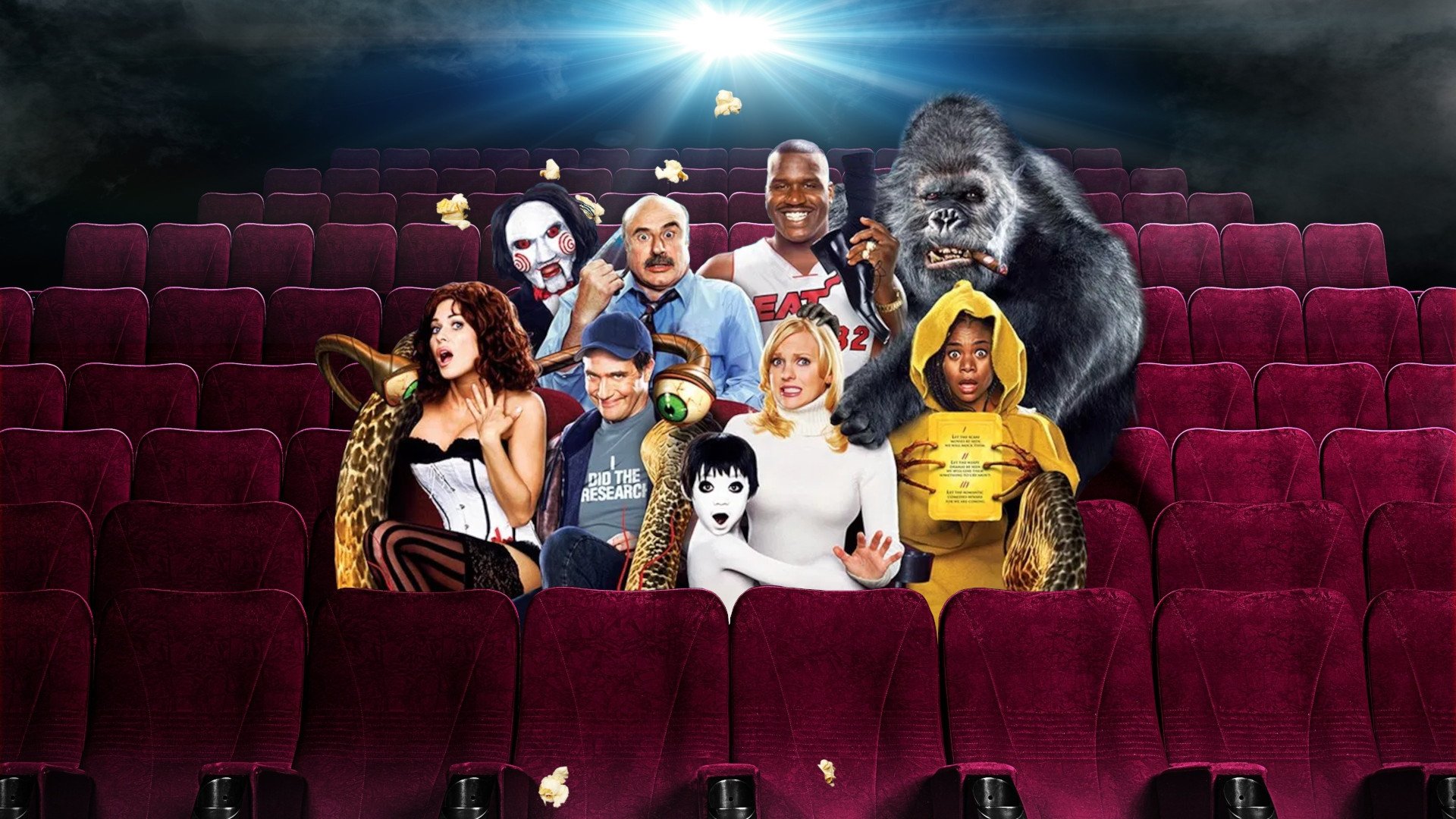
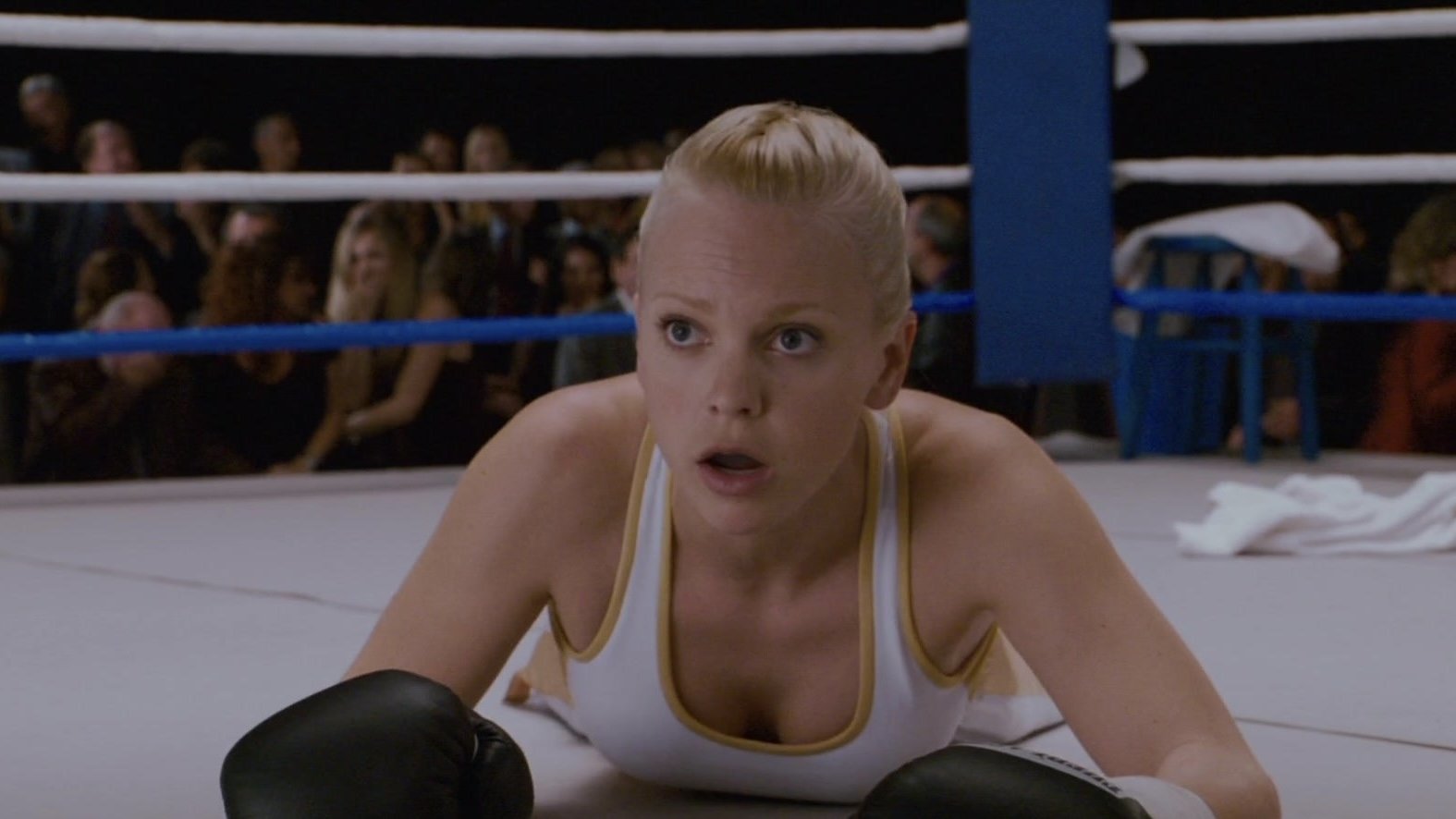
Scary Movie 4 (2006) continued the franchise's movement away from the slasher cycle that inspired its original entry and toward a collage of commercially prominent horror, science-fiction and popular culture. David Zucker returned to direct after Scary Movie 3, with Anna Faris again playing Cindy Campbell and Regina Hall returning as Brenda. The two principal narrative templates were the American remake of The Grudge and Steven Spielberg's War of the Worlds. Their combination placed a supernatural haunting beside an alien invasion, allowing the film to move rapidly between familiar horror images and public spectacles of mass destruction. Its secondary targets included the torture-game premise of Saw and the mysterious rural community of The Village.
The film also illustrates the production pressures facing a topical parody. Its jokes depended on audiences recognizing recently released films, television appearances and celebrities, while its theatrical opening had already been fixed. In contemporary interviews, Zucker described an unusually compressed schedule and a late change in the films selected as its central targets. Those circumstances help explain the sequel's episodic construction: Cindy's investigation links a series of borrowed scenes whose immediate comic recognition matters more than conventional suspense. The resulting film remains a particularly clear example of how early-2000s Hollywood horror became material for mainstream, PG-13 comic entertainment.
Production Under a Fixed Release Date
In an April 2006 interview, Zucker recalled that approximately nine months separated the start of work on the project from its scheduled release. He said the production worked nights and weekends to meet that deadline. A major complication was the selection of source films. The filmmakers had initially considered The Ring Two as a central parody, following their use of The Ring in Scary Movie 3. Zucker said its reception made it unsuitable as the new film's main foundation. The team instead waited for Spielberg's War of the Worlds, even though the April release date was already determined. This is Zucker's account of the decision, not independent evidence of audience attitudes toward the rejected film.
The screenplay was credited to Craig Mazin, Jim Abrahams and Pat Proft, while the established characters originated with the earlier franchise's creators. Faris offered a useful contrast with the preceding production when interviewed in 2006: she recalled that Scary Movie 3 involved continuing script changes and additional photography, whereas the fourth film began with a more complete script. Her comparison complicates a simple picture of hurried production. The compressed timetable described by Zucker did not necessarily mean the actors experienced the same degree of day-to-day rewriting. Both recollections illustrate different aspects of working on sequels built around contemporary references.
Ghosts, Invasion and Horror Parody
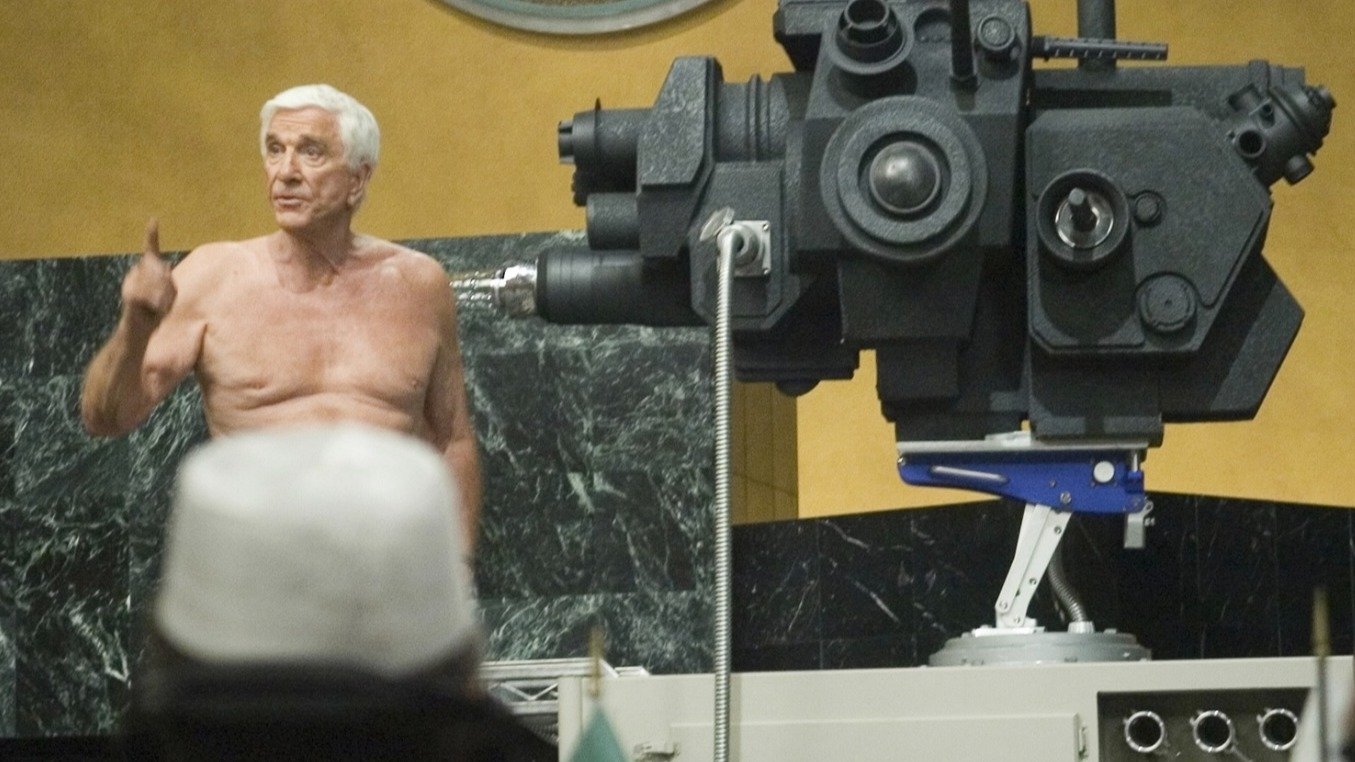
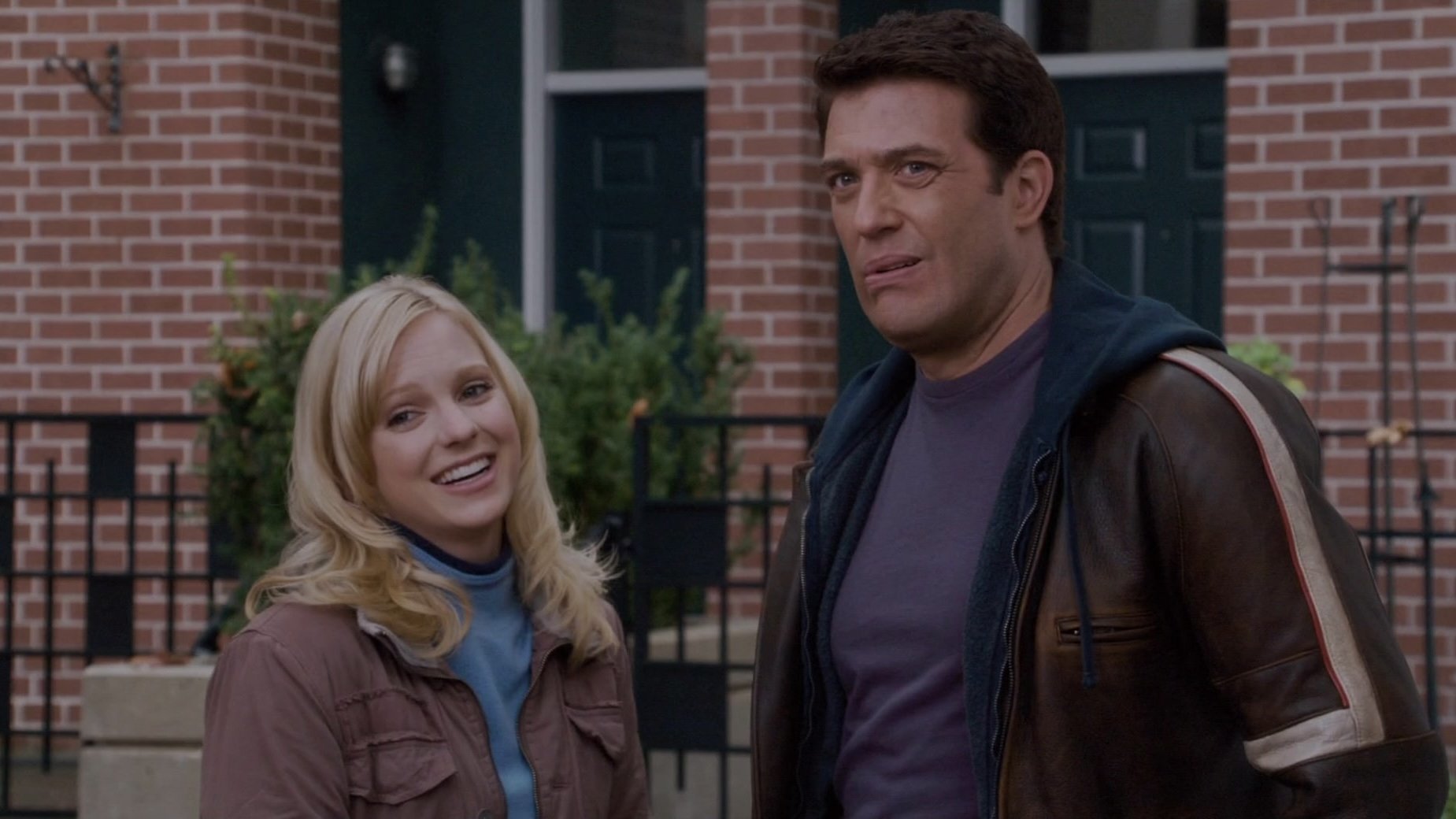
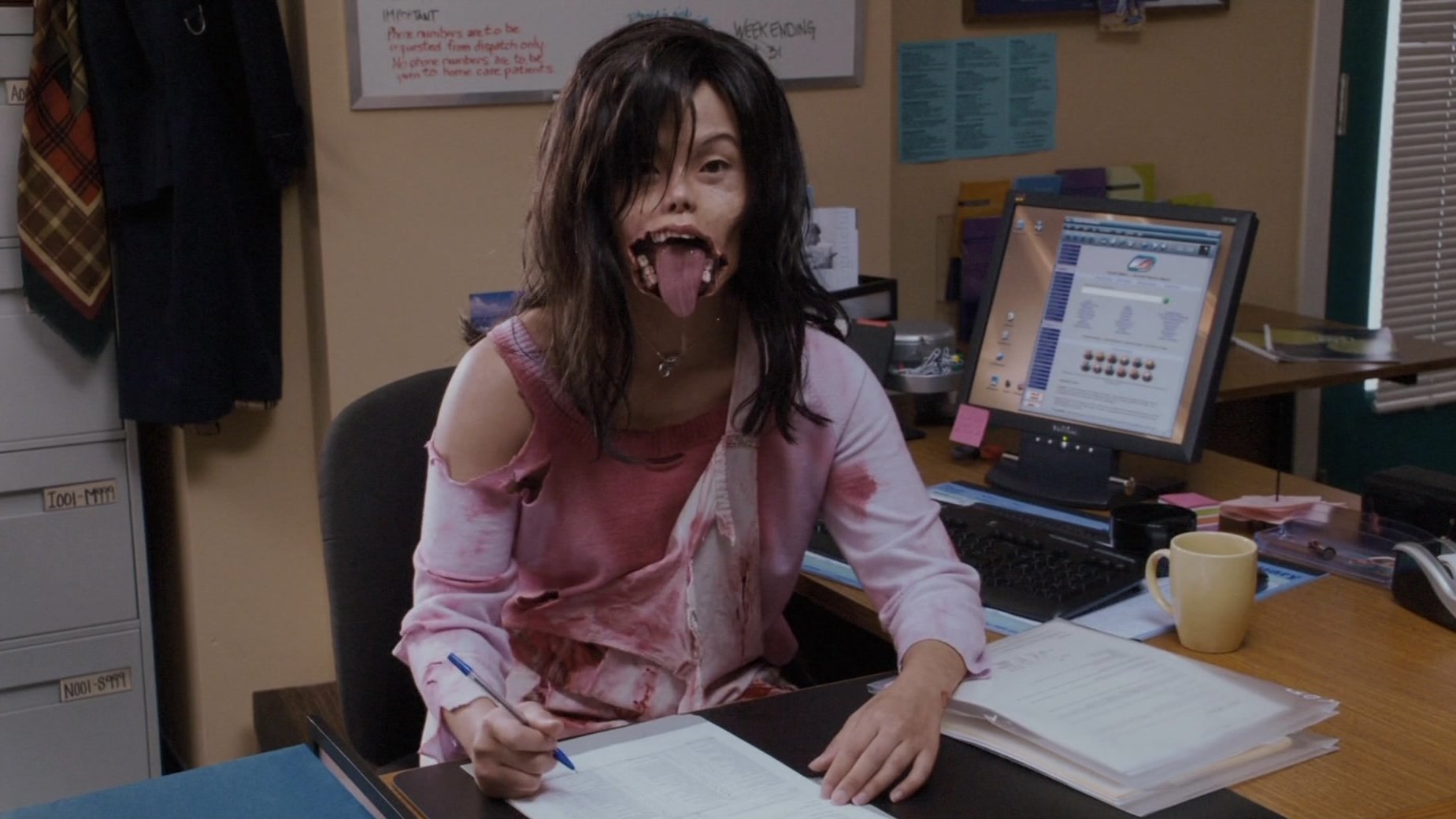
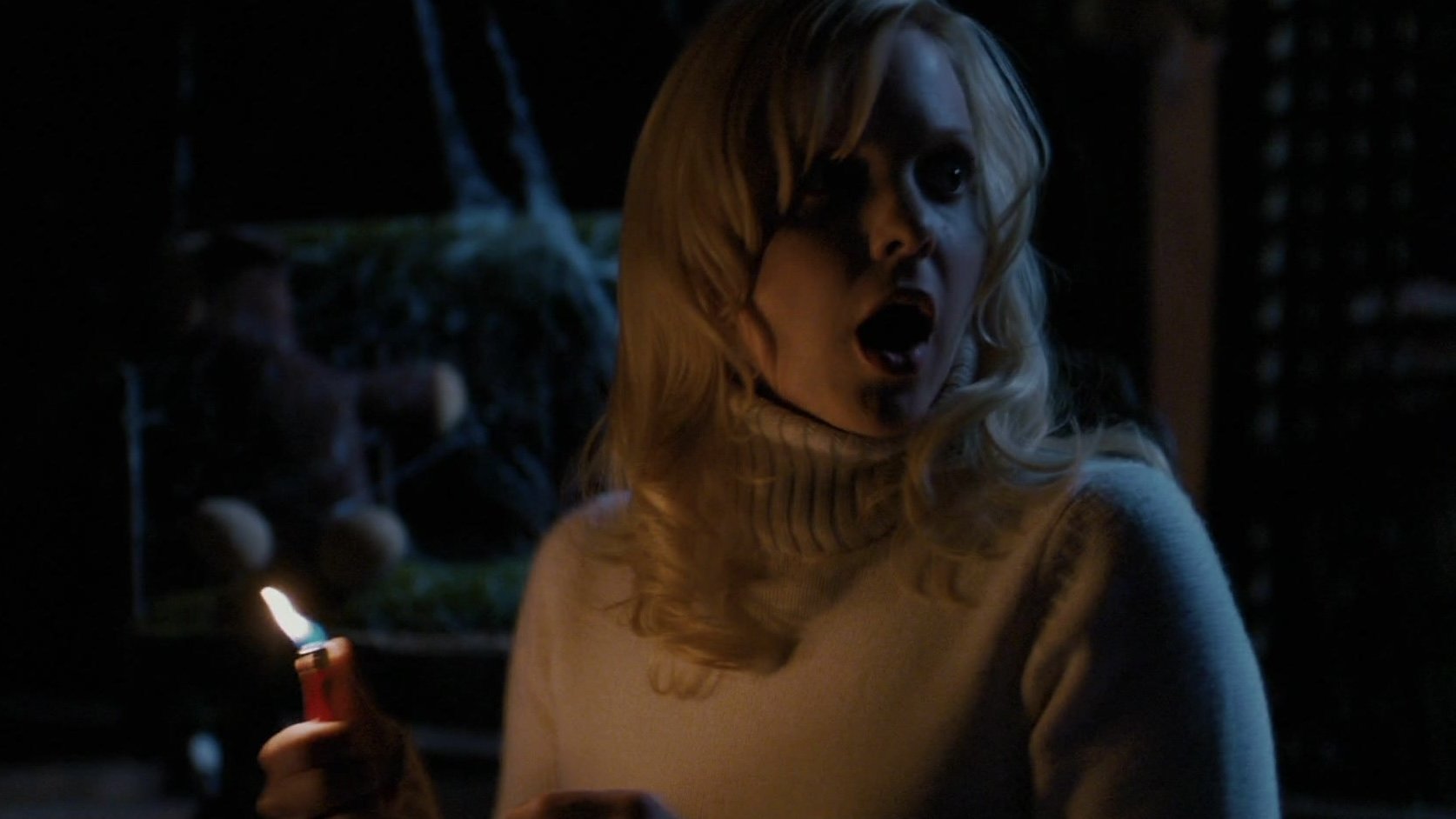
The central plot brings Cindy to a house inhabited by an elderly patient and haunted by a spectral boy. This scenario borrows the domestic spaces and supernatural clues of The Grudge, but the film continually interrupts threatening encounters with bodily mishaps and absurd reactions. Cindy's efforts to investigate the haunting lead into the wider invasion narrative taken from War of the Worlds. Tom Ryan, played by Craig Bierko, supplies the other half of that construction, moving through scenes involving the protection of children, public panic and gigantic attacking machines. These two source films provide recognizable routes through a story that otherwise operates as a collection of separate comic episodes.
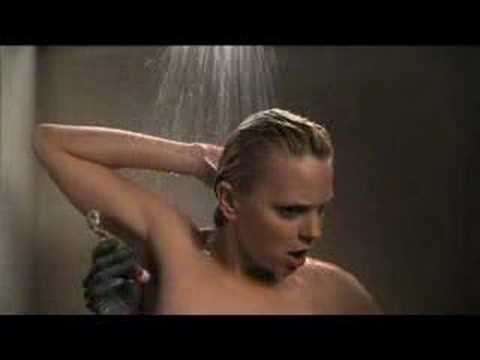
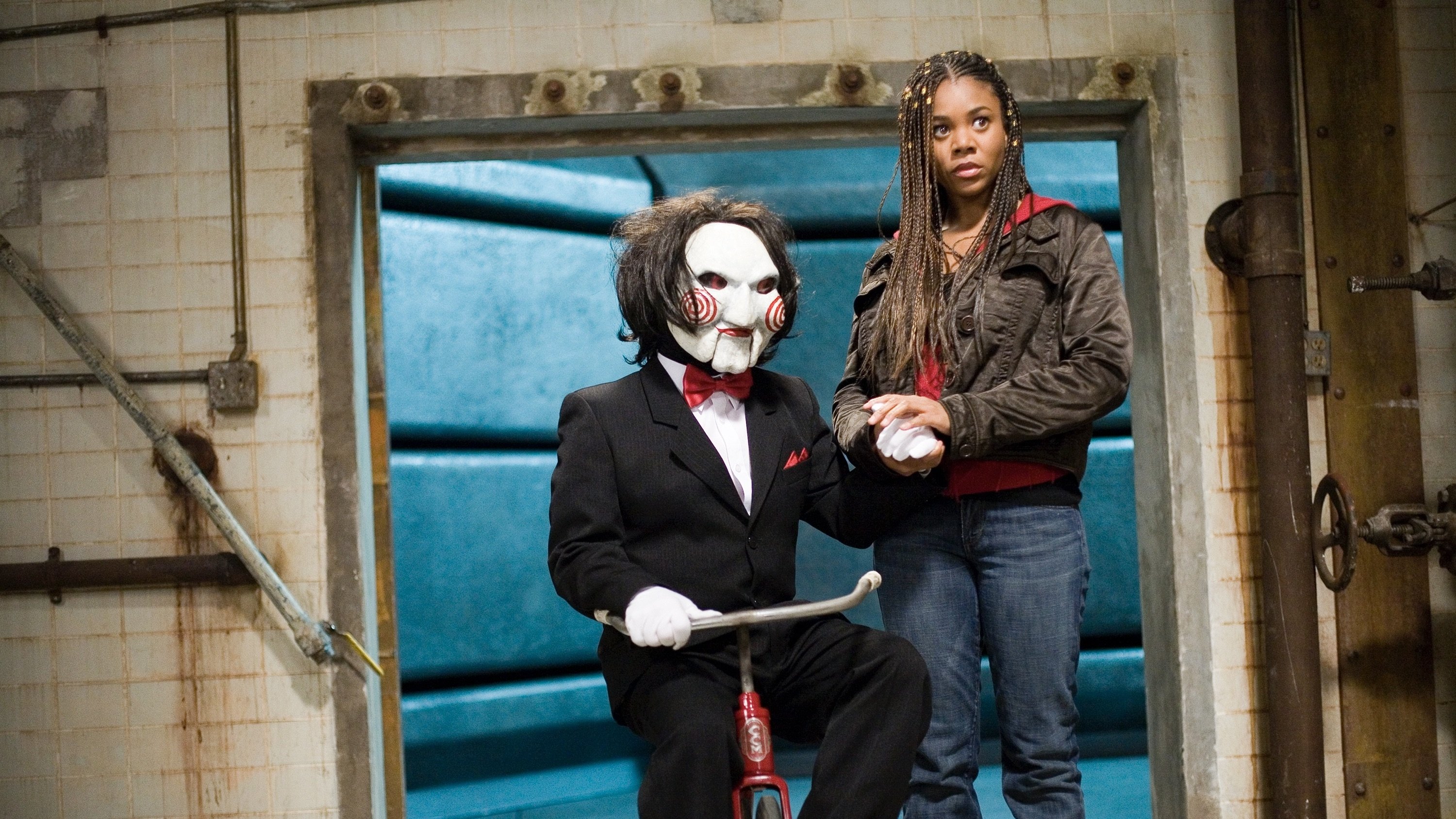
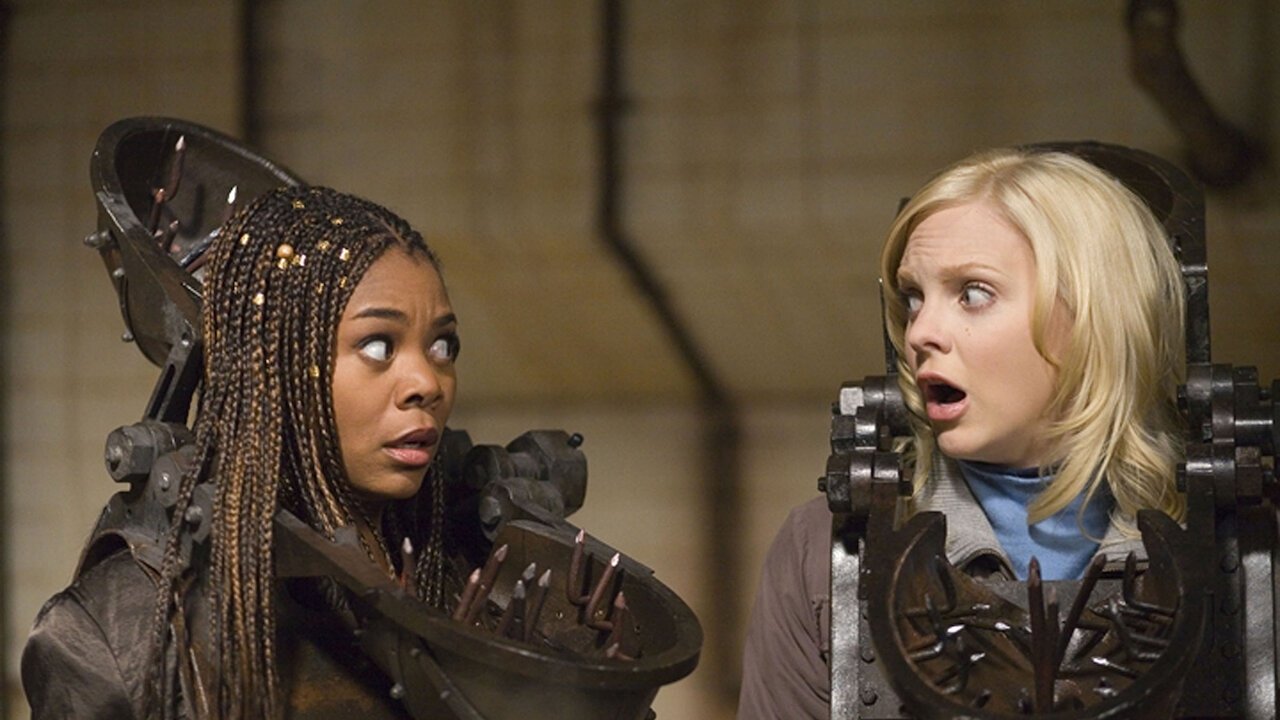
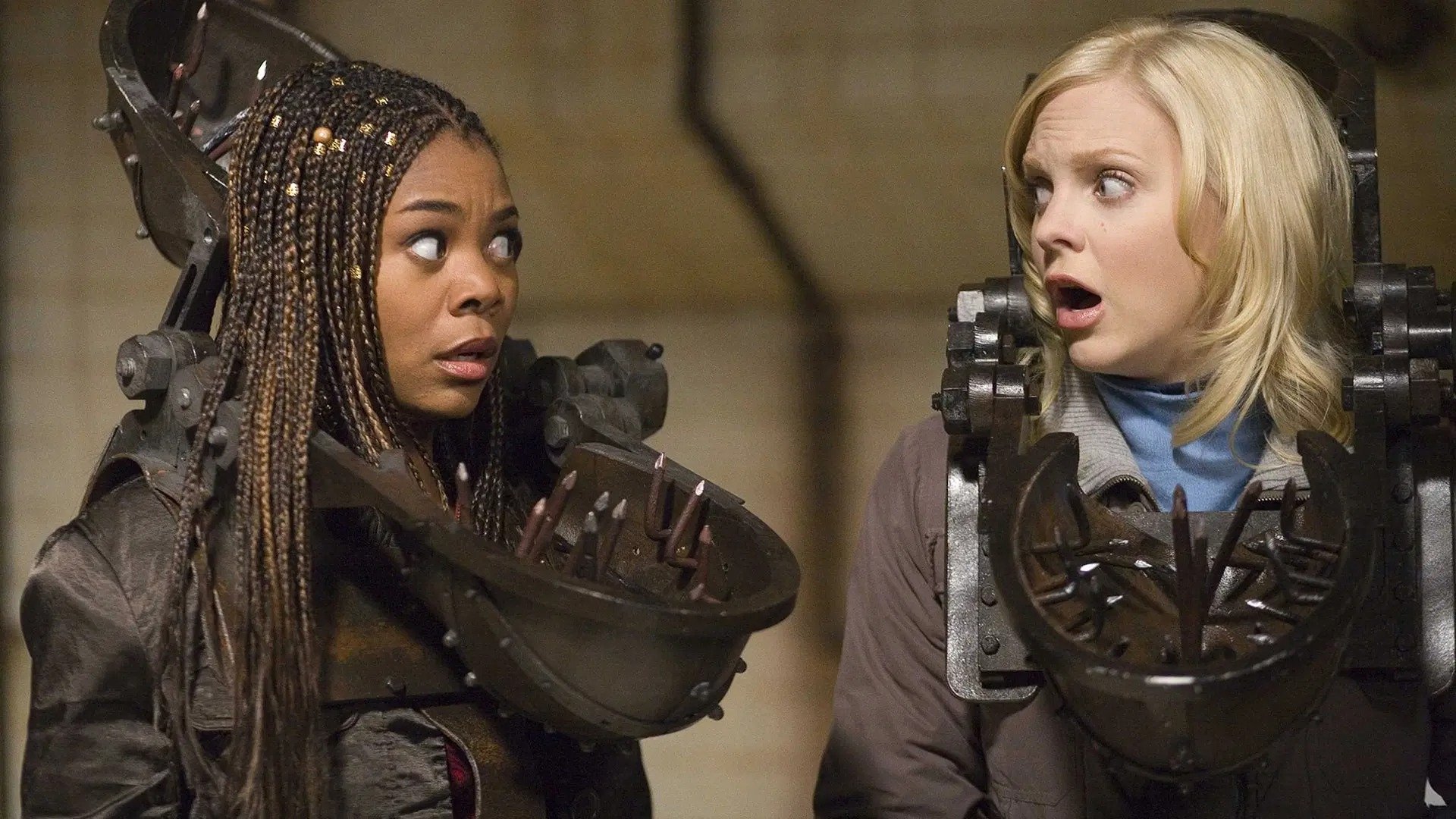
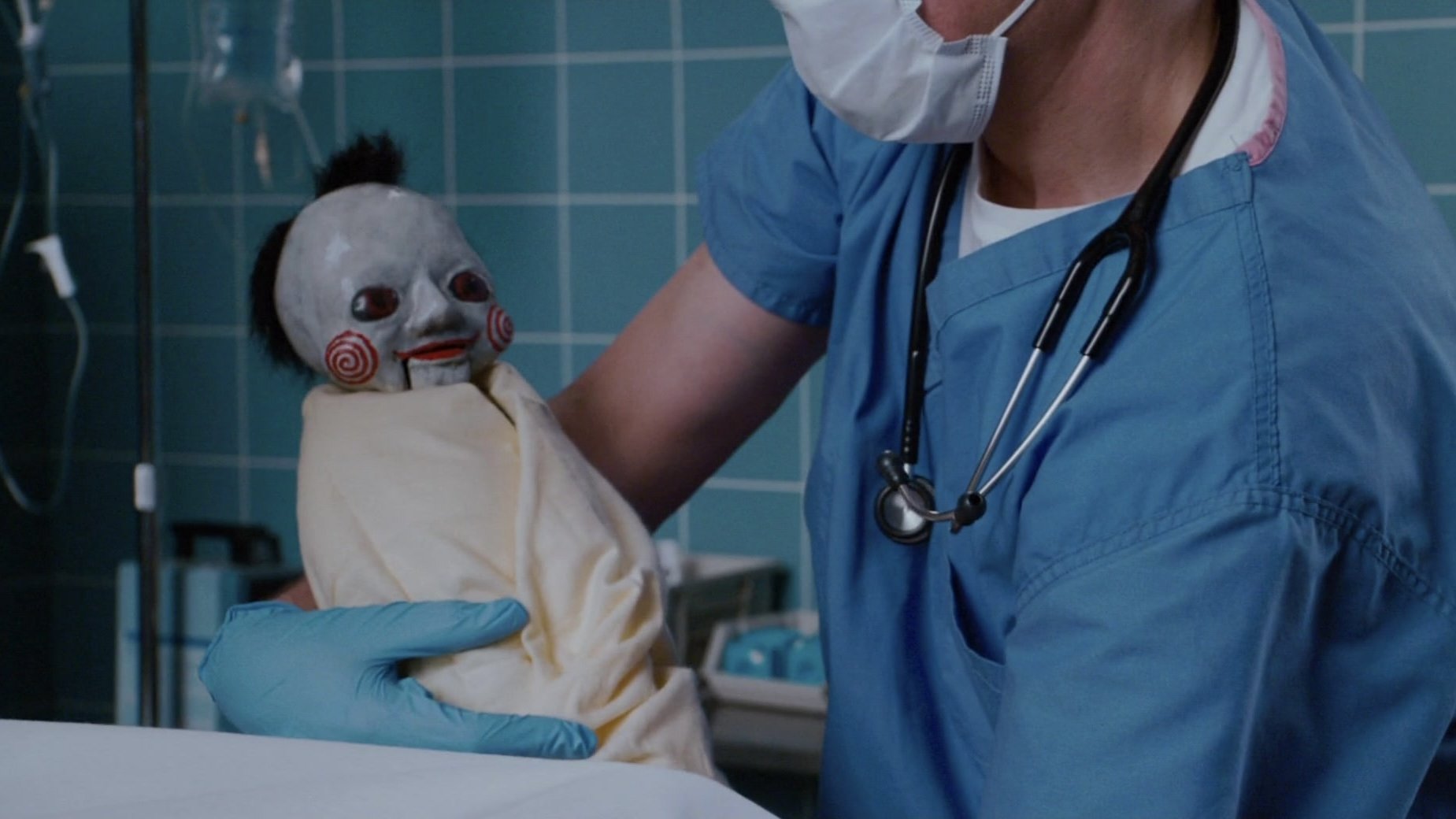
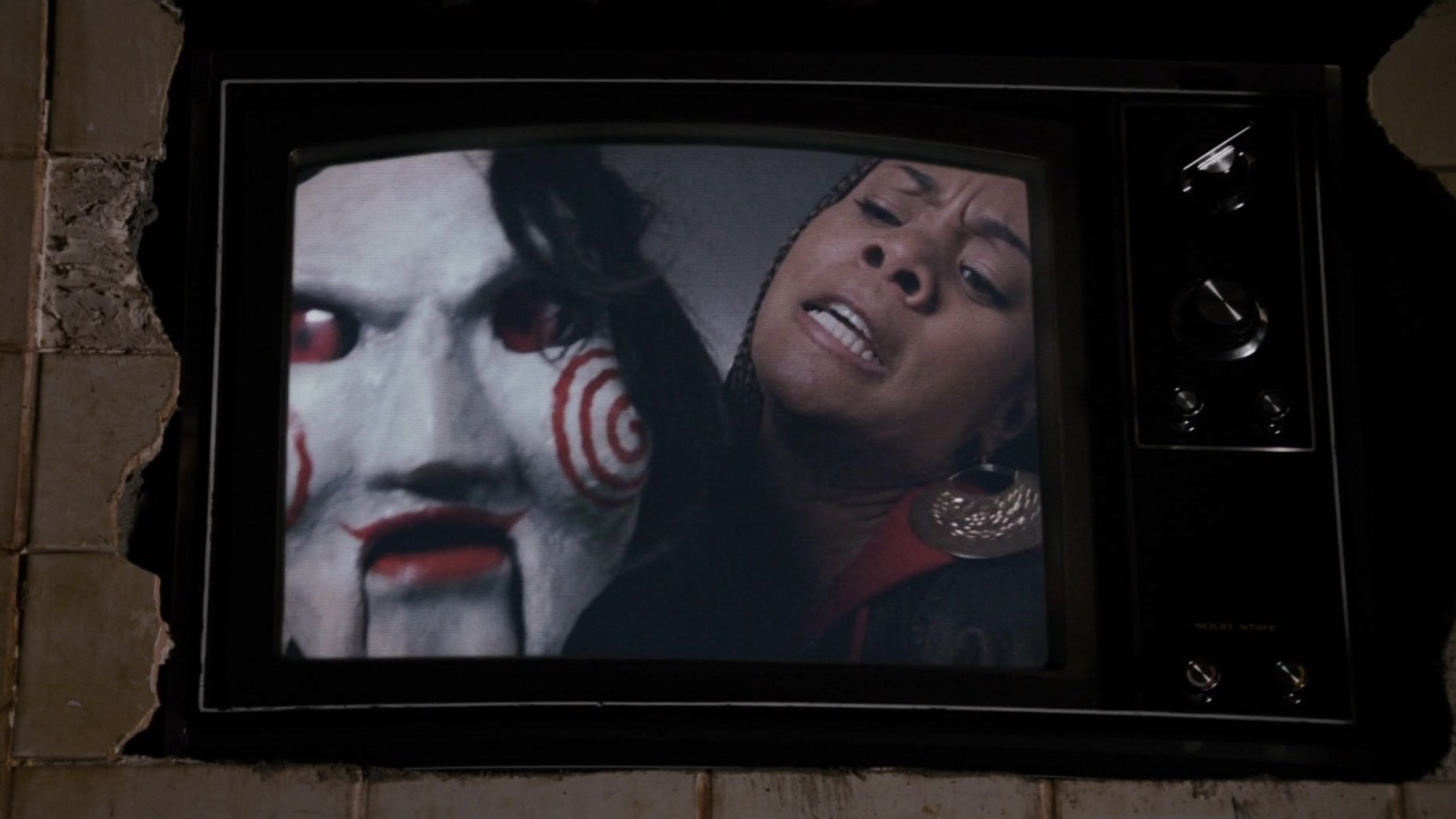
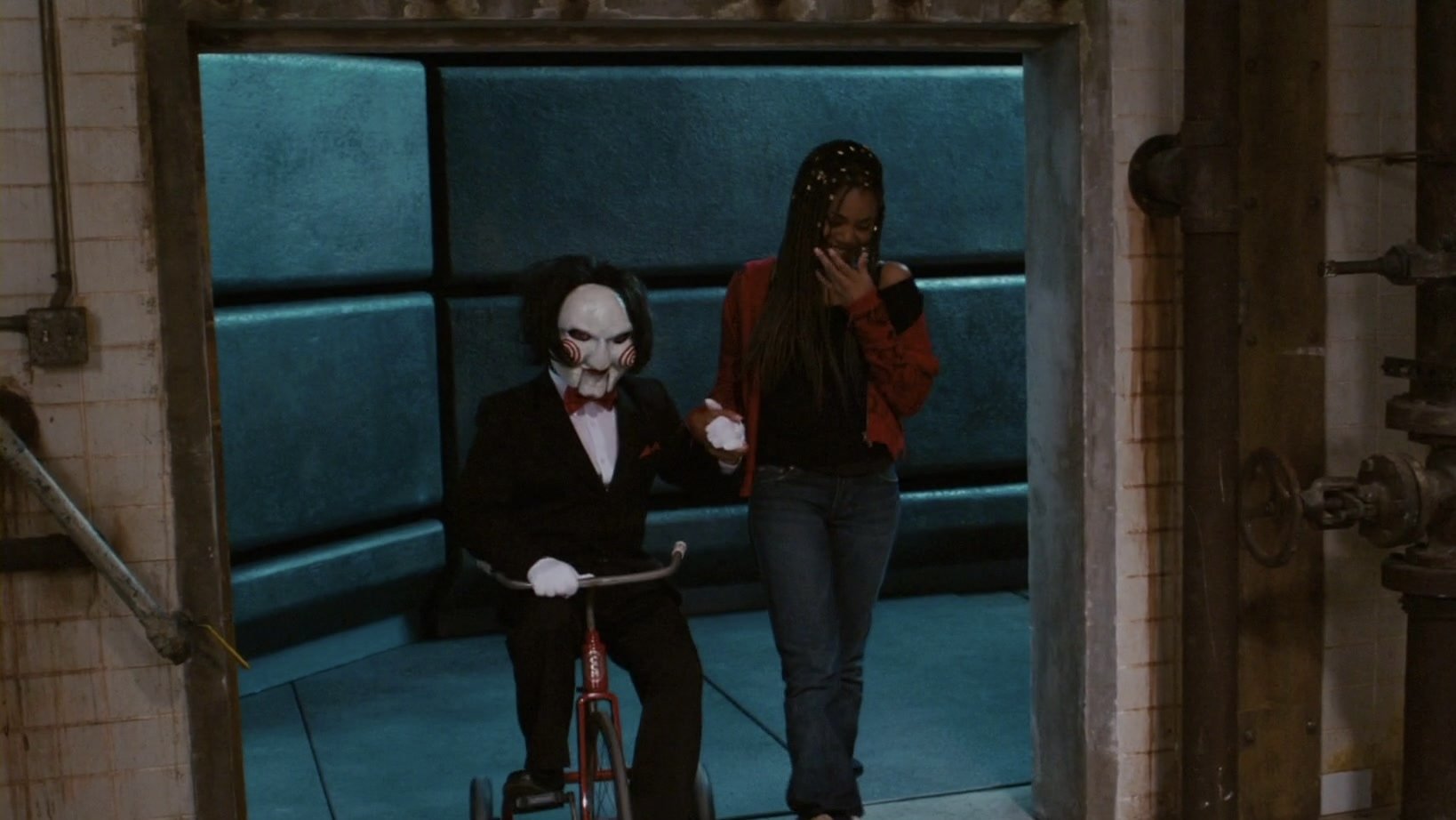
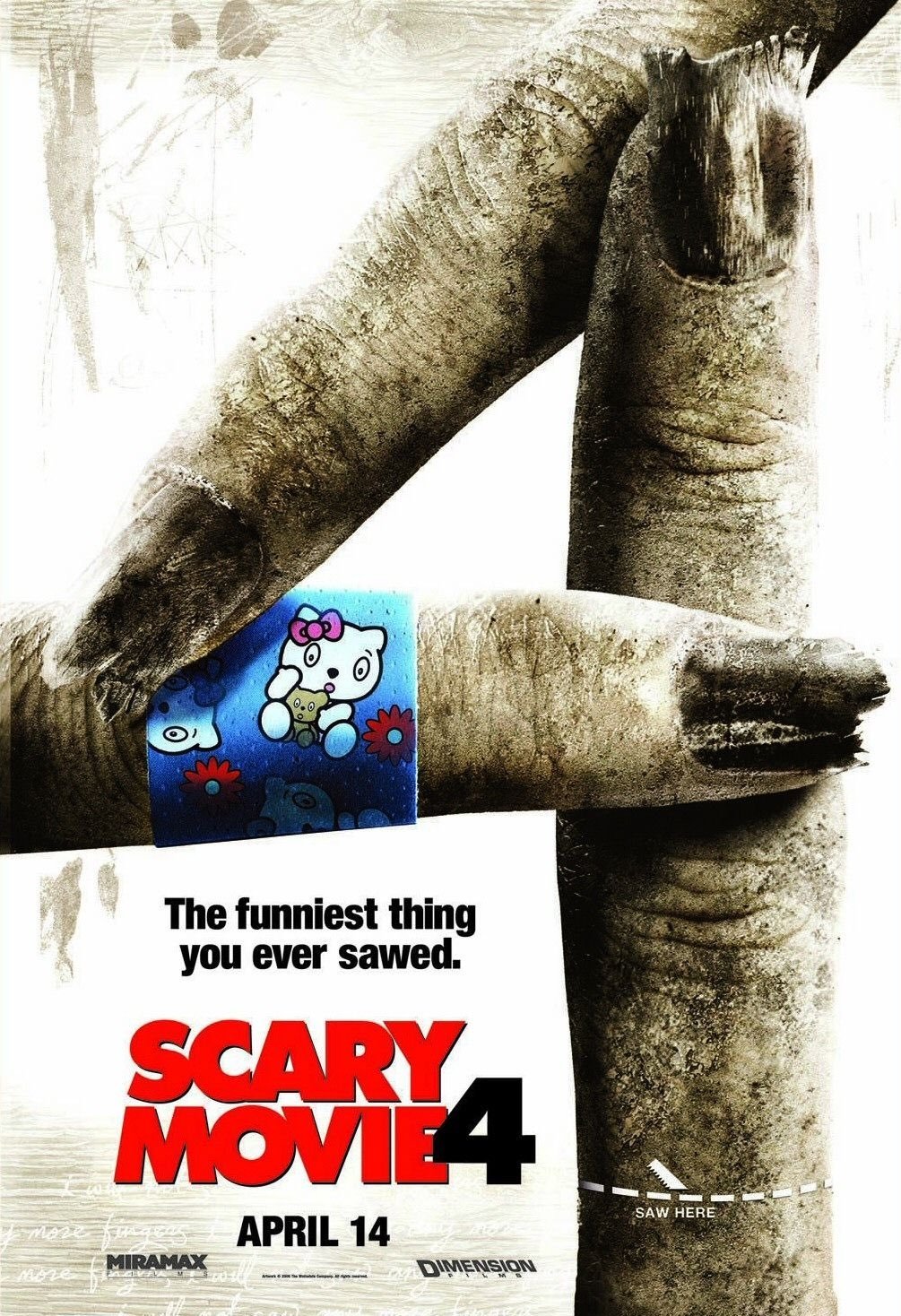
Saw furnishes the opening with a recognizable test of survival: Shaquille O'Neal and television personality Dr. Phil appear in a trap that converts the original film's bodily peril into an extended celebrity gag. References to The Village and Dark Water broaden the horror field beyond the main templates. The humour repeatedly depends on recognizing a specific image before it is overturned. The threatening figure, fatal mechanism or catastrophic event must first resemble its source closely enough for the audience to make the connection. As a result, the film is evidence of which horror images were visible in mainstream American cinema in the middle of the decade, even though it does not provide a coherent survey of the genre.
Performances and Comic Method
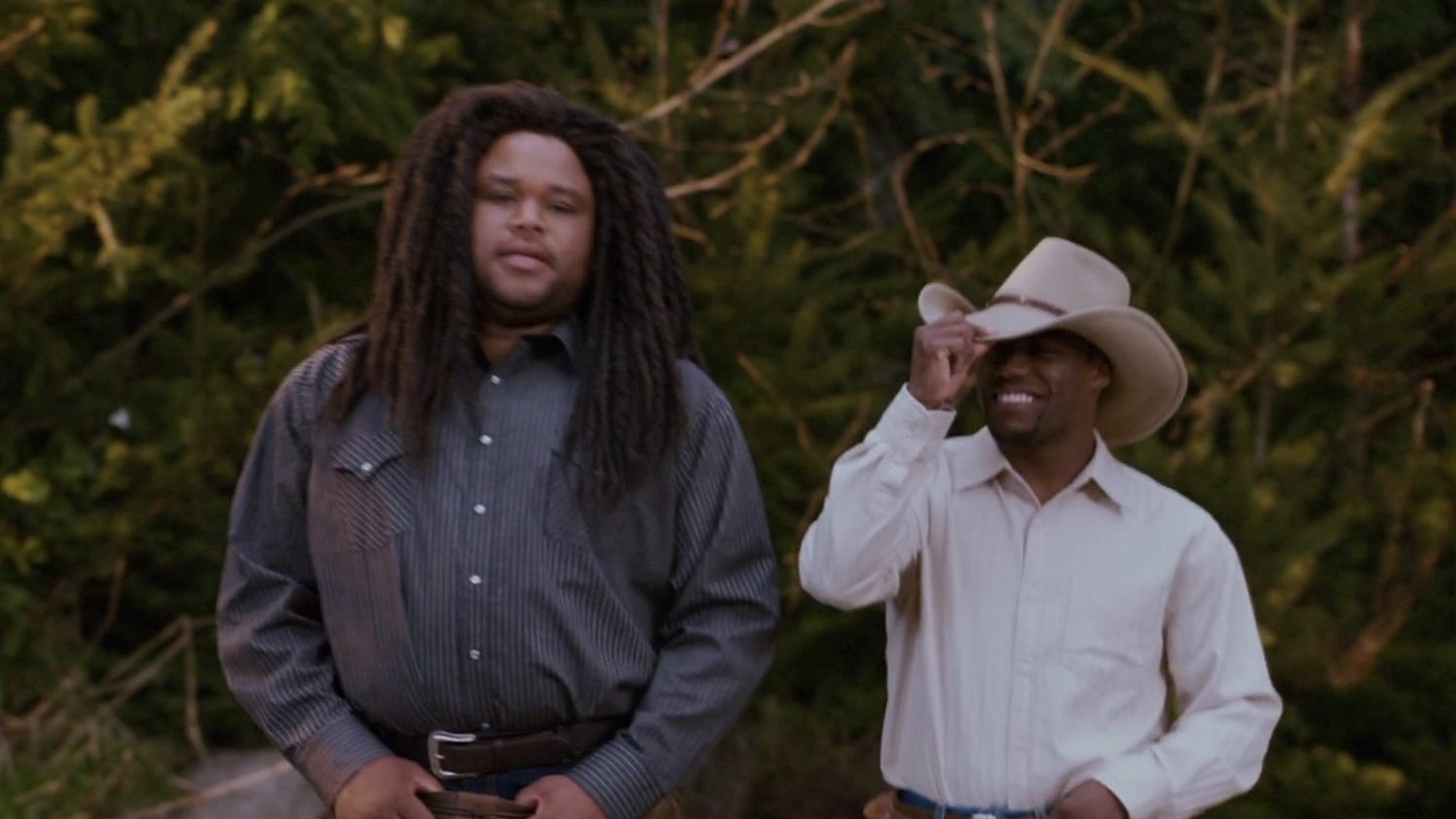
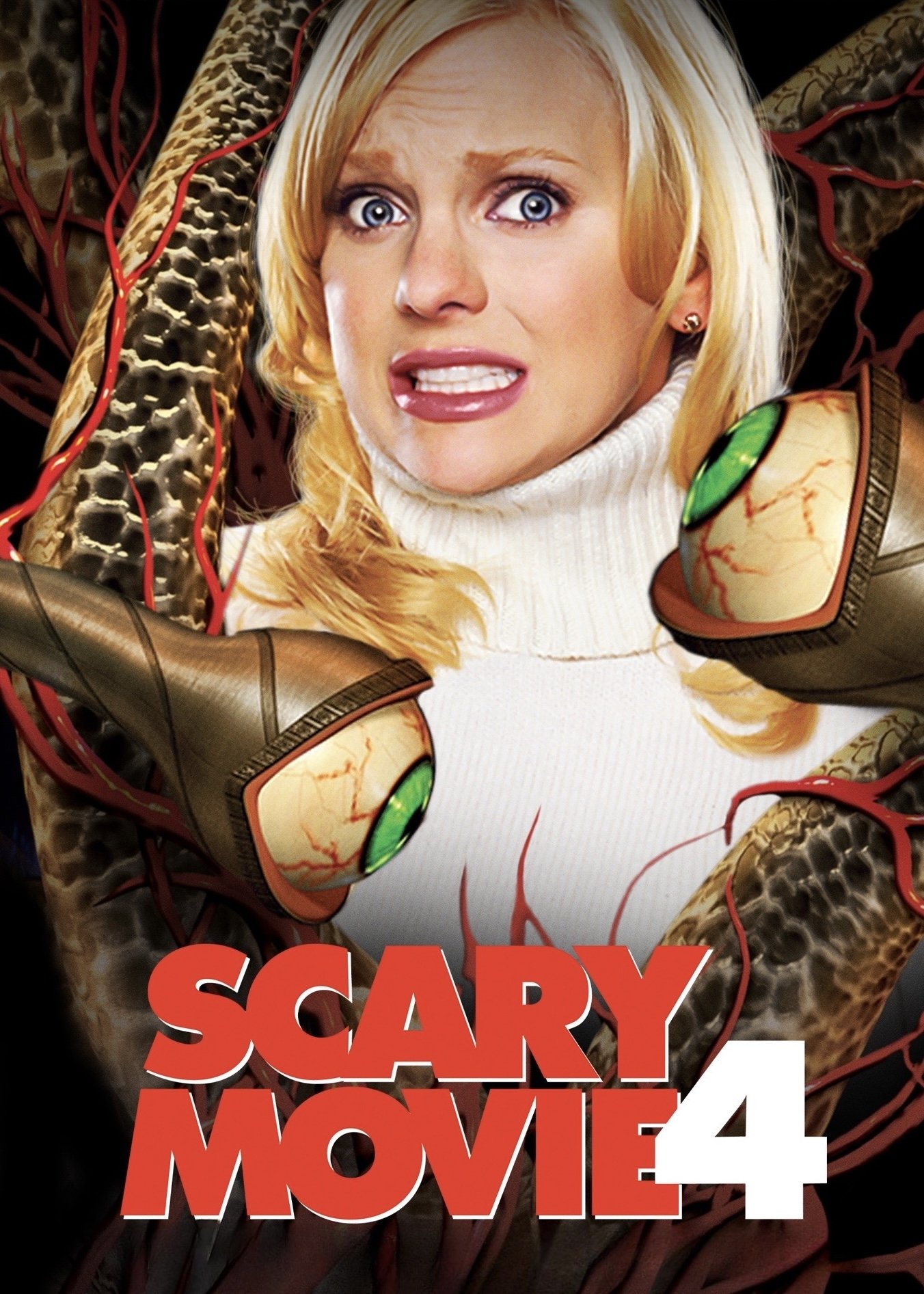
Faris's Cindy is the series' point of continuity, and her unwavering sincerity gives the parody a stable center. Hall's Brenda offers a louder and more confrontational counterweight. Hall described their partnership in a contemporary interview as a natural comic compatibility despite the characters' opposing temperaments. Their established relationship also gives the film a recognizable human element amid abrupt changes in setting and borrowed narrative. Bierko's Tom Ryan allows the production to satirize a more specific celebrity image, drawing on Tom Cruise's screen persona and widely publicized television appearance, alongside the character's function in the invasion story.
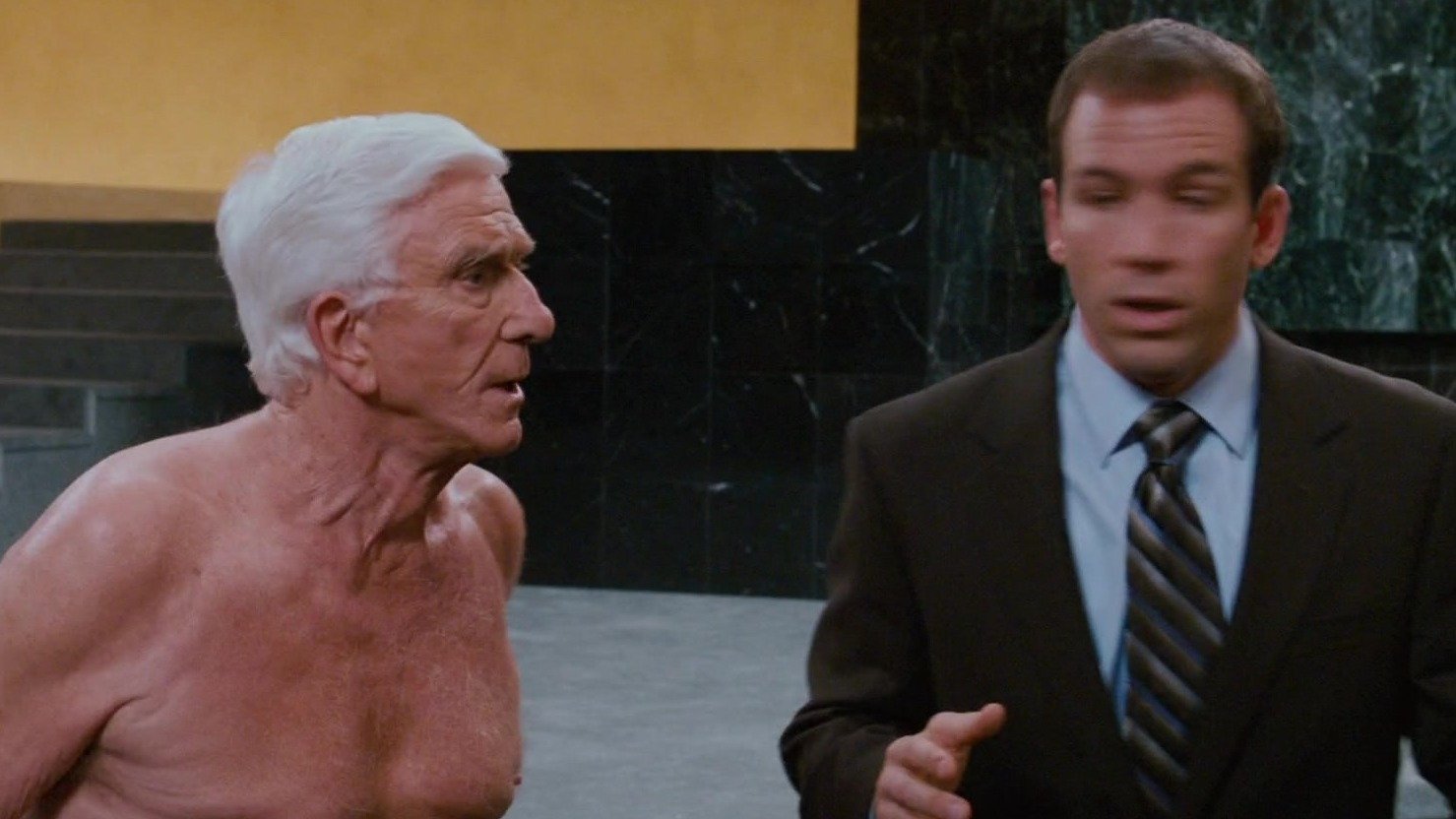
Zucker brought to the film a comic tradition associated with Airplane! and The Naked Gun, in which deadpan delivery and precise physical reversals coexist with crowded visual jokes. In a contemporaneous interview reported by Backstage, he explained that simply identifying a clever resemblance was insufficient; a gag still had to work as comedy. Scary Movie 4 puts that principle under pressure because many jokes begin with an audience's memory of another film. Physical interruptions, repeated blows and incongruous celebrity appearances are used to turn that recognition into an immediate punchline. The technique leaves little room for atmosphere to accumulate, which is an intentional characteristic of the parody format rather than a defect that can be assessed using horror suspense alone.
Theatrical Release and Contemporary Reception
Scary Movie 4 opened in the United States on April 14, 2006, through Dimension Films. The American Film Institute records an 83-minute, PG-13 theatrical film, with Los Angeles and New York openings on that date. The release retained the established franchise's broad commercial positioning despite the greater variety of genres being parodied. Its topical approach also made the film unusually dependent on the audience recognizing events and performances from the immediately preceding years. This is particularly apparent in the television-culture material, which sits alongside jokes derived from horror cinema without requiring a direct connection to the haunting or invasion plot.
Reviews published around the release were notably skeptical about the scattershot arrangement. Anna Smith's April 2006 Time Out review criticized the reliance on broad humour and described the references as extending well beyond horror. Andrew Pulver's contemporary Guardian assessment likewise identified War of the Worlds as a particularly prominent source and regarded the construction as a disconnected sequence of sketches. These are specific contemporary critical judgments, not a comprehensive measure of the film's reception. The fourth installment nonetheless occupied a distinct position within the franchise: it demonstrated that the Scary Movie formula could continue by adapting to changing horror cycles, even as critics questioned how much satirical force remained in its expanding catalogue of targets.