Savage World Today (1985)

IT
HORROR FILM Documentary
SUBGENRES SHOCKUMENTARY
Runtime
77 min
Release
August 24, 1985
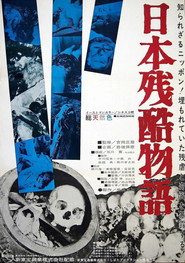
Savage World Today (1985) poster
Director
Production Companies
General Cine International , Film 2
Plot

A new age Mondo film that explores the realm of urban decay and various oddities of the modern world, ranging from underground club scenes to sex change operations.

Alternative Titles
世界残酷奇谭3 (China) — Chinese Mondo Cane: Teil III (Germany) Mondo Cane 3 (Netherlands)

Film Guide & Analysis

An Italian mondo revival whose disturbing imagery, documentary claims and 1985 censorship record expose the tensions of late exploitation reportage.

Released in Italy in 1985, Mondo cane oggi - L'orrore continua, also known internationally as Savage World Today, belongs to the later history of the Italian mondo documentary. Stelvio Massi directed it under the name Max Steel, taking over a title associated with the international success of Mondo Cane (1962). The new film assembles glimpses of daily life, public spectacles, medical procedures and unsettling encounters from several countries. Its relevance to horror rests on the way these images are presented: real-world subjects become material for suspense and disgust through selection, commentary and sudden changes of context.

The production appeared more than two decades after the first Mondo Cane, at a point when its provocative format had already been widely imitated. Surviving Italian records are unusually informative about the 1985 film's contents and official treatment. Its initial censorship application lists individual scenes, while the commission's ruling identifies the specific footage that had to be removed before public exhibition. Those documents make it possible to study the film's construction and circulation without assuming that every incident, explanation or assertion in its documentary presentation was independently authenticated.

The Return of the Mondo Name

The Archivio del Cinema Italiano identifies Massi as director under his Max Steel pseudonym and attributes the story and screenplay to Massi and Piero Regnoli. Massi also handled the photography, an unusually direct creative role for a filmmaker better known for Italian crime and action productions. General Cine International and Film 2 were responsible for production, with Film 2 handling Italian distribution. These credits establish the institutional identity of the 1985 feature, although they cannot tell us how every sequence was obtained or whether individual incidents were reconstructed for the camera.

Reusing the Mondo Cane name connected this project to a recognizable kind of screen entertainment rather than to the original filmmakers' continuing authorship. Gualtiero Jacopetti, Franco Prosperi and Paolo Cavara had made the 1962 picture; Massi's film belongs to a subsequent phase of the format. The explicit subtitle, The Horror Continues, signals its emphasis on sensations that a theatrical audience might experience as frightening or repellent. Its episodic structure offers few recurring characters or developing situations. Continuity comes from the assertion that disparate scenes reveal troubling dimensions of the contemporary world.

A Catalogue of Extremes

The subject list attached to the Italian censorship submission shows the film's unusually broad itinerary. It names locations and settings associated with India, Japan, Thailand and New York, alongside animal fights, tattooing, body modification, medical treatment, physical contests and performances staged for spectators. Some entries describe ordinary urban activities; others concern death or procedures involving visible injury. Their proximity is central to the film's effect. The viewer moves rapidly between societies and social settings with limited opportunity to investigate their circumstances, making the sequence of attractions more important than a sustained account of any one place.

A separate list prepared for the submitted promotional presentation stresses a nude performance, surgery, animal cruelty and a corpse associated with drugs. This paperwork records what the distributors sought to advertise, not independent confirmation of the narrative surrounding each image. The original mondo tradition often used the contrast between familiar and supposedly exotic behavior to generate surprise. Here bodily vulnerability increasingly occupies the foreground. Particularly disturbing sights are made to function as climaxes in a chain of comparisons, whatever differences may exist between the people, medical conditions and cultural practices depicted.

The Documentary Claim and Its Cost

The promotional material submitted for censorship included the claim that everything shown was true. That promise was a selling device with an important effect on the spectator's expectations. A fictional horror film can announce its invention openly; a mondo feature invites the audience to treat camera footage as direct access to otherwise concealed realities. Yet an image can document the appearance of an event while leaving the circumstances of its filming unknown. The surviving official records describe subjects and official objections. They do not establish the identities, consent or wider context of the people shown in particular sequences.

Gaia Giuliani's scholarship on the earlier Italian mondo cycle examines how sensational presentations of cultural difference were entangled with assumptions about race, sexuality and the position of the observer. Her study addresses an earlier period, so it cannot serve as testimony about Massi's actual production methods. It does, however, clarify an analytical problem raised by the 1985 compilation: an edited encounter can turn unfamiliar bodies and practices into an object of spectacle. The film's disturbing effect depends partly on placing documentary authority behind those editorial choices. Treating its descriptions critically is essential when discussing sexuality, illness and non-Western communities.

Censorship and Public Exhibition

General Cine International submitted the picture to the Italian censorship authorities in August 1985. The commission examined it and issued a conditional decision on August 23, approving public exhibition with an age restriction of eighteen years after two cuts in the second part. The required reductions amounted to 16.10 metres of film: one passage of 1.40 metres and another of 14.70 metres. The ruling described the sequences as a lesbian encounter and female masturbation. This is evidence of an explicit alteration requested for Italian theatrical approval, without proving that every later release used the same print.

The commission's reasoning is especially revealing. It regarded the sexual passages as offending the prevailing standard of public decency, while graphic violence and surgical interventions were grounds for restricting admission to adults rather than refusing the certificate. The distinction shows the different criteria applied to erotic and bodily material within the same documentary. A record of this kind describes regulatory decisions, not the authenticity or artistic value of the scenes. The existence of an approved adult-rated release also rules out describing the film as simply banned in Italy. Its documented place in the Mondo Cane lineage is that of a 1980s continuation, followed by Mondo cane 2000 - L'incredibile in 1988.

References

  1. Archivio del Cinema Italiano / ANICA Mondo cane oggi - L'orrore continua (1985)

    Original Italian cinema archive credits identifying Massi, the production companies, creative contributors, distributor and 1985 censorship certificate.

  2. Universita degli Studi di Milano / CHANGES Mondo cane oggi - L'orrore continua: censorship file 80828

    Archival transcription of the August 1985 review, including the conditional approval, precise footage cuts and adult classification.

  3. Ministero della Cultura / Cinecensura Mondo cane oggi - L'orrore continua

    Official digital exhibition of the original Italian censorship file and the submitted promotional presentation with its scene list.

  4. Cambridge University Press / Modern Italy Razza cagna: mondo movies, the white heterosexual male gaze, and the 1960s-1970s imaginary of the nation

    Gaia Giuliani's peer-reviewed study of the earlier mondo tradition, relevant to framing its treatment of racialized and sexualized spectacle.

Connections

Release & Distribution

Production Companies (2)

  • Film 2 IT
  • General Cine International

Release History (1)

Release DateTerritoryRelease TypeFormatDistributorCertificationNotes
1985-08-24 Italy Theatrical — — —
Do you have an iron stomach? It won't suffice...