The Sixth Sense (1999)

US
Runtime
107 min
Release
August 6, 1999
Budget
$40,000,000
Revenue
$672,800,000
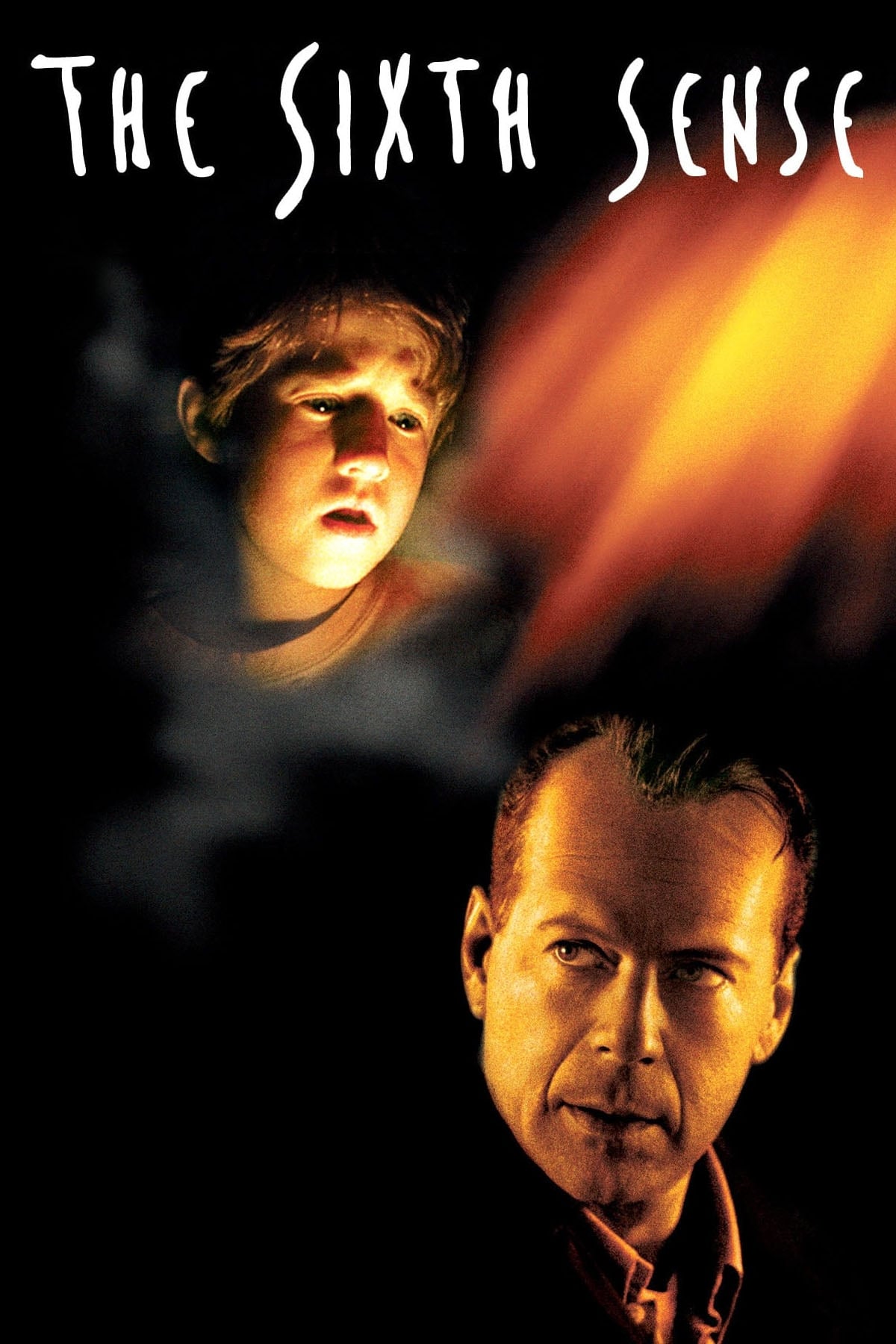
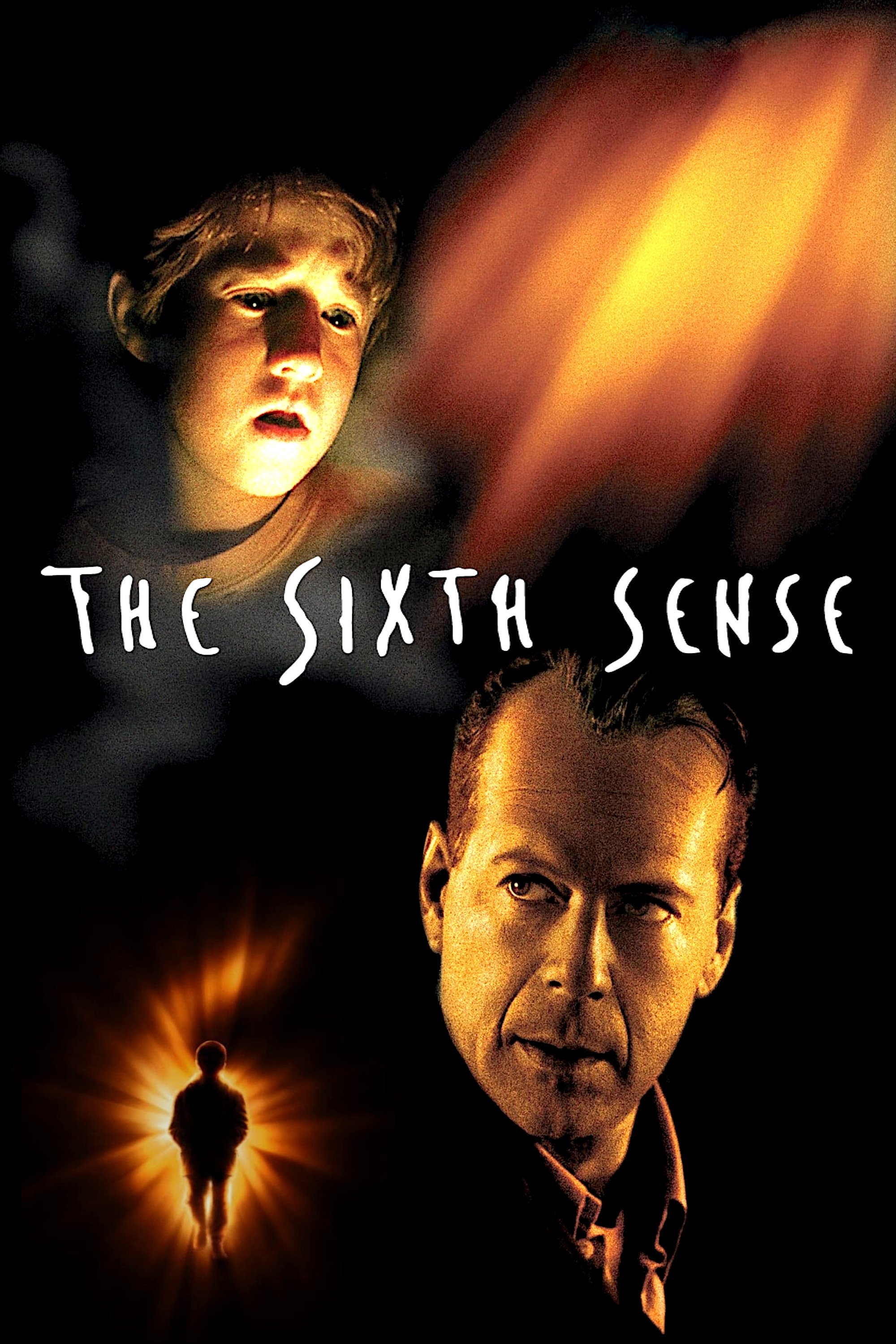
The Sixth Sense (1999) poster
Production Companies
Spyglass Entertainment , The Kennedy/Marshall Company , Hollywood Pictures , Barry Mendel Productions
Plot

Following an unexpected tragedy, child psychologist Malcolm Crowe meets a nine year old boy named Cole Sear, who is hiding a dark secret.

Alternative Titles
Sexto Sentido (AR) Altıncı Hiss (AZ) Shesto chuvstvo (BG) Шесто чувство (BG) — translation:bg الحاسة السادسة (BH) O Sexto Sentido (BR) Le Sixième sens (CA) 灵异第六感 (CN)
Show all 56 alternative titles 第六感 (CN) Šestý smysl (CZ) — translation:cs The Sixth Sense - Der sechste Sinn (DE) — TV The Sixth Sense - Nicht jede Gabe ist ein Segen (DE) Den sjette sans (DK) — translation:da Kuues Meel (EE) El sexto sentido (ES) — translation:es El sexto sentido (The Sixth Sense) (ES) — False El sisè sentit (ES) — translation:ca Kuudes aisti (FI) — translation:fi Sixième sens (FR) მეექვსე გრძნობა (GE) — translation:ka I Ékti Aísthisi (GR) Η Έκτη Αίσθηση (GR) — translation:el 鬼眼 (HK) Šesto čulo (HR) — translation:hr Hatodik érzék (HU) — translation:hu החוש השישי (IL) — translation:he حس ششم (IR) The Sixth Sense - Il sesto senso (IT) Shikkusu sensu (JP) シックス・センス (JP) — translation:ja 식스 센스 (KR) — translation:ko Šeštasis pojūtis (LT) — translation:lt Sestais prāts (LV) — translation:lv El Sexto Sentido (MX) — translation:es Den sjette sansen (NO) — translation:no Szósty zmysł (PL) — translation:pl O Sexto Sentido (PT) — translation:pt Al șaselea simț (RO) — translation:ro Šesto čulo (RS) Шесто чуло (RS) — translation:sr Shestoye chuvstvo (RU) Шестое чувство (RU) — translation:ru الحاسَّةُ السَّادسة (SA) — translation:ar Sjätte sinnet (SE) — translation:sv Šesti čut (SI) — translation:sl Šiesty zmysel (SK) — translation:sk ซิกซ์เซ้นส์...สัมผัสสยอง (TH) — translation:th Altıncı His (TR) — translation:tr 靈異第六感 (TW) — translation:zh 鬼眼 (TW) Shoste vidchuttya (UA) Шосте відчуття (UA) — translation:uk The 6th Sense (US) — alt. spelling The Sixth Sense (1999) (US) Oltinchi his (UZ) — translation:uz Giác Quan Thứ Sáu (VN) — translation:vi

Trailers & Videos

4 videos

The Sixth Sense (1999) Film Guide

M. Night Shyamalan’s supernatural horror landmark: screenplay development, the performances of Bruce Willis and Haley Joel Osment, ghost imagery, Philadelphia cinematography, James Newton Howard’s score, Andrew Mondshein’s editing and critical reception.

The Sixth Sense (1999) is an American supernatural psychological horror film written and directed by M. Night Shyamalan. Set in Philadelphia, it follows child psychologist Malcolm Crowe and Cole Sear, a boy who experiences terrifying encounters with the dead. Their developing relationship reveals a supernatural world whose inhabitants remain attached to unresolved experiences from their lives. The film constructs its horror through apparently ordinary domestic spaces, restrained performances and apparitions whose physical injuries expose the circumstances of their deaths. Its narrative also conceals information about Malcolm that becomes essential to understanding the events presented.

Bruce Willis portrays Malcolm, with Haley Joel Osment as Cole, Toni Collette as his mother Lynn and Olivia Williams as Malcolm’s wife Anna. Produced by Kathleen Kennedy, Frank Marshall and Barry Mendel, the film was photographed by Tak Fujimoto, edited by Andrew Mondshein and scored by James Newton Howard. Buena Vista Pictures Distribution released it in the United States on August 6, 1999. Its worldwide theatrical earnings exceeded $672 million, and it received six Academy Award nominations. The production became a major commercial breakthrough for Shyamalan and an influential example of supernatural horror built around psychological uncertainty, grief and the reinterpretation of previously witnessed events.

Screenplay Origins and Studio Development

Shyamalan developed The Sixth Sense after directing Praying with Anger (1992) and Wide Awake (1998). In interviews originally conducted by Creative Screenwriting around the film’s release, he explained that an important early image involved a child speaking to an apparently absent person during a wake. The mourners regarded the child as behaving strangely, while the audience would eventually understand that the conversation involved someone who had died. This idea developed into the sequence involving the Collins family. Shyamalan initially explored a substantially different story in which Malcolm was a crime-scene photographer investigating a serial killer whose victims appeared to his son.

The screenplay underwent extensive revision as Shyamalan abandoned the murder investigation and developed the relationship between a troubled child and a psychologist. Producer Barry Mendel later recalled that the decisive ending emerged around the sixth draft. Shyamalan continued refining the material until the supernatural revelation and the emotional relationships formed a coherent narrative. He was determined to direct the screenplay himself, approaching studios with conditions that established his creative involvement before a sale. Hollywood Pictures acquired the project in a competitive process. Shyamalan recalled receiving a deal worth approximately $3 million for writing and directing services, a contractual amount distinct from the eventual production budget.

Kennedy, Marshall and Mendel supported the project, while the director’s familiarity with Philadelphia shaped its physical setting. The screenplay offered an unusual combination of established Hollywood talent and a filmmaker whose previous features had achieved limited theatrical success. Shyamalan told Creative Screenwriting that he deliberately preserved recognizable elements of traditional ghost stories, allowing the film to be marketed as supernatural horror while developing a more complex account of communication and loss. The production consequently depended on a precise relationship between the frightening incidents and the characters’ emotional circumstances. Scenes had to establish immediate suspense while retaining their meaning when the audience eventually learned more about Malcolm’s condition.
Casting and the Central Performances

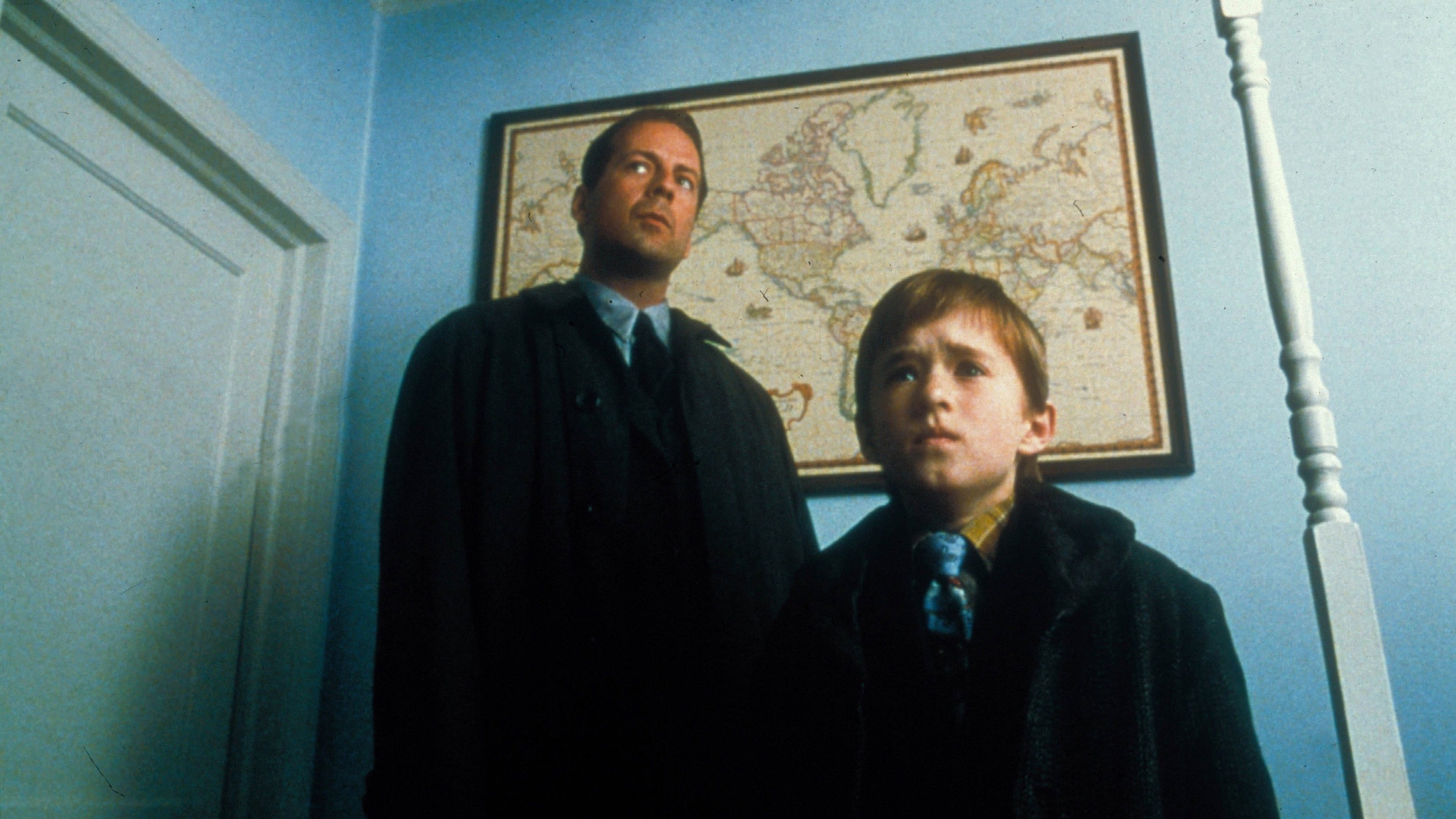
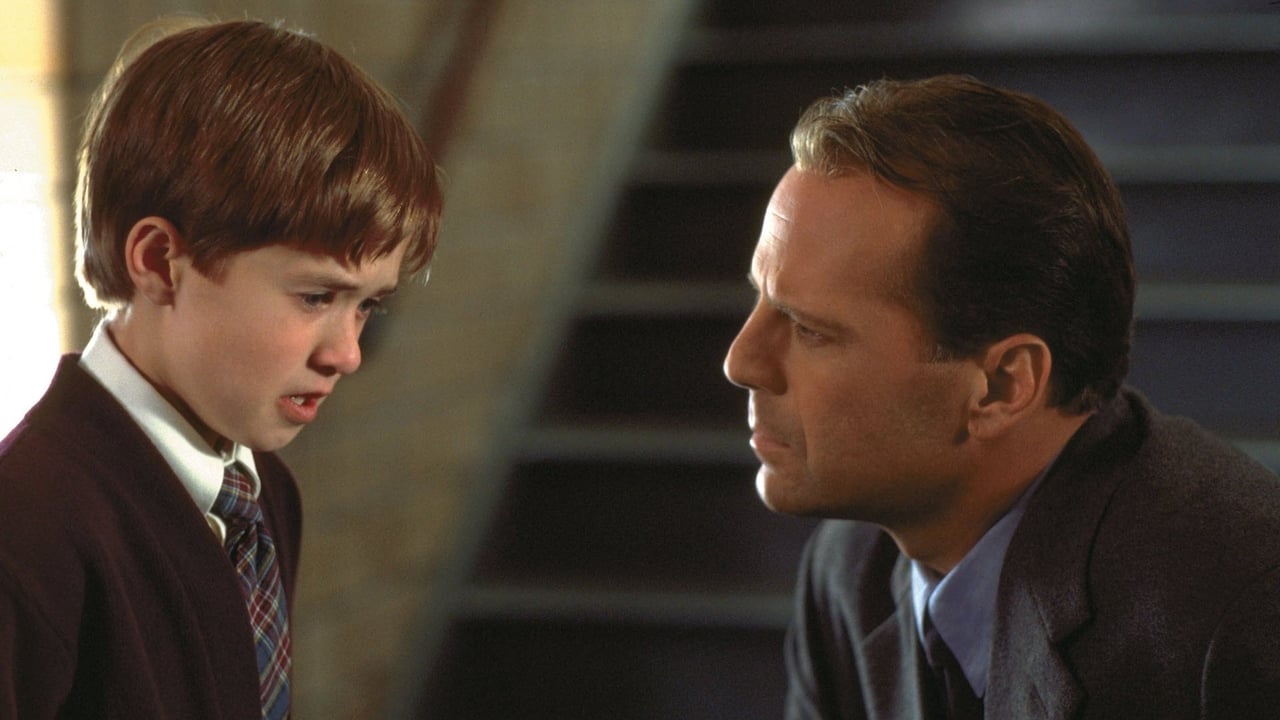
Bruce Willis was cast as Malcolm Crowe, a respected child psychologist whose professional confidence has been damaged by a former patient. Mendel recalled that the filmmakers valued the actor’s performances in character-driven productions alongside his established action-film reputation. Willis approaches the role through controlled speech, attentive listening and an increasingly uneasy relationship with his surroundings. The opening confrontation with Vincent Gray, played by Donnie Wahlberg, establishes Malcolm’s guilt over a patient he believes he failed to help. His later decision to treat Cole therefore appears connected to professional responsibility and an opportunity to correct an earlier mistake.

Casting Cole required a child actor capable of sustaining lengthy dramatic exchanges with Willis. Mendel remembered that Haley Joel Osment’s emotional commitment during the audition established him as the preferred candidate. Osment had appeared in Forrest Gump (1994), but The Sixth Sense demanded a substantially more complicated performance. Cole hides his experiences because earlier attempts to describe them have exposed him to ridicule and suspicion. His fear develops through hesitant speech, defensive behaviour and the physical effort of remaining composed when supernatural figures approach. The performance gives the audience access to his experiences while preserving uncertainty about what the other characters understand.

Toni Collette portrays Lynn Sear, a single mother whose concern for Cole is complicated by financial pressure and his increasingly withdrawn behaviour. Mendel explained that the filmmakers expanded her role after recognizing Collette’s abilities. Lynn cannot initially distinguish the signs of supernatural terror from ordinary childhood distress, making her relationship with Cole another source of isolation. Their conversation during a traffic jam eventually provides one of the film’s principal emotional resolutions. Olivia Williams gives Anna Crowe an apparently distant presence, while Wahlberg’s brief appearance establishes the consequences of an earlier professional failure. These performances contribute to a narrative in which attempts to communicate remain essential to both the living and the dead.

Ghosts, Childhood Fear, and Unresolved Deaths

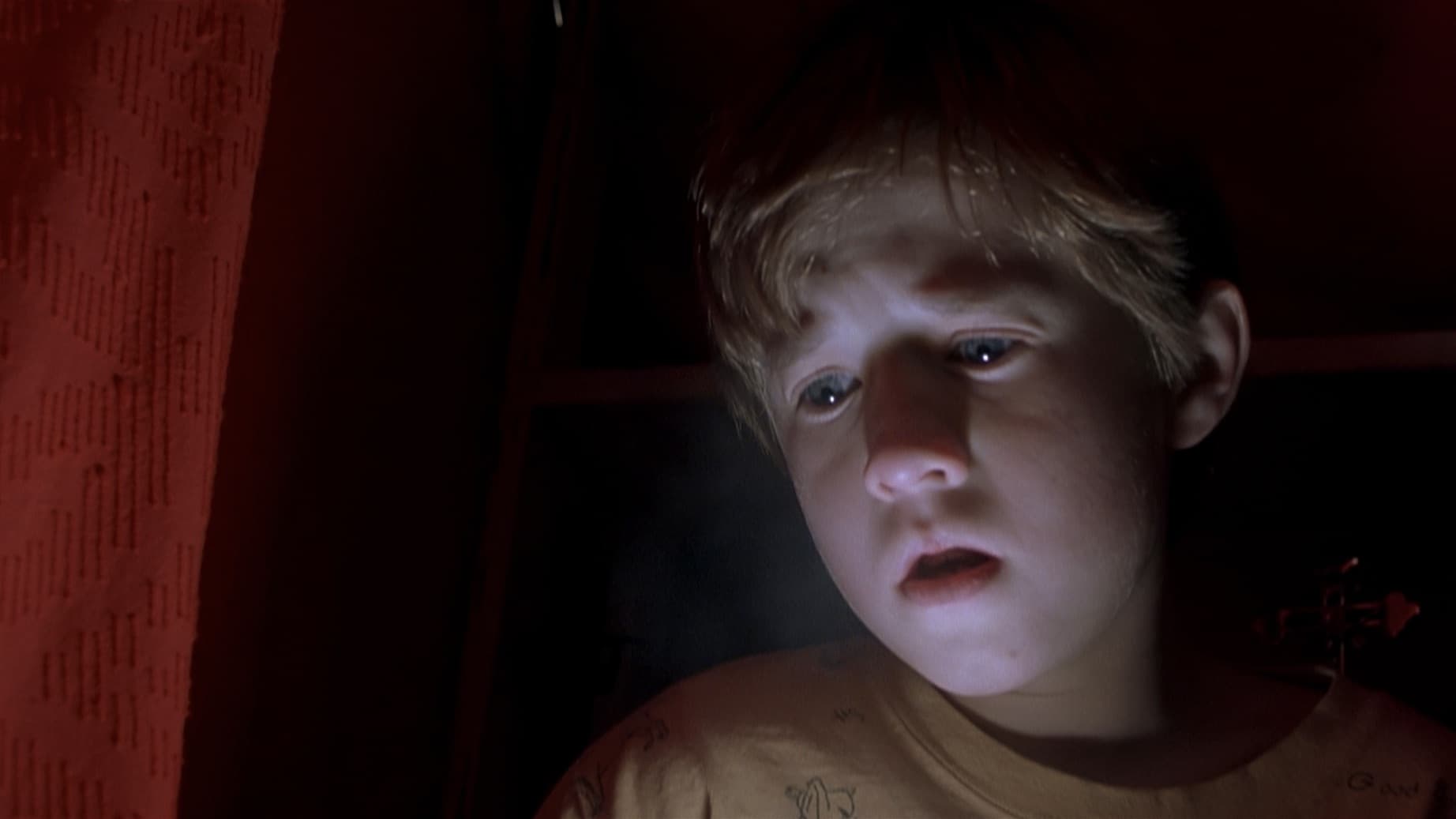
The film initially presents Cole’s encounters as frightening intrusions into familiar environments. A stranger appears in a domestic hallway, a dead woman is discovered in a kitchen and a wounded boy enters Cole’s home. The apparitions retain signs of the injuries or circumstances associated with their deaths, making their presence physically disturbing. Cole cannot reliably predict when these encounters will occur or whether the figures intend to harm him. Their appearances also create a problem that ordinary medical explanations cannot resolve. Malcolm begins by examining Cole’s experiences as symptoms of emotional distress, following the professional assumptions that have shaped his earlier work.

Cole eventually explains that the dead frequently do not recognize their own condition. This information changes Malcolm’s interpretation of the encounters and leads him toward a different form of treatment. Instead of encouraging the boy to suppress the visions, he suggests listening to the apparitions and discovering what they want. The approach transforms an apparently uncontrollable source of terror into a potential form of communication. The encounter with Kyra Collins, a young girl who has died after prolonged illness, becomes central to this change. Cole attends her funeral and discovers evidence that establishes the circumstances of her death, allowing information concealed by the living to emerge.

The ghosts consequently serve different narrative purposes. Some appear threatening because their injuries and confusion make ordinary interaction impossible. Others seek to communicate facts that remain unknown to surviving relatives. Their presence does not guarantee a peaceful resolution, as the circumstances of death can involve cruelty or deliberate concealment. The film gradually distinguishes the fear caused by an apparition’s appearance from the intentions of the person represented. Cole’s developing understanding also affects his relationship with Lynn. His account of a message from his deceased grandmother provides information that allows his mother to recognize the reality of his experiences. The supernatural encounters thereby become connected with the possibility of resolving grief without reversing death.

Philadelphia, Cinematography, and the Use of Colour

The Sixth Sense was photographed principally in Philadelphia, using residential streets, churches and institutional interiors to establish a recognizable urban environment. Shyamalan had grown up in the Philadelphia area and wanted the story to take place in locations familiar to him. Tak Fujimoto, whose earlier credits included The Silence of the Lambs (1991) and Philadelphia (1993), served as cinematographer. The production used Panavision equipment and a restrained visual approach in which long passages of observation precede sudden supernatural disturbances. Its locations contribute to the horror through their ordinary functions: a school, a church and a family home become environments where the dead can appear without warning.

Colour provides a recurring indication of supernatural activity. Shyamalan later explained in a WIRED interview that red was used to suggest the intrusion of the other world. The colour appears prominently on selected objects, including a church door, a balloon and the handle of a locked basement door. Its relative scarcity makes these details conspicuous against interiors and costumes dominated by more subdued tones. The visual scheme gives viewers additional information without establishing a code that the characters consciously interpret. Production design by Larry Fulton and costumes by Joanna Johnston contribute to this arrangement, placing the selected colours within otherwise recognizable domestic and institutional surroundings.

The production also used physical conditions to make supernatural encounters convincing. Haley Joel Osment recalled in a 2024 public-radio interview that the crew enclosed certain sets with plastic sheeting and pumped cold air inside until the actors’ breath became visible. Shyamalan preferred this method to a digitally simulated effect, partly because the temperature influenced the performers’ physical responses. The resulting images associate the presence of the dead with a sudden change in the surrounding environment. Such details are integrated into sequences built primarily around acting and camera placement, allowing the film to establish a supernatural phenomenon through ordinary physical evidence before revealing the figure responsible.

James Newton Howard, Music, and Supernatural Sound

James Newton Howard joined the production after an earlier composer had worked on the film. In a 2004 interview with Dan Goldwasser, Howard recalled that Kathleen Kennedy and Frank Marshall introduced him to the project. After viewing the completed material, he agreed to collaborate with Shyamalan and had approximately six weeks to compose the score. The assignment established a professional relationship that continued across several subsequent films. Howard’s music emphasizes the emotional experience of the characters alongside moments of supernatural fear, allowing the narrative to alternate between threatening encounters and passages concerned with loneliness or loss.

The soundtrack combines orchestral writing with carefully placed nonmusical sounds. Sustained textures accompany passages in which Cole senses an unfamiliar presence, while sudden changes in sound reinforce the appearance of injured or frightened figures. More restrained music supports conversations between the boy and Malcolm. The ending also requires a different musical emphasis, as the emotional meaning of earlier scenes becomes clear. Howard later described his connection with Shyamalan as a relationship concerned with the emotional perspective from which music should approach a scene. Their first collaboration established an important foundation for that method, even though the unusually short scoring schedule limited the time available for revision.

Sound design supplies additional indications that the supernatural world occupies the same physical spaces as the living. Breathing, movement and unsettling vocal textures can suggest the presence of someone outside the camera’s field of view. The approach gives importance to apparently empty rooms and to moments when Cole hesitates before entering an unfamiliar space. Ordinary domestic noises also become significant because they establish the characters’ position relative to unseen disturbances. The film’s horror depends on the relationship between what is heard and what remains invisible. Its score and sound effects therefore support a narrative that frequently delays visual confirmation, using the audience’s uncertainty to sustain tension.

Andrew Mondshein, Editing, and the Final Revelation

Andrew Mondshein returned to collaborate with Shyamalan after editing Wide Awake. In a March 2000 interview published by CineMontage, he explained that the screenplay’s final revelation required extraordinary care during editing. The filmmakers wanted the audience to accept the apparent continuity of Malcolm’s experience without introducing contradictions that would become obvious during a second viewing. Mondshein worked on an electronic editing system, allowing detailed adjustment of the relationship between performances, camera positions and the information disclosed within each scene. The editor regarded the story’s rules as essential to maintaining the secret rather than simply relying on an unexpected final image.

The central revelation establishes that Malcolm died after being shot by Vincent Gray. His later encounters have occurred while he remained unaware of his own death. The apparent deterioration of his marriage is consequently reinterpreted: Anna has been grieving rather than deliberately excluding him from their shared life. Earlier scenes are arranged so that Malcolm appears to participate in situations without requiring the other characters to acknowledge him. Cole is the principal exception because of his ability to perceive the dead. The audience’s assumptions about conversational exchanges and physical proximity supply much of the misleading continuity. The ending changes the meaning of the images while preserving their observable events.

Shyamalan also made changes during post-production to protect the emotional progression of the conclusion. In his Creative Screenwriting interview, he described removing a speech in which Malcolm addressed Anna at a wedding because its placement created the impression of two separate endings. The decision illustrates the importance of controlling how long the audience remained focused on the revelation before returning to the relationship between the characters. The completed ending gives Malcolm an opportunity to recognize his condition and address his unfinished attachment to Anna. Its effect depends on the earlier preparation of their apparent estrangement, making the supernatural disclosure inseparable from the emotional resolution.

Theatrical Release, Critical Reception, and Historical Recognition

Buena Vista Pictures Distribution released The Sixth Sense in the United States on August 6, 1999. The film received a PG-13 classification for intense thematic material and violent images and ran approximately 107 minutes. Its opening weekend earned $26,681,262 from 2,161 North American theatres. The domestic theatrical total eventually reached $293,506,292, while international earnings brought the original worldwide total to approximately $672.8 million. Published production records report a budget of $40 million. These figures describe production expenditure and theatrical ticket revenue rather than the net profit retained after marketing, cinema shares and distribution costs.

Contemporary reviews frequently praised the film’s restrained presentation and the performances of its principal actors. Desson Howe, writing for The Washington Post on August 6, 1999, emphasized its deliberate pacing, use of silence and emotional relationship between Malcolm and Cole. He considered the final revelation effective because the characters had been established convincingly before the explanation arrived. Roger Ebert likewise praised the exchanges between Willis and Osment and regarded the ending as a revelation supported by information already visible in the film. Other reviewers were less enthusiastic about the slow development or the mechanism of the conclusion. The initial reception therefore involved discussion of both its supernatural construction and the plausibility of its central relationships.

The film received six nominations at the 72nd Academy Awards, held in March 2000: Best Picture, Best Director, Best Original Screenplay, Best Film Editing, Best Supporting Actor for Osment and Best Supporting Actress for Collette. It won none of the awards. The American Film Institute subsequently placed The Sixth Sense eighty-ninth on its 2007 list of the hundred greatest American films. Its commercial and critical reception helped establish Shyamalan as a major Hollywood filmmaker, while the final revelation became an extensively discussed example of narrative reinterpretation. The film’s importance within supernatural horror also rests on its treatment of ghosts as individuals with unresolved experiences and its combination of frightening imagery with an emotionally sustained story about bereavement and communication.

References

  1. Creative Screenwriting M. Night Shyamalan on The Sixth Sense & Unbreakable

    Extended firsthand interview based on conversations around the original release, documenting the early serial-killer screenplay, the development of Cole, the studio sale, Shyamalan’s intentions and editing decisions concerning the ending.

  2. SciFiNow The Sixth Sense 20th Anniversary: Producer Barry Mendel Talks M. Night Shyamalan, the Twist and More

    Oliver Pfeiffer’s August 2019 interview with producer Barry Mendel examining the development of the screenplay, the emergence of its ending, the casting of Bruce Willis and Haley Joel Osment, and the expansion of Toni Collette’s role.

  3. CineMontage — Motion Picture Editors Guild Andrew Mondshein, Editing with a Sixth Sense

    Damian Begley’s March 2000 interview with editor Andrew Mondshein discussing his collaboration with Shyamalan, the narrative rules governing the final revelation and the use of electronic editing technology.

  4. FilmMusic.com James Newton Howard — Interview

    Dan Goldwasser’s August 2004 composer interview documenting Howard’s recruitment to The Sixth Sense, the replacement of an earlier composer, the approximately six-week scoring schedule and the beginning of his collaboration with Shyamalan.

  5. The Washington Post A Chillingly Intense Sense

    Desson Howe’s contemporary August 6, 1999 review examining the original theatrical release, supernatural atmosphere, performances, pacing, sound and the effectiveness of the screenplay’s final revelation.

Cast

View Full Cast & Crew →

Release & Distribution

Production Companies (4)

  • Barry Mendel Productions US
  • Hollywood Pictures US
  • Spyglass Entertainment US
  • The Kennedy/Marshall Company US

Release History (66)

Release DateTerritoryRelease TypeFormatDistributorCertificationNotes
1999-08-02 US premiere — — PG-13 Philadelphia, Pennsylvania
1999-08-06 CA theatrical — — 14A
1999-08-06 US theatrical — — PG-13
1999-08-27 TH theatrical_limited — — —
1999-09-08 TW premiere — — — Taipei
1999-09-09 HK theatrical — — IIB
1999-09-16 SG theatrical — — PG13
1999-09-18 KR theatrical — — 12
1999-09-23 NZ premiere — — —
1999-09-23 TW theatrical — — —
1999-09-30 CL theatrical — — —
1999-10-01 CO theatrical — — —
1999-10-01 IL premiere — — —
1999-10-07 AR theatrical — — 13
1999-10-07 AU theatrical — — M
1999-10-07 IL theatrical — — —
1999-10-13 PH theatrical — — R-13 Manila
1999-10-15 IS theatrical — — 16
1999-10-21 NZ theatrical — — M
1999-10-22 BR theatrical — — 12
1999-10-27 VE theatrical — — —
1999-10-29 IT theatrical — — VM14
1999-10-29 MX theatrical — — C
1999-10-29 NO theatrical — — 15
1999-10-30 JP theatrical — — R-15
1999-11-04 MY theatrical — — 18SG
1999-11-05 EG theatrical — — —
1999-11-05 GB theatrical — — 15
1999-11-05 GR theatrical — — —
1999-11-05 UY theatrical — — —
1999-11-10 PH theatrical — — — Davao
1999-11-12 IE theatrical — — 15
1999-11-17 MT theatrical — — —
1999-12-13 SE premiere — — 11 Lucia Movie Night
1999-12-23 NL theatrical — — 16
1999-12-29 BE theatrical — — 16
1999-12-30 DE theatrical — — 16
1999-12-30 SK theatrical — — —
2000-01-05 CH theatrical — — 16
2000-01-05 FR theatrical — — 12
2000-01-06 CH theatrical — — 16
2000-01-06 DK theatrical — — 15
2000-01-06 HU theatrical — — 16
2000-01-07 FI theatrical — — K-16
2000-01-07 RO theatrical — — 18
2000-01-07 SE theatrical — — 11
2000-01-13 HR theatrical — — —
2000-01-14 ES theatrical — — 12
2000-01-14 PL theatrical — — 12
2000-01-14 PT theatrical — — M/12
2000-01-21 CZ premiere — — 15+ Febio Film Festival
2000-01-27 CZ theatrical — — 15+
2000-02-04 TR theatrical — — —
2000-02-09 KW theatrical — — —
2000-02-25 RU theatrical — — 12+
2000-03-10 LT theatrical — — —
2000-03-31 EE theatrical — — —
2000-04-27 RU physical DVD — 12+ DVD
2002-12-13 NL tv — — 16 Yorin
2005-03-06 ID tv — — —
2009-12-05 NO tv — — 15 NRK1
2011-08-11 NL physical Blu-ray — 16 Blu ray
2016-07-20 AE tv — — —
2019-05-21 IN digital — — —
2025-10-26 FR tv — — 12 RTL9
2026-10-28 PH theatrical_limited — — —
Not every gift is a blessing.