Mystics in Bali (1981)

AU
HORROR FILM Mystery
SUBGENRES FOLK OCCULT WITCHCRAFT
Runtime
86 min
Release
January 1, 1981
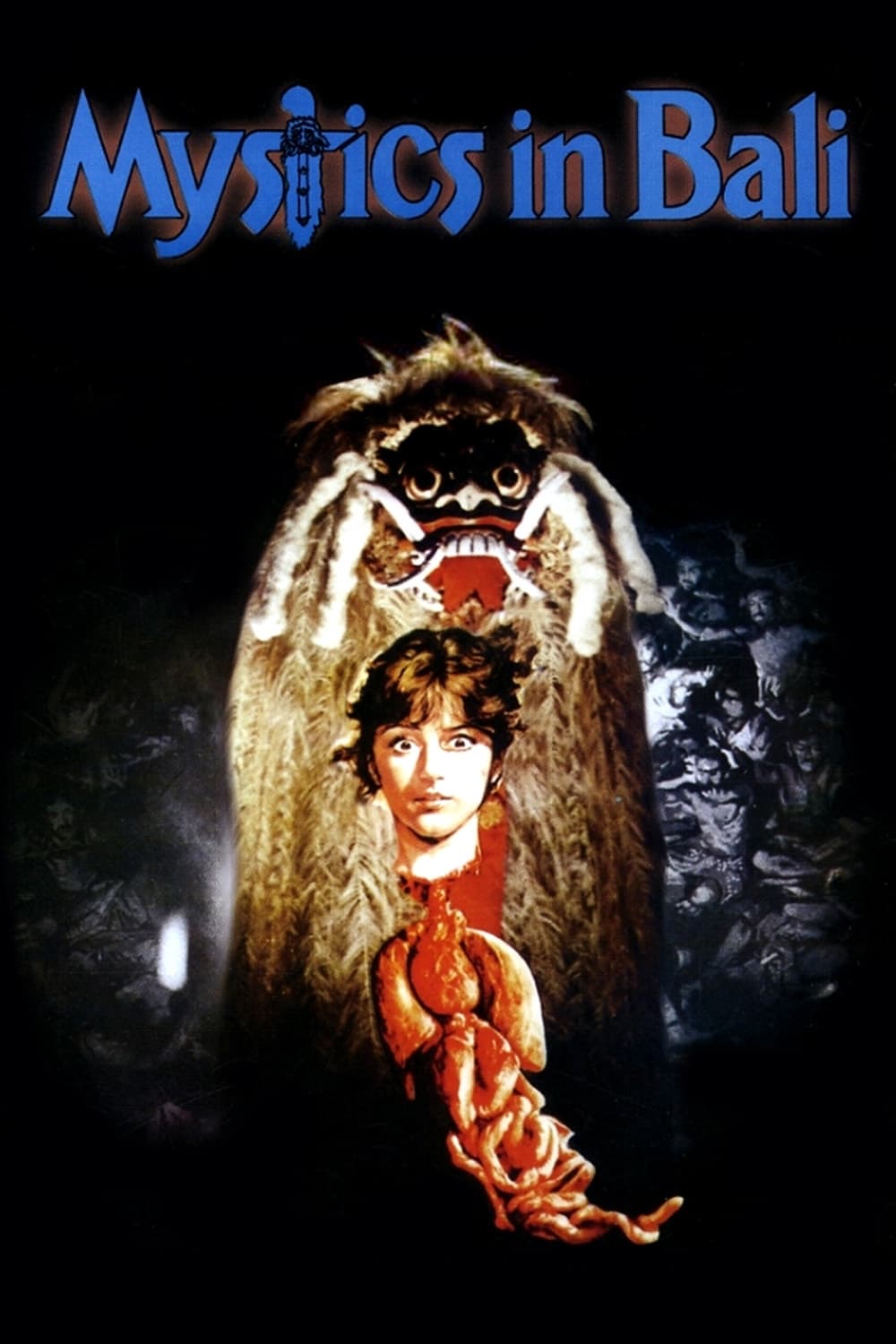
Mystics in Bali (1981) poster
Director
Production Companies
Video Tape Corp. , Pusat Perusahaan Film
Plot

Researching a book that takes her to Bali and the black magic cult of Leák, Cathy meets an evil witch which promises to train her in the dark arts. Tricked, Cathy is turned into a Penanggalan; a flying vampire with internal organs hanging from her neck. It is now up to the local holy men who are then enforced to do battle with the forces of evil.

Alternative Titles
Balinese Mystic (Australia) 泄漏 (China) — Chinese Mistik (Indonesia) — Indonesian title Mistik (Punahnya Rahasia Ilmu Iblis Leak) (Indonesia) 首だけ女の恐怖 (Japan) Мистика на Бали (Russia) — Russian

Trailers & Videos

1 video

Film Guide & Analysis

Balinese leak folklore, a flying severed head and the global afterlife of H. Tjut Djalil's Indonesian horror film.

Mystics in Bali (1981), directed by H. Tjut Djalil and also known as Leak, occupies a distinctive position in Indonesian supernatural horror. Its most recognizable creature is the severed head of a young woman, flying through the night with her internal organs suspended beneath it. This image belongs to the film's sensational treatment of sorcery rather than a comprehensive account of Balinese belief. Cathy, a foreign researcher hoping to learn occult practices, approaches a powerful witch and discovers that the promised instruction exposes her body to another person's control. The premise turns an inquiry into local tradition into a grotesque story of appropriation, dependence and destruction.

Adapted from Putra Mada's novel Leak Ngakak, the picture emerged during the flourishing of Indonesian folklore-based genre filmmaking under the New Order. Its shrieking sorceress, animal transformations and clashes between opposing magical powers made it legible to local audiences familiar with supernatural narratives, while its graphic inventions eventually attracted international cult-film spectators. Scholars have since examined the gap between the Balinese material and its commercial reinterpretation, particularly the treatment of Rangda and the leak. That tension makes the film significant beyond the novelty of its effects: it shows how a regional belief system could be reshaped through the conventions of popular horror and subsequently reinterpreted abroad.

From Balinese Material to Indonesian Popular Horror

The screenplay draws on Leak Ngakak by Putra Mada, preserving the idea of a dangerous apprenticeship while emphasizing the bodily consequences of Cathy's curiosity. Through Mahendra, the local man who helps her investigate, she gains access to a figure presented as the Queen of the Leak. Djalil structures their meetings around a progressive loss of agency. What initially appears to be research for a book becomes a series of demands imposed by a mentor with concealed ambitions. The outsider's presence supplies a convenient means of introducing unfamiliar practices, but it also places Balinese culture under the scrutinizing gaze of a visitor whose limited understanding leads the plot into disaster.

The production belonged to a national industry in which supernatural stories shared the screen with action pictures and other commercially oriented entertainment. Film scholar Ekky Imanjaya distinguishes Indonesian genre traditions rooted in legends and folk narratives from works modeled more closely on imported exploitation formulas. Djalil's film operates within the first category while offering a particularly exportable spectacle. Its Indonesian title, Mistik (Punahnya Rahasia Ilmu Iblis Leak), foregrounds the destruction of forbidden magical knowledge; the English-language name sells the geographical setting and its aura of mystery. These different emphases illustrate how presentation can alter expectations without changing the central narrative.

Leak, Rangda and the Transformation of Folklore

Balinese accounts of leak concern people believed capable of employing harmful occult knowledge, often associated with nocturnal transformation and threats to the community. Such figures belong to a larger religious and cultural environment involving ritual specialists, protective practices and stories whose meanings vary across contexts. The film condenses this complexity into an identifiable screen villain with extraordinary powers. An Indonesian semiotic study identifies the teacher with a balian associated with pengiwa, or harmful magic, and notes the staged initiation ritual called ngelekas. The flying head resembles monstrous forms found across Southeast Asian traditions, frequently described to overseas audiences through the term penanggalan. Treating these names as completely interchangeable, however, risks obscuring the particular Balinese traditions being adapted by Djalil's production.

Makbul Mubarak's comparative study argues that popular horror changes the position of Rangda when it presents her as unqualified evil. In Balinese cultural interpretations, frightening forces can participate in a wider conception of balance; the cinematic conflict requires a clearly opposed threat that the protagonists can defeat. Marina Frolova's research likewise situates the leak within oral narratives, literary works and Hindu cosmology before tracing its alteration by mass media. Read through these studies, the witch's appearance and conduct are narrative choices shaped by genre. The film is therefore useful evidence for the modern representation of folklore, provided its invented incidents are not mistaken for a faithful description of actual ritual practice.

The Flying Head and the Construction of Bodily Horror

Cathy's initiation produces the film's defining physical reversal. Her head separates from her sleeping body, carrying a trailing mass of organs into the darkness while the Queen directs its movements. Attacks on pregnant women and infants turn the threat toward reproduction and bodily vulnerability, material designed to provoke unusually strong revulsion. The severed head also changes the heroine's relationship to the audience. A character who previously observed an unfamiliar practice becomes its unwilling instrument, and the visual effects display that vulnerability as a conspicuous anatomical impossibility. Her transformation gives the black-magic narrative a readily understood image of possession without relying entirely on explanatory dialogue.

Elsewhere, the witch's elongated tongue and the transformations into animal forms push the production toward extravagant creature fantasy. Djalil juxtaposes practical-looking prosthetic bodies with visibly artificial image composites, allowing the construction of an impossible figure to become part of the spectacle. Specific technical procedures and the division of work among effects personnel remain inadequately documented in the accessible record, so the methods should not be assigned to individual artists without evidence. What can be discussed directly is the effect onscreen: the viewer alternates between physical objects occupying the set and images whose visible joins expose the mechanics of supernatural action.

The film also begins with imagery of a Balinese dance ritual, an element examined by Xavier Mendik in his work on Indonesian genre cinema. Its incorporation into a fictional occult narrative gives the picture a documentary-like point of entry before the most extravagant events begin. The transition affects the way viewers encounter the later magic: staged horror follows material associated with public cultural performance. That juxtaposition helps explain the appeal and the interpretive difficulty of the picture, since the authority suggested by recorded tradition can spill over into scenes conceived for fright and commercial entertainment.

Religious Authority, Gender and the Final Confrontation

Mahendra gradually recognizes that the older sorceress is exploiting Cathy and seeks assistance from I Wayan Jereg, a practitioner of protective knowledge played by W. D. Mochtar. Their response changes the narrative from secret instruction to a confrontation between destructive and safeguarding powers. The ending gives the community's defender the ability to confront the Queen, but Cathy's involvement cannot simply be undone. Her fate is bound to the spell and to the struggle that brings it to an end. The heroine's loss distinguishes the conclusion from a conventional rescue, even though the conflict is organized around a recognizable defeat of supernatural evil.

Quirine van Heeren's study of Indonesian horror during the Suharto period identifies religious figures as recurring agents through whom malignant forces are overcome. She points to this film's Hindu specialist as an important variation on the Muslim clerics prominent in many other productions. The resolution thus belongs to a broader narrative pattern while remaining anchored in its Balinese setting. Cathy's position introduces an additional imbalance: the story concentrates suffering in the foreign woman's body, yet the capacity to interpret and counter the affliction lies with local practitioners. That distribution of knowledge is central to the horror, which begins when she seeks access to powers she cannot govern.

Versions, Domestic Circulation and International Rediscovery

The production is generally dated 1981, but surviving presentations do not all have the same running time. Indonesian film records describe a version of approximately 118 minutes, whereas internationally exhibited editions often run about 86 minutes. Differences between a longer domestic form and a shorter export presentation matter when assessing pacing and narrative continuity; neither duration alone establishes precisely how every scene was altered. Claims that the picture was wholly prohibited in Indonesia also require caution. Contemporary Indonesian reporting, later reproduced in a film-history archive, describes public screenings of Mistik, creating a conflict with frequently repeated accounts of a comprehensive national ban. A definitive censorship history would require surviving official records.

The picture found a new international audience through specialist circulation in the 2000s. Imanjaya recalls discovering a Mondo Macabro edition in Amsterdam in 2007, an encounter that led him to examine why Indonesian commercial films were being newly celebrated overseas. Their reception often emphasized visual excess and unfamiliarity, terms that could eclipse the local traditions informing the stories. His account provides a useful distinction between the domestic popularity of supernatural genres and the later language of international cult fandom. The latter responds to the same film through a different network of distributors, collectors and critical expectations.

Subsequent curatorial attention has extended that afterlife beyond home video. The Istanbul Film Festival programmed the film in its 2022 folk-horror selection, while ACMI included it in a 2025 series devoted to Indonesian horror. Alicia Izharuddin's research discusses its circulation as an example of how folk culture acquires altered meanings when media move between local and global audiences. These contexts do not erase the picture's rough edges or make its depiction of Balinese practice authoritative. They explain why a production initially embedded in an Indonesian popular-film cycle has become a recurring reference point in scholarly conversations about horror, cultural translation and international spectatorship.

References

  1. Plaridel Journal Genre versus Local Specificity: Configuring Rangda and Durga in Balinese and Bengali Films

    Makbul Mubarak examines how the film transforms the culturally complex figure of Rangda into a conventional horror antagonist.

  2. Lomonosov Oriental Studies Journal Sorcery in Balinese Tradition and Contemporary Culture: From the Poem I Gede Basur to the Horror Film Mystics in Bali

    Marina Frolova studies leak beliefs, Balinese literary traditions and the film's reworking of their imagery.

  3. Telkom University eProceedings Representasi Mistik Dalam Film Mystics In Bali 1981

    A 2015 semiotic study devoted to the film's visual presentation of black magic and Balinese cultural identity.

  4. Henry Jenkins Cult Conversations: Interview with Ekky Imanjaya (Part I)

    The Indonesian film scholar recounts rediscovering Mystics in Bali abroad and investigates the global circulation of New Order genre films.

  5. Oxford Academic Folk Culture and Its Global Circuits: The Transnational Weird of Indonesian Horror and the Crisis of Intelligibility

    Alicia Izharuddin examines Mystics in Bali as a case study in the changing meanings of folkloric cinema across international distribution networks.

Cast

View Full Cast & Crew →

Release & Distribution

Production Companies (2)

  • Pusat Perusahaan Film
  • Video Tape Corp.

Release History (9)

Release DateTerritoryRelease TypeFormatDistributorCertificationNotes
1981-01-01 Indonesia Theatrical — — —
1981-11-21 Japan Physical — — — Video Premiere
1989-11-27 United States Theatrical — — —
2003-12-07 Spain Premiere — — — Sitges Film Festival
2011-11-14 United Kingdom Premiere — — 12 Leeds International Film Festival
2019-06-22 Singapore Premiere — — NC16 Asian Film Archive
2020-09-04 Netherlands Premiere — — — BUT - B-Movie, Underground and Trash Film Festival
2022-04-12 Türkiye Premiere — — — Istanbul Film Festival
2026-05-12 United States Physical Blu-ray — — Blu-ray
She sold her soul to possess the secrets of black magic...