Dead & Buried (1981)

US
HORROR FILM Mystery
UK censorship history DPP · Withdrawn / unsuccessful
Runtime
94 min
Release
May 29, 1981
Budget
$3,000,000
Revenue
$216,166
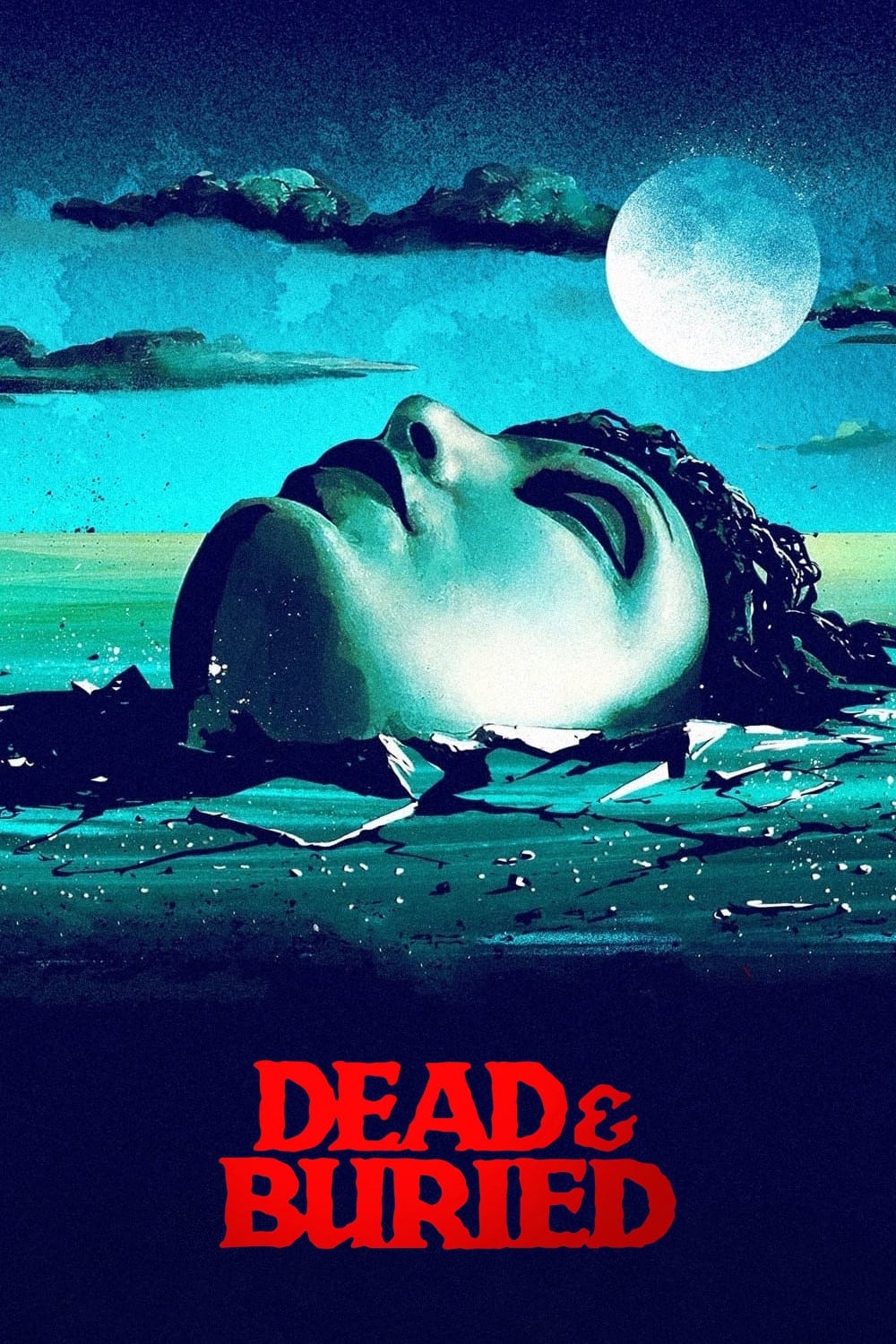
Dead & Buried (1981) poster
Director
Production Company
Barclays Mercantile Industrial Finance
Plot

After a series of gory murders commited by mobs of townspeople against visiting tourists, the corpses appear to be coming back to life and living normally as locals in the small town.

Alternative Titles
Dood en begraven (Belgium) — Flemish Title Mort et enterré (Belgium) — French Title A Cidade dos Mortos-Vivos (Brazil) — Television Title Réincarnations (Canada) — French Title 盖棺了结 (China) — Chinese Mrtví a pohřbení (Czechia) — Czech Tot und begraben (Germany) — German De levende døde (Denmark) — Danish
Show all 31 alternative titles Morts i enterrats (Spain) — Catalan Title (Dubbed Version) Muertos y enterrados (Spain) Död och begraven (Finland) — Swedish Title (Informal Title) Kuolleet ja haudatut (Finland) — Finnish Noituutta (Finland) — Informal Title Réincarnations (France) — French Dead and Buried (United Kingdom) Tromos stin poli (Greece) — transliteration Ζωντανός και θαμμένος (Greece) — Home Video Title 蓋棺了結 (Hong Kong SAR China) — Chinese Morti e sepolti (Italy) — Italian Zongeria (Japan) ゾンゲリア (Japan) 죽음과 매장 (South Korea) — Korean Død og begravet (Norway) — Norwegian Martwy i pogrzebany (Poland) — Polish Reencarnações (Portugal) — Portuguese Похоронены, но не мертвы... (Russia) — Russian Död och begraven (Sweden) — Swedish Похоронены, но не мертвы... (Russia) — Russian Title 蓋棺了結 (Taiwan) — Chinese Look Alive (United States) — alternative title Mrtvi i sahranjeni (Serbia) — Croatian Title

Trailers & Videos

2 videos

Film Guide & Analysis

Gary Sherman reshapes small-town horror with reanimated residents, Stan Winston makeup, restrained color and a contested censorship history.

Dead & Buried (1981) is an American supernatural horror film that places a series of apparently motiveless killings inside the everyday life of a coastal town. In Potter's Bluff, visitors are attacked by groups of ordinary residents, while the local sheriff struggles to reconcile the murders with evidence that the dead have returned. Gary Sherman's direction links the hostility of an enclosed community to the disturbing work of a mortician who restores damaged faces. The result combines a murder investigation with a distinctive version of living-dead horror, in which the most troubling bodies can appear entirely healthy.

The film also has an unusually revealing production history. Ronald Shusett and Dan O'Bannon received screenwriting credit after the success of Alien, cinematographer Steven Poster designed a severely restricted color palette, and Stan Winston supplied elaborate makeup effects. Sherman later identified several conspicuously violent passages as additions made under pressure from new production owners. British censorship and later restorations further complicated the versions audiences encountered. These documented changes make the contrast between the film's subdued atmosphere and its graphic shocks an important part of its history.

Development, Script & Financing

The story originated with Jeff Millar and Alex Stern, whose material was acquired by producer Robert Fentress before Ronald Shusett became involved. The American Film Institute's production history traces the subsequent screenplay to Shusett and O'Bannon, whose association with Alien helped secure advance foreign sales. According to Shusett, those presales covered approximately half of the financing before filming began. Contemporary trade reports placed the total budget between five and six million dollars, although published budget figures vary. The project was therefore a comparatively substantial independent horror production, even as its advertising emphasized the same writers associated with a much larger science-fiction success.

Sherman offered a different perspective on the writing process in later interviews. He remembered being attracted to the underlying story but objecting to explanations of the mortician's resurrection method that he considered cumbersome. He and Shusett favored allowing the phenomenon to remain mysterious; Sherman said that O'Bannon disagreed and distanced himself from the finished film. This retrospective account does not establish that the credited screenplay can be assigned to only one writer. His preferred balance of macabre comedy and unease influenced the treatment of William Dobbs, whose enthusiasm for his work gradually acquires a more sinister meaning.

Production began in 1980, with filming documented in Mendocino and Hollywood, California. The financing and ownership structure changed during the film's development and completion. In Sherman's recollection, Aspen Productions supported his initial cut, but a later takeover by interests associated with Mark Damon brought demands for more explicit violence. That distinction matters because the released picture includes material conceived under different priorities. The surviving feature cannot be treated as a completely uniform expression of its director's original approach to horror.
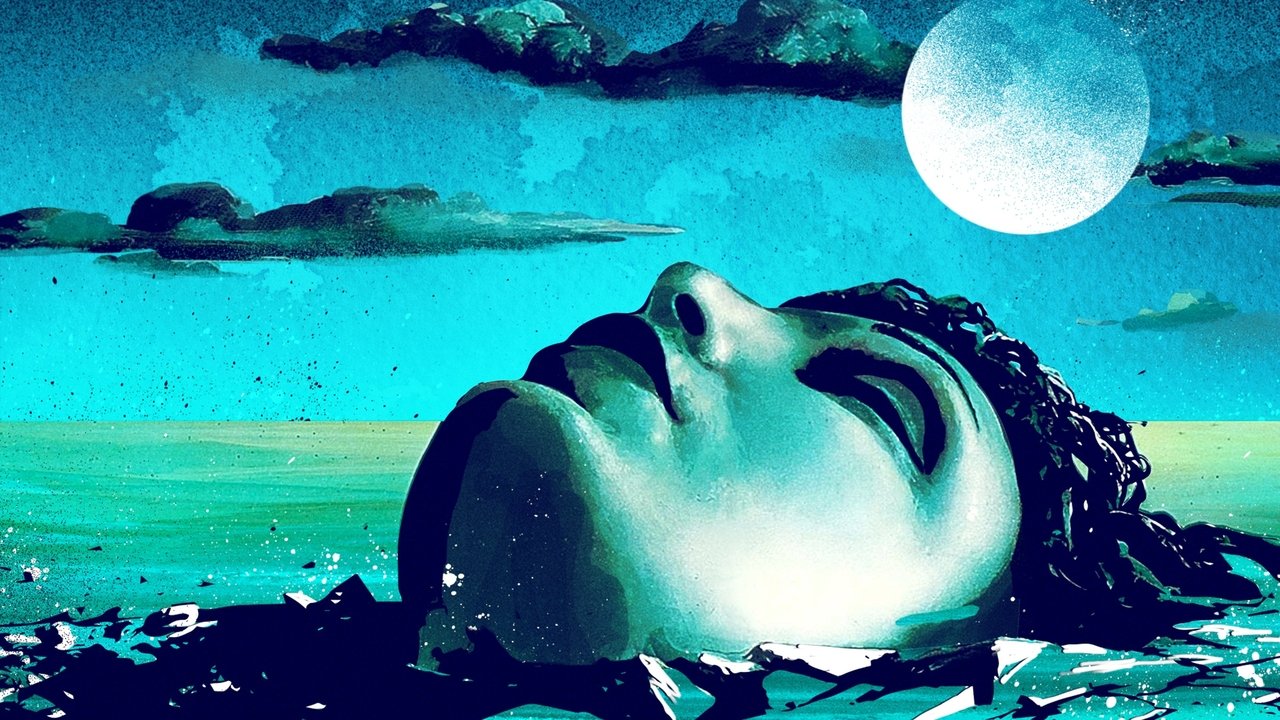
Potter's Bluff & the Living Dead

The opening attack establishes a disturbing pattern: a visitor encounters seemingly friendly townspeople, then faces coordinated violence from those same people. Sheriff Dan Gillis investigates the deaths, but his neighbors behave as though the town's social order has never been disrupted. This reversal makes familiarity itself a source of menace. Local institutions, domestic relationships and routine conversations offer little protection because the suspected attackers appear to belong to every part of community life. The mystery depends on the sheriff discovering that the division between victims and perpetrators is less stable than the conventional crime-story structure suggests.

Dobbs gives the film its distinctive supernatural mechanism. The mortician treats bodily restoration as a creative practice, and his apparently eccentric remarks about making the dead beautiful acquire literal significance as the investigation develops. The revived residents retain recognizable faces, speech and habits, distinguishing the film from versions of zombie horror built around decomposing crowds or contagious appetites. Their ordinary appearance allows a murder victim to return as a trusted neighbor. The threat lies in the possibility that personal identity has been manufactured, preserved or replaced through another person's control over death.

The screenplay keeps its central explanation concealed while allowing viewers to observe attacks that Gillis has not yet connected. That imbalance sustains suspicion toward the town's entire population, including people close to the sheriff. Sherman's recollection that the resurrection process should remain unexplained is consistent with the film's decision to privilege the consequences of revival over laboratory procedure. The concluding revelations also alter the audience's understanding of the investigator himself. Seen in retrospect, the violence against newcomers serves the preservation of a community whose continuity depends on the handling of bodies.

Cinematography & the Absence of Red

Mendocino's waterfront and streets supplied the physical basis for Potter's Bluff. Sherman explained that the fictional settlement was intended to evoke New England without explicitly assigning it a state. Fog, weathered buildings and an isolated coastal setting give the apparently quiet town a persuasive identity before its inhabitants become threatening. The surrounding landscape is used as a place where strangers can enter but struggle to establish whom they should trust. Exterior compositions often preserve enough recognizable town life to make the collective participation in murder especially unsettling.

Sherman and cinematographer Steven Poster pursued a controlled photographic texture. In a 2021 interview, the director described filming with lenses opened wide and using neutral-density filters or flags to reduce light, producing the shallow depth of field he wanted. He also recalled an unusually rigorous restriction on the color red, including altered practical objects such as fire engines and vehicle lights. The intention, he said, was to withhold the visual association of blood with living bodies until a carefully chosen late moment. This approach makes the town look drained of warmth without requiring overtly supernatural imagery in every shot.

The restriction was not perfectly preserved in the released film. Sherman said that additional material introduced blood and red objects that conflicted with his original scheme. That disruption is visible evidence of the tension between atmospheric horror and the later pursuit of stronger shock scenes. The setting and cinematography nevertheless remain crucial to the picture's identity. Their controlled presentation allows the audience to spend extended periods among apparently normal inhabitants, so each eruption of violence feels like a rupture within an established visual world.

Stan Winston & the Practical Effects

Stan Winston's makeup work was central to the film's account of bodies being destroyed and restored. Trade reporting collected by the AFI estimated a dedicated effects budget of roughly 150,000 to 200,000 dollars. Sherman later singled out the sequence in which Dobbs reconstructs a murdered woman's face, revealing anatomical details and finally returning an apparently lifeless head to convincing human expression. The progression from fabricated face to moving performer is especially important: the effect lets the mortician's artistic claims become tangible for the audience without requiring a lengthy explanation of his powers.

Sherman attributed the reconstruction sequence to Winston's practical technique and praised the nearly seamless transition into the living actress. The celebrated needle-to-the-eye murder offers a different kind of physical horror, directing attention to the fragility of a recognizable human feature. Such effects establish the film's unusual combination of clinical detail and theatrical showmanship. The mortuary scenes emphasize the ability to conceal evidence of death, whereas attacks on visitors expose the body to public mutilation. Together they make the difference between appearance and physical reality a repeated concern of the story.

Not every graphic moment belongs to the same production stage. Sherman identified an acid attack on a doctor and an injury inflicted on a fisherman as later additions demanded after the original cut had been completed. In his 2009 account he distinguished those inserts from Winston's principal work and criticized their execution. The coexistence of carefully staged transformations and more aggressive inserts helps explain the feature's sometimes abrupt shifts between restrained mystery and exploitation violence.

Release & Contemporary Reception

The film's distribution history does not reduce to one American opening date. The AFI records a planned appearance at Los Angeles' Fantasma-Con in May 1981, and a contemporary Variety review identifies a Chicago engagement on 29 May. New York opened on 9 October, while documentation preserved in the Academy's production files indicates a Los Angeles opening in November. Avco Embassy acquired domestic distribution rights during the production's troubled commercial transition. These dates explain why different filmographies can list separate 1981 openings without necessarily contradicting one another.

Contemporary trade material also shows the difficulty of turning the project's substantial advance sales into a clear domestic success story. A December 1981 Village Voice item called it a disaster, according to the AFI chronology. That characterization cannot establish a worldwide gross: territorial sales, theatrical tickets and later video income are separate measures. The film's marketing association with the writers of Alien was commercially useful but could also encourage expectations of a different type of horror. Its actual narrative focuses on an American community and the recovery of apparently dead neighbors.

The later reputation of Dead & Buried developed around its mood, disturbing makeup and carefully delayed revelations. Retrospective attention has repeatedly emphasized Poster and Sherman's photography alongside Winston's contributions. The film's continued circulation in specialist horror editions demonstrates sustained interest, though this alone cannot establish influence on particular later directors. Its most securely documented distinction is the fusion of a town-wide conspiracy with corpse reconstruction and the unpredictable possibility that anyone familiar may already have died.

British Censorship & Restoration

The BBFC public register records a British cinema classification for Dead & Buried on 28 April 1981, with a running time of 94 minutes and 57 seconds, and does not mark that submission as cut. In contrast, its entry for the 20 April 1990 home-video version explicitly records cuts. These entries refer to different submissions and should not be merged. The film also appeared on the DPP video-nasty list, a separate strand of its British distribution history. The BBFC classification records do not, on their own, establish the outcomes of criminal proceedings concerning video copies.

The BBFC identifies a 1990 home-video submission of 93m 21s as a version with cuts or alterations. Later video records date from 1999, 2004, 2007 and 2015; the 2015 classification concerns a version running 90 minutes and 4 seconds. Those durations reflect different formats and transfers; they cannot be used as a precise count of removed footage. The classification archive documents separate submissions and makes it possible to distinguish British video treatment from the disputes surrounding the American production's post-production inserts.

New restorations have also changed the material available for reassessment. Sherman discussed a 4K edition prepared for Blue Underground in 2021, including his effort to restore small pieces of footage previously shortened for ratings purposes, while acknowledging that some elements could not be located. He additionally recalled that old 35mm release prints had suffered severe color fading. The availability of renewed digital transfers has particular importance for a film whose director and cinematographer deliberately restricted color and controlled focus. Questions of preservation and editing therefore affect the presentation of its original horror design, as well as the visibility of the gore.

References

  1. AFI Catalog Dead & Buried (1981)

    Archival production history assembled from contemporary trade publications, including script origins, financing, makeup budgets, shooting locations and staggered United States release dates.

  2. We Are Movie Geeks WAMG Interview: Gary Sherman, Director of Dead & Buried

    Extensive 2021 director interview on studio changes, added violent scenes, cinematography, color restrictions, Stan Winston and the 4K edition.

  3. Classic-Horror.com Gary Sherman (Death Line) Interview

    Original 2009 interview clarifying the later gore inserts, the restricted red palette and Winston's facial reconstruction technique.

  4. British Board of Film Classification Dead & Buried - Classification History

    Official records of the 1981 cinema classification and successive video submissions, including the cut 1990 edition.

  5. Cambridge Core Appendix: The DPP List of Video Nasties

    Julian Petley's appendix confirms the film's appearance on the DPP video-nasty list; consult the BBFC directly for classification dates and recorded cuts.

Cast

View Full Cast & Crew →

Release & Distribution

Production Companies (1)

  • Barclays Mercantile Industrial Finance

Distributors (1)

  • Embassy Pictures

Release History (10)

Release DateTerritoryRelease TypeFormatDistributorCertificationNotes
1981-05-29 United States Limited Theatrical — — R Special Screening
1981-07-27 Germany Theatrical — — 18 West Germany
1981-08-19 France Theatrical — — 16
1981-09-04 United States Limited Theatrical — — R Tucson, AZ
1981-10-09 United States Limited Theatrical — — R
1981-11-18 United States Limited Theatrical — — R Los Angeles, California
1982-03-12 Portugal Theatrical — — M/16
1982-09-26 Ireland Theatrical — — —
2016-10-29 Ireland Premiere — — PG Horrorthon Festival Dublin
2019-09-13 France Premiere — — — L'Étrange Festival
It will take your breath away. All of it.