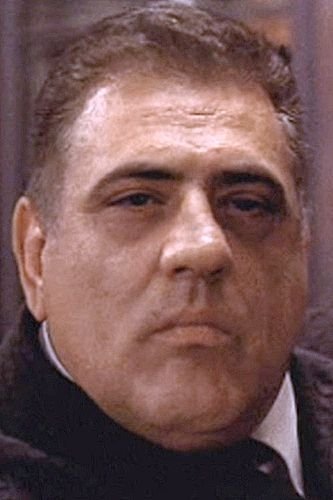
A psychopath escapes from a mental institution and starts a murder spree, which ends in the pursuing of a young handicapped girl, who once got a blood transfusion from him.
Alternative Titles
Caçada Sangrenta (Brazil) — Portuguese血歌 (China) — ChineseEl shock del suicidio (Spain) — Home Video TitleMelodía Sangrienta (Spain) — SpanishDream Slayer (France) — French血歌 (Hong Kong SAR China) — ChineseКровавая песня (Russia) — Russian titlePremonitions (United States) — Working Title
Alan J. Levi combines a psychic blood-transfusion link, a flute-playing killer and a coastal Oregon slasher pursuit with Frankie Avalon and Donna Wilkes.
Blood Song (1982) is an American slasher film that links a fugitive murderer to a young woman through an implausible but visually distinctive blood transfusion. Paul Foley, played by Frankie Avalon, escapes from a psychiatric institution carrying a wooden flute associated with his childhood. Marion, a teenager living in a coastal Oregon community, experiences visions of his attacks because she once received donated blood from him after a traffic accident. Director Alan J. Levi places their eventual confrontation within a working town of fishing boats, roads and industrial buildings, making an environment for an increasingly strange pursuit.
The film combines psychic horror with the more familiar early-1980s pattern of a killer stalking an isolated young woman. Its unusual elements include a former teen idol cast against his established image, the heroine's troubled home life, vividly processed visions and a final sequence set around lumber machinery. The film later acquired the alternate name Dream Slayer and appeared in British histories of Section 3 video seizures.
Oregon Production and Unusual Casting
Blood Song was directed by Alan J. Levi, who worked extensively in television, and produced by Frank Avianca and Lenny Montana. Its credited screenplay brings together James Fargo, Avianca and Montana, with the underlying story attributed to Joseph M. Shink and George Hart. Filming took place on the Oregon coast in the autumn of 1980, before the release year usually assigned to the completed picture. The towns and industrial districts around Coos Bay and North Bend supplied a convincing environment for a story that moves between hospital, highway, family home and waterfront. The film's working title Premonitions identified its supernatural hook more directly than the name eventually used for release.
Avalon was strongly associated with pop records and beach-party films, so placing him at the center of a violent horror story created an immediate departure from his familiar screen identity. Retrospective accounts report that Montana became interested in casting him after a darker television performance; the available film-specific sources do not establish every conversation that led to the agreement. Montana also appears as Skipper, the employer of Marion's boyfriend. Donna Wilkes plays Marion, with Richard Jaeckel and Antoinette Bower as her parents and Dane Clark as the local sheriff. The recognizable ensemble supports its small-scale locations.
The Flute, the Blood and the Premonitions
The prologue establishes Paul's childhood trauma when he witnesses his father kill his mother, her lover and himself. A handmade wooden flute survives as an object associated with the father and becomes a recurring signal of Paul's presence. Years later, Paul kills an attendant to escape the institution, then travels along the coast leaving victims behind him. The flute's repeated melody is both a recognizable warning and a reminder that the character is psychologically fixed on an event from his childhood. His violent behavior is a fictional horror construction, not a reliable account of psychiatric illness or the consequences of trauma.
Marion's connection to Paul is based on a blood donation received after the crash that injured her leg. The screenplay imagines that this transfusion allows her to observe his murders across considerable distances. Levi illustrates the episodes with close views of her eyes, abrupt image changes and colored optical effects, separating the premonitions from ordinary scenes in the town. The mechanism grants her knowledge that police lack and makes her testimony difficult to believe. As the story progresses, direct encounters with Paul increasingly replace the visions. The premise therefore serves as an unusual introduction to a more conventional pursuit narrative, leaving its supernatural rules largely unexplained.
Marion, Family Conflict and Vulnerability
Marion's life already contains significant insecurity before the murderer reaches her community. Her father Frank was driving under the influence when the collision left her with a lasting leg injury, and arguments about his responsibility continue inside the household. Her mother Bea attempts to negotiate those tensions, while Marion looks toward a future with her boyfriend Joey, who works on a fishing boat. The brace she wears shapes the audience's expectations about her ability to flee. The injury informs her desire for independence, although the film treats her mobility inconsistently.
The visions bring another form of isolation. Marion attempts to warn the people around her that she has witnessed murders, yet their skepticism leaves her increasingly exposed. The father who caused her earlier injury is also an unreliable source of protection, extending the theme of vulnerability beyond the escaped killer. Wilkes plays the character with a mixture of fear and defiance, particularly in exchanges where adults dismiss her account. The material uses a familiar slasher arrangement in which a young woman perceives a threat before authority figures accept it. Her experience is not simply an excuse for chase scenes; it determines how urgently she needs to be believed.
Murders, Industrial Climax and Sound
Paul's journey incorporates attacks that range from sudden hatchet violence to strangulation and the concealment of a body. A truck driver becomes a victim after a dispute over the flute; a female hitchhiker is subsequently endangered after accepting a ride. These incidents establish the killer's unpredictability and provide material for Marion's visions. Reviewers have noted that the film's treatment of those psychic passages is more distinctive than several of its later murders. The violence remains grounded in readily available objects, vehicles and isolated locations, consistent with regional slasher conventions and a limited reliance on elaborate gore prosthetics.
The last pursuit moves through a lumber operation, where industrial equipment supplies height, moving machinery and temporary hiding places. A forklift becomes especially important to the action, creating hazards for victims and attacker alike. This shift from psychic observation to physical escape narrows the story to the immediate problem of surviving within an unfamiliar workplace. Music also contributes to the changing atmosphere: the original score is credited to Robert J. Walsh, while a song performed by Lainie Kazan appears in the film. The flute carries a separate function as a sound produced by the murderer himself, repeatedly announcing his presence before the characters can locate him.
Release, British Video History and the Ending
The film is generally dated to 1982, although its Oregon photography preceded release. Australia's official classification database records a 90-minute 35mm public-exhibition submission, rated R 18+ on 1 October 1982. That is evidence of an Australian decision for a particular print, not proof of the date or size of its American theatrical opening. Later North American tapes also circulated under the name Dream Slayer, a retitling that changed the marketing emphasis toward nightmares and pursuit. Different packaging and running times should not be mistaken for a confirmed account of new scenes or censored material without a comparison of the actual prints.
Blood Song appears in the supplementary British Section 3 video-nasty inventory. That history concerns the legal framework for seizure and possible forfeiture of cassettes, a separate legal process from successful prosecution for obscene publication. No verified BBFC cuts record has been established here for this specific 1982 feature, so claims about an officially ordered number of seconds removed would be misleading. The ending itself sustains the film's distrust of authority. After a confrontation at the industrial site, the disappearance of Paul's body leaves Marion's account open to disbelief, and confinement again threatens the person who tried to warn others. The final reversal returns the menace to an institution that should have offered safety.