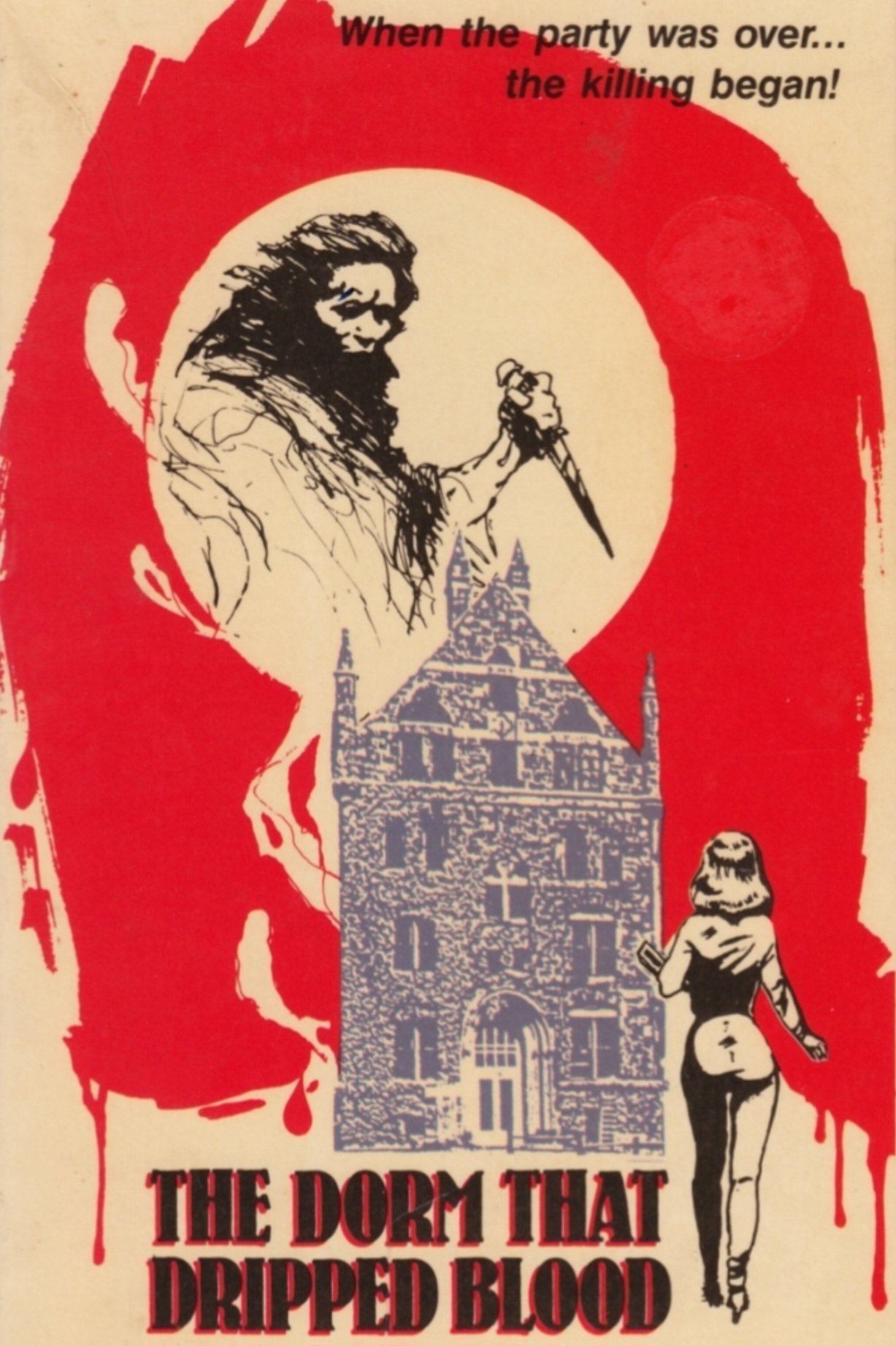
A crazed killer stalks college students who gave up their vacation to clean a deserted dormitory.
Alternative Titles
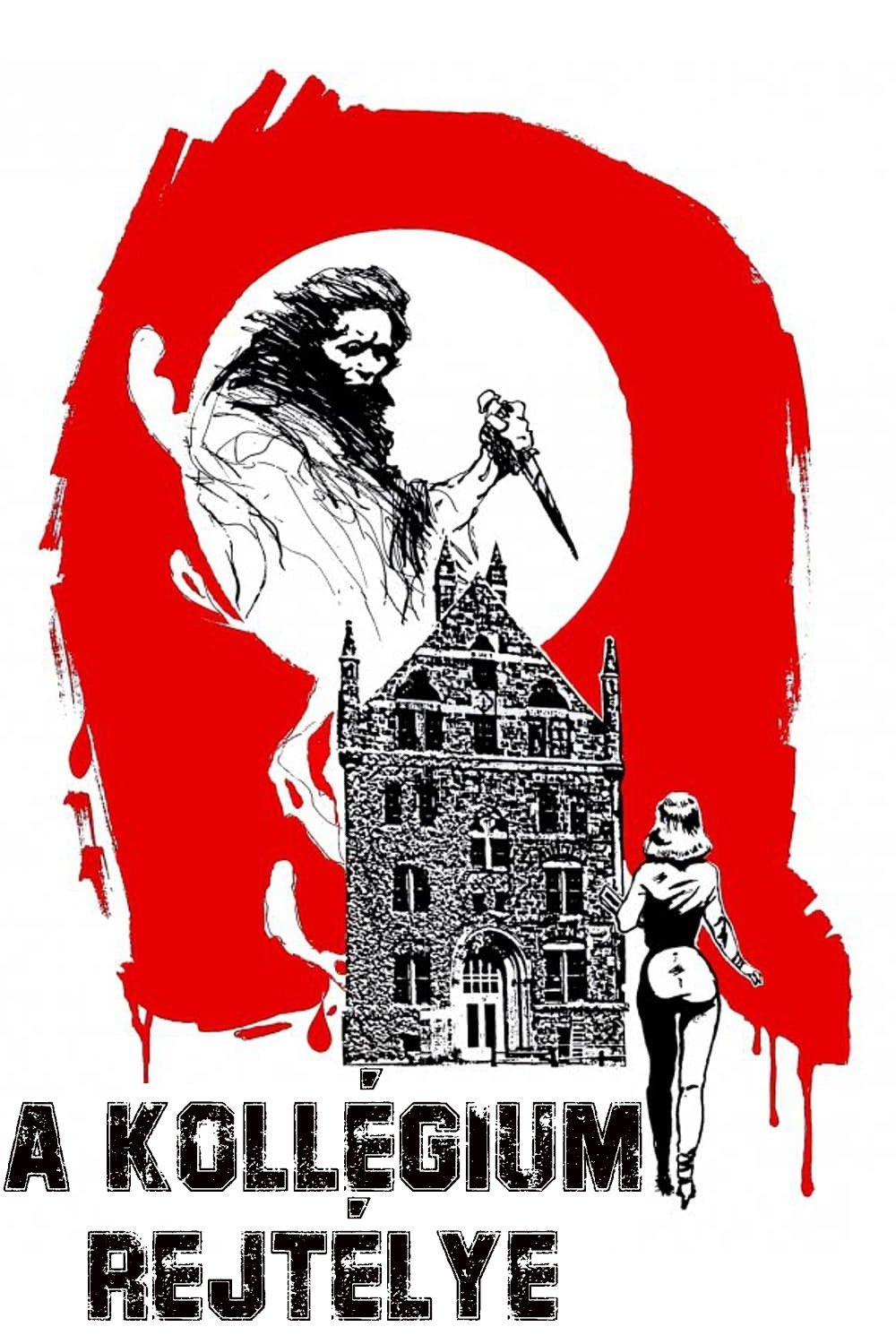
滴血的公寓 (China) — ChineseTodestrauma (Germany) — GermanLa mansión ensangrentada (Spain) — SpanishLa maison de sang (France) — FrenchMassacre au dortoir (France) 滴血的公寓 (Hong Kong SAR China) — ChineseA kollégium rejtélye (Hungary) — HungarianДом, где падает кровь (Russia) — RussianShow all 9 alternative titlesPranks (United States)
▤
Film Guide & Analysis
A UCLA-born slasher shaped by an empty campus, handmade gore, disputed cuts and the video nasty era.
The Dorm That Dripped Blood (1982) belongs to the early wave of independent American slashers made as the commercial success of Halloween and Friday the 13th encouraged small crews to turn familiar locations into murder sites. Its condemned college residence supplies the film with an unusually convincing setting: empty rooms, exposed service areas and deserted corridors replace the artificial geography of a constructed set. The project emerged at the University of California, Los Angeles, where Stephen Carpenter, Jeffrey Obrow and Stacey Giachino developed a feature around spaces available during the winter break. That setting shaped its rough visual character.
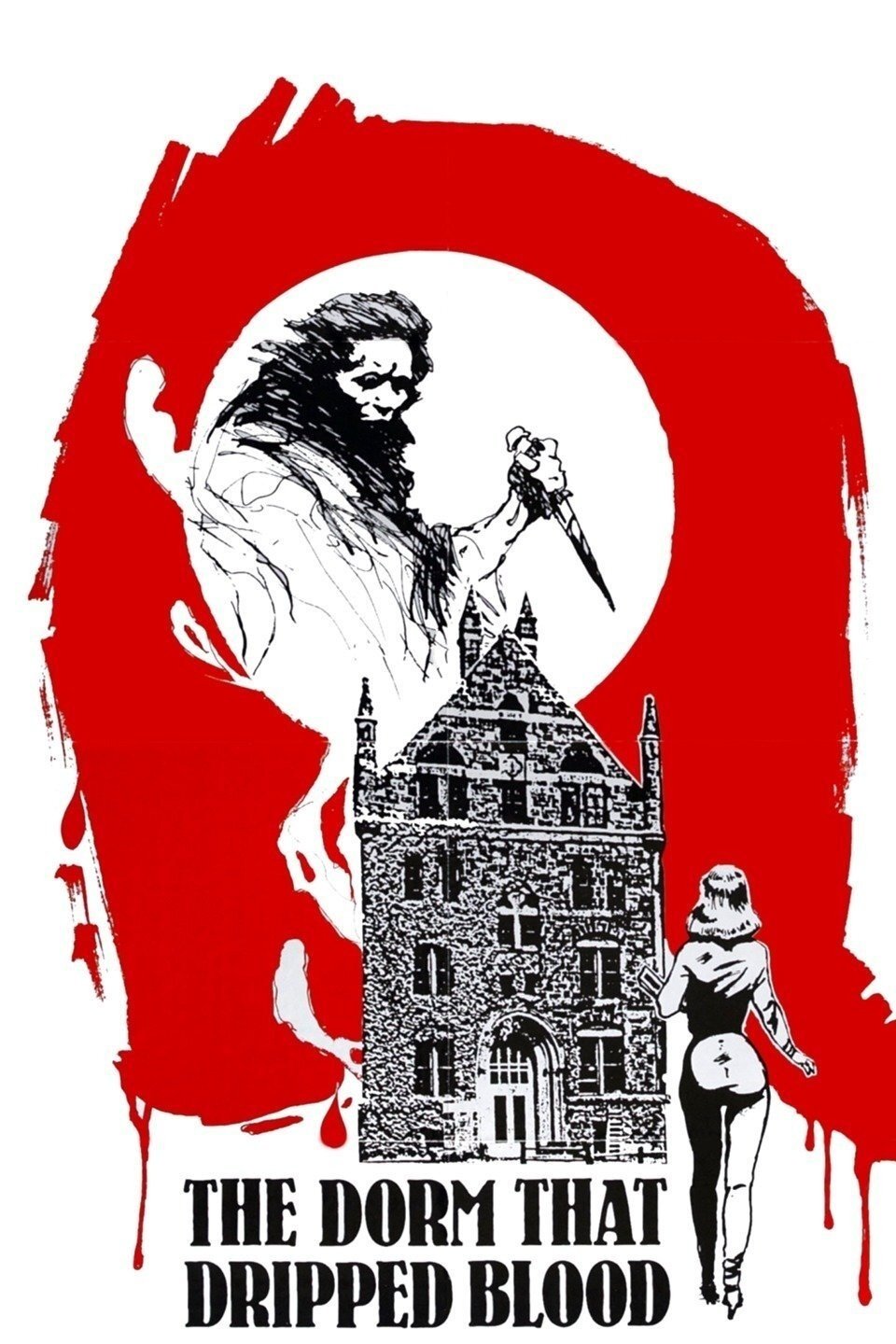
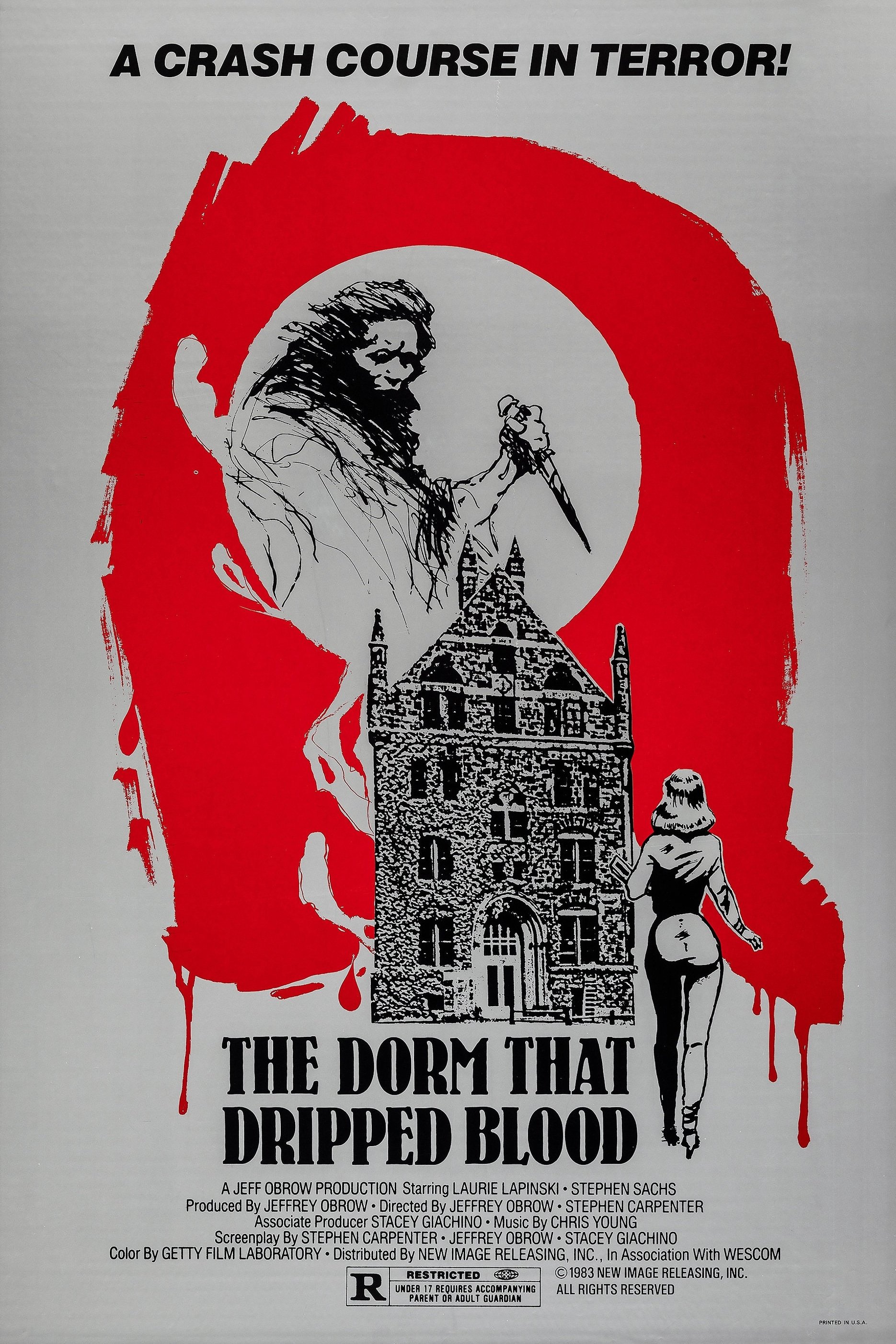
The production acquired several identities during its release history, including Death Dorm and Pranks, before the longer title became its most recognizable name. Its reputation rests on two distinct histories. Within slasher cinema, it represents a resourceful but uneven attempt to combine an enclosed murder mystery with graphic practical effects. In Britain, its appearance among the films caught up in the video nasty controversy gave it a cultural afterlife disproportionate to its original commercial profile. The later recovery of a longer cut has also brought attention to material absent from circulating editions.
Origins and Student Production
Carpenter and Obrow developed the project while studying at UCLA, working with Giachino on a script suited to a nearly deserted residence during the Christmas holiday. The American Film Institute's historical record traces the idea to time spent in an empty dormitory and notes that the filmmakers solicited financial help from relatives and friends. Their feature depended on the equipment and spaces available to students, with established performers beyond the available resources. The abandoned-building premise gave practical limitations a narrative purpose: ordinary campus facilities could plausibly become dangerous once the usual population had departed.
The film was photographed on 16 mm in 1981 and subsequently prepared for theatrical exhibition. Contemporary trade reporting cited by the AFI shows that the filmmakers were advertising its availability as early as July that year, although distribution followed a more complicated course. Published accounts do not agree on the exact production budget, so any single figure requires caution. The production method is more revealing: a small team organized shooting around accessible interiors, inexperienced performers and violent set pieces. Those compromises remain visible in the finished feature.
The Dormitory as a Horror Setting
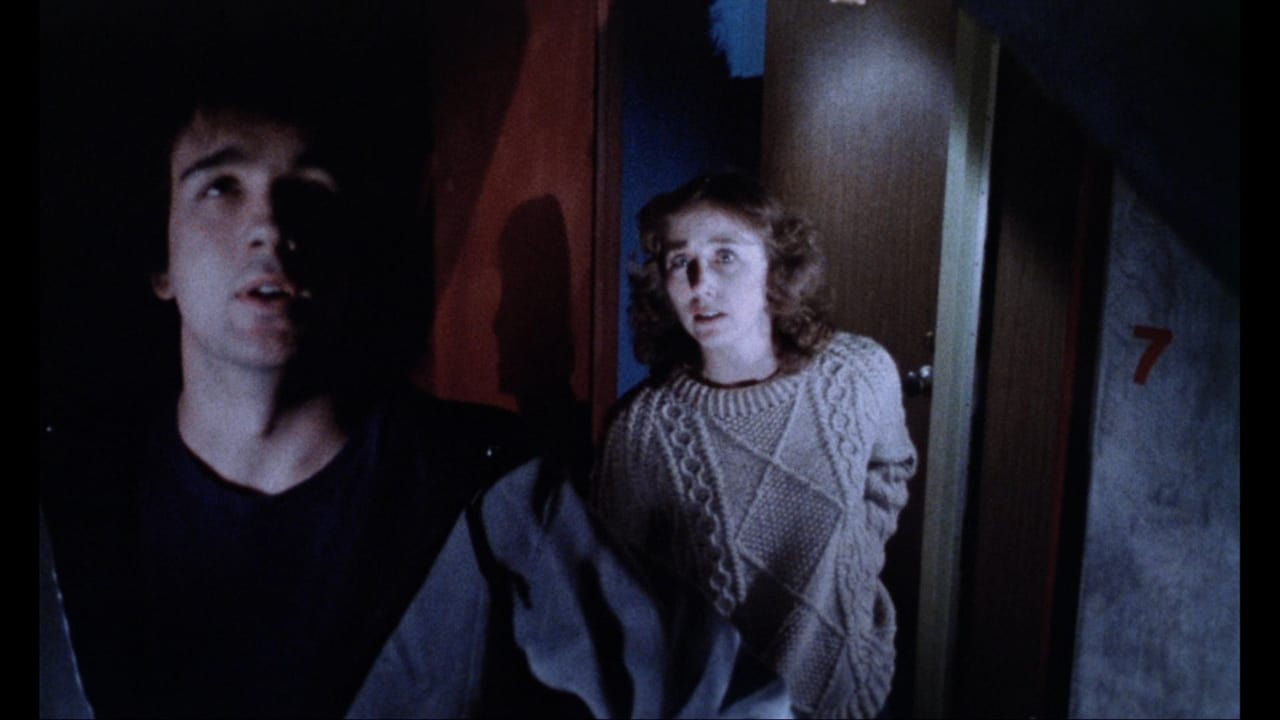
The story begins with students clearing furniture and belongings from Dayton Hall ahead of its demolition. Their task keeps them on campus during vacation, isolating them inside an ordinary institutional building. Stairwells, utility passages and storage areas become places where visibility is limited and escape routes are difficult to judge. The premise also makes the presence of an unfamiliar resident appear suspicious without immediately identifying the attacker. Much of the tension comes from the building's mundane functions: doors can be shut, equipment can disappear and someone moving between floors may pass unnoticed.
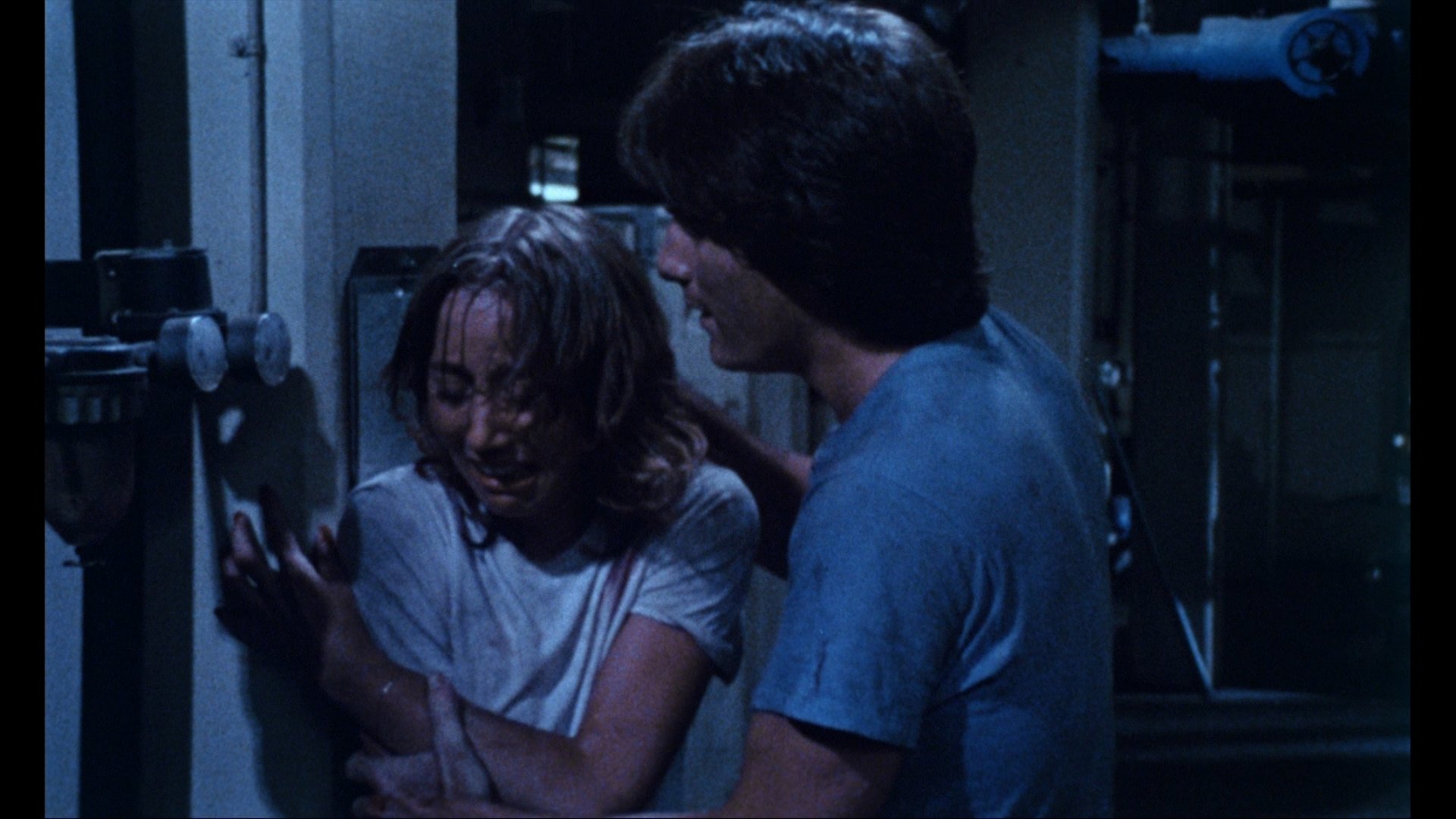
Carpenter's photography uses these real spaces to stage a succession of searches, sudden encounters and movements into poorly lit rooms. The grain associated with the small-format production and the restricted illumination can obscure details, yet the physical continuity of the corridors gives the pursuit sequences a tangible layout. Critics have differed over whether the dimness produces suspense or exposes technical inexperience. That tension is part of the film's identity. An empty campus provides scale, but individual rooms repeatedly compress the action into narrow areas where a character cannot easily see who is approaching.
Practical Violence and Early Genre Craft
The attacks use tools and improvised weapons drawn from the building's working environment, keeping the threat wholly human. Makeup artist Matthew W. Mungle created effects for attacks involving a nail-studded bat and a power drill, material that later became important to discussions of censored footage. The effects contrast recognizable hardware with fabricated wounds. Not every planned image survived into the completed film, and some effects were shortened for release. This is an early example of Mungle's screen work, preceding the Academy Award recognition he later received for makeup on Bram Stoker's Dracula.
Christopher Young's score was another formative contribution. The music places sharp string writing, dissonant gestures and emphatic suspense cues against stretches of relatively quiet movement through the residence. Contemporary retrospective discussion of Young's work identifies clear debts to earlier thriller scoring, particularly the severe orchestral language associated with Bernard Herrmann. The result gives some lengthy passages a sense of approaching danger even when little is happening on screen. Both Young and Mungle subsequently established substantial careers, although their later achievements should not be mistaken for proof that this student production was considered a major genre work upon release.
Titles, Distribution and Censorship
The route into cinemas was uneven. The film circulated in 1982 under the name Pranks, while contemporary trade reports documented by the AFI identify New Image Releasing in the American distribution arrangements and New Line Cinema in foreign-rights activity. A wider Los Angeles opening under its now-familiar name is documented for September 23, 1983. The AFI records an opening-weekend gross of $215,000 across forty theaters for that engagement; the figure describes one reported theatrical frame, not the picture's entire box office. This chronology also explains why sources may assign different years to the same production without necessarily describing different films.
In the United Kingdom, Pranks entered the wider video nasty controversy, a history sometimes compressed into inaccurate claims that every implicated film was successfully prosecuted or banned in the same manner. Its status belonged to the group whose legal outcomes did not produce successful prosecutions. Distribution cuts are a separate issue. The shorter, R-rated 84-minute theatrical version and the longer 88-minute Death Dorm cut contain different amounts of violent material. A later presentation of the surviving 35 mm answer print brought back material missing from commonly available editions, notably around the drill attack. Any account of censorship needs an identified territory and edition because different prints circulated.
Reception and Place Within the Slasher Cycle
The film encountered unfavorable reviews during its American release, according to contemporary coverage summarized in the AFI catalog. Later criticism is divided. Assessments that emphasize awkward acting, intermittent pacing and conspicuous low-budget technique sit beside appreciations of the actual location, uncompromising atmosphere and elaborate effects. These disagreements place it within a crowded independent slasher cycle. Its main historical value is the unusually clear record of how film students attempted to make an exportable horror feature from limited resources; evidence of influence on later directors remains scarce.
Its conclusion also complicates the reassuring expectation that surviving an attack will lead to safety. The police misread the situation, and the character positioned to escape remains in danger after the apparent resolution. Later critics have examined this ending alongside other bleak seasonal horror stories, including Black Christmas, a comparison offered by critics without documentary evidence of direct creative borrowing. By refusing a secure final rescue, the film leaves its strongest impression after the murders themselves have ended. The restored longer version and its British censorship history have helped sustain that discussion beyond its original theatrical circulation.
References
AFI Catalog — The Dorm that Dripped Blood - History and production record
Archival history drawn from contemporary trade publications, documenting UCLA origins, distribution agreements and the September 1983 Los Angeles opening.
KQEK — Dorm That Dripped Blood / Pranks / Death Dorm (1982)
Extensive independent critical examination of the film, its student production, Christopher Young's score, Matthew Mungle's effects and the surviving longer print.
Dread Central — The Dorm That Dripped Blood Is a Lot Like Black Christmas (In a Good Way)
Focused analysis of the Christmas-horror framework, slasher conventions, police response and the bleak conclusion.
AVForums — The Dorm That Dripped Blood Movie Review
Detailed film criticism addressing dormitory geography, visual approach, British video nasty context and restored murder sequences.