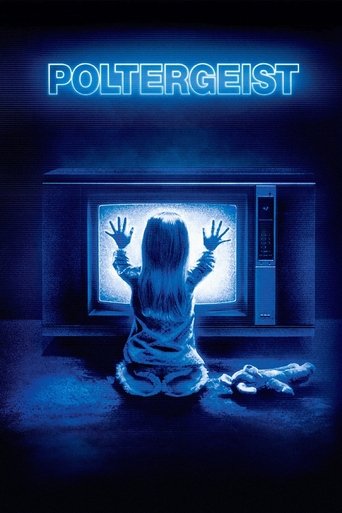
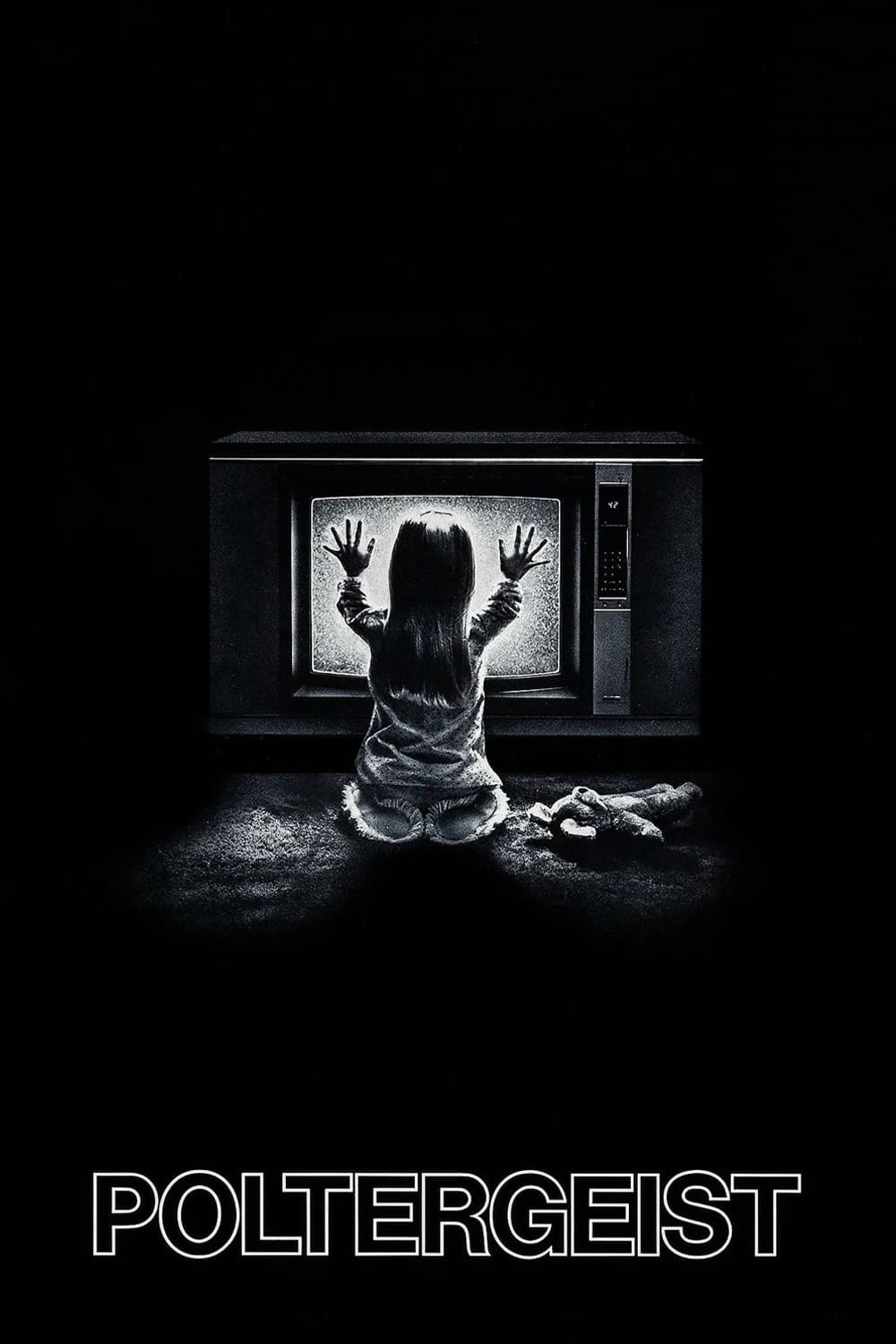
In the California development of Cuesta Verde, Steve and Diane Freeling live with their three children in a new suburban house. Objects begin moving without explanation, and their youngest daughter, Carol Anne, appears to communicate with voices coming from the television. When she vanishes during a violent supernatural disturbance, the family calls on paranormal researchers and the medium Tangina Barrons to discover where she has been taken. Their search exposes a secret connected to the ground beneath their neighborhood.
Alternative Titles
Polterqeyst (Azerbaijan) Полтъргайст (Bulgaria) — BulgarianPoltergeist: O Fenômeno (Brazil) — PortuguesePoltergeist : La vengeance des fantômes (Canada) 吵闹鬼 (China) 鬼驱人 (China) — ChinesePoltergeist. Fenómenos extraños (Spain) — SpanishΤο Πνεύμα του Κακού (Greece) — GreekShow all 30 alternative titles鬼驅人 (Hong Kong SAR China) — ChinesePoltergeist - Kopogó szellem (Hungary) — Hungarianפולטרגייסט (Israel) — Hebrewमौत का घर (India) — HindiPoltergeist - Demoniache presenze (Italy) — Italianポルターガイスト (Japan) — Japanese폴터가이스트 (South Korea) — KoreanPoltergeistas (Lithuania) Poltergeists (Latvia) — LatvianJuegos diabólicos (Mexico) — SpanishDuch (Poland) — PolishPoltergeist, o Fenómeno (Portugal) — PortugueseStrigoiul (Romania) — RomanianКућни дух (Serbia) — SerbianПолтергейст (Russia) Juegos Diabolicos (El Salvador) ผีหลอกวิญญาณหลอน (Thailand) — ThaiKötü Ruh (Türkiye) — Turkish鬼哭神號 (Taiwan) Полтергейст (Ukraine) — UkrainianPoltergeist (1982) (United States) Yêu Tinh (Vietnam) — Vietnamese
Tobe Hooper and Steven Spielberg bring suburban haunting into the Freeling home through ILM optical effects, Jerry Goldsmith's score and a contested 1982 PG rating.
Poltergeist (1982) places an extraordinary haunting inside the planned California suburb of Cuesta Verde, where real-estate salesman Steve Freeling lives with his wife Diane and their three children. The first disturbances seem almost playful: furniture moves, electrical equipment behaves unpredictably and young Carol Anne speaks to unseen visitors through the household television. When she disappears into a space beyond the walls, the seemingly secure home becomes a maze of threatening entrances. Tobe Hooper's film draws its horror from the contamination of recognizable comforts, turning the television, bedroom closet, backyard and favorite toys into routes through which the family can be attacked.
Developed by Steven Spielberg, who wrote the original story and shared screenplay credit with Michael Grais and Mark Victor, Poltergeist was directed by Hooper and produced by Spielberg and Frank Marshall for MGM. Its making produced an unusual dispute about the division of creative responsibilities, alongside ambitious optical work by Industrial Light & Magic and a score by Jerry Goldsmith. The 1982 release also became a consequential ratings controversy when the original R classification was overturned on appeal. These histories complement a film in which elaborate supernatural spectacle remains tied to the Freeling parents' struggle to recover their daughter.
Development and the Hooper-Spielberg Collaboration
Spielberg had been developing a ghost story for a suburban setting when MGM announced the project in April 1981. Hooper, already identified with the violent rural nightmare of The Texas Chain Saw Massacre (1974), was hired to direct a film whose premise placed supernatural danger in a prosperous neighborhood. The American Film Institute records principal photography beginning on May 11, 1981, in Simi Valley, with additional constructed interiors and storm scenes at MGM's Culver City facilities. The combination gave the production a residential exterior that could be photographed as a functioning community and studio spaces suited to difficult transformations.
Spielberg's participation was more extensive than that of a distant producer. Contemporary reports documented work on storyboards, casting, editing and the collaboration with Goldsmith, while Hooper remained the credited director and described an agreeable working relationship. Speculation about who controlled the set produced a Directors Guild inquiry. According to AFI's compilation of trade coverage, an arbitrator subsequently required MGM to pay Hooper damages and correct trailers that disproportionately emphasized Spielberg's producing credit. The documented decision concerned advertising and the protection of directorial credit; it was not a ruling that Spielberg secretly directed the entire picture. Responsible accounts distinguish the acknowledged collaboration from claims that cannot be established shot by shot.
The Freeling Family and the Horror of Suburbia
Cuesta Verde initially appears organized around ordinary forms of family security: a detached house, neighboring children, predictable domestic routines and a father employed by the developer who built the neighborhood. The setting makes small disruptions especially conspicuous. A chair shifting across the kitchen floor is frightening partly because the characters have seen that same floor used for breakfast and household chores. Craig T. Nelson's Steve begins with the practical confidence of someone who sells this way of life, while JoBeth Williams's Diane is first to discover that the disturbances cannot be contained by his reassurances. Their marriage remains recognizably affectionate even as the house's familiar rooms stop behaving predictably.
The family's efforts to stay together give the supernatural events consequences beyond the next spectacle. Robbie's fear of the tree outside his window and the clown near his bed emerge from recognizable childhood anxieties, while Carol Anne's calm receptiveness to the television makes her vulnerable in another way. The parents do not possess secret expertise that would make them natural investigators. When professional help arrives, their presence must be negotiated with the family's urgent wish to retrieve a child rather than merely document an anomaly. The film's class setting also becomes significant when the buried history of the housing development reveals how commercial decisions have concealed the dead beneath suburban progress.
Television, the Closet and Childhood Fear
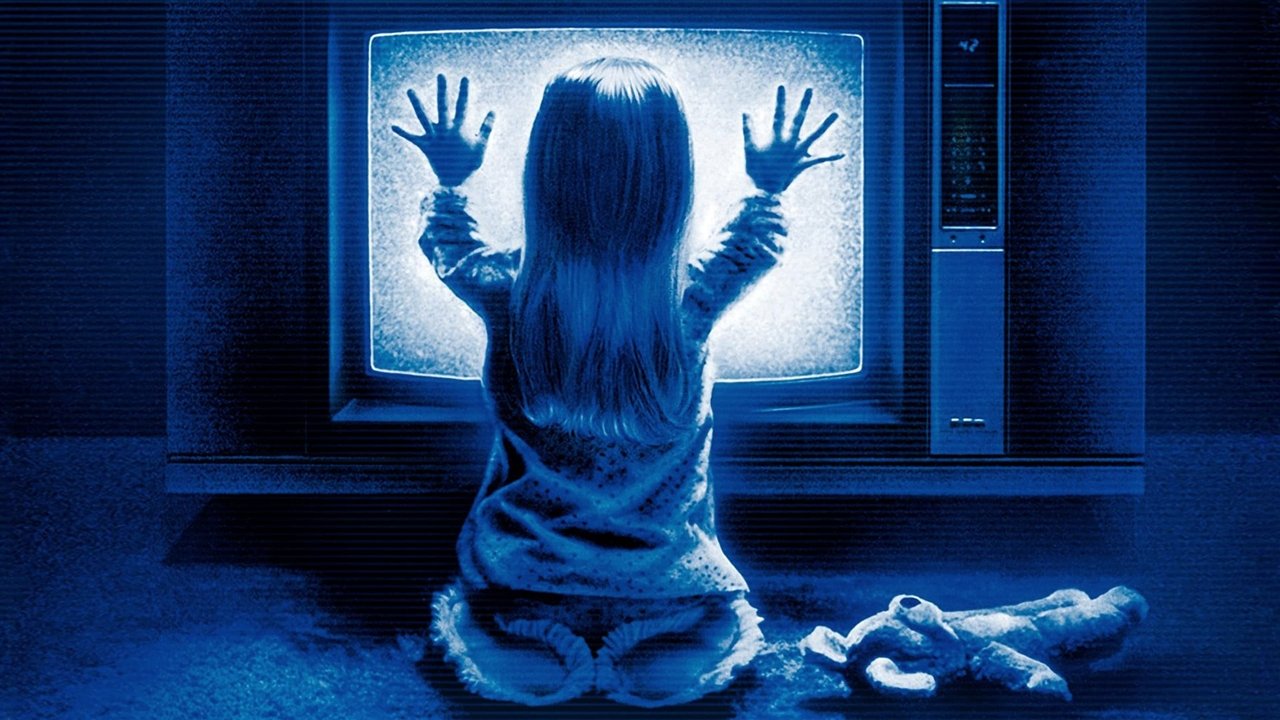
The opening image of a television after the end of the broadcast day gives Poltergeist one of its most economical portals. Electronic static normally signifies that programming is over, yet Carol Anne treats the noise as a form of communication. The domestic appliance becomes both a speaker and a threshold, suggesting that the threat can reach the family without passing through a door or window. The early disturbances are not presented as uniformly evil: Diane even responds with curiosity to the movement of objects. That ambiguous phase matters because the adults only gradually understand that their daughter's unusual connection to the house is placing her beyond their protection.
The bedroom closet has the opposite visual character from the television. It is an ordinary enclosed space whose darkness prevents anyone from confirming its boundaries. Once Carol Anne vanishes, voices and distant appearances suggest that familiar domestic architecture overlaps with an inaccessible environment. Robbie's tree and clown produce more immediate attacks, but the closet prolongs anxiety through the uncertain location of an absent child. Hooper and the production team move between such scales of fear: a toy that appears to change position, a room that conceals impossible depth and a neighborhood whose ground may contain something its residents do not understand.
Physical Effects and the Unstable House
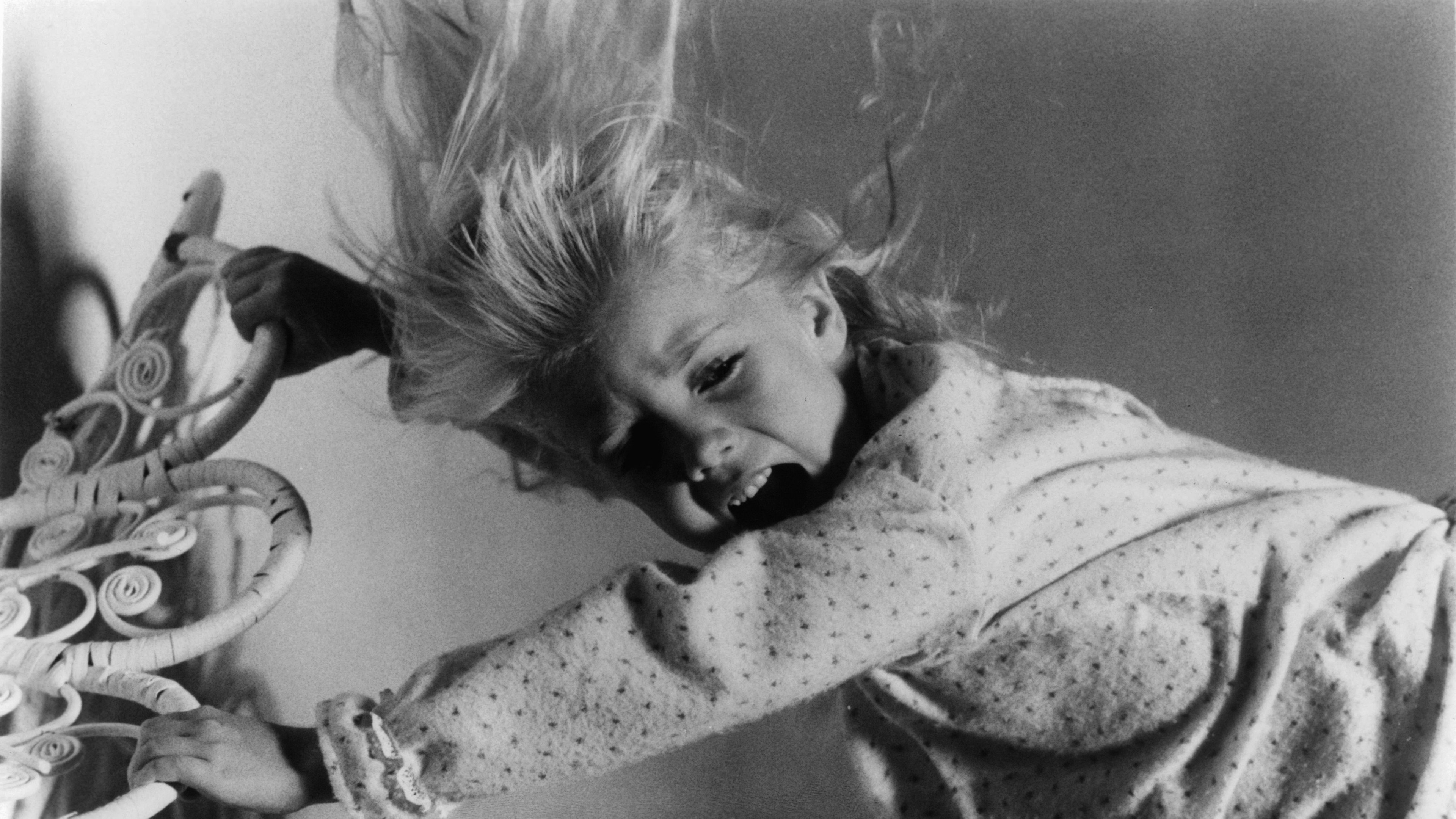
The haunting required performers to react to dangers that sometimes occupied the same photographed space and sometimes would be added later. AFI's production history identifies stage construction for the storm, backyard pool and passages beneath the house. On screen, the bedroom tree becomes a mobile attacker, a clown doll acquires the strength to pull a child beneath the bed, and a researcher sees a horrific transformation of his own face in a bathroom mirror. These incidents move from suspense about an unseen force toward sudden physical confrontation. The change is central to the film's pacing because it makes the family's previous ability to interpret the disturbances as harmless impossible to sustain.
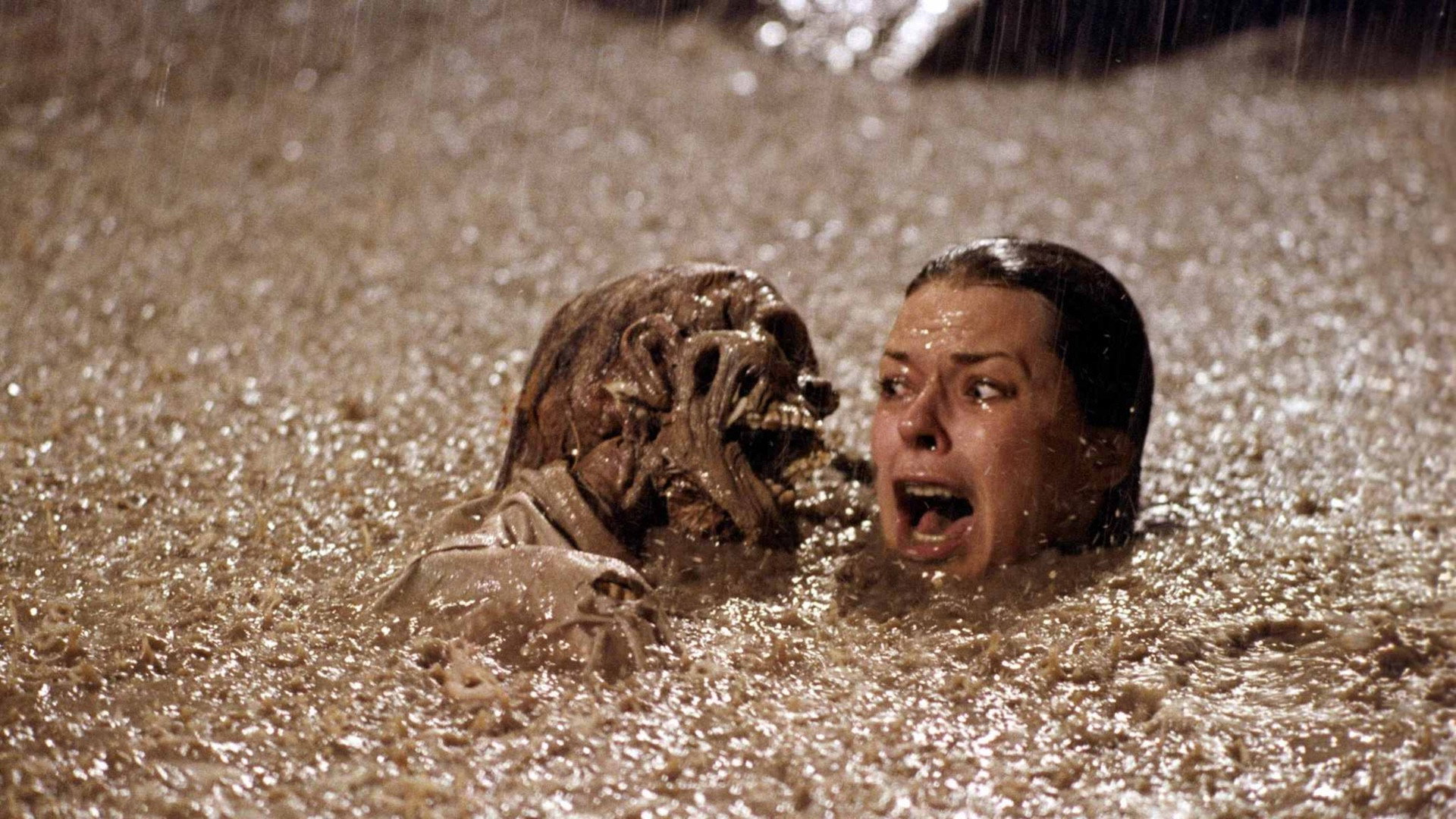
The unfinished swimming pool delivers another kind of shock when Diane struggles through muddy water among skeletal remains. The scene takes place at a building site on the family's own property, converting an improvement to the home into evidence of concealed burial. Such effects are best understood through the specific demands of construction, performance and photographic compositing rather than the claim that a single technique created every manifestation. Contemporary accounts of the production describe practical stage engineering alongside the specialized optical work assigned to ILM. The convincing result comes from the audience understanding the action's physical stakes even when its supernatural cause is never made visible in ordinary terms.
ILM, Optical Compositing and the House Implosion
Industrial Light & Magic supervised the film's major optical effects under Richard Edlund. The company's own technical account describes the spectacular destruction of the Freeling house as a miniature engineering problem that required months of experiments. The model could not simply topple or collapse; pieces needed to move toward the center as though the whole structure were being consumed by a small void. Technicians fitted cables to a detailed miniature, drew them into a funnel-shaped mechanism and used a vacuum arrangement to manage escaping debris. The high-speed photography was achieved in a single take, then combined optically with actors photographed against a blue screen.
ILM's account also identifies a giant throat-like apparition apparently expanding inside a bedroom. Rather than being a full-sized construction built into that set, the feature was filmed as a miniature and integrated into the live-action image. These examples reveal how much of the horror involved giving an impossible space a convincing relationship to real bodies and furniture. The studio's use of rotoscoping and optical printing is particularly important to its period: the effects preceded contemporary digital-compositing workflows and depended on photographic elements aligned through successive operations. The house's disappearance works as narrative punishment for the development's hidden violation, yet its physical realization was a carefully planned process of miniature destruction.
Parapsychologists, Tangina and the Problem of Rescue
When Dr. Lesh arrives with a research team, the film briefly borrows the methods of a paranormal investigation. Recording equipment and professional caution provide a contrast with Steve and Diane's exhausted fear. The researchers initially hope to observe and classify what is happening, but the manifestations quickly overwhelm the expectation that an unusual phenomenon can remain at a safe distance. Beatrice Straight plays Lesh with a warmth that stops the scientific visitors from becoming detached spectators. Her team supplies context and witnesses, although its measurements cannot determine where Carol Anne has gone or guarantee a route home.
Tangina Barrons, played by Zelda Rubinstein, arrives with a different understanding of the voices and the threshold inside the house. Her intervention changes the immediate objective from gathering evidence to organizing a rescue through the dangerous opening. Diane must accept a risk no expert can remove, and the scene foregrounds her physical commitment to her daughter. The film offers an account of restless spirits and a malevolent controlling presence, but its supernatural explanation is part of fictional storytelling, not a verified description of paranormal activity. When the family learns that bodies remained beneath the development after grave markers had been moved, the haunting acquires a moral accusation directed at the business practices supporting Cuesta Verde.
Jerry Goldsmith: A Lullaby Within the Nightmare
Goldsmith's music contrasts a gentle, childlike melody with dissonant passages and powerful orchestral surges. In an interview conducted by Randall D. Larson in July 1982 and published in CinemaScore the following year, the composer explained that Spielberg wanted a theme associated with Carol Anne and an almost religious atmosphere around the supernatural passages. Goldsmith described the score as combining a simple lullaby, nearly atonal material and impressionistic writing. The contrast makes the ghostly realm seem capable of wonder before its destructive character fully emerges. Music associated with innocence can return against images that make the child's safety uncertain.
The interview is also unusually revealing about authorship: Goldsmith stated that his discussions of the finished score were with Spielberg and that Hooper was not involved in that stage of post-production. This is precise testimony about their musical collaboration, not evidence that Hooper failed to direct principal photography. Goldsmith's work ranges beyond the well-known main theme, shaping transitions between the family's emotional experience and much more frightening encounters. A brief use of the Dies Irae within the score was also acknowledged by the composer. Poltergeist earned an Academy Award nomination for original score, alongside nominations for sound-effects editing and visual effects.
Release, Classification, Critical Response and Legacy
Poltergeist opened in Los Angeles and New York on June 4, 1982. The initial American R rating had been changed to PG after a successful appeal made shortly before release, a decision that AFI connects to broader arguments about a classification between PG and R. The PG-13 category did not yet exist. The British Board of Film Classification separately records a 1982 theatrical submission of approximately 114 minutes and later video versions running roughly 110 minutes. Those different measured durations should not automatically be described as evidence of censorship, since film and video presentation speeds can differ. The disputed US rating concerns the severity of a child's peril and brief graphic images rather than a confirmed alternate edited cut.
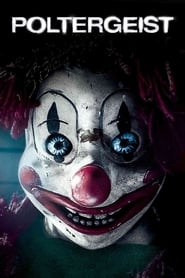
Contemporary criticism was not uniform. In The Washington Post on opening day, Gary Arnold found portions witty and frightening but believed the competing supernatural episodes weakened the drama and made the ghosts too literal. The initial commercial performance was nonetheless substantial: AFI records about $6.9 million over the first three days and a return to theaters for Halloween. The film's lasting reputation is grounded in more than receipts. Later institutional programming at the Museum of Modern Art has continued to present it explicitly as a Tobe Hooper film, examining his combination of suburban normality and violent fantasy. Sequels followed in 1986 and 1988, and a new adaptation reached cinemas in 2015. The original retains a singular force because ordinary domestic protection is shown to rest upon architecture, technology and a buried history that cannot be trusted.
Archival compilation of production records and 1981-1982 trades documenting the Spielberg-Hooper collaboration, guild dispute, MPAA appeal, opening, budget estimates and awards.
First-party technical history of Richard Edlund and ILM work on the mechanically imploding miniature house, high-speed photography, rotoscoping and the separate miniature throat effect.
Randall D. Larson original July 1982 interview, first published in CinemaScore in 1983, describing the lullaby, atonal writing, Dies Irae quotation and post-production collaboration.
Gary Arnold original June 4, 1982 review examining suburban setting, contested authorship, effects, character relationships and concern over the PG classification.
Official registry documenting the original 1982 cinema classification, later video versions and 2022 rerelease, with specific content advice and measured runtimes.