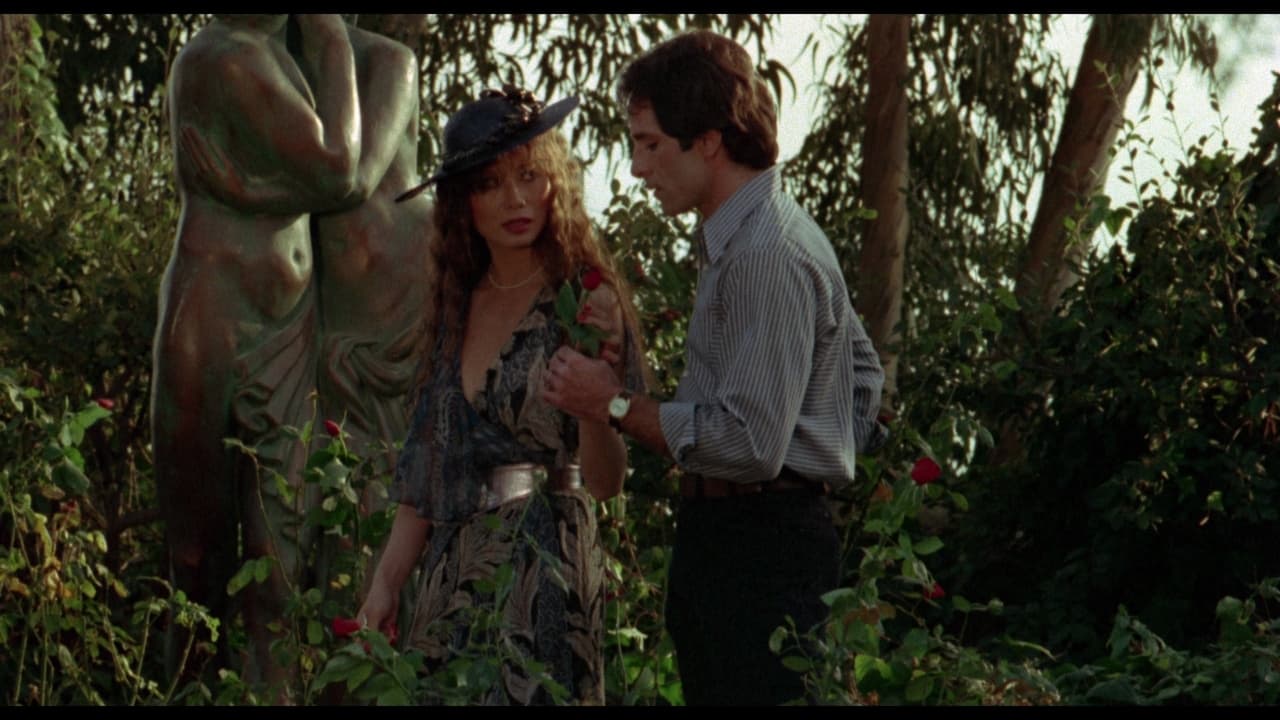
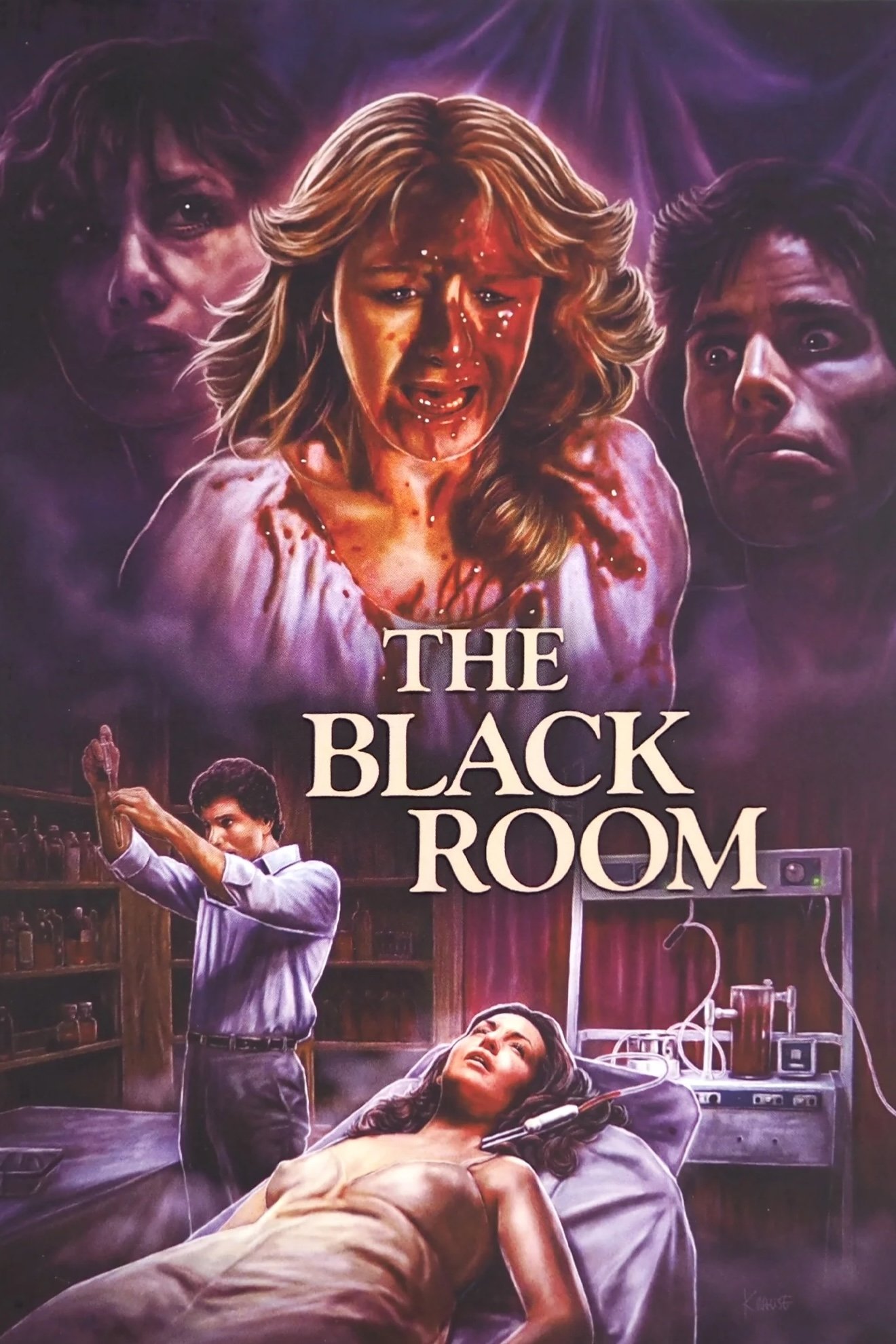
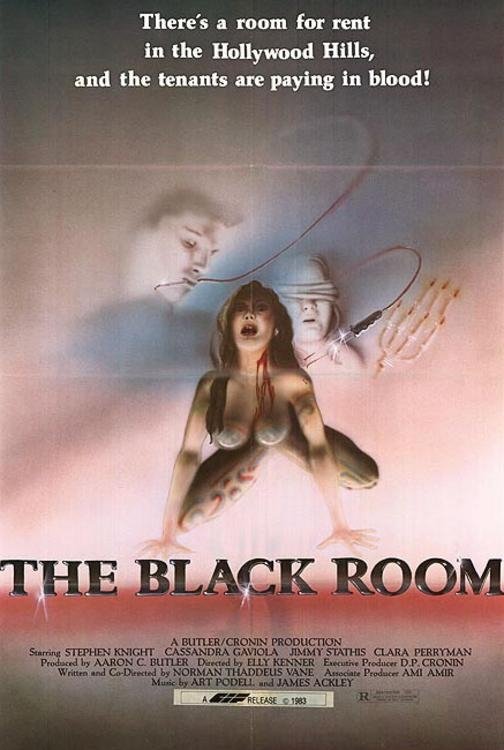
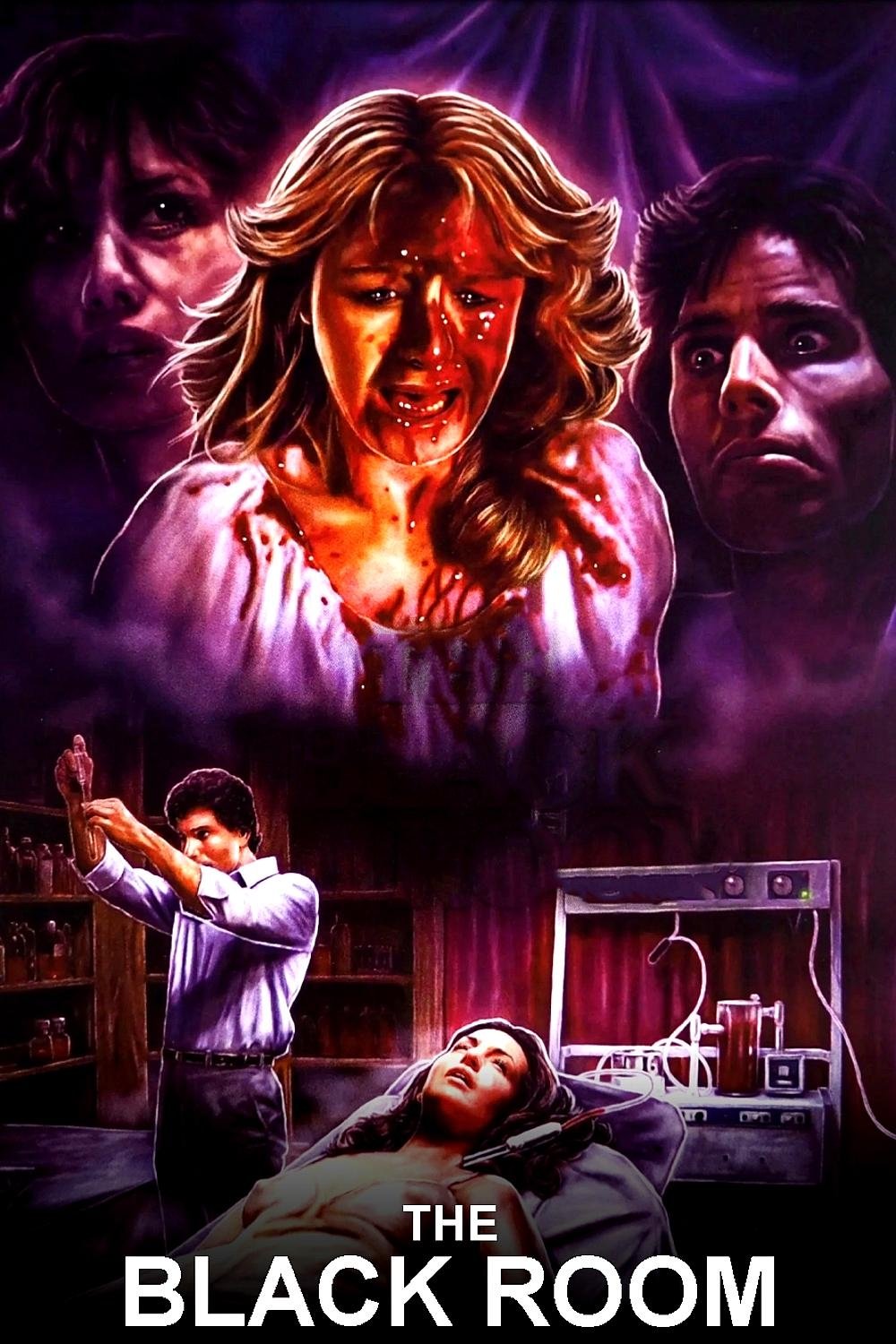
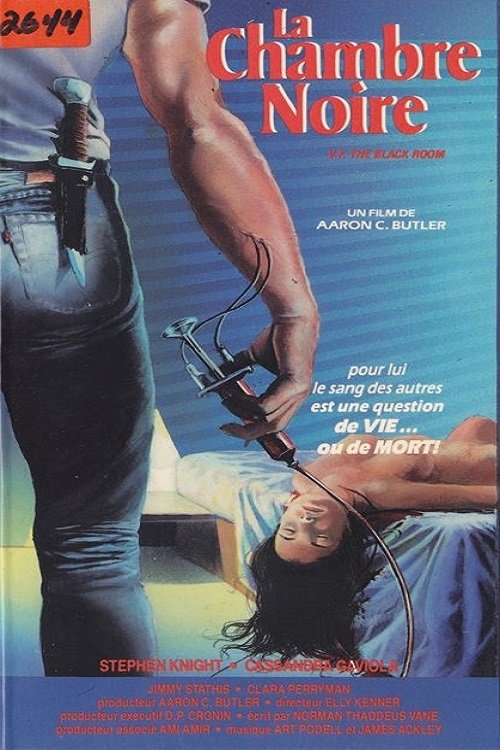
An unfaithful businessman rents a spare room from two siblings to use for his sexual conquests, unaware that they're serial killers who murder every woman he brings there.
Alternative Titles
黑色房间 (China) — ChineseDeadly Heat - Kammer der Schrecken (Germany) — cmv-Laservision DVDKammer der Schrecken (Germany) — GermanLa habitación negra (Spain) — SpanishLa chambre noire (France) — French黑色房間 (Hong Kong SAR China) — ChineseЧерная комната (Russia) — Russian
An independent vampire thriller that transforms illicit encounters into predatory blood transfusions, with a complicated production and British video-nasty history.
The Black Room (1982) turns the rituals of vampire cinema into a disturbing arrangement between a married couple and two predatory landlords in the Hollywood Hills. Jason and Bridget offer an elaborately furnished room for discreet sexual encounters, then exploit the privacy it provides to obtain victims for Jason's blood transfusions. Medical equipment takes the place of fangs, and a secluded mansion supplies the isolation once associated with Gothic castles. The film's central horror lies in the way desire, secrecy and access to a private space become means of surveillance and physical control.
Written by Norman Thaddeus Vane and directed by Elly Kenner, with Vane sharing direction credit, the film developed under severe financial constraints yet gives considerable attention to lighting, movement and the design of its title location. Its later history adds another dimension: limited theatrical exposure, circulation during Britain's video-nasty controversy and a modern restoration from 35 mm negative material. Those circumstances help explain why its reputation rests increasingly on close examination of its production and unusually clinical treatment of vampirism, instead of a well-documented original box-office success.
Development and a Divided Directorship
Vane drew on episodes from his own life when devising the screenplay. A former editor of the British edition of Penthouse, he later acknowledged using rooms for extramarital encounters, an experience he transformed into the film's premise. The fictional tenants' arrangement makes a commercial service out of sexual secrecy, while allowing the landlords to observe their guests. According to Kenner's later recollections, he found Vane's initial script excessively slow and argued for changes to Robin, the protagonist's wife. He wanted her to retain a stronger distinction from the other participants in the increasingly unstable sexual relationships.
The two men also divided responsibility during filming. Film historian Stephen Thrower describes Vane concentrating on performances and Kenner overseeing much of the technical direction. Kenner's account of the project recalls a difficult working relationship and a dispute over shared directing credit. These details derive from retrospective interviews and should be understood as participants' accounts of an unsettled collaboration. Production assistant Lisa Cronin recalled changing script demands and financial pressures, together with the use of a Hollywood Hills house she identified as a former residence of Ginger Rogers.
The Vampire Without Fangs
Jason survives by taking blood from other people, with Bridget managing the practical business of securing donors who never consent to the procedure. His condition is presented through the language of illness and treatment: needles, tubing and transfusion apparatus replace the conventional bite. The siblings depend on a succession of guests, making the rented room an apparatus for gathering victims. The final movements of the story preserve a disturbing uncertainty about whether Jason's endurance can be explained entirely through medicine.
Larry's use of the room gradually exposes the contradictions in his marriage. He turns actual affairs into supposed fantasies when speaking to Robin, expecting her to enjoy accounts of actions from which he excludes her. Once she discovers the deception, her own involvement with the house unsettles his claim to control the couple's sexual boundaries. The room thus functions simultaneously as a place of indulgence and as a trap where private behavior becomes visible to unseen observers. The threat to the couple's children brings the danger beyond adult infidelity, but the film spends much of its running time establishing the emotional imbalance that makes the intrusion possible.
The House and Its Visual Design
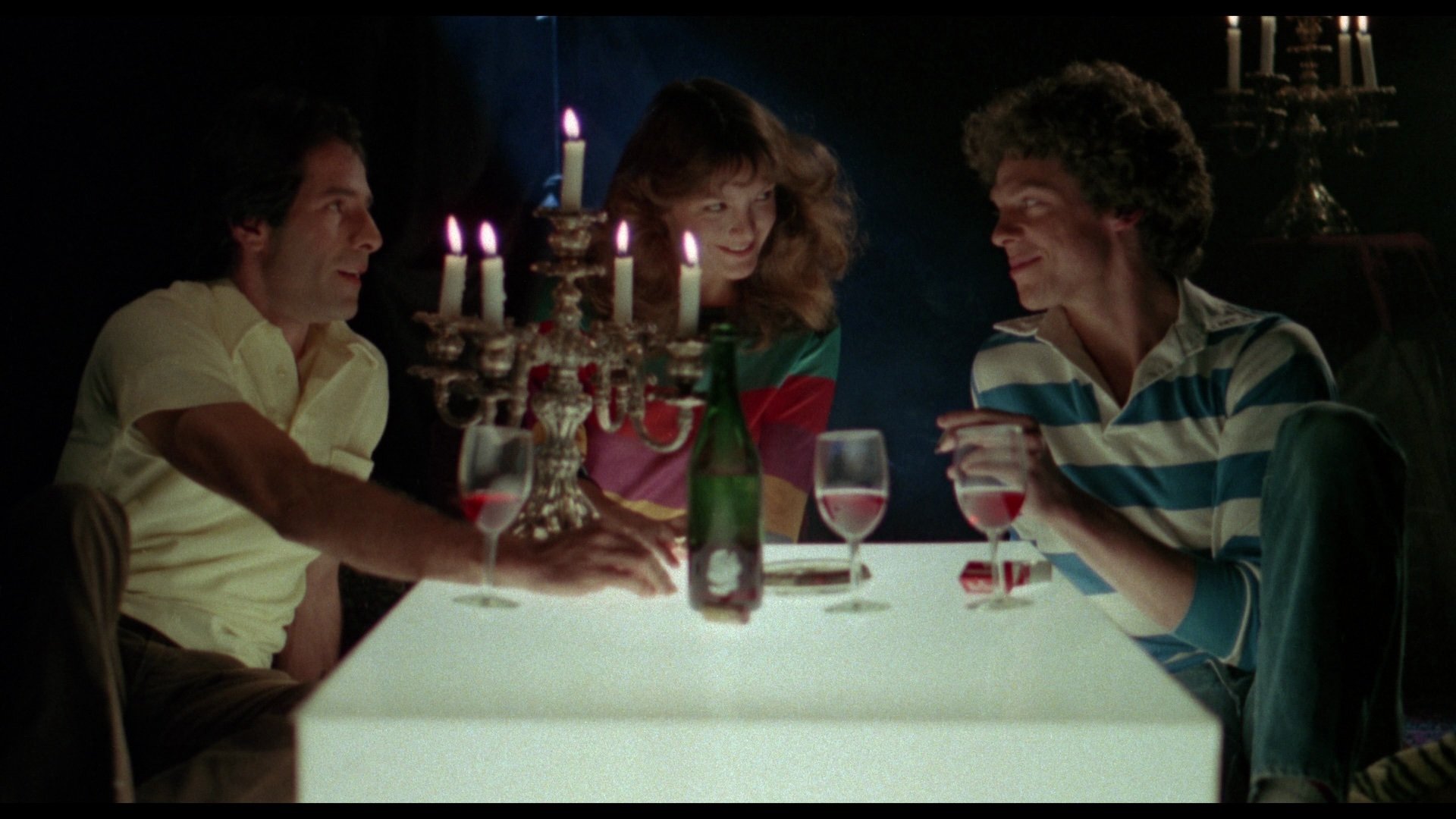
The black room is constructed as a conspicuously artificial interior within a large residential property. Curtains and dark wall coverings absorb much of the surrounding light, while candles and a glowing table isolate bodies against the background. Mirrors and concealed observation points add a second layer to the space: characters believe they are entering a place of privacy even as the architecture makes their behavior available to strangers. Cinematographer Robert Harmon uses the contrast between the mansion's comparatively ordinary rooms and the dense darkness of the rented chamber to distinguish domestic life from the environment in which the murders are prepared.
Kenner later explained that the crew obtained unused short lengths of Kodak 35 mm stock at reduced cost, a practical choice that helped the picture retain its film format. He also recalled arranging access to a Steadicam through professional contacts. Moving shots follow the characters through the residence without treating every doorway as a separate static composition. The night photography frequently holds faces and objects in pools of illumination, giving the equipment and blood-filled containers distinct prominence against dark surroundings.
Blood Transfusions and Practical Effects
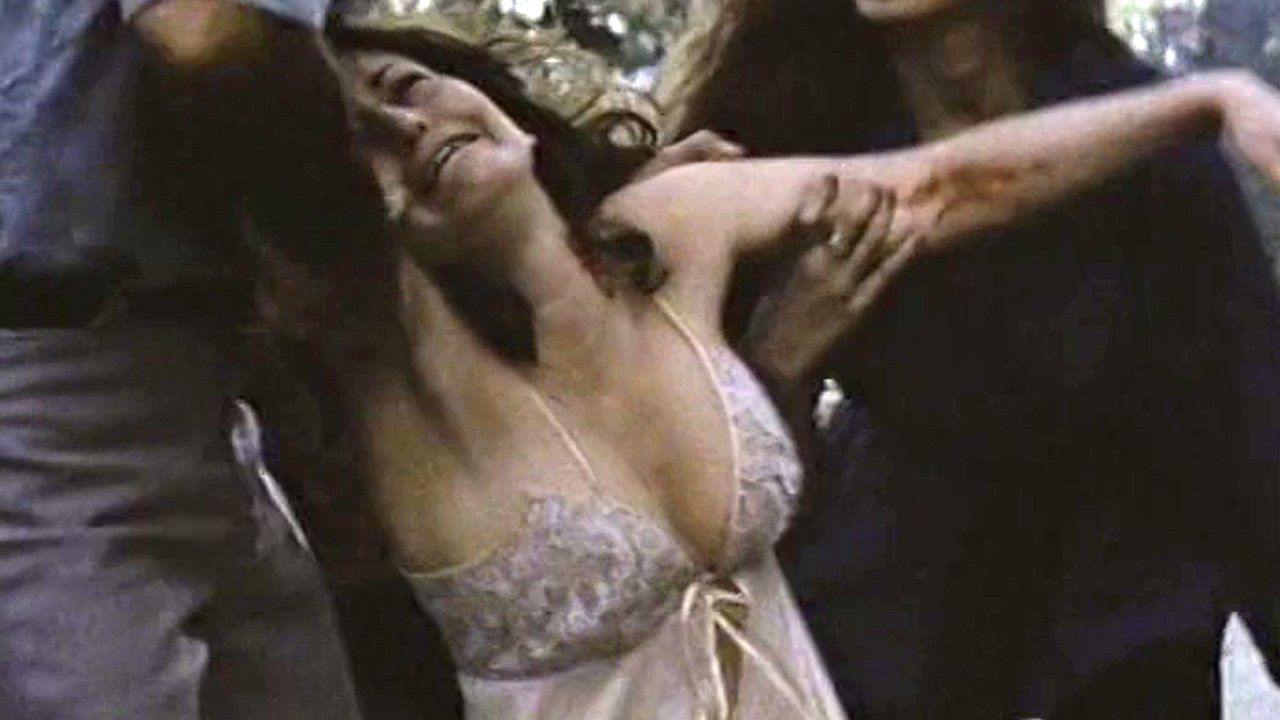
The most distinctive violent material involves the extraction and transfer of blood. Instead of organizing every attack around an instantly recognizable monster, the film allows the viewer to see an extended procedure with needles, lines, containers and a body connected to machinery. These images emphasize duration: the victim's blood is treated as something that can be collected and consumed systematically. The clinical detail makes the violence intimate and uncomfortable even when the overall staging retains the artificial quality of an exploitation thriller. The association between blood and sexual activity has prompted later critics to discuss the film alongside changing anxieties about bodily risk in the early 1980s, without establishing that it was intended as a deliberate statement about AIDS.
Mark Shostrom handled makeup and special effects at an early stage of his career. In a later interview prepared for the film's restored edition, he described devising the needle and transfusion illusions while working with limited experience and makeshift workshop facilities. He said that he used a blood formula associated with makeup artist Dick Smith. The importance of this testimony is technical: the effect depends on making ordinary medical instruments appear to perform a lethal act on screen. The sequence's close attention to flowing liquid and bodily response also distinguishes its violence from the rapid knife attacks common to many contemporary American slashers.
Circulation, Censorship and Restoration
Although the film is commonly catalogued under 1982, its production preceded that date and its distribution unfolded unevenly. Thrower's retrospective account identifies a prolonged post-production period and a difficult search for a distributor. Theatrical screenings took place in California and New York without generating an extensive national run. An Australian government classification record establishes that an 88-minute 35 mm version was classified R 18+ for public exhibition in September 1982; that record establishes a classification date, not the opening date of every later engagement. Conflicting budget totals and release dates in secondary filmographies are insufficient grounds for presenting a single precise production cost or American premiere day as settled fact.
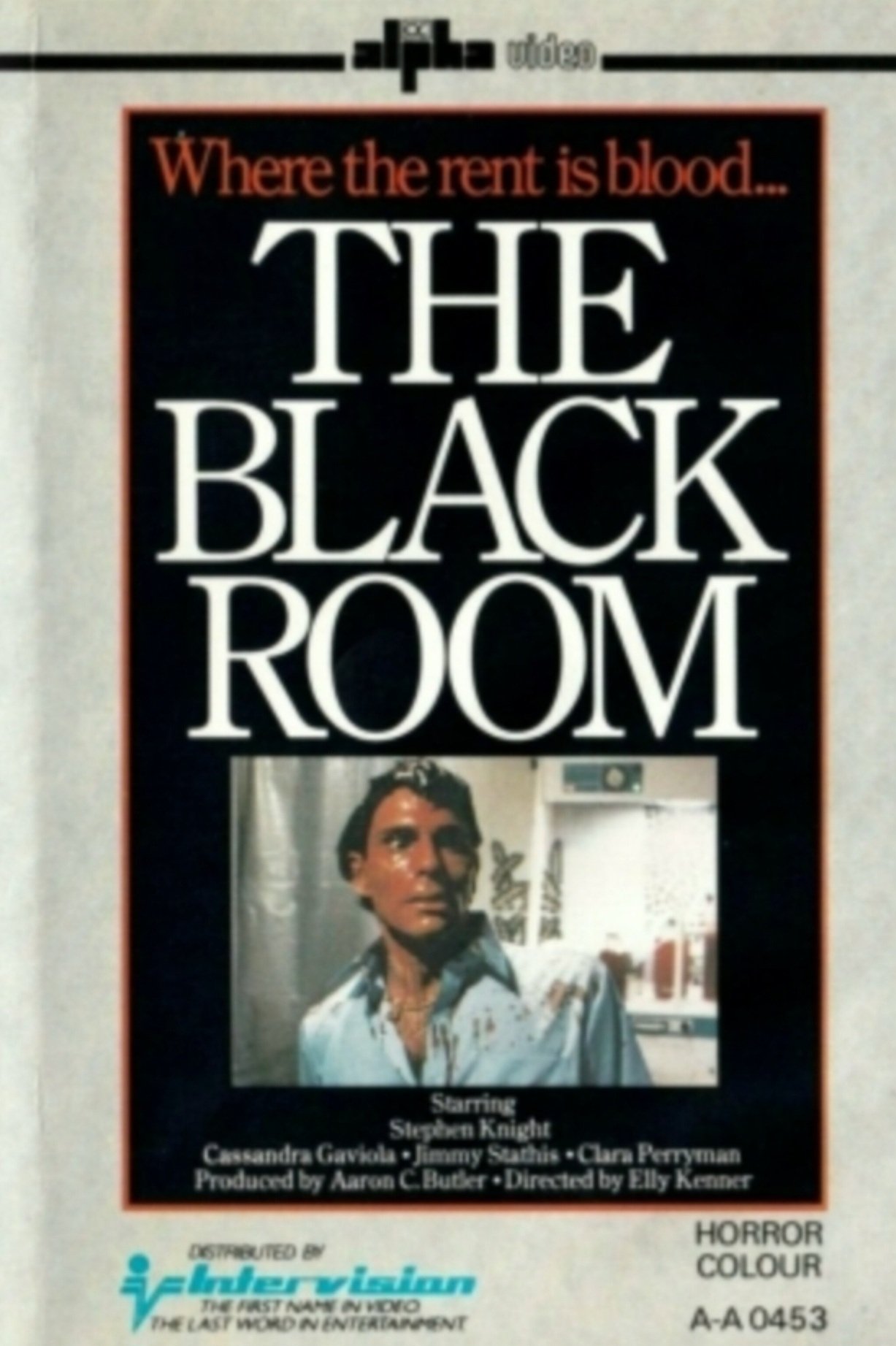
British home-video circulation gave the picture a separate notoriety when it appeared among the supplementary Section 3 titles associated with the video-nasty controversy. That designation concerned possible seizure and forfeiture of tapes under obscenity legislation; it must not be confused with a successful criminal prosecution of the film or a permanent nationwide prohibition. In January 2024, Vinegar Syndrome issued a restored Blu-ray edition using a new 4K scan of 35 mm negative elements. Its interviews with Kenner, actor Jimmy Stathis, actress Clara Perryman and Shostrom, together with Thrower's historical commentary, made substantial new production testimony available.
Dennis Seuling's substantial critical study and detailed account of new interviews with Kenner, performers, Mark Shostrom, production staff and film historian Stephen Thrower.
The Schlock Pit — The Black Room (1982): Philosophy in the Blood-doir
Matty Budrewicz's film-specific retrospective examines the vampire metaphor, sexual politics, cinematography, Steadicam work and British Section 3 circulation.