Development and the Return of the Freelings
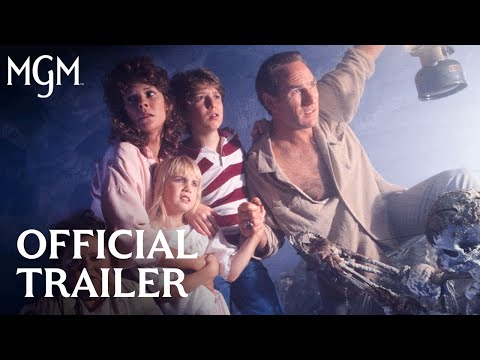
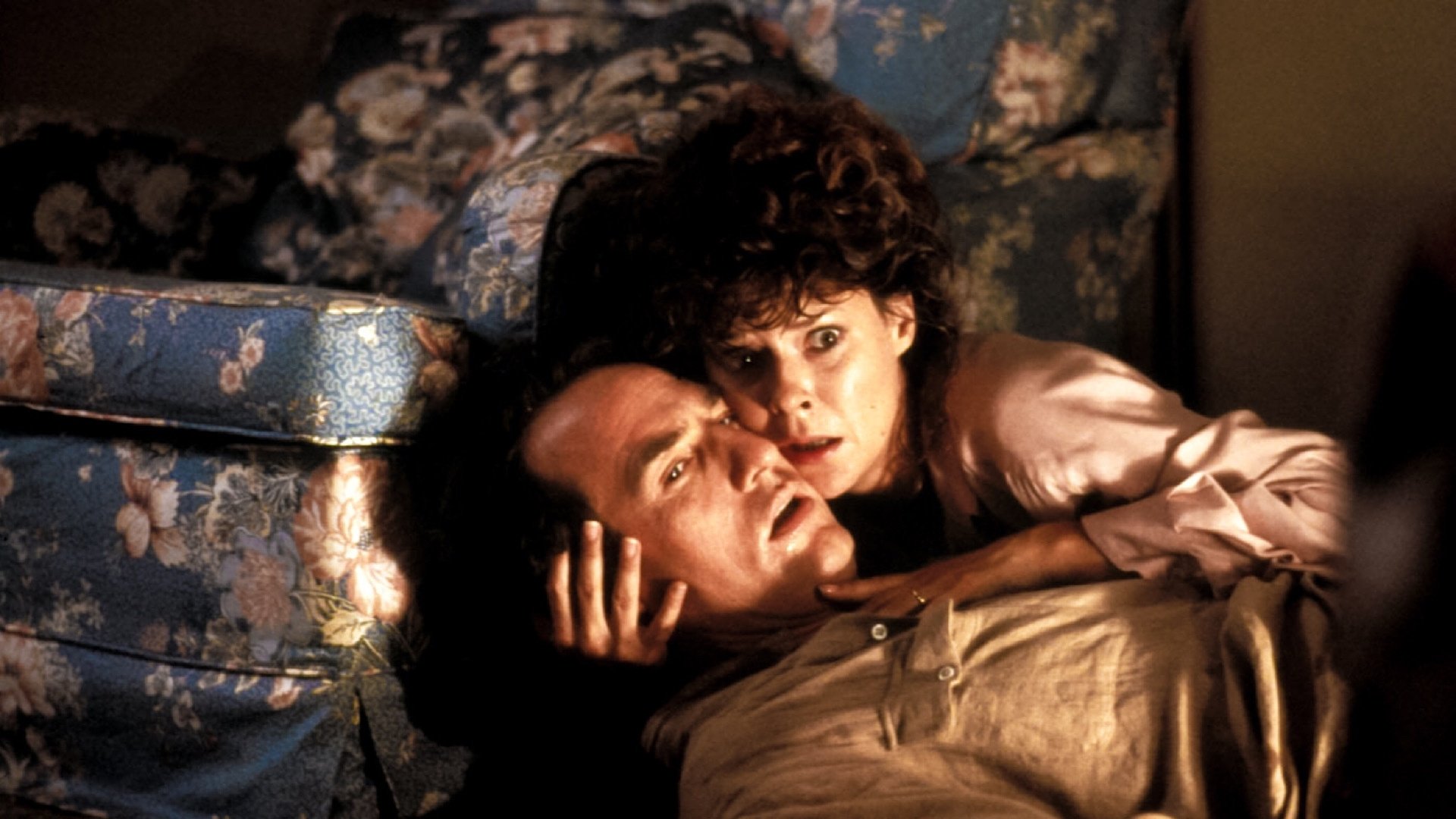
Screenwriters Michael Grais and Mark Victor had already helped shape the first Poltergeist when MGM pursued another installment. The American Film Institute preserves their account, published in August 1985, that the studio had approached them about a sequel that year and allowed them considerable freedom in developing it. Returning cast members, according to the same interview, wanted to read a script before committing. Continuing the story meant inventing a new source of danger for characters whose escape had previously supplied a conclusive ending. The resulting screenplay begins after the Freelings have lost their house and relocated to the home of Diane's mother in Arizona.
Development was also constrained by the scale of the projected supernatural spectacle. AFI cites an October 1985 Daily Variety report stating that Richard Edlund initially estimated the visual effects at between ten and twelve million dollars. Grais and Victor subsequently rewrote the script, bringing that estimate down to five million. Those contemporary figures describe projected effects costs, not a verified final effects expenditure. Production began in May 1985, with contemporary coverage placing the overall budget at approximately eighteen and a half million dollars. The changing screenplay and the requirement for complex physical illusions help explain why this continuation was conceived around particular set pieces rather than the more loosely escalating disturbances of its predecessor.
Reverend Kane, Family Memory and the Other Side
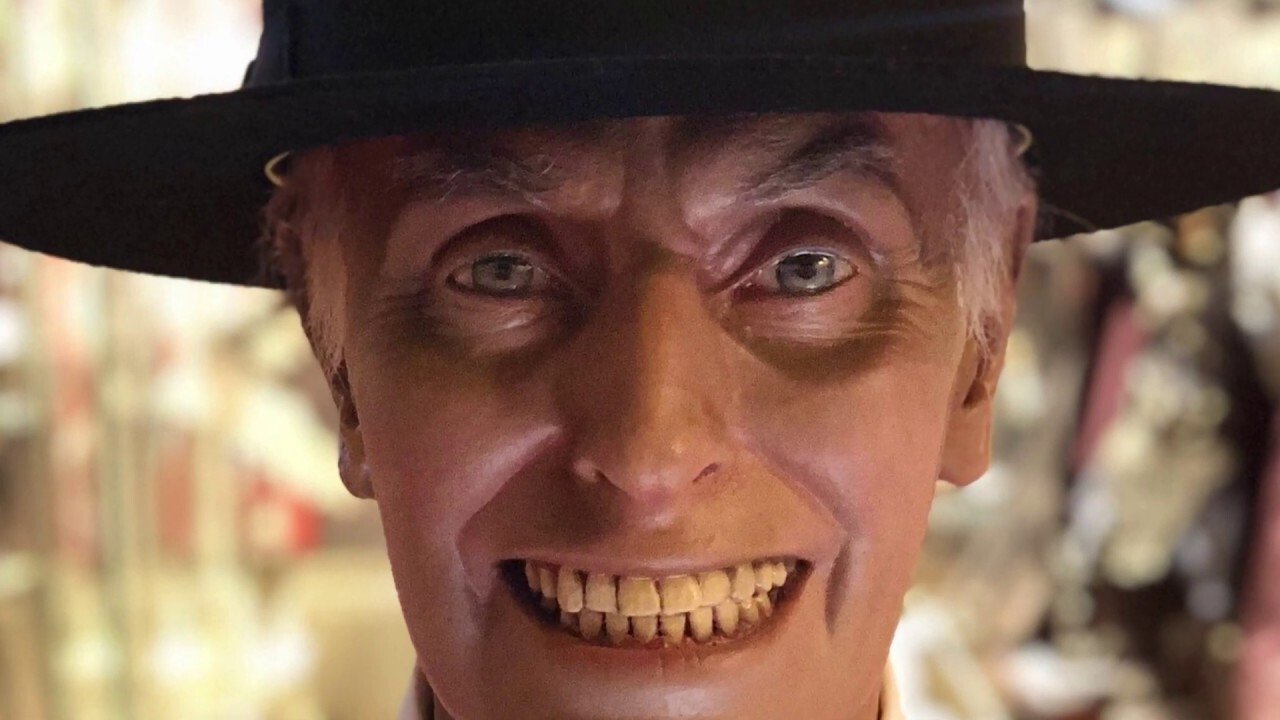
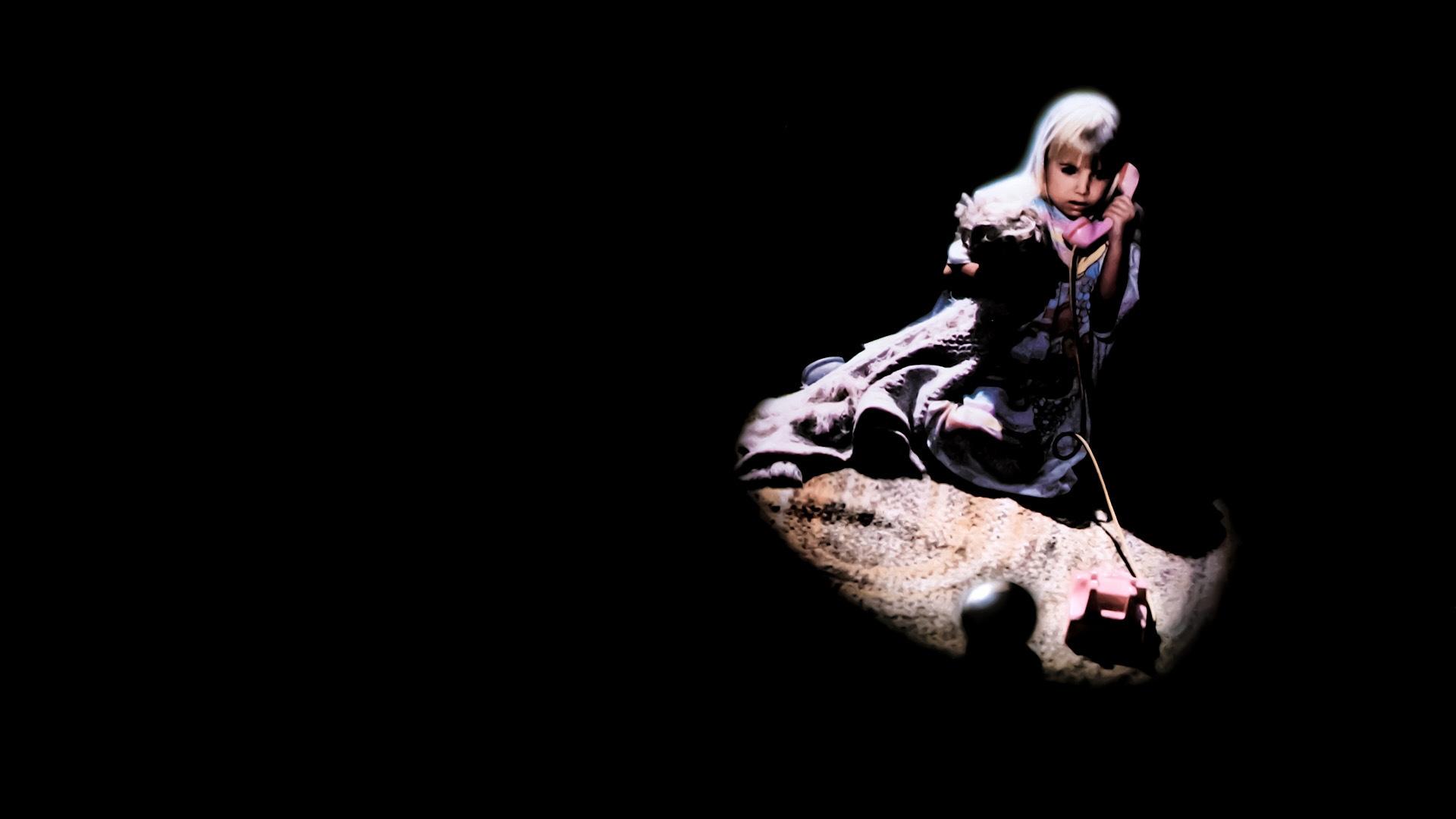
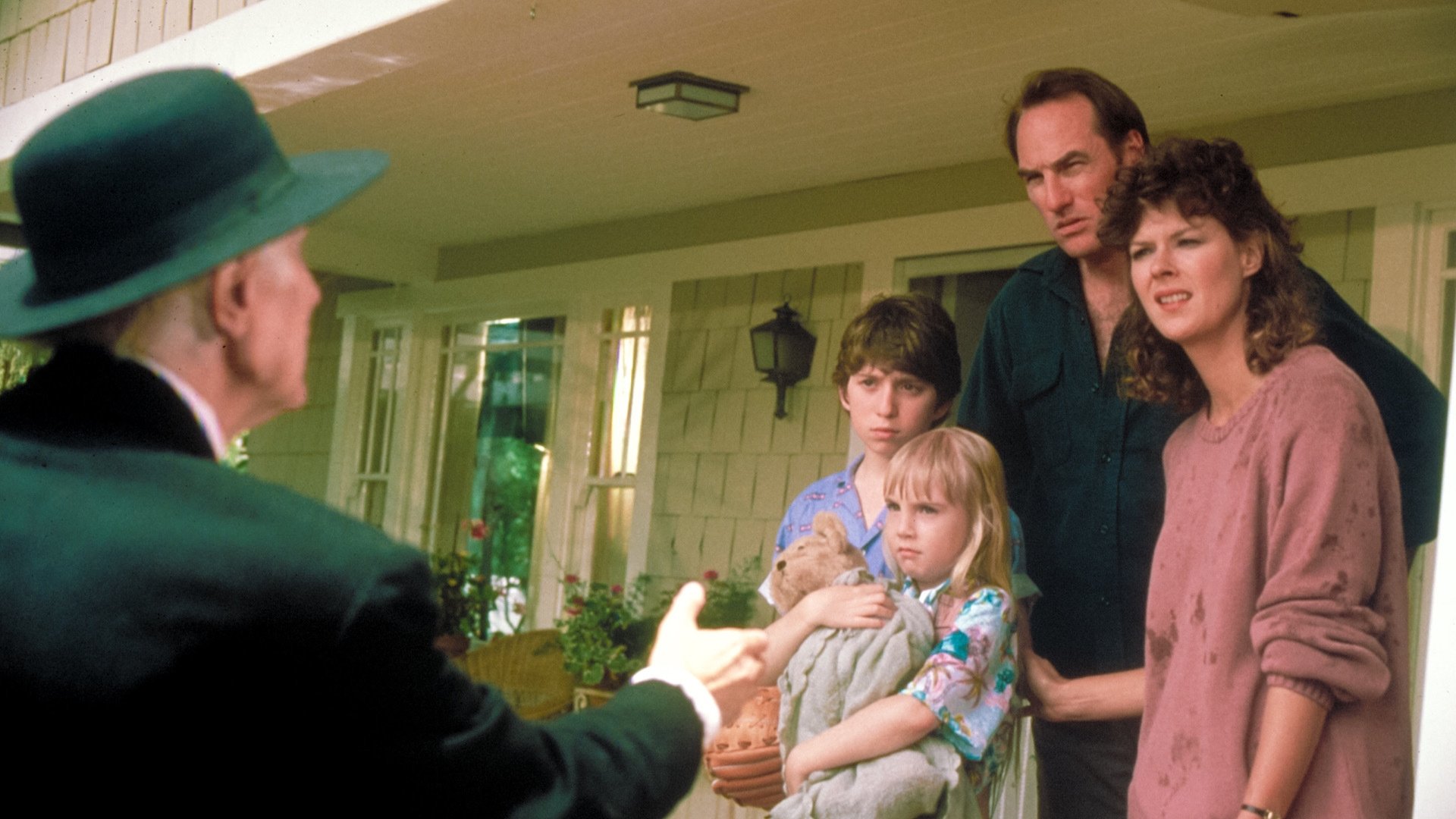
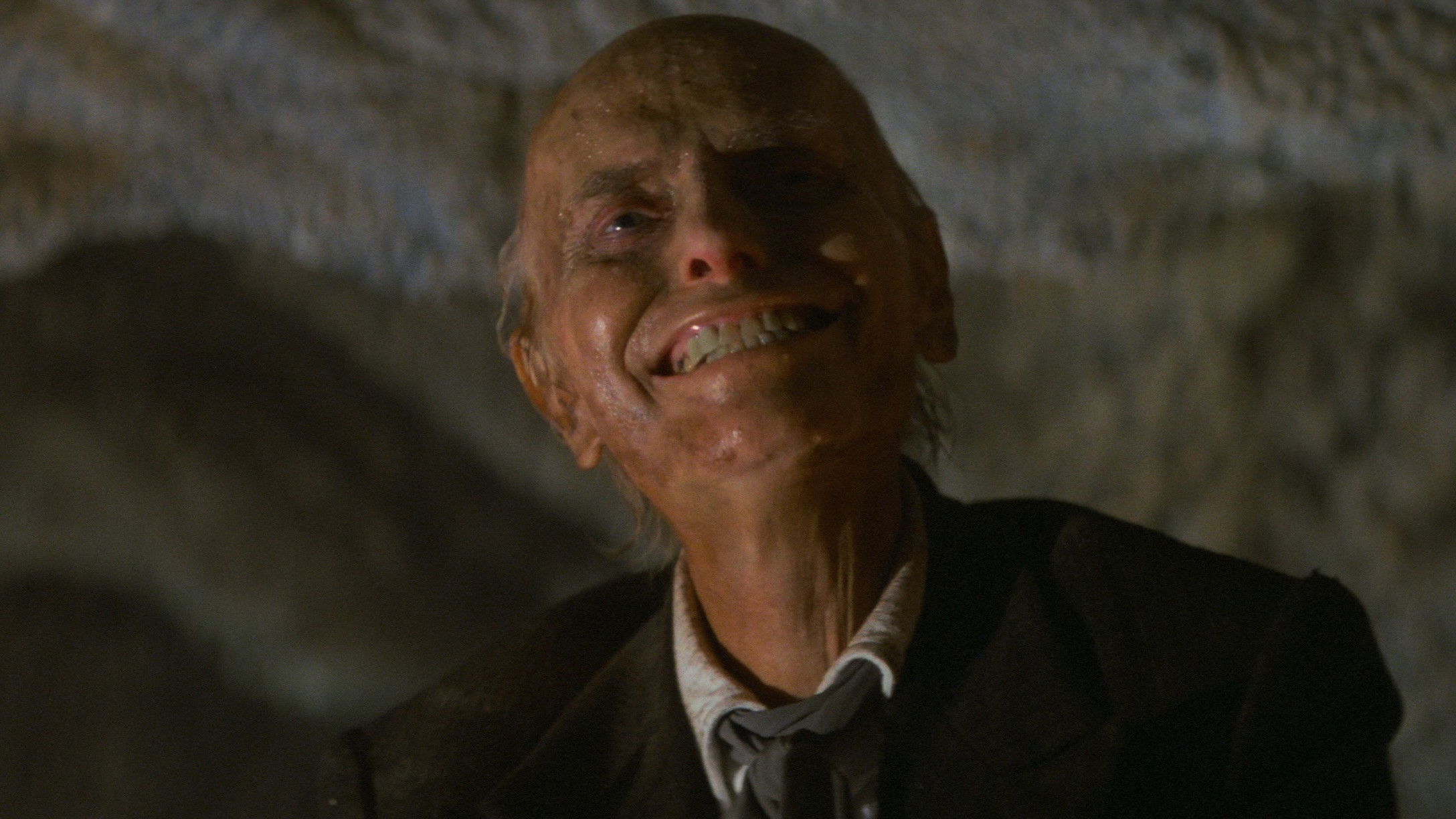
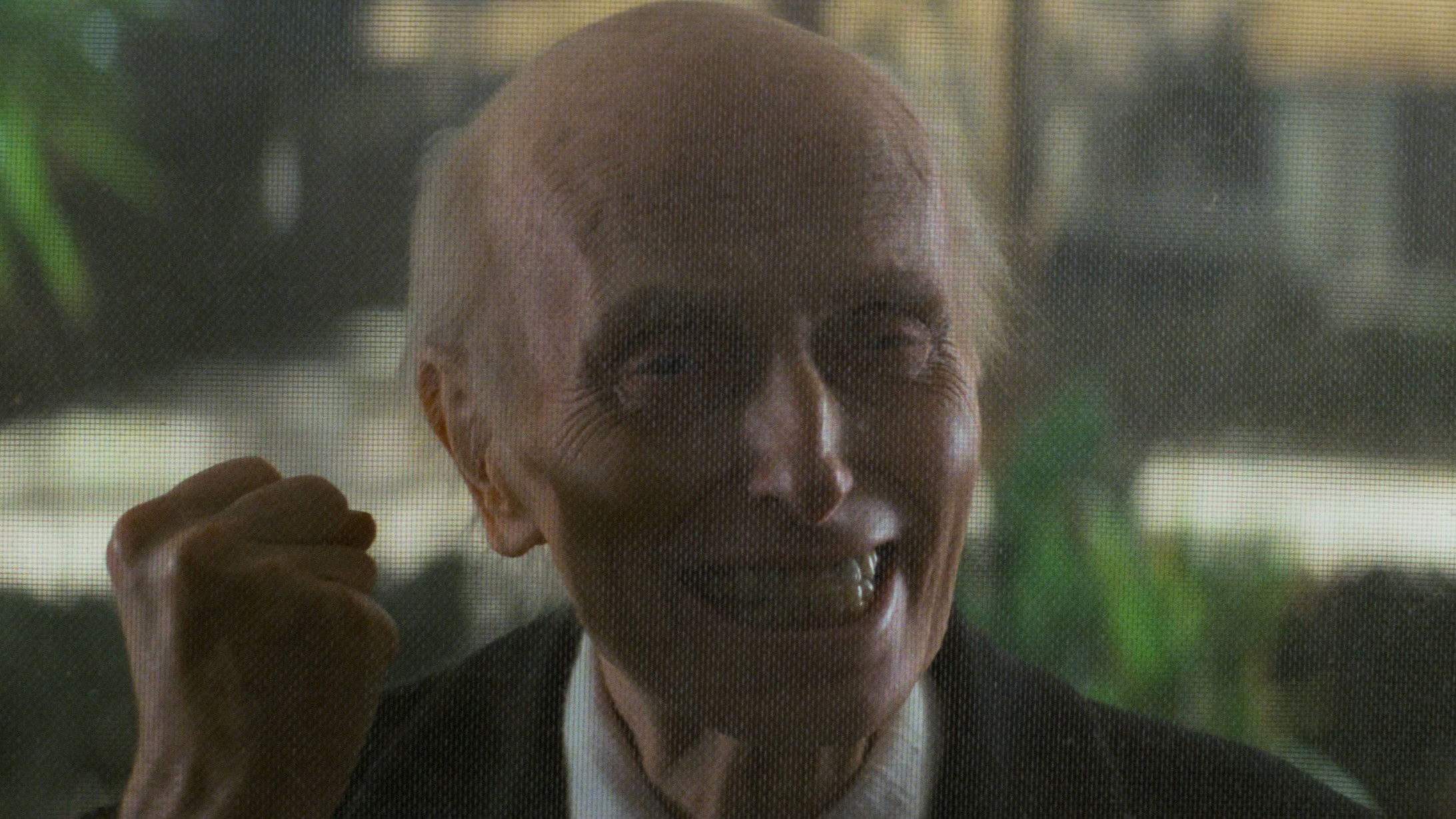
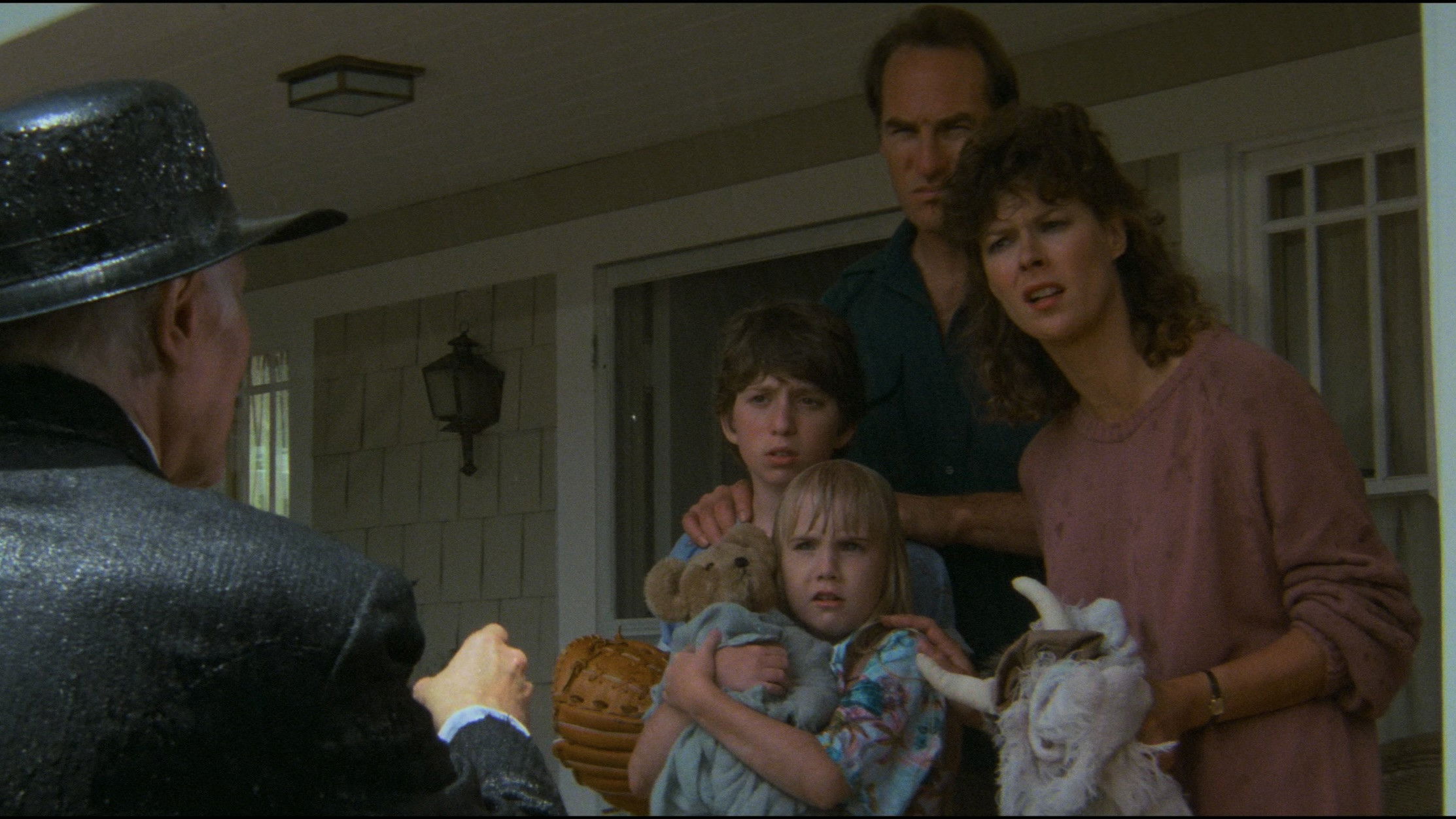
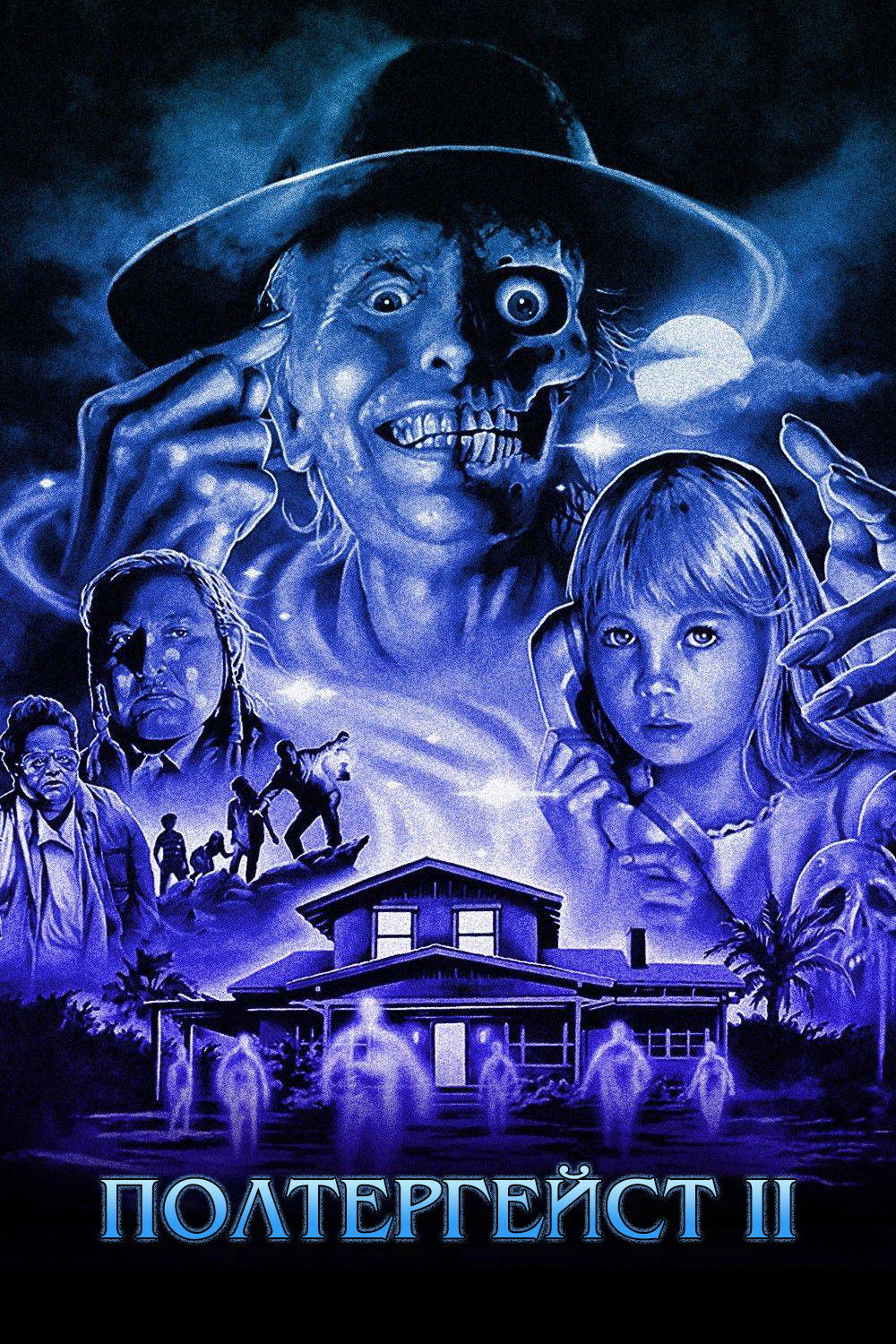
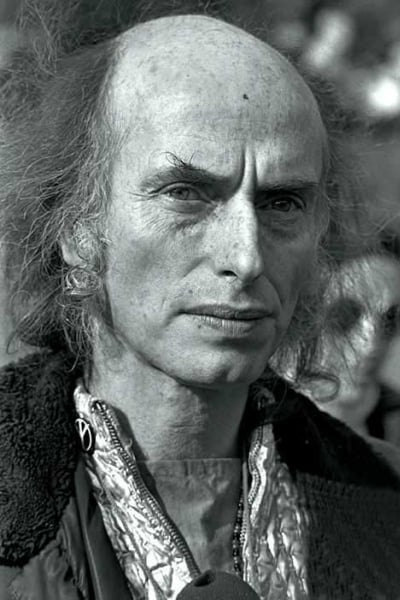
The arrival of Reverend Kane gives the returning spirits an unsettling social identity. His black clothing, fixed smile and measured speech turn a visit to the front door into an encounter that the family cannot easily dismiss. Julian Beck's performance makes the antagonist threatening before the film asks special effects to disclose his supernatural nature. Kane is connected to a religious group that died underground, and the screenplay treats its leader's refusal to accept death as a continuing threat to Carol Anne. That explanation is a major change in emphasis from the ambiguous forces that emerged through television screens and household space in the 1982 story.
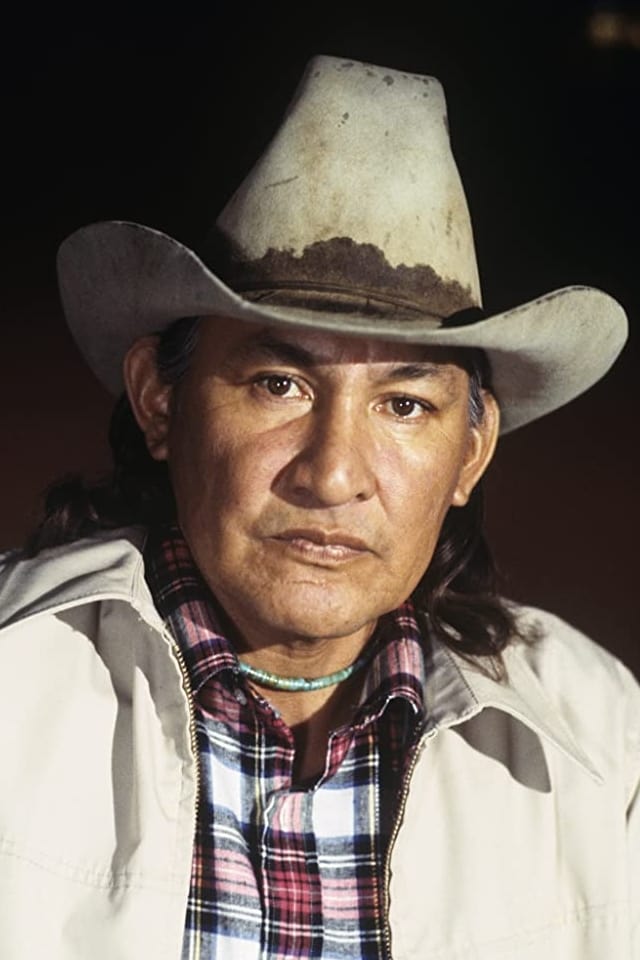
The sequel adds Taylor, portrayed by Will Sampson, as a spiritual adviser who identifies a connection between the danger and the family's past. His role brings Indigenous-coded ritual practices into a fictional account of ghosts, possession and survival. The film offers those practices as dramatic devices, without providing reliable evidence that its supernatural procedures accurately represent any specific living tradition. Geraldine Fitzgerald's Gramma Jess, meanwhile, supplies a familial context for Carol Anne's abilities. The premise turns supernatural vulnerability into an inheritance while positioning affection between relatives as a defense against Kane. This emphasis helps account for the unusually close relation between domestic melodrama and demonic imagery throughout the picture.
Constructing the Haunted House and Desert World
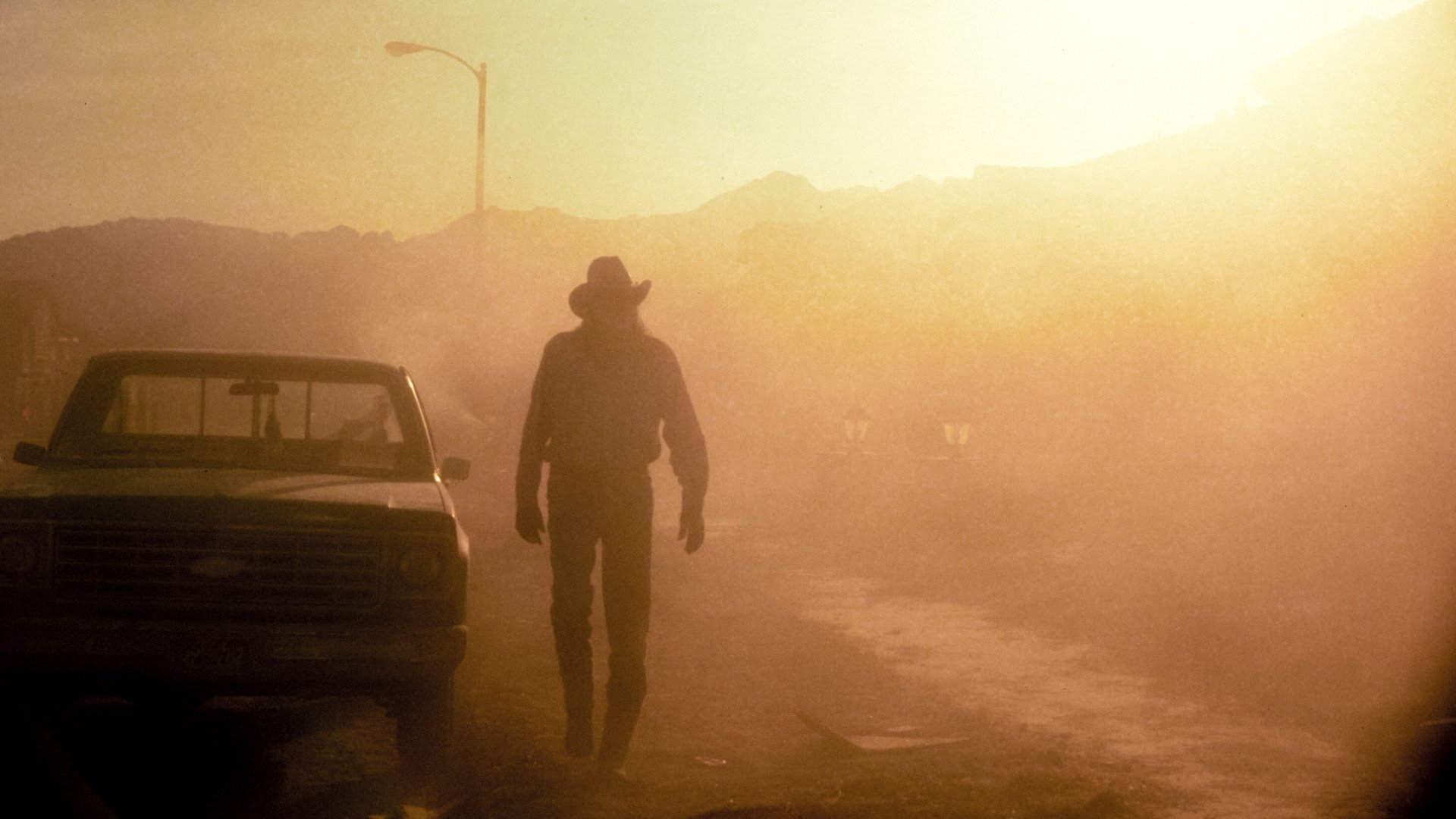
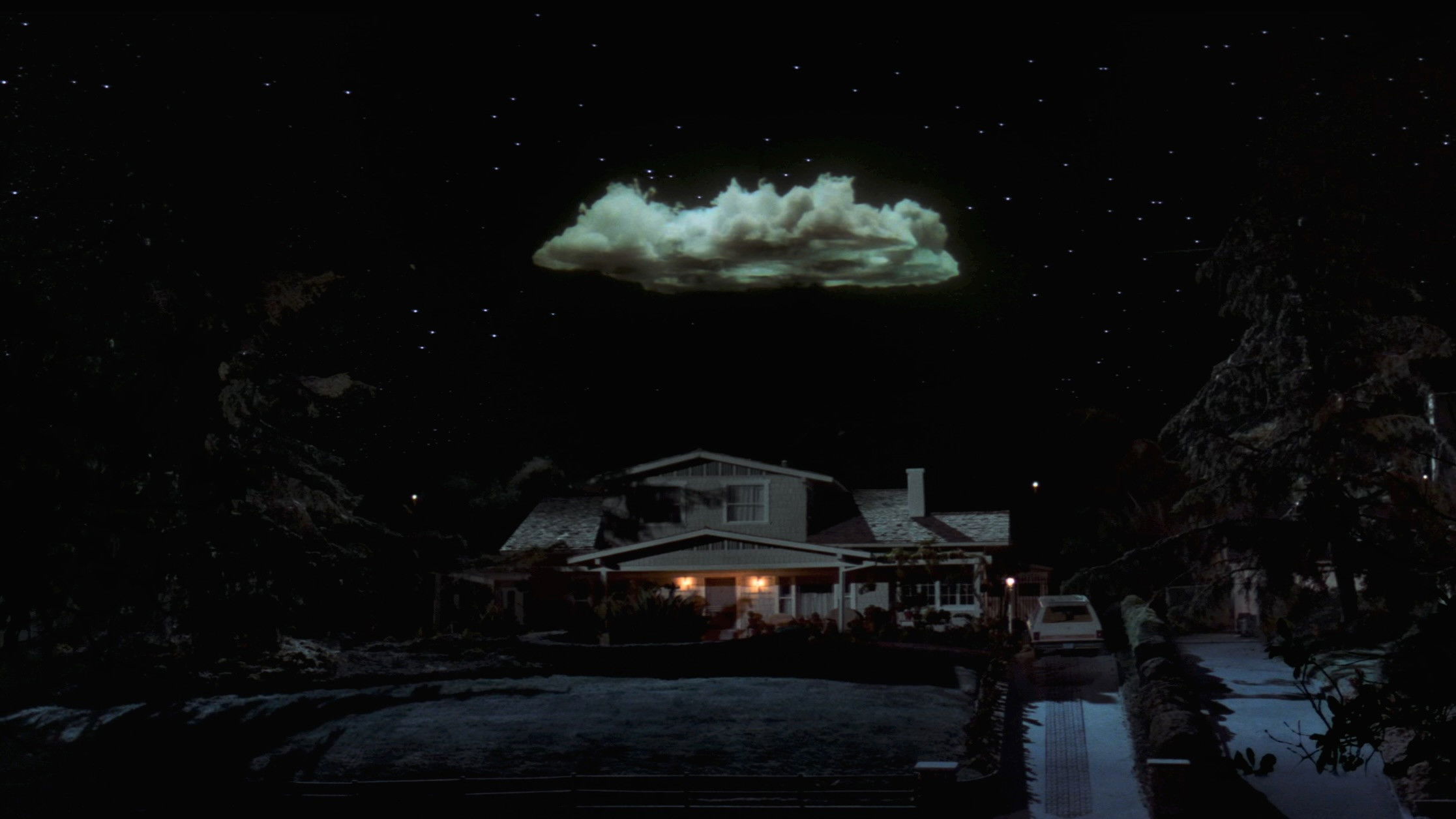
Production used an Altadena residence to represent Gramma Jess's Arizona home, but the strongest physical disturbances required a second, controllable environment. AFI records that a full-size reproduction was built at MGM's Culver City studios. A mechanical assembly beneath the upper floor allowed the structure to pitch and tremble while performers remained inside. The decision gave the crew repeatable movement and a practical surface against which supernatural attacks could be photographed. Exterior locations in Southern California supplied the ordinary neighborhood surrounding the threat, while a separate Arizona shoot provided desert imagery for Taylor. The film's geography was therefore assembled from distinctly different production settings.
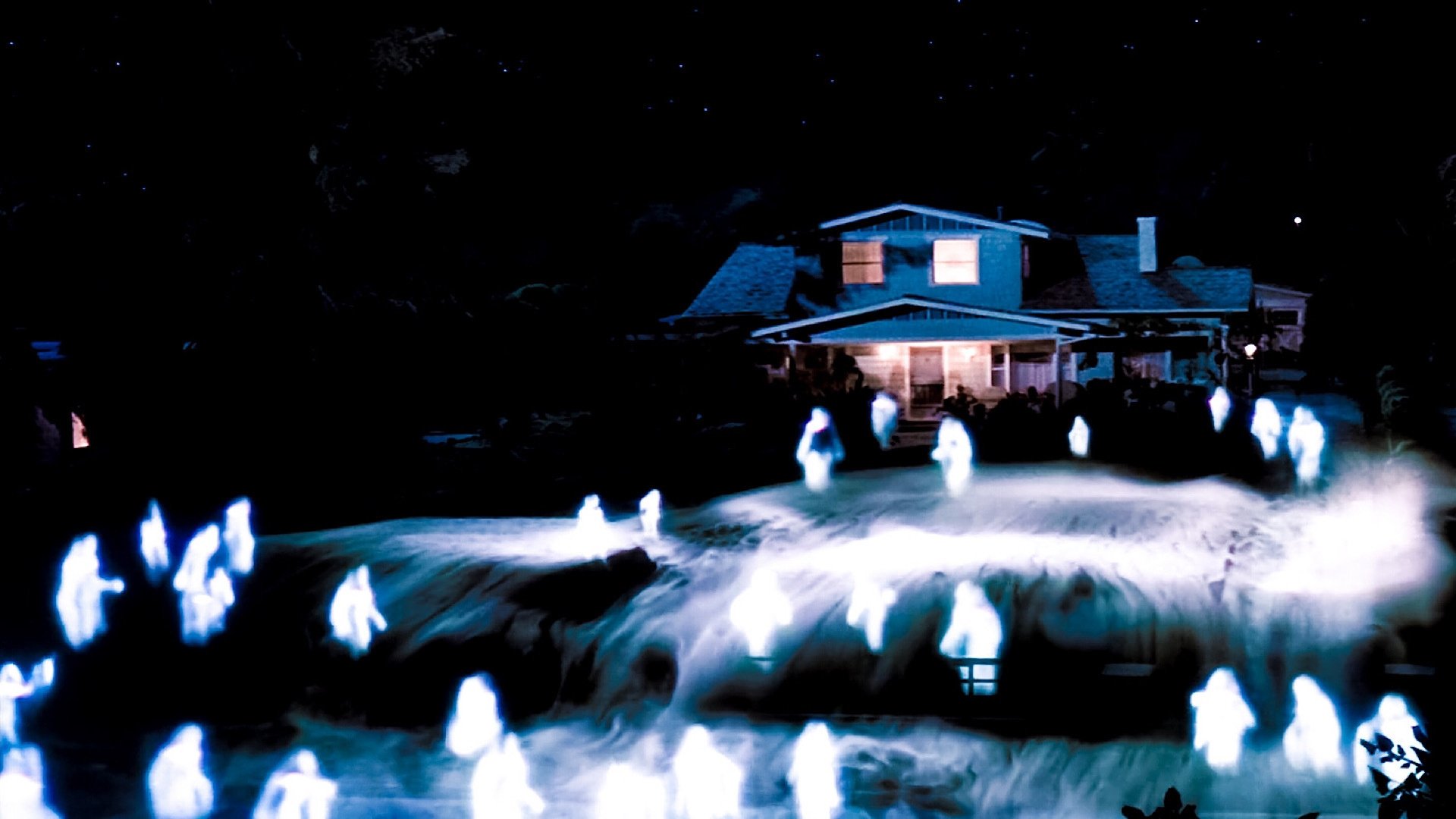
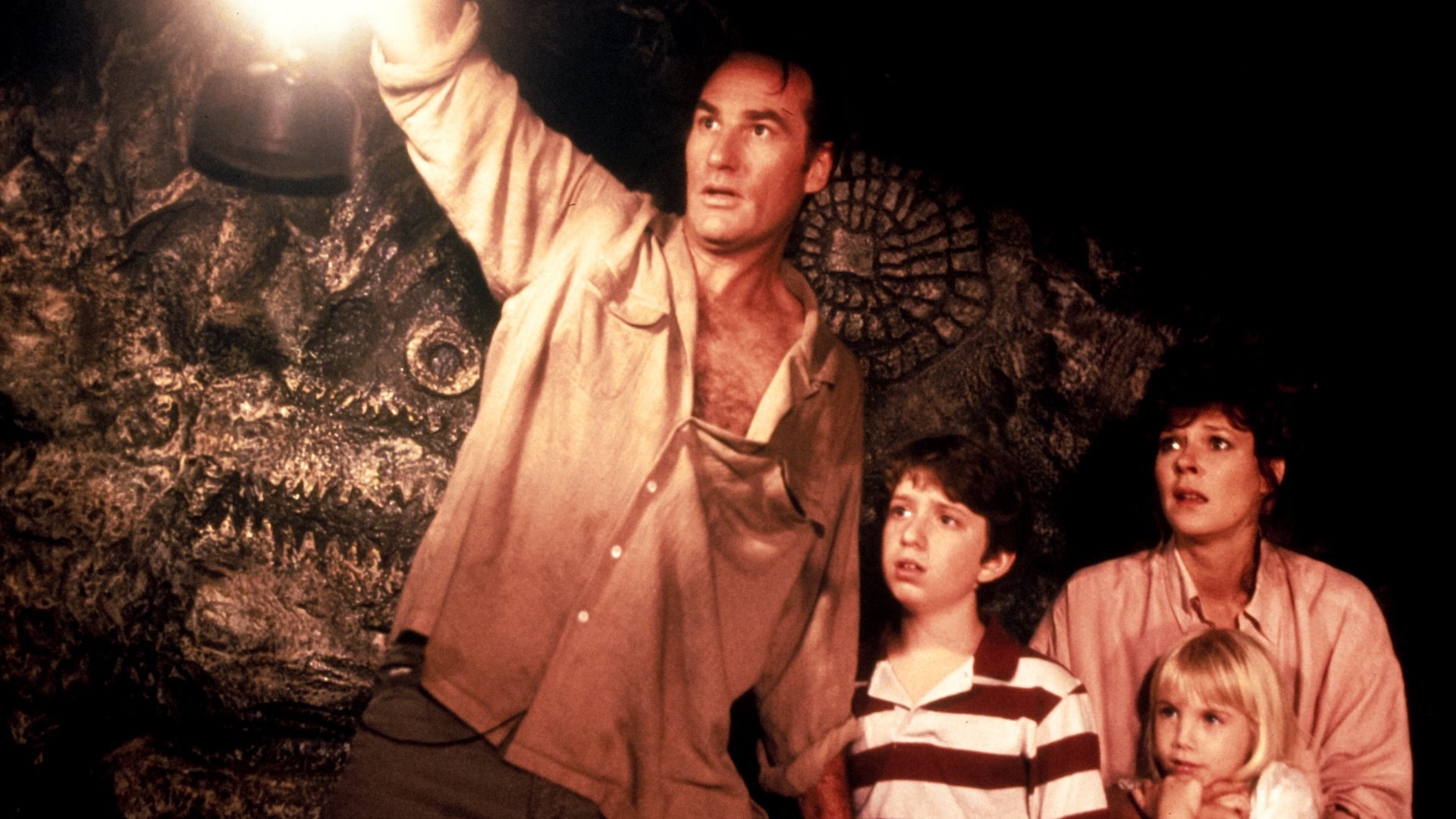
Another studio stage housed an extensive desert environment and a serpentine underground passage associated with Kane's followers. Those constructions permitted the characters to descend into a seemingly ancient place while remaining inside a photographed, controllable set. For distant night views, model makers also fabricated a small-scale group of homes and a mountain backdrop. AFI cites a July 1986 American Cinematographer account that seven people spent roughly seven weeks on this miniature. These choices show the range of means available before digital environments became routine: an actual location could establish an ordinary home, a moving replica could supply violent action, and miniature photography could depict the neighborhood at a scale impractical to illuminate outdoors.
Andrew Laszlo: Photography and Constructed Darkness
In an interview published by American Cinematographer in July 1986, Andrew Laszlo described a conscious move toward more subdued, troubling images than those of the first Poltergeist. He and Brian Gibson sought tension through lighting that might change within a continuous action. During Kane's early appearance at a shopping center, the figure emerges from a dark corridor against a much brighter background, becoming legible only as he approaches. This was a photographic choice intended to delay recognition rather than an effect added after production. Laszlo's account also makes clear that his description of the picture as a family story was a creative ambition, separate from how contemporary critics later assessed the result.
The technical demands of visual effects complicated that ambition. Laszlo said the dramatic photography was generally made in anamorphic 35mm, while shots requiring composites could call for 65mm elements and substantially higher light levels. In the garage attack, he obtained irregular blue-white flashes with arc-welding equipment, using the unpredictable bursts to change the actors' silhouettes. The underground passage demanded another solution: lanterns carried by performers illuminated portions of a fully enclosed cave set as they moved through it. Because the lamps traveled with the characters, areas of the passage emerged at the same pace as their exploration. Such choices made lighting an active part of the horror instead of a neutral means of recording scenery.
H. R. Giger, Boss Film and the Creature Effects
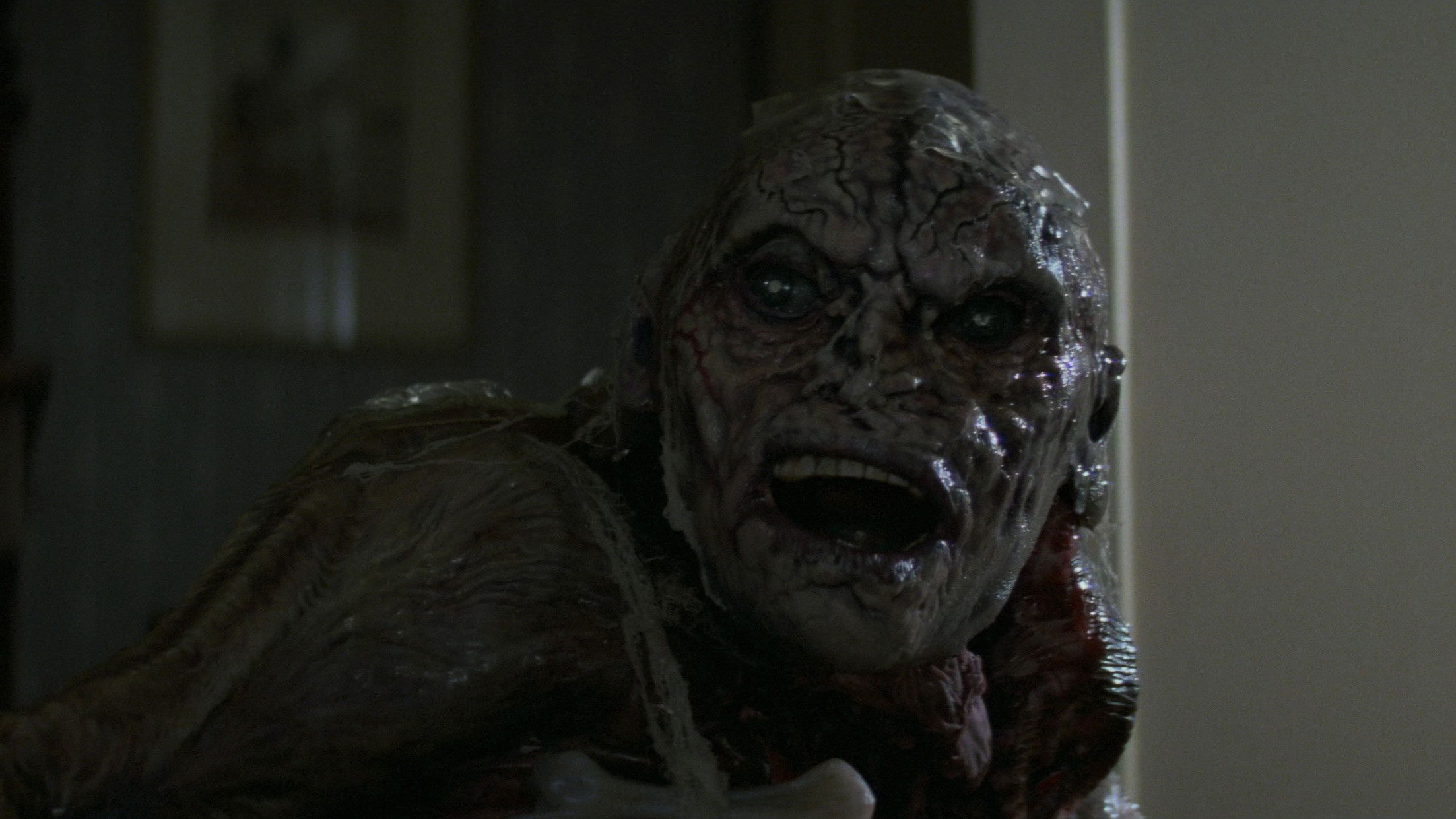
Giger supplied conceptual artwork for stages of the Great Beast, but his drawings were only the beginning of a collaborative effects process. AFI identifies Steve Johnson as the artist responsible for translating the designs into three-dimensional creatures at Boss Film. The work employed prosthetic construction, pneumatically operated elements and puppetry, including a half-scale rod puppet. John Bruno's effects storyboards were revised as Gibson developed new requirements, a process AFI says continued over several months. The finished imagery therefore belongs to a production system involving concept art, fabrication, mechanical operation and optical assembly. Assigning every detail of the screen creatures to a single designer would obscure that documented division of labor.
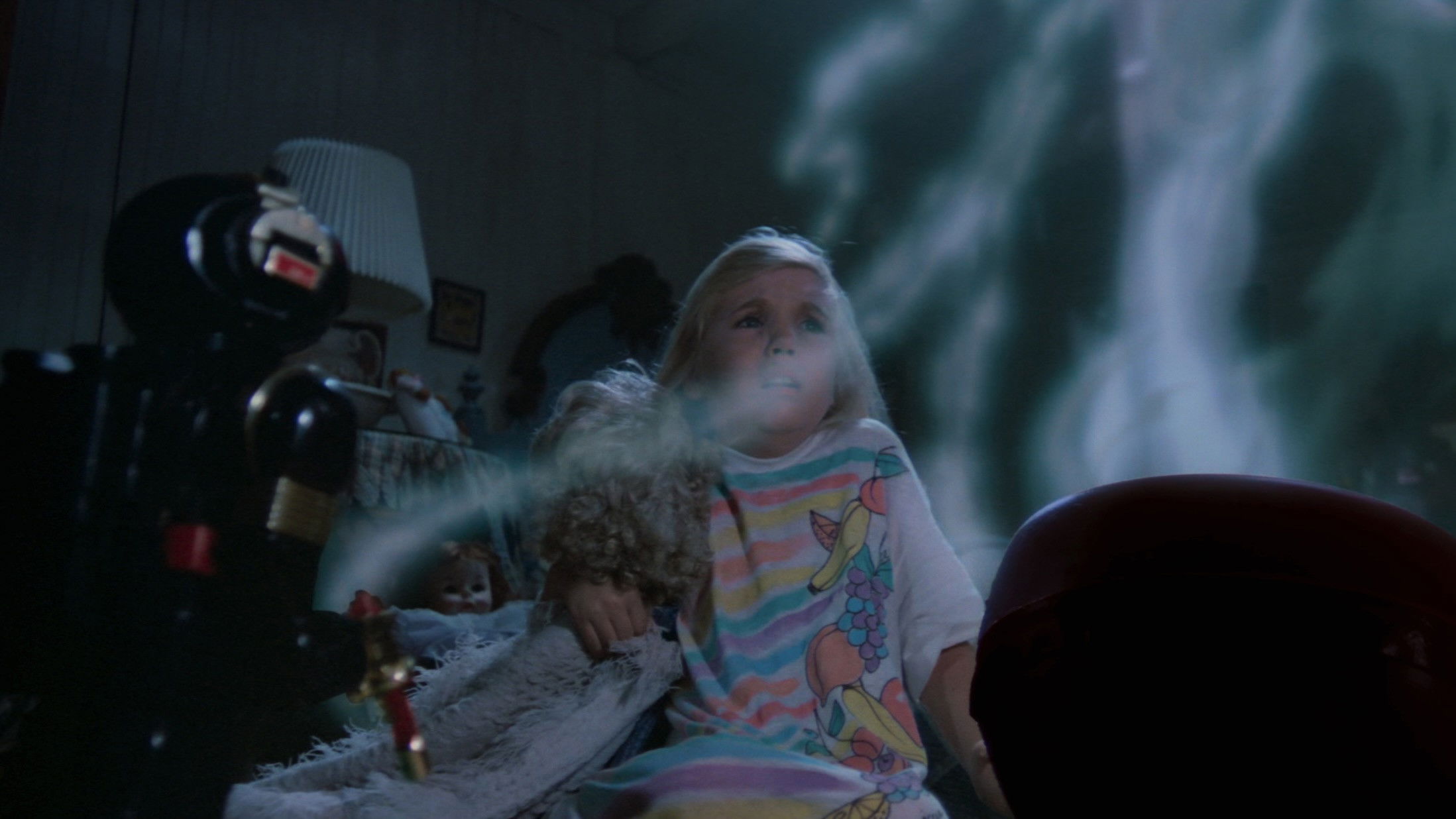
The most invasive transformation follows Steve Freeling's consumption of a worm from a tequila bottle. The incident eventually produces a living monstrosity, turning an everyday drinking gesture into a scene of bodily violation. Laszlo explained how his lighting moved from an ordinary room arrangement toward fractured shadows as Steve's condition changed, then used a fallen bedside lamp to illuminate the creature's emergence. A separate sequence turns Robbie's dental braces into a physical restraint, extending the franchise's practice of making domestic possessions hostile. Such effects were surrounded by elaborate optical work, including supernatural smoke and apparitions. The film's 1987 Academy Award nomination for visual effects recognizes the collective achievement of Richard Edlund, John Bruno, Garry Waller and William Neil.
Music, Theatrical Release and Contemporary Criticism
Jerry Goldsmith returned to the series and provided music that contemporary reviewers heard as one of the sequel's strengths. Paul Attanasio, writing in The Washington Post in May 1986, singled out its carefully structured recurring themes and the use of orchestra and choir. His response offers period evidence of the score's effect without supplying an invented account of Goldsmith's recording sessions. The film opened in the United States on May 23, 1986, under MGM distribution with a PG-13 rating. Unlike anecdotes repeated about troubled horror productions, these release details can be checked against AFI's historical catalog and contemporary coverage.
Early reviews distinguished isolated accomplishments from the screenplay's overall effectiveness. Michael Wilmington, writing in the Los Angeles Times on opening day, found a number of vivid performances and effects but argued that the sequel lacked the original's urgency. Attanasio's Washington Post review was even more dismissive of the story's reliance on sentiment and repeated supernatural attacks, though he acknowledged striking individual effects and admired Goldsmith's music. The Academy's subsequent nomination confirms recognition of the film's technical work, not a general endorsement of its dramatic merits. In the series' development, Poltergeist II is the installment that supplies a named human adversary and a more explicit mythology; its mixed original reception documents the costs of imposing those explanations on an earlier tale of unstable domestic space.