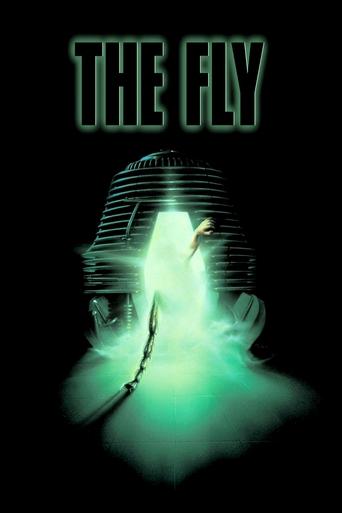
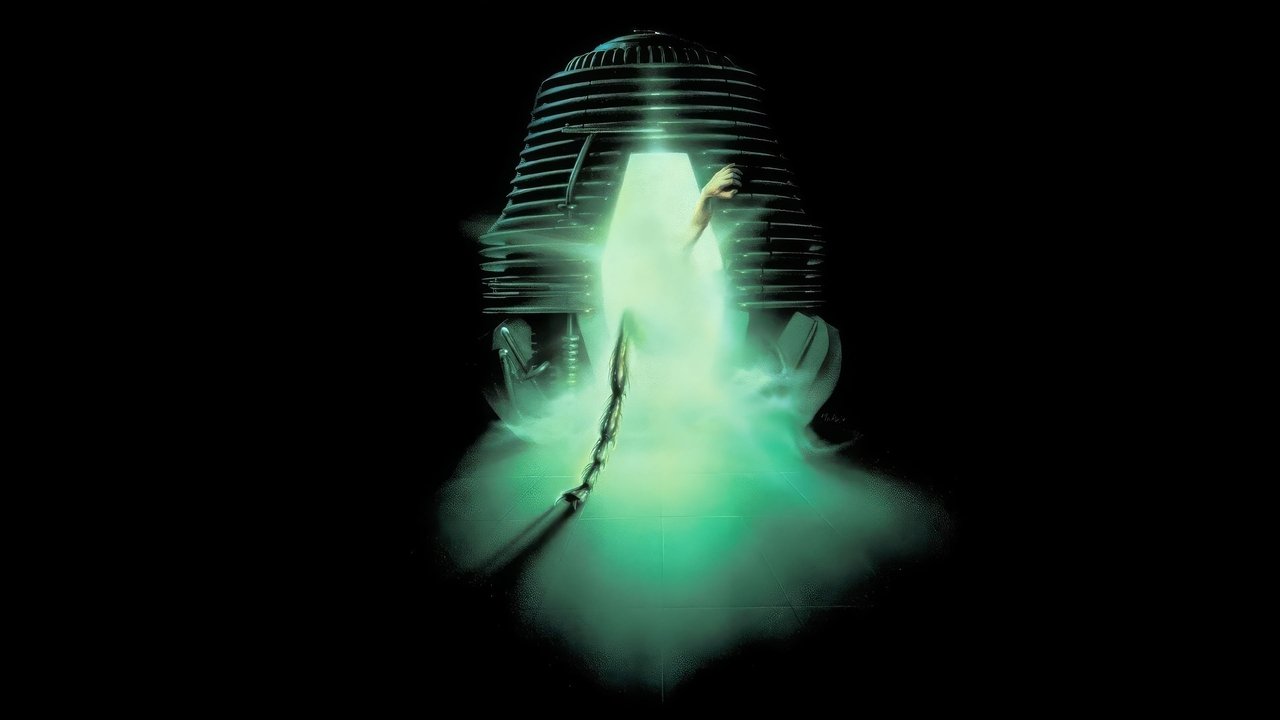
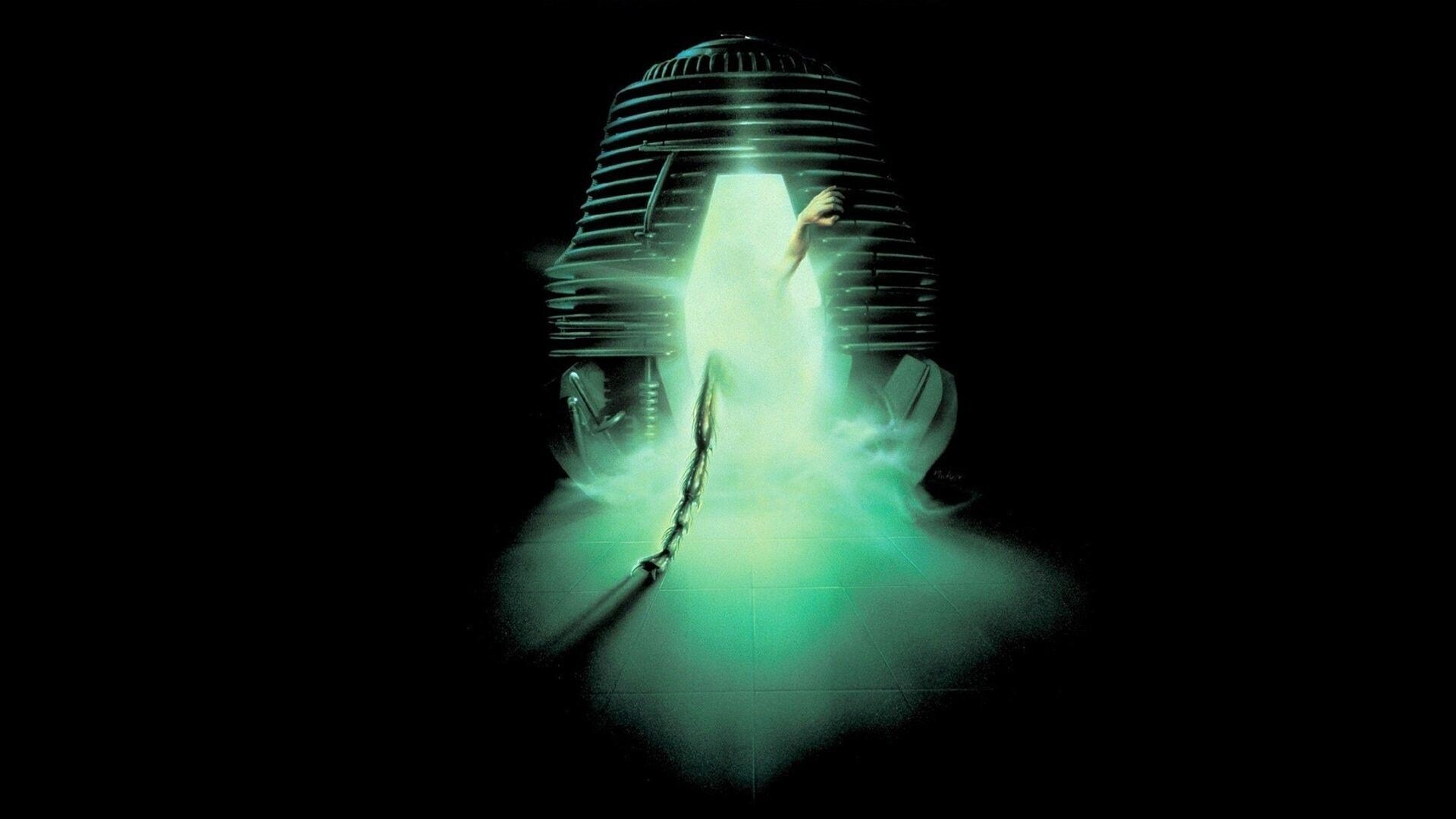
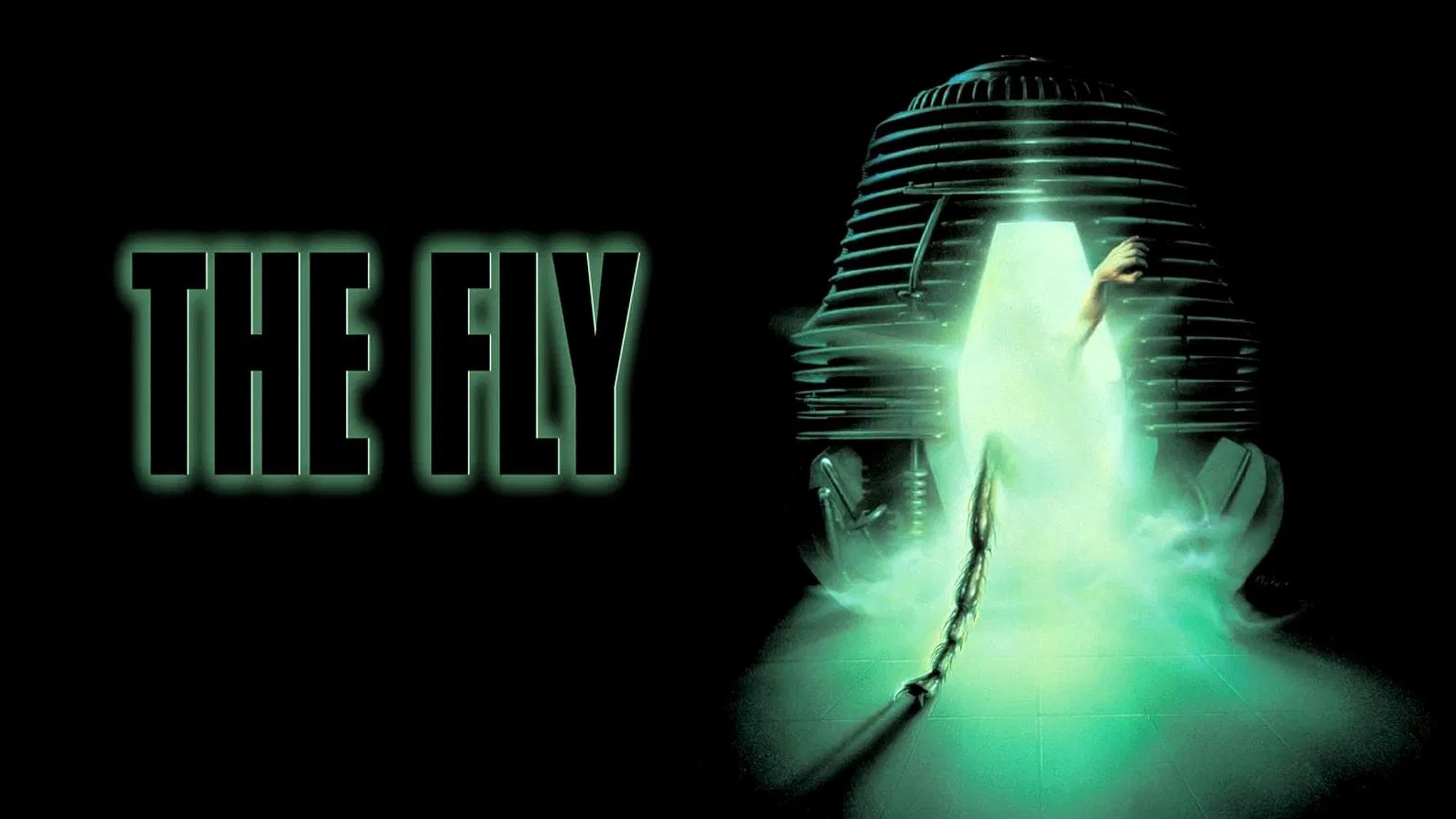
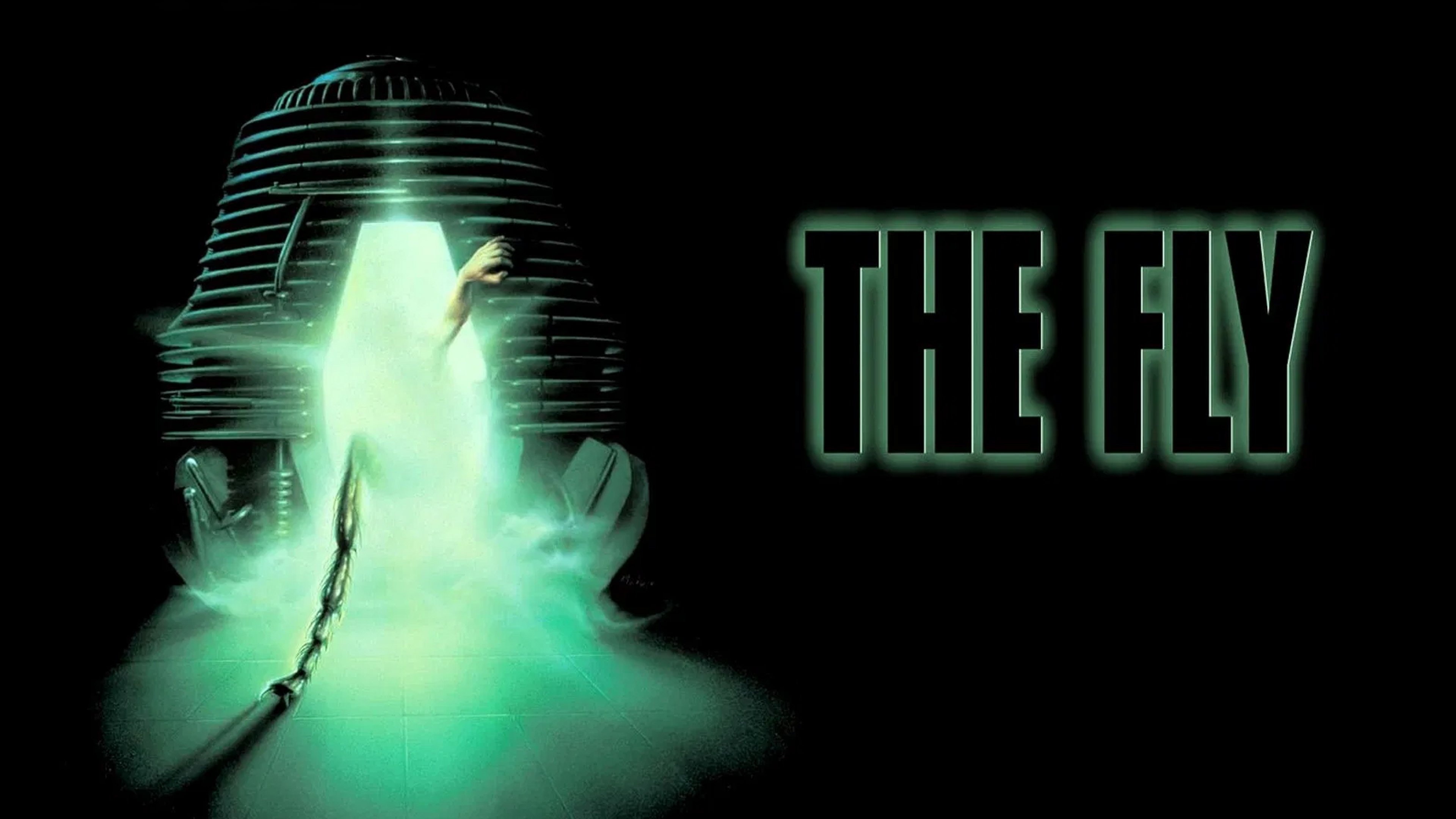
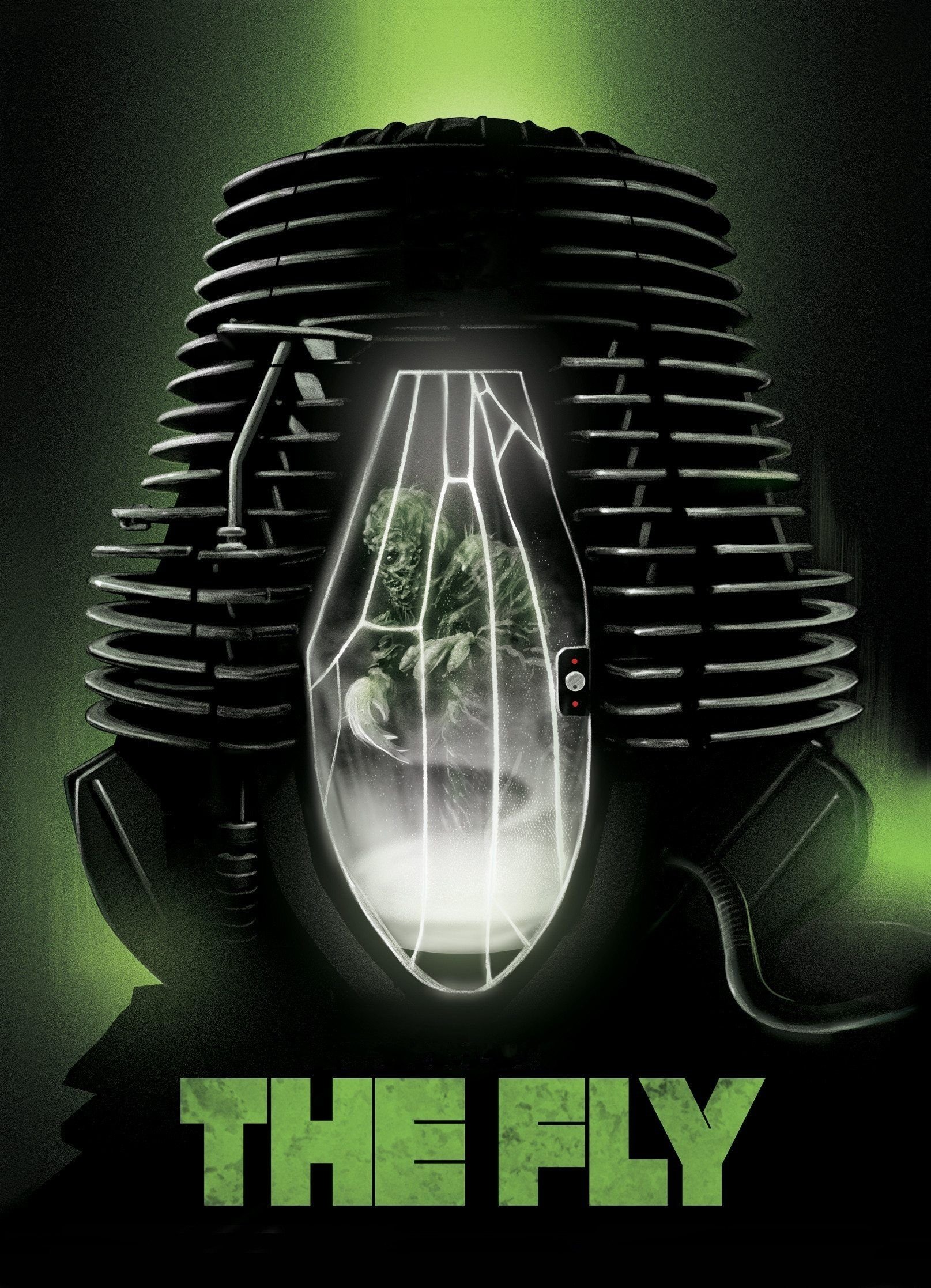
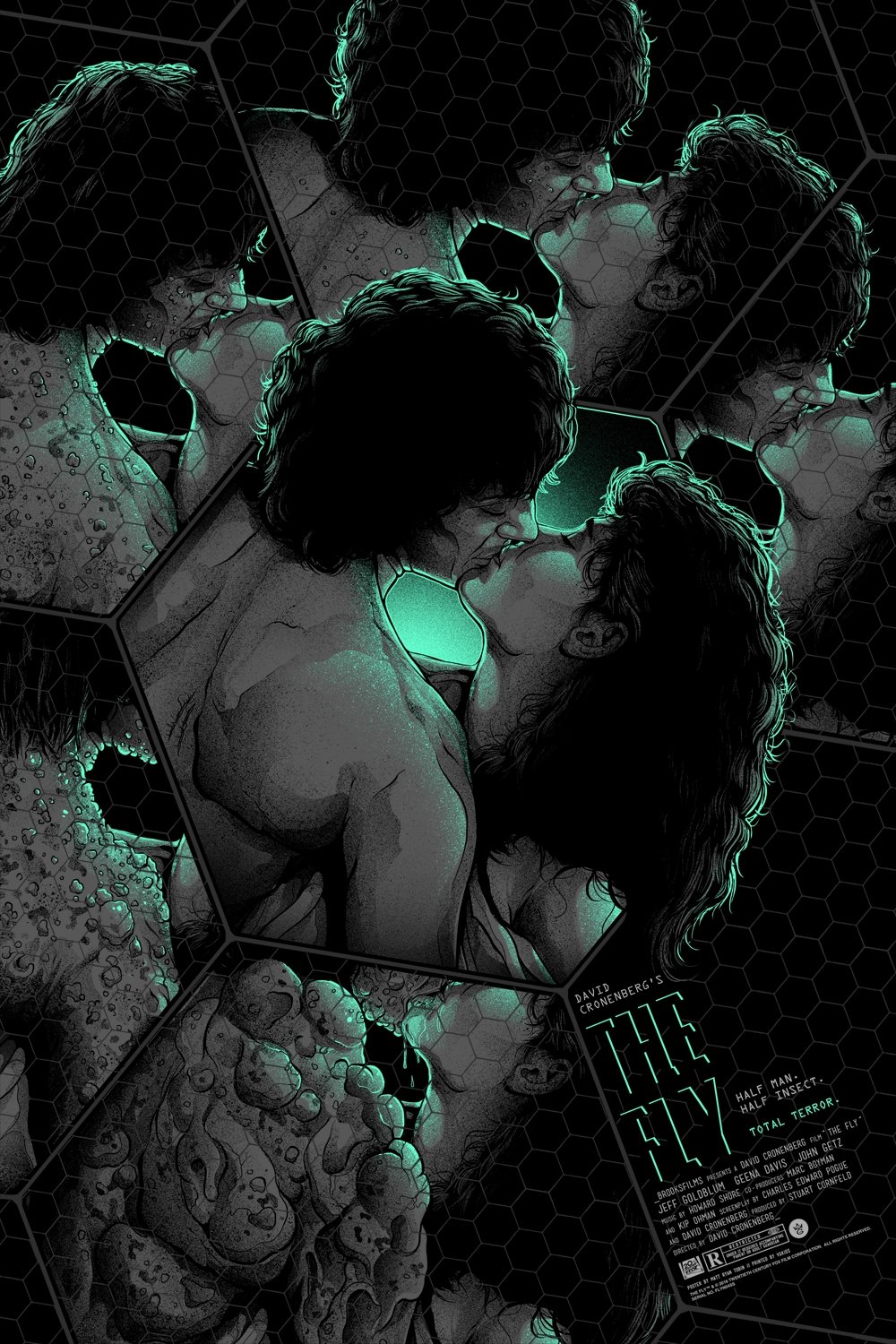
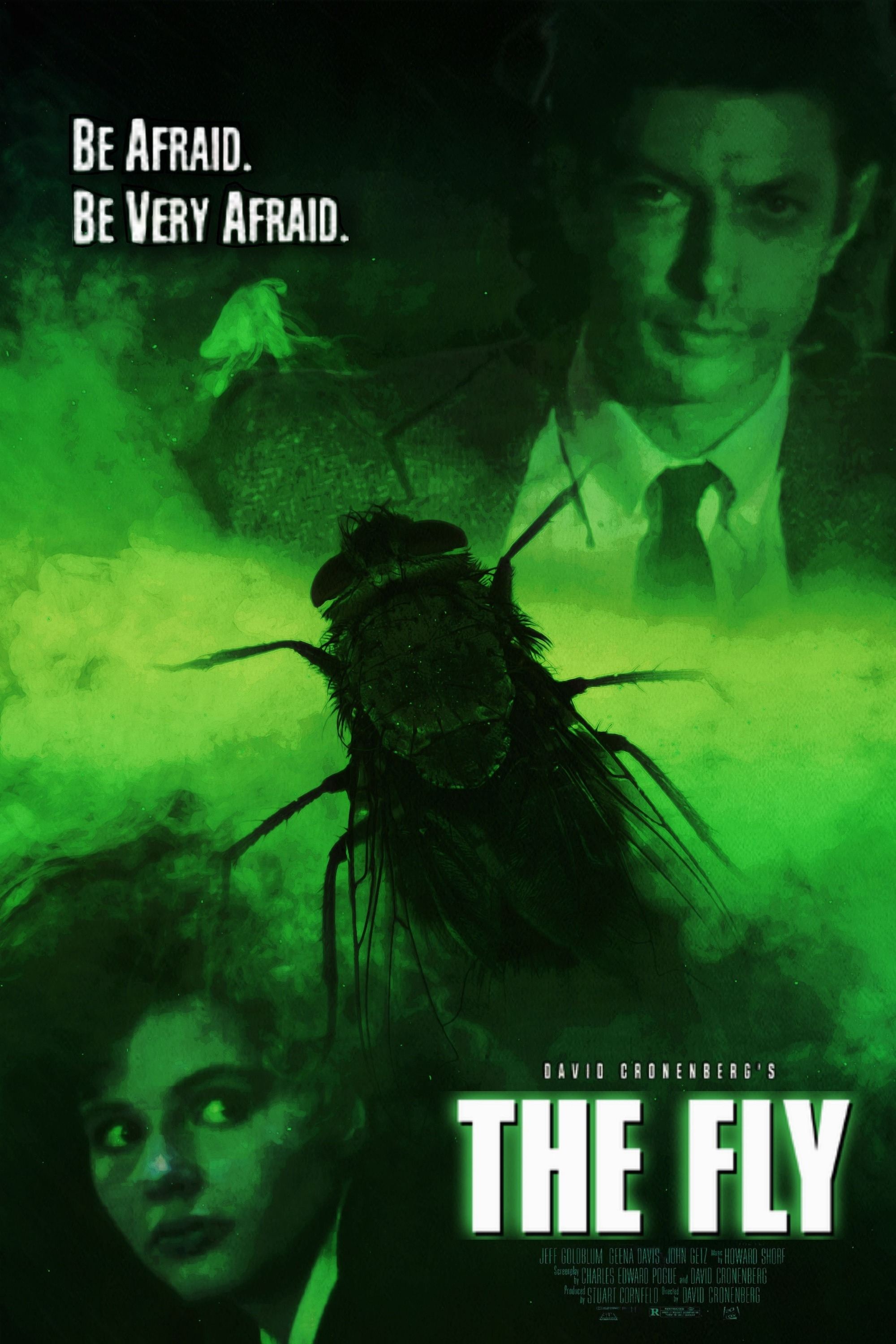
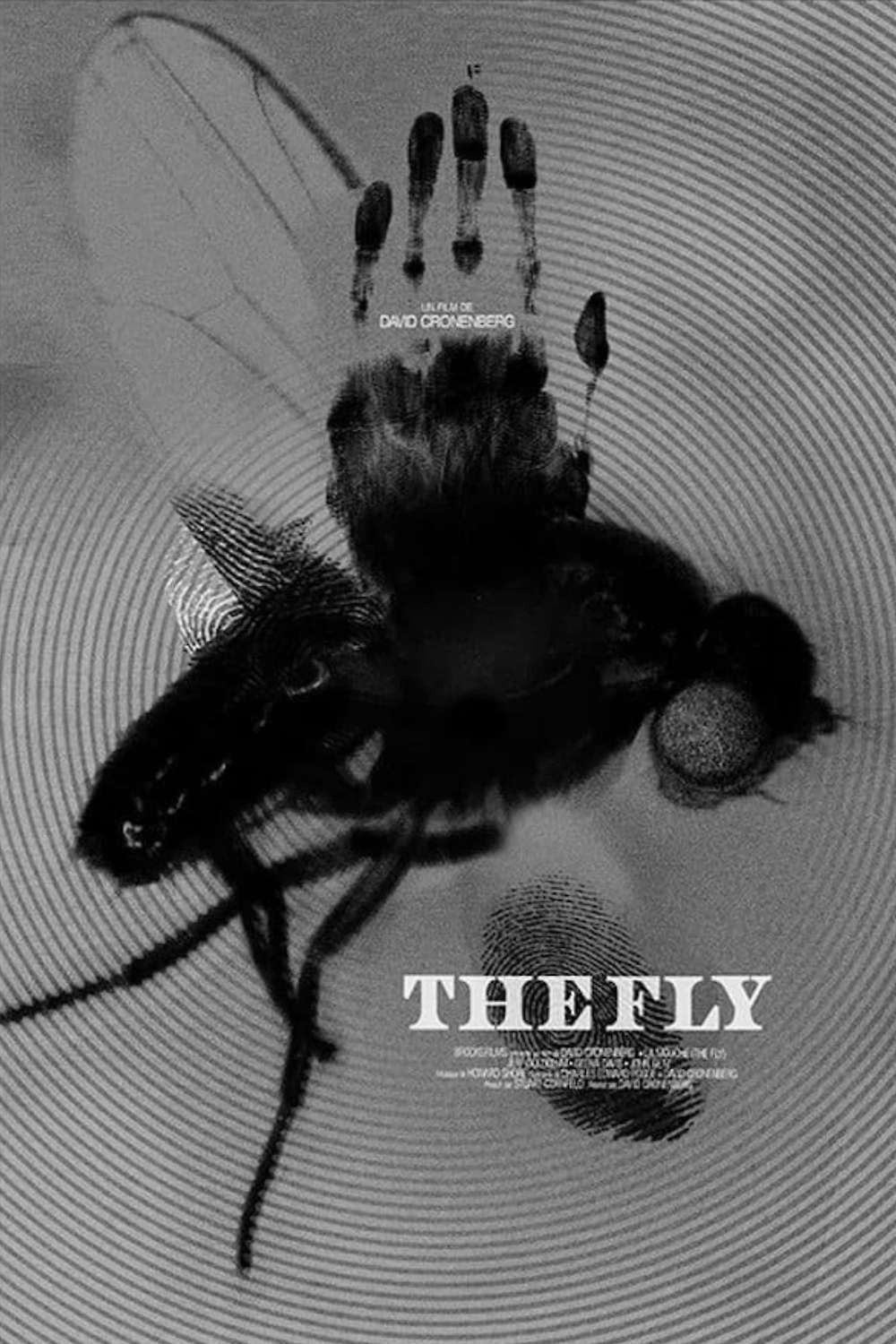
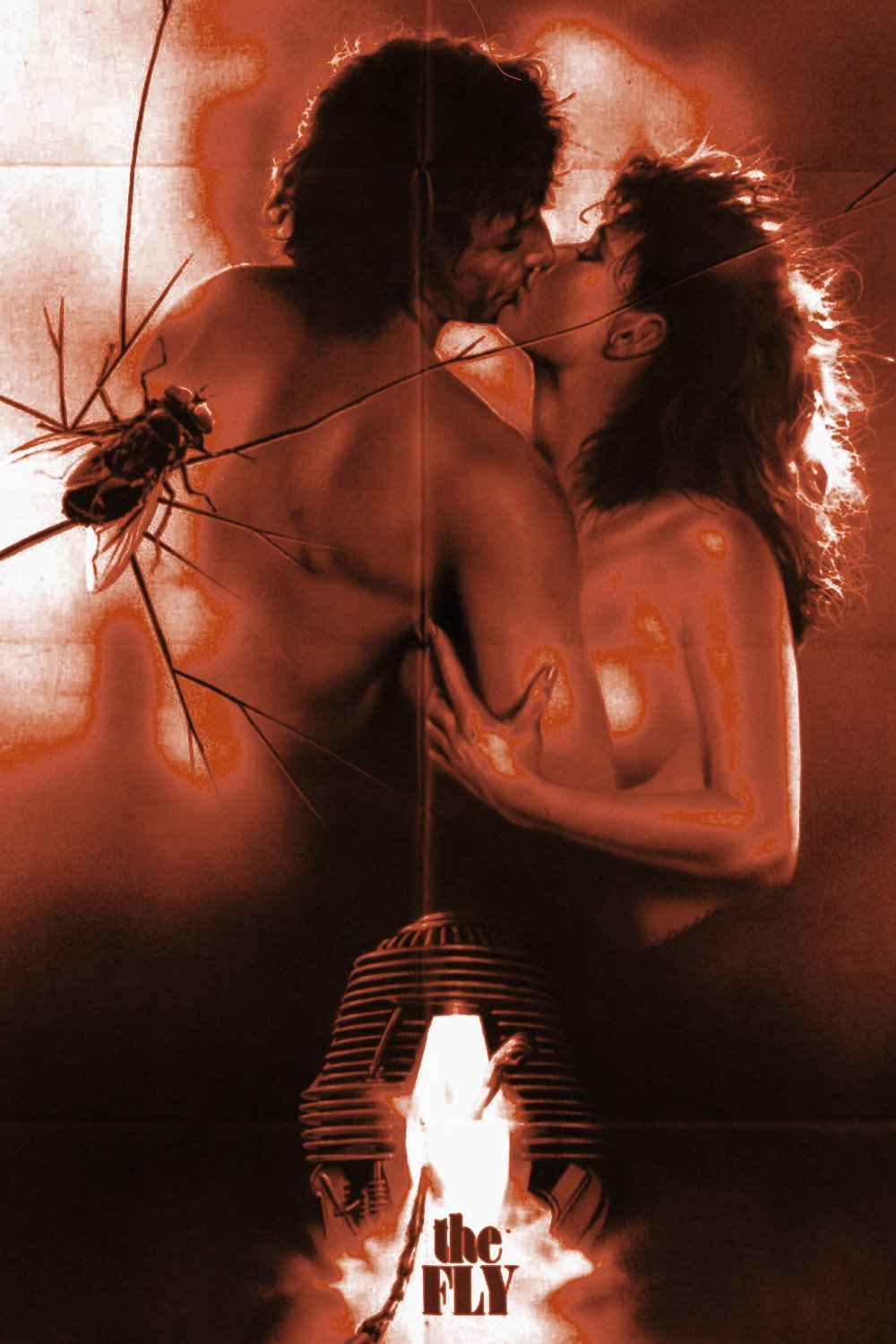
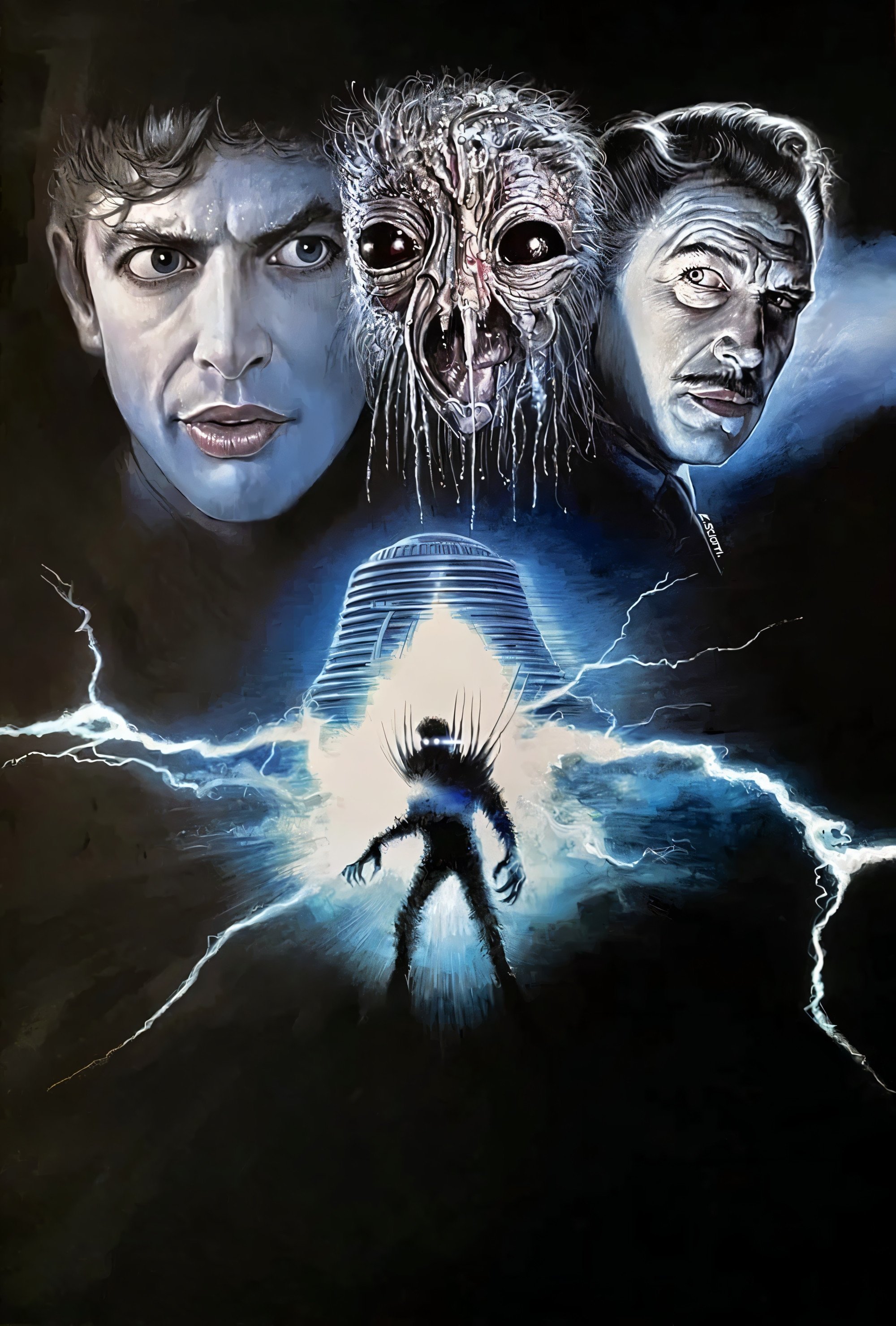
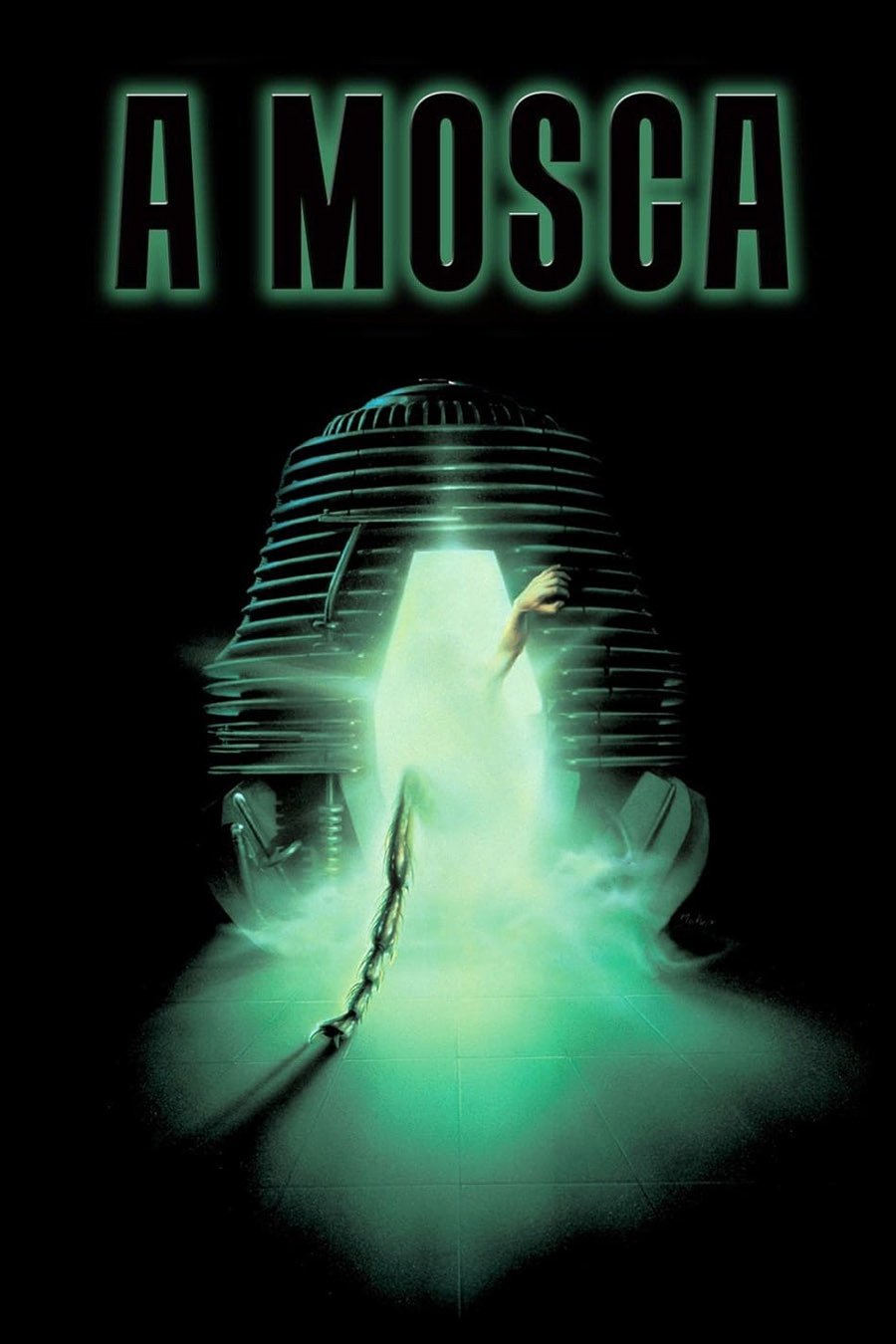
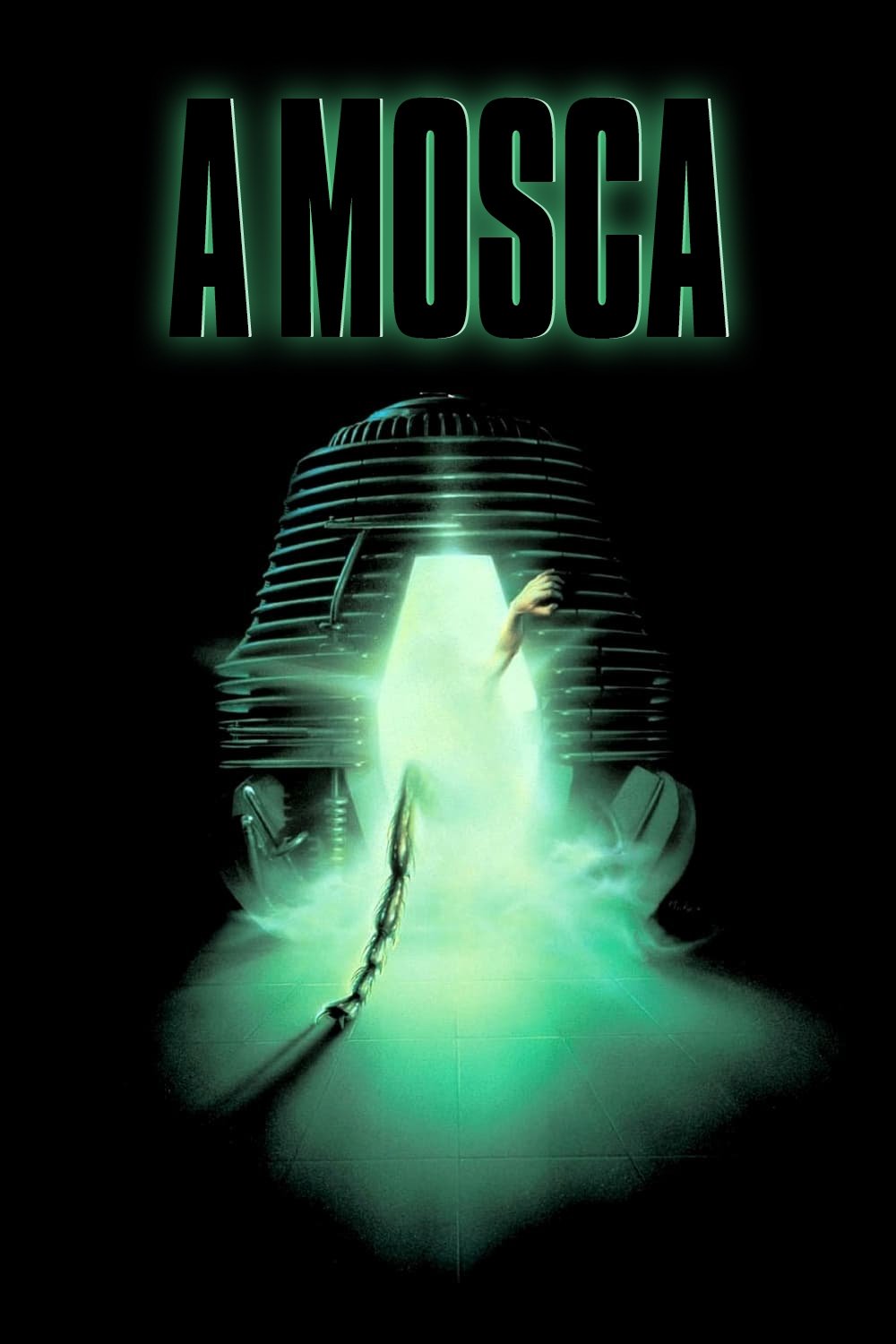
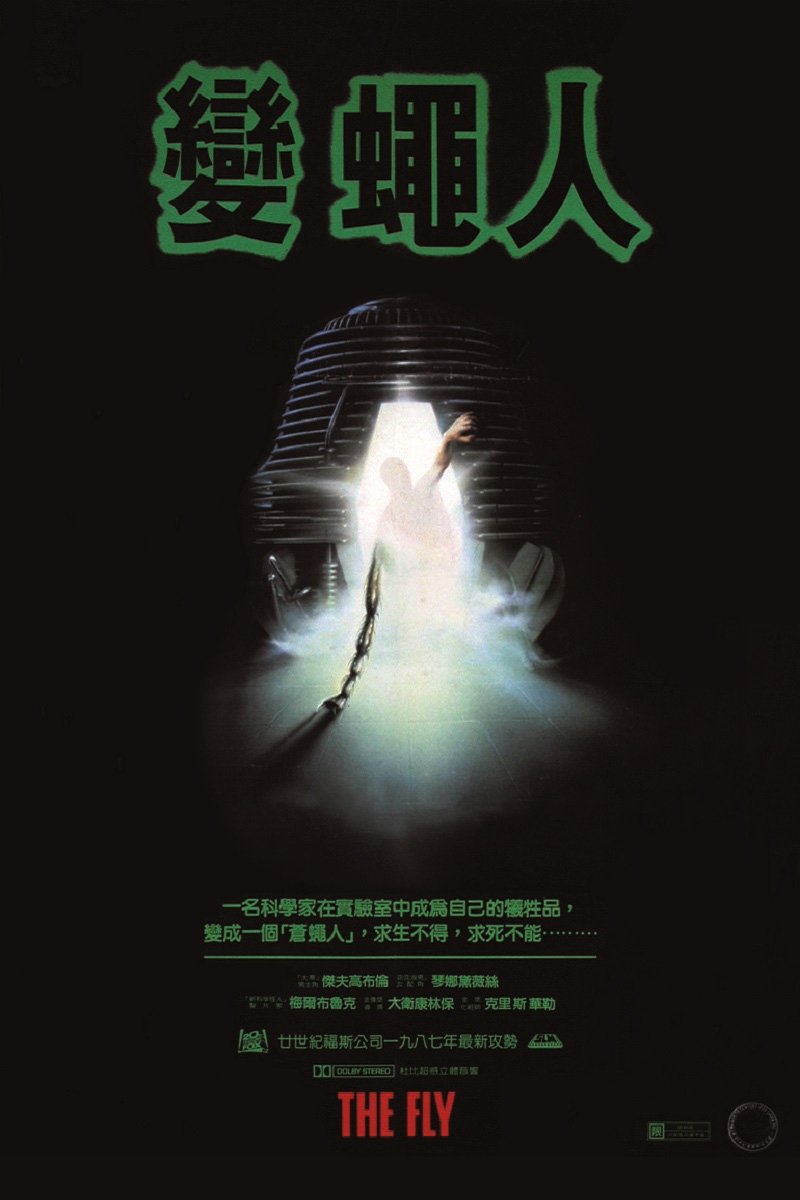
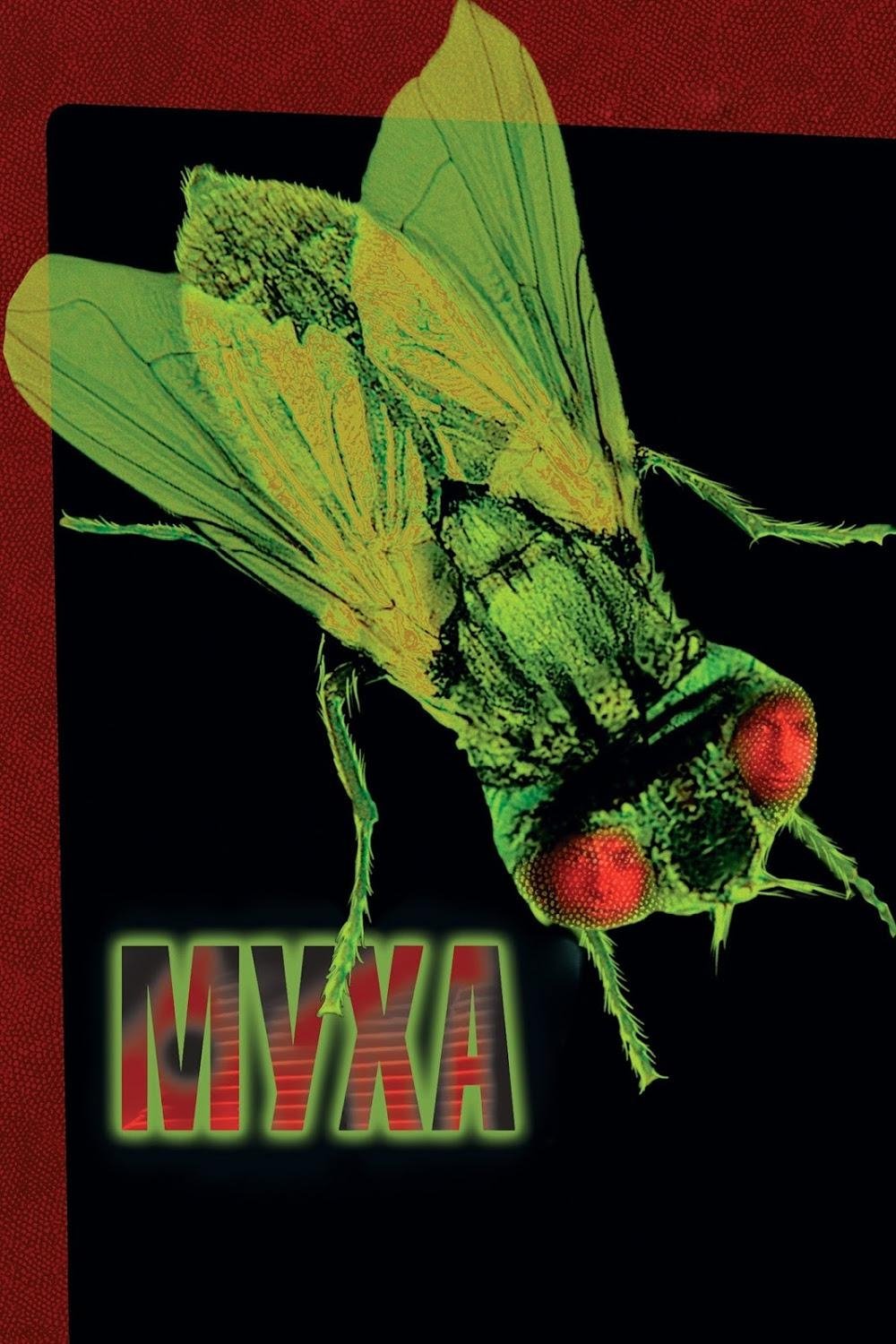
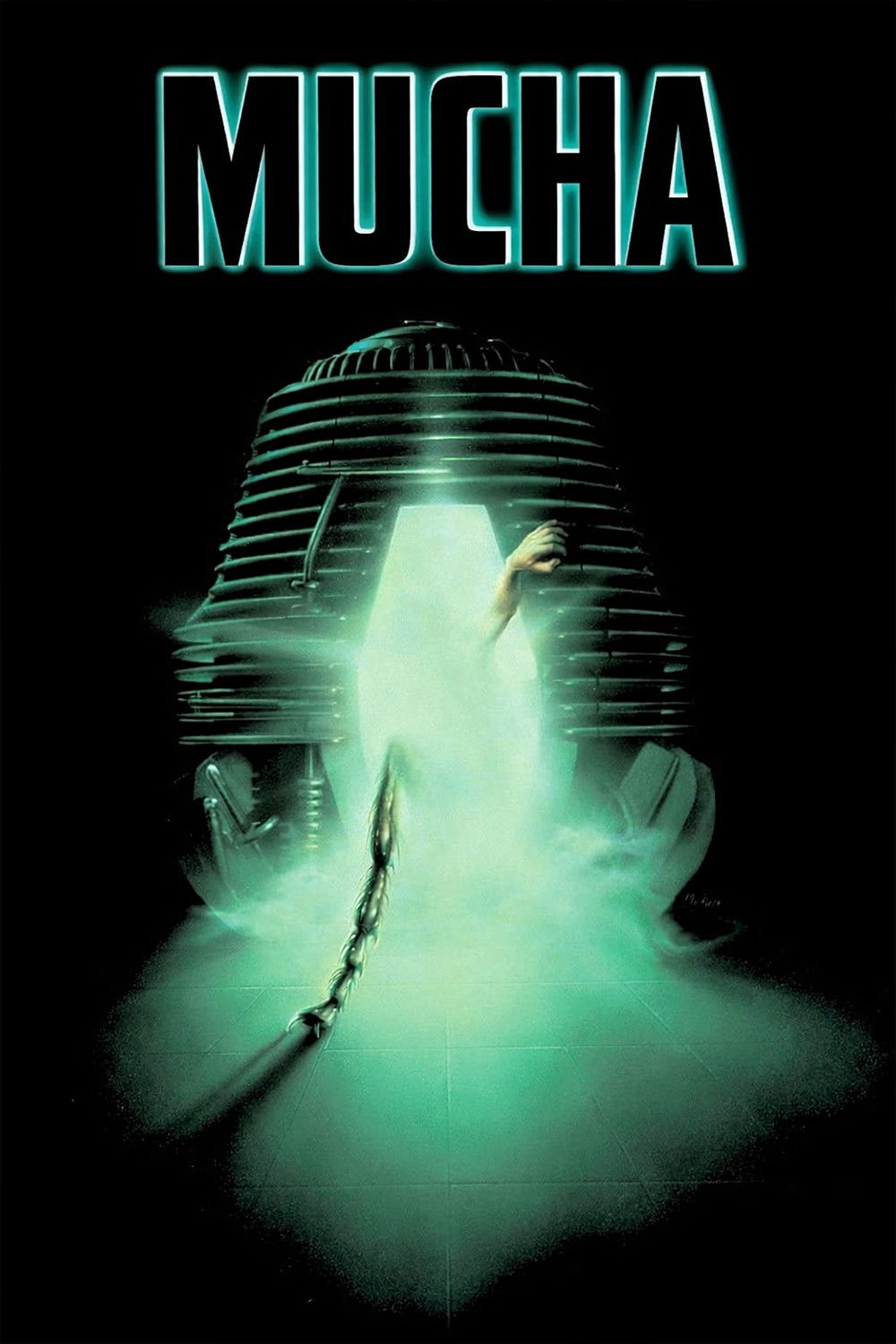
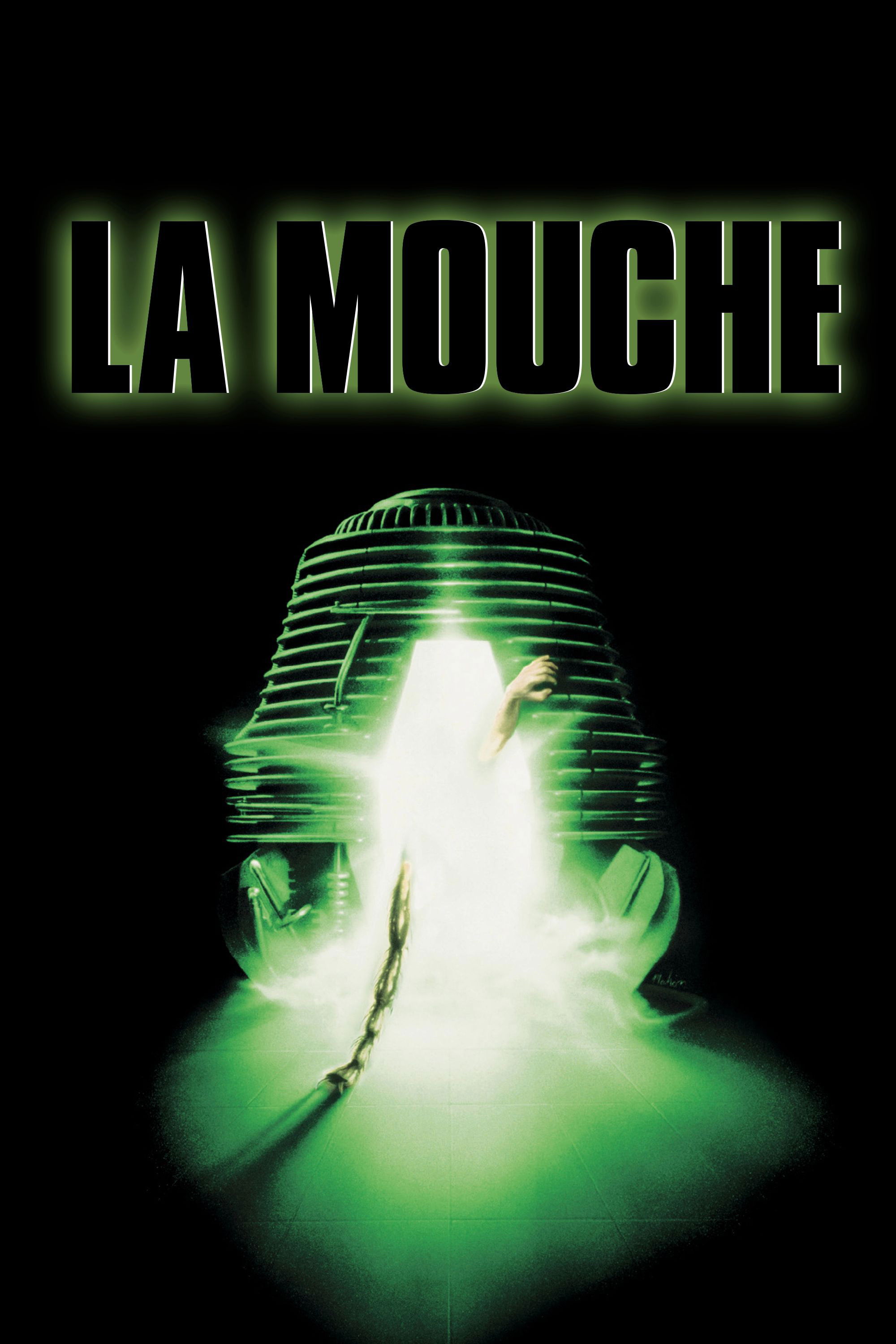
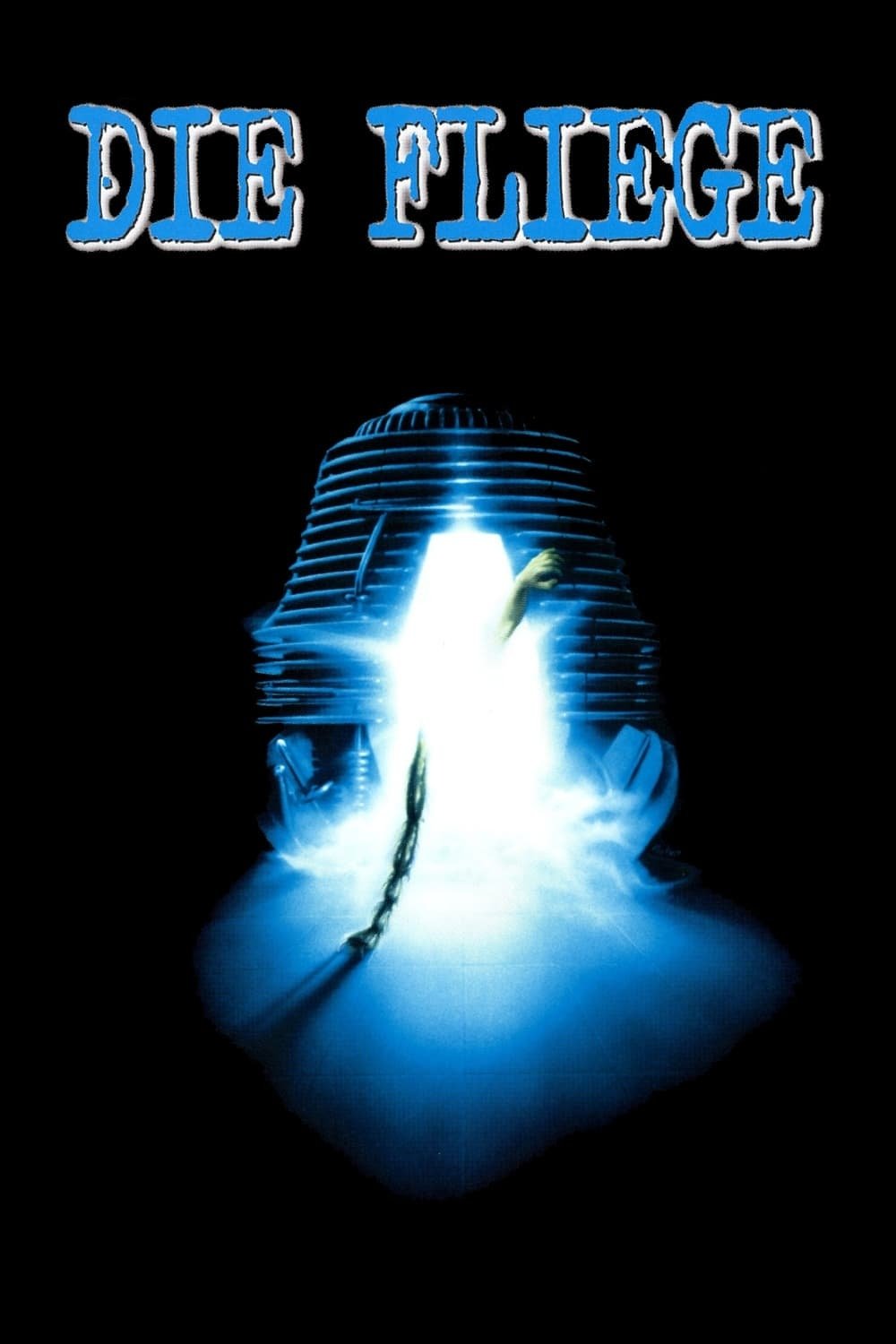
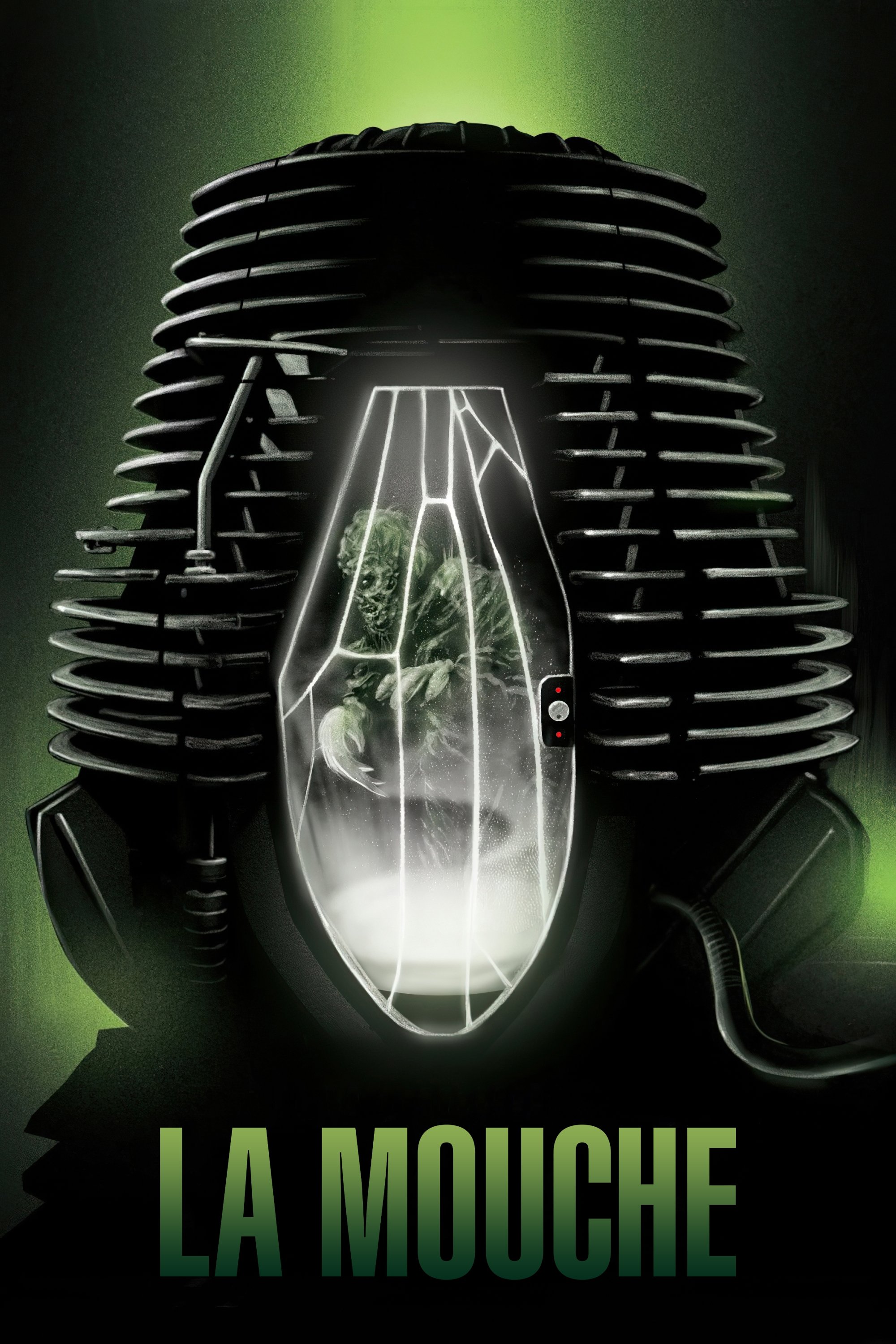
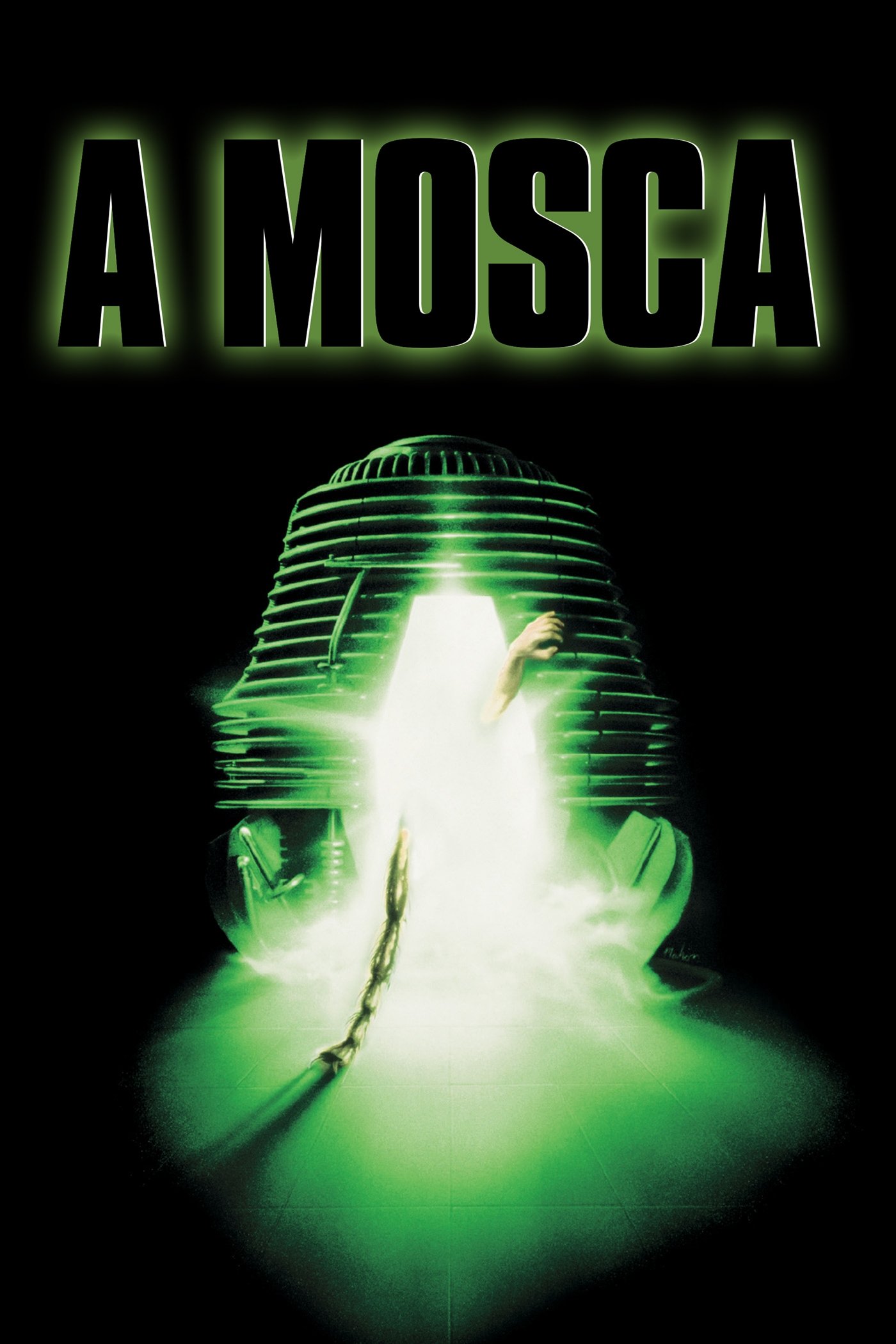
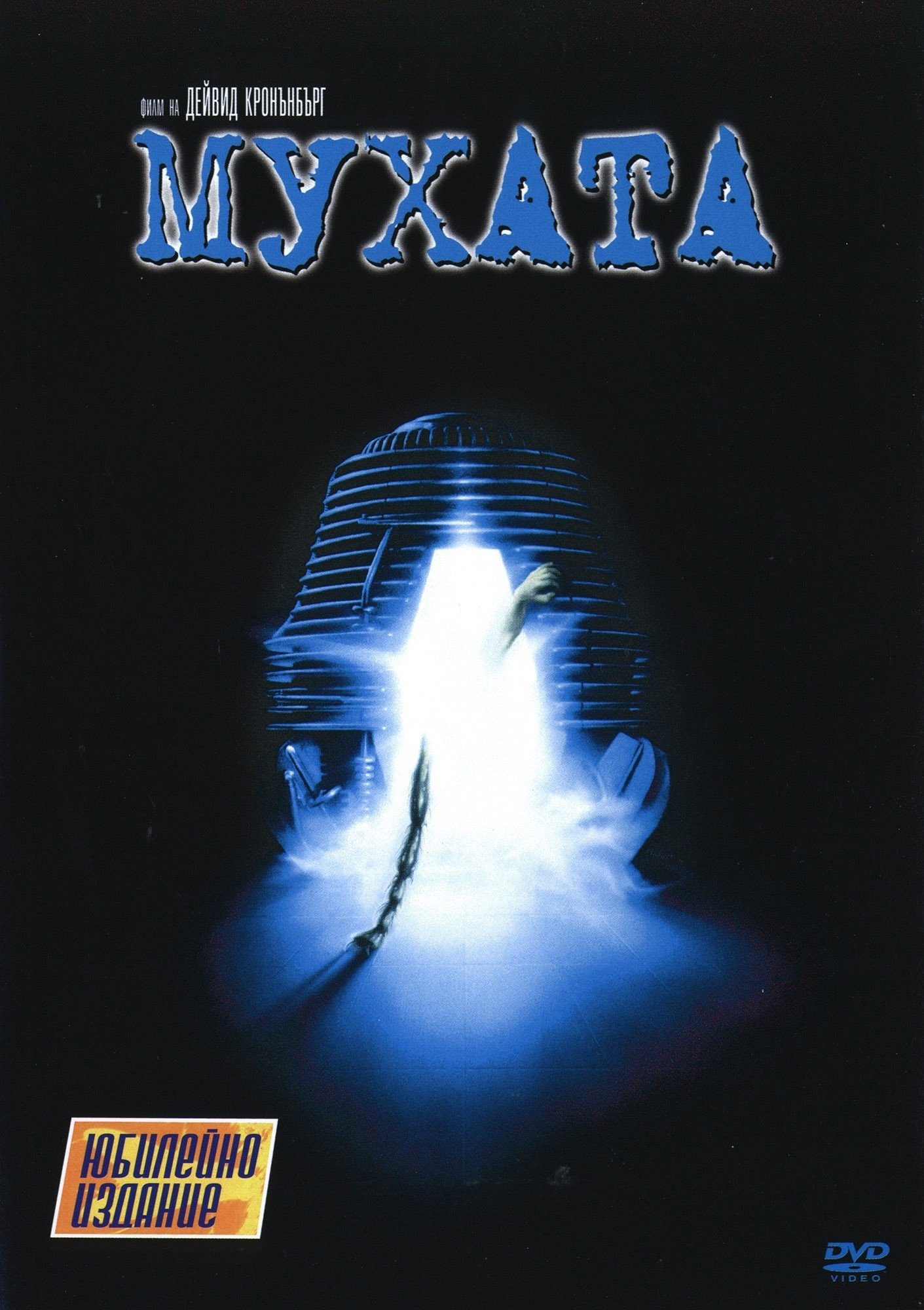
Development, Brooksfilms & Cronenberg's Rewrite
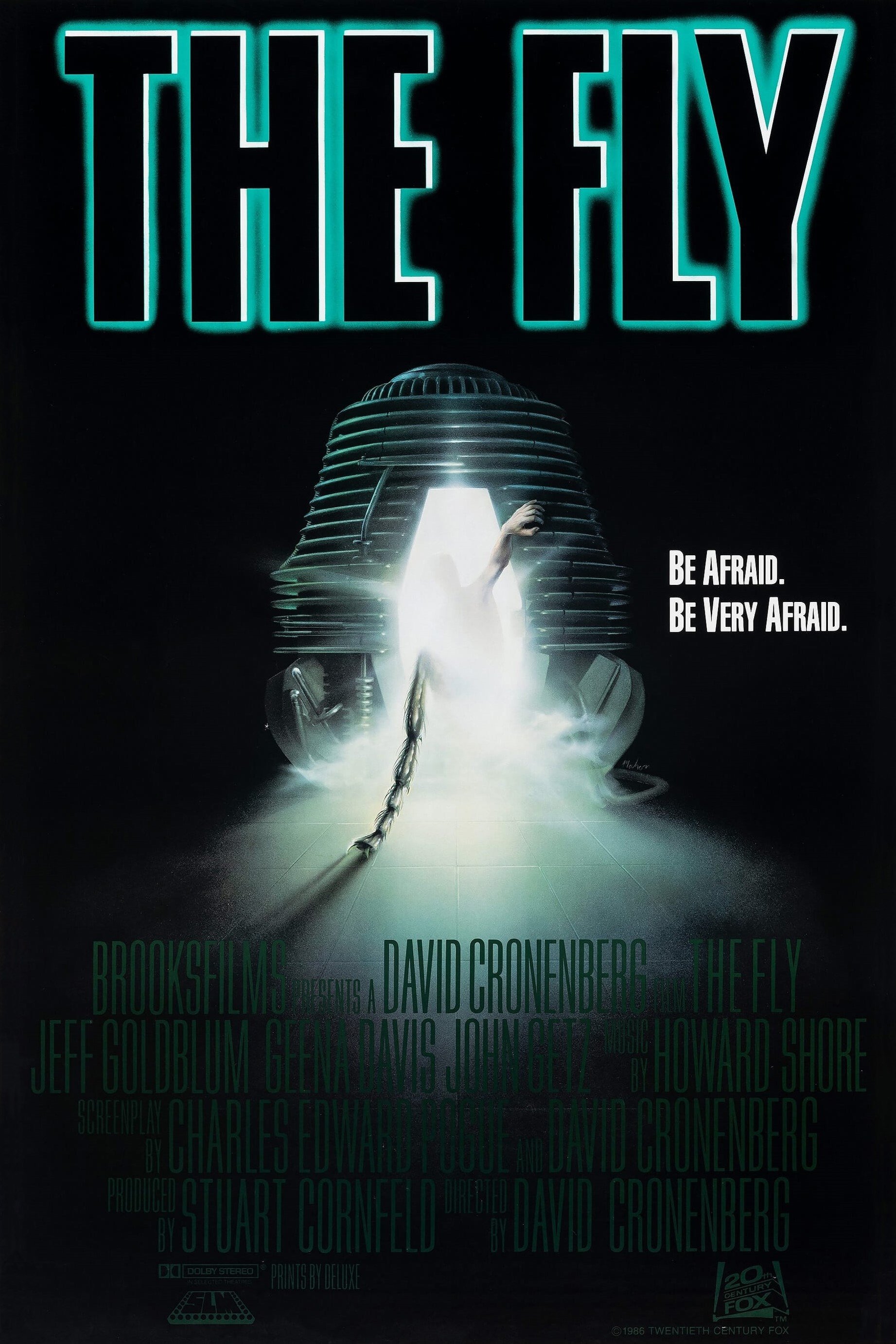
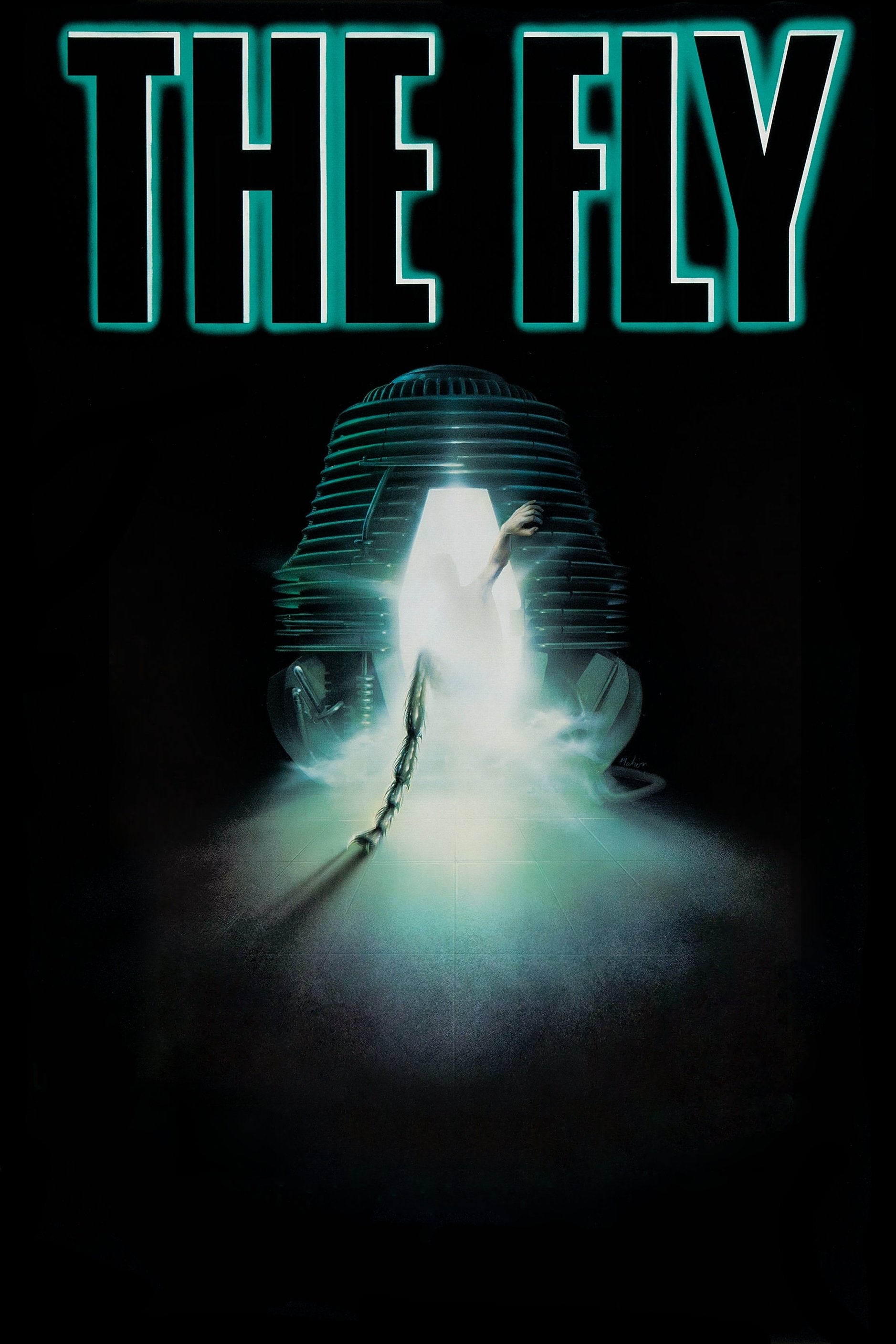
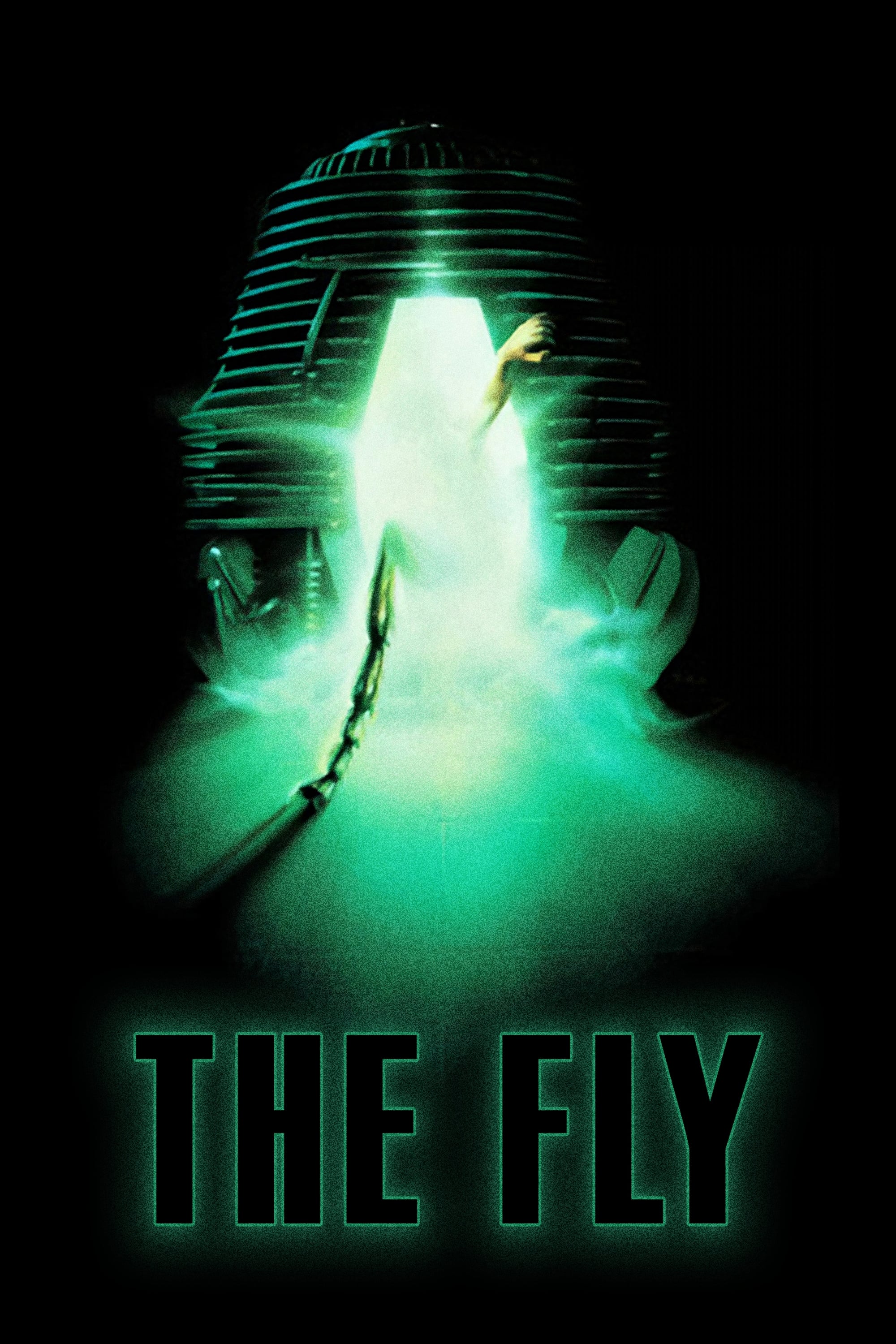
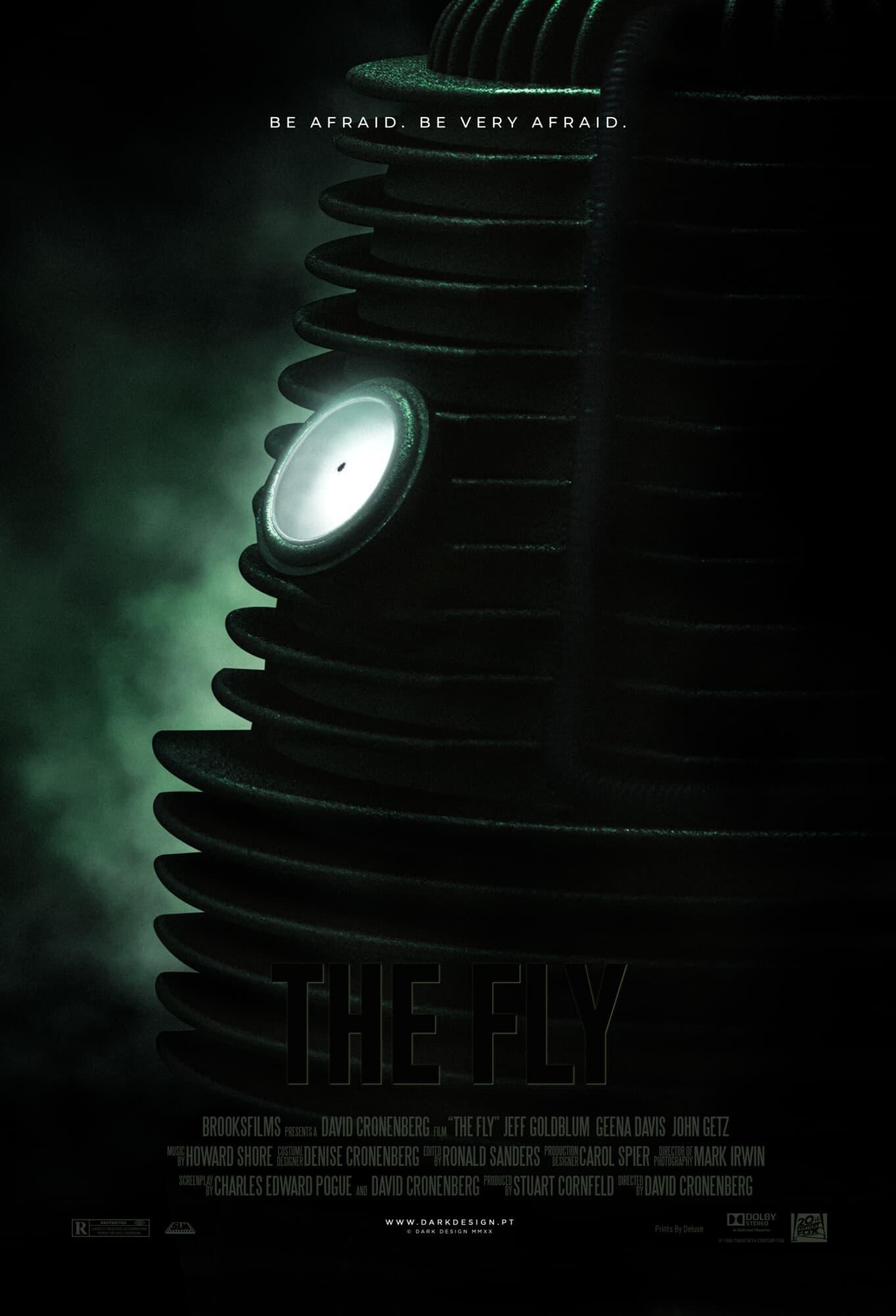
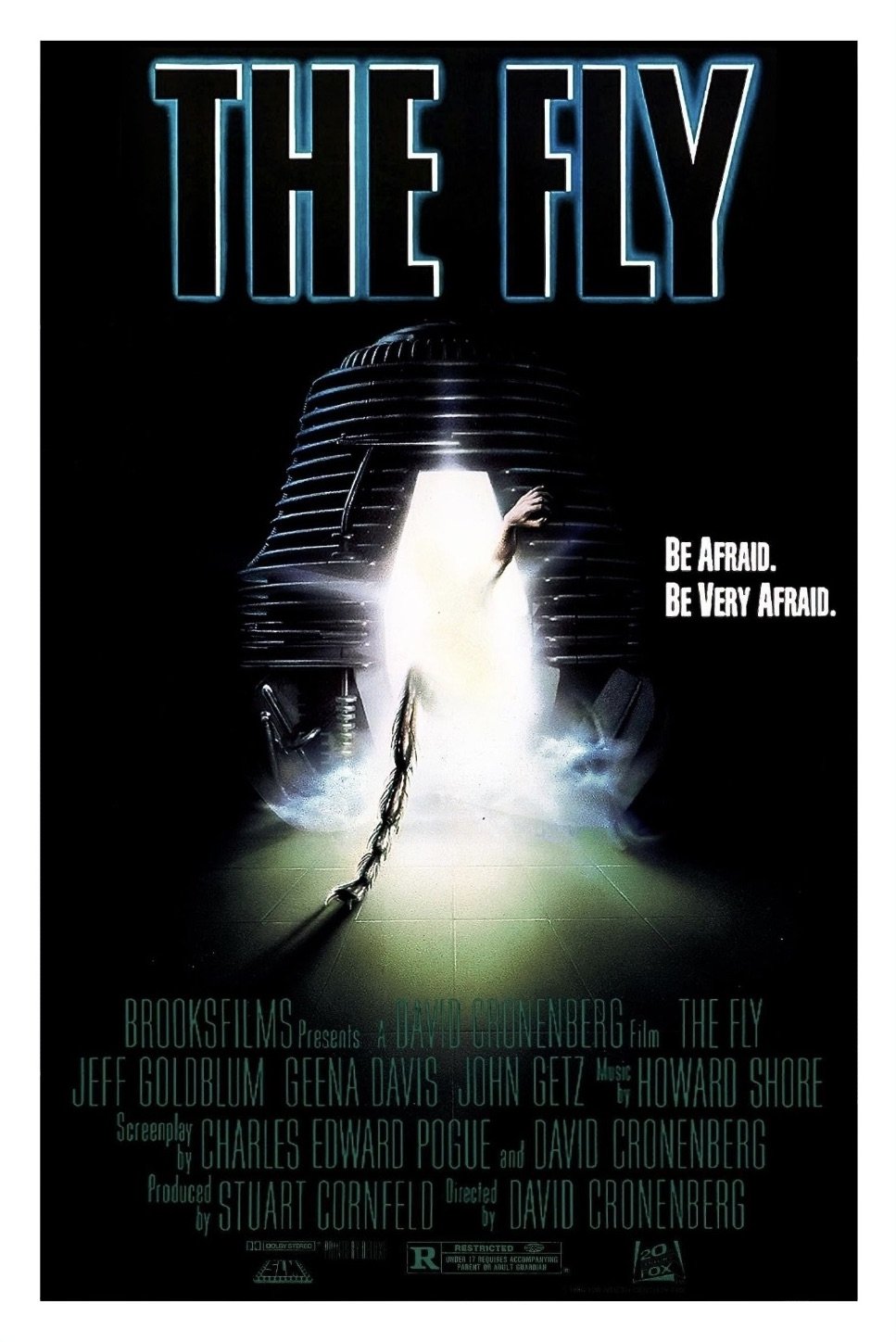
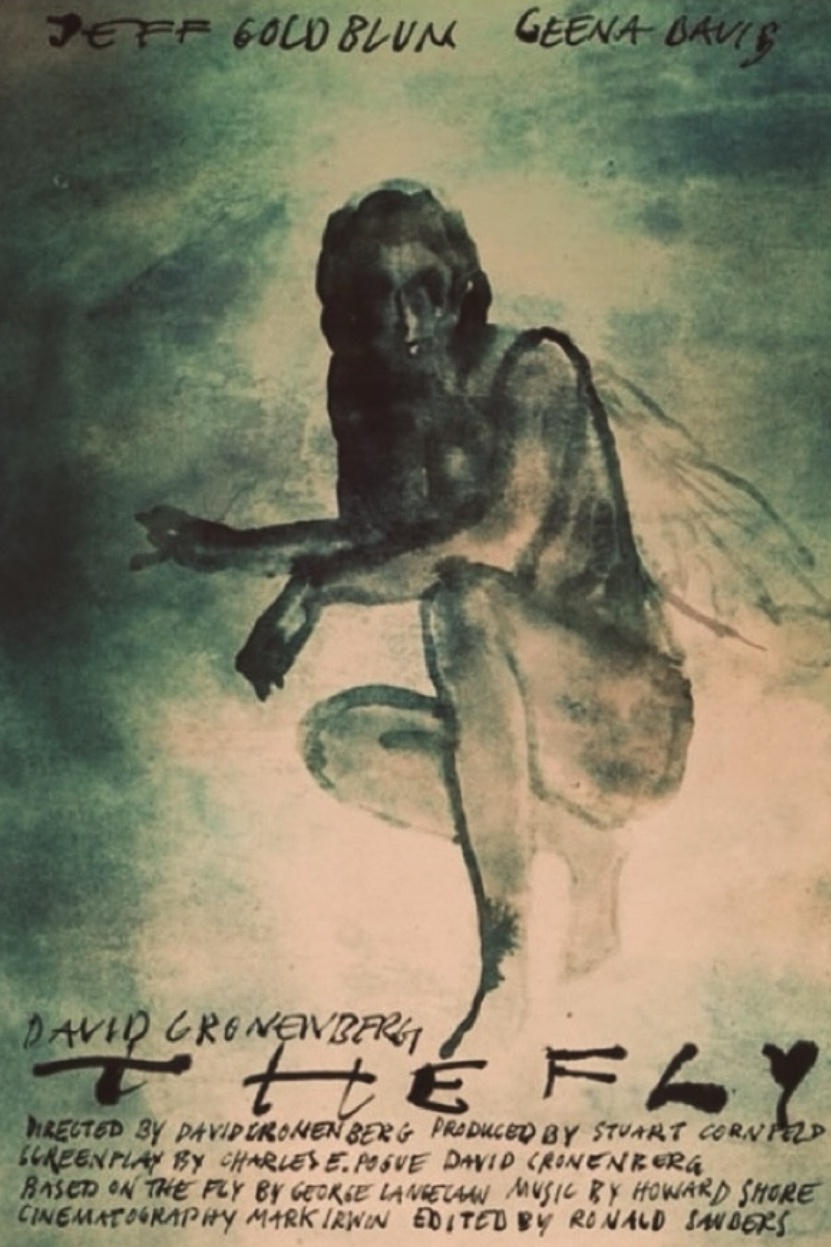
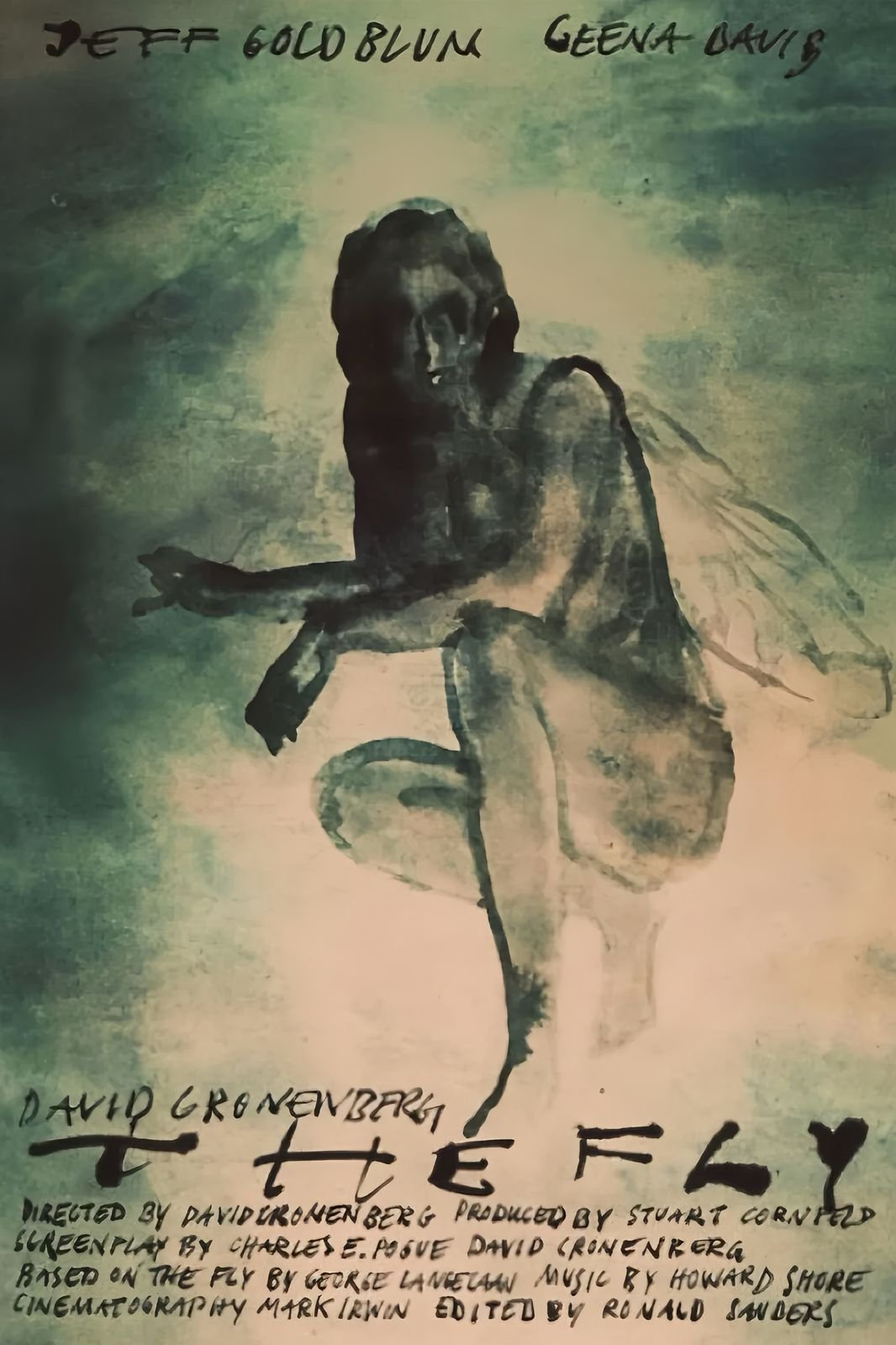
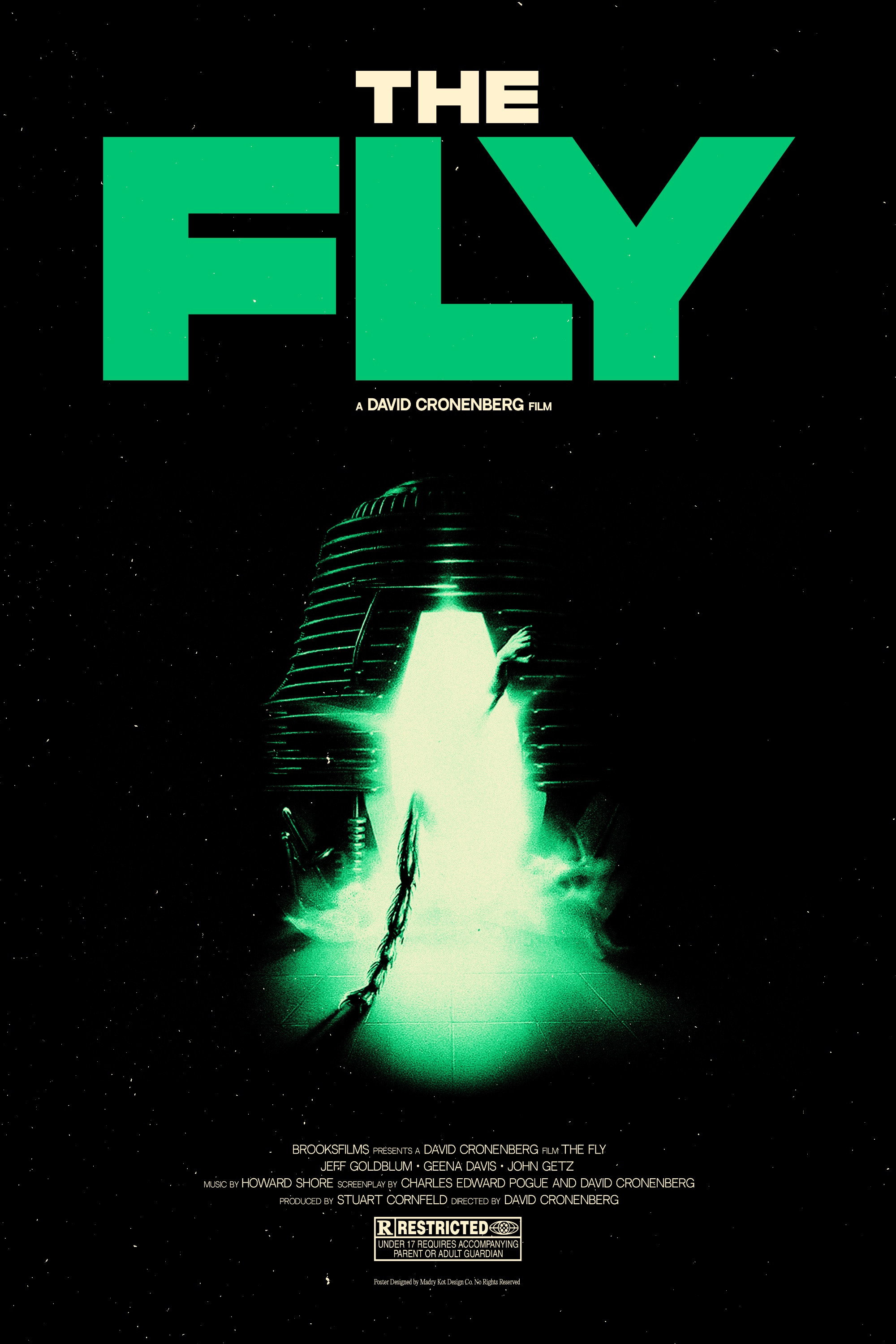
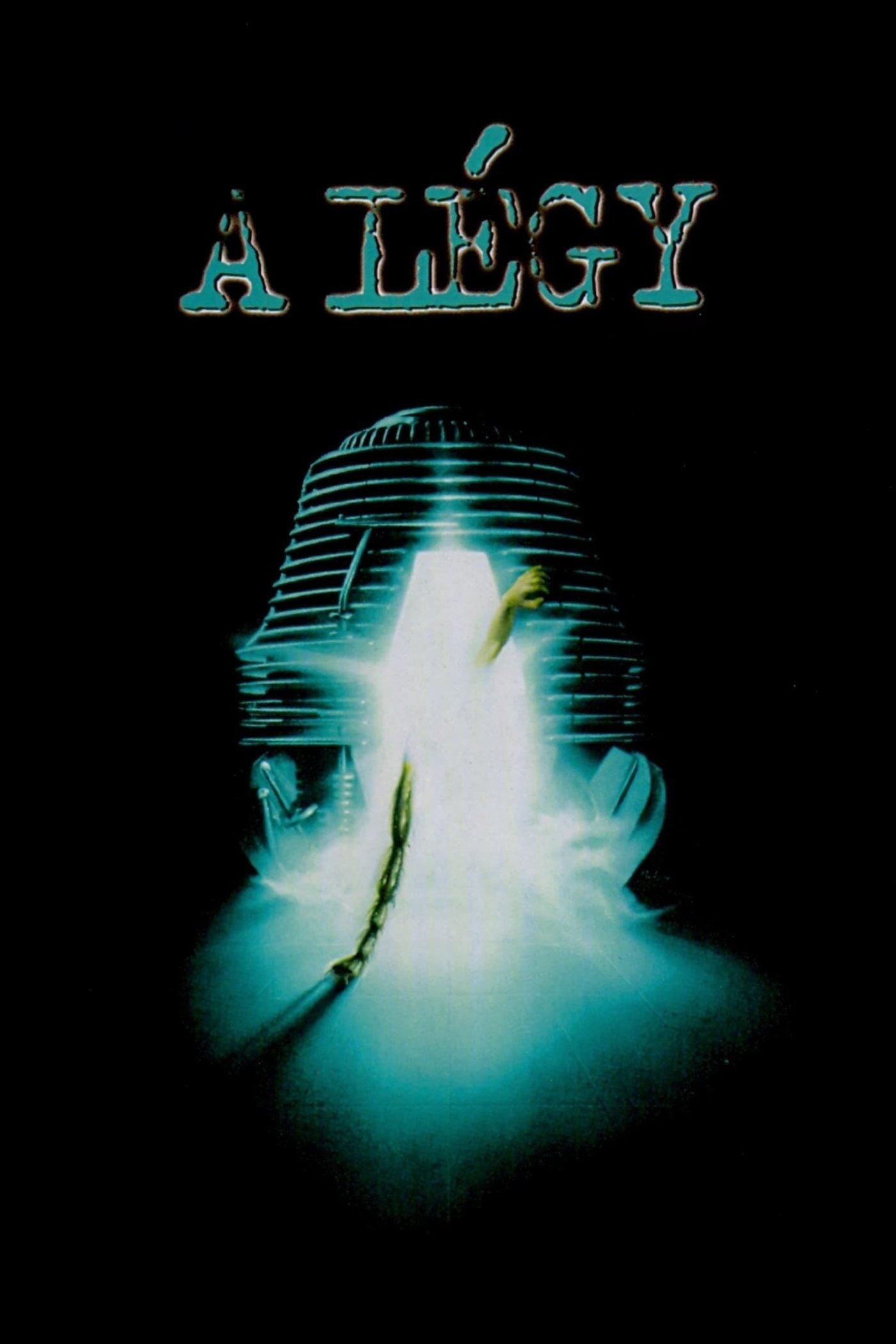
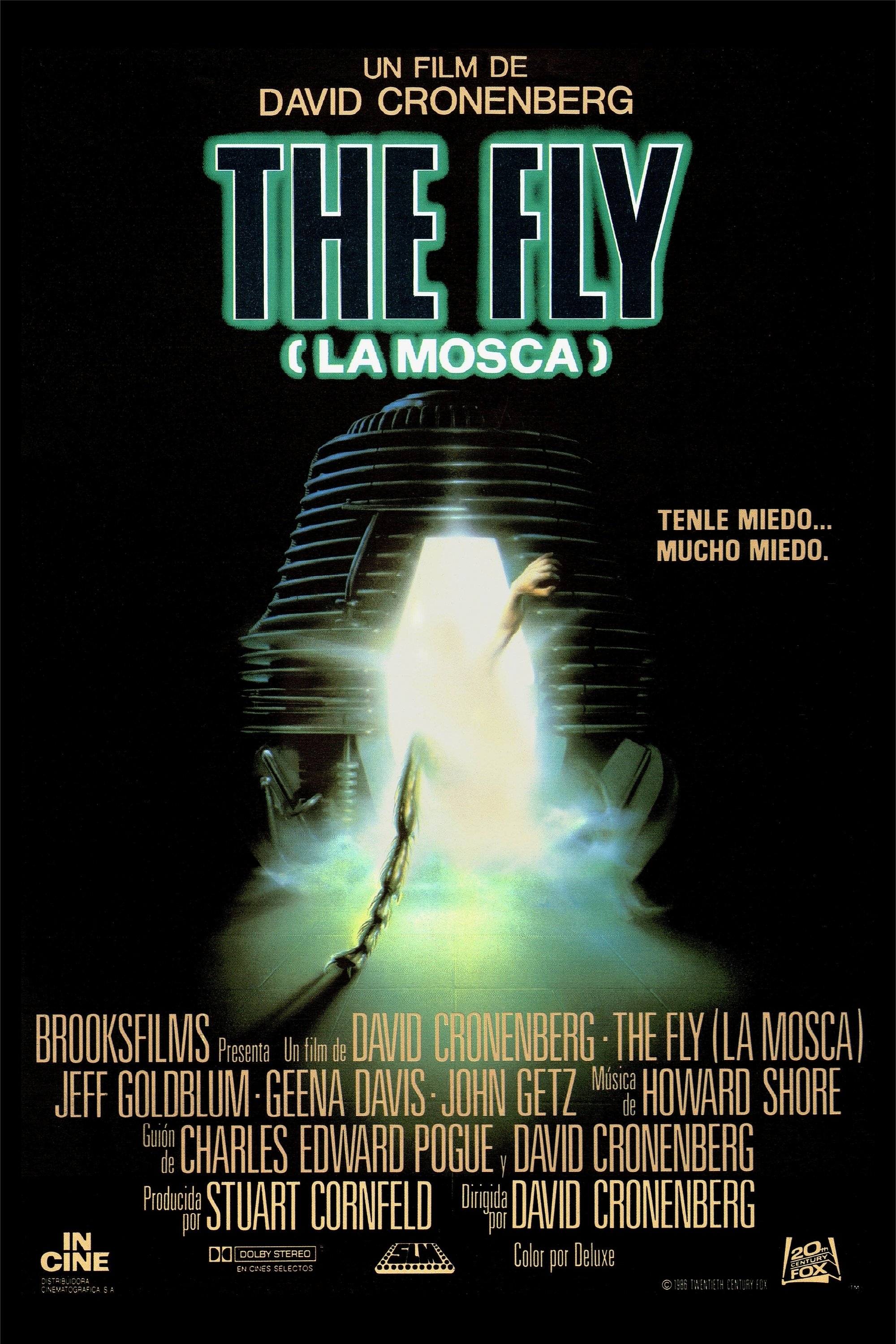
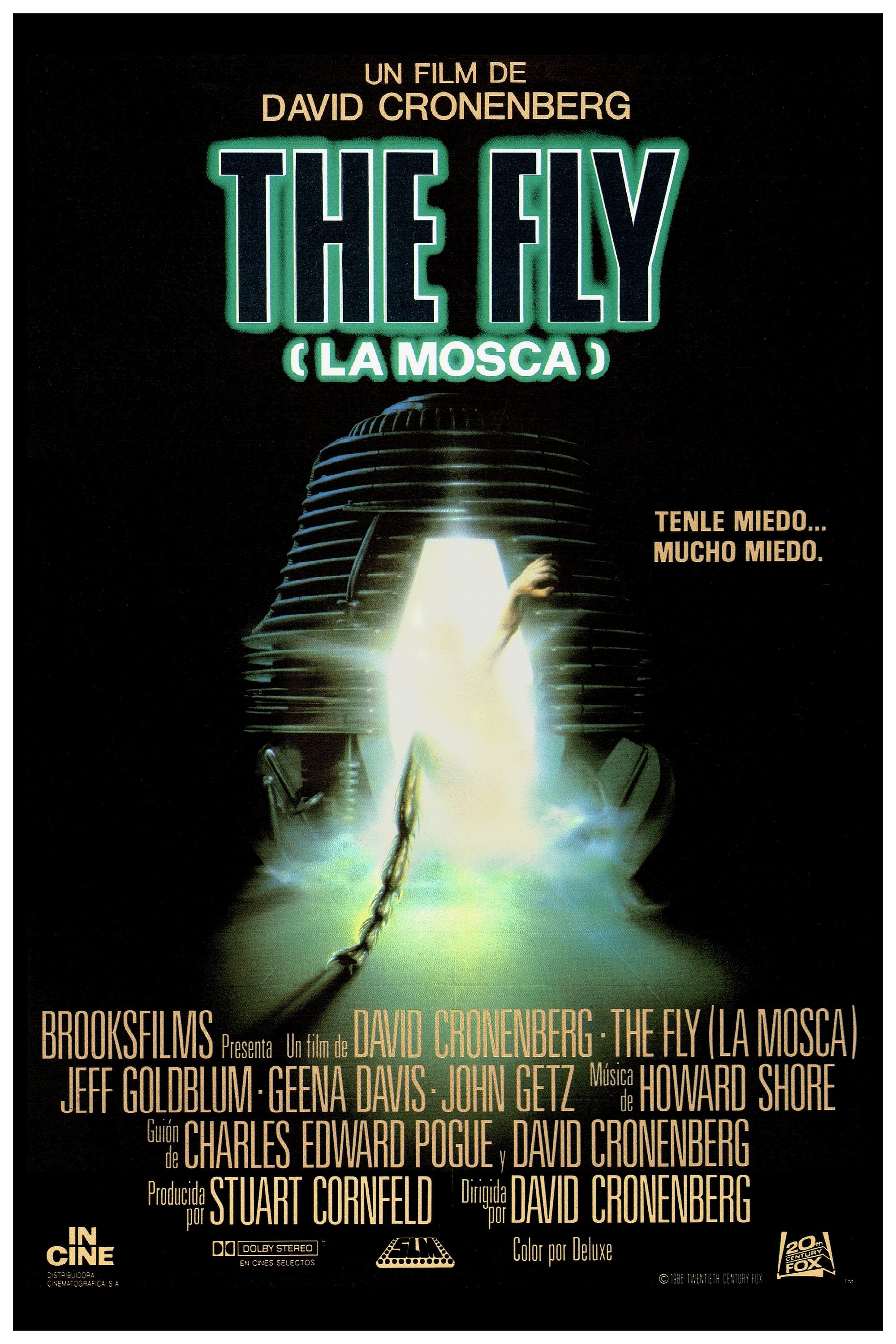
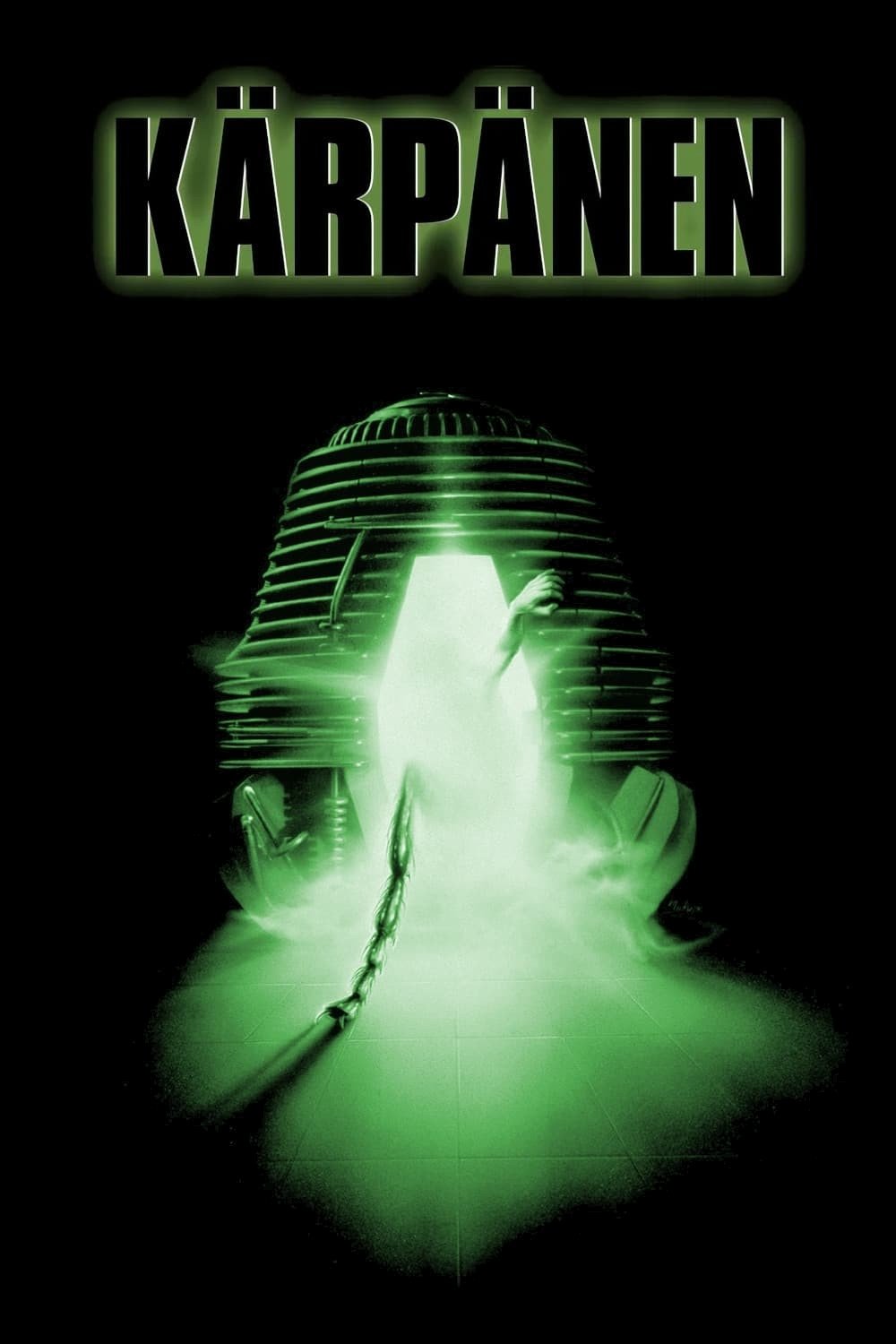
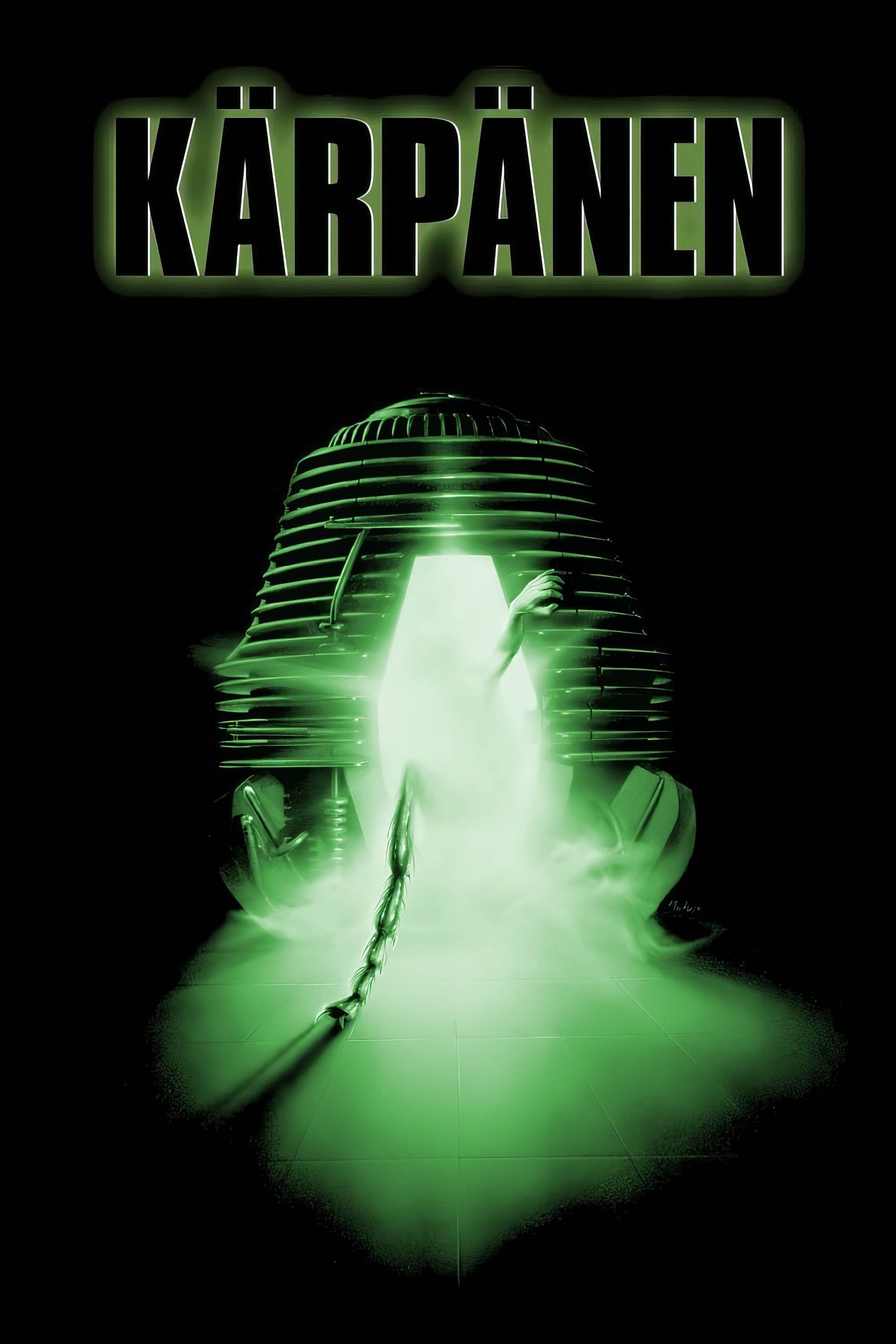
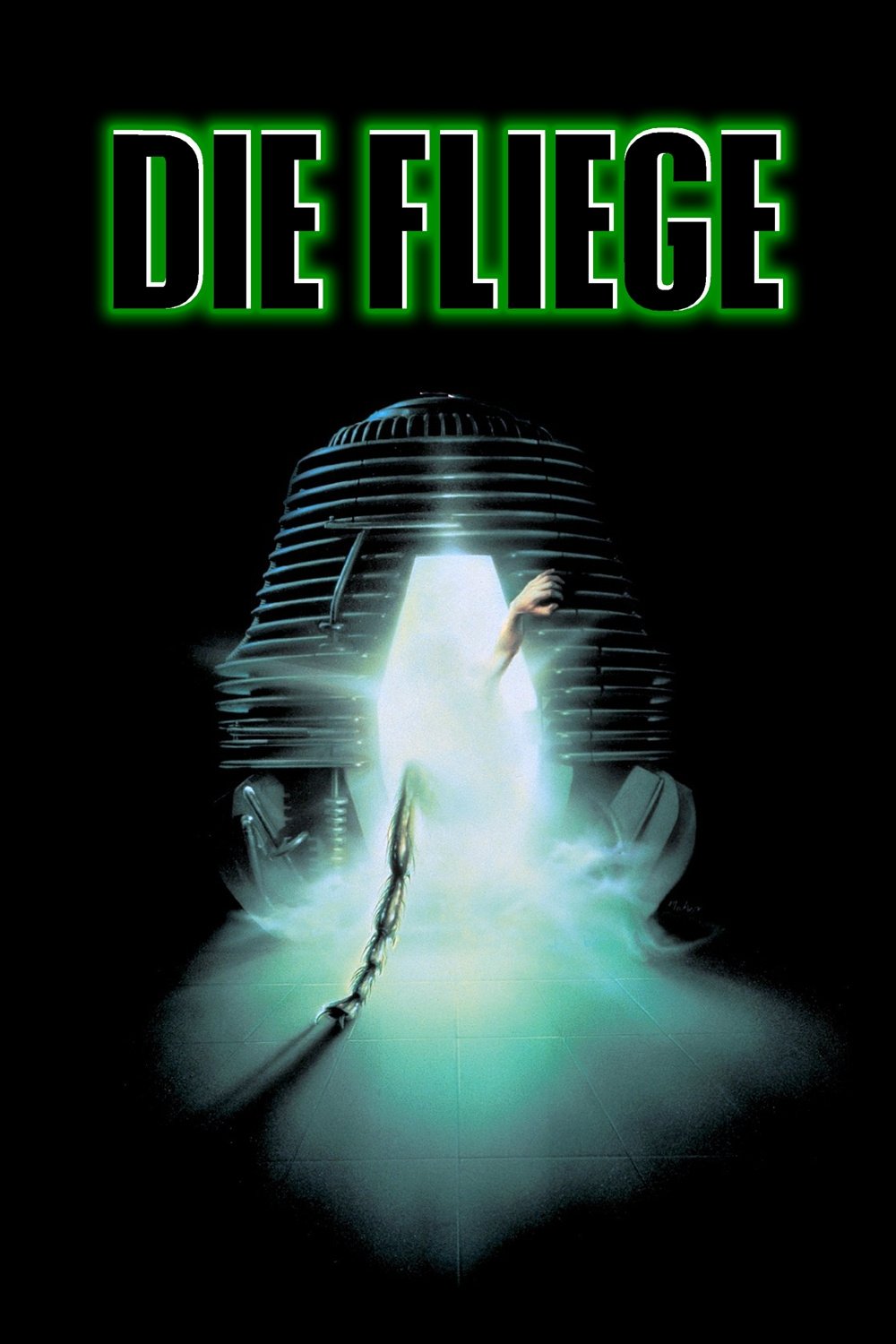
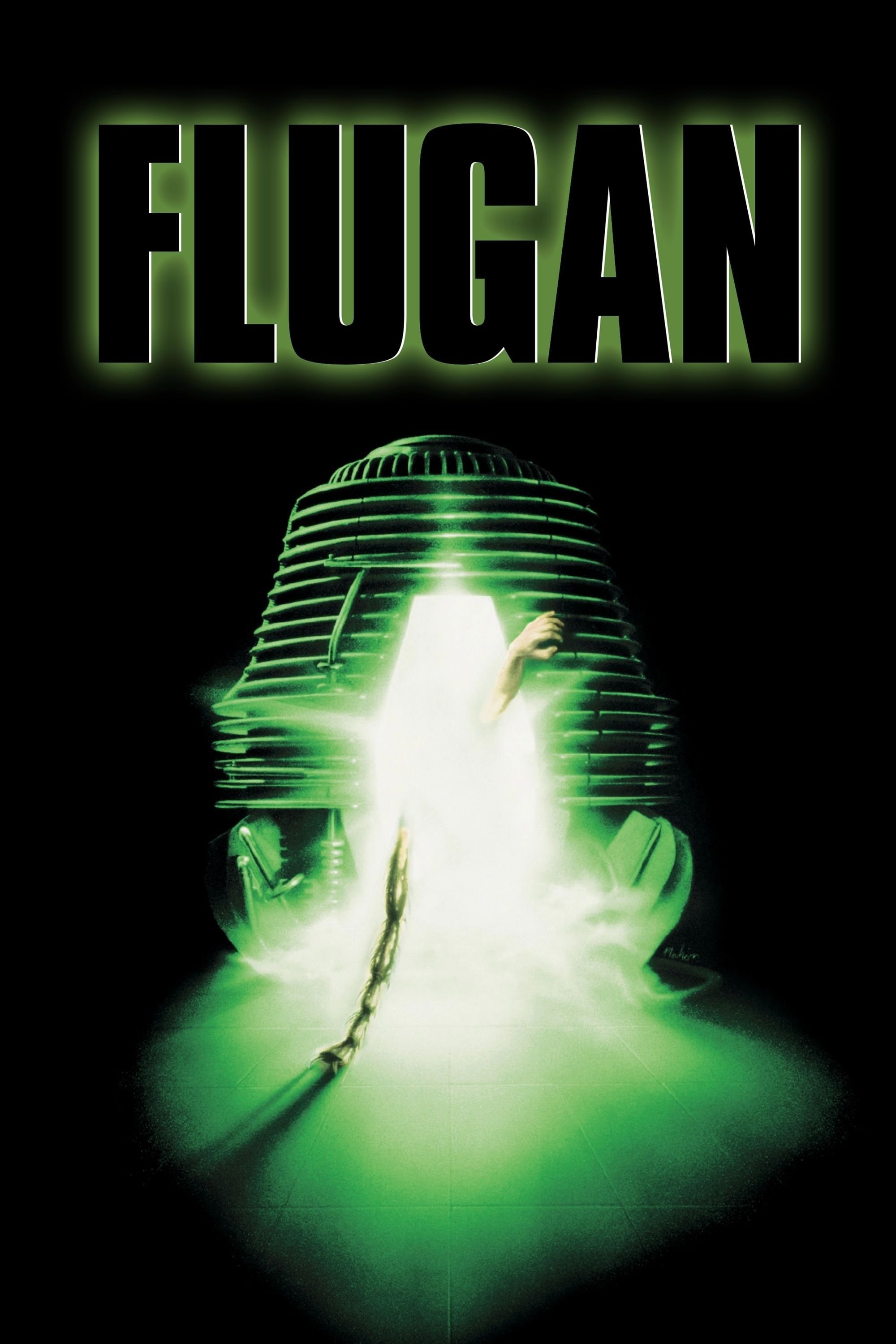
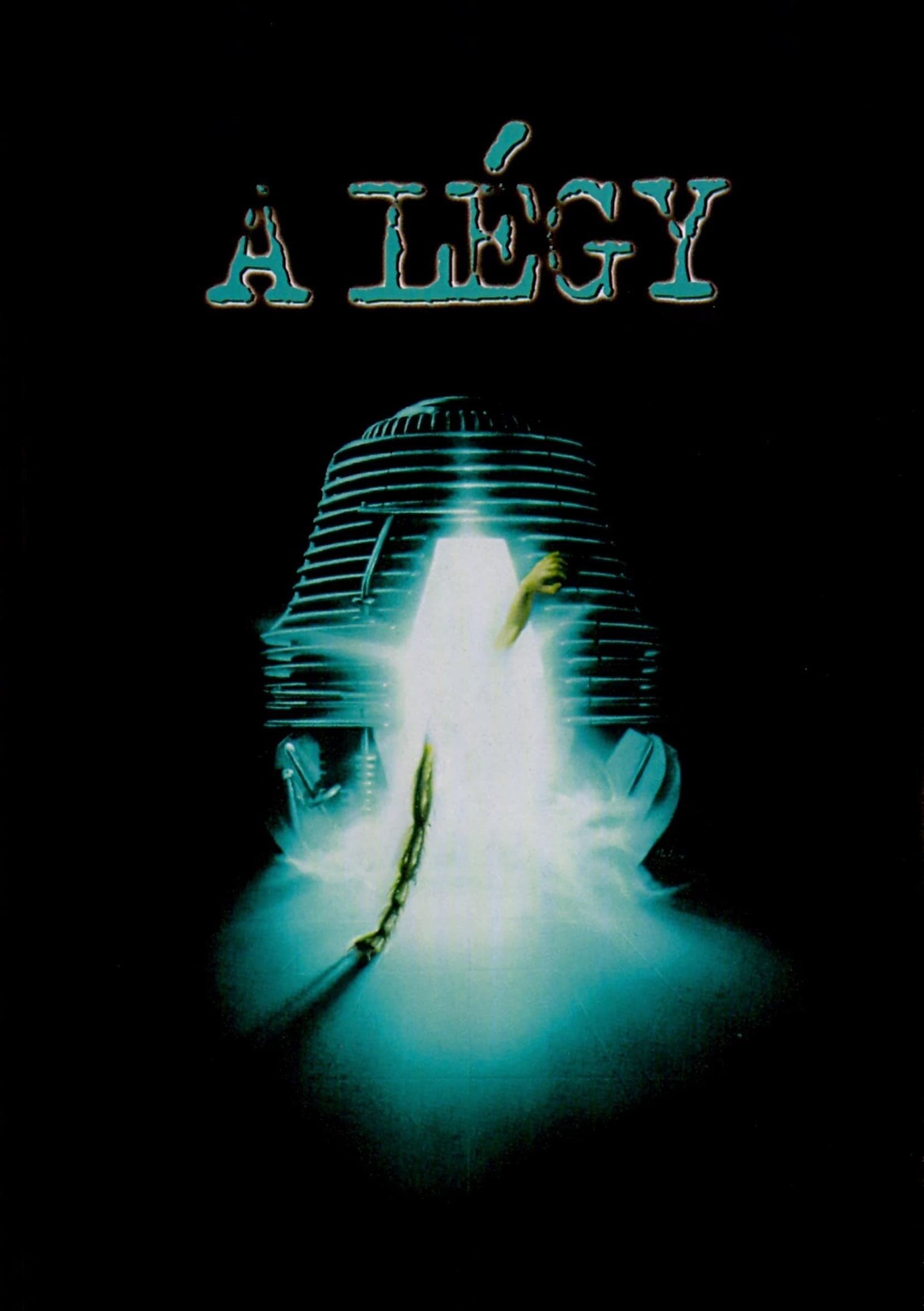
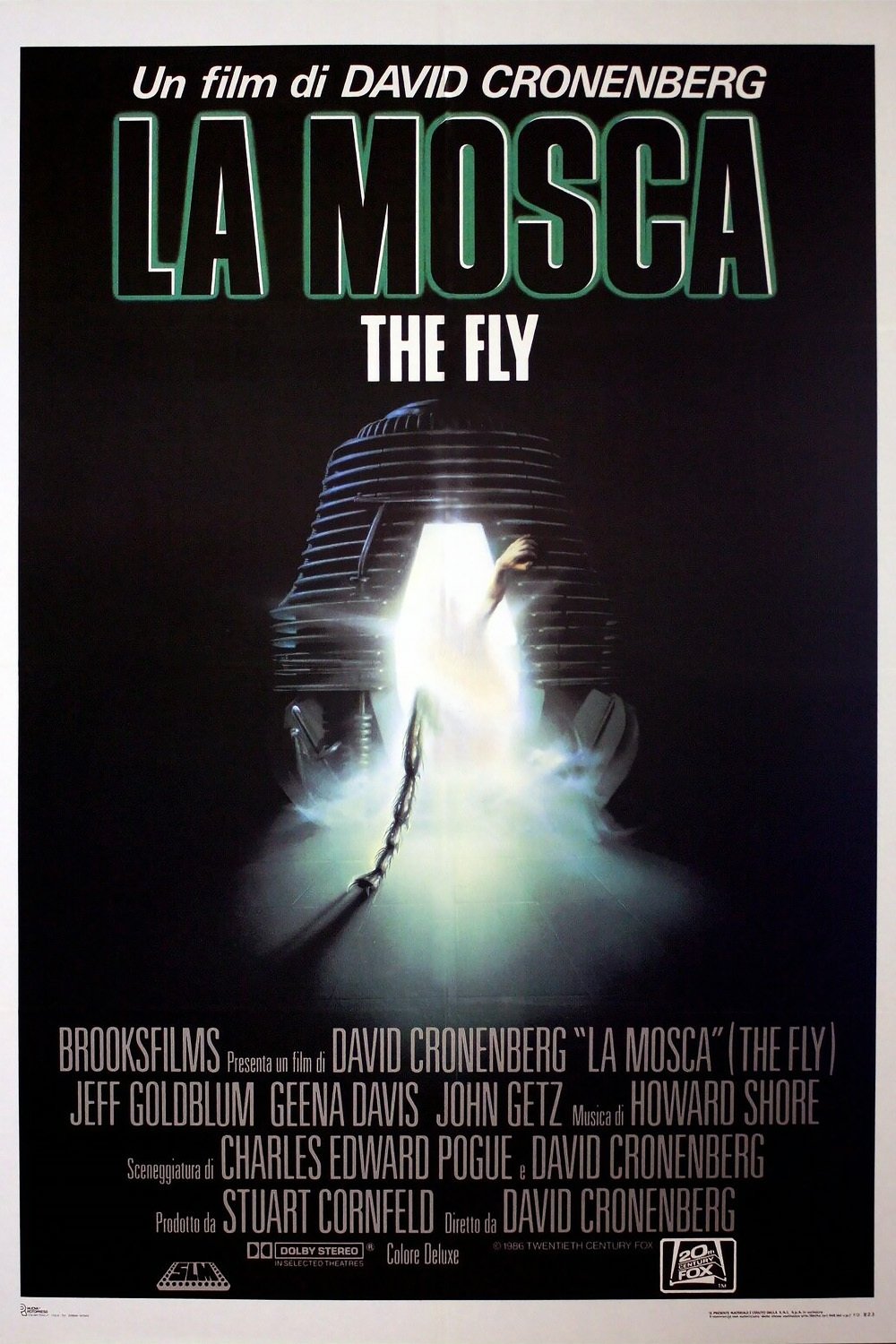
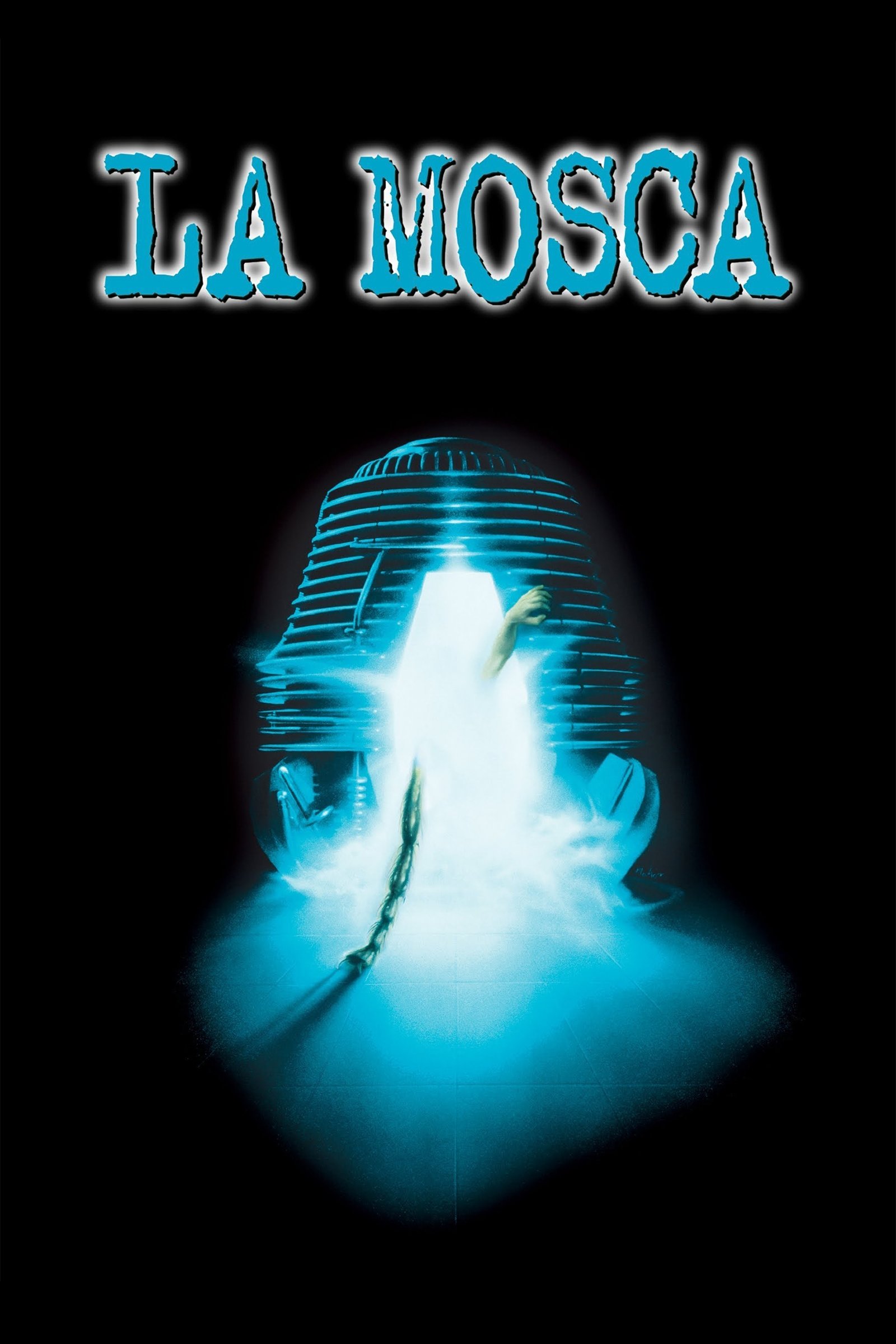
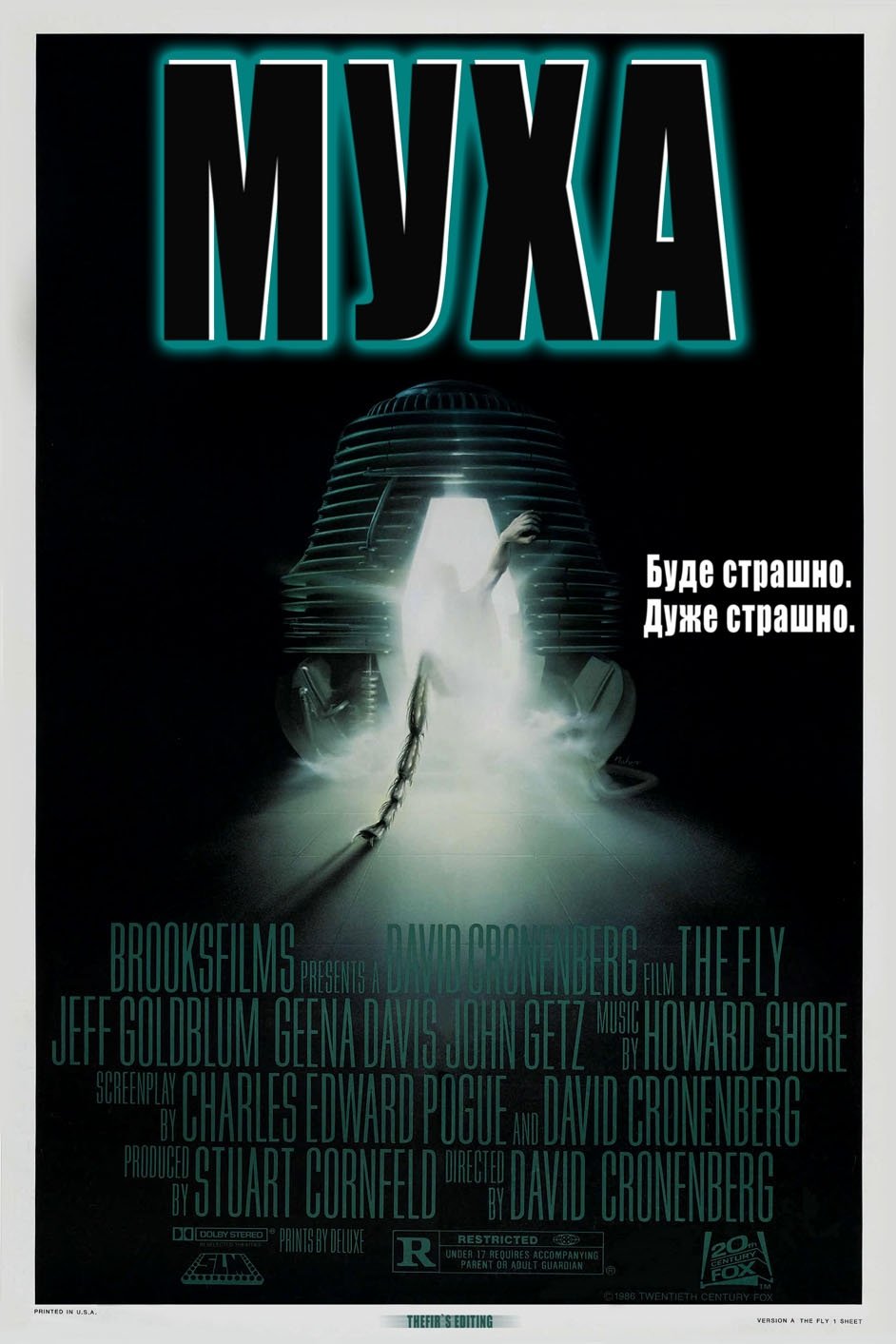
Charles Edward Pogue developed the new version of The Fly during the early 1980s and pitched the project to producer Stuart Cornfeld in 1984. Twentieth Century Fox controlled the property but initially declined to finance the proposed film, after which the project moved forward through Brooksfilms, the company associated with Cornfeld and Mel Brooks. Fox later returned as distributor. Pre-production began in England under director Robert Bierman, but a family tragedy forced Bierman to leave, reopening a directing position that ultimately went to David Cronenberg.
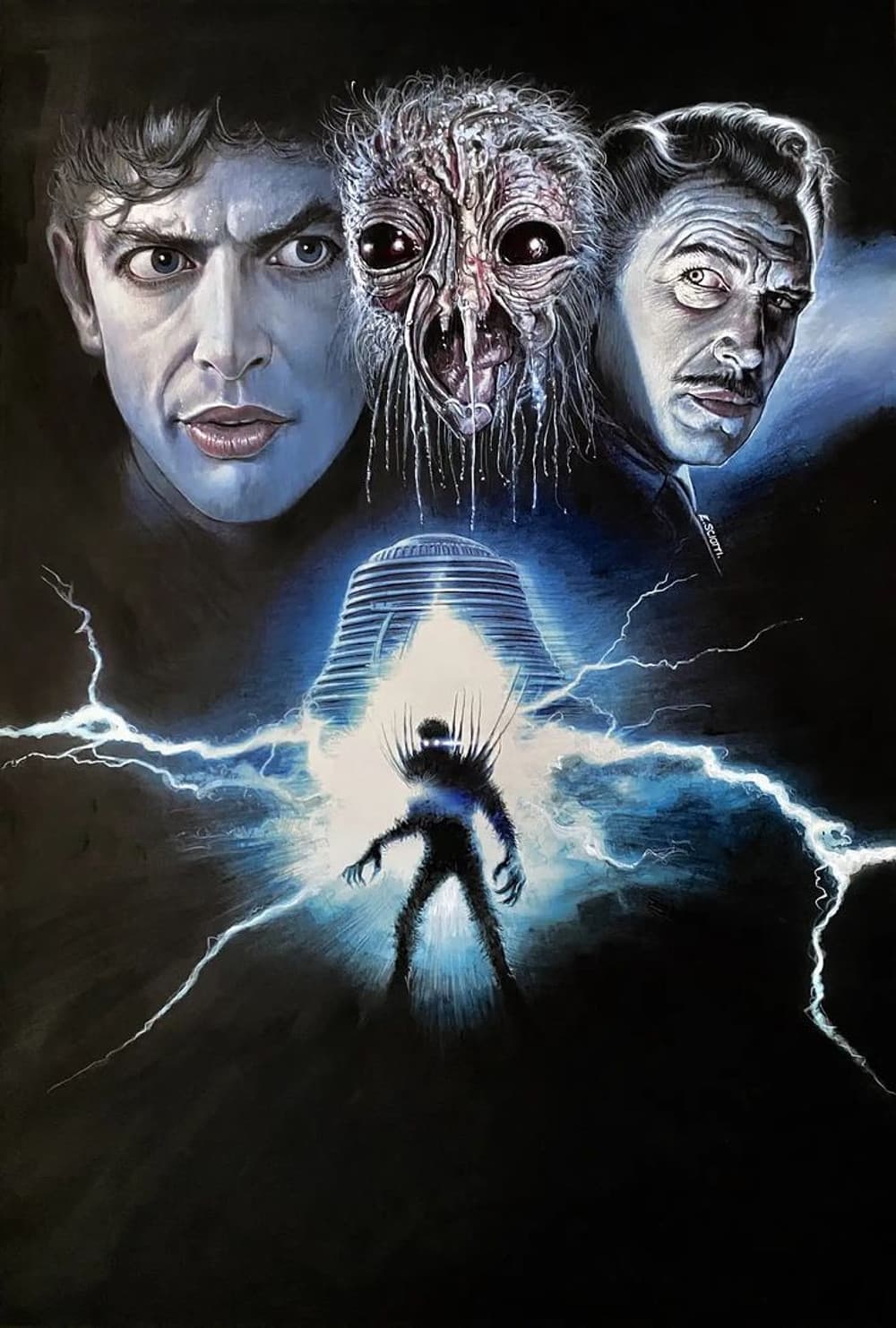
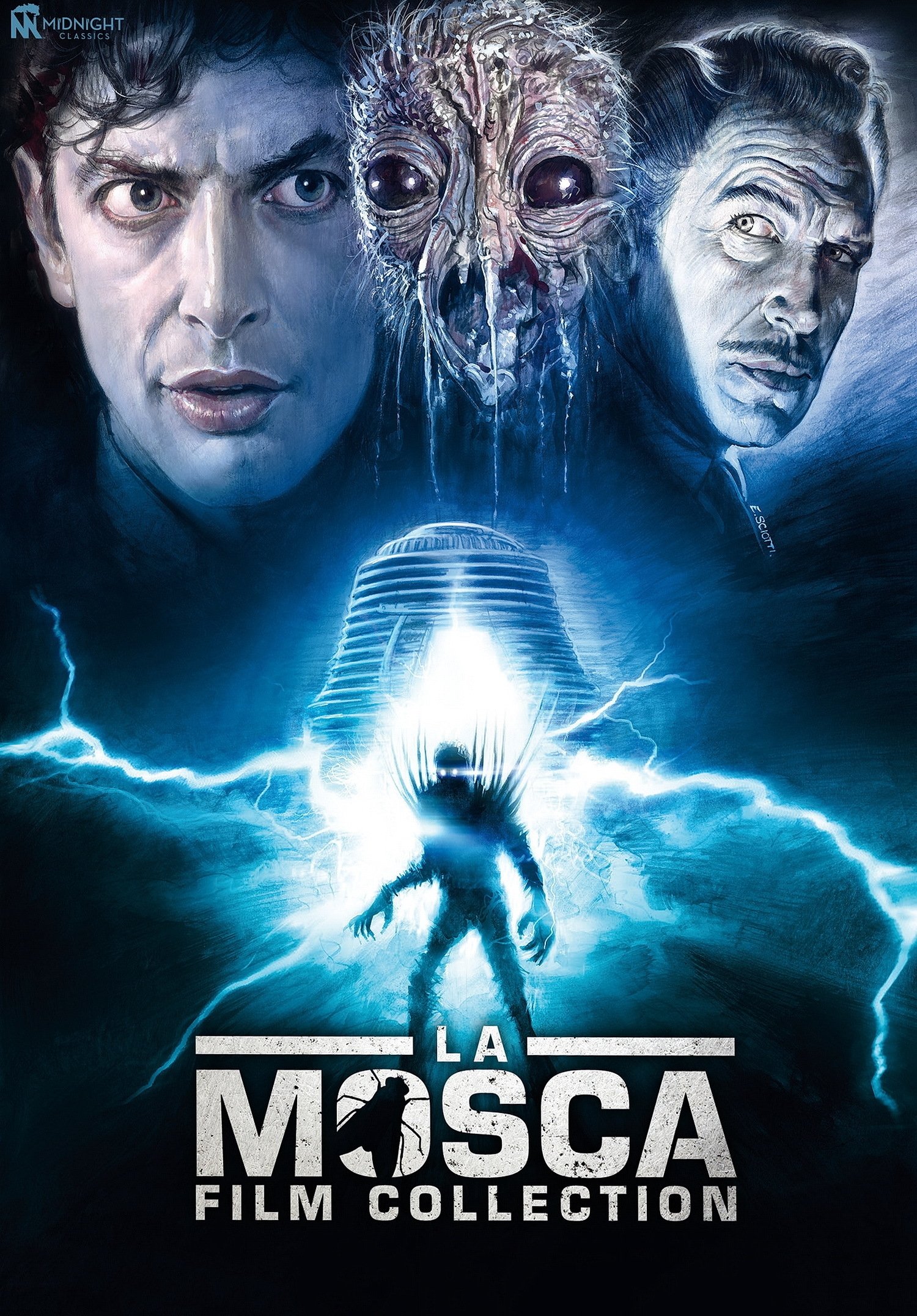
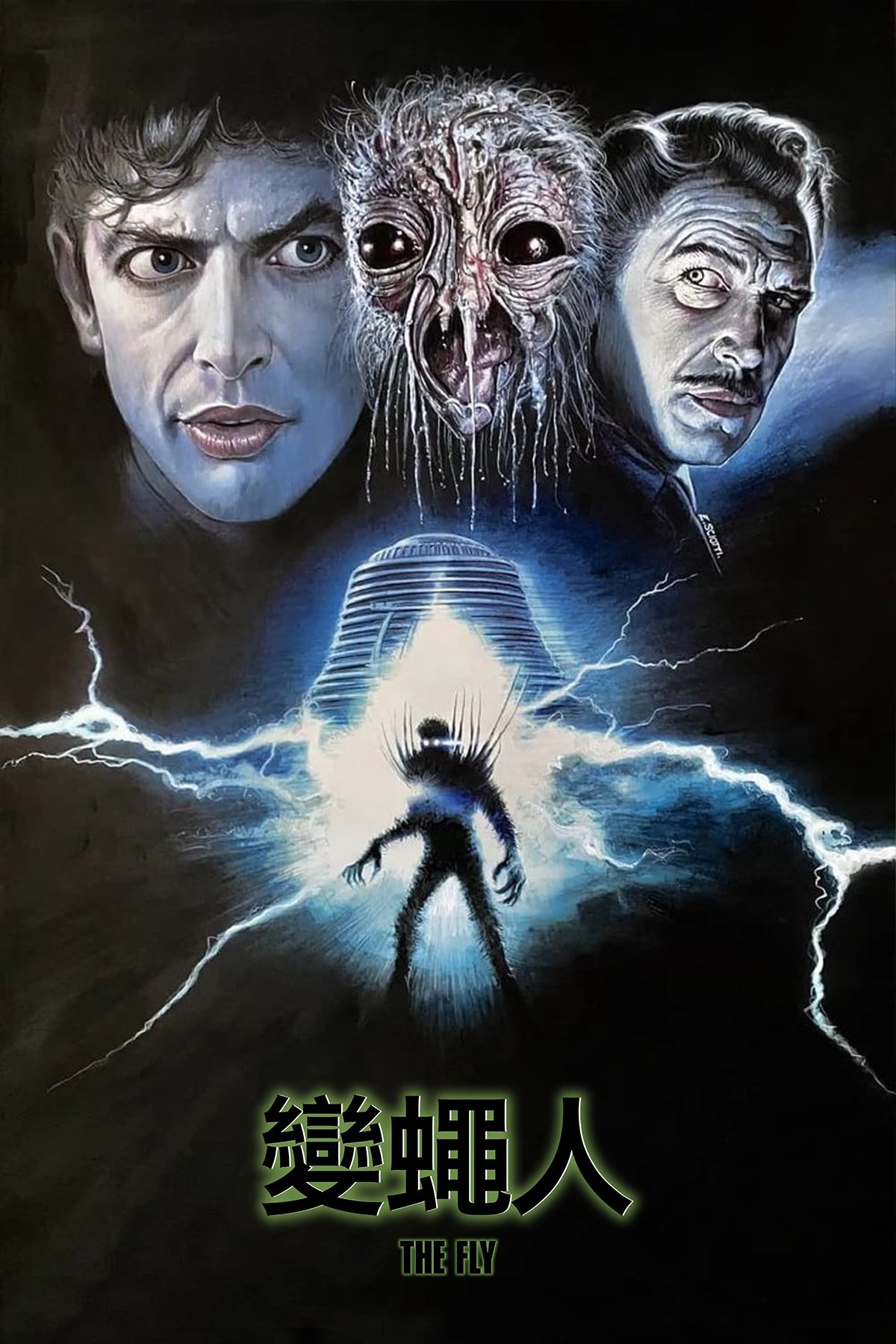
Cronenberg substantially rewrote Pogue's screenplay while preserving its most important conceptual change from the 1958 film. Instead of exchanging visible body parts with a fly, Brundle would be genetically fused with another organism and would change gradually. Cronenberg told contemporary interviewers that almost all of the metamorphosis itself already existed in Pogue's conception, even though he changed characters, dialogue and tone. He removed several deliberately camp elements, abandoned a proposed Vincent Price appearance and shifted the material toward an intimate story about two people dealing with irreversible biological change.
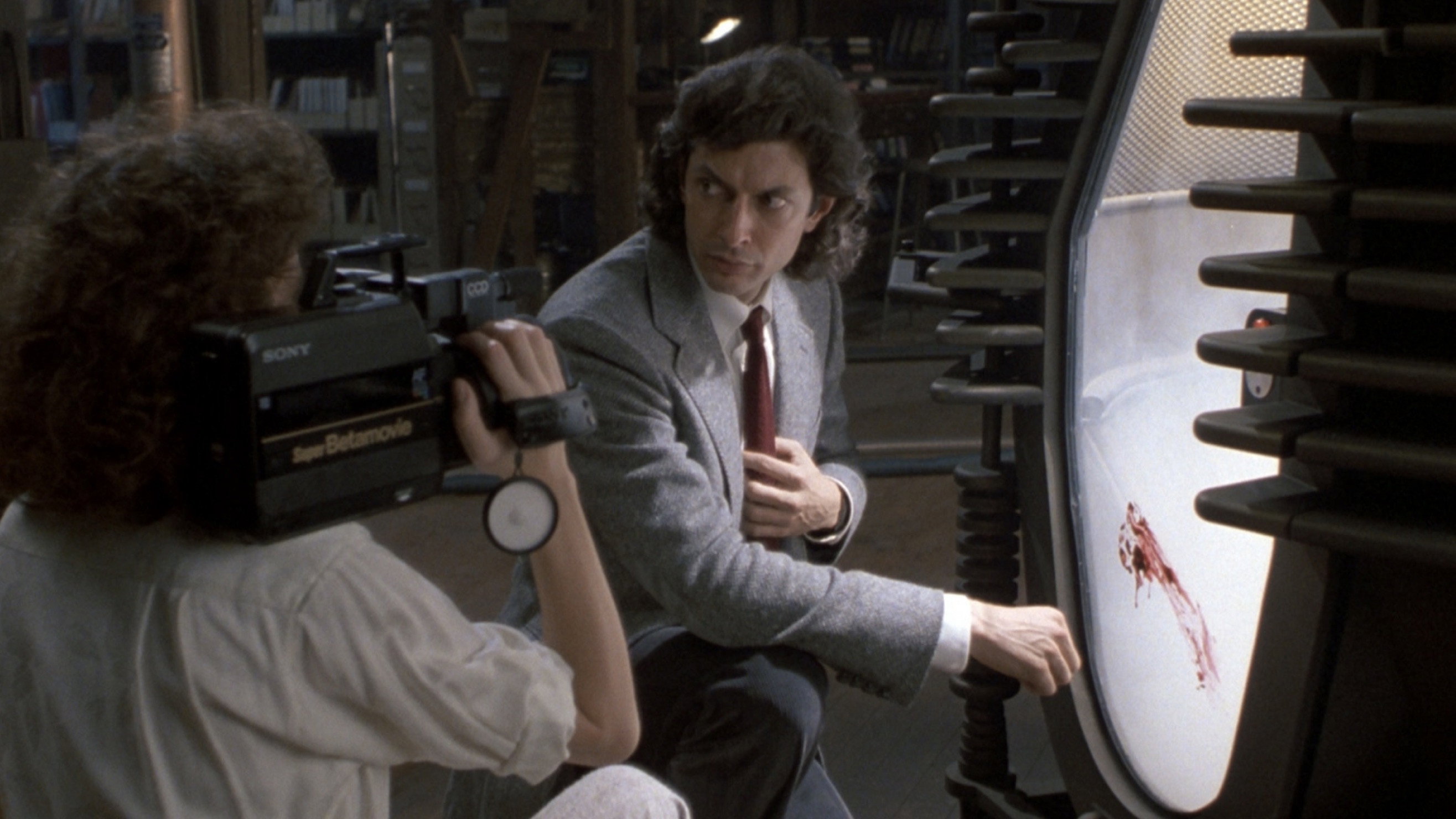
Principal photography began in Toronto on 1 December 1985. Contemporary reporting preserved by AFI places the production cost at approximately $10 million, considerably larger than Cronenberg's earlier Canadian horror films but still controlled enough for the production to remain concentrated around a small cast and relatively few major environments. That scale suited the rewritten story. Cronenberg reduced much of the drama to Brundle's loft, the telepods and three principal characters, allowing increasingly elaborate physical effects to emerge inside an emotionally contained narrative.
Jeff Goldblum, Geena Davis & a Tragic Love Story
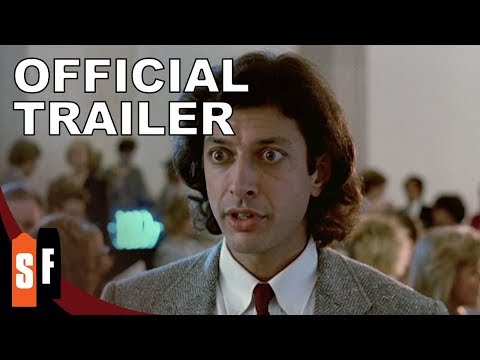
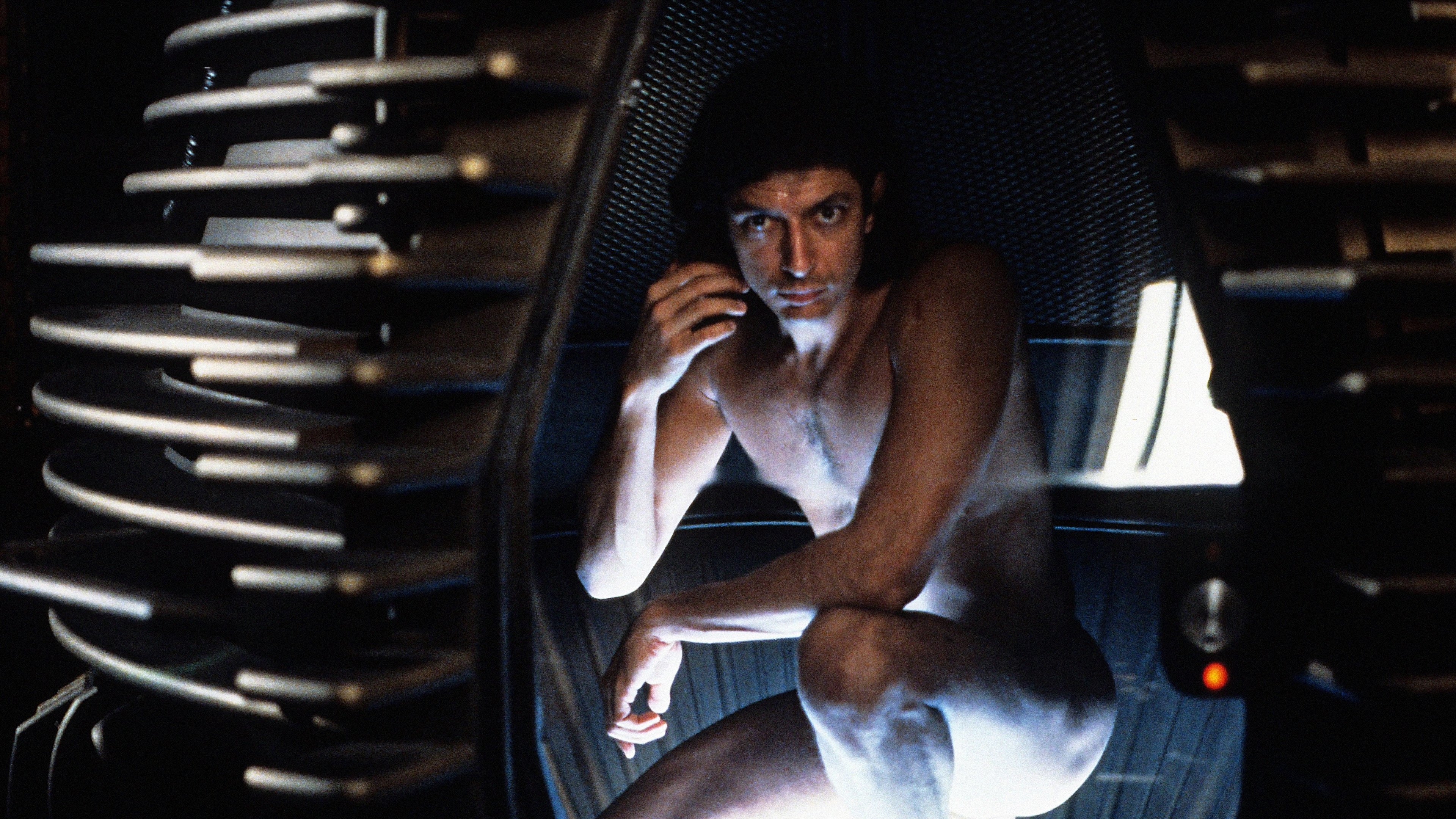
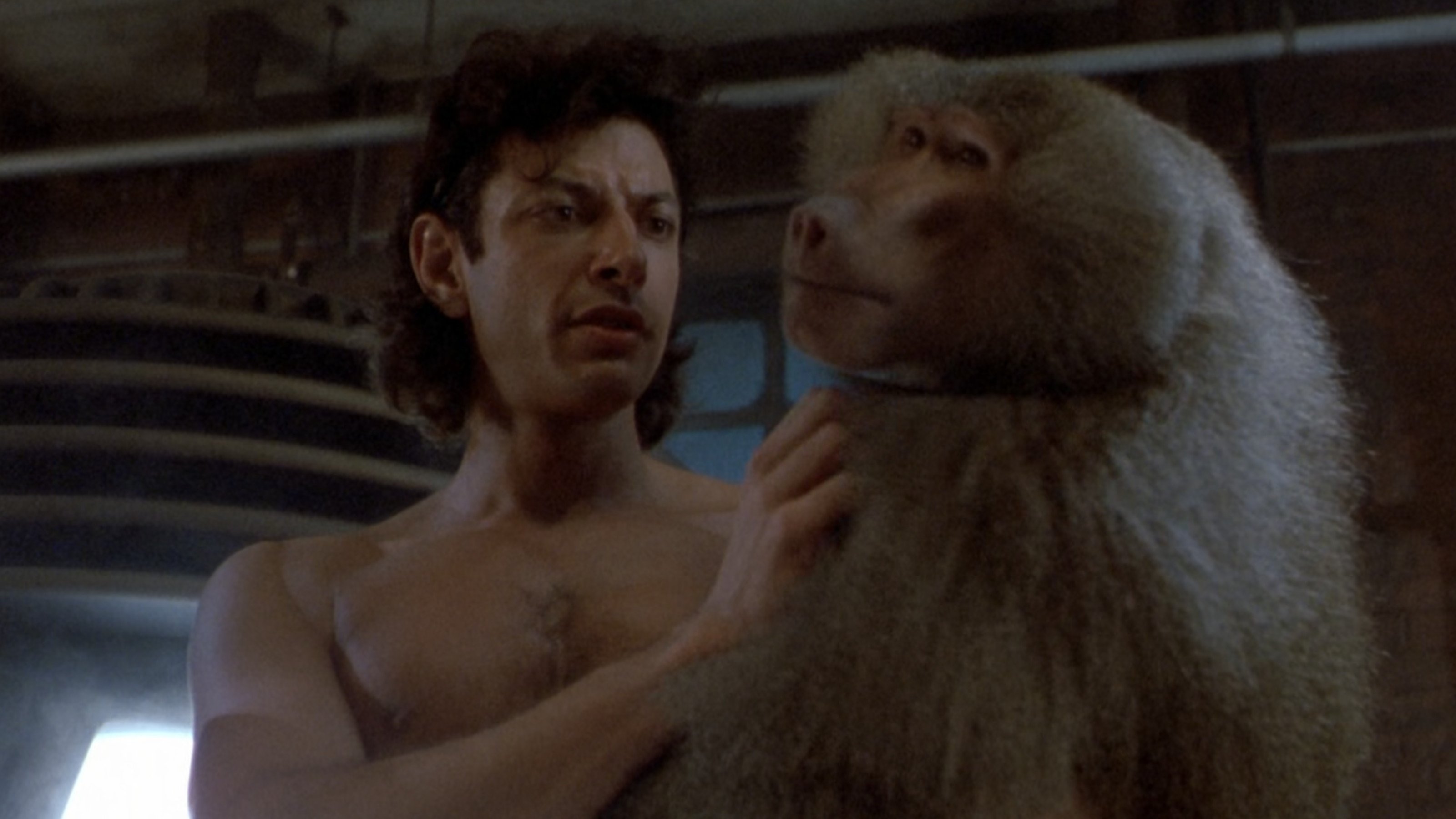
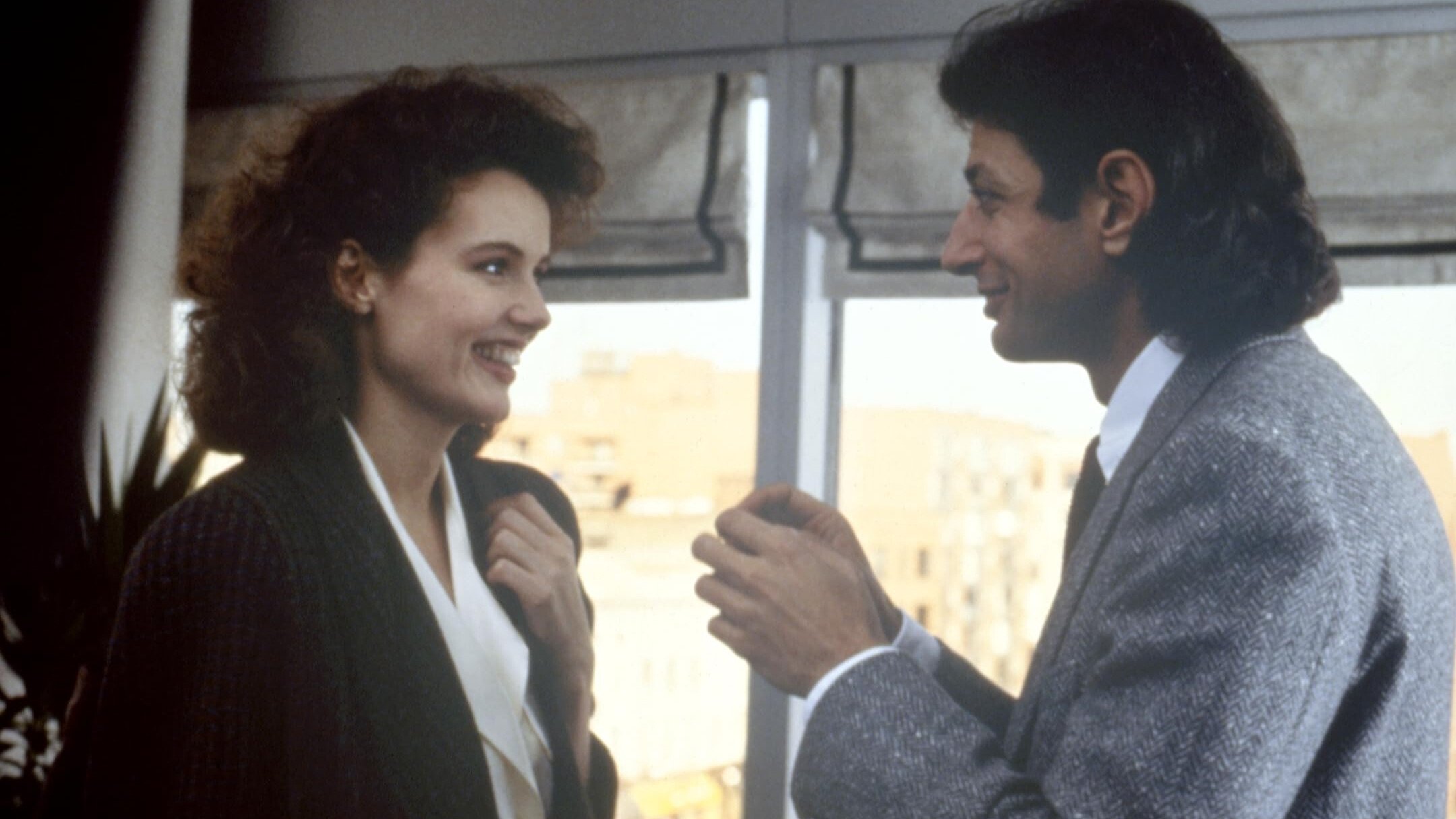
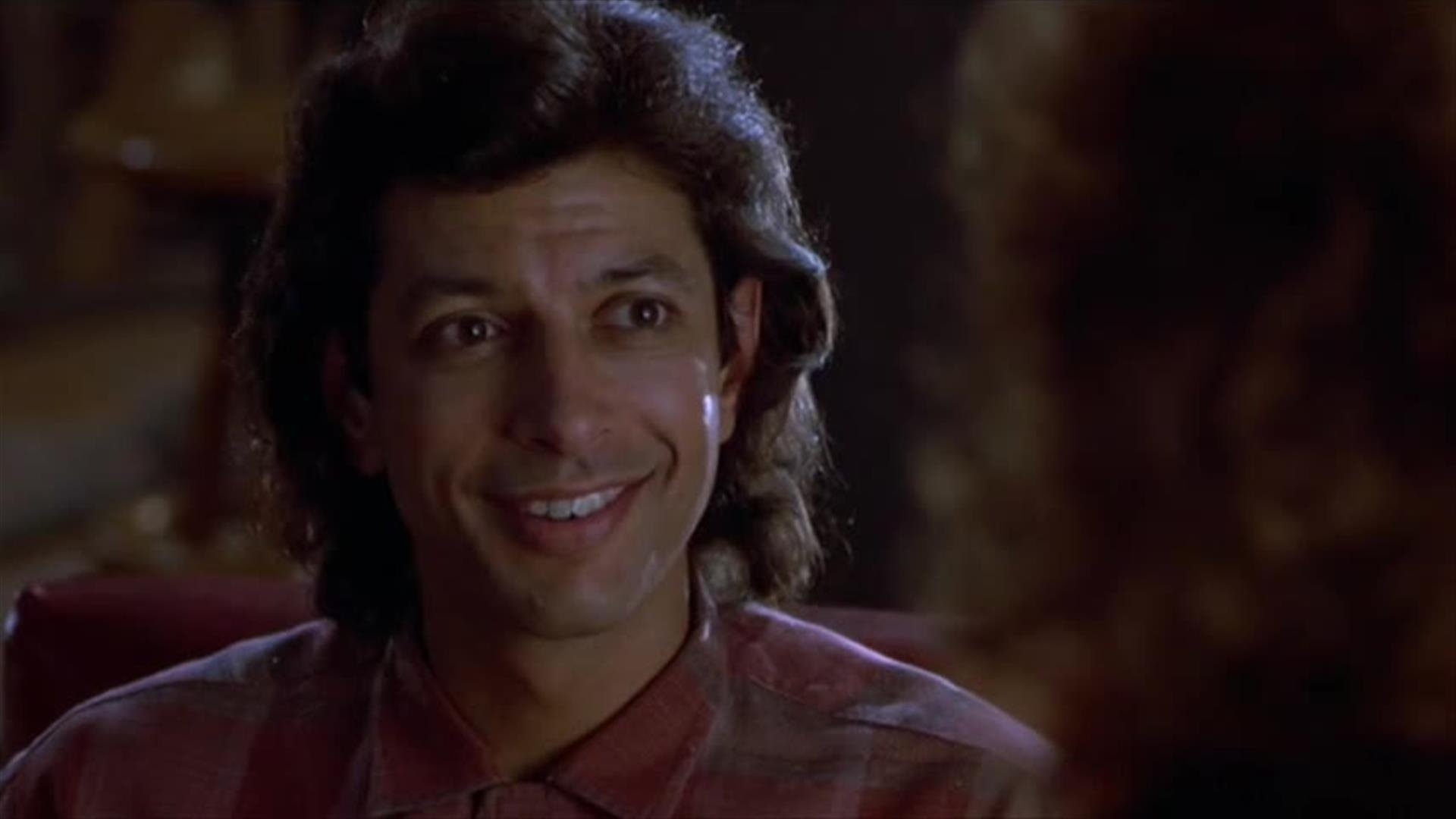
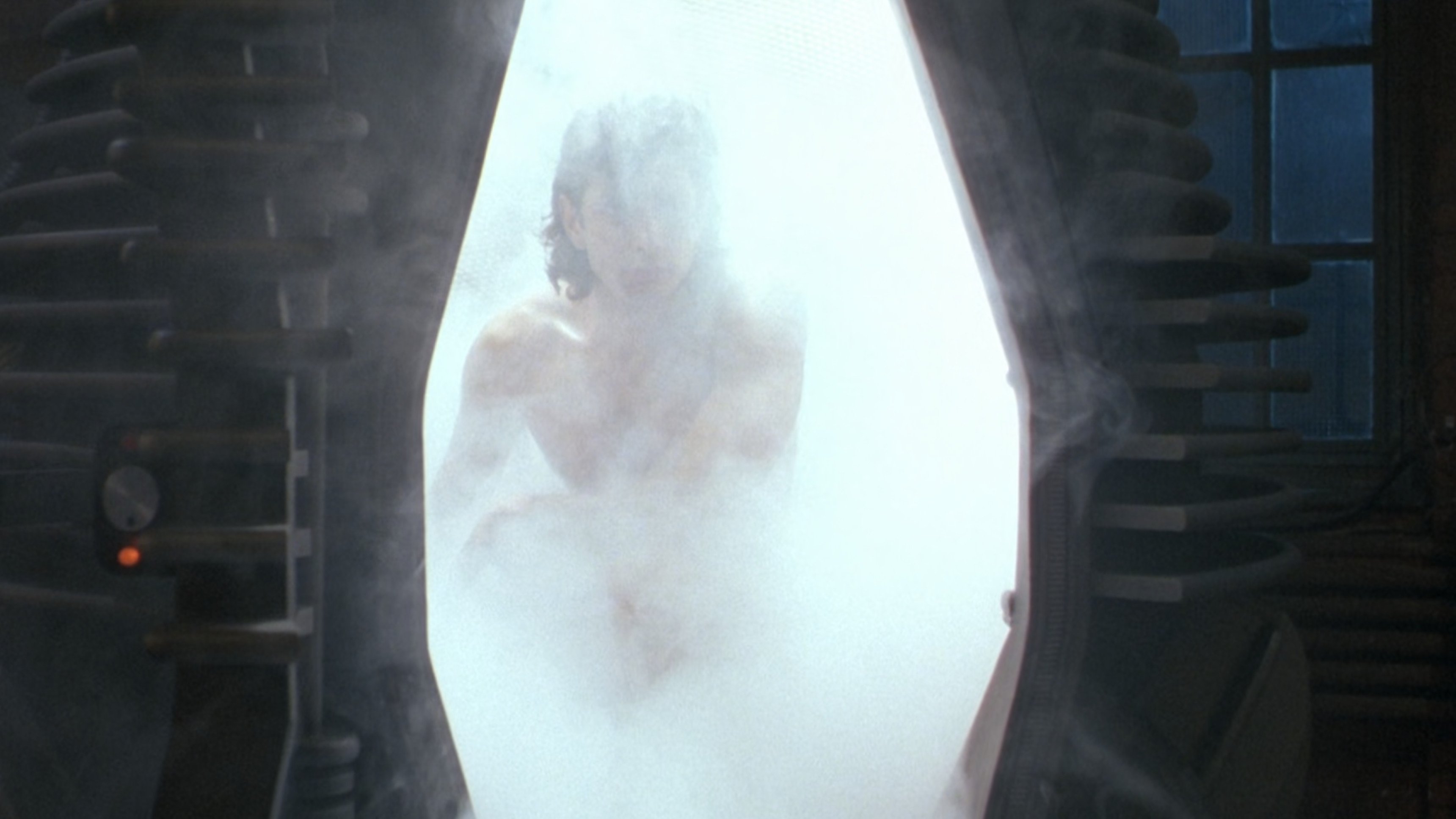
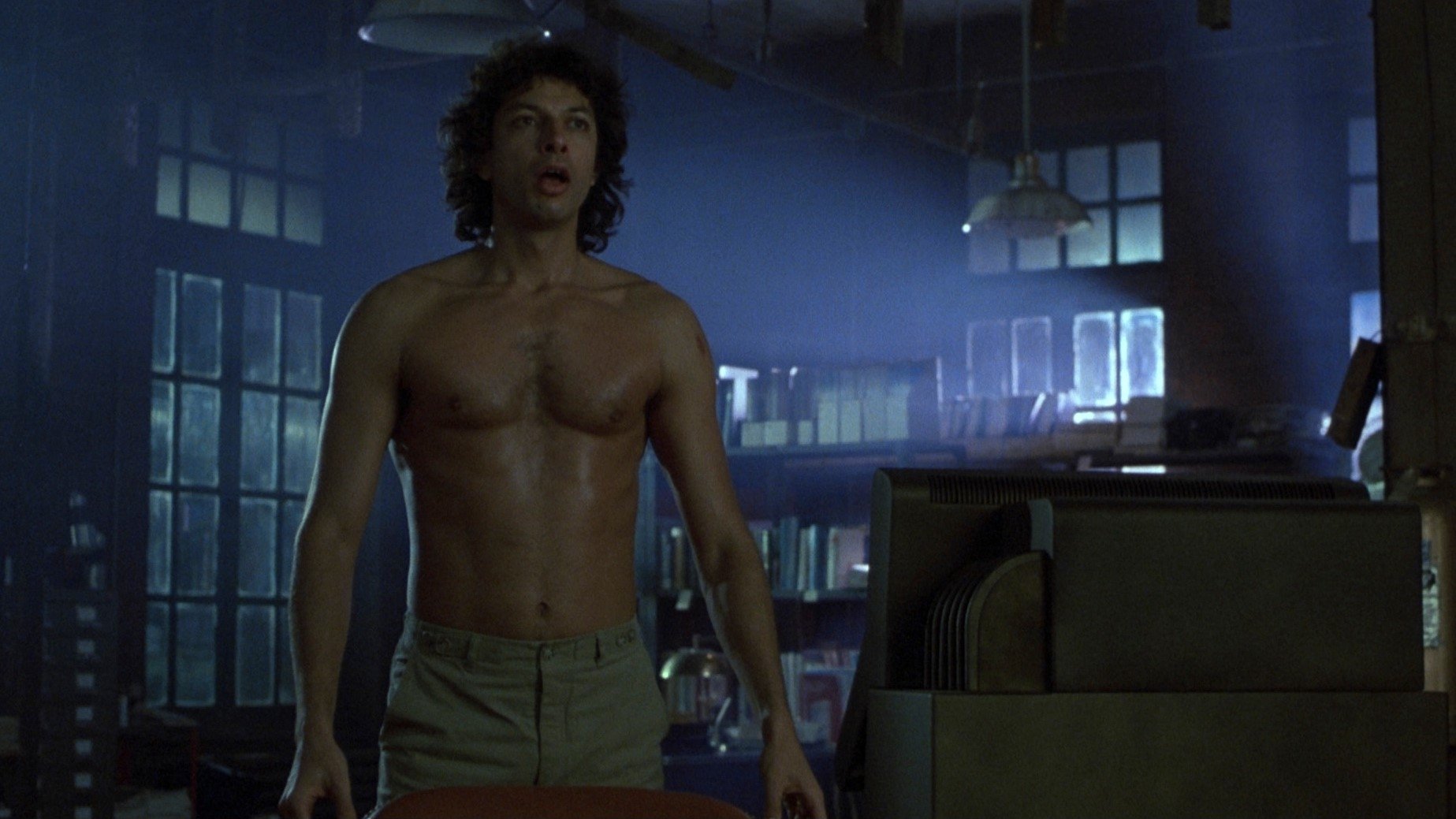
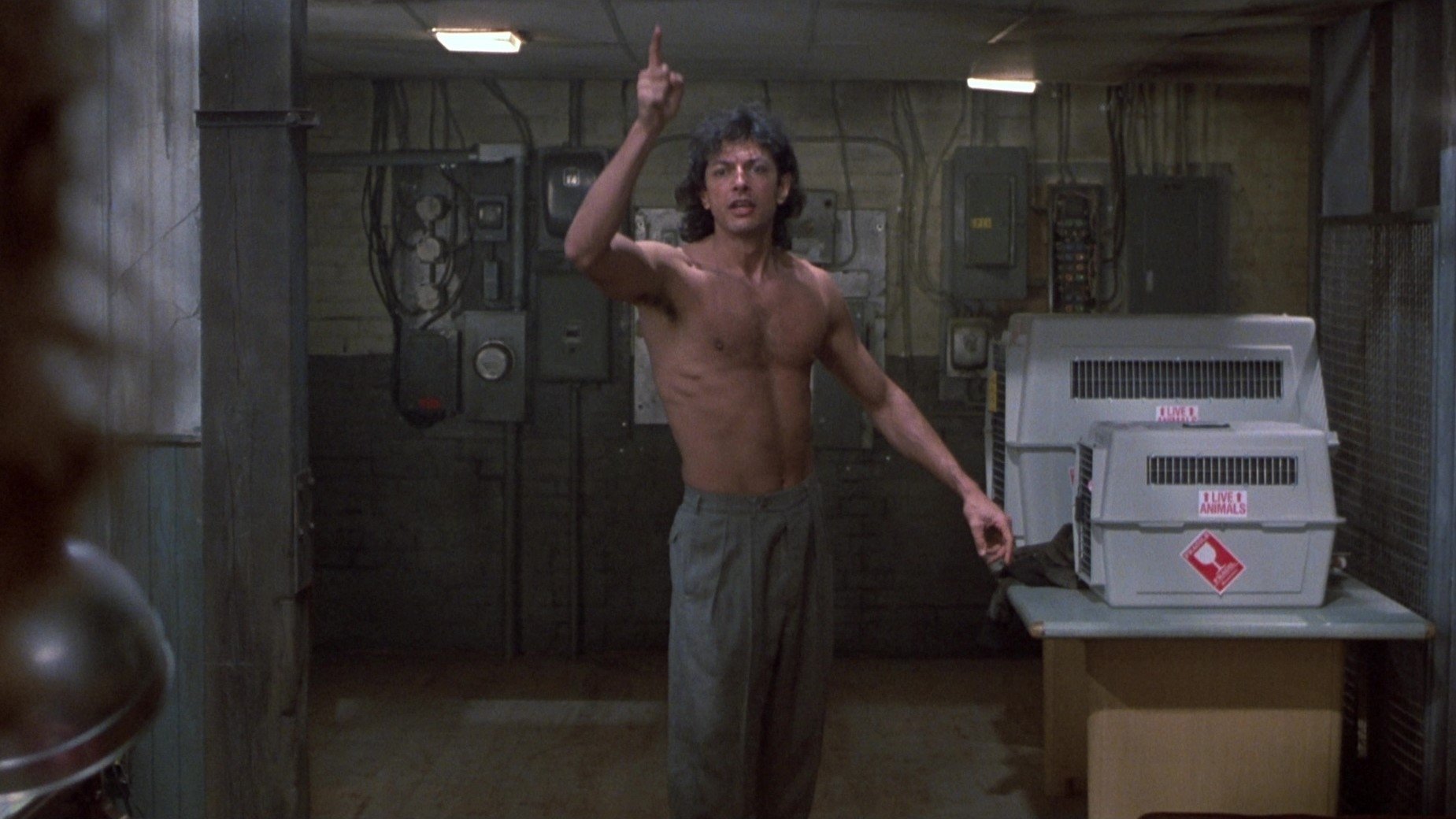
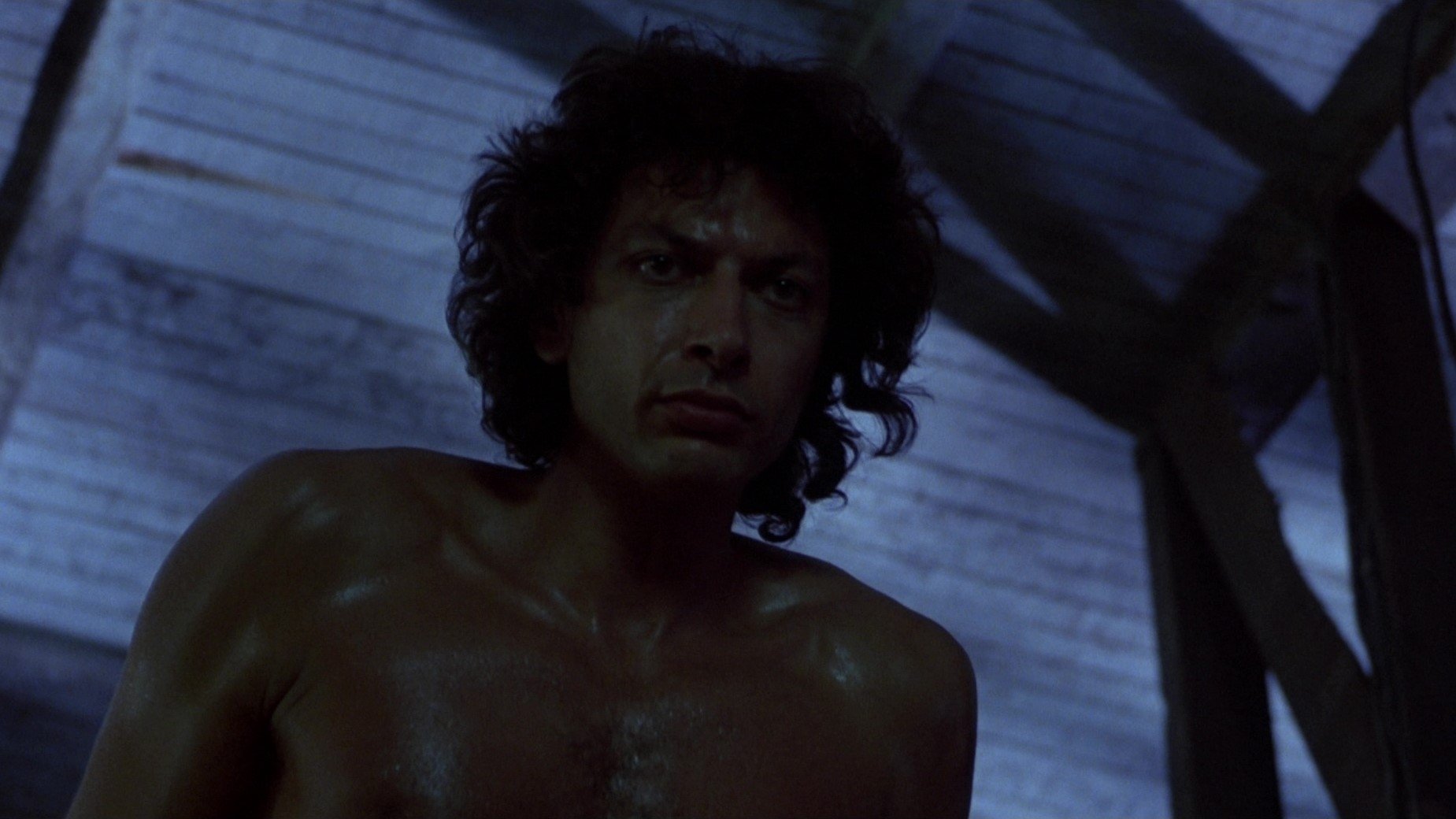
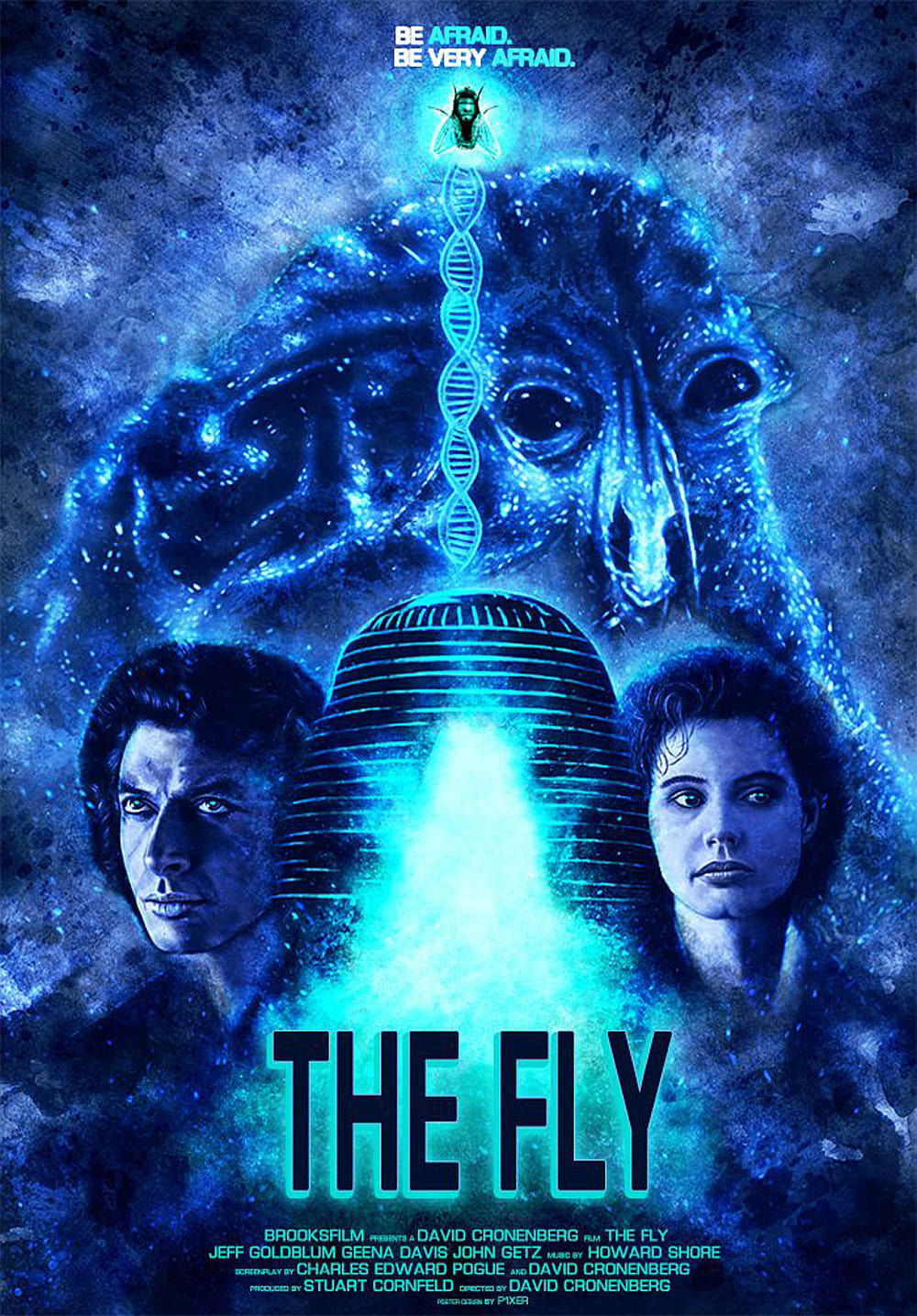
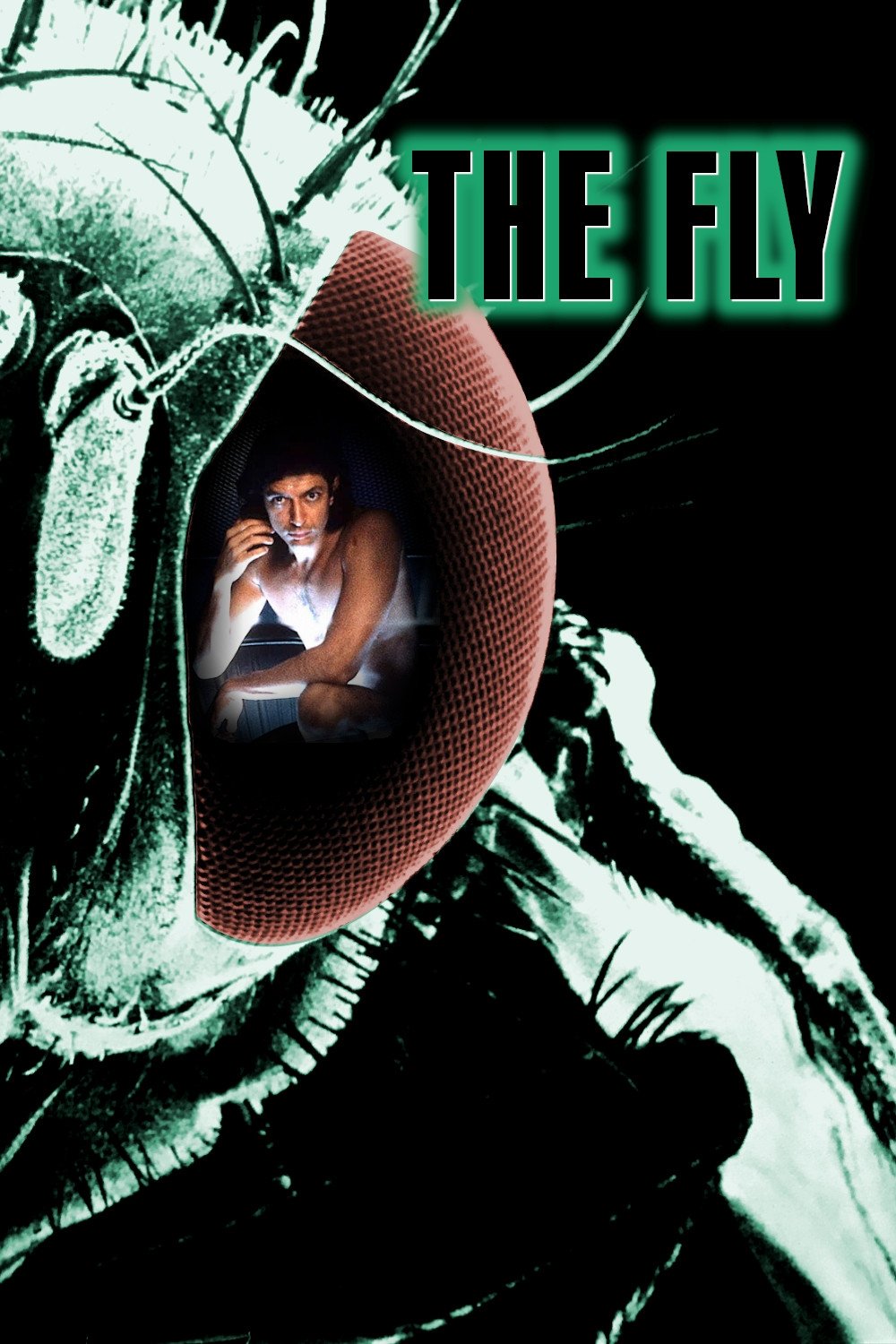
Casting Seth Brundle required an actor capable of remaining expressive through increasingly restrictive makeup. AFI's production history records that John Malkovich and Richard Dreyfuss were among the actors who declined the role before Jeff Goldblum was cast. Goldblum's familiar combination of rapid speech, physical awkwardness and intellectual confidence makes the early Brundle eccentric without immediately making him threatening. That personality becomes essential later because the transformation does not simply replace an ordinary man with a monster; it distorts characteristics already visible in the scientist before the accident.
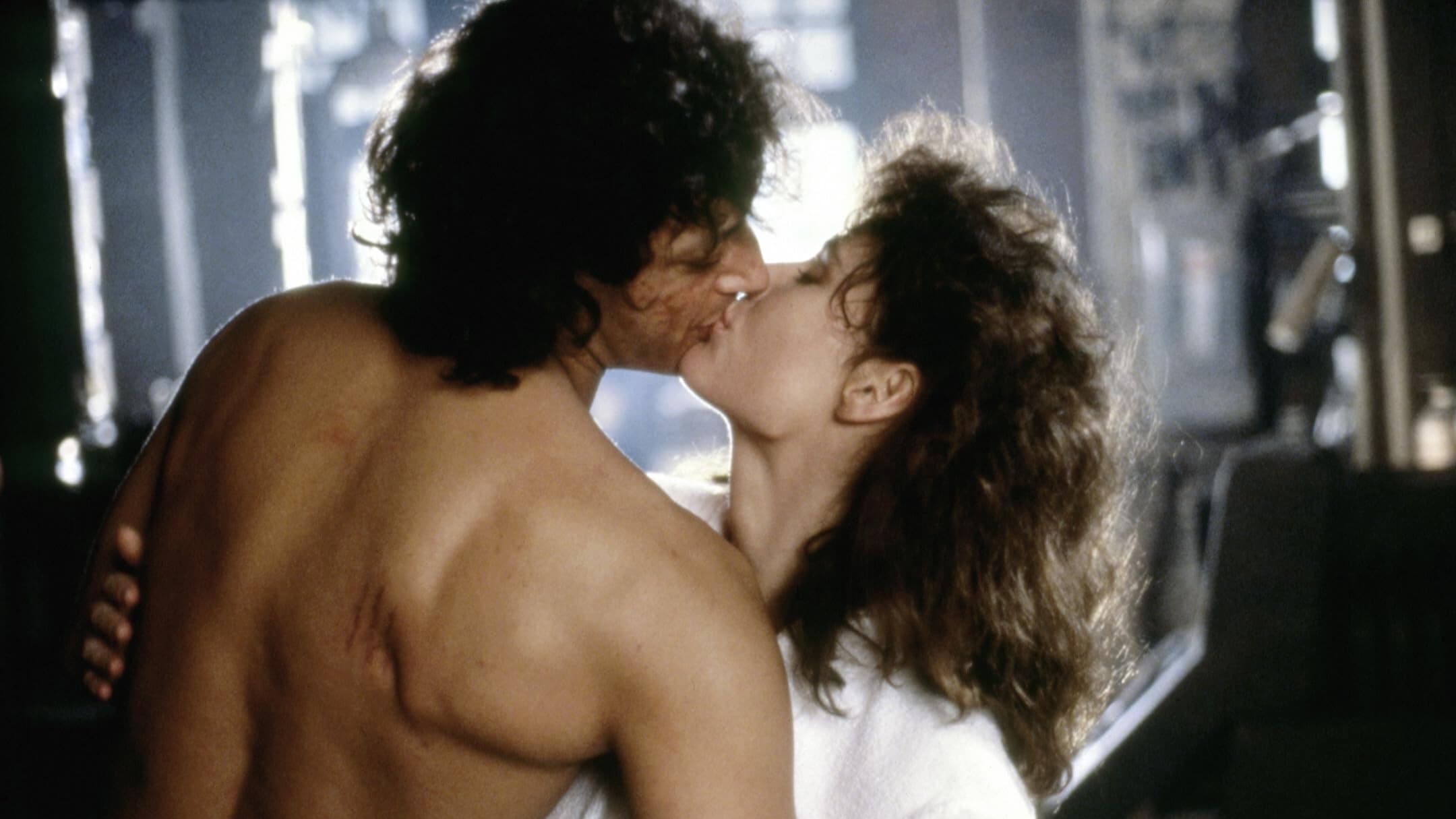
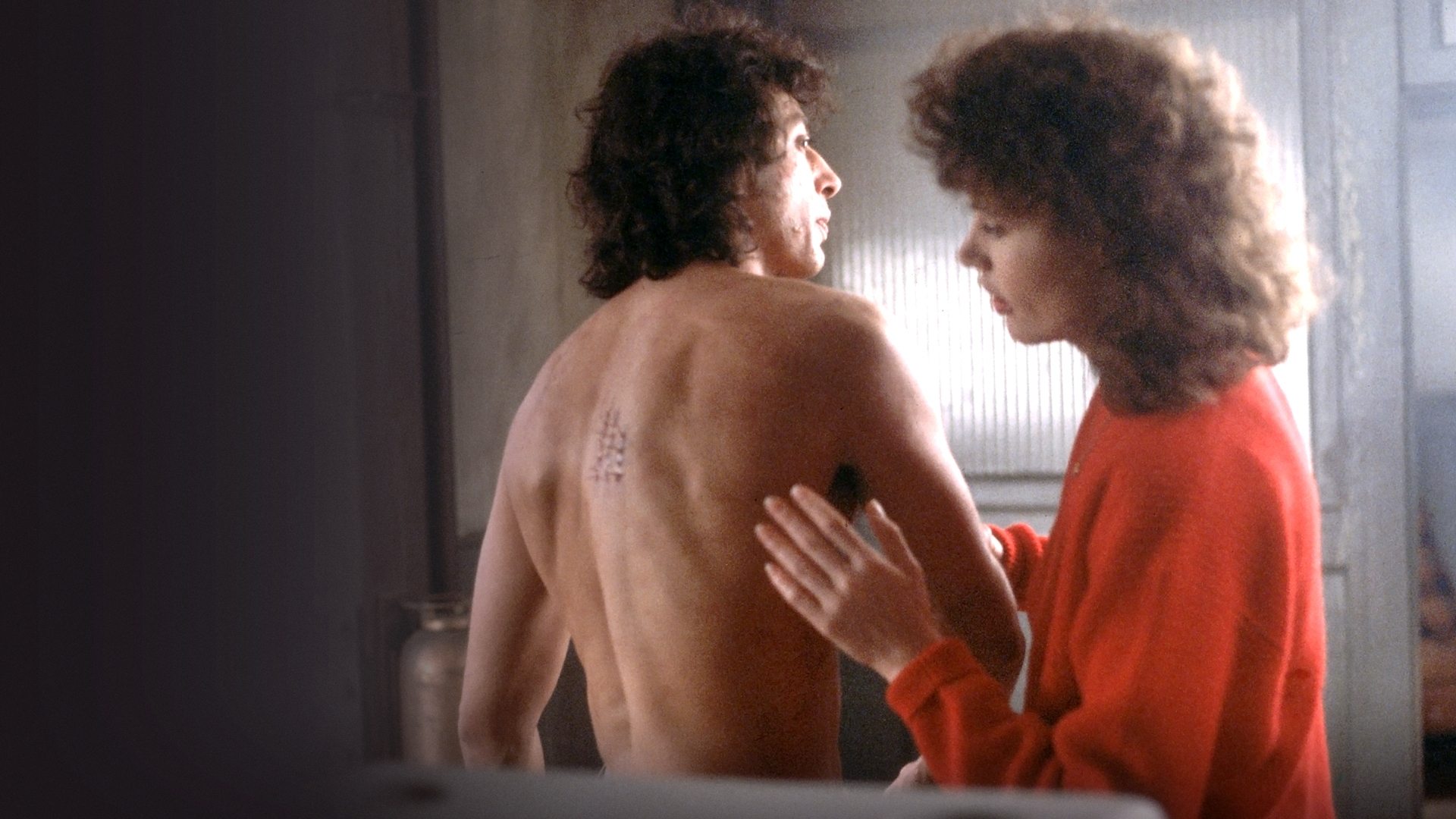
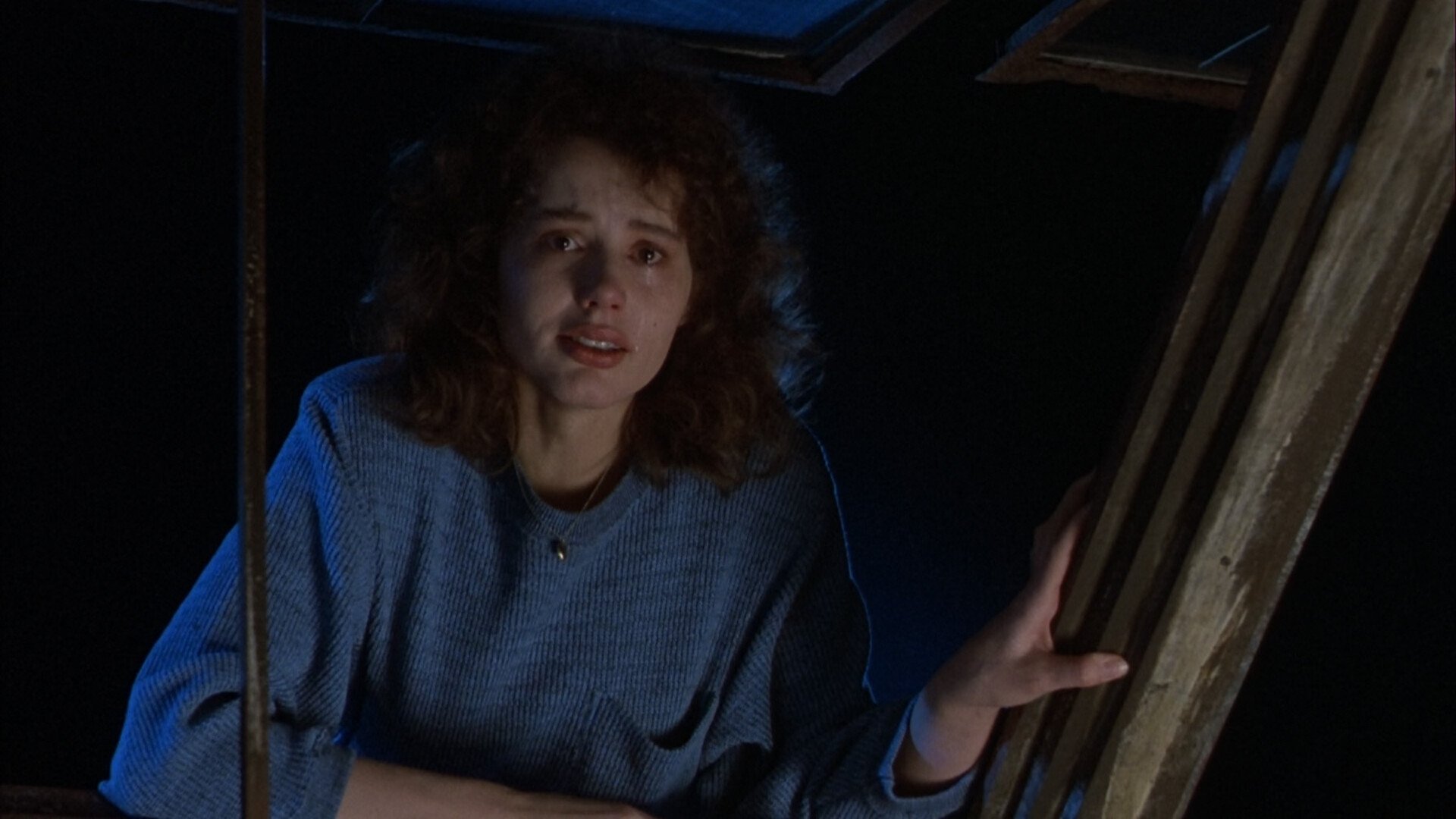
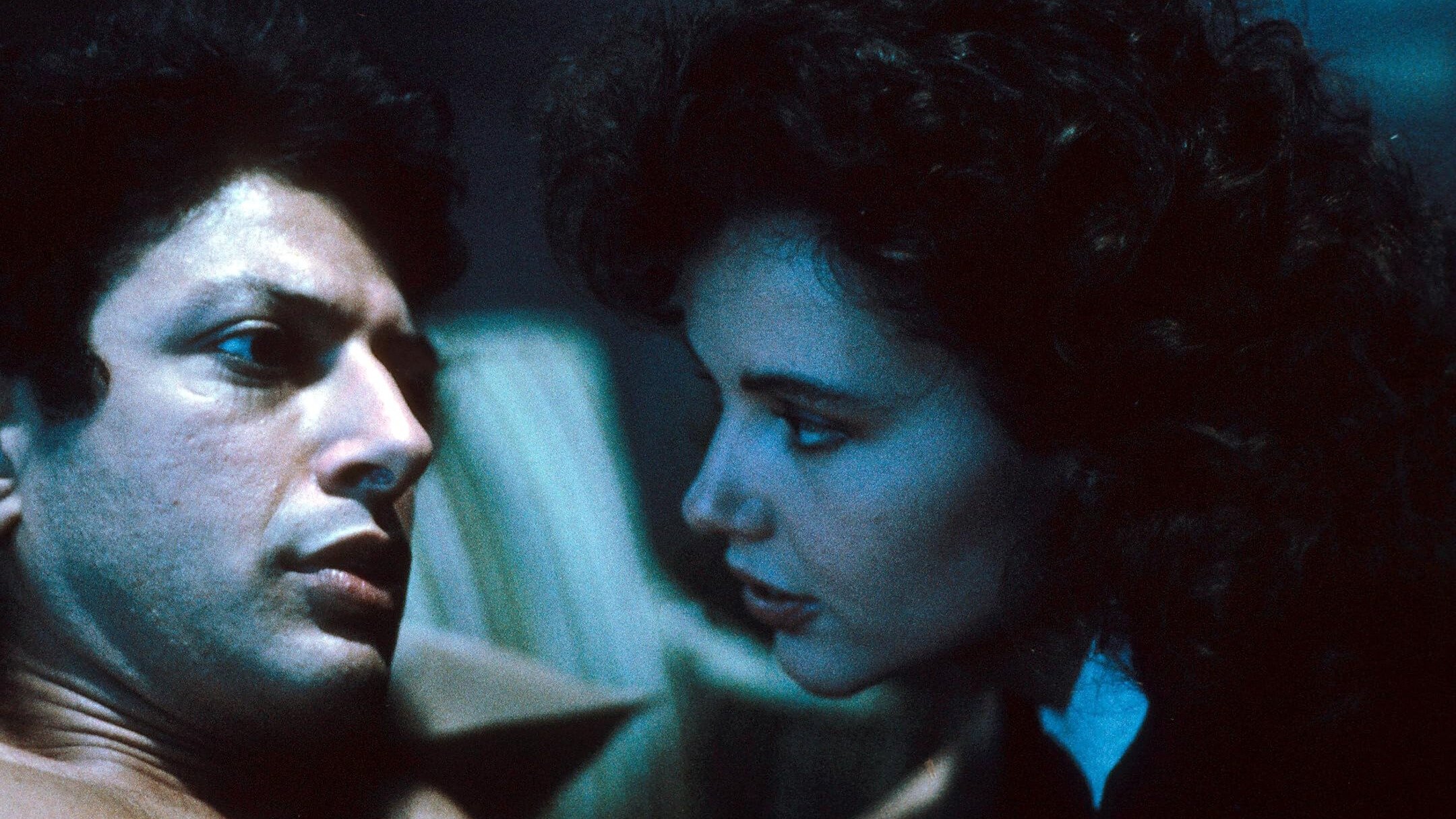
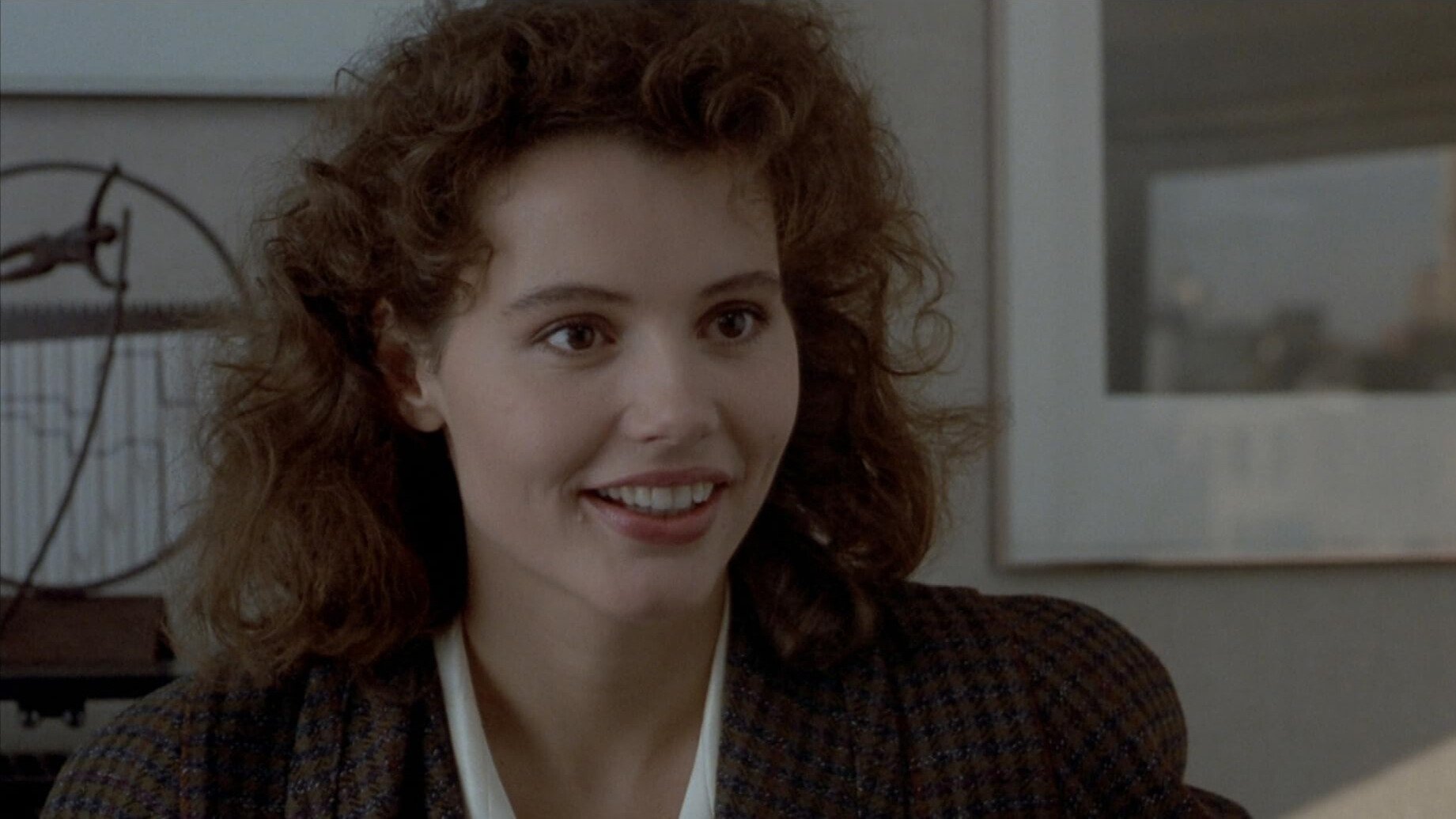
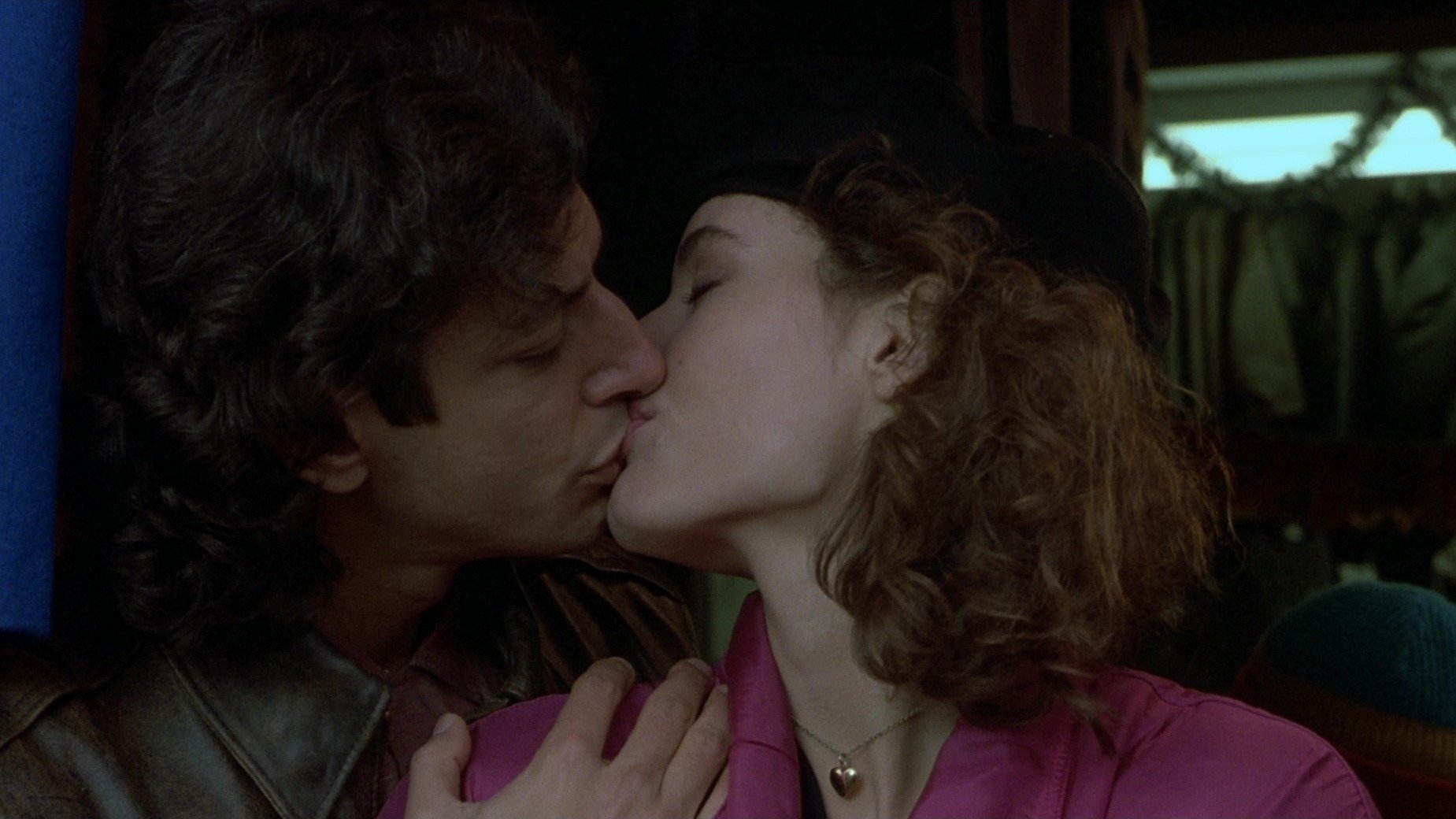
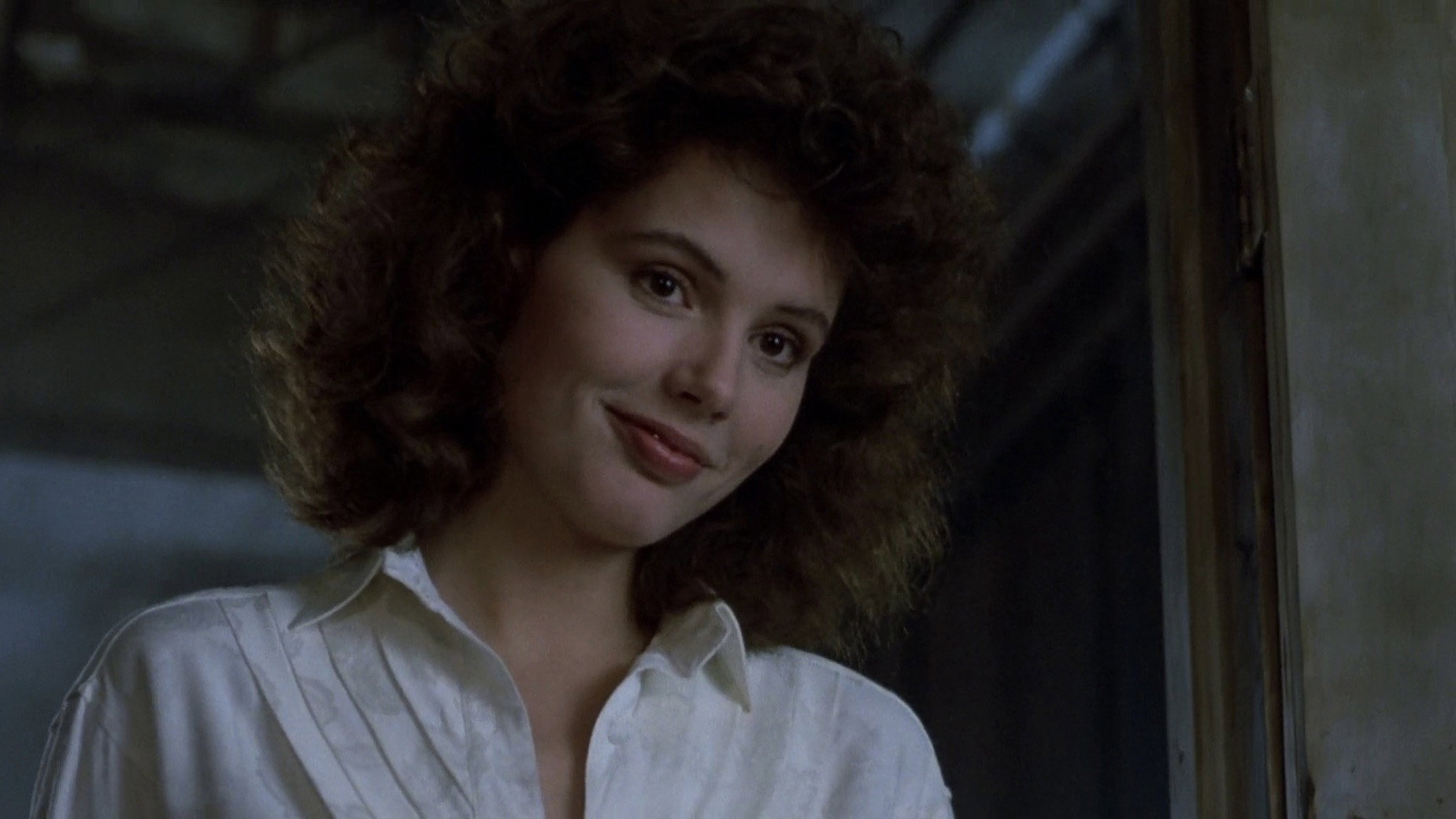
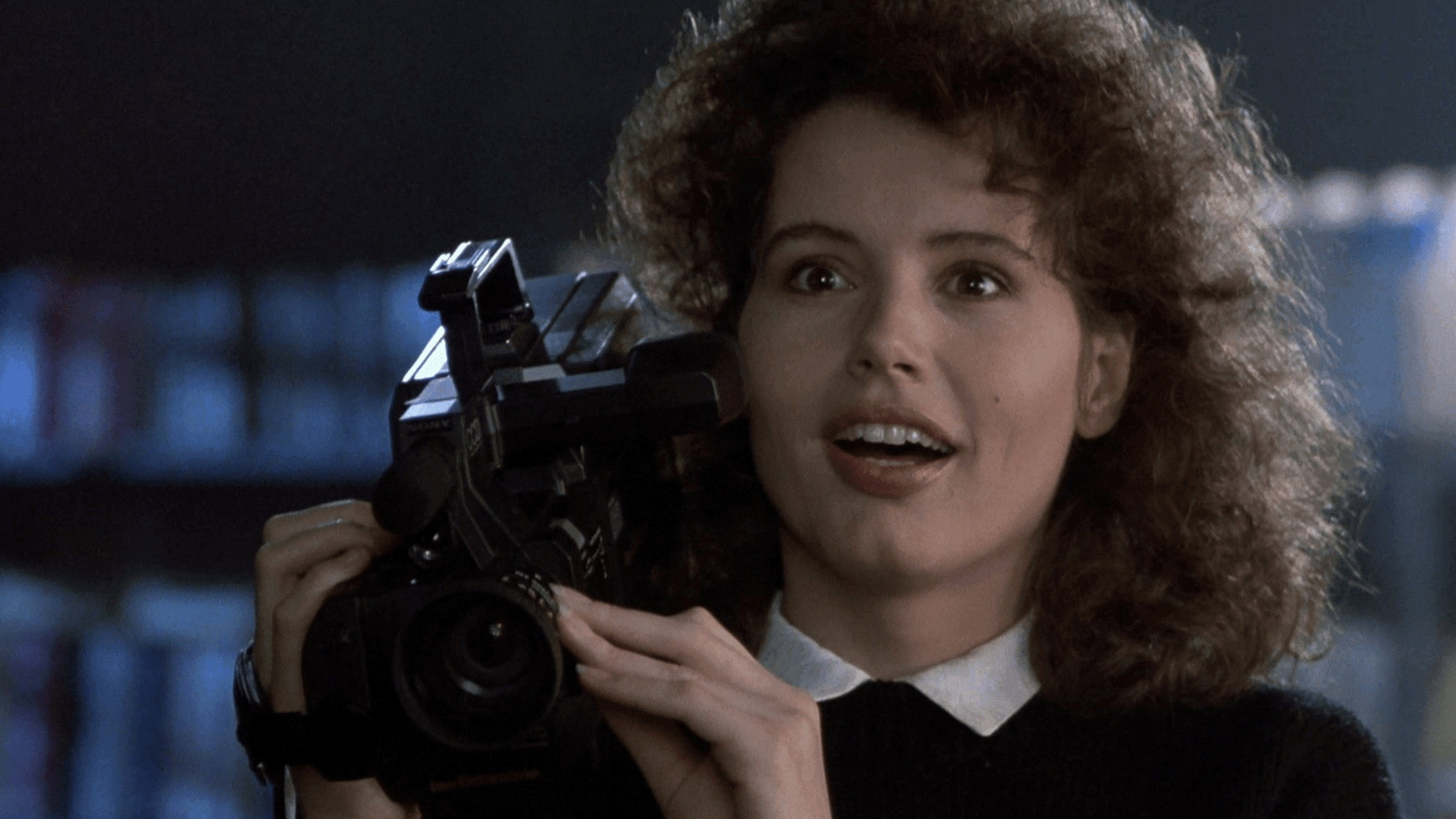
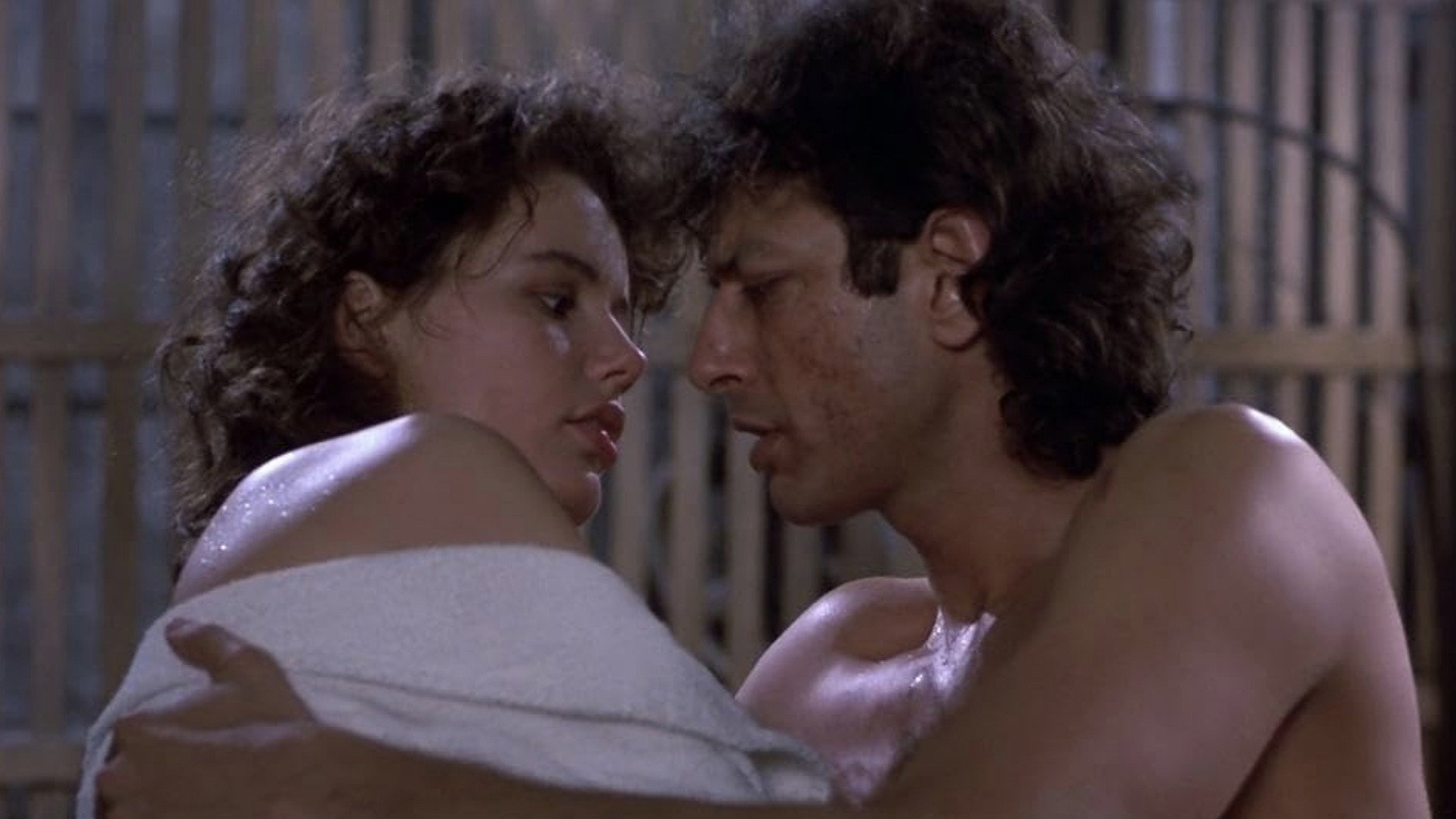
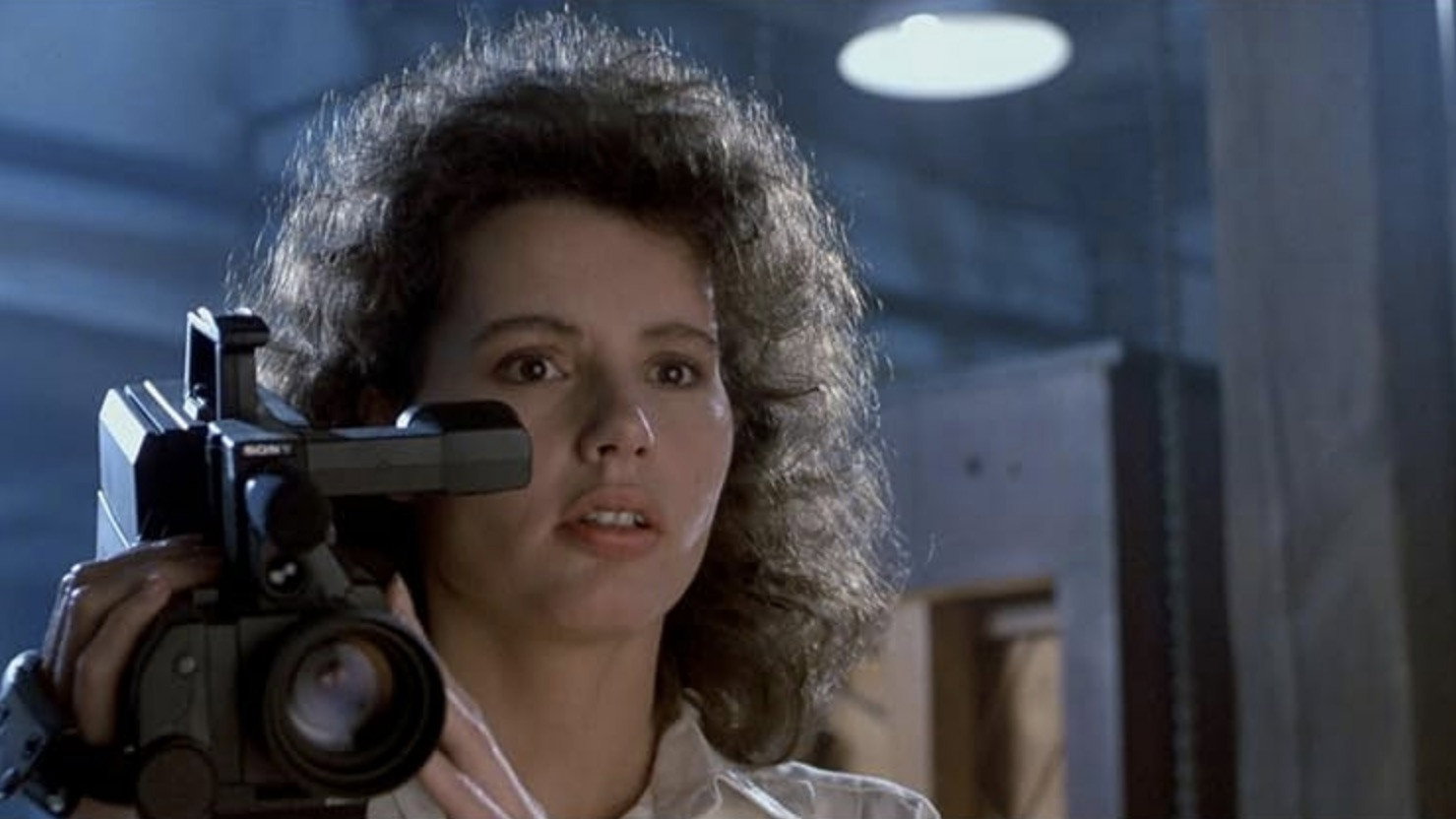
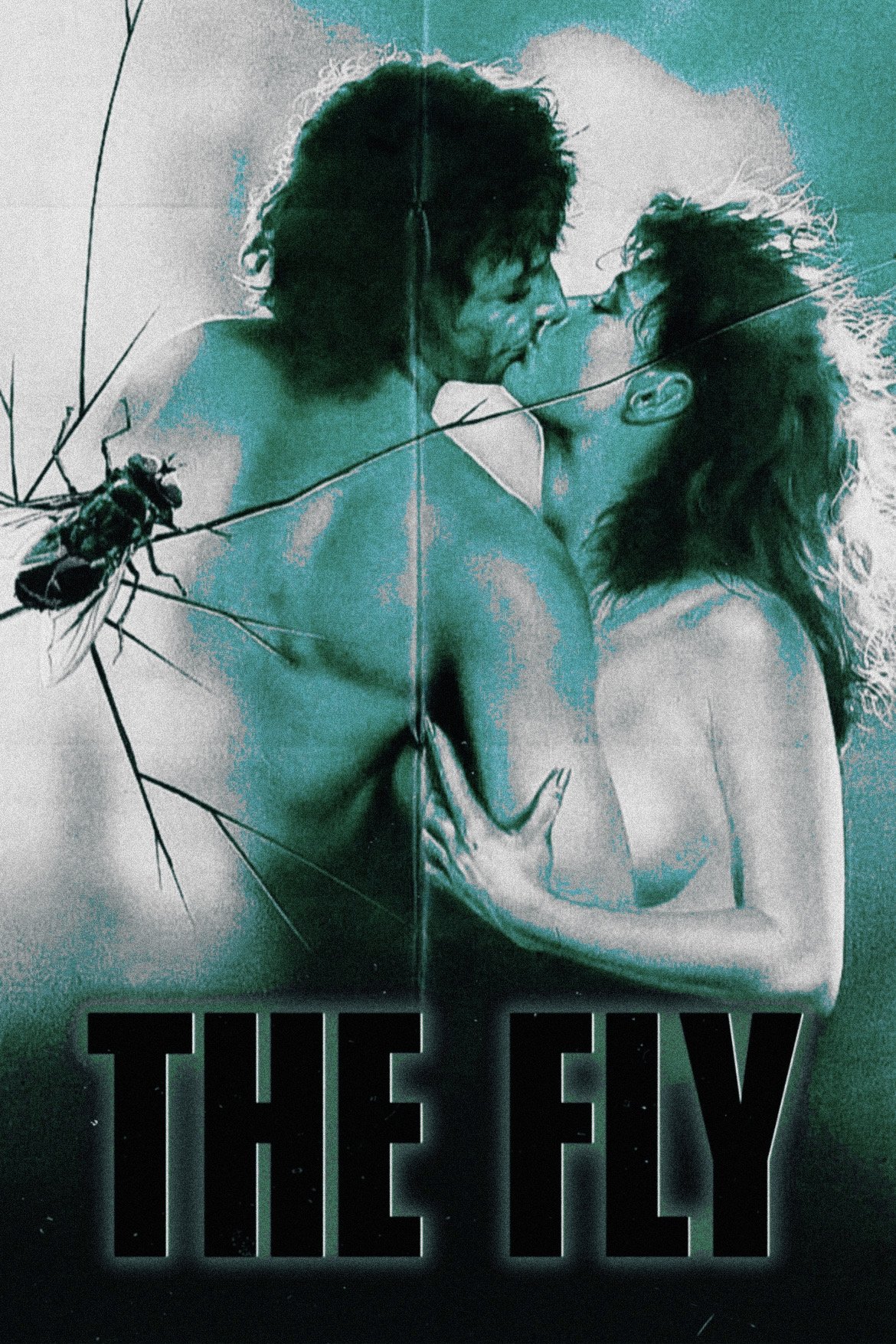
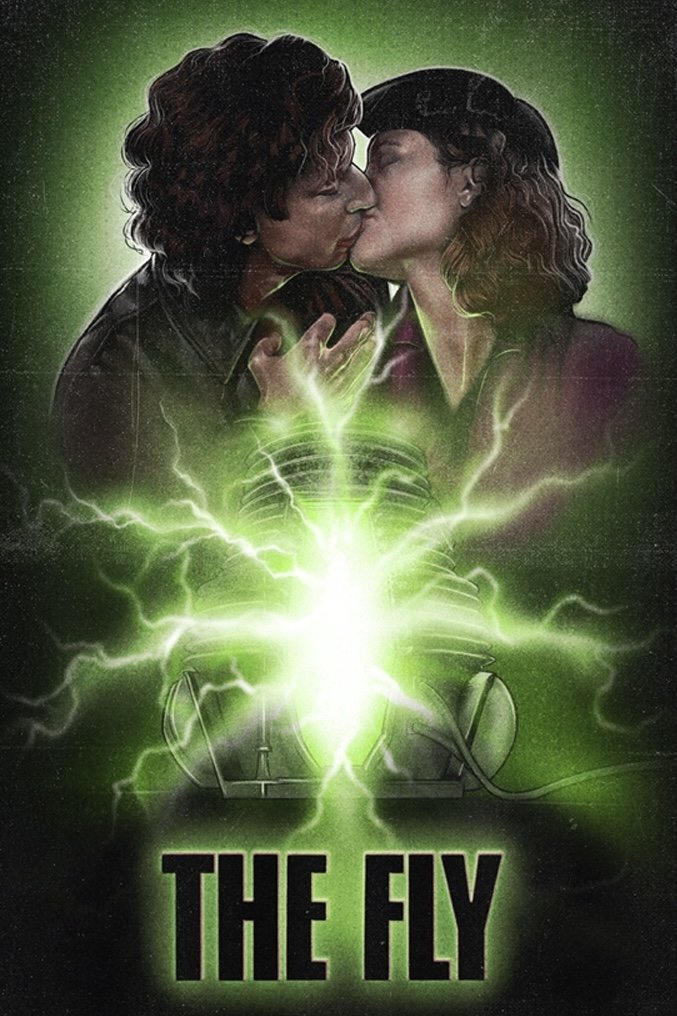
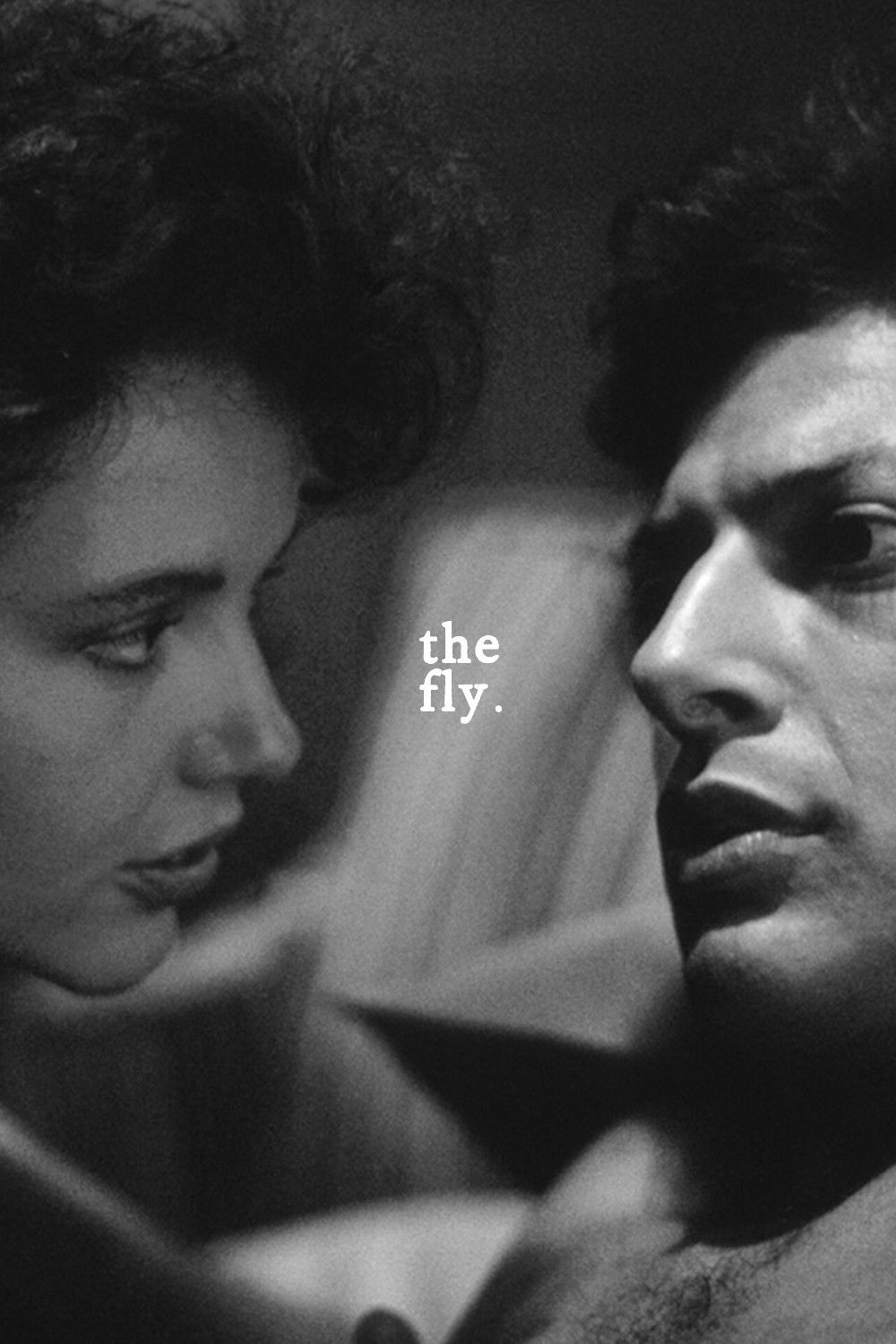
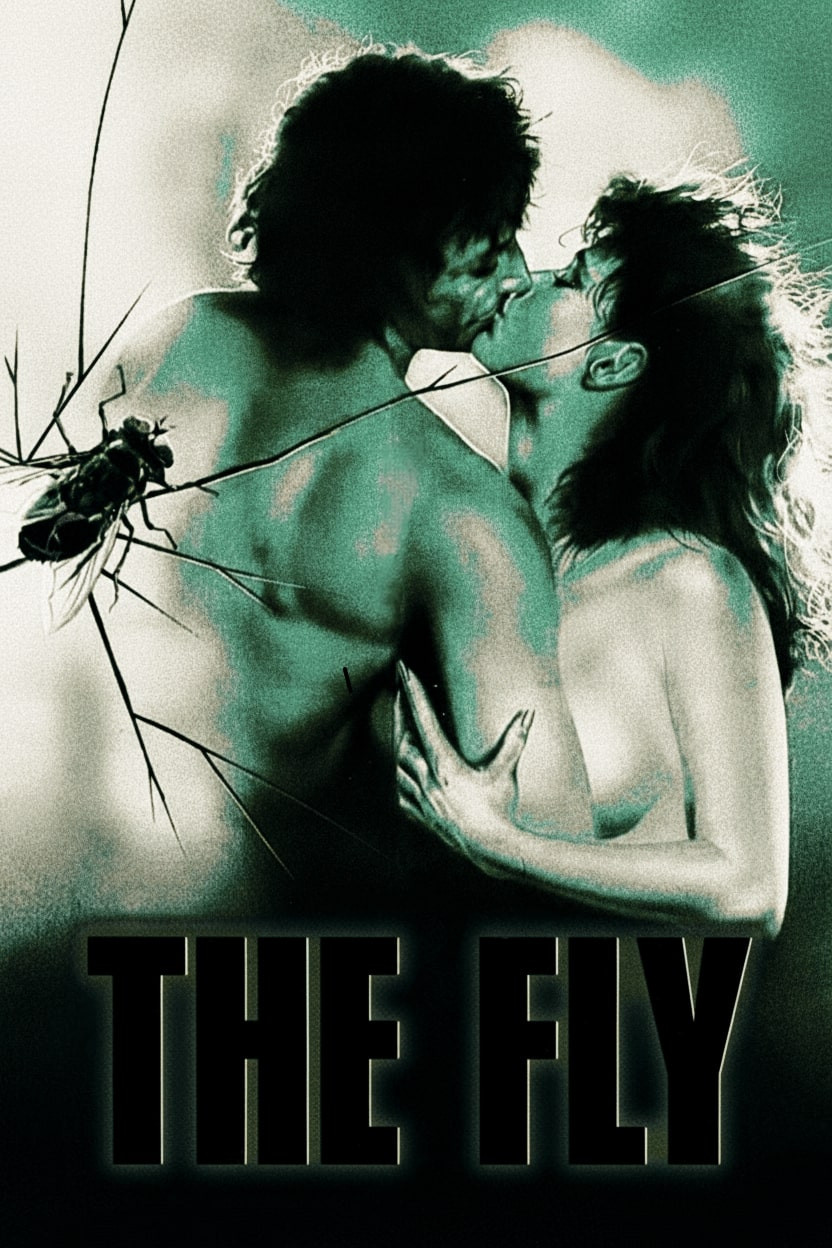
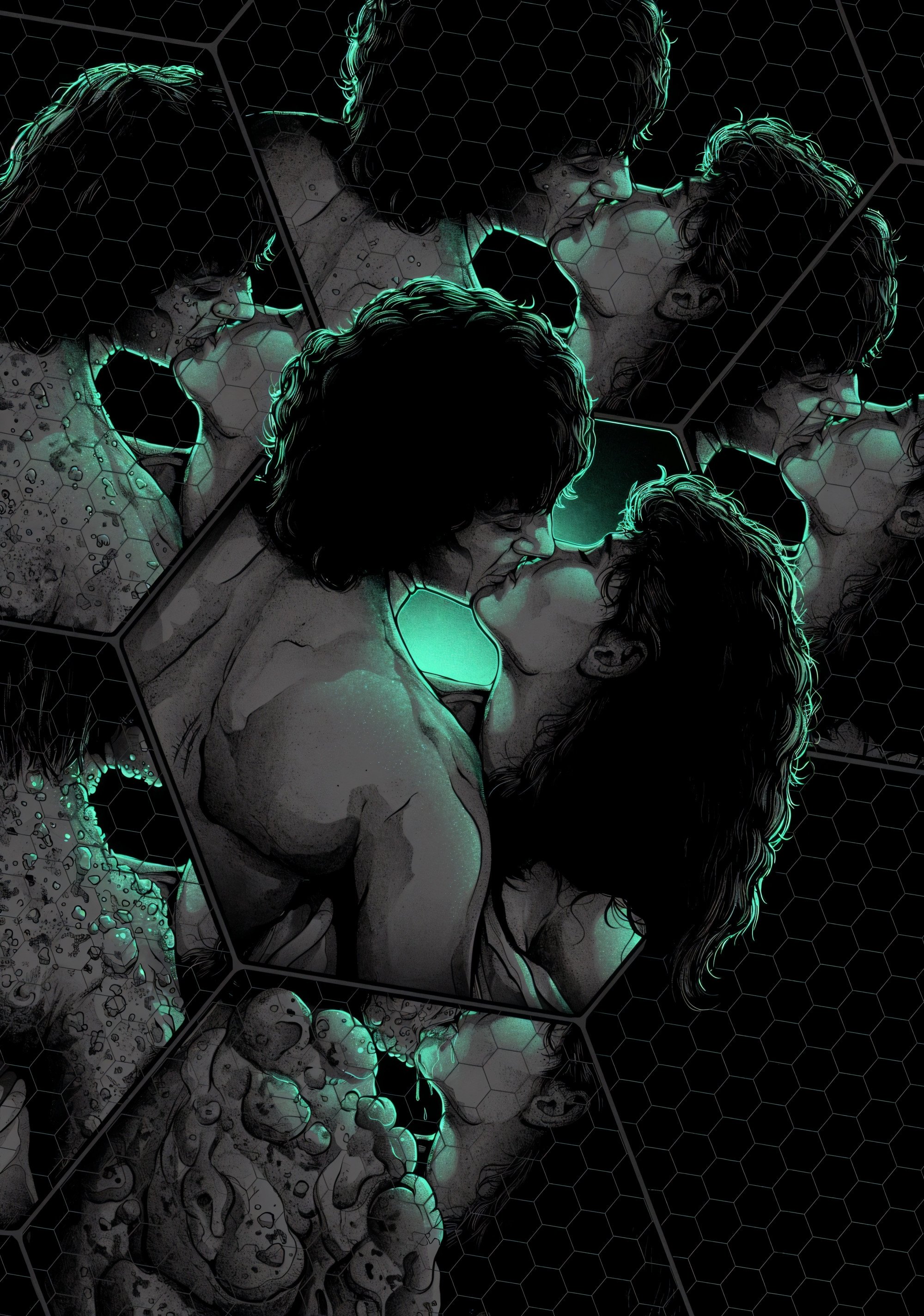
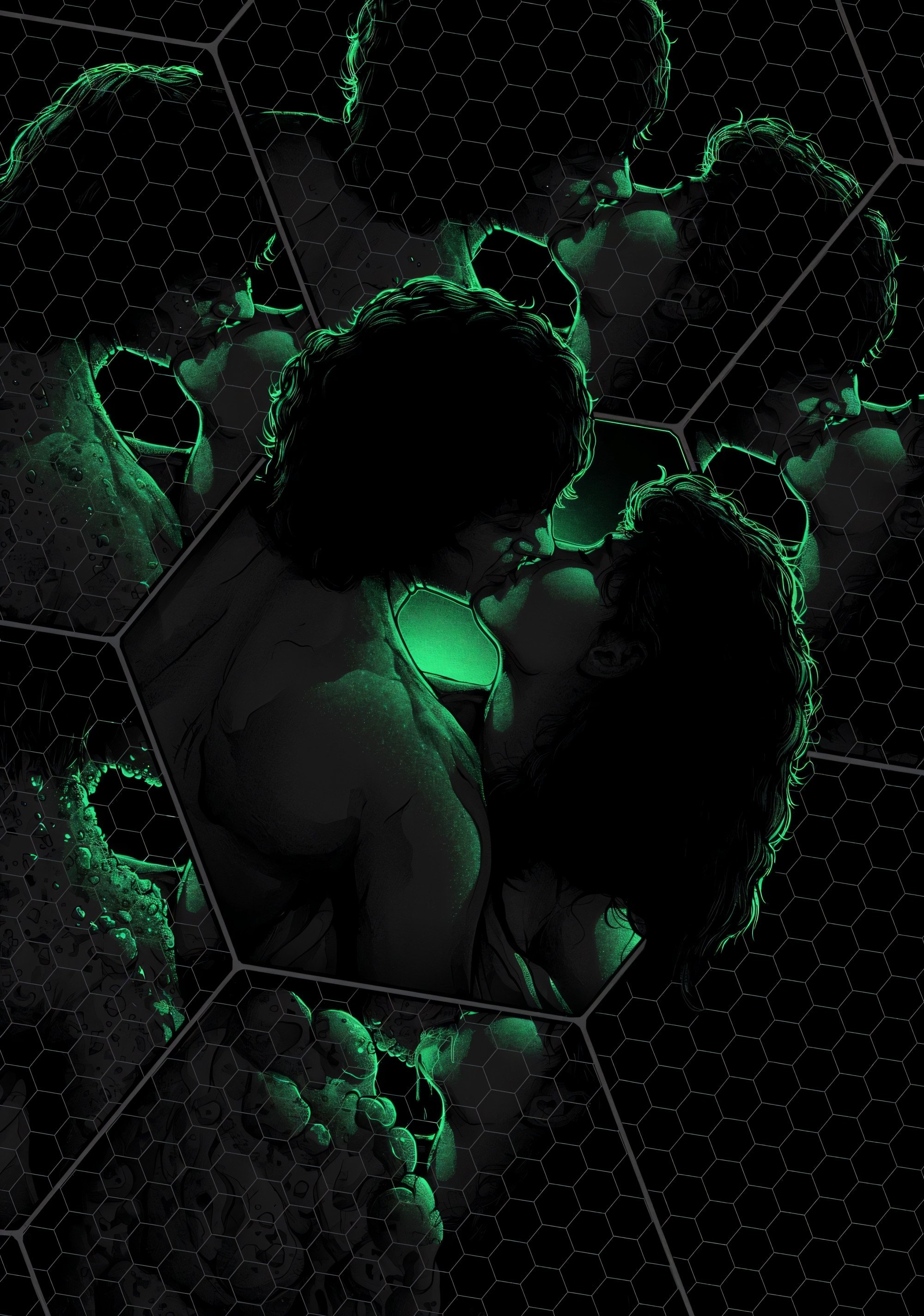
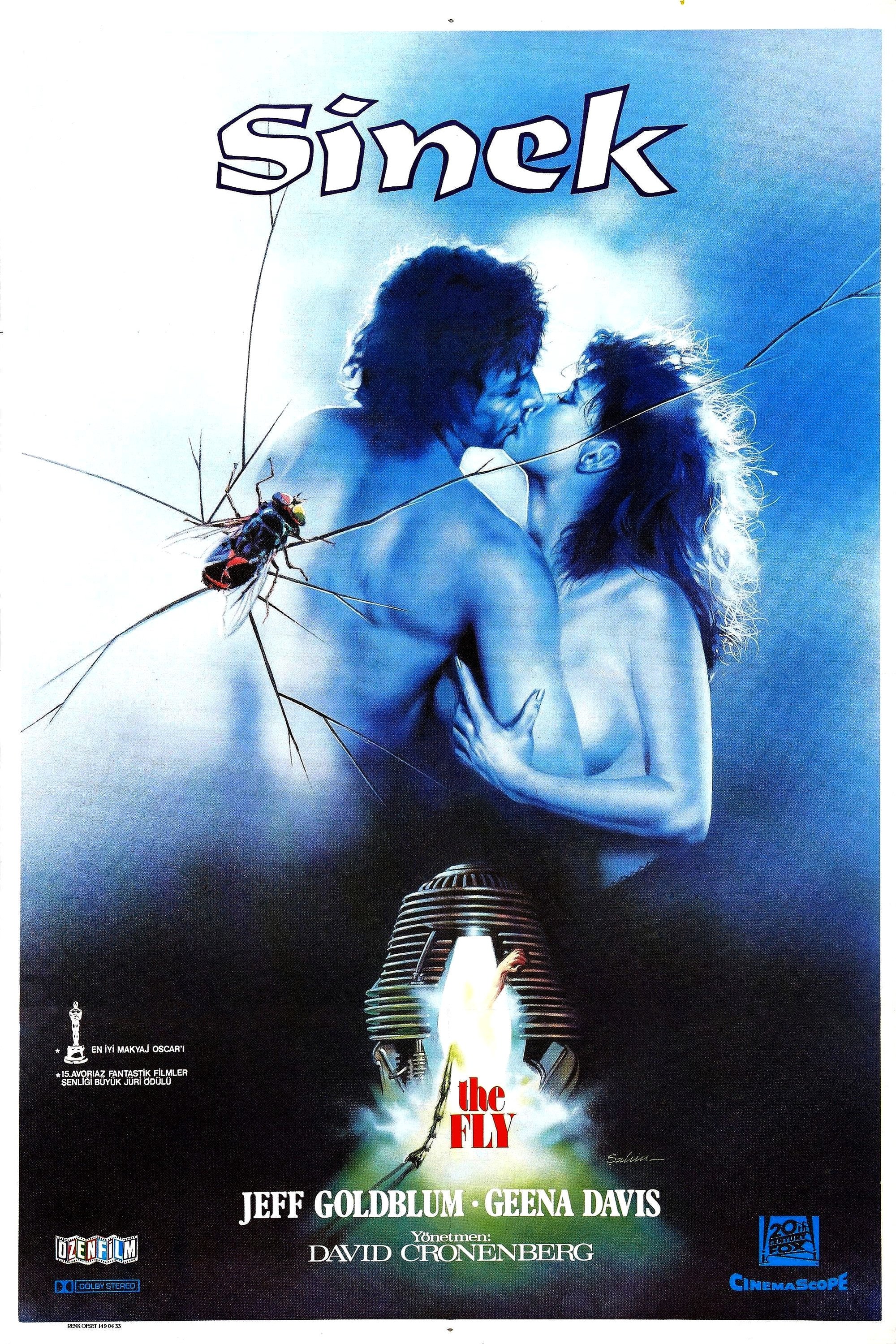
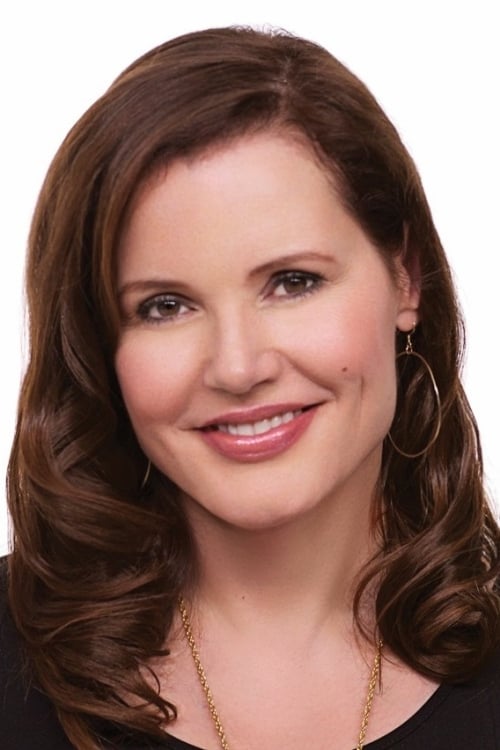
Cronenberg pursued Geena Davis separately for Veronica Quaife, despite Davis and Goldblum being romantically involved at the time. Veronica begins as a journalist interested in documenting the teleporter and gradually becomes the person most capable of recognising what is happening to Brundle. The relationship changes accordingly. Early scenes are playful and sexual, while later encounters increasingly resemble the experience of caring for somebody who is deteriorating physically while refusing to understand his condition in the same terms as those around him.
That emotional structure separates The Fly from a conventional creature feature. Brundle's transformation matters because Veronica remembers who he was before every new stage, while Brundle increasingly constructs explanations that allow him to believe the changes represent progress. Pregnancy intensifies the problem by making bodily transformation no longer exclusively his concern. Veronica must consider whether the genetic contamination affecting Brundle could extend to their unborn child, turning reproduction itself into another area where intimacy, biology and fear become inseparable.
Toronto, Carol Spier & Mark Irwin's Changing Light
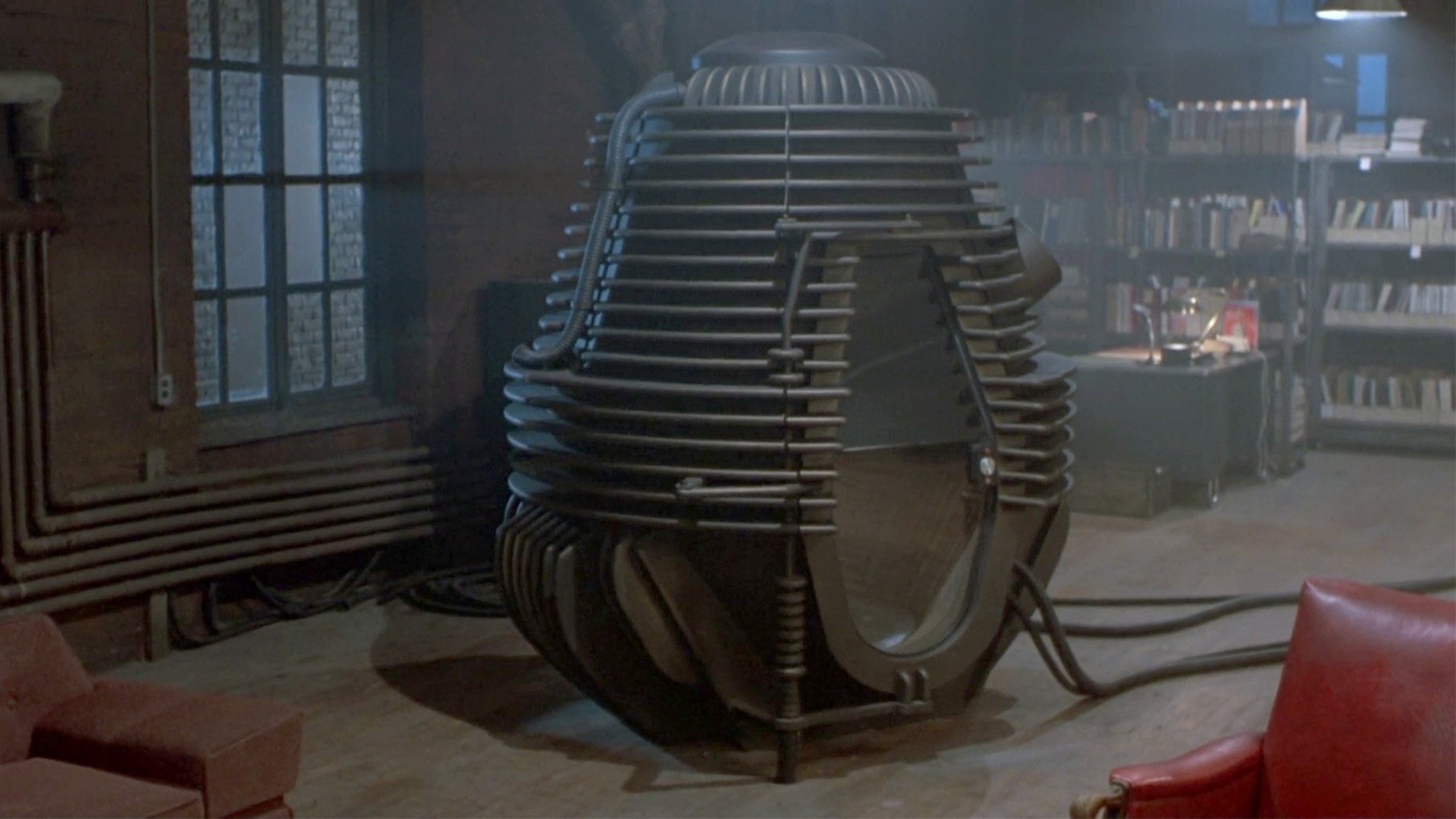
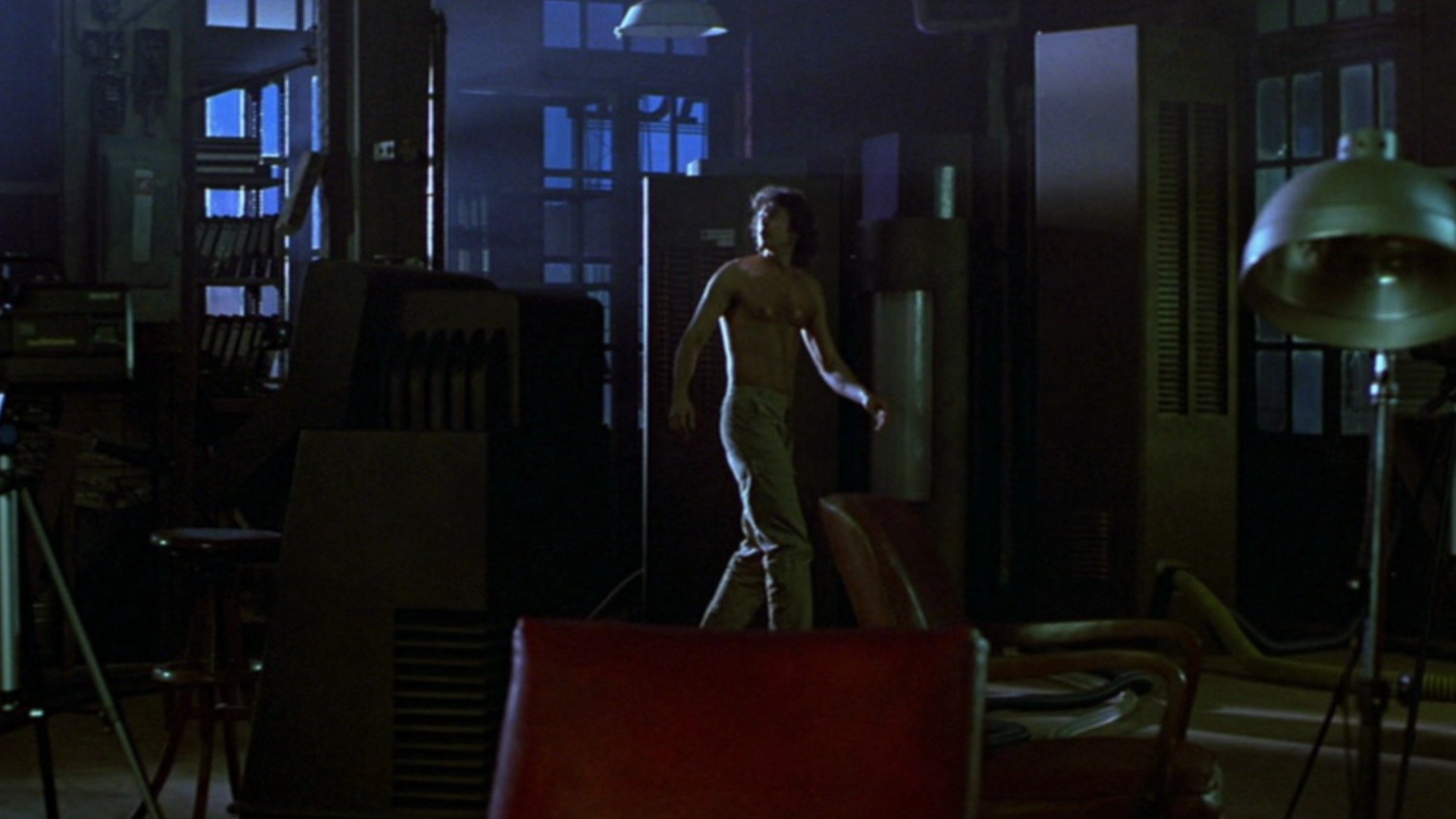
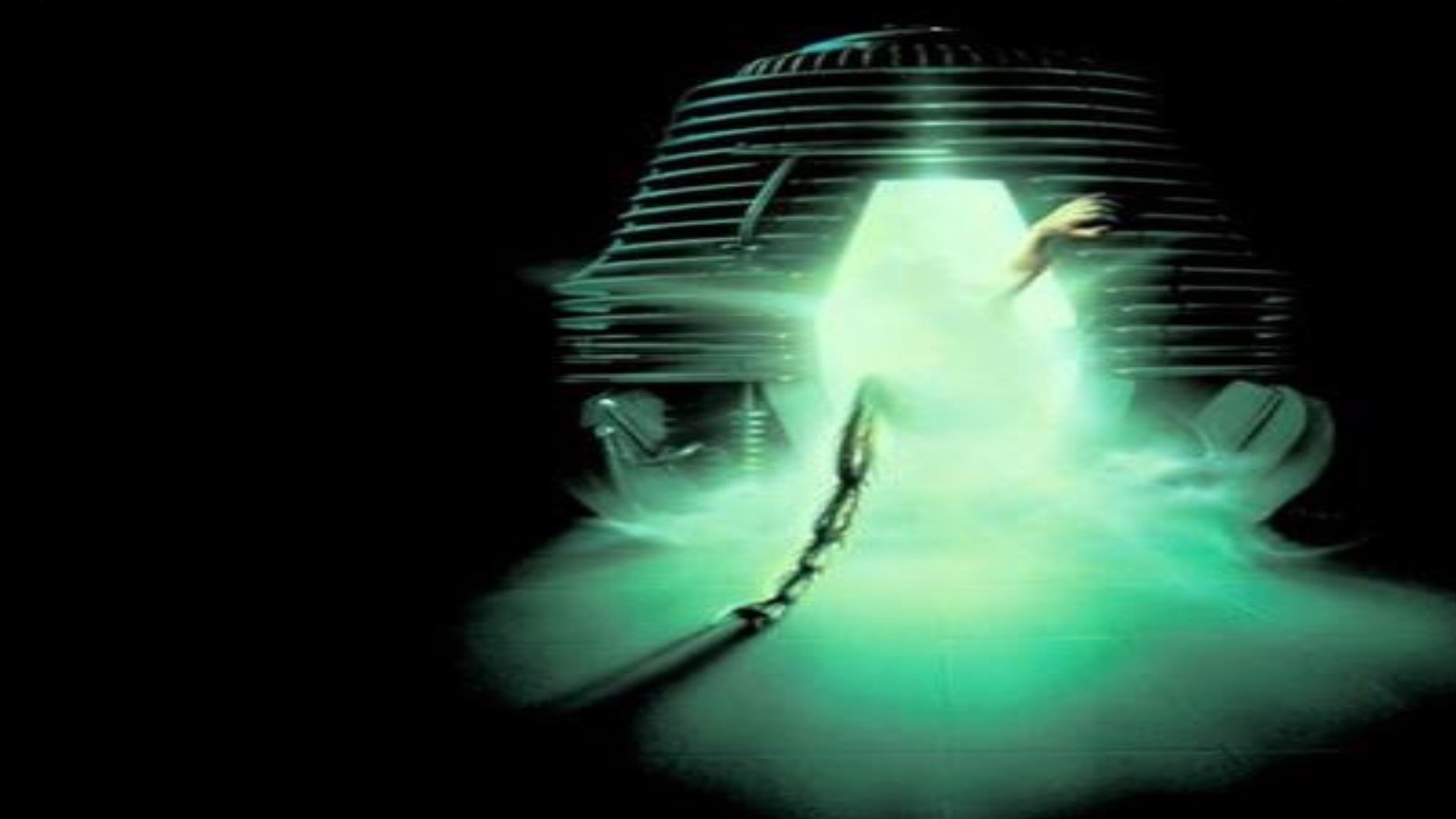
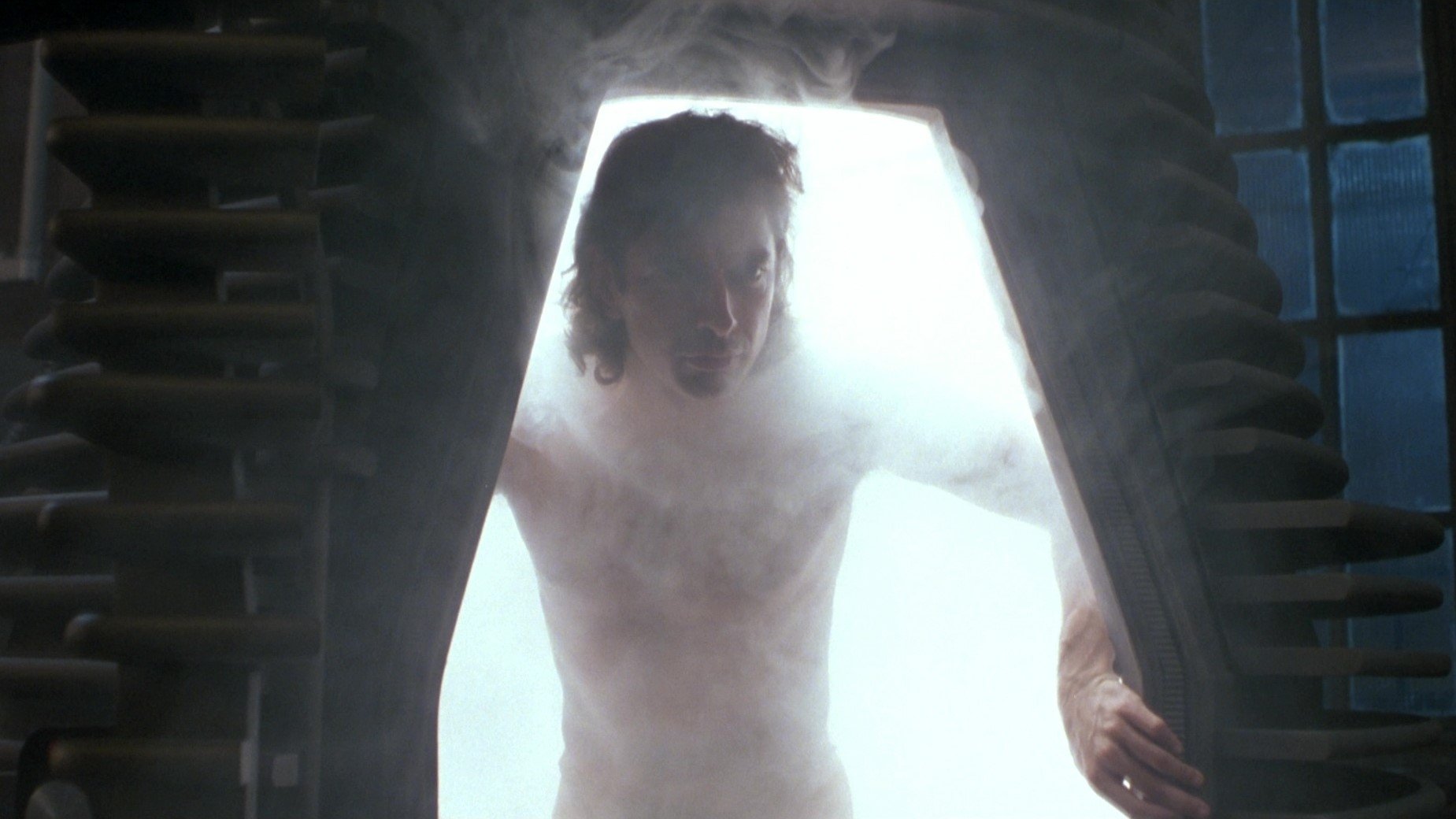
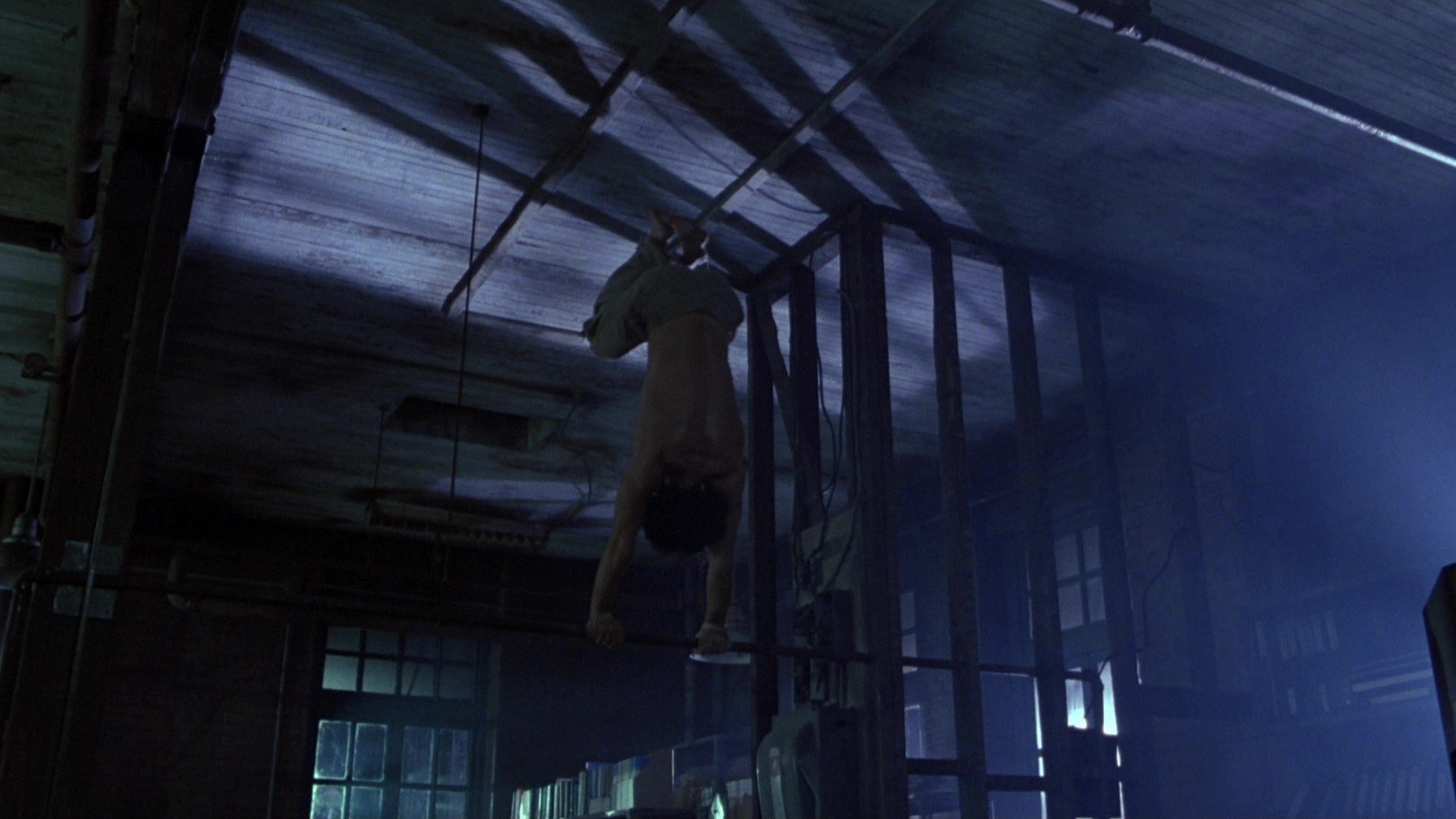
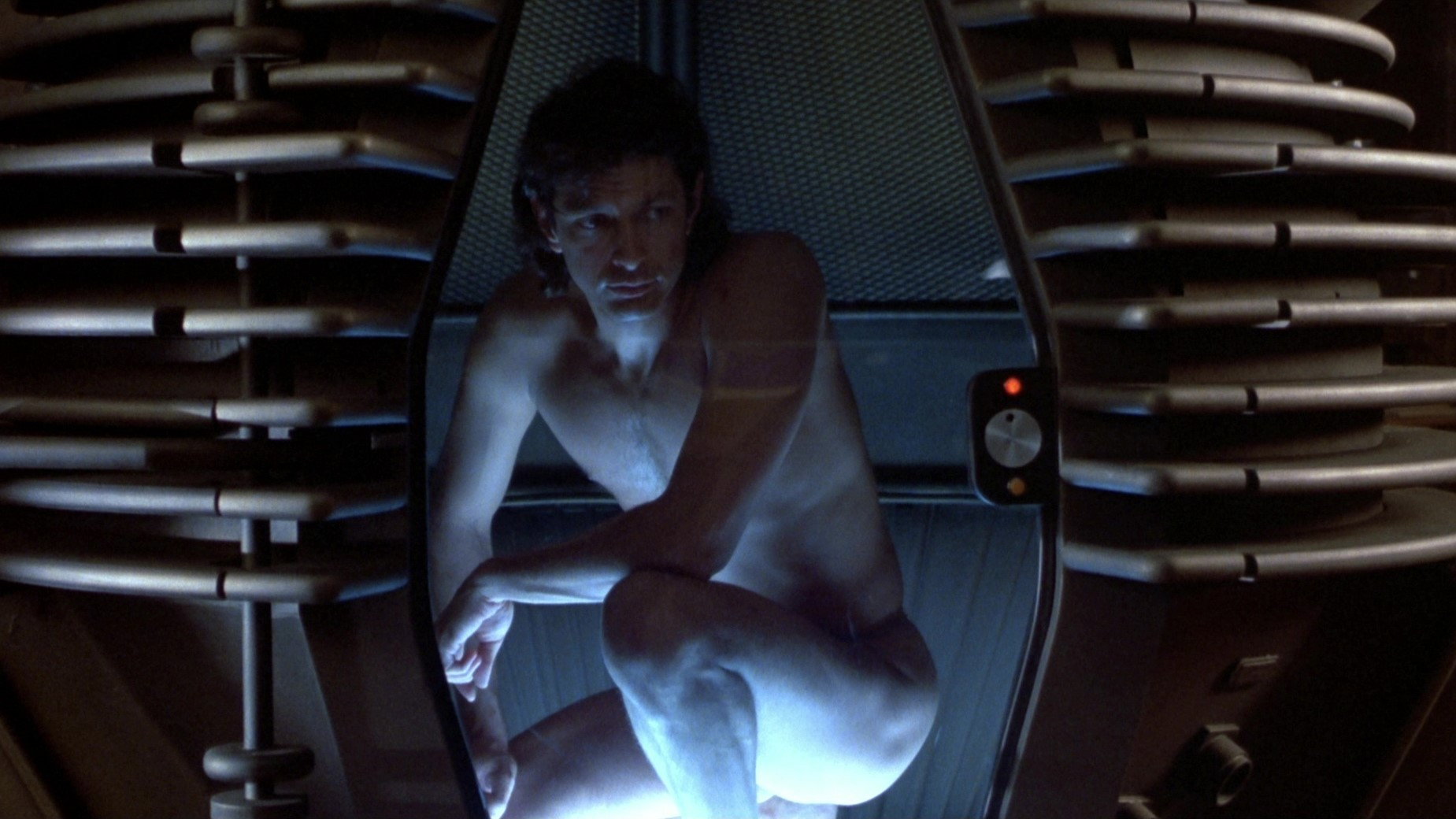
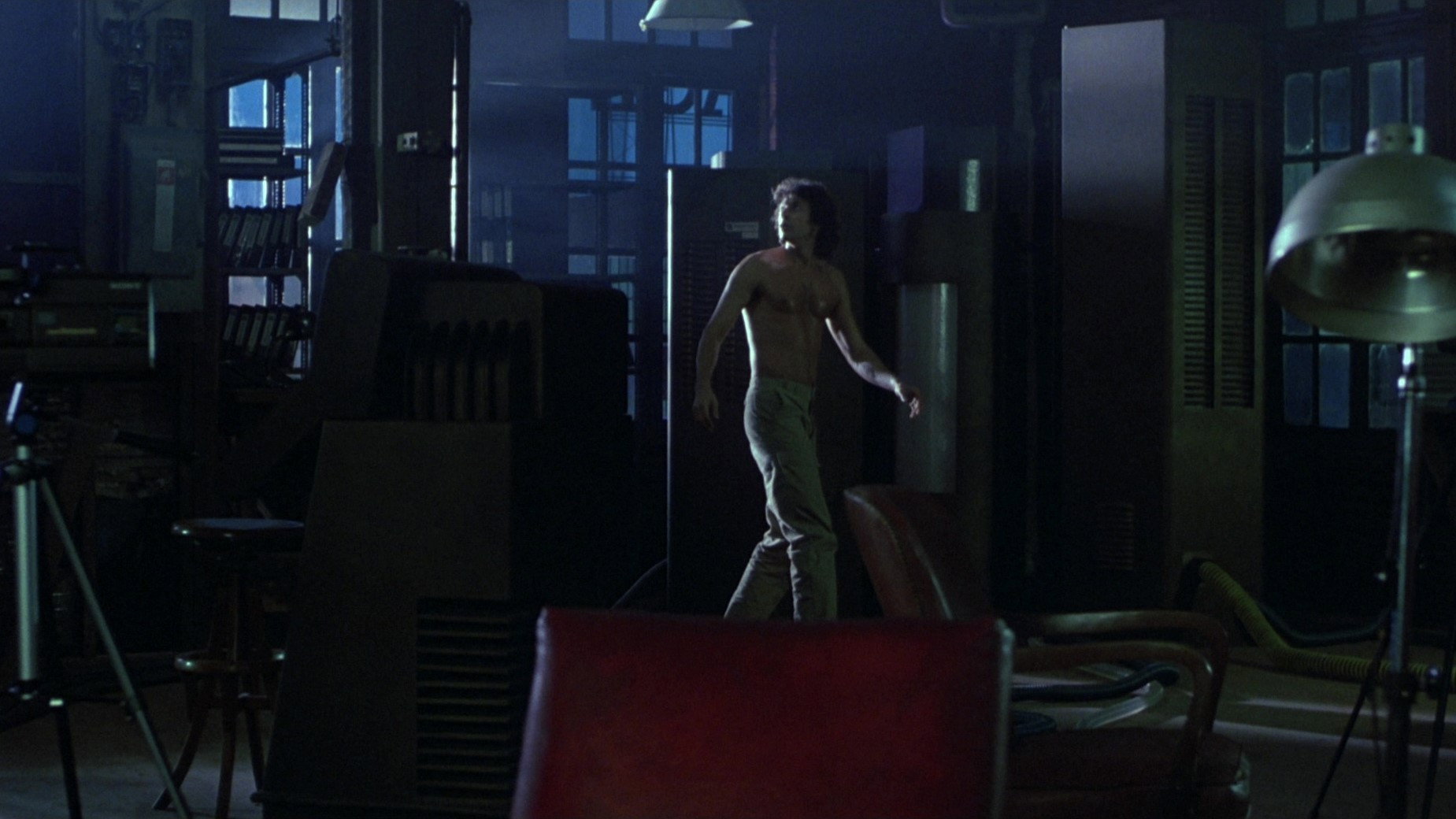
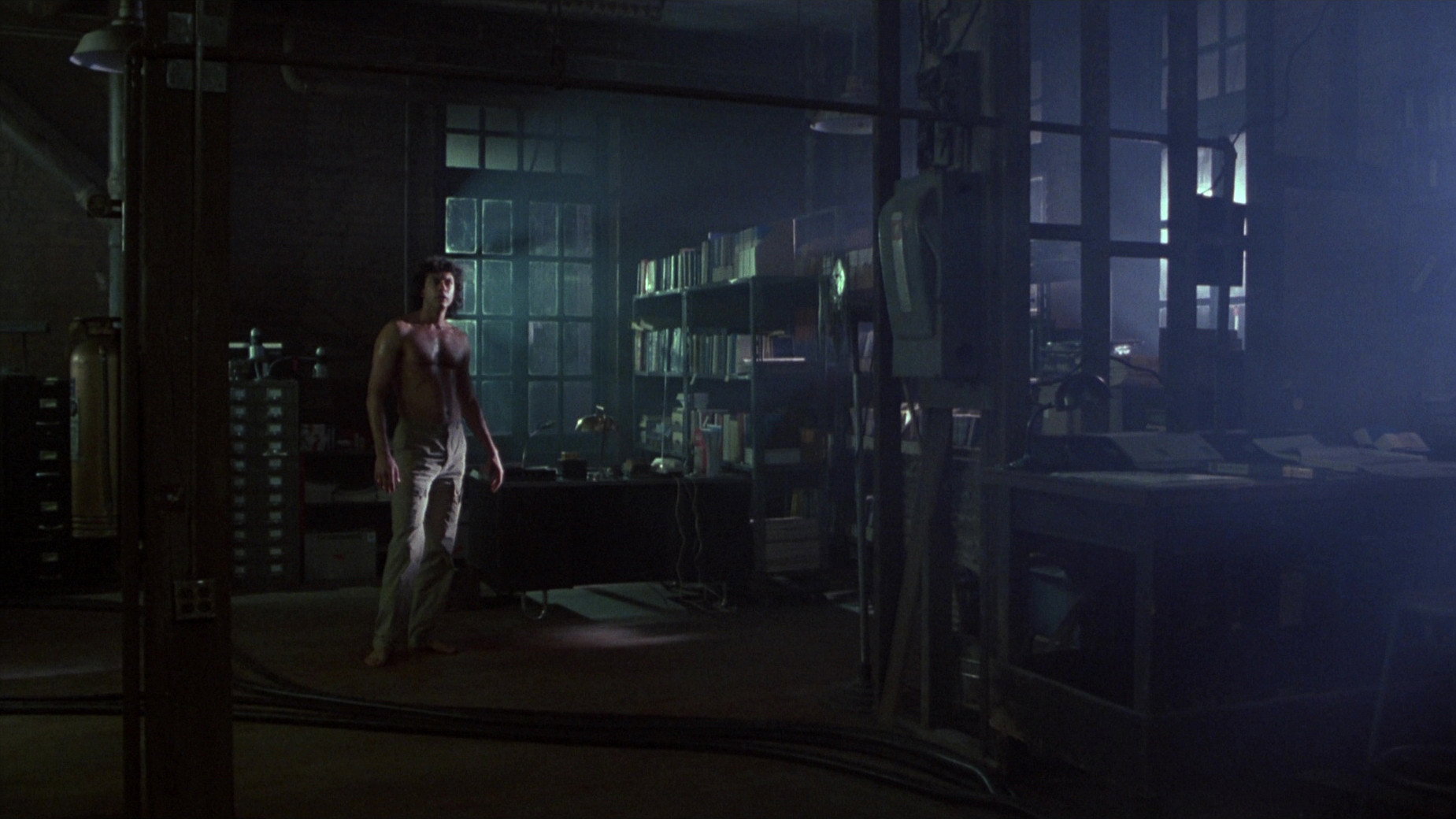
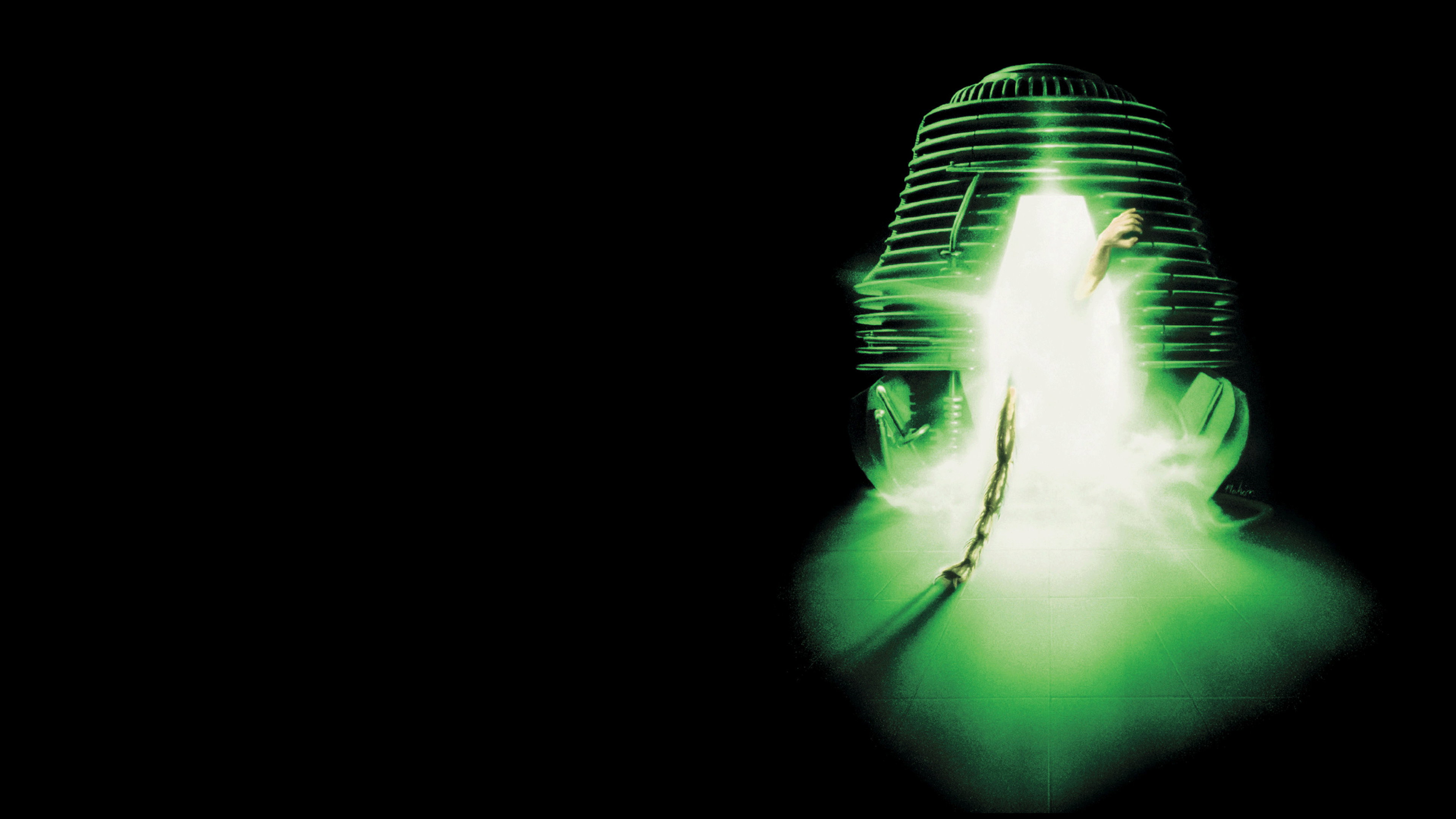
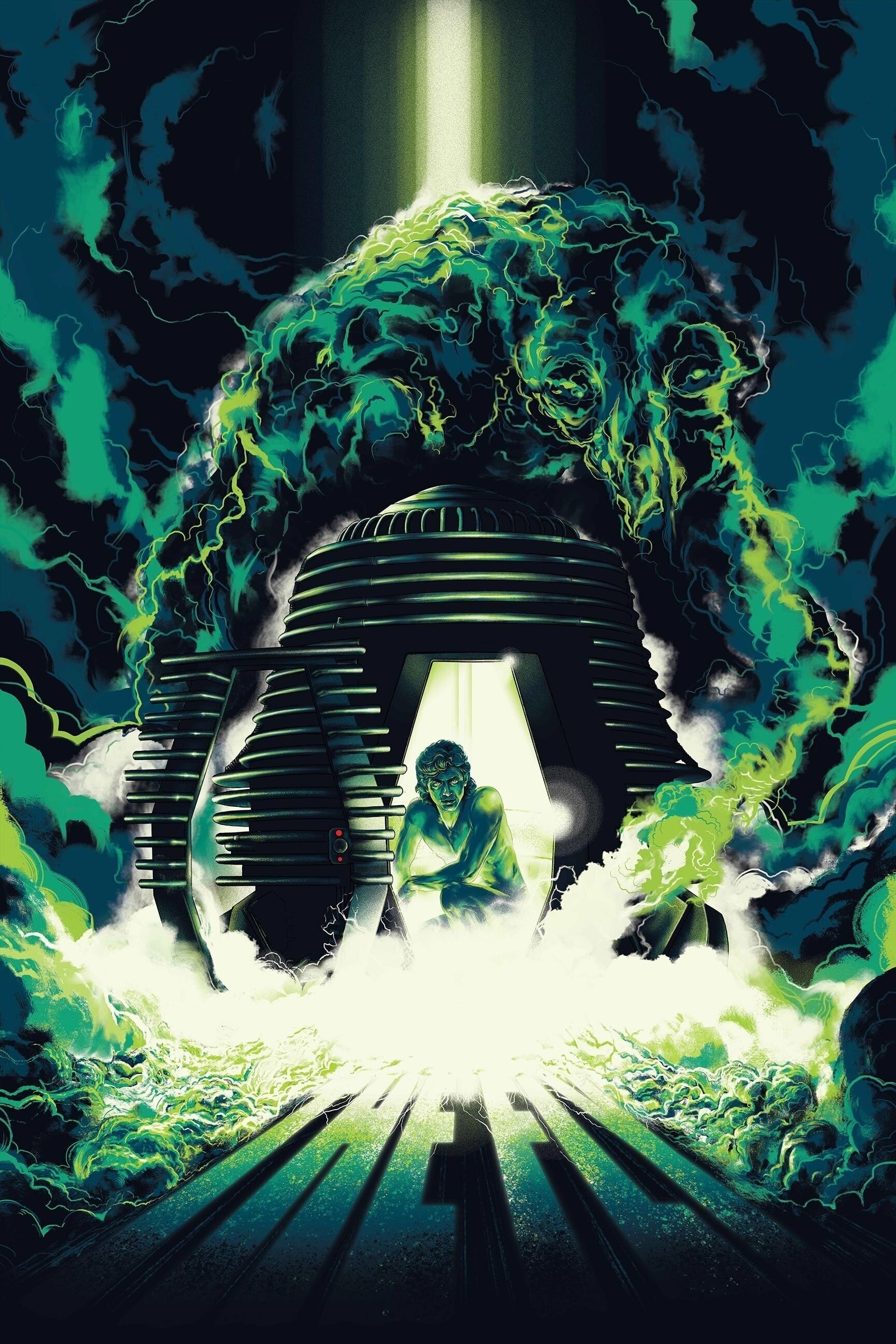
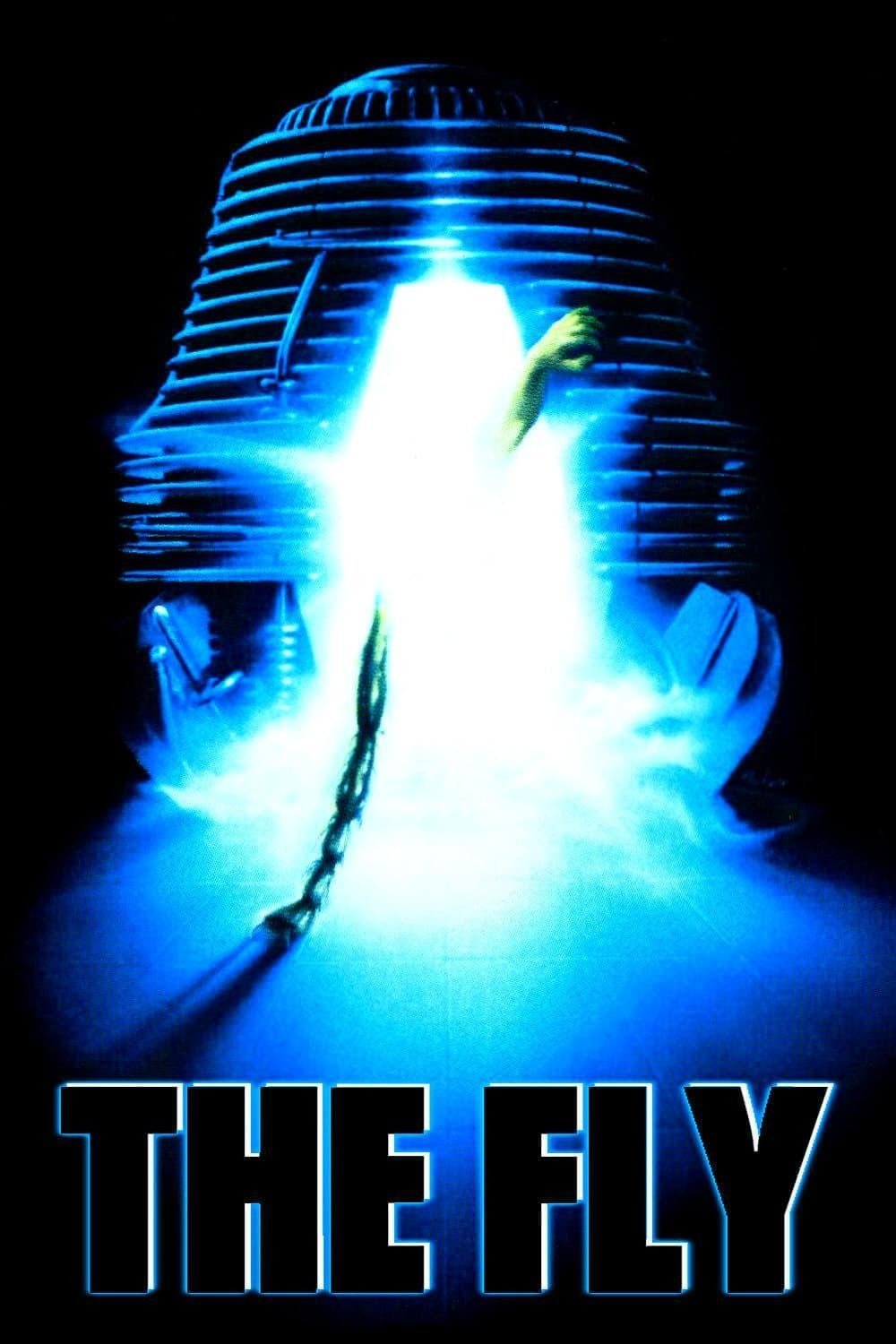
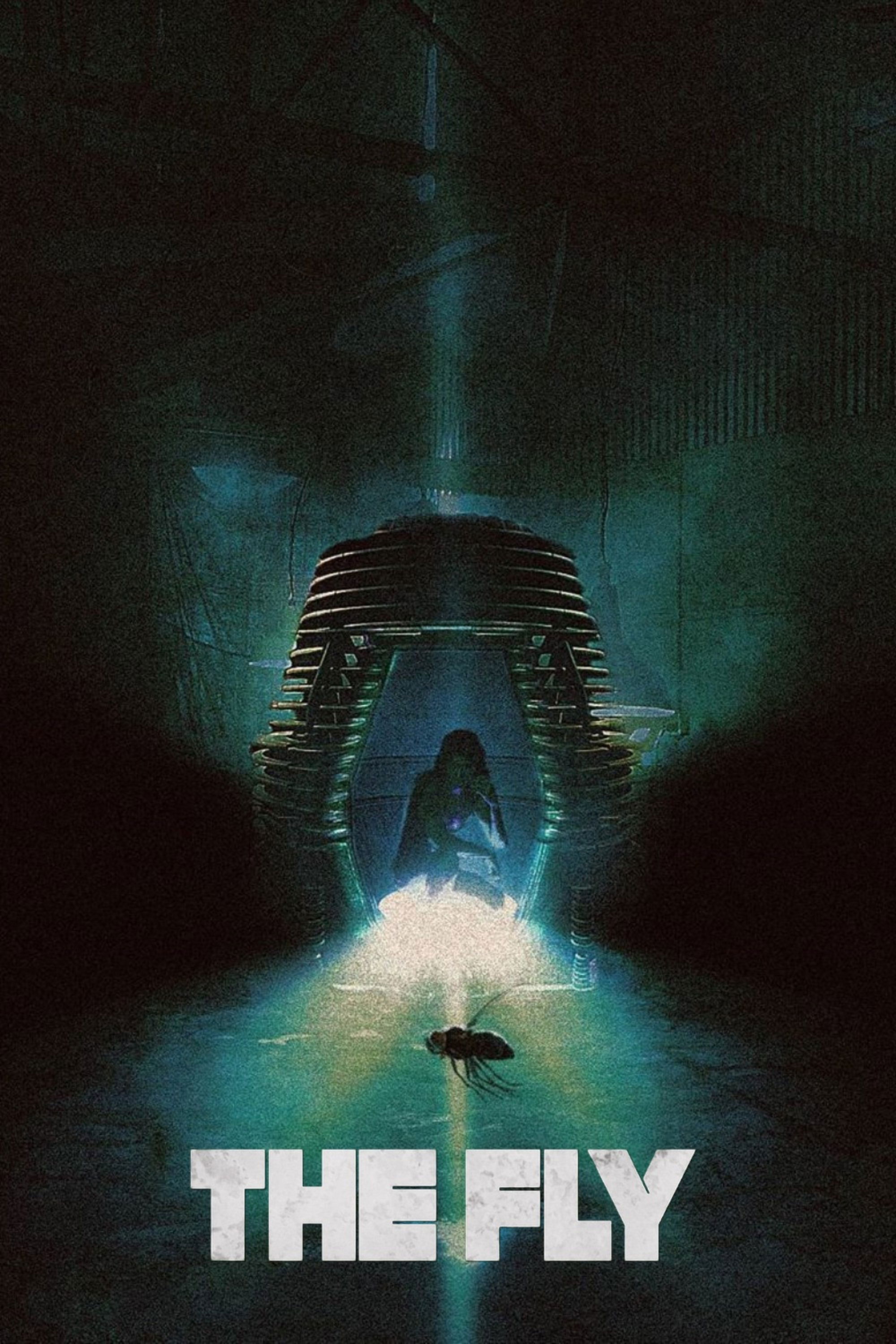
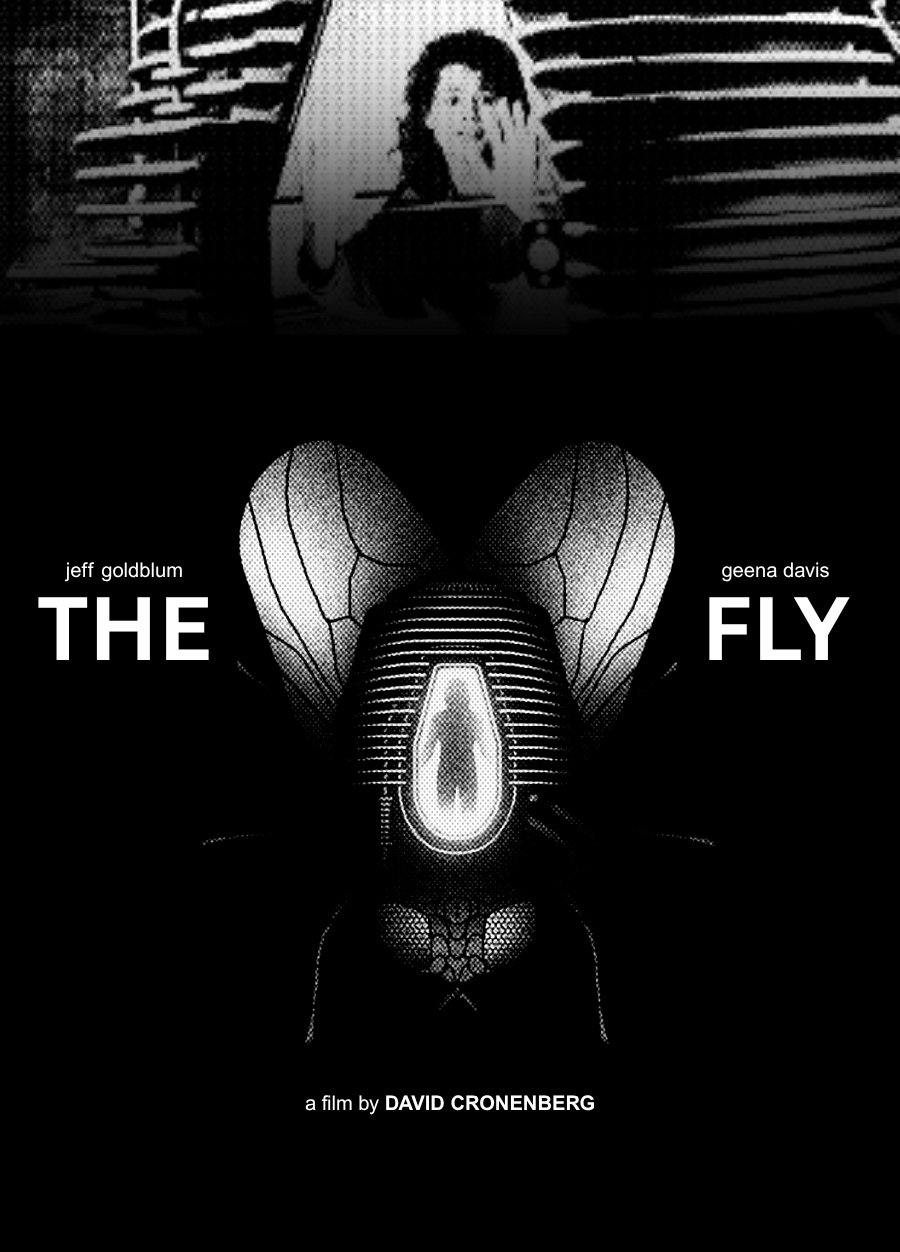
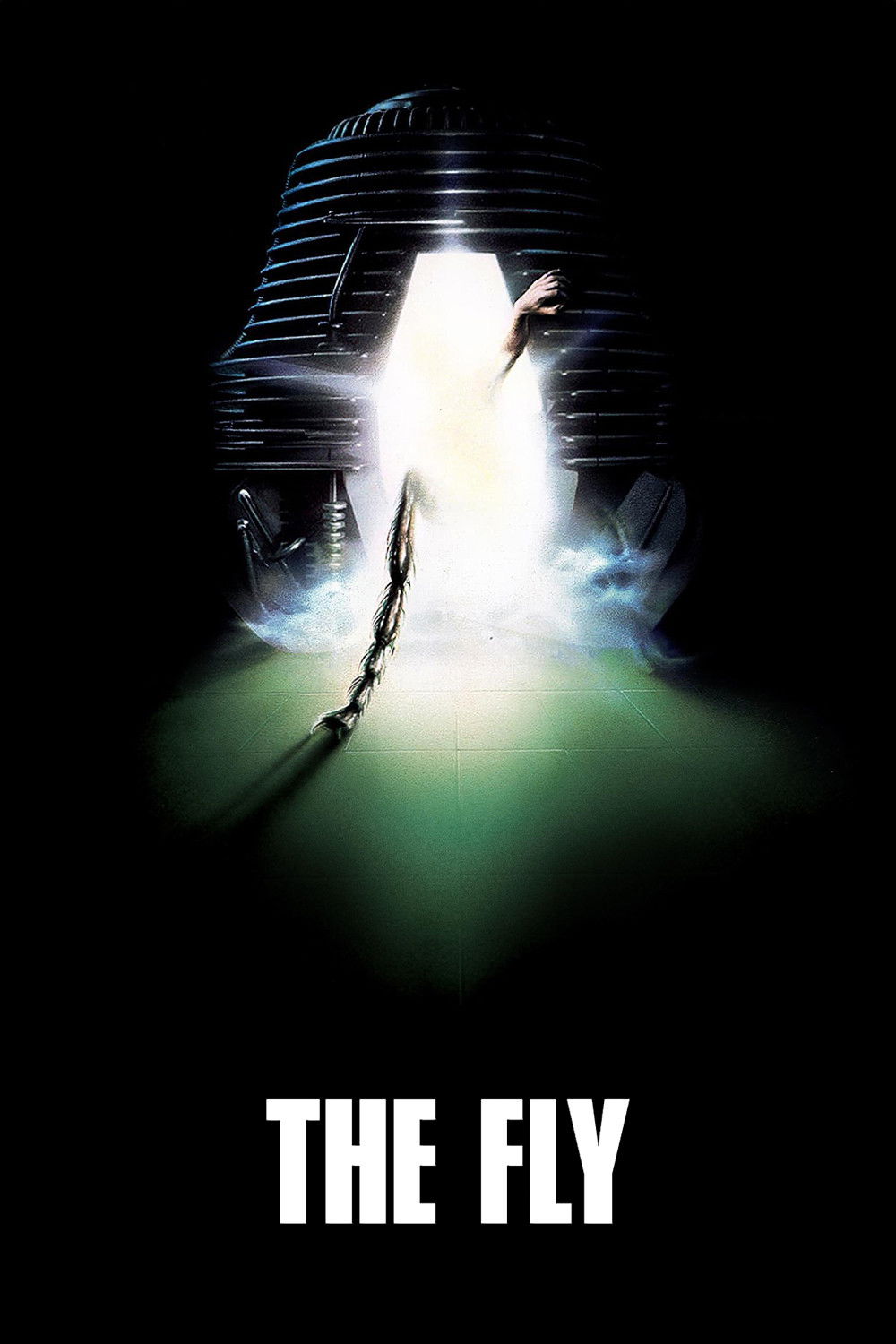
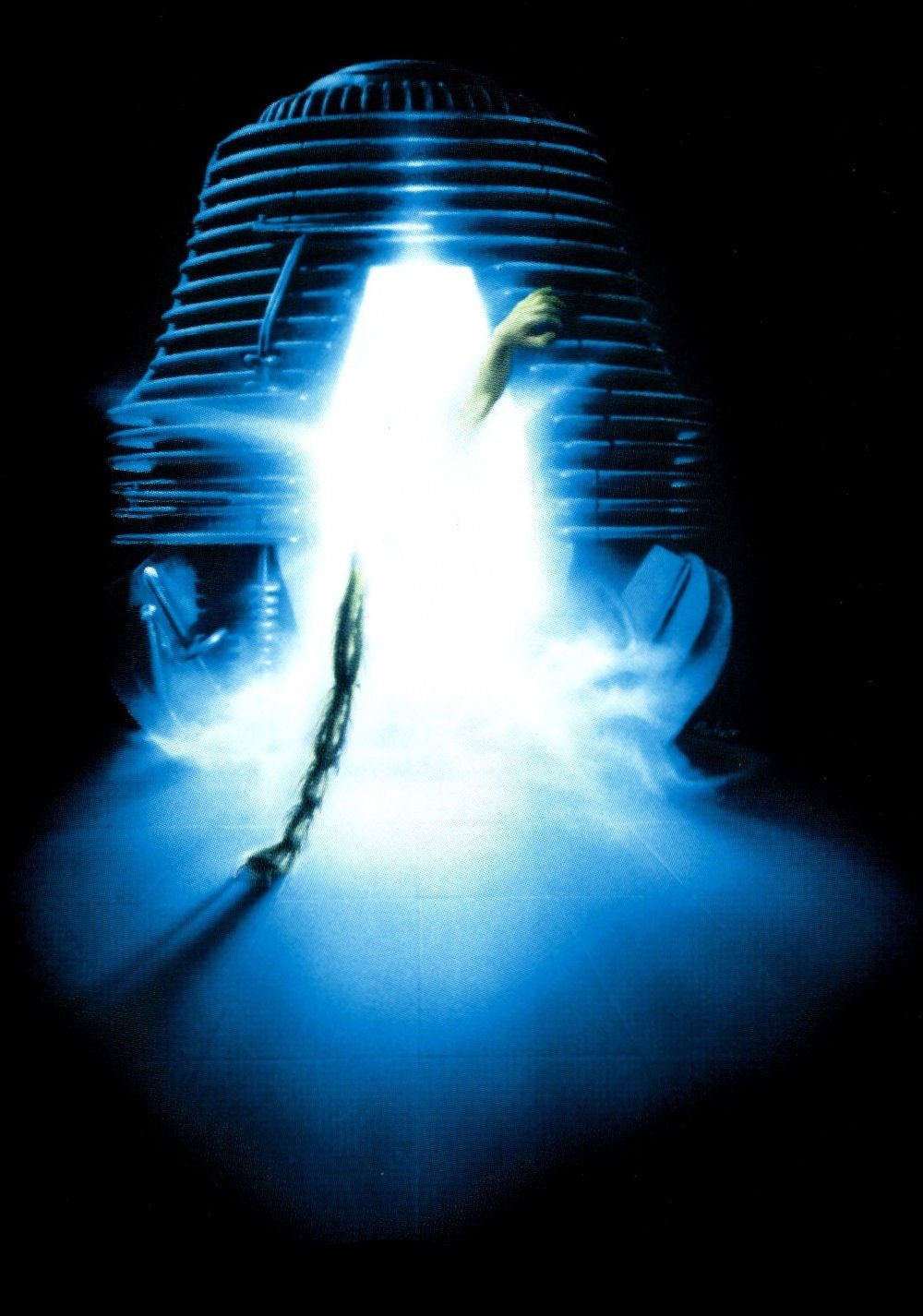
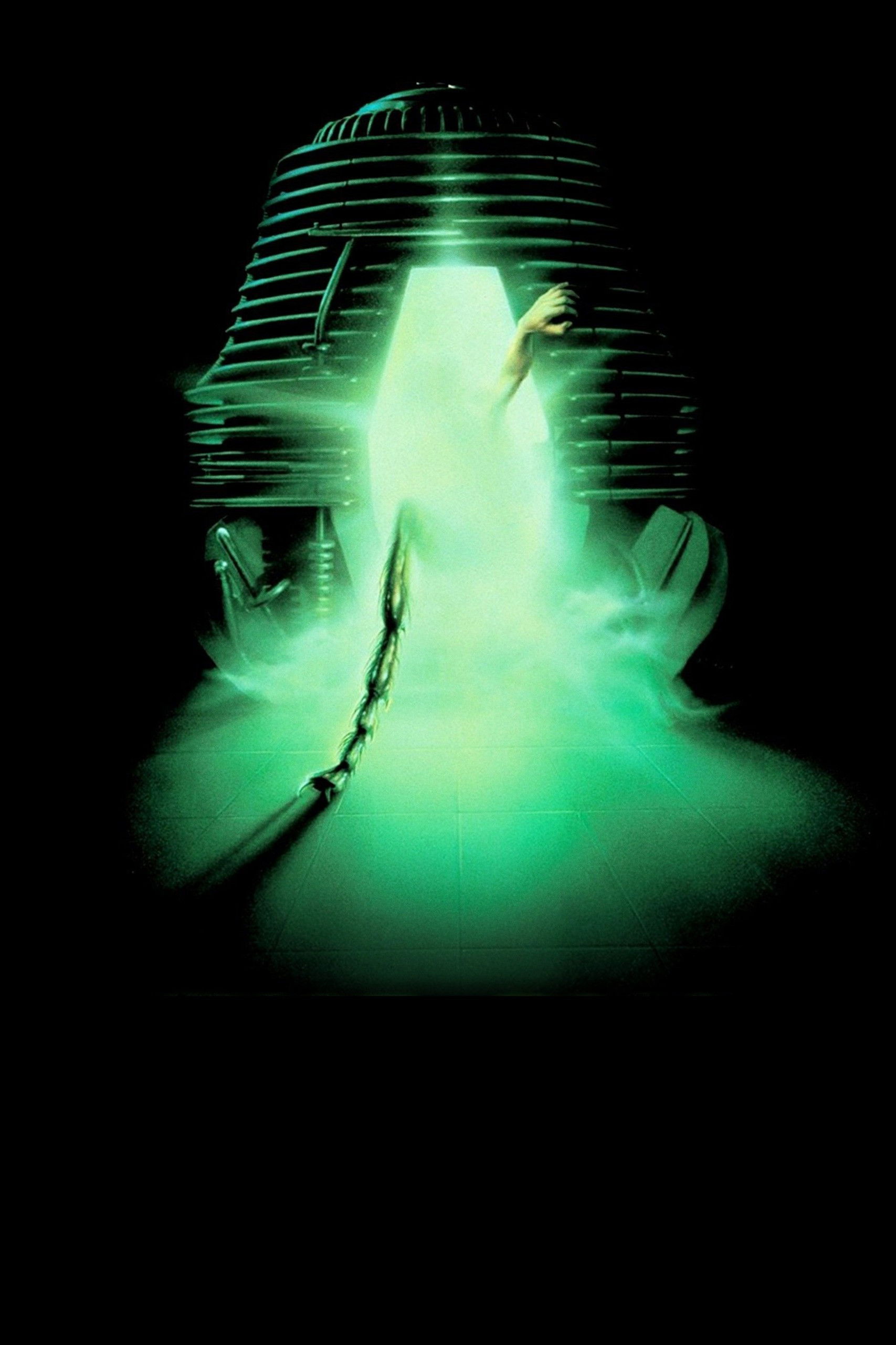
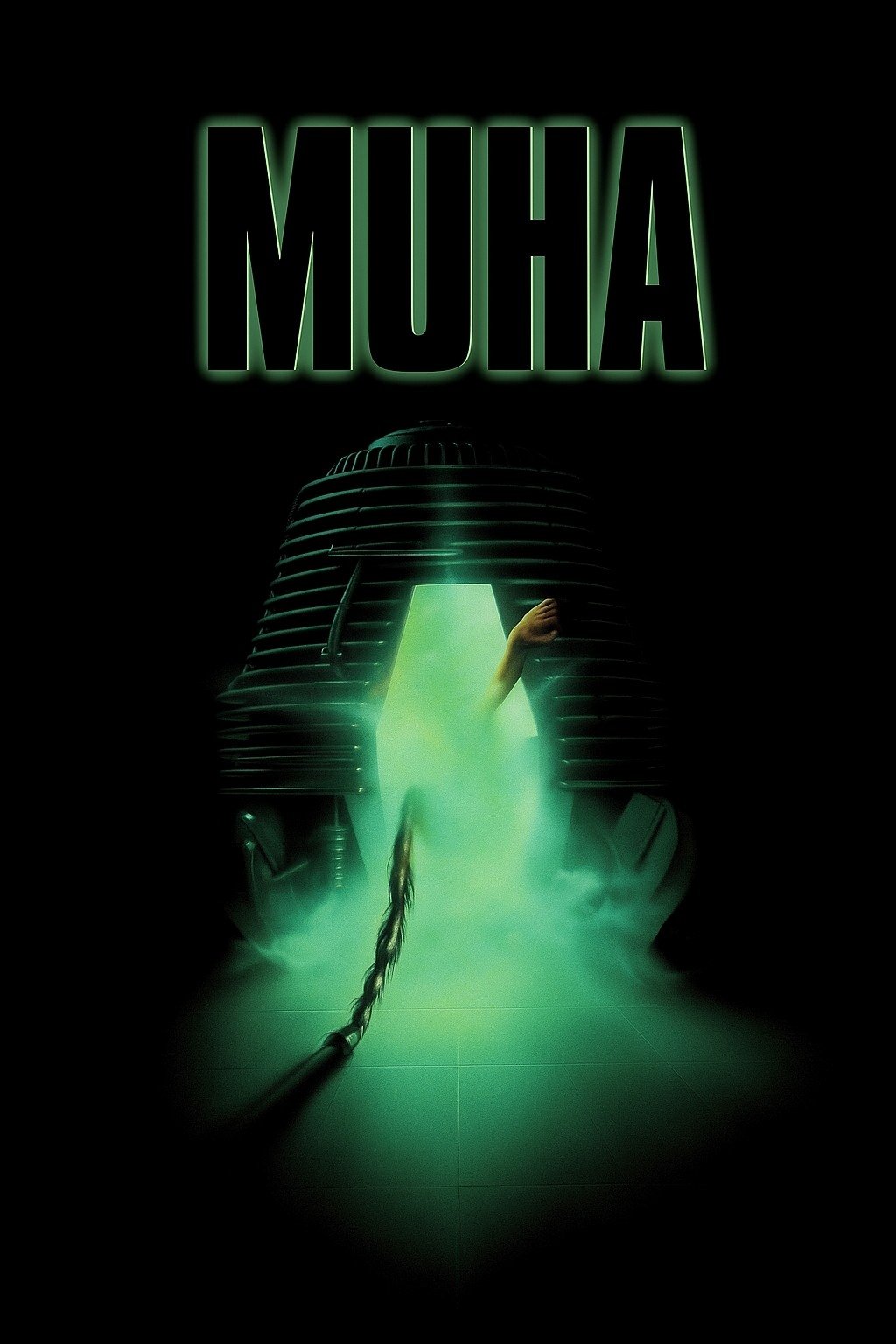
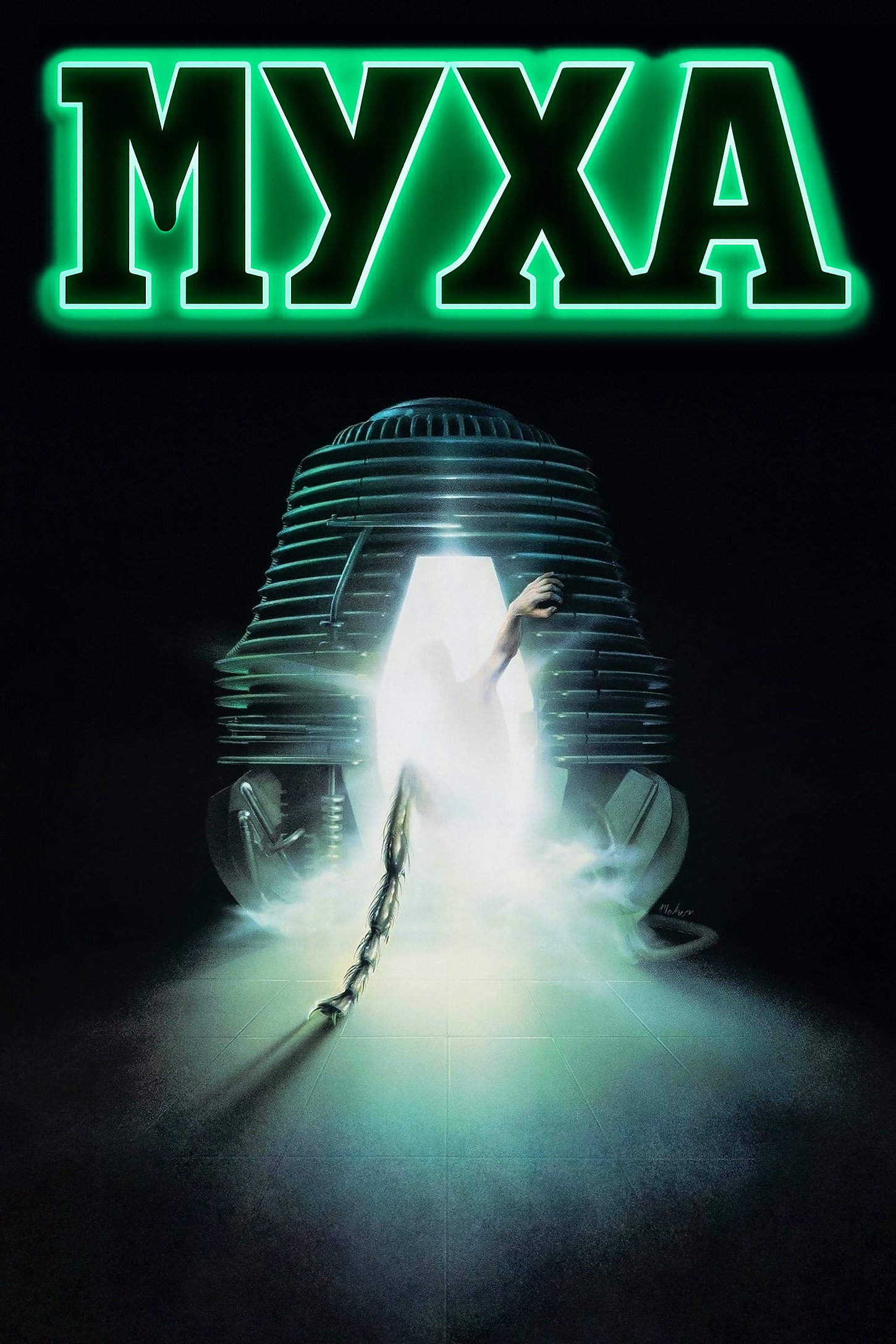
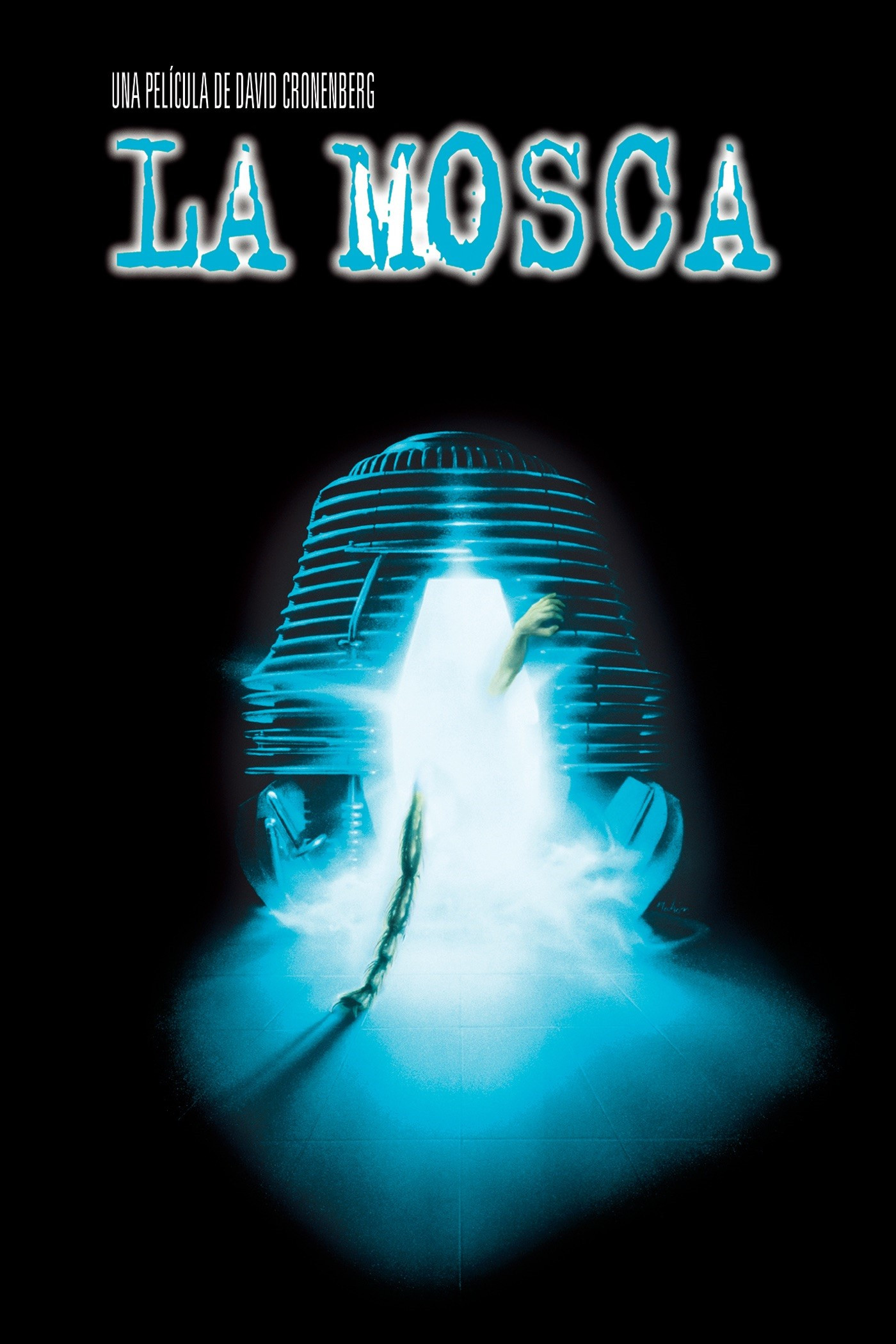
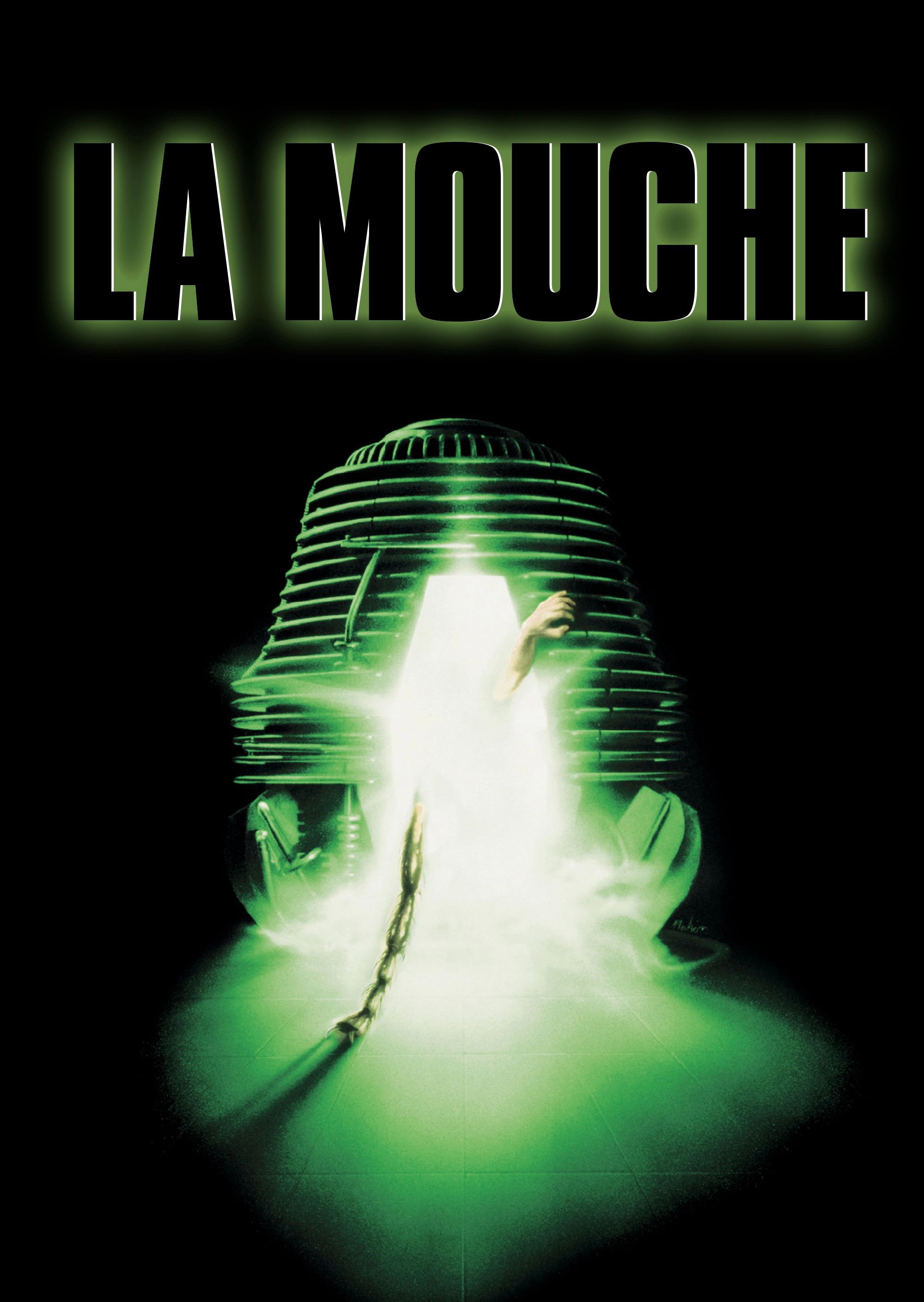
Production designer Carol Spier and cinematographer Mark Irwin were already established Cronenberg collaborators, and The Fly allowed them to build an environment that changes meaning without physically changing very much. Brundle's loft initially functions as an unusual but inviting laboratory: open space, practical machinery and the two symmetrical telepods frame his research as an ambitious personal project. As his condition deteriorates, the same architecture becomes increasingly isolating, filled with discarded objects, damaged surfaces and evidence that ordinary human domestic life is disappearing from the room.
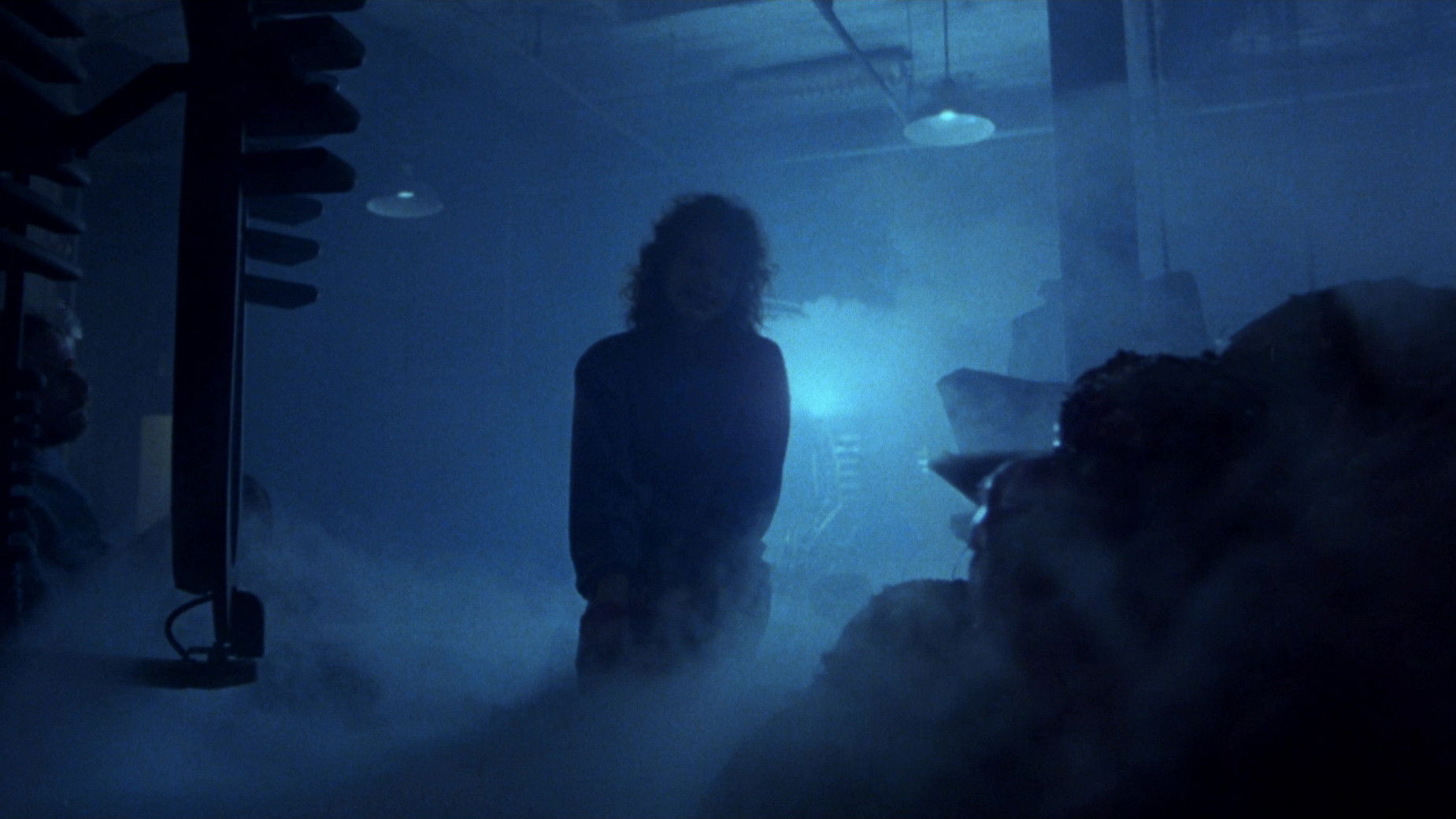
Irwin deliberately avoided making the picture look like a horror film from its first scene. He later explained that beginning in darkness would remove the possibility of a visual descent. The opening material therefore uses relatively warm and direct light, particularly around Veronica. After Brundle teleports himself, the lighting on him becomes progressively more severe while Davis continues to receive softer treatment. When they occupy the same frame, Irwin had to balance two different visual requirements: flattering human skin while revealing the texture and dimensionality of increasingly complicated prosthetics.
The makeup created additional technical restrictions. Later stages required latex suits, puppets, cables and crews operating mechanisms immediately outside the frame, making hard lighting dangerous because equipment shadows could reveal the illusion. Irwin relied heavily on controlled cross-lighting and large soft sources while continually adjusting the image as Brundle's coloration shifted from relatively normal skin through yellow, copper, brown and darker tones. The visual progression therefore develops almost invisibly alongside the makeup: the laboratory has not suddenly become Gothic, but the person occupying it no longer belongs comfortably to the human visual world established at the beginning.
Chris Walas, Stephan Dupuis & the Brundlefly Transformation
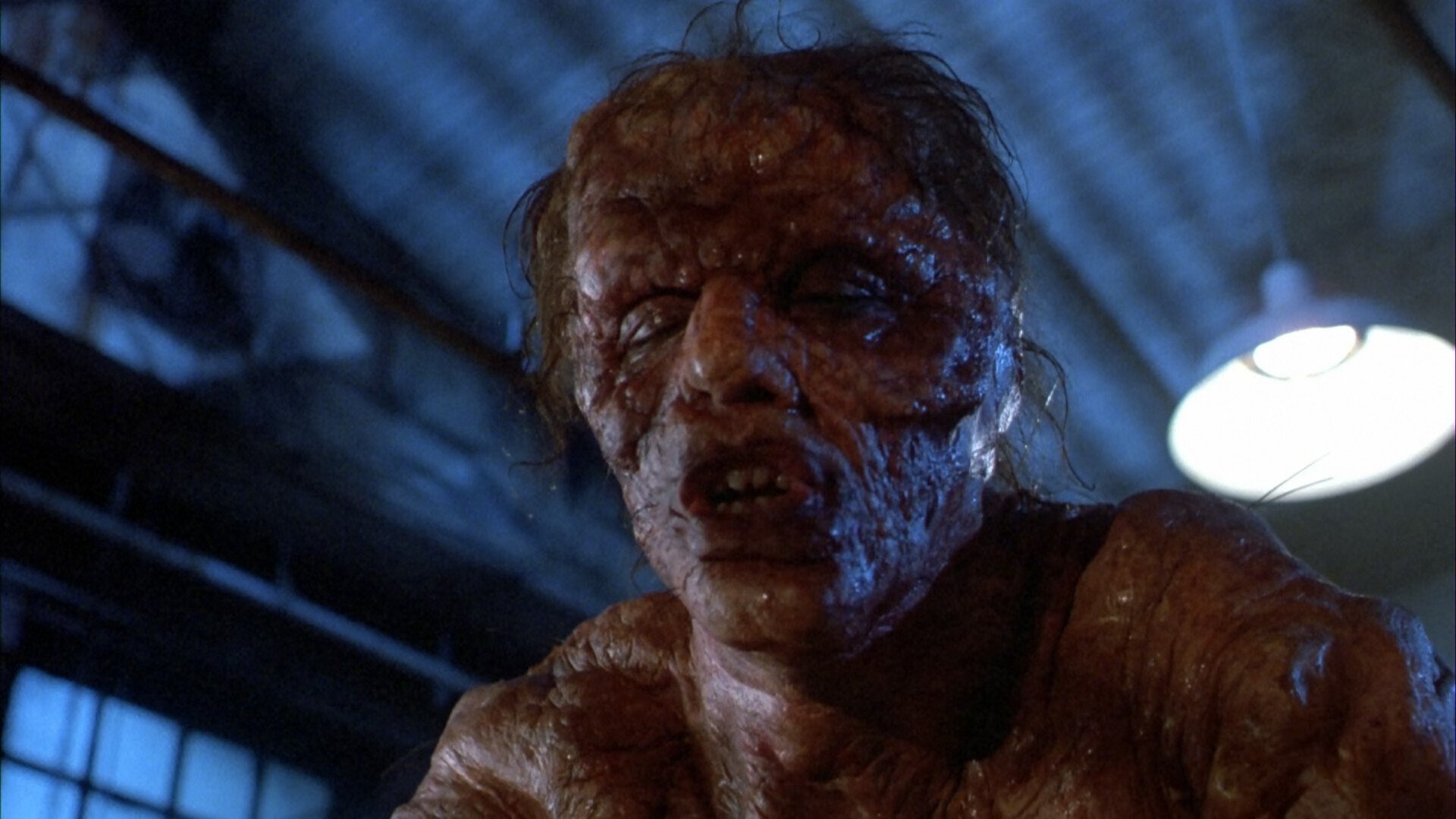
Chris Walas began preparing the creature and makeup work months before principal photography, operating with a staff of roughly thirty artists. A detailed cast of Goldblum's body, face and teeth was produced so that prosthetics could be designed around the actor rather than forcing his performance into a generic monster appliance. Walas later stressed that this was particularly important because Goldblum had to sustain long dialogue scenes at advanced stages of transformation. The audience needed to continue seeing Seth Brundle as a character even while increasingly little of the actor's natural face remained visible.
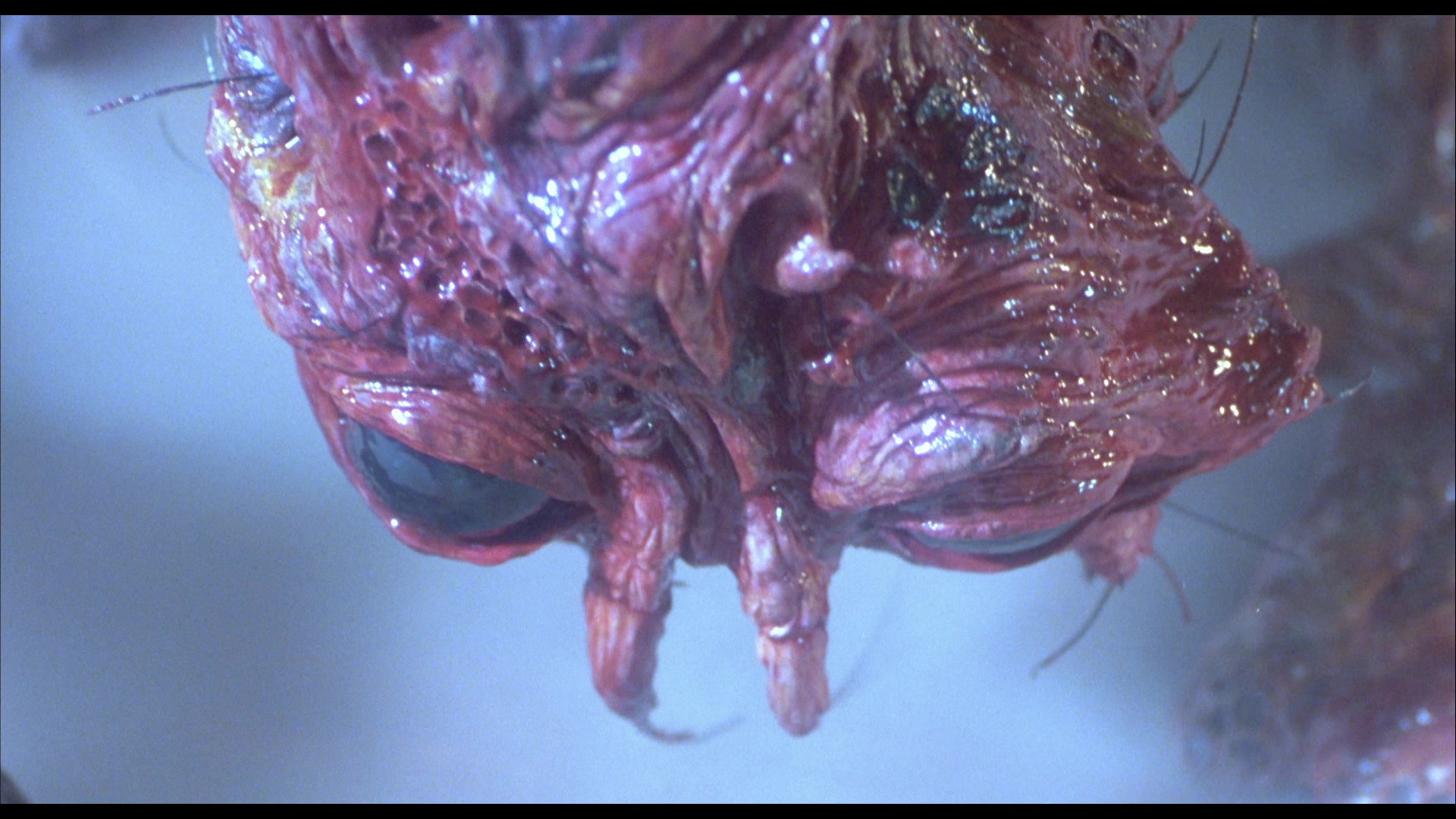
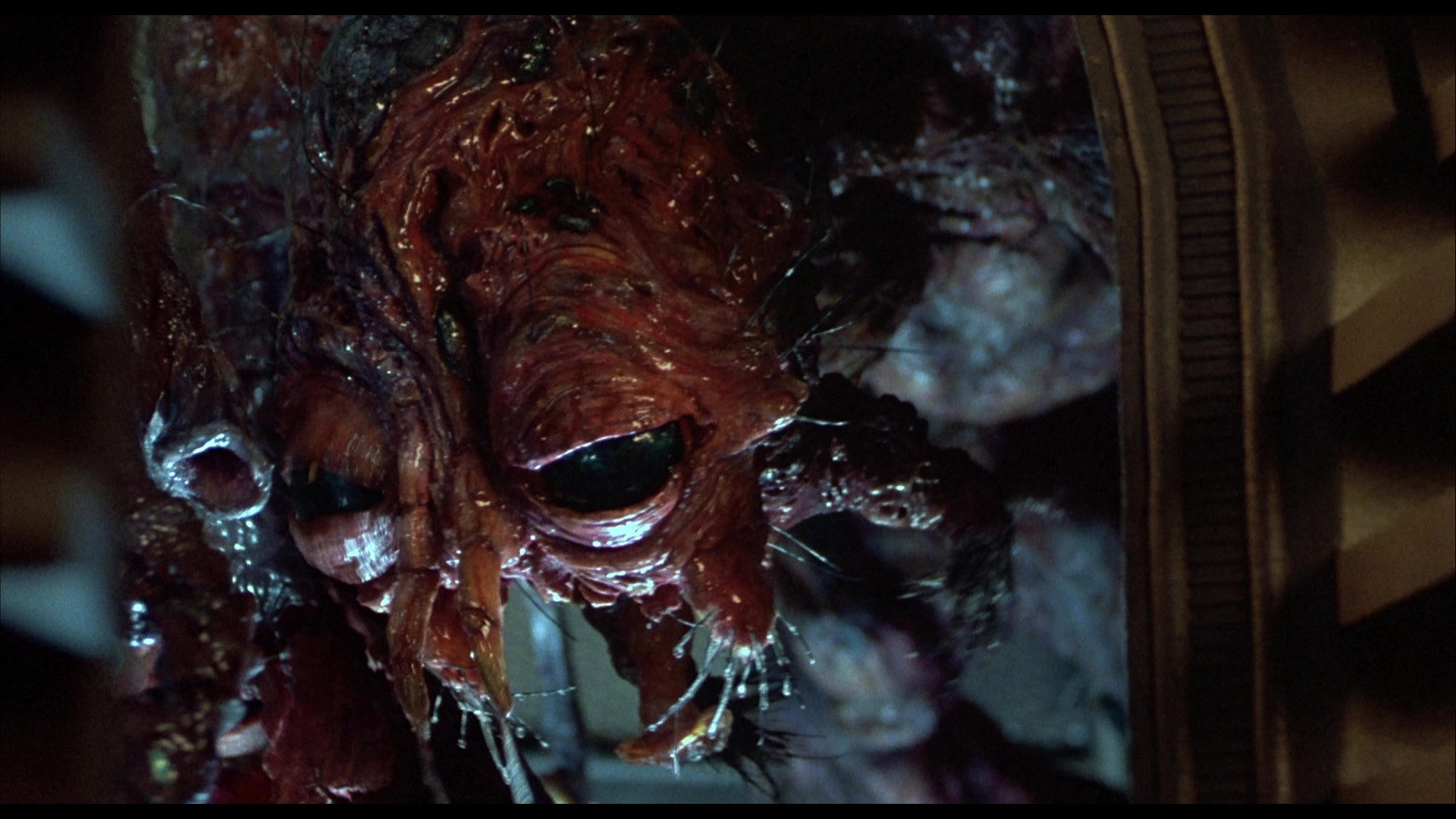
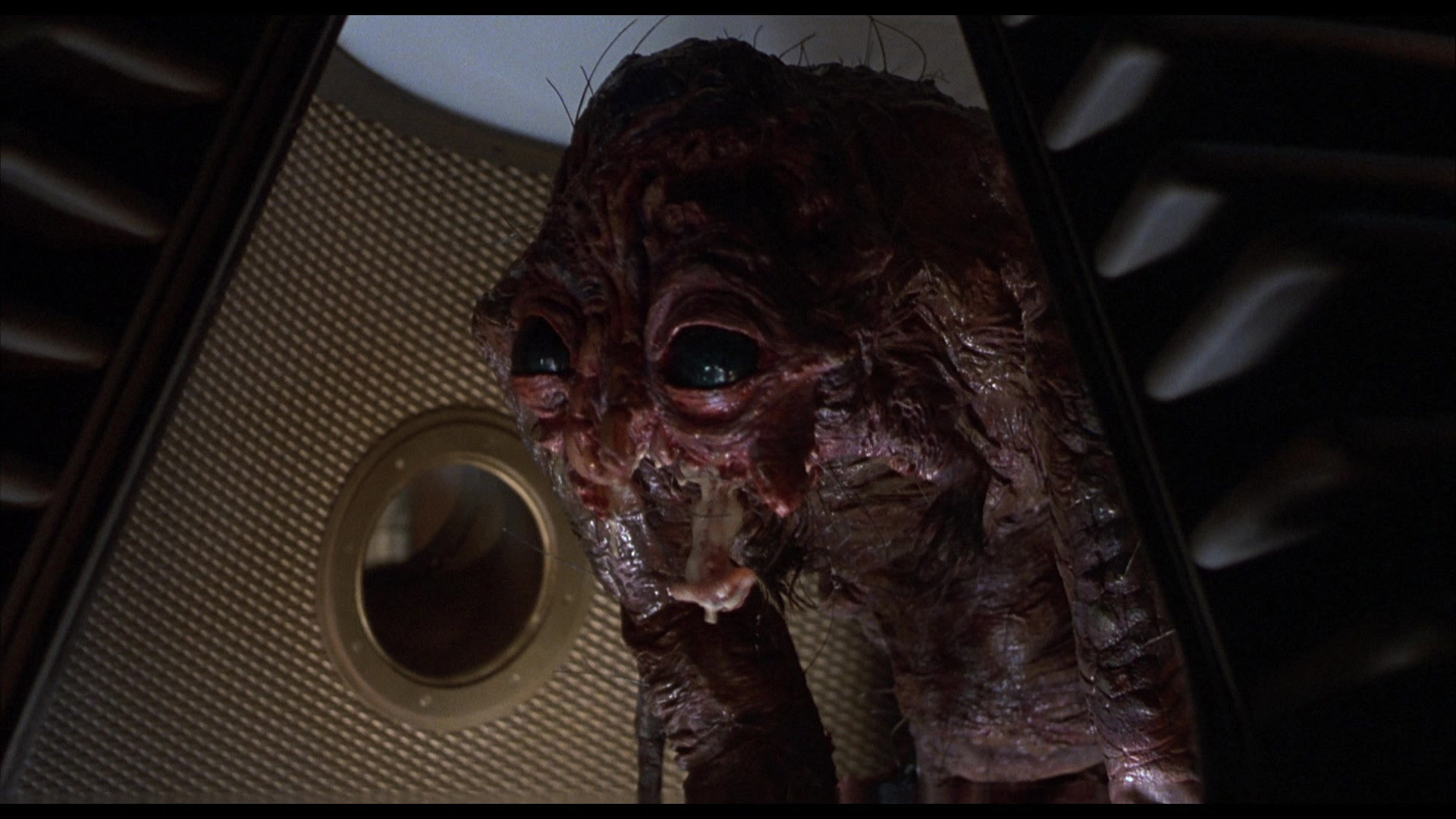
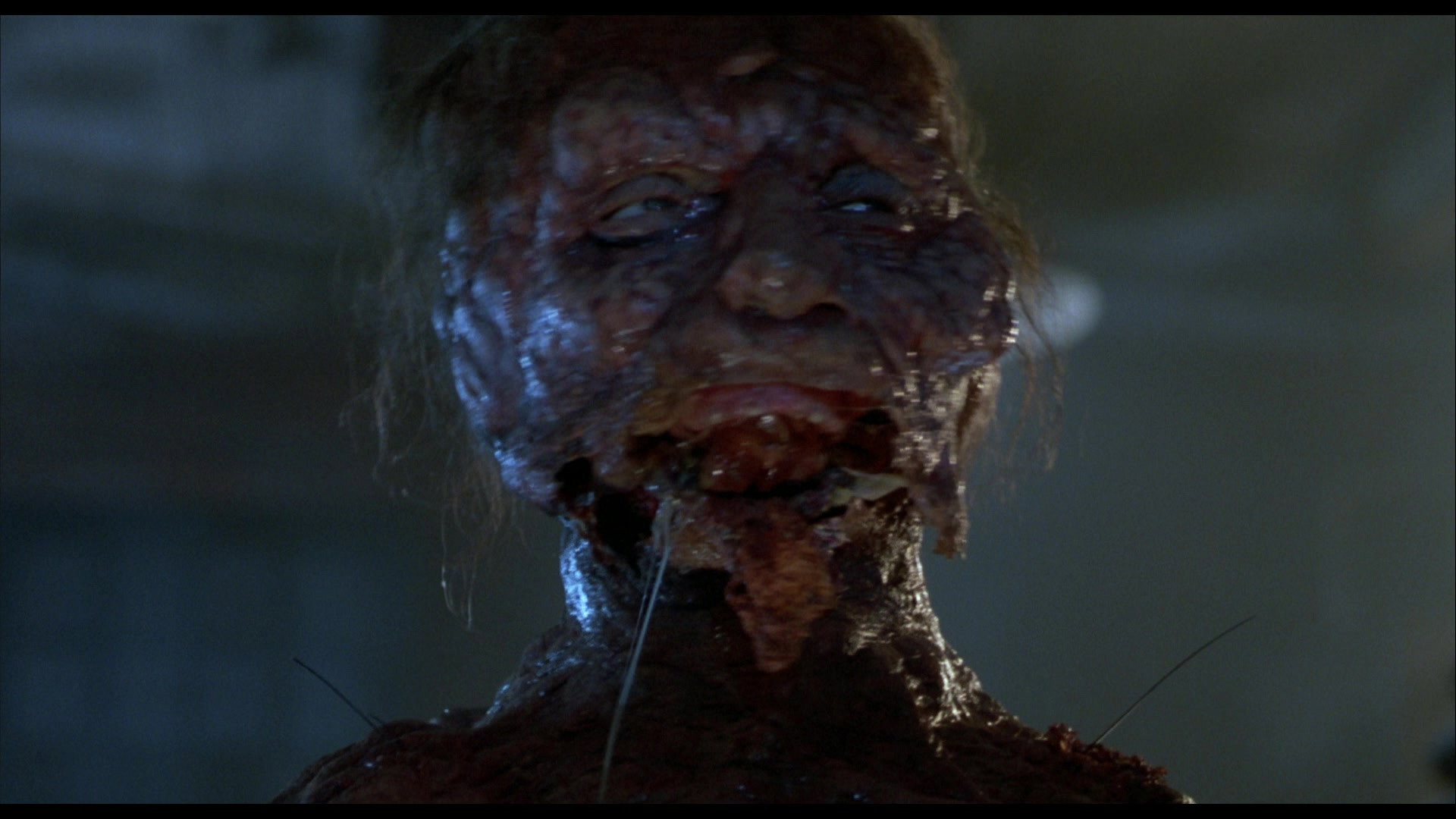
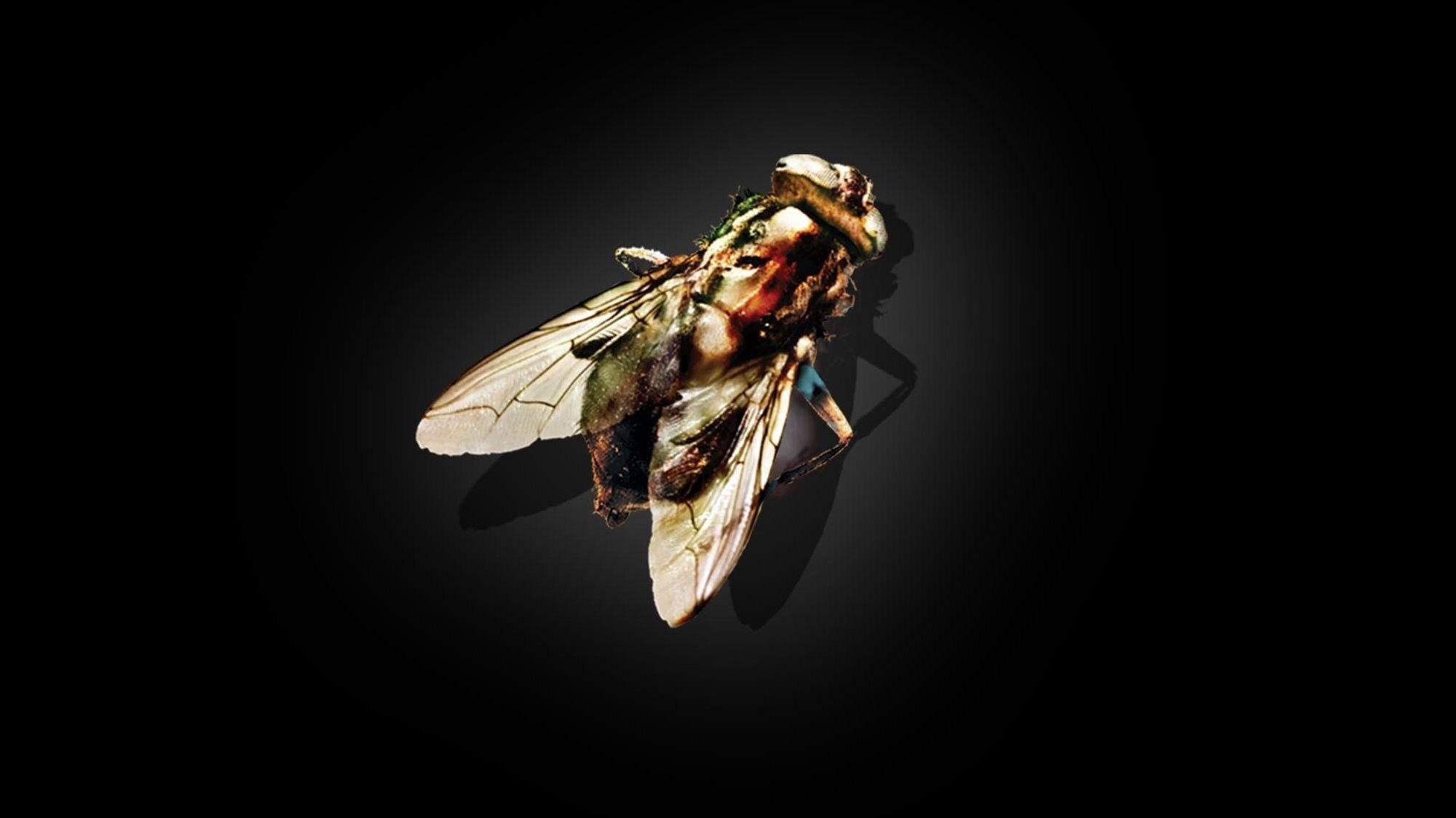
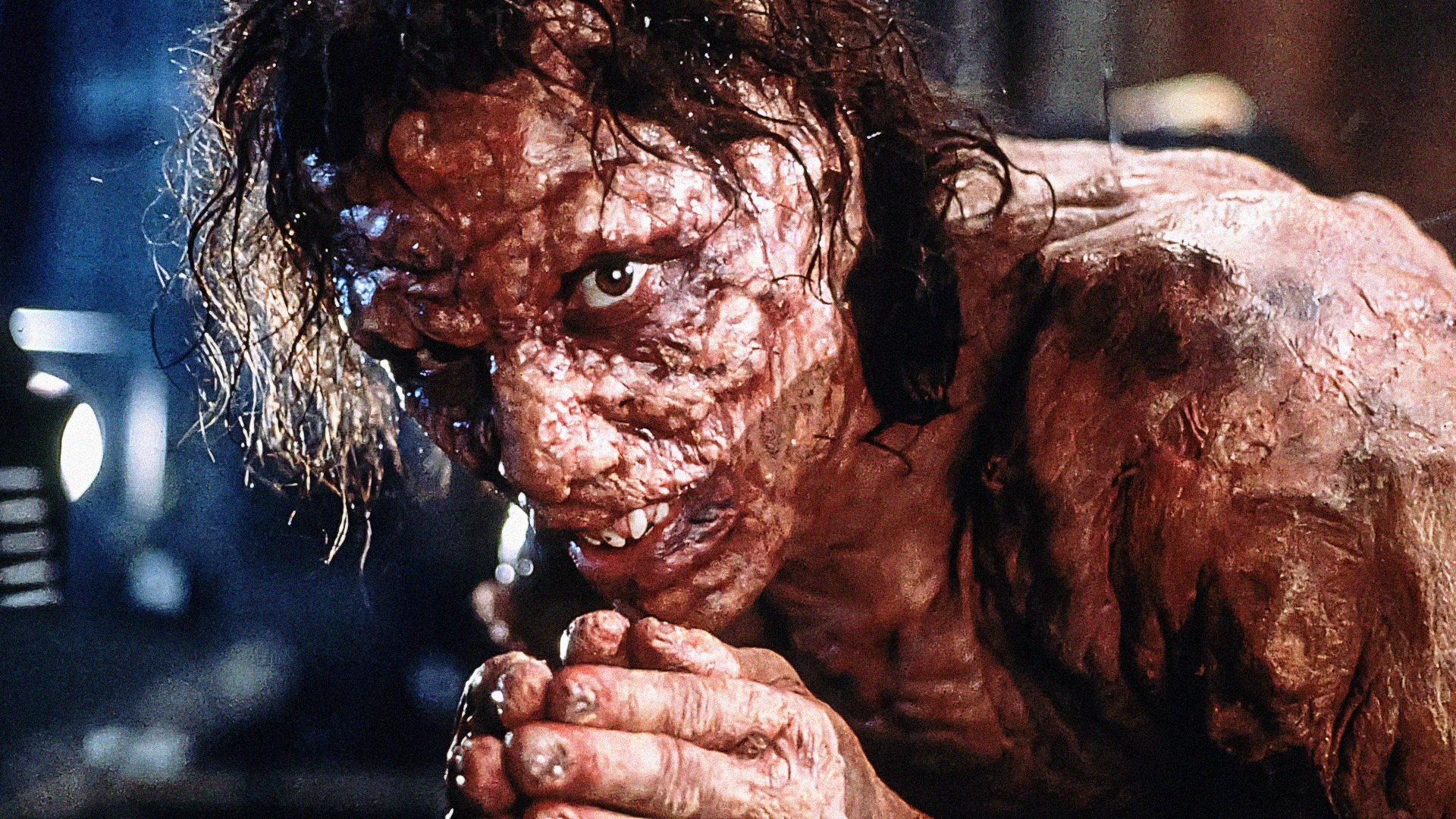
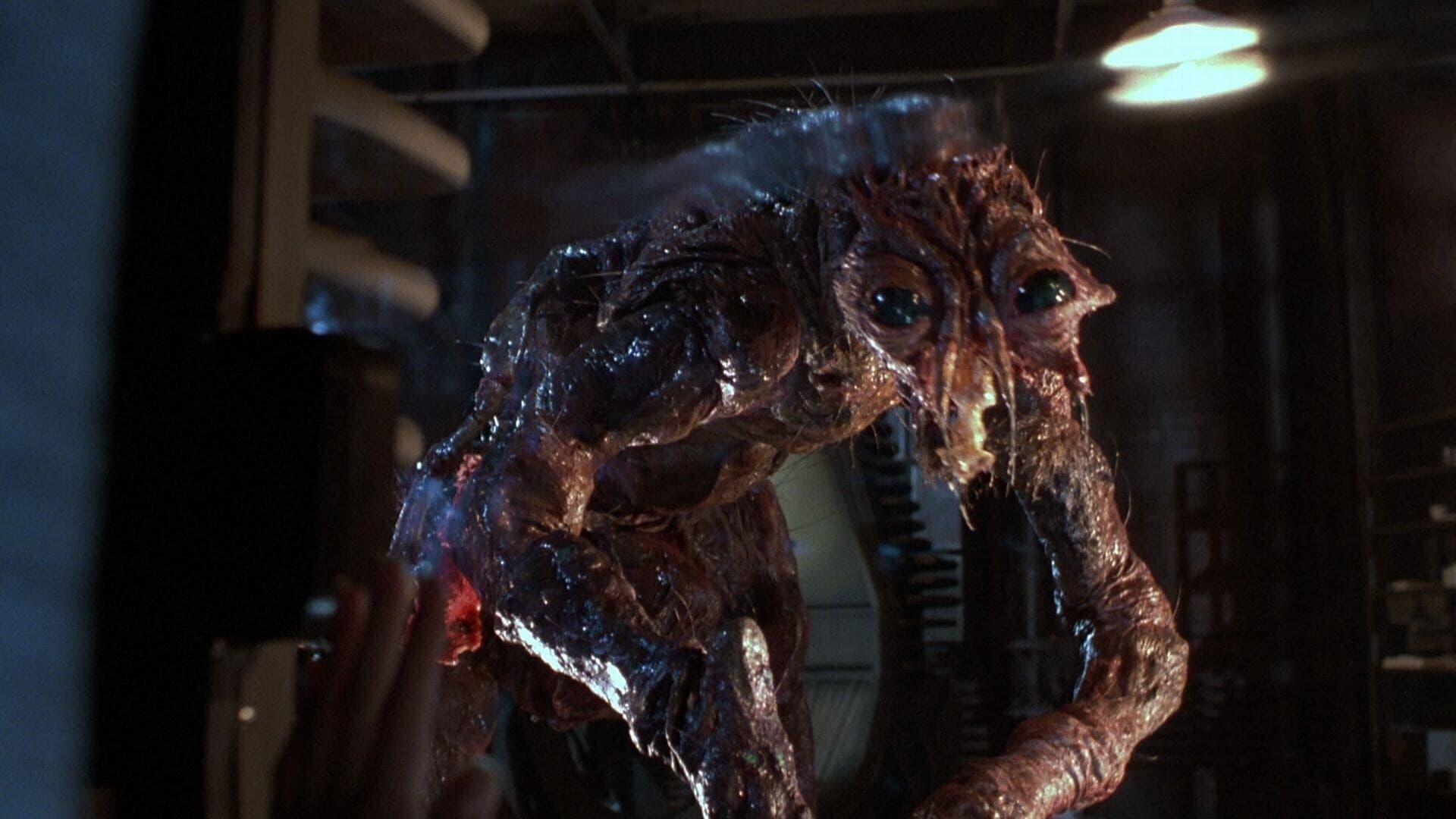
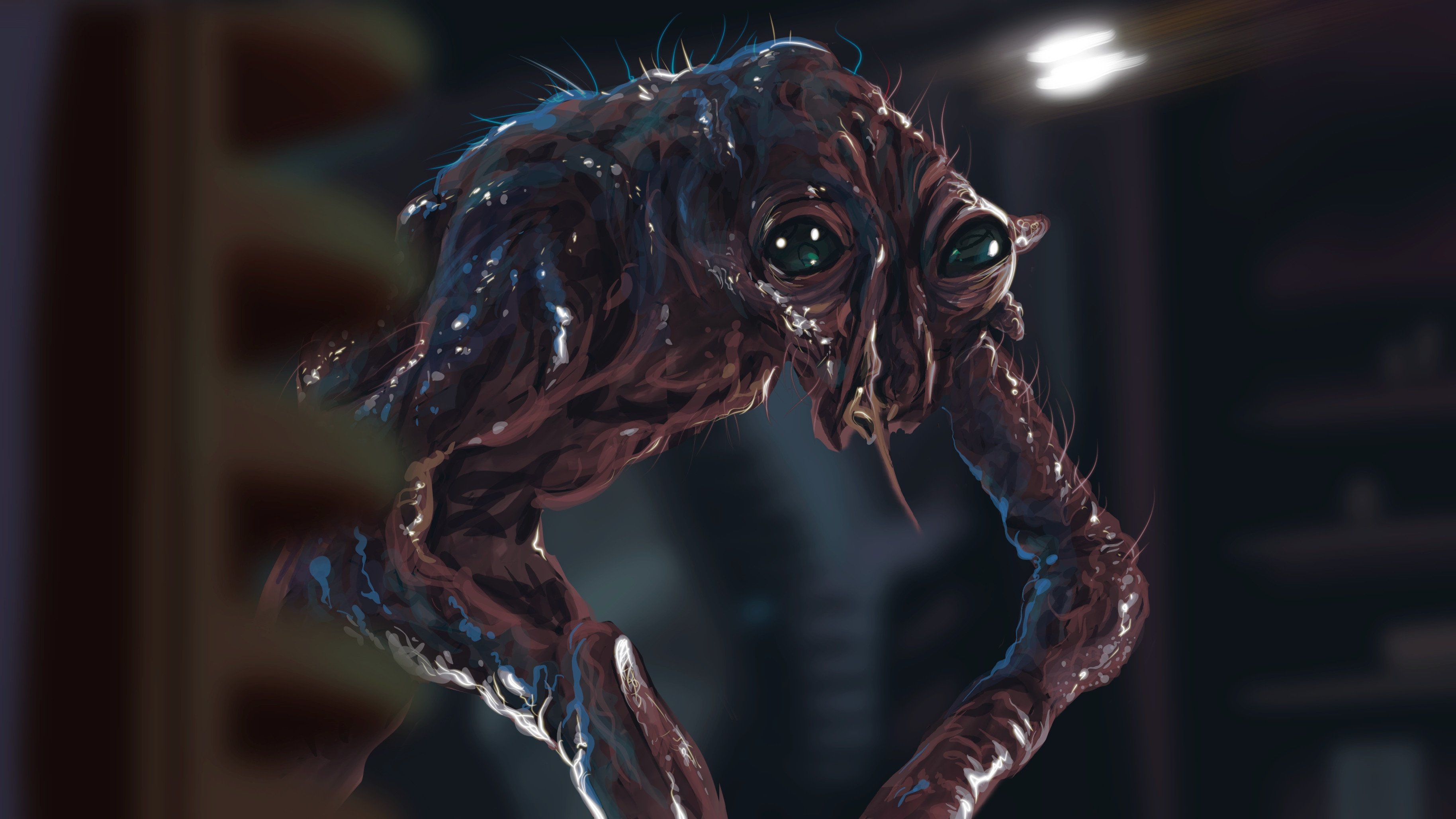
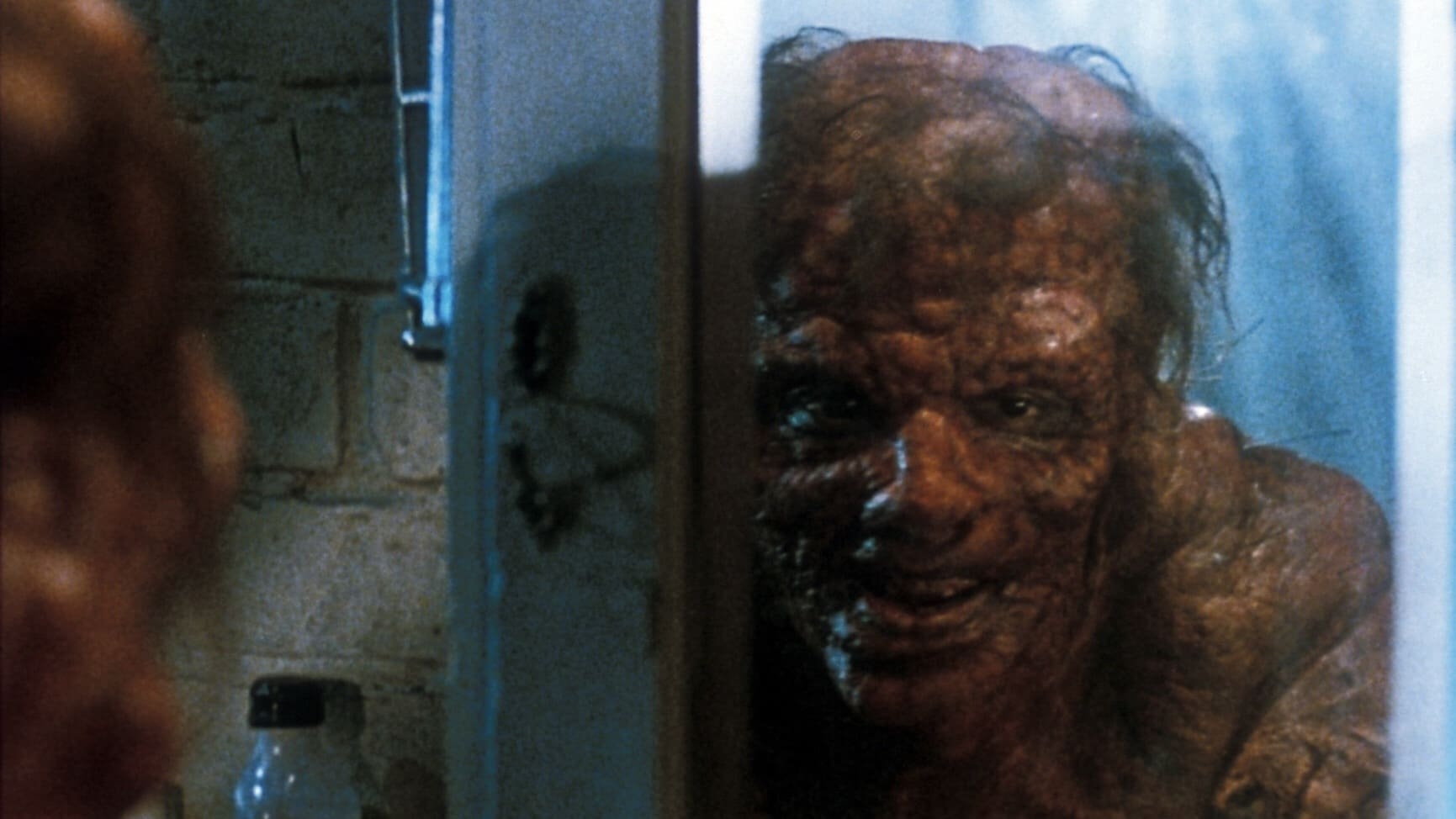
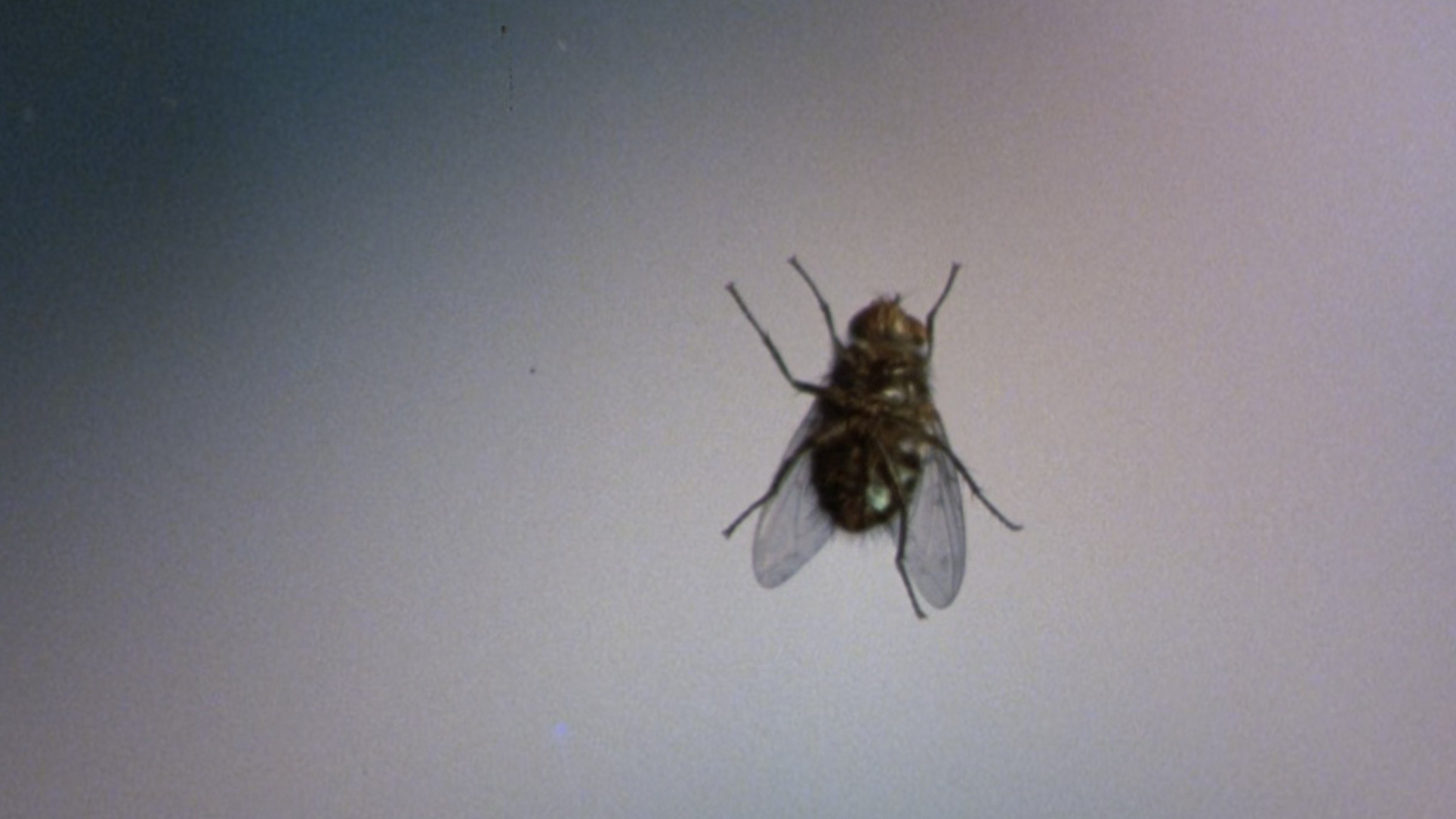
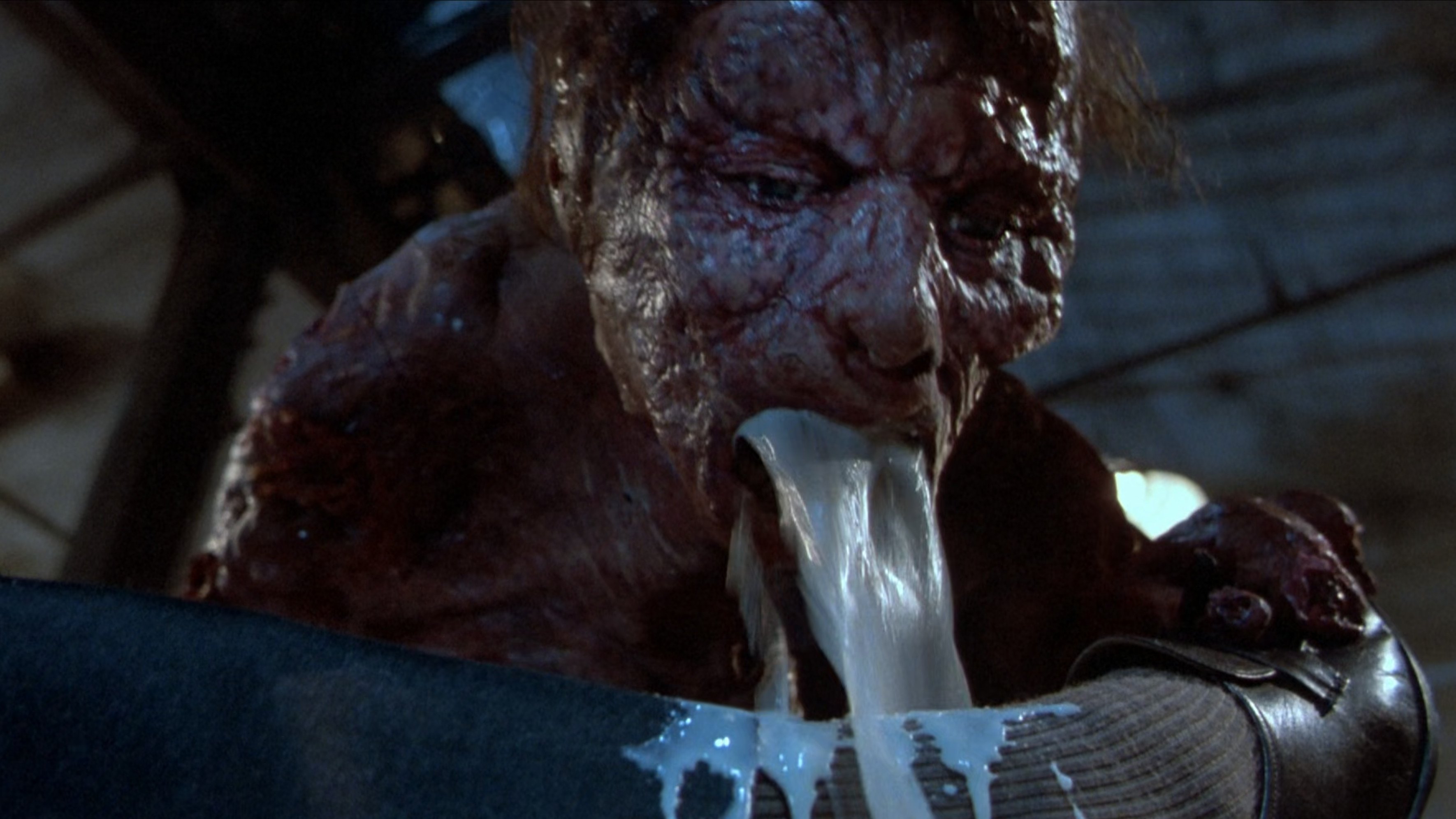
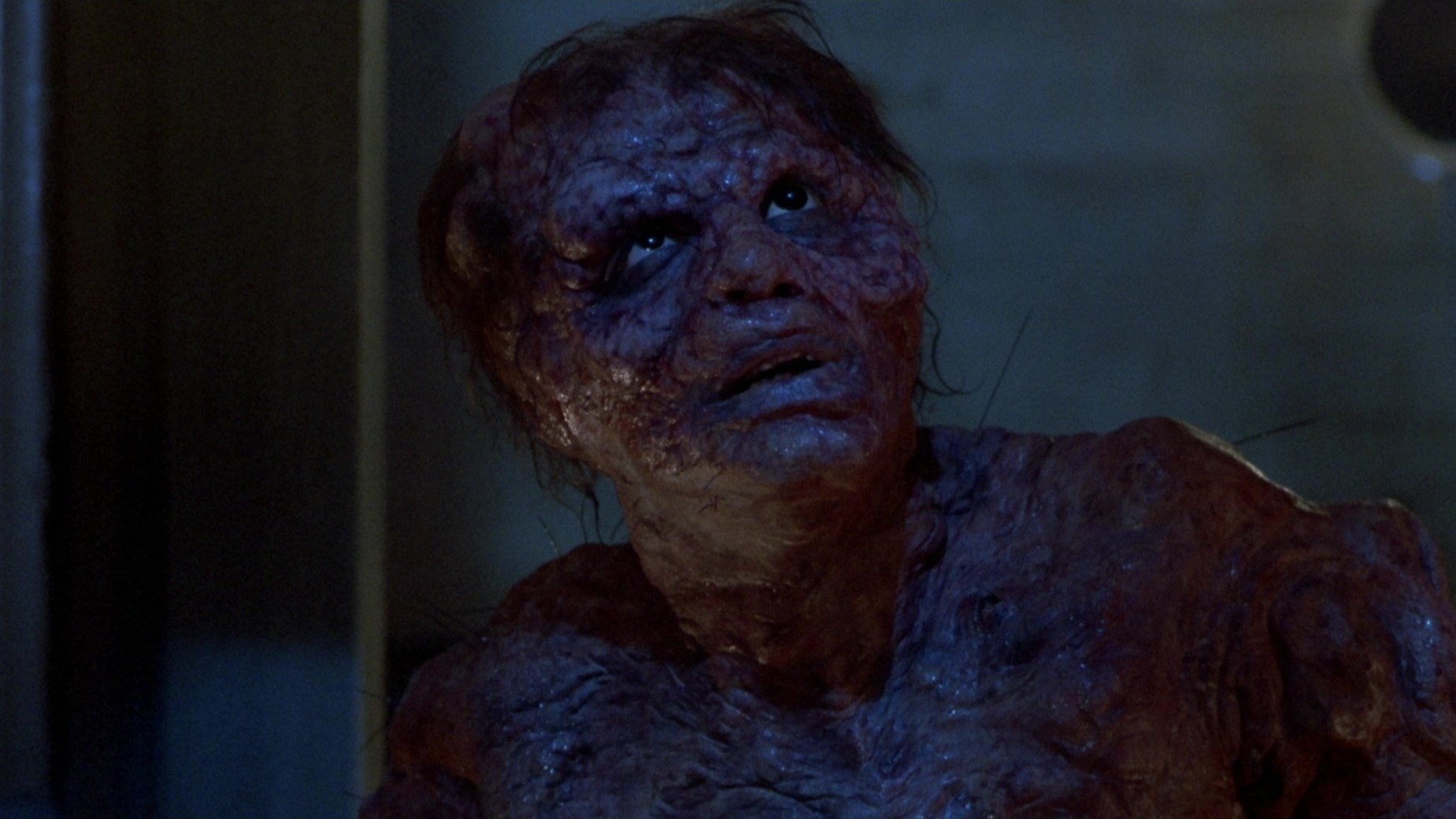
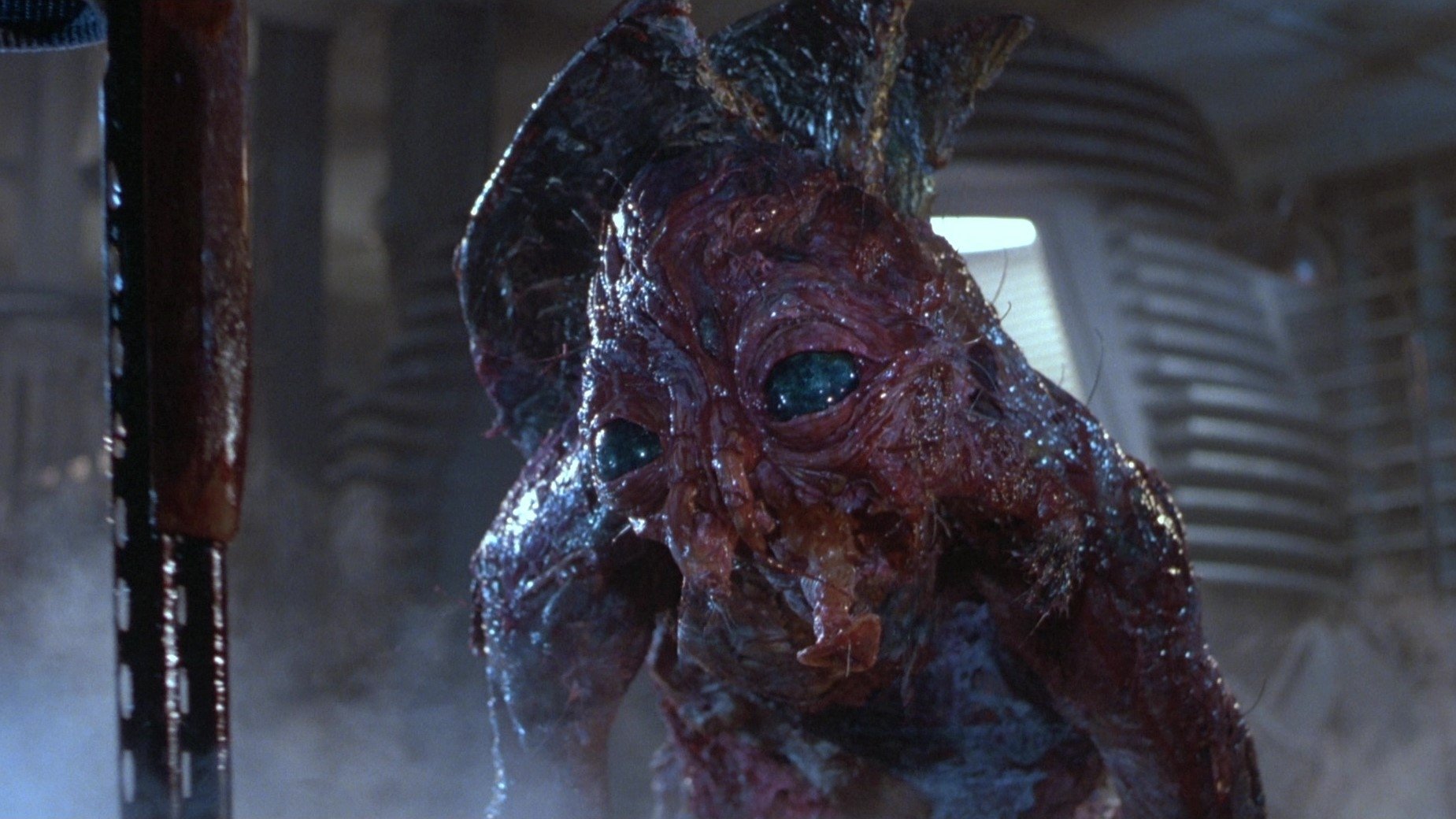
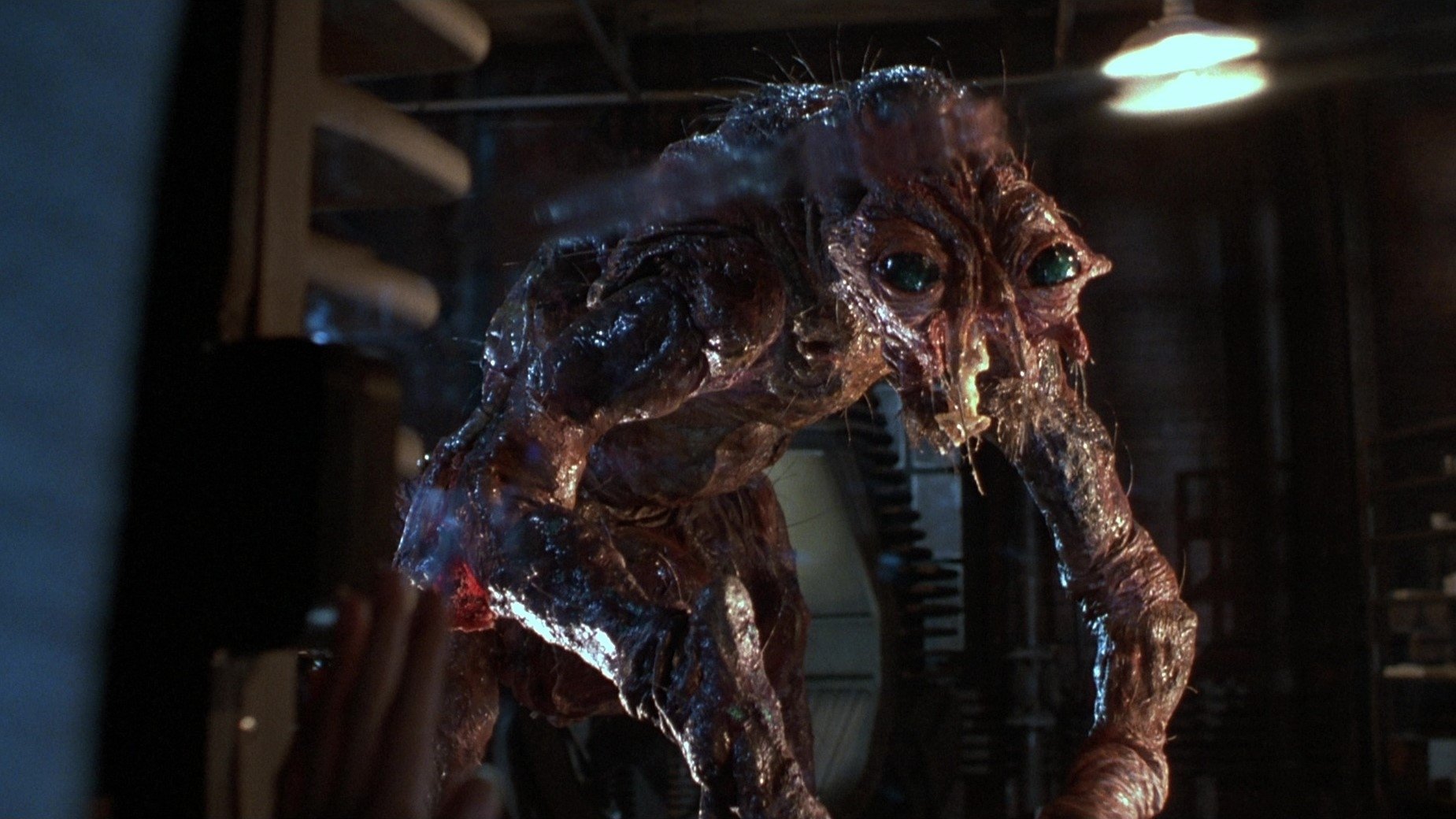
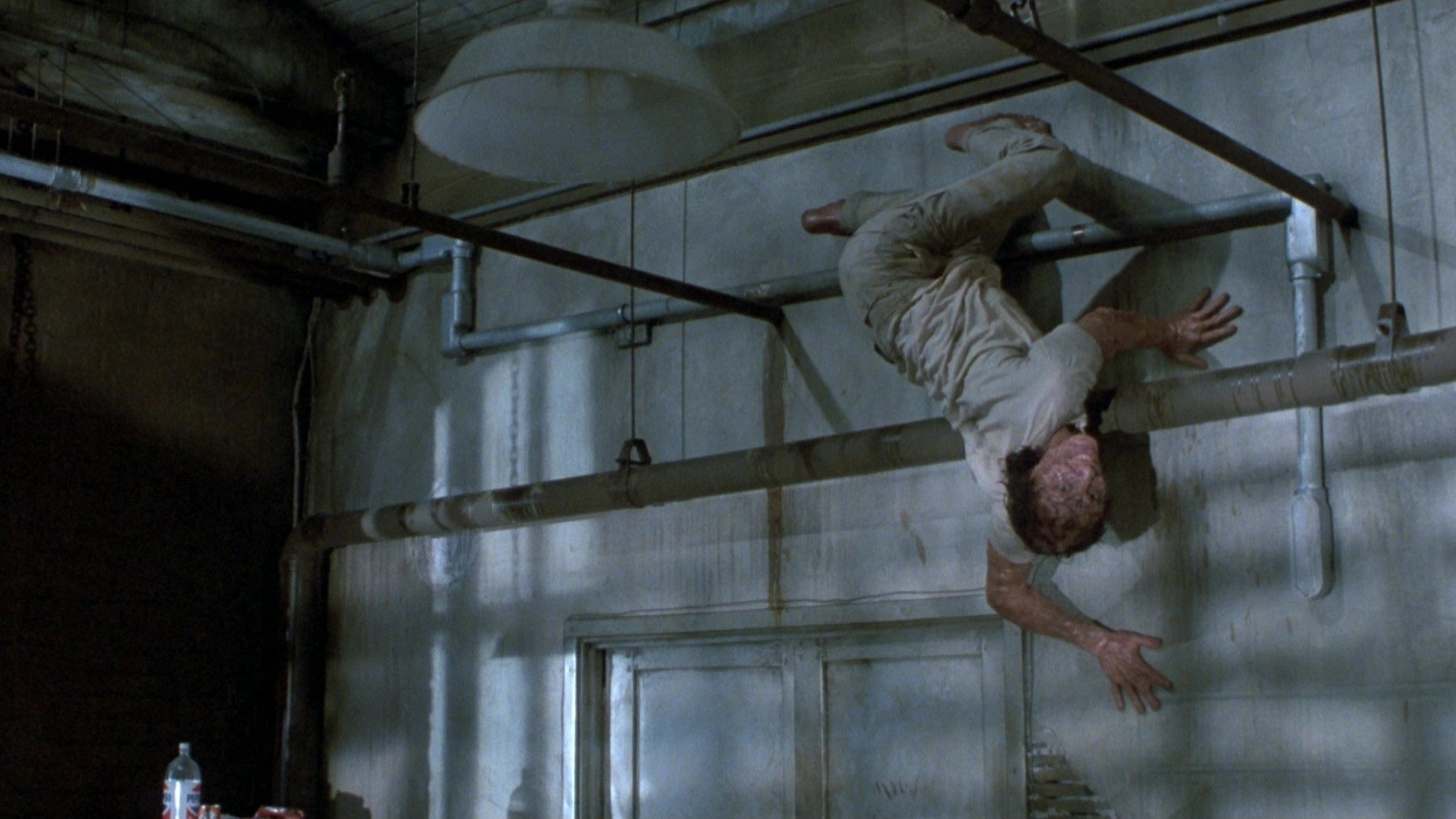
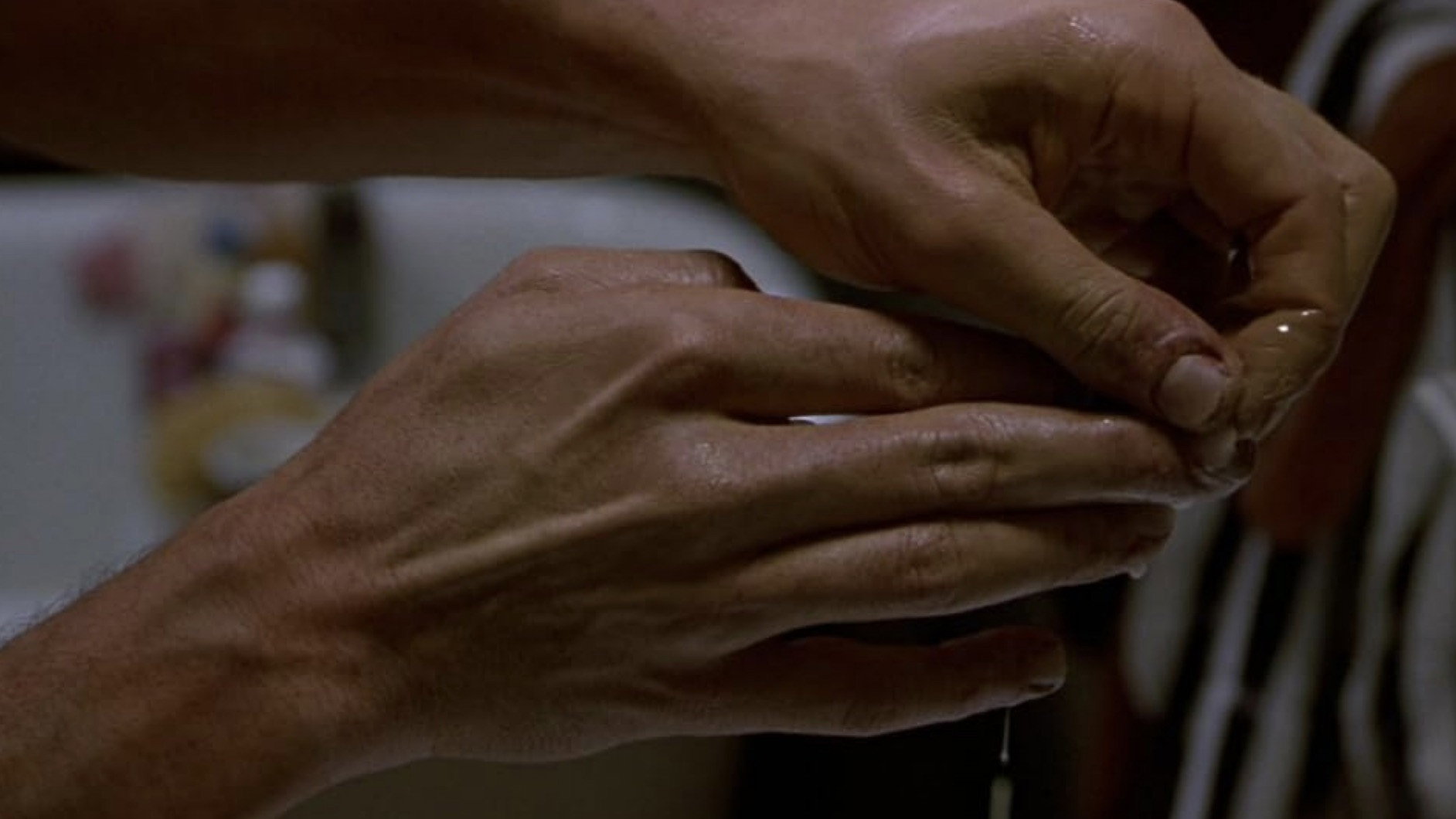
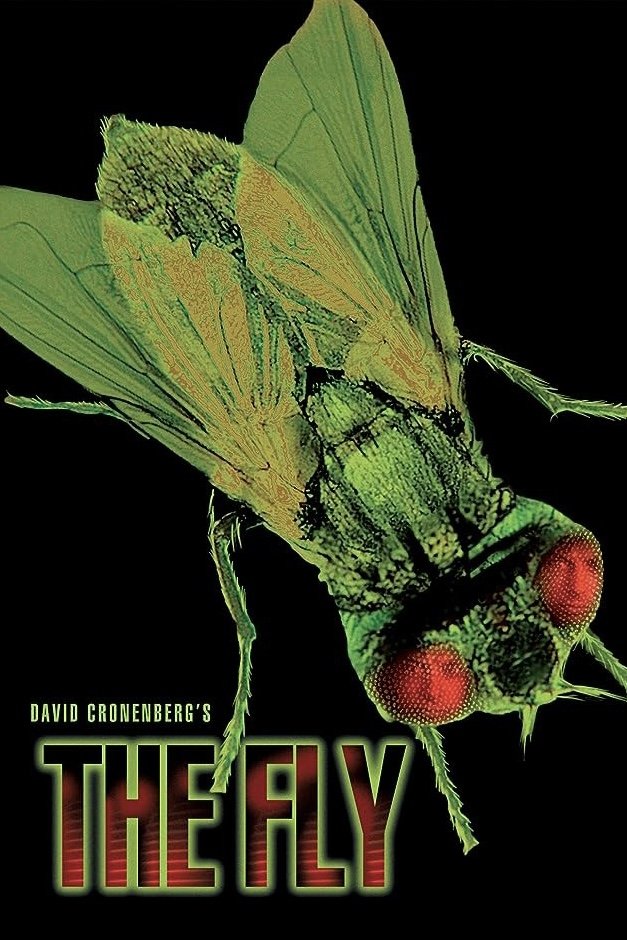
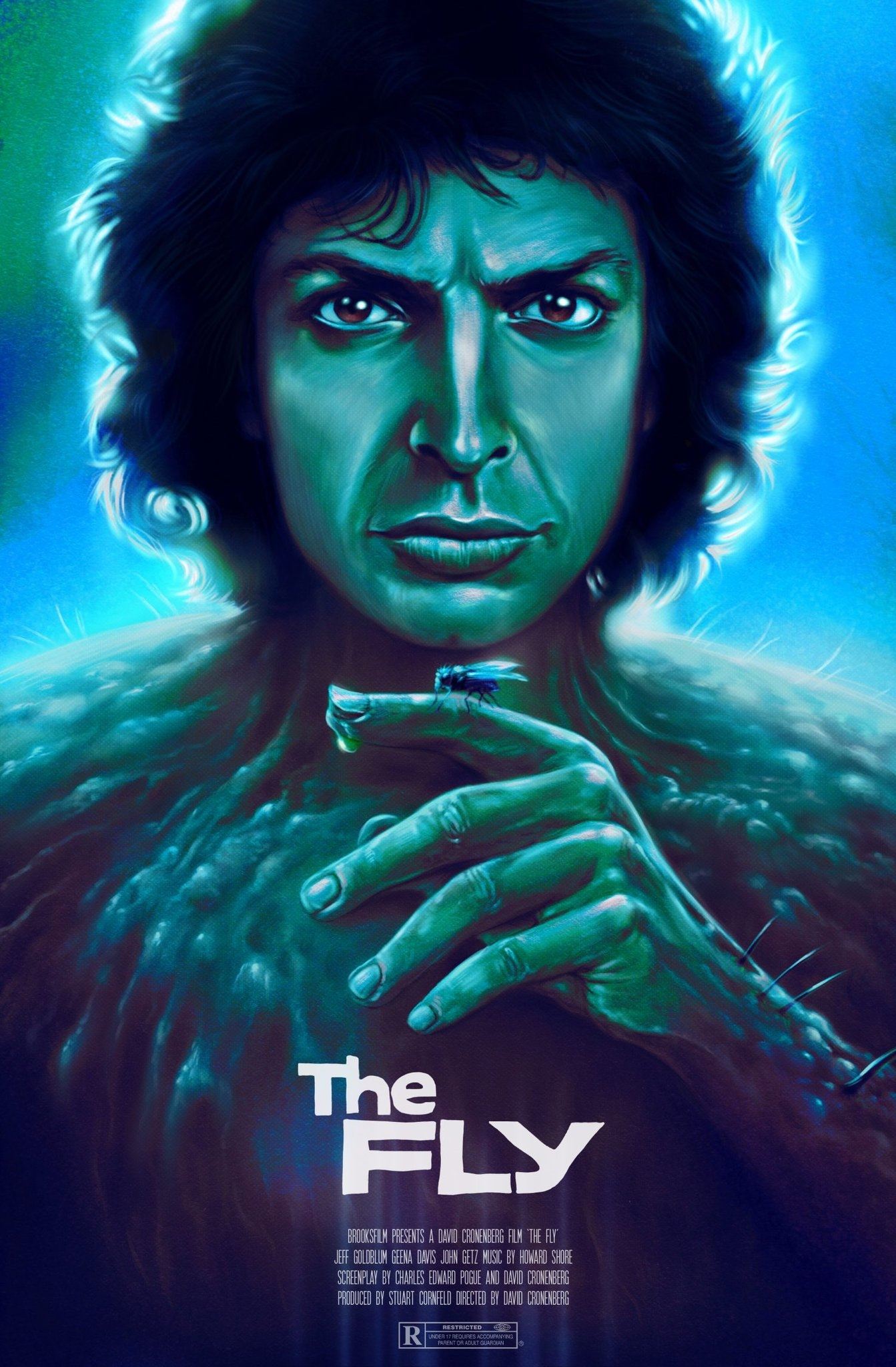
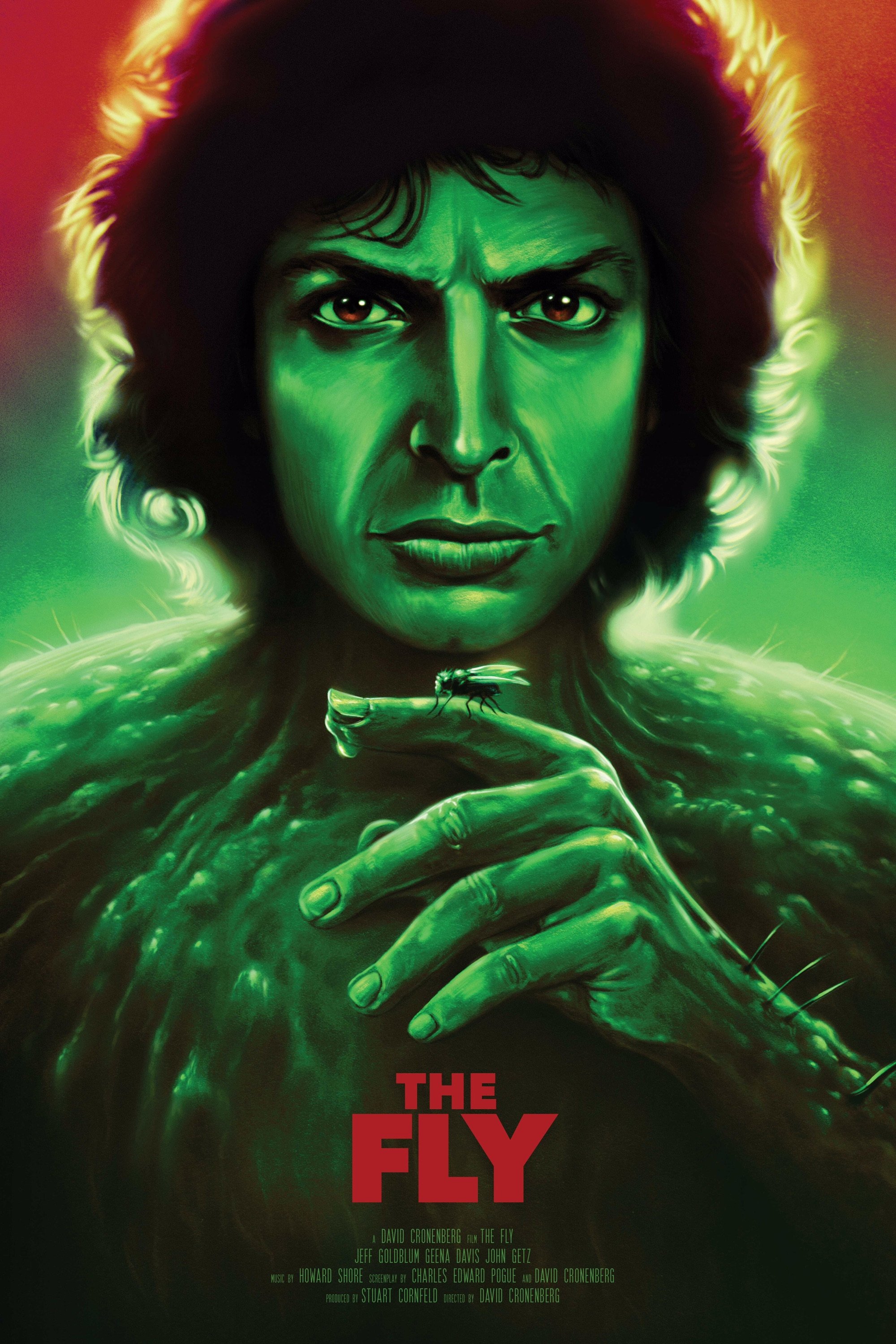
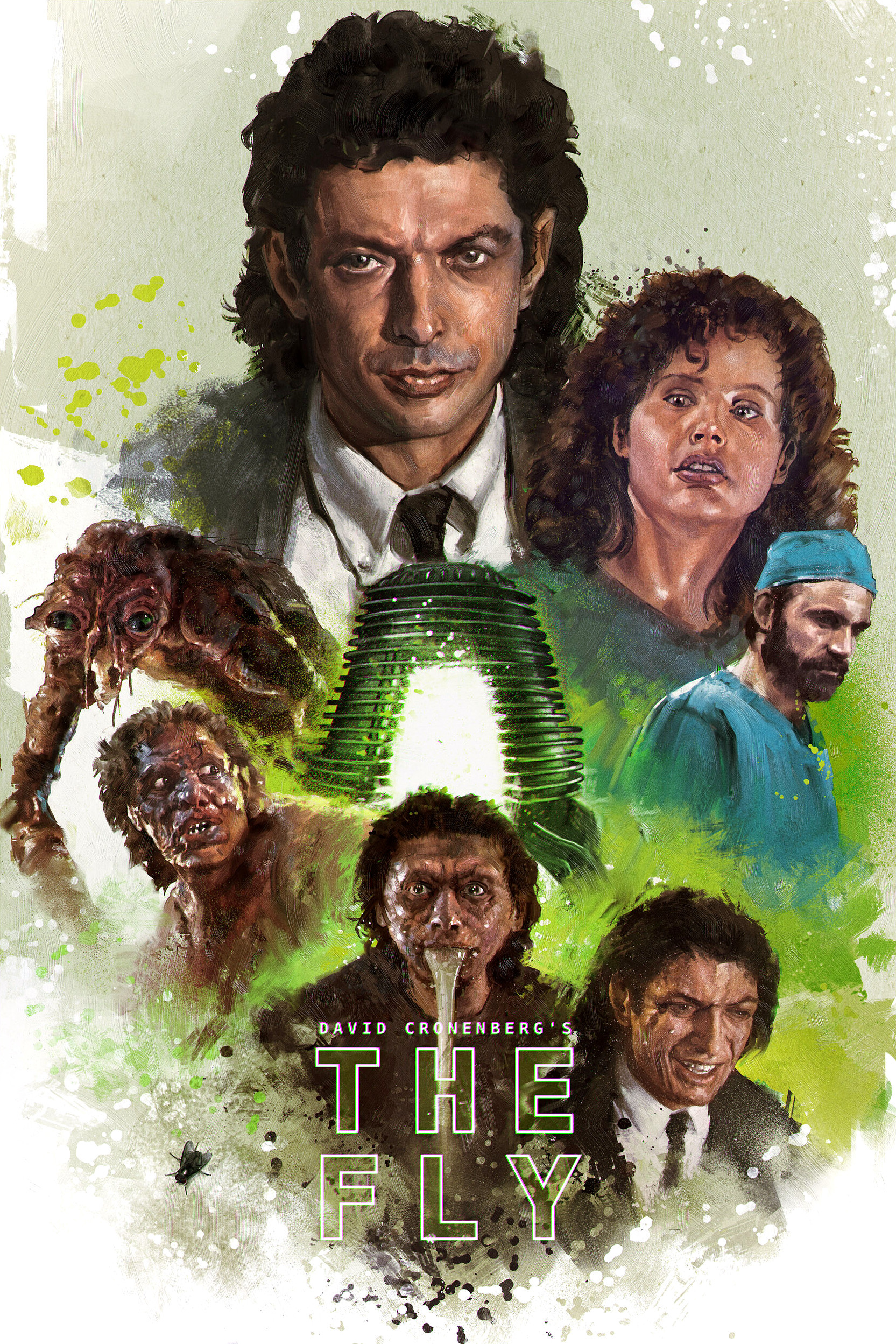
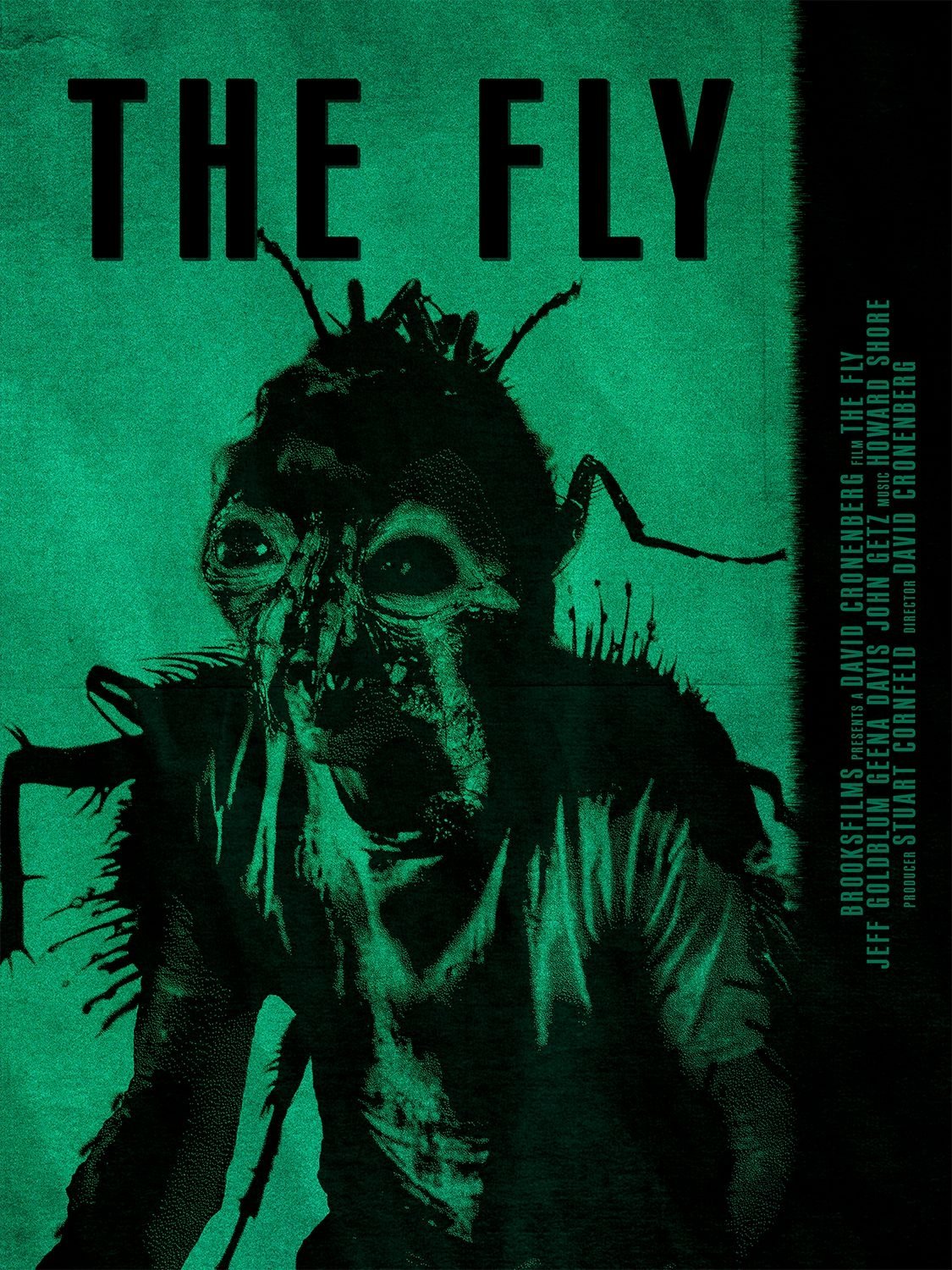
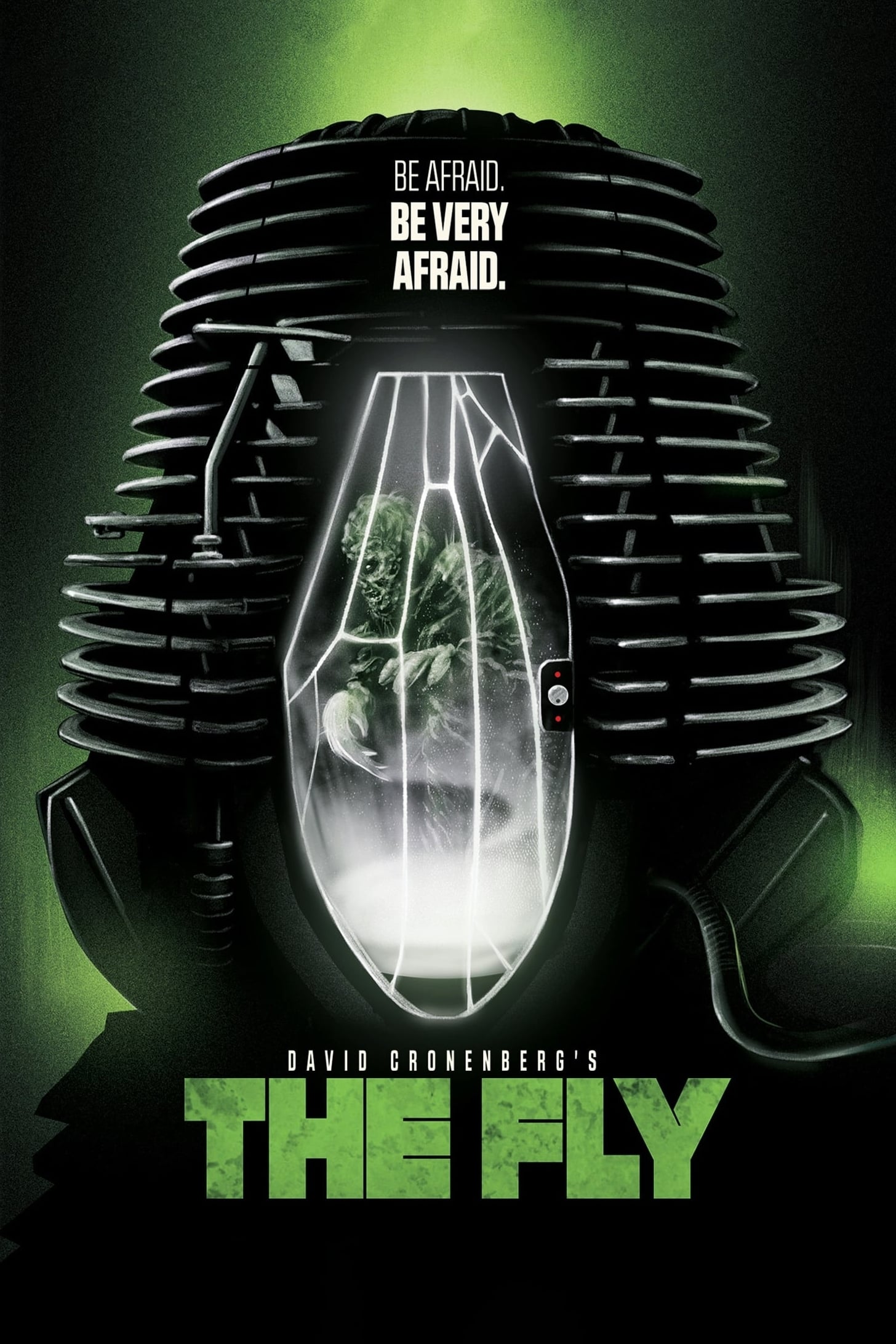
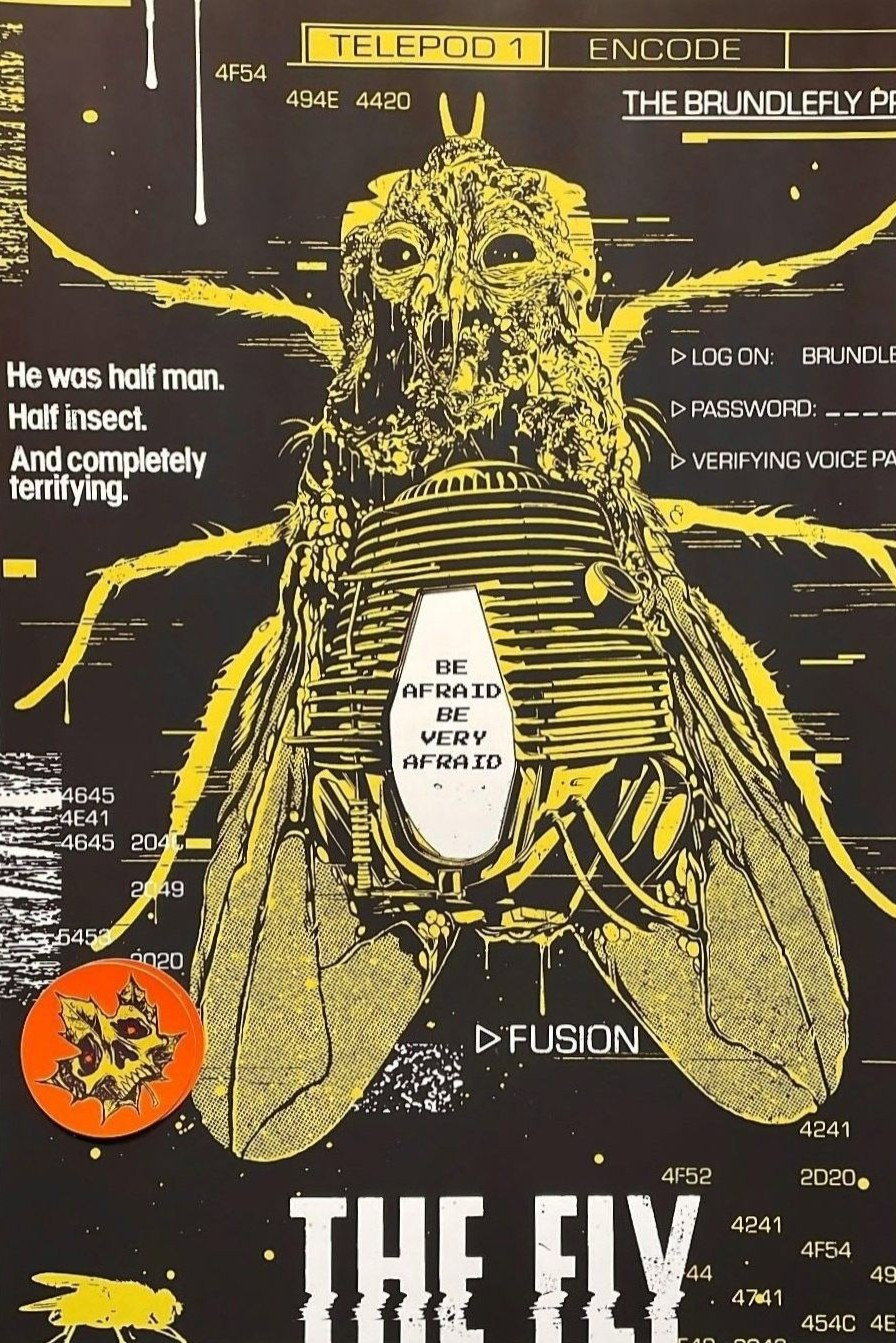
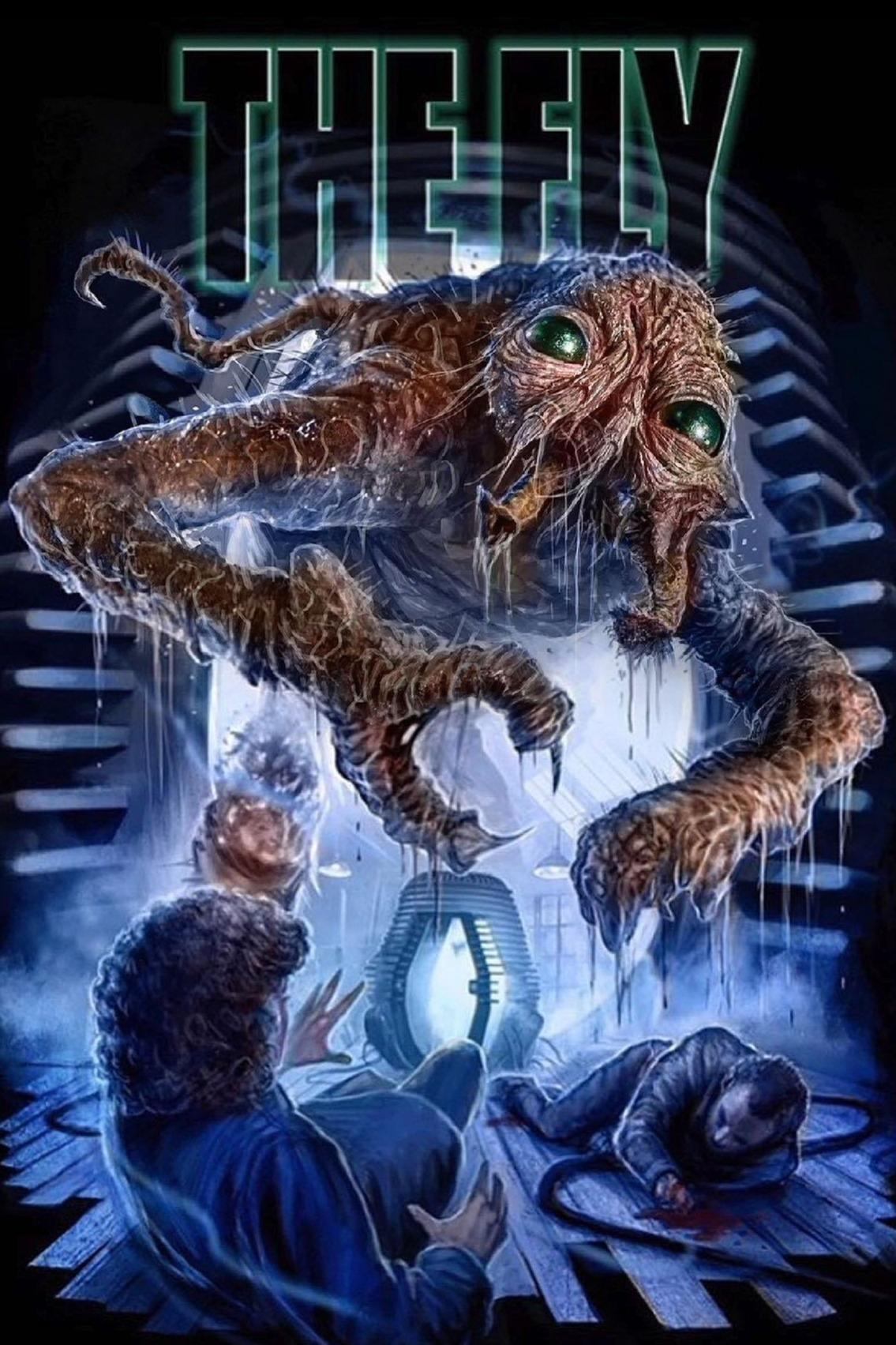
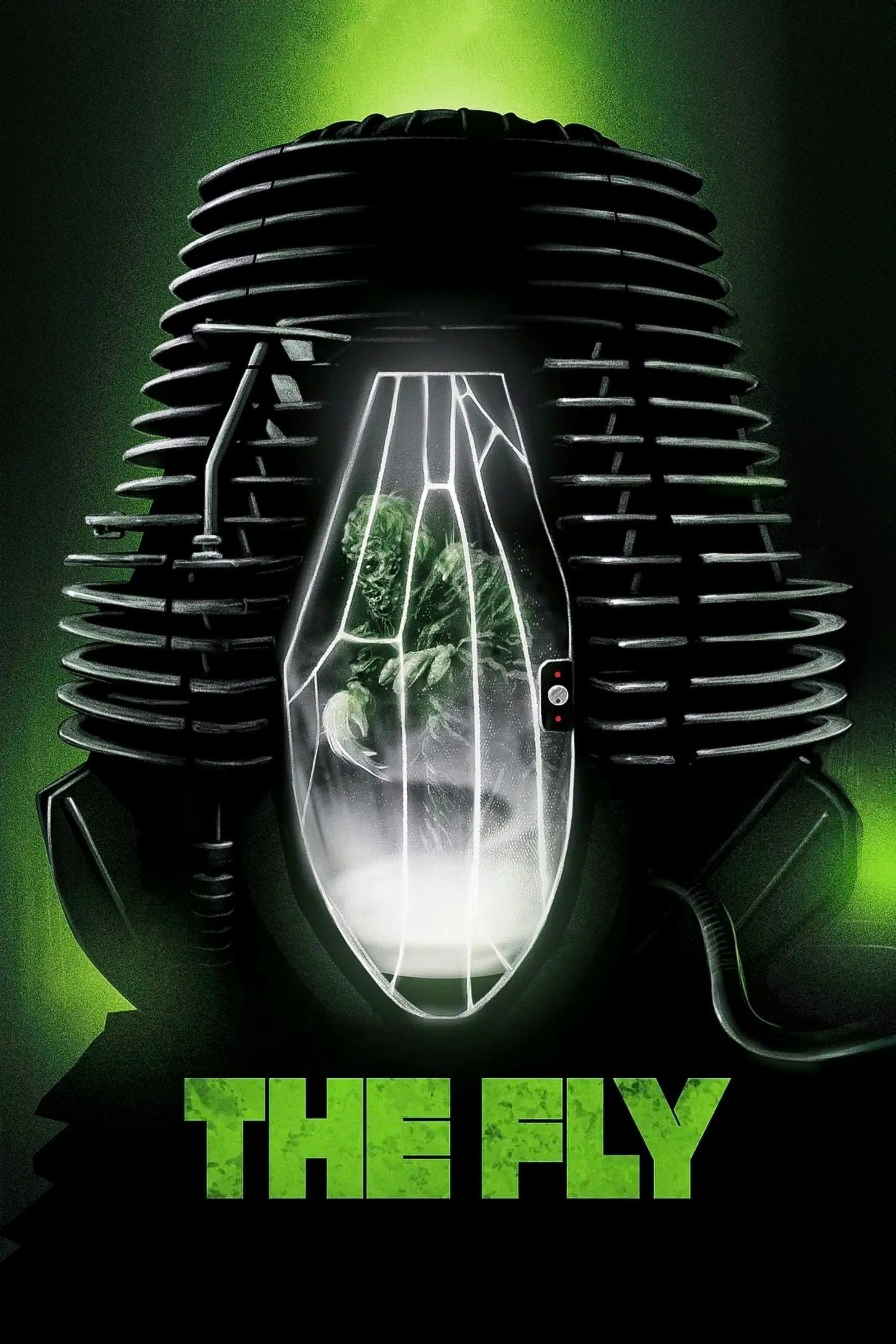
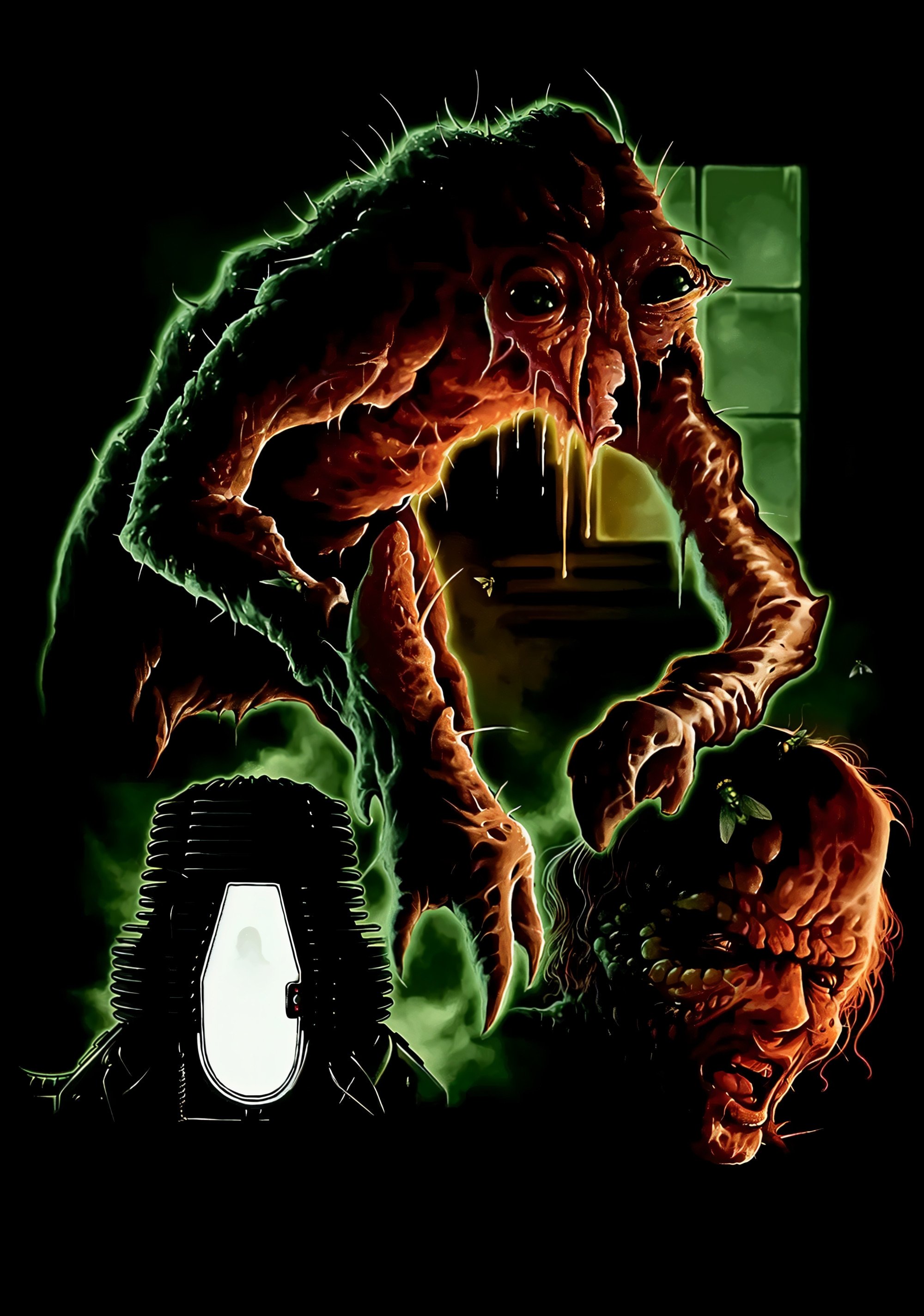
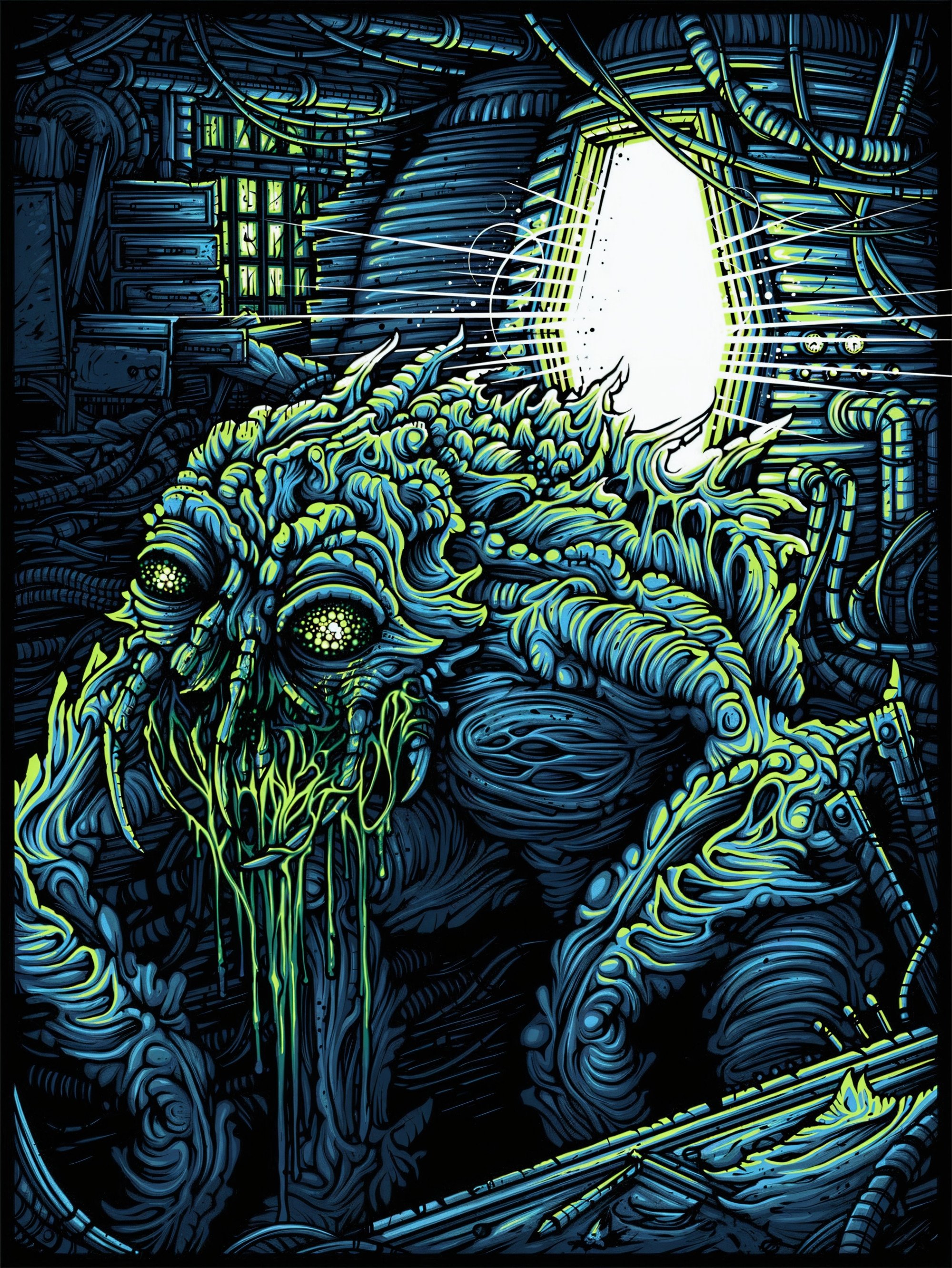
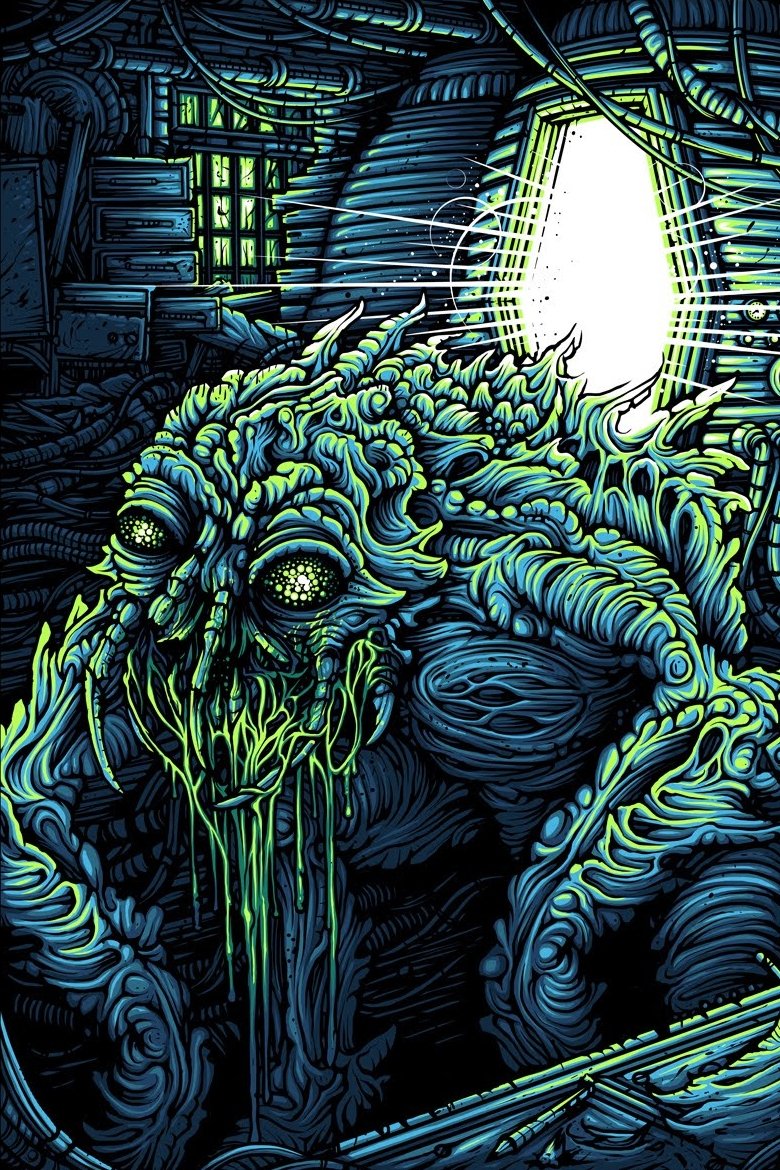
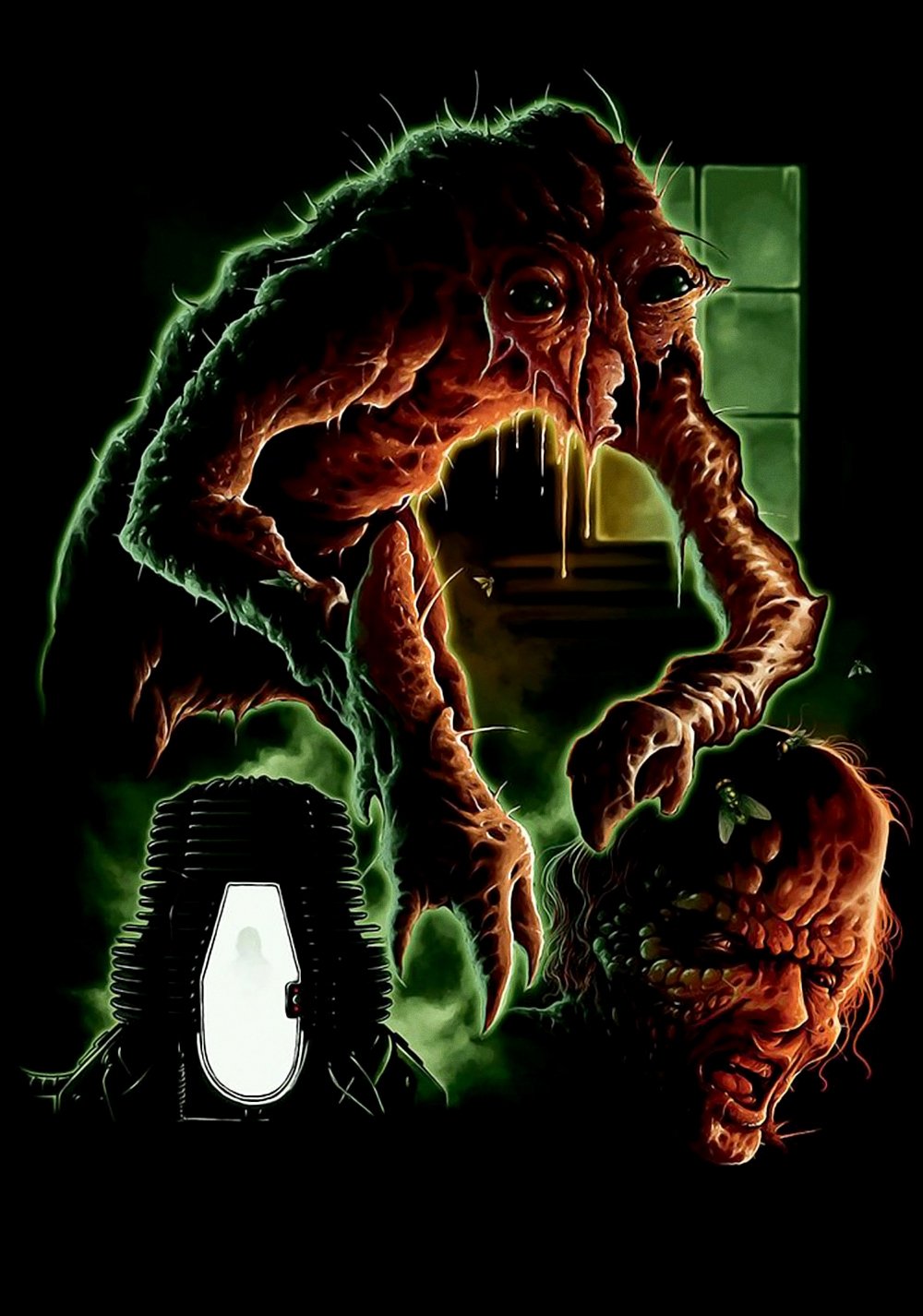
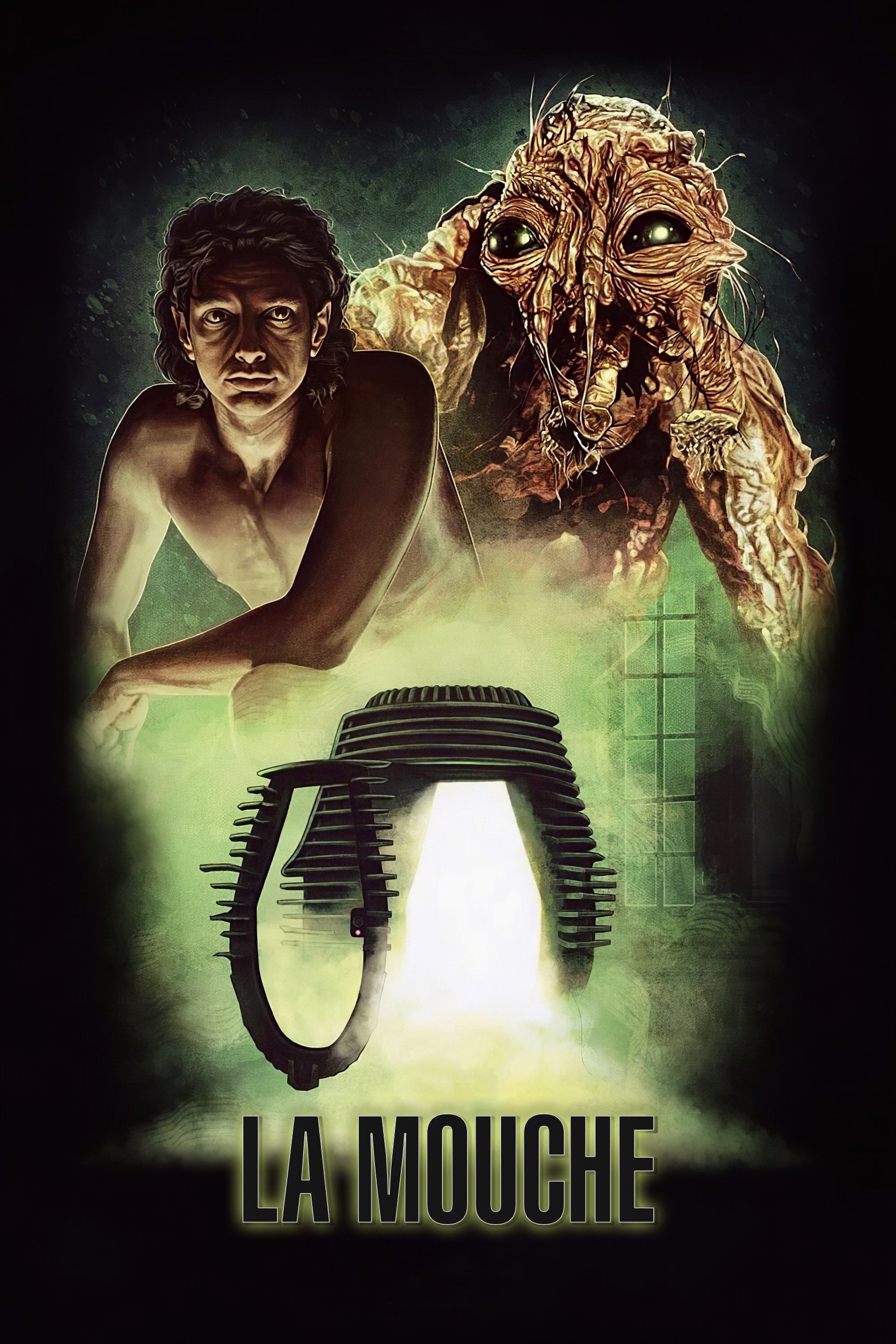
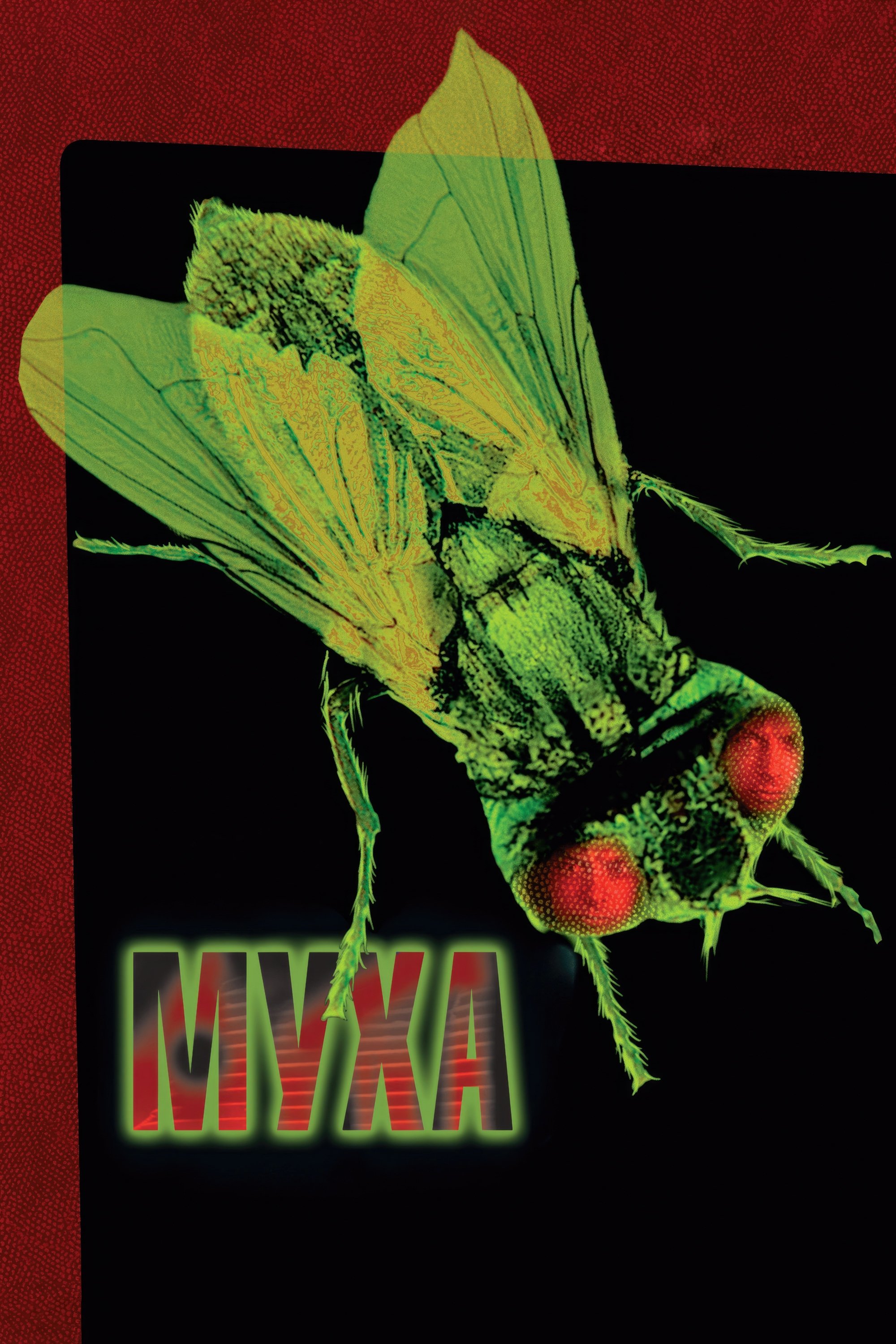
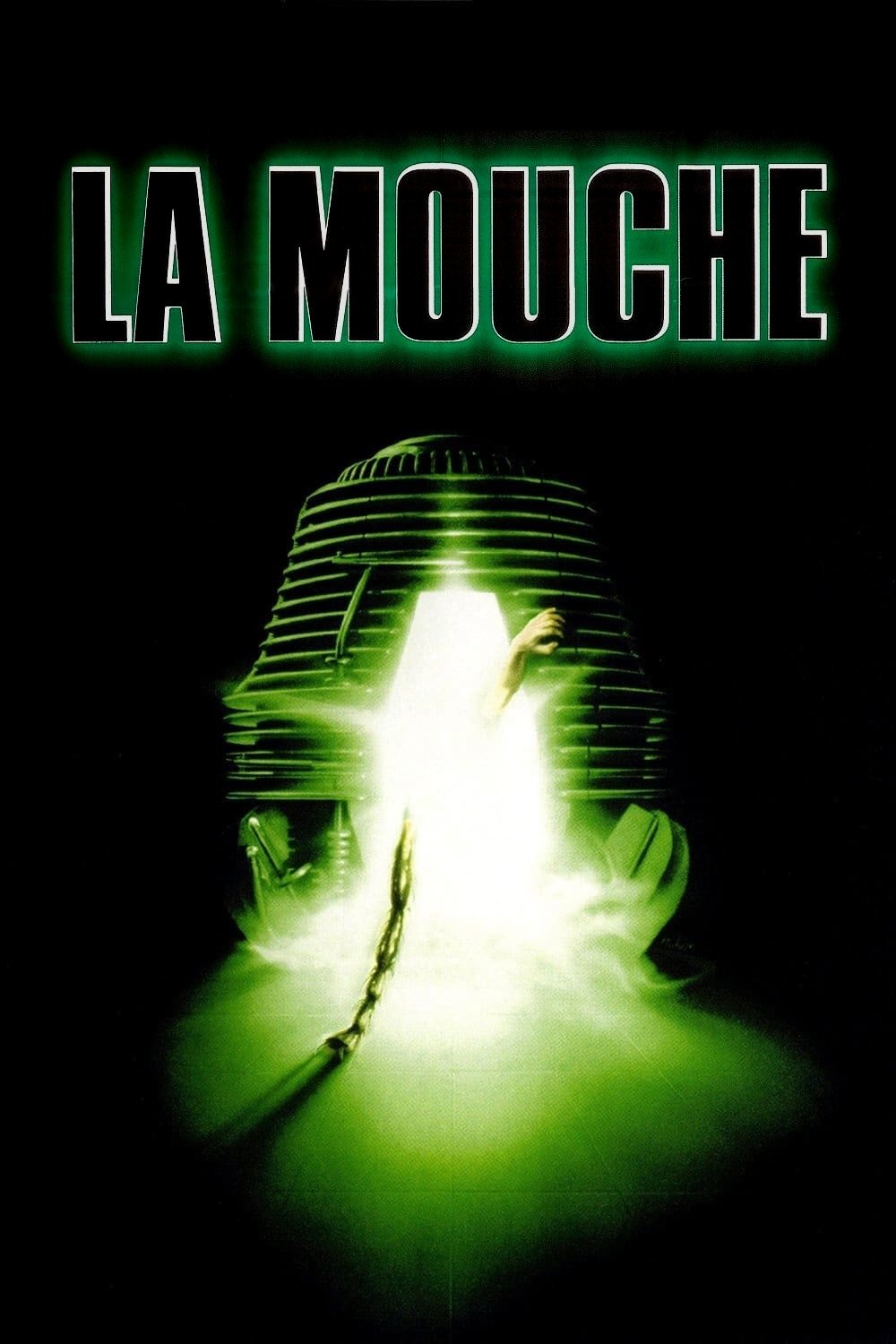
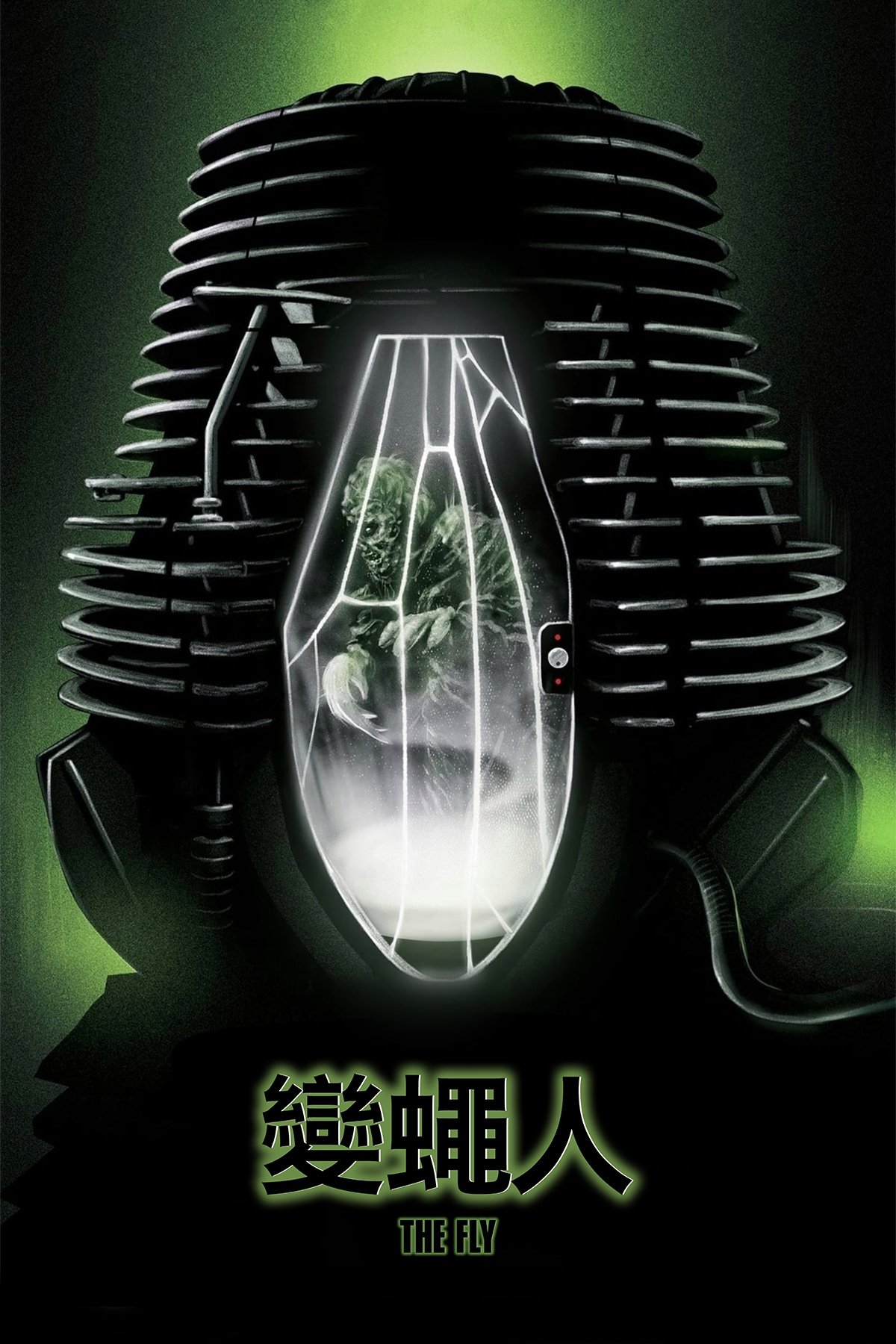
The transformation was conceived as a progression rather than a sudden reveal. Early stages rely on discoloration, lesions and abnormal hair growth before larger prosthetic pieces, altered teeth and full-body appliances progressively reorganise Goldblum's silhouette. The later Brundlefly no longer resembles a man with an insect head. Cronenberg wanted the teleporter to have produced a completely new fusion, and the final creature was therefore designed as an asymmetrical biological failure rather than a recognisable giant fly. Puppetry eventually replaces conventional makeup as the remaining human exterior gives way to the organism underneath.
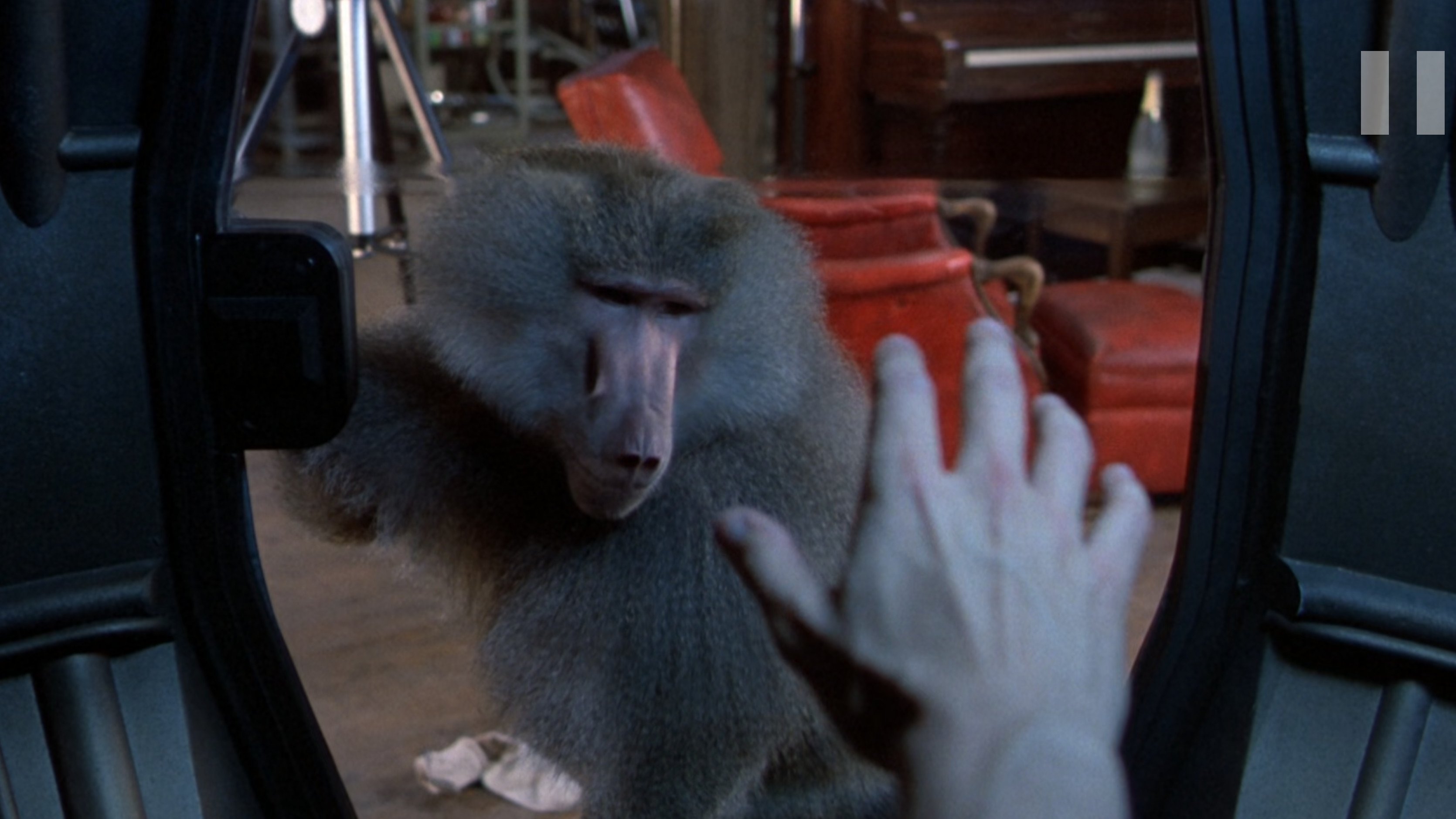
Walas's team also created the film's other major physical horrors: the inside-out baboon, the grotesque arm-wrestling injury, Veronica's larval nightmare and Brundlefly's corrosive attack on Stathis Borans. Practical effects are not isolated demonstrations of technical skill, however. Each new effect advances the same biological process, making teeth, nails, skin and digestive behaviour evidence of a body whose operating system is being rewritten. The Academy recognised that achievement at the 59th Academy Awards, where Chris Walas and Stephan Dupuis won the Oscar for Makeup.
Disease, Aging & the Horror of the Body
Because The Fly appeared during the AIDS crisis, the film was quickly interpreted as an AIDS allegory. Cronenberg repeatedly resisted reducing it to that single meaning. He acknowledged that viewers living through particular illnesses could legitimately recognise their experience in Brundle's deterioration, but described his own central idea as more universal: aging, mortality and the unavoidable fact that the body eventually ceases to function as its owner expects. In later interviews he described mortality itself as the disease that everyone is born carrying.
That interpretation is built directly into the transformation. Brundle loses teeth, fingernails, sexual normality, mobility and recognisable physical features while continuing to think and speak for much of the process. The horror therefore comes not simply from becoming an insect but from remaining mentally present while one's body becomes increasingly unfamiliar. Cronenberg had also watched his own father suffer from a severe degenerative illness, and contemporary interviews connect that experience to the final stages of Brundle's physical collapse.
Brundle's response makes the film more complicated than a simple disease narrative. He initially welcomes his altered condition because it appears to provide extraordinary energy and strength. Even after deterioration becomes undeniable, he continues describing transformation as a form of becoming. That distinction is central to Cronenberg's body horror: the body may betray an existing identity, but biological change can also create another one. The tragedy is that Brundle remains conscious enough to understand that whatever emerges from the process may no longer contain the person Veronica loves.
Howard Shore & the Operatic Scale of the Score
Howard Shore had already scored several Cronenberg films before The Fly, but this project allowed their collaboration to expand into a substantially more symphonic register. Shore used a large orchestra rather than treating the film primarily as electronic or minimalist horror. The music combines aggressive brass, percussion and dense orchestral movement with quieter passages built around the relationship between Brundle and Veronica, giving the biological horror a scale closer to tragedy than to a conventional monster picture.
That grandeur was deliberate. Later accounts of the production recall Mel Brooks wondering whether the score was too large for the material, while Cronenberg defended its scale because he regarded the story itself as operatic. The music follows the emotional and bodily consequences of Brundle’s transformation. It gives emotional weight to deterioration and loss, allowing moments of physical disgust to coexist with something approaching romantic mourning. Shore's own published concert suite preserves extensive orchestration including woodwinds, brass, percussion, harp, piano and strings, demonstrating how fully the film had moved into symphonic territory.
The score also represents an important stage in the long Cronenberg-Shore partnership. Earlier films such as Scanners and Videodrome had experimented more heavily with combinations of electronics and acoustic material; The Fly showed how their shared sensibility could survive inside a much broader orchestral language. Shore eventually returned to the material in another form, composing the music for the 2008 opera The Fly, directed on stage by Cronenberg. The transformation from horror score to opera confirms how strongly both men understood the original film as a story of love, decay and loss.
Release, Deleted Material & Box Office
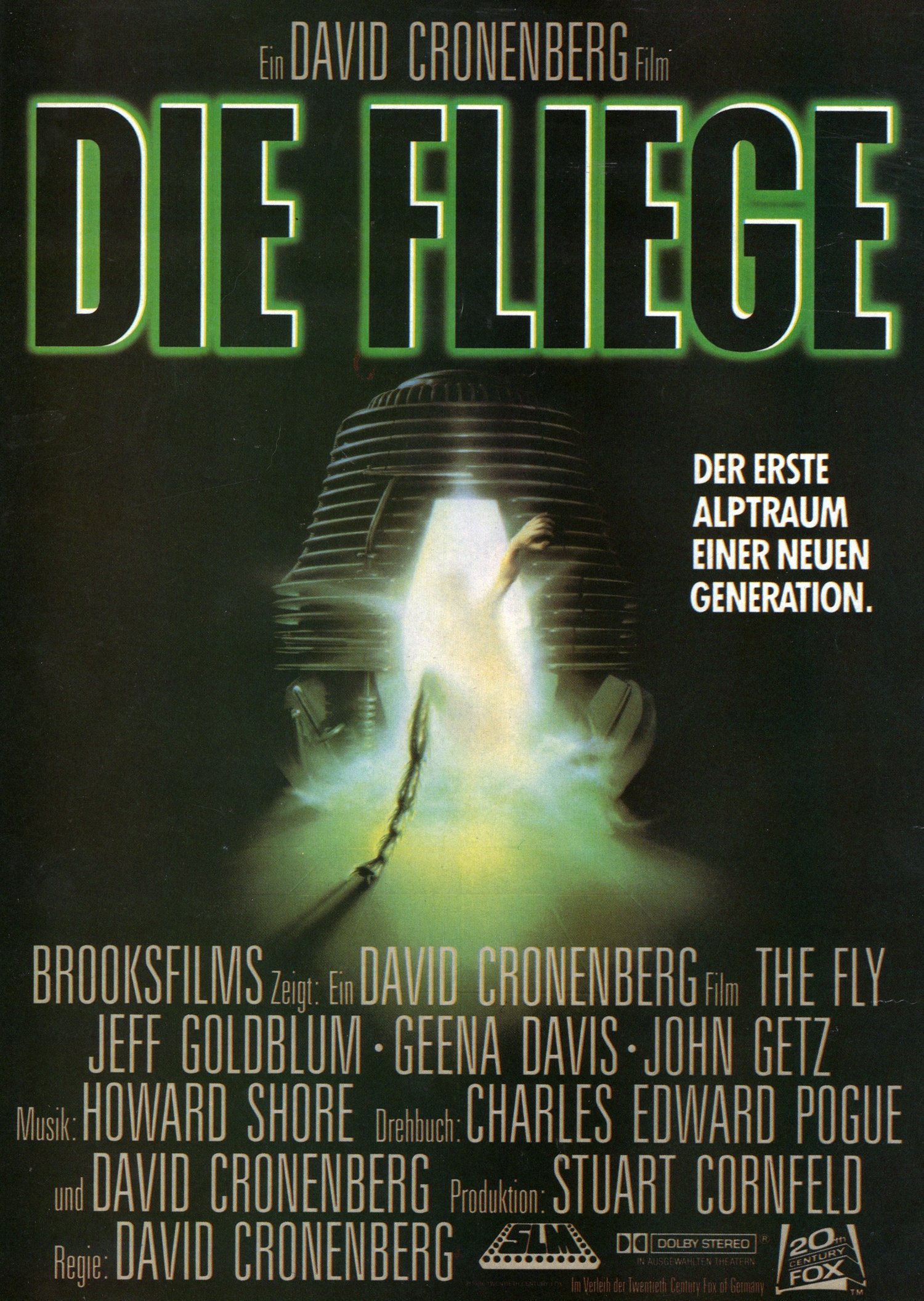
Twentieth Century Fox released The Fly in the United States on 15 August 1986. It opened with approximately $7 million and became the highest-grossing film in the country during its first two weeks according to contemporary reporting collected by AFI. Modern box-office records place its original North American total at approximately $40.5 million against a production cost of around $10 million, making Cronenberg's most effects-intensive film to that point a substantial commercial success.
The completed theatrical version was shaped by preview reactions. Cronenberg removed material involving Brundle's attempt to fuse a baboon with a cat, followed by the malformed hybrid attacking itself and its creator. Contemporary reporting described the sequence as so disturbing that it interfered with the audience's remaining sympathy for Brundle. Another deleted concept involved an altered ending connected with pregnancy. These removals are important because they show Cronenberg protecting the emotional trajectory of the film even when expensive effects had already been completed.
Critical response recognised both the graphic effects and the unusual emotional seriousness behind them. The violence and bodily deterioration inevitably dominated publicity, but the film was not received simply as a gore attraction. Goldblum's performance, Davis's relationship with him and Cronenberg's treatment of transformation gave reviewers material normally absent from contemporary effects-driven horror. The commercial success also demonstrated that audiences would accept an unusually bleak conclusion: Brundle receives neither cure nor heroic victory, and the film ultimately refuses to reverse the biological consequences it has spent its running time making physical.
Oscar, The Fly II & Legacy
The Academy Award for Walas and Dupuis formalised the film's technical achievement, but its longer influence reaches beyond makeup. The Fly became one of the central examples of 1980s body horror because transformation is presented as a continuous physical process rather than a before-and-after effect. The audience sees intermediate states and is repeatedly forced to renegotiate whether the figure onscreen should still be understood as Seth Brundle. Later films could reproduce particular prosthetic techniques, but the effectiveness of the transformation depends equally on its connection to character.
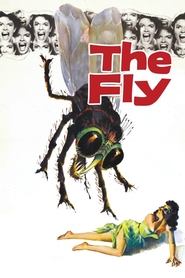
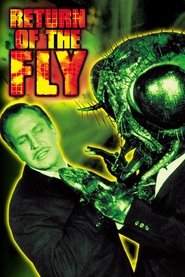
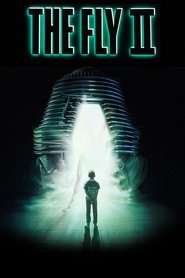
The property continued with The Fly II in 1989. Cronenberg declined to direct, and Chris Walas moved from effects designer to director, extending the biological consequences of the first film through Brundle's son. The original also acquired an unusual theatrical afterlife when Howard Shore transformed the story into an opera with a libretto by David Henry Hwang. Cronenberg directed its 2008 stage production, returning to the same material more than two decades after filming it and reinforcing the idea that the underlying structure was fundamentally tragic and intimate.
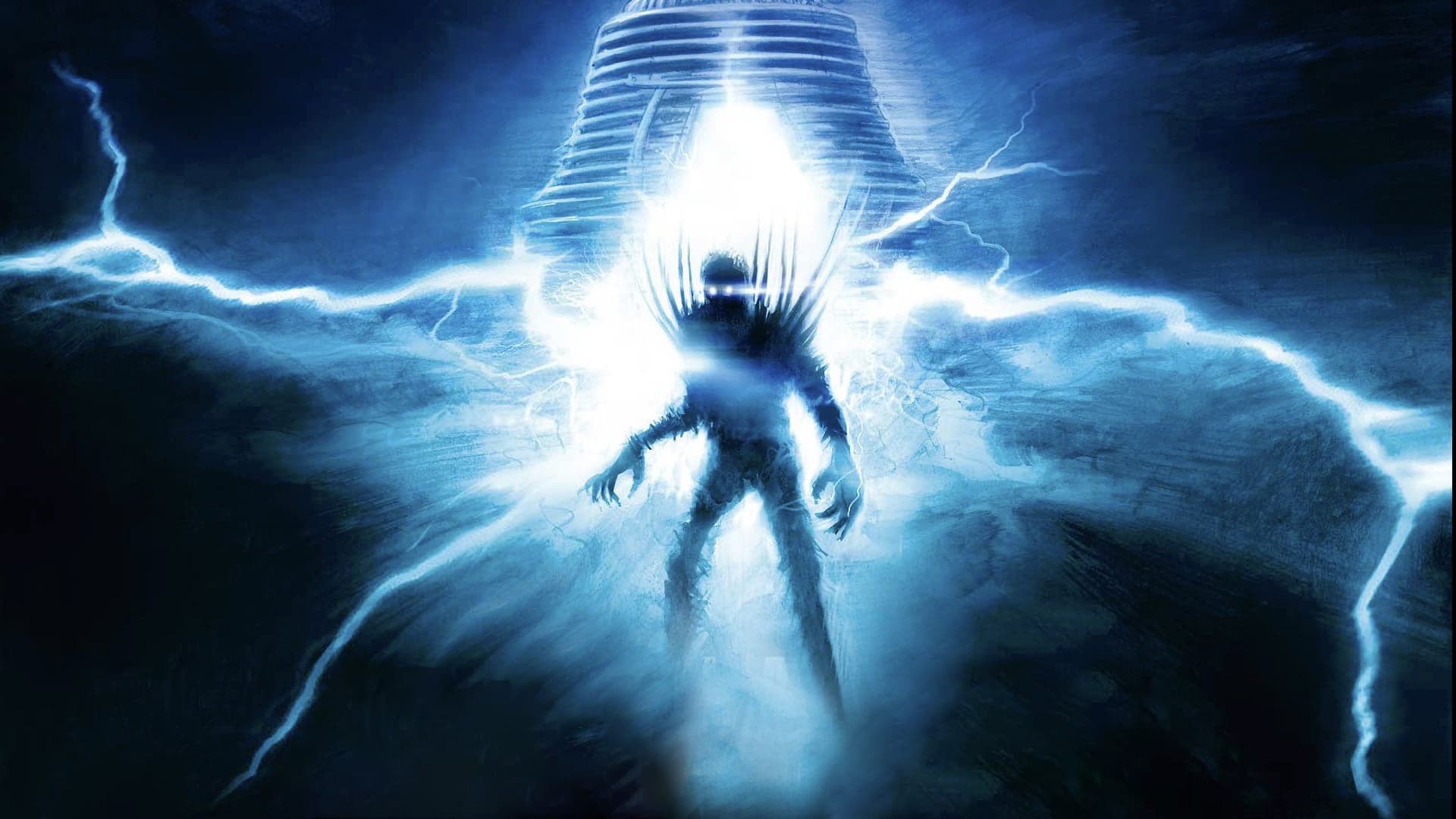
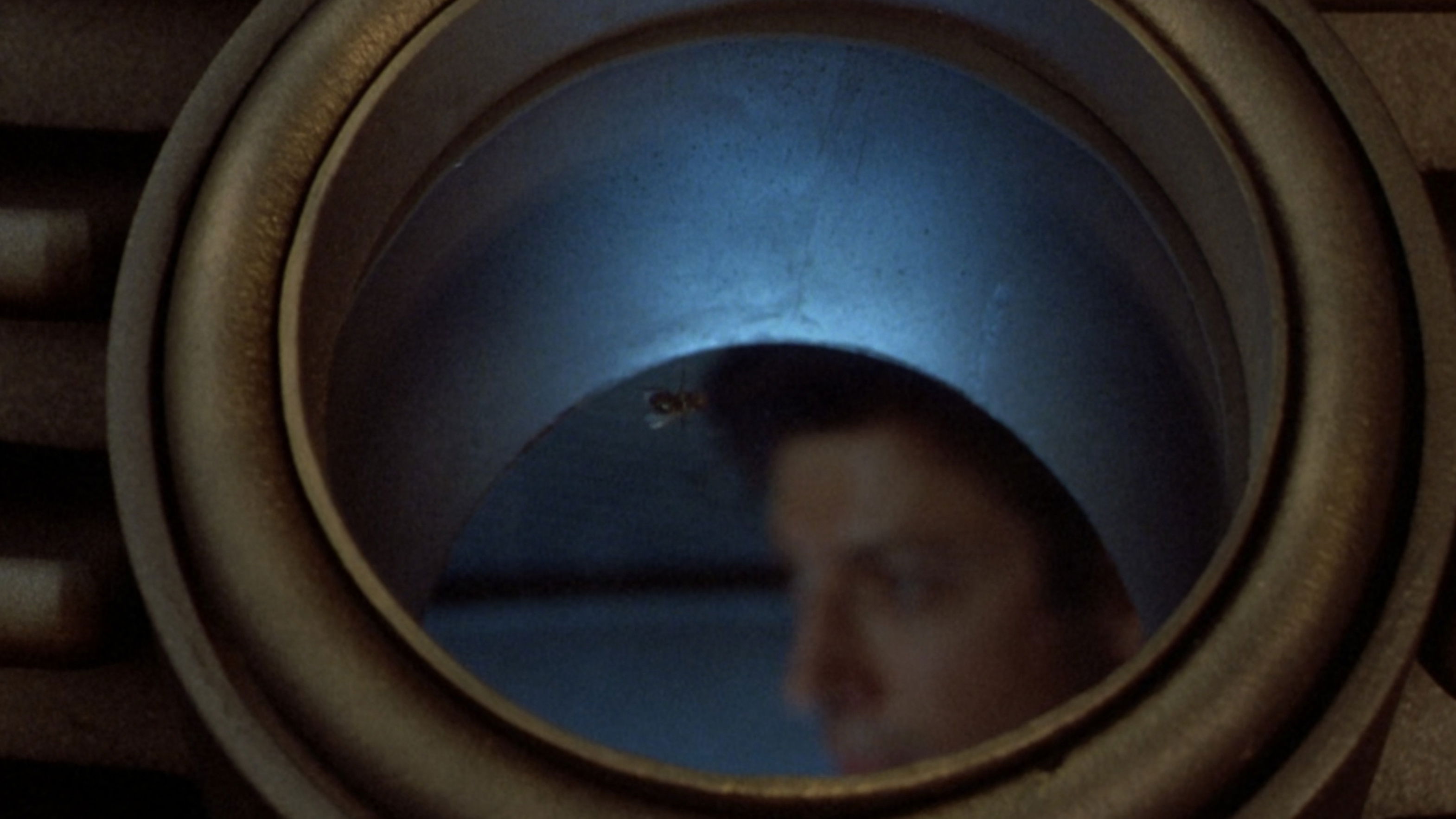
Within Cronenberg's career, The Fly occupies a particularly important position because it joined his longstanding concerns with disease, sexuality, technology and unstable identity to the resources of a major studio production without neutralising them. The teleporter is initially presented as scientific triumph, yet its most consequential act is not transportation but interpretation: a computer decides how two organisms should be combined. From that mistake grows a film in which technological progress cannot be separated from biology, love cannot be separated from bodily vulnerability and monstrosity cannot be separated cleanly from the person gradually disappearing inside it.