Alien: Romulus (2024)

US
Runtime
119 min
Release
August 13, 2024
Budget
$80,000,000
Revenue
$350,865,342
Alien: Romulus (2024) poster
Director
Production Companies
20th Century Studios , Scott Free Productions , Brandywine Productions , TSG Entertainment
Plot

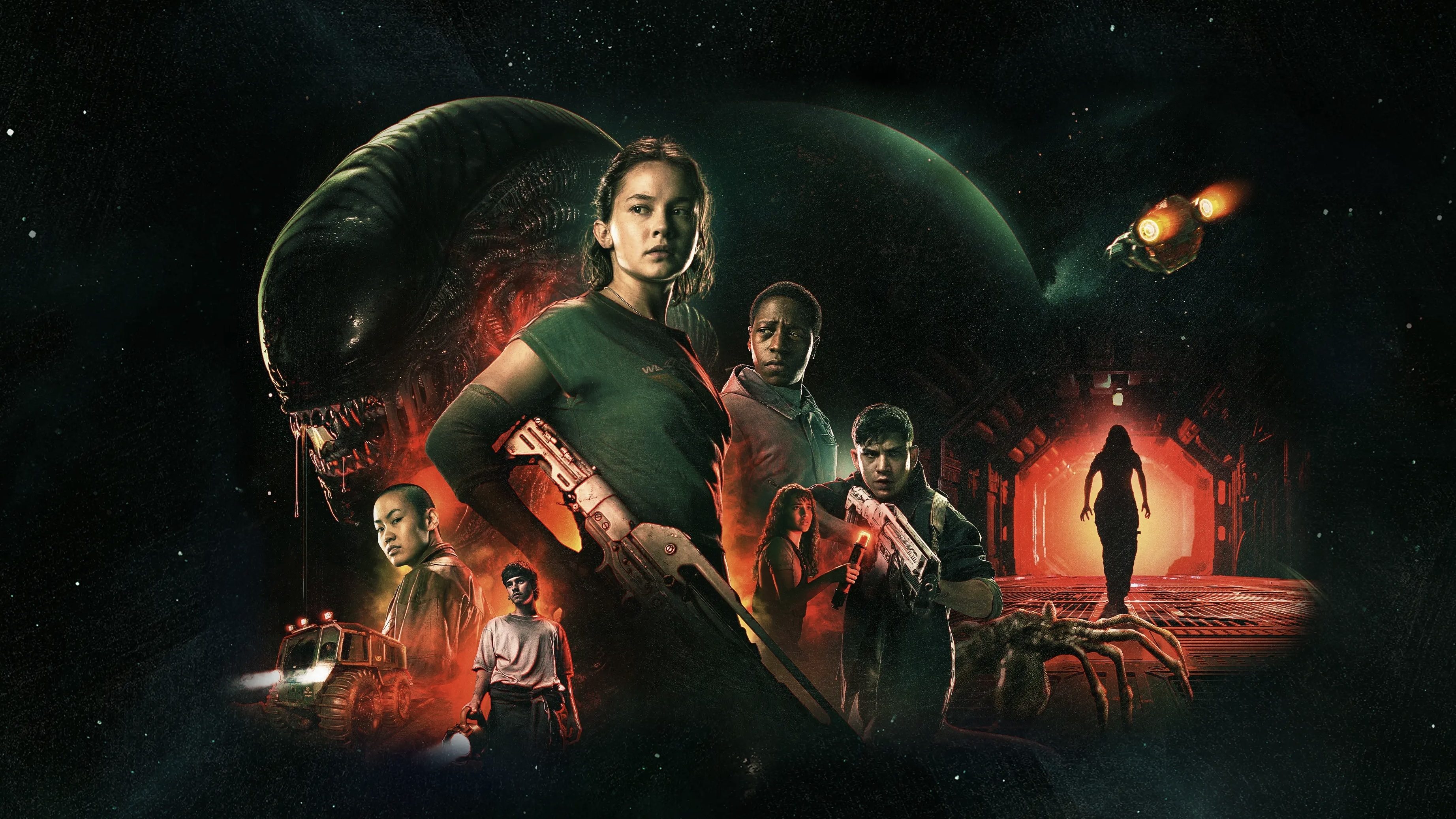
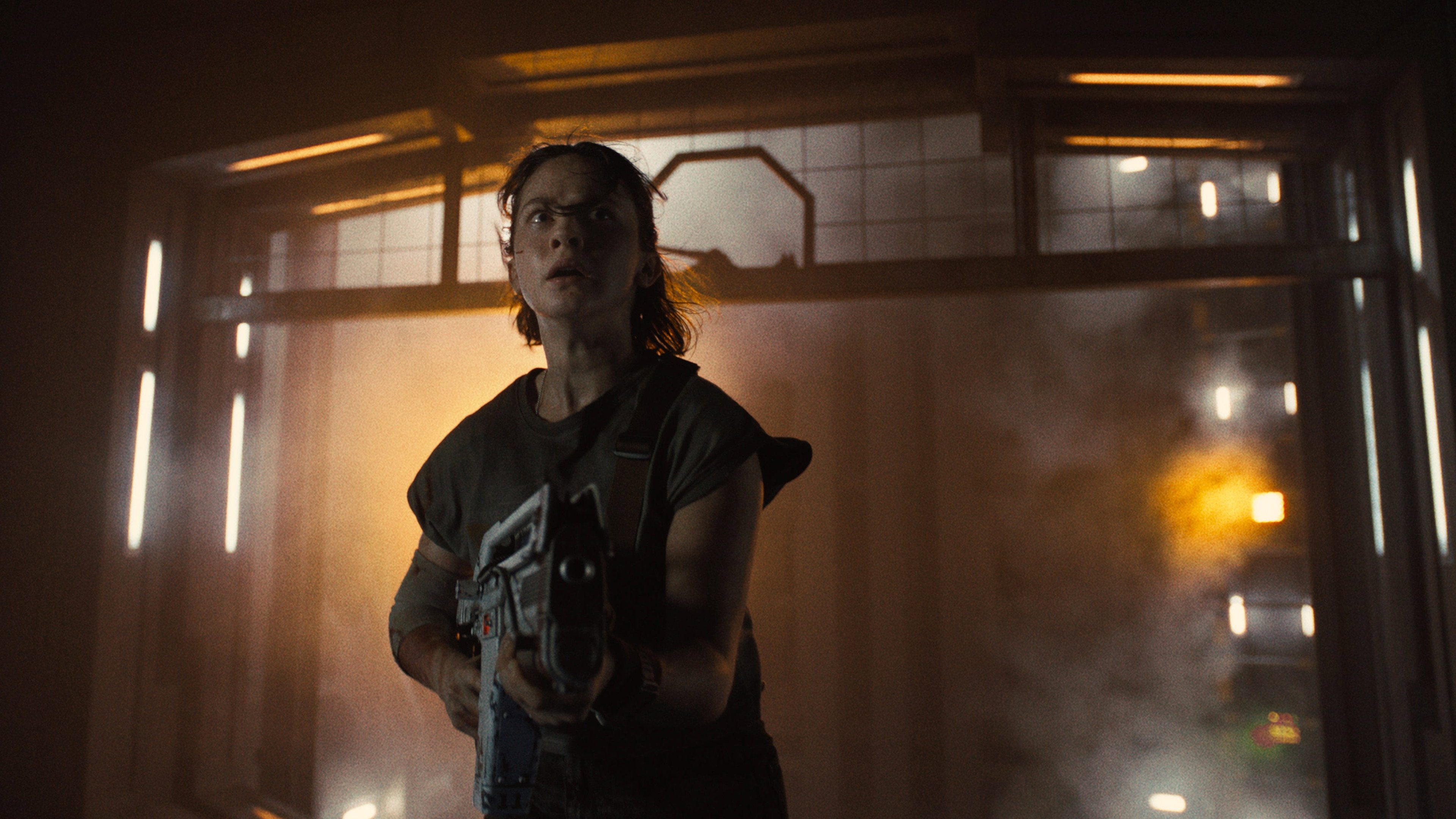
Rain Carradine works under an exploitative contract at an off-world mining colony and dreams of escaping to a more hospitable world. She joins a small group of young workers planning to salvage cryogenic equipment from an abandoned orbital research station. Rain brings along Andy, a damaged synthetic whom she regards as family. Once the group boards the station, they discover remnants of a secret biological program and facehugger organisms held in containment. Their chance of leaving the colony becomes a fight for survival as the station's failing systems and an unfamiliar life form turn the salvage mission into a deadly trap.

Alternative Titles
Özgə: Romul (AZ) — translation:az Yad: Romul (AZ) Пришълецът: Ромул (BG) — translation:bg Alien : Romulus (CA) — translation:fr 异形:夺命舰 (CN) 異形: 羅穆盧斯 (CN) Vetřelec: Romulus (CZ) — translation:cs Tulnukas: Romulus (EE) — translation:et
Show all 35 alternative titles Alien. Romulus (ES) — translation:es Alien : Romulus (FR) — translation:fr უცხო: რომულუსი (GE) — translation:ka Άλιεν: Ρωμύλος (GR) — translation:el 異形: 羅穆盧斯 (HK) 異形:羅穆盧斯 (HK) — translation:zh הנוסע השמיני: רומולוס (IL) — translation:he بیگانه : رومولوس (IR) — translation:fa エイリアン:ロムルス (JP) — translation:ja 에이리언: 로물루스 (KR) — translation:ko 에일리언: 로물루스 (KR) Svetimas: Romulas (LT) Svešais: Romulus (LV) — translation:lv Obcy. Romulus (PL) — translation:pl Осми путник: Ромул (RS) — translation:sr Чужой: Ромул (RU) — translation:ru فضائي: رومولوس (SA) — translation:ar Osmi potnik: Romul (SI) — translation:sl Votrelec: Romulus (SK) — translation:sk เอเลี่ยน: โรมูลัส (TH) — translation:th Yaratık: Romulus (TR) 異形: 羅穆路斯 (TW) 異形:羅穆路斯 (TW) — translation:zh Чужий: Ромул (UA) — translation:uk Alien 7 (US) Alien Renaissance (US) — working title Quái Vật Không Gian: Romulus (VN) — translation:vi

Trailers & Videos

10 videos

Alien: Romulus (2024) Film Guide

Fede Álvarez returns the Alien franchise to industrial confinement, practical creatures and reproductive horror through Rain, Andy and the troubled Rook reconstruction.

Alien: Romulus (2024) restores the spatial confinement and invasive biology of the early Alien films while placing a new group of characters under the control of Weyland-Yutani. Set between Alien (1979) and Aliens (1986), Fede Álvarez's story follows young workers hoping to escape a mining colony by recovering cryogenic equipment from an abandoned orbital installation. The station contains specimens whose reproductive cycle turns every passage, hatch and medical space into a possible site of attack. Its industrial design belongs to the recognizable world of the franchise, but the immediate danger falls on people without the resources or experience of military personnel.

The relationship between Rain Carradine and her synthetic brother Andy gives the familiar monster threat a specific human dimension. Physical creature fabrication, carefully constructed spacecraft interiors and digital intervention work together to sustain the horror, while a controversial recreation of Ian Holm's likeness raises separate questions about performance and authorship. Contemporary interviews with the director, cinematographer and effects artists make the technical history unusually accessible.

Returning to the Earlier Alien World

Álvarez approached the franchise after making Evil Dead and Don't Breathe, but the project developed only after the later changes in ownership of the studio. In an August 2024 Los Angeles Times interview, he recalled discussing his proposal with Ridley Scott and receiving detailed reactions to the screenplay and early cut. Scott remained involved as producer and adviser, although the published conversation makes clear that Álvarez was directing his own film. The narrative occupies the interval after the Nostromo disaster and before the events on LV-426 in Aliens, giving the filmmakers a reason to rebuild the worn industrial machinery associated with those two productions.

The placement in the fictional chronology shapes the visual rules. Álvarez said he regarded the picture as a period piece within the series: video displays, doors and controls needed to look like equipment that could plausibly coexist with the technology of the earlier films. The setting also freed the filmmakers from bringing Ellen Ripley into the plot. Rain and her companions are younger people trapped by employment and travel restrictions, so their decision to enter the station follows from a particular social predicament instead of a formal rescue or military mission.
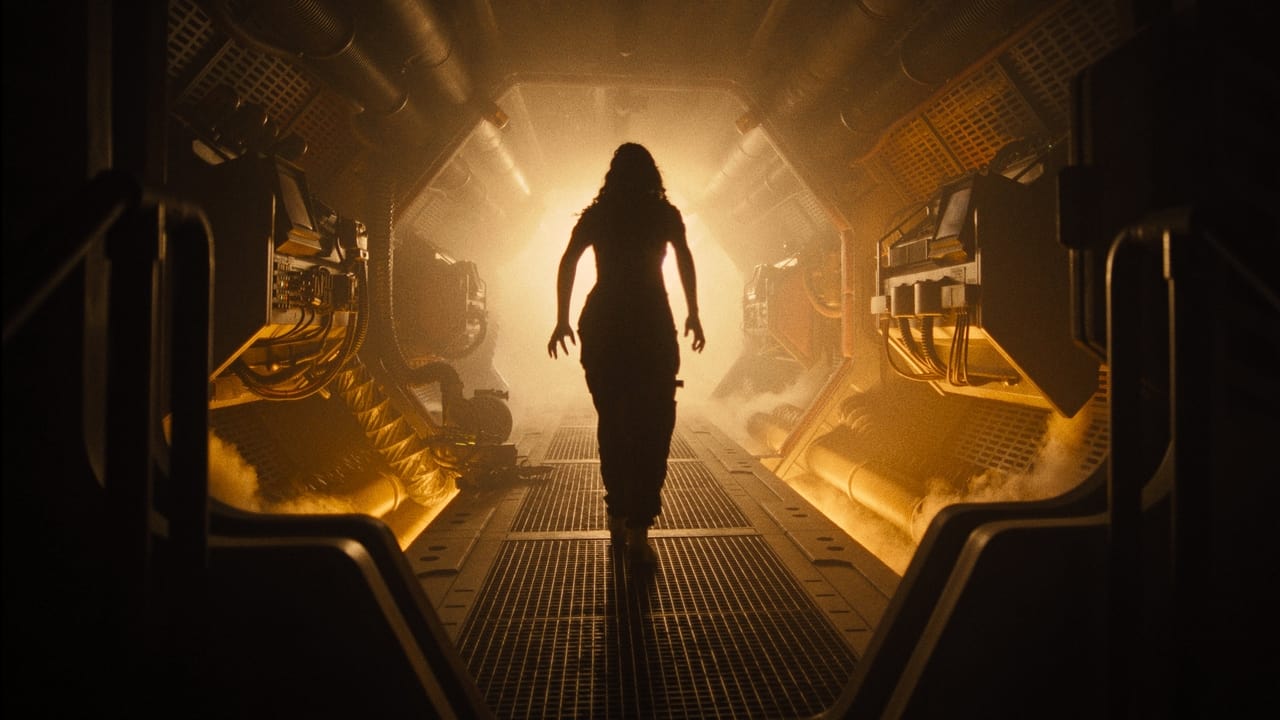

Rain, Andy and Corporate Dependence

Rain is bound to a workplace that continually extends the time she must serve before being permitted to leave. Her wish to reach a place with sunlight gives the story an immediate goal before the creatures appear. Andy, the synthetic person who functions as her adoptive brother, is both a companion and a potential means of bypassing the station's security systems. It also leaves him vulnerable to people who regard him as inferior or dangerous because of what he is.

After Andy receives a new set of operating instructions, his priorities no longer align automatically with Rain's interests. David Jonsson's changes in speech and bearing give the shift a performance-based explanation even before the screenplay exposes its implications. The ethical problem is recognizable from previous Alien entries: a manufactured person may obey corporate directives that place living workers at risk. Here the conflict is intimate, because Rain cannot treat Andy as disposable equipment without denying the relationship that has sustained her. Roger Luckhurst's contemporary Sight and Sound review identified Jonsson's performance as one of the film's strongest contributions to this familiar franchise tension.

The mining colony and the abandoned station represent linked forms of exploitation. One extracts human labor, while the other embodies the company's continued pursuit of profitable biological material. That parallel is visible in the story and does not require inventing a comprehensive economic history of the fictional corporation.

Constructed Spaces and Photographic Control

Cinematographer Galo Olivares described a lengthy Budapest preparation with Álvarez and production designer Naaman Marshall in an October 2024 interview with ARRI Rental. Their planning sought a plausible continuation of its predecessors' visual world, emphasizing enclosed rooms and functioning light sources instead of polished futuristic surfaces. Olivares shot with ALEXA 35 cameras and principally ARRI/Zeiss Master Prime lenses, occasionally choosing smaller Ultra Primes to work within the narrow sets. He singled out the small cockpit used for a chestburster passage: camera, actors, sound crew and puppeteers had to occupy an intentionally uncomfortable environment during the scene.

The camera's ability to register both luminous panels and dim surroundings mattered because so many practical lights were embedded in the sets. Olivares worked with colorist Mitch Paulson on a monitoring look that controlled the electronic coloration of LED sources, while the lighting department coordinated shifting effects as action unfolded. The station's architecture is frightening because its construction seems functional. Narrow access routes and heavy barriers define what a human body can do while an approaching creature can exploit openings that others cannot safely enter.

Olivares also recalled that production was filmed substantially in narrative order, including an early exterior passage of Rain and Andy moving through the colony. The director explained to the Los Angeles Times that miniature spacecraft were built by effects artist Ian Hunter; some were photographed directly, while others became the basis for digital assets. The production's deliberate physicality thus included several methods, not an attempt to eliminate postproduction manipulation.

Creature Fabrication and Visible Violence

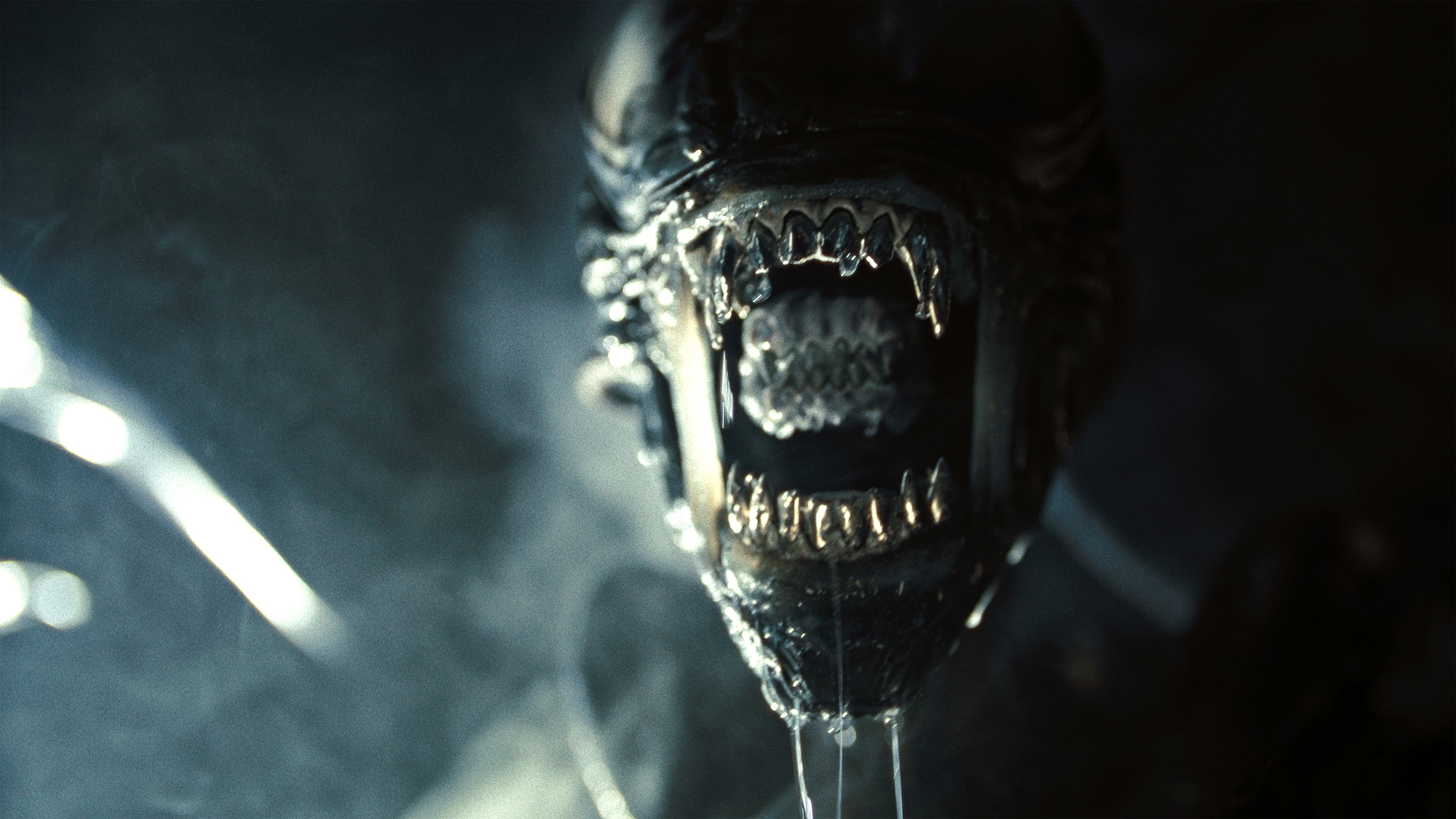
Legacy Effects supplied animatronic creatures, suits, puppets and prosthetics for the film. Shane Mahan explained in a September 2024 Space.com interview that the department wanted the xenomorph to have a silhouette extending beyond normal human proportions. A large mechanical figure could deliver a powerful close-up, but a heavy robot could not perform every movement. The team therefore prepared wearable suits for dexterous action and a lighter full-body puppet manipulated with rods. Some of those rods could be removed digitally, showing why an apparently physical performance can still depend on compositing.

Mahan described planning with Álvarez to decide which shots would be practical, digital or hybrid before filming. Physical facehuggers and adult creatures could touch actors and occupy a set under real light, while impossible movement or rapid changes in position called for digital augmentation. Detailed textures, mechanical jaws and controlled fluids make the organisms seem close enough to contaminate the people watching them. For jaw effects, the artists routed liquids through concealed tubing and used air pressure to prevent the secretion from appearing like ordinary downward drips.

The horror depends on timing as much as on creature visibility. Familiar stages of the xenomorph life cycle return, but they are reorganized around repeated confinement and the inability to predict how quickly an infection will develop. Álvarez's emphasis on the creature's strange proximity to human form gives an identifiable artistic rationale for its discomforting design.

Rook and the Reconstruction of a Performer's Likeness

The damaged synthetic Rook bears the face of Ian Holm, who played Ash in Alien and died in 2020. It is important to distinguish the fictional characters: Rook is not presented as the surviving Ash, even though his visual resemblance recalls the earlier android's betrayal. In a Los Angeles Times interview, Álvarez said he contacted Holm's family and obtained permission for the likeness. That statement documents the filmmaker's account of consent, not a universal ethical endorsement of recreating a deceased actor on screen.

The effect combined an on-set animatronic with later digital changes. Álvarez said puppeteers operated the face and body during photography, while postproduction artists modified the eyes and mouth in selected shots. Actor Daniel Betts performed dialogue and facial material with the cast, and his recorded voice was processed using machine-learning technology to resemble Holm's. The work should therefore be credited as a layered performance created by living artists and technicians. Describing it as Holm's own new performance would misrepresent both the film's construction and the actor's absence.

Rook's narrative role has a further consequence for the horror. He delivers information that the visitors need, but his corporate obligations make every offered explanation suspect. Andy's altered instructions introduce a related uncertainty from inside the party of survivors. Their presence changes the old distinction between a trustworthy human and a dangerous machine: the problem is which objectives the artificial person is required to serve, and what happens when those objectives conflict with human survival.

Reproductive Horror and the Offspring

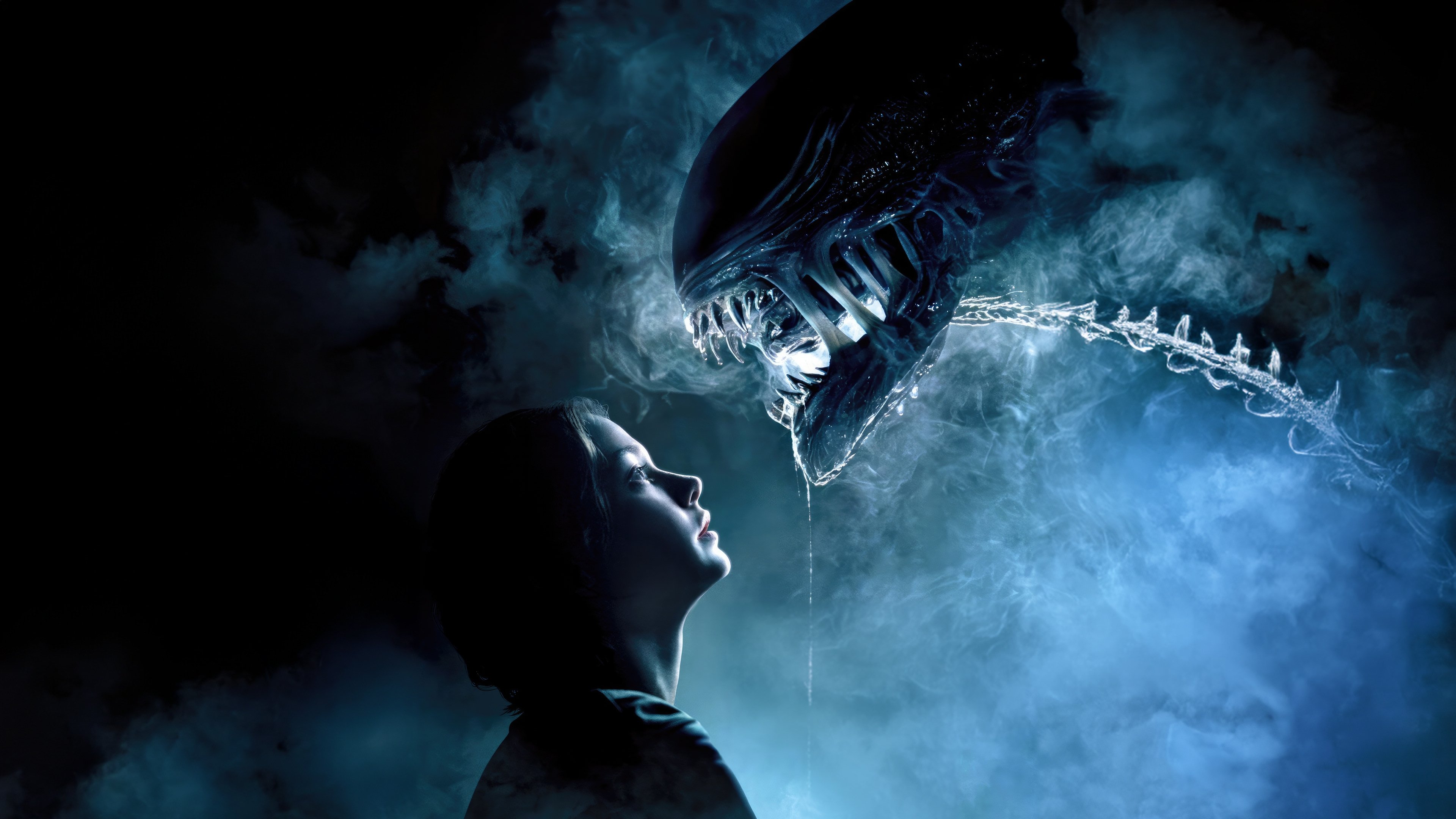
The film's final creature extends a longstanding Alien anxiety about gestation and forced biological transformation. Kay's exposure to an experimental substance culminates in the birth of a rapidly developing hybrid known in production materials as the Offspring. The figure draws together features associated with humans, xenomorphs and the Engineers of the prequel films. Its disturbing effect comes from recognizing traces of a person in a body whose proportions and growth seem impossible. Roger Luckhurst's Sight and Sound review connected this climax to earlier franchise experiments with hybrid birth and to the wider tradition of excessive bodily horror.

Mahan identified Robert Bobroczkyi as the performer inside the creature makeup. He explained that the unusually tall actor trained to control his movements under extensive prosthetics, allowing the production to photograph a physically present figure instead of relying on a wholly digital body. Mahan also described changes during development that made the creature appear more human than some early proposals. These recollections supply evidence for the technical choices and the artists' intentions, though they cannot establish that every viewer experienced the same mixture of revulsion and sympathy.

The finale also gives the film an identity beyond imitation of the first two entries. Its conflict turns on the deliberate alteration of reproduction, revisiting questions associated with Prometheus and Alien: Covenant from a more immediate bodily perspective. The experiments are presented as a source of danger instead of a coherent account of biological evolution.

Release, Reception and Franchise Position

Alien: Romulus opened in the United States on August 16, 2024, after a Los Angeles premiere earlier that week and initial international releases. The release placed a new protagonist inside an established continuity without presenting the picture as a remake or requiring the audience to know every prequel detail. The return to physical environments and predatory suspense was a prominent part of its promotion, supported by extensive first-hand descriptions of the production methods.

Contemporary response recognized both its immediacy and its dependence on the series' past. In Sight and Sound, Luckhurst praised the visceral threat and Jonsson's performance while pointing to conspicuous repetitions of earlier imagery and dialogue. His response also addressed the uncertain visual effect of the digitally recreated Holm likeness. Such objections can be considered alongside the strengths of the constructed spaces, the creature fabrication and the new characters' precarious working lives. They are particular critical judgments, not evidence of uniform approval or rejection.

Within the history of the Alien films, Romulus represents a deliberate return to close-quarters monster horror after the broader creation mythology of Scott's prequels. Its place is defined by these concrete decisions, while broad claims that it permanently changed the genre or originated its themes would disregard the long-established ideas from which it draws.

References

  1. Los Angeles Times Meet Fede Álvarez, the Uruguayan director whom Hollywood trusts with its horror babies

    Carlos Aguilar interviews Álvarez and Ridley Scott about the franchise pitch, continuity, practical filmmaking and the use of miniatures.

  2. ARRI Rental Shooting Alien: Romulus

    Original October 2024 interview with Galo Olivares covering ALEXA 35 photography, lens and lighting choices, cramped sets and chronological filming.

  3. Space.com How VFX Supervisor Shane Mahan Hatched a New Nest of Xenomorphs

    Jeff Spry interviews Legacy Effects artist Shane Mahan about mechanical creatures, rod puppetry, practical fluids and the Offspring performer.

  4. Los Angeles Times The Makers of Alien: Romulus Defend Their AI-Resurrected Ian Holm

    Carlos Aguilar interviews Álvarez about permission from Holm's family, the Rook animatronic, Daniel Betts and voice-processing technology.

  5. BFI / Sight and Sound Alien: Romulus: A Terrifying Return to the Visceral Menace of the Original

    Roger Luckhurst's original August 2024 review evaluates Andy, the film's visceral design, inherited imagery and reproductive horror.

Connections

Cast

View Full Cast & Crew →

Release & Distribution

Production Companies (4)

  • 20th Century Studios US
  • Brandywine Productions US
  • Scott Free Productions US
  • TSG Entertainment US

Distributors (3)

  • 20th Century Studios US
  • Fórum Hungary HU
  • Kinomania UA

Release History (95)

Release DateTerritoryRelease TypeFormatDistributorCertificationNotes
2024-08-12 US premiere — — R Los Angeles
2024-08-13 CN theatrical_limited — — —
2024-08-14 AT theatrical — — 14
2024-08-14 BE theatrical — — 16
2024-08-14 FI theatrical — — K-16
2024-08-14 FR theatrical — — 12
2024-08-14 ID theatrical — — 13+
2024-08-14 IT theatrical — — 14+
2024-08-14 KR theatrical — — 15
2024-08-14 NZ theatrical_limited — — R16
2024-08-14 PH theatrical — — R-13
2024-08-14 SE theatrical — — 15
2024-08-15 AE theatrical — — —
2024-08-15 AU theatrical — — MA 15+
2024-08-15 BR theatrical — — 16
2024-08-15 CH theatrical — — 16
2024-08-15 CL theatrical — — 14
2024-08-15 CZ theatrical — — 12+
2024-08-15 DE theatrical — — 16
2024-08-15 DK theatrical — — 15
2024-08-15 EE theatrical — — —
2024-08-15 ES theatrical — — 18
2024-08-15 GB premiere — — — Edinburgh International Film Festival
2024-08-15 HK theatrical — — IIB
2024-08-15 HR theatrical — — —
2024-08-15 HU theatrical — — 16
2024-08-15 IL theatrical — — 16
2024-08-15 MK theatrical — — —
2024-08-15 MX theatrical — — B
2024-08-15 MY theatrical — — 18SG
2024-08-15 NL theatrical — — 16
2024-08-15 NZ theatrical — — R16
2024-08-15 PL theatrical — — —
2024-08-15 PR theatrical — — R
2024-08-15 PT theatrical — — M/16
2024-08-15 QA theatrical — — —
2024-08-15 SG theatrical — — NC16
2024-08-15 SK theatrical — — 15
2024-08-15 TH theatrical — — 15
2024-08-15 TW theatrical — — 15+
2024-08-15 UA theatrical — — 18+
2024-08-15 VI theatrical — — R
2024-08-16 AS theatrical — — —
2024-08-16 BG theatrical — — D
2024-08-16 CN theatrical — — —
2024-08-16 GB theatrical — — 15
2024-08-16 IE theatrical — — 15A
2024-08-16 LT theatrical — — N-16
2024-08-16 RO theatrical — — 15
2024-08-16 TR theatrical — — 16+
2024-08-16 US theatrical — — R
2024-08-16 VN theatrical — — —
2024-08-16 ZA theatrical — — 16
2024-08-23 IN theatrical — — A
2024-08-29 GR theatrical — — K15
2024-09-06 JP theatrical — — PG12
2024-10-15 AS digital — — —
2024-10-15 GB digital — — 15
2024-10-15 GU digital — — —
2024-10-15 MP digital — — —
2024-10-15 PR digital — — R
2024-10-15 US digital — — R
2024-10-15 VI digital — — R
2024-10-16 AU digital — — MA 15+
2024-11-20 AS digital — — — Hulu
2024-11-21 GU digital — — — Hulu
2024-11-21 MH digital — — — Hulu
2024-11-21 MP digital — — — Hulu
2024-11-21 PR digital — — R Hulu
2024-11-21 US digital — — R Hulu
2024-11-21 VI digital — — R Hulu
2024-11-27 CN digital — — —
2024-12-02 GB physical DVD, Blu-ray — 15 Blu-ray / DVD
2024-12-03 PR physical 4K UHD, VHS, DVD, Blu-ray — R 4K Ultra HD / Blu-ray / DVD / VHS
2024-12-03 US physical 4K UHD, VHS, DVD, Blu-ray — R 4K Ultra HD / Blu-ray / DVD / VHS
2024-12-03 VI physical 4K UHD, DVD, Blu-ray — R 4K Ultra HD / Blu-ray / DVD
2024-12-04 GU physical Blu-ray — — Blu-ray
2024-12-11 CZ physical DVD, Blu-ray — — Blu-ray / DVD
2024-12-18 FR physical — — 12
2025-01-01 ID digital — — — Disney+ Hotstar
2025-01-01 MY digital — — — Disney+
2025-01-01 SG digital — — NC16 Disney+
2025-01-08 JP physical DVD, Blu-ray — PG12 Blu-ray / DVD
2025-01-15 ES digital — — 18 Disney+
2025-01-15 GB digital — — 15 Disney+
2025-01-15 IL digital — — 16 Disney+
2025-01-15 PT digital — — M/16 Disney+
2025-08-12 PR tv — — R FX
2025-08-12 US tv — — R FX
2025-08-12 VI tv — — R FX
2026-04-03 US digital — — R HBO Max
2026-04-04 US tv — — R HBO
2026-04-22 CZ physical Blu-ray — — Blu-ray
2026-04-22 FR physical 4K UHD, Blu-ray — — 4K Ultra HD + Blu-ray - Édition SteelBook® limitée
2026-11-21 US digital — — R Peacock
In space, no one can hear you.