Dolls (1986)

US
HORROR FILM Fantasy
SUBGENRES EVIL DOLL
10.0/10 1 votes
Runtime
77 min
Release
October 27, 1986
Dolls (1986) poster
Director
Writer
Production Companies
Empire International Pictures , Taryn Productions Inc.
Plot

A precocious girl, her nasty parents, two punk-rock losers and a weak-kneed salesman inadvertently become the guests of two ghoulish senior citizens in their dark, haunted mansion.

Alternative Titles
Bonecas Macabras (Brazil) — Portuguese 恶魔娃娃 (China) — Chinese Panenky (Czechia) — Czech Nines (Spain) — Catalan Dolls : Les Poupées (France) — French 惡魔娃娃 (Hong Kong SAR China) — Chinese Babák (Hungary) — Hungarian Dolls - Bambole (Italy) — Italian
Show all 16 alternative titles ドールズ (Japan) — Japanese 돌스 (South Korea) — Korean Lalki (Poland) — Polish Bonecos Assassinos (Portugal) — Portuguese Куклы (Russia) — Russian ผี...ตุ๊กตา (Thailand) — Thai Ляльки (Ukraine) — Ukrainian The Doll (United States) — alternative title

Trailers & Videos

6 videos

Film Guide & Analysis

Stuart Gordon and Ed Naha transform an English Gothic mansion into a killer-doll fairy tale: the 1985 Rome production, David Allen stop-motion, childhood and retribution.

Dolls (1987), directed by Stuart Gordon from a screenplay by Ed Naha, turns a night of refuge into a macabre test of the adults who have lost their sense of childhood. During a violent storm in the English countryside, young Judy Bower arrives at an isolated mansion with her hostile father David and stepmother Rosemary. The owners, elderly toymakers Gabriel and Hilary Hartwicke, offer shelter, as they do to a friendly traveler named Ralph and two young hitchhikers. Their rooms are crowded with dolls whose apparent innocence conceals both supernatural life and a capacity for lethal punishment. Judy is the first guest to understand that the toys are moving, but the adults most responsible for her safety refuse to believe her.

Made in Rome for Charles Band's Empire operation, the picture was photographed in 1985 but received its principal American theatrical release in 1987. Its miniature assassins were brought to life with mechanical puppetry, photographic effects and painstaking stop-motion animation supervised by David Allen. Gordon rejected some of the most extreme footage in order to preserve a fairy-tale atmosphere, combining violent retribution with an unexpectedly affectionate view of imagination. The film occupies a distinctive place in the late-1980s history of killer-doll horror: the toys are terrifying, but the story's deepest threat comes from adults who mistreat children and mistake cruelty for maturity.

Ed Naha, Empire Pictures and the Fairy-Tale Approach

The project began with a screenplay by Ed Naha rather than an original story devised by Gordon. In an interview published by JoBlo, the director recalled that Charles Band handed him the script under its initial singular title, The Doll. Naha had already worked with Band, and the material appealed to Gordon because it treated toys as agents of a frightening moral fable. The director had recently made Re-Animator and was preparing another Lovecraft adaptation, From Beyond. Dolls offered an opportunity to work with smaller, more familiar objects while changing the emotional emphasis of his horror filmmaking.

Gordon specifically connected his interpretation to the older tradition of frightening fairy tales. Speaking in an interview published by Psychotronic Cinema, he cited Bruno Bettelheim's The Uses of Enchantment and identified Hansel and Gretel as a model for children exposed to danger by the behavior of adults. The comparison does not imply that Naha adapted the Grimm tale directly. Instead, it explains Gordon's interest in a cruel household, apparently kindly older hosts and punishments that expose selfishness. The film permits a child to understand supernatural rules more readily than people who insist that only adults possess reliable judgment.
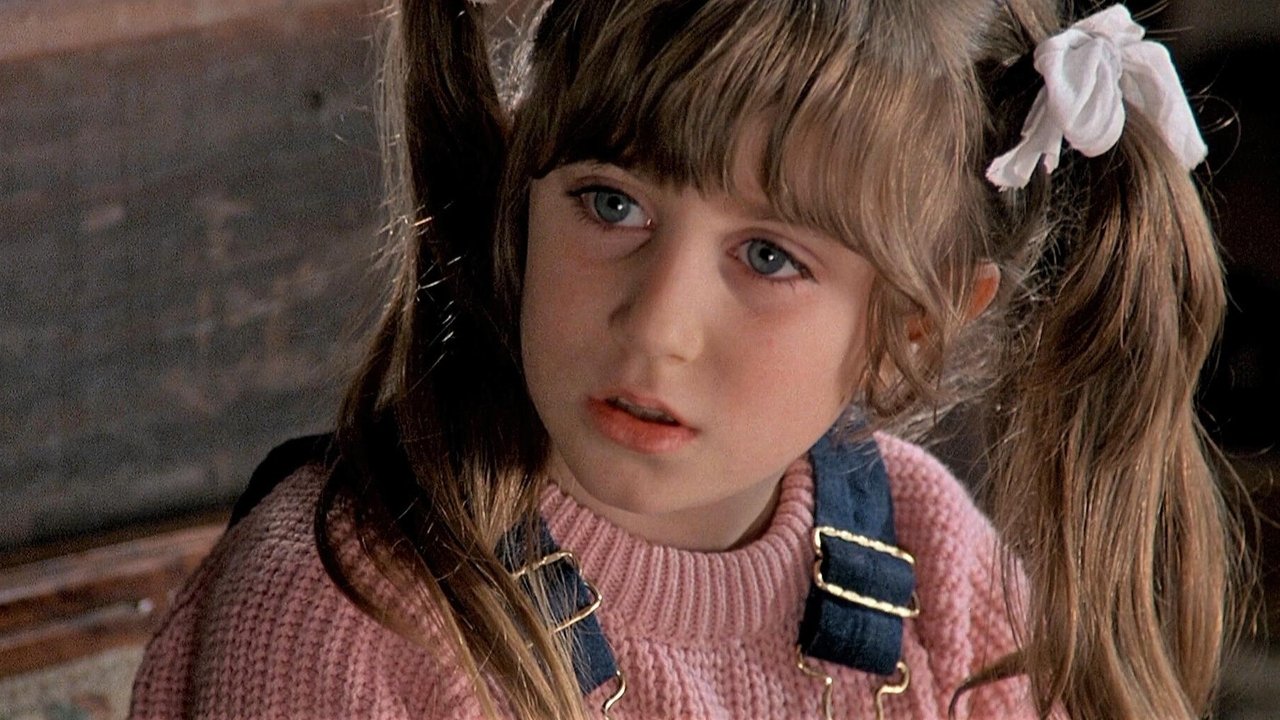
The 1985 Rome Production and the Ensemble

The American Film Institute records the start of principal photography on November 11, 1985, in Rome, where the production was still identified as The Doll. The location was a studio facility associated with Dino De Laurentiis that Band had acquired for his Italian operations. Gordon later recalled that he shot Dolls before From Beyond and reused the same principal set after repainting it. The chronology matters because From Beyond reached audiences first: the order in which the films were released can give a misleading impression of the order in which Gordon directed them.

Mac Ahlberg photographed the feature, Giovanni Natalucci designed the production and Brian Yuzna produced it. Their work gave the mansion an unusually substantial presence for a compact horror film. Ian Patrick Williams plays the irritable father David, while Carolyn Purdy-Gordon, the director's wife and a familiar performer in his work, portrays Rosemary. Carrie Lorraine plays Judy with a mixture of apprehension and determination. Stephen Lee's Ralph is an adult who has retained a sympathy for children's play, positioning him closer to Judy than to her parents.

The Mansion, Photography and Domestic Terror

The Hartwicke home combines the reassuring textures of an old-fashioned toy collection with the uncertainty of a Gothic labyrinth. Doll-filled bedrooms, shelves, corridors and stairways provide numerous places from which a small figure might suddenly emerge. Ahlberg's lighting frequently leaves part of a room in shadow while preserving the bright faces and decorated costumes of the toys. This disparity makes the miniature objects stand out against the house rather than disappear into it. They can appear harmless when still and malevolent as soon as a head turns or a pair of eyes follows someone through the room.

Judy's status within the household shapes the horror. Her father and stepmother repeatedly dismiss her concerns even when she has observed evidence that the guests are in danger. The resulting suspense depends on a familiar childhood vulnerability: being unable to persuade an adult to recognize a real threat. Ralph initially hesitates to believe her but eventually investigates, which allows the film to create a partnership based on curiosity rather than parental authority. The mansion becomes less mysterious to those willing to listen, while the other guests remain trapped in the assumptions they brought with them. Music credited to Fuzzbee Morse helps the film move between storybook mischief and the threat of violence.

Puppetry, David Allen and the Killer-Doll Effects

The toy attacks required a combination of fabrication, articulated props, practical manipulation and stop-motion animation. The AFI credits John and Vivian Brunner with doll design and fabrication and includes David Allen among the artists responsible for the doll effects. The effects also involved makeup specialists, including John Carl Buechler, and collaborators working with the Italian unit. These credits describe different parts of an extensive process; it would be misleading to attribute the entire population of animated toys to one technician or one photographic method.

Gordon told JoBlo that puppets and mechanical dolls were used during principal photography but that Allen's stop-motion work was essential to making the toys convincingly move on their own. He recalled that the animation took approximately six months and that the larger effects process delayed release. A puppet operated on set can interact directly with an actor, while frame-by-frame animation provides a wider range of independent movement. The film alternates such methods rather than maintaining the same appearance of motion in every shot. That mixture contributes to the creatures' uncanny quality: their behavior resembles living bodies but never loses the artificial stiffness of manufactured objects.

The attacks are varied rather than built around a single repeated monster. Toy soldiers use miniature weapons, groups of dolls assault isolated visitors and Mr. Punch becomes the center of a violent confrontation. Gordon also recalled filming a more graphic incident involving Rosemary that was removed because it disturbed the desired storybook tone. His explanation is a statement about editorial choice, not proof that an otherwise complete uncensored director's cut circulated. The released picture retains bloody consequences while allowing the toys to function as enchanted judges within the tale.

Childhood, Cruelty and the Logic of Punishment

The story divides its visitors through their conduct rather than through their age. Judy is threatened by parents who treat her as an inconvenience, and the loss of her stuffed bear Teddy makes their indifference immediately visible. Ralph, though grown, respects her imagination and remains willing to reconsider his assumptions. Isabel and Enid enter the house in search of belongings worth stealing, while David and Rosemary respond to discomfort with anger or contempt. The supernatural judgments expose behaviors already established before the dolls begin their attacks.

The punishment is grotesque because victims do not simply disappear. The house's magic can transform adults into dolls, enclosing the people who disregarded play within the form of a toy. This reversal gives the collection a history that is at once sinister and comprehensible: the objects are linked to previous visitors who failed the Hartwickes' test. Judy and Ralph are spared because they can recognize the toys as something more than commodities or childish nonsense. That result should not be read as a general assertion that every adult who has forgotten childhood deserves violence. It is the deliberately severe moral machinery of Gordon's dark fairy tale.

The Hartwickes, Mr. Punch and the Ending

The concluding confrontation clarifies Gabriel and Hilary's authority over the house. After David assumes that Ralph is responsible for Rosemary's death, he attacks the people trying to help his daughter. Mr. Punch comes alive to defend them and is destroyed in the struggle. The Hartwickes then reveal more of the supernatural arrangement and impose their punishment on David. His transformation into a doll supplies the clearest expression of the story's central reversal: the adult who refused to care for a child becomes part of a collection intended for children.

The following morning shifts from violence toward the possibilities available to the survivors. Judy and Ralph are told a version of events that allows them to leave the mansion and return to ordinary life. Their departure toward Boston, where Judy's mother lives, suggests that Ralph might become a kinder presence in the girl's family. The final view of the transformed visitors, followed by the arrival of another stranded party, restores the cycle of tests. The ending is closed as far as the immediate victims are concerned but leaves the Hartwickes' strange enterprise intact.

Gordon later described an unrealized sequel premise in which Judy would receive a parcel containing dolls of Gabriel and Hilary. The idea was discussed but never became a completed sequel. It is therefore part of the director's later recollection of possible development, not an event established by the 1987 narrative.

Release, Contemporary Reception and Cult Reputation

Although shot in 1985 and often assigned a 1986 production date, Dolls was released theatrically in 1987. The AFI documents a Los Angeles opening on May 22 of that year and lists a 77-minute running time. A contemporary Los Angeles Times review prints a different duration of 88 minutes; those conflicting figures should not be used to claim that a fully documented alternate theatrical cut exists. They identify an archival discrepancy requiring print-specific evidence. The film received an R rating, reflecting the severity of its violence despite the story's child-centered point of view.

Michael Wilmington's opening-day review for the Los Angeles Times was notably favorable. He responded to Gordon's combination of playful invention and threatening miniature figures, and saw the film as a cautionary fairy tale rather than an attempt to repeat the extremity of Re-Animator. Gordon later remembered the initial notices as mixed and felt the film reached a more appreciative audience over time. These accounts show how a miniature horror story could be judged for its imaginative wit as well as its capacity to frighten.

The film's later visibility grew through video circulation and retrospective screenings. Gordon recalled in interviews that its audience developed gradually after an inconspicuous original release. Its significance within the killer-doll subgenre can be situated before the wide theatrical attention given to Child's Play (1988) and the later Puppet Master films. Chronological proximity, however, is not evidence that those productions copied its specific effects or story. Dolls remains distinctive for assigning its murderous toys the role of fairy-tale punishers and for making a child's ability to trust her own perceptions the key to surviving the night.

References

  1. American Film InstituteDolls (1987) - AFI Catalog

    Institutional production and credit record documenting the November 1985 Rome shoot, working title The Doll, 1987 theatrical opening, cast and technical effects personnel.

  2. Nathaniel Thompson retrospective on the Empire production, its theatrical-company approach, Italian sets, practical tricks, and placement in late-1980s killer-doll cinema.

  3. JoBloExclusive Interview: Stuart Gordon Talks Dolls and a Possible Sequel

    Direct interview with Gordon about Ed Naha original script, stop-motion work by David Allen, editorial removal of extreme gore and an unrealized sequel idea.

  4. Los Angeles TimesMovie Reviews: Nasty Dolls That Play for Keeps

    Michael Wilmington original May 22, 1987 review assessing the performances, staging, macabre fairy-tale structure, effects and contemporary release presentation.

Cast

View Full Cast & Crew →

Release & Distribution

Production Companies (2)

  • Empire International Pictures US
  • Taryn Productions Inc.

Distributors (1)

  • Empire International Pictures US

Release History (9)

Release DateTerritoryRelease TypeFormatDistributorCertificationNotes
1987-03-12 Italy Theatrical — — —
1987-04-29 France Theatrical — — —
1987-05-22 United States Theatrical — — — Los Angeles
1988-10-01 Thailand Theatrical — — —
1988-10-18 United States Physical VHS — R Vestron Video #5222 [VHS] 77 minutes
1991-03-07 United States Physical VHS — R Vestron Video #5222 [VHS] 77 minutes
1996-04-18 United States Physical VHS — R Vestron Video #5222 [VHS] 77 minutes
2013-12-16 Germany Physical — — 16
2015-02-03 France Physical DVD, Blu-ray — — DVD & Blu-Ray
They walk. They talk. They kill.