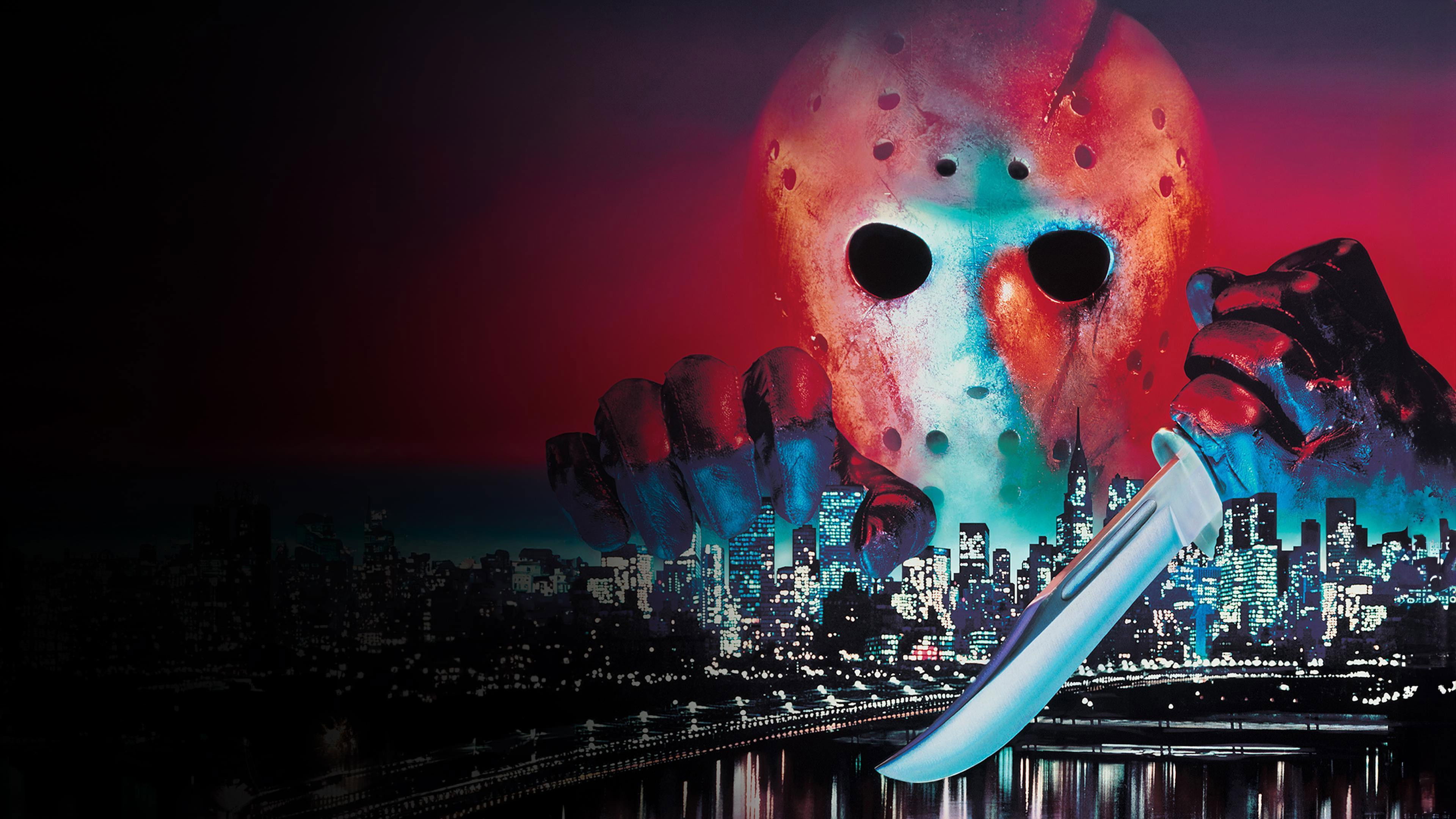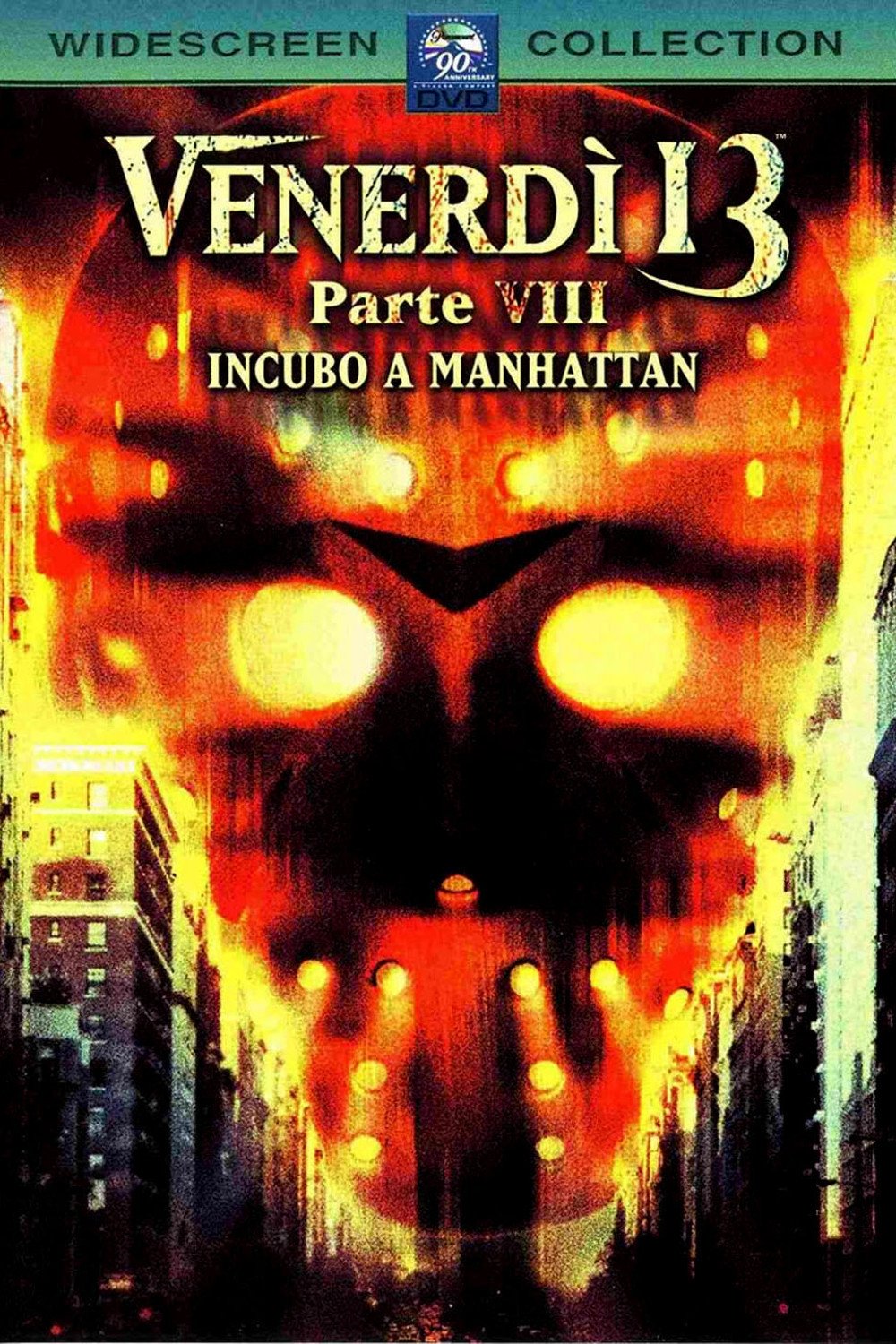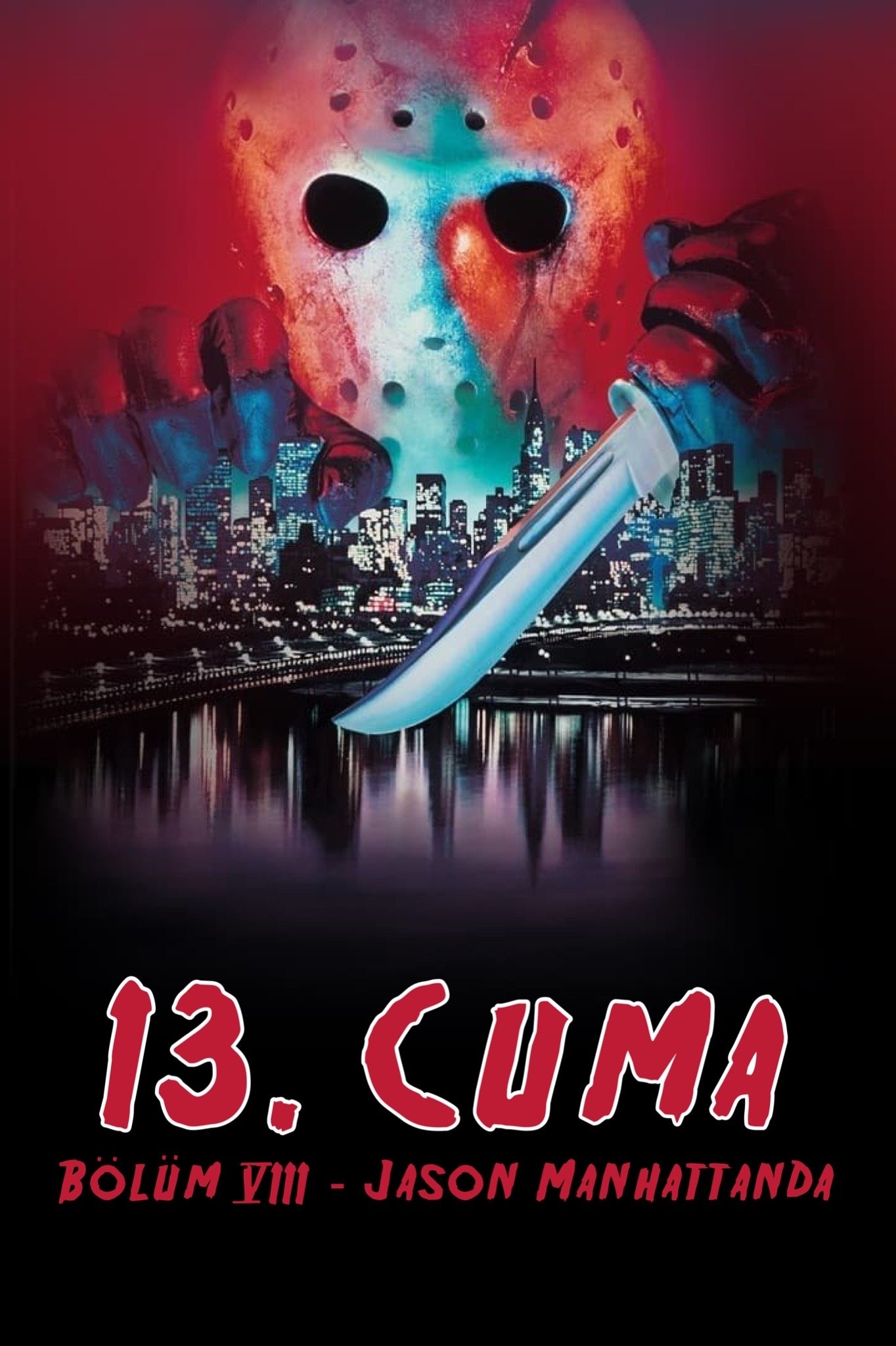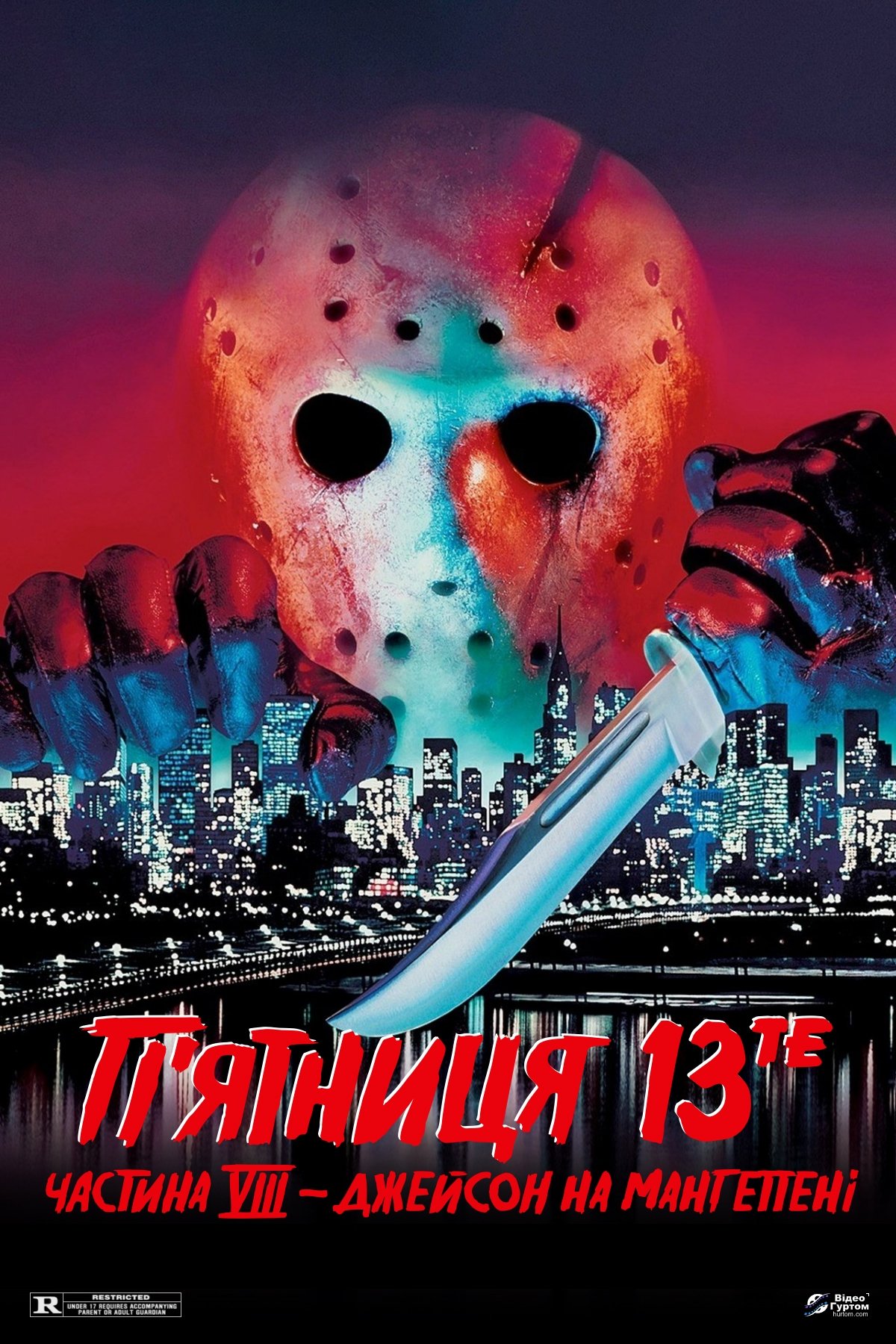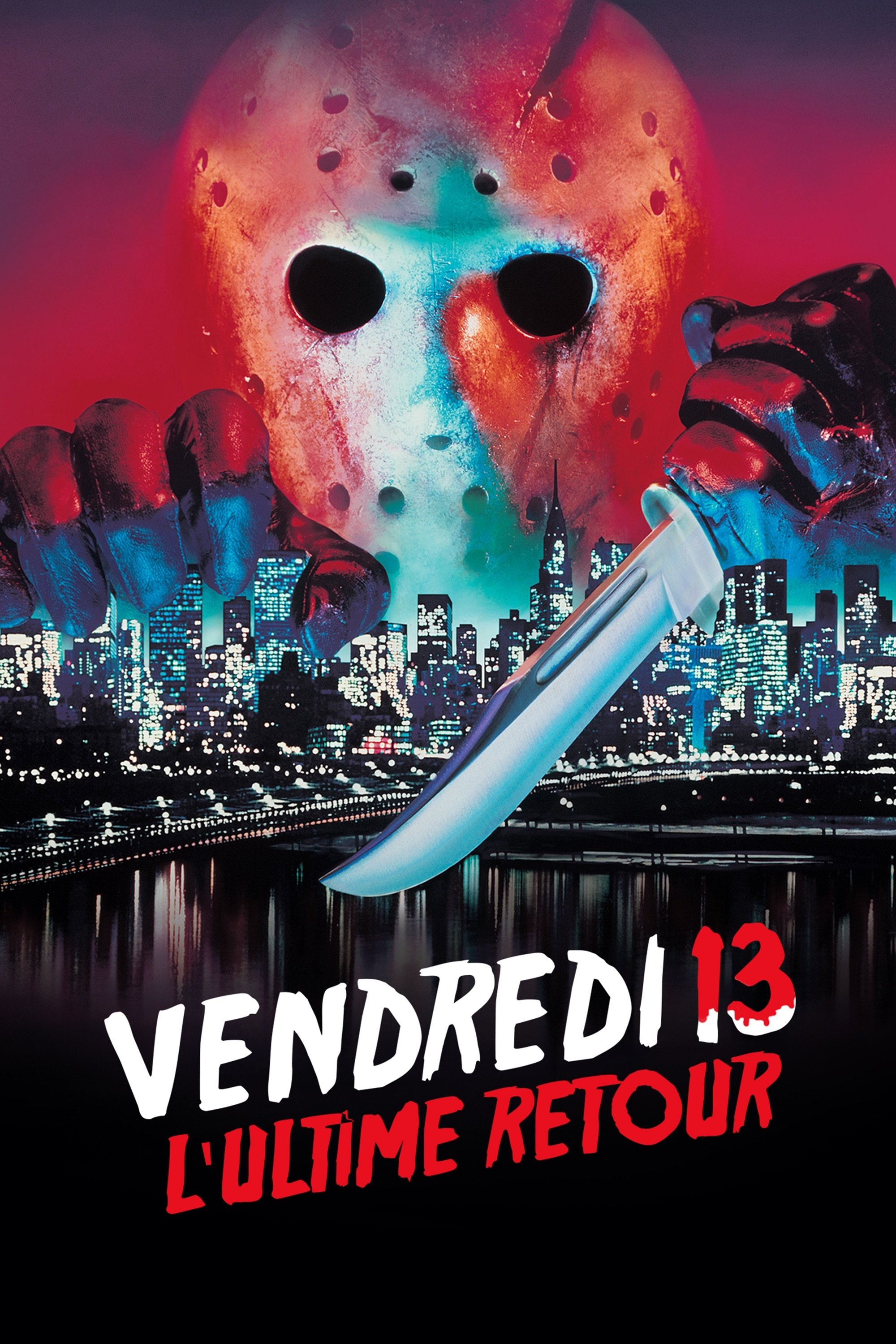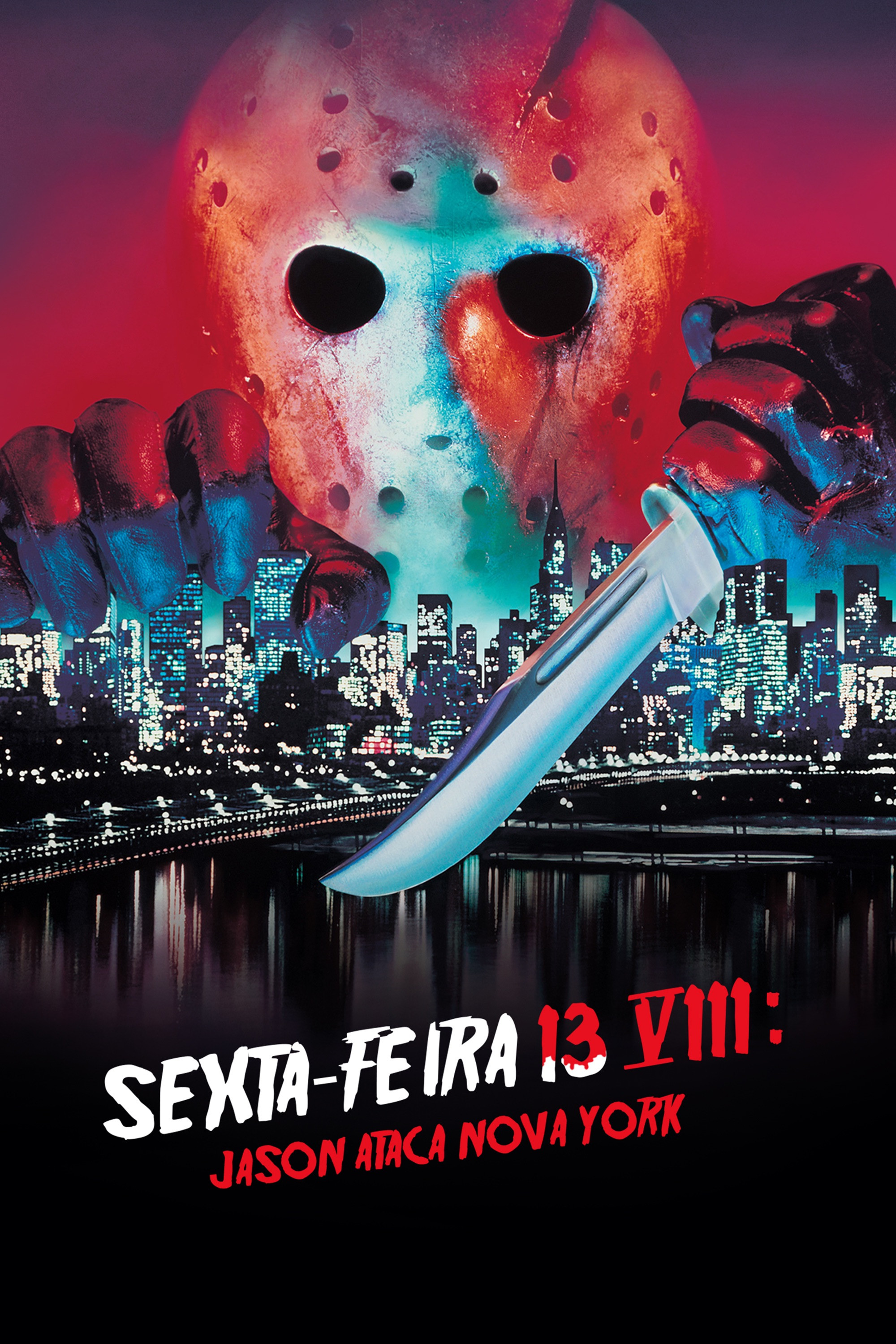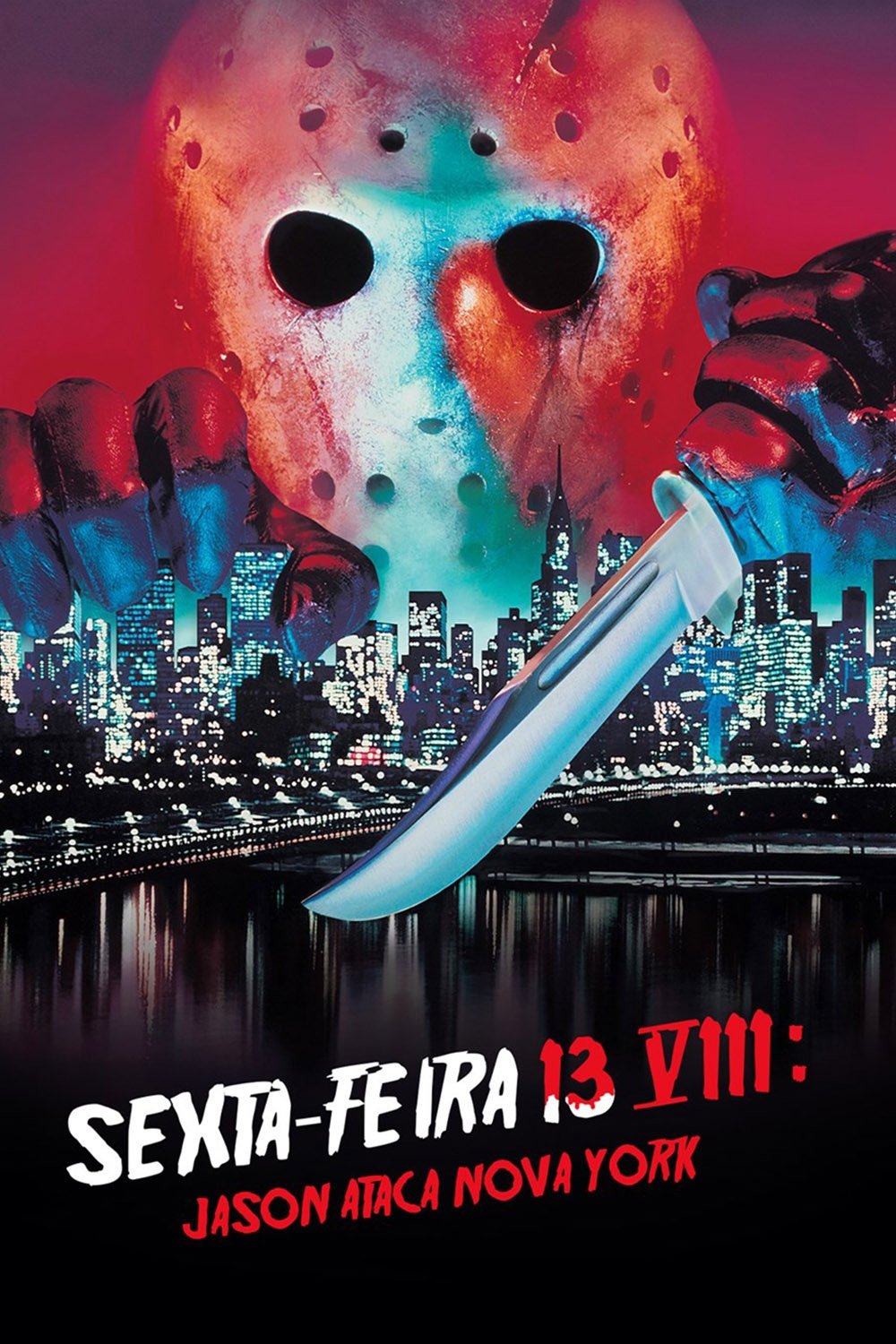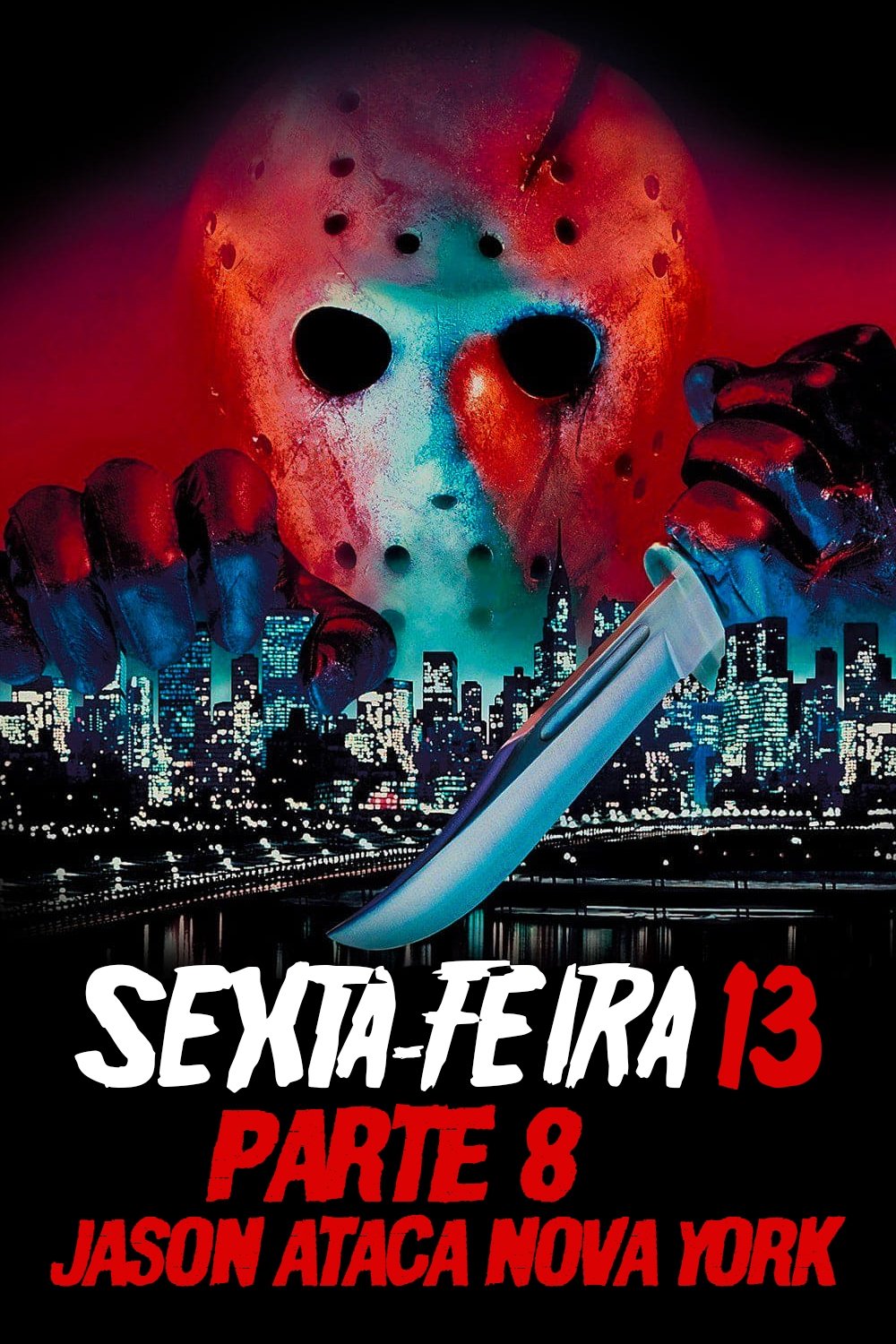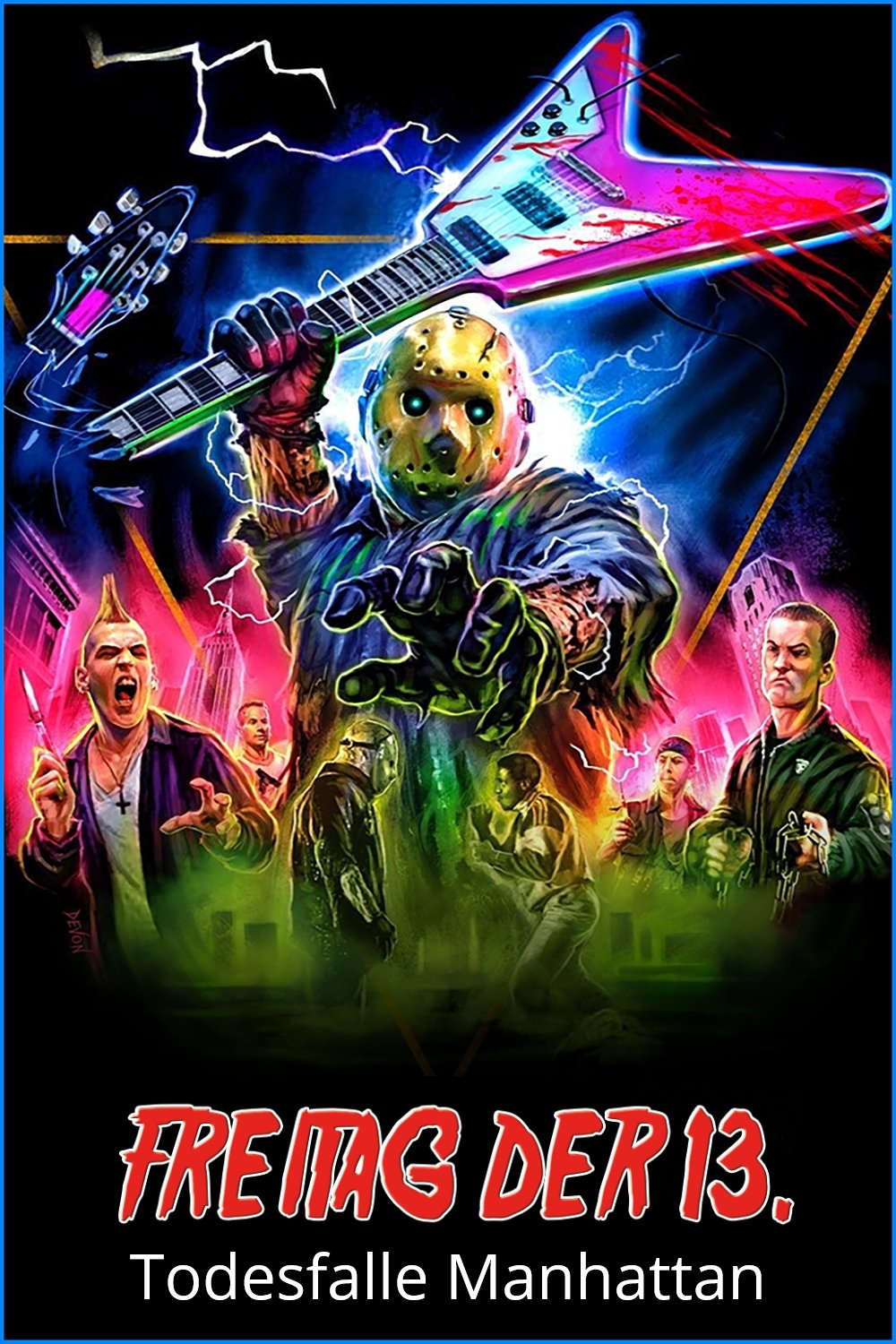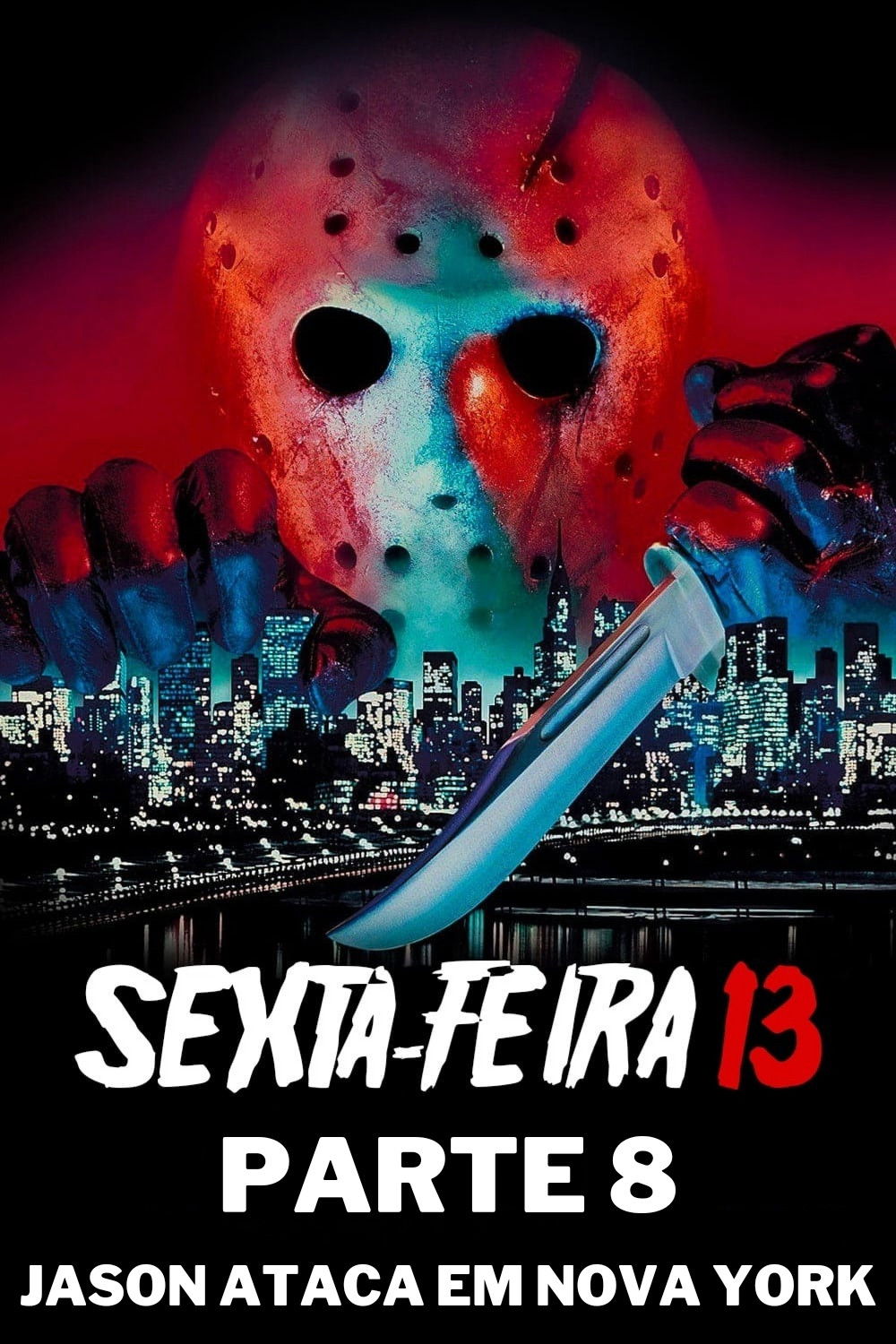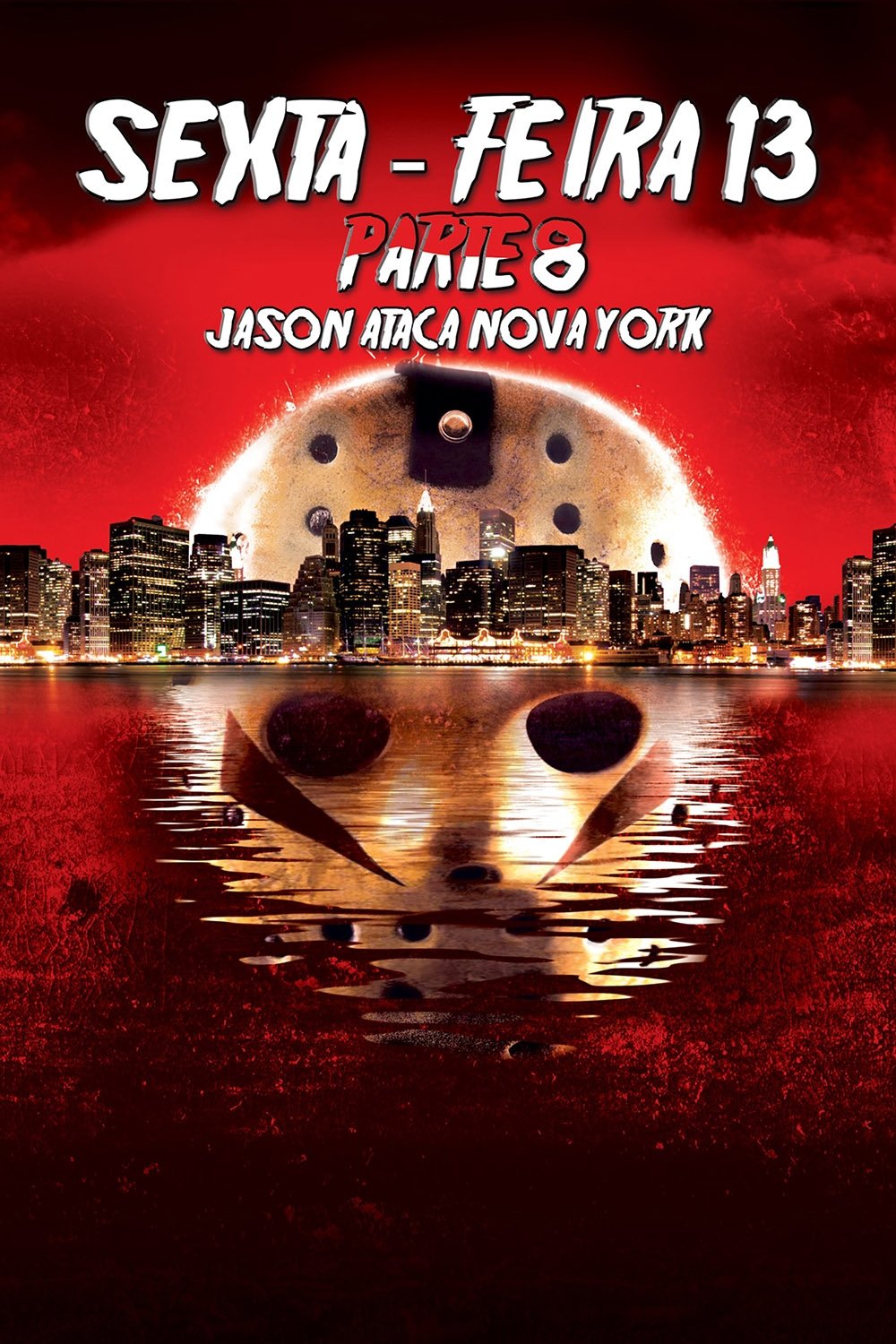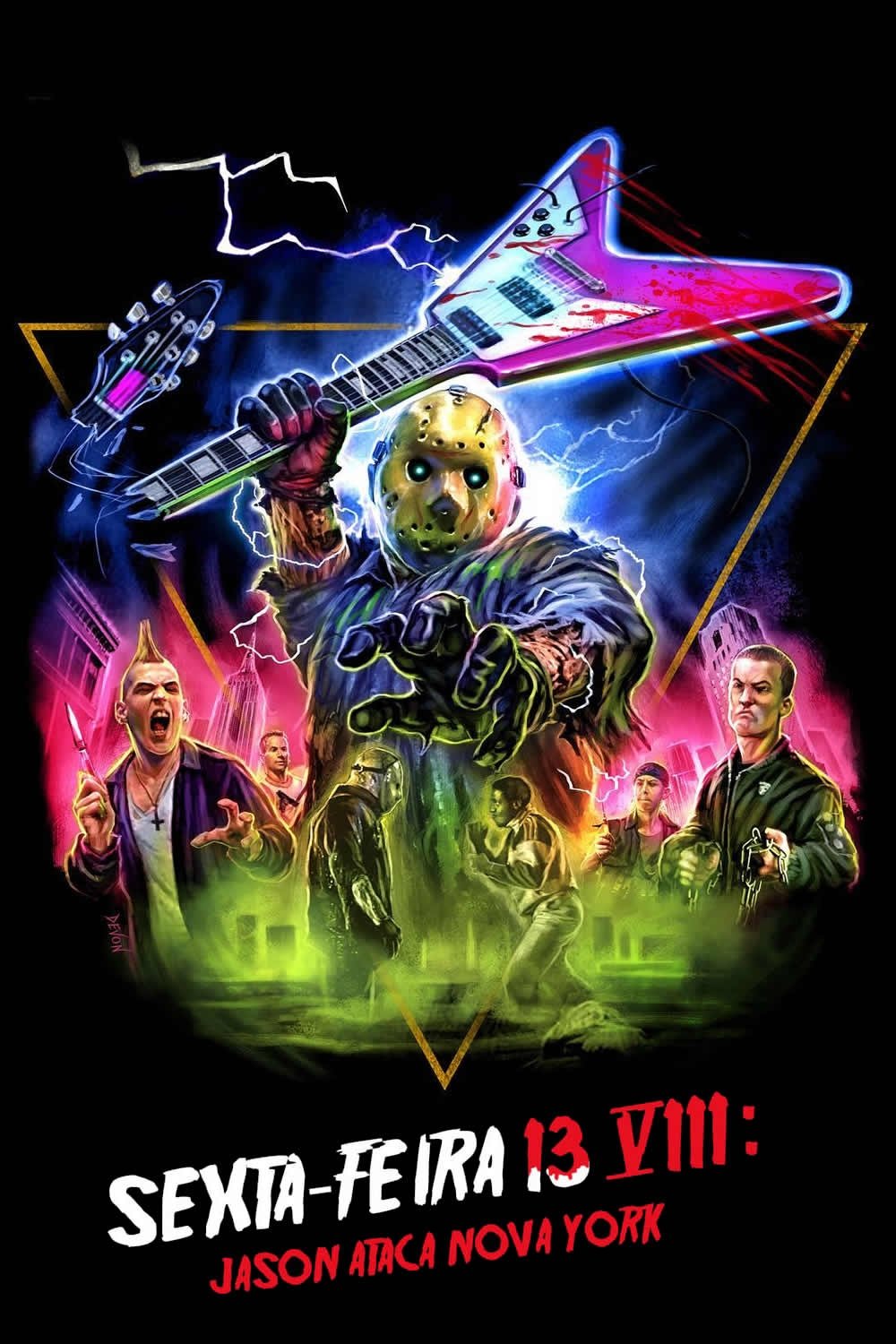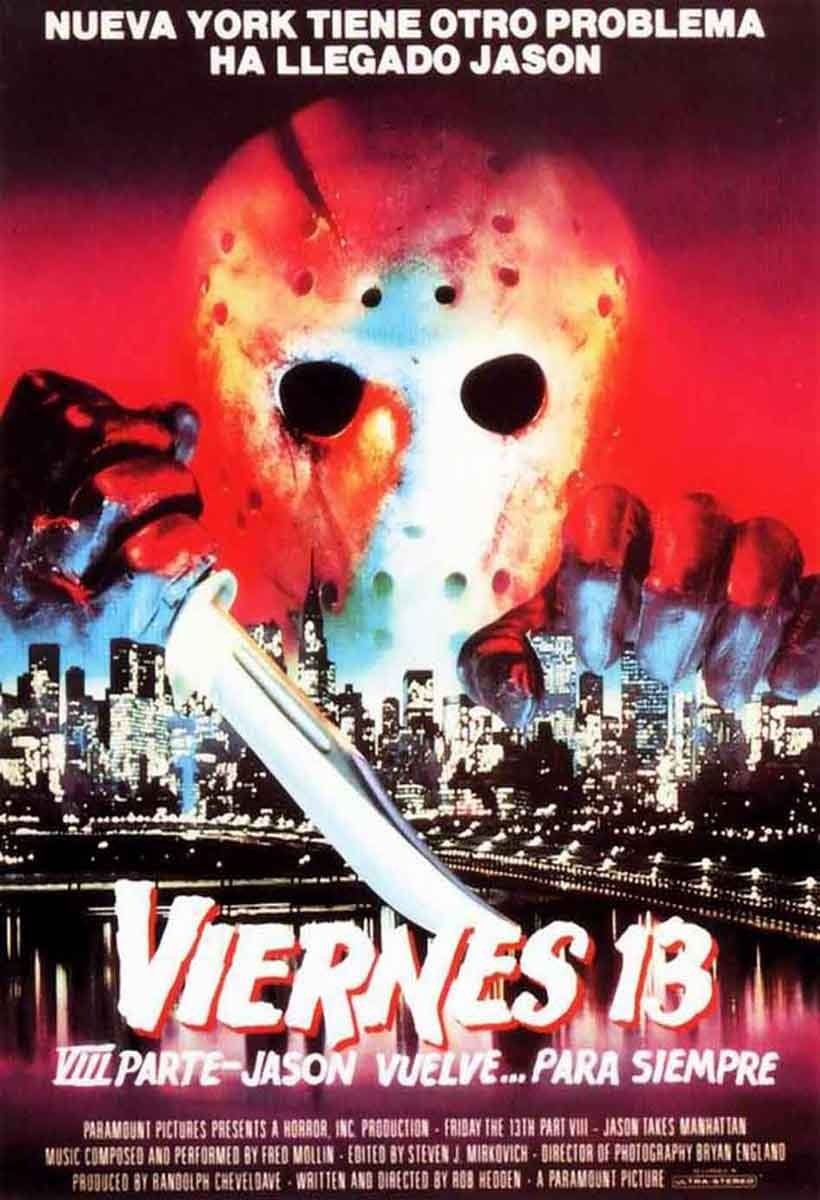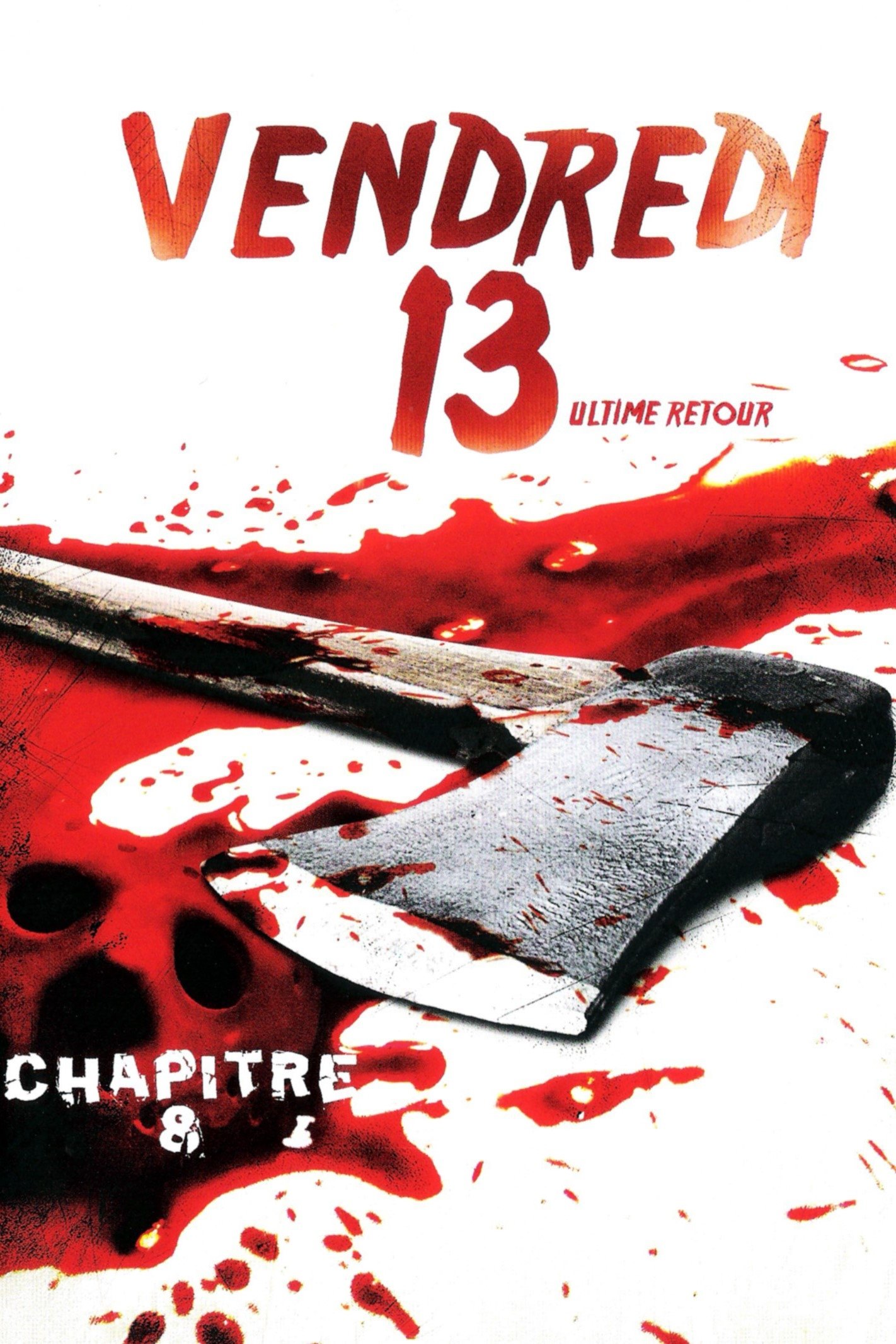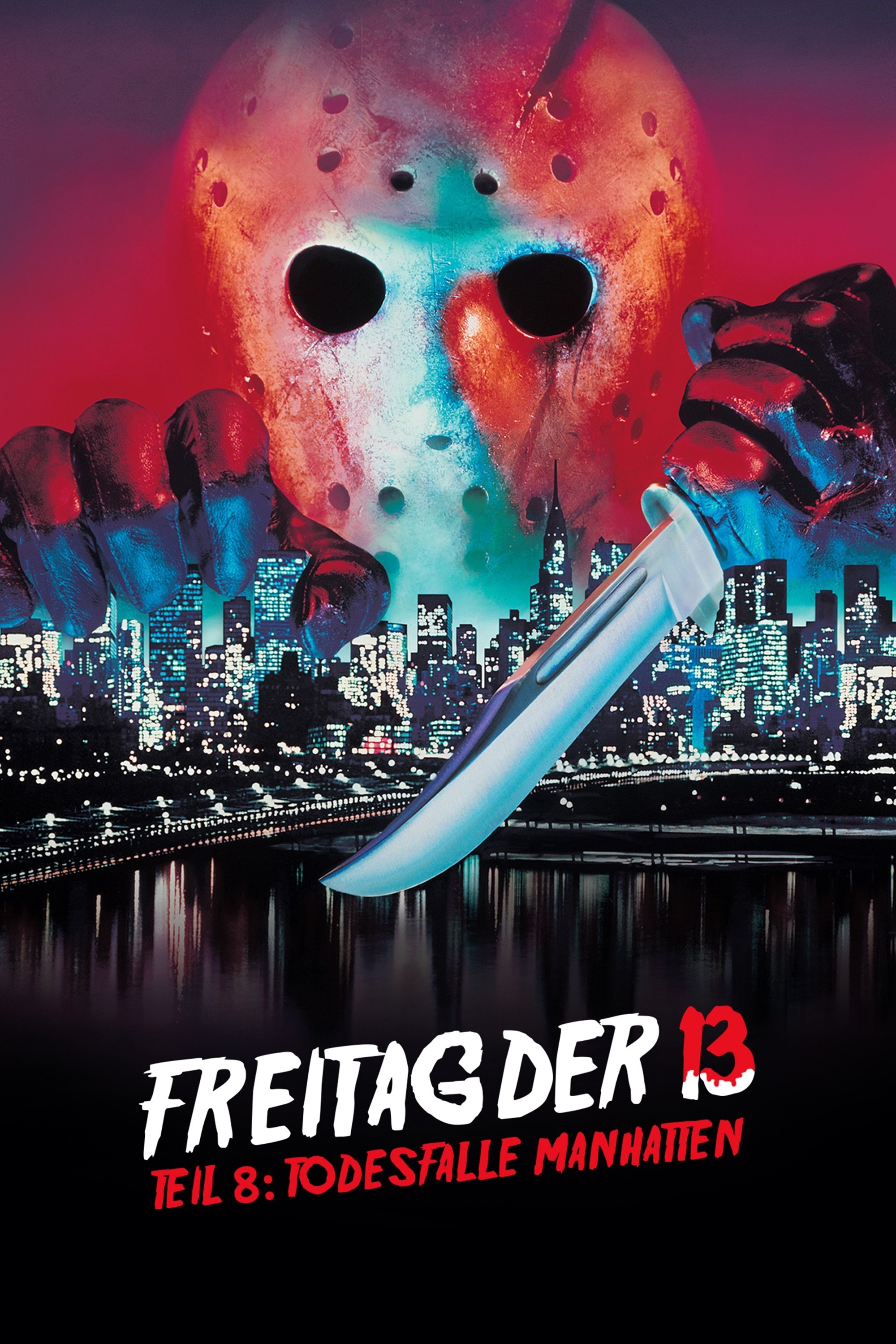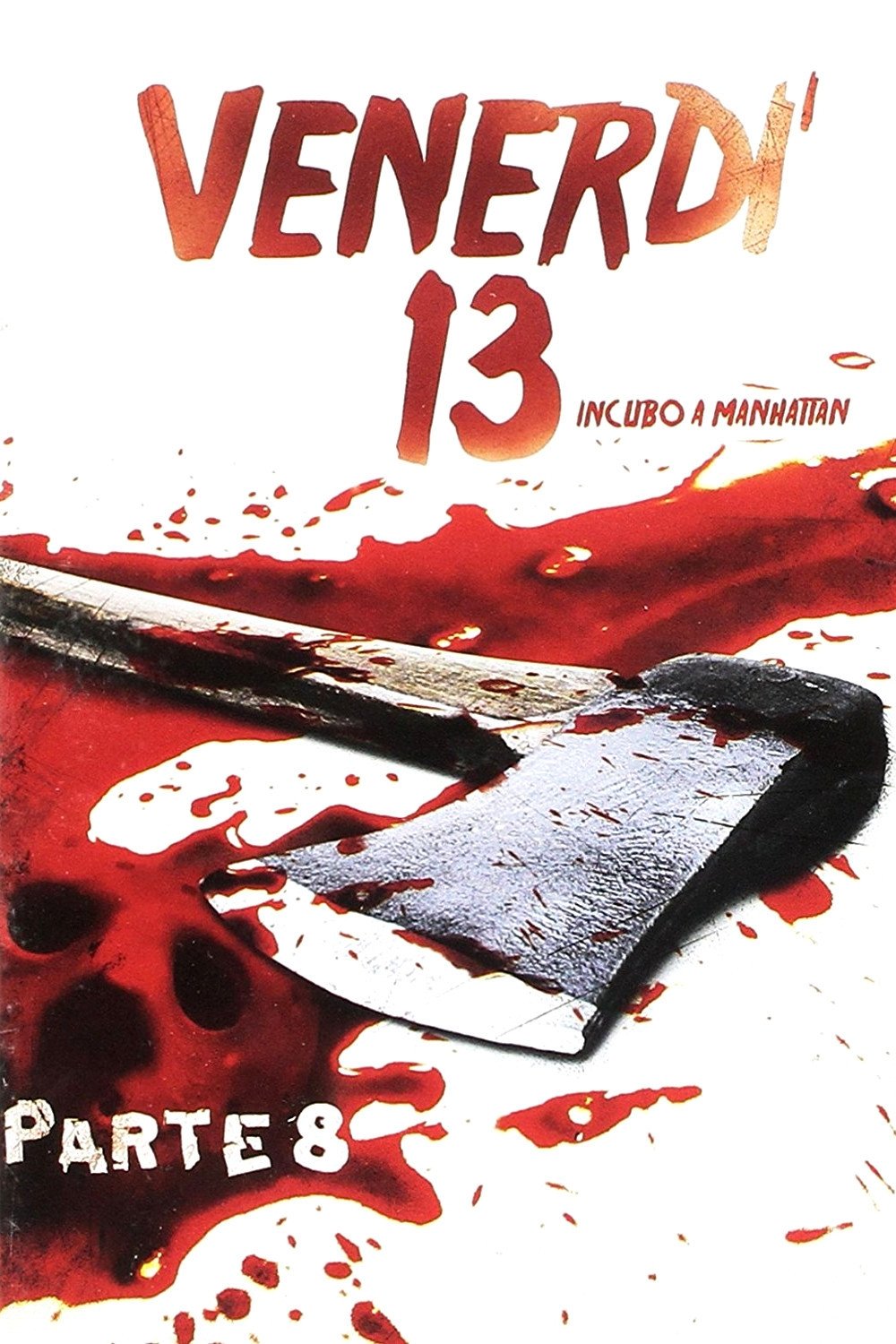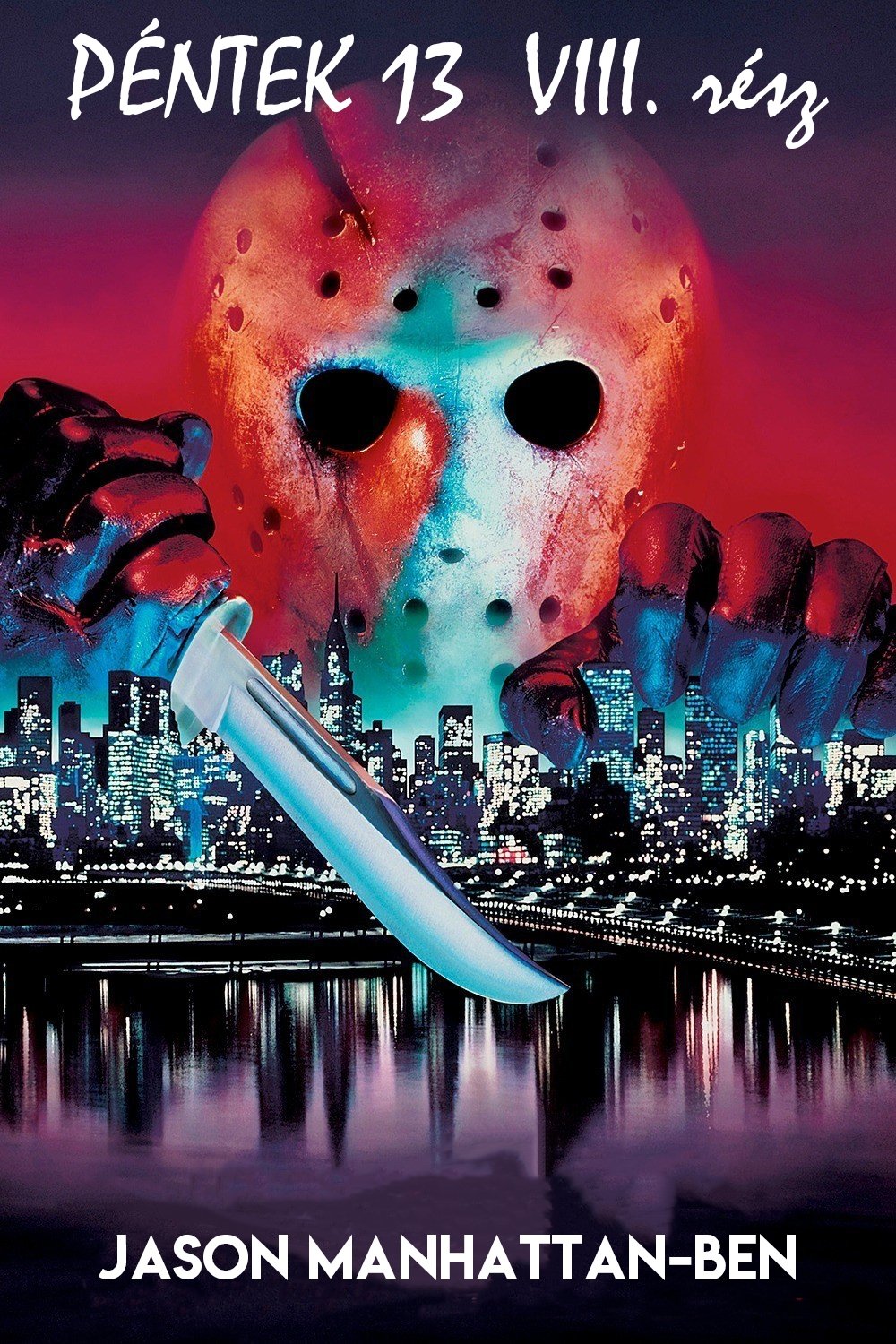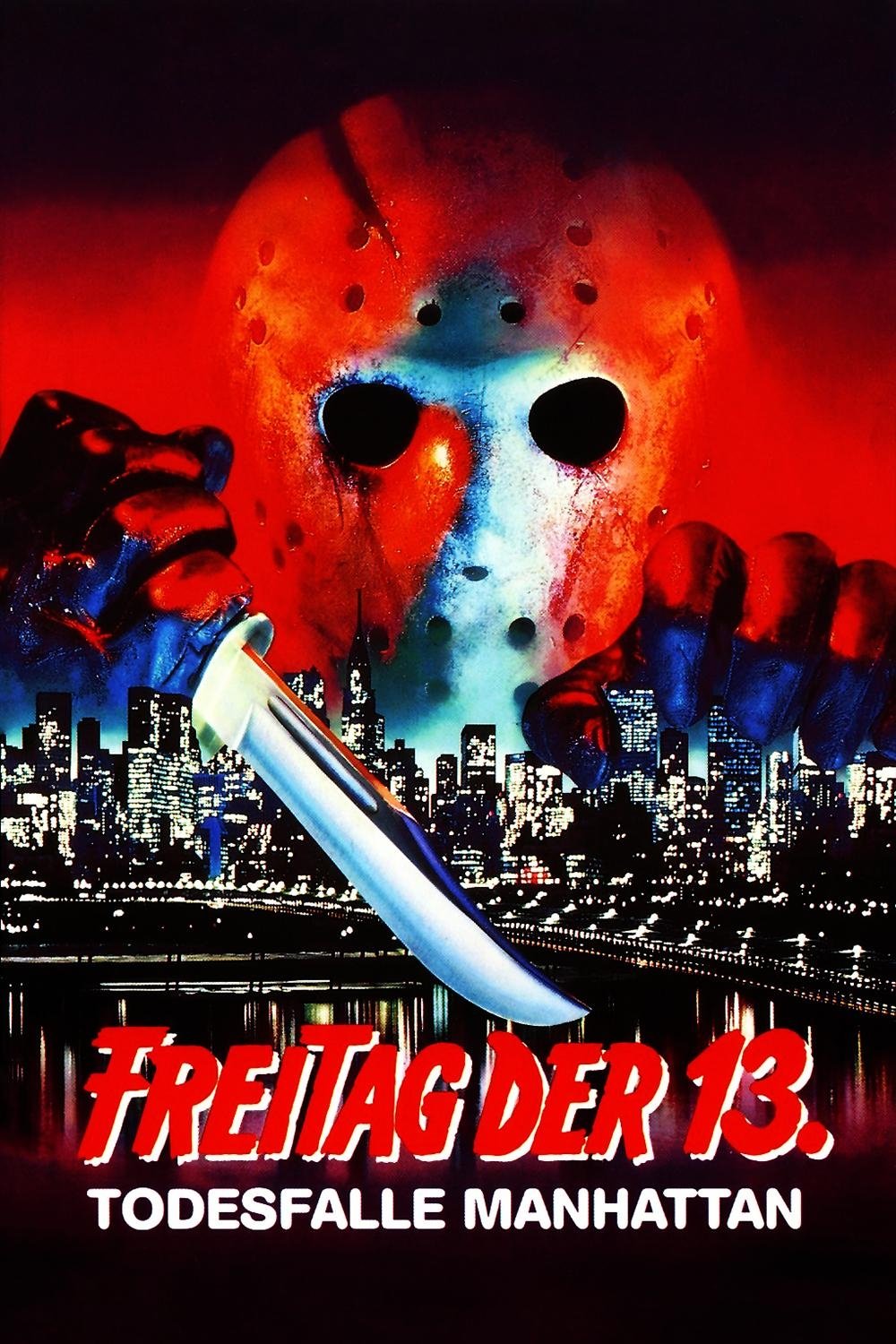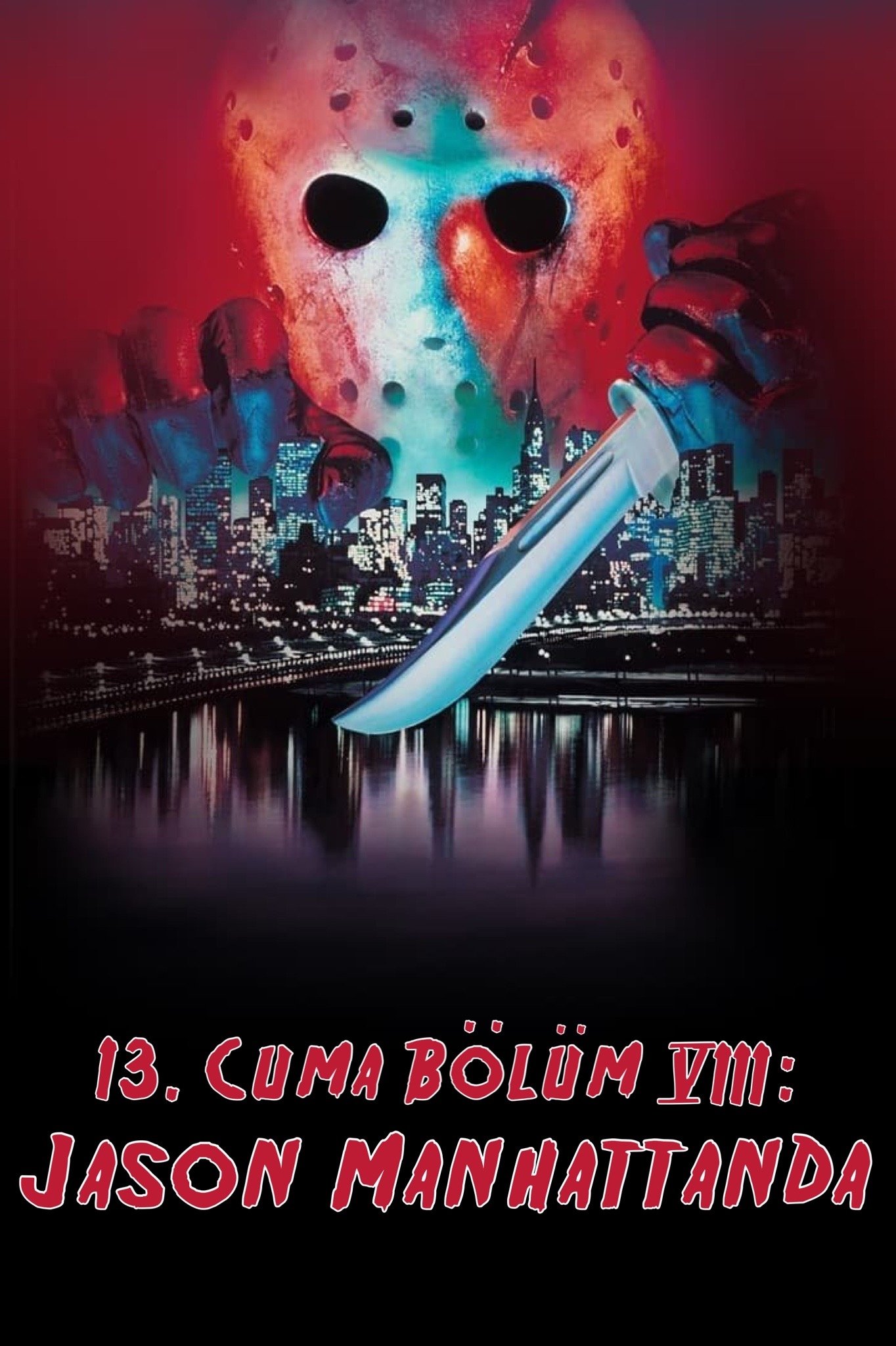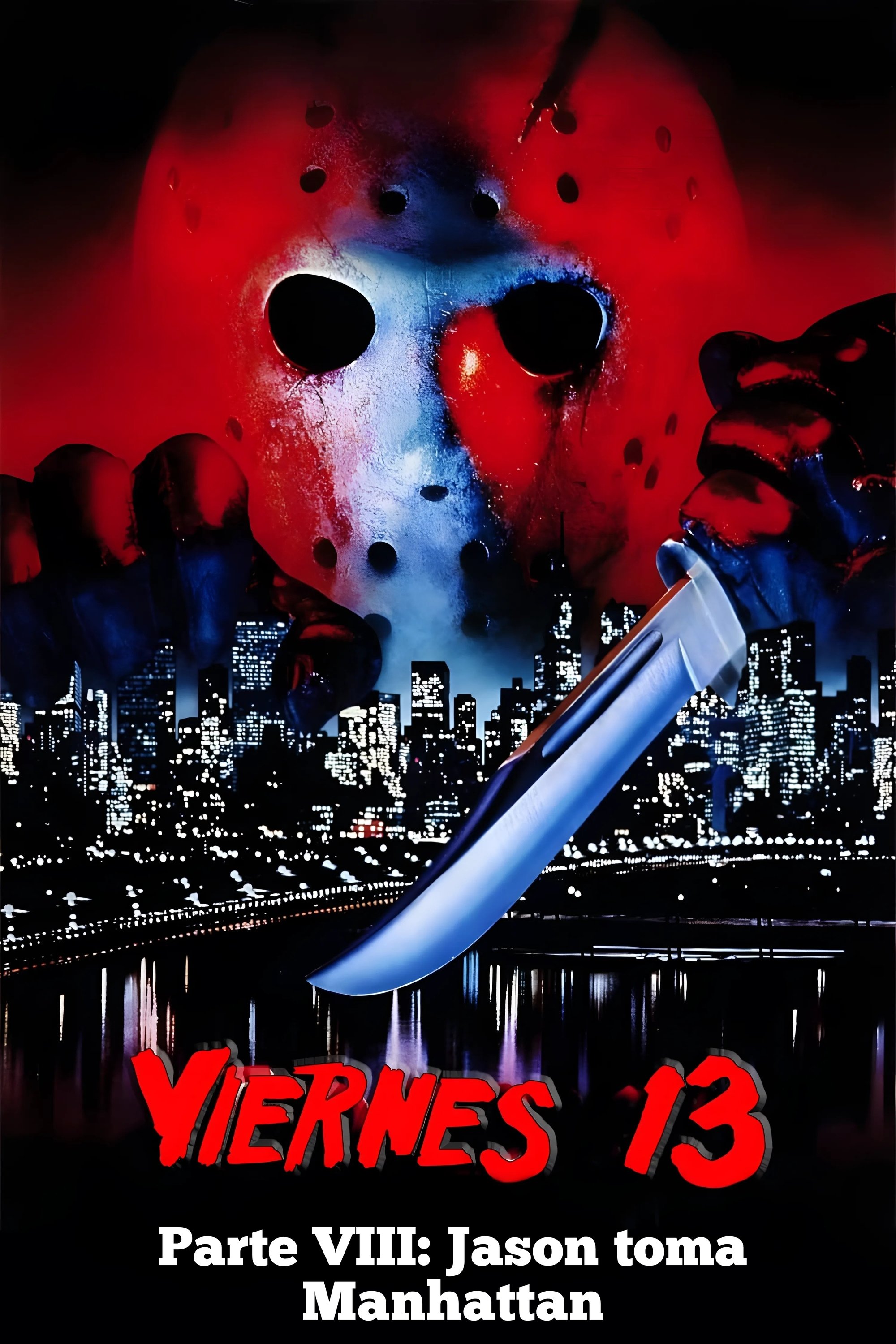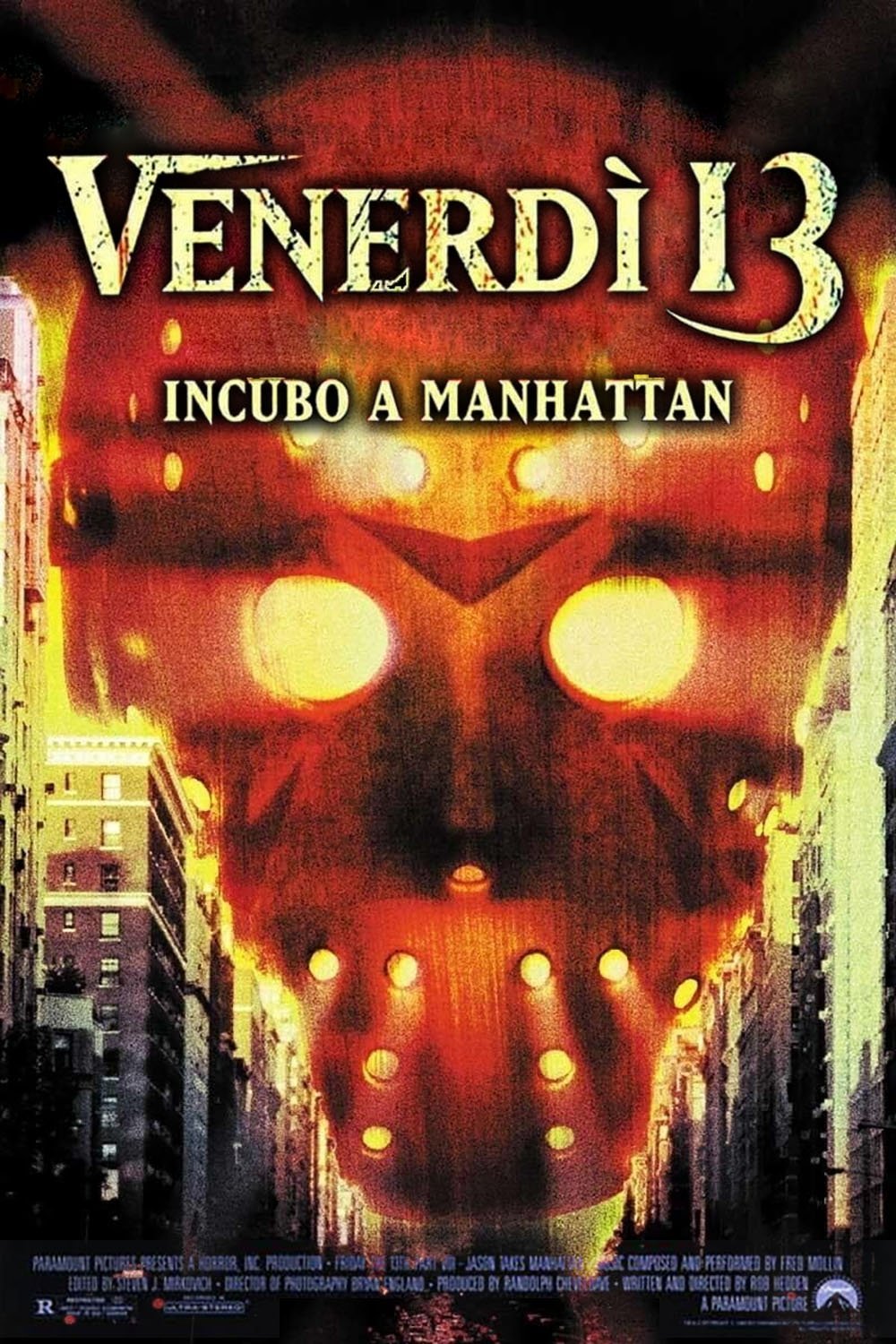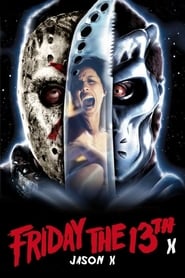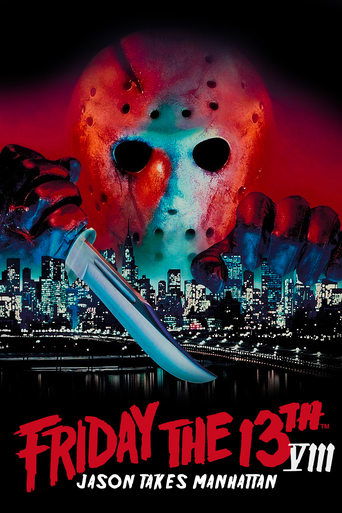
Friday the 13th Part VIII: Jason Takes Manhattan (1989)

US
HORROR FILM Thriller
SUBGENRES SLASHER
Runtime
100 min
Release
July 28, 1989
Budget
$5,000,000
Revenue
$14,343,976
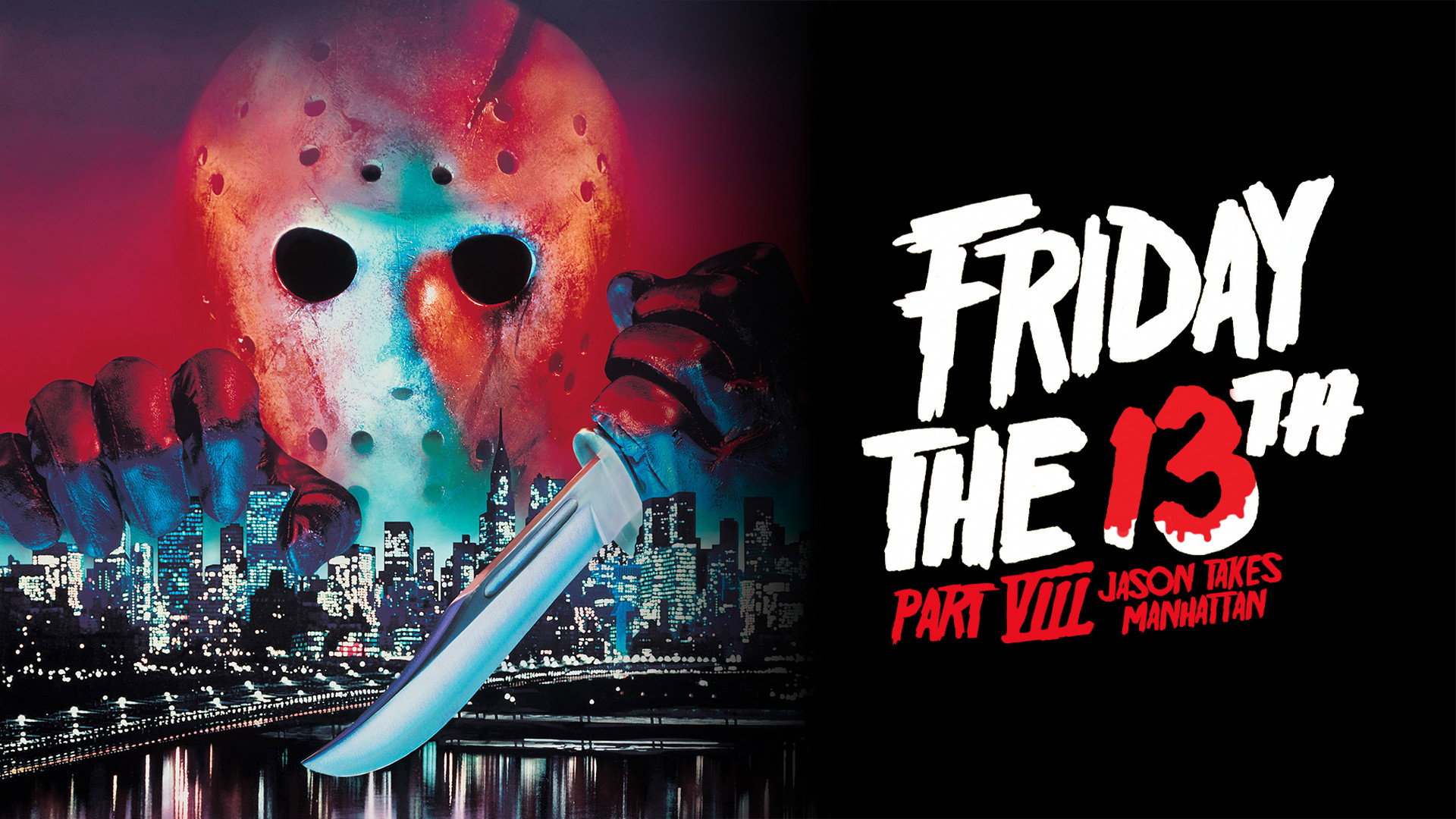
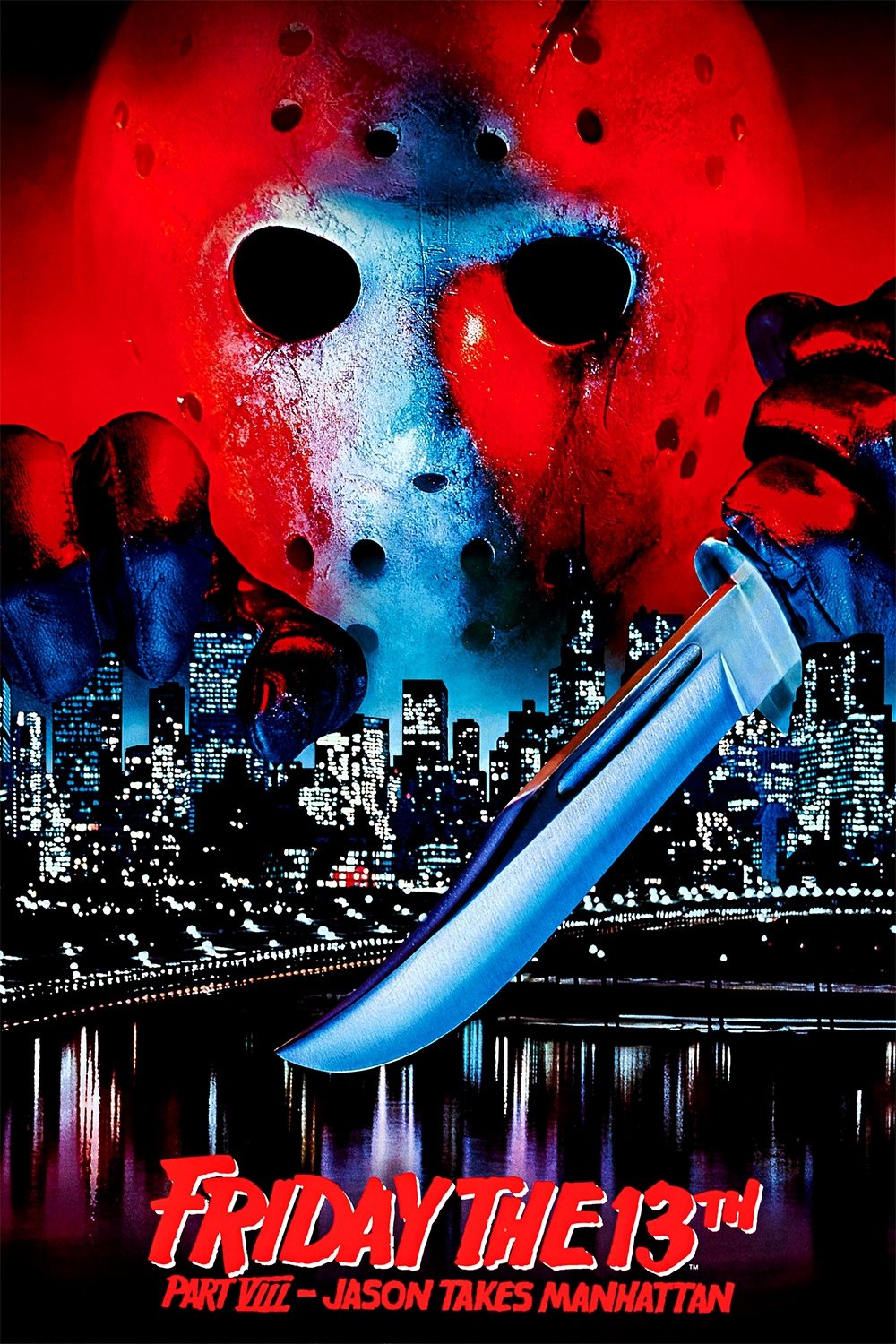
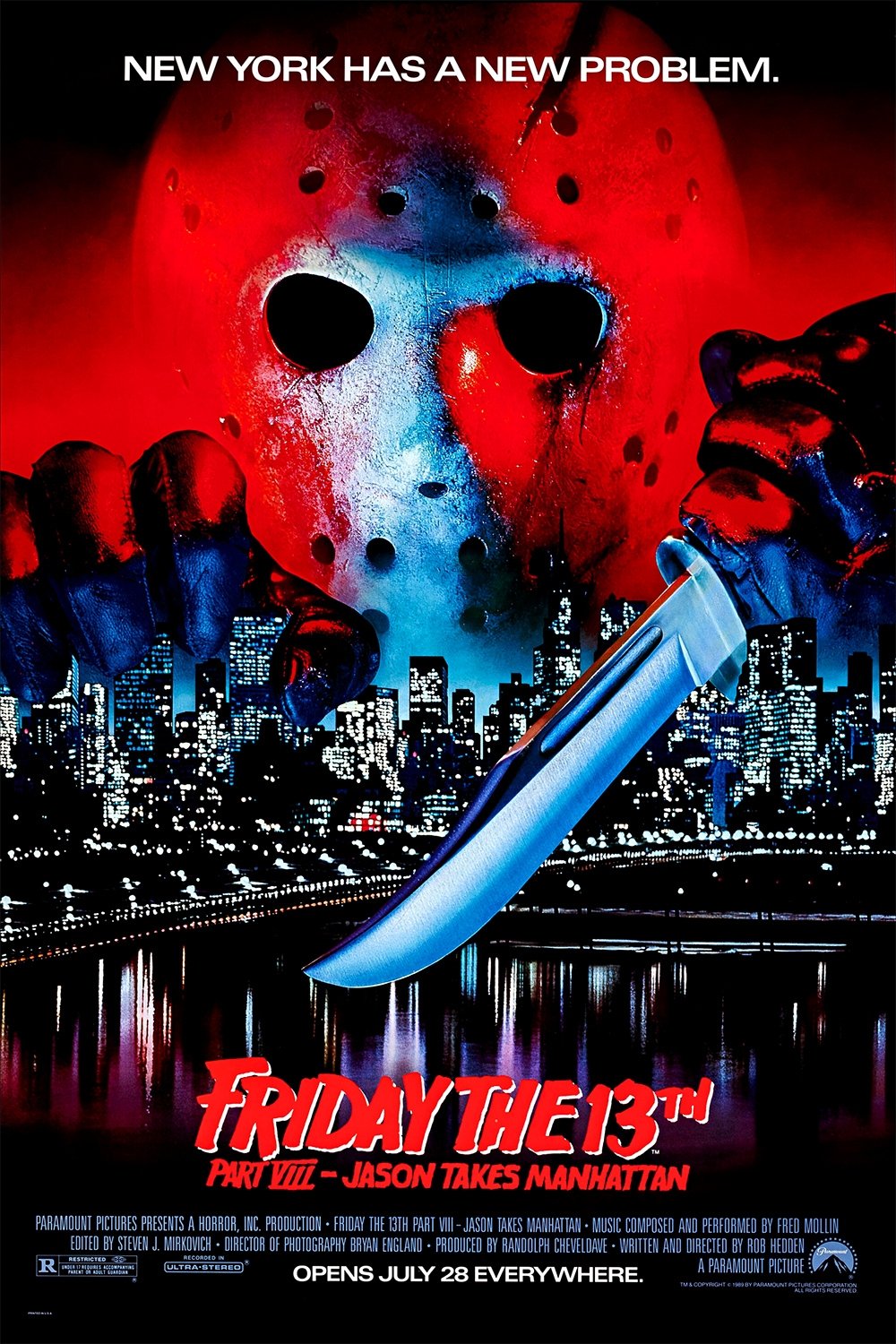
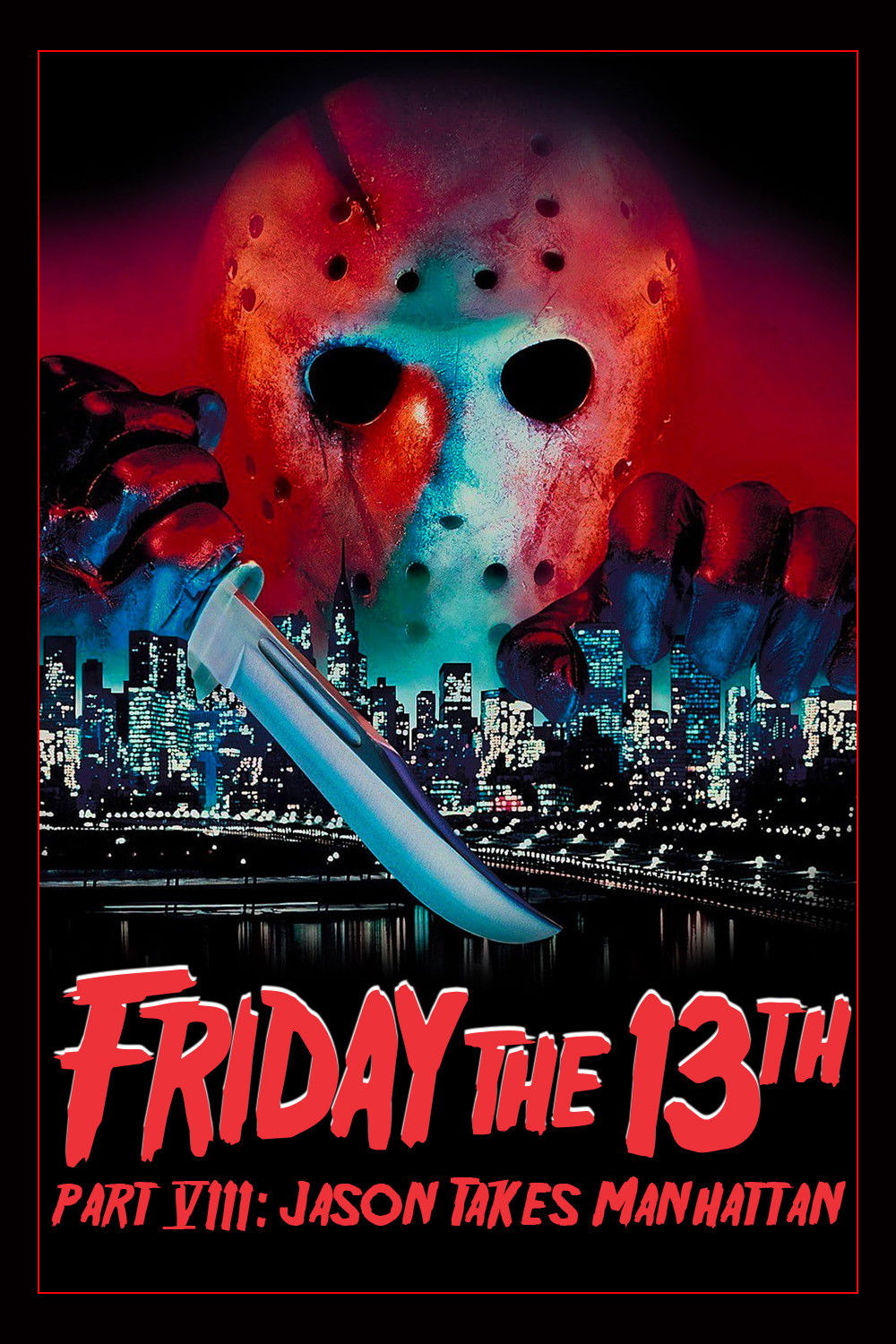
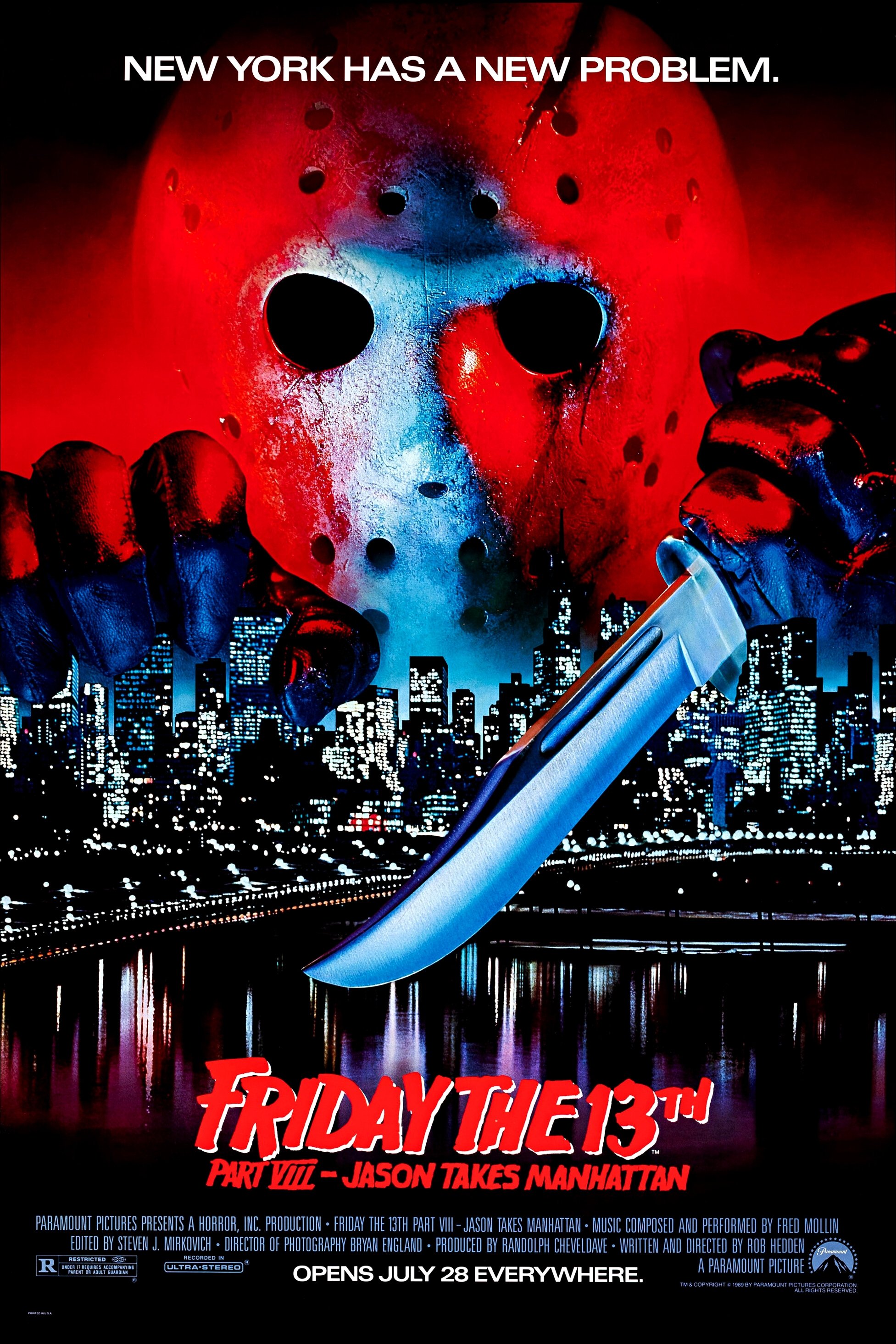
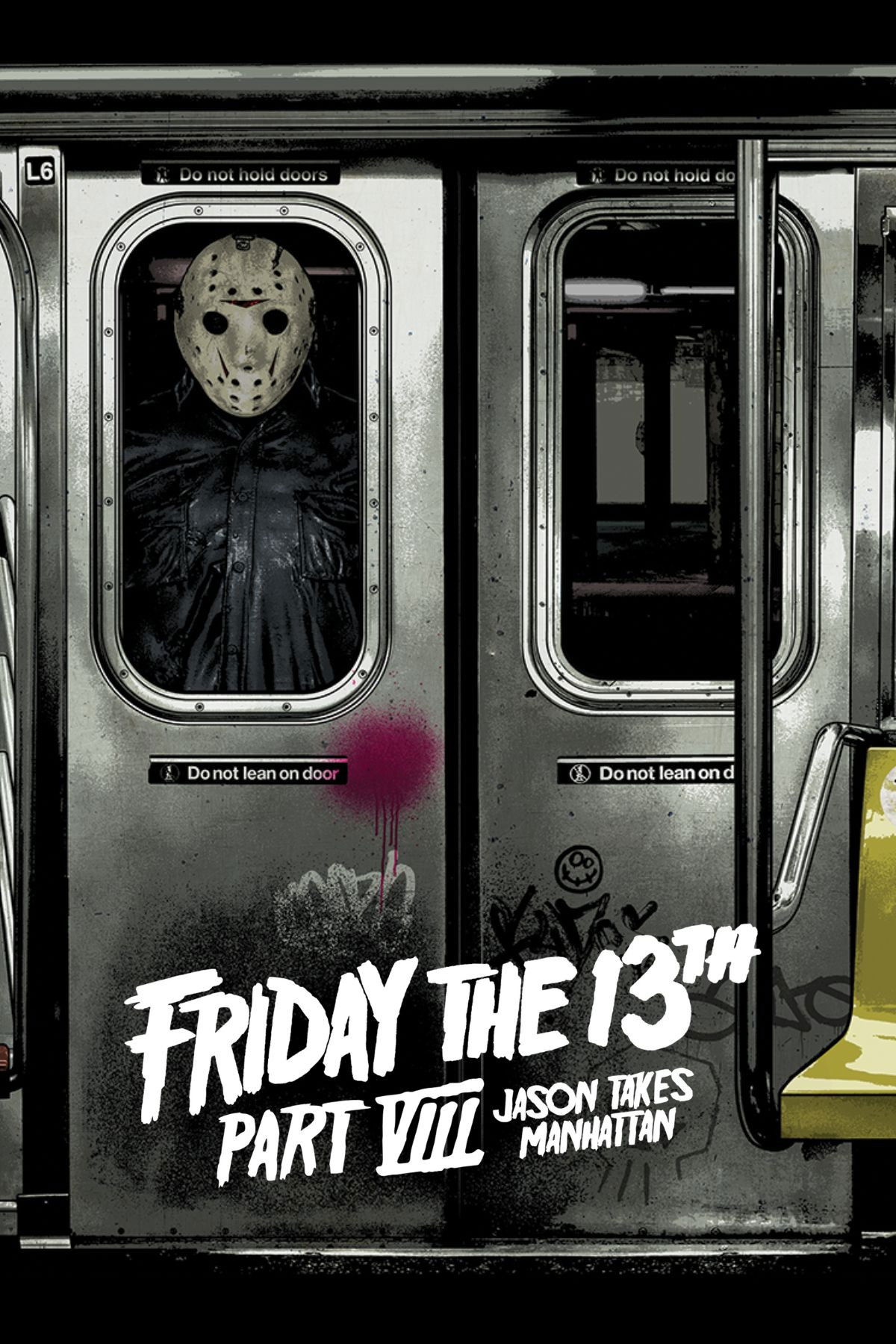
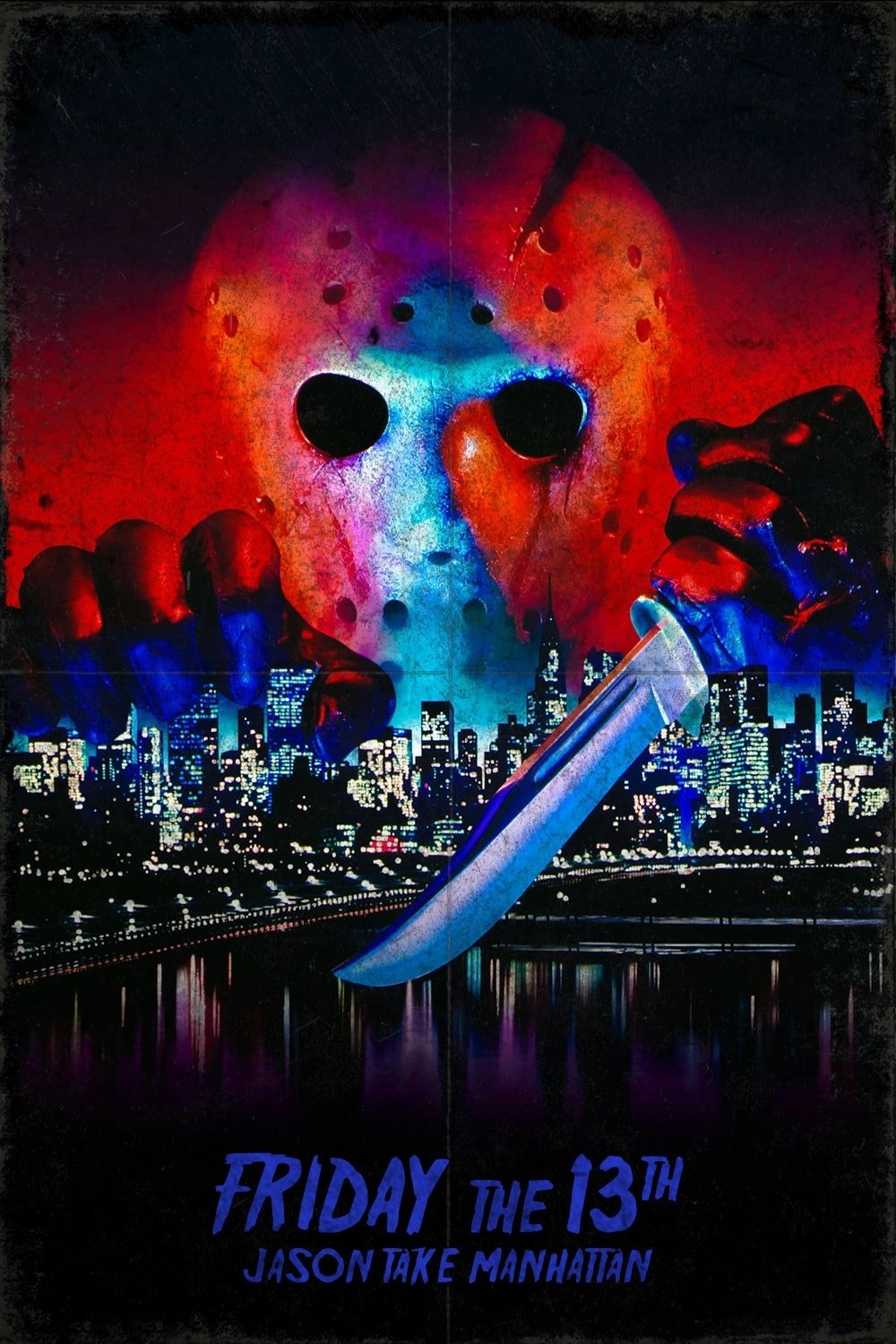
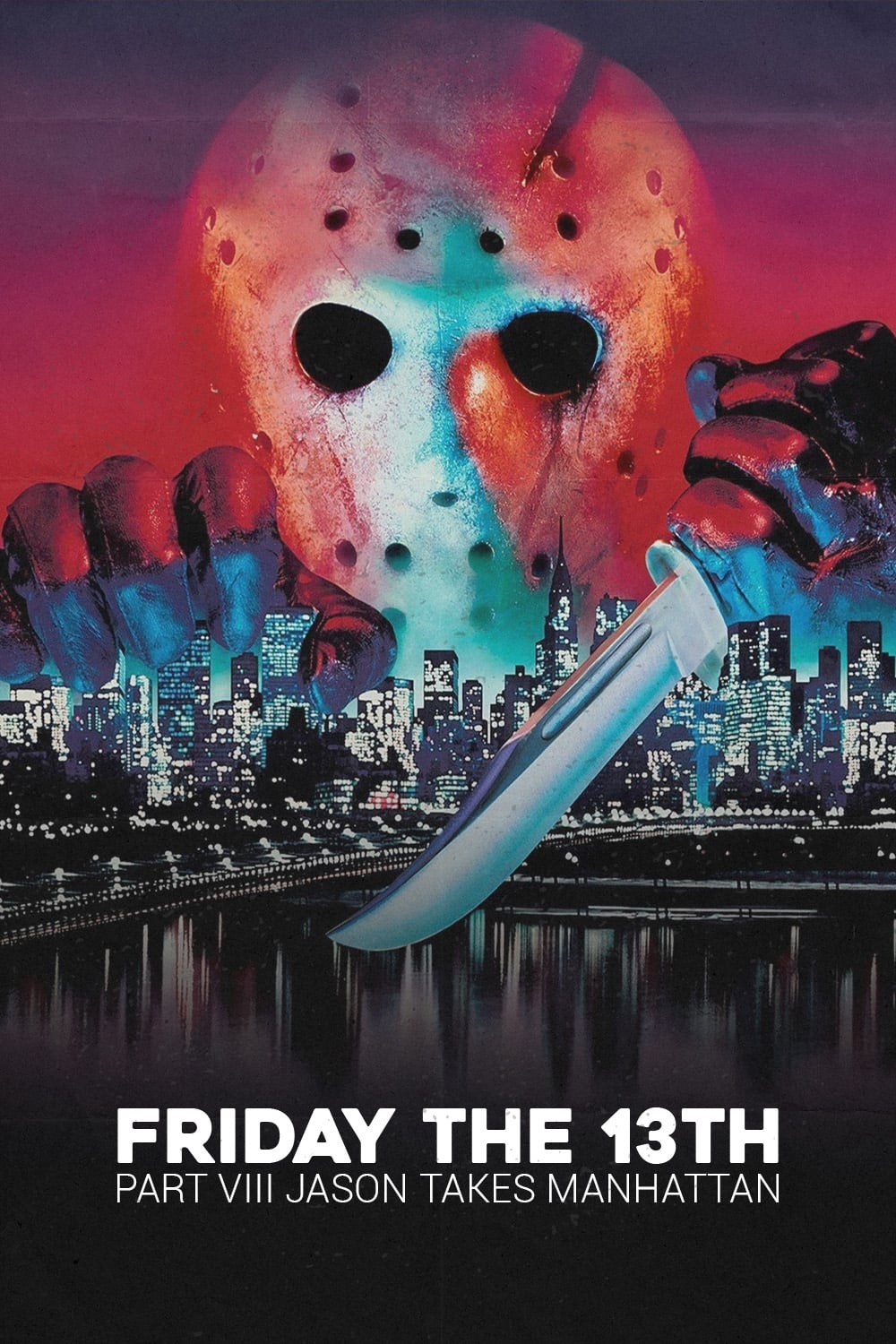
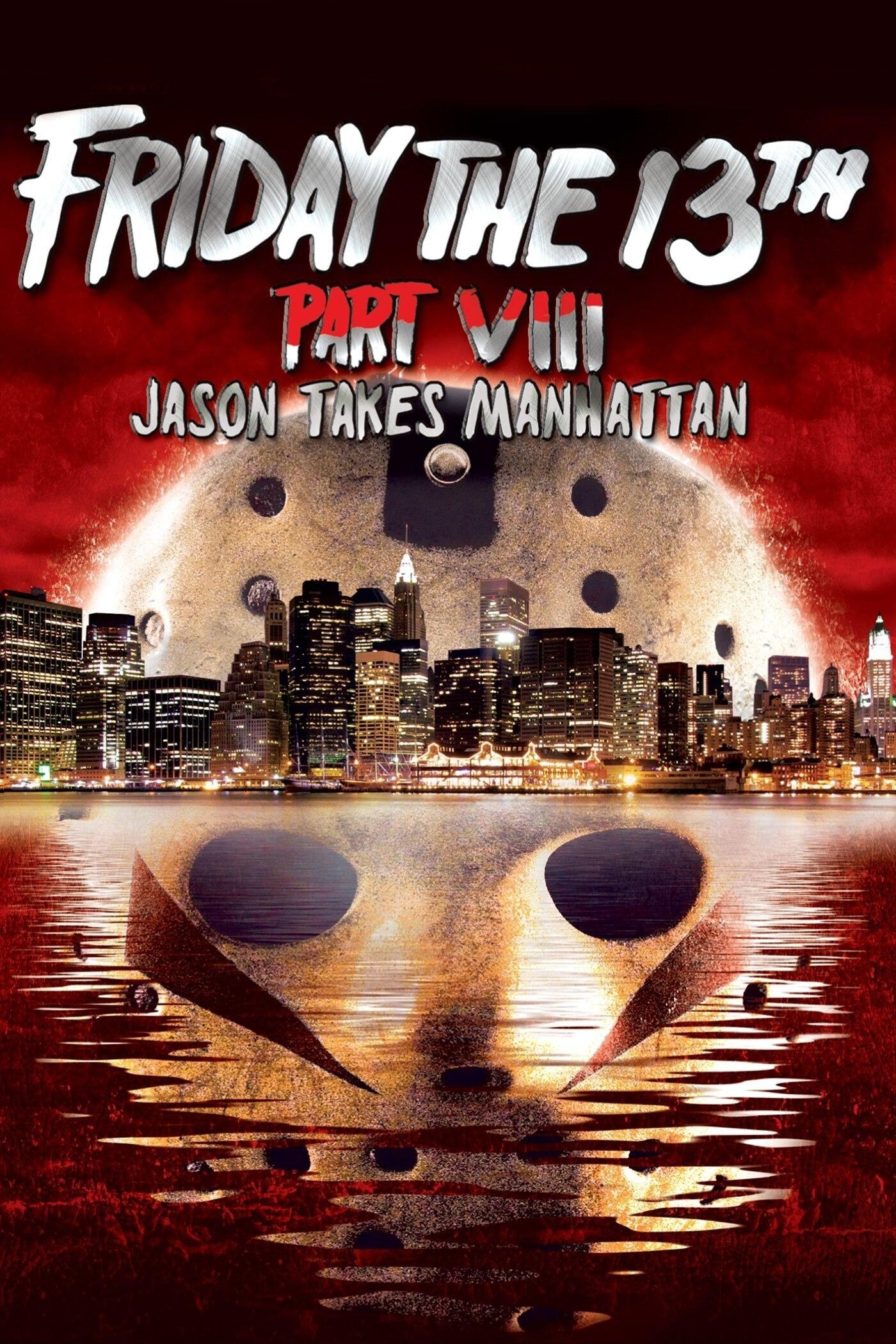
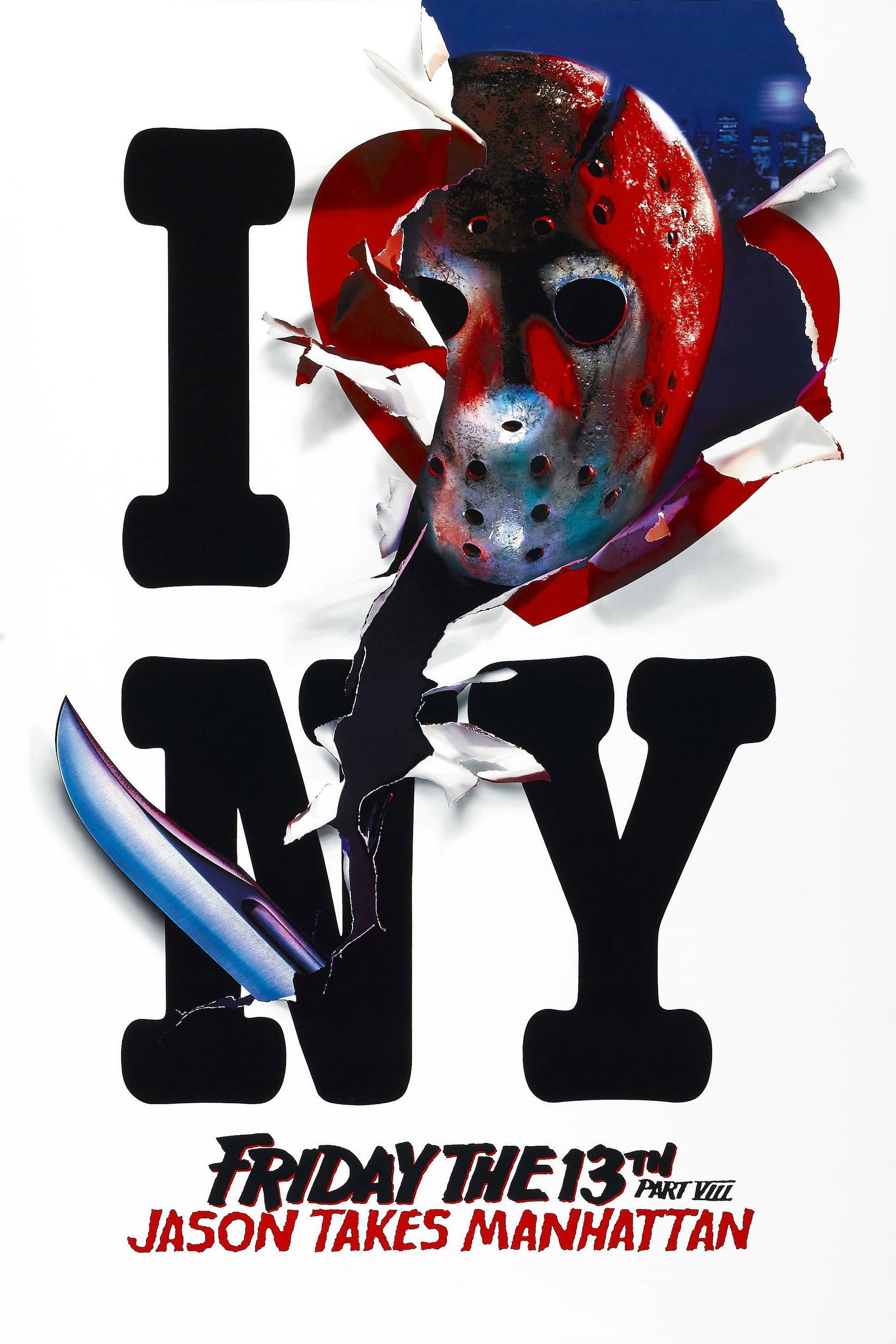
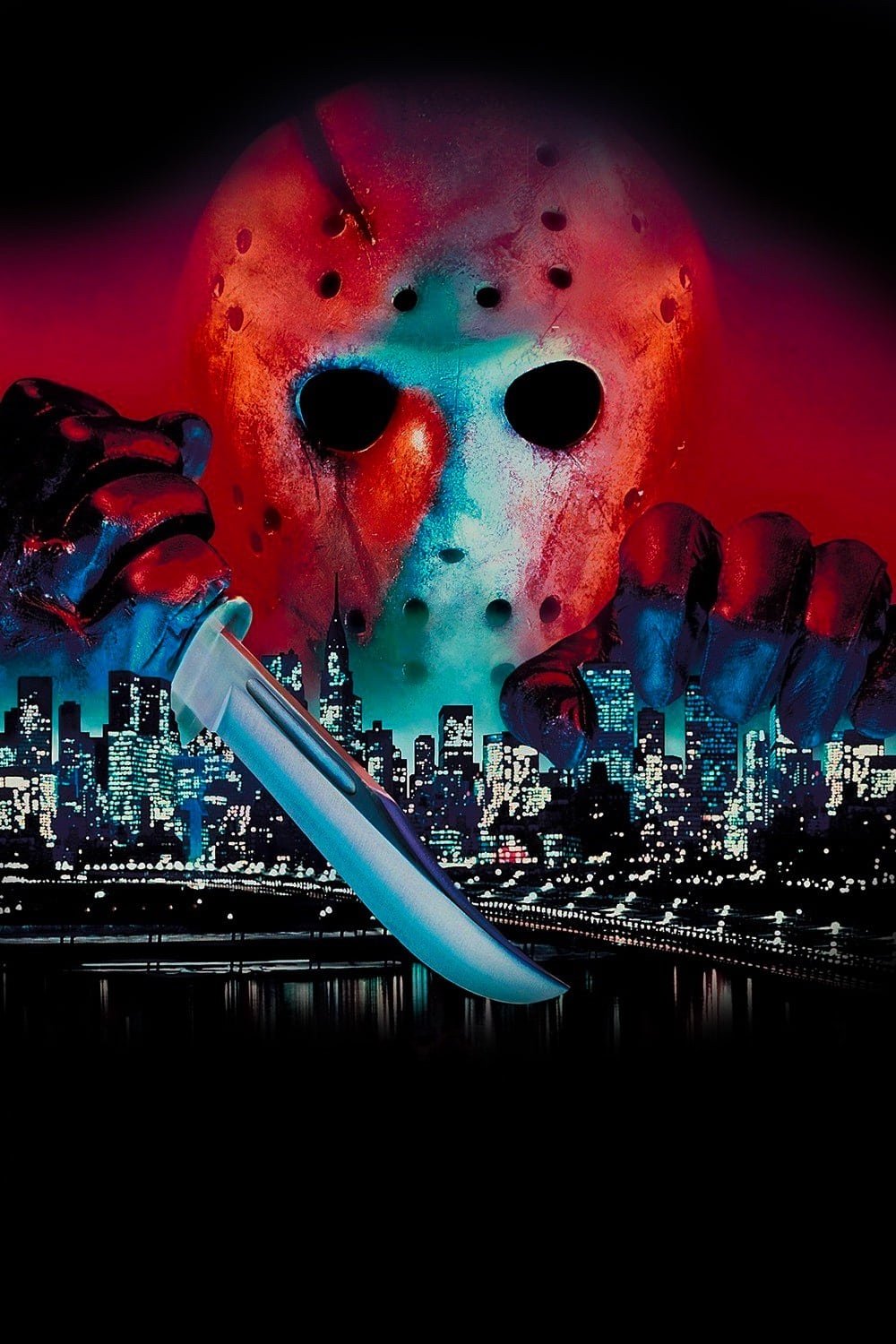
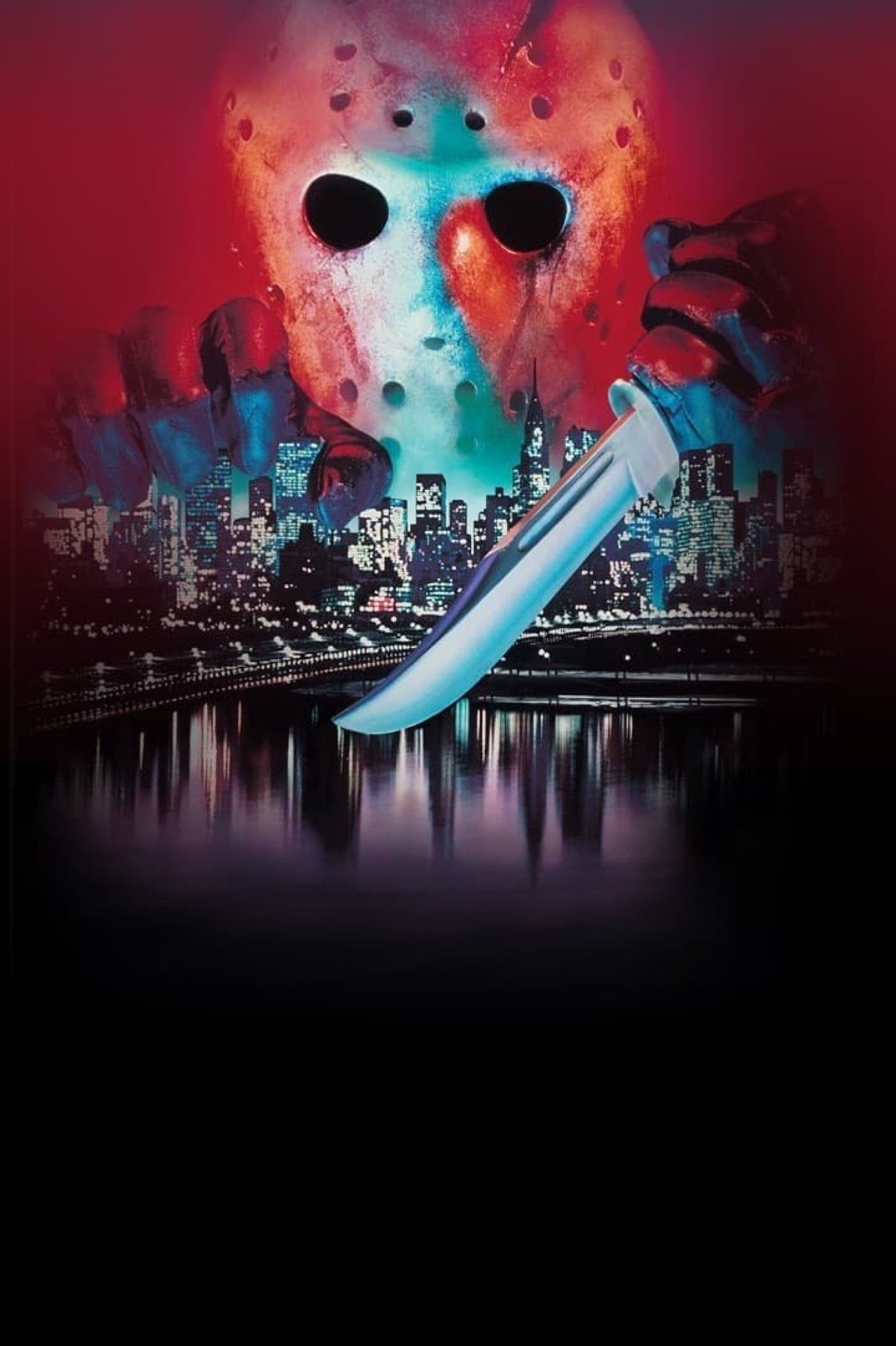
Friday the 13th Part VIII: Jason Takes Manhattan (1989) poster
Director
Production Companies
Paramount Pictures , Horror
Plot

After being revived in the waters of Crystal Lake, Jason Voorhees boards a cruise ship carrying graduating students and their teachers toward New York City. Among the passengers is Rennie Wickham, a young woman whose disturbing memories of the lake make the voyage especially unsettling. As Jason moves through the ship, the passengers become trapped with an attacker they struggle to identify or escape. Those who survive the crossing find that the danger continues on the streets of Manhattan, far from the woodland setting of the earlier films.

Alternative Titles
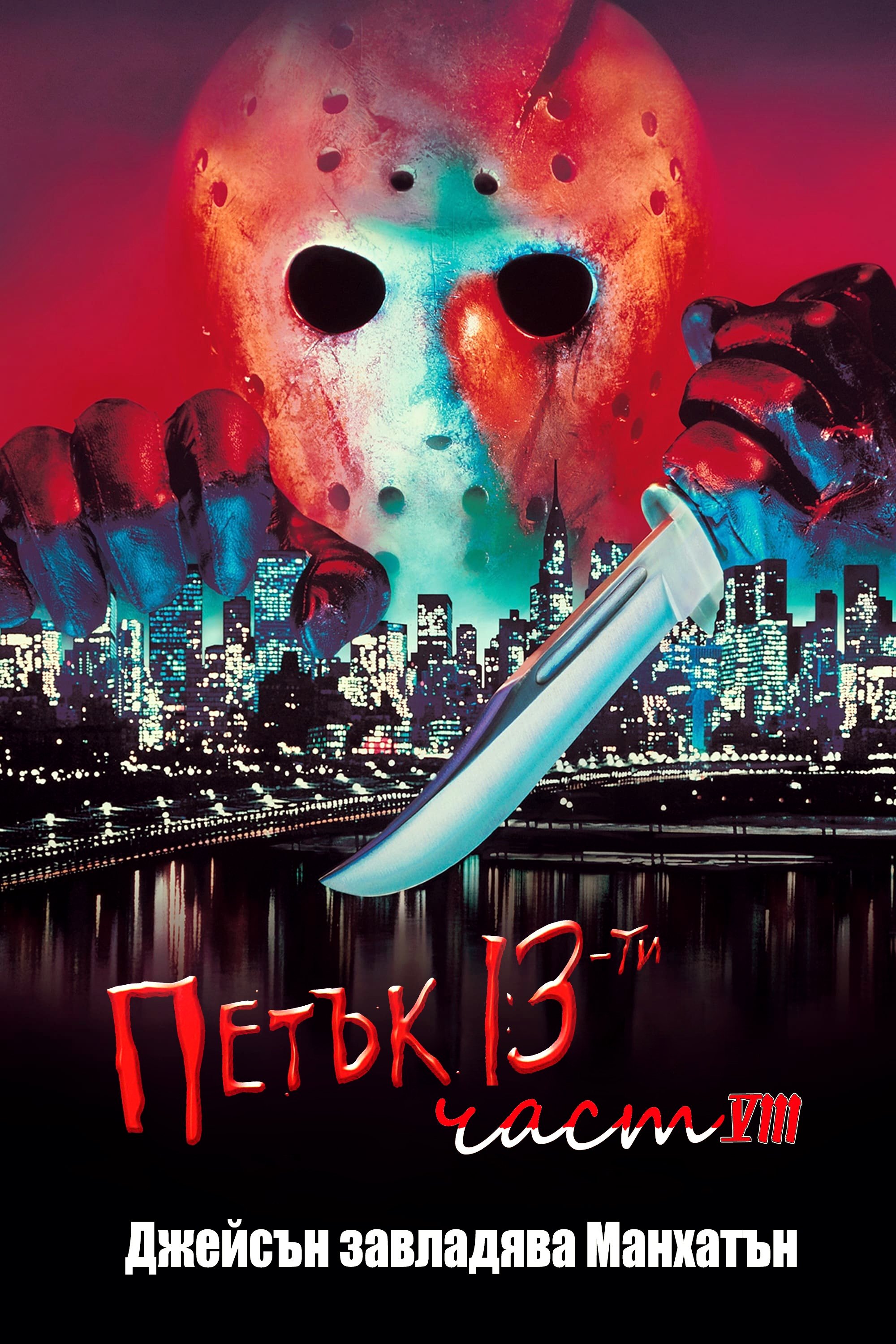
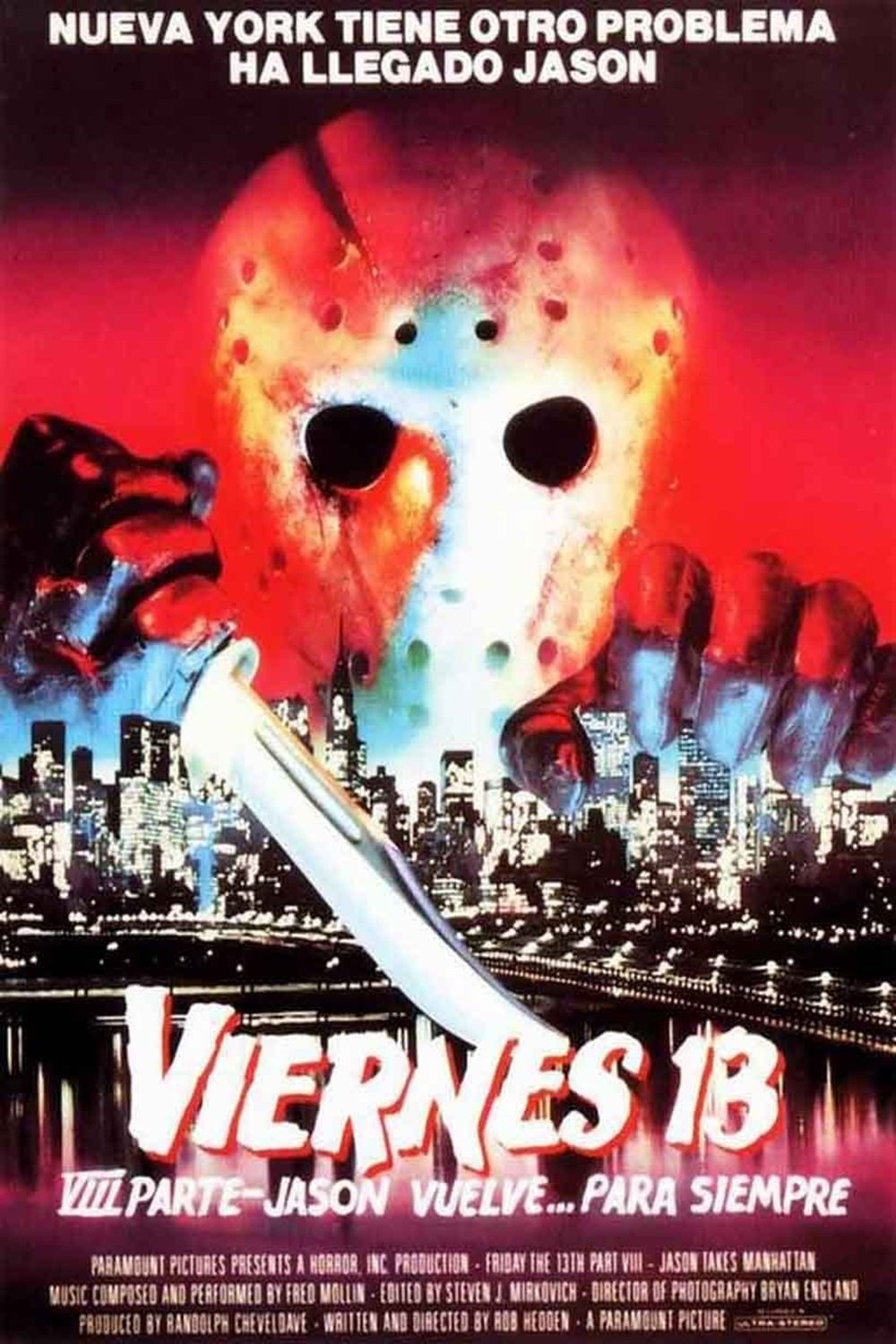
Martes 13. Parte 8: Jason toma Manhattan (Argentina) Cümə, ayın 13-ü: Ceyson Manhetteni ələ keçirir (Azerbaijan) — Azerbaijani Петък 13-и: Част 8 (Bulgaria) — Bulgarian Петък 13-и: Част VIII-Джейсън превзема Манхатън (Bulgaria) Sexta-Feira 13 - Parte 8: Jason Ataca Nova York (Brazil) Péntek 13. - VIII. rész: Borzalom Manhattan-ben (Bhutan) — alternative title Vendredi 13 : Chapitre VIII - Jason à Manhattan (Canada) — French title Vendredi 13, chapitre 8: Jason à Manhattan (Canada) — French title
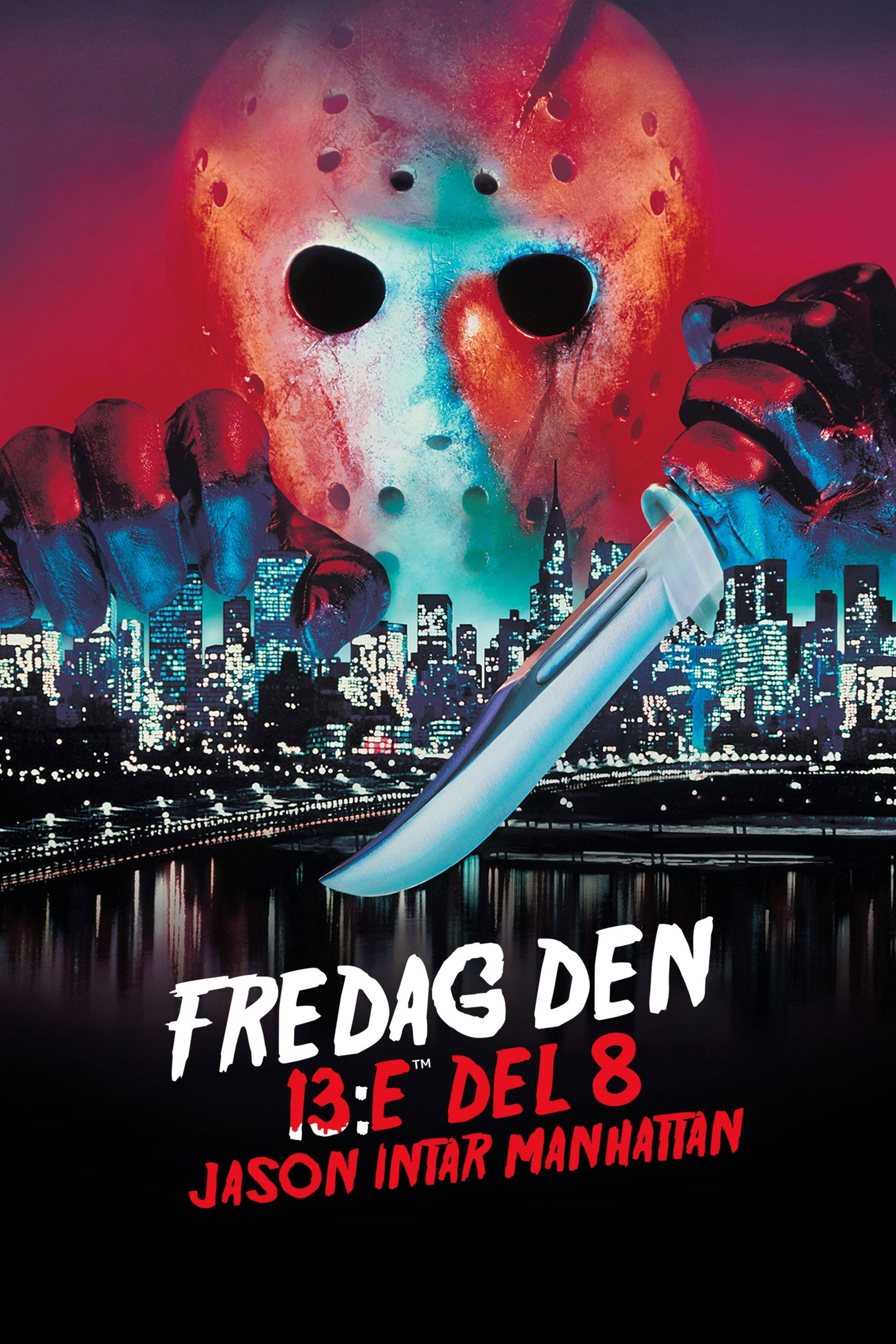
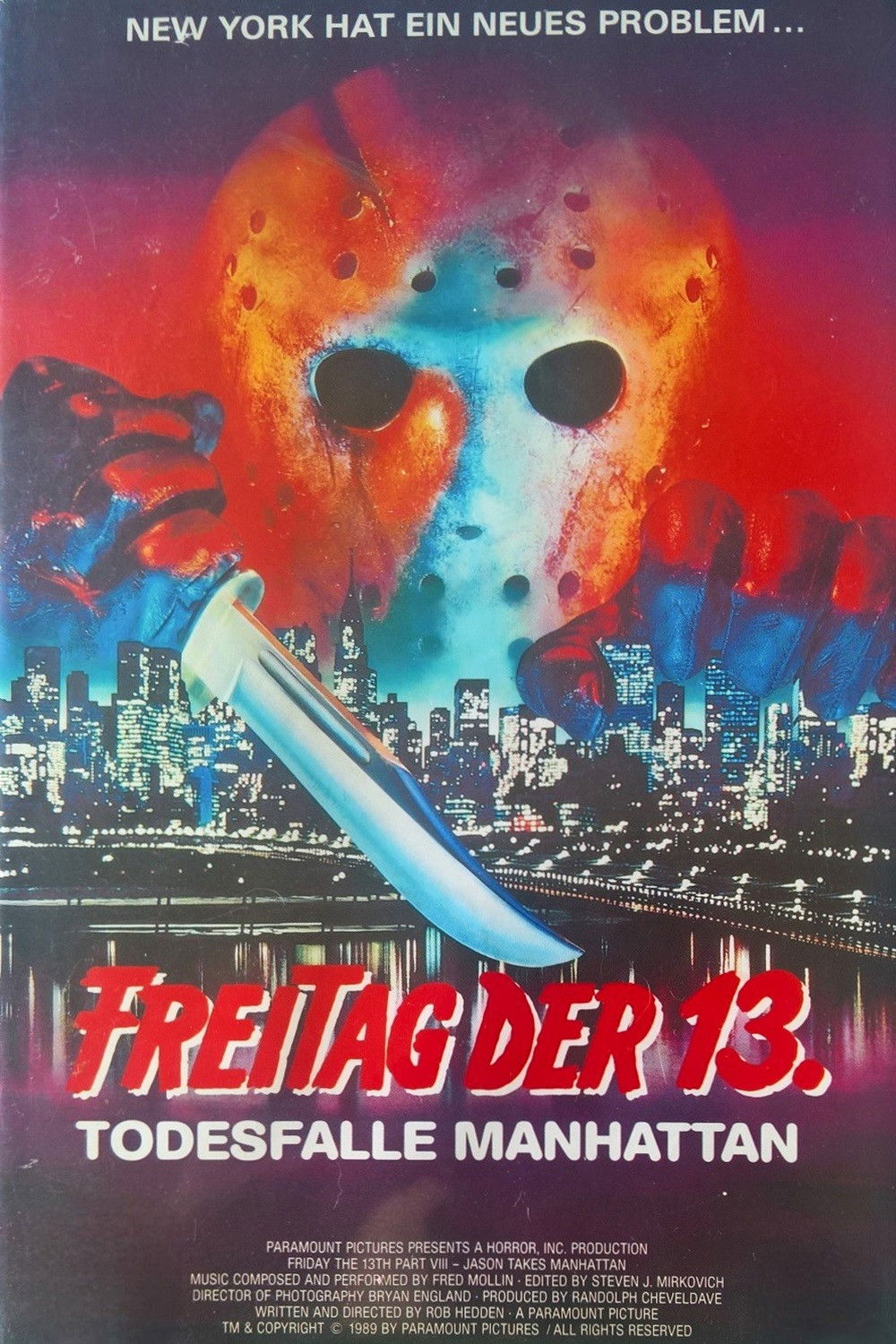
Show all 56 alternative titles 十三号星期五8:杰森侵入曼哈顿 (China) — Chinese 黑色星期五8 (China) Pátek trináctého 8: Jason na Manhattanu (Czechia) — Czech Freitag der 13. Teil VIII - Todesfalle Manhattan (Germany) — German Freitag, der 13. Teil 8 - Todesfalle Manhattan (Germany) — TV Fredag den 13. del 8: Jason indtager Manhattan (Denmark) — Danish Viernes 13 VIII: Jason toma Manhattan (Spain) Viernes 13. Parte 8: Jason vuelve... para siempre (Spain) — DVD title Viernes 13. Parte VIII: Jason vuelve... para siempre (Spain) — Spanish Friday the 13th. Part VIII - Jason Manhattanilla (Finland) — Pre-release title Vendredi 13, chapitre 8 : L'Ultime Retour (France) — alternative spelling Vendredi 13: L'ultime retour (France) — alternative title Friday the 13th: Jason Takes Manhattan - Part 8 (United Kingdom) — DVD box title Paraskevi kai 13 No 8: Tromos sto Manhattan (Greece) — transliteration Παρασκευή και 13 Μέρος VIII: Ο Τζέισον καταλαμβάνει το Μανχάταν (Greece) — Greek 十三號星期五 8:傑森侵入曼哈頓 (Hong Kong SAR China) — Chinese Petak 13. - 8 dio : Jason na Manhattanu (Croatia) — Croatian Péntek 13. - Borzalom New Yorkban (Hungary) — announced title Péntek 13. - VIII. rész: Jason Manhattan-ben (Hungary) — Hungarian Péntek 13. - VIII. rész: Jason Manhattanben (Hungary) — alternative title Péntek 13. VIII. rész: Borzalom New York-ban (Hungary) — announced title Péntek 13. VIII. rész: Borzalom New Yorkban (Hungary) — announced title יום שישי ה-13: חלק 8: ג'ייסון במנהטן (Israel) — Hebrew Venerdì 13: Parte VIII - Incubo a Manhattan (Italy) — Italian 13日の金曜日 PART8/ジェイソンN.Y.へ (Japan) — Japanese Friday the 13th Part 8: Jason in N.Y. (Japan) — English title 13일의 금요일 8: 맨하탄의 살인 (South Korea) — Korean Viernes 13 - Parte 8: Jason Toma Manhattan (Mexico) — Spanish Viernes 13 parte VIII: Jason toma Manhattan (Mexico) — Home Video Title Piątek trzynastego 8: Jason Zdobywa Manhattan (Poland) — Polish Sexta-Feira 13 - Parte 8: Terror em Manhattan (Portugal) — Portuguese Пятница 13 - Часть 8: Джейсон штурмует Манхэттен (Russia) — Russian Fredagen den 13:e del 8 (Sweden) — Swedish Petek 13., 8. del (Slovenia) — Slovenian Пятница 13 - Часть 8: Джейсон штурмует Манхэттен (Russia) — Russian title ศุกร์ 13 ฝันหวาน ภาค 8 ตอน เจสันบุกแมนฮัตตัน (Thailand) — Thai 13. Cuma: Jason Manhattan'da (Türkiye) — Turkish 十三號星期五8:傑森侵入曼哈頓 (Taiwan) — Chinese П’ятниця 13-те: Частина 8. Джейсон захоплює Мангеттен (Ukraine) — Ukrainian Ashes to Ashes (United States) — Working Title Friday the 13th Part 8 (United States) Friday the 13th Part 8: Jason Takes Manhattan (United States) — alternative spelling Friday the 13th Part VIII (United States) Friday the 13th Part VIII: Terror in Times Square (United States) — promotional title Jason Takes Manhattan (United States) — alternative title Viernes 13. Parte VIII: Jason toma Manhattan (United States) — Spanish title Martes 13 (parte 8) (Uruguay) Viernes 13. Parte VIII: Jason invade Manhattan (Venezuela)

Trailers & Videos

5 videos

Film Guide & Analysis

Rob Hedden relocates Jason's slasher pursuit to a graduation voyage bound for New York, exposing the gap between an ambitious city premise and the film's shipboard production.

Friday the 13th Part VIII: Jason Takes Manhattan (1989) attempted to move an established American slasher series beyond the woodland geography of Crystal Lake. Writer-director Rob Hedden proposed sending Jason Voorhees into New York City, where crowds, traffic and recognizable landmarks could become a new setting for the killer's pursuit. The finished film follows a different route: most of its action takes place aboard a ship carrying graduating students toward Manhattan. This tension between the advertised destination and the confined setting became inseparable from the film's original reception.

The eighth installment also captures a changing phase of the franchise. Kane Hodder returned behind the hockey mask, while a supernatural explanation for Jason's survival and the heroine's visions brought increasingly fantastic material into a familiar murder structure. Production economies shaped the locations, and a prominent marketing campaign promised a larger urban spectacle than the screenplay could deliver. Those constraints make the film a revealing case study in the late-1980s effort to keep a long-running slasher profitable and visually distinctive.

Development: The Manhattan Concept and Its Limits

Rob Hedden came to the project after writing and directing for Friday the 13th: The Series, a television production related to the films by name but built around a different premise. Jason Takes Manhattan became his first theatrical feature as both writer and director. Hedden's initial proposal exploited the contrast between the masked killer and a metropolis crowded with potential witnesses. In later accounts, the filmmaker described ideas involving major New York landmarks, including Madison Square Garden and the Statue of Liberty. These were abandoned concepts, not scenes that survive in the released picture.

As the projected cost of filming in New York became apparent, the production reduced its ambitions. Hedden reworked the journey so that the graduating class would travel on the S.S. Lazarus before the survivors finally reached the city. This decision turned a brief transitional location into the dominant setting. The ship retained the series' pattern of separated victims and restricted escape routes, but altered the promise of the title. Production accounts identify these changes as compromises that displaced the director's preferred structure.

The American Film Institute records Vancouver, British Columbia, and New York City as filming locations. Contemporary trade reporting cited by the archive places the end of principal photography in late April 1989. The project was also associated with the working title Ashes to Ashes, which led to uncertainty in the press about whether Paramount was making a separate picture. AFI records that producer Frank Mancuso Jr. was not credited on this installment, despite his earlier franchise involvement. The credited producer was Randolph Cheveldave, who supervised a production built around Canadian facilities and limited New York shooting.
The Lazarus: Isolation, Water and the Delayed Arrival

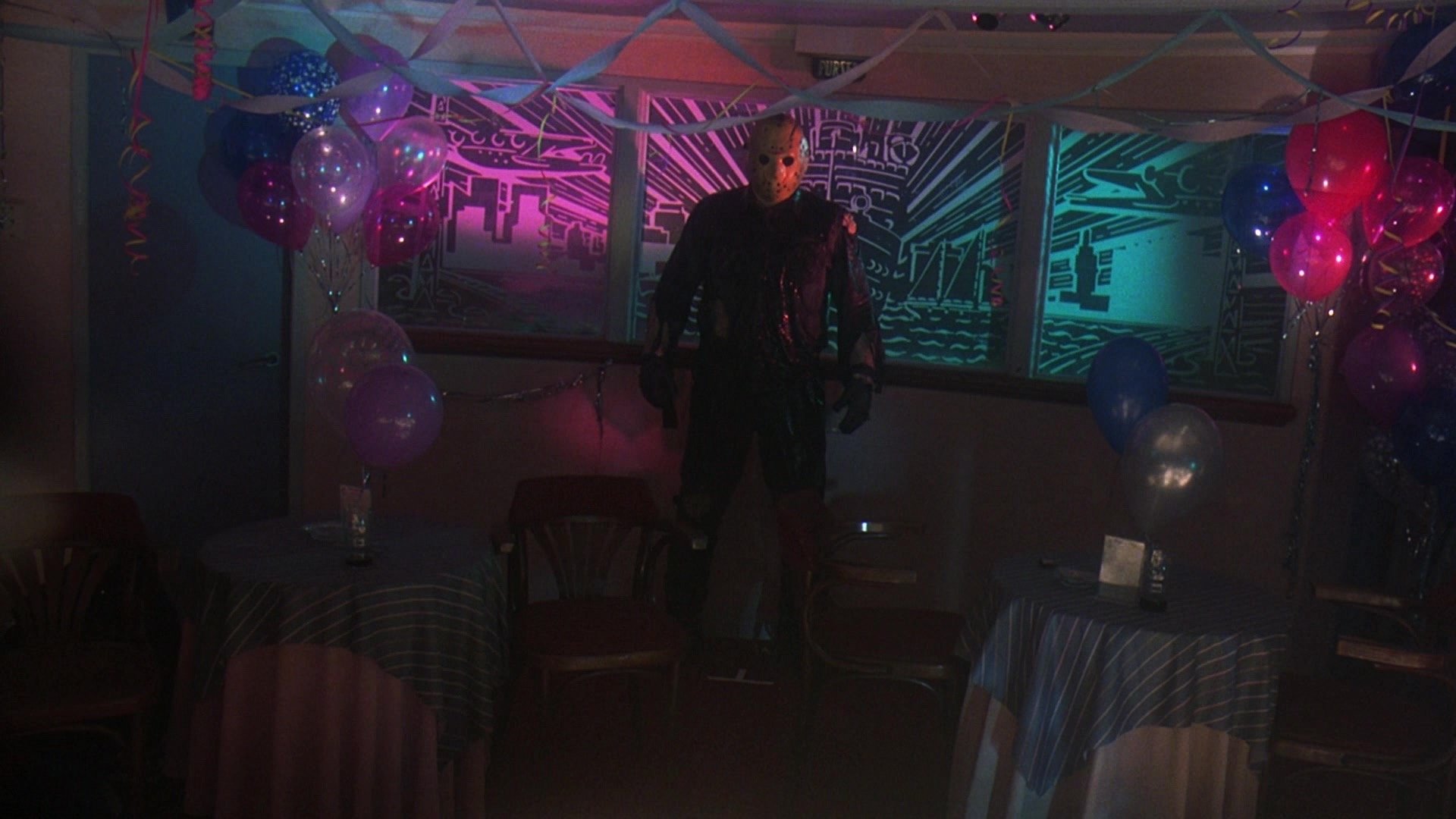
The ship supplies a version of the isolated summer camp in an unfamiliar environment. Corridors, cabins, service rooms and decks divide the passengers into small groups, allowing Jason to appear without warning and disappear through the ship. Water surrounds the victims and makes ordinary flight difficult. The graduation trip moves from adolescent celebration to panic as passengers disappear. Although the location is unusual for the franchise, its enclosed geography preserves the mechanics of pursuit and separation that earlier chapters established in forests and cabins.

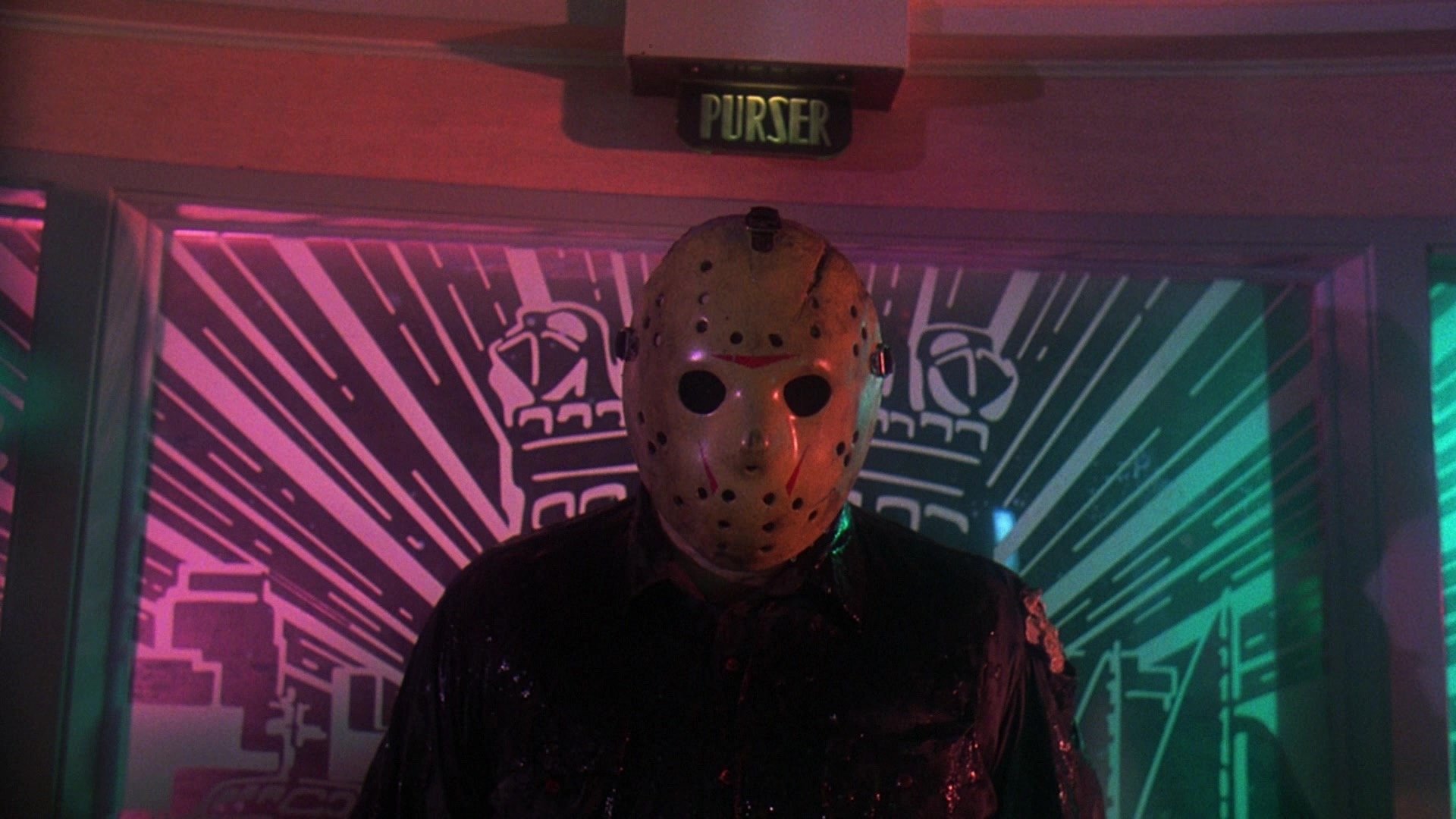
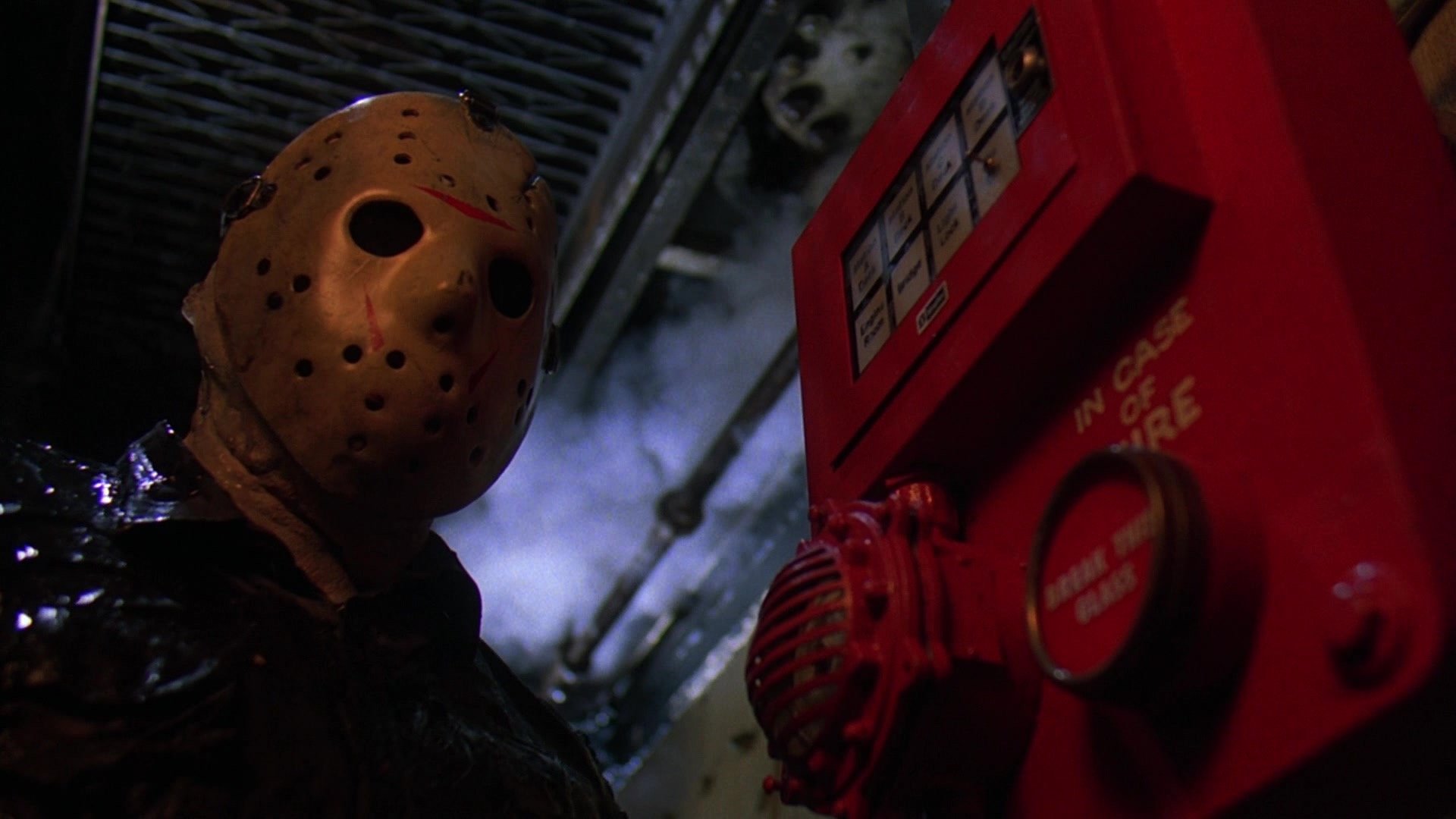
The setting introduces its own visual language. Metallic passageways and industrial fixtures give the film hard surfaces that contrast with Jason's damaged body. Crowded social spaces yield to empty corridors, while dark water repeatedly returns as a reminder of the killer's origins. A number of encounters exploit restricted space: Jason advances through rooms in which the characters have few plausible exits, and the camera can withhold his location until an attack begins. Cinematographer Bryan England's work gives the shipboard material a slicker, more controlled texture than the rough outdoor imagery associated with the earliest entries.

Yet the concentration of murders aboard the Lazarus produces a basic narrative imbalance. The title invites audiences to anticipate a prolonged confrontation between Jason and New York, but the city appears as the extended destination of the final act. Contemporary reviewers noticed the mismatch immediately. The resulting film can be understood as a sea voyage with an urban climax, an arrangement that turns Manhattan into a final arena instead of a fully developed setting. That distinction is central to evaluating the picture's production decisions without imagining that an entirely different, completed New York version exists.

Kane Hodder, Practical Violence and the Monster

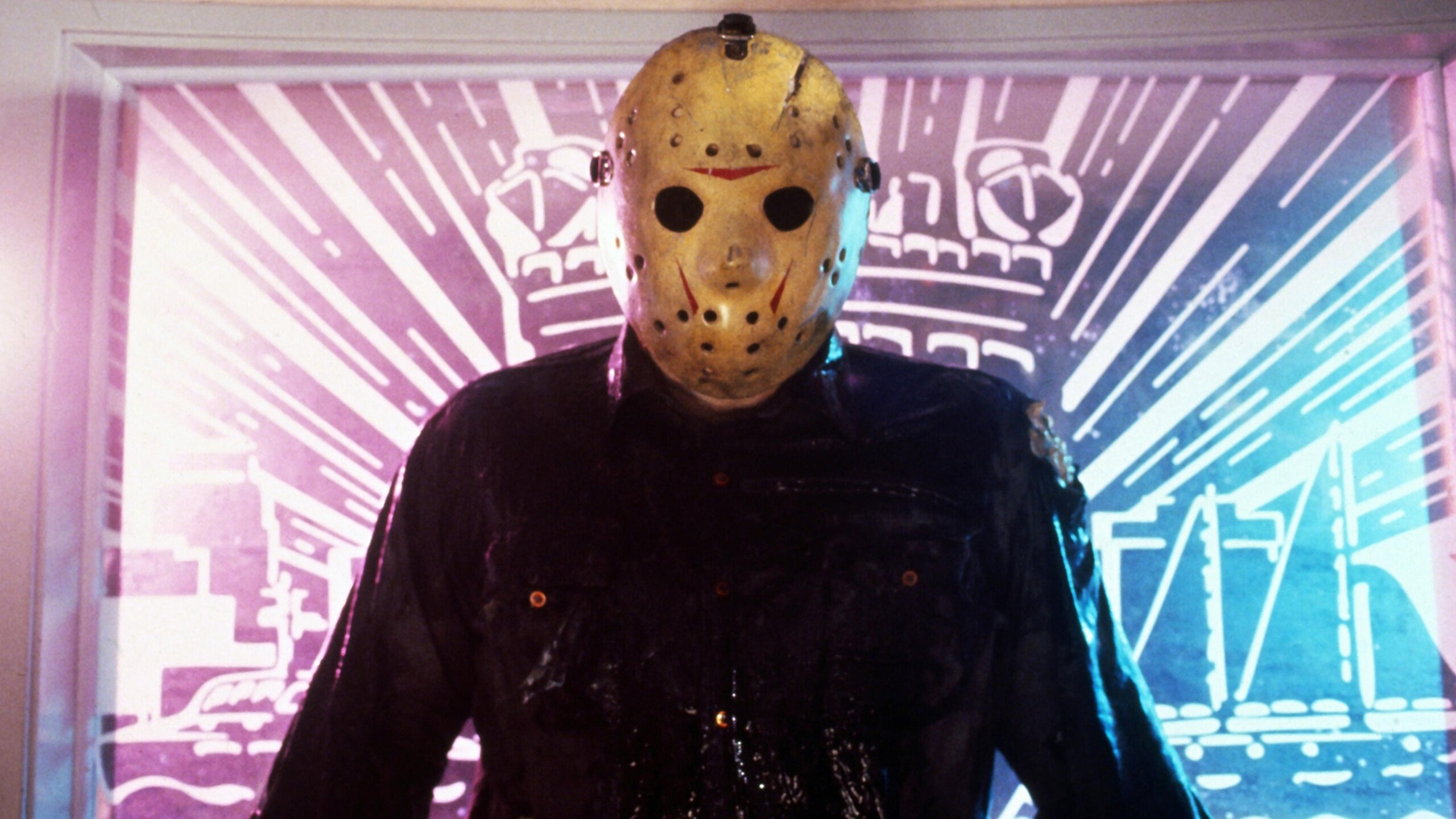
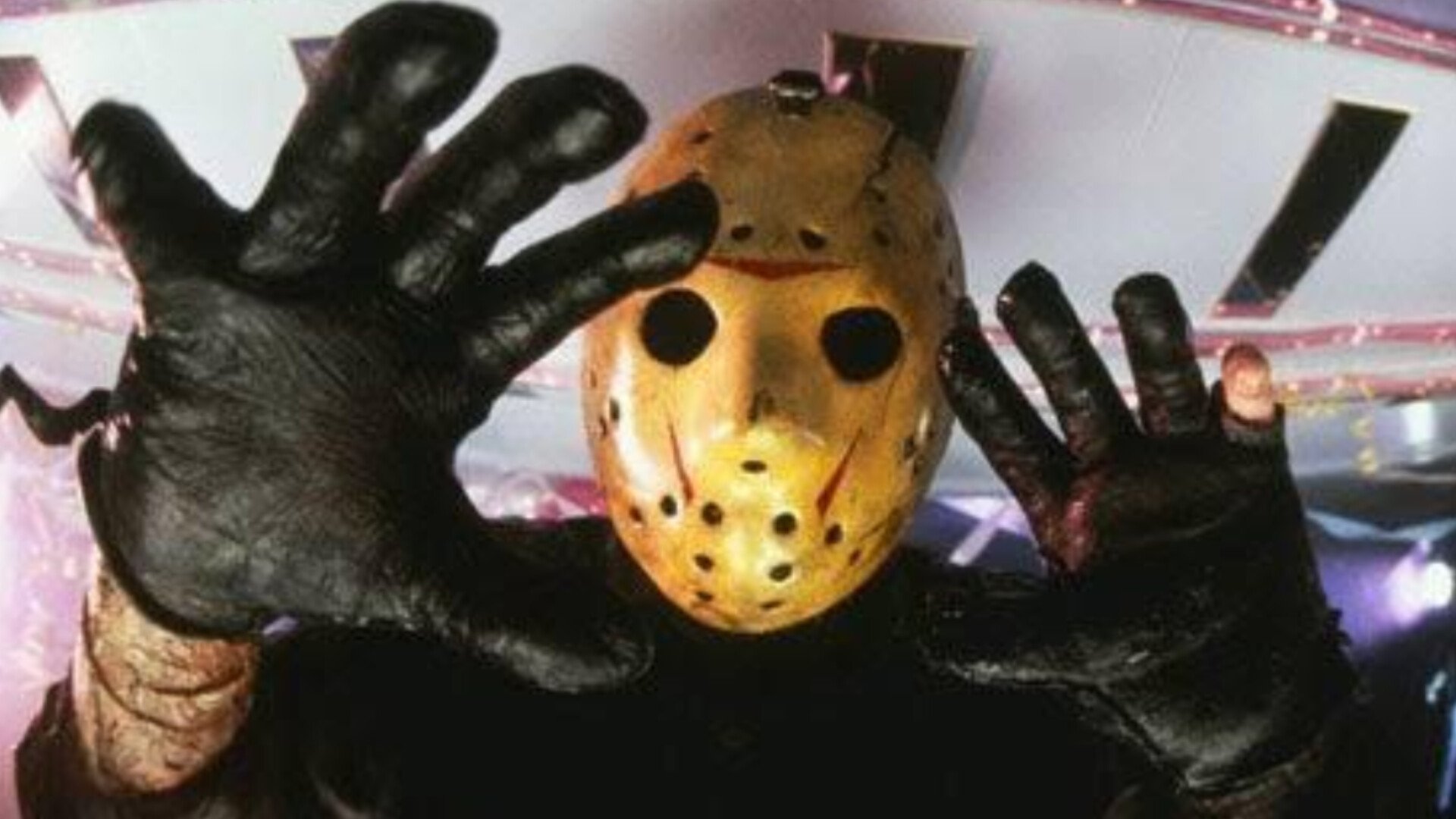
Kane Hodder's return gave the eighth film a physical continuity with The New Blood (1988). The sequel treats Jason as a submerged corpse returned to movement by an electrical accident. His ruined clothing, heavy posture and persistent wetness make the lake itself seem to travel with him. Hodder's performance relies on abrupt changes from immobility to attack, combined with a deliberate, forceful gait. The familiar mask becomes an emblem of a supernatural body that no longer responds to physical injury in ordinary ways.

One of the film's most memorable encounters occurs after the survivors arrive in New York. Julius, played by Vincent Craig Dupree, confronts Jason on a rooftop with repeated punches before the killer ends the fight with a single blow. The fight relies on visible imbalance: Julius attacks a figure who barely reacts, while his courage cannot make the supernatural body vulnerable. In a 2009 interview, Hodder recalled receiving real punches from Dupree during the sequence, and both performers discussed the spectators watching their rooftop work. These specific memories ground an exaggerated screen death in the practical demands of staging physical action.

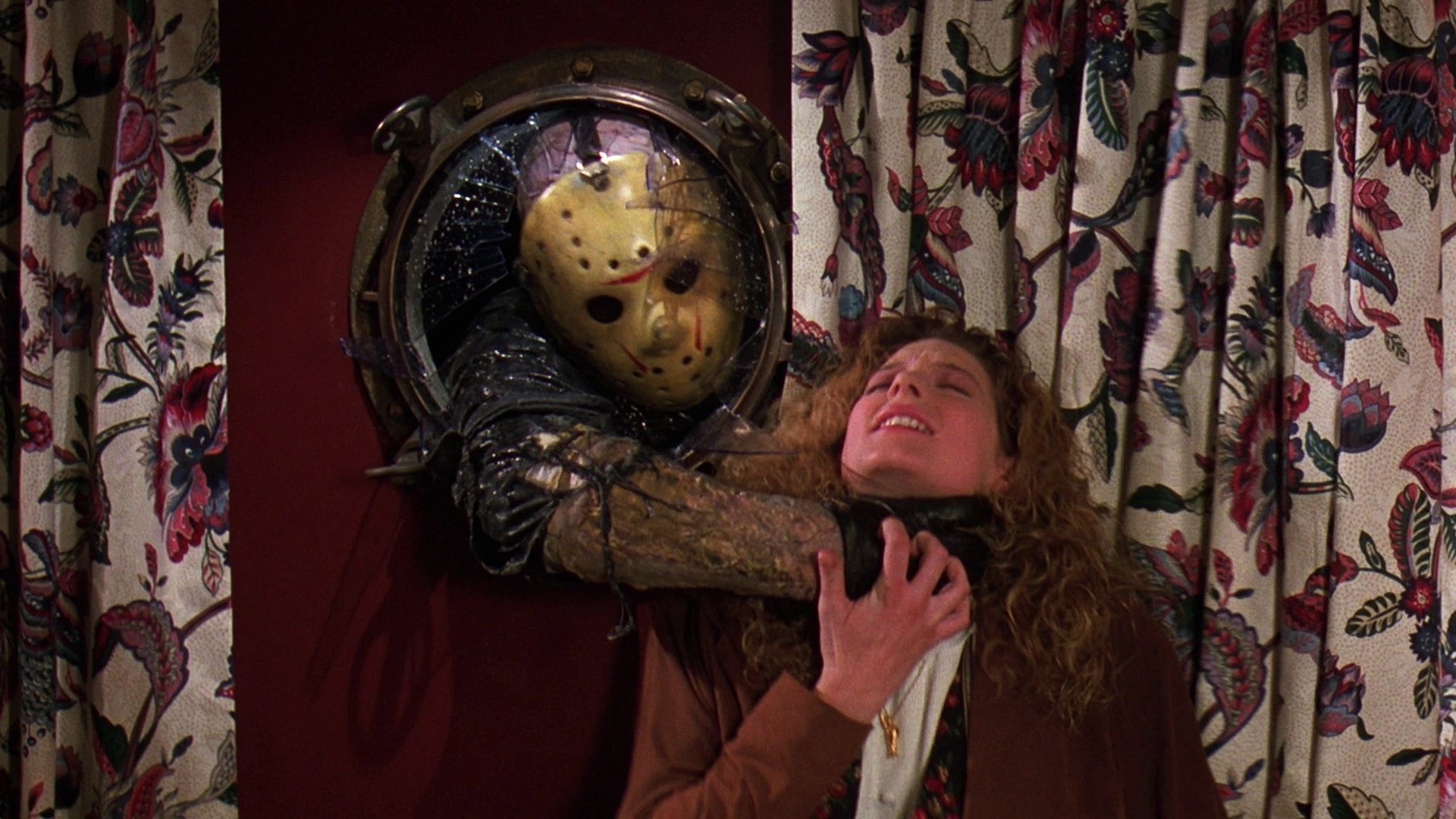
The murders mix improvised objects with the methods already familiar from earlier installments. A harpoon, broken glass, a sauna heater and other elements of the immediate environment become instruments of violence. Practical makeup and editing determine how much impact is actually shown. Hedden has discussed violent material removed or shortened during the rating process, while surviving home-video supplements preserve some deleted or extended scenes. Such evidence supports the existence of photographed alternatives; it does not establish that an authoritative, complete unrated edition of the film was ever finished.

Rennie Wickham, Childhood Fear and the Image of Manhattan

Jensen Daggett's Rennie Wickham gives the film a heroine whose connection with Jason is mediated by childhood memory. Her fear of water has roots in an earlier traumatic experience, and recurring visions of a drowning boy complicate the boundary between recollection and hallucination. These images move the narrative away from the straightforward question of which student Jason will attack next. They suggest that Rennie carries the setting of Crystal Lake psychologically even after leaving it. The device adds a dreamlike strand to a sequel otherwise organized around movement from one physical location to another.

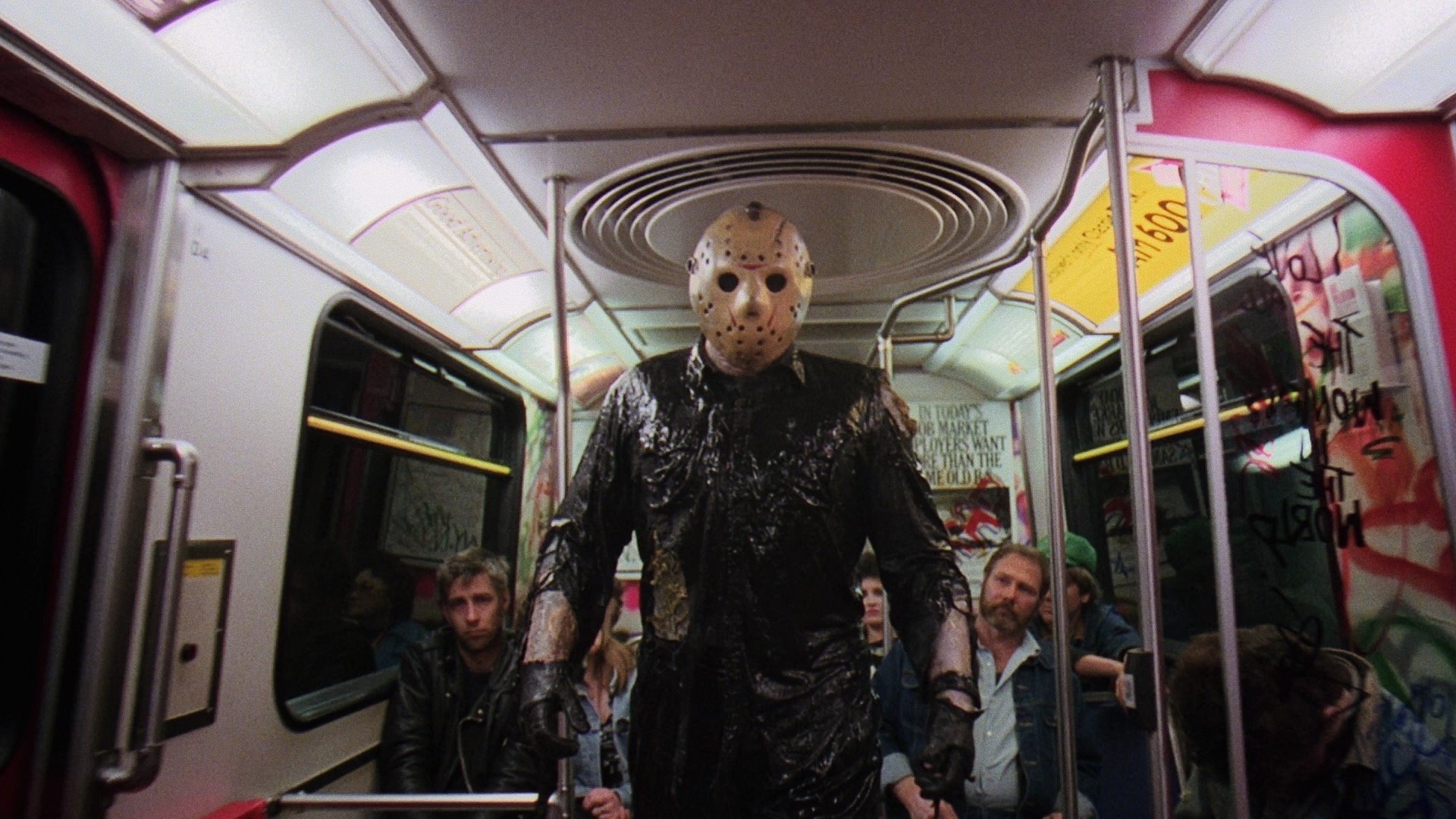
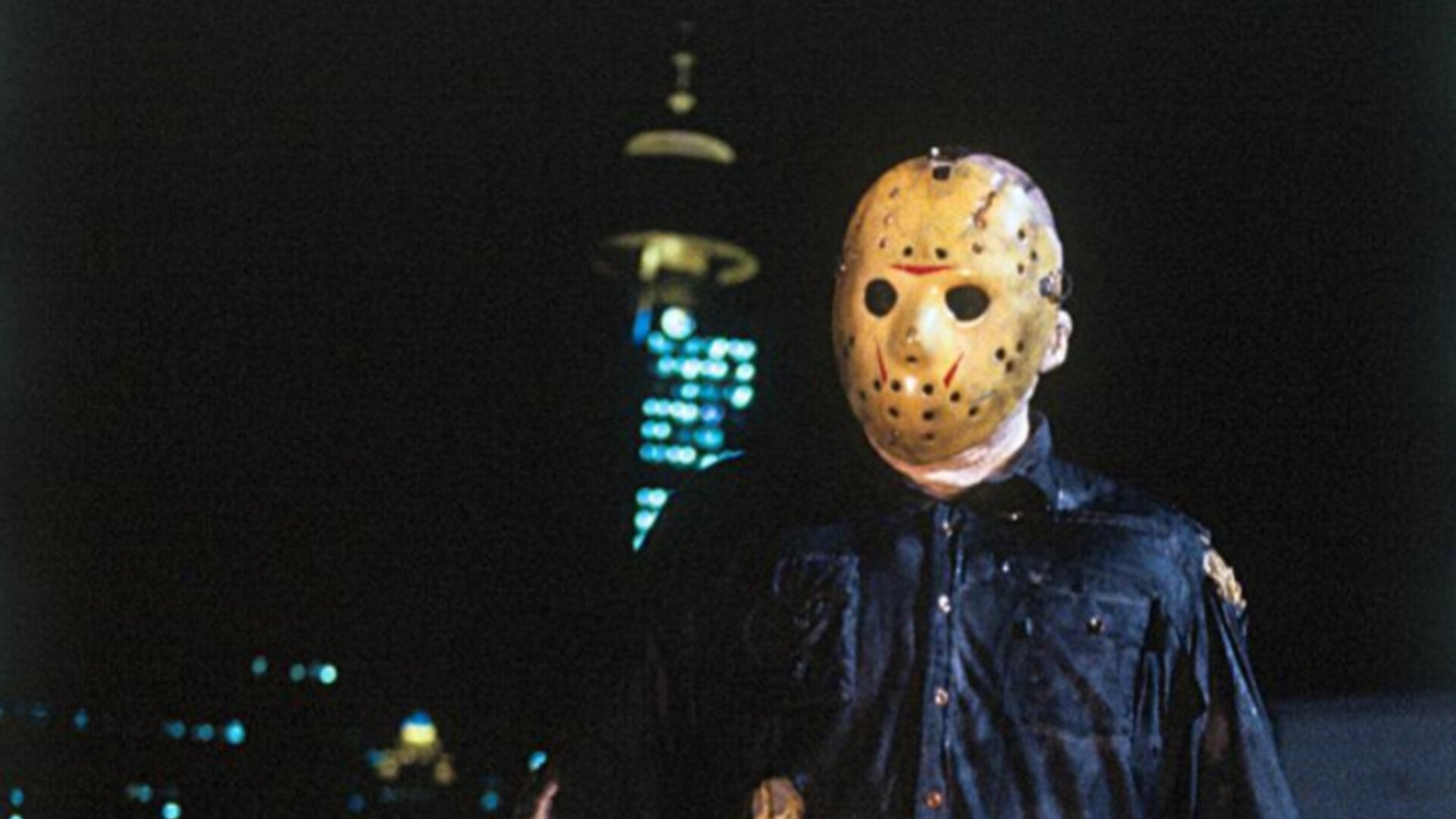
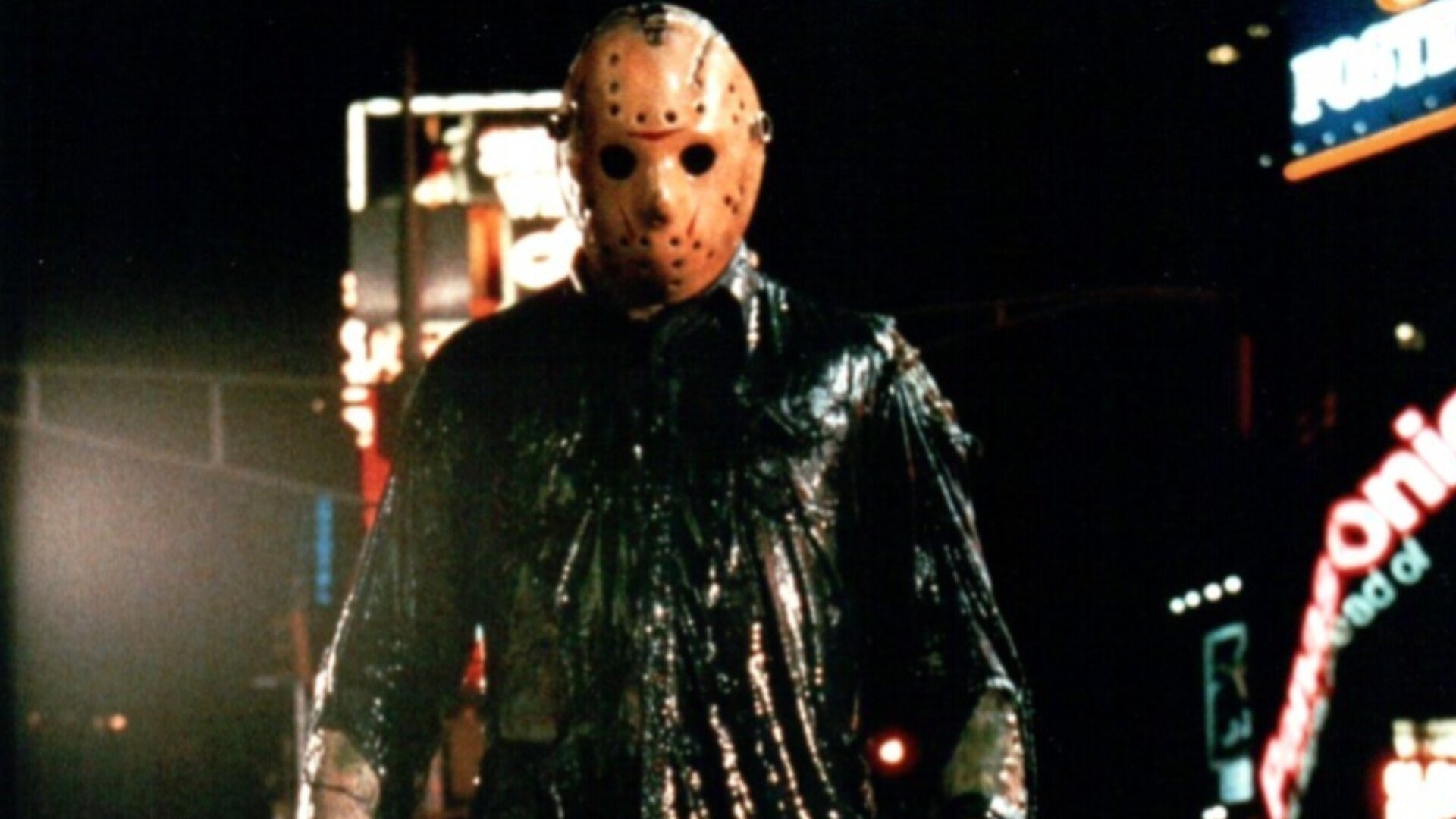
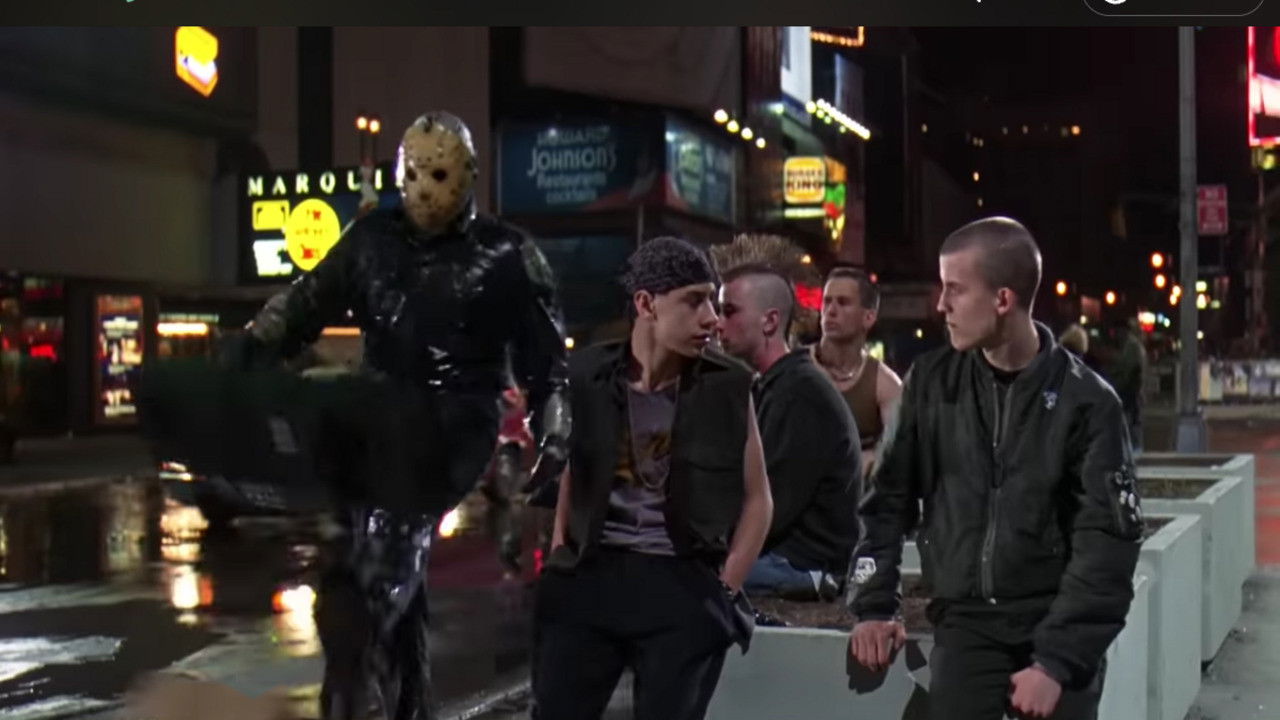
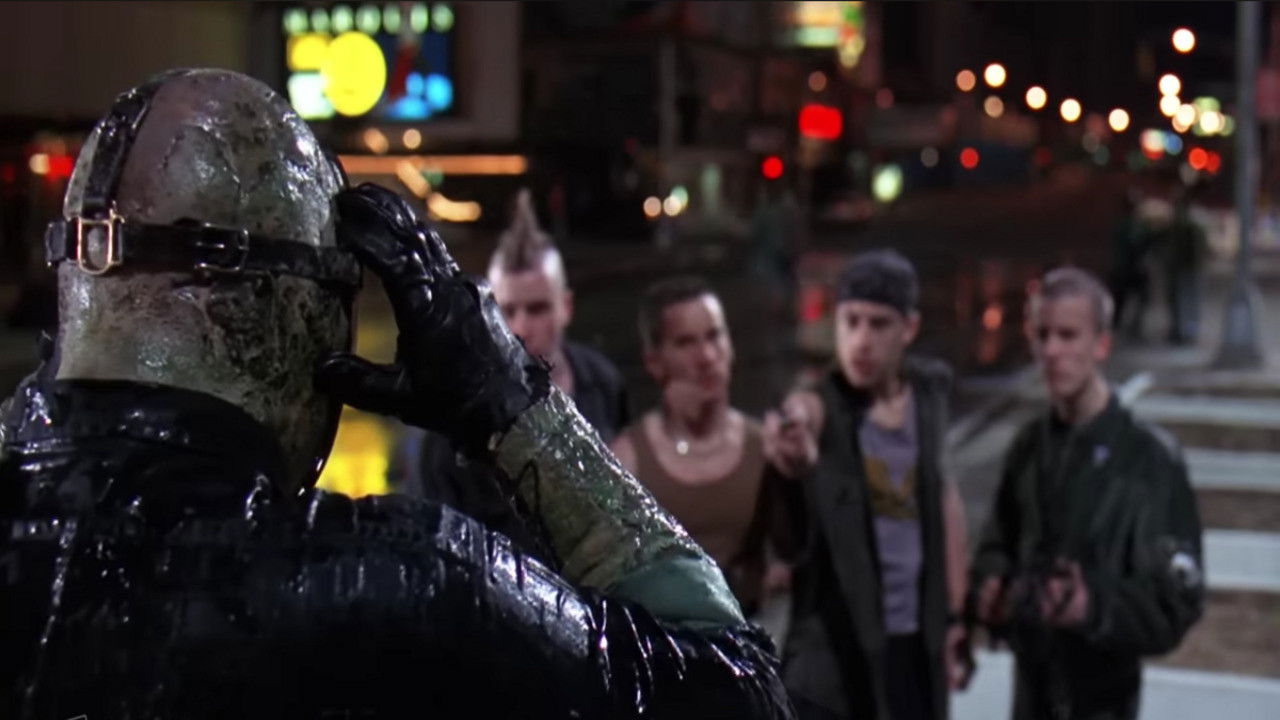
The film's version of Manhattan is highly selective. Crowded streets and illuminated landmarks coexist with deserted alleys, threatening strangers and subterranean spaces. When Jason finally appears in Times Square, the image briefly realizes the extravagant premise announced by the poster campaign: a rural horror icon standing amid urban light and ordinary pedestrians. Hodder later recalled the extraordinary public attention surrounding the night shoot. The sequence demonstrates what the New York concept could achieve, even though much of the surrounding city material was produced elsewhere.

After the ship's restrictions, the open city might appear to offer safety through crowds and numerous escape routes. Hedden instead steers the survivors toward confrontations in places that resemble conventional horror traps, especially the sewers. The climax's toxic flood and the apparition of a younger Jason draw together the film's imagery of water, buried memory and bodily transformation. The ending has prompted disagreement because it appears to alter the adult monster's body with little explanation. Its imagery is open to interpretation, but the release does not supply a stable account of Jason's metaphysical condition.

Music, Production Design and the Released Version

Fred Mollin provided the score, succeeding Harry Manfredini as the principal composer for this installment. The film's credits also acknowledge Manfredini for the original Jason sound effect, retaining an audible connection to the series' established identity. Mollin's music operates within a picture that moves between youth-oriented entertainment, mechanical interiors and a nocturnal city. The song The Darkest Side of the Night, written by Mollin and Stan Meissner, frames the action with a late-1980s rock sensibility. Its presence signals the production's attempt to contemporize the franchise's sound.

The credited production departments reveal how extensively location work and fabricated environments supported the central journey. AFI identifies David Fischer as production designer, Steve Mirkovich as editor and several separate teams for miniature, underwater and photographic effects. These contributions matter particularly during the final stretch, when underground passages and industrial spaces provide an exaggerated vision of Manhattan. The film relies on controlled lighting and practical construction to make disparate locations feel continuous. Its artificiality sometimes exposes the budget restrictions, but it also lends the urban episodes an atmosphere of stylized nighttime danger.

The theatrical feature was classified R and ran approximately one hundred minutes. Discussion of cut violence should remain distinct from claims about versions in circulation. The existence of alternate takes, excised effects or deleted dialogue does not automatically prove that a longer finished cut was released. Nor can a home-video running time be interpreted as evidence of censorship without checking frame rate, editorial changes and classification documentation. The historically verifiable object remains the version Paramount opened theatrically in July 1989, supplemented by production testimony about material left out.

The 1989 Release, Marketing Dispute and Legacy

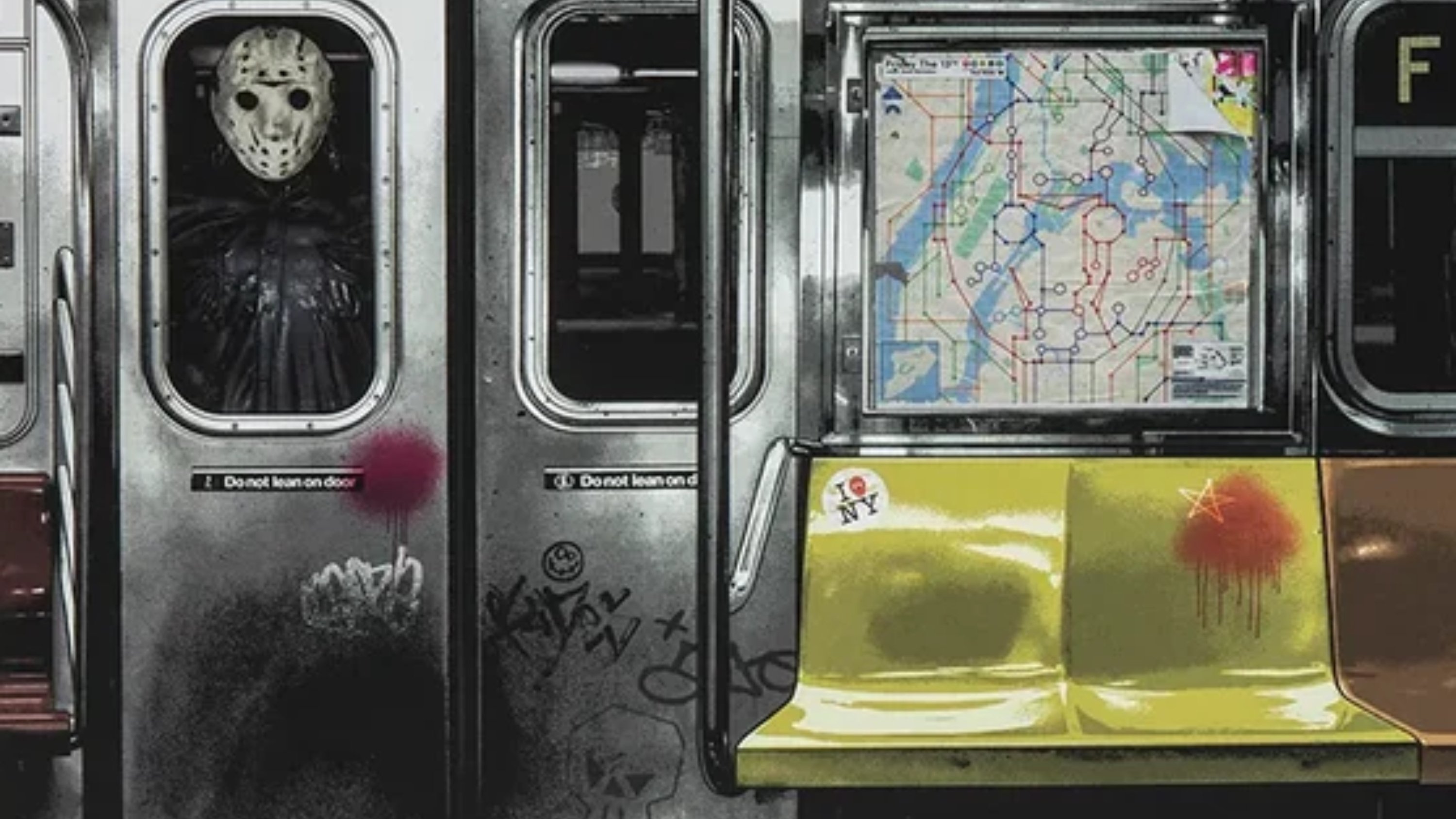
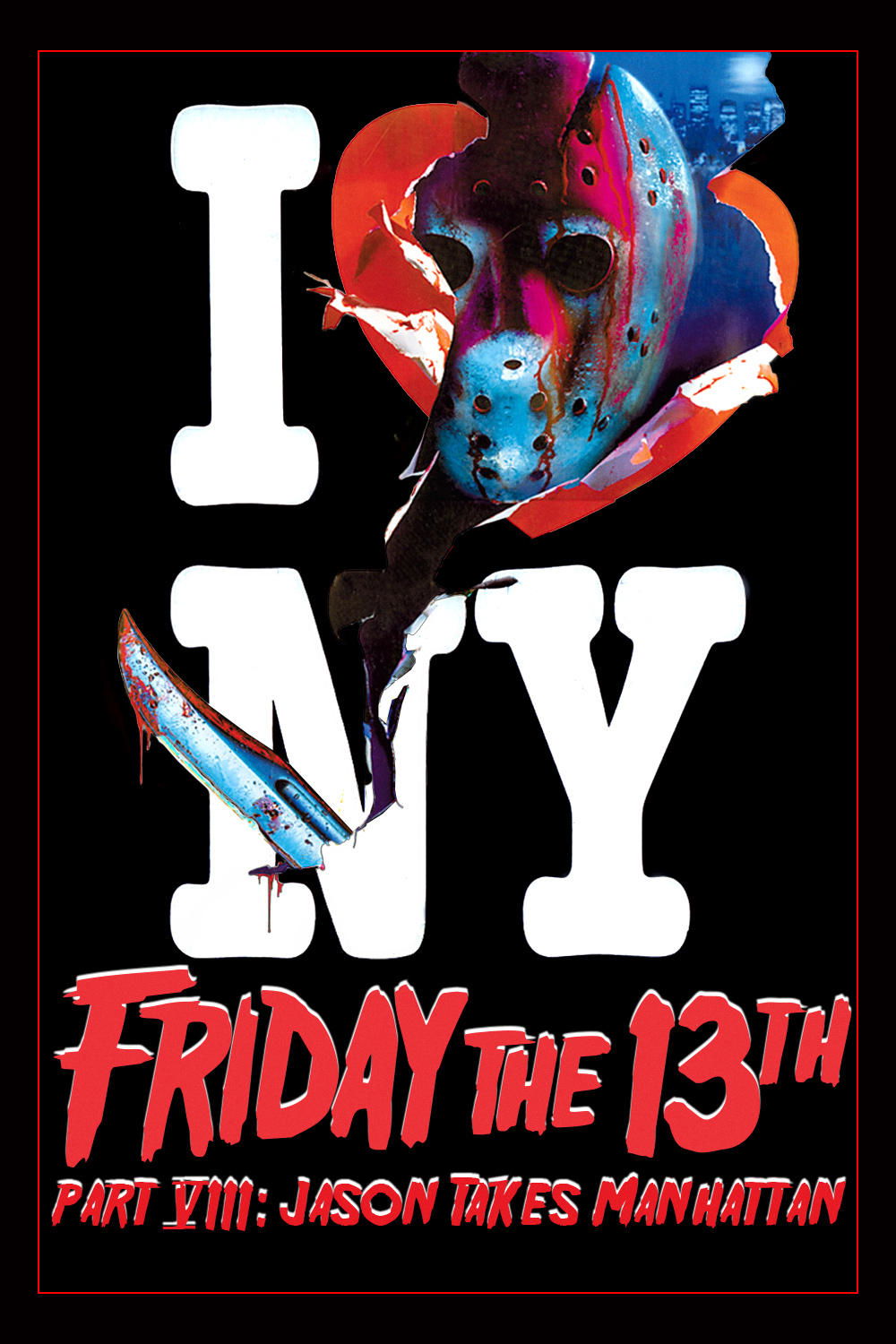
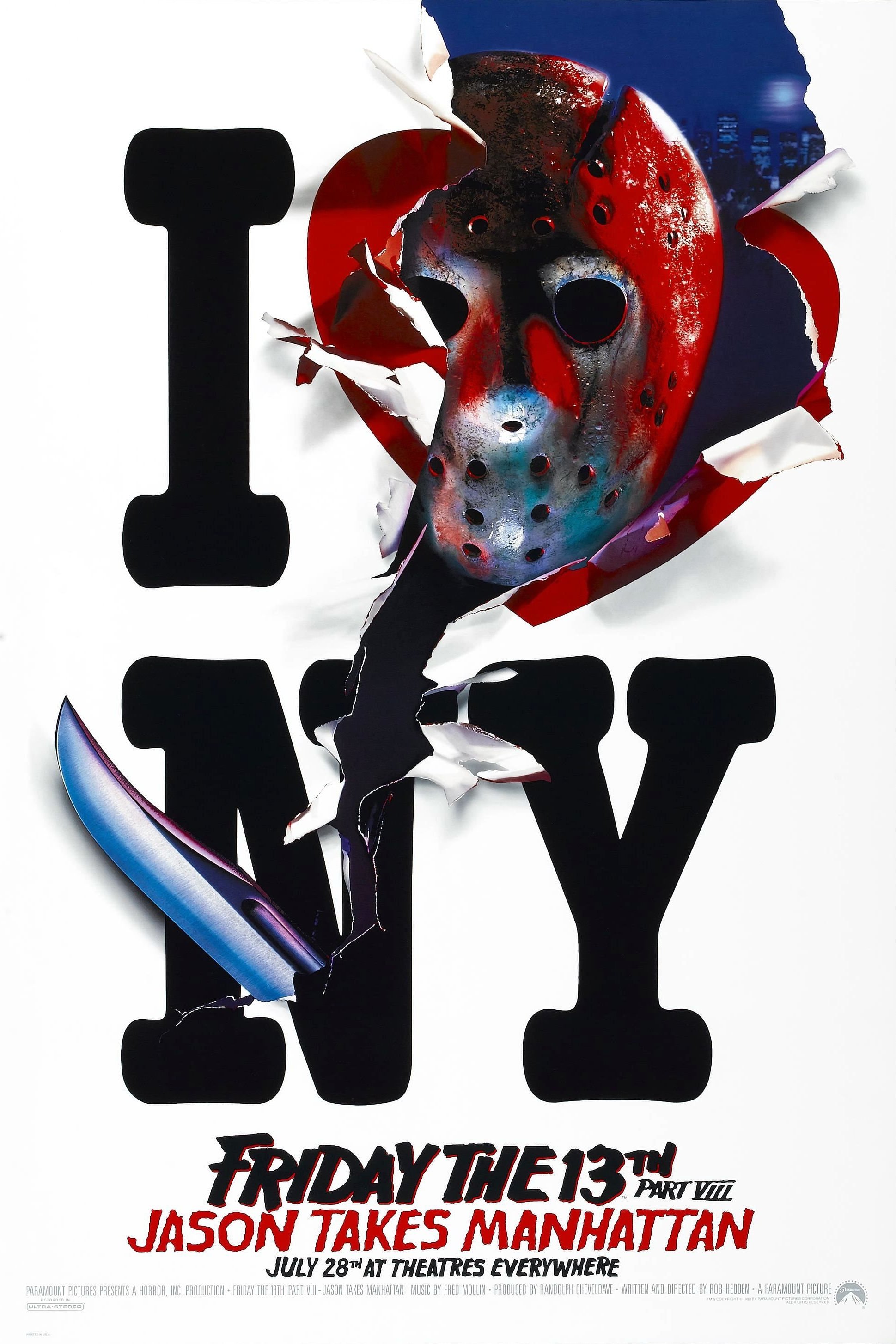
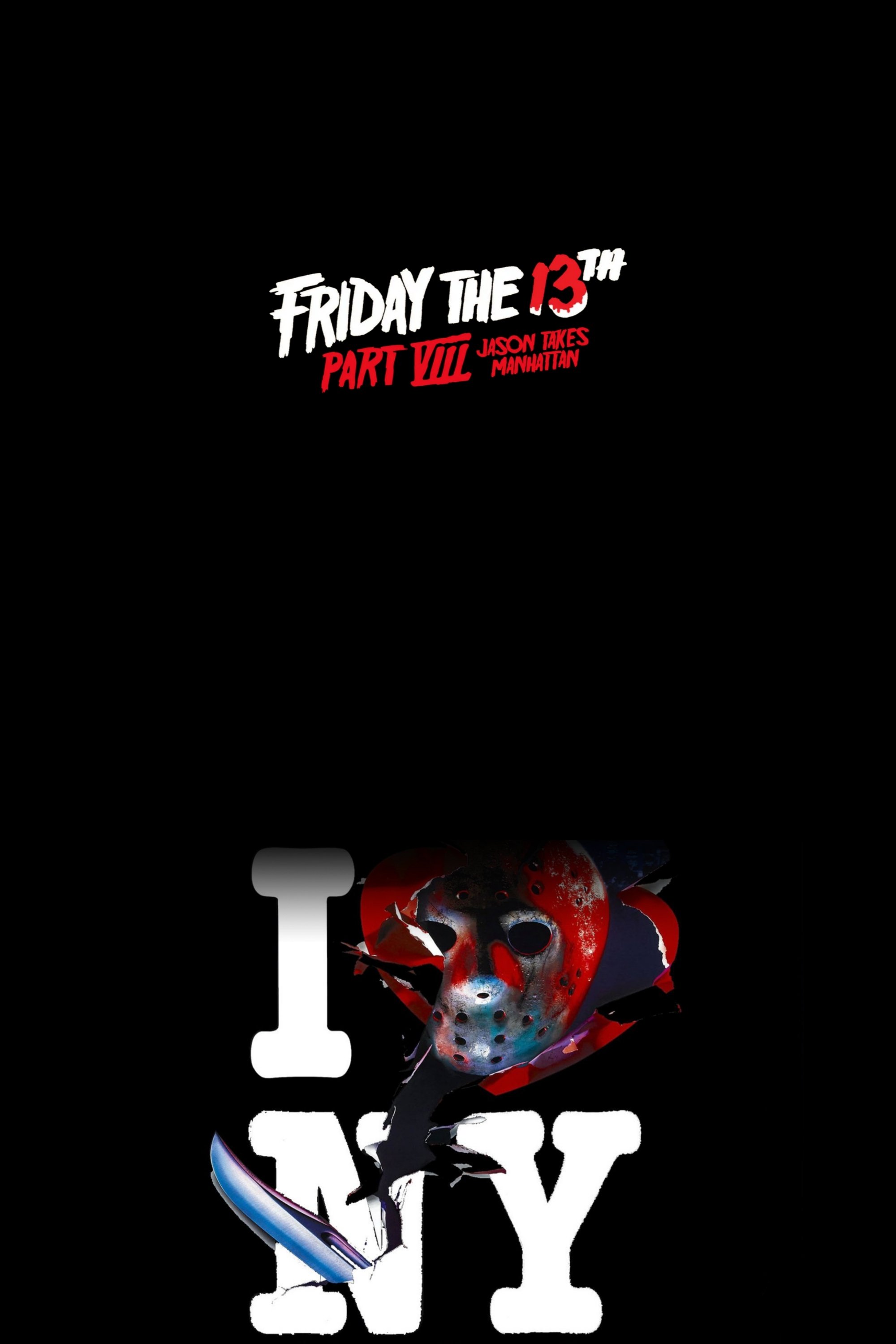
Paramount opened the eighth Friday sequel in American theaters on July 28, 1989. AFI's history identifies a budget slightly above five million dollars and records substantial advertising expenditure in print and television. A particularly visible poster showed Jason damaging the I Love New York logo. State officials objected to the unauthorized use of the protected design and threatened legal action; the campaign withdrew the offending artwork. The episode shows how the urban premise functioned as a promotional attraction even before the film reached theaters.

The response from contemporary critics was harsh. In his July 31, 1989 Los Angeles Times review, Chris Willman attacked both the familiar slasher routine and the restricted use of the advertised city. The review criticized Canadian locations standing in for Manhattan and the long passage of screen time required to reach New York. Its objections were therefore directed at the same disconnect that had emerged during development. A production can offer a new marketing hook while maintaining an old structural formula, and Part VIII made that contradiction unusually visible to reviewers.

The film subsequently gained a recognizable place in debates about the franchise's declining late-1980s fortunes. Its historical value is specific: it documents an attempted geographic expansion whose commercial logic exceeded what the budget permitted. Decades later, the producers of Scream VI said they studied Jason Takes Manhattan while preparing their own city-set slasher and made a point of avoiding its lengthy shipbound detour. Their explicit comparison demonstrates the durability of Part VIII as a cautionary reference for filmmakers using a major city as a horror setting.

References

  1. American Film Institute Friday the 13th Part VIII: Jason Takes Manhattan - AFI Catalog

    Filmography and archival production history documenting the locations, contemporary budget reporting, theatrical release, credits and the disputed New York poster.

  2. Friday the 13th: The Website Crystal Lake's Bloody Legacy, Part 10: Jason Takes Manhattan (1989)

    Christian Sellers reconstructs the evolving New York concept, the Vancouver shoot, casting, staging and changes made to Hedden's initial screenplay.

  3. Dread Central Making the New Friday the 13th DVD's Truly Deluxe

    Heather Wixson's September 2009 roundtable with Kane Hodder and Vincent Craig Dupree, covering the real punches during Julius's rooftop fight and the spectators watching the New York filming.

  4. Los Angeles Times Movie Review: Friday the 13th: A Side Trip to Manhattan

    Chris Willman's July 31, 1989 review documents contemporary criticism of the shipboard structure and the limited use of actual New York locations.
  5. Entertainment Weekly Scream VI Filmmakers Studied Jason Takes Manhattan

    Direct 2023 comments from the Scream VI filmmakers about studying the earlier sequel and avoiding its delayed arrival in the city.

Connections

Cast

View Full Cast & Crew →

Release & Distribution

Production Companies (2)

  • Horror US
  • Paramount Pictures US

Distributors (1)

  • Paramount Pictures US

Release History (22)

Release DateTerritoryRelease TypeFormatDistributorCertificationNotes
1989-07-28 Finland Physical — — K-18
1989-07-28 Mexico TV — — C
1989-07-28 United States Theatrical — — R
1989-09-02 Japan Theatrical — — —
1989-10-26 Argentina Theatrical — — +18
1989-11-02 Uruguay Theatrical — — —
1989-11-15 Brazil Theatrical — — 14
1989-12-01 Australia Theatrical — — M
1989-12-01 Germany Physical VHS — 18 VHS (West Germany)
1990-02-22 Australia Physical — — M
1990-08-14 Philippines Theatrical — — — Davao
1990-09-27 Mexico Theatrical — — C
1995-11-23 Sweden TV — — 15 Femman Sverige
2002-09-03 Canada Physical DVD — — DVD
2002-12-03 Spain Physical DVD — — DVD
2002-12-04 Portugal Physical DVD — M/18 DVD
2002-12-04 Sweden Physical DVD — — DVD
2003-03-18 Greece Physical DVD — — DVD
2003-03-21 Finland Physical DVD — — DVD
2016-07-31 Poland TV — — —
2019-11-11 Germany Digital — — —
2019-11-11 Spain Digital — — 18 Amazon Prime Video
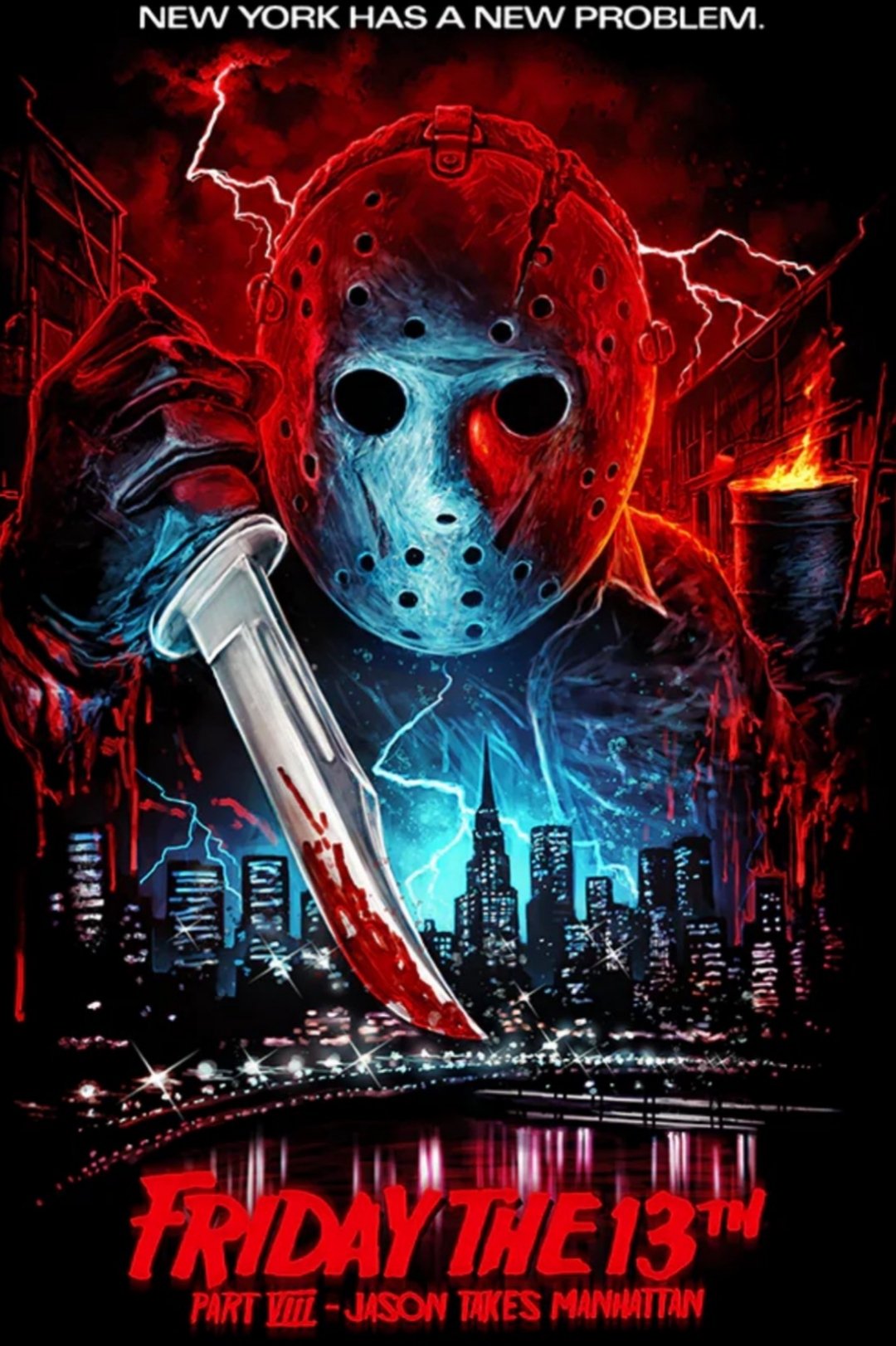
New York has a new problem.