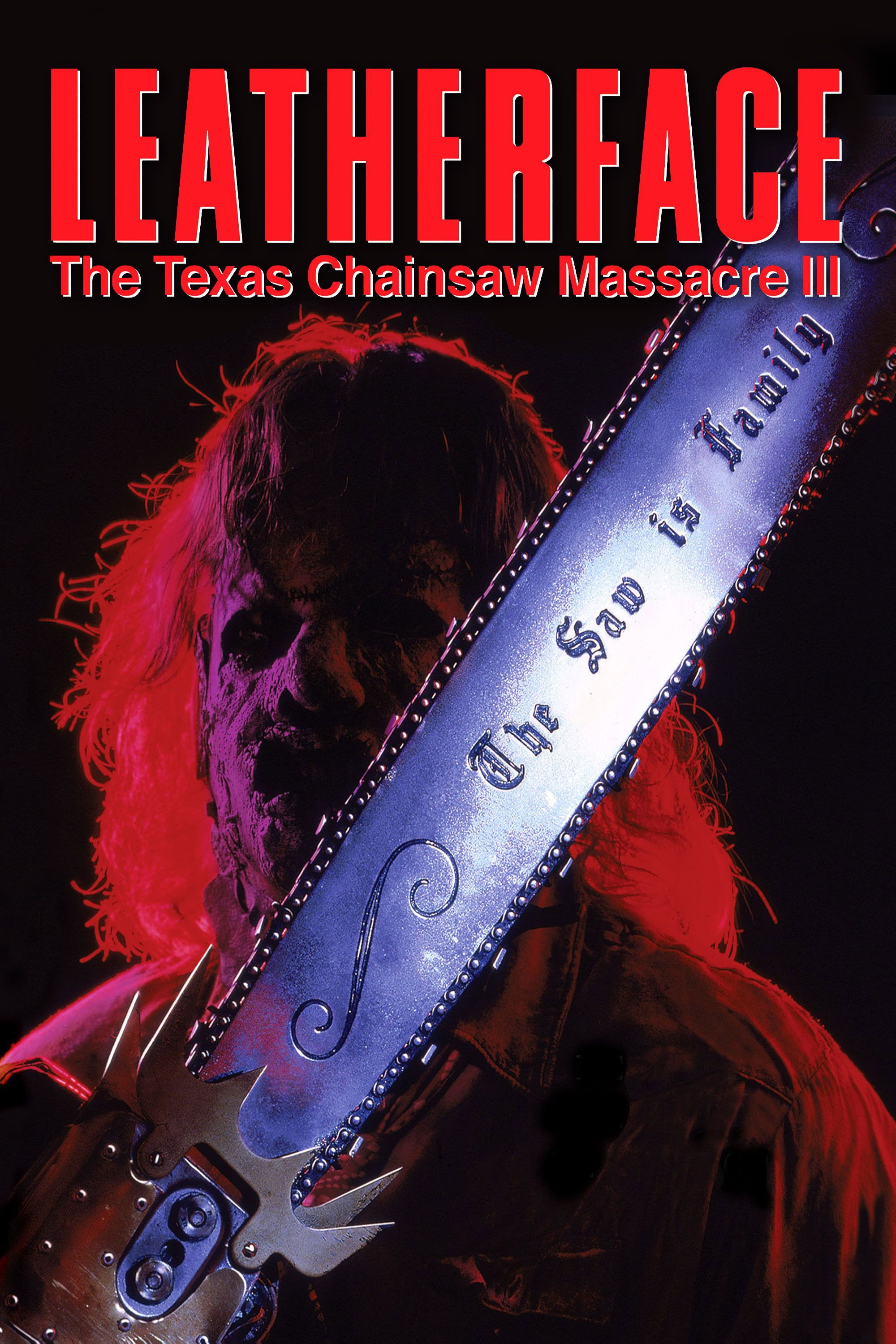
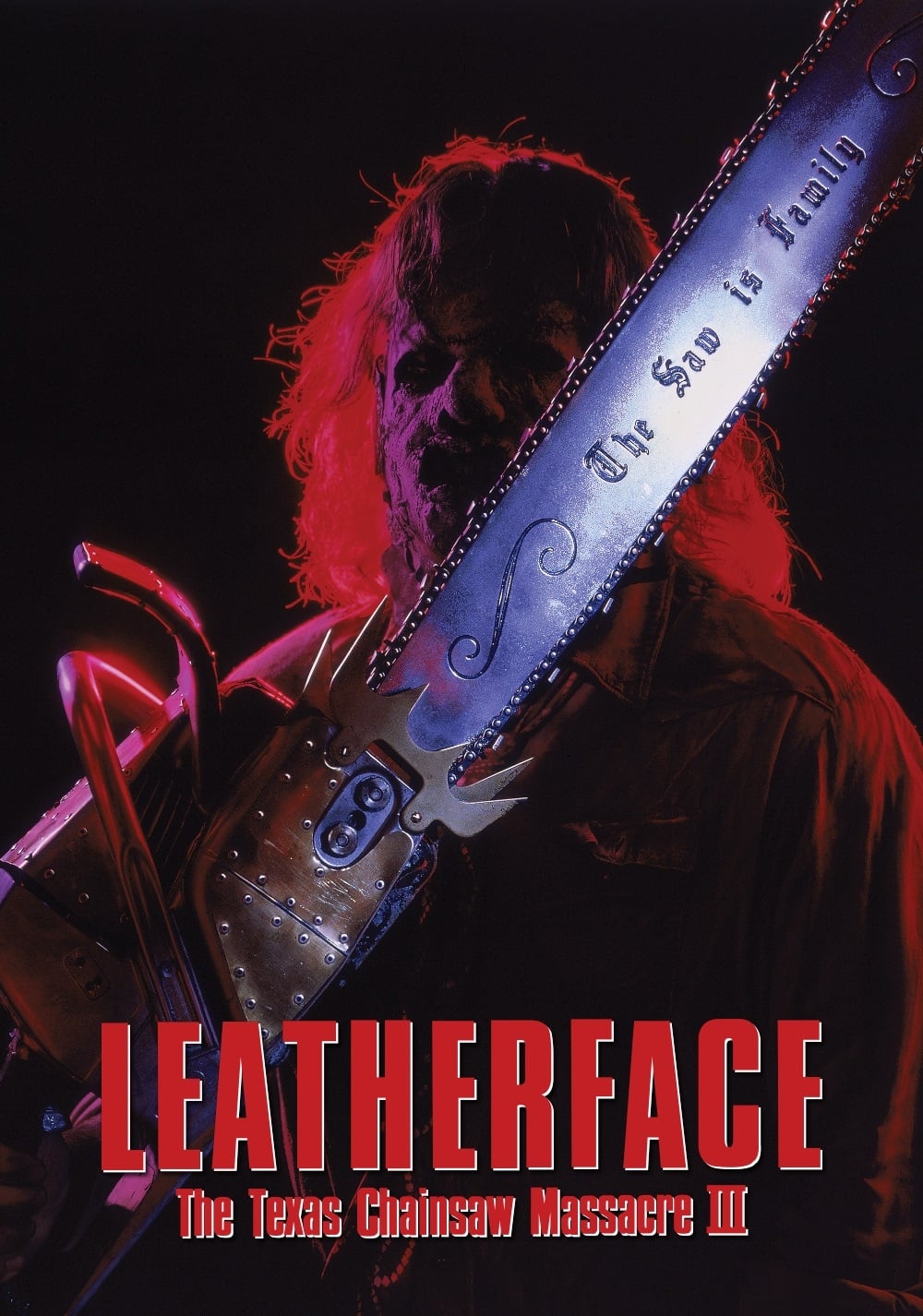
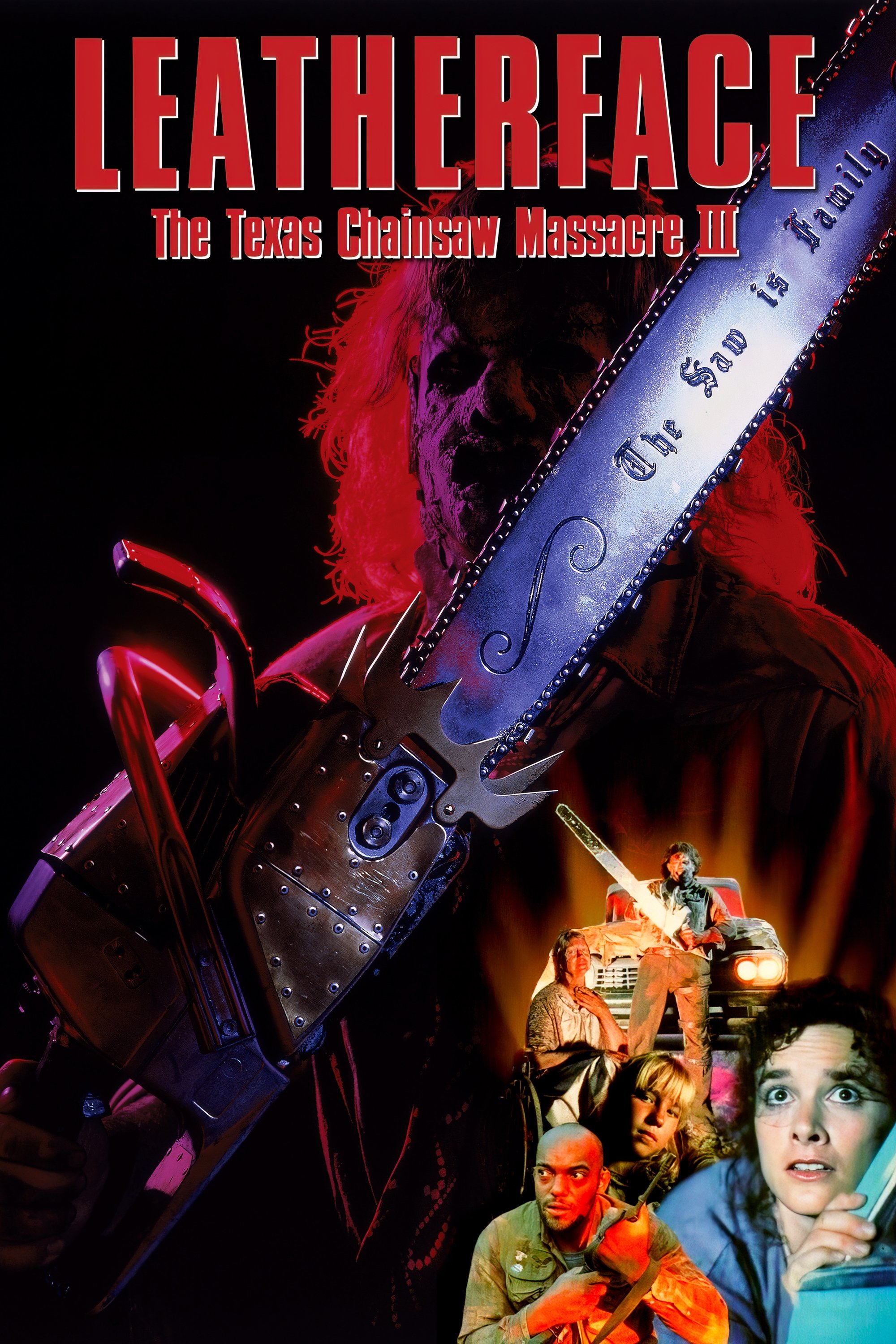
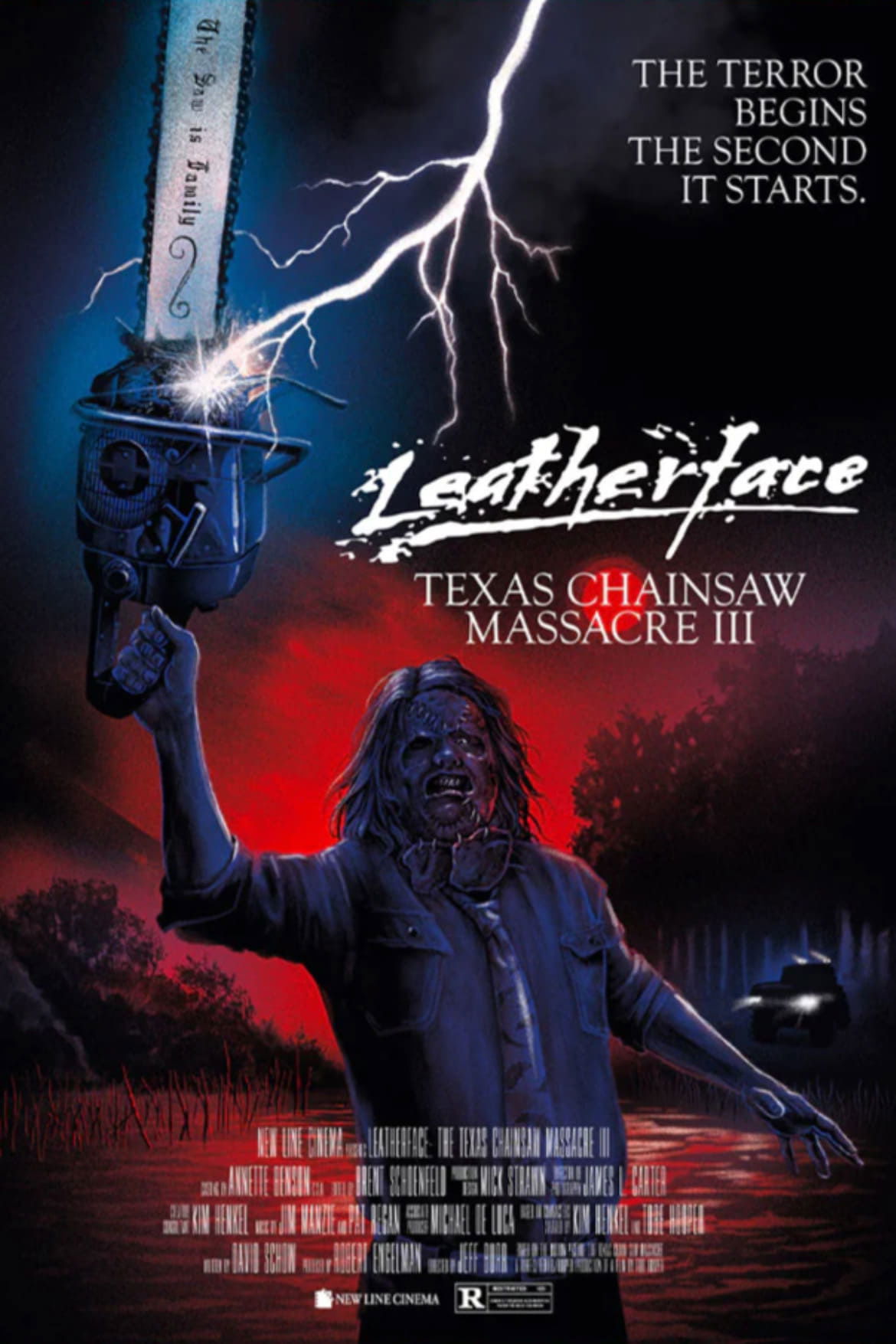
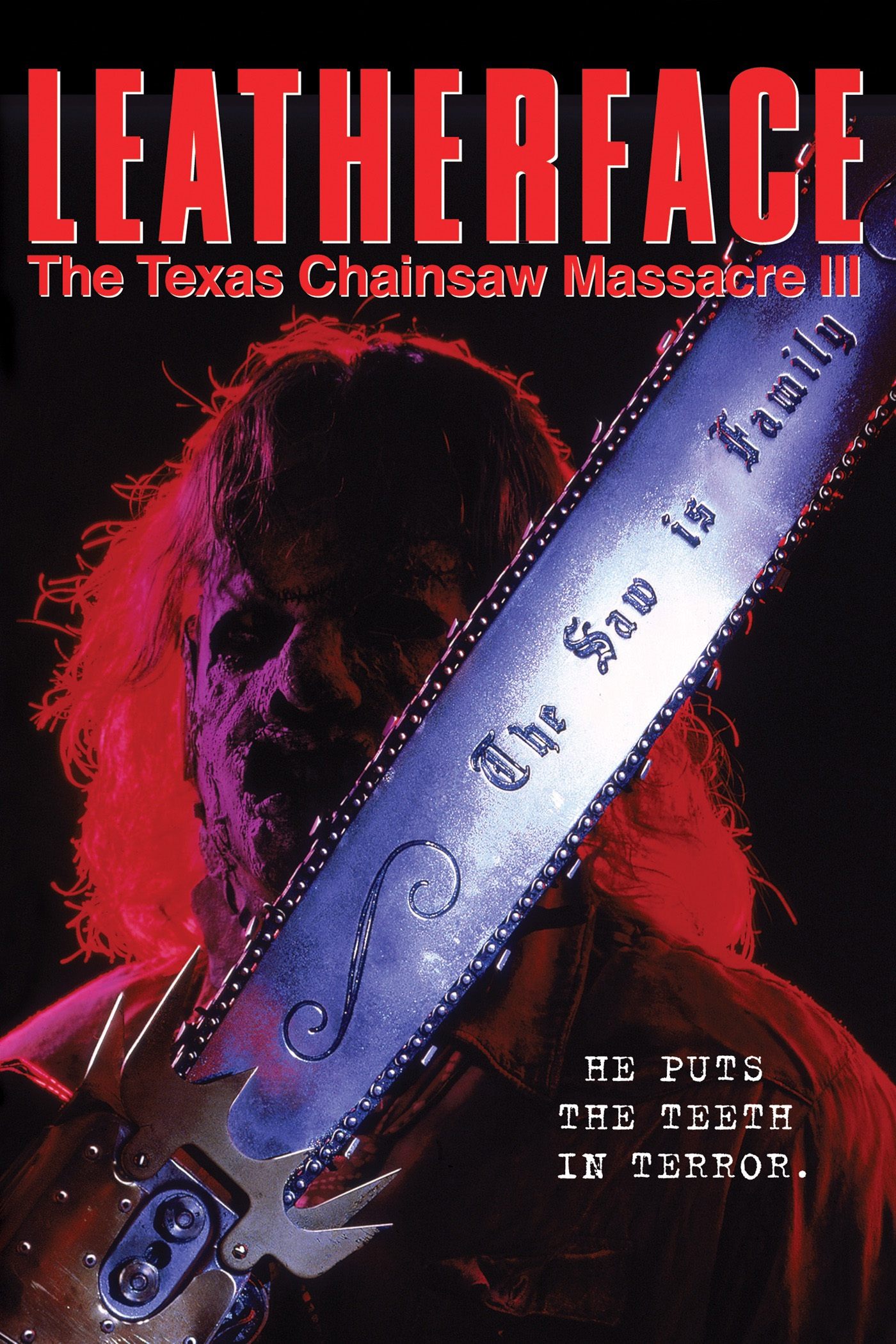
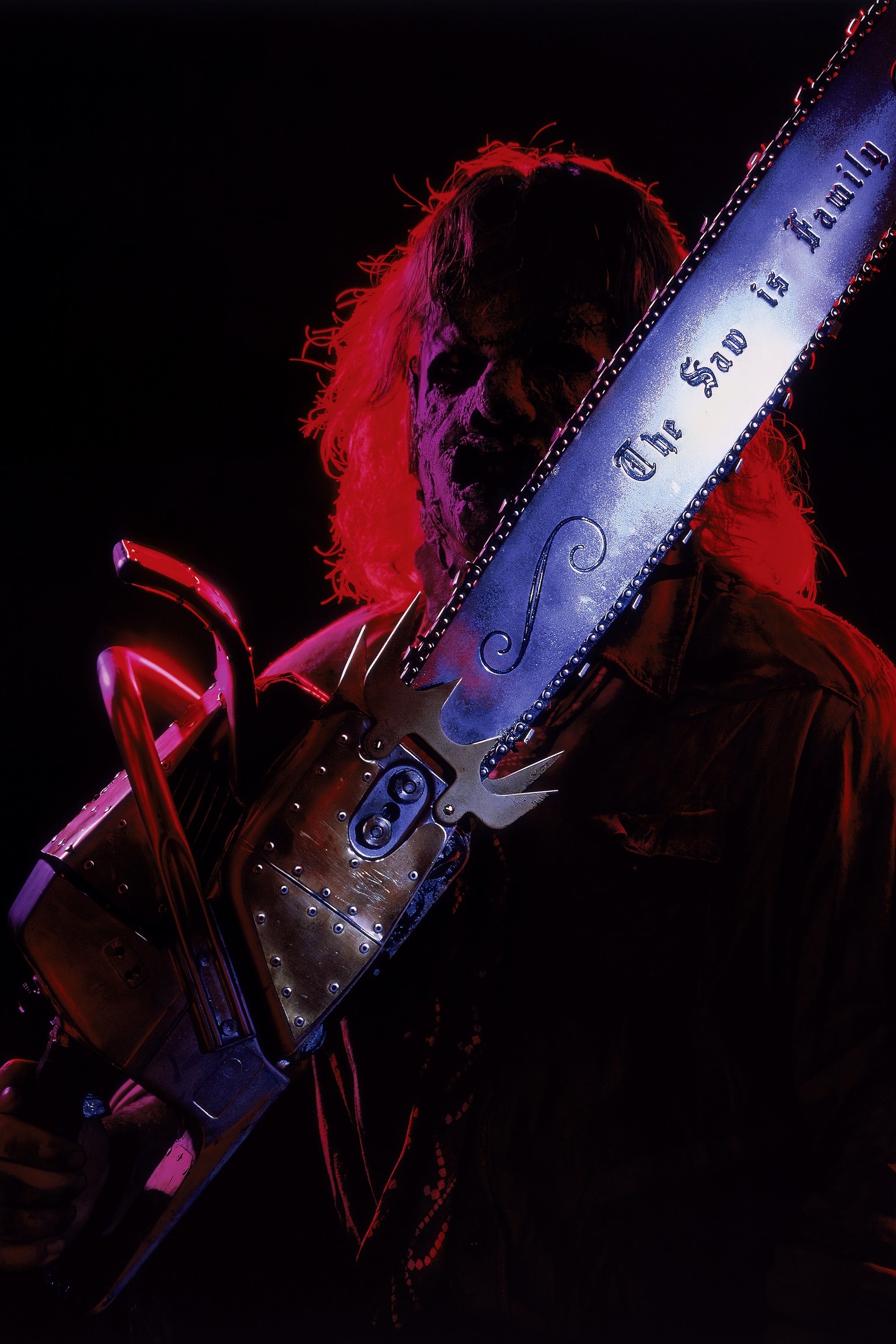
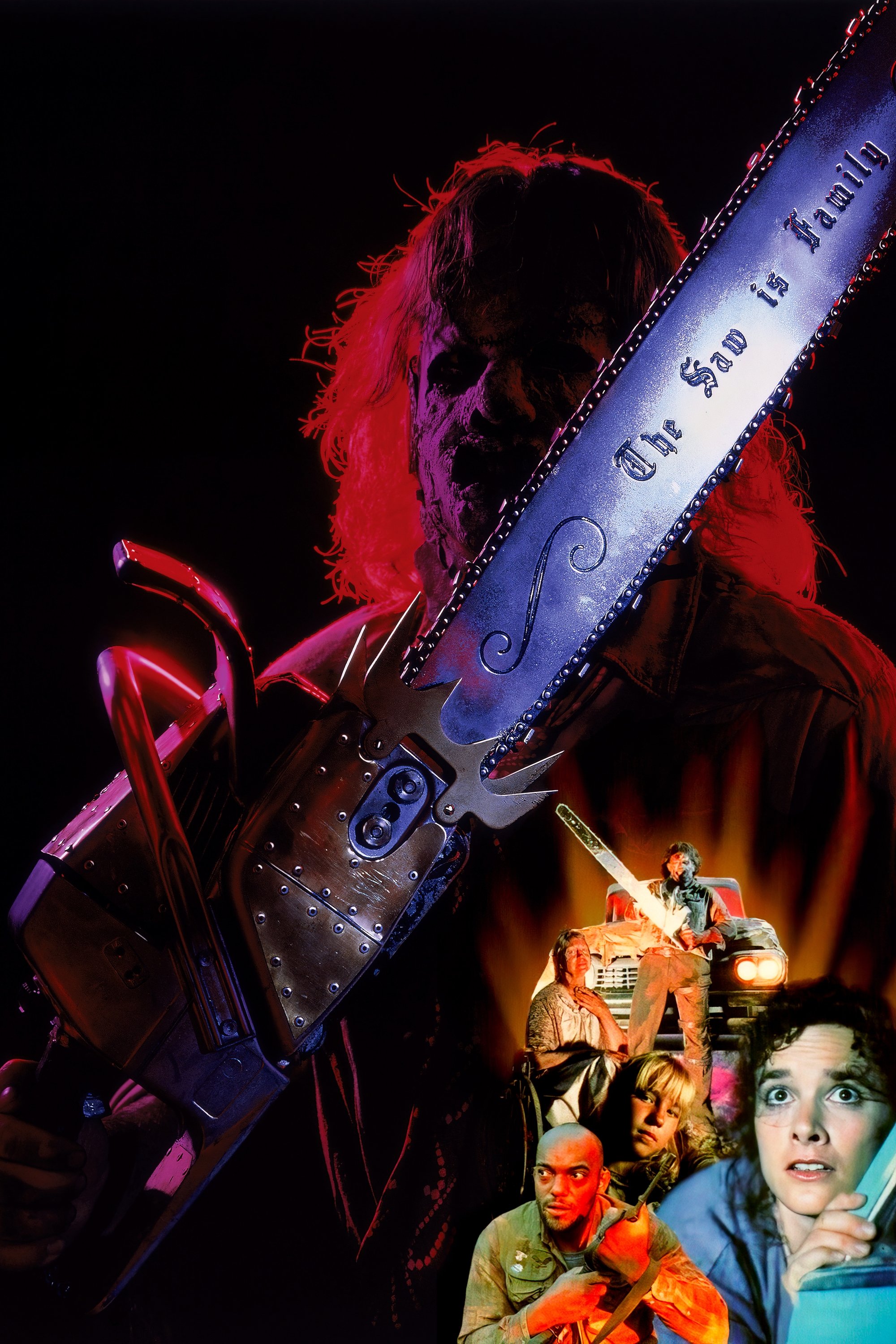
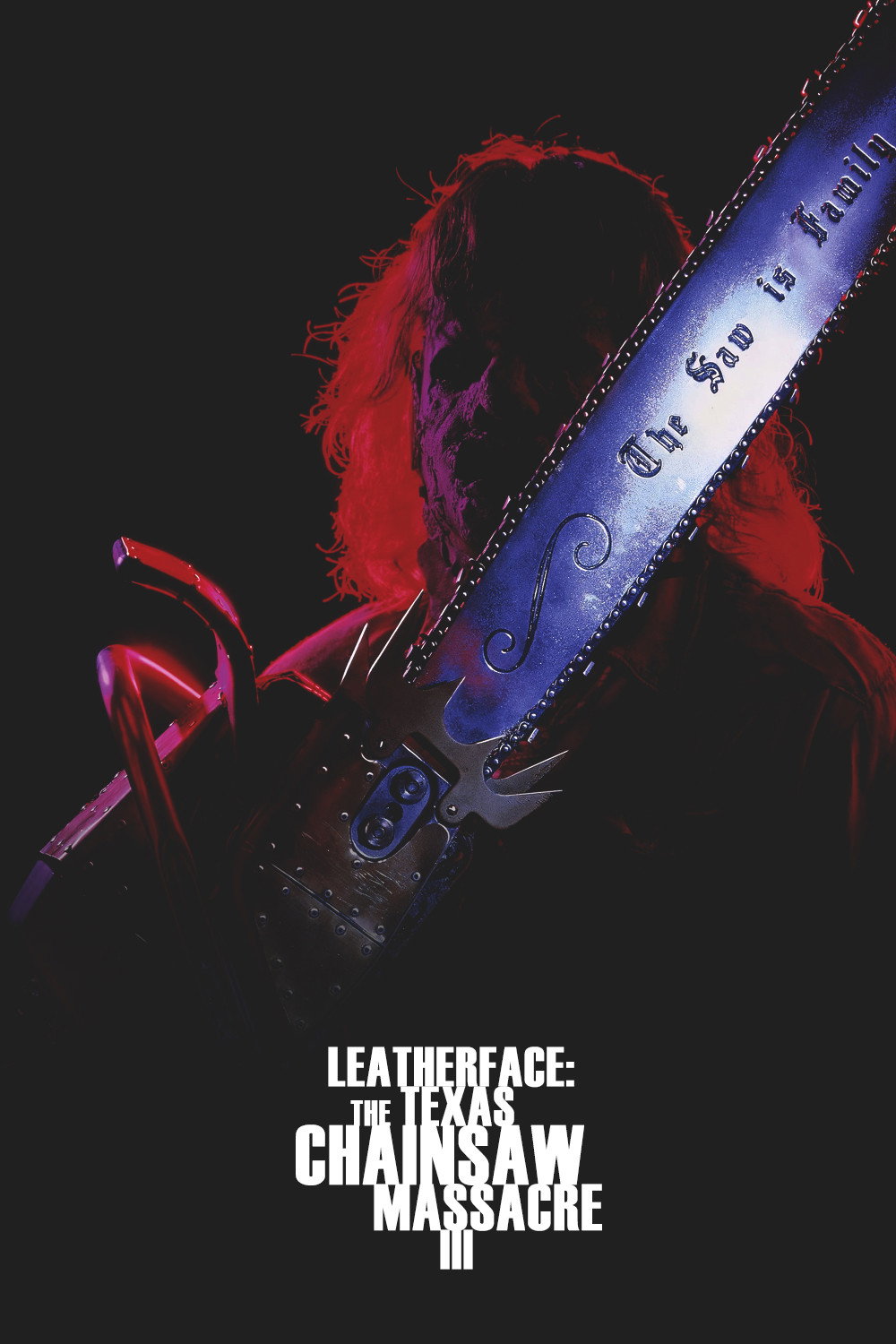
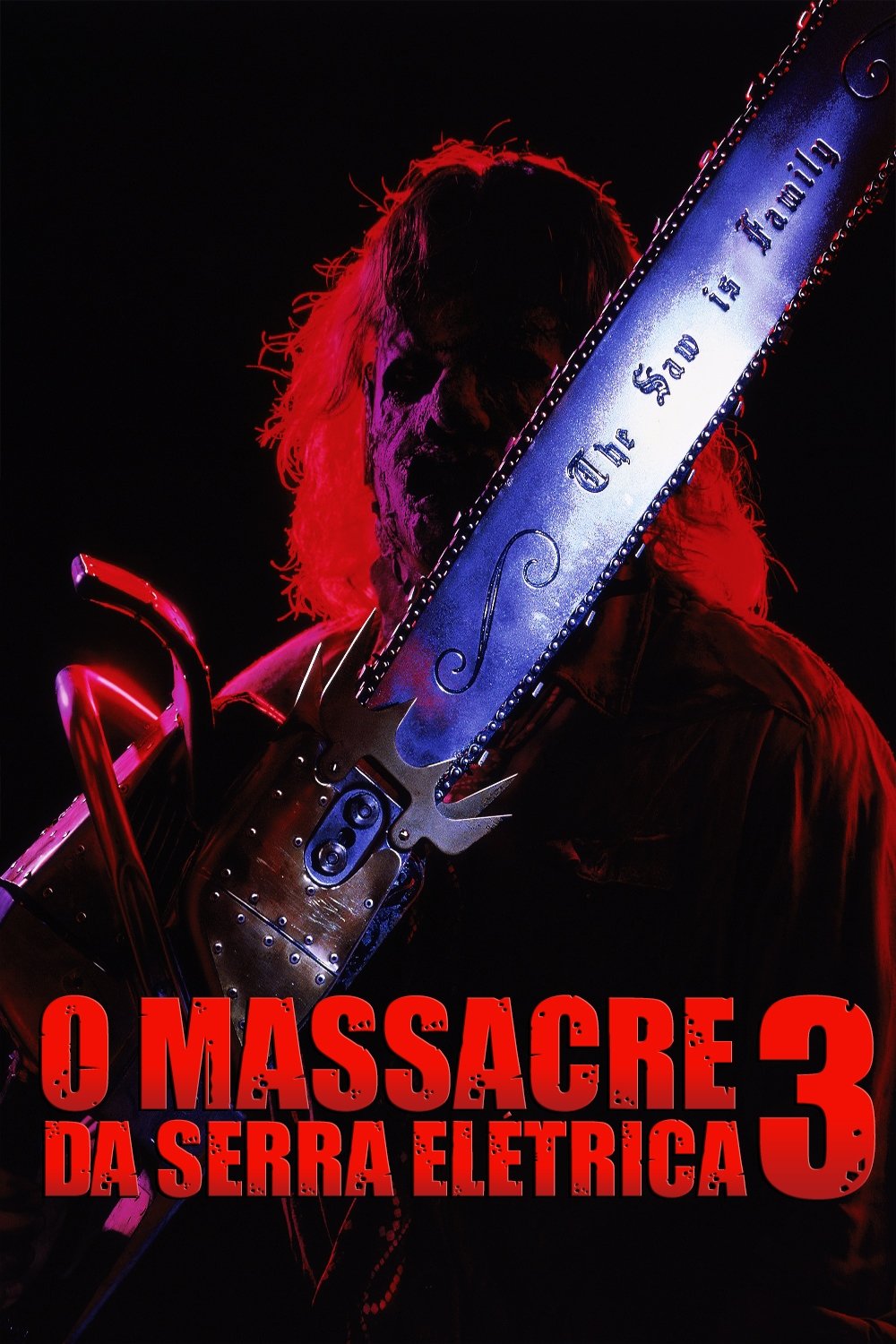
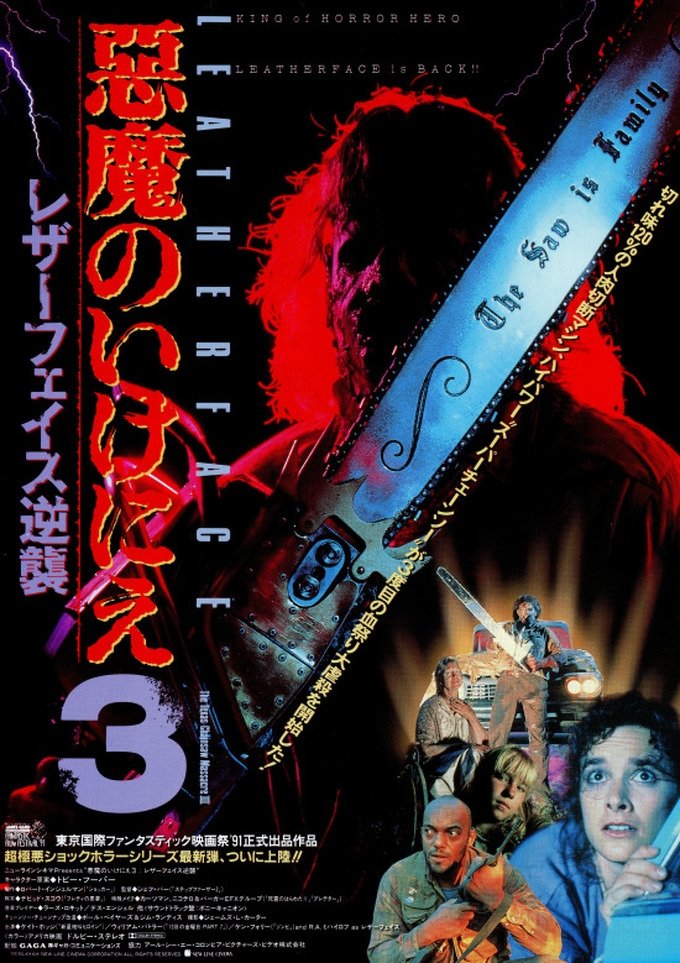
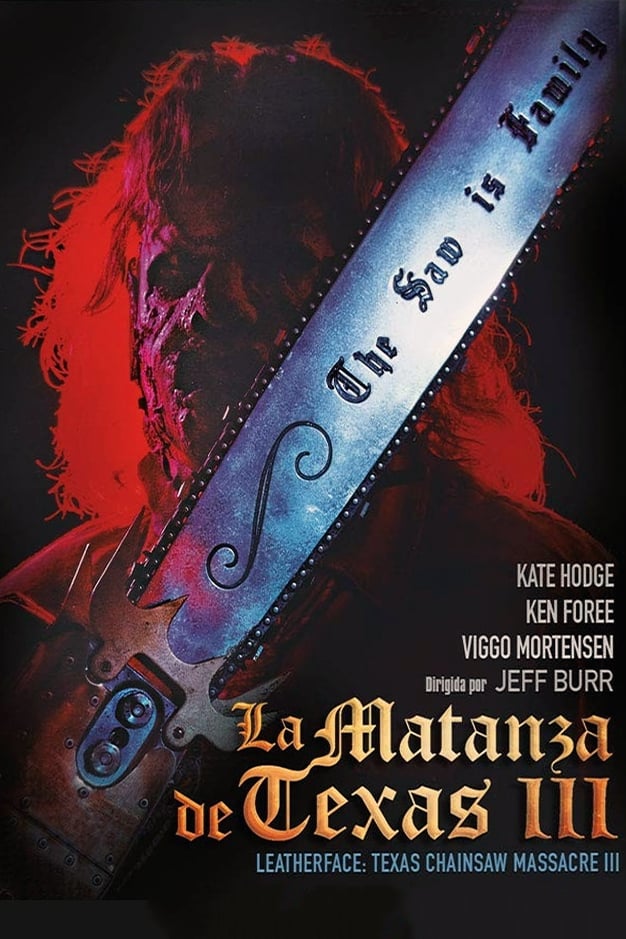
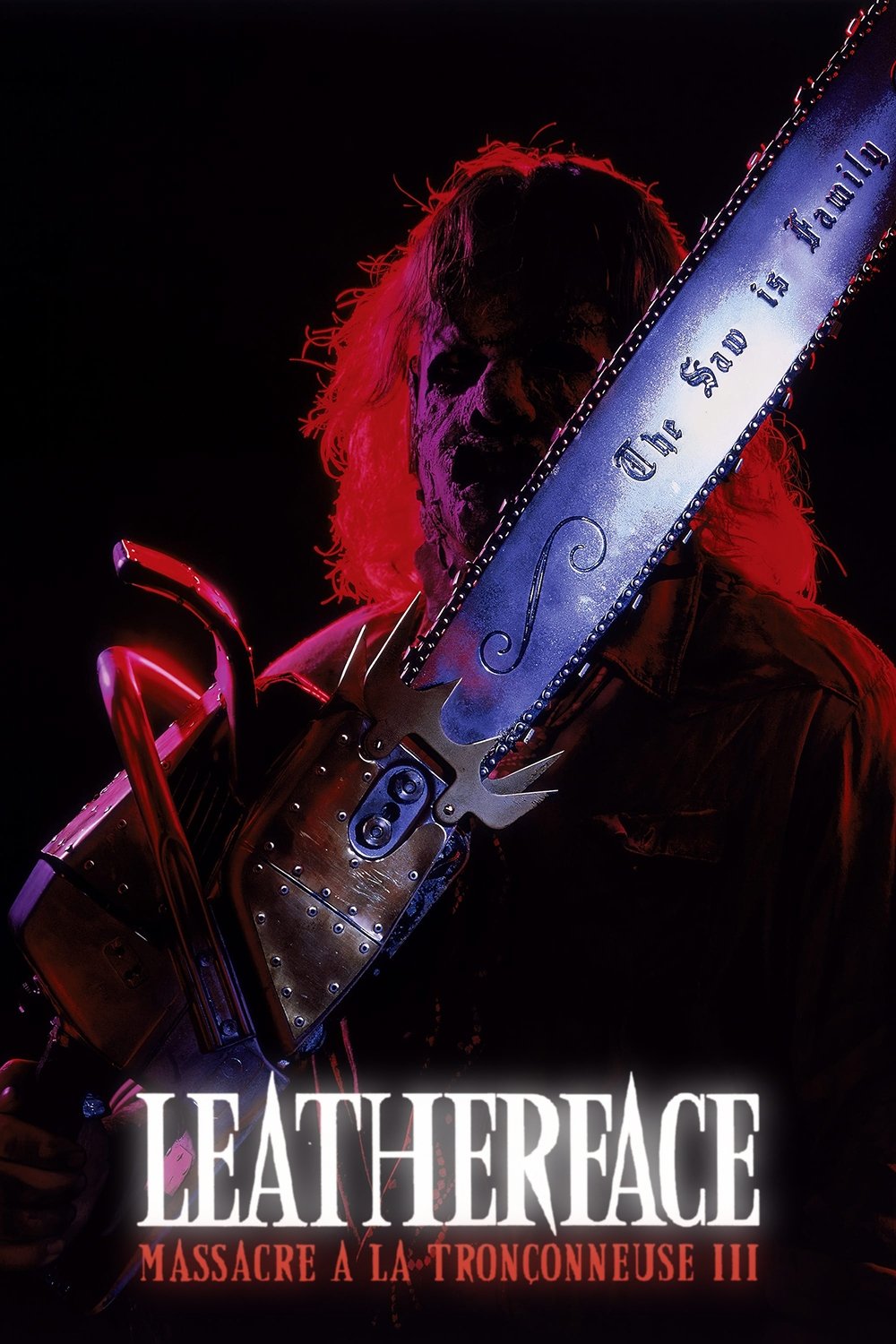
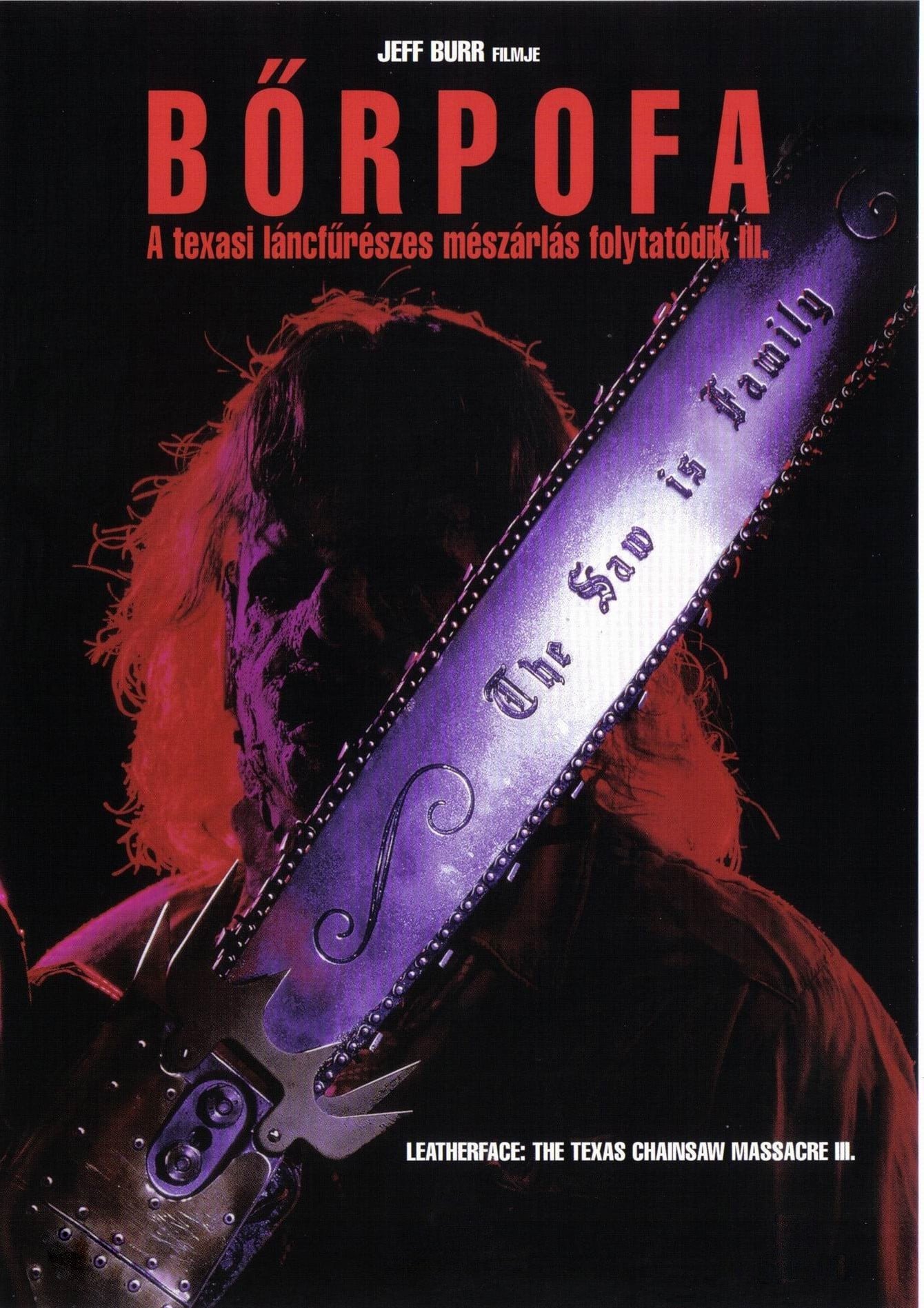
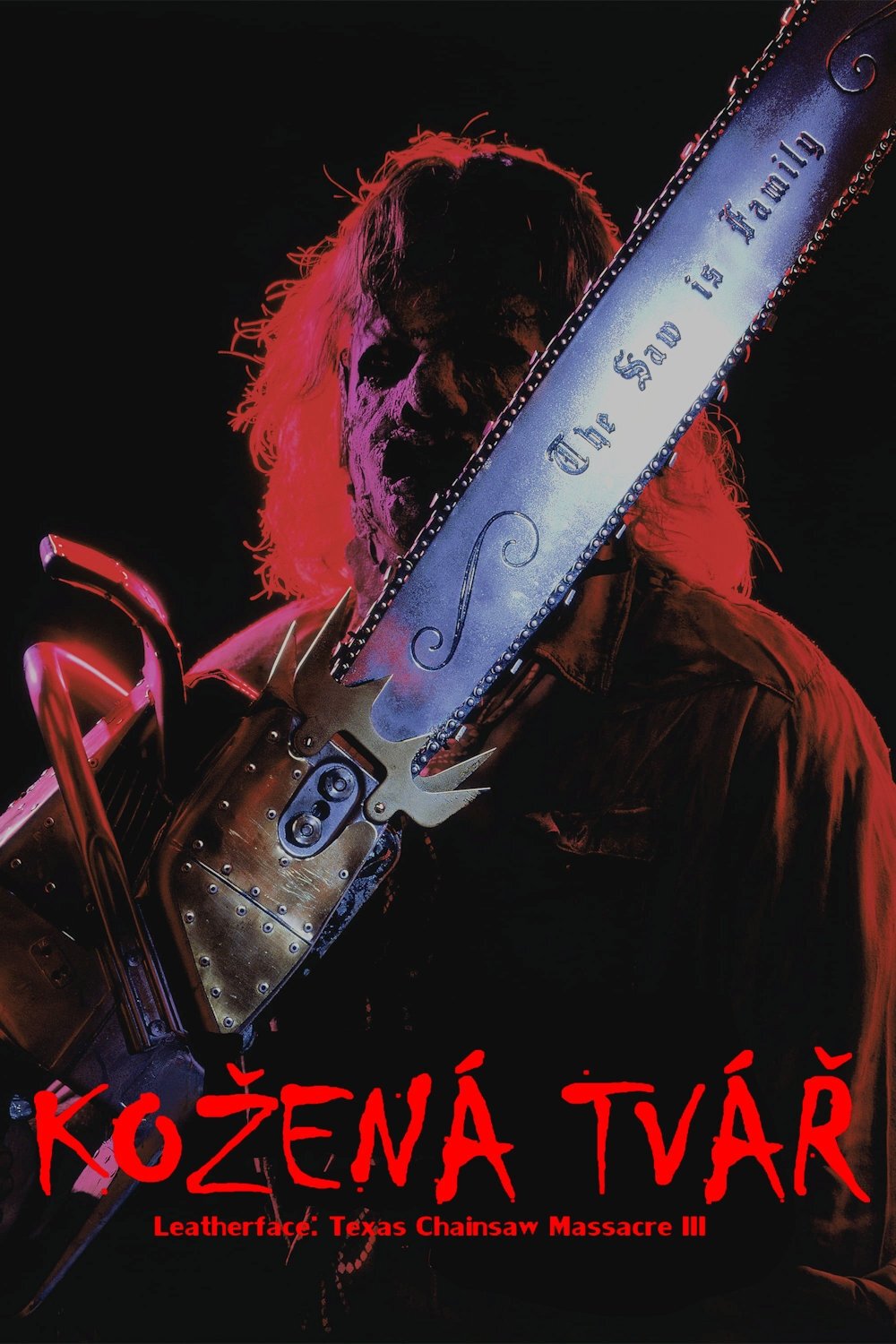
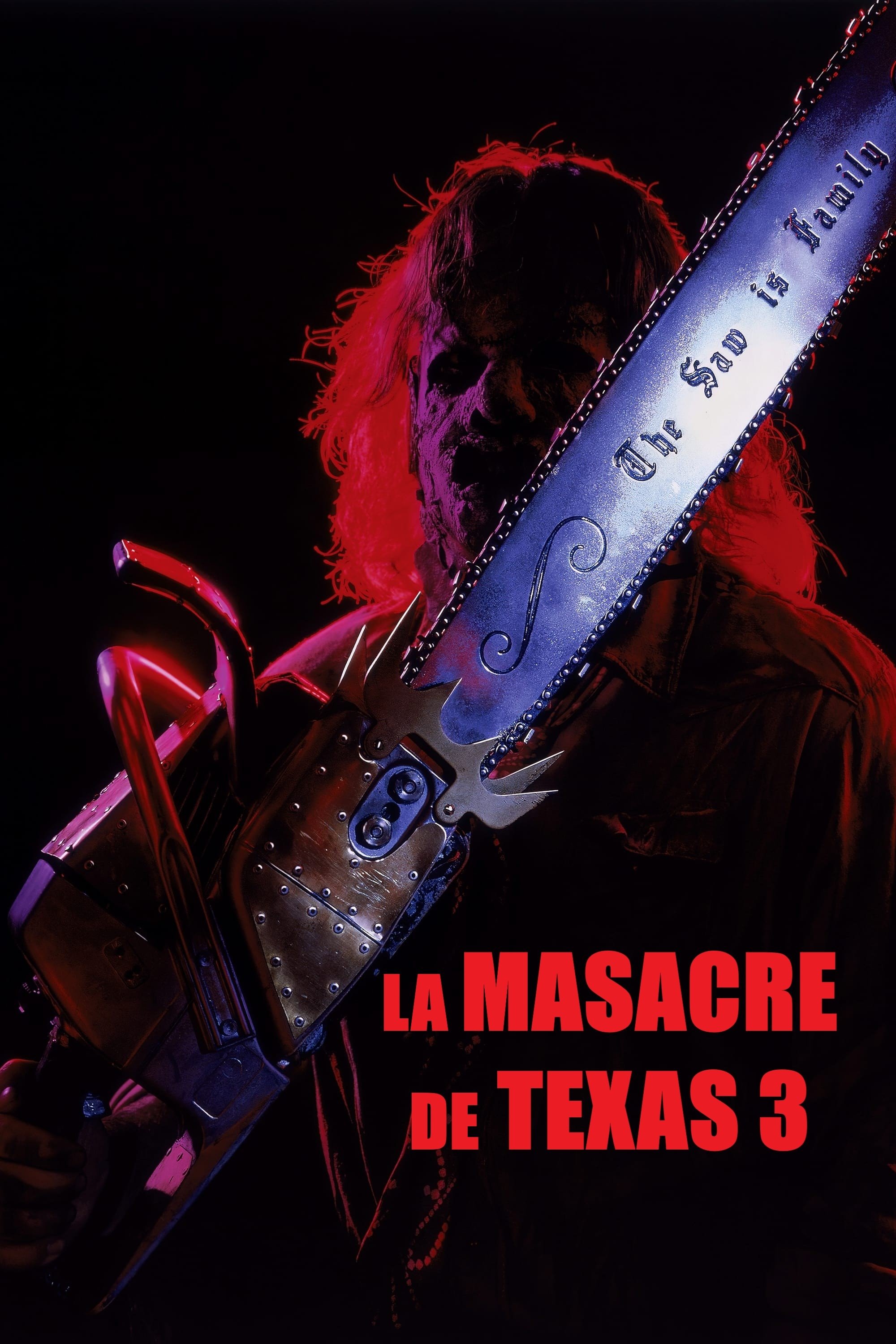
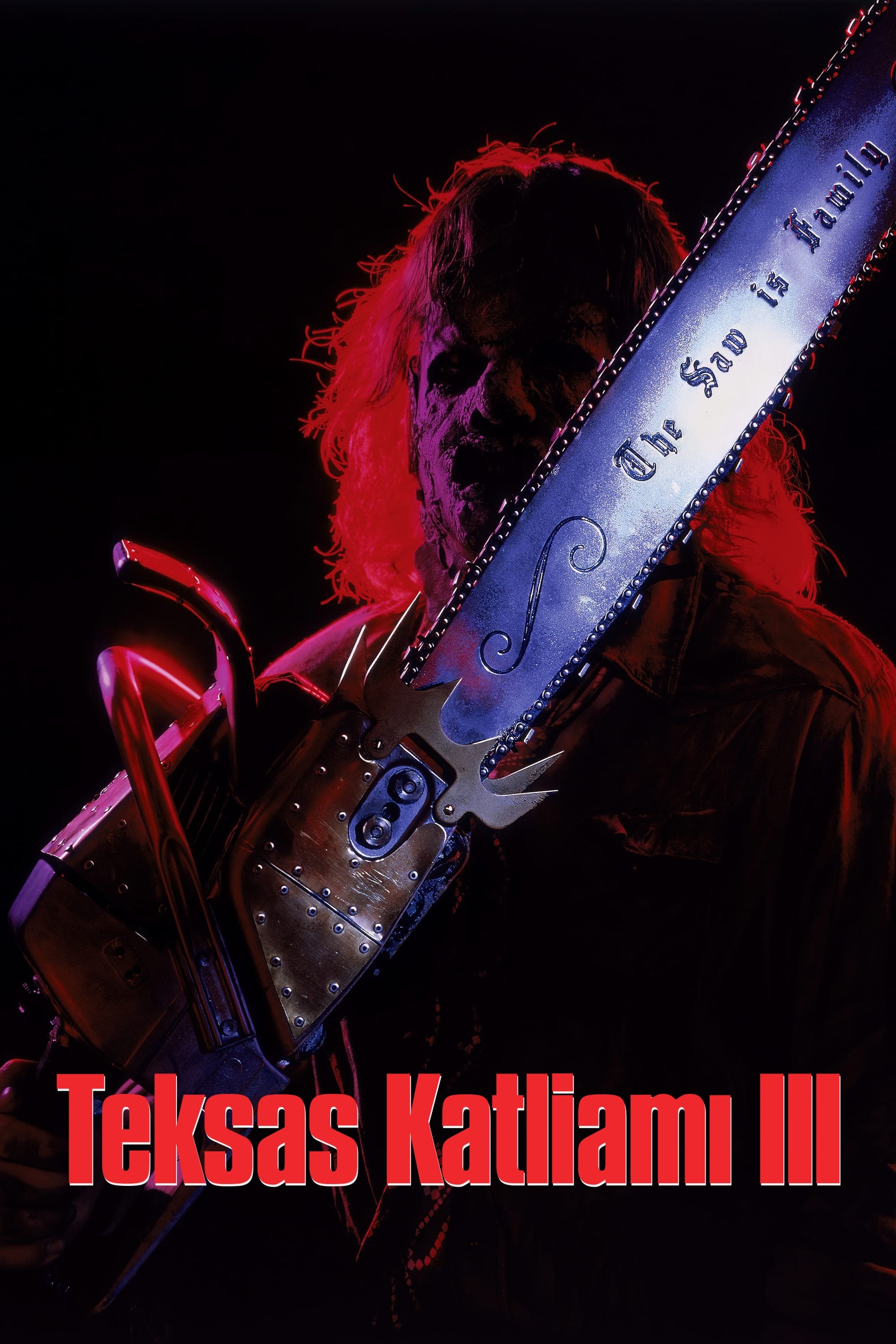
Traveling through Texas, Michelle and Ryan leave a major highway after an encounter at a roadside stop and soon find themselves on isolated roads. A threatening stranger and a chain of unsettling incidents draw them toward a family whose masked member, Leatherface, uses a chainsaw to pursue outsiders. As the travelers attempt to find help, they encounter Benny, a survivalist whose own route brings him into the danger. The new family members and rural setting revisit the series' central nightmare without establishing a fully consistent continuation of the earlier films.
Alternative Titles
La masacre de Texas III (Argentina) Masacre en el Infierno II (Argentina) — New TitleКожено лице: Тексаско клане 3 (Bulgaria) — BulgarianLeatherface: O Massacre da Serra Elétrica 3 (Brazil) — DVDLeatherface: O Massacre da Serra Elétrica III (Brazil) — Home Video TitleO Massacre da Serra Elétrica 3 (Brazil) O Massacre da Serra Elétrica 3: O Massacre Final (Brazil) — Premiere TitleLeatherface : Massacre à la tronçonneuse 3 (Canada) — FrenchShow all 54 alternative titlesMasacre en el infierno parte II (Chile) — Home Video Title德州电锯杀人狂3 (China) — Chinese德州电锯杀人狂3:鬼面人魔 (China) — Mandarin, Alternative TitleKožená tvář (Czechia) — CzechKozená tvár III (Czechia) — alternative titleLeatherface - Die neue Dimension des Grauens (Germany) — GermanMotorsavsmassakren III (Denmark) — DanishLa matanza de Texas 3 (Spain) — SpanishLeatherface: Texas Chainsaw Massacre III (Finland) — FinnishLeatherface : Massacre à la tronçonneuse 3 (France) — AltLeatherface : Massacre à la tronçonneuse III (France) — Frenchტეხასური ჟლეტა ბენზოხერხით 3 (Georgia) — GeorgianI shizofrenis oikogeneia me to prioni (Greece) — transliterationO shizofrenis dolofonos me to prioni 3 (Greece) — Television Title德州電鋸殺人狂 3 (Hong Kong SAR China) — ChineseTeksaški masakr motornom pilom 3 (Croatia) — CroatianA texasi láncfűrészes mészárlás folytatódik (Hungary) — alternetive titleBőrpofa - A texasi láncfűrészes mészárlás folytatódik (Hungary) — alternative titleBőrpofa - A texasi láncfűrészes mészárlás folytatódik 3. (Hungary) — alternative titleBőrpofa - Texasi láncfűrészes mészárlás 3. (Hungary) — Hungarianהמנסרים מטקסס 3 (Israel) — HebrewLeatherface - Non aprite quella porta III (Italy) — DVD TitleNon aprite quella porta - Parte 3 (Italy) — Italian悪魔のいけにえ3/レザーフェイス逆襲 (Japan) — Japanese텍사스 전기톱 학살 3 (South Korea) — KoreanEl descuartizador (Mexico) La masacre de Texas 3 (Mexico) — SpanishMasacre en Texas, 3ª parte (Mexico) — Home Video TitleTeksańska masakra piłą mechaniczną 3 (Poland) — PolishO Assassino da Moto-Serra (Portugal) Leatherface: Masacrul din Texas III (Romania) — RomanianТехасская резня бензопилой 3: Кожаное лицо (Russia) — Russianليذرفيس: مذبحة منشار تكساس 3 (Saudi Arabia) — ArabicMannen med läderansiktet - Motorsågsmassakern III (Sweden) — alternative titleMannen med läderansiktet - Texas Chainsaw Massacre III (Sweden) — SwedishТехасская резня бензопилой 3: Кожаное лицо (Russia) — Russian Titleสิงหาสับ 3 (Thailand) — ThaiTeksas Katliamı III (Türkiye) — Turkish德州電鋸殺人狂3 (Taiwan) Техаська різанина бензопилою 3: Шкіряне обличчя (Ukraine) — UkrainianLeatherface (United States) — short titleLeatherface: Texas Chainsaw Massacre III (United States) — on-screen titleLeatherface: The Texas Chainsaw Massacre 3 (United States) — DVD TitleTCM 3 (United States) — short titleTexas Chainsaw Massacre 3 (United States) — alternative titleThe Texas Chainsaw Massacre III: Leatherface (United States)
The troubled New Line sequel, from the reinvention of Leatherface and the cannibal household to KNB effects, censorship and competing release versions.
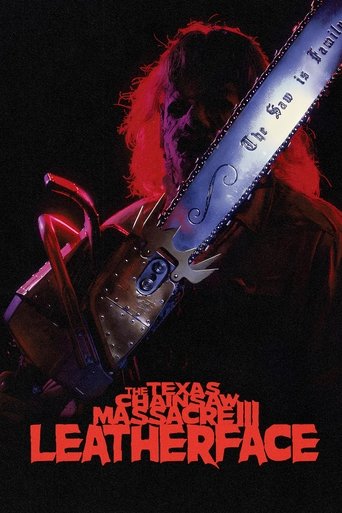
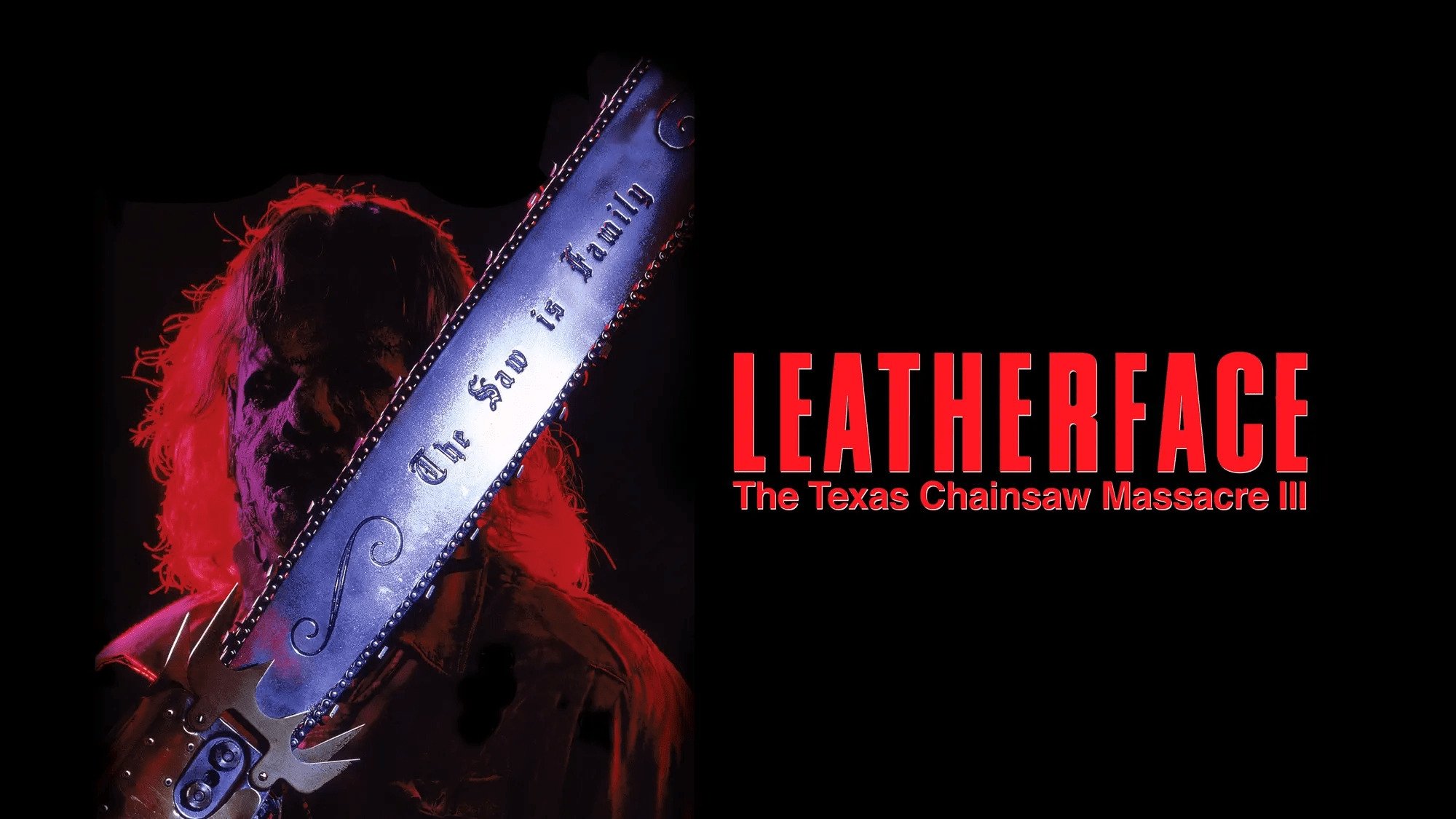
Leatherface: The Texas Chainsaw Massacre III (1990) marks an early attempt to reorganize an established horror property around a recognizable killer. New Line Cinema approached the character after the commercially useful model supplied by Freddy Krueger, but inherited a series whose second installment had pushed family grotesquerie into overt black comedy. Screenwriter David J. Schow instead developed a new cannibal household surrounding Leatherface, preserving the ordeal of travelers stranded in hostile territory. The resulting film presents itself as a third chapter while treating the preceding films' family history with considerable freedom. Its place in the franchise is best understood through that deliberate reconstruction.
The production was shaped by an unusually compressed schedule and a difficult struggle over the amount of screen violence suitable for theatrical release. Director Jeff Burr later described extensive alterations made before and during the American ratings process, while contemporary British classification records establish a separate history of rejection and subsequent approval. These circumstances affected the form in which audiences first encountered the picture. They also complicate comparisons between its theatrical cut, longer home-video editions and an original conception that cannot simply be equated with any currently available version.
Rebuilding Leatherface for New Line Cinema
Schow described the studio's commercial objective in a 2023 interview with This Is Horror: New Line wanted a horror character capable of carrying further sequels, comparable to Freddy Krueger. The opening image of Leatherface assembling a mask reflects that emphasis on a villain with his own recognizable equipment and rituals. The writer had entered screenwriting through fiction, and the sequel became his first produced feature screenplay. Rather than devise another elaborate explanation for an inherited family tree, he proposed an adopted group linked by their crimes. This allowed familiar cannibal-household imagery to return while bypassing the endings and contradictory relationships established in the earlier films.
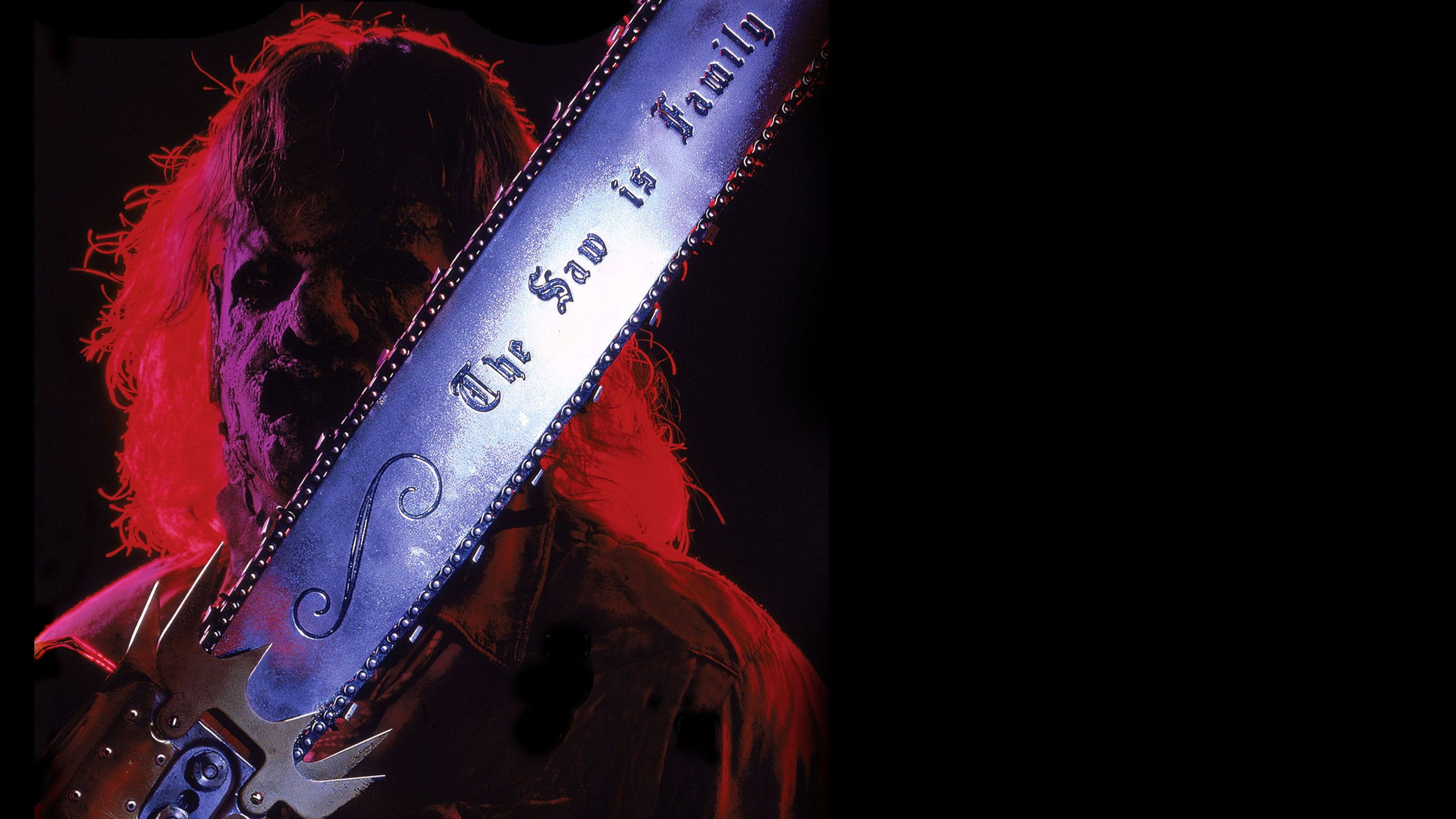
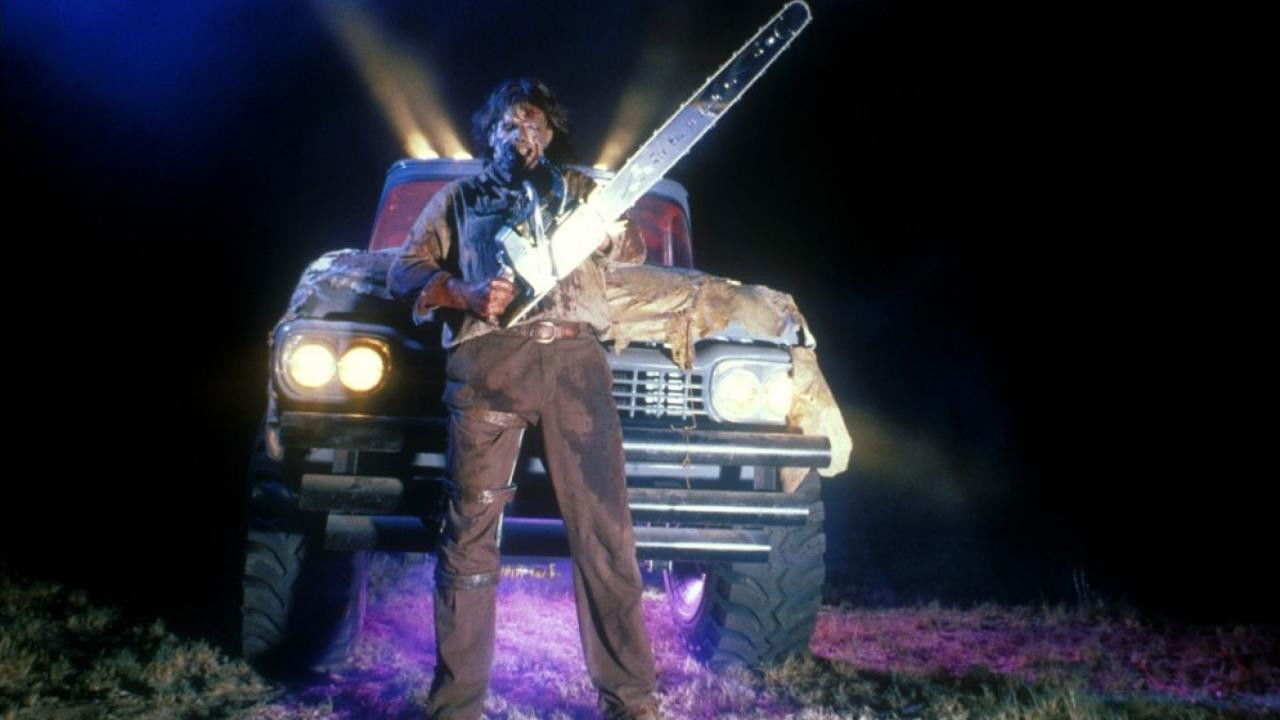
A contemporary Los Angeles Times production notice in July 1989 already announced an intended return to hard-edged horror after the eccentric second film. The claim came from studio representatives, so it records a pre-release objective whose actual reception remained uncertain. On screen, the new configuration includes Tex, Tinker, Alfredo, Mama and a young girl, each extending the menace beyond the masked man. The project also foregrounded its antagonist in its very title. Schow recalled developing the idea of a ceremonial chainsaw, which became the basis for an advertisement modeled on the sword-bearing imagery of Excalibur. That extravagant teaser was created for publicity and never appears within the film itself.
A Compressed Shoot and a Recast Killer
Jeff Burr recalled arriving with remarkably little preparation time. Significant casting decisions were already settled and the timetable left limited opportunity to reconsider the project from the ground up. He wanted Gunnar Hansen, who had established Leatherface's physical presence in 1974, to return. According to the director, discussions ended because New Line would not meet Hansen's requested fee. Burr then supported R. A. Mihailoff, an actor he had known since student filmmaking, and the studio accepted him after an audition. This account documents the casting dispute from the director's perspective; it should not be expanded into speculation about Hansen's willingness to perform or the studio's larger financial calculations.
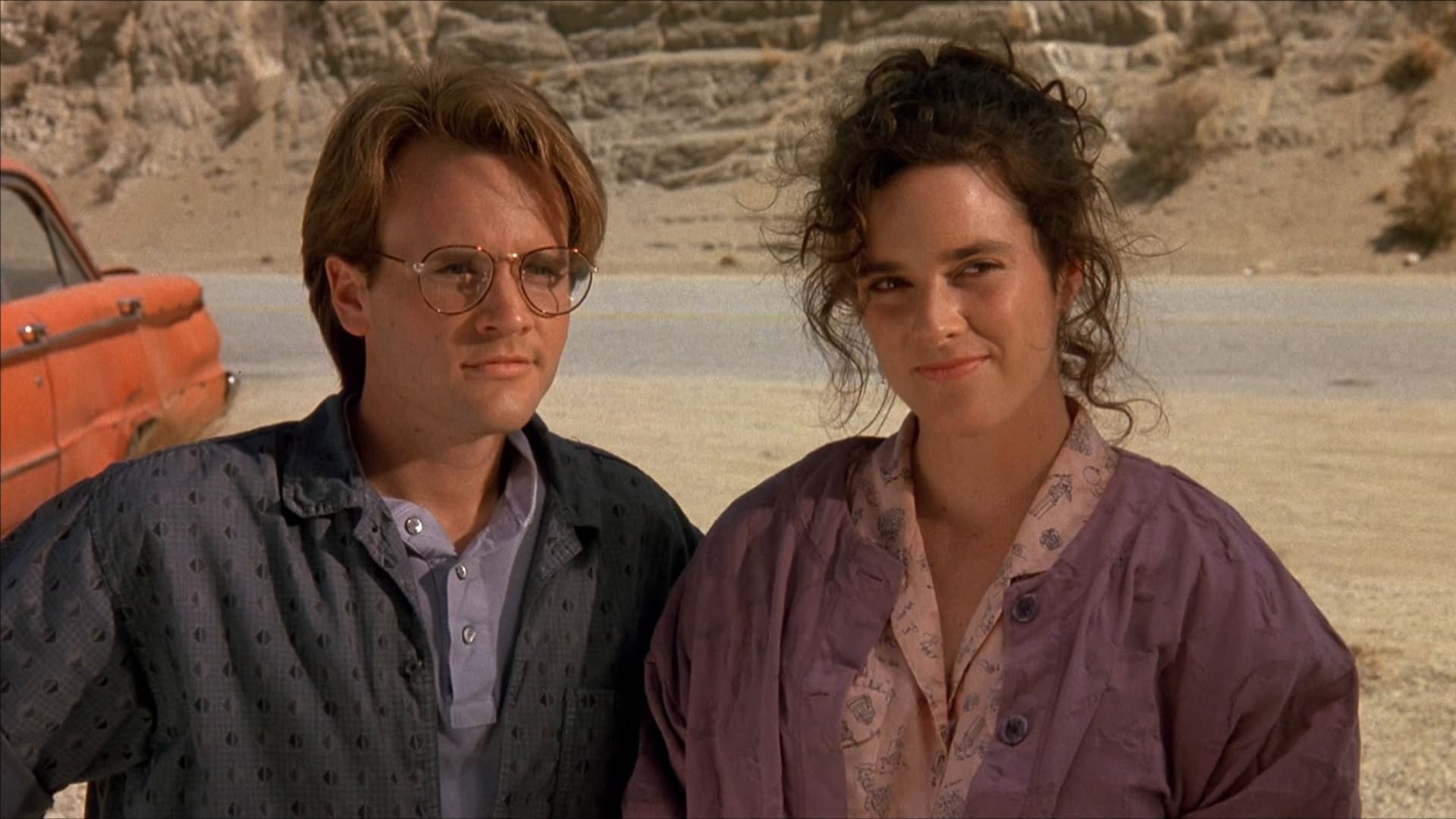
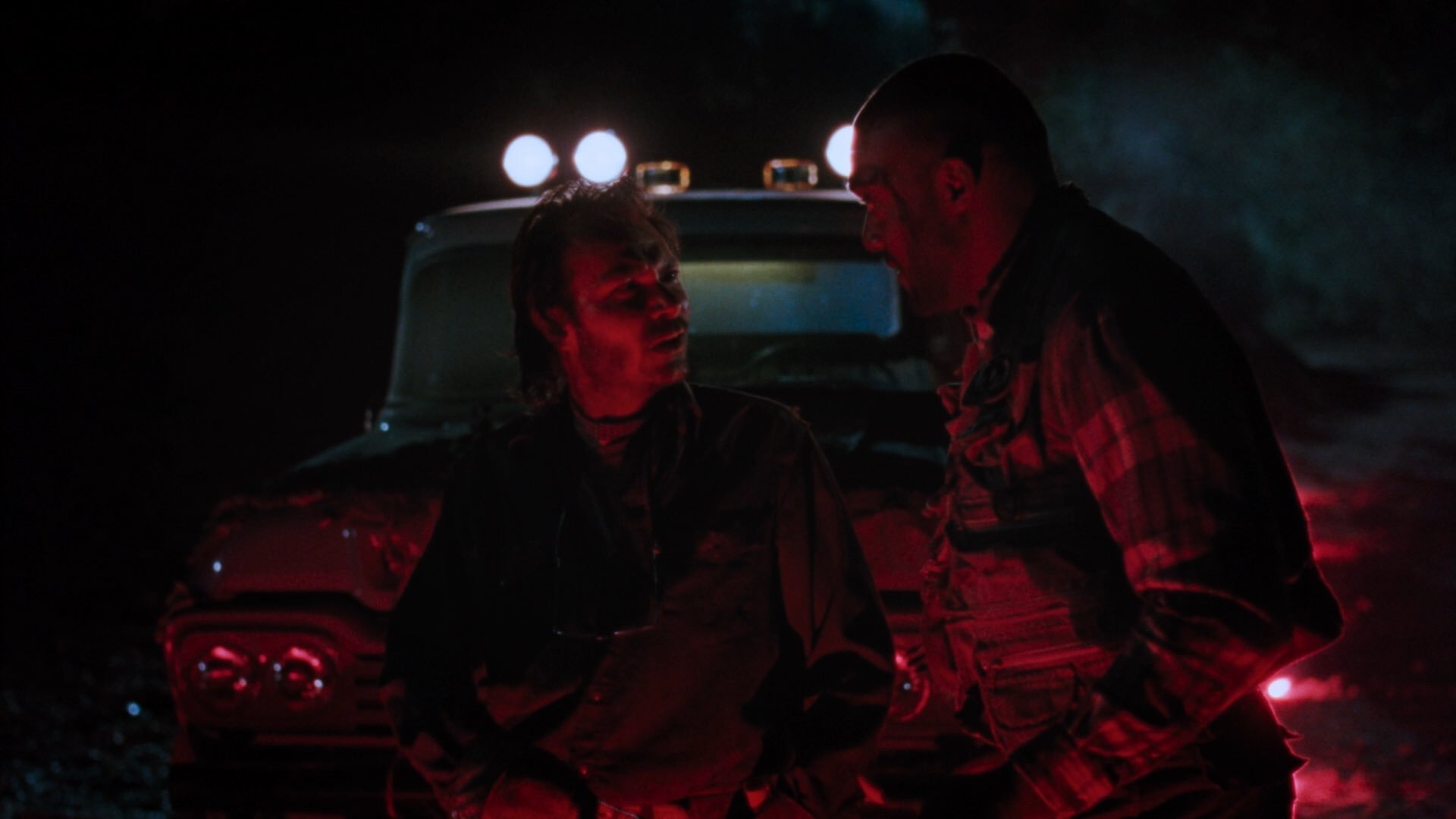
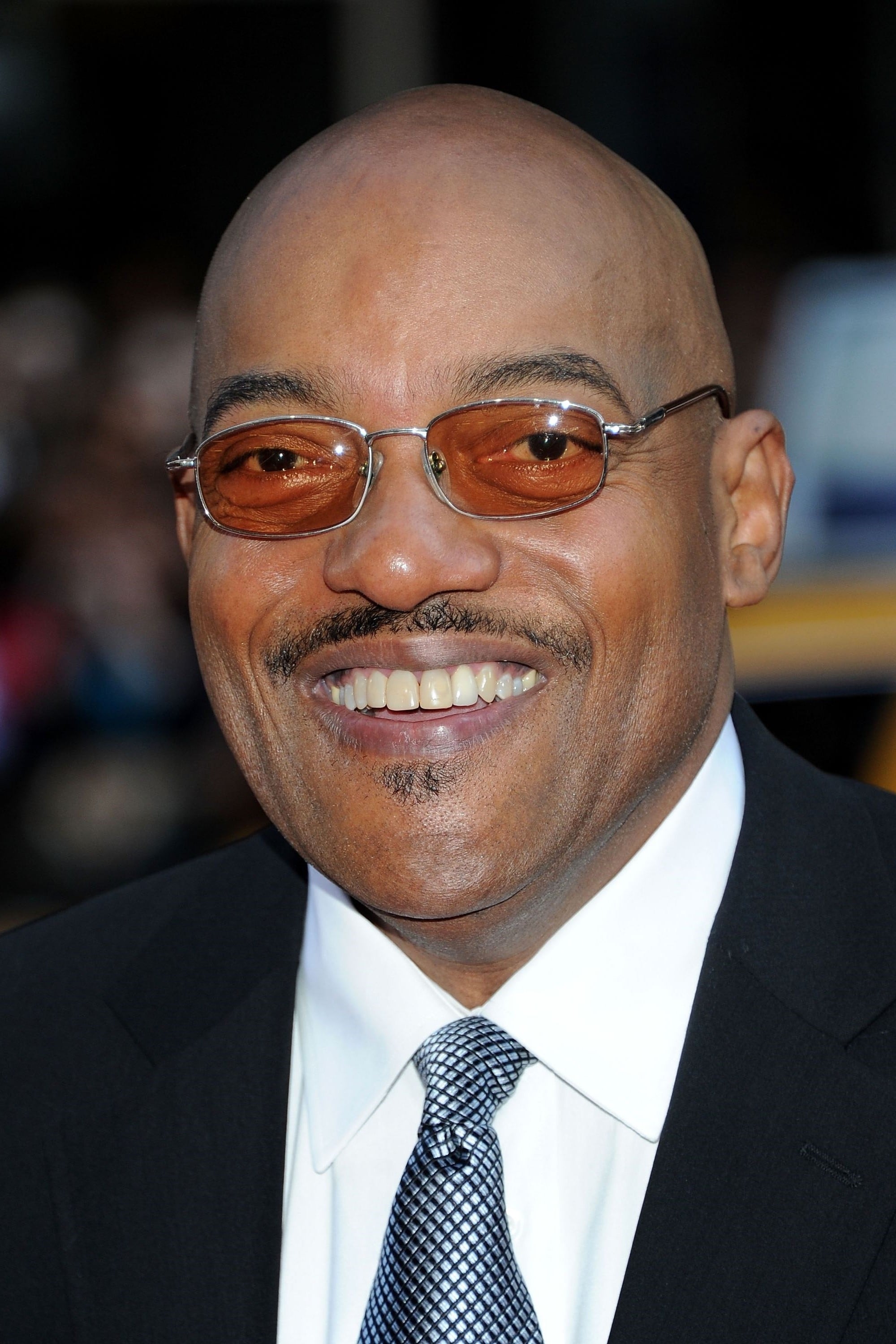
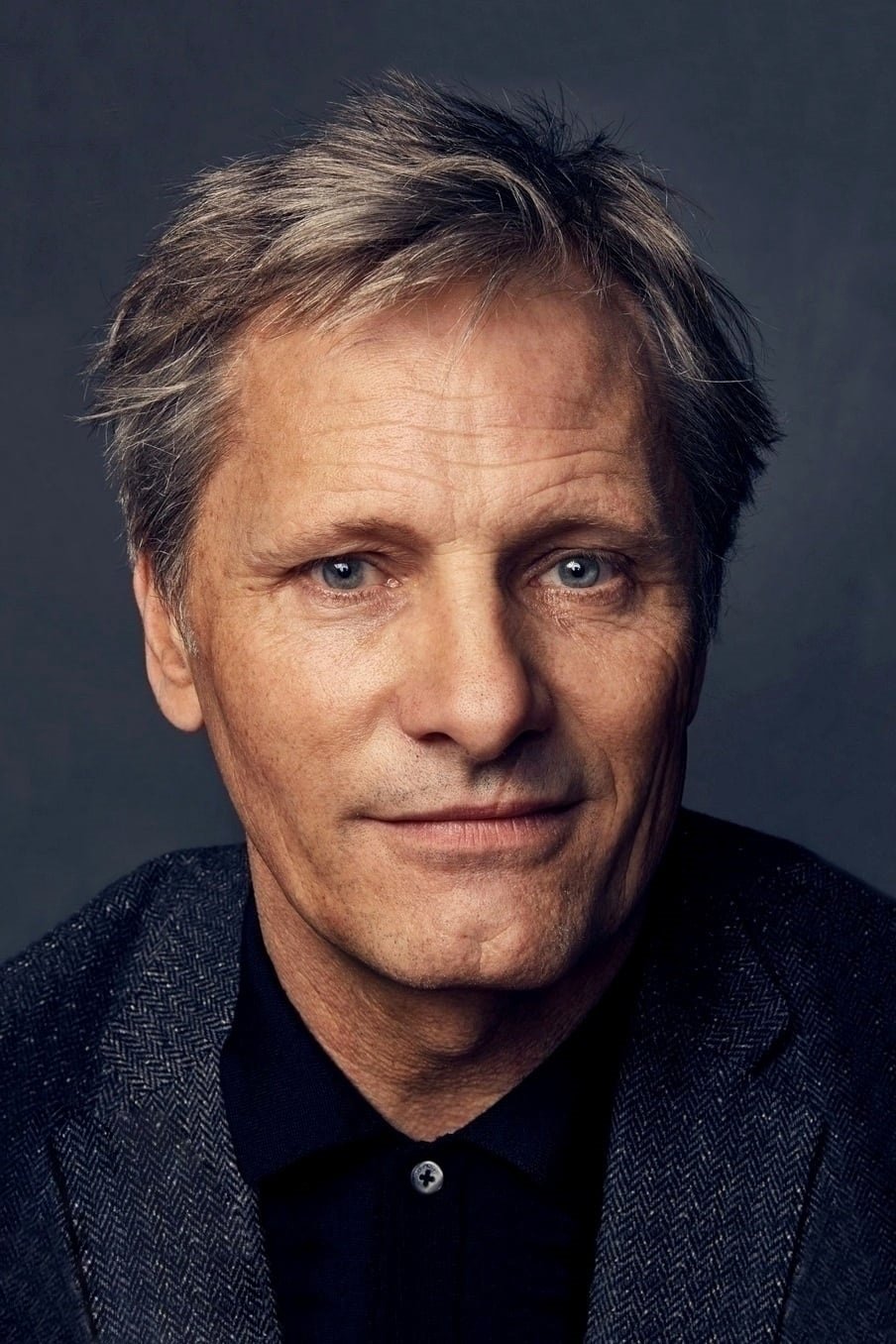
Burr also remembered the value of Viggo Mortensen, whom he had noticed in Prison, and praised the commitment of the ensemble to difficult physical conditions on set. A later production retrospective described the filming as turbulent, with disagreements surrounding the director's employment and interruptions to exterior work. Such retrospective details require caution when separated from original production records. What remains evident in the film is a tightly concentrated set of encounters involving Kate Hodge's Michelle, William Butler's Ryan and Ken Foree's survivalist Benny. Foree gives the pursuit an opposing physical presence: his character can answer the killers with weapons and practical knowledge, making the struggle different from an unbroken procession of helpless victims.
The Household, the Highway and the Trap
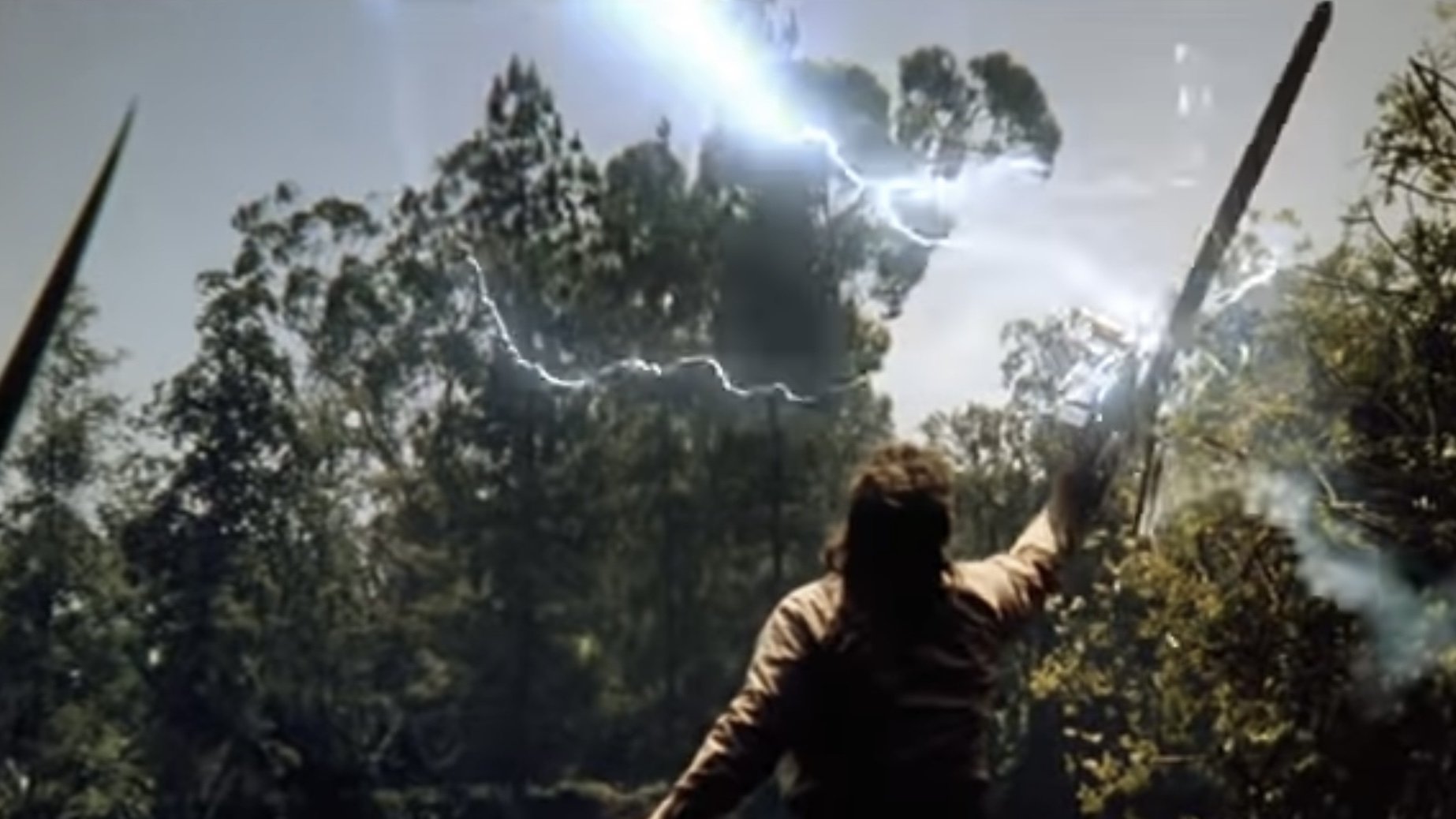
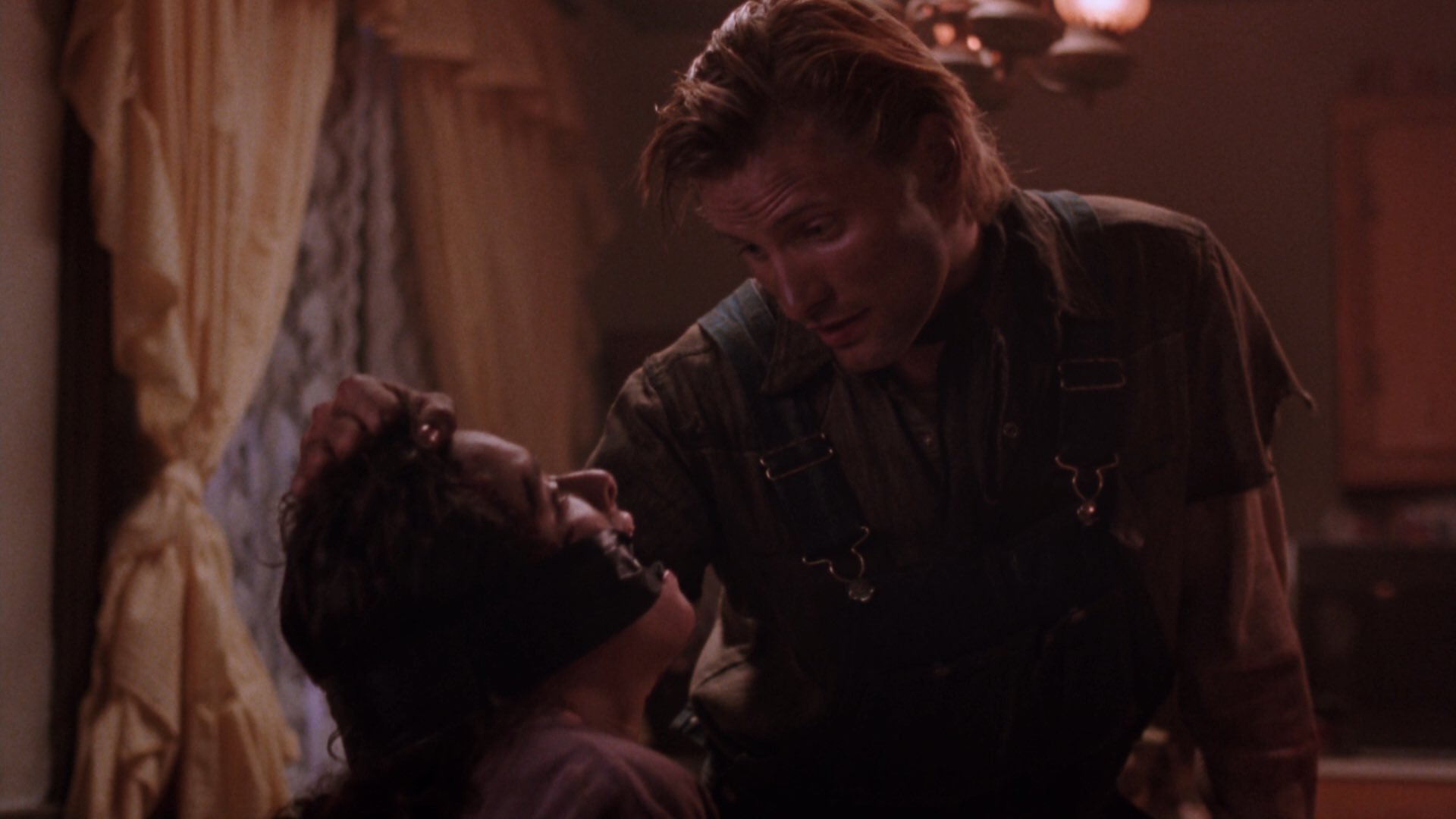
The opening journey creates the conditions for a familiar Chainsaw pattern. Ordinary roadside facilities become sites of deceptive hospitality, and a turn away from the highway places the visitors inside territory controlled by the family. Tex first appears approachable, making recognition of the trap arrive after the characters have already accepted its terms. The film returns repeatedly to wooded ground, unlit approaches and narrow passages. These spaces have little of the conspicuous comic excess associated with the 1986 sequel. Their practical role is to delay escape and keep the attacker close enough to be sensed before he can be clearly seen.
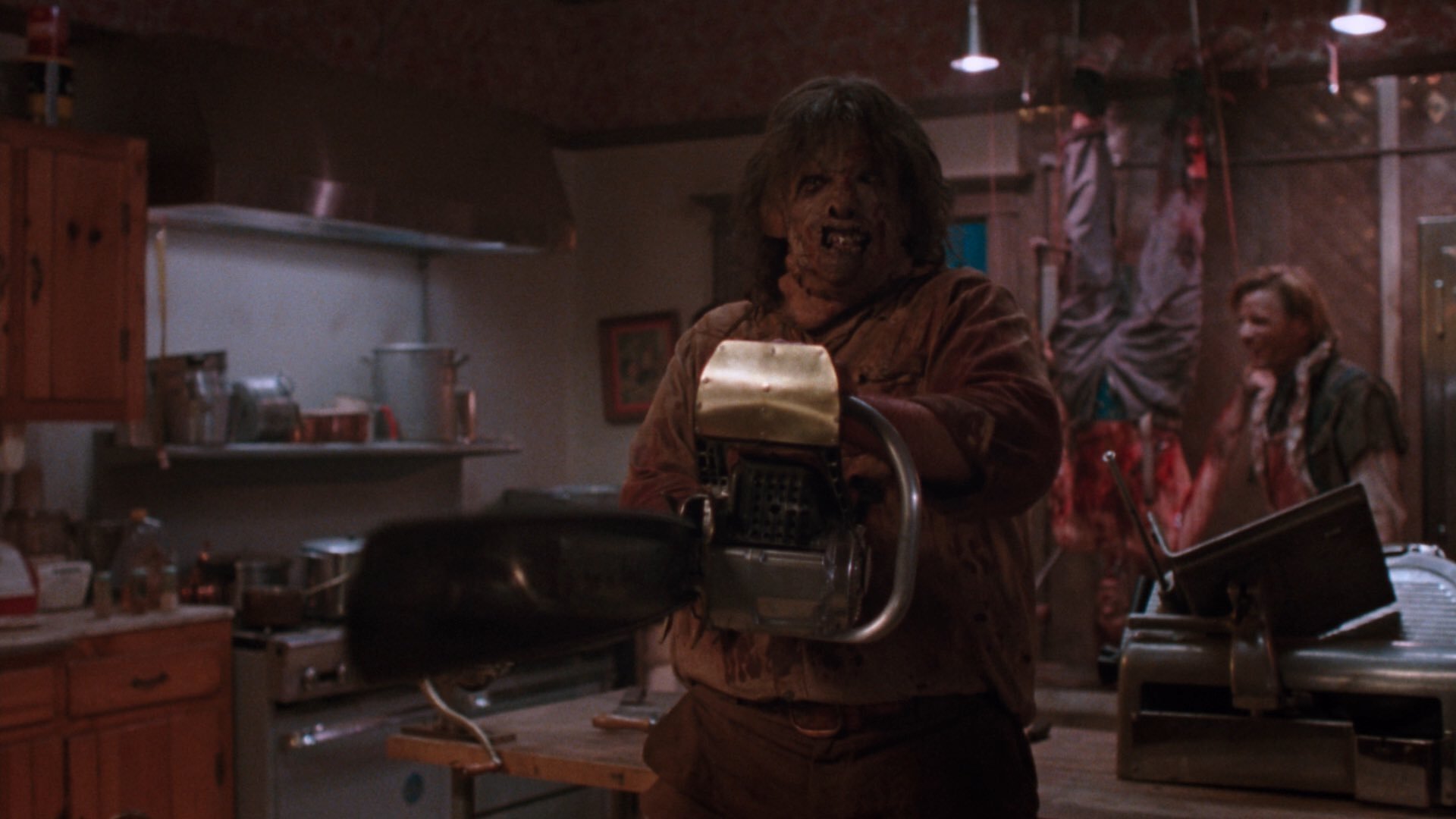
Schow's adopted-family idea also shapes the dinner and captivity material. The members have distinct approaches to torment, yet the household functions as a shared system for hunting and holding people. Leatherface supplies its most visible icon, while relatives manage deception, restraint and intimidation. The young girl's participation introduces the suggestion that violence is being learned inside the home, a disturbing element that does not depend on an explicit origin story for every individual. The movie continually changes the balance between pursuit and confinement: movement through trees allows temporary freedom, but reaching an occupied building can prove more dangerous than remaining outside. That reversal is central to its form of rural horror.
Practical Makeup and the Limits of Visibility
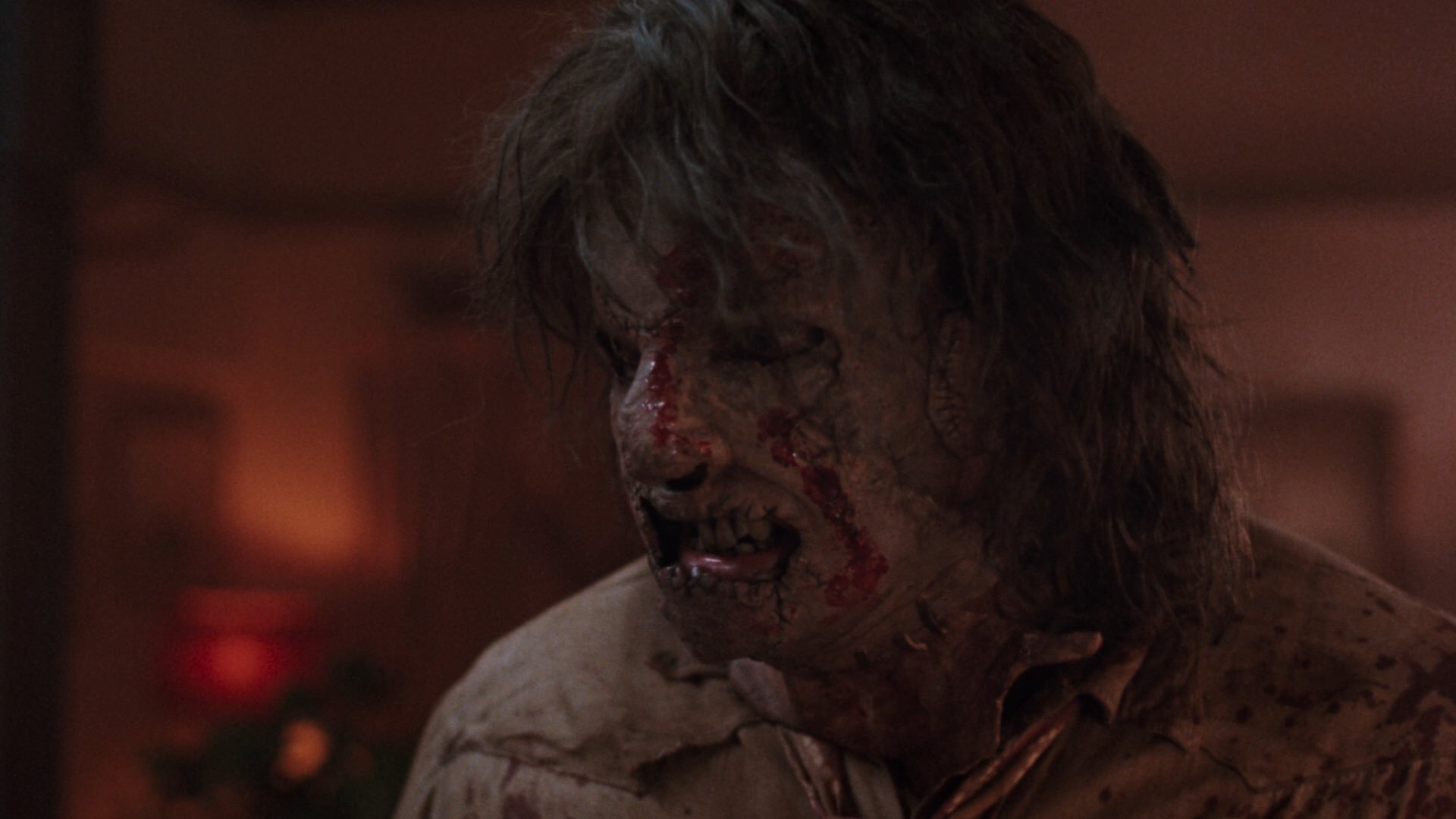
KNB EFX Group provided the special makeup work, during a period when Greg Nicotero, Howard Berger and Robert Kurtzman were establishing their professional partnership. The production employs bodily remains, wounds and other physical details that give the family's rooms the appearance of places already used for repeated killings. Burr recalled performers working in pits containing simulated bodies, an example of how such material affected the cast's physical experience. The effects support an atmosphere of accumulated slaughter, particularly in scenes where the characters discover evidence of earlier victims. There is no need to assign a specific device, mold or chemical to an individual shot without a technician's account establishing how it was produced.
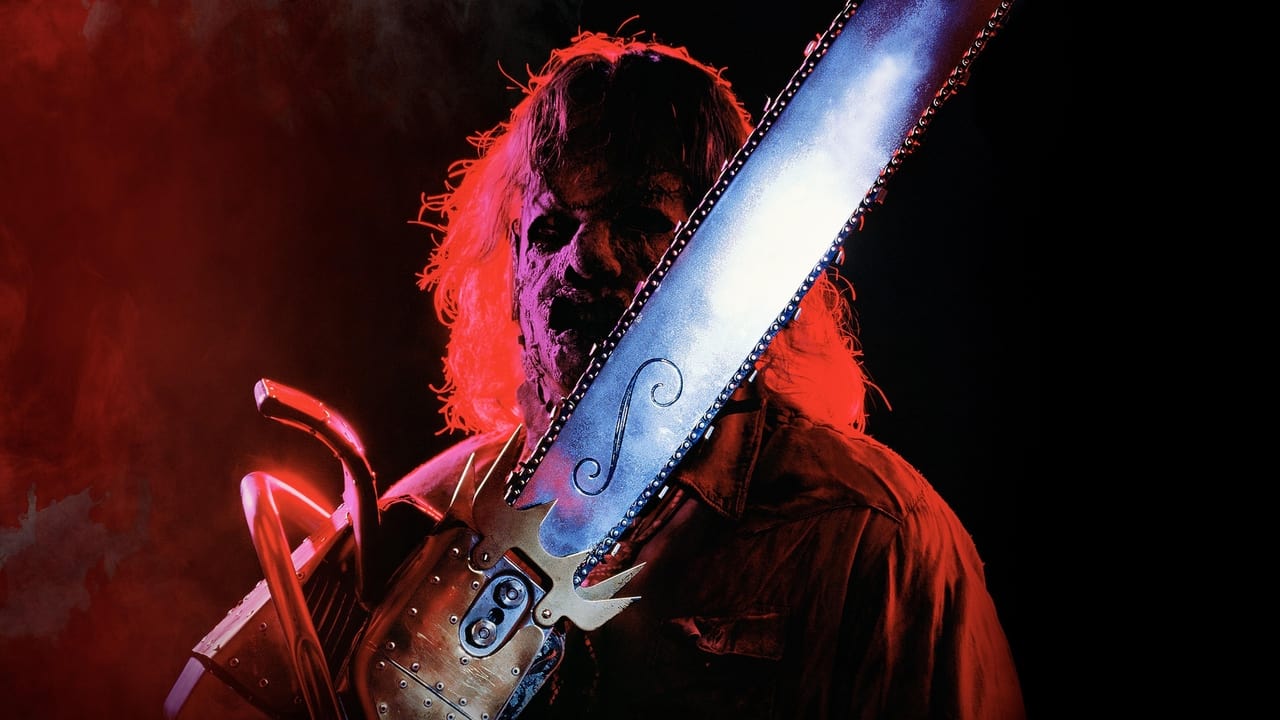
The treatment of violent action differs substantially between versions. In the theatrical release, a threatening gesture can lead directly to its aftermath, leaving an anticipated injury less visible than the surrounding buildup suggests. That pattern was remarked upon by critics at the time. It is also one reason assessments of the movie's intensity vary among viewers who encountered different edits. The mask and oversized chainsaw remain prominent, but close attention to their appearance should not obscure the editing decisions governing the display of bodily damage. The resulting tension between elaborate physical effects and abbreviated onscreen violence is one of the production's defining historical features.
American Ratings and British Classification
New Line sought an R rating from the Motion Picture Association of America in 1989. Burr later estimated that the picture went through eleven submissions or rounds of changes, while Schow independently recalled the same number in a 2023 conversation. Burr also said New Line president Bob Shaye had removed material in the editing room before the ratings dispute had run its course. These are firsthand retrospective accounts, valuable for explaining the filmmakers' experience but not a substitute for a complete archival list of every alteration. Contemporary newspaper notices confirm that the picture initially carried an X rating and received an R only after further cuts, causing its planned November opening to move into January.
The British record is separate and unusually instructive. The BBFC lists an 85-minute unrated American version submitted for cinema classification on May 22, 1990, which it found unsuitable for classification. Its database then records several home-entertainment submissions in 2004, including versions of different stated durations, and an 85-minute, 24-second edition classified for physical media and streaming in March 2025. Those entries demonstrate that distinct materials circulated in the British market. Running times alone cannot establish precisely which shots differ, and an edition labeled unrated should never automatically be described as Burr's wholly intact original cut. The version history also intersects with accounts of revisions to the ending, which concern narrative construction as well as graphic content.
A January Release and a Divided Afterlife
New Line opened Leatherface in American theaters on January 12, 1990, after the intended late-1989 launch was abandoned. Schow later associated the delay with advertising expenditure committed to the earlier date; that explanation is his recollection of distribution circumstances, not an audited marketing statement. The film reached theaters carrying an R classification and a promise of a more severe return to the original series. Contemporary critics were skeptical. Michael Wilmington in the Los Angeles Times objected to its extensive reuse of situations from the 1974 film and argued that the repetition lacked the earlier work's energy. Richard Harrington of the Washington Post similarly noticed how often the violence was interrupted by cuts away from the action.
Subsequent interest has centered on the contested production and on the contrast between the cinema version and longer releases. The home-video circulation of additional material made it possible to reassess particular effects and transitions, although it did not resolve every question about the intended structure. Burr's 2018 interview was prompted by a new high-definition edition and emphasized the satisfaction of seeing the cinematography presented clearly again. Schow described later repertory screenings attended by cast and crew as evidence of the film's continuing audience. Such anecdotes document a persistent following without proving major stylistic influence on later horror. Historically, the picture illustrates the pressures involved in converting a notorious independent creation into a studio-managed franchise character.
References
Dread Central — Interview: Director Jeff Burr Revisits Leatherface: The Texas Chainsaw Massacre III
Matt Boiselle interviews Burr about rushed preproduction, the unsuccessful plan to bring back Gunnar Hansen, the casting of R. A. Mihailoff and repeated MPAA edits.
This Is Horror — TIH 477: David J. Schow on The Texas Chainsaw Massacre III, The Twilight Zone Magazine, and Screenwriting
Original interview and transcript explaining the adopted-family concept, New Line's franchise intentions, the Excalibur-style teaser and the consequences of delayed release.
BBFC — Leatherface - Texas Chainsaw Massacre III: Classification History
Official UK records of the 1990 cinema rejection, several 2004 home-video submissions and the longer edition classified in 2025.
Michael Wilmington's original January 1990 criticism of the attempted return to the first film's structure and the result's reliance on familiar scenes.