A Nightmare on Elm Street: The Dream Child (1989)

US
Runtime
89 min
Release
August 11, 1989
Budget
$8,000,000
Revenue
$22,168,359
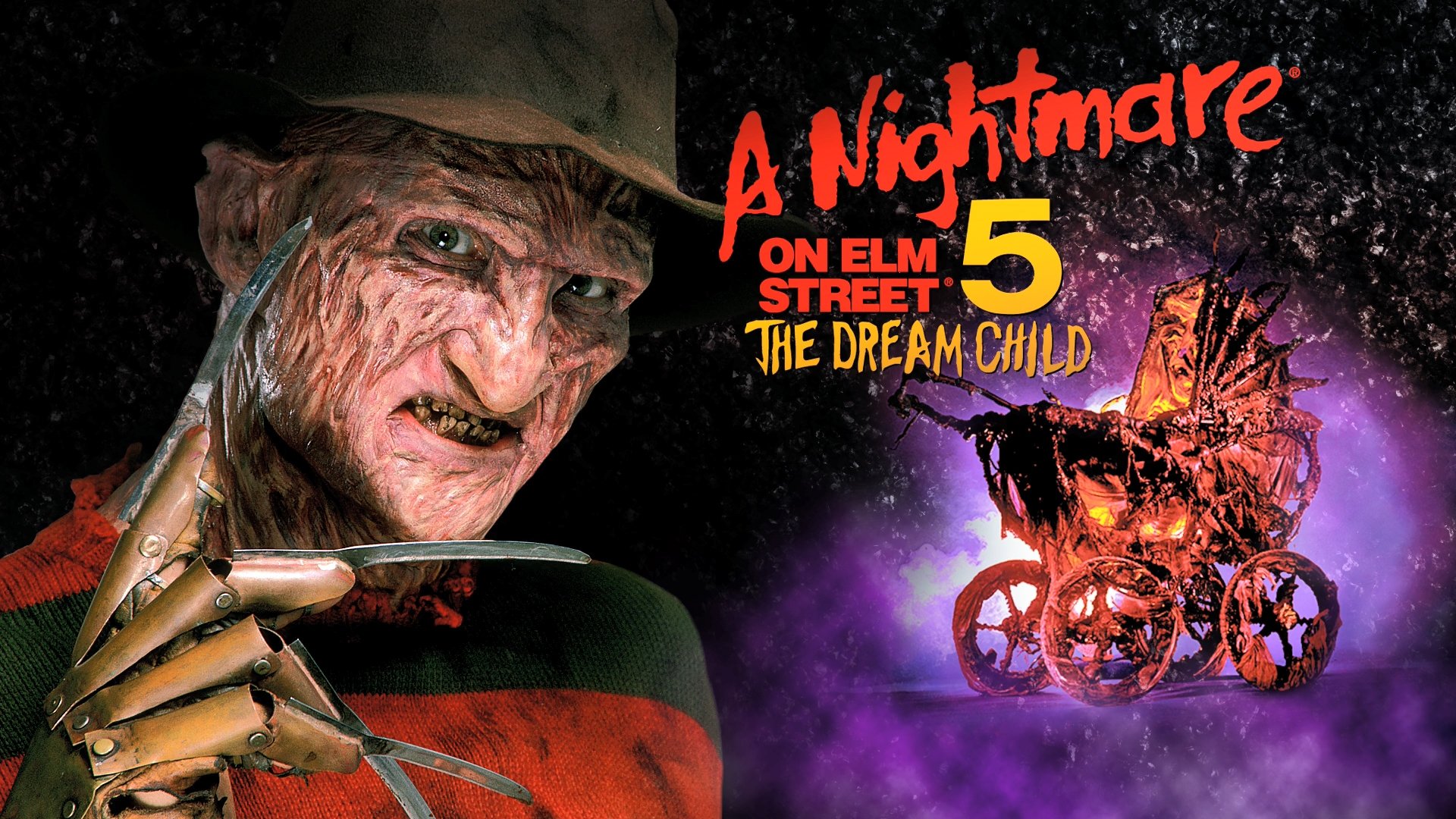
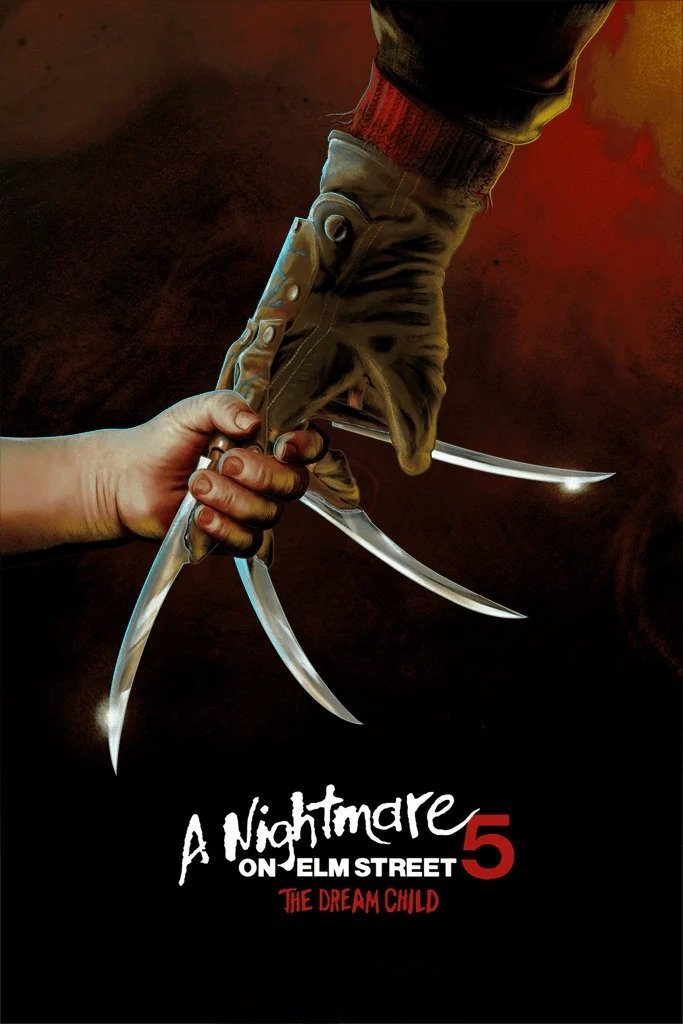
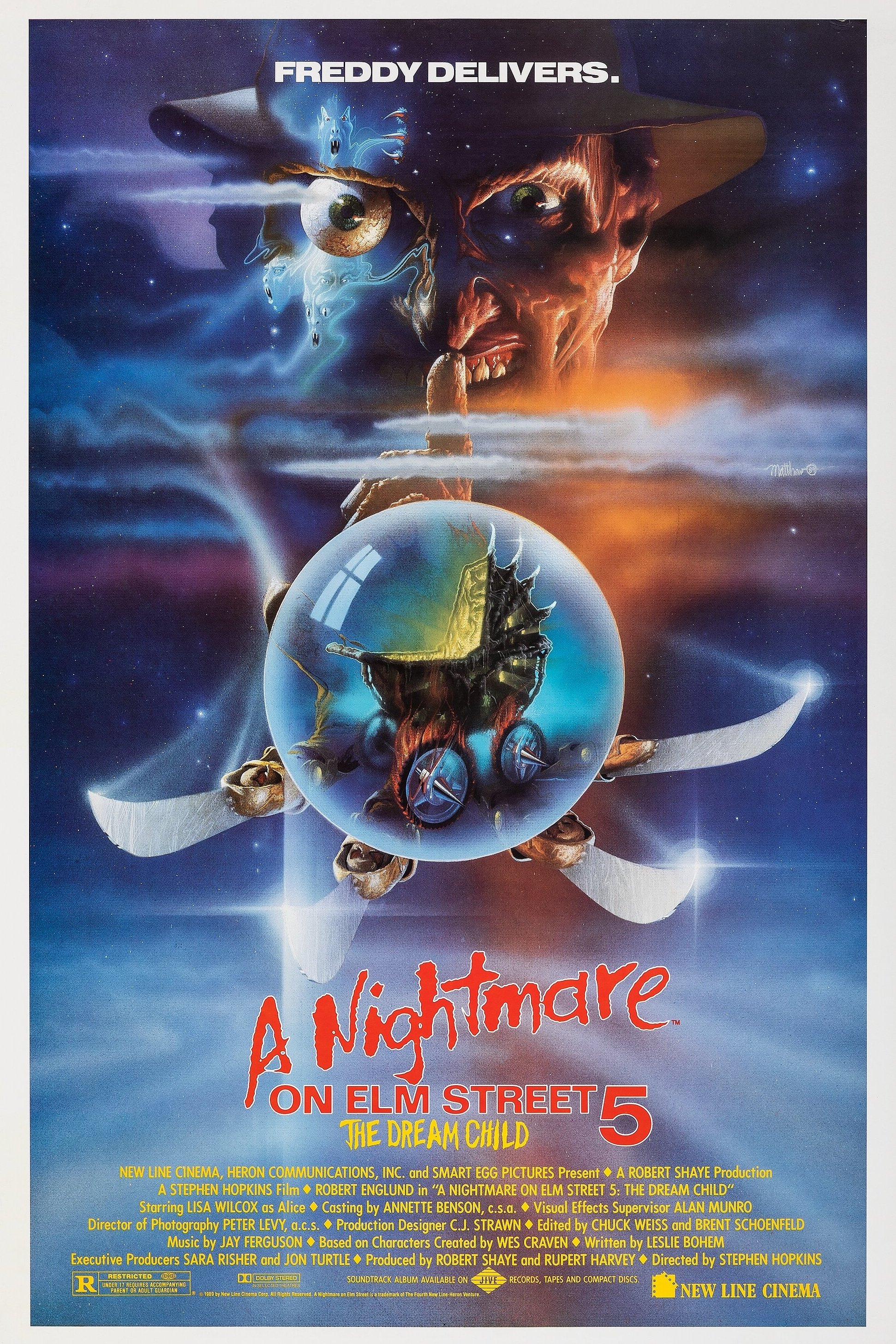
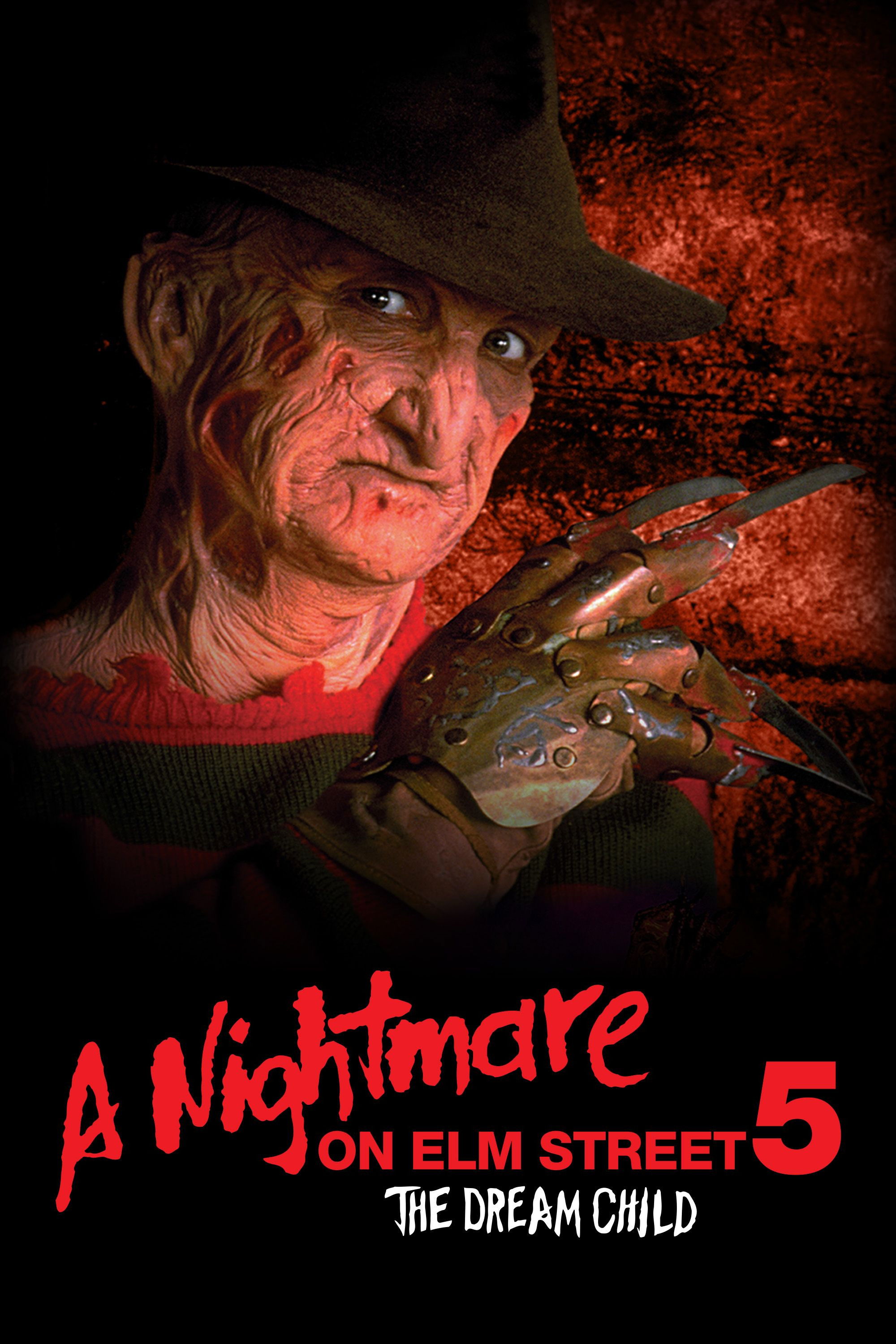
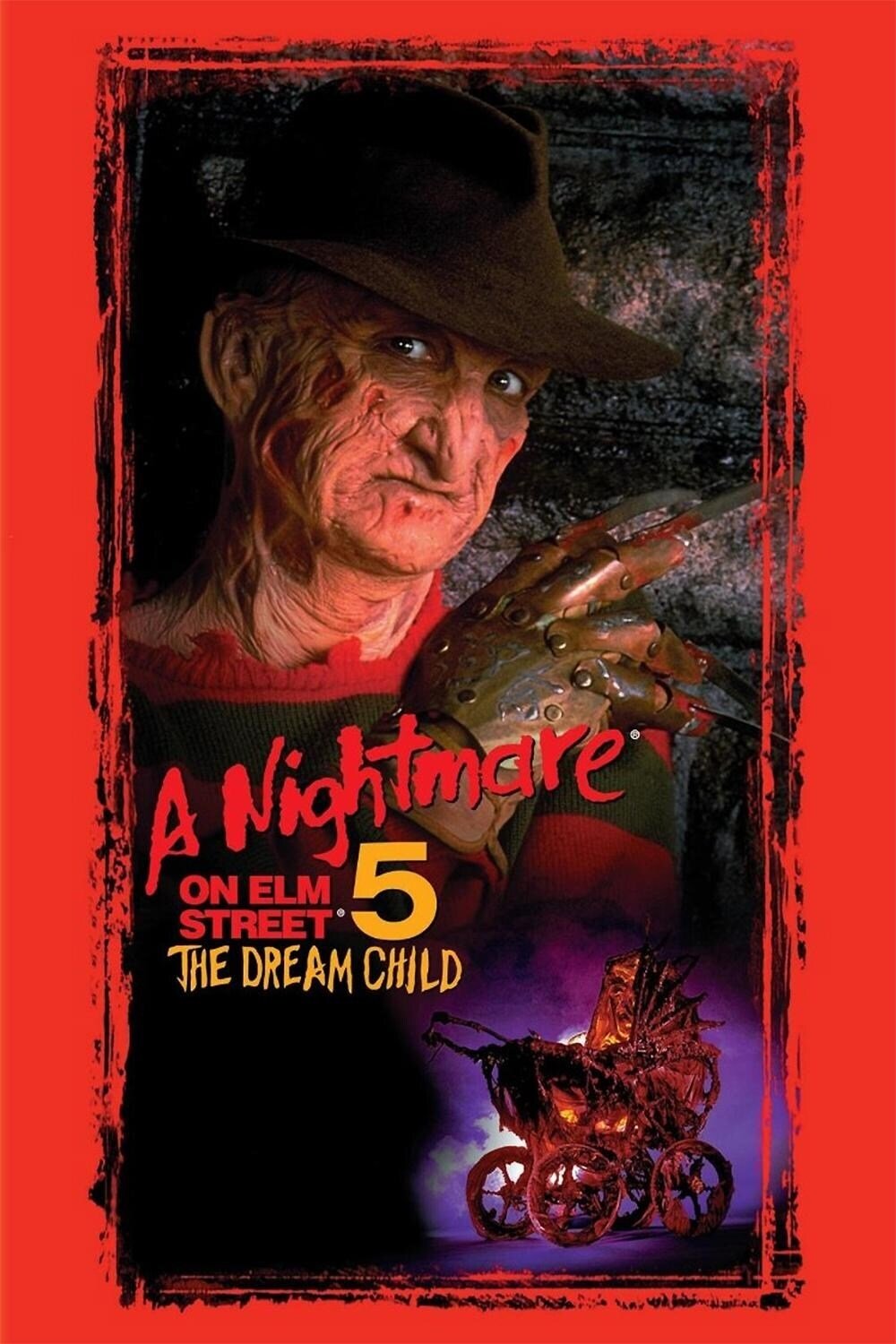
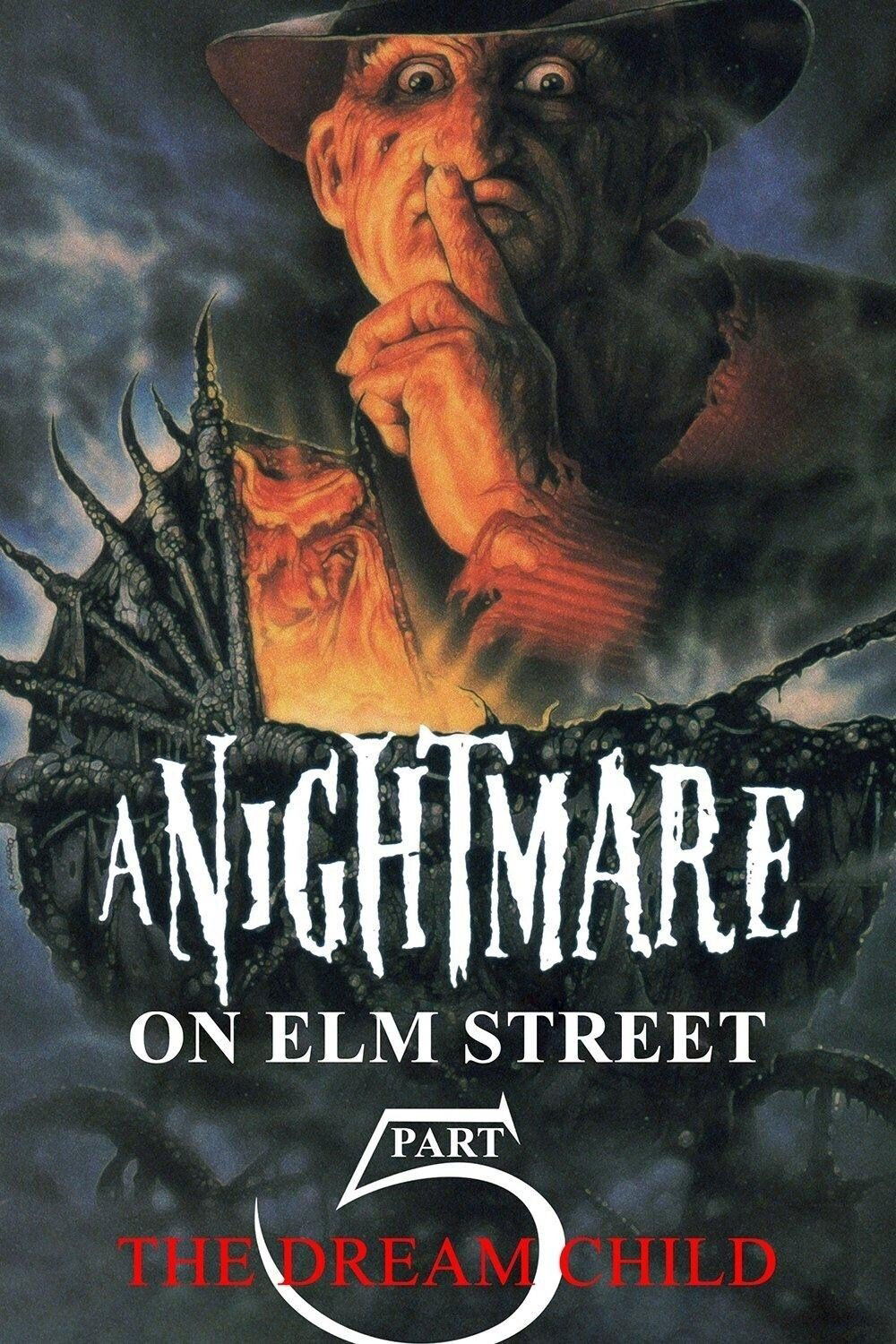
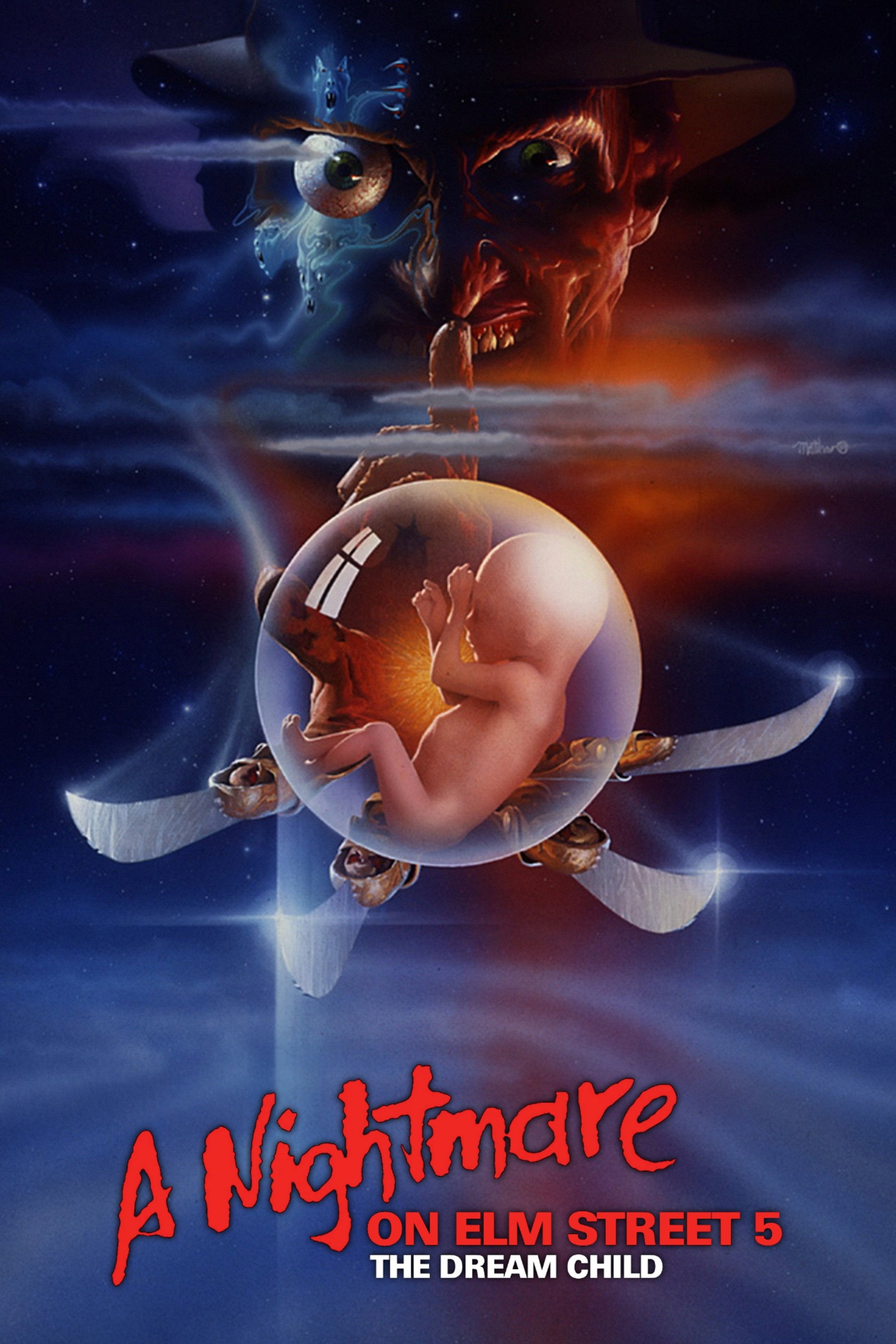
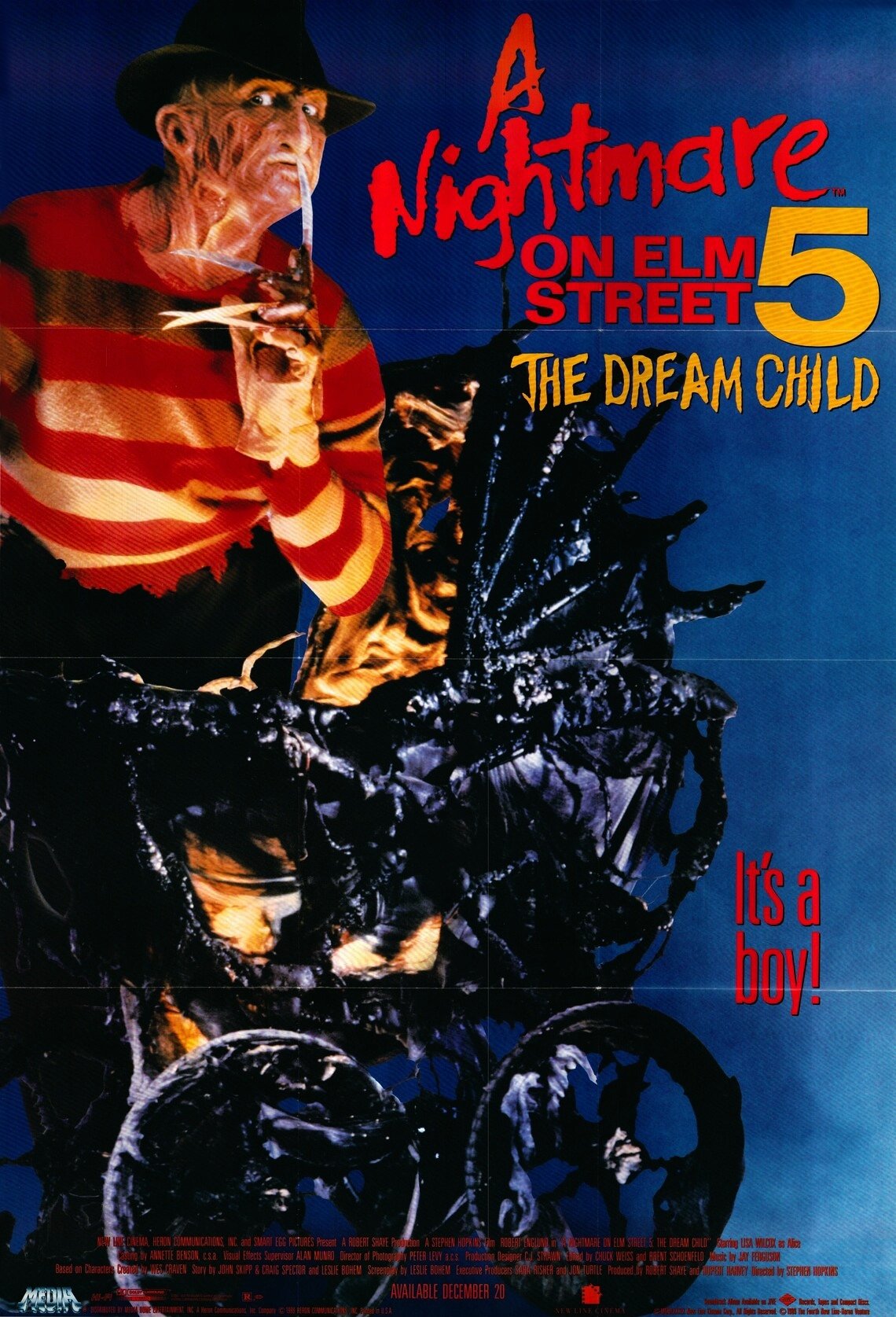
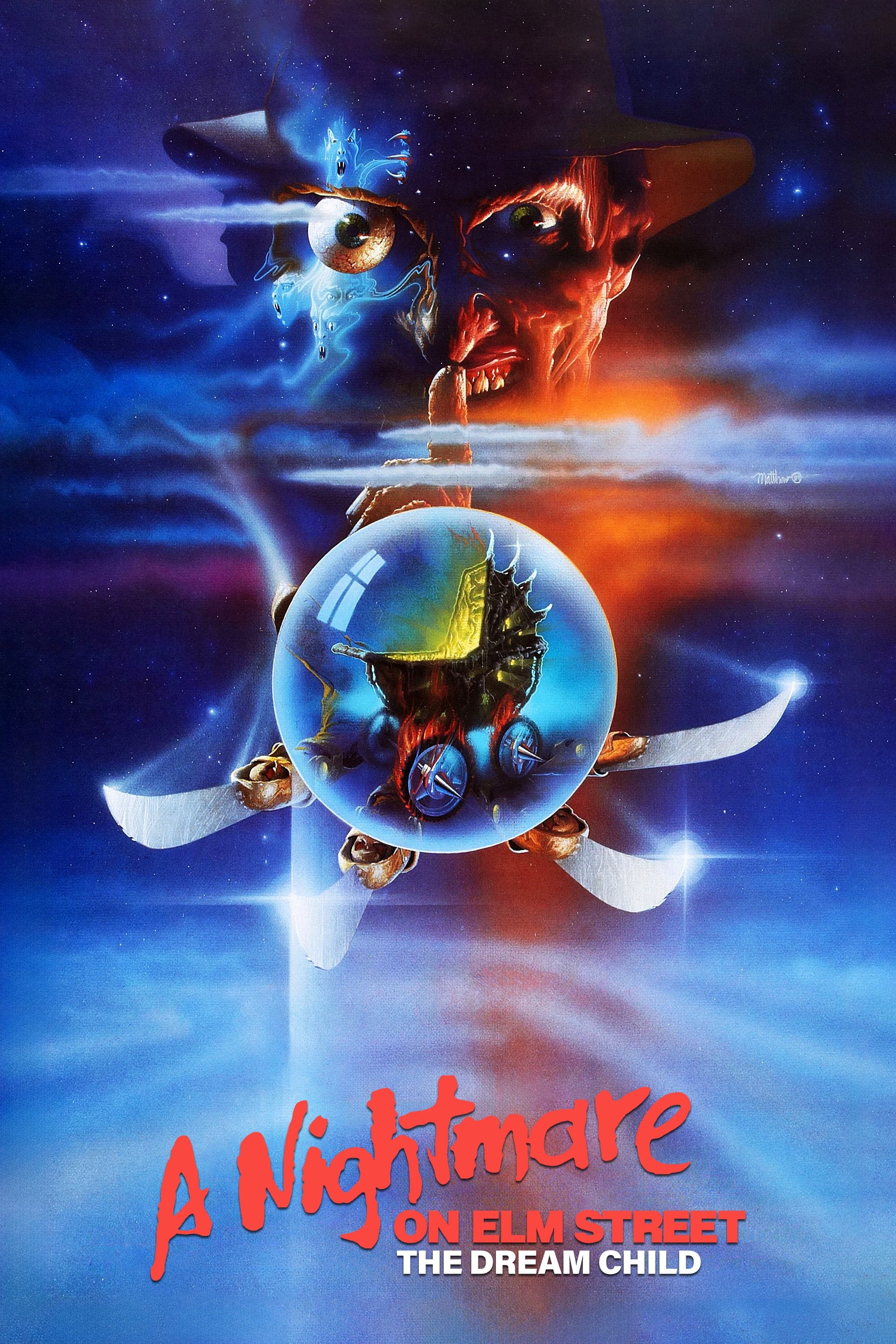
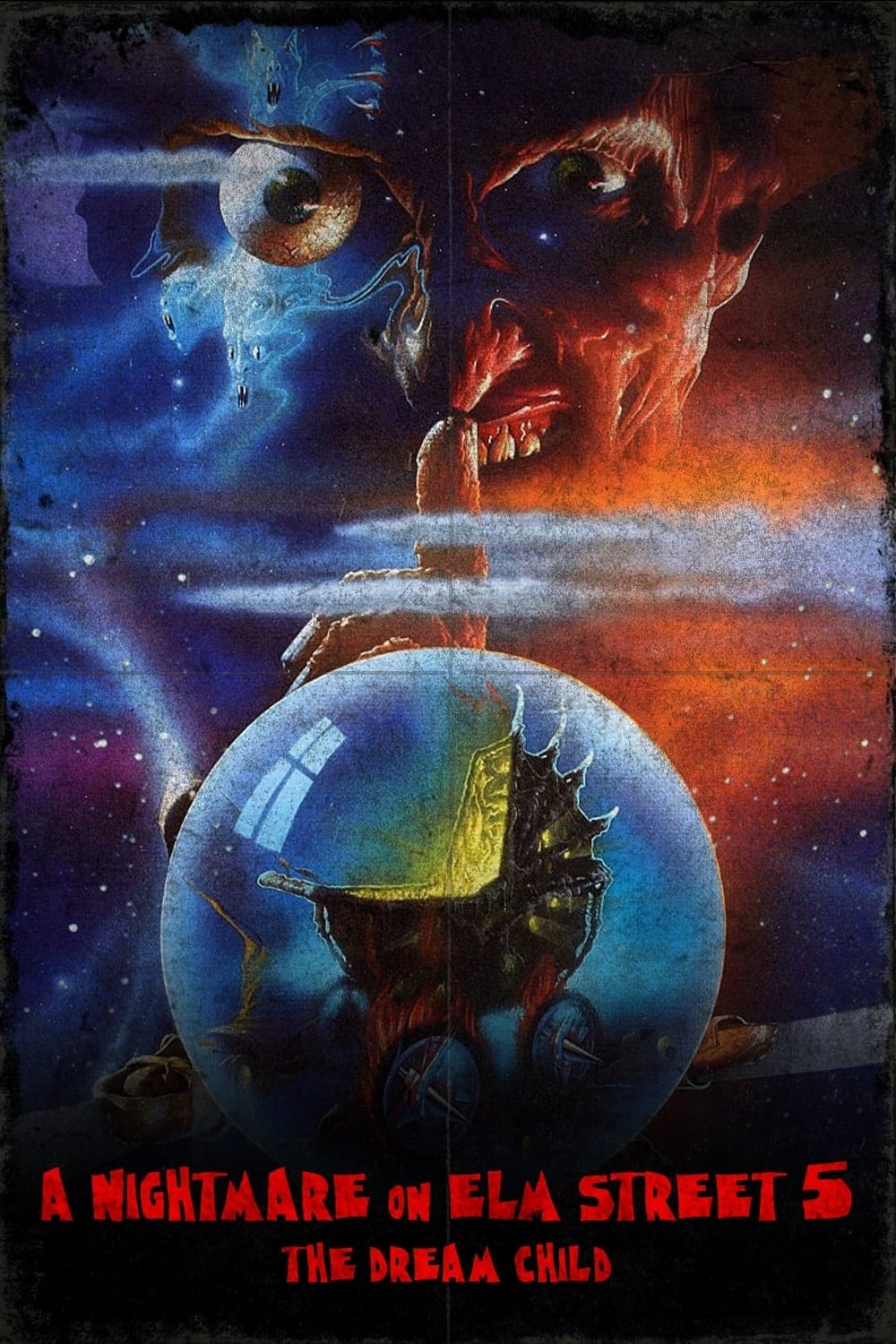
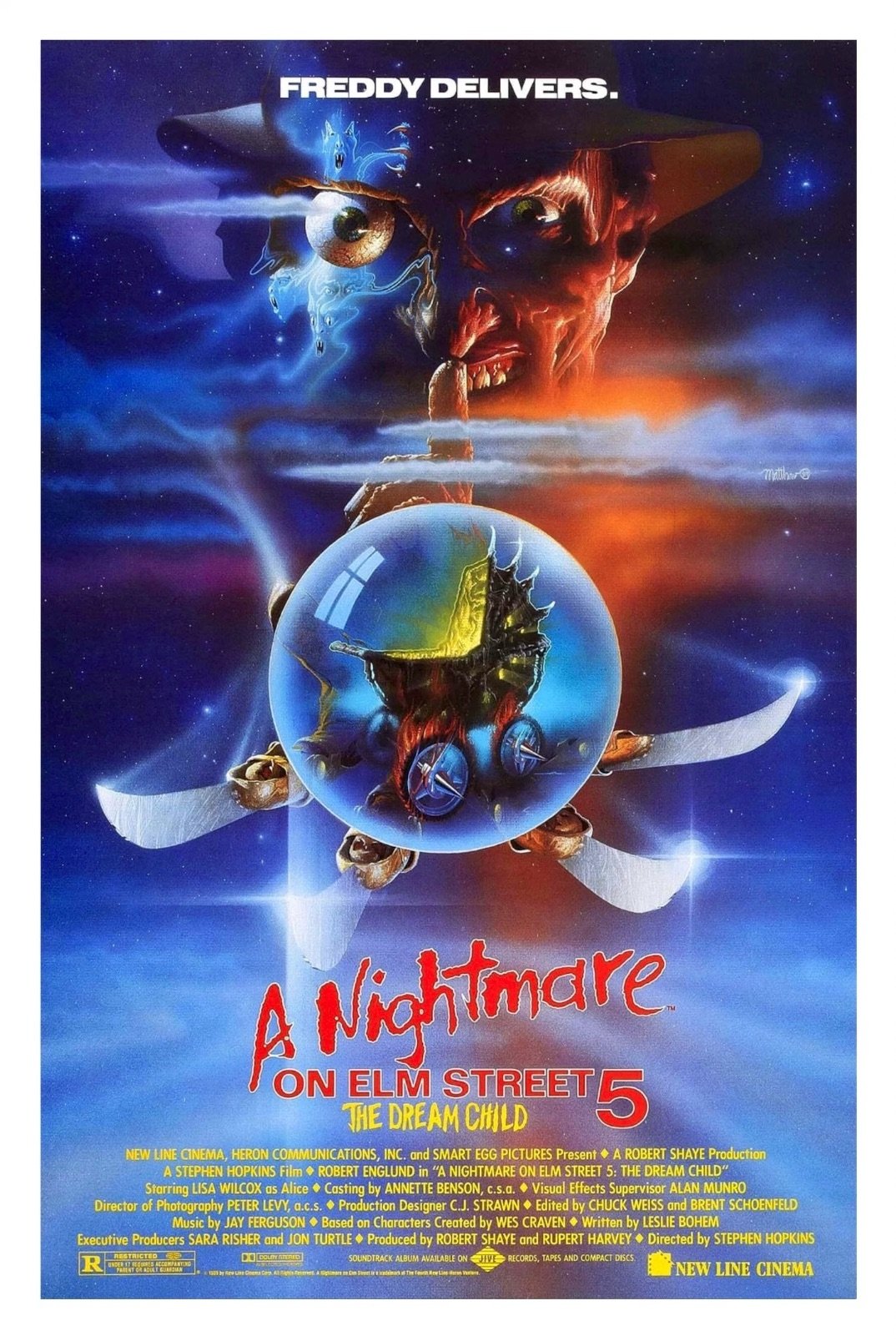
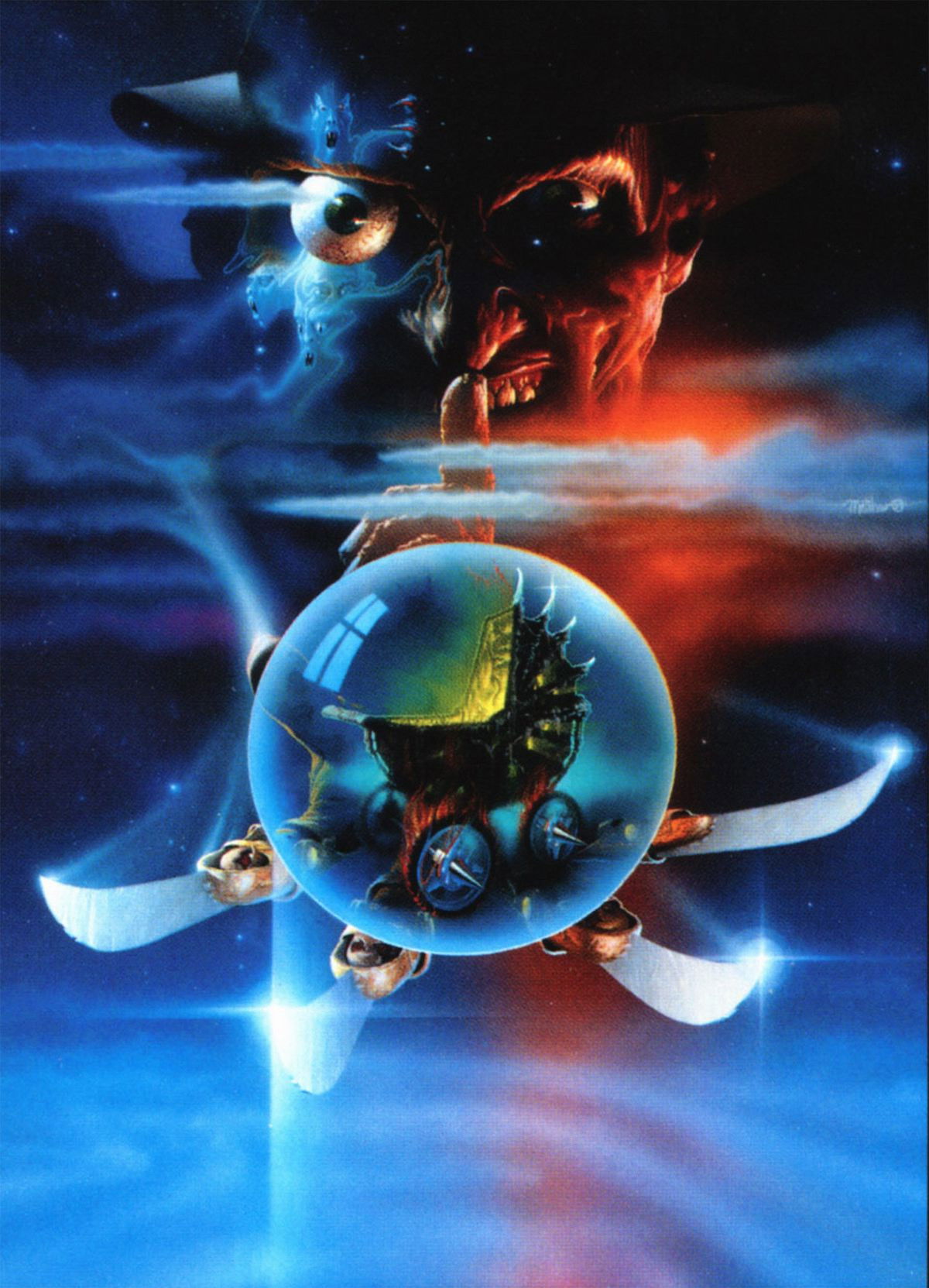
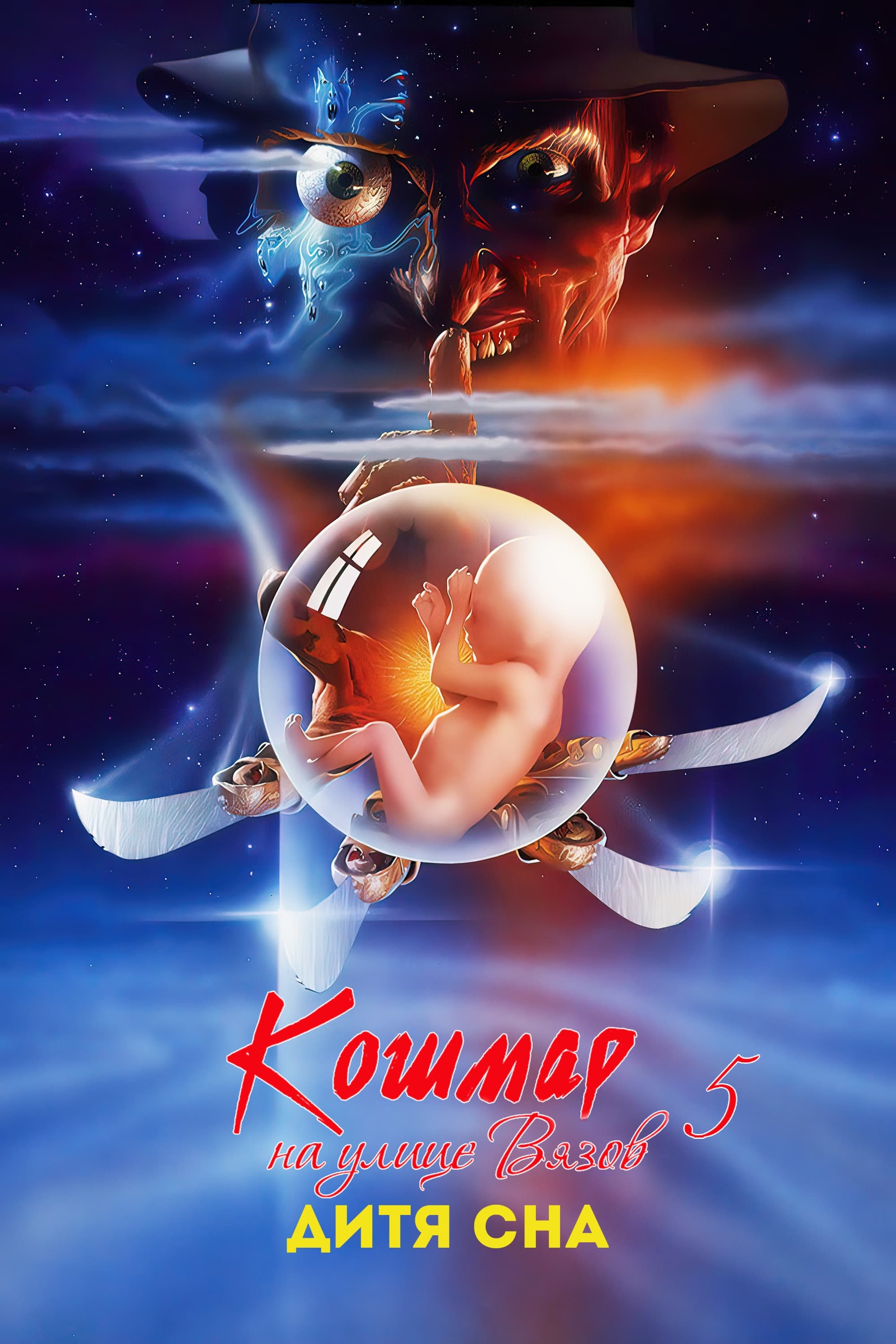
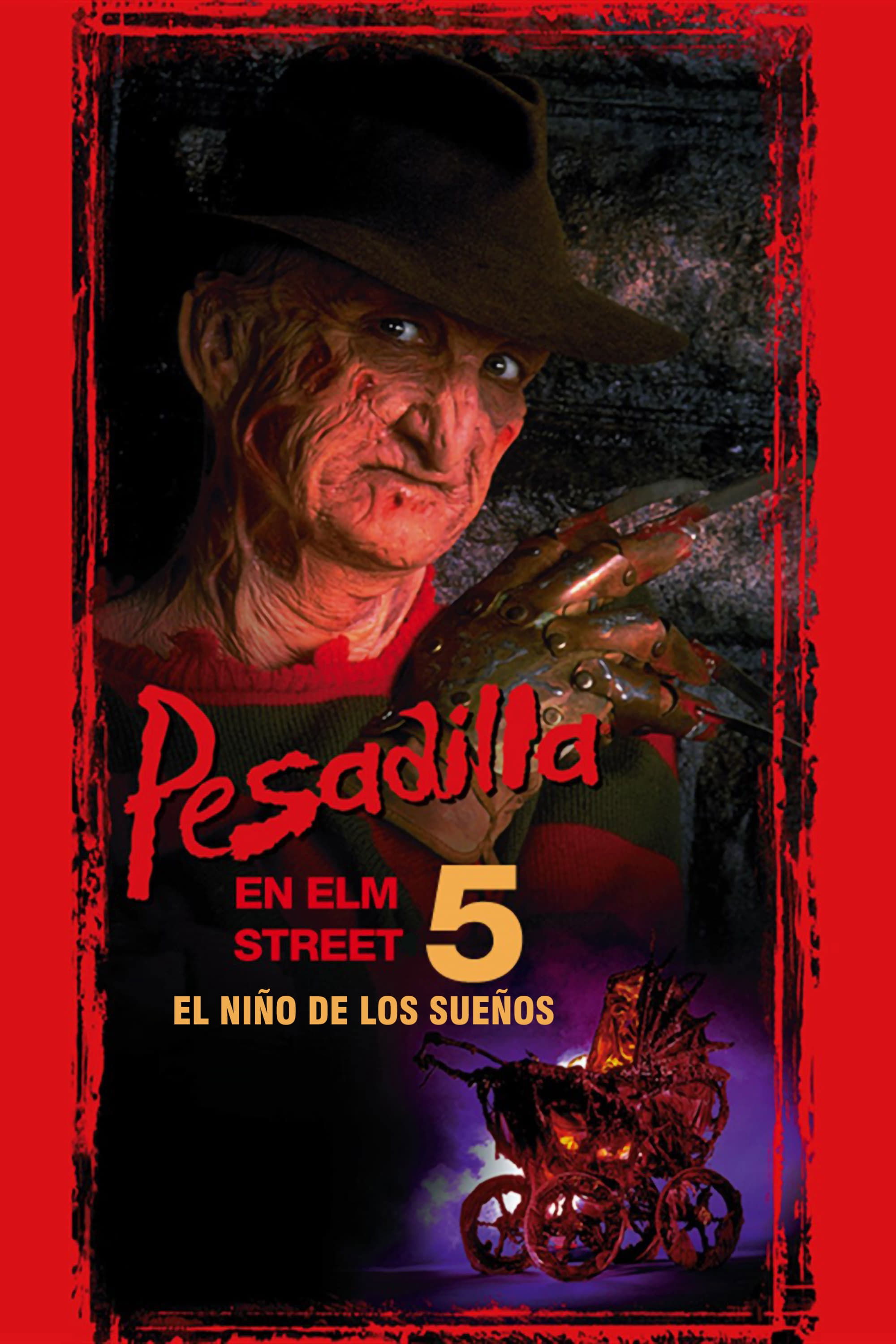
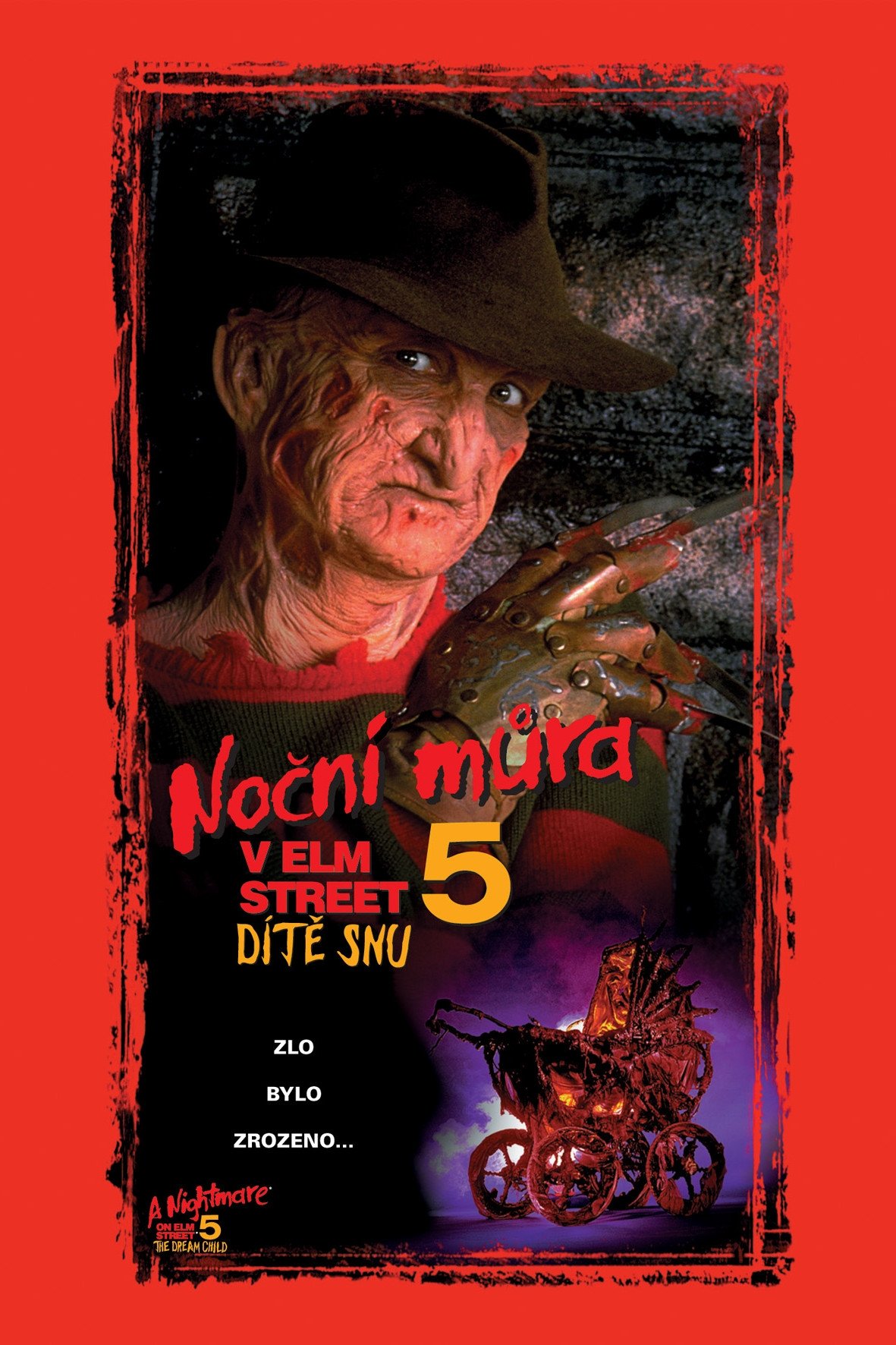
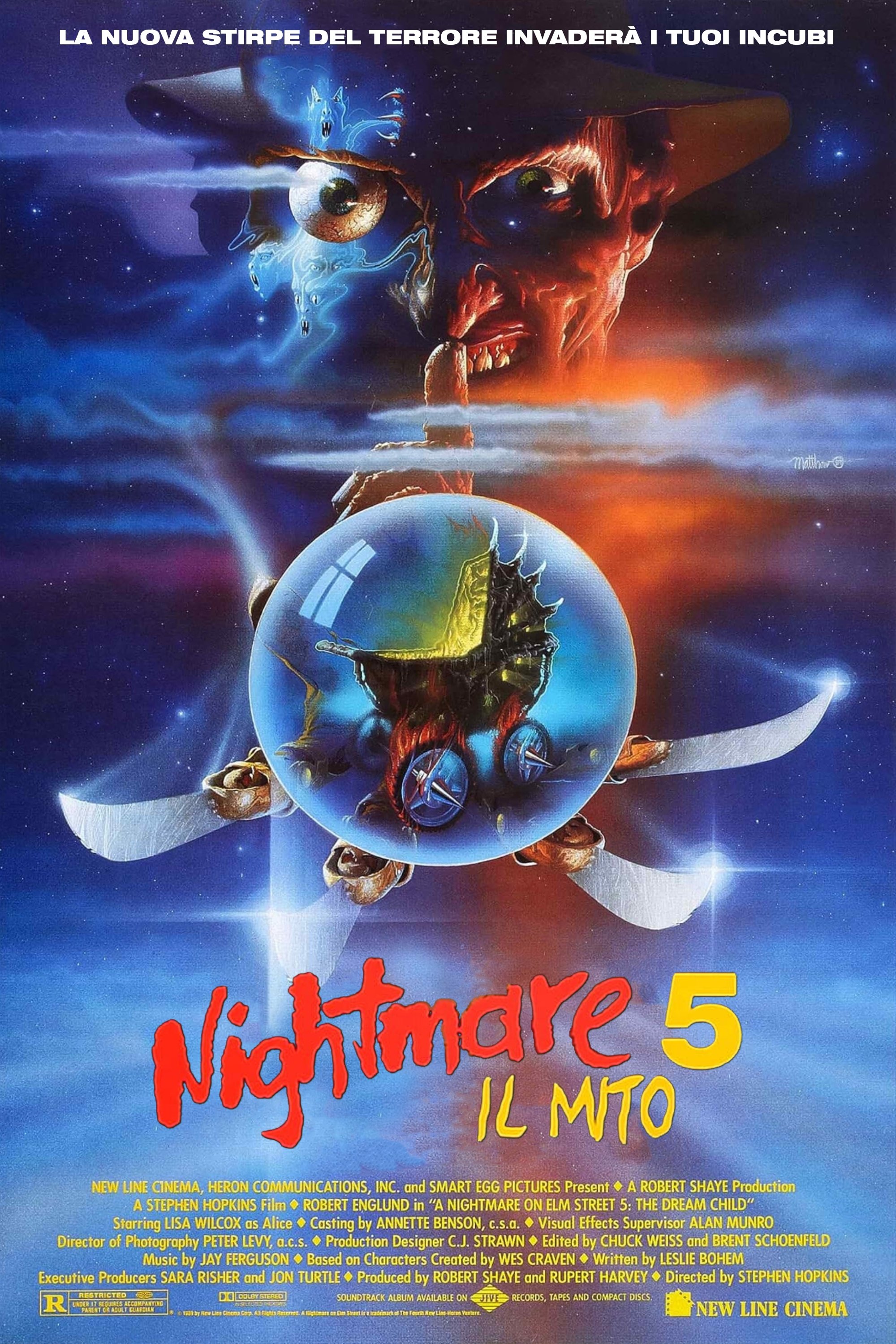
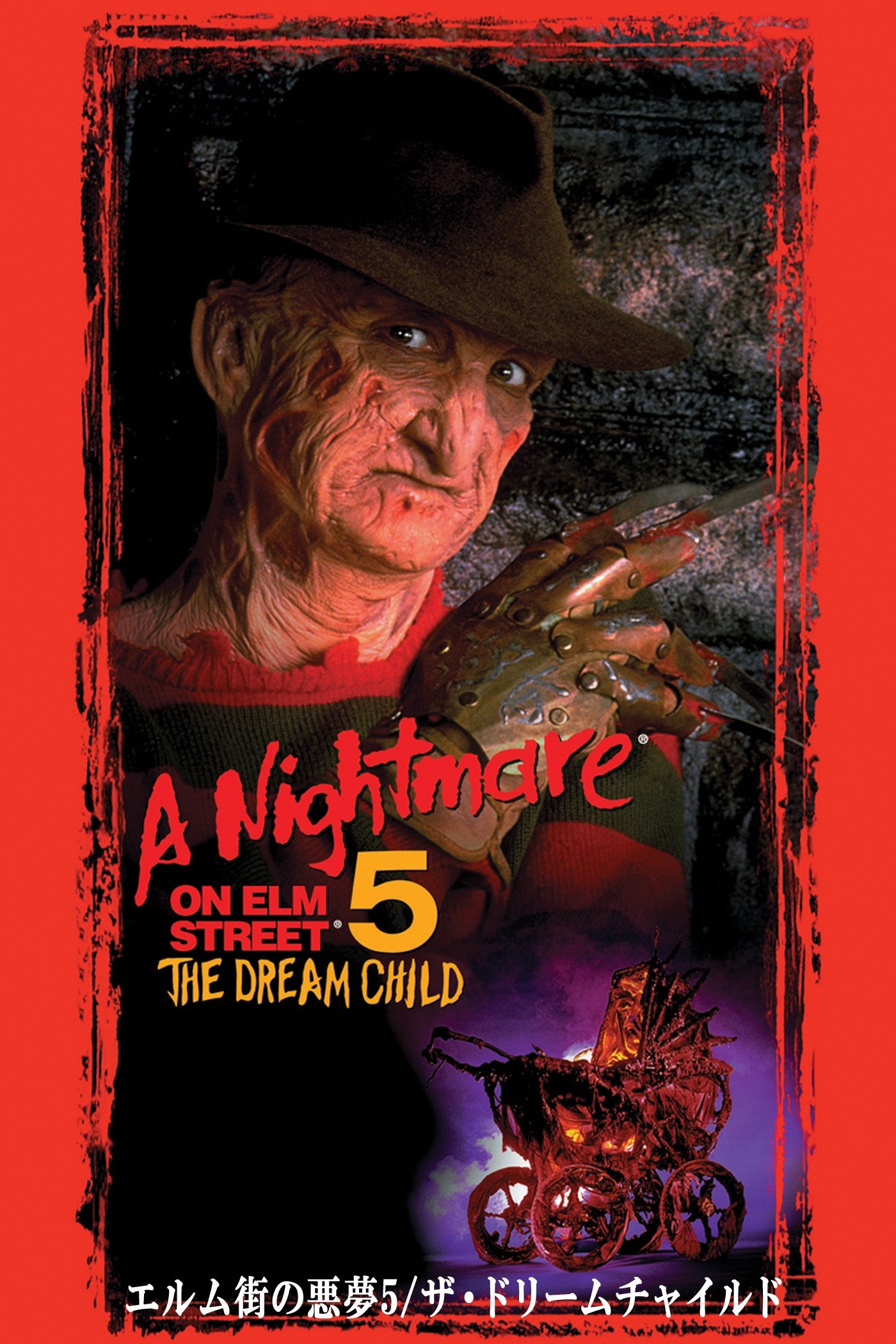
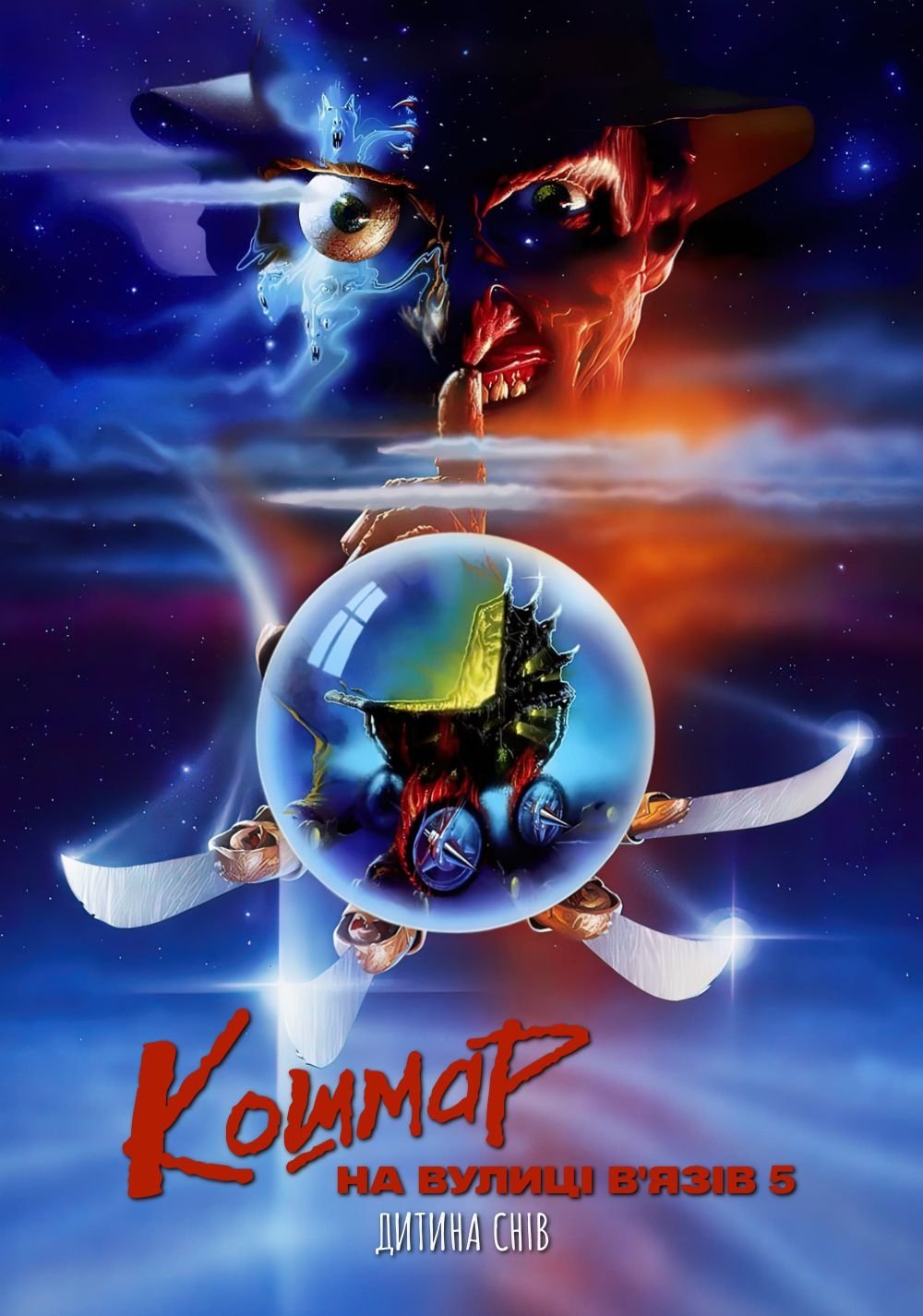
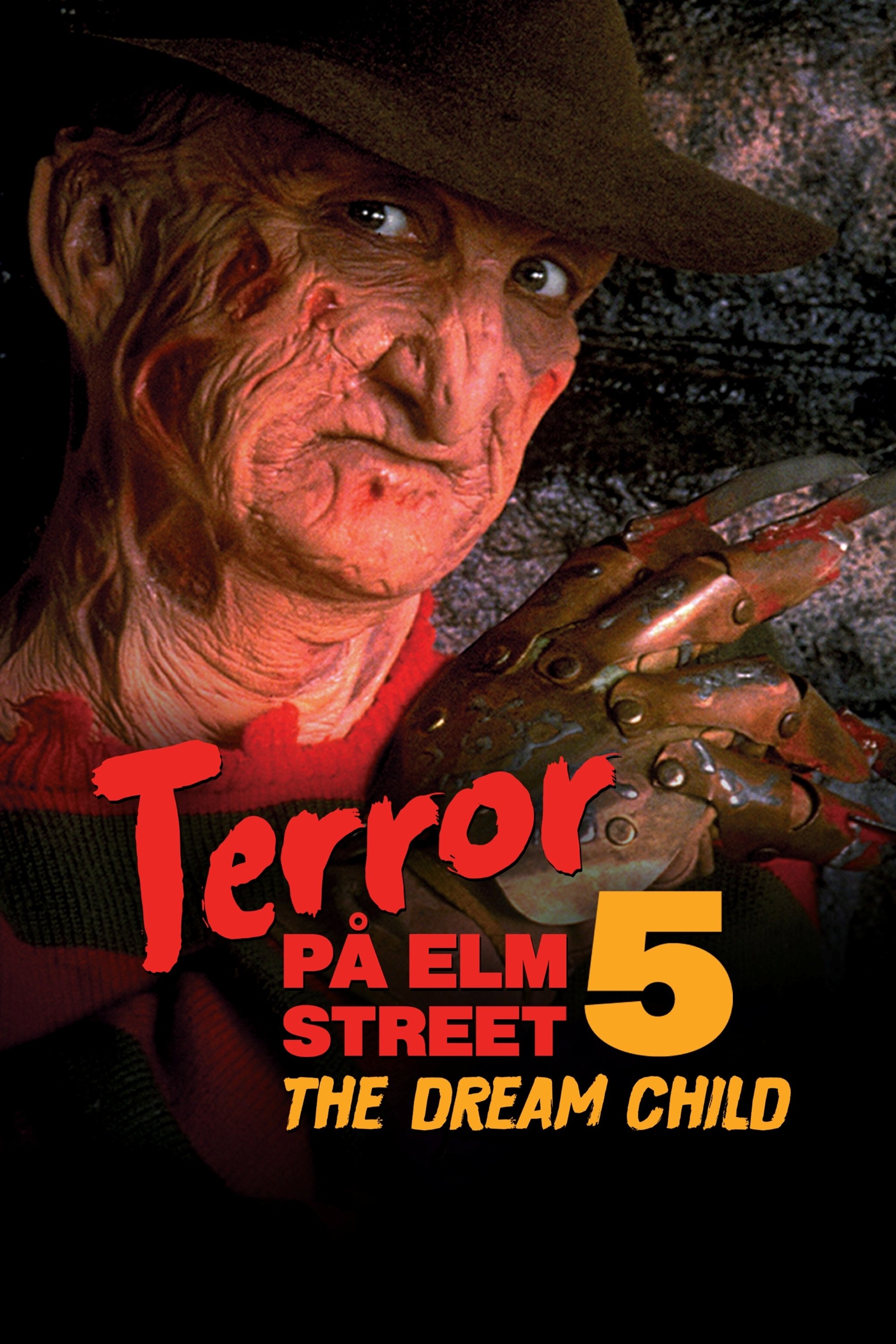
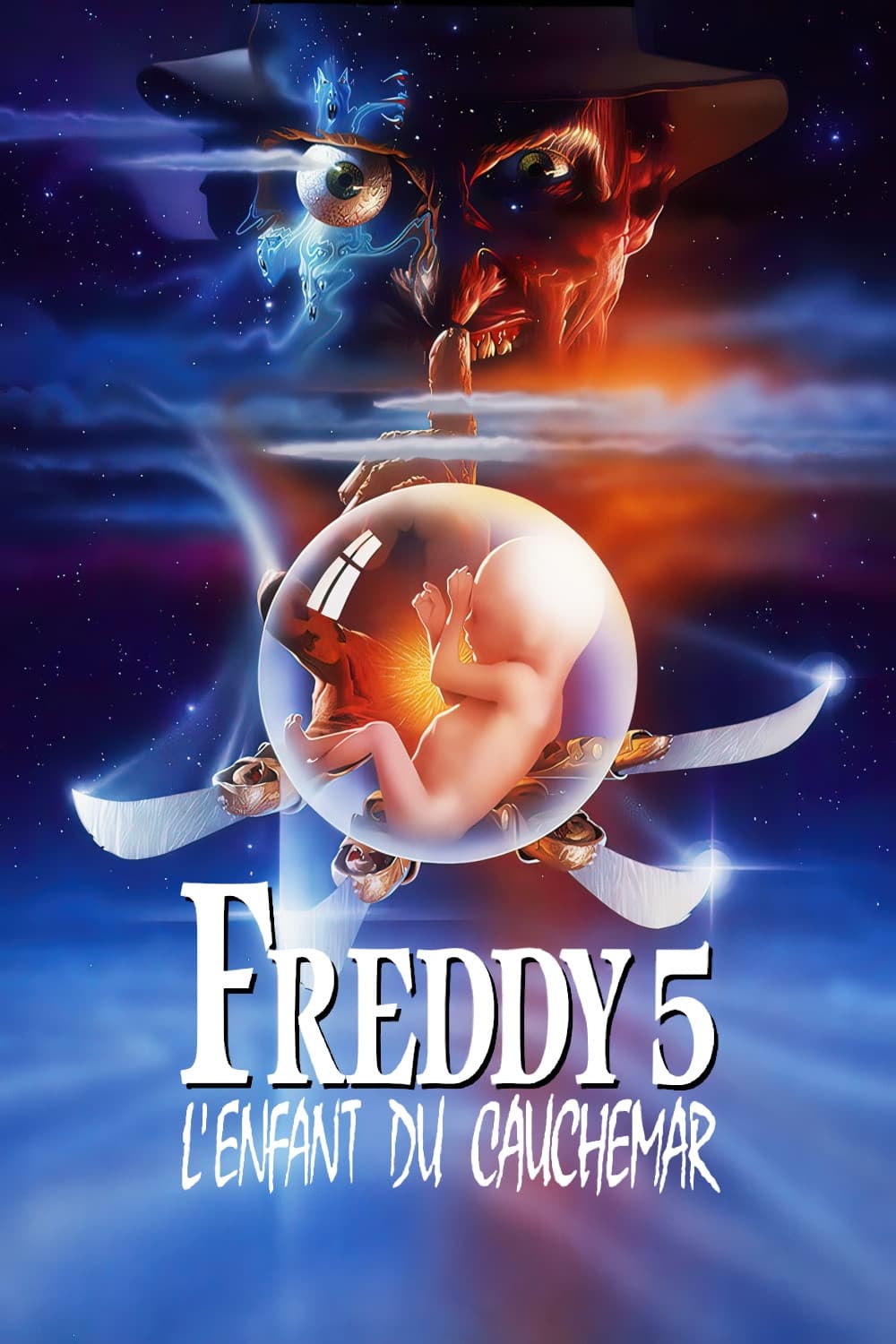
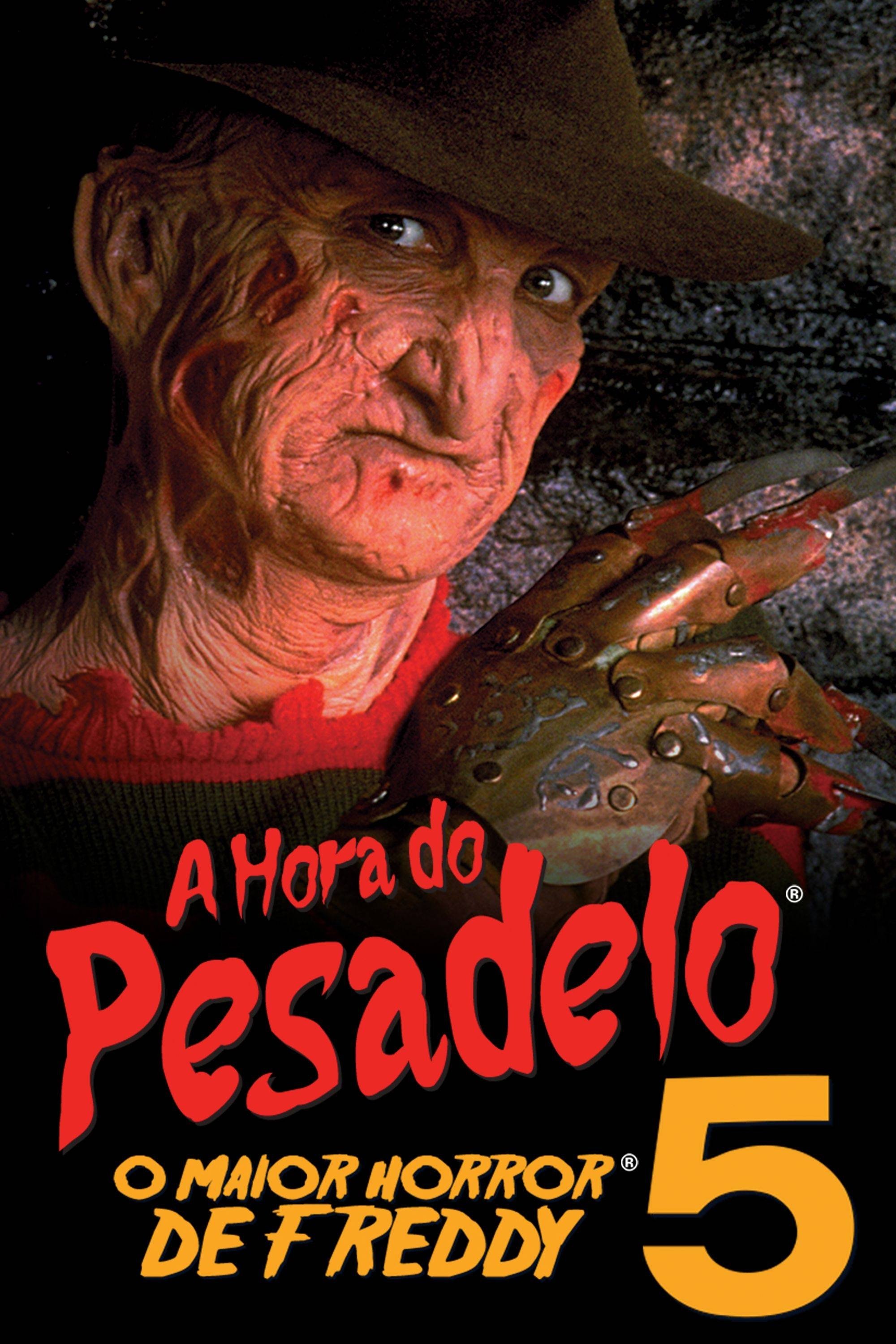
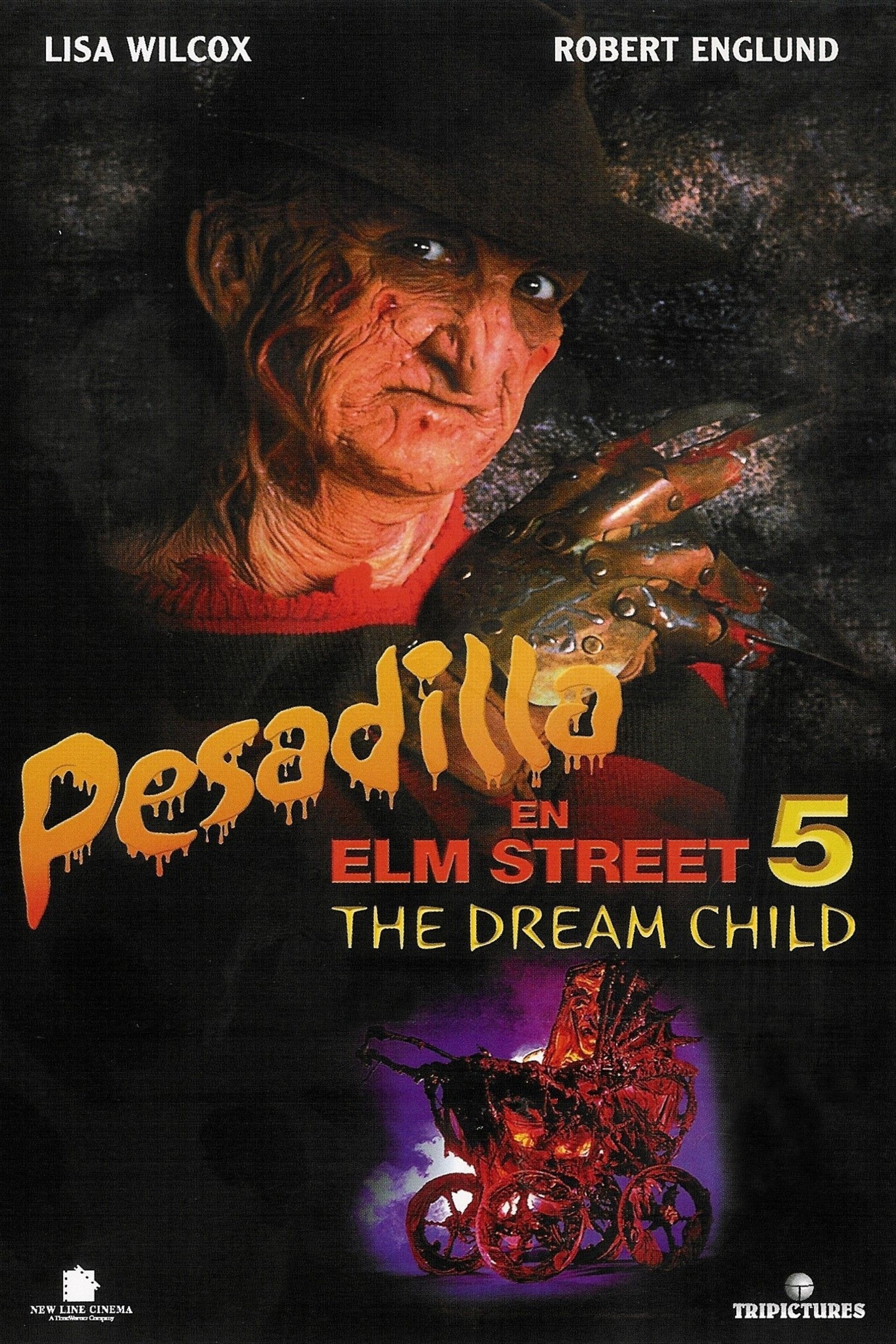
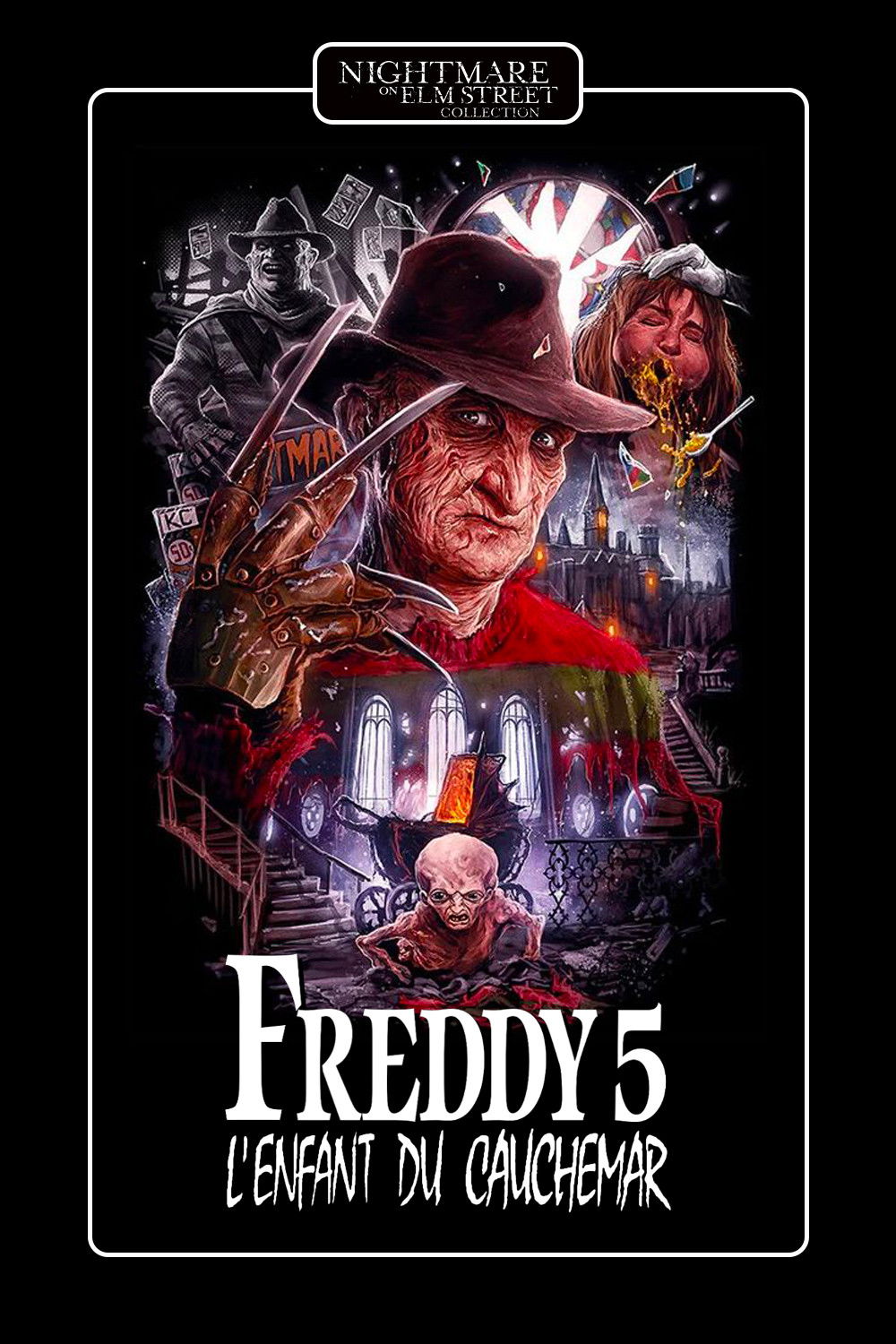
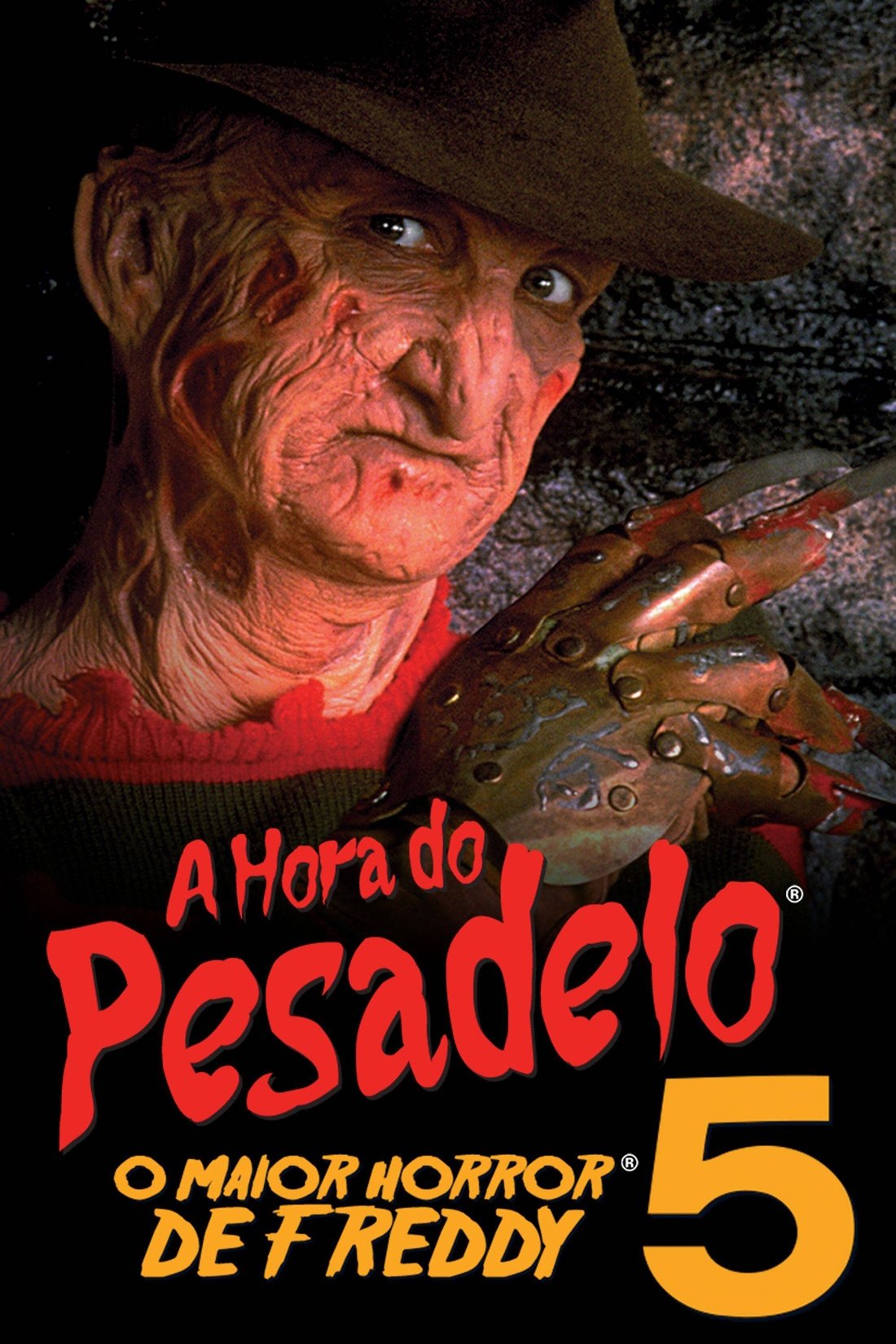
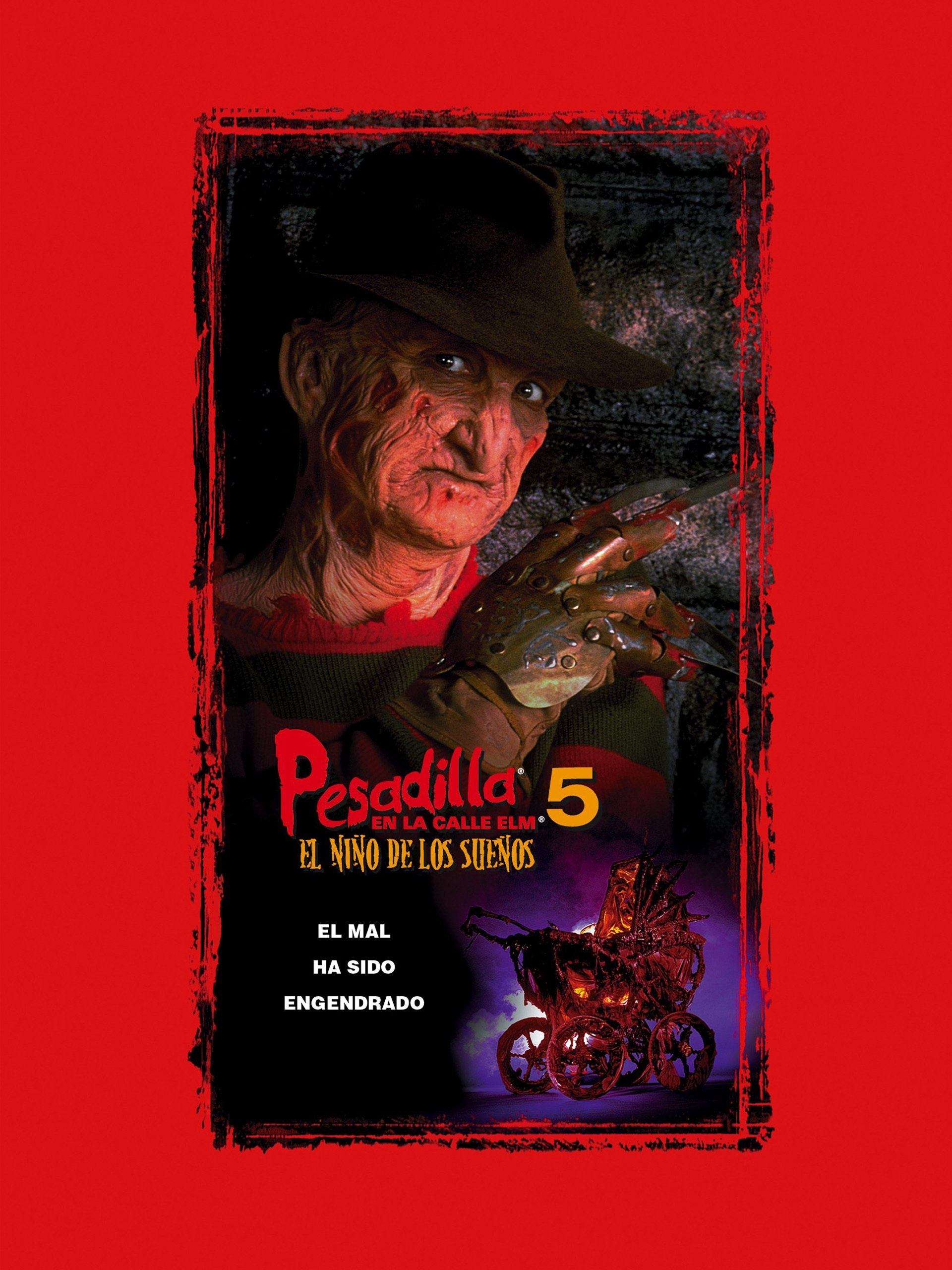
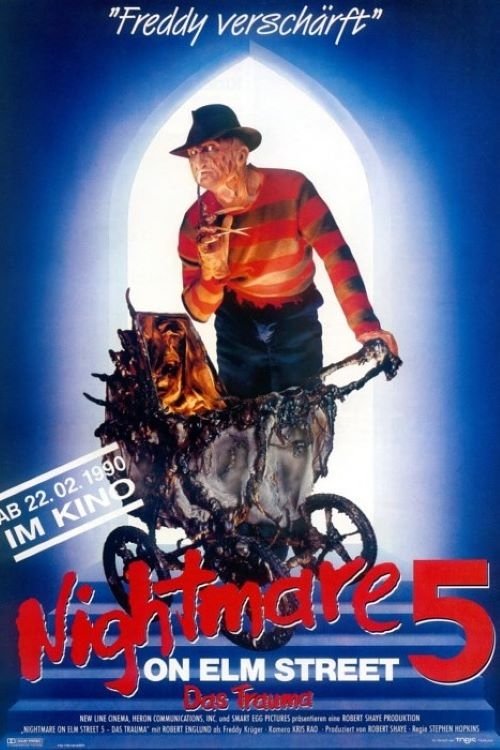
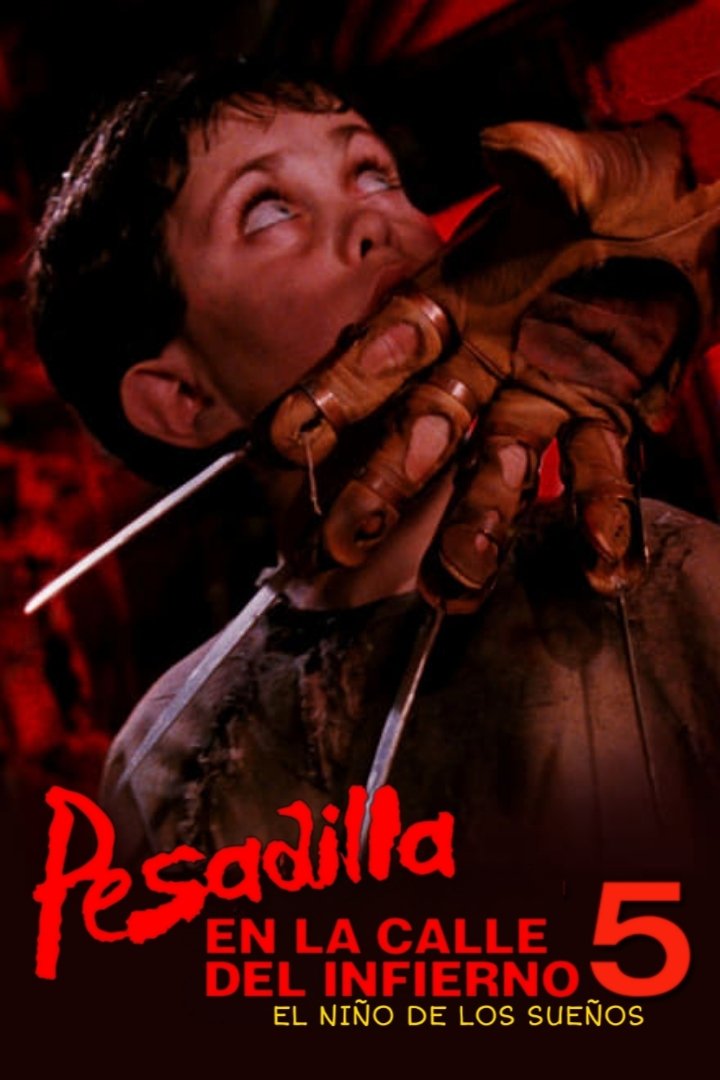
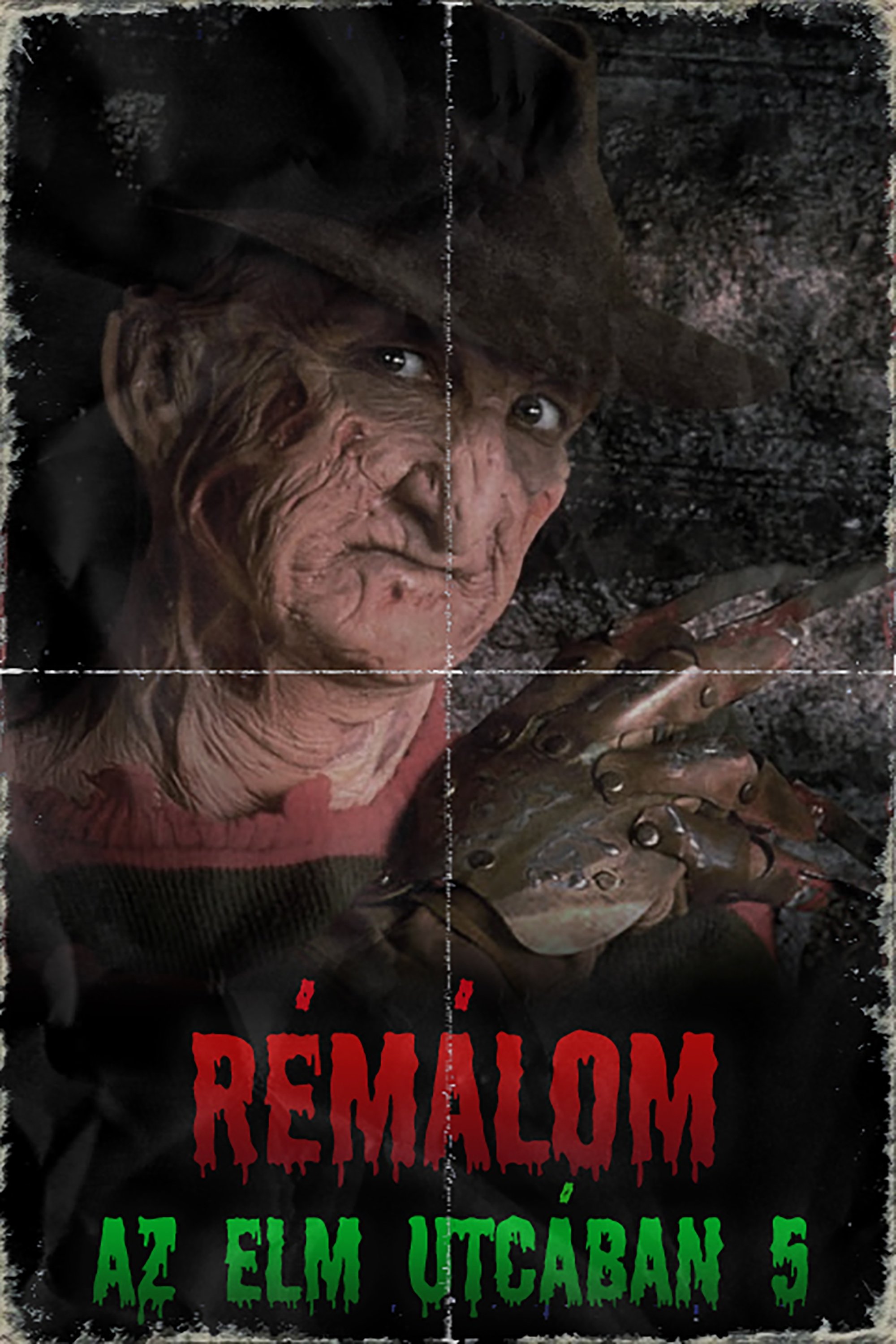
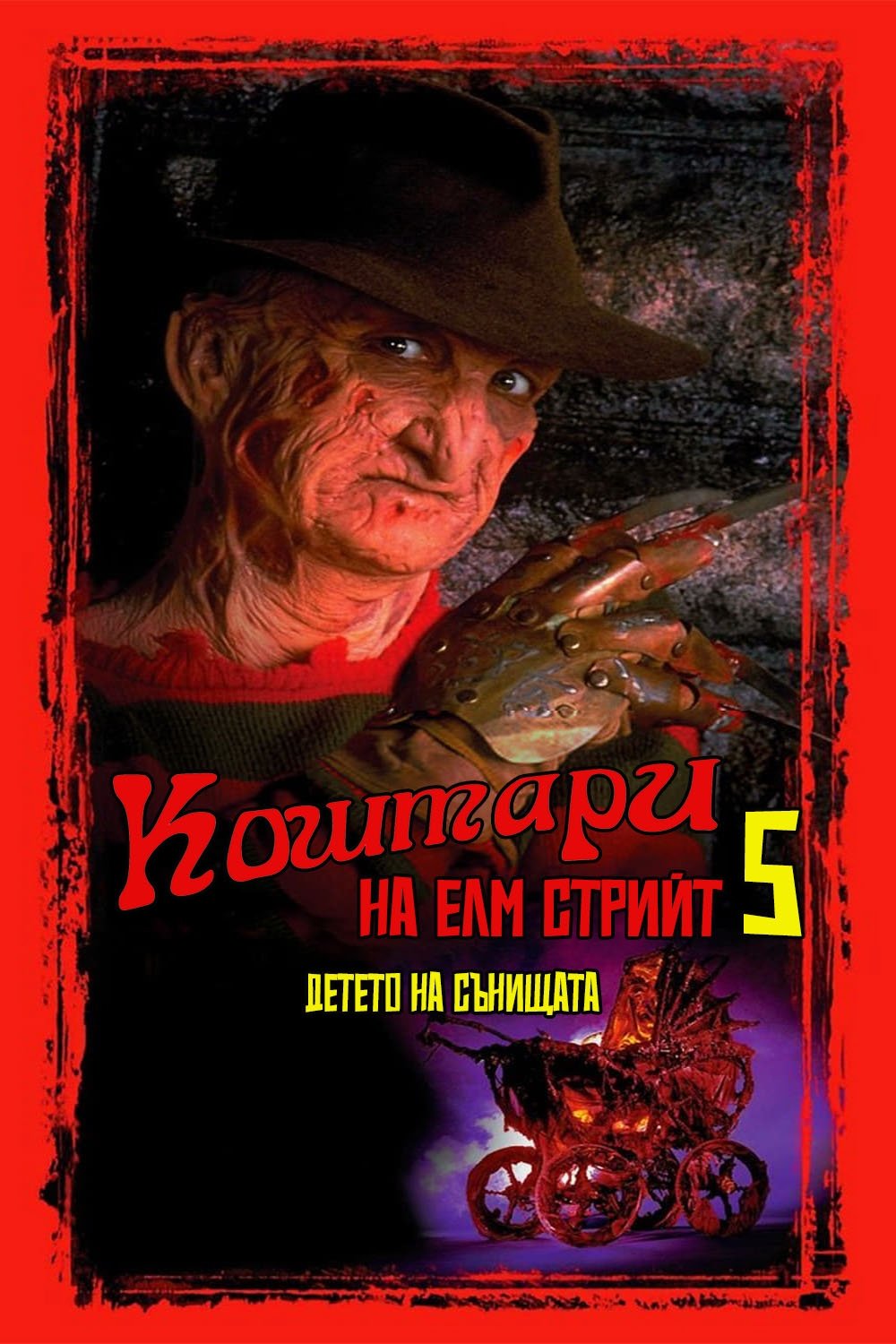
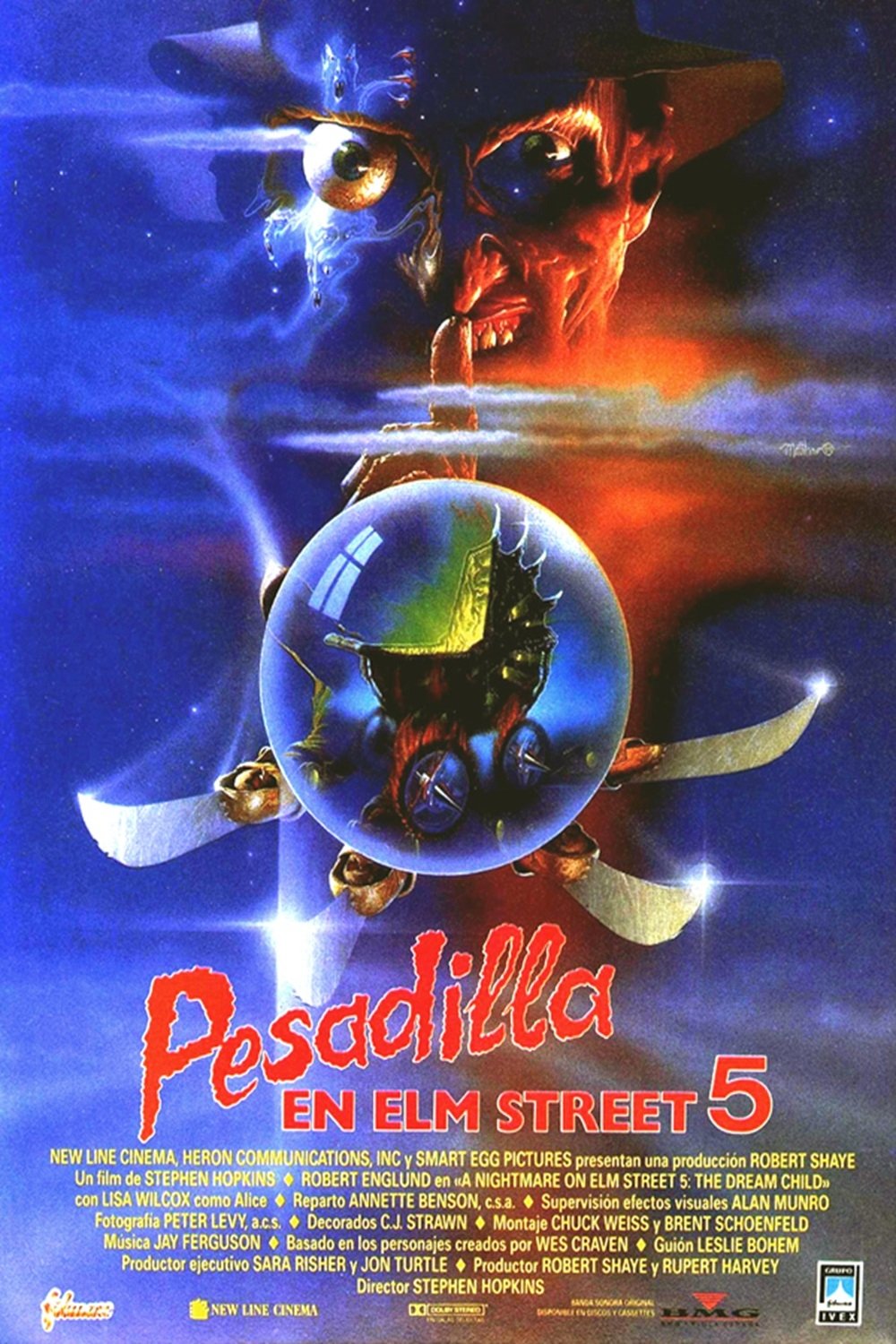
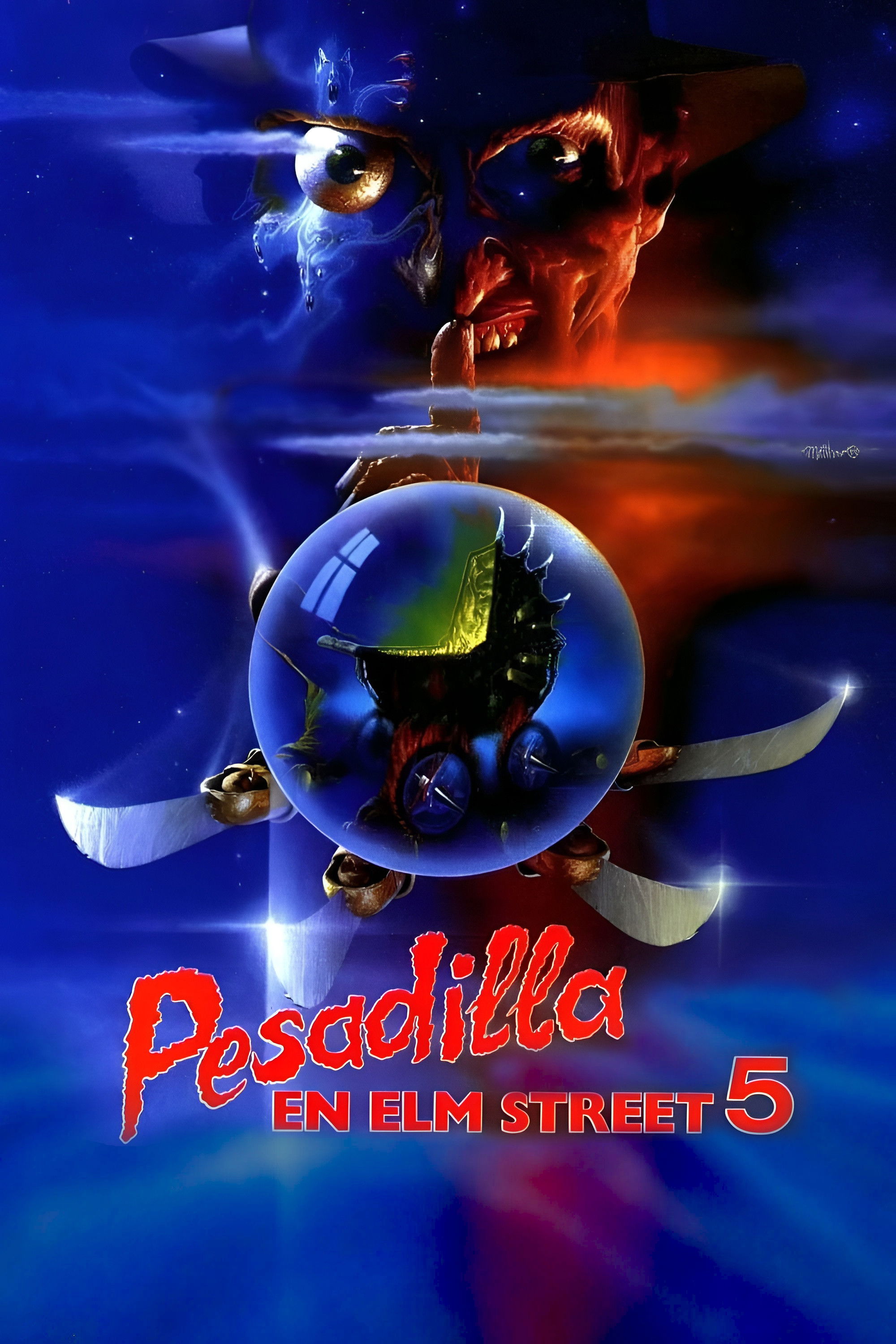
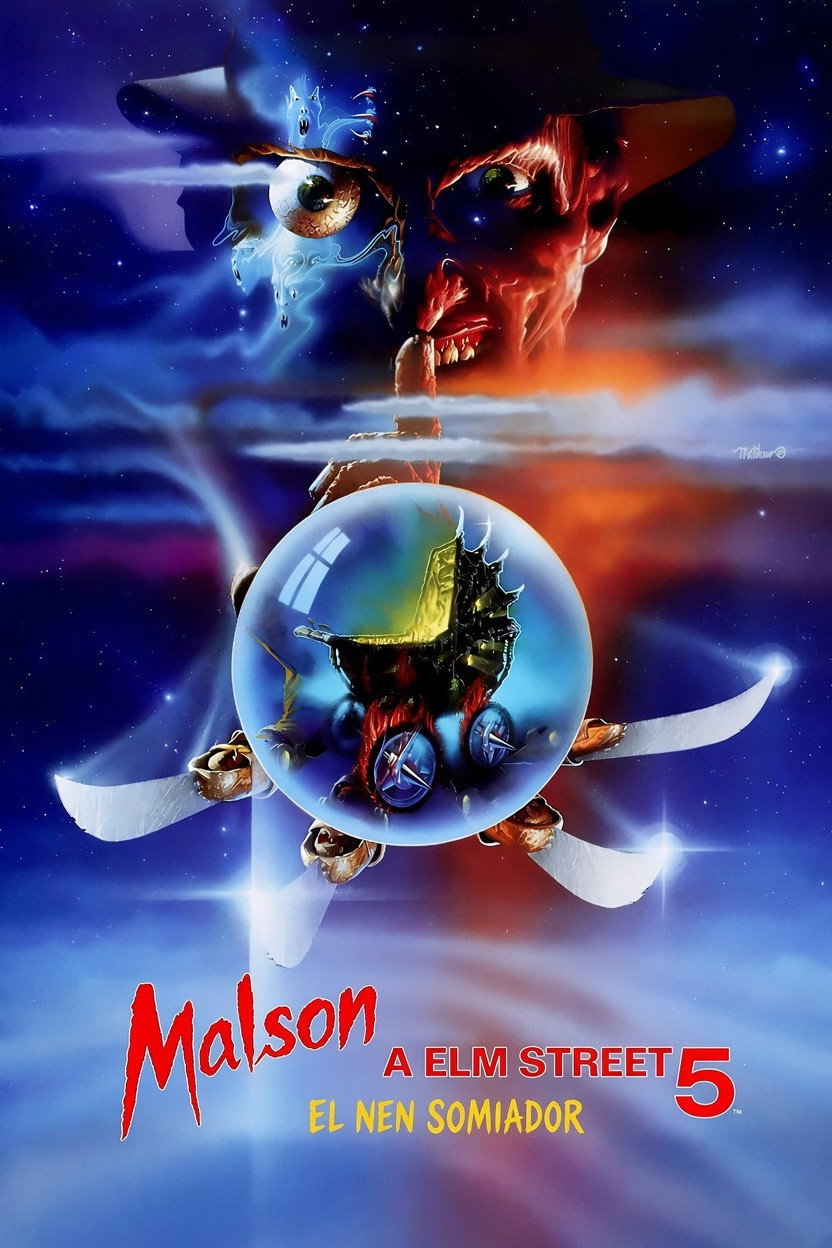
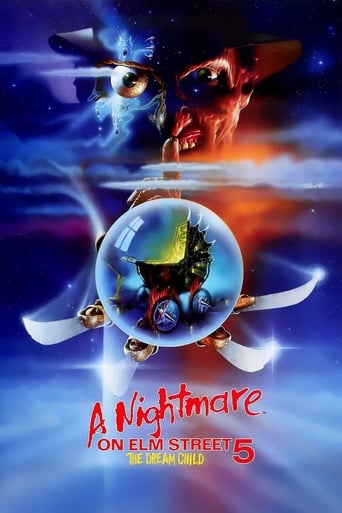
A Nightmare on Elm Street: The Dream Child (1989) poster
Director
Production Companies
New Line Cinema , Heron Communications , Smart Egg Pictures
Plot

Alice Johnson has survived earlier encounters with Freddy Krueger and hopes to rebuild her life with Dan. When she becomes pregnant, she discovers that the killer may be using dreams connected to her unborn child to reach new victims. Alice investigates the frightening influence of Freddy's family history while struggling to protect her friends and understand the unusual route through which he returns. Her nightmares become increasingly elaborate, combining distorted childhood imagery with fears about parenthood and the future.

Alternative Titles
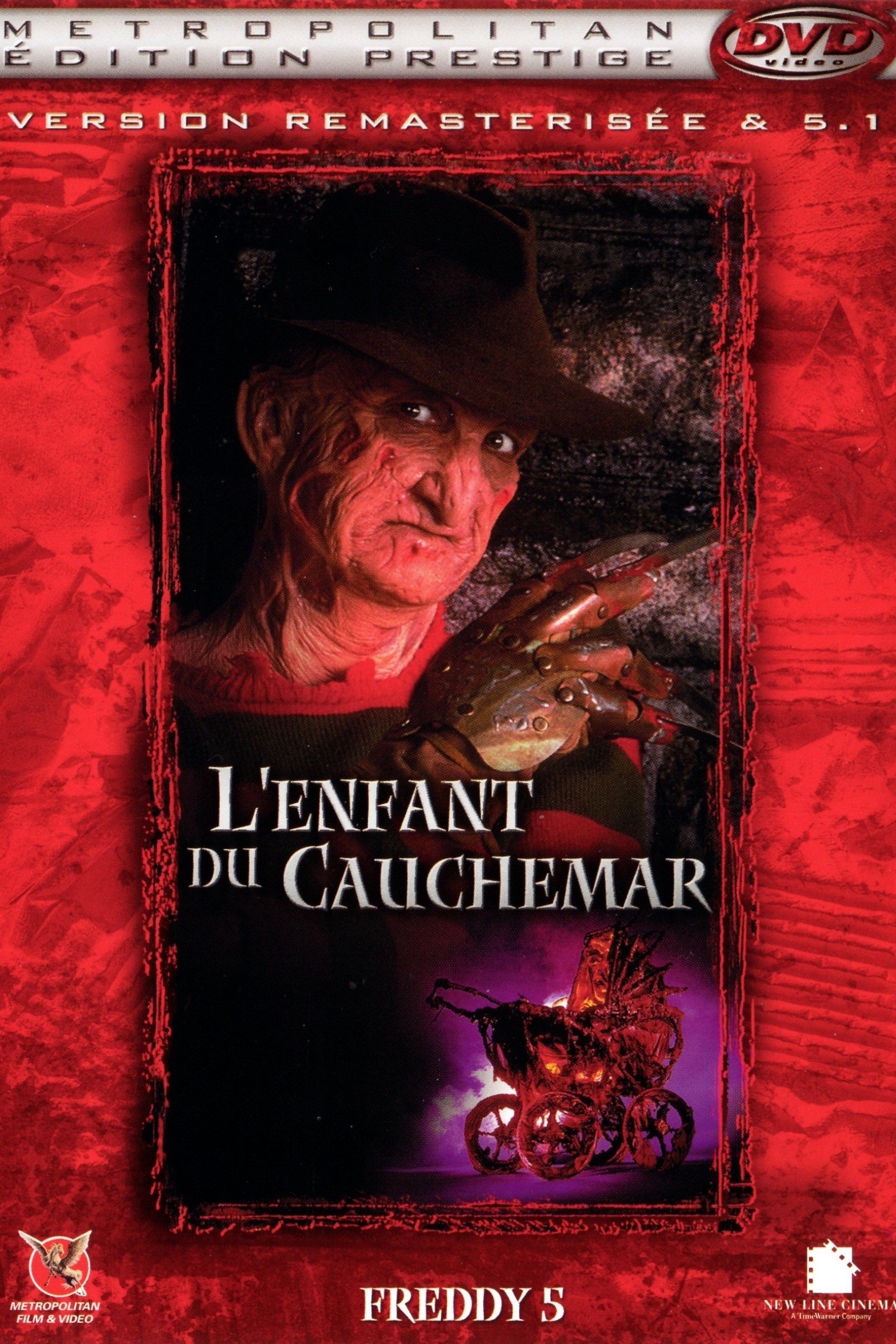
Pesadilla 5: el niño de los sueños (Argentina) Qarağac küçəsində qarabasma 5: Yuxu övladı (Azerbaijan) — Azerbaijani Кошмари на Елм стрийт 5: Детето на сънищата (Bulgaria) A Hora do Pesadelo 5: O Maior Horror de Freddy (Brazil) Freddy 5 : L'héritier du rêve (Canada) Freddy 5 : L'héritier du rêve (Canada) — French A Nightmare On Elm Street 5 (China) 猛鬼街5 (China)
Show all 63 alternative titles 猛鬼街5:猛鬼怪胎 (China) — Chinese Noční můra v Elm Street 5: Dítě snu (Czechia) Nightmare on Elm Street 5 - Das Trauma (Germany) — German Nightmare on Elm Street: Das Trauma (Germany) Freddys sidste mareridt (Denmark) Elmi tänava luupainaja 5 (Estonia) Malson a Elm Street 5: El nen somiador (Spain) — Catalan Pesadilla en Elm Street 5 (Spain) Pesadilla en Elm Street 5: El niño de los sueños (Spain) — Castilian Spanish Painajainen Elm Streetillä 5 - Painajaisten lapsi (Finland) — Finnish Painajainen Elm Streetillä 5 – Painajaisten lapsi (Finland) Freddy - Chapitre 5 - L'Enfant du cauchemar (France) Freddy 5 (France) Freddy 5 - L'Enfant du cauchemar (France) L'Enfant du cauchemar (France) — French Εφιάλτης στο Δρόμο με τις Λεύκες 5: Το Παιδί του Ονείρου (Greece) — Greek Εφιάλτης στο δρόμο με τις λεύκες Νο 5: Ο Φρέντυ μπαμπάς (Greece) 猛鬼街第五集:夜夜鬼纏身 (Hong Kong SAR China) — Chinese Strava u Ulici brijestova 5: Dijete snova (Croatia) Rémálom az Elm utcában 5. - Az álomgyerek (Hungary) — Hungarian Rémálom az Elm utcában 5.: Az álomgyerek (Hungary) סיוט ברחוב אלם 5: ילד החלומות (Israel) — Hebrew ए-नाइटमेयर ऑन एल्म स्ट्रीट 5: भूत का बेटा भूत? (India) — Hindi Martröð á Elmarsstræti: Drauma barnið (Iceland) Nightmare 5 - Il mito (Italy) — Italian エルム街の悪夢 5 ザ・ドリームチャイルド (Japan) エルム街の悪夢5 ザ・ドリームチャイルド (Japan) — Japanese 나이트메어 5: 꿈꾸는 아이들 (South Korea) — Korean Košmaras Guobų gatvėje 5: Sapnų vaikas (Lithuania) — Lithuanian Šausmas Gobu ielā 5 (Latvia) — Latvian Pesadilla en la Calle del Infierno 5 (Mexico) Pesadilla en la calle del infierno 5: Ha nacido el hijo de Freddy (Mexico) — Spanish Terror på Elm Street 5 - The Dream Child (Norway) Koszmar z Ulicy Wiązów 5: Dziecko Snów (Poland) Pesadelo em Elm Street 5 (Portugal) Coșmarul de pe Elm Street 5: Copilul din vis (Romania) Un coșmar pe strada Elm 5: Copilul din vis (Romania) — Romanian Strava u Ulici brestova 5: Dete snova (Serbia) Страва у улици Брестова 5: Дете снова (Serbia) — Serbian Кошмар на улице Вязов 5: Дитя сна (Russia) — Russian كابوس في شارع إلم: طفل الأحلام (Saudi Arabia) — Arabic Terror på Elm Street 5 - The Dream Child (Sweden) Mora v Ulici brestov 5 (Slovenia) — Slovenian Nočná mora v Elm Street 5: Dieťa sna (Slovakia) Pesadilla en la Calle Elm 5 El Niño de los Sueños (El Salvador) นิ้วเขมือบ 5 (Thailand) — Thai Elm Sokağı Kabusu 5: Hayal Çocuk (Türkiye) Elm Sokağında Kabus 5: Hayal Çocuk (Türkiye) — Turkish 半夜鬼上床5:猛鬼怪胎 (Taiwan) — Chinese Жах на вулиці В'язів 5: Дитина сну (Ukraine) Жах на вулиці В’язів 5: Дитина сну (Ukraine) — Ukrainian A Nightmare on Elm Street 5 - The Dream Child (United States) A Nightmare on Elm Street 5: The Dream Child (United States) — poster title A Nightmare on Elm Street Part 5: The Dream Child (United States) Pesadilla 5: El niño de los sueños (Uruguay)

Trailers & Videos

6 videos

A Nightmare on Elm Street: The Dream Child (1989) Film Guide

Stephen Hopkins transforms the fifth Elm Street film through Gothic nightmare spaces, prenatal body horror, elaborate makeup effects and a difficult censorship history.

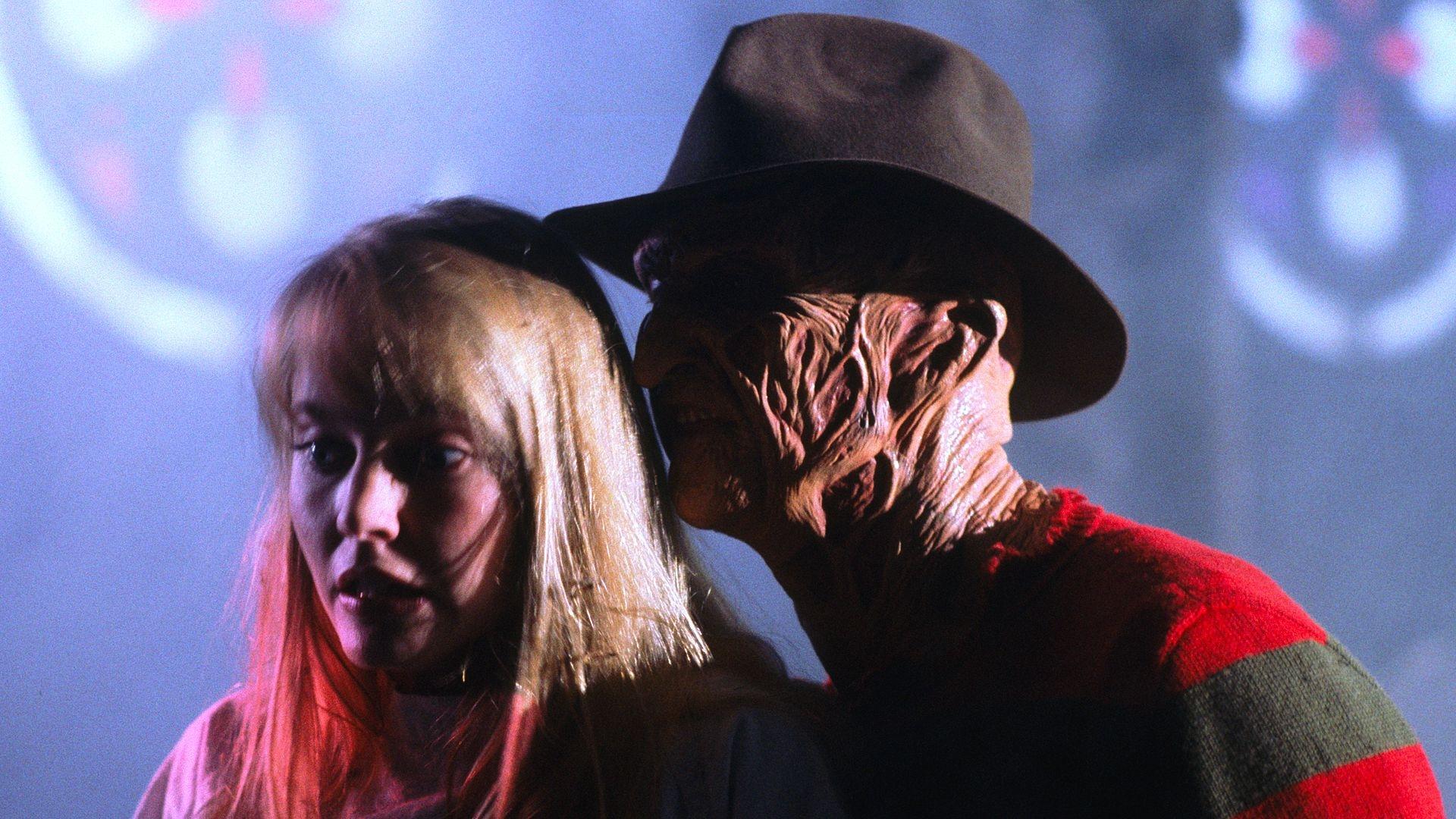
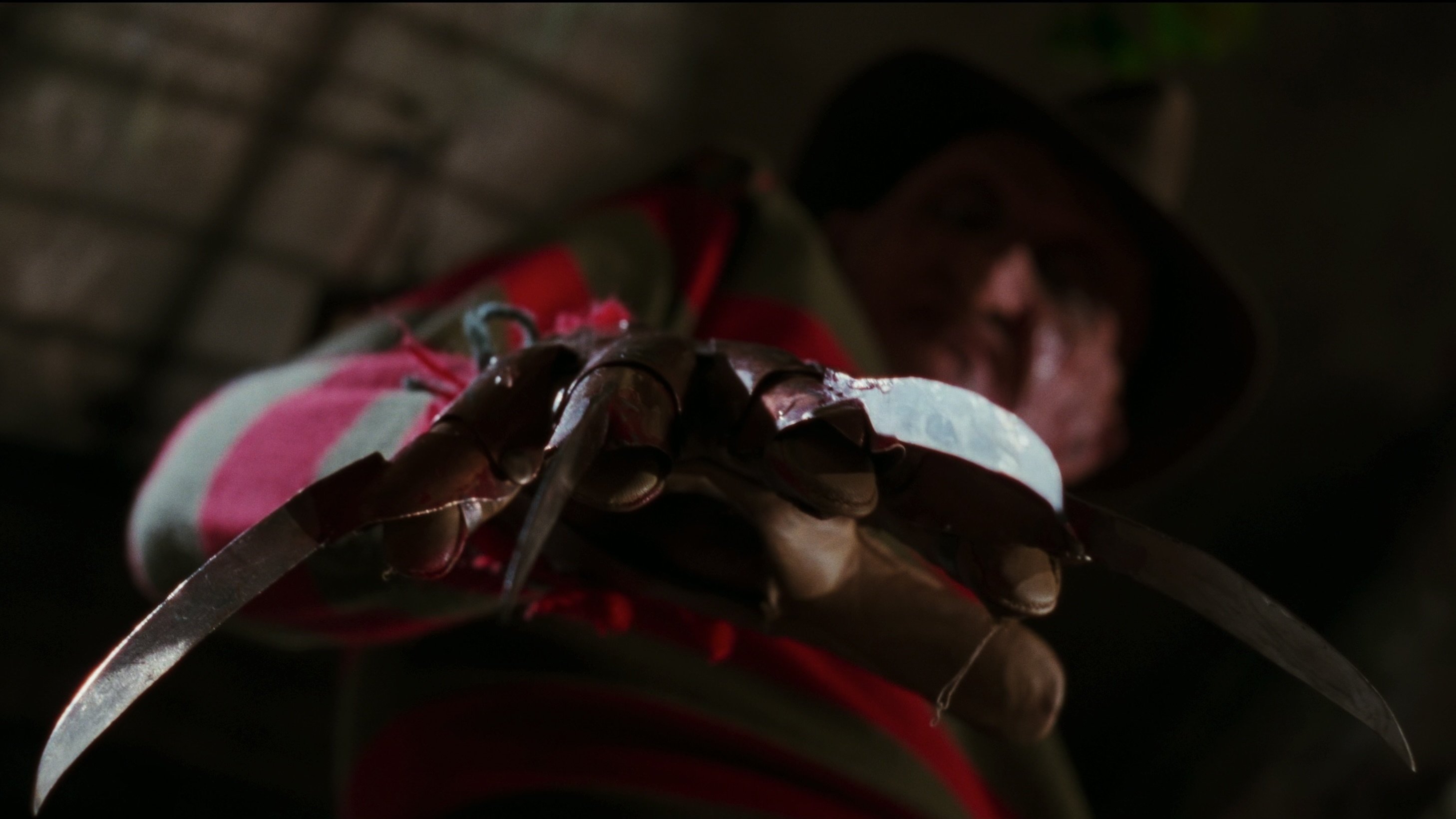
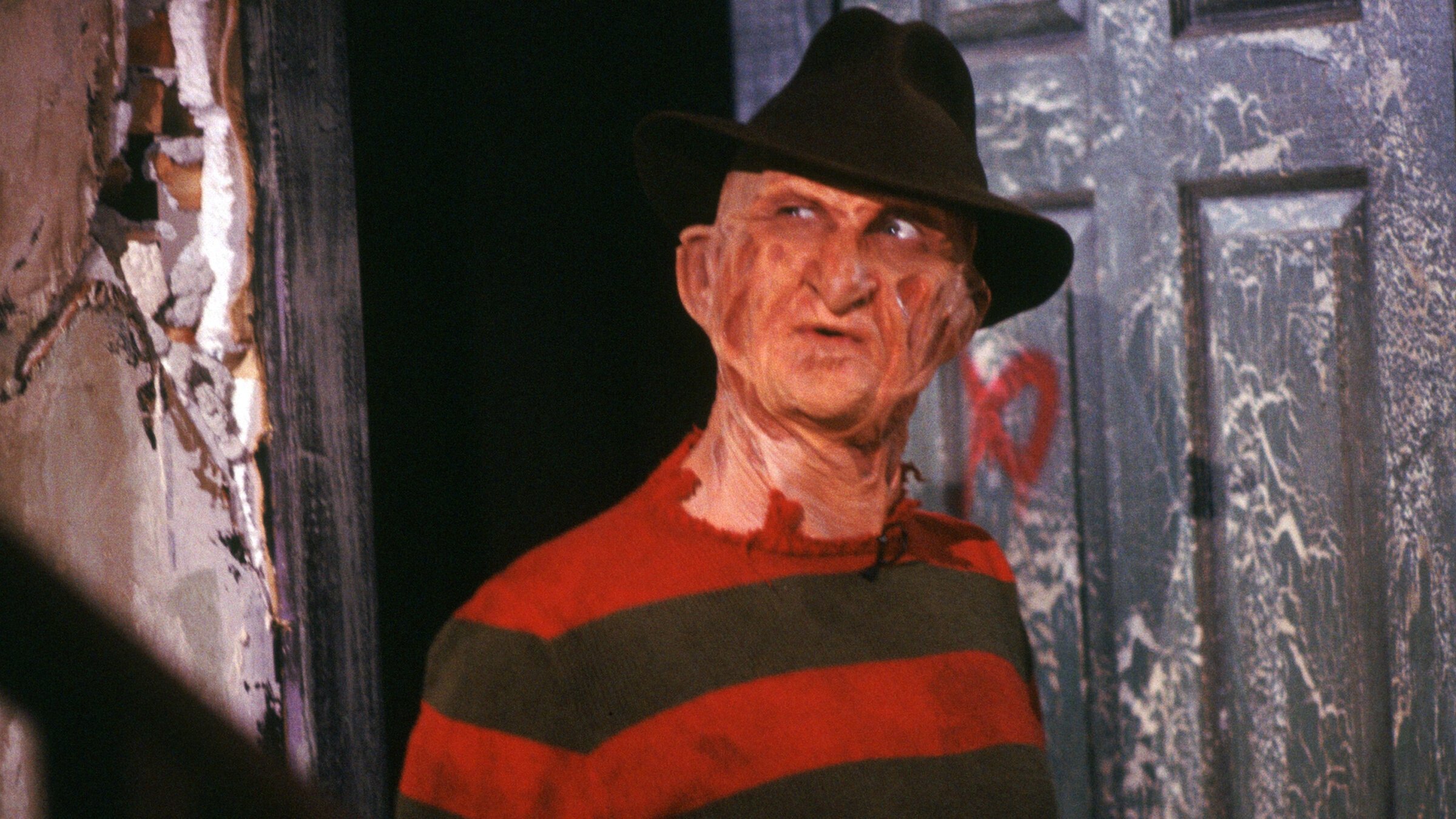
A Nightmare on Elm Street: The Dream Child (1989) arrived only a year after the commercial breakthrough of its immediate predecessor, when Freddy Krueger was firmly established in American popular culture. Stephen Hopkins, directing his second feature, shifted the series toward an elaborate Gothic fantasy built around pregnancy, inherited violence and the vulnerability of sleeping bodies. The film brings back Alice Johnson as an active survivor, then challenges the security she earned in the previous installment. Its central disturbance invades family life: Freddy seeks access to other people through the dreams of a child who has not yet been born.

That premise gave the fifth entry a distinctive position within late-eighties supernatural horror. Its images of monstrous birth, distorted anatomy and unstable architecture offer material for analysis beyond the familiar pattern of teenage victims pursued by a recurring killer. Production records are equally revealing. Contemporary reporting documents a heavily revised screenplay, a compressed production and severe ratings pressure on two elaborate death sequences. The result combines visual ambition with storytelling problems recognized by contemporary critics.

Development: Parallel Drafts and a Changing Premise

New Line Cinema pursued another Nightmare sequel after the previous film's strong theatrical performance, but the script did not develop through one draft. Philip Nutman's detailed 1989 Fangoria investigation reconstructed competing versions written by John Skipp and Craig Spector and by Leslie Bohem. Both were developed in late 1988, with Skipp and Spector delivering a draft in January 1989. Their emphases on Freddy's origins differed. Their interviews make clear that the eventual pregnancy plot emerged through discussion between writers and the studio, instead of springing fully formed from one author.

Bohem continued revising the project after New Line chose to develop his material, incorporating elements from the other treatment. When Hopkins joined, the screenplay required further changes. William Wisher worked on character relationships and motivations, and David J. Schow was brought in to improve dialogue while filming approached. Nutman's account records how much of the later writing could not be used under the schedule. The resulting film retains bold ideas without consistently joining them into coherent supernatural rules. Its mythology was continually refined under the constraints of production.

The writers also sought fears suited to characters nearing adulthood. In the period interviews, Wisher connected Greta's eating disorder to parental expectations of a modeling career, explaining why her nightmare involves forced consumption. Others fear achievement and responsibility. Such connections place Freddy's attacks within specific adolescent pressures. Hopkins inherited an extensively rewritten script and translated it into images designed to give the fifth film an identity of its own.
Alice Johnson, Pregnancy and the Horror of Inheritance

Lisa Wilcox returns as Alice, whose victory in The Dream Master initially appears to offer a life beyond Krueger's attacks. Dan and graduation appear to promise freedom from supernatural persecution. Pregnancy changes those expectations. The film's explanation allows Freddy to reach sleeping victims through her unborn son Jacob, separating Alice's waking vigilance from the child inside her. The device creates a protective dilemma: the heroine can struggle to stay alert, but she cannot directly supervise another person's unconscious experiences.
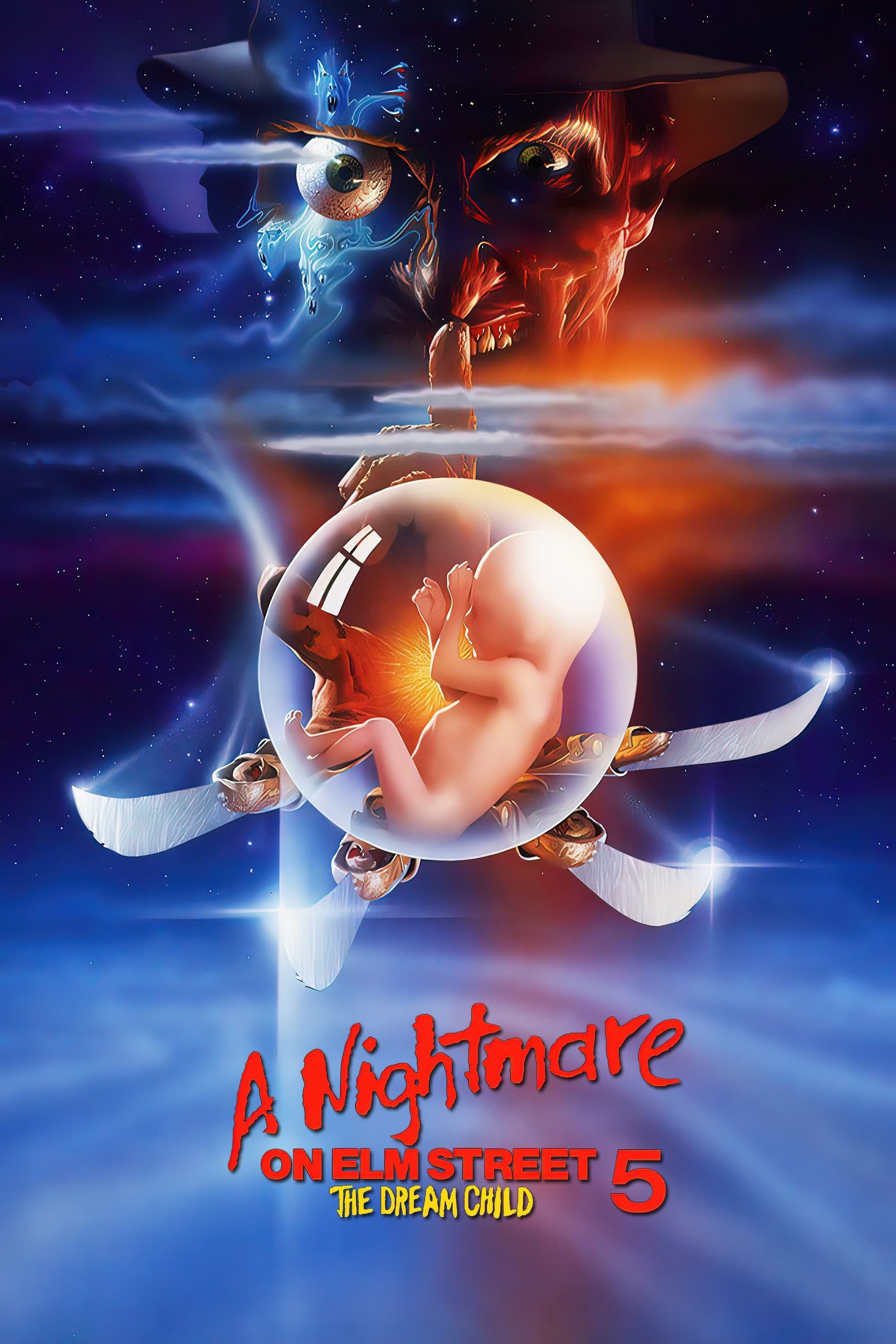
The story repeatedly links childbirth to Freddy's own origin. Visions of Amanda Krueger, the asylum and a grotesque infant turn reproduction into an arena of nightmare imagery. This is the franchise's most explicit movement toward prenatal body horror, although the supernatural rules are not always consistently conveyed. Alice has already learned to absorb strength from friends who die; here their victimization threatens to become a means of corrupting her child. The conflict makes her motherhood a contested form of agency, because decisions about her body and family become inseparable from the killer's attempt to perpetuate himself.
The release also provoked public argument about the implications of its premise. The AFI catalog, drawing on reporting from 1989, records objections from groups who interpreted the story as carrying an anti-abortion message. Executive producer Sara Risher rejected that political reading. Those reactions do not establish an ideological intention. The debate nevertheless shows how a supernatural sequel touched social anxieties about pregnancy and reproductive autonomy. Alice resists Freddy's coercion of her unborn child.

Visual Style: Asylums, Comic Panels and Impossible Stairs

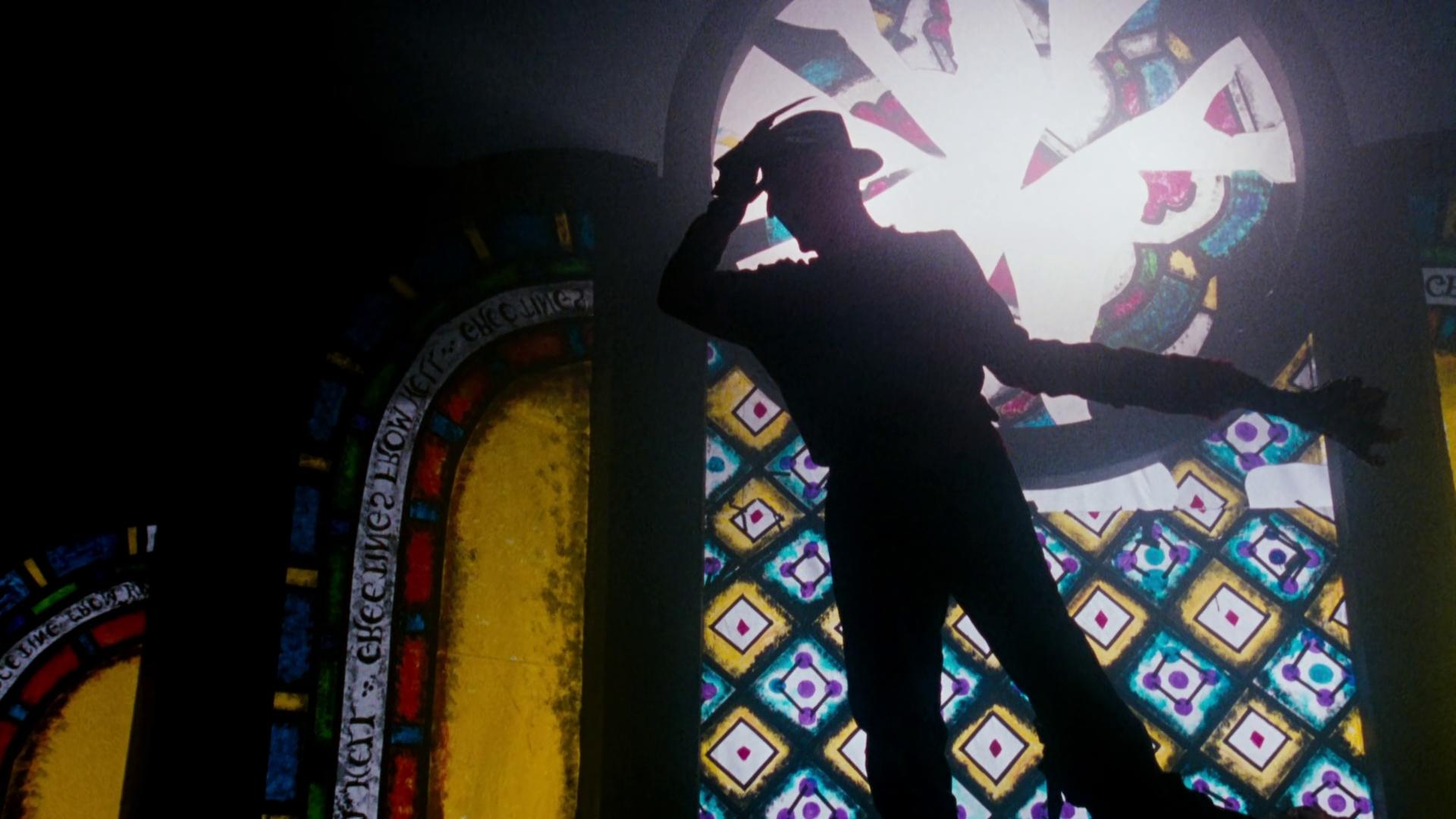
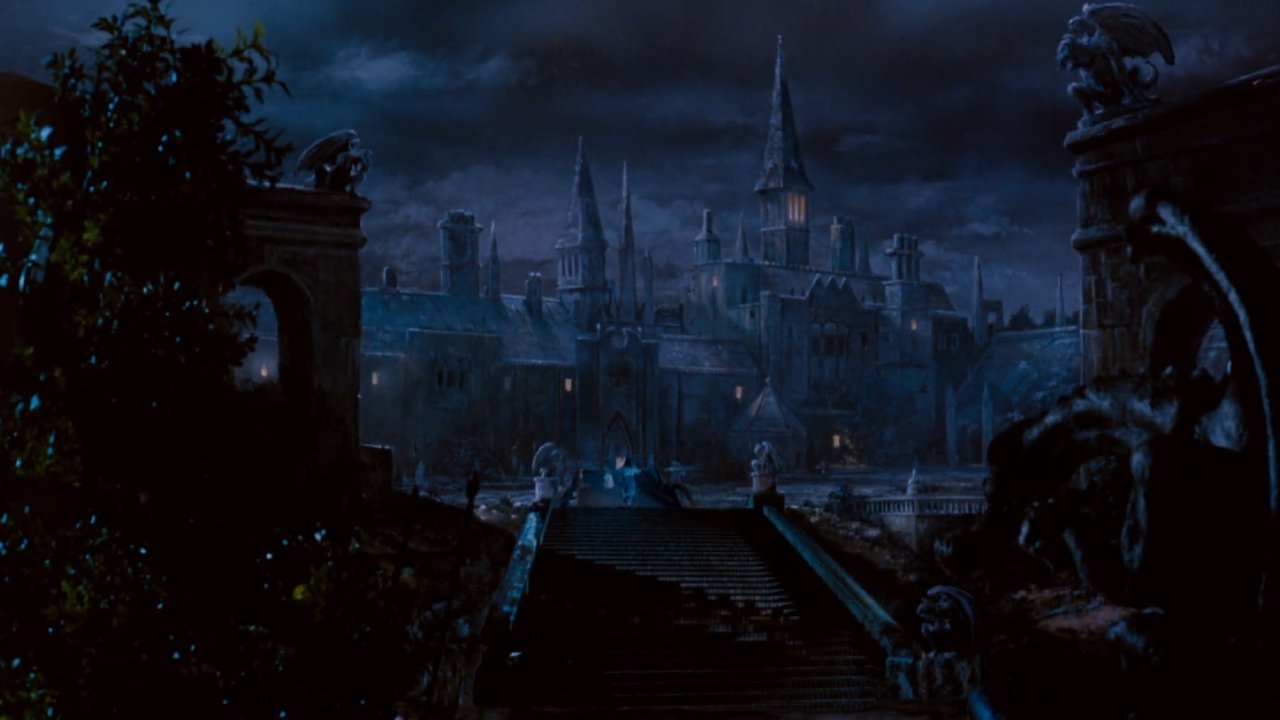
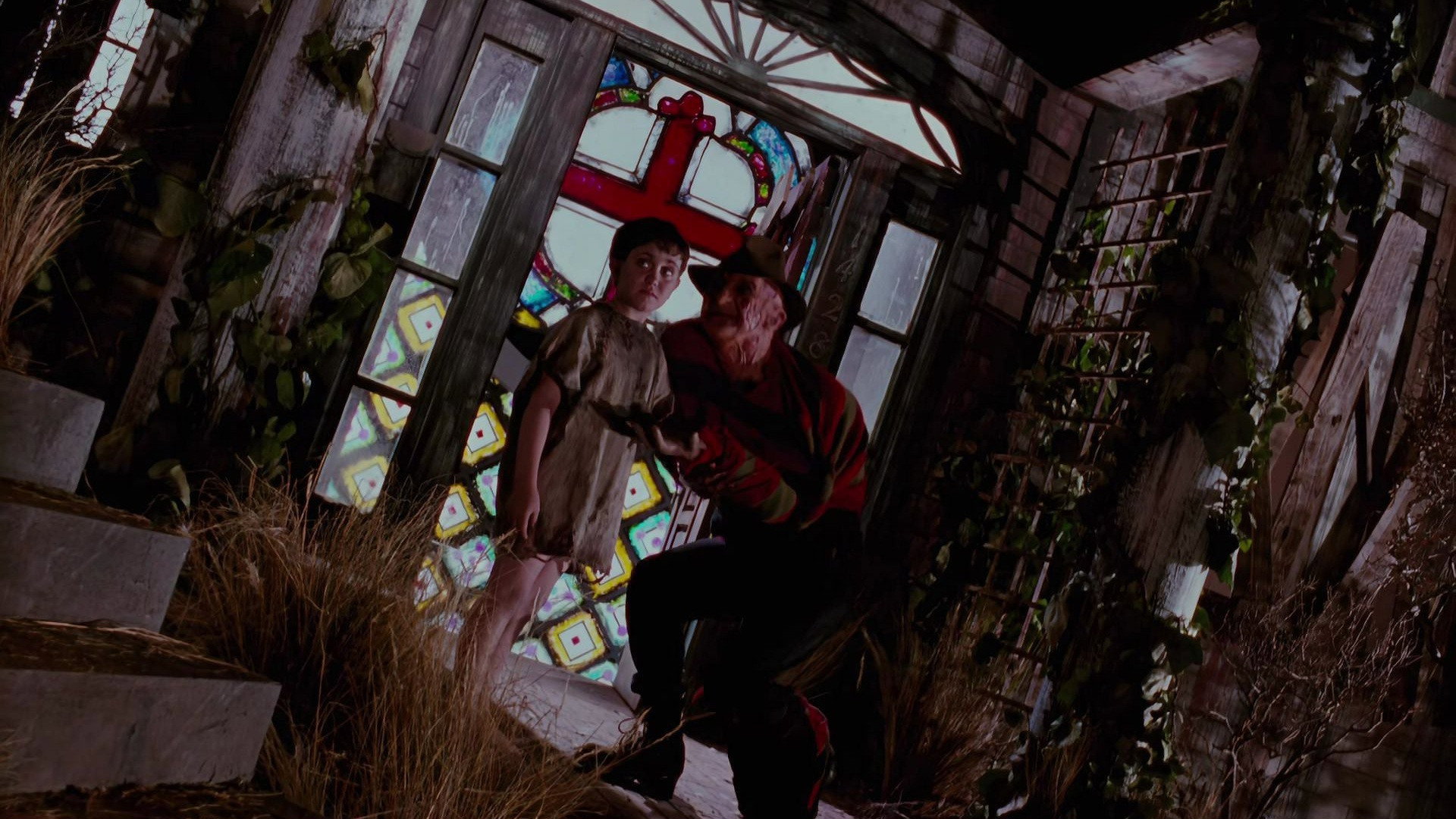
Hopkins' background in illustration and design is visible in the way The Dream Child organizes its nightmares. Peter Levy's cinematography and C. J. Strawn's production design frame corridors, institutional rooms and elaborate shadowed interiors as spaces that might change direction without warning. Compared with the open, kinetic fantasy of the fourth entry, this sequel favors cold tones and oppressive architecture. The asylum sequences carry a Gothic atmosphere, while the ordinary rooms occupied by Alice and her friends provide a fragile visual contrast. This is a reading of the finished images, not an attribution of each effect.

Mark's death uses the language of comic-book illustration to unsettle the boundary between a person's imagination and the world that threatens him. His drawings become a place where Freddy can alter the rules of movement and physical identity, before the victim is reduced to a vulnerable paper form. Ink, flatness and tearing become instruments of attack. It also gives the killer another arena in which spectacle and cruelty are inseparable. The nightmares work best when drawn from each victim's interests or fears.

The climax creates a disorienting structure of stairs and passageways that recalls the impossible architectural constructions associated with M. C. Escher. Instead of offering a clear route toward the endangered child, the setting seems to frustrate movement itself. Alice must navigate a world where proximity does not ensure access. The conception goes beyond disconnected dream imagery: the threat comes from a spatial system that refuses to behave. Hopkins' emphasis on built environments gives the film some of its most unsettling images even when narrative transitions are abrupt.

Practical Effects: The Freddy Infant and Grotesque Deaths

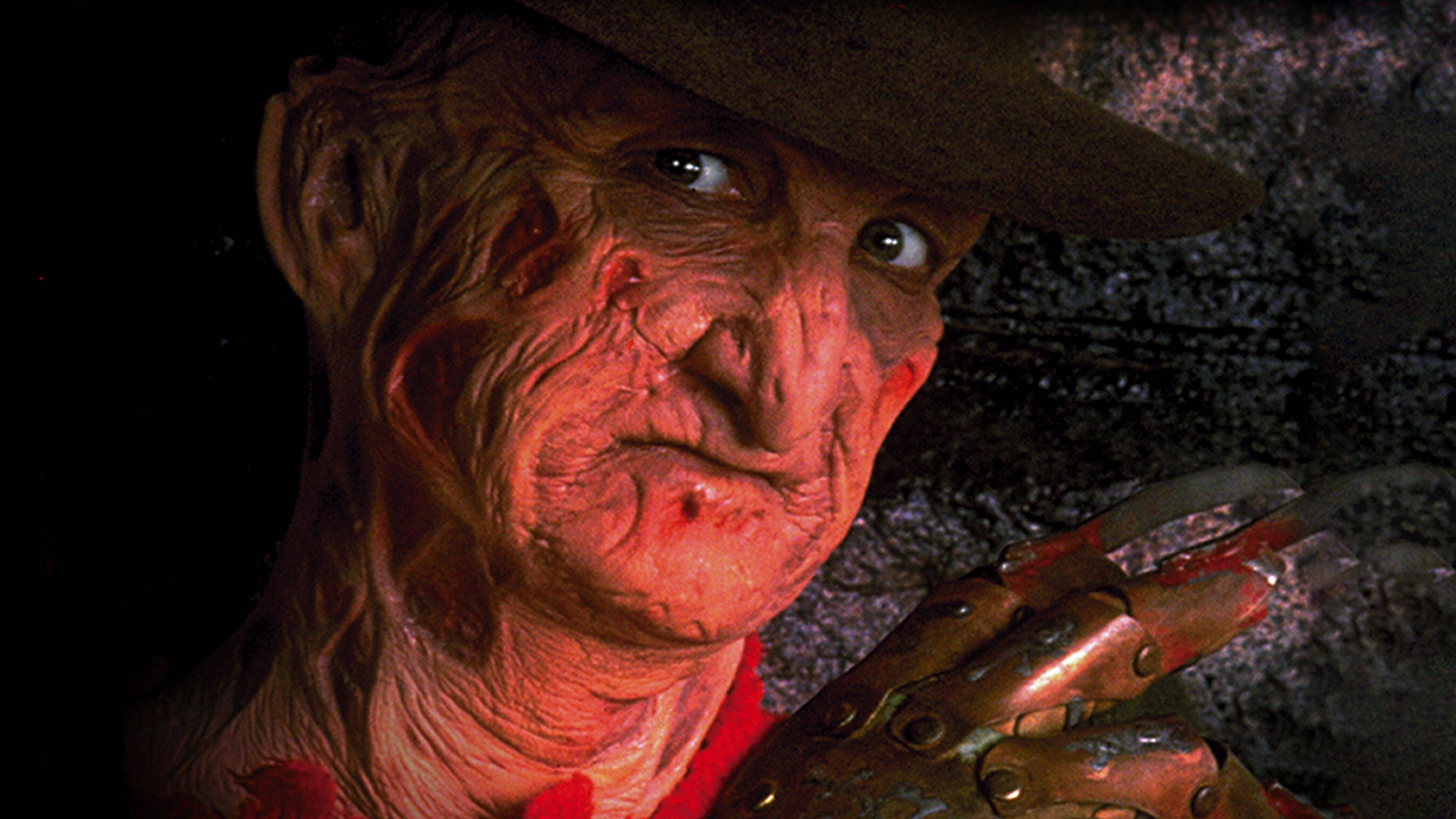
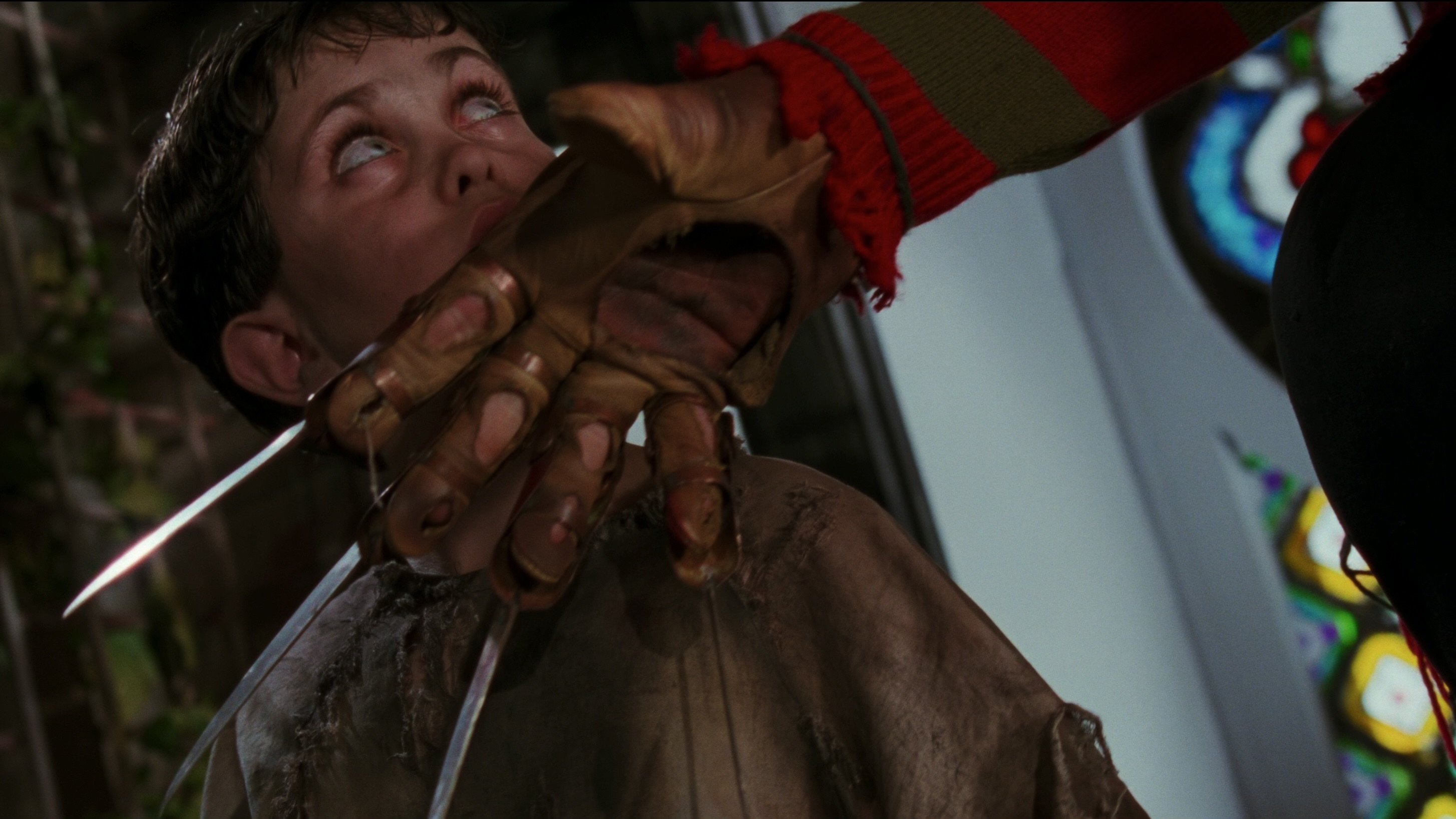
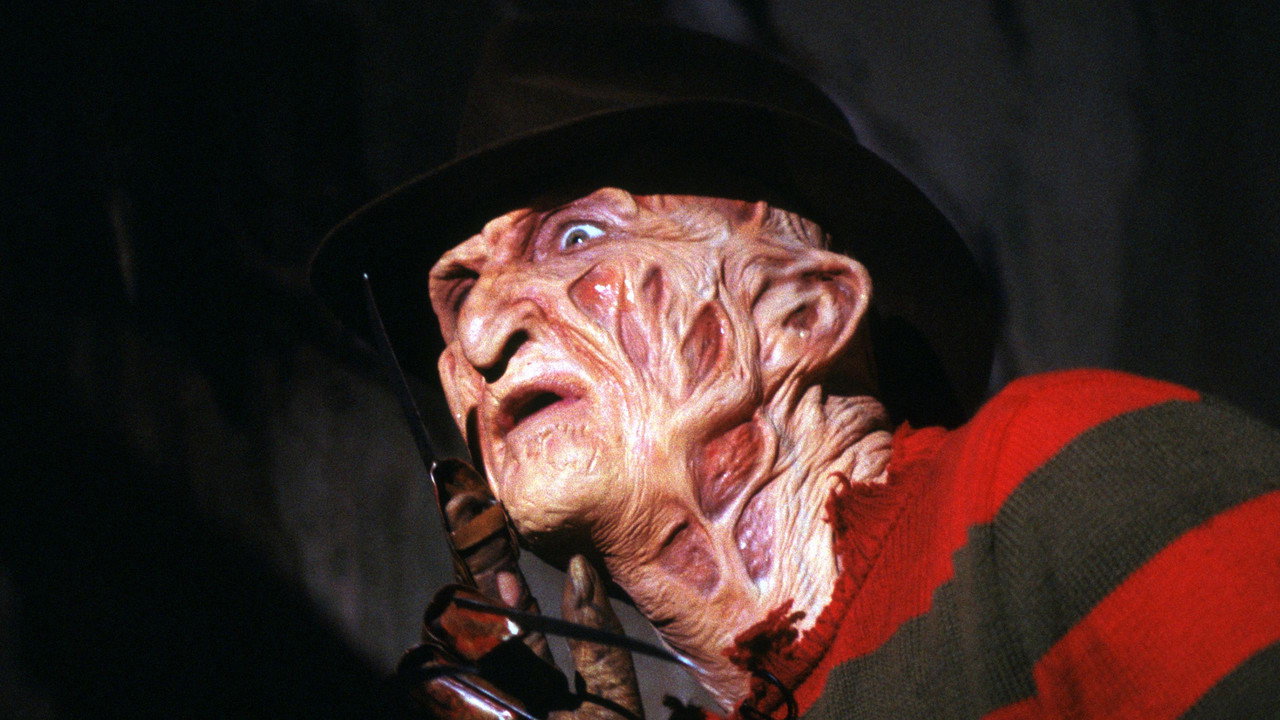
Special makeup artist David Miller returned to the series after designing Freddy's original screen appearance. His work on the infant manifestation of Krueger provides an unusually direct example of the production's physical effects methods. The American Film Institute preserves contemporary reporting that describes the Freddy infant as a remote-controlled puppet whose movements could be recorded on a computer for repeated playback. Those technical details reveal how the filmmakers gave the creature a specific physical presence while extending the film's anxiety about reproduction into monstrous flesh.

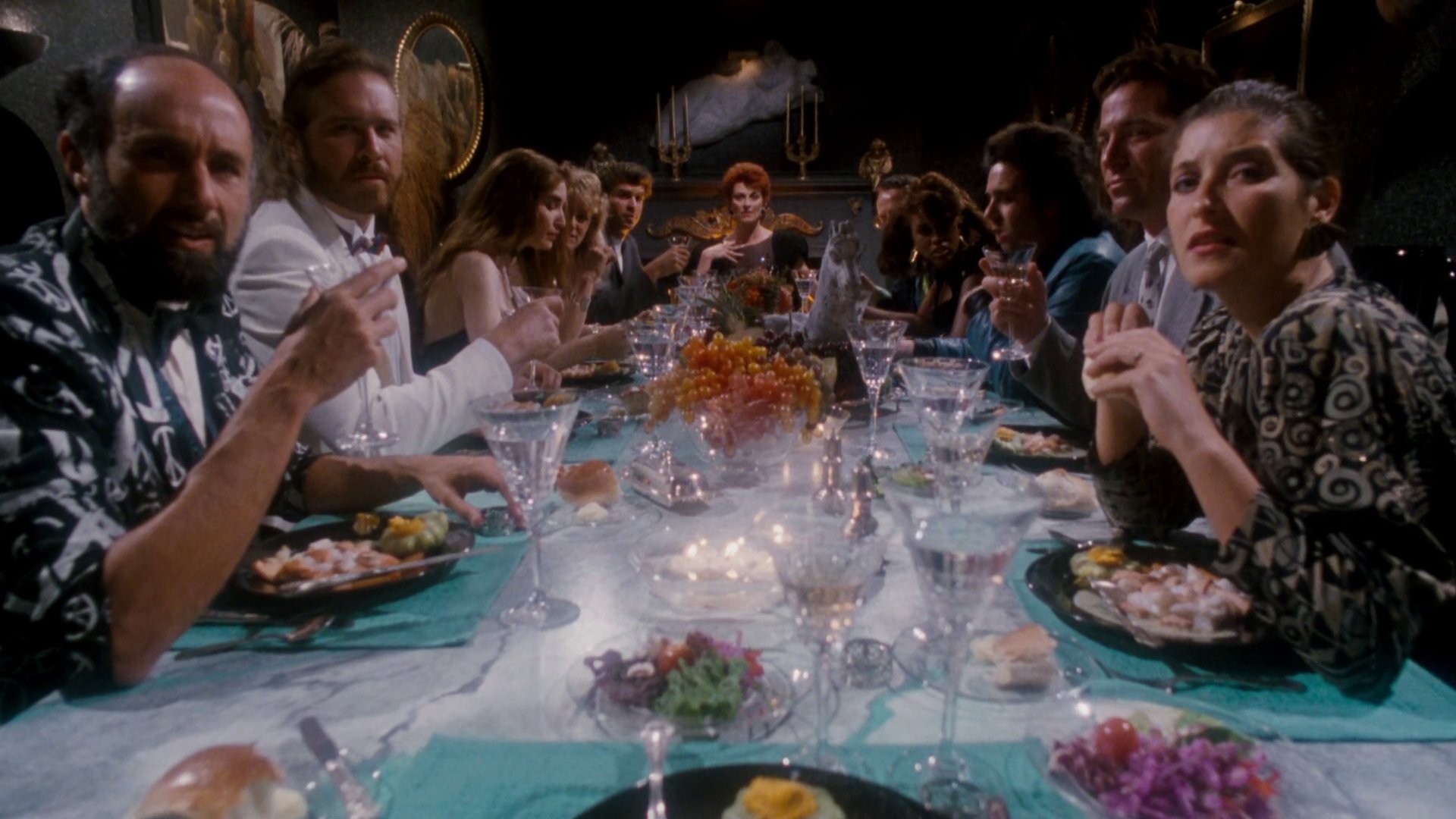
The deaths of Dan and Greta reveal two different forms of transformation horror. Dan's body merges with his motorcycle, converting familiar machinery into an invasive extension of muscle and bone. Greta's nightmare makes a meal into an act of bodily violation, tying forced consumption to her anxieties about appearance. Both scenes make transformation itself terrifying. Both depend on prolonged alterations of identity, as Freddy makes everyday objects and social expectations part of the attack. The material also gave the ratings board specific images to object to, which would affect the theatrical release.

Physical creations coexist with optical techniques and changes of scale. That mixture helps distinguish the film's approach from a uniform series of gore set pieces. Its most disturbing effects turn birth and bodily growth into threats; others exaggerate the victim's personal fears into visual jokes with cruel consequences. Freddy's humor does not erase the violation taking place. When an image turns a person into food, a mechanical object or a drawing, the horror comes from the loss of ordinary bodily boundaries.

Ratings, Release and Disputed Meanings

The AFI documents that the Motion Picture Association ratings board initially assigned the film an X rating. The theatrical version was altered to obtain an R, with the most consequential reductions affecting Dan's motorcycle transformation and Greta's final meal. The intended effects differed from what audiences saw in the original American release. Later editions require version-specific comparisons, since a runtime alone cannot identify precisely which images have been restored or removed.

New Line released the picture in the United States on August 11, 1989. The AFI cites an eight-million-dollar production budget reported by Robert Shaye, together with substantial marketing expenditure. Contemporary financial records and subsequent box-office reporting indicate domestic receipts of approximately 22.2 million dollars, notably below the preceding installment. The result still represented a widely released theatrical horror film, but it did not reproduce the extraordinary domestic performance achieved in 1988. Those figures should not be mistaken for net profit, which cannot be determined simply by subtracting the production budget from ticket sales.

The release provoked reactions beyond its commercial performance. Contemporary coverage preserved by the AFI describes demonstrations outside a Los Angeles screening and disputes about the treatment of the unborn child. Such objections deserve to be understood as part of the film's reception rather than accepted wholesale as interpretations of its meaning. The publicity around Krueger's familiarity as an entertainment figure also complicated the darker imagery Hopkins attempted. A mass-marketed character could still provoke protests over violence.

Critical Response and the Limits of Franchise Reinvention

Critical assessment in 1989 was more varied than a simple account of rejection suggests. Kevin Thomas, writing in the Los Angeles Times on the day of release, praised Hopkins' visual direction and the strength of Alice's confrontation with Freddy. Other reviewers were less persuaded by the complicated family mythology and the editing of the graphic sequences. The disagreement reveals a tension: it may be admired for unusually imaginative images while judged less successful at sustaining dramatic clarity. Both qualities were evident in 1989.

Wilcox's return is a significant structural choice in a series that had repeatedly reorganized its group of endangered teenagers. Alice survives as the central character for a second consecutive film, allowing The Dream Child to explore the consequences of her earlier experience. Yet the story repeatedly shifts attention to Freddy's ancestry and the supernatural importance of Jacob. The accumulating rules make its human relationships harder to follow. The most enduring scenes tend to be those in which a clearly established fear is translated into a physical nightmare without requiring lengthy explanation.

The film marks a point at which the Elm Street franchise was still able to reinvent its imagery even as its narrative machinery became increasingly elaborate. Hopkins contributed a recognizably Gothic visual direction; the writers pursued fears of family, adulthood and bodily inheritance; the effects crews constructed elaborate scenes that ratings decisions partially obscured. These achievements and compromises define its historical position. The Dream Child demonstrates how far the dream-killer premise could stretch, and how difficult it had become to balance unsettling ideas, extravagant spectacle and a comprehensible story.

References

  1. American Film Institute A Nightmare on Elm Street: The Dream Child - AFI Catalog

    Institutional record incorporating contemporary trade reports on release, ratings controversy, production budget, protests and physical effects.

  2. Fangoria (archived by Nightmare on Elm Street Companion) Fathering the Dream Child: Part One - Philip Nutman

    Original 1989 interviews with the screenwriters documenting parallel drafts, revisions, thematic decisions and production constraints.

  3. Fangoria (archived by Nightmare on Elm Street Companion) On Location! A Nightmare on Elm Street 5: The Dream Child - Marc Shapiro

    Contemporary set report with firsthand remarks from Robert Englund about the visual approach and disturbing premise.

  4. Los Angeles Times Movie Review: Dreamy Confrontation in Freddy's Family - Kevin Thomas

    Contemporary August 11, 1989 critical assessment of the film, the Gothic imagery and the performance of Lisa Wilcox.

Connections

Cast

View Full Cast & Crew →

Release & Distribution

Production Companies (3)

  • Heron Communications
  • New Line Cinema US
  • Smart Egg Pictures GB

Distributors (1)

  • New Line Cinema US

Release History (15)

Release DateTerritoryRelease TypeFormatDistributorCertificationNotes
1989-08-11 United States Theatrical — — R
1989-12-07 Australia Theatrical — — M
1990-01-01 Japan Theatrical — — G
1990-02-08 Germany Theatrical — — 16
1990-03-25 Spain Theatrical — — 16
1990-05-11 Finland Theatrical — — K-18
1990-05-11 United Kingdom Theatrical — — 18
1990-05-31 Brazil Theatrical — — 14
1990-06-01 Brazil Theatrical — — 12
1990-06-08 Ireland Theatrical — — 18
1990-08-05 France Theatrical — — 12
1991-04-05 Netherlands Theatrical — — 16
1991-05-17 Portugal Theatrical — — M/16
1993-02-04 Czechia Theatrical — — 15+
2006-03-08 Netherlands Physical DVD — 16 DVD

Awards & Festivals

2 entries
YearFestival / AwardEntrySectionCategoryResultPremiere
1990Golden Raspberry Award for Worst Original Songawardwon
1990Golden Raspberry Award for Worst Original Songawardnominated
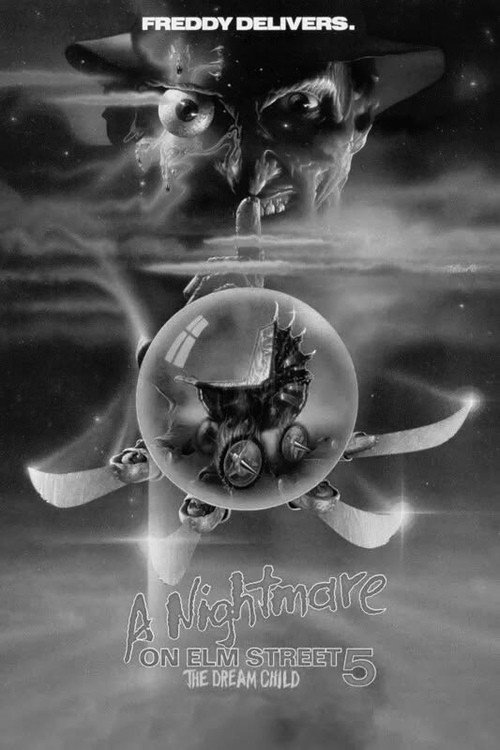
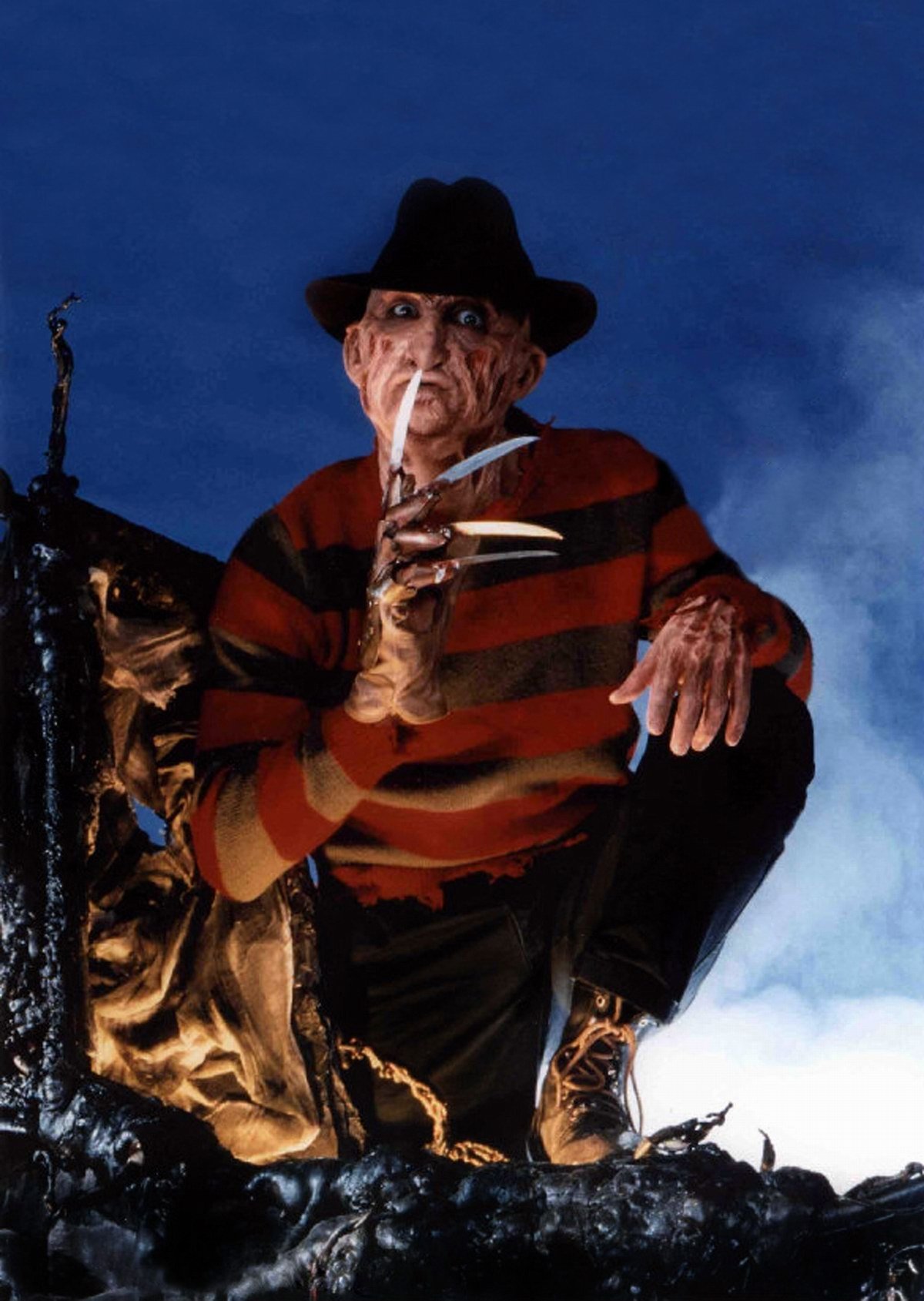
Freddy delivers.