Production and Canadian Context
The Amityville Curse was produced within the Canadian film industry and photographed in Quebec, even though its story takes place on Long Island. The setting has an important consequence for the film's appearance. Its principal house and surrounding landscape do not reproduce the building made famous by the first Amityville film. Rather than restaging the earlier family's experiences, the screenplay constructs a new mystery around a rectory where a priest was murdered. The story's geographical identity comes primarily from the town's name and incidental acknowledgement of its notorious past.
Berry's account of the production is represented in a retrospective interview prepared for the 2022 Canadian International Pictures restoration. Subsequent critics who examined that interview describe a commercially motivated, economical production and discuss a dispute with author Hans Holzer over the film's literary source. Those accounts establish the existence of a rights controversy but do not supply a sufficiently complete judicial record to reconstruct its exact legal sequence here. The documentary supplements also include separate reflections by lead actress Dawna Wightman and cinematographer Rodney Gibbons, evidence that the film's production history has received more attention during its later home-video life than during its initial circulation.
Psychic Visions and the Rectory
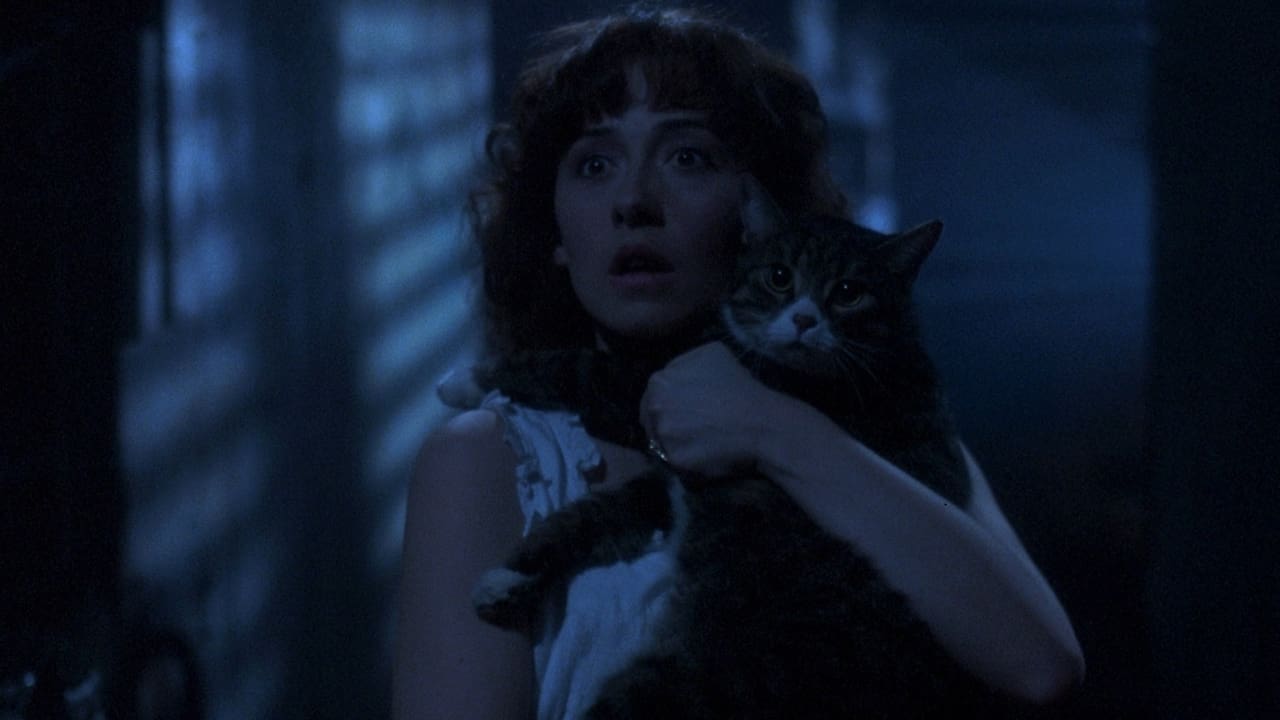
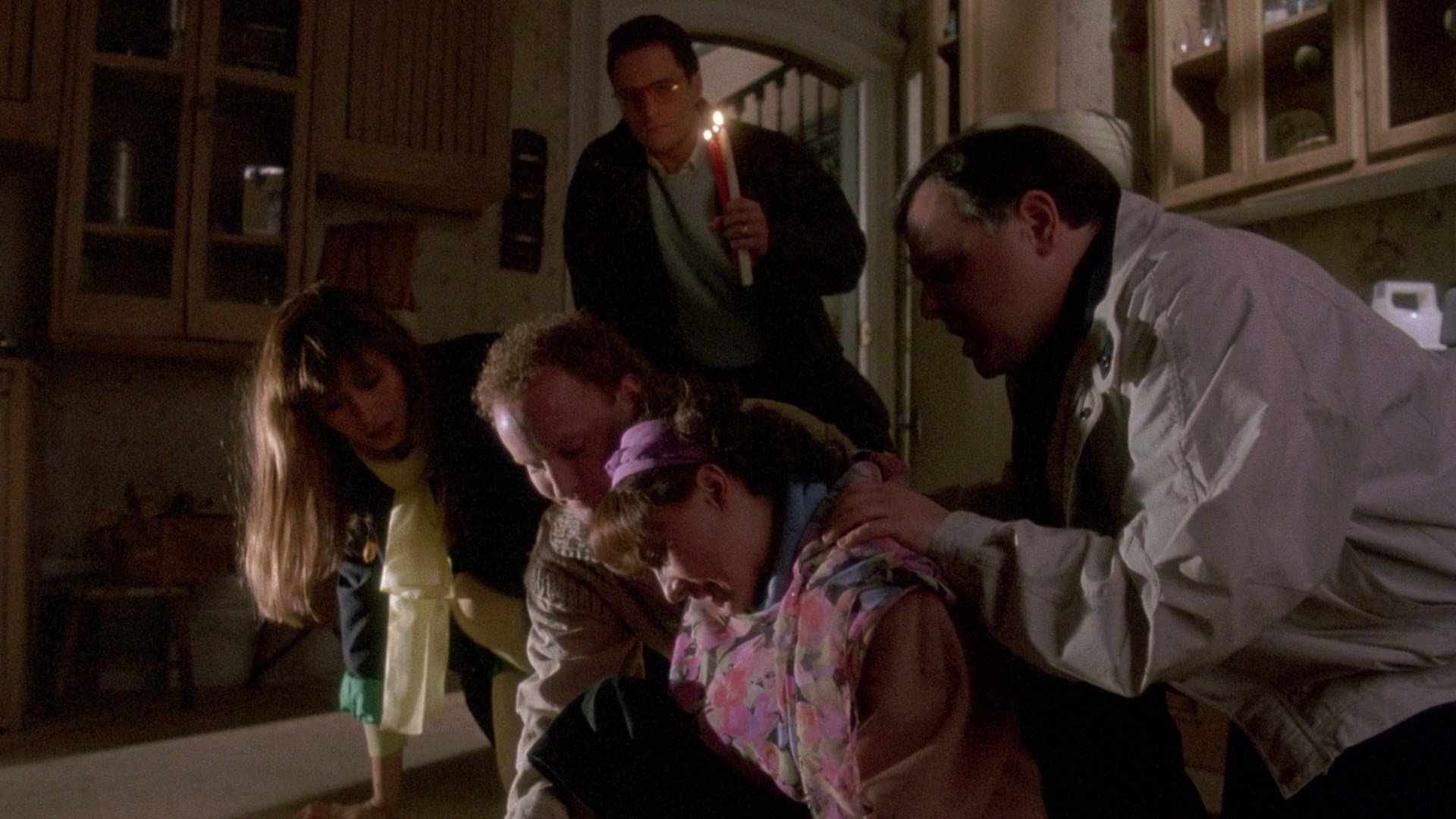
Debbie's nightmares begin before the group has fully settled into its new property. Her sense of familiarity with the building becomes the film's primary means of communicating danger, while her friends continue treating it as a renovation project. The disparity places her in a familiar horror position: she perceives a threat that others cannot readily verify. What appears to be a straightforward haunted-house premise gradually expands into a question of who might be responsible for the increasingly violent events, making the relationships within the group as unstable as the building itself.
The background of the murdered priest gives the haunting a distinctly Catholic element, but the film takes a different route from the possession narrative of Amityville II: The Possession (1982). Its mystery draws attention to past human actions and to the potential unreliability of the present occupants. This mixture of ghost story and suspicion modifies the usual rhythm of an Amityville sequel. The house generates supernatural impressions, yet some scenes obtain tension from the possibility of an immediate, human danger. These competing explanations only converge as the film approaches its unusually forceful conclusion.
Visual Style and Horror Effects
Rodney Gibbons' photography gives the interior a more intimate presence than its modest effects sequences might suggest. Debbie's visions are especially important: disorienting angles and dimmer lighting visually distinguish the dream material from the ordinary domestic setting. In a 2023 retrospective, critic Joe Lipsett singled out the use of extreme close-ups when Debbie experiences psychic impressions. The house is less distinctive as an architectural emblem than as a collection of enclosed rooms where characters lose confidence in what they have seen and in one another.
Physical violence is limited for much of the running time. The production relies heavily on uneasy conversations, abrupt visions and suspicion before allowing the violence to become more demonstrative toward the finale. Austin Trunick's 2022 assessment in Under the Radar likewise noted the contrast between restrained effects and the amplified closing passages. The imbalance contributes to the film's hybrid character: it can resemble an older ghost mystery during its quieter passages, then move toward the more emphatic bodily threats expected from late-period 1980s and early 1990s horror sequels.
Release and Later Reassessment
The film circulated in 1990 as a low-budget continuation of the Amityville name, with its home-video identity especially prominent in later accounts. Exact theatrical engagements and early release dates are not consistent across available listings, so a single worldwide release chronology cannot be established from those records alone. The title was subsequently treated as part of the series even though its narrative links to the preceding films are slight. This separation between franchise branding and story continuity became a recurring feature of later Amityville productions.
A substantial reassessment accompanied the 2022 Blu-ray edition prepared by Canadian International Pictures. The restoration was scanned in 2K from the original 35mm camera negative and paired with interviews featuring Berry, Wightman and Gibbons, alongside historical commentary. Contemporary reviews of that edition did not arrive at a unanimous judgment about the film's merits. Under the Radar appreciated its modest, deliberately paced haunted-house character, while High-Def Digest emphasized its appeal as Canadian exploitation cinema. The release nevertheless made the film's craft and production testimony newly accessible, providing material for a more specific discussion of an entry often characterized chiefly by its weak connection to the larger series.