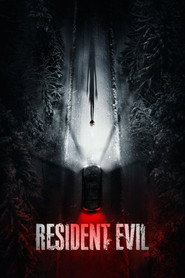
Resident Evil: Degeneration (2008)

JP
SUBGENRES ZOMBIE
Runtime
97 min
Release
February 13, 2008
Revenue
$403,117
Resident Evil: Degeneration (2008) poster
Director
Production Companies
Capcom , Sony Pictures , Digital Frontier
Plot

A bioterror attack strikes Harvardville Airport after a demonstration against pharmaceutical company WilPharma. Claire Redfield becomes trapped with other passengers as infected people spread through the terminal. Government agent Leon S. Kennedy arrives to assist the rescue operation, but the outbreak is connected to a broader attempt to obtain and deploy viral research. The investigation draws Leon and Claire toward a confrontation involving the G-virus and a former researcher determined to retaliate against the corporation. The case reunites two survivors of Raccoon City amid a new public-health emergency.

Alternative Titles
Resident Evil - Degeneration (Austria) — German Заразно зло: Дегенерация (Bulgaria) — Bulgarian Resident Evil: Degeneração (Brazil) — Portuguese Resident Evil : Degeneration (Canada) — French 生化危机:恶化 (China) — Chinese 生化危机1:恶化 (China) Resident Evil: Rozklad (Czechia) — Czech Resident Evil - Degeneration (Germany) — German
Show all 34 alternative titles Resident Evil 1: Degeneration (Germany) Resident Evil: Degeneración (Spain) — Spanish Resident Evil : Degeneration (France) — French 生化危機:變種異獸 (Hong Kong SAR China) — Chinese Resident Evil: Degeneracija (Croatia) — Croatian Kaptár: Bioterror (Hungary) — Hungarian האויב שבפנים: התנוונות (Israel) — Hebrew اهریمن ساکن: تباهی (Iran) — Persian Biohazard: Degeneration (Japan) — romaji バイオハザード ディジェネレーション (Japan) — Japanese 레지던트 이블 디제너레이션 (South Korea) 레지던트 이블: 디제너레이션 (South Korea) — Korean 바이오 하자드 디제네레이션 (South Korea) Resident Evil: Degeneración (Mexico) — Spanish Biohazard: Degeneration (Netherlands) — Dutch Resident Evil: Degeneracja (Poland) — Polish Răul rezident: Degenerarea (Romania) — Romanian Обитель зла: Вырождение (Russia) — Russian Resident Evil: Rozklad (Slovakia) — Slovak Resident Evil Degeneración (El Salvador) ผีชีวะ สงครามปลุกพันธุ์ไวรัสมฤตยู (Thailand) — Thai Ölümcül Deney: Dejenerasyon (Türkiye) — Turkish 惡靈古堡:惡化 (Taiwan) — Chinese Оселя зла: Виродження (Ukraine) — Ukrainian Resident Evil (Animated) 1 Degeneration (United States) — sortable Vùng Đất Quỷ Dữ: Phát Tác (Vietnam) — Vietnamese

Trailers & Videos

3 videos

Film Guide & Analysis

Capcom and Sony build a CGI survival-horror feature around Leon, Claire, a public outbreak and the game series continuity.

Resident Evil: Degeneration (2008) brought Capcom's survival-horror series into feature-length computer animation at a time when its live-action adaptations followed a separate screen continuity. Produced with Sony Pictures Entertainment Japan and directed by Makoto Kamiya, the film reunites Leon S. Kennedy and Claire Redfield after the destruction of Raccoon City. Its approach is closely tied to the games: an airport outbreak becomes a public emergency, while a later confrontation with the G-virus returns the story to laboratories and mutations. The choice of animation allowed recognizable game characters to occupy a film designed as part of their fictional world rather than an extension of Alice's adventures.

The project also marked a particular stage in the relationship between games and cinema. Producer Hiroyuki Kobayashi discussed the production directly at Comic-Con in 2008, explaining its relationship to existing game continuity and the collaboration with Sony. Kamiya described developing the story during 2007 before motion-capture work and computer animation. These accounts make Degeneration useful as a case study of an adaptation built around continuity management, motion-captured performance and monster imagery. Its early Japanese theatrical engagement and subsequent international home-video circulation further distinguish its release pattern from the live-action Resident Evil features.

Development and Game Continuity

In a 2008 interview with Ryan Turek, Kobayashi explained that both Capcom and Sony had been interested in making a computer-animated Resident Evil feature. He identified Kamiya as someone with whom he had previously worked and wanted to collaborate again. Discussions took shape in autumn 2006, followed by meetings with Kamiya during the winter. The film was therefore developed as a joint screen project with direct participation from a game producer, rather than simply being licensed as an independent story. Kobayashi explicitly separated it from the films starring Milla Jovovich and located its characters within the continuity of the games.

That decision determined the film's narrative possibilities. Leon and Claire had survived the events of Resident Evil 2, while Leon's subsequent experiences in Resident Evil 4 supplied another point of reference. The story takes place seven years after the Raccoon City disaster. At a public presentation reported by GameSpot in July 2008, the filmmakers discussed the value of recognizing those experiences when writing the new film. For players, this gives the reunion a history that the dialogue need not explain from the beginning. For viewers unfamiliar with the games, the airport incident supplies a self-contained crisis and establishes their capabilities through action.

The Airport Outbreak and Bioterror Horror

The opening outbreak at Harvardville Airport transforms an ordinary transit environment into a temporary quarantine zone. The infected are first a threat to passengers and staff rather than soldiers or scientists, making the disaster public and immediately disruptive. Claire's presence allows the story to approach the emergency through civilian survival before Leon enters as a government agent. Once he arrives, the action increasingly resembles an armed containment operation. This change of perspective creates the film's central tension between a catastrophe experienced by vulnerable people and a mission conducted by specialists already accustomed to biological weapons.

The later G-virus material turns that emergency toward the particular body horror of the games. Curtis Miller's mutation gives the narrative an enemy whose flesh expands and changes beyond ordinary human proportions. The biological transformation is tied to his personal grievance over Raccoon City, linking the city's destruction to the new threat without making the original Umbrella Corporation the only source of danger. In the film's fictional world, viral material circulates through institutions and individuals seeking influence or revenge. The connection between mutation and deliberate misuse keeps the horror rooted in human decisions even as the final monster becomes increasingly remote from the human body.

Animation, Motion Capture and Creature Design

Kamiya told ShockTillYouDrop in 2008 that the team spent the first part of 2007 developing the story, then moved into auditions and storyboarding. Motion capture took place in December 2007, and, according to his account, CG production began in early 2008. These dates describe a production process in which performances and staged movements became inputs for subsequent digital character work. Digital Frontier was identified in the contemporary announcements as the CGI production company. Its involvement enabled the film to retain familiar game-style character designs across dialogue scenes, armed confrontations and attacks by creatures that would have required extensive physical effects in live action.

The film's imagery can be read as a negotiation between the cinematic ambitions of animation and the recognizable texture of the games. Human faces and gestures must carry exchanges between Leon, Claire and the new characters, while the infected and G-virus creature demand more extreme movement. The airport's doors, escalators and open concourses offer routes for pursuit and evacuation, and the later industrial interiors provide a succession of enclosed spaces for confrontations. The creature's changing silhouette gives the final stages an emphasis on bodily instability characteristic of the series. These observations describe the completed film's visible design, not undocumented technical claims about individual software tools or animation techniques.

Release and Position in the Series

Capcom announced a presentation at the Tokyo Game Show on October 10, 2008, followed by a limited Japanese theatrical opening on October 18. Contemporary Capcom materials also named a November 13 North American screening at the New York City Horror Film Festival and a November 18 Los Angeles event hosted by Fangoria. Sony's North American DVD, Blu-ray and PSP release was scheduled for December 30, 2008. These dates refer to distinct preview, theatrical, festival and home-video events; they should not be collapsed into a single worldwide release date. Nor does the restricted Japanese theatrical engagement establish a global theatrical gross for a film distributed through several channels.

Degeneration's position in the franchise rests chiefly on its deliberate connection to the games. Kobayashi's statements distinguish its fictional continuity from the contemporary live-action series, even though the two forms shared a title, corporate origins and a broad audience. The return of Leon and Claire offers continuity across media, but the film must also communicate its bioterror premise through its own airport and research-facility narrative. Its significance is consequently industrial as well as narrative: Capcom and Sony constructed a feature-length animated extension of an existing game world with its own release strategy. The film helped establish the format subsequently used by other animated Resident Evil productions, without requiring an unsupported claim that it transformed the wider horror genre.

References

  1. ComingSoon / ShockTillYouDrop SDCC EXCL: A Resident Evil: Degeneration Interview

    Ryan Turek interviews producer Hiroyuki Kobayashi and director Makoto Kamiya about project origins, development, animation schedule and continuity.

  2. GameSpot Resident Evil: Degeneration with Kobayashi and Kamiya

    Shaun McInnis reports directly from the July 2008 Comic-Con presentation about the film's game timeline and character choices.

  3. Capcom News Resident Evil: Degeneration is Coming!

    Capcom's contemporary announcement documents the Tokyo debut, Japanese theatrical run, US screenings and home-video schedule.

  4. Sony Pictures Entertainment Resident Evil: Degeneration

    The distributor's official film presentation confirms the Harvardville Airport setting and the G-virus plot premise.

Connections

Cast

View Full Cast & Crew →

Release & Distribution

Production Companies (3)

  • Capcom JP
  • Digital Frontier JP
  • Sony Pictures JP

Distributors (2)

  • App Store
  • Fórum Hungary HU

Release History (24)

Release DateTerritoryRelease TypeFormatDistributorCertificationNotes
2008-02-13 Belgium Theatrical — — 16
2008-02-13 Finland Digital — — K-16
2008-02-13 Netherlands Premiere — — 12
2008-10-18 Australia Theatrical — — MA 15+
2008-10-18 Japan Theatrical — — —
2008-12-05 United Kingdom Physical — — 15 BBFC reference AZV243043
2008-12-05 Ireland Physical — — 15
2008-12-30 Italy Theatrical — — —
2008-12-30 South Korea Theatrical — — 19
2008-12-30 United States Theatrical — — R
2009-01-28 Brazil Physical — — —
2009-02-04 France Physical DVD, Blu-ray — — DVD & Blu-Ray
2009-02-06 Germany Theatrical — — 16
2009-02-11 Hungary Digital — — 18
2009-02-24 Poland Physical DVD, Blu-ray — — DVD/Blu-Ray
2009-02-25 Sweden Physical — — 15
2011-11-25 Poland TV — — — Polsat Film
2017-07-26 Spain Physical — — 16
2019-07-01 France Digital — — — VOD
2021-05-01 France Digital — — — Netflix
2021-11-17 Poland TV — — — Nowa TV
2021-11-21 Poland TV — — 16 Polsat Games
2022-01-01 Poland TV — — 16 Polsat Seriale
2024-01-01 Poland TV — — 16 TV6
Evil never rests.