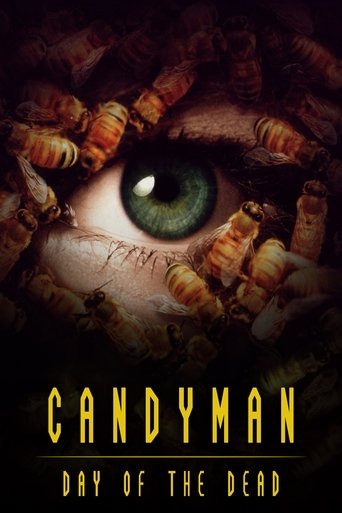
Candyman: Day of the Dead (1999)

US
HORROR FILM Thriller
Runtime
93 min
Release
July 9, 1999
Candyman: Day of the Dead (1999) poster
Director
Production Companies
Aurora , Artisan Entertainment
Plot

As the Day of the Dead celebration approaches the barrio of East Los Angeles, Caroline is challenged to control the horrifying legend of her ancestor, the "Candyman".

Alternative Titles
Candyman 3: El día de los muertos (Argentina) Кендимен 3: Денят на мъртвите (Bulgaria) — Bulgarian Candyman 3 - Dia dos Mortos (Brazil) — Portuguese Candyman 3 : L'artiste de la mort (Canada) — French 糖果人3:亡命日 (China) — Chinese Candyman 3: Den smrti (Czechia) — Czech Candyman 3 - Der Tag der Toten (Germany) — German Candyman 3: El día de los muertos (Spain)
Show all 30 alternative titles Candyman 3 ‑ kuolinpäivä (Finland) — Finnish Candyman 3 : Le jour des morts (France) — French Candyman 3 (United Kingdom) ქენდიმენი 3 (Georgia) — Georgian Κάντιμαν: Η Μέρα των Νεκρών (Greece) — VHS title 腥風怒吼 3:死亡之日 (Hong Kong SAR China) — Chinese Candyman 3: Dan mrtvih (Croatia) — Croatian Kampókéz 3. - Holtak napja (Hungary) — Hungarian קנדימן 3 (Israel) — Hebrew Candyman 3 - Il giorno della morte (Italy) 캔디맨 3 (South Korea) — Korean Candyman 3: El día de los muertos (Mexico) — Spanish Candyman III: Dzień umarłych (Poland) — Polish Candyman 3: Dia dos Mortos (Portugal) — Portuguese Кэндимэн 3: День мертвых (видео) (Russia) แคนดี้แมน วันสับดับวิญญาณ (Thailand) — Thai Şeker Adam'ın Laneti 3: Ölülerin Günü (Türkiye) — Turkish 腥風怒吼3:死亡之日 (Taiwan) — Chinese Кендімен 3: День мертвих (Ukraine) Кендімен: День мертвих (Ukraine) — Ukrainian Candyman 3: Day of the Dead (United States) — Poster/video title Sát Nhân Trong Gương 3 (Vietnam) — Vietnamese

Trailers & Videos

1 video

Film Guide & Analysis

Turi Meyer’s third Candyman film: Caroline McKeever, East Los Angeles, Clive Barker’s disavowal, Gary J. Tunnicliffe’s makeup effects, Adam Gorgoni’s music and home-video history.

Candyman: Day of the Dead (1999) is an American supernatural horror sequel directed by Turi Meyer and written with Al Septien. The third film featuring Tony Todd as Daniel Robitaille transfers the haunting to East Los Angeles, where a gallery exhibition and the approaching Día de Muertos celebrations provide the setting for another confrontation with the hook-handed apparition. The story continues the family history developed in Candyman: Farewell to the Flesh (1995), following a descendant who attempts to recover the reputation of Robitaille as an artist while rejecting the murderous legend attached to his name.

Donna D’Errico plays Caroline McKeever, whose attempts to defend her ancestor’s memory bring her into conflict with Candyman and a succession of murders implicating her in his crimes. Produced on a substantially smaller scale than the earlier films, Day of the Dead emphasizes an increasingly direct pursuit narrative, prosthetic violence and a new urban setting. Its original American circulation centred on home video and television in 1999, rather than a conventional nationwide theatrical release. The production is also distinguished by Clive Barker’s publicly documented decision to distance himself from the sequel and by a musical score composed by Adam Gorgoni rather than Philip Glass.

Development and Clive Barker’s Disavowal

The third Candyman film followed the expansion of Daniel Robitaille’s history in Farewell to the Flesh, which had revealed his relationship with a white woman and the descendants who survived him. Turi Meyer and Al Septien developed the new screenplay around another member of that family, now living in Los Angeles. The change permitted the filmmakers to retain the supernatural antagonist while constructing a new group of victims and shifting the setting away from Chicago and New Orleans. Tony Todd remained the central connection with the previous productions. The project was made under the auspices of Artisan Entertainment and Aurora Productions, with limited resources compared with its predecessors.

Clive Barker, whose short story The Forbidden had inspired the original film, was not involved in the production. In an interview published by Lost Souls in January 1999, he explained that he had been shown the sequel and had declined to associate his name with it. He did not dismiss its technical construction outright, but believed that its treatment of Candyman no longer represented the mythology he had created. This is a documented disagreement about the direction of the character, rather than evidence that Barker participated in the writing process. During a contemporary Fangoria interview, Meyer expressed admiration for Barker’s contribution to the series and said that he hoped the writer would approve of the result.

The production’s financial constraints became a recurring subject in subsequent interviews. In the commentary recorded for the 2022 Vestron Video edition, Meyer and Septien discussed the difficulties of completing an ambitious supernatural sequel with limited resources. Their retrospective testimony was examined by Film Obsessive, which also documented interviews with the cinematographer and production designer concerning the locations and practical limitations of the shoot. These accounts support the characterization of Day of the Dead as a comparatively modest production, without establishing a single authoritative budget or a comprehensive account of every shooting decision.
Caroline McKeever, East Los Angeles, and the Family Legend

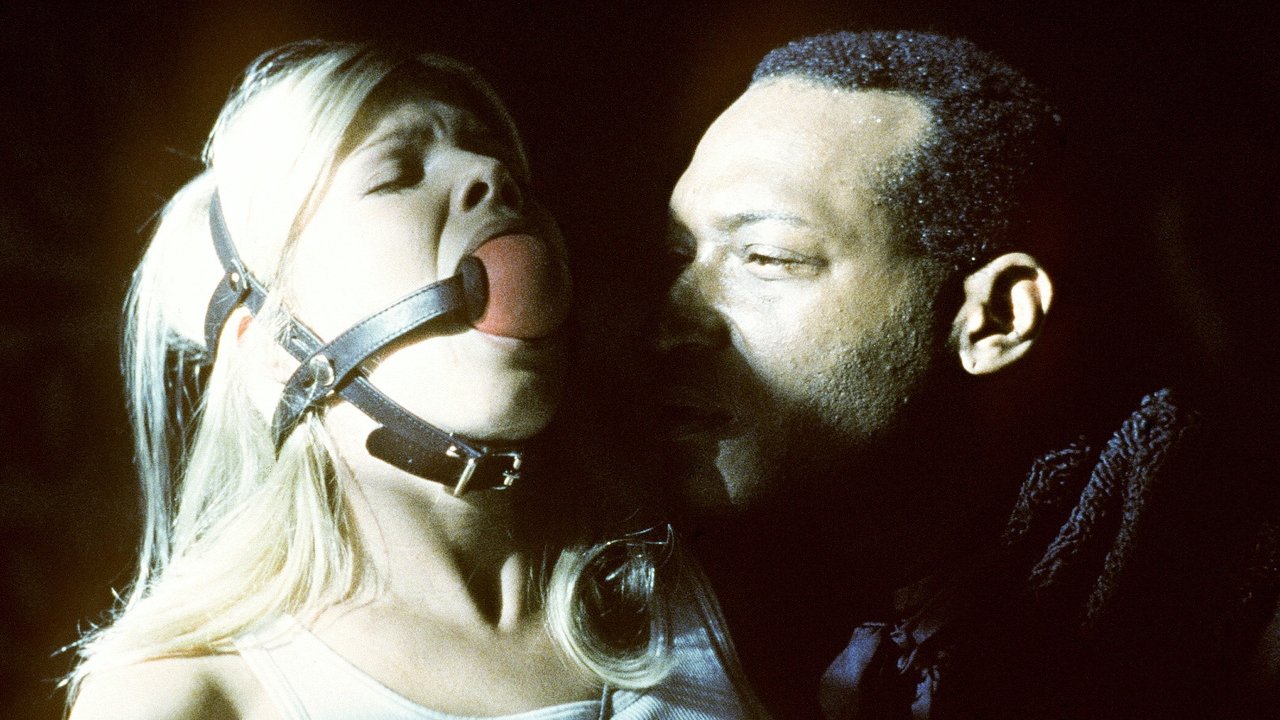
Caroline McKeever is presented as an adult descendant of Daniel Robitaille, whose family history was central to the preceding film. Now involved in the Los Angeles art world, she wants to restore recognition to Daniel’s achievements as a painter and challenge the association of his name with a supernatural murderer. An exhibition of his work becomes the occasion for renewed interest in the Candyman legend. Caroline’s efforts are complicated by people who regard the story as a source of publicity or entertainment. When the apparition returns, the killings surrounding her make it increasingly difficult to defend her innocence.

The action takes place around Boyle Heights and East Los Angeles during preparations for Día de Muertos. The celebration introduces imagery concerned with the remembrance of the dead, giving a recognizable cultural context to a story about an ancestor who refuses to disappear. The film also depicts hostility between local residents and racist police officers. Detective L. V. Sacco’s treatment of the people investigating the murders makes institutional prejudice part of Caroline’s predicament. These elements establish a different social environment from the earlier films, although the screenplay does not develop the history or practices of Día de Muertos into a detailed account of the celebration itself.

Candyman attempts to make Caroline dependent on him by murdering people associated with her and leaving her vulnerable to suspicion. His objective is to persuade her to accept an existence beside him in death. The structure preserves the series’ recurring relationship between an endangered woman, a supernatural figure and the public circulation of his legend. In a 1999 Fangoria interview, Todd described the new storyline as an extension of Candyman’s ancestral pursuit. Donna D’Errico, interviewed by Femme Fatales during the same period, emphasized Caroline’s conflicting desire to deny the legend while recognizing that her family history contains something she cannot fully explain. Their statements document how the performers understood the characters during production.
Tony Todd, Prosthetic Effects, and the Musical Identity

Todd reprises Candyman’s imposing physical appearance, elaborate coat and hook, maintaining the visual identity developed through the previous two films. His performance emphasizes the character’s interest in recovering a lost family connection, although the film places him within a more direct sequence of pursuits and murders. Caroline’s apparent vulnerability is central to these encounters. Meyer told Femme Fatales in 1999 that D’Errico’s performance had influenced the characterization, bringing a degree of vulnerability to a protagonist initially conceived as more guarded and abrasive. His comments describe the director’s assessment of the casting rather than an independently established critical judgment.

Gary J. Tunnicliffe supervised the special prosthetic makeup effects. The violence includes injuries inflicted with Candyman’s hook and elaborate bodily damage, extending the series’ association between supernatural attacks and visibly mutilated flesh. The technical construction of these sequences was subsequently examined in A Bloody Legacy, an interview included on the 2022 Blu-ray edition. Tunnicliffe discussed the design and execution of individual gore effects, distinguishing his contribution from the cinematography and production design. A separate documentary, Decay & Design, brought together cinematographer Michael G. Wojciechowski and production designer Marc Greville-Masson to discuss their work under the film’s restricted production conditions.

The musical direction also changed. Adam Gorgoni composed the score, replacing the musical authorship associated with Philip Glass in the first two instalments. The 2022 home-video edition includes isolated score selections accompanied by an extended interview in which Gorgoni discusses his musical background and approaches to sampled and orchestral sounds. This material provides evidence of the composer’s involvement without establishing that every musical cue was recorded by a particular ensemble. The resulting soundtrack belongs to a production that retained Candyman’s recognizable appearance and supernatural rules while introducing new collaborators across its principal technical departments.

Distribution, Classification, and Retrospective Reception

Candyman: Day of the Dead circulated in the United States principally through home entertainment and television in 1999. American Film Institute records identify July 9 as its release date and give a running time of 93 minutes. Unlike the first two films, it did not receive a comparable nationwide American theatrical campaign. Its distribution history therefore cannot be evaluated through domestic theatrical box-office totals in the same way as those earlier productions. The film received an American R rating for bloody violence and gore, sexuality and language. International circulation included physical-media editions and theatrical engagements in selected territories.

The British Board of Film Classification records an original physical-media submission of 89 minutes and 26 seconds, classified on December 22, 1999. Later submissions include a digital version running 93 minutes and 15 seconds in 2020 and a physical-media version of 93 minutes and 16 seconds in 2022. These are documented differences in submitted running times. They do not, without comparison of the actual footage and playback standards, establish that the shorter edition was censored or that the longer edition represents a separate director’s cut. The later release was distributed in Britain by Lionsgate and received an 18 classification.

The film’s later critical reputation has been substantially less favourable than that of the original Candyman. In a 2022 High-Def Digest review, Matthew Hartman criticized the limited character development, modest production values and comparatively anonymous Los Angeles locations, while acknowledging Todd’s presence and the effectiveness of some graphic effects. Robert Chipman’s retrospective assessment for Film Obsessive was similarly negative about the finished film, but praised the extent of the production documentation assembled for its Blu-ray edition. These responses represent later critical assessments, distinct from reviews published during the original 1999 circulation.

Lionsgate released Candyman: Day of the Dead in its Vestron Video Collector’s Series on January 18, 2022. The edition included a commentary by Meyer and Septien, an interview with Todd, technical discussions with Tunnicliffe, Wojciechowski and Greville-Masson, and material devoted to Gorgoni’s music. Those supplements substantially expanded the publicly available record of the film’s production. The next feature-length Candyman film appeared in 2021, when Nia DaCosta directed a new continuation drawing principally on the original story. Day of the Dead remains the final instalment of the earlier three-film sequence starring Todd, and its production materials preserve a distinct stage in the character’s history.

References

  1. The Official Clive Barker Website Clive on Candyman III: Day of the Dead

    Archival collection of direct statements by Clive Barker, Turi Meyer, Tony Todd and Donna D’Errico from Lost Souls, Fangoria and Femme Fatales concerning the sequel’s development, Barker’s disavowal and the treatment of its central characters.

  2. Film Obsessive My Physical Media Compulsiveness Gets the Best of Me with Vestron’s Candyman: Day of the Dead

    Robert Chipman’s 2022 examination of the disc’s firsthand production interviews, including the director and writer commentary, Gary J. Tunnicliffe’s effects discussion, cinematography, production design and Adam Gorgoni’s score.

  3. High-Def Digest Candyman 3: Day of the Dead — Vestron Video Collector’s Series

    Matthew Hartman’s January 2022 retrospective assessment of the narrative, locations, Tony Todd’s performance, practical gore and the technical presentation of the restored home-video edition.

  4. British Board of Film Classification Candyman 3: Day of the Dead — Classification History

    Official classification documentation recording the 1999, 2020 and 2022 British home-video submissions, their measured running times and the classification of violent content.

Connections

Cast

View Full Cast & Crew →

Release & Distribution

Production Companies (2)

  • Artisan Entertainment US
  • Aurora US

Distributors (1)

  • Artisan Entertainment US

Release History (5)

Release DateTerritoryRelease TypeFormatDistributorCertificationNotes
1999-07-09 United States Theatrical — — R
1999-08-11 France Theatrical — — 12
2000-01-27 Argentina Theatrical — — 16
2000-03-20 United Kingdom Physical — — 18
2000-07-18 Germany Physical — — 18
A bloody legacy.