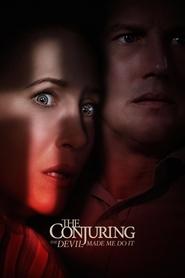
Poltergeist III (1988)

US
HORROR FILM Thriller
SUBGENRES HAUNTED HOUSES
Runtime
98 min
Release
June 10, 1988
Budget
$10,500,000
Revenue
$14,144,000
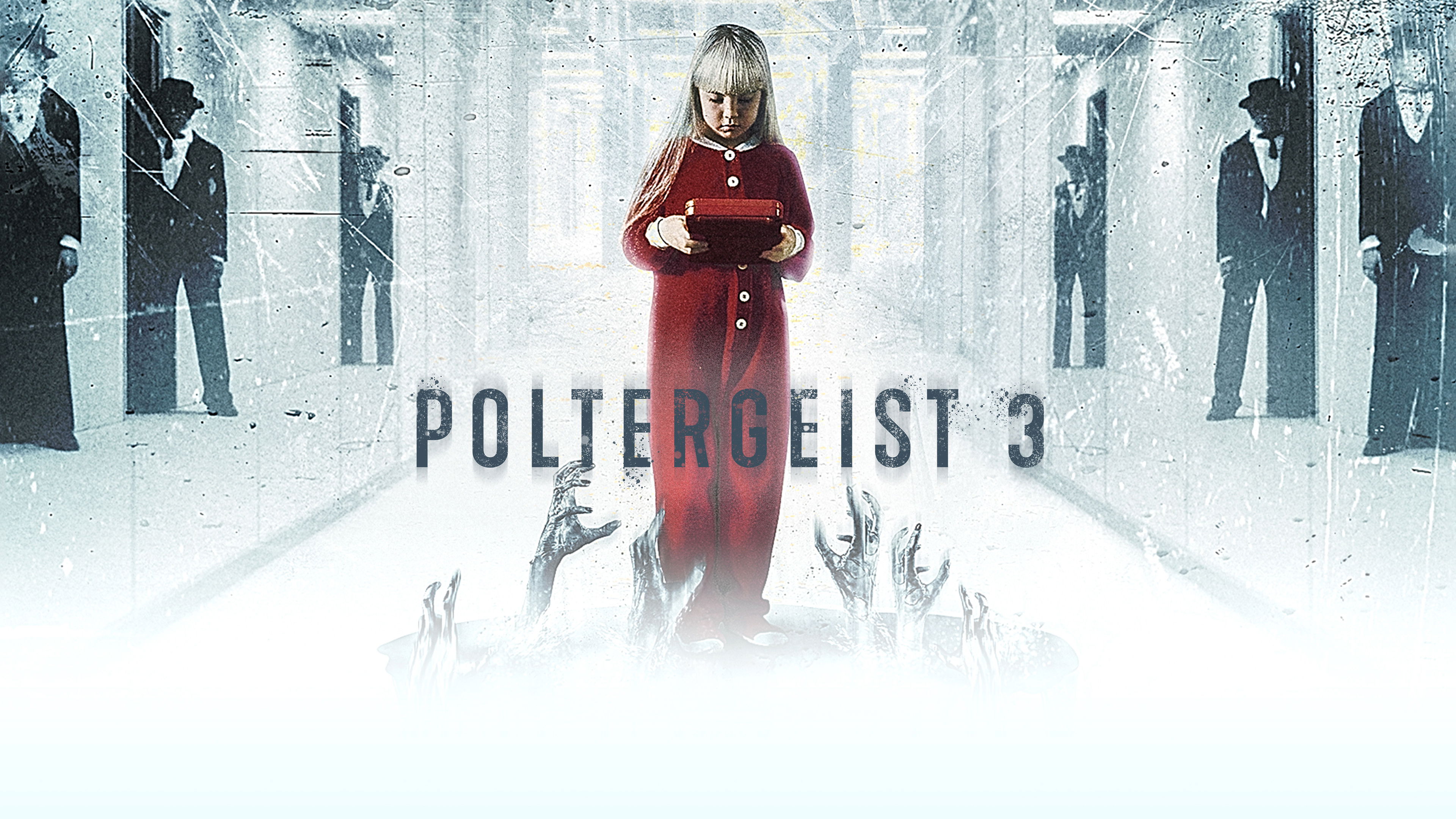
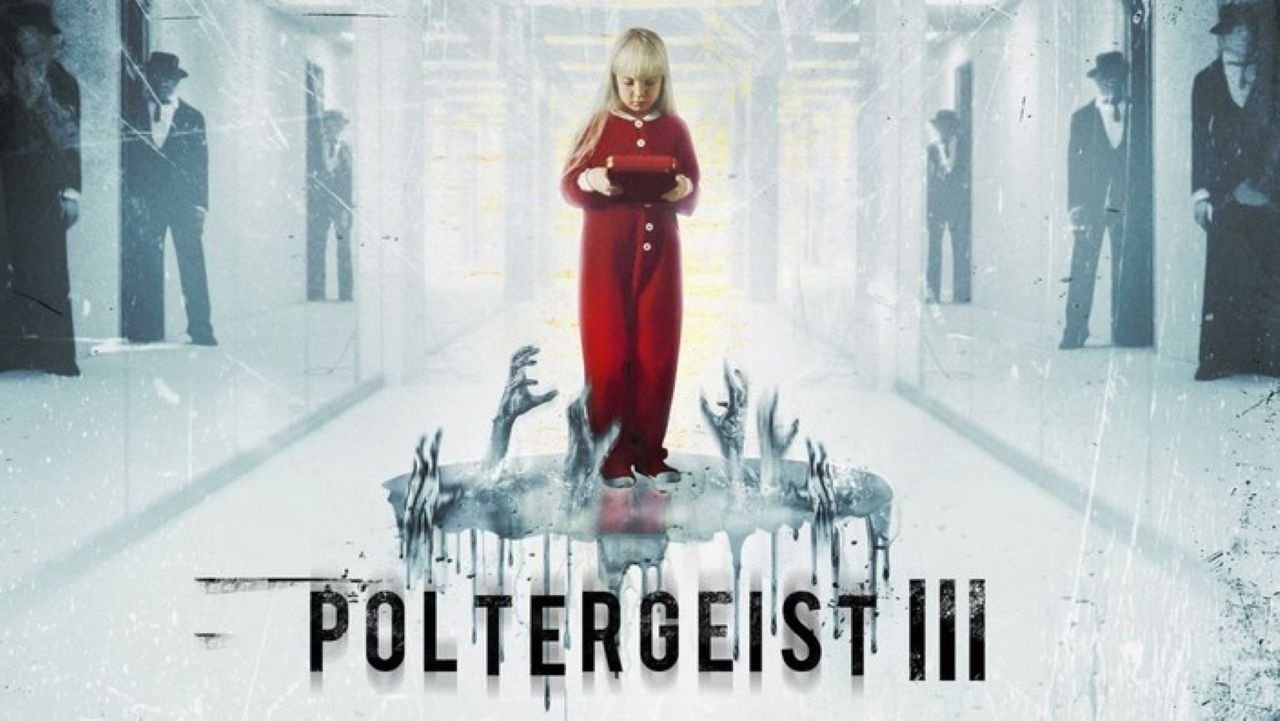
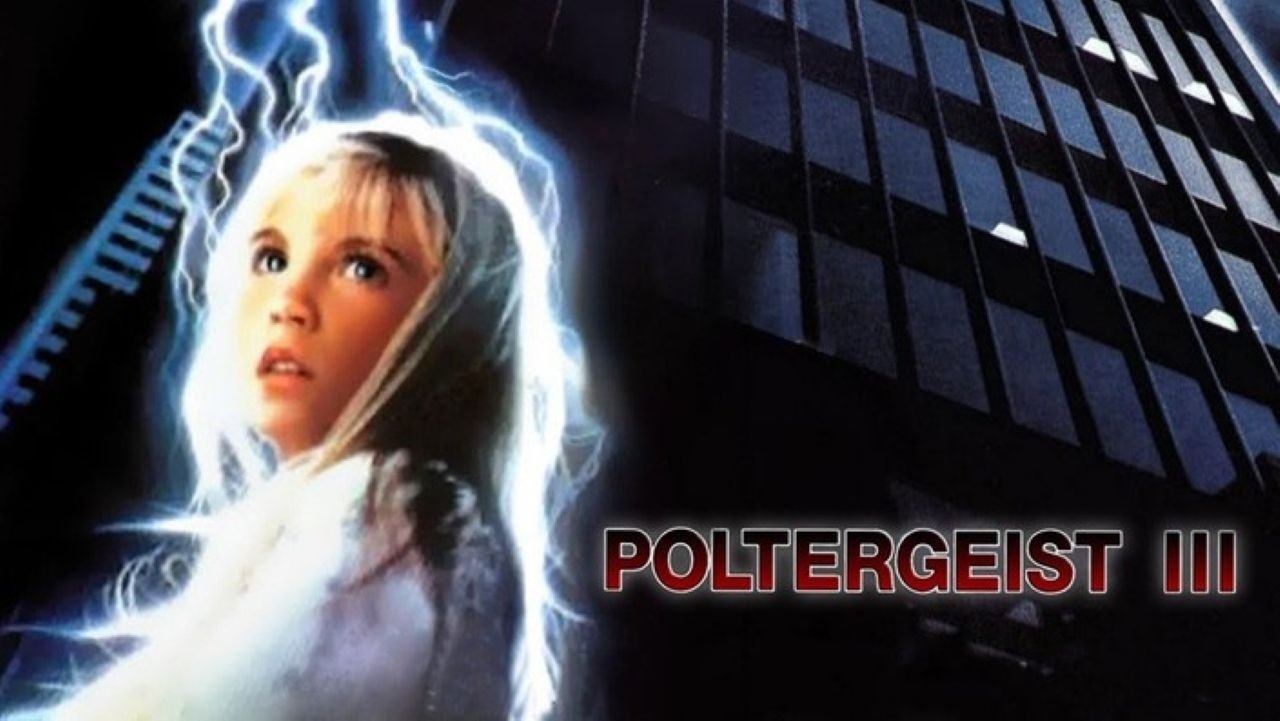
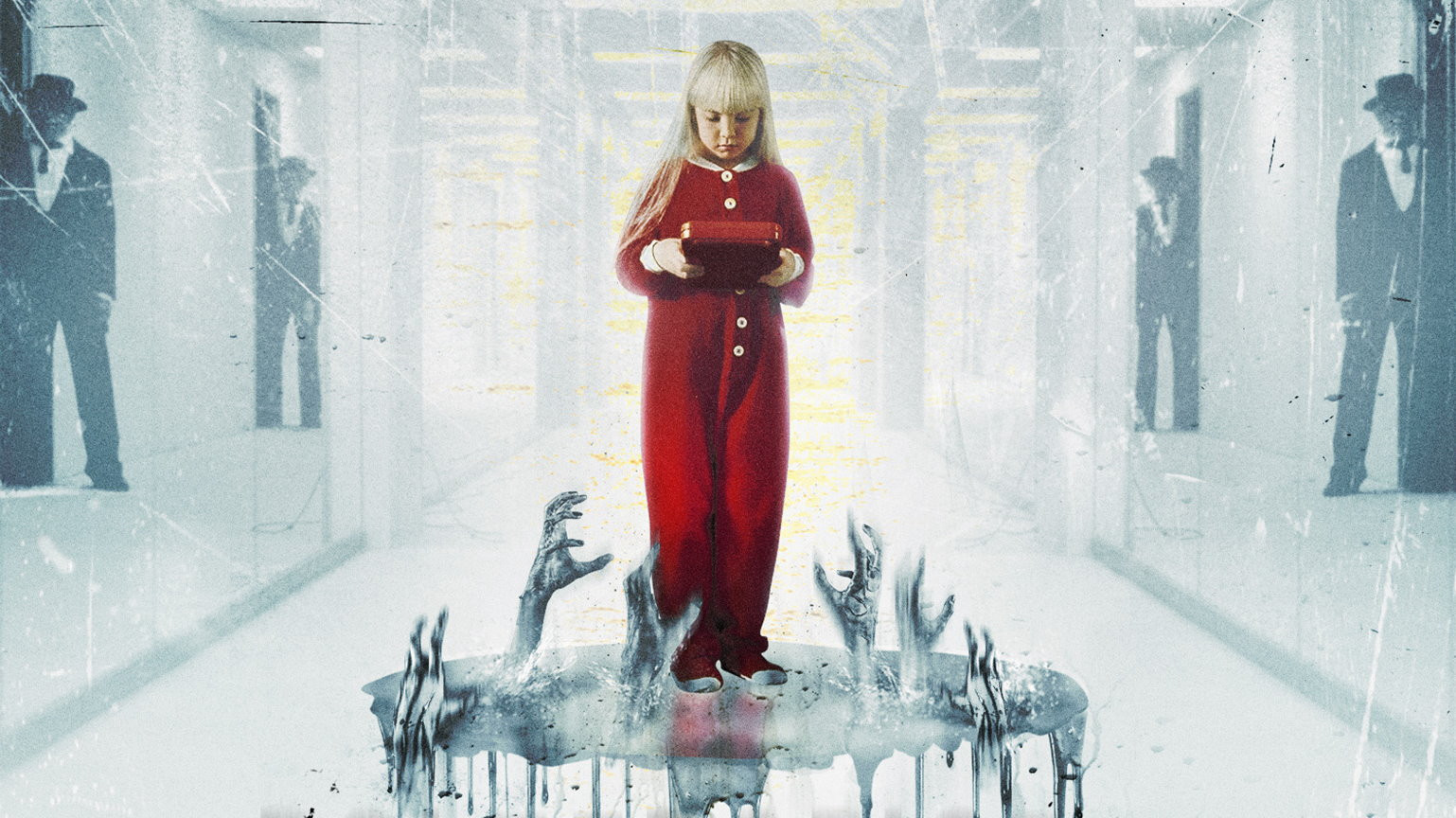
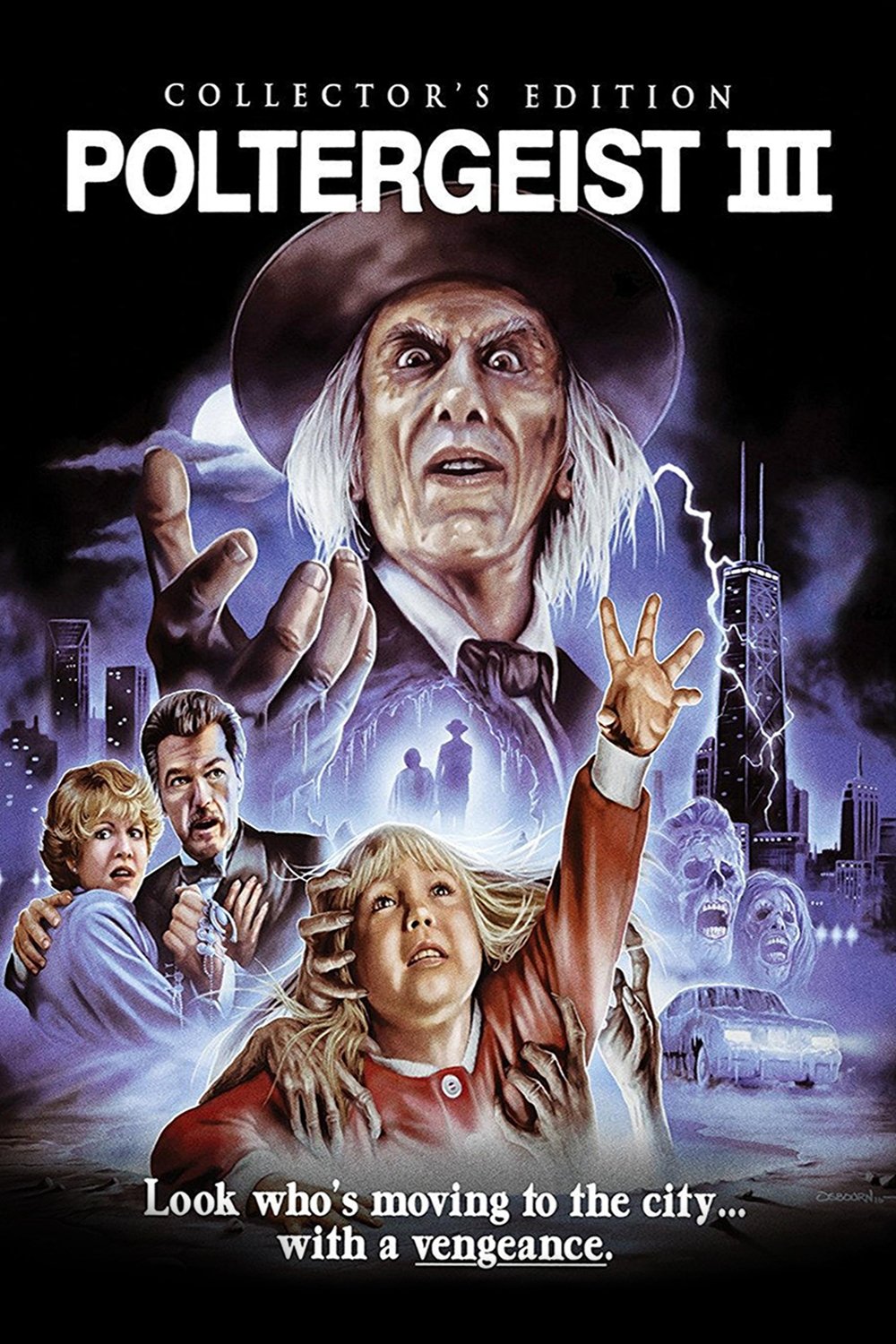
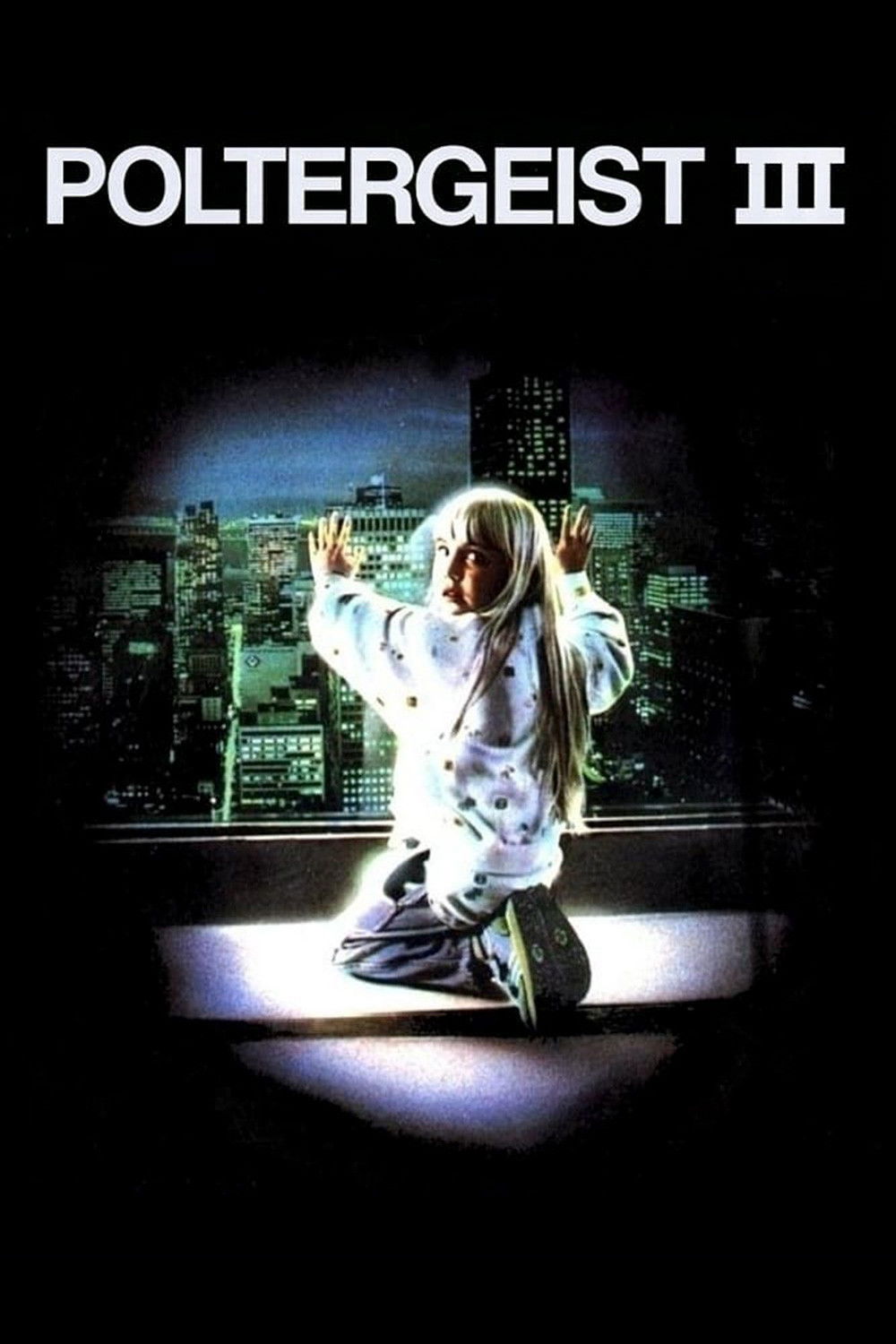
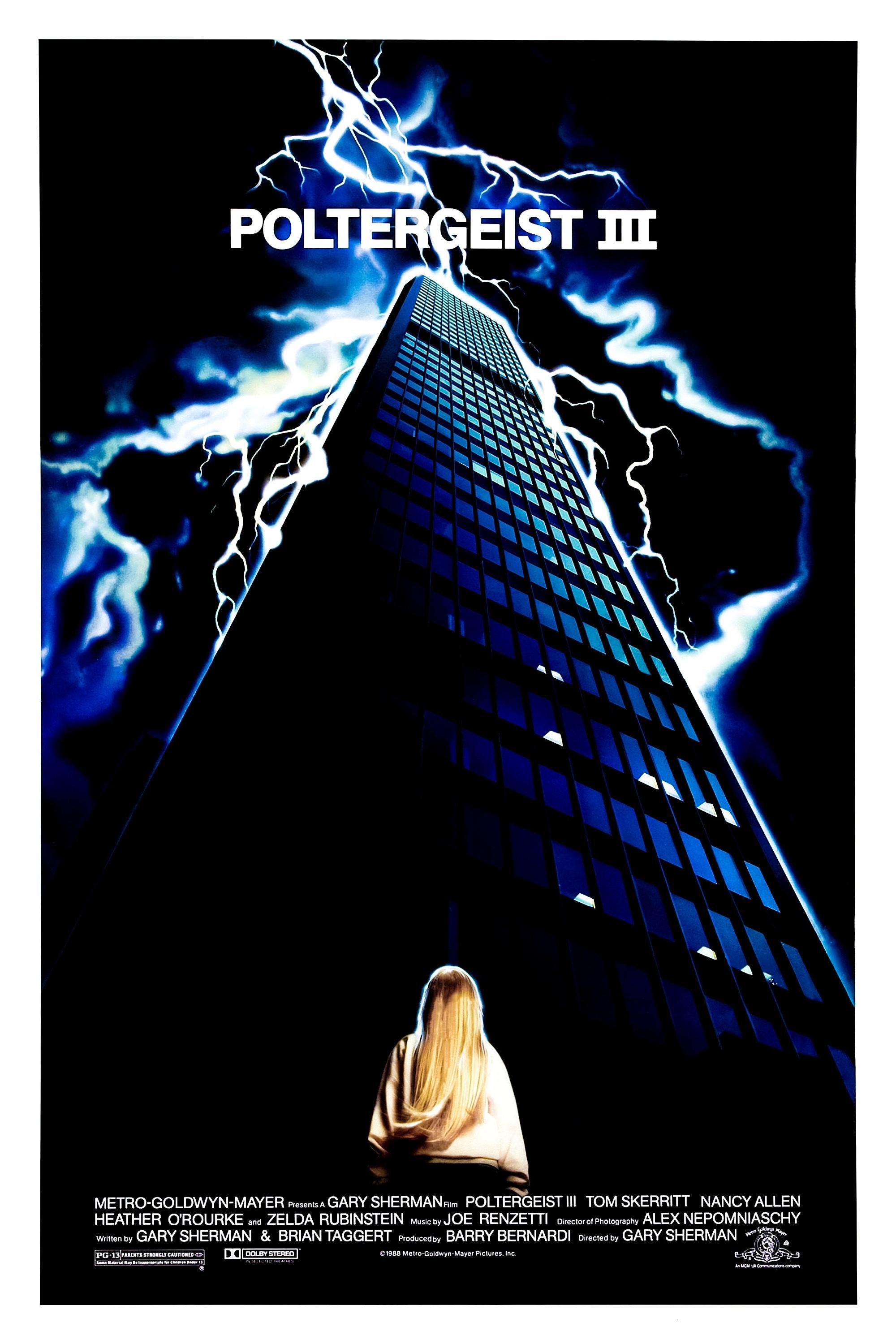
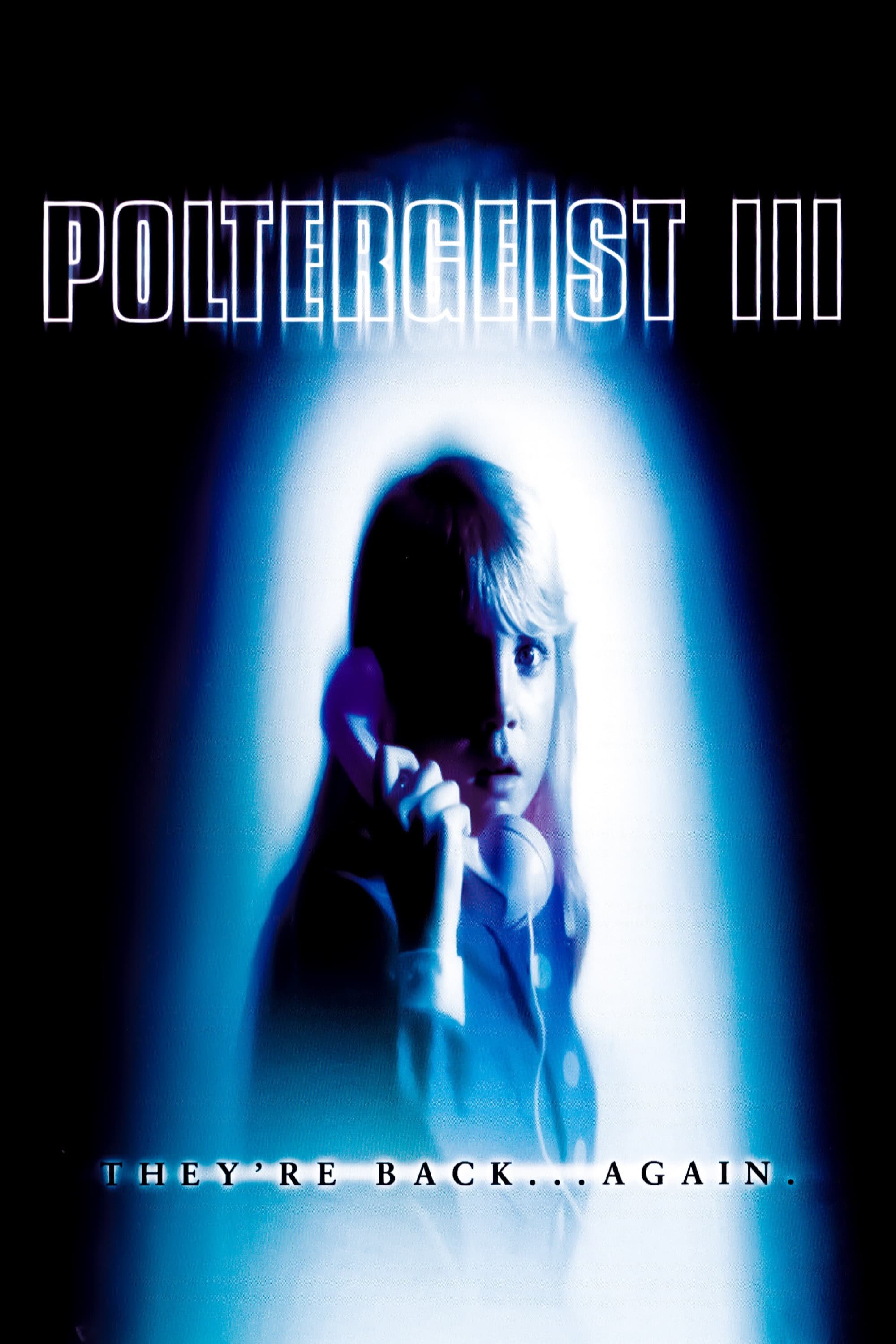
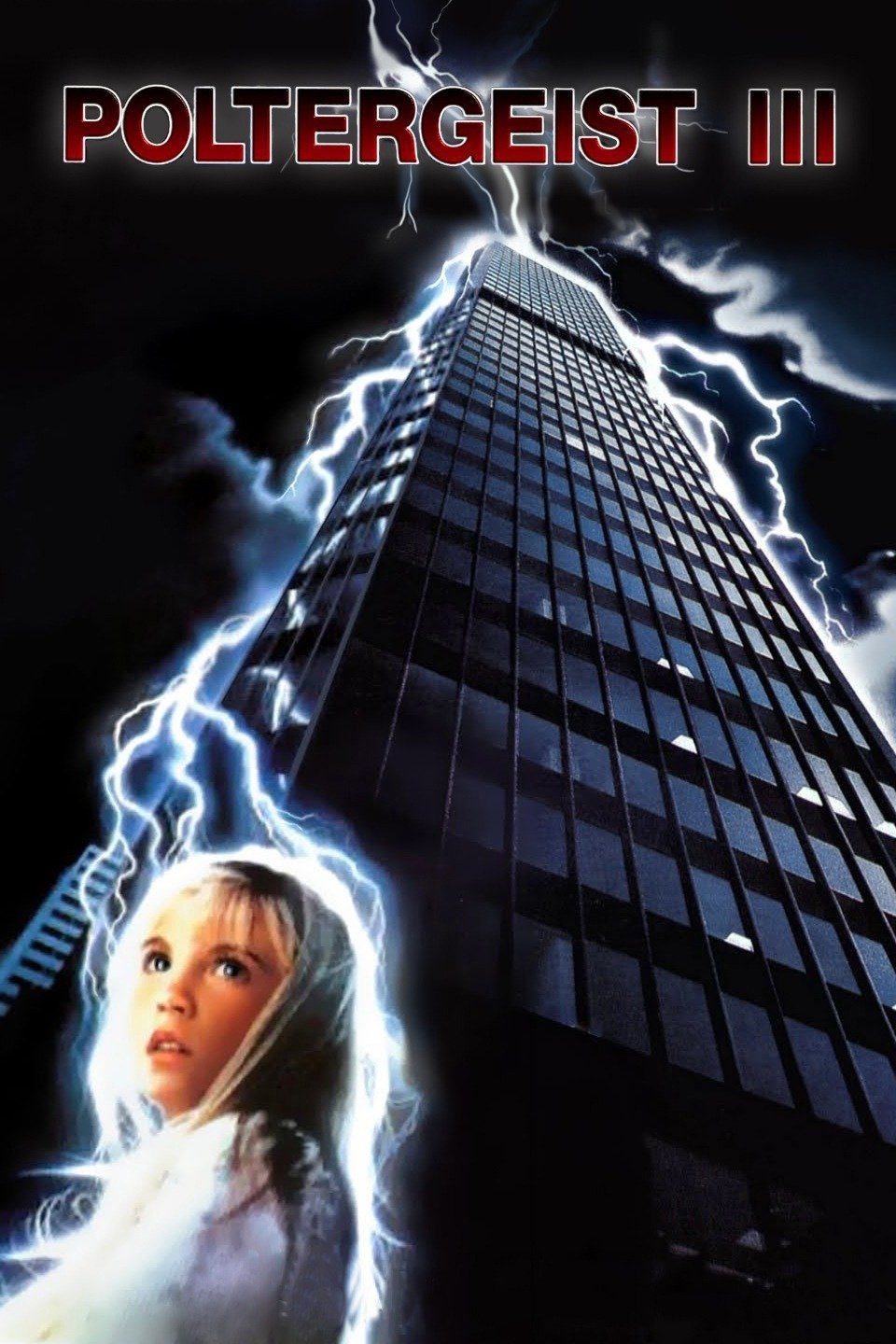
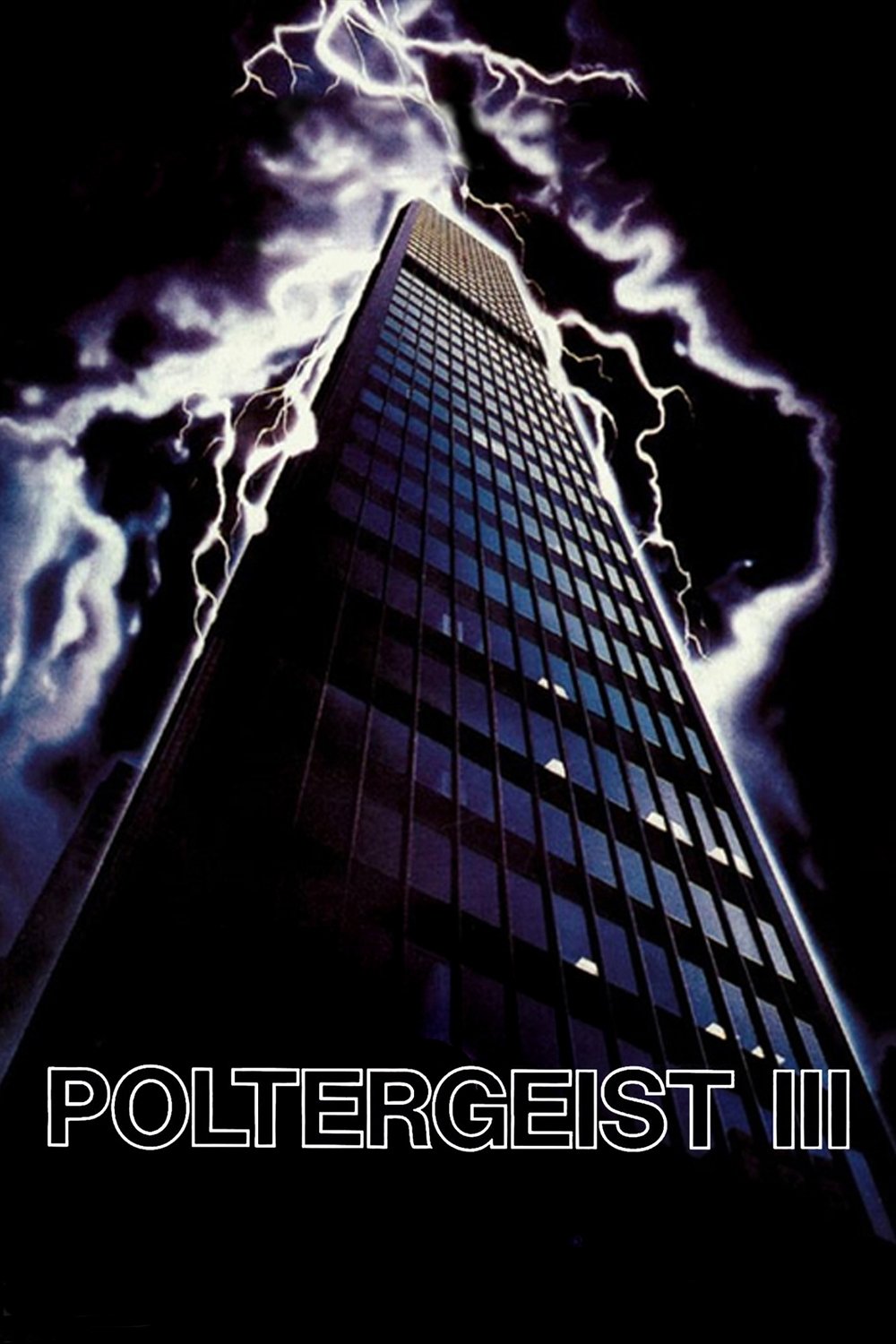
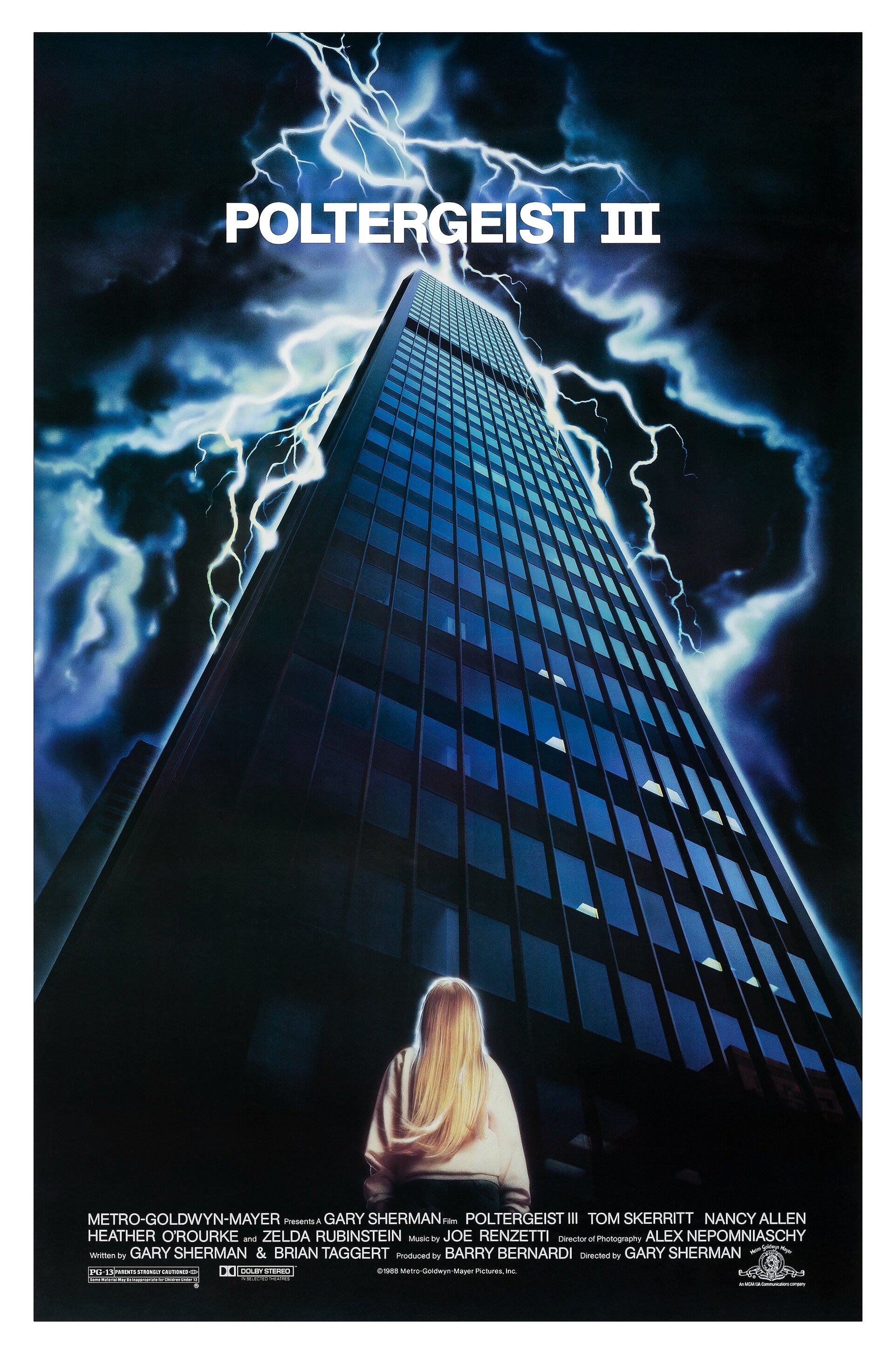
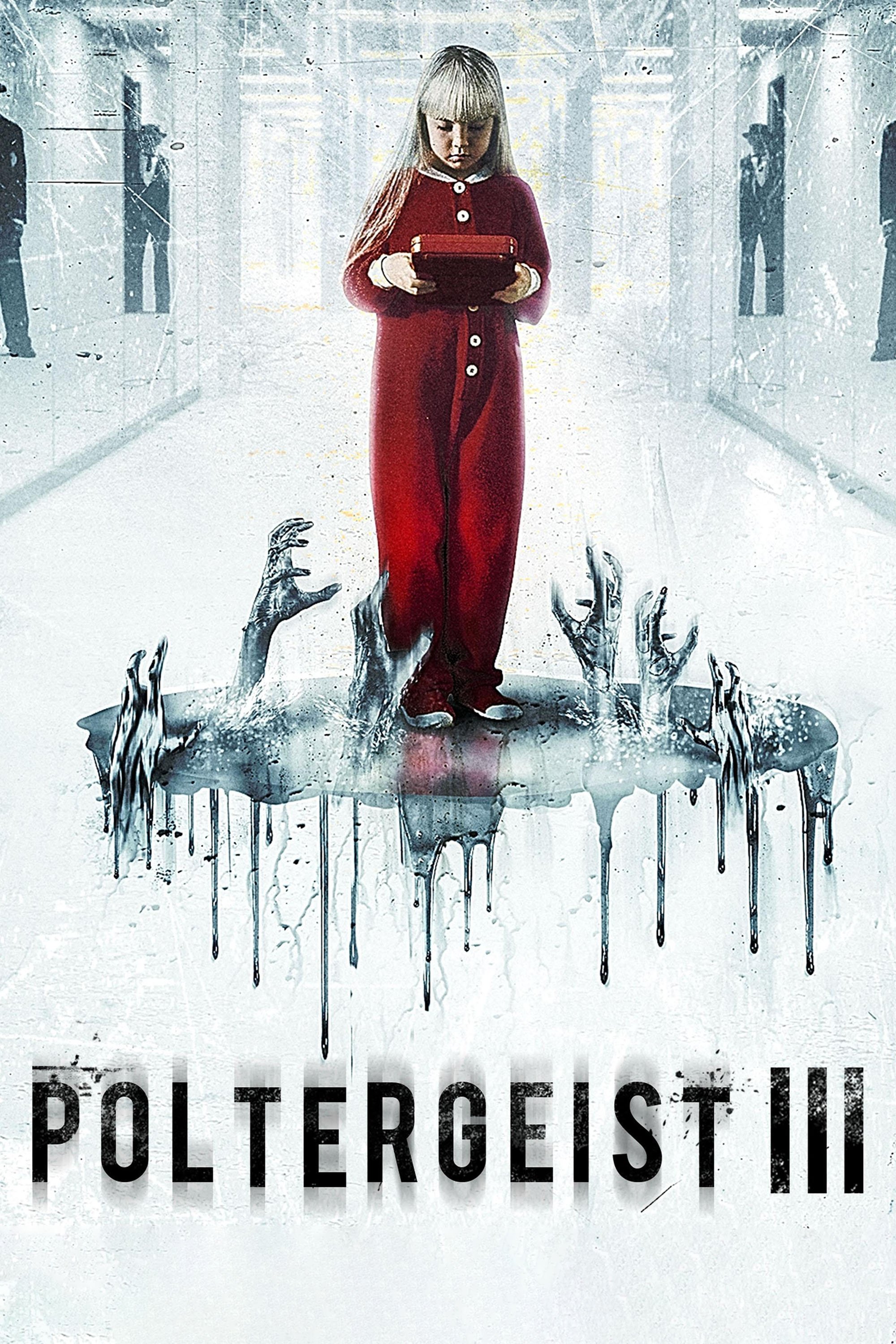
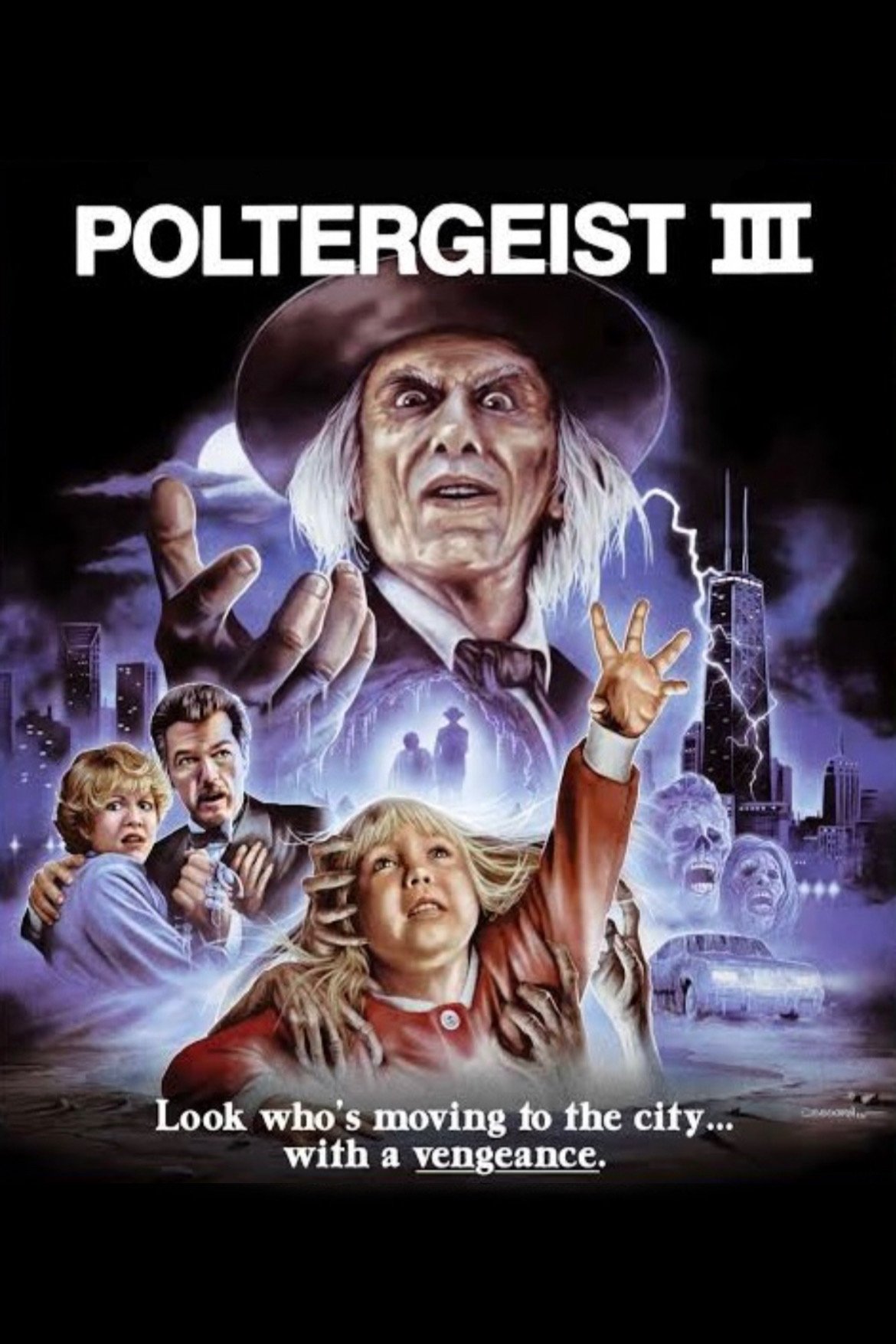
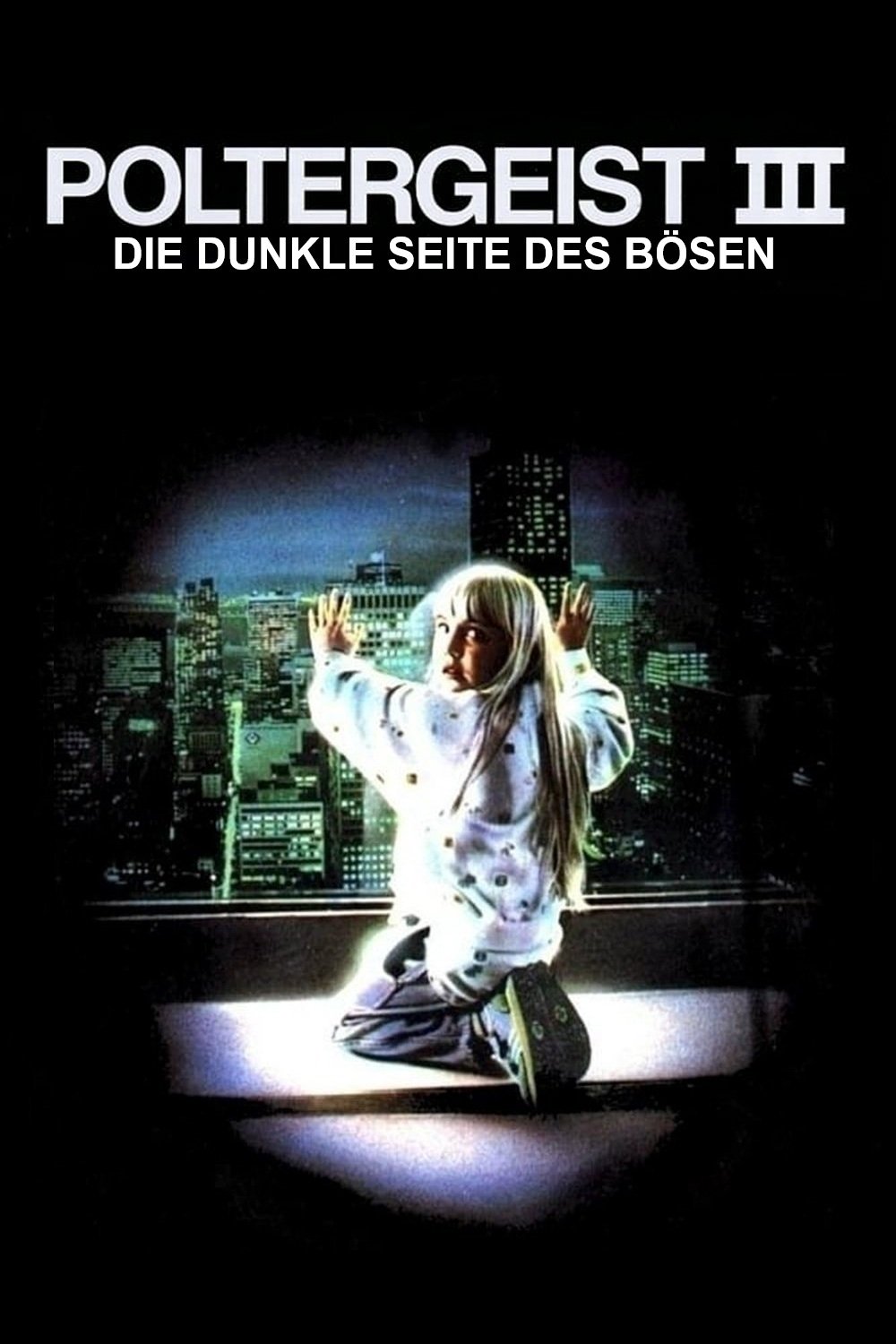
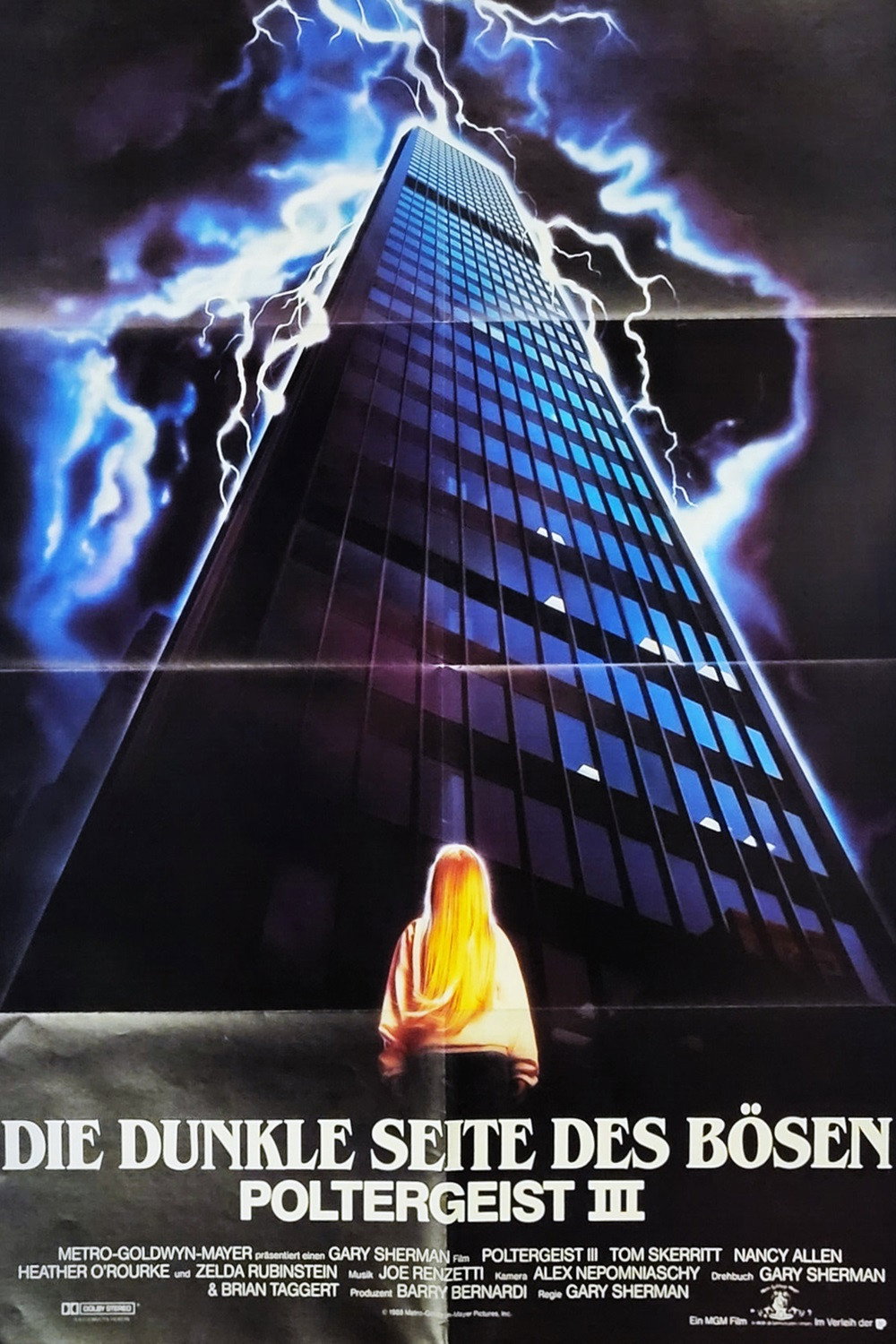
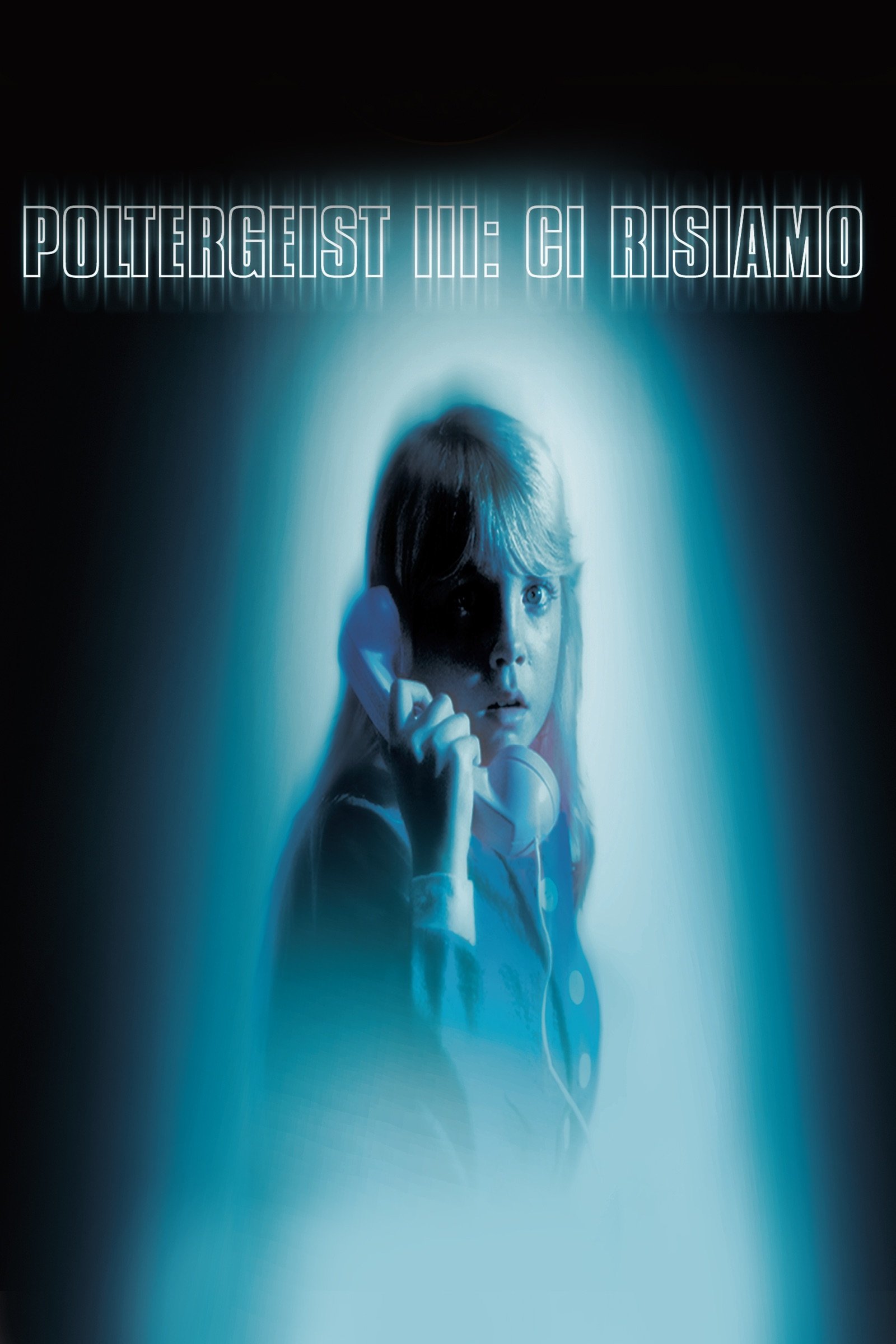
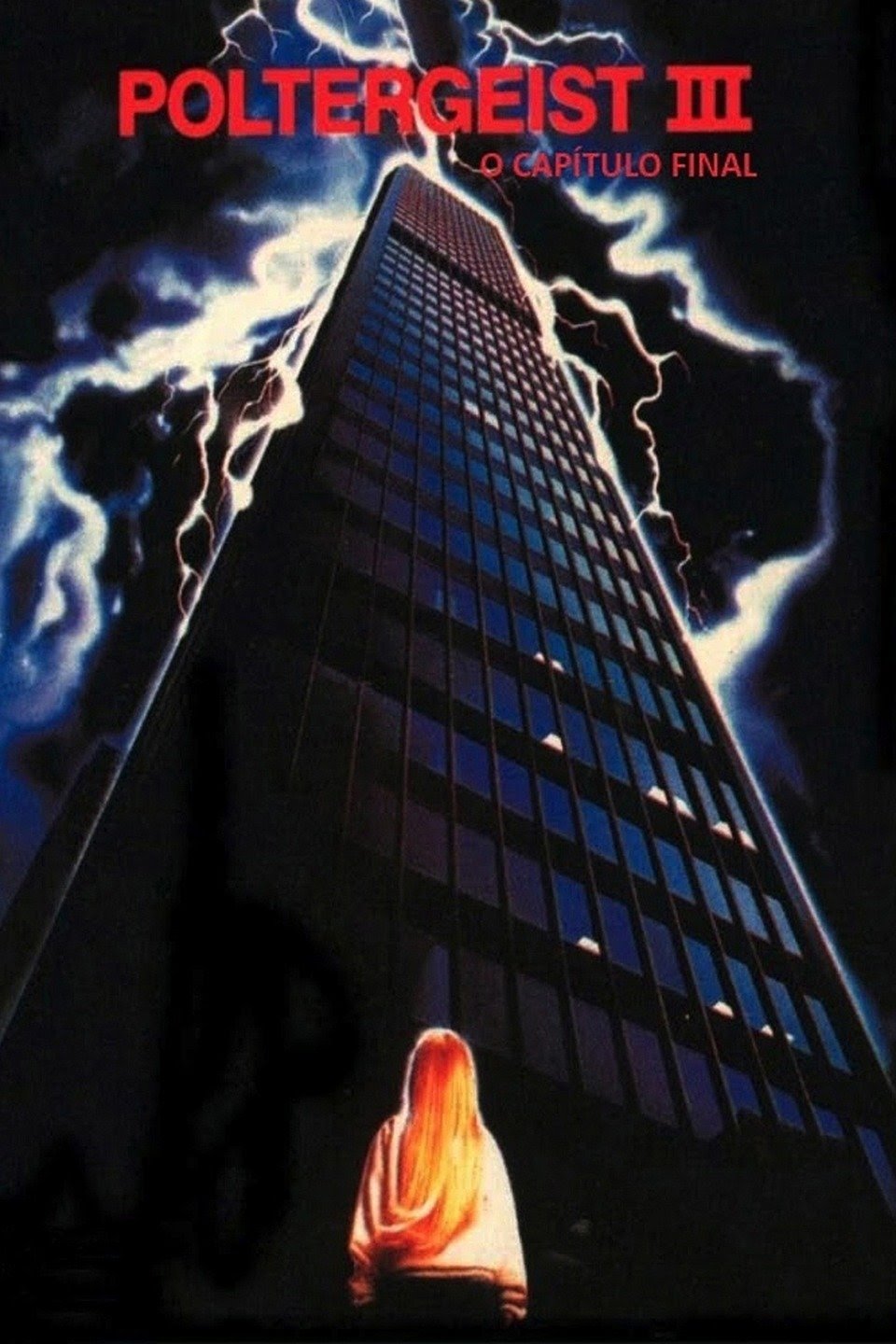
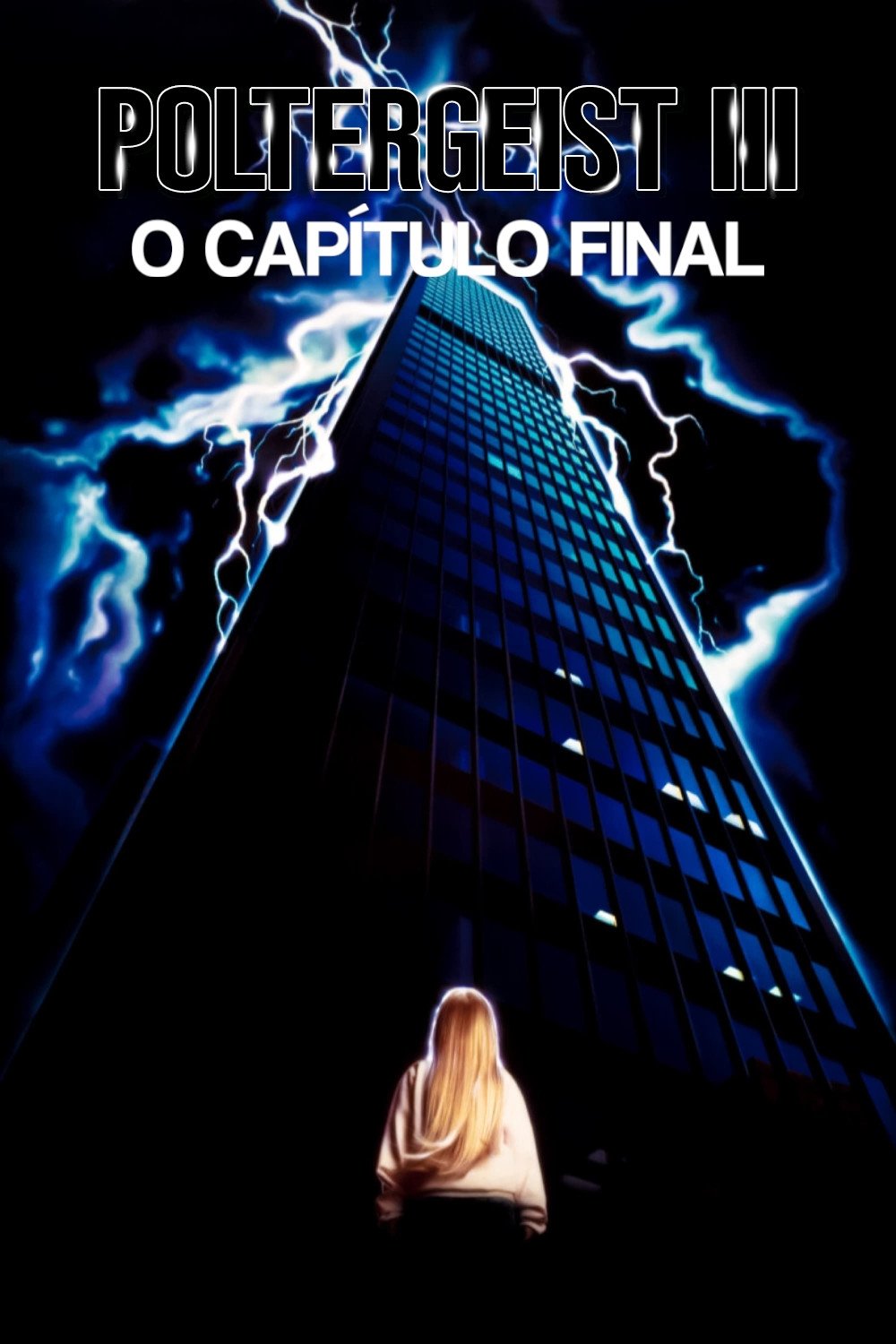
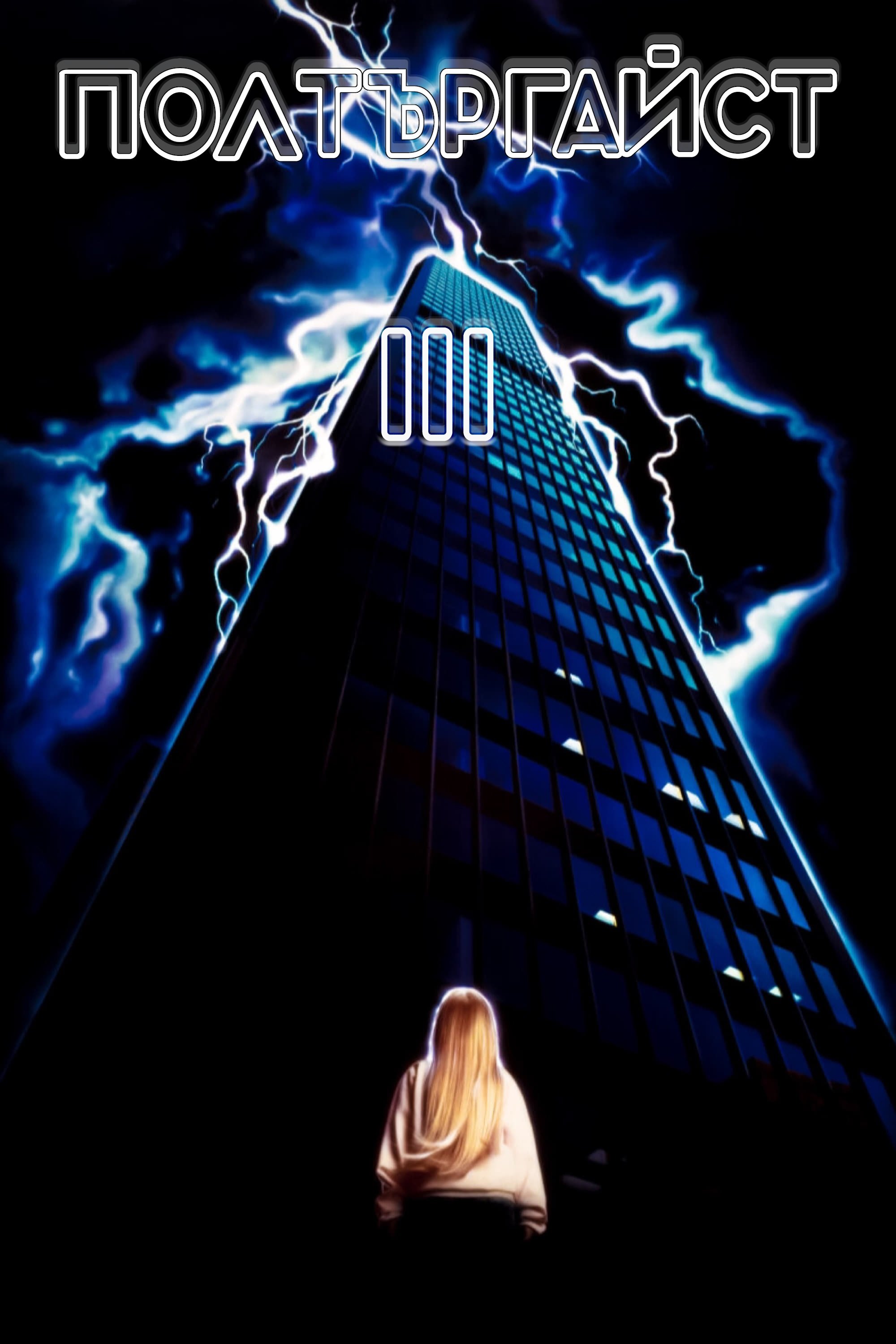
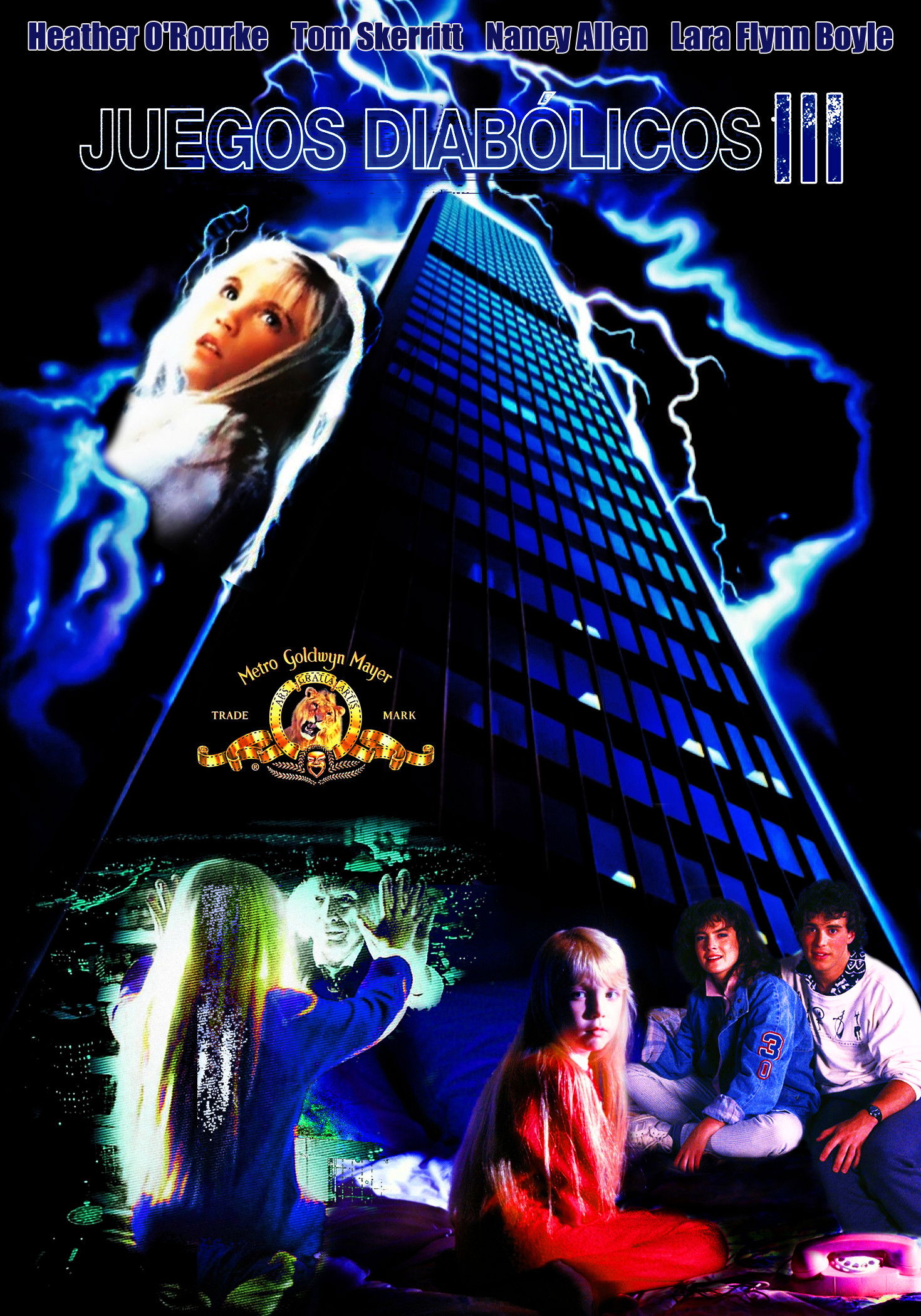
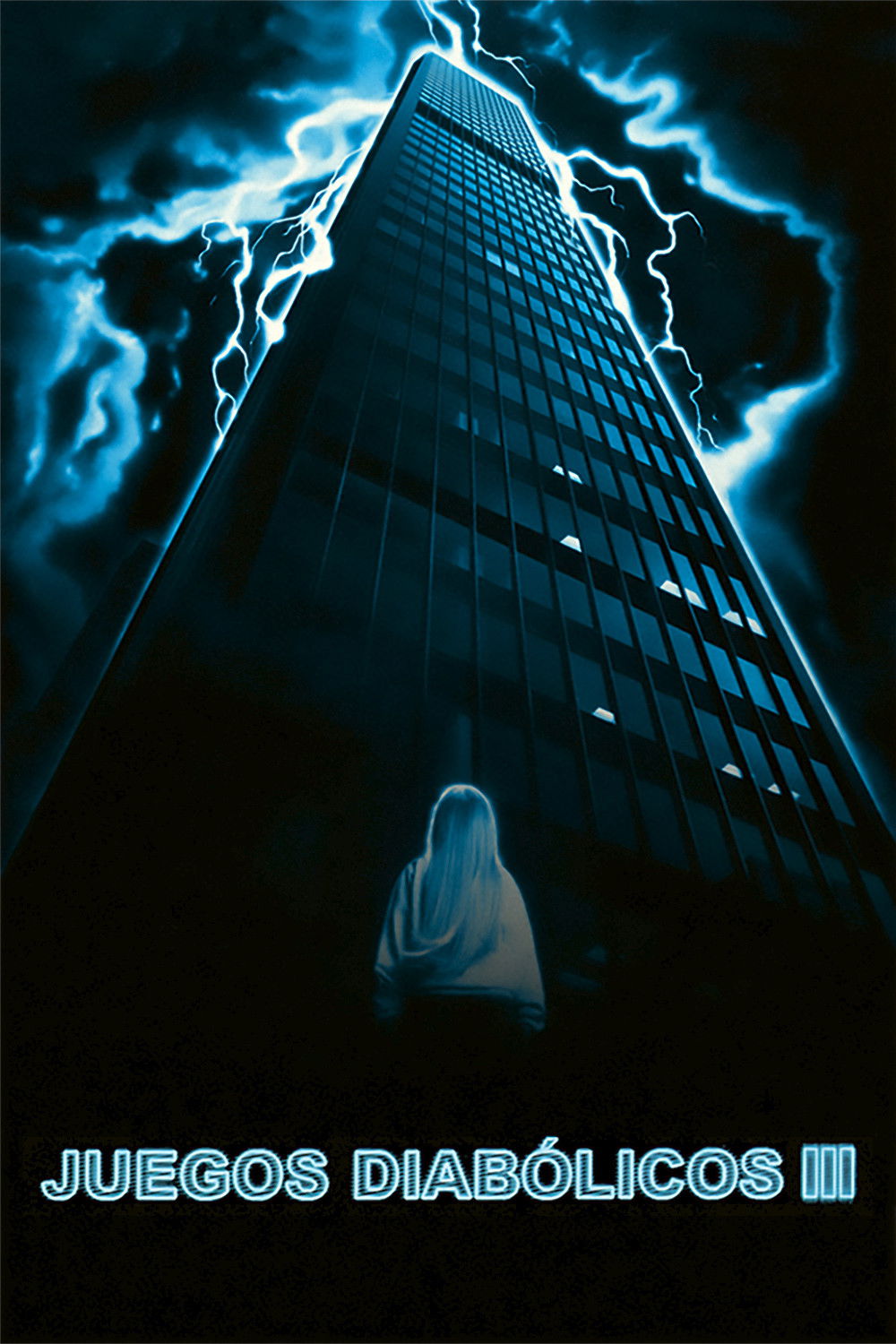
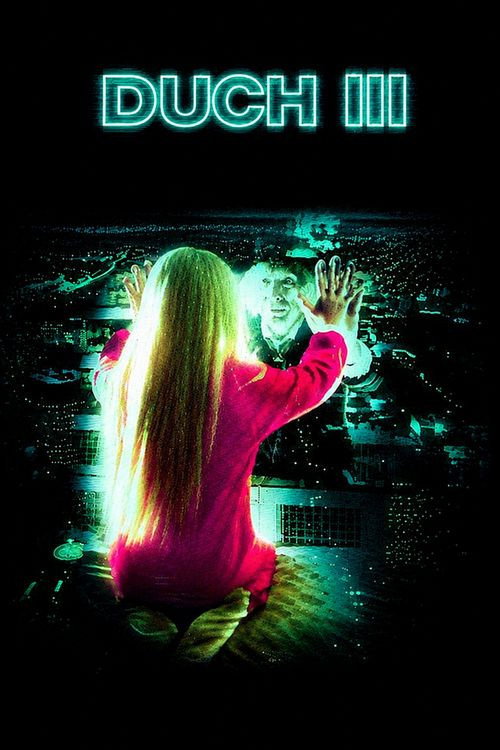
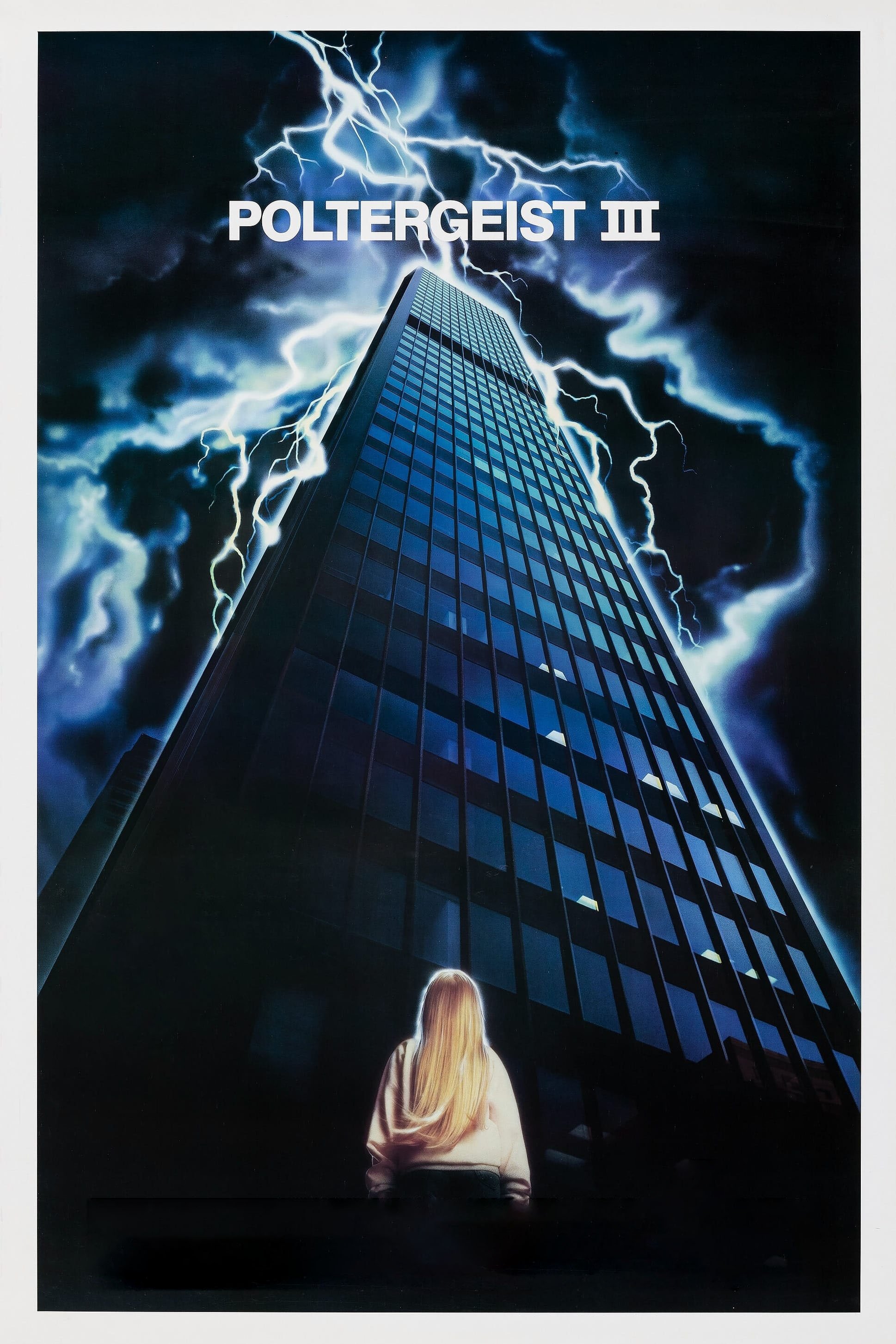
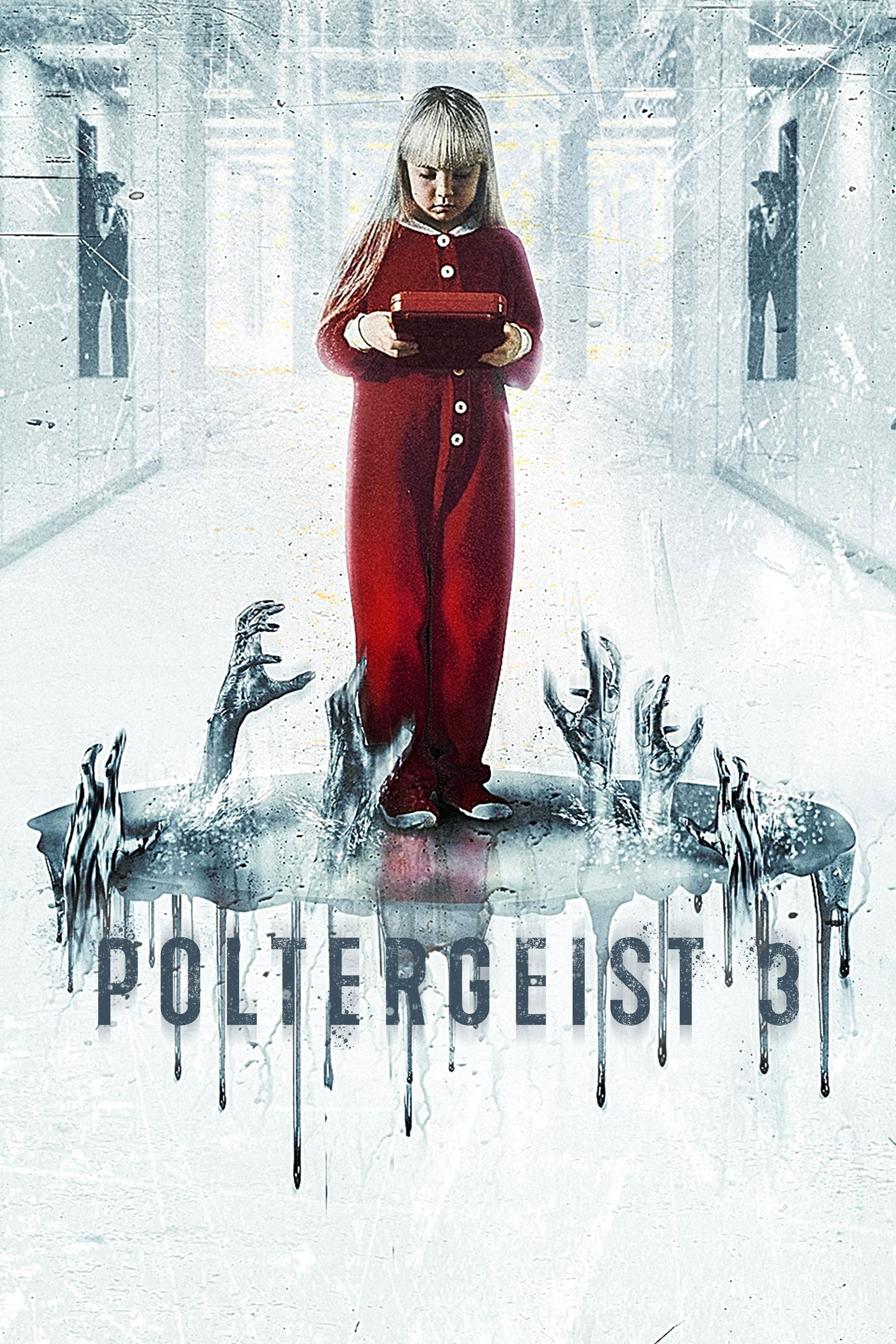
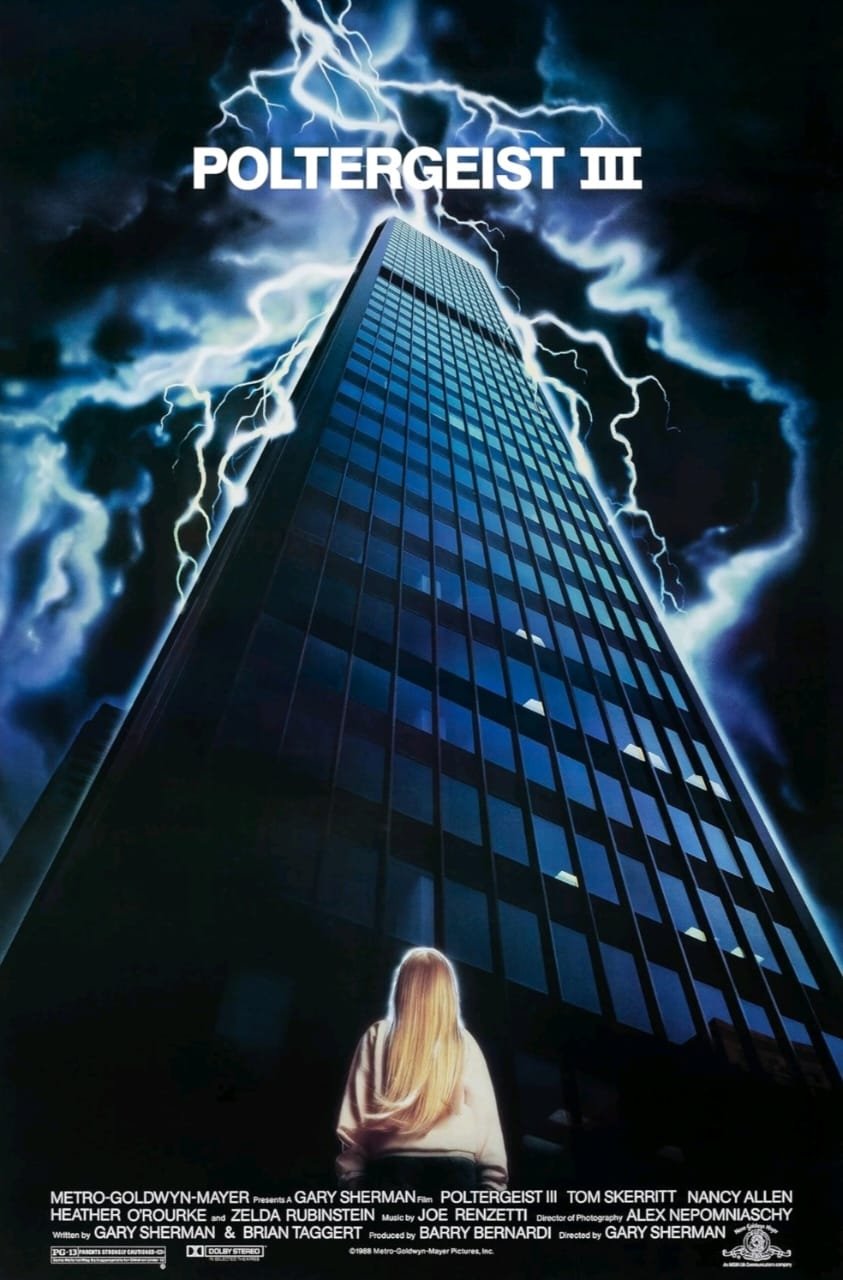
Poltergeist III (1988) poster
Director
Production Company
Metro-Goldwyn-Mayer
Plot

Carol Anne Freeling moves to Chicago to live with her aunt Patricia and uncle Bruce Gardner in a glass-walled high-rise. At school, psychiatrist Dr. Seaton doubts her reports of supernatural persecution, while her cousin Donna becomes involved in the disturbances spreading through the building. The spirit of Reverend Kane reaches Carol Anne through mirrors, reflective surfaces and windows, turning the tower into a maze of threatening doubles. Tangina Barrons returns as the family attempts to protect Carol Anne and escape the otherworldly forces within the building.

Alternative Titles
Полтъргайст III (Bulgaria) — Bulgarian Poltergeist III - O Capítulo Final (Brazil) Poltergeist III: O Capítulo Final (Brazil) — Portuguese 鬼驱人3 (China) — Chinese Poltergeist 3 - Die dunkle Seite des Bösen (Germany) Poltergeist 3 Die dunkle Seite des Boesen (Germany) Poltergeist III - Die dunkle Seite des Bösen (Germany) — German Fenómenos extraños III (Poltergeist III) (Spain)
Show all 31 alternative titles Poltergeist III (Fenómenos extraños III) (Spain) Poltergeist III: Fenómenos extraños III (Spain) Η Εκδίκηση των Δαιμόνων (Greece) — Greek Το Πνεύμα του Κακού 3 (Greece) 腥風血雨 (Hong Kong SAR China) — Chinese Poltergeist 3 (Croatia) — Croatian Kopogó szellem 3. (Hungary) — Hungarian פולטרגייסט 3 (Israel) — Hebrew Poltergeist III - Ci risiamo (Italy) — Italian ポルターガイスト3/少女の霊に捧ぐ… (Japan) — Japanese 폴터가이스트 3 (South Korea) — Korean Duch III (Poland) — Polish Poltergeist III - Eles Estão de Volta (Portugal) — Portuguese Strigoiul III (Romania) — Romanian Полтергейст 3 (Russia) — Russian Juegos Diabolicos III (El Salvador) โพลเตอร์ไกส์ 3 ตอนกระจกข้ามมิติ (Thailand) — Thai Kötü Ruh 3 (Türkiye) — Turkish 腥風血雨 (Taiwan) — Chinese Полтергейст 3 (Ukraine) — Ukrainian Poltergeist 3 (United States) Poltergeist III: The Final Chapter (United States) Poltergeist III: We're Back (United States)

Trailers & Videos

8 videos

Film Guide & Analysis

Gary Sherman relocates Carol Anne to a Chicago skyscraper, where practical mirror illusions shaped the film and Heather O'Rourke's death complicated completion.

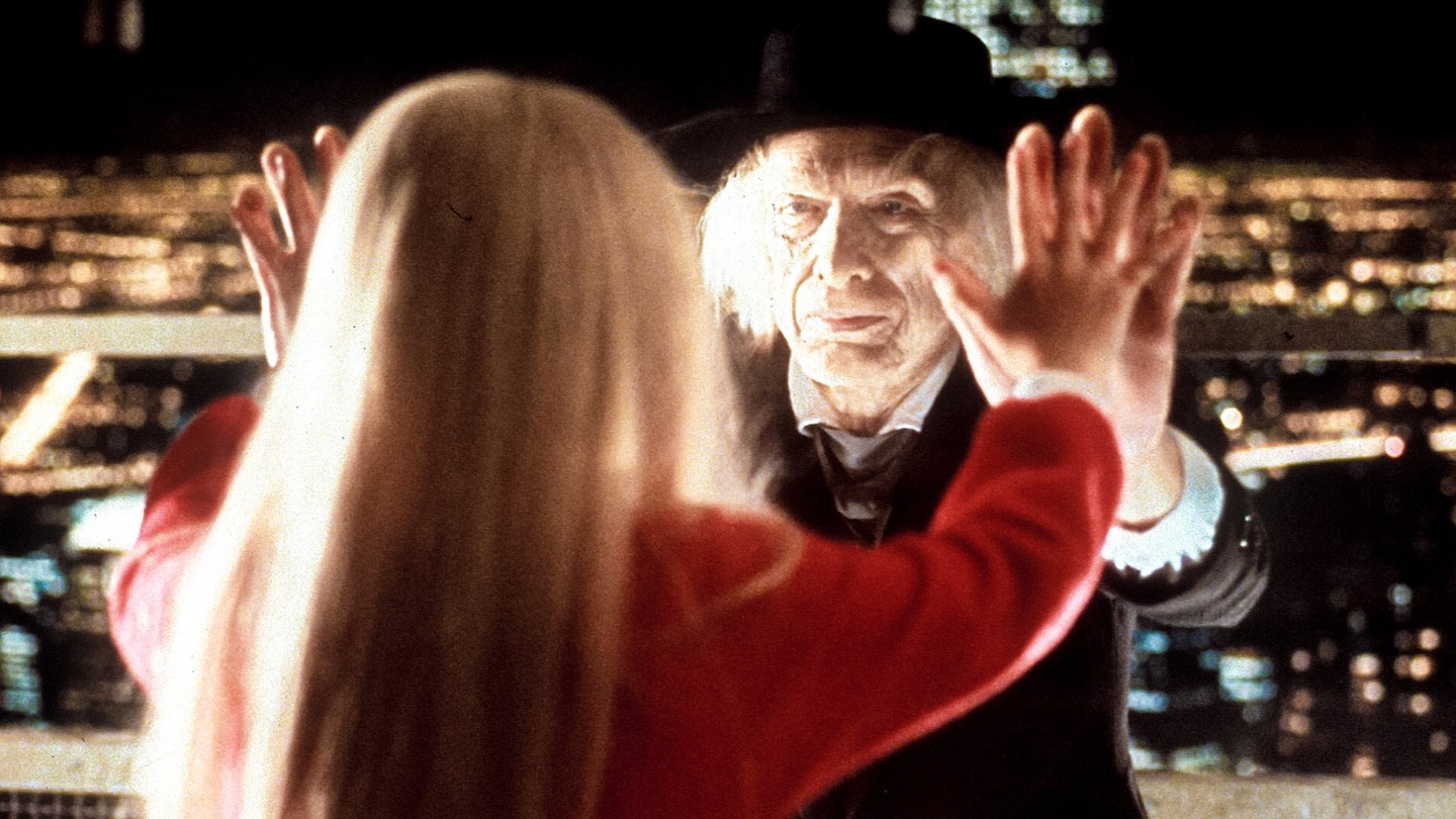
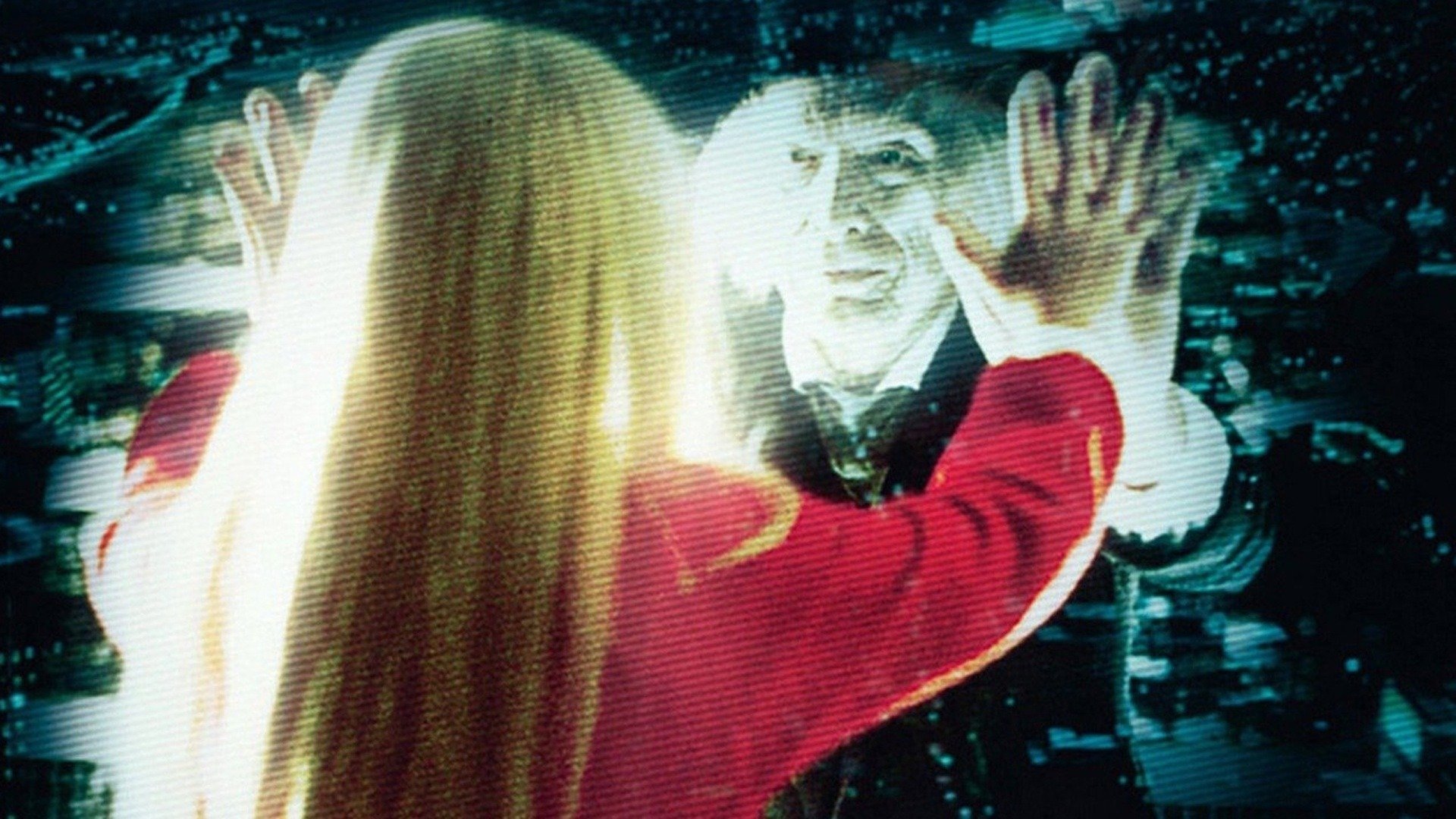
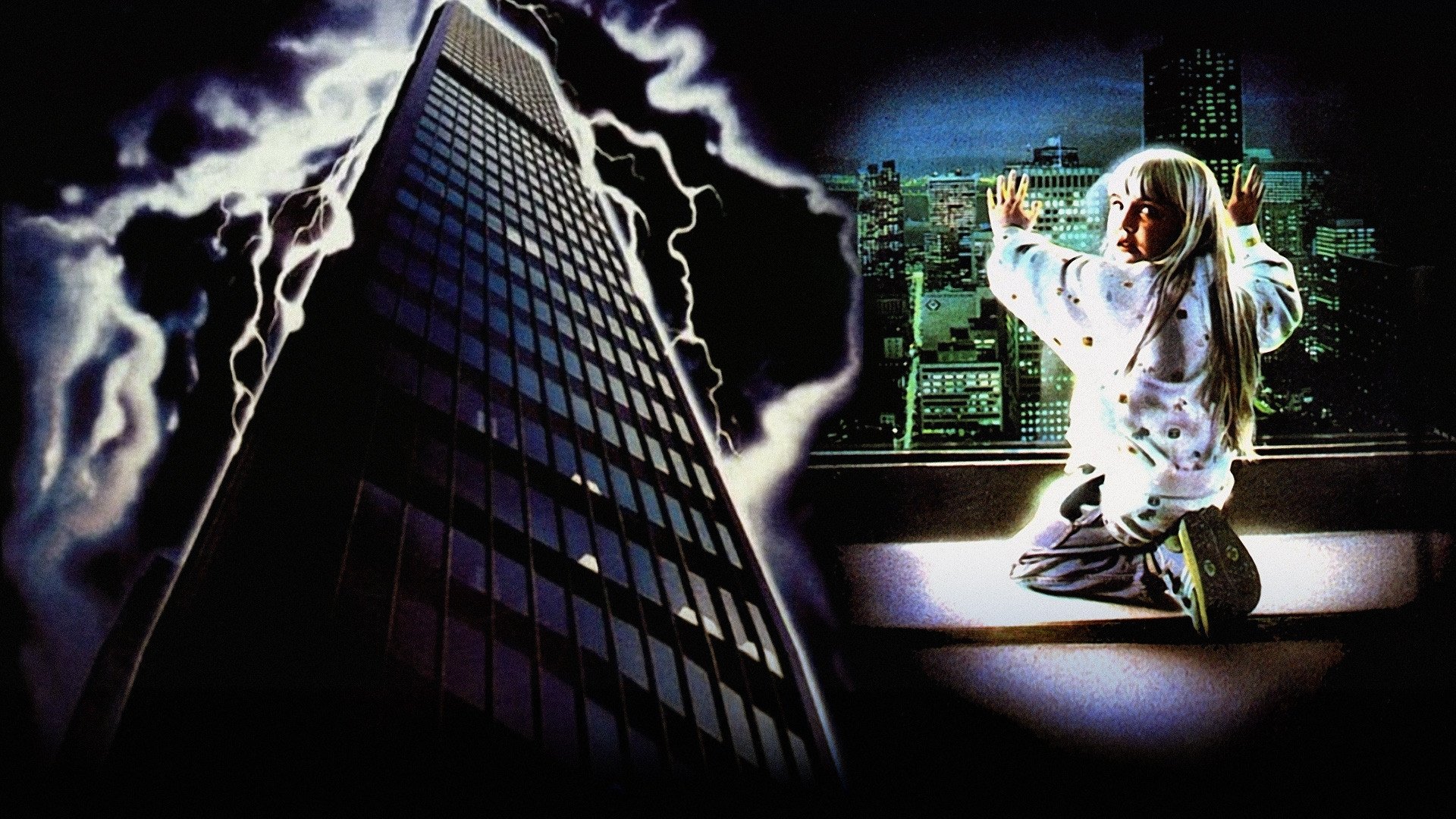
Poltergeist III (1988) moves Carol Anne Freeling from the suburban setting of the earlier films into a Chicago high-rise whose polished surfaces offer countless entrances for supernatural intruders. Living with relatives in a combined residential and commercial tower, Carol Anne discovers that reflections can reveal figures absent from the room and that familiar routes through the building no longer lead where they should. The shift gives the third installment a recognizable visual identity. Glass walls, elevator doors and mirrored interiors become mechanisms of suspense, while the city's immense vertical architecture replaces the haunted family home as the central environment.

Gary Sherman directed and co-wrote the MGM production, approaching its elaborate manifestations through effects photographed during principal photography. His emphasis on physical arrangements and optical illusion makes the film a distinctive example of late-1980s studio horror craftsmanship. Its history also contains a painful interruption: Heather O'Rourke, who had played Carol Anne throughout the trilogy, died before the picture was released, and the ending was completed under altered circumstances. Contemporary critics often found the narrative inadequate to the visual invention, a division that remains useful when examining the production without attributing real tragedies to the supernatural fiction.

Development and the Chicago Production

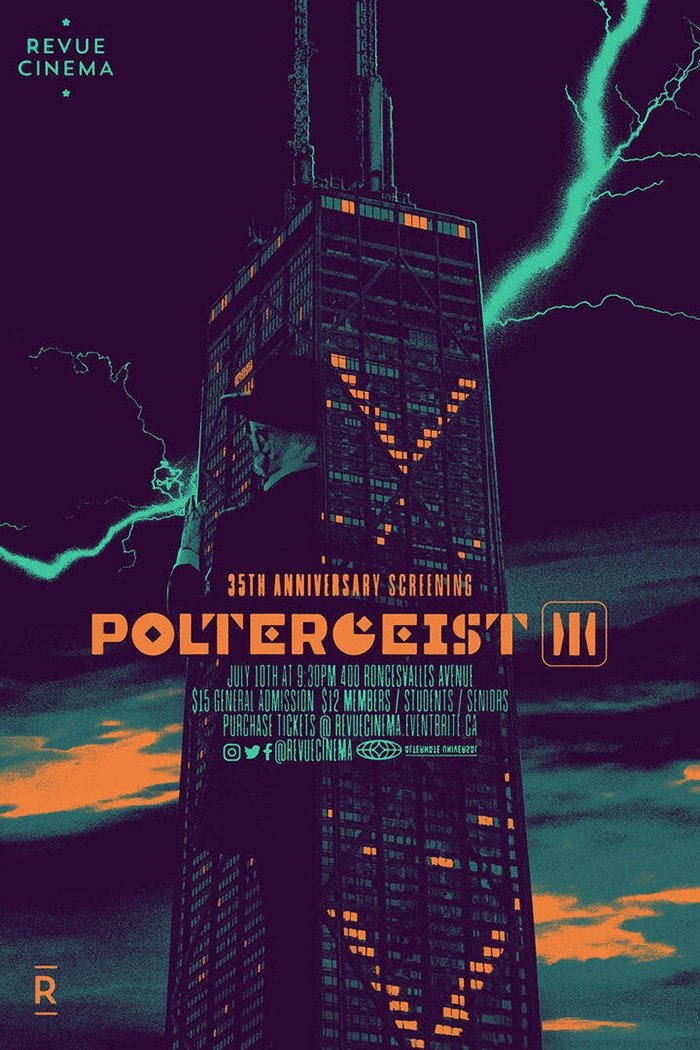
MGM announced another Poltergeist film in November 1986, and Gary Sherman was associated with the project by January 1987. Working titles reported during development included We're Back: Poltergeist III and We're Back: Poltergeist Continues. In a later interview with Roel Haanen, Sherman recalled initially resisting the assignment. He said that agreement depended on filming in Chicago, using the John Hancock Center and relying on practical effects. That retrospective account explains the director's personal interest in the location; contemporary production reports separately establish that the picture was shot in the city. The film's location was therefore integral to its design from an early stage.

According to the American Film Institute's compilation of trade reporting, principal photography ran from April 13 to June 25, 1987. The production used the John Hancock Center and additional Chicago-area sites, including Francis W. Parker School, with work also reported at Metropolitan Chicago Studios and in Oakbrook Terrace. Shooting was not without danger. A May 1987 effects-related fire inside a suburban parking garage injured three people and caused substantial property damage, as reported by the Chicago Tribune and preserved in AFI's production history. This documented accident belongs to the film's working conditions; it provides no basis for treating the later death of a performer as evidence of a supposed franchise curse.
A Skyscraper Built Around Reflections

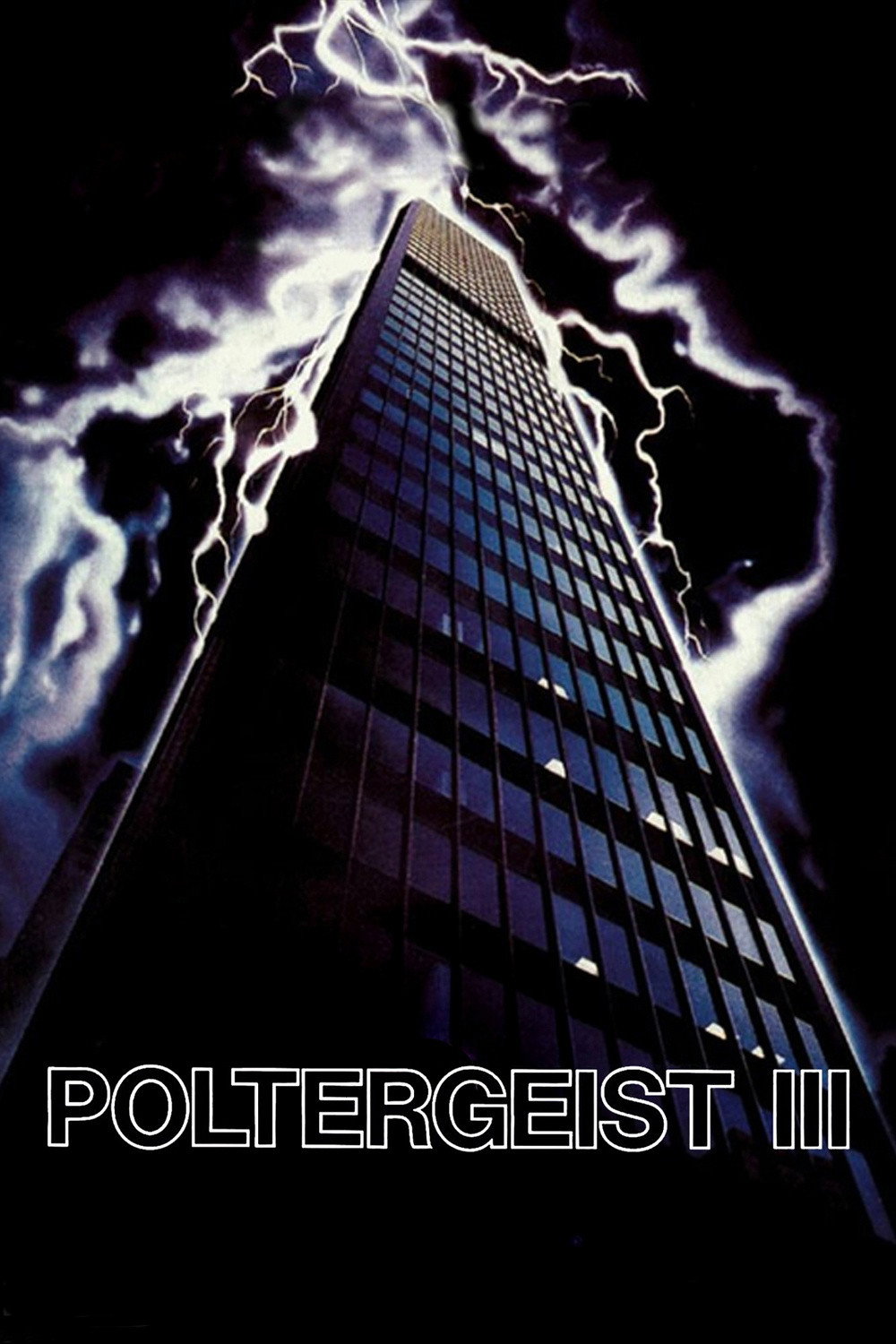
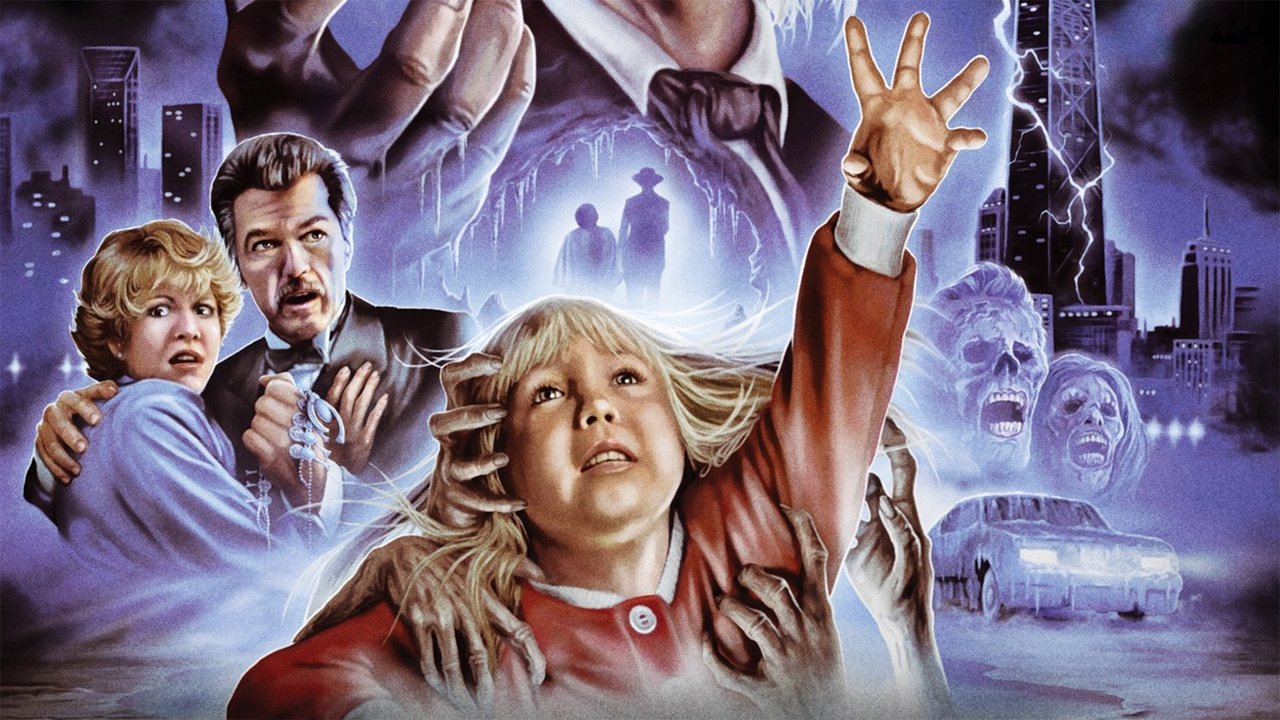
The Gardners' building combines apartments, offices, an art gallery and public corridors. Bruce Gardner manages the property, while Patricia operates a gallery there, placing the household inside an environment where private and commercial spaces continually intersect. The tower's height can suggest safety from disturbances associated with the Freelings' previous home, yet it introduces different vulnerabilities. Long passages create distances that are difficult to judge, while elevators move between unseen floors. A character can look into a glass panel expecting reassurance and discover an image that behaves independently of its supposed source. The setting turns ordinary urban design into an unstable system of observation.

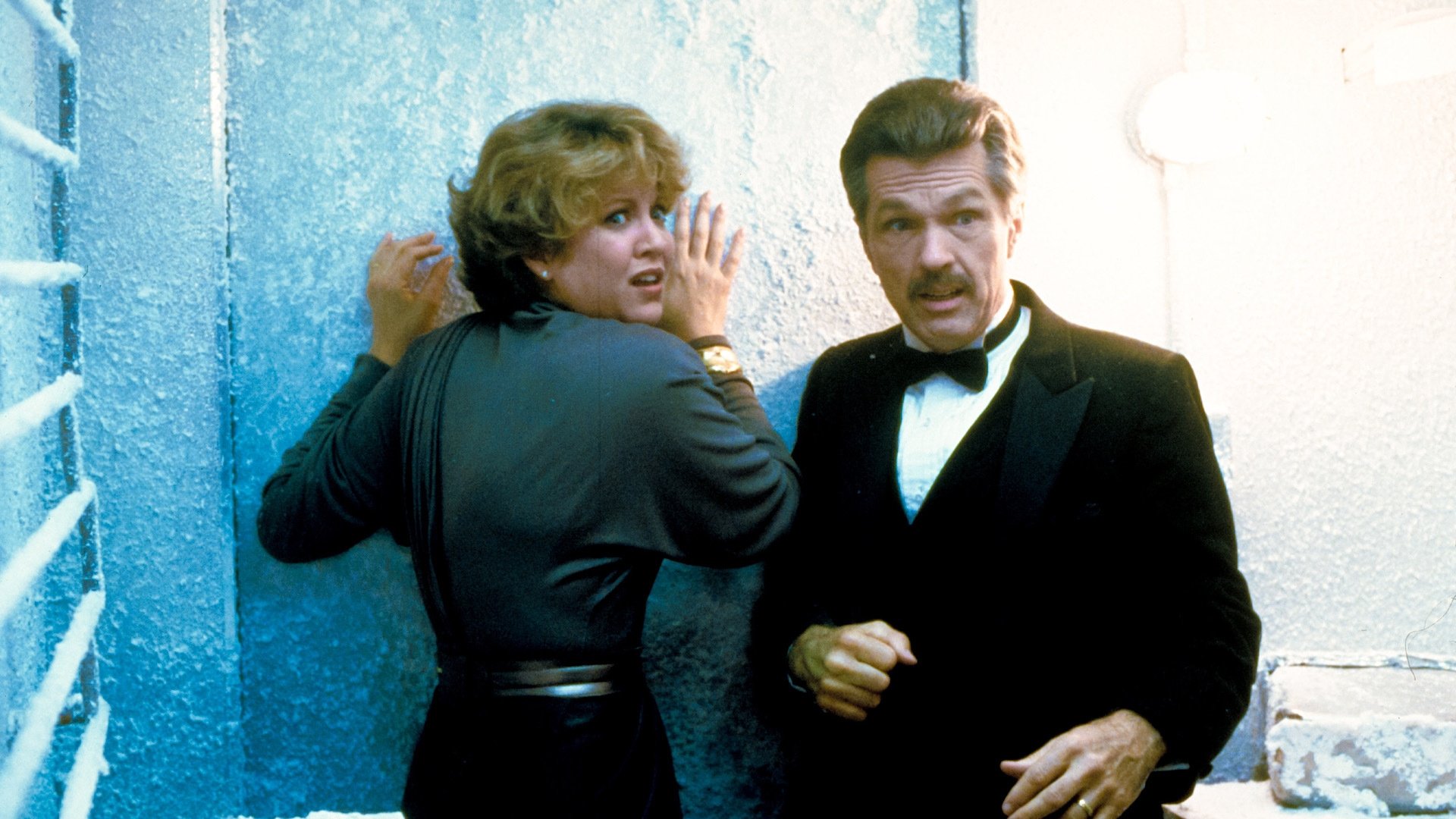
Sherman's staging repeatedly depends on the viewer comparing actual space with reflected space. When an apparition appears behind a character in a mirror, the question is whether it occupies the room or the image alone. Repeated glimpses through transparent partitions produce a similar uncertainty about depth. The film's recurring cold surfaces and frozen environments extend this confusion into the material world: a polished interior associated with comfort can suddenly suggest imprisonment. Such devices distinguish this sequel from the original film's animated household objects and collapsing suburban architecture. The skyscraper does more than supply a new backdrop; it determines which kinds of supernatural deception the camera can present.

Mirror Illusions and In-Camera Effects

Sherman described a deliberate attempt to create the major visual illusions during photography instead of depending on digital imagery or conventional post-production composites. Speaking to JoBlo, he explained that his knowledge of optical printing led him to reproduce comparable arrangements on a soundstage, using controlled light paths, reflective materials and carefully positioned cameras. The decision made effect construction part of performance: actors and technicians needed to coordinate movements at the moment of exposure. Because the illusions were captured during shooting, Sherman recalled being able to examine results in the daily rushes. His statements document the intended method and working process without establishing that every image in the finished feature was created by one identical technique.

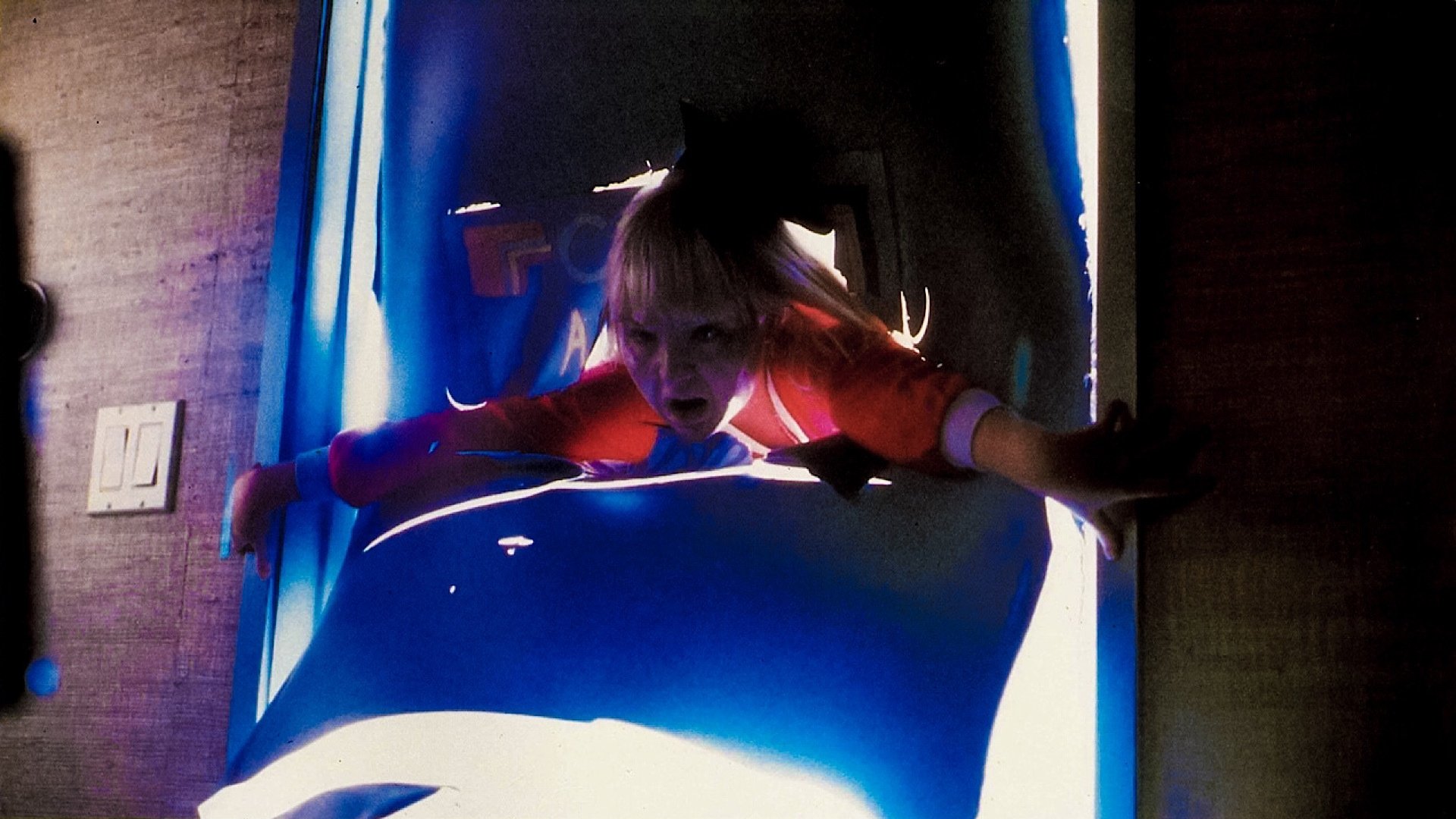
The film's reflective doubles are especially revealing of that method. Some scenes depend on a carefully aligned view in which the image in a mirror seems to develop a separate will. Elsewhere, a physical opening or staged action is disguised as an ordinary surface, allowing movement to cross what the audience initially accepts as a solid boundary. The apparent simplicity of these moments conceals problems of sightline, lighting and exact timing. A delayed reaction would expose the trick; an incorrectly placed camera could reveal the arrangement. Sherman repeatedly identified the optical work as the aspect of the project he most valued, although he was dissatisfied with its screenplay.

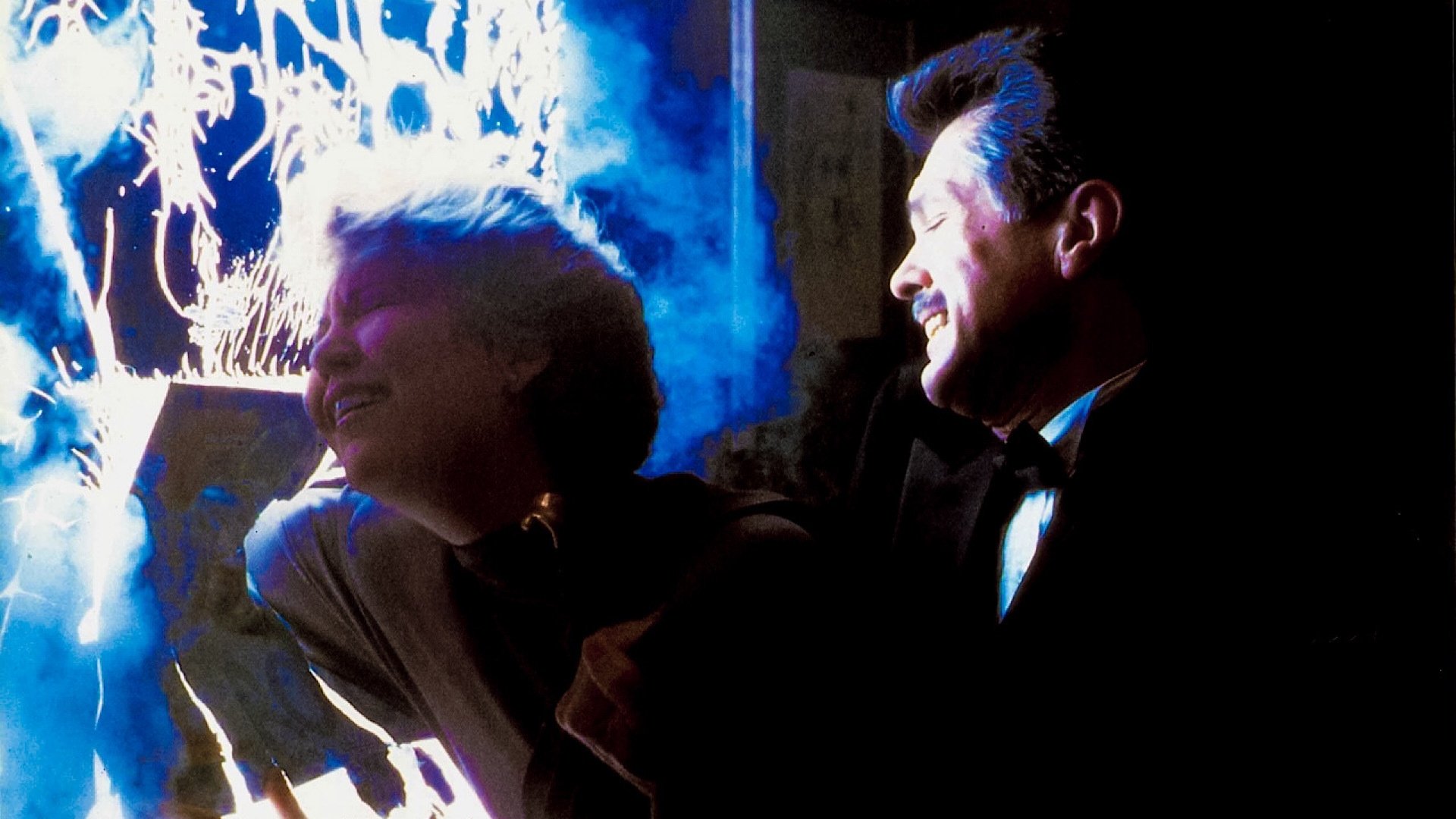
Makeup and creature effects add a more tactile register to the deceptions. Distorted bodies, viscous matter and sudden apparitions interrupt the cool geometry of the tower with textures that are unmistakably physical. Dick Smith's involvement as a special-effects makeup consultant is documented in production materials and discussed by Sherman in his JoBlo interview. The contrast between architectural precision and invasive organic imagery is one of the film's clearest horror strategies. A reflection can suggest a remote world, but the shocks depend on that world acquiring weight in front of the performers. The technique also places Poltergeist III within an era when large-scale cinematic illusions could still be coordinated through mechanical construction and live photographic effects.

Carol Anne, Reverend Kane and the Skeptical Adult

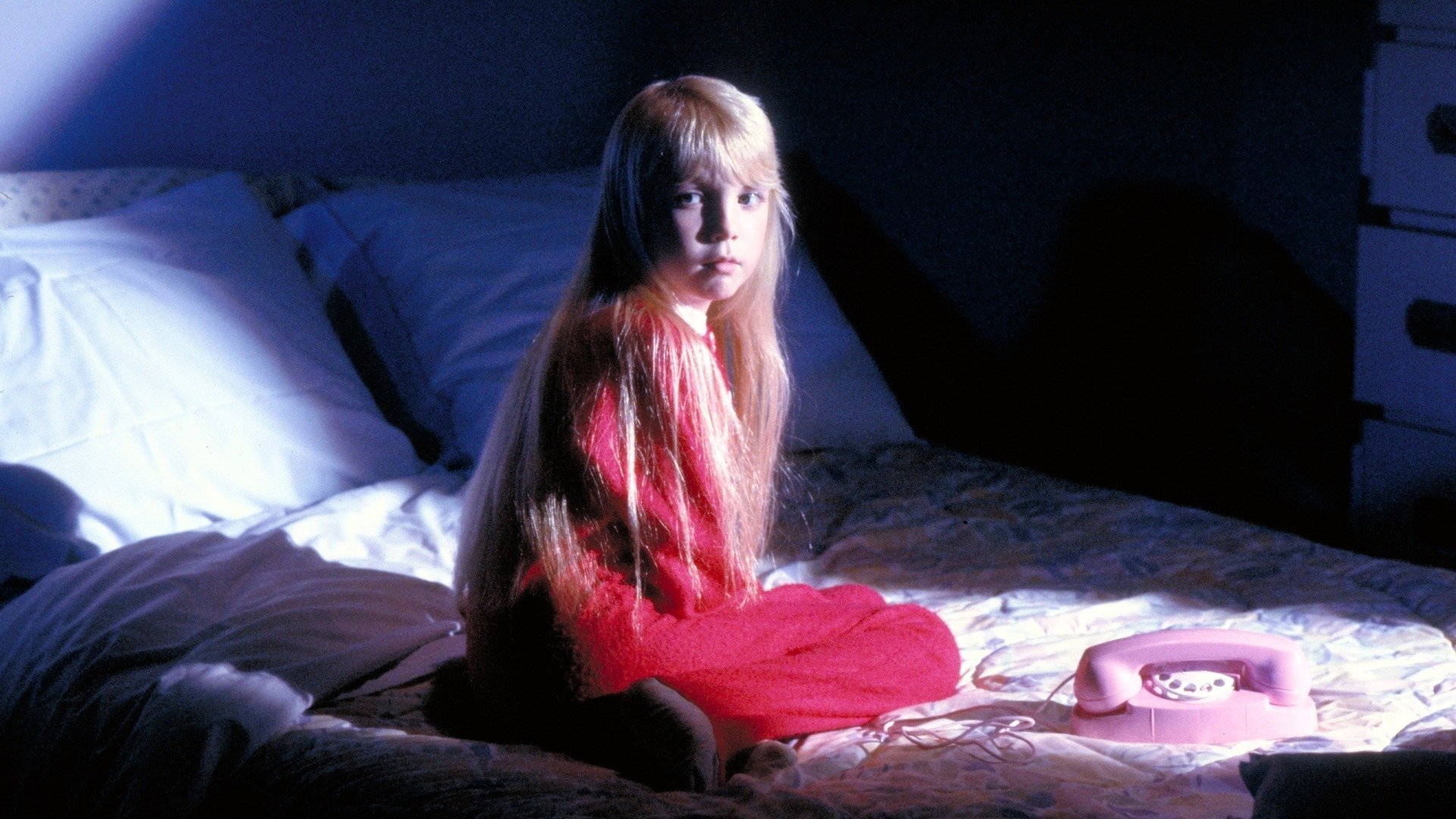
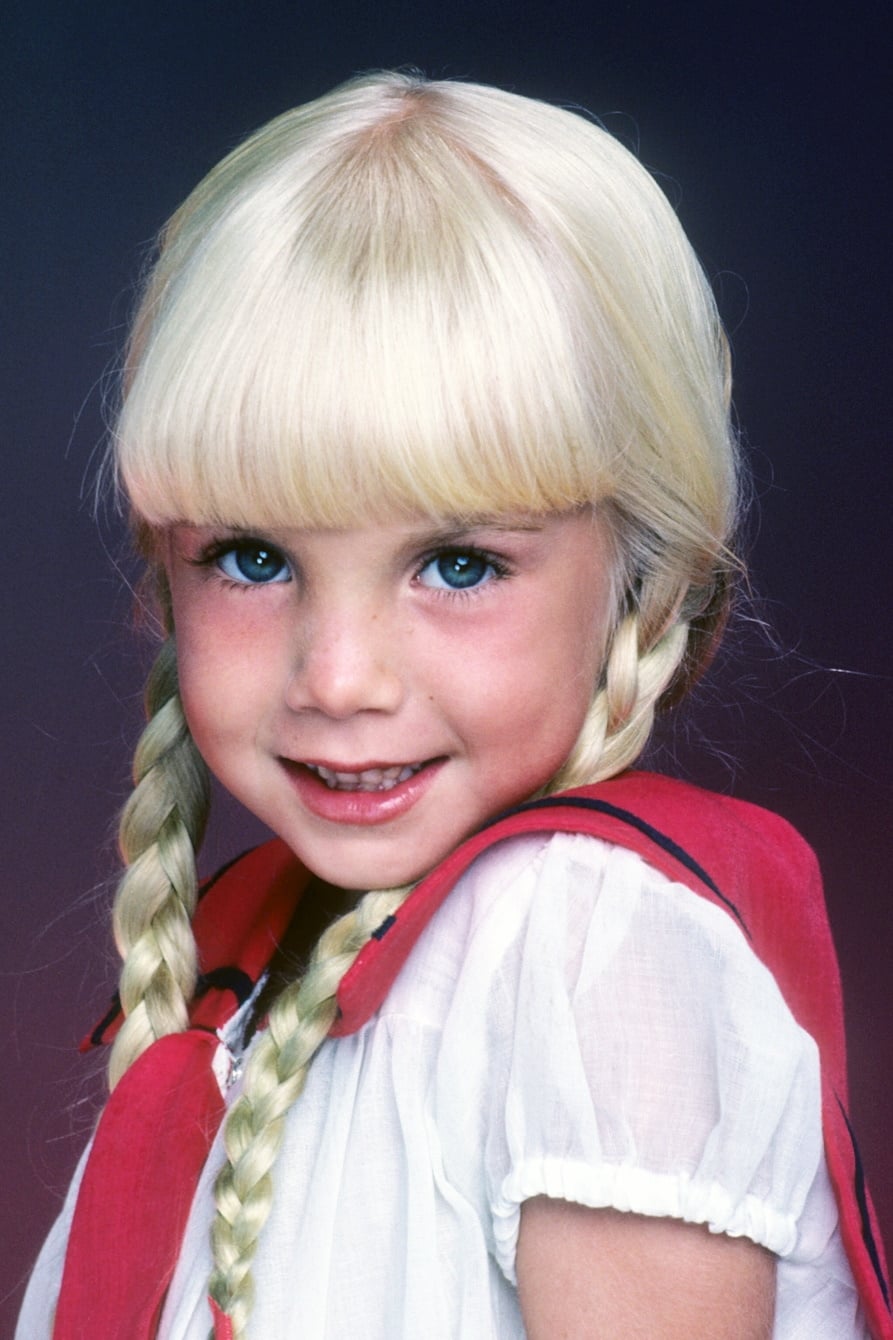
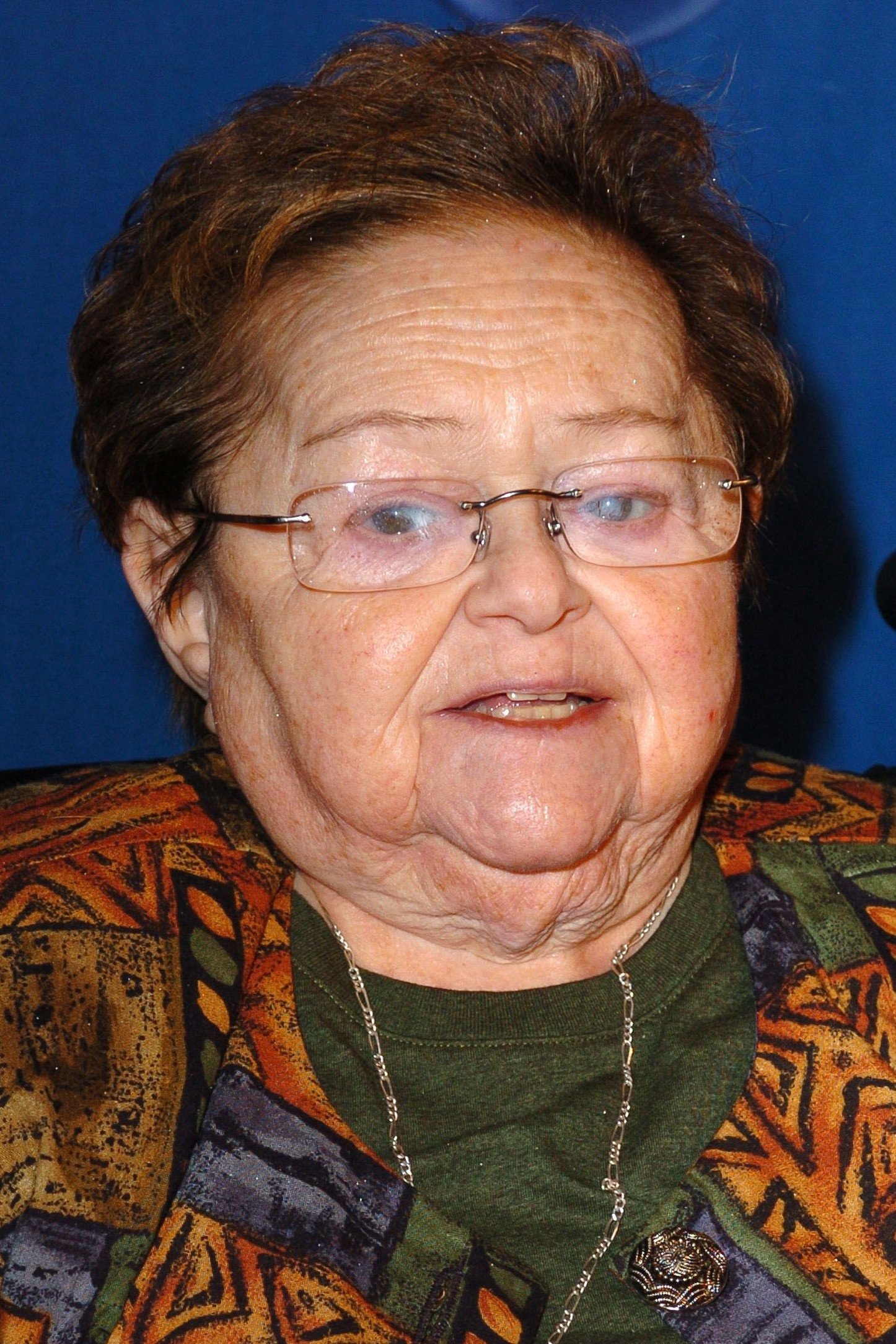
Heather O'Rourke returns as Carol Anne, the child pursued across the series by entities demanding access to the light. With her parents absent from this chapter, the responsibility for her safety falls to Bruce and Patricia Gardner, while Donna Gardner and her circle encounter the building's increasingly dangerous disturbances. Nathan Davis plays Reverend Kane, a role originally performed by Julian Beck in Poltergeist II: The Other Side (1986). Zelda Rubinstein also returns as Tangina Barrons. These continuities connect the supernatural threat to the second film, although the relocation leaves much of the first picture's family dynamic outside the frame. The guardians now have to learn the danger through events they did not previously witness.

At Carol Anne's school, Dr. Seaton interprets the manifestations as a problem of psychological suggestion and treats the child's apparent experiences with suspicion. His explanation becomes more difficult to sustain as the disturbances spread through the tower. The conflict gives the film a recognizable horror pattern: an adult insists on an ordinary account after the audience has already seen evidence unavailable to him. Yet his scenes also raise a more specific question about the screenplay's construction. If the effects can invade a room through its reflections, skepticism requires increasingly elaborate dismissals of observable events. Contemporary reviewers singled out this part of the writing as a weakness, indicating that technical ingenuity did not automatically yield a persuasive dramatic conflict.

Heather O'Rourke and the Altered Ending

Heather O'Rourke died on February 1, 1988, months after the main 1987 production period and before the film's June opening. AFI's historical record identifies complications connected to an intestinal condition and documents MGM's concern about how to advertise the picture without exploiting the tragedy. In later interviews Sherman described the effect on those completing the production. He recalled reluctance to proceed and said that the finished conclusion required a body double for Carol Anne. The picture closes with a dedication to the actress. These are documented circumstances of a production affected by a child's death, and they should remain separate from folklore surrounding the franchise.
The development of the ending is less straightforward than a simple claim that a single completed finale was replaced. In an early interview for JoBlo, Sherman said an intended final sequence had not been photographed before O'Rourke died and described the remaining work and a proposed farewell involving Tangina. In a later conversation with Roel Haanen, he recalled successive changes to the proposed conclusion and an abandoned attempt to return to an earlier version. Both accounts agree that the released ending was shaped by the actress's absence and production pressures, but their chronology differs. Without production records resolving those discrepancies, the director's recollections should be presented as recollections rather than merged into an invented definitive sequence.
Release, Contemporary Criticism and Historical Position

Poltergeist III opened in the United States on June 10, 1988, with a PG-13 rating. AFI records an opening weekend of approximately $4.34 million and contemporary reporting of a production budget around $10 million; those figures should not be read as proof of the film's complete profitability or loss. Initial critical responses were notably unsympathetic to the screenplay. In the Los Angeles Times, Michael Wilmington praised the inventiveness of the mirror-world effects while objecting to exaggerated performances and weak characterization. Hal Hinson's Washington Post review similarly credited Sherman with engineering disturbing visual moments but argued that the surrounding drama failed to support them. Their judgments provide period evidence of a divided response to craft and storytelling.
Viewed within its franchise, the picture marks an unusually clear change of spatial design and effects practice. The original Poltergeist (1982) placed supernatural spectacle inside a family house, and its first sequel expanded the mythology of Kane and his followers. Sherman's film relocates that mythology to public, reflective architecture and makes physical illusion a guiding principle of staging. It does not have to be credited with inventing mirror horror to merit attention for the way those methods were organized on a studio scale. Its place in late-1980s genre cinema rests most securely on a documented combination of location photography, in-camera experiment and a difficult completion history, alongside contemporary criticism that openly challenged its dramatic effectiveness.

References

  1. American Film Institute Poltergeist III (1988) - AFI Catalog

    Film history compiled from contemporary trade and newspaper reporting, documenting production dates, Chicago locations, safety incident, Heather O'Rourke's death, release and opening-weekend receipts.

  2. The Flashback Files Gary Sherman Interview

    Roel Haanen's direct 2020 conversation with Sherman about his conditions for accepting the sequel, Chicago skyscraper, practical illusions and changing versions of the ending.

  3. JoBlo Interview: Gary Sherman

    Original long-form interview in which the director discusses optical methods, Dick Smith, Heather O'Rourke and his account of the unfinished ending.

  4. Los Angeles Times Movie Reviews: 'Poltergeist III' Goes Through the Looking Glass

    Michael Wilmington's original June 11, 1988 review, contrasting elaborate reflective imagery with concerns about performances and dramatic writing.

  5. The Washington Post 'Poltergeist III' It's Ba-aack! Not Again!

    Hal Hinson's contemporary June 1988 assessment of the sequel's mirror effects, characterization and supernatural premise.

Connections

Cast

View Full Cast & Crew →

Release & Distribution

Production Companies (1)

  • Metro-Goldwyn-Mayer US

Distributors (1)

  • Metro-Goldwyn-Mayer US

Release History (13)

Release DateTerritoryRelease TypeFormatDistributorCertificationNotes
1988-06-10 Brazil Theatrical — — 16
1988-06-10 Canada Limited Theatrical — — 18A
1988-06-10 Sweden Theatrical — — 15
1988-06-10 United States Theatrical — — PG-13
1988-06-16 Australia Theatrical — — M
1988-06-25 Japan Theatrical — — PG12
1988-08-10 France Theatrical — — TP
1988-08-14 Spain Theatrical — — 18
1988-09-15 Germany Theatrical — — 16
1988-09-23 United Kingdom Theatrical — — 15
1988-09-23 Ireland Theatrical — — 15
1988-12-17 Thailand Theatrical — — —
2017-01-31 United States Physical — — —

Awards & Festivals

1 entries
YearFestival / AwardEntrySectionCategoryResultPremiere
1989Golden Raspberry AwardsawardGolden Raspberry Award for Worst Supporting Actressnominated
No matter where Carol Anne goes... she never goes alone.