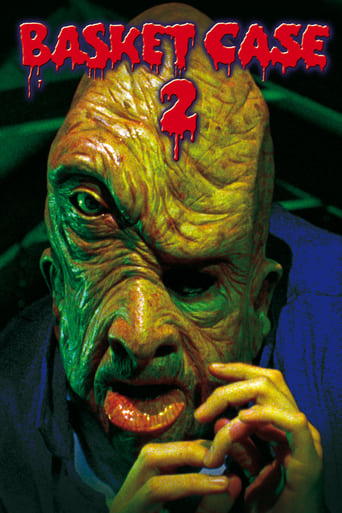
Basket Case 2 (1990)

US
Runtime
90 min
Release
March 2, 1990
Budget
$2,500,000
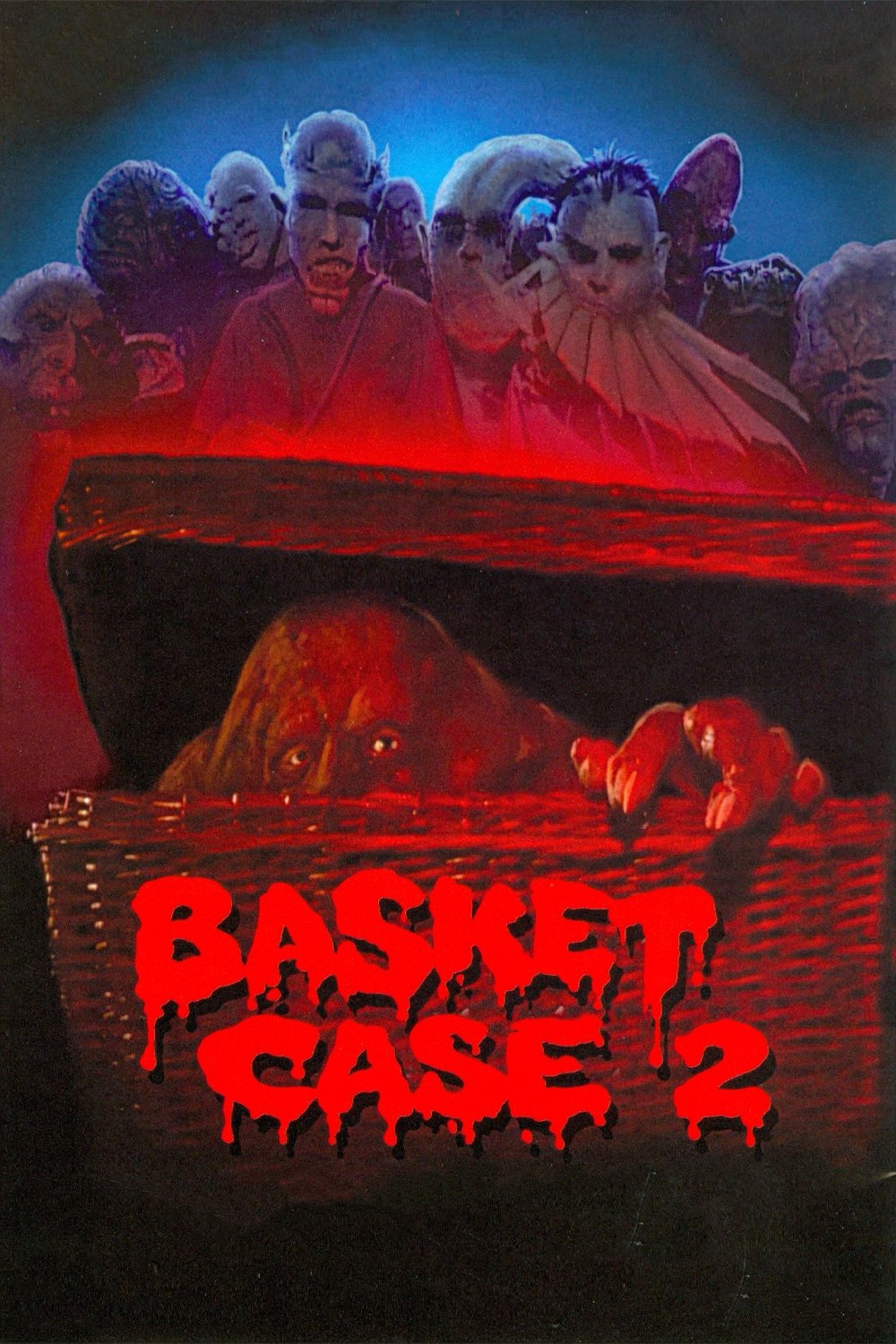
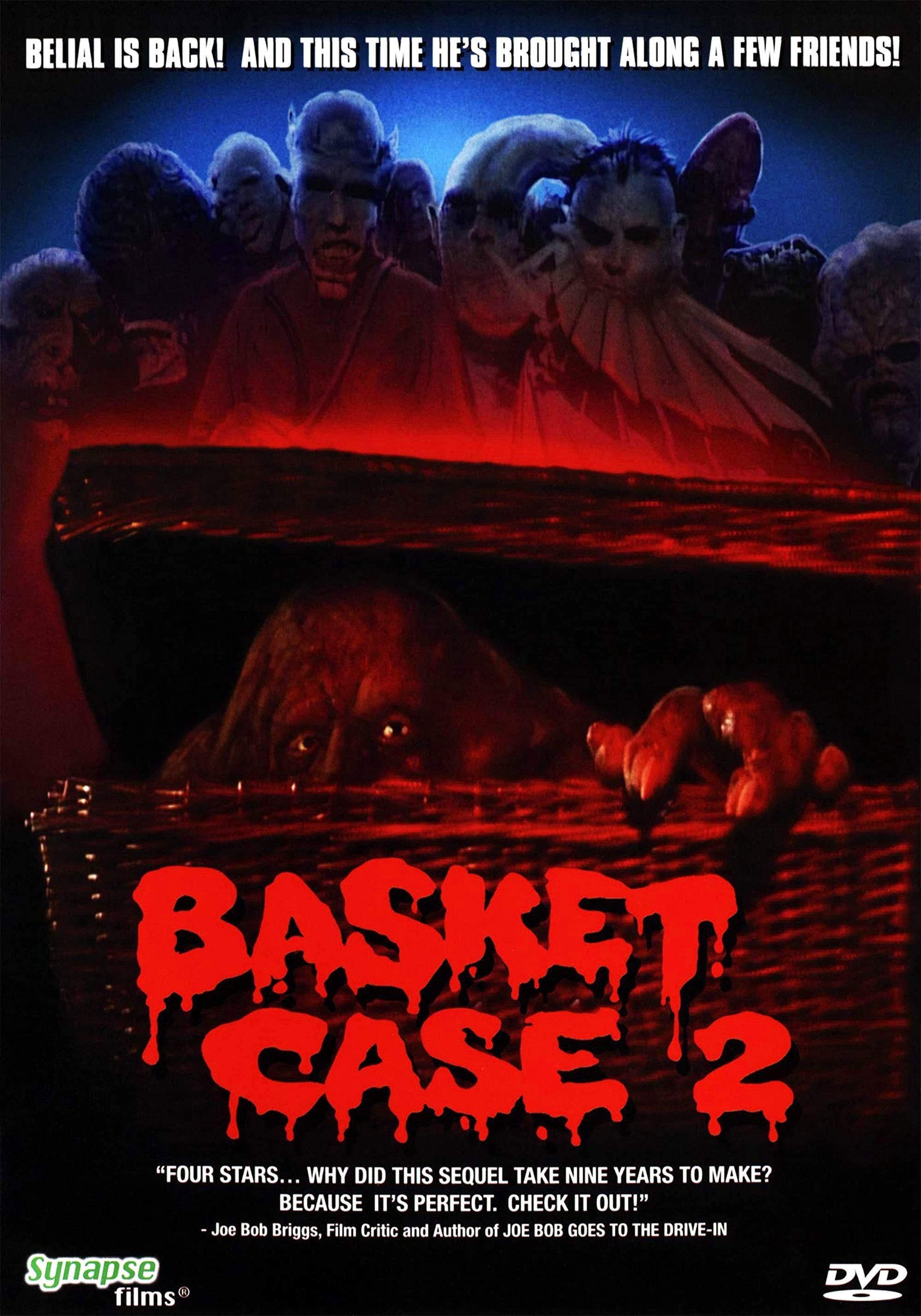
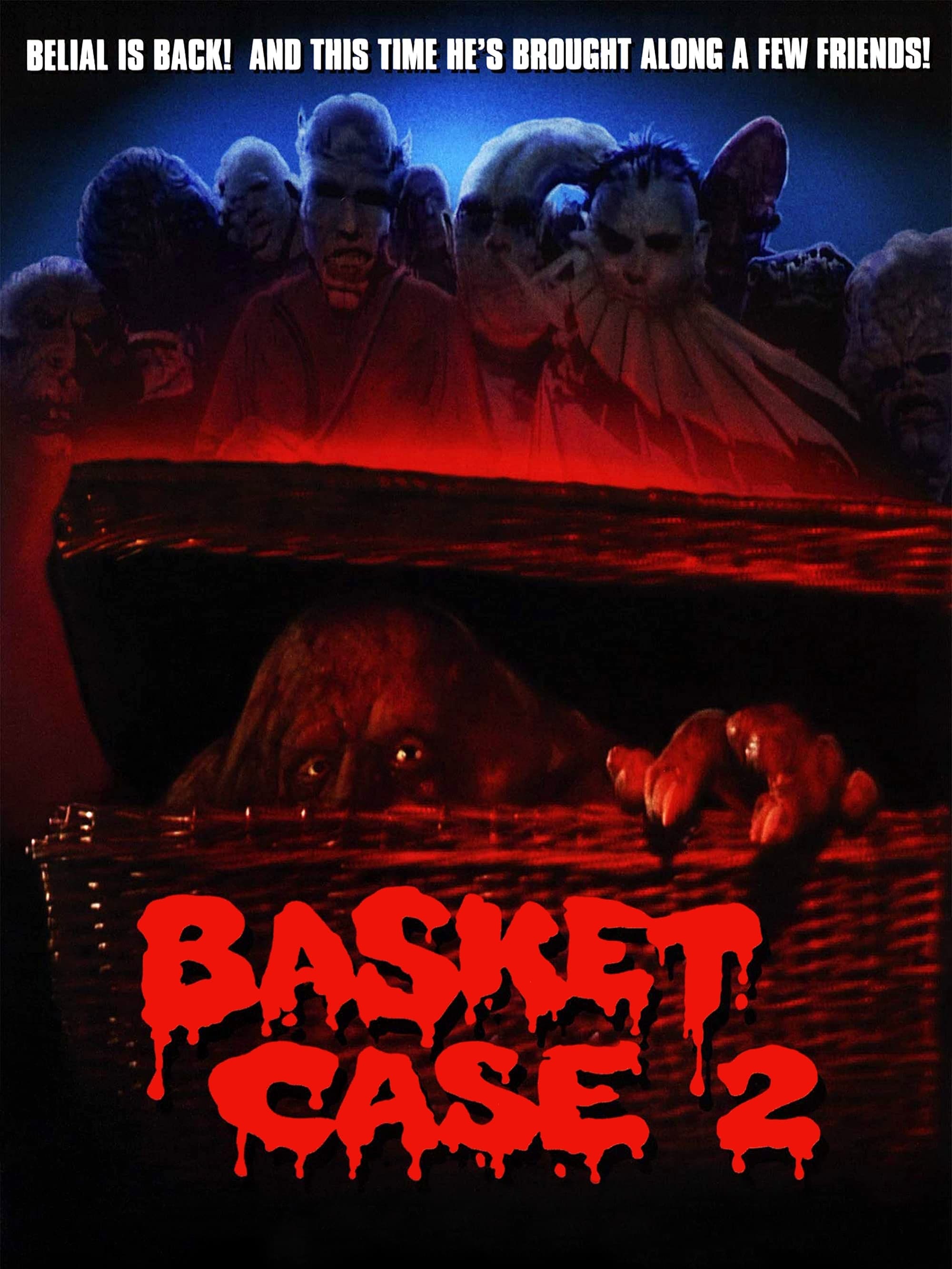
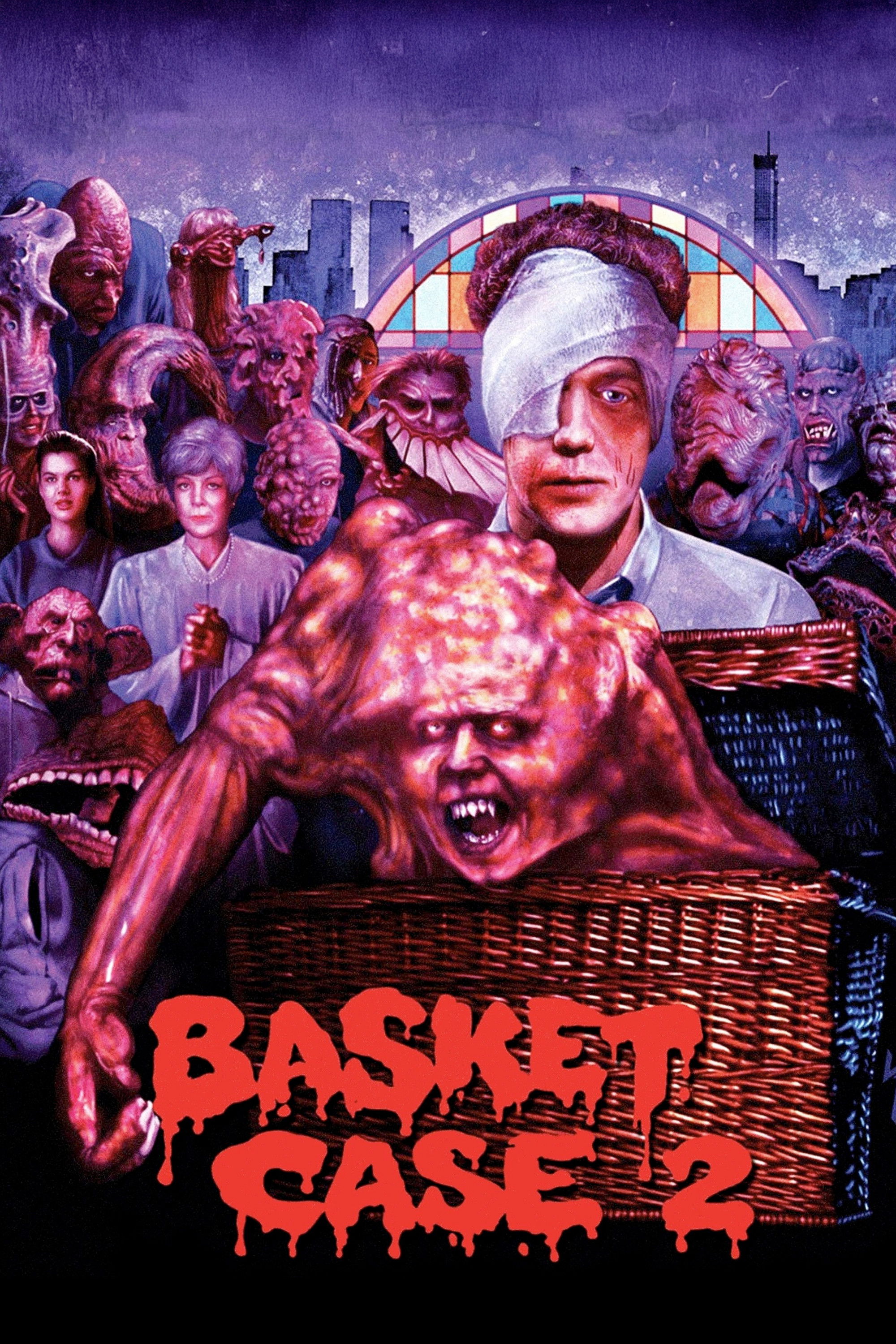
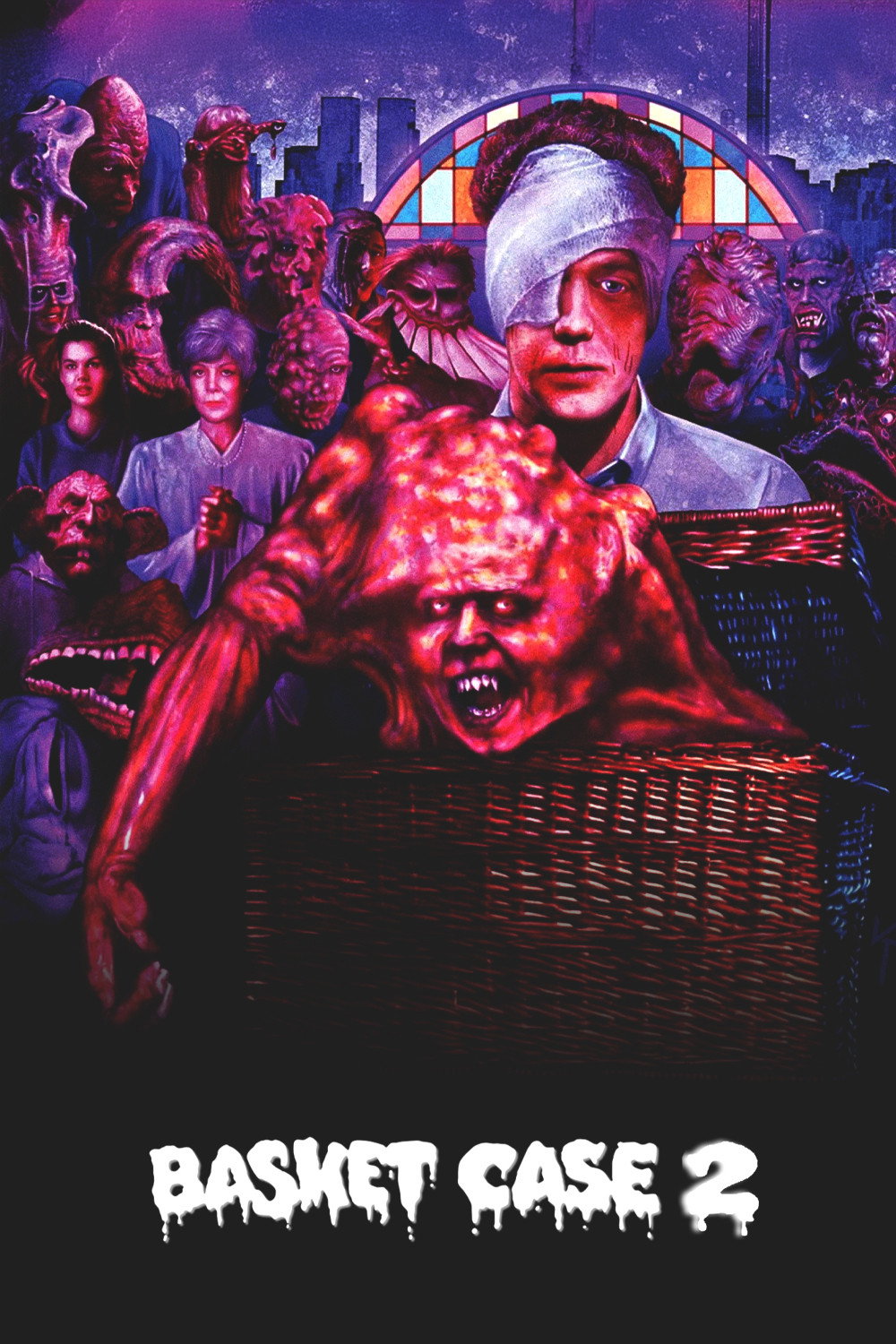
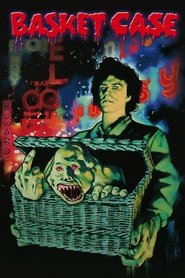
Basket Case 2 (1990) poster
Production Company
Shapiro-Glickenhaus Entertainment
Plot

After surviving their apparent deaths, Duane and Belial are taken into the care of Granny Ruth, who shelters people with unusual physical appearances in her secluded home. Belial encounters a community that accepts him, while Duane finds the brothers' relationship changing. Public curiosity and a ruthless tabloid reporter threaten to expose the household and destroy its fragile safety.

Alternative Titles
Basket Case: El misterio de la canasta (AR) Кошницата 2 (BG) — translation:bg Basket Case 2 - A Vingança (BR) O Mistério do Cesto 2 (BR) — alternative title Frère de sang 2 (CA) — French Video box title 篮子里的恶魔2 (CN) — translation:zh Basket Case 2 - Die Rückkehr (DE) — translation:de ¿Dónde te escondes, hermano? 2 (ES)
Show all 20 alternative titles Frère de sang 2 (FR) 籃子裏的惡魔 2 (HK) — translation:zh バスケットケース 2 (JP) — translation:ja バスケットケース2 (JP) 바스켓 케이스 2 (KR) — translation:ko La canasta del horror 2 (MX) Wiklinowy koszyk 2 (PL) O Segredo do Cesto (PT) O Segredo do Cesto 2 (PT) Существо в корзине 2 (RU) อะไรอยู่ในตะกร้า 2 (TH) — translation:th House of Freaks (US) — working title

Trailers & Videos

1 video

Basket Case 2 (1990) Film Guide

Frank Henenlotter’s cult horror sequel: Granny Ruth’s community, Gabe Bartalos’s practical creatures, the Bradley brothers, production history and theatrical reception.

Basket Case 2 (1990) is an American horror comedy written and directed by Frank Henenlotter, continuing the story of Duane Bradley and his deformed, surgically separated twin Belial. Eight years after the release of the original Basket Case, the sequel moves its characters away from the disreputable Manhattan locations that defined their first appearance. The brothers instead find refuge in a mansion populated by people with extraordinary physical abnormalities. This change of environment transforms the series from an intimate account of revenge and pathological dependency into an ensemble of grotesque characters threatened by public exposure.

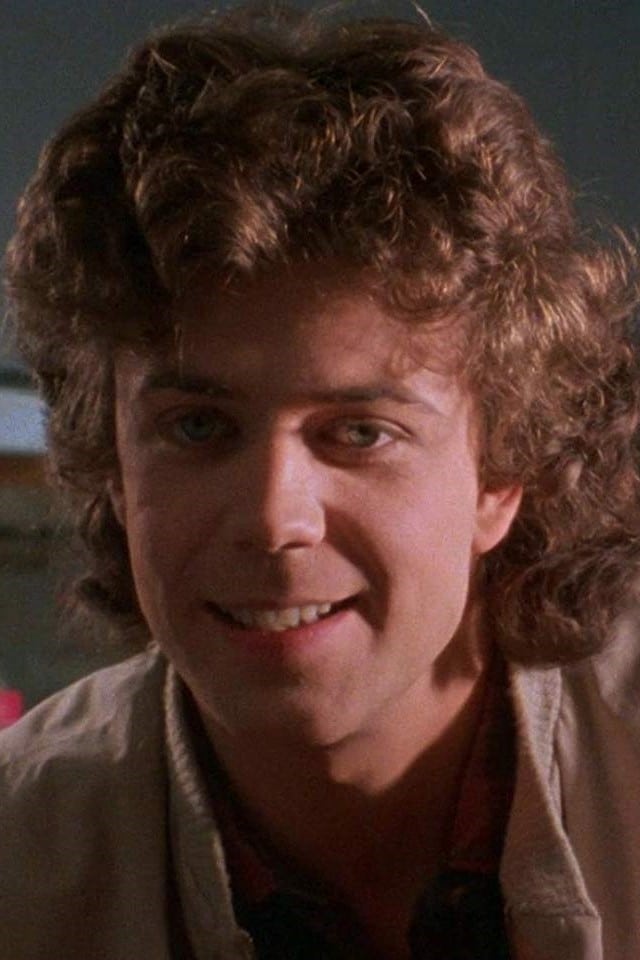
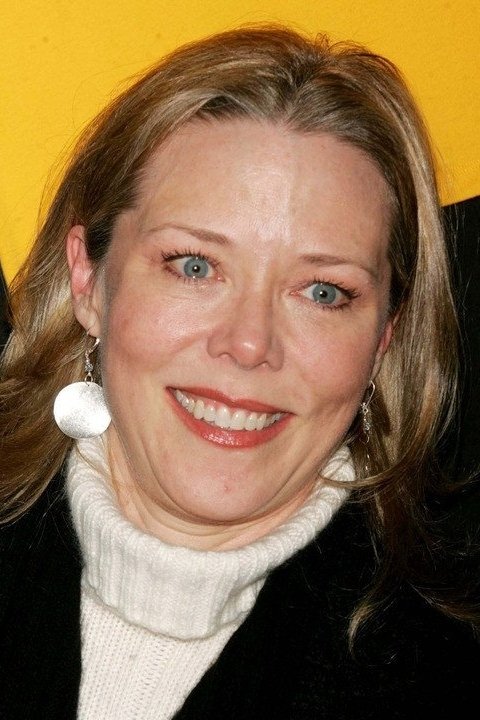
Kevin Van Hentenryck returns as Duane, alongside Annie Ross as Granny Ruth, the eccentric protector of a community she calls unique individuals. The film combines practical creature effects by Gabe Bartalos with an increasingly absurd treatment of bodily difference, intimacy and family obligation. Released theatrically in March 1990, it was produced with substantially greater resources than its predecessor. Henenlotter deliberately rejected the idea of repeating the original film’s grimy urban setting, creating a different form of exploitation horror in which elaborate character makeup becomes as important as Belial’s violence.

Development and the Return of Belial

Henenlotter initially regarded the first Basket Case as a completed story. Duane and Belial had carried out their revenge against the people responsible for separating them, and their fall at the conclusion appeared to leave little room for continuation. In a 2012 interview with Love Horror, the filmmaker recalled that he had never planned a sequel despite repeated requests following the original film’s success. The opportunity arose after he met filmmaker and distributor James Glickenhaus, who was establishing his own production and distribution operation. Their discussions initially concerned another project that developed into Frankenhooker.

When Glickenhaus asked whether Henenlotter had further material, the director proposed returning to Basket Case without having devised a new story. He subsequently adapted an existing idea about a secluded community of unusual people, placing the surviving Bradley brothers inside that environment. The arrangement provided a practical foundation for two productions, Frankenhooker and Basket Case 2, associated with the same period of filmmaking. According to the American Film Institute, principal photography on Basket Case 2 began on August 28, 1989, in New York City.

The larger production resources allowed Henenlotter to construct a world that would have been impractical in the original film. The decision to abandon the cheap hotels and streets of Manhattan was intentional. He wanted the brothers to inhabit a respectable-looking mansion whose hidden occupants contradicted its outward appearance. This also changed the narrative problem facing Duane: the brothers no longer needed to hunt the surgeons who separated them, but had to determine whether they could survive within a new family. Henenlotter retained his combination of horror and deliberately excessive humour while giving the sequel a broader physical setting.

Granny Ruth, the Outsiders, and the Bradley Brothers

The sequel begins with Duane and Belial surviving their fall and attracting unwanted attention while recovering in hospital. Granny Ruth rescues them and brings them to the home she shares with her granddaughter Susan. Its inhabitants include people whose unusual appearances have made ordinary public life difficult or impossible. Ruth offers them protection from a society fascinated by physical difference, while the mansion provides Belial with the possibility of companionship. Duane initially imagines that the arrangement might finally release him from the responsibility of caring for his brother.

That prospect becomes increasingly complicated as Belial develops a relationship with Eve, another severely deformed resident. Duane’s attraction to Susan conflicts with his growing unease about the household and his continuing attachment to Belial. Meanwhile, tabloid reporter Marcie and her associates attempt to locate the brothers and expose their new companions. Their investigation turns the sanctuary into a target of commercial curiosity and exploitation. Ruth’s commitment to protecting her residents is sincere, although her methods become increasingly coercive. The story consequently places the apparent normality of the outsiders under scrutiny while allowing its sympathetic characters to behave in disturbing ways.

The film’s depiction of physical difference draws on an established tradition of horror involving isolated communities and unusual bodies. Its resemblance to Tod Browning’s Freaks is visible in the collective defence of characters whom outsiders regard as spectacles. Henenlotter deliberately pushes the designs toward fantasy rather than recognizable medical conditions. This distinction shapes the film’s mixture of affection and grotesque comedy: the residents are given a communal existence, but their appearances also supply some of its most extravagant visual jokes. The narrative does not resolve the tension between the desire for acceptance and the violence committed in the name of protection.

Gabe Bartalos and the Practical Creature Effects

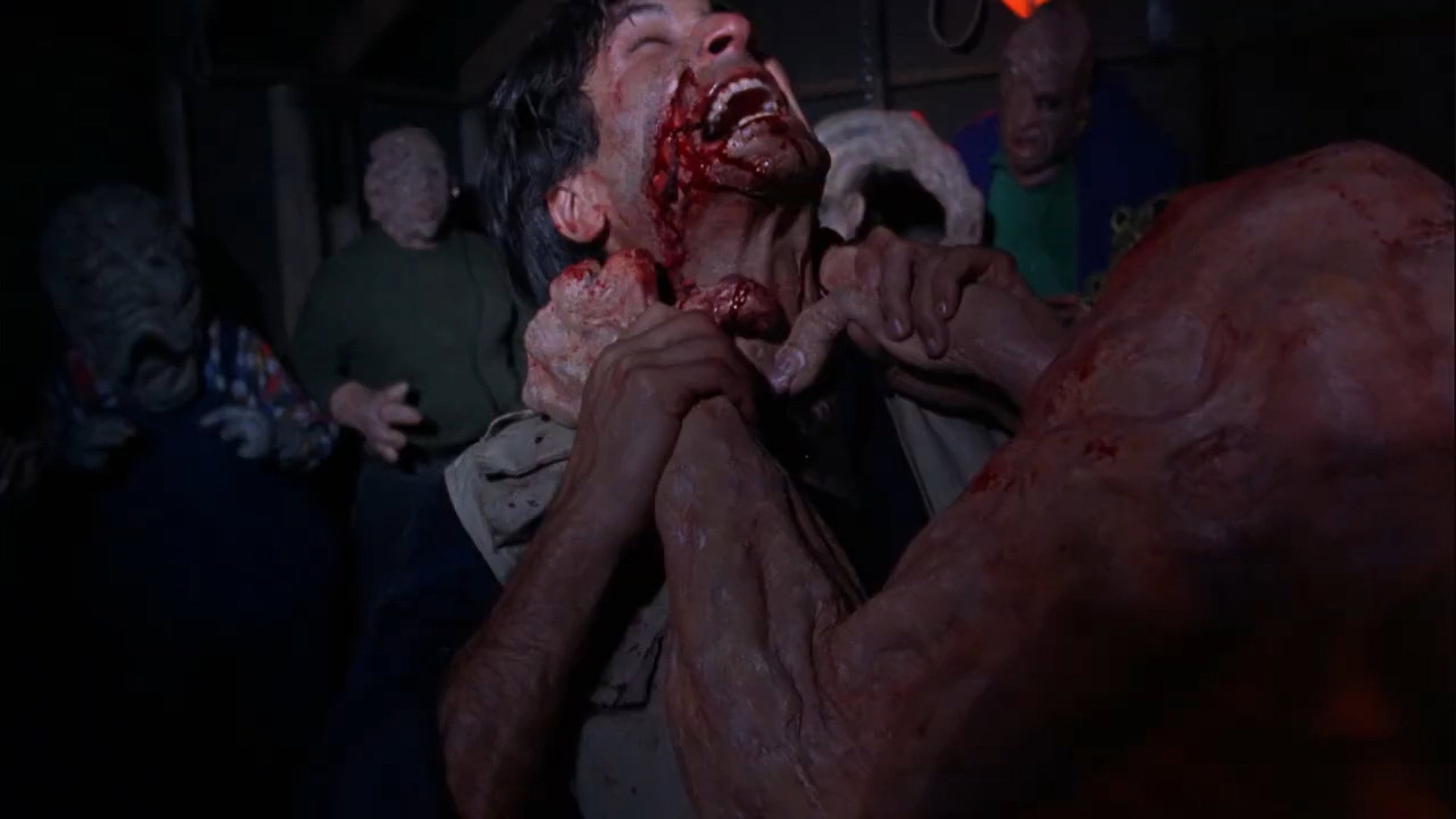
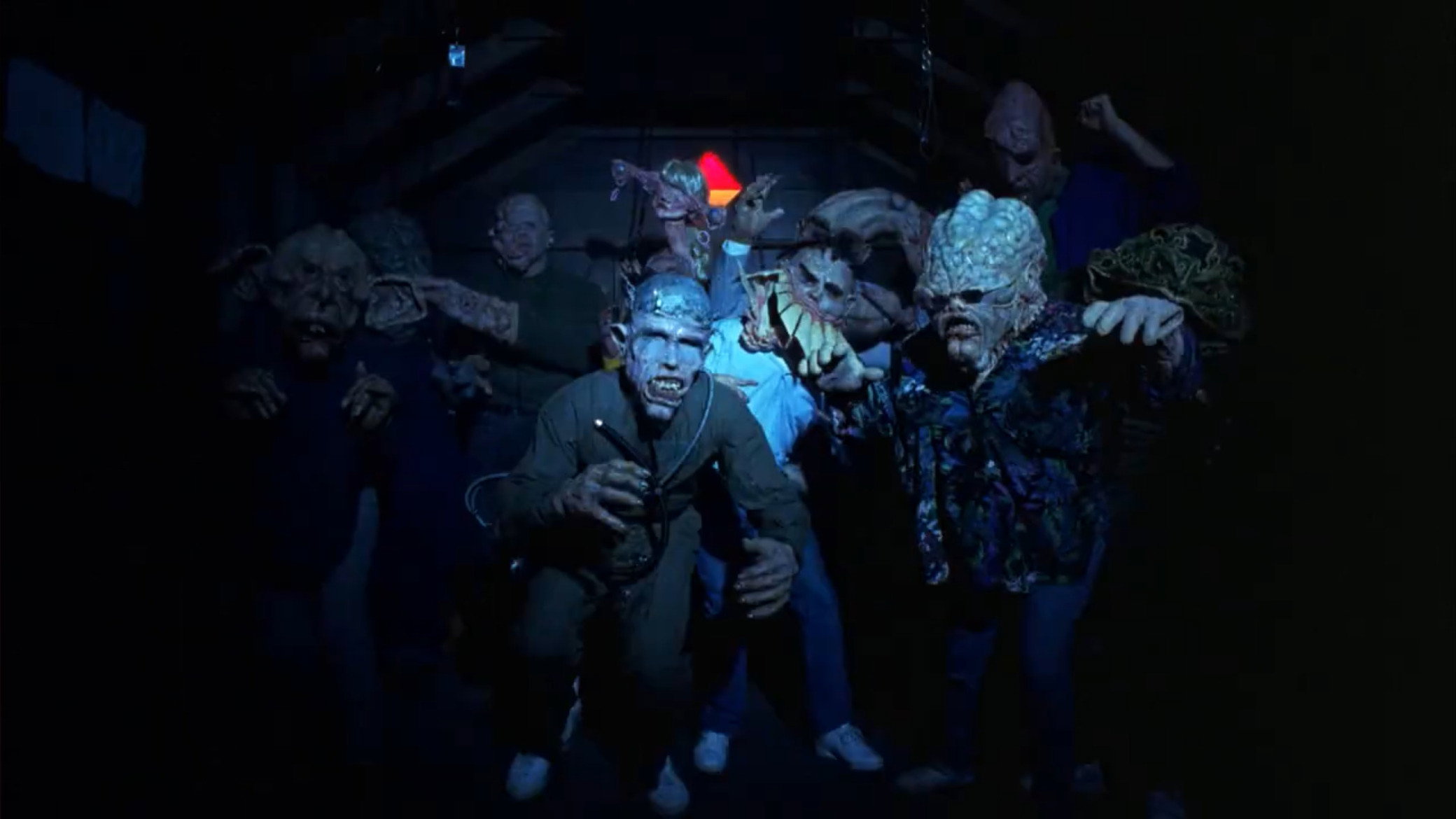
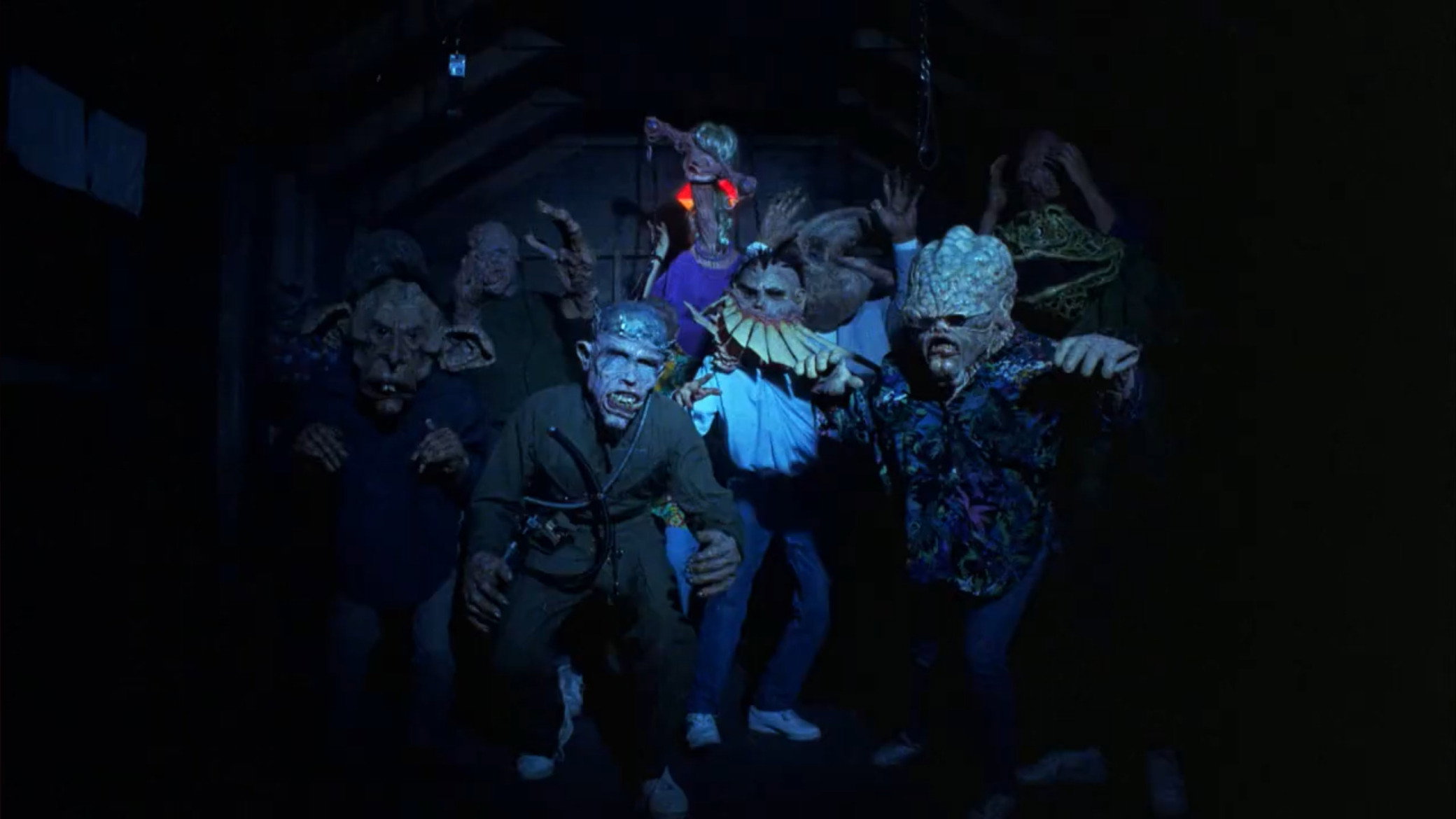
Special-effects makeup artist Gabe Bartalos was central to the expansion of the film’s creature population. Henenlotter recalled discussing increasingly improbable physical designs with Bartalos, who translated their ideas into small sculptural models before constructing the finished effects. The director specifically wanted exaggerations that had little resemblance to real disabilities. The resulting inhabitants have dramatically altered facial proportions, enlarged anatomical features and silhouettes that resemble caricatures made physical. Their individual designs help distinguish the residents within scenes that assemble numerous creatures in the same room.

Bartalos described his work in a 2012 interview with Vice as an extension of his interest in stretching and distorting recognizable human forms. He had admired the independence and handmade effects of the original Basket Case and welcomed the opportunity to develop more ambitious creations for its sequel. Henenlotter encouraged him to experiment with unusual shapes instead of following strictly realistic anatomical models. The collaboration produced an assortment of prosthetic faces and fabricated bodies whose variety became a principal attraction of the production. The makeup work also allowed actors to embody characters who would otherwise have required extensive explanation or offscreen representation.

Belial himself remains the visual link with the first film. The sequel places the creature among other extraordinary bodies, reducing the singularity of his appearance while allowing him to participate in scenes of intimacy as well as aggression. Mechanical effects and prosthetic fabrication support the more elaborate interactions, alongside the practical bloodshed associated with the series. The difference in visual resources extends to Robert M. Baldwin’s cinematography and Michael P. Moran’s production design. The mansion’s furnished rooms and controlled lighting replace much of the rough photographic texture of the original, giving the grotesque inhabitants a more conspicuously staged environment.

Theatrical Release, Versions, and Critical Reception

Basket Case 2 opened in New York during the week of March 2, 1990. The American Film Institute records that its planned Los Angeles engagement had been postponed in February and eventually began on April 13. The film received an R rating and was presented at approximately 90 minutes. Its theatrical circulation continued the development of Basket Case from an independently produced exploitation feature into a recognizable horror series. Henenlotter later explained that films from this period were made with home-video sales in mind as well as the possibility of theatrical exhibition, reflecting the commercial importance of VHS distribution to independent genre productions.

Contemporary critical attention emphasized both the improved production resources and the extreme humour. Reviewing the Los Angeles opening for the Los Angeles Times, Kevin Thomas praised the film’s combination of grotesque horror and emotional vulnerability. He singled out Baldwin’s cinematography and Joe Renzetti’s music as important to its atmosphere, while crediting the performers with taking the material seriously despite its absurdity. Thomas regarded the film as a promising candidate for cult success. His assessment documents a favourable contemporary response, rather than establishing that critics generally agreed about the sequel’s merits.

The British Board of Film Classification records a theatrical version lasting 89 minutes and 49 seconds, classified on June 1, 1990. Its later records include a 2004 home-video edition of 89 minutes and 45 seconds and a 2012 physical-media version lasting 85 minutes and 50 seconds. These measurements establish differences between submitted editions, but do not alone demonstrate that the shorter versions contain censorship cuts. The film subsequently remained available through specialist home-video releases and trilogy collections. Its continuation, Basket Case 3: The Progeny (1992), further developed Granny Ruth’s community and Belial’s reproductive storyline. Basket Case 2 remains the transitional entry that introduced the expanded group of creatures and redirected the brothers’ relationship beyond their original revenge narrative.

References

  1. American Film Institute AFI Catalog — Basket Case 2 (1990)

    Institutional archival record documenting the production start, original theatrical openings, credits, historical production details and contemporary trade-paper references.

  2. Love Horror Interview with Frank Henenlotter on Basket Case Trilogy

    Alex Humphrey’s 2012 interview with Henenlotter about the sequel’s conception, James Glickenhaus, the change of setting, Gabe Bartalos’s creature designs and the commercial context of the trilogy.

  3. Vice Off Hollywood – Gabe Bartalos

    Jennifer Juniper Stratford’s 2012 studio interview with the effects artist concerning his collaboration with Henenlotter, sculptural interests and the surreal creature designs of Basket Case 2.

  4. Los Angeles Times Movie Review: “Basket Case 2” Has Makings of Cult Success

    Kevin Thomas’s contemporary April 13, 1990 review discussing the sequel’s horror-comedy approach, performances, cinematography, music and Los Angeles theatrical engagement.

  5. British Board of Film Classification Basket Case II — Classification and Version Records

    Official British classification history documenting theatrical and home-video submissions, recorded running times and release formats without assuming undocumented censorship.

Connections

Cast

View Full Cast & Crew →

Release & Distribution

Production Companies (1)

  • Shapiro-Glickenhaus Entertainment US

Release History (14)

Release DateTerritoryRelease TypeFormatDistributorCertificationNotes
1990-03-02 US theatrical_limited — — R New York City, New York
1990-04-21 US premiere — — — WorldFest Houston
1990-05-10 US premiere — — — Seattle International Film Festival
1990-08-17 JP theatrical — — —
1991-01-19 AU theatrical — — —
1991-05-01 DE physical — — —
1991-08-06 AR physical — — —
1992-06-01 IT premiere — — — Fantafestival
2004-06-28 GB physical DVD — 18 DVD
2006-04-02 FI premiere — — — Night Visions Film Festival
2010-10-29 FI premiere — — — Night Visions Film Festival
2016-09-11 FR premiere — — — L'Étrange Festival
2016-11-18 DE physical — — 18
2025-06-12 PL premiere — — 16 WTF Fest
This time he's not alone.