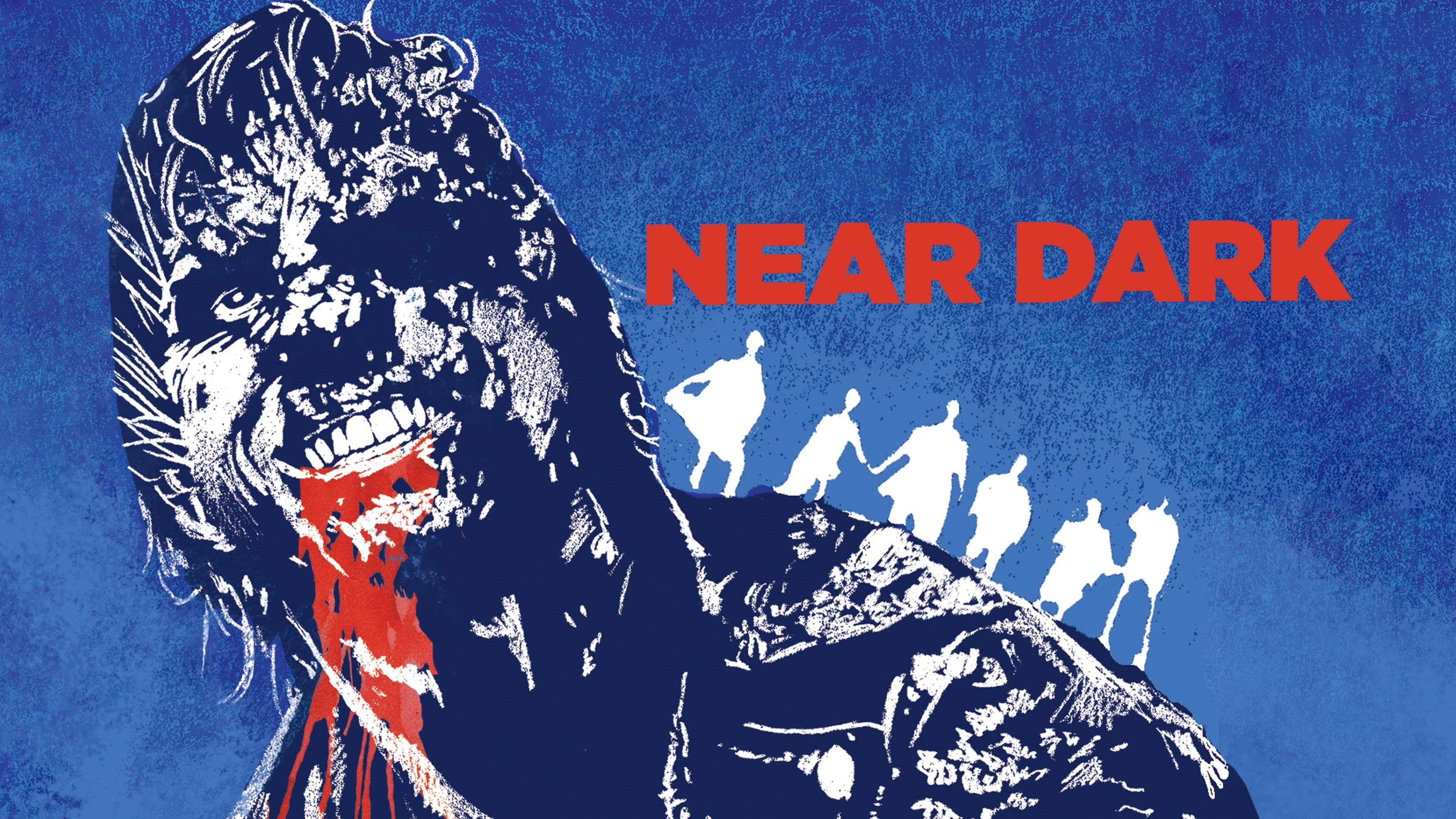
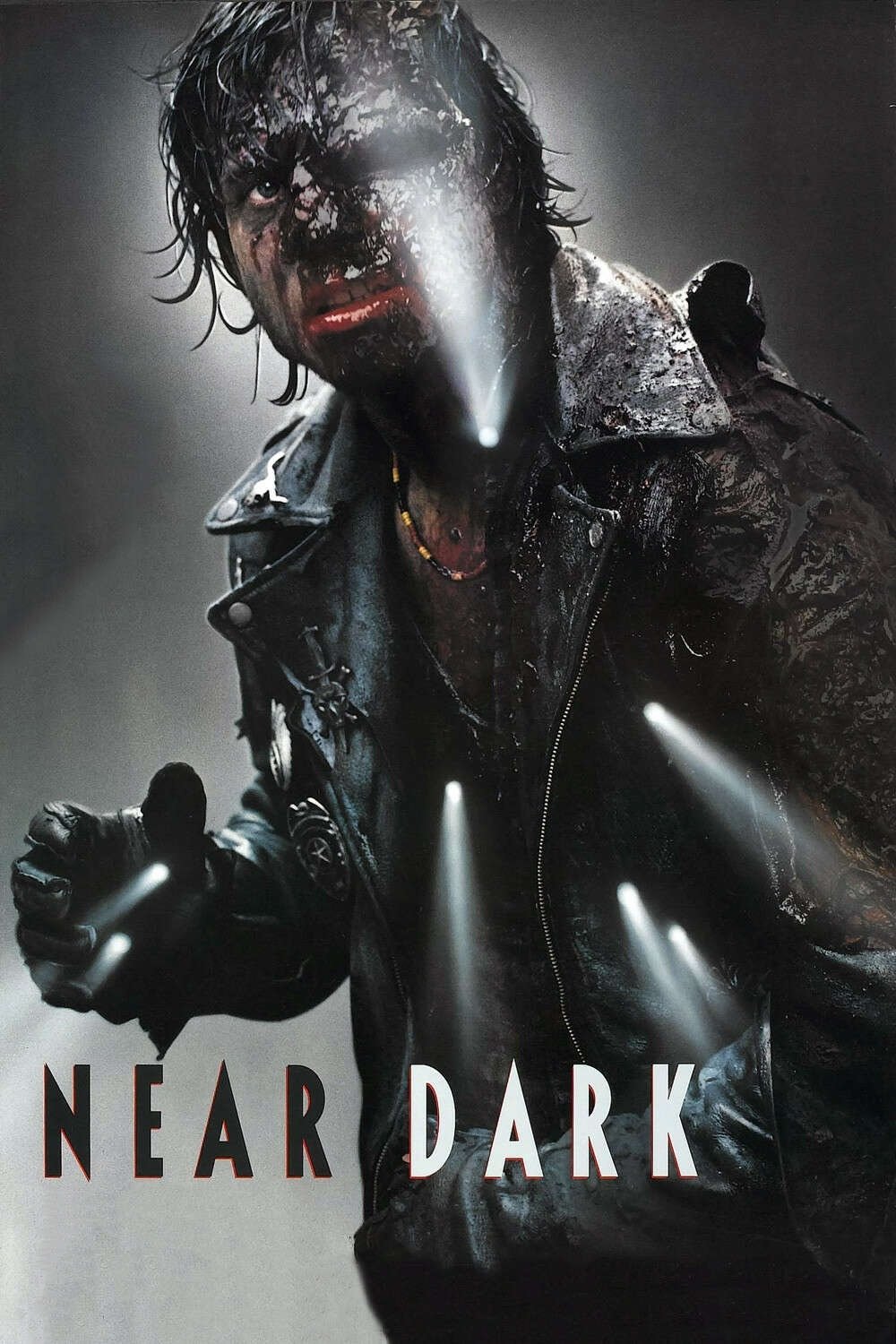
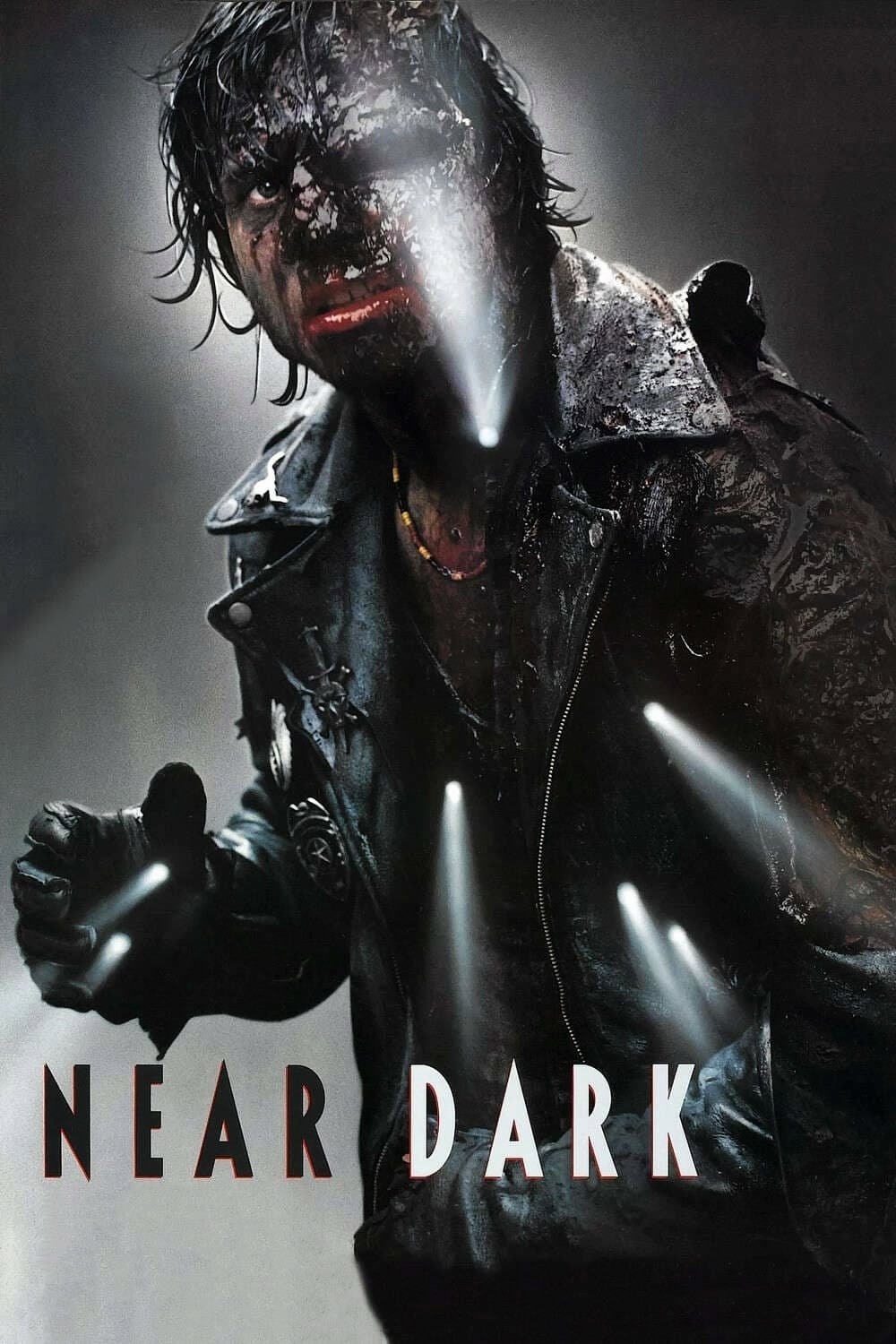
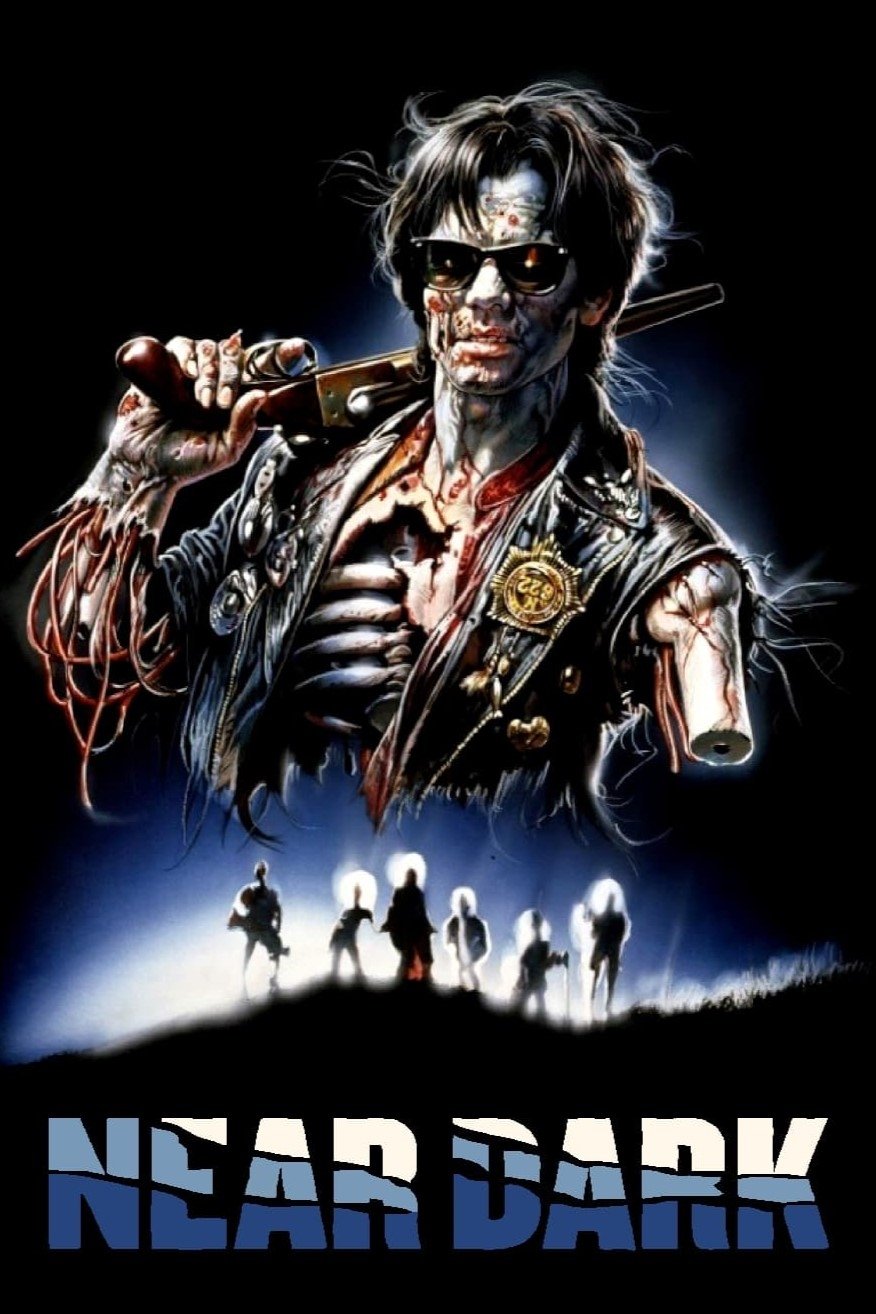
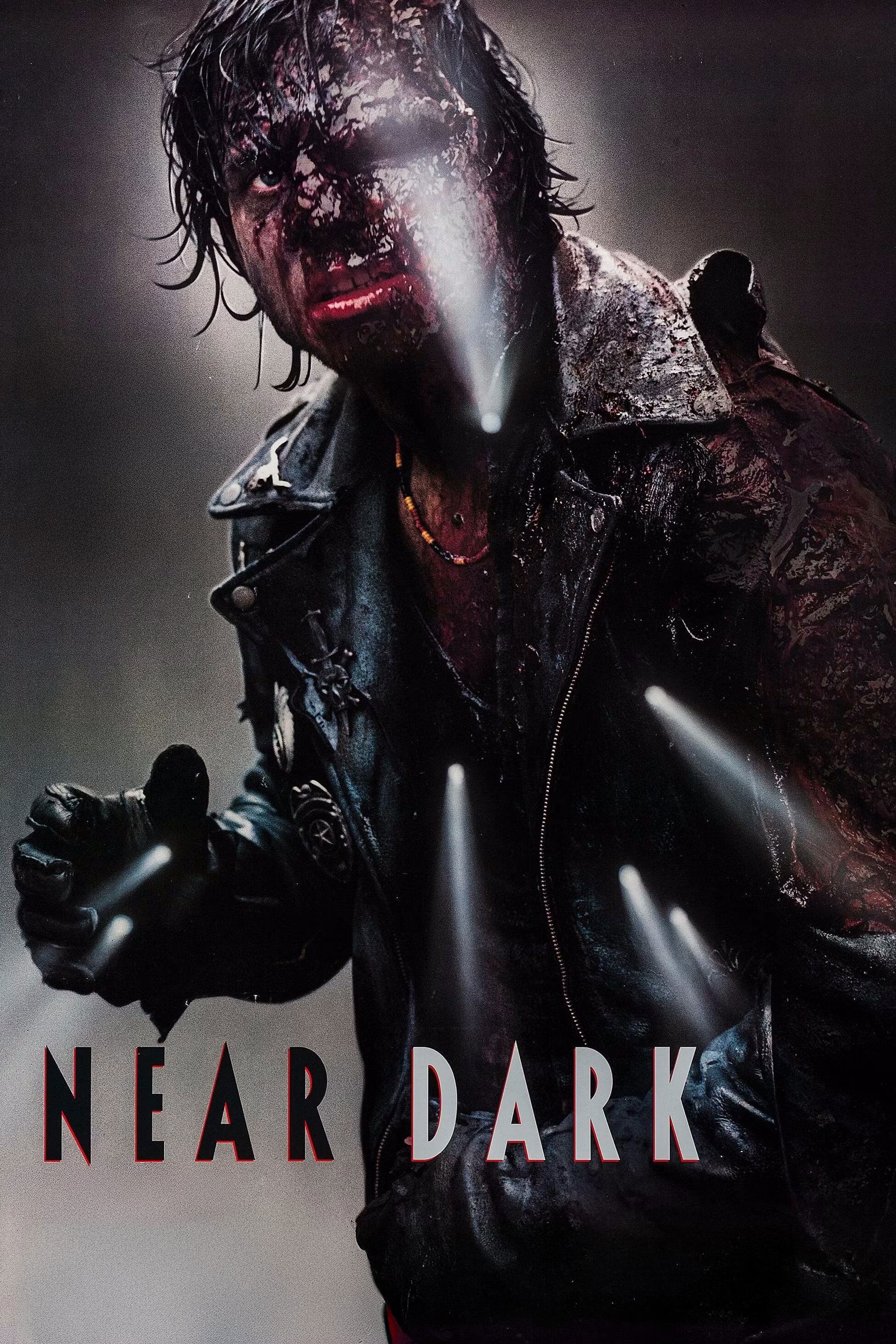
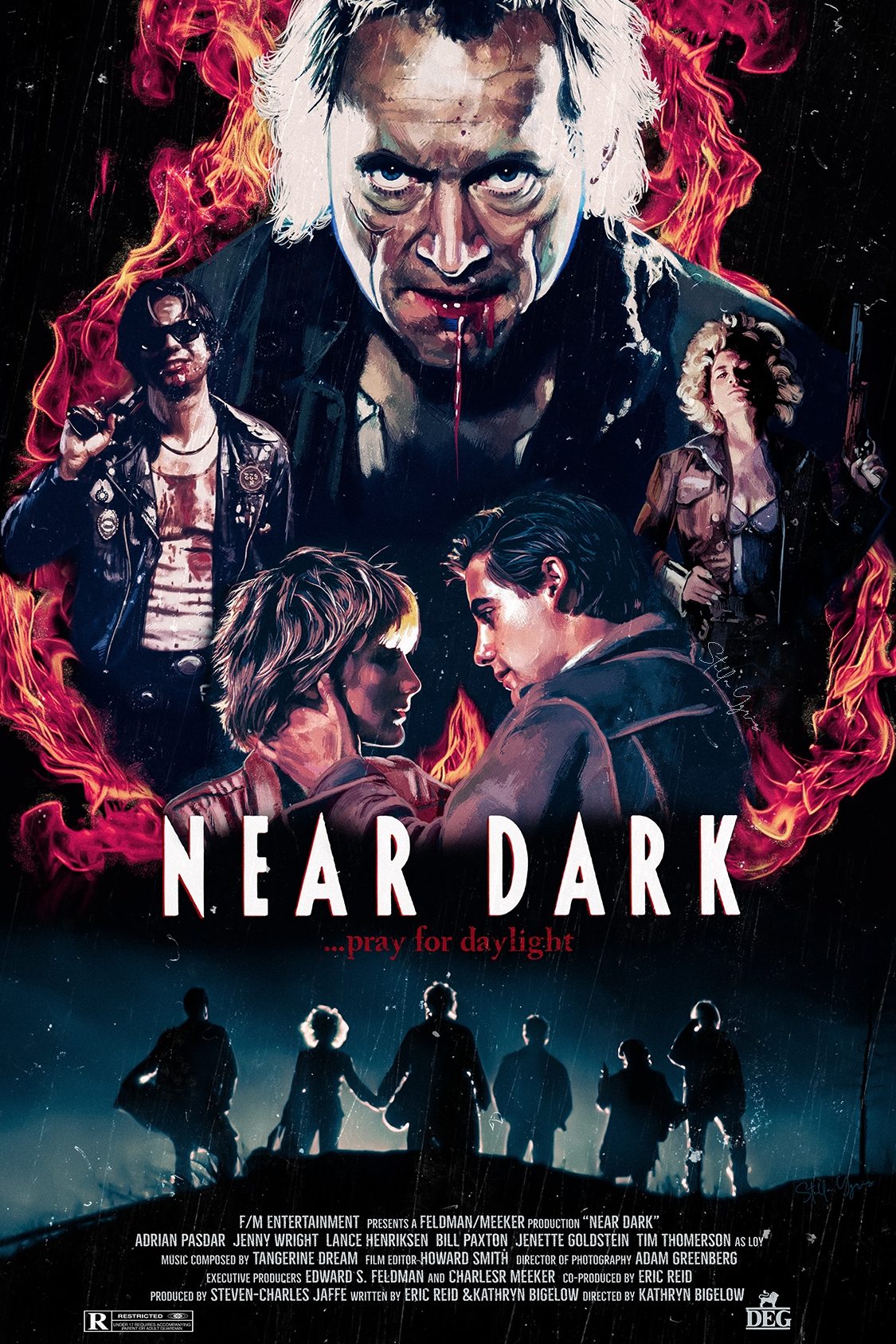
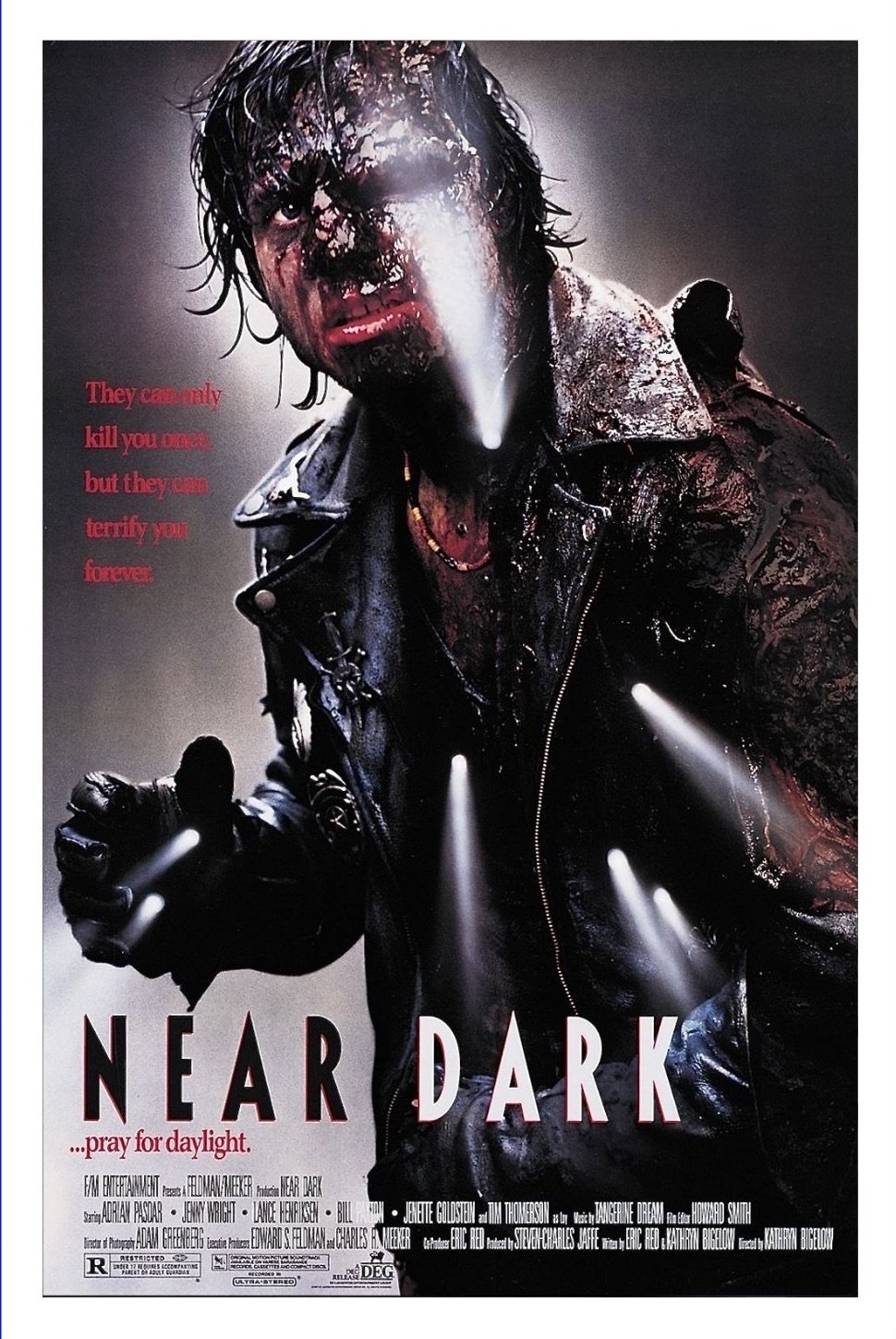
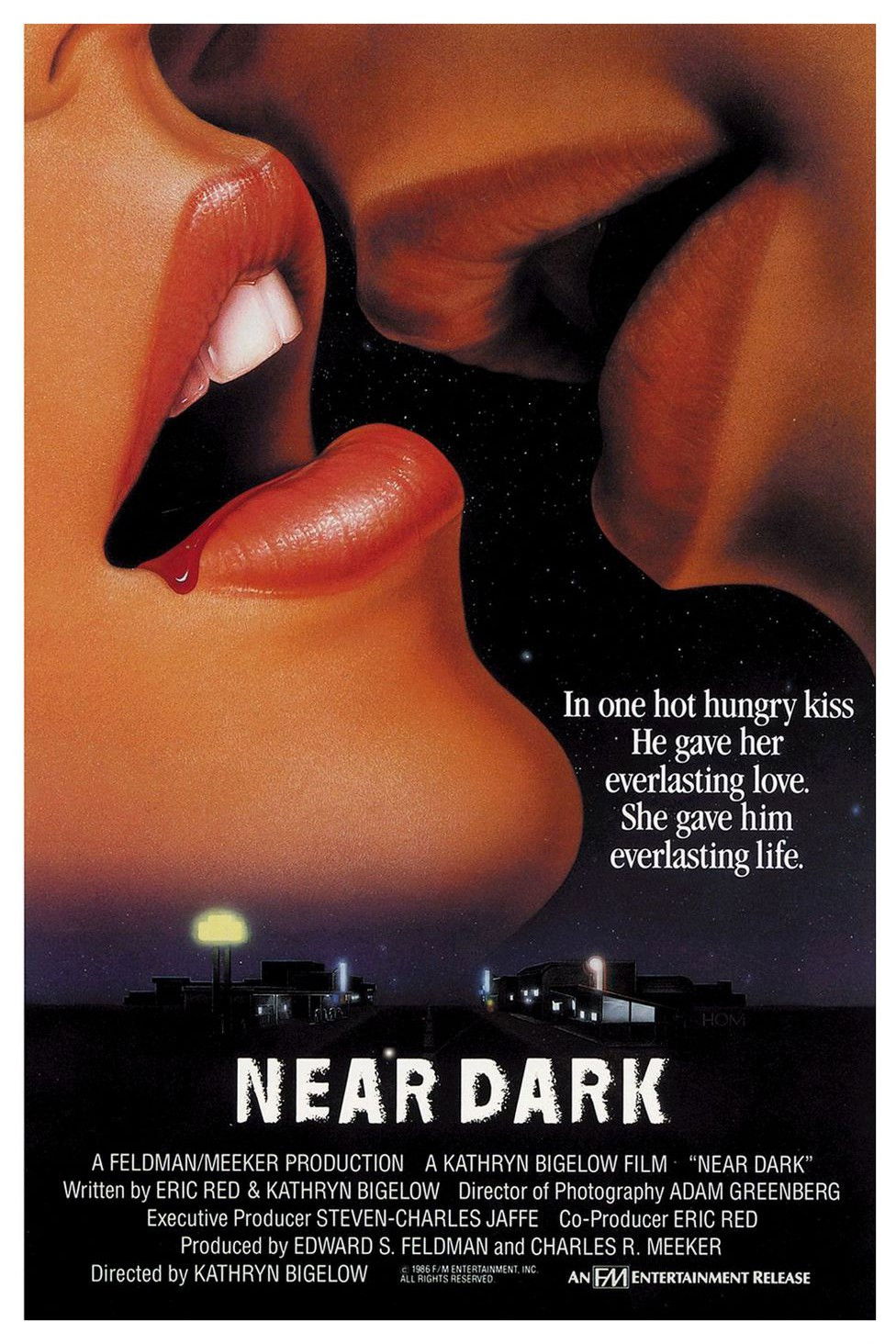
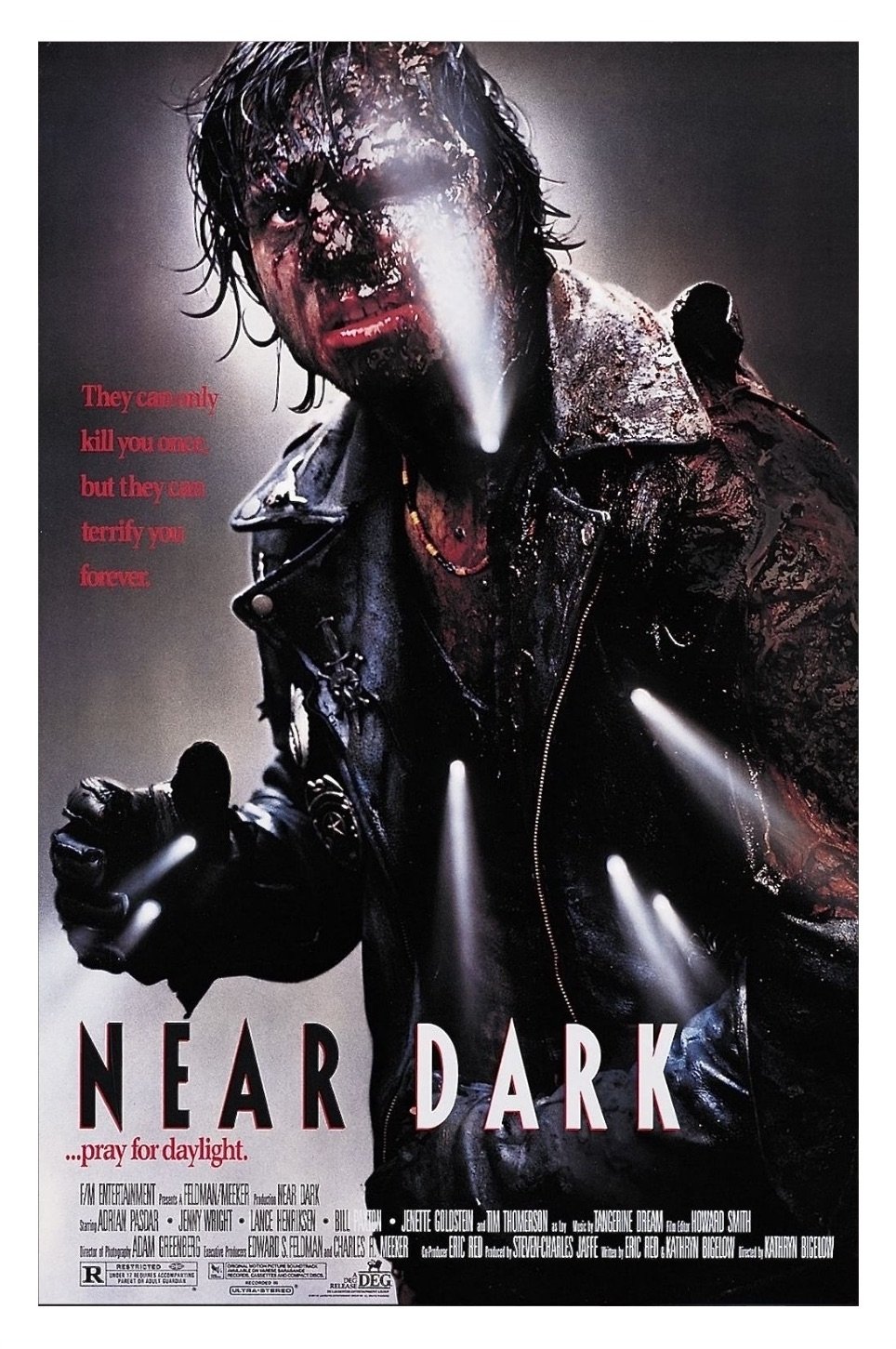
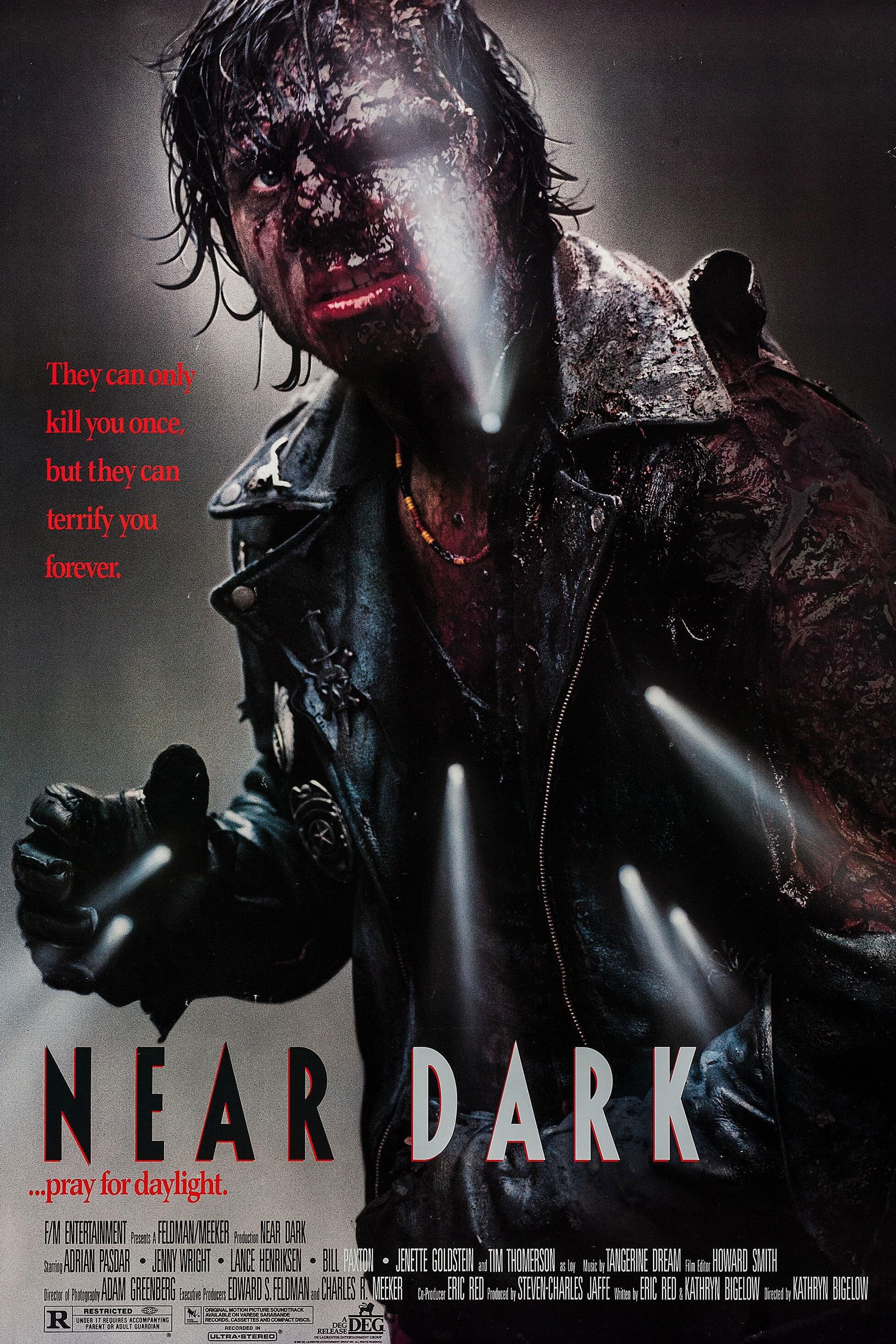
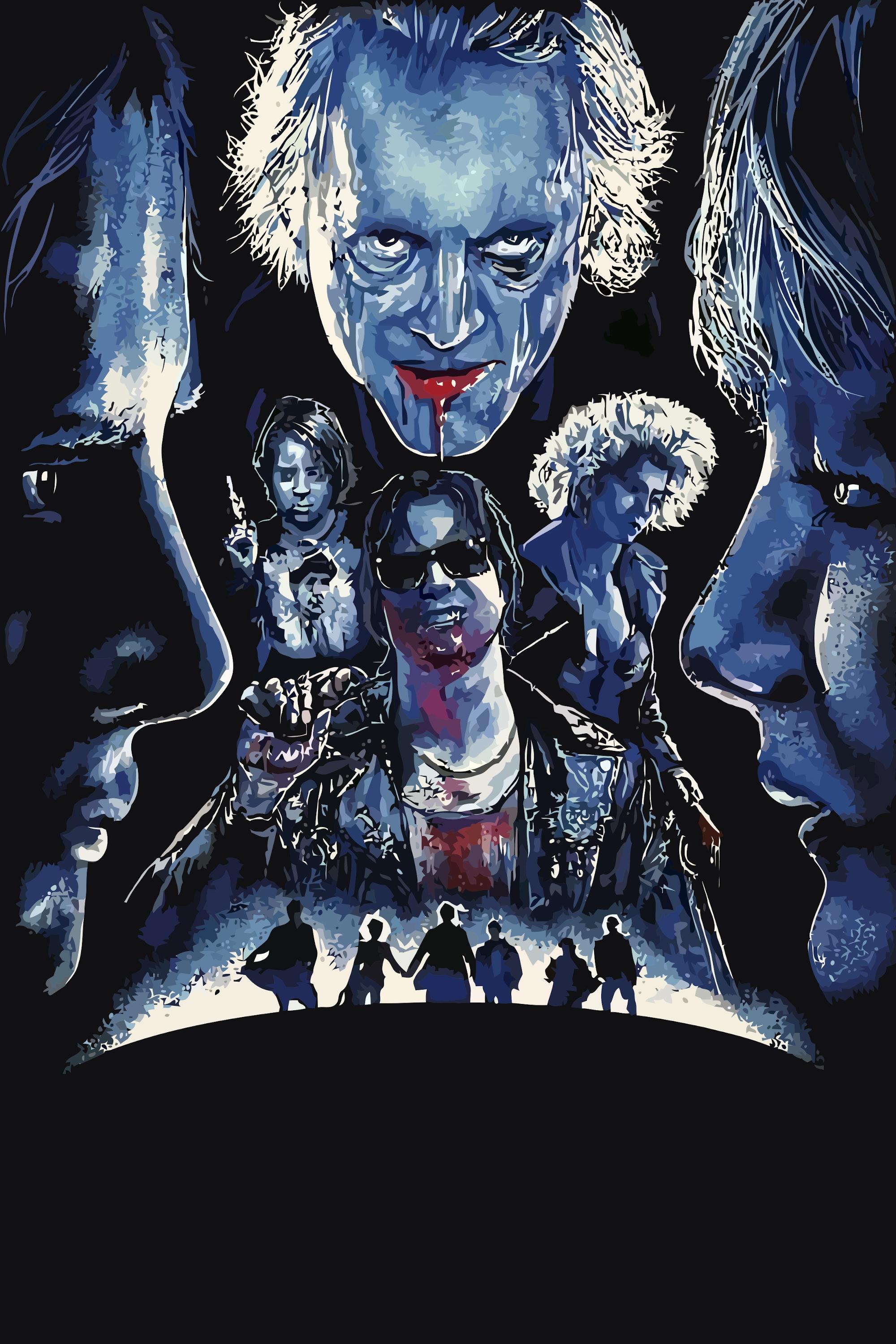
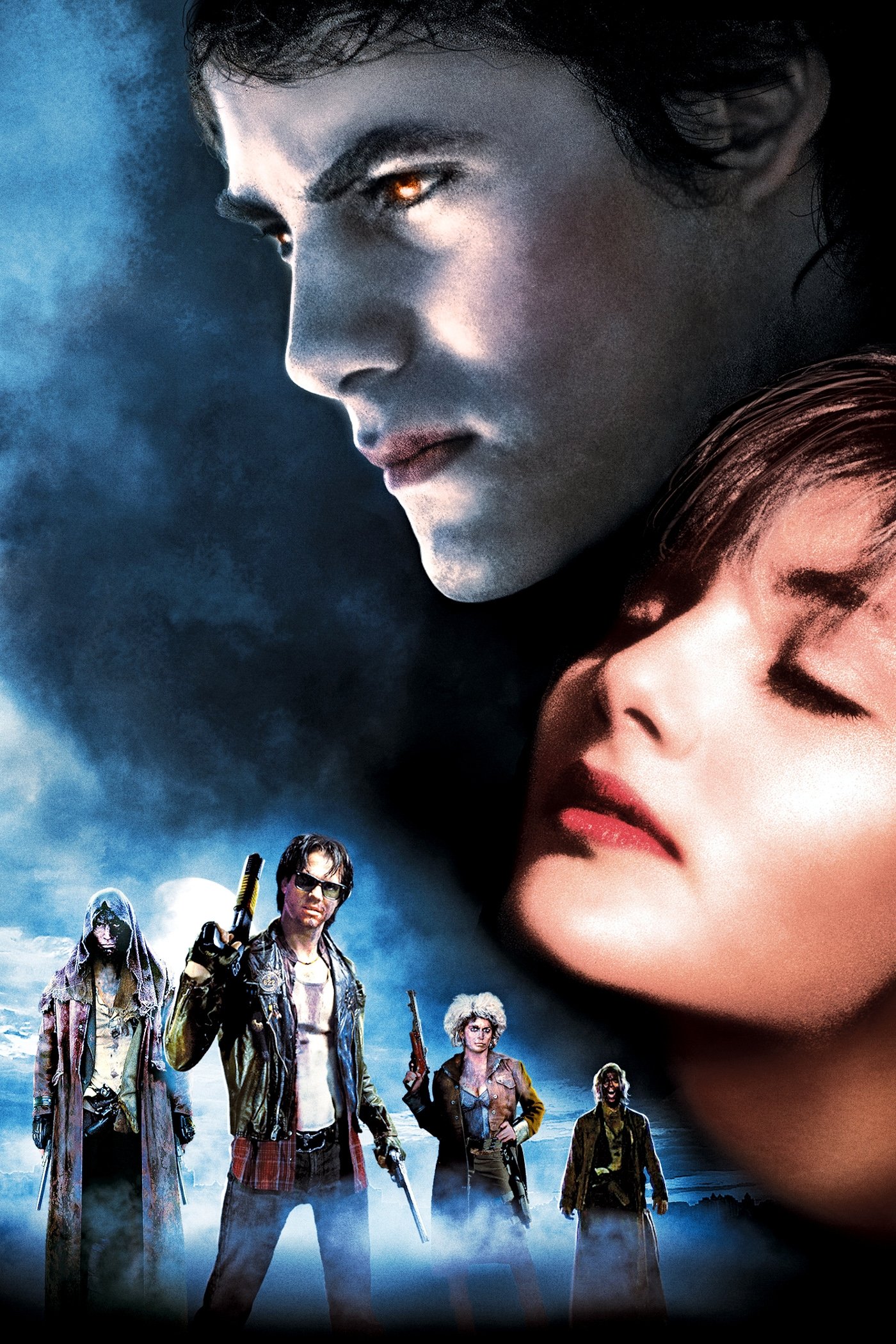
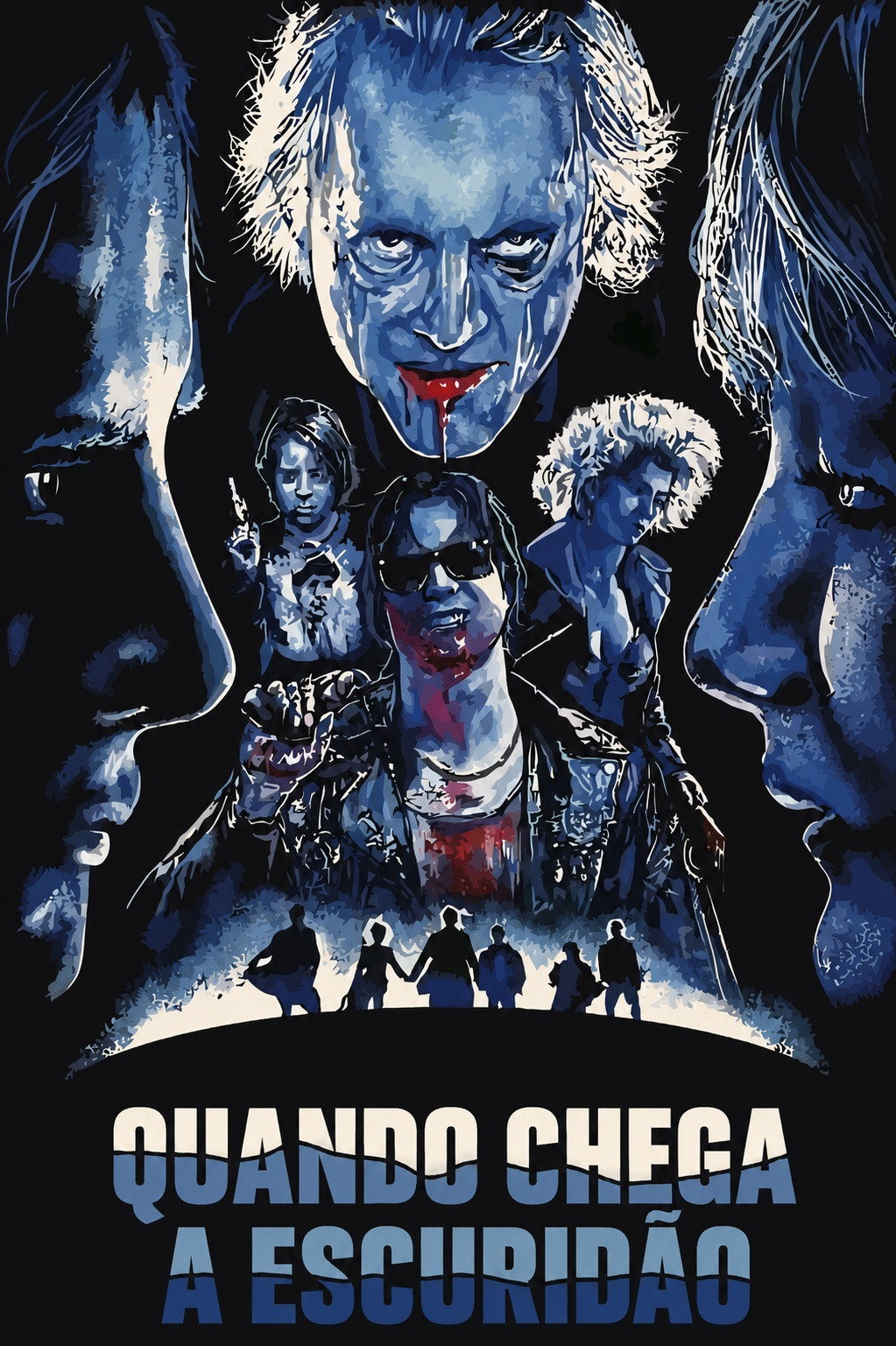
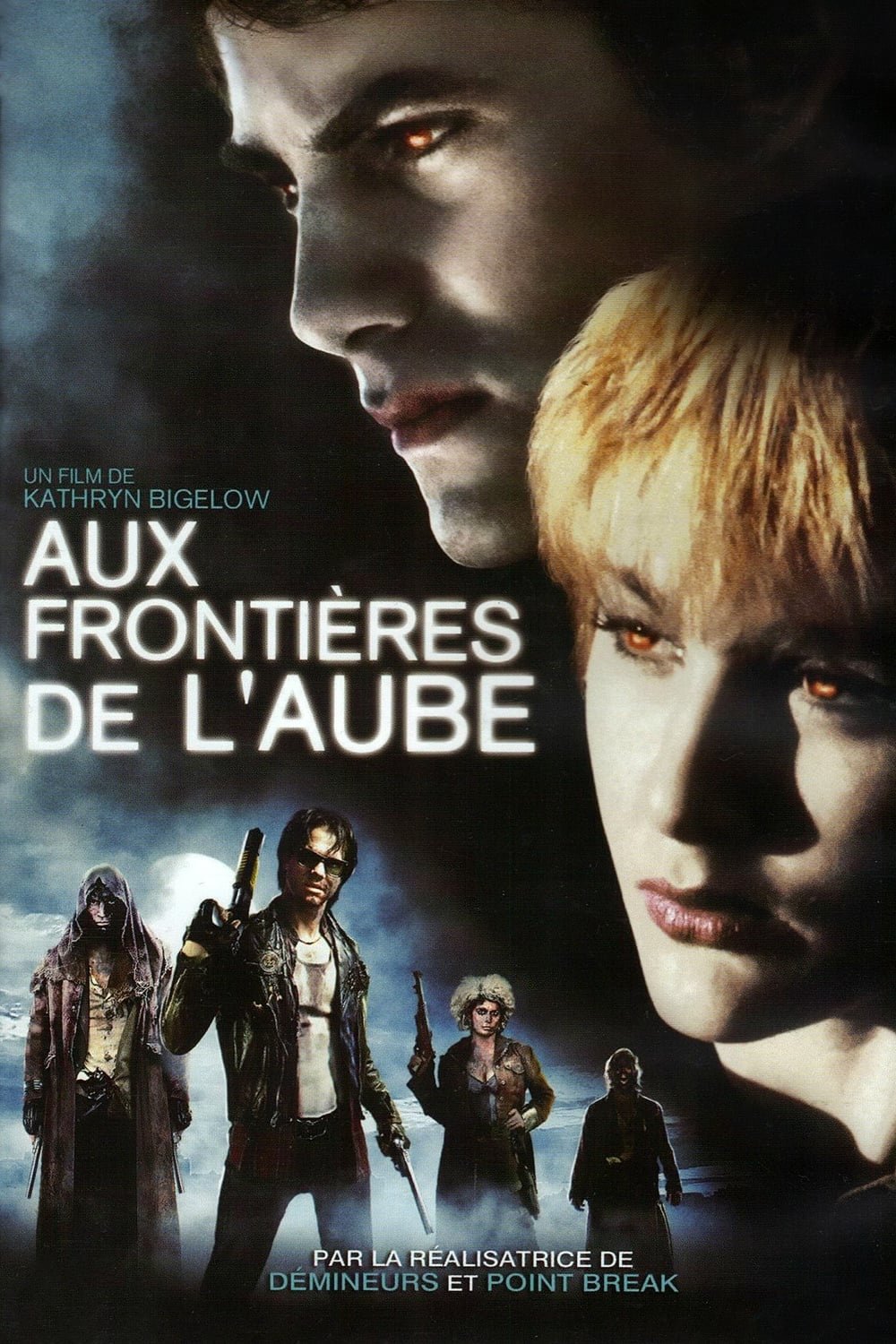
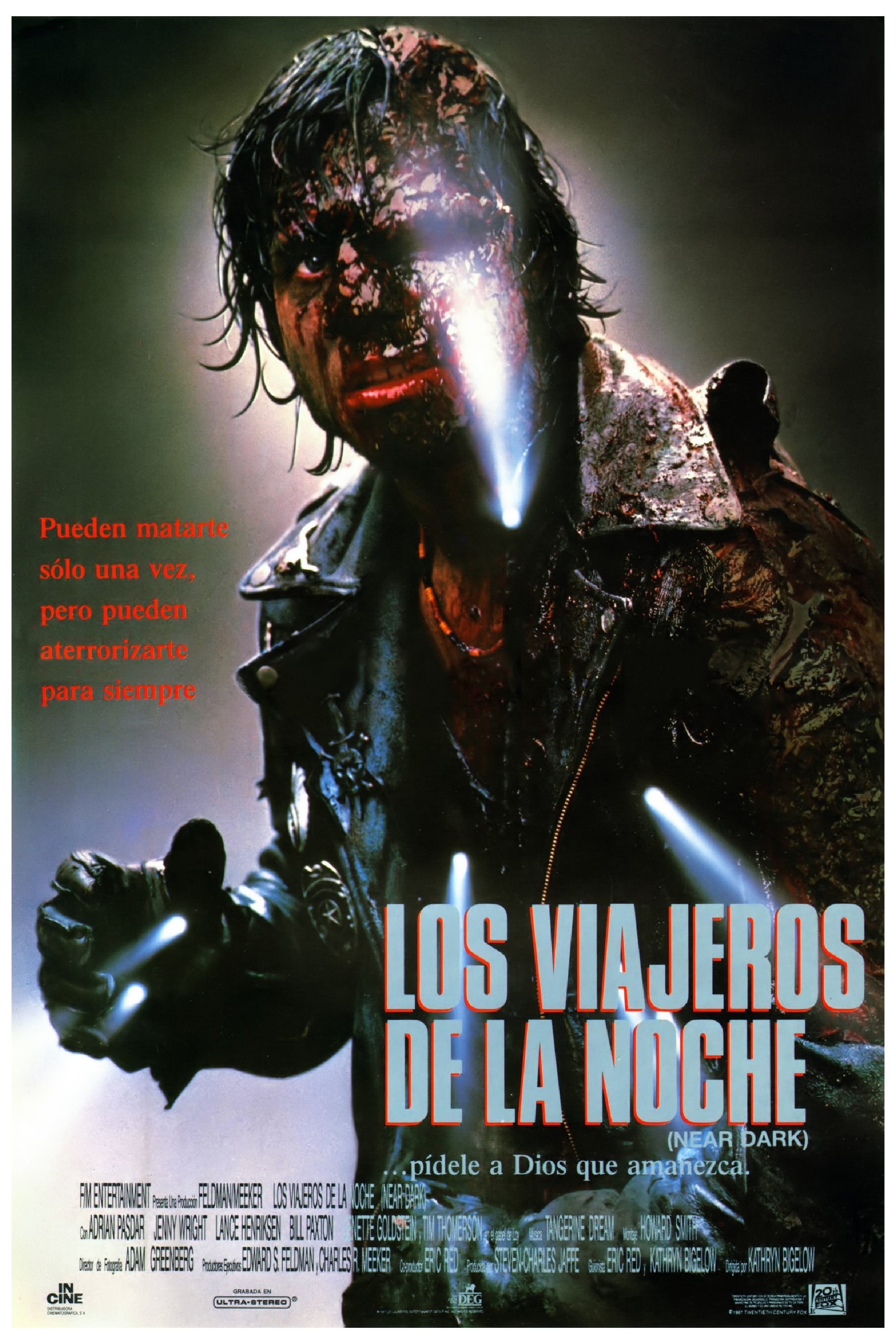
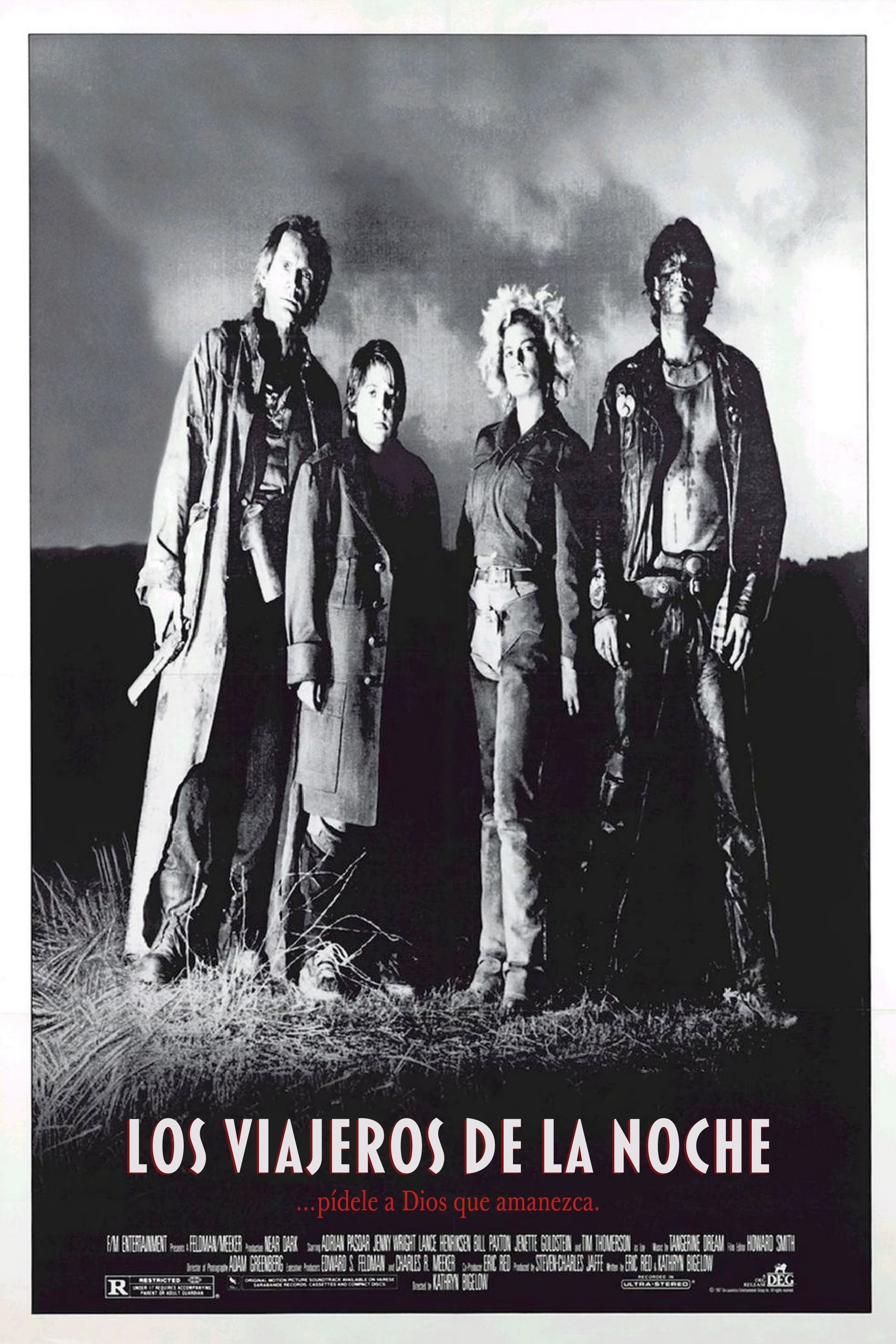
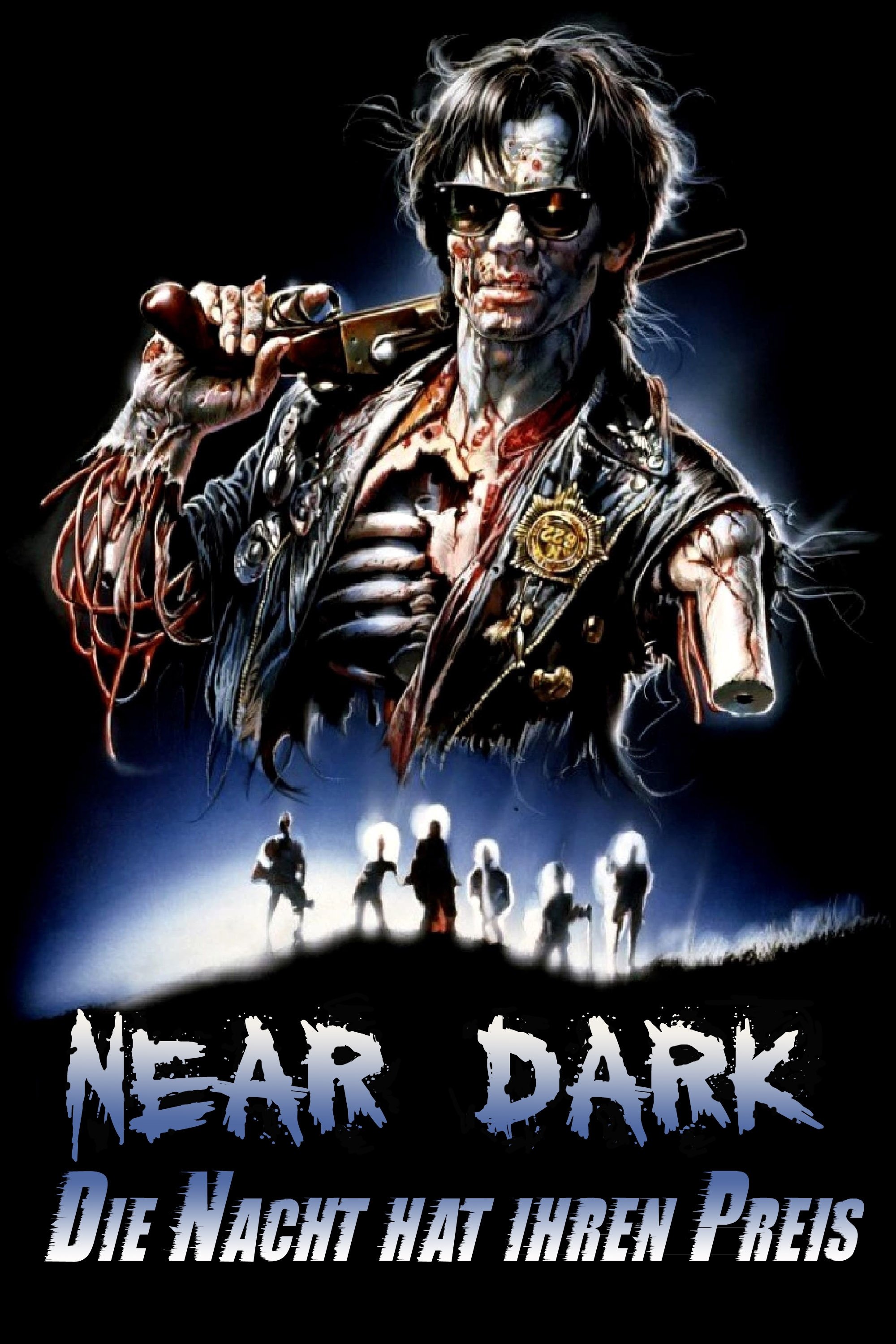
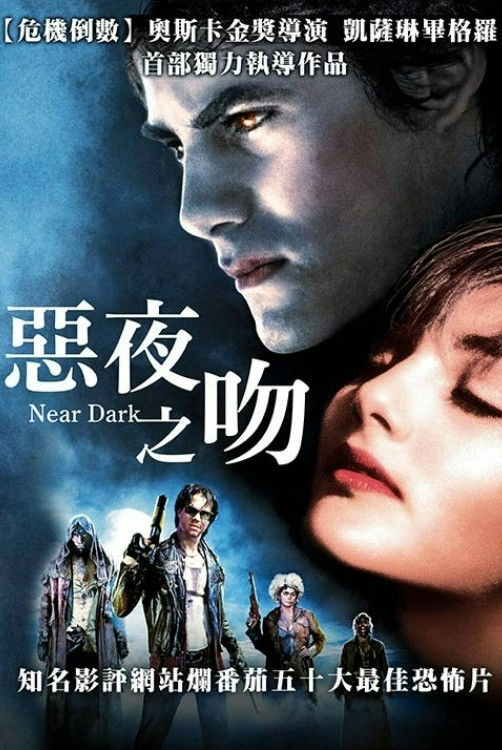
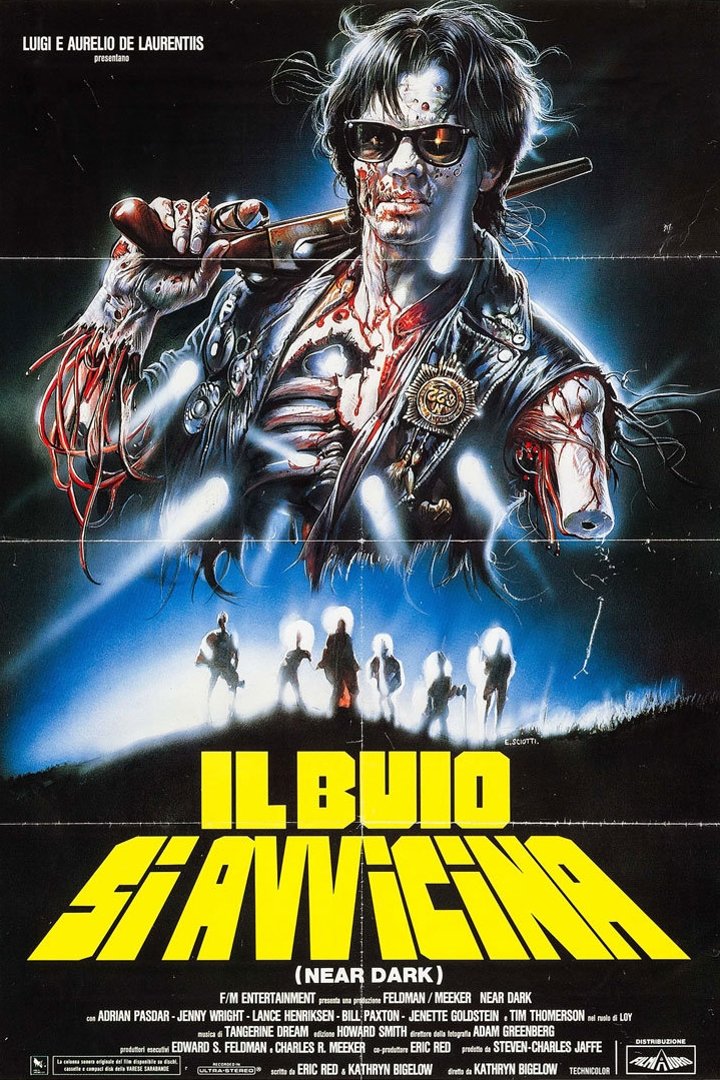
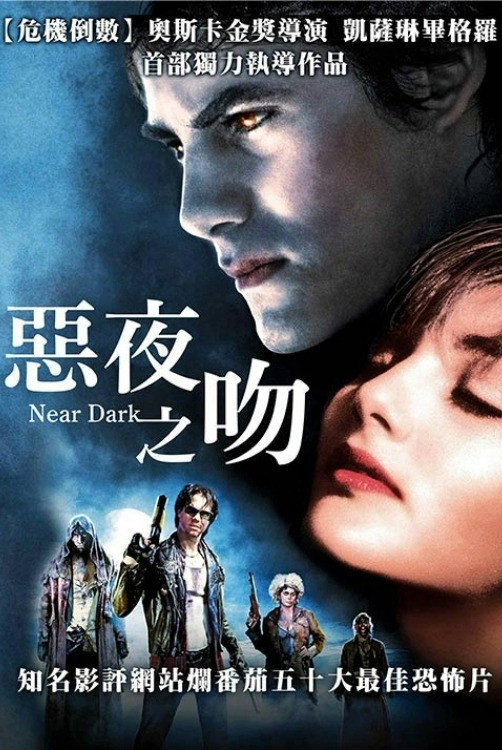
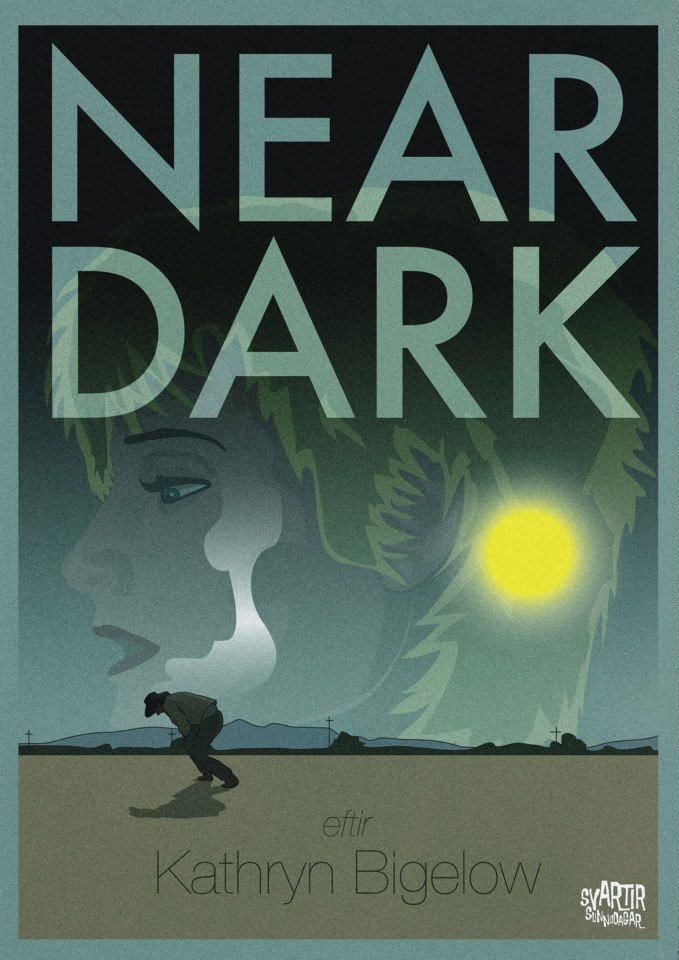
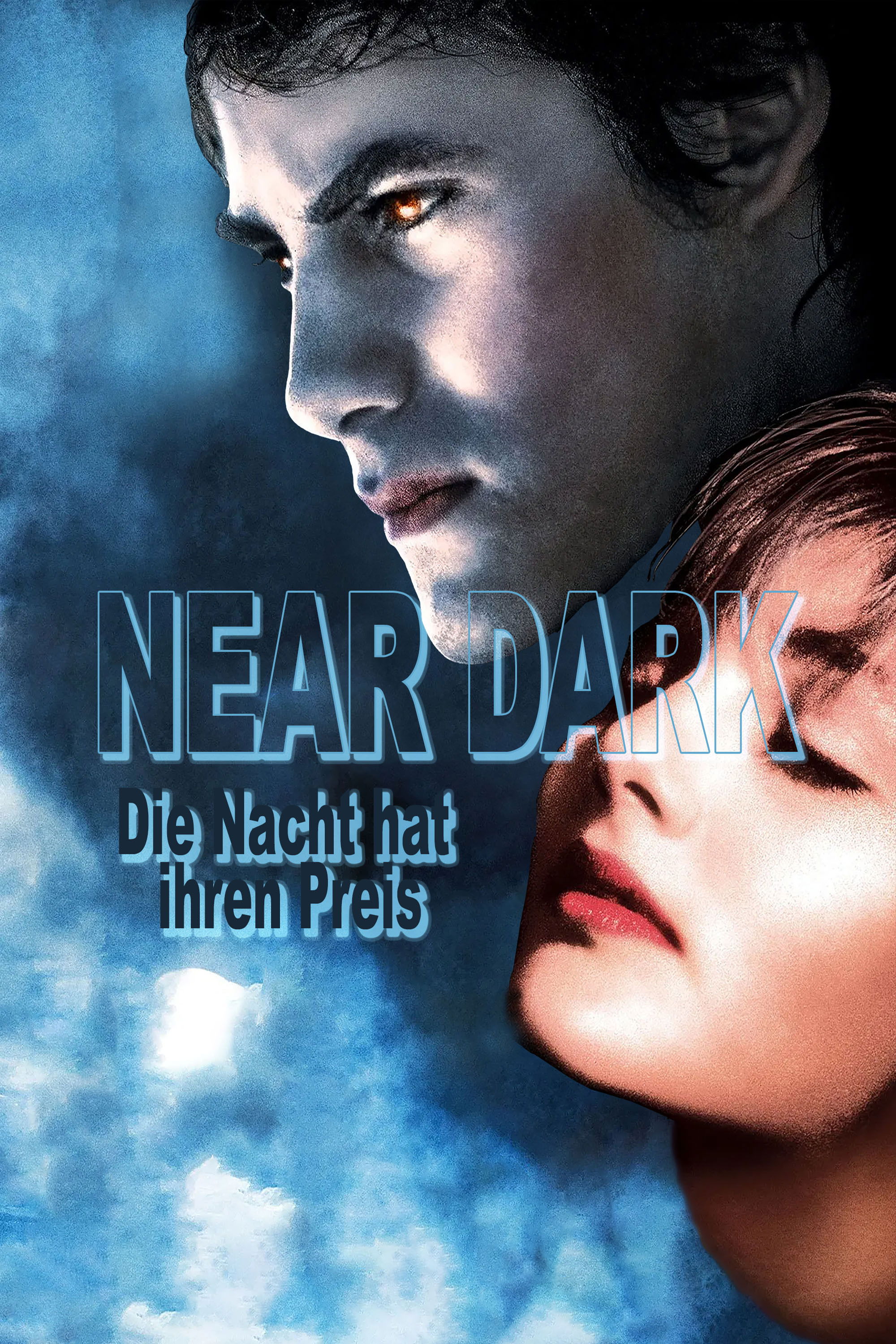
Near Dark (1987)

US
HORROR FILM
Runtime
94 min
Release
October 2, 1987
Budget
$5,000,000
Revenue
$3,400,000
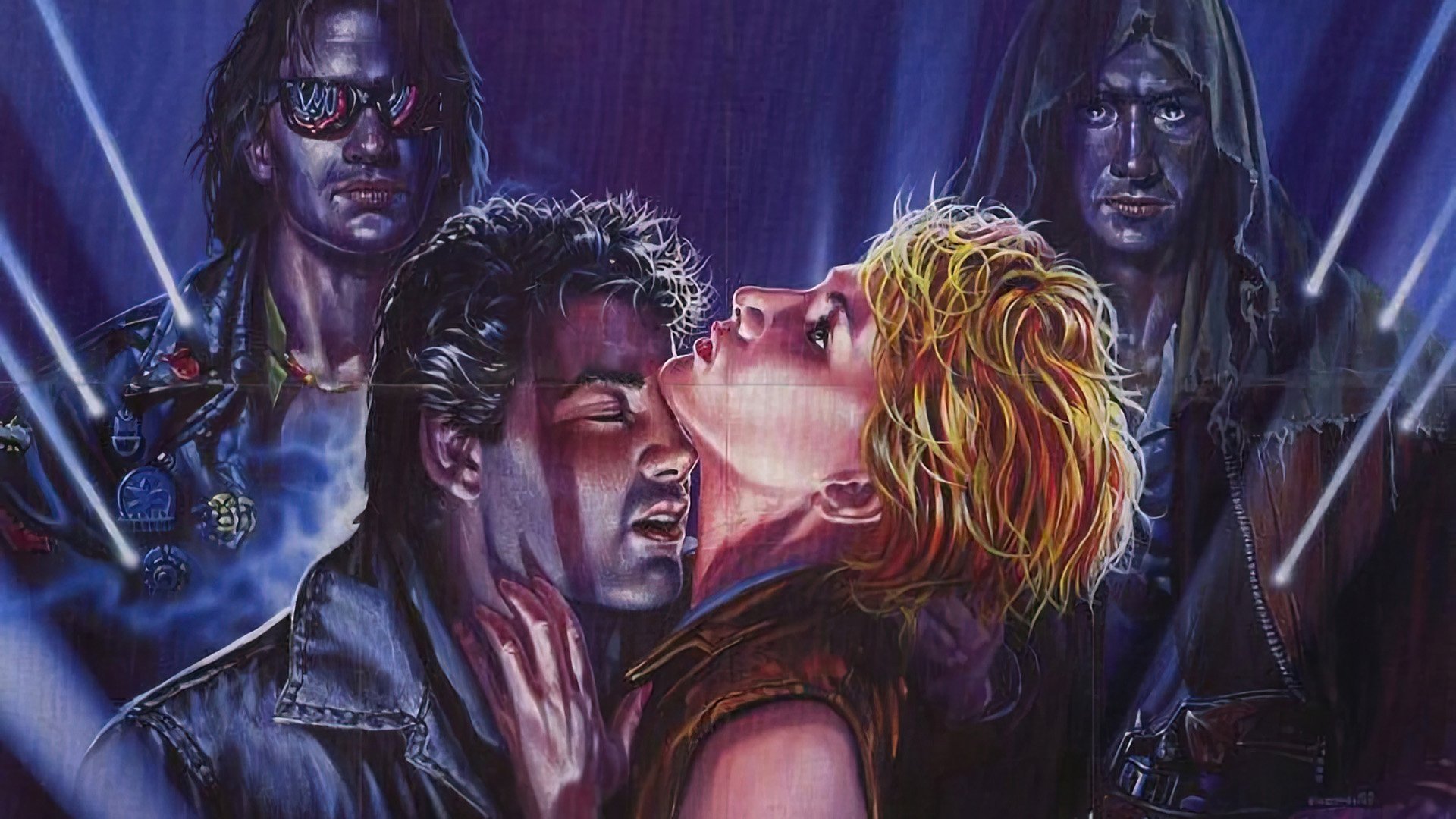
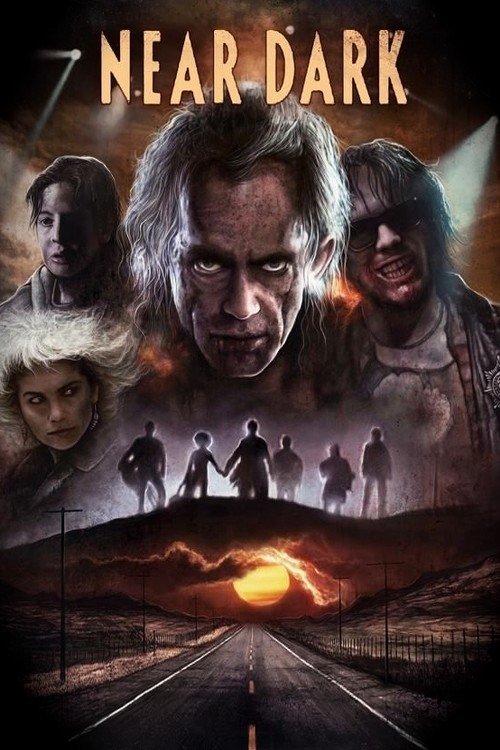
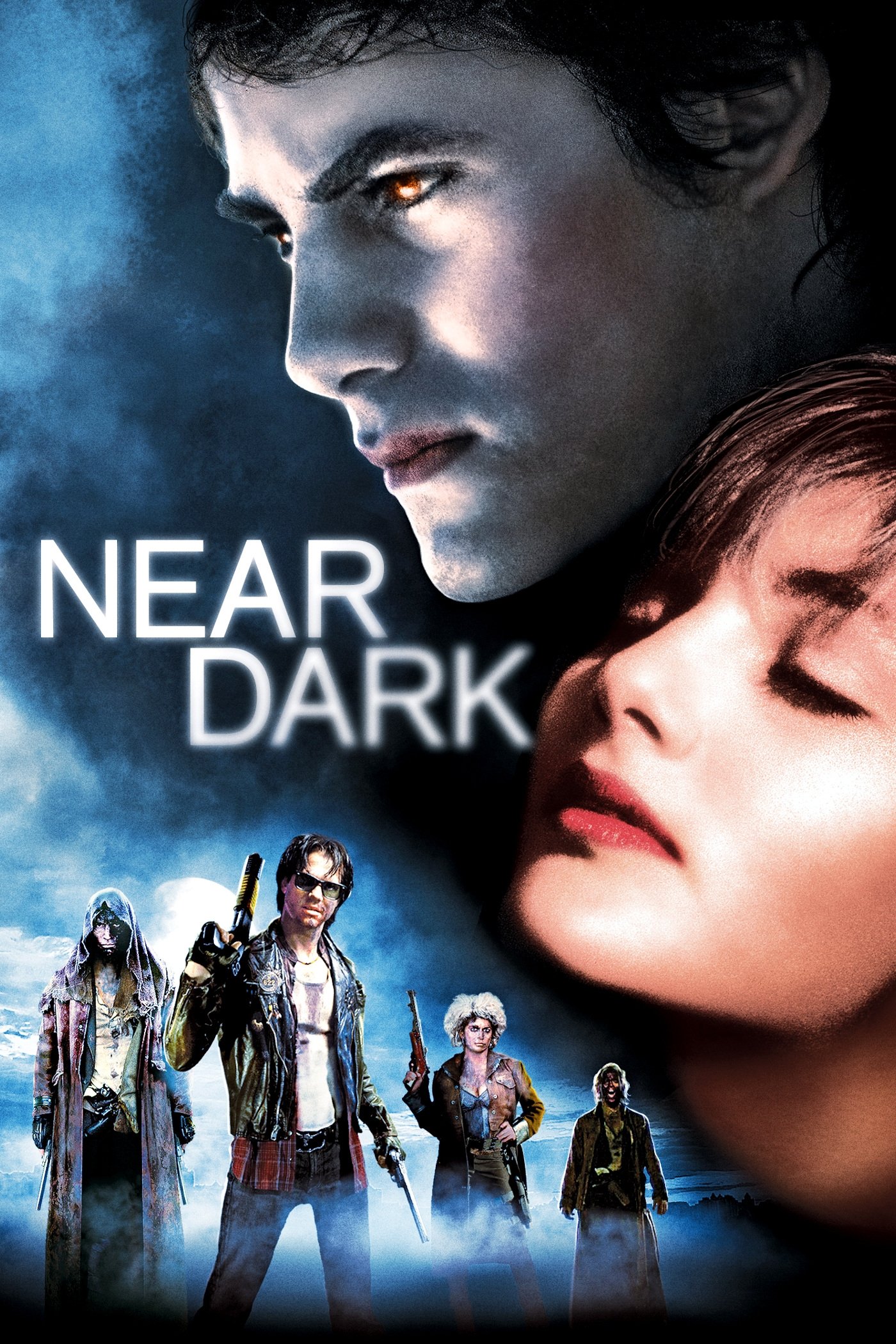
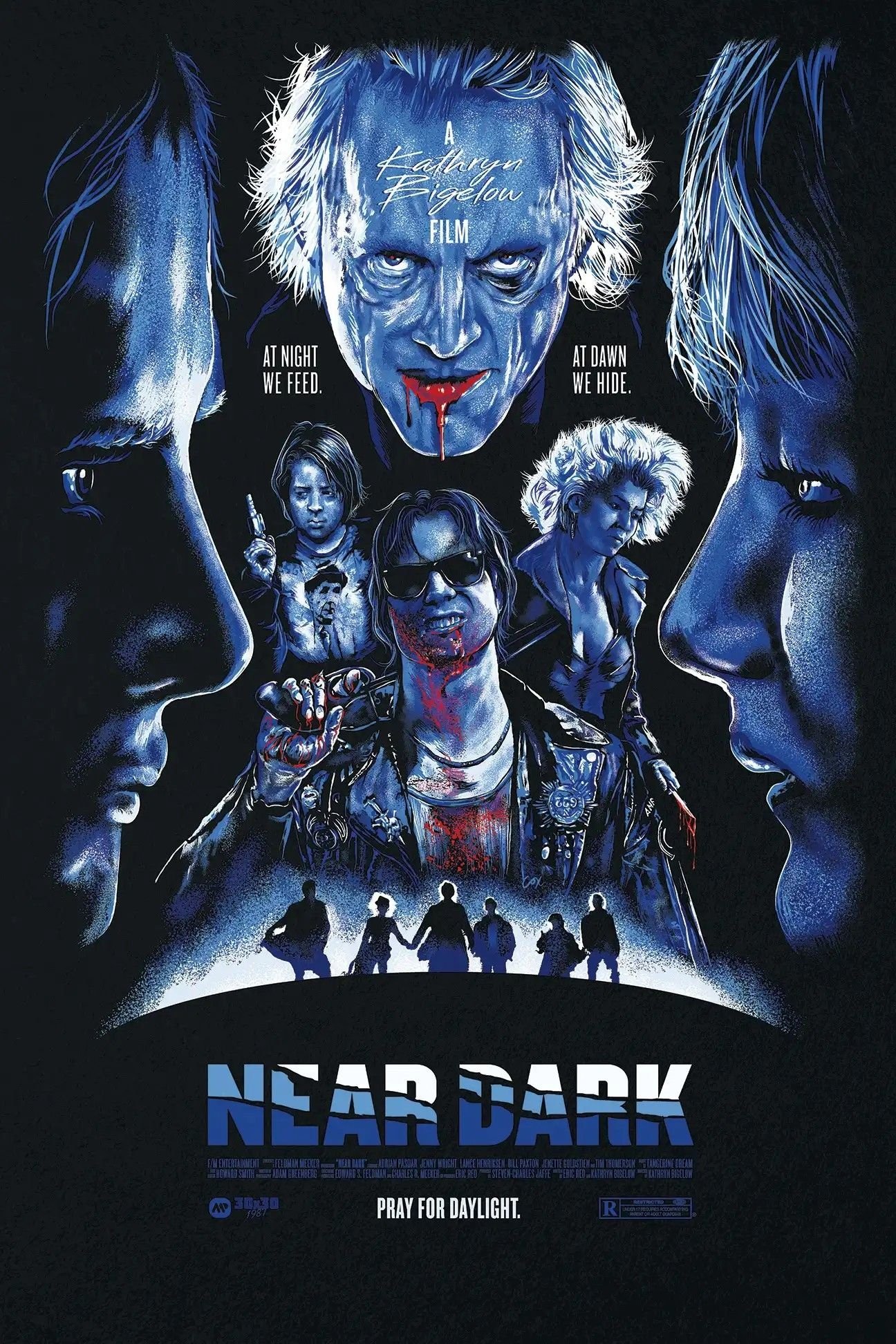
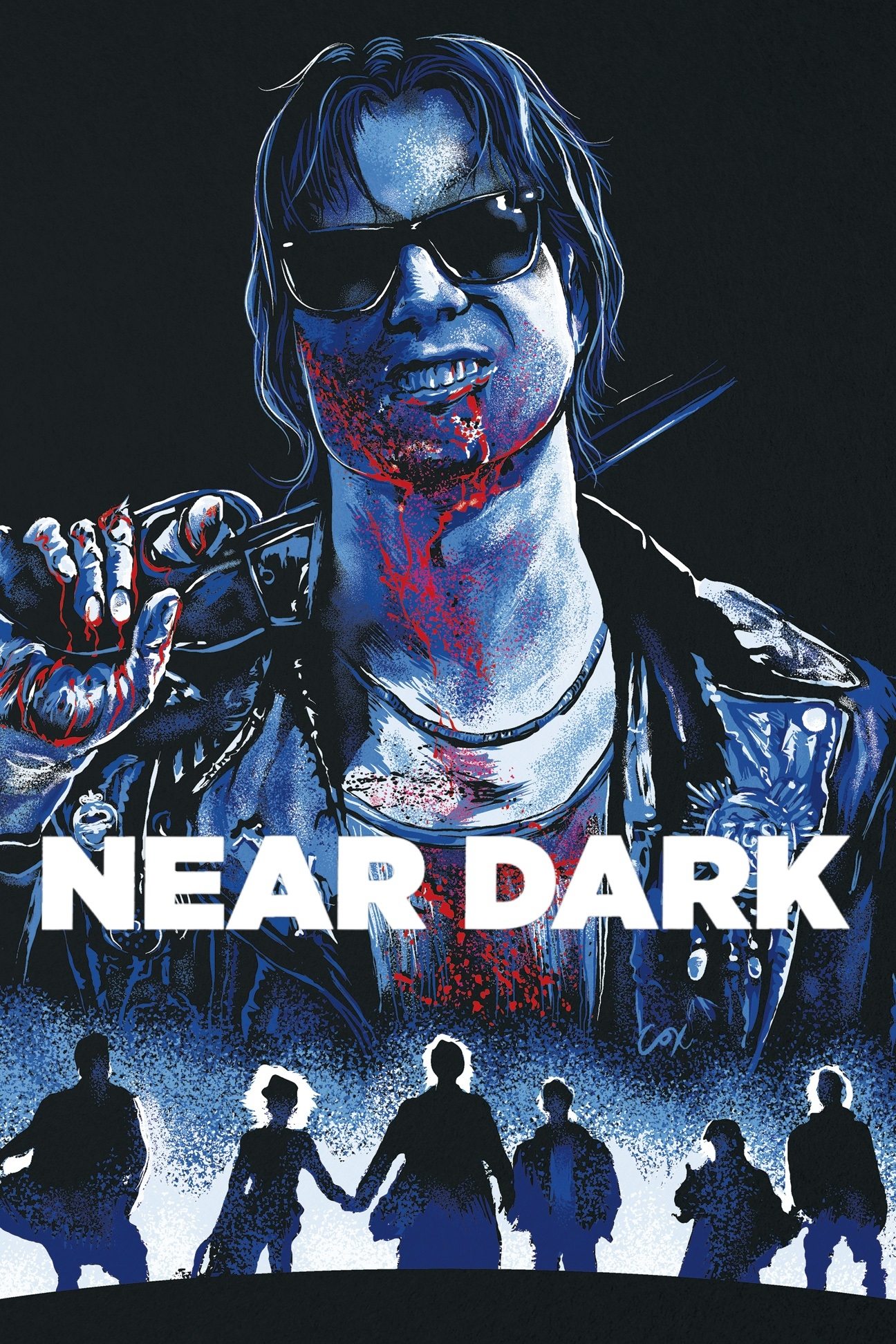
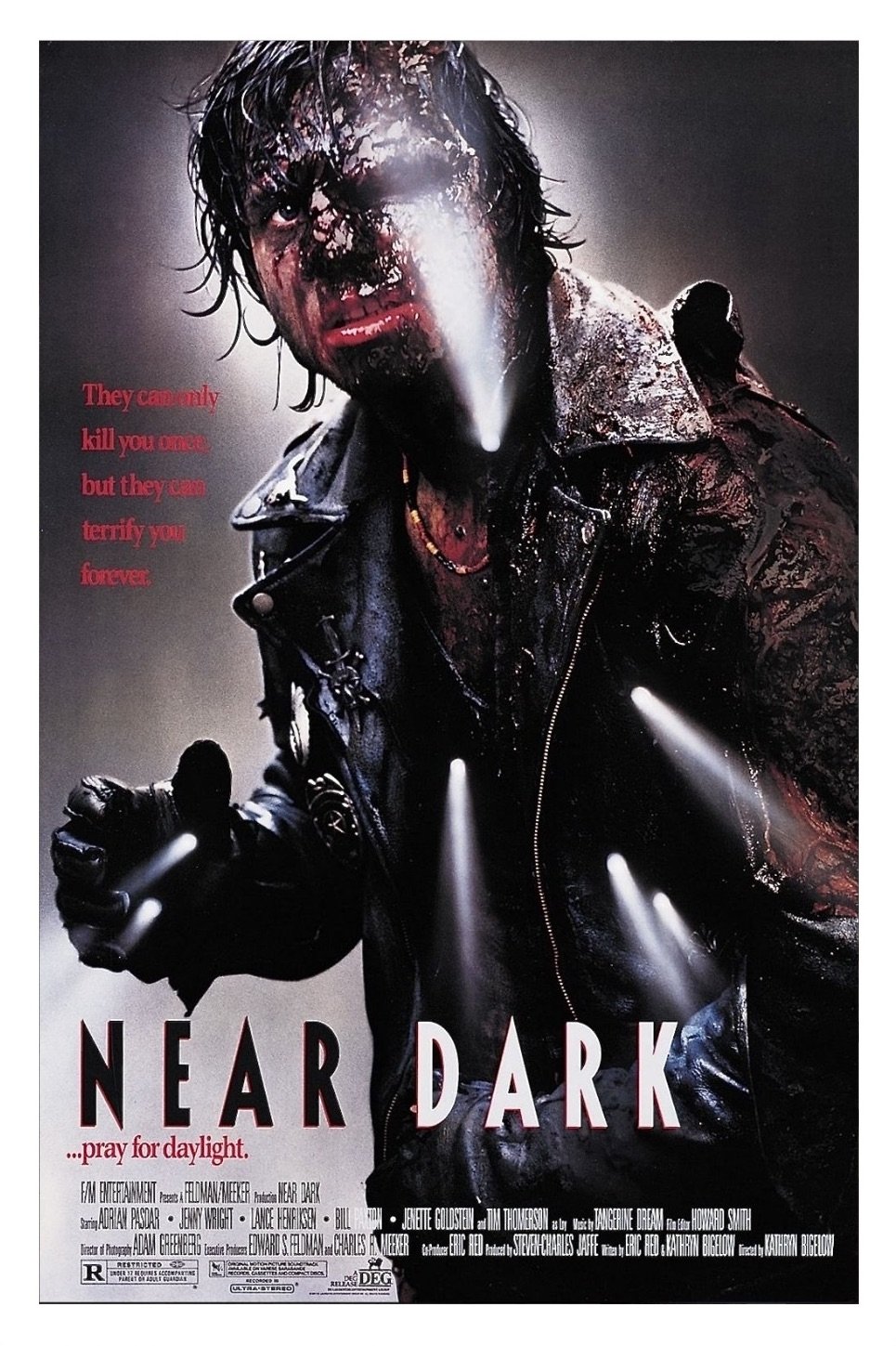
Near Dark (1987) poster
Director
Production Companies
DEG , F/M , Near Dark Joint Venture
Plot

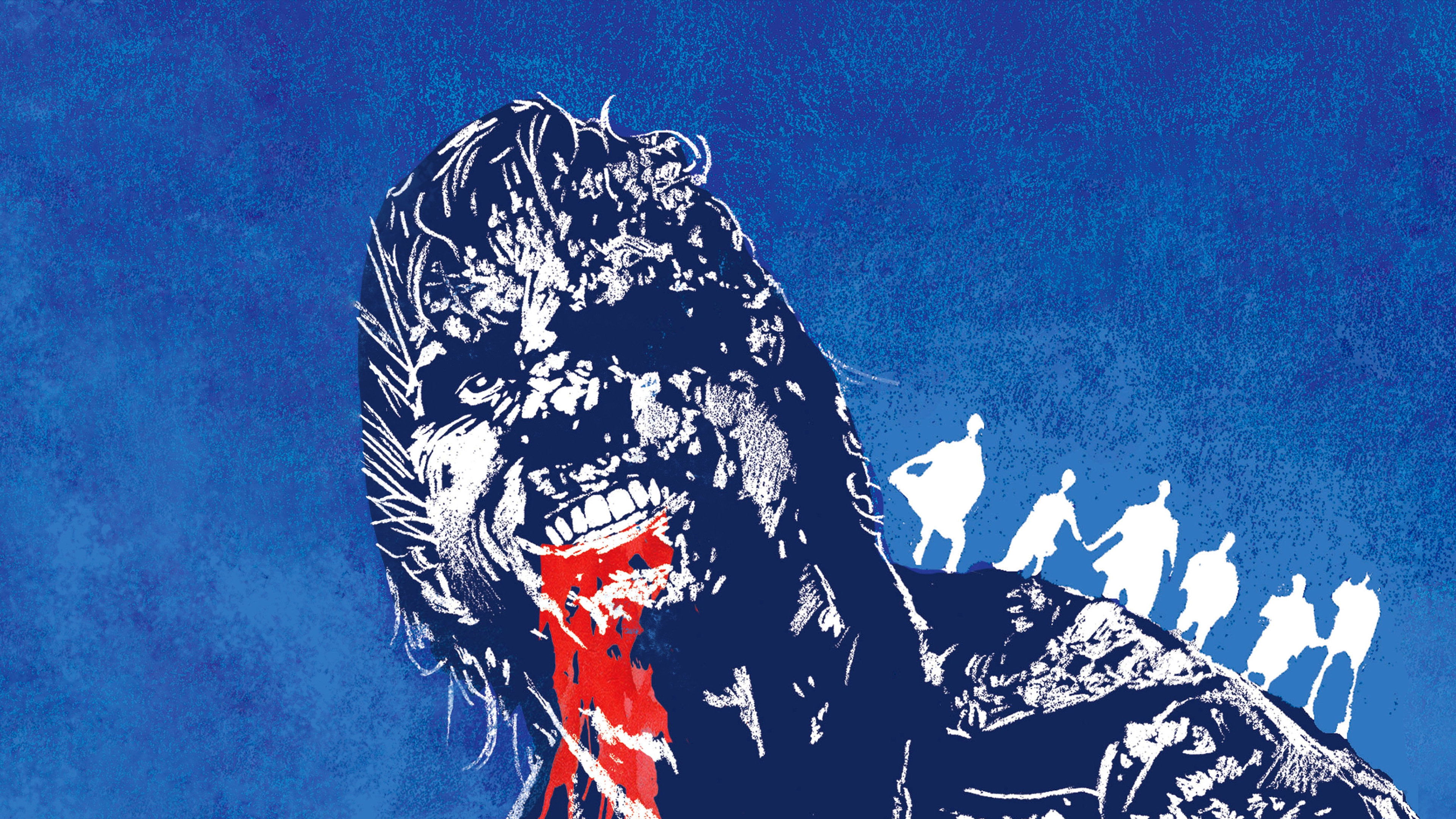
A farm boy reluctantly becomes a member of the undead when a girl he meets turns out to be part of a band of vampires who roam the highways in stolen cars.

Alternative Titles
Cuando cae la oscuridad (Argentina) На залез слънце (Bulgaria) На смрачаване (Bulgaria) — Bulgarian Quando Chega a Escuridão (Brazil) Aux frontières de l'aube (Canada) — French 血尸夜 (China) — Chinese Na prahu temnot (Czechia) — Czech Near Dark - Die Nacht hat ihren Preis (Germany) — German
Show all 35 alternative titles Djævelens Datter (Denmark) — Danish Los viajeros de la noche (Spain) Pimeyden läheisyys (Finland) Aux frontières de l'aube (France) Αγρια Νύχτα (Greece) — Greek 惡夜之吻 (Hong Kong SAR China) — Chinese Alkonytájt (Hungary) — Hungarian קרוב לחשיכה (Israel) — Hebrew Il buio si avvicina (Italy) ニア・ダーク/月夜の出来事 (Japan) — Japanese 죽음의 키스 (South Korea) — Korean Beveik tamsa (Lithuania) — Lithuanian Cuando cae la oscuridad (Mexico) Los viajeros de la noche (Mexico) Blisko ciemnosci (Poland) — Polish Depois do Anoitecer (Portugal) Quando Chega a Escuridão (Portugal) — Portuguese Близу таме (Serbia) — Serbian Почти стемнело (Russia) — Russian Сумрак (Russia) Natten har sitt pris (Sweden) Почти стемнело (Russia) Karanlık Bastığında (Türkiye) — Turkish 惡夜之吻 (Taiwan) Сутінок (Ukraine) — Ukrainian Cuando cae la oscuridad (Uruguay) Lúc Chạng Vạng (Vietnam) — Vietnamese

Trailers & Videos

5 videos

Film Guide & Analysis

Kathryn Bigelow’s vampire Western: development with Eric Red, the outlaw family, Adam Greenberg’s photography, Gordon Smith’s effects, Tangerine Dream and release history.

Kathryn Bigelow’s Near Dark (1987) joins vampire horror to the landscape and violence of the American Western. Caleb Colton, a young man living with his father and sister, meets Mae after dark and is bitten during an encounter that leaves him unable to tolerate daylight. A travelling group of blood-drinkers takes him into its vehicle, demanding that he learn to kill if he wishes to survive among them. The resulting conflict pits his attachment to Mae against the family from which he has been taken. No distant castle or inherited aristocratic title defines these creatures: they pass through small towns, cheap lodgings and empty roads, exposing the predatory underside of a familiar American setting.

Co-written by Bigelow and Eric Red, Near Dark was Bigelow’s first feature directed alone, following The Loveless (1981), made with Monty Montgomery. Its union of the road movie, outlaw narrative and supernatural horror depends on Adam Greenberg’s night photography, physical effects that make sunlight dangerous, and a score by Tangerine Dream. The film’s initial theatrical performance was limited, but its contemporary critical discussion and subsequent museum screenings helped establish it as a significant reworking of vampire cinema. Its central tension is between two forms of family belonging, each demanding a different understanding of loyalty, appetite and violence.

Development: A Vampire Story Built as a Western

Bigelow had wanted to direct a Western, a prospect that she recalled finding difficult to finance. In her later interview with the Directors Guild of America, she described Near Dark as a way of developing that interest through the more marketable conventions of horror. The vampire premise allowed riders and outlaws to be replaced by night travellers whose survival was governed by sunrise. Screenwriter Eric Red remembered developing the modern vampire-Western idea with Bigelow through a rapid, closely shared writing process. Their accounts agree on the central concept, although retrospective recollections differ about the sequence in which their other joint screenplay, Undertow, was written.

The writers removed much of the traditional apparatus of vampire fiction. Their creatures have no conspicuous fangs, do not rely on coffins or elaborate rituals, and face a practical difficulty that controls every journey: daylight can destroy them. Red explained that the combination of great physical power with acute vulnerability suggested criminals living discreetly on the margins of everyday society. The landscape became useful to the story for the same reason. An exposed road, a field or a motel room could turn deadly within minutes of sunrise, allowing familiar locations to produce suspense without a supernatural building or distant historical setting.

The screenplay obtained backing through producer Edward S. Feldman, while Steven-Charles Jaffe served as producer on the completed film. Kevin Lally’s contemporaneous interview with Bigelow, later republished by the journalist, documents her determination to preserve the story’s blend of danger and romance. Rather than organize every scene around an attack, the film follows Caleb’s attraction to Mae and his increasing horror at the behaviour of the people she calls family. The western conception was thus built into the plot’s demands: possession of a vehicle, the ability to escape pursuit and the willingness to act violently determine whether the gang can continue moving.
Caleb, Mae and the Conflict Between Families

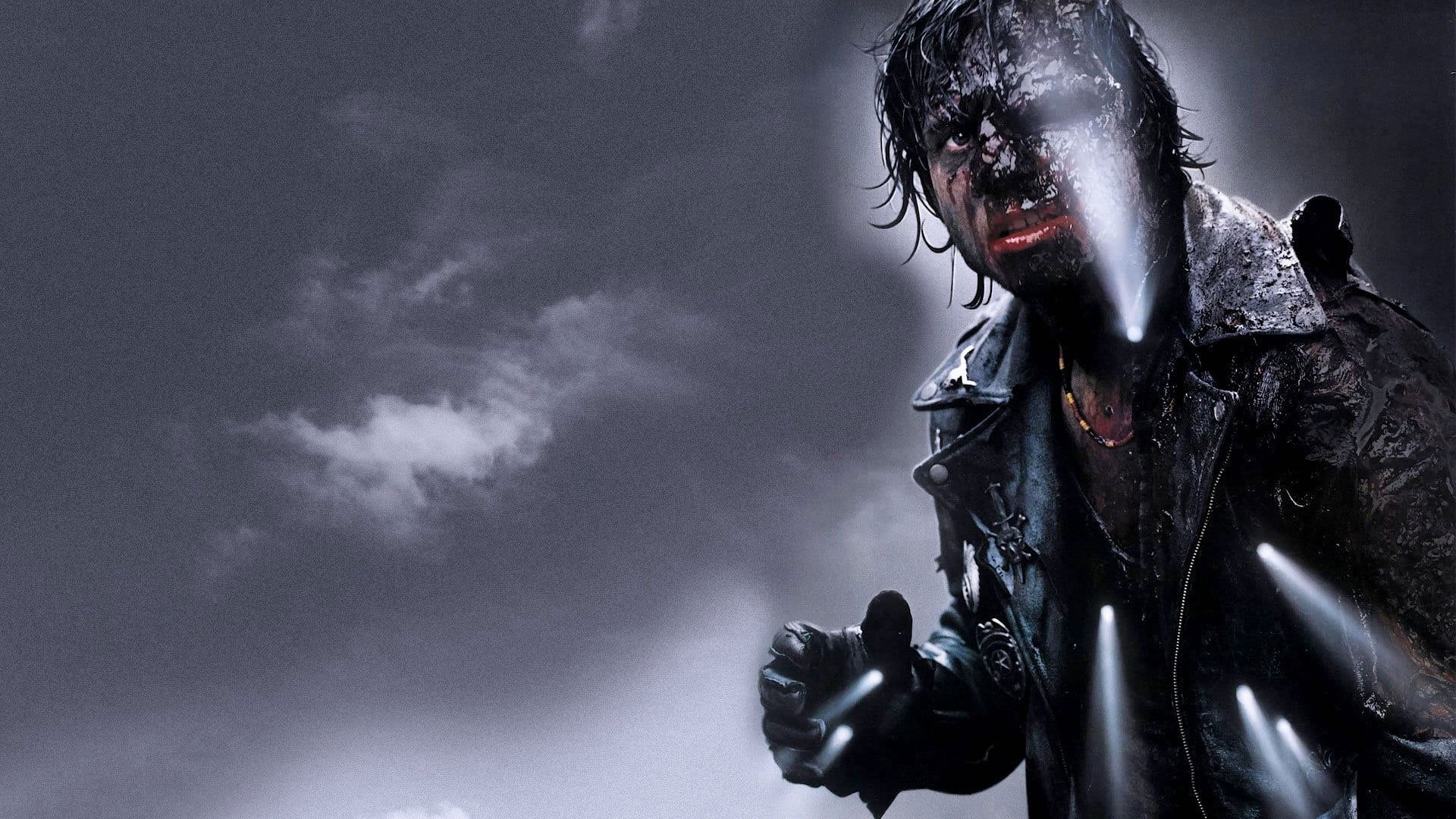
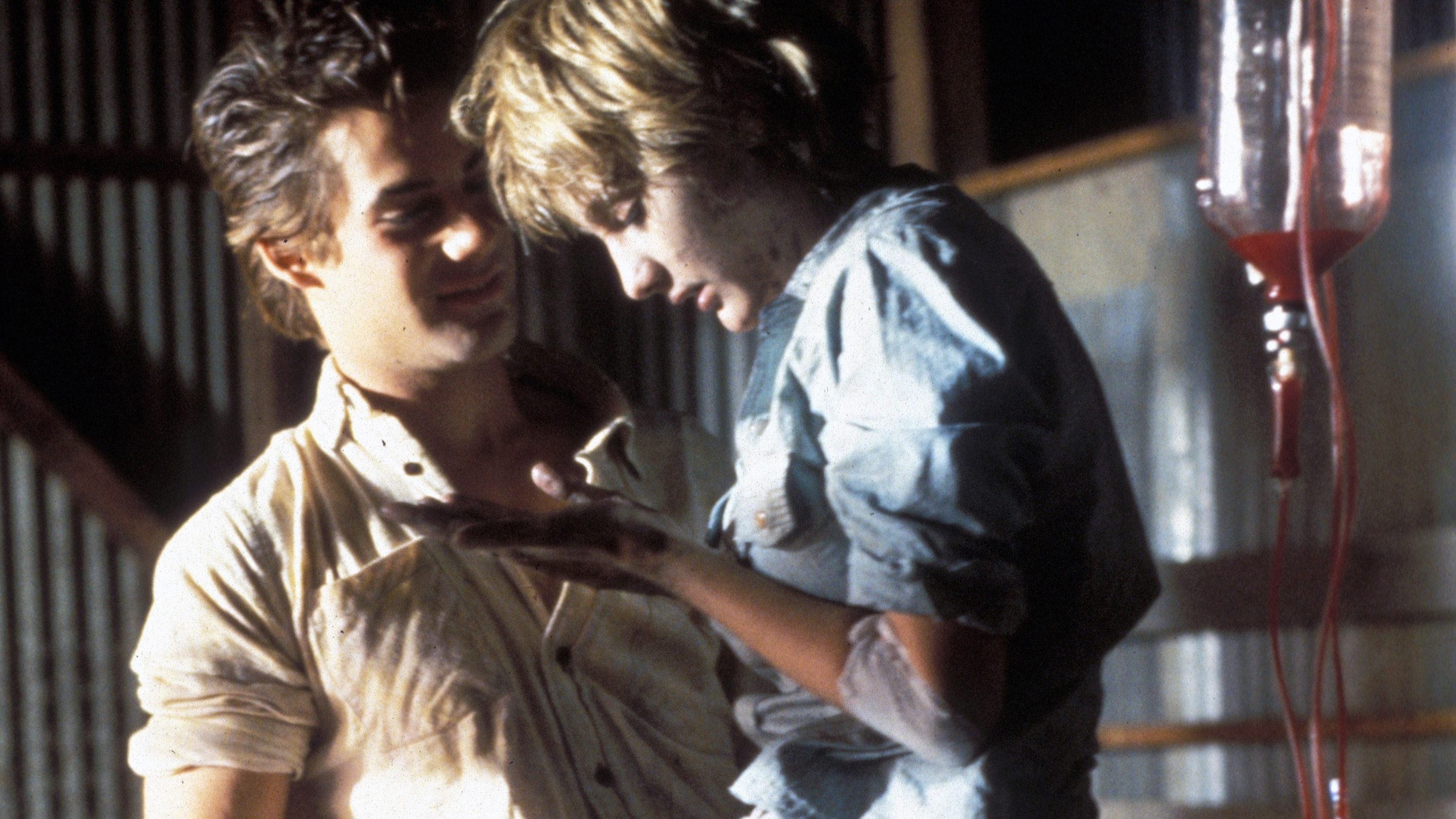
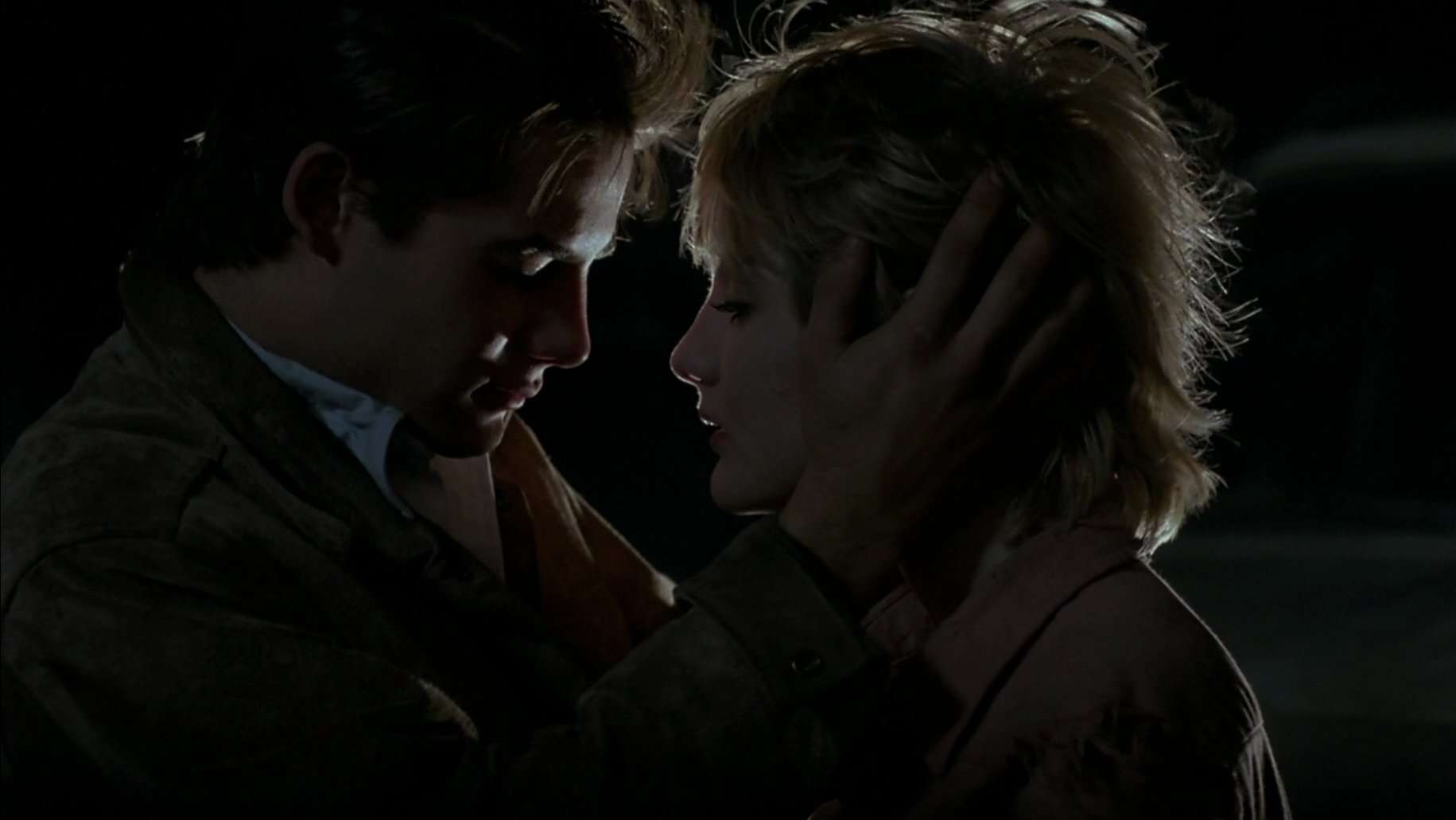
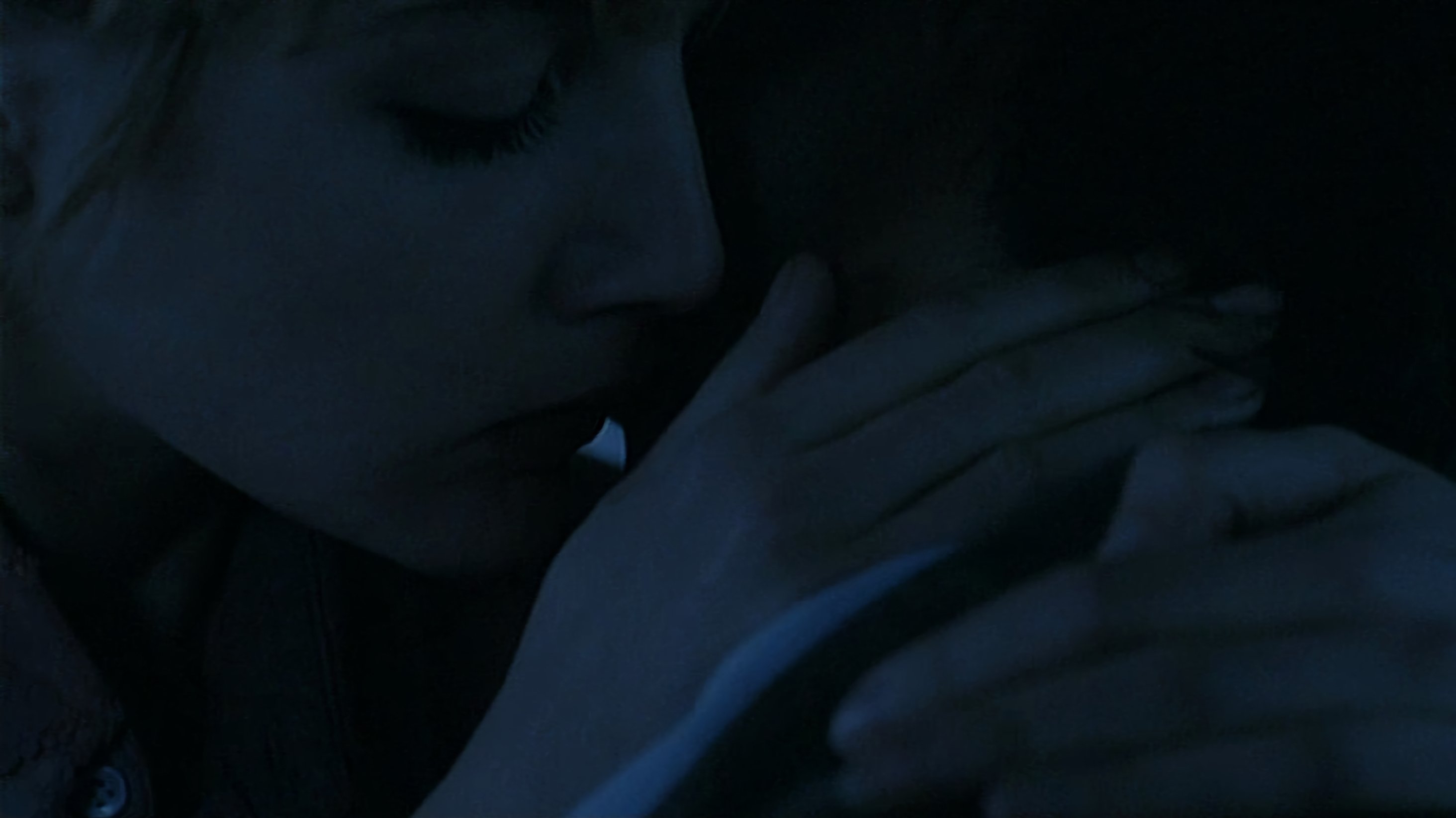
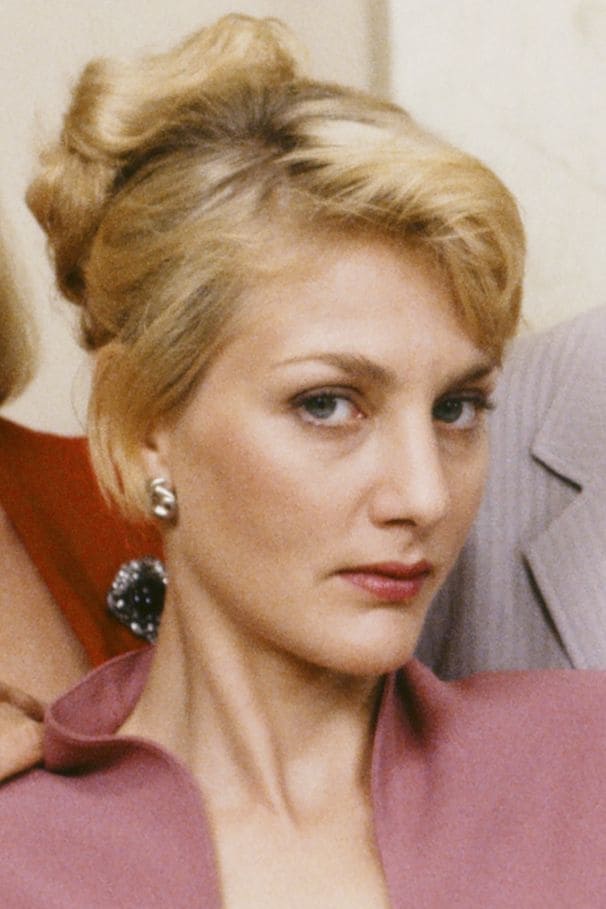
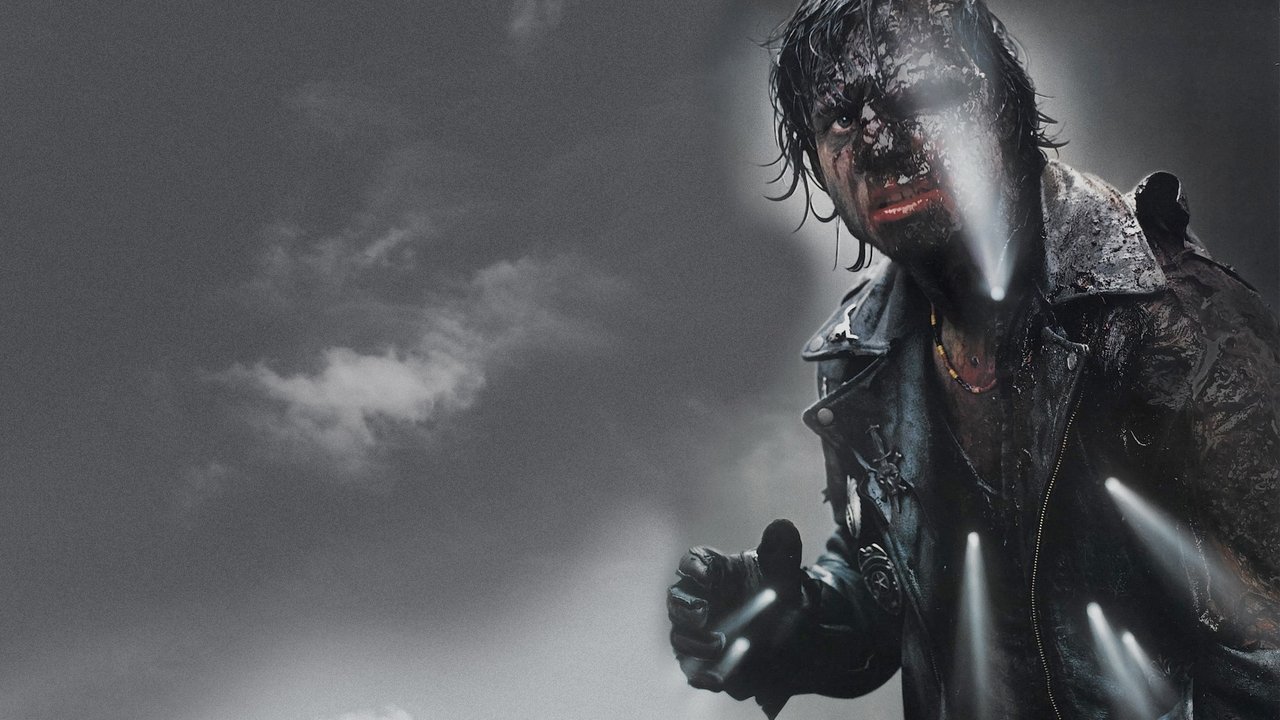
Adrian Pasdar’s Caleb enters the story with little understanding of what Mae’s condition requires. Their initial meeting is shaped by flirtation and by her anxiety about reaching shelter before sunrise. Once bitten, he experiences the change first as bodily distress, his exposed skin smoking as he struggles toward his home. Jenny Wright plays Mae as both the cause of his predicament and the member of the gang most concerned about preserving him. Their relationship gives the film an emotional conflict that the other travellers’ delight in predation cannot resolve. Caleb is invited into their existence, but never accepts its demand that he kill strangers for blood.

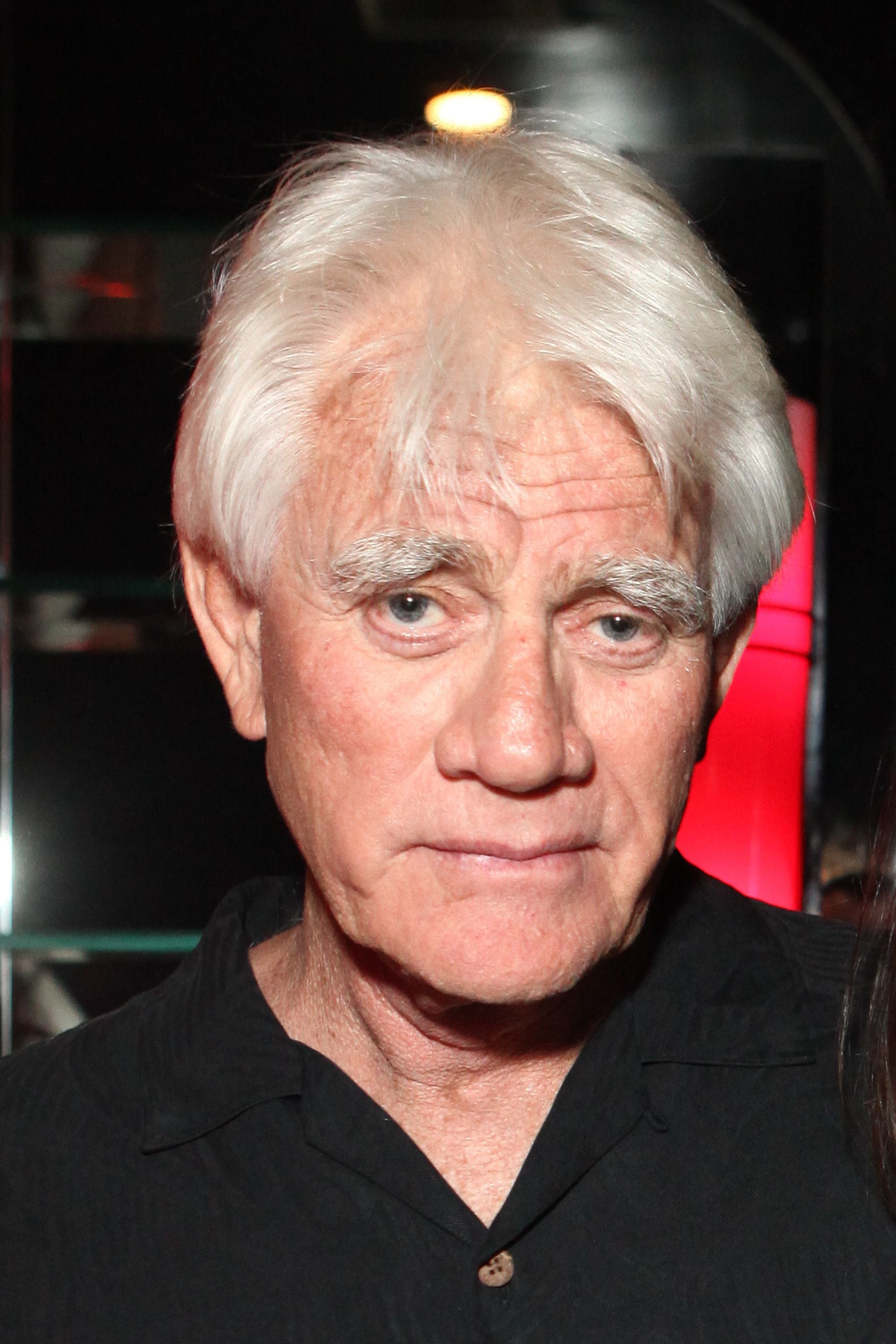
His father Loy, played by Tim Thomerson, and younger sister Sarah, played by Marcie Leeds, form a second family that refuses to abandon him. The screenplay cuts between the nocturnal group’s movements and the search taking place in daylight, providing two kinds of obligation rather than a single pursuit of a monster. The people who raised Caleb know him as a son and brother; the travellers expect him to prove his value by helping them feed. This opposition becomes especially clear when he is given a limited period to learn their methods and remains dependent on Mae’s willingness to protect him.

The possibility of reversing Caleb’s transformation through a blood transfusion is one of the film’s most disputed departures from conventional vampire lore. Bigelow defended the idea in later remarks reported by Turner Classic Movies, connecting it with blood-based transformations in older vampire literature. Within Near Dark, the procedure gives Caleb’s family an active role in his survival and sets up a second attempt to restore someone whose identity has been changed. It also exposes a division within the gang: Mae’s attachment to Caleb can lead her back toward ordinary human life, while the others regard feeding and flight as inseparable from who they have become.

Jesse Hooker, Severen and the Outlaw Clan

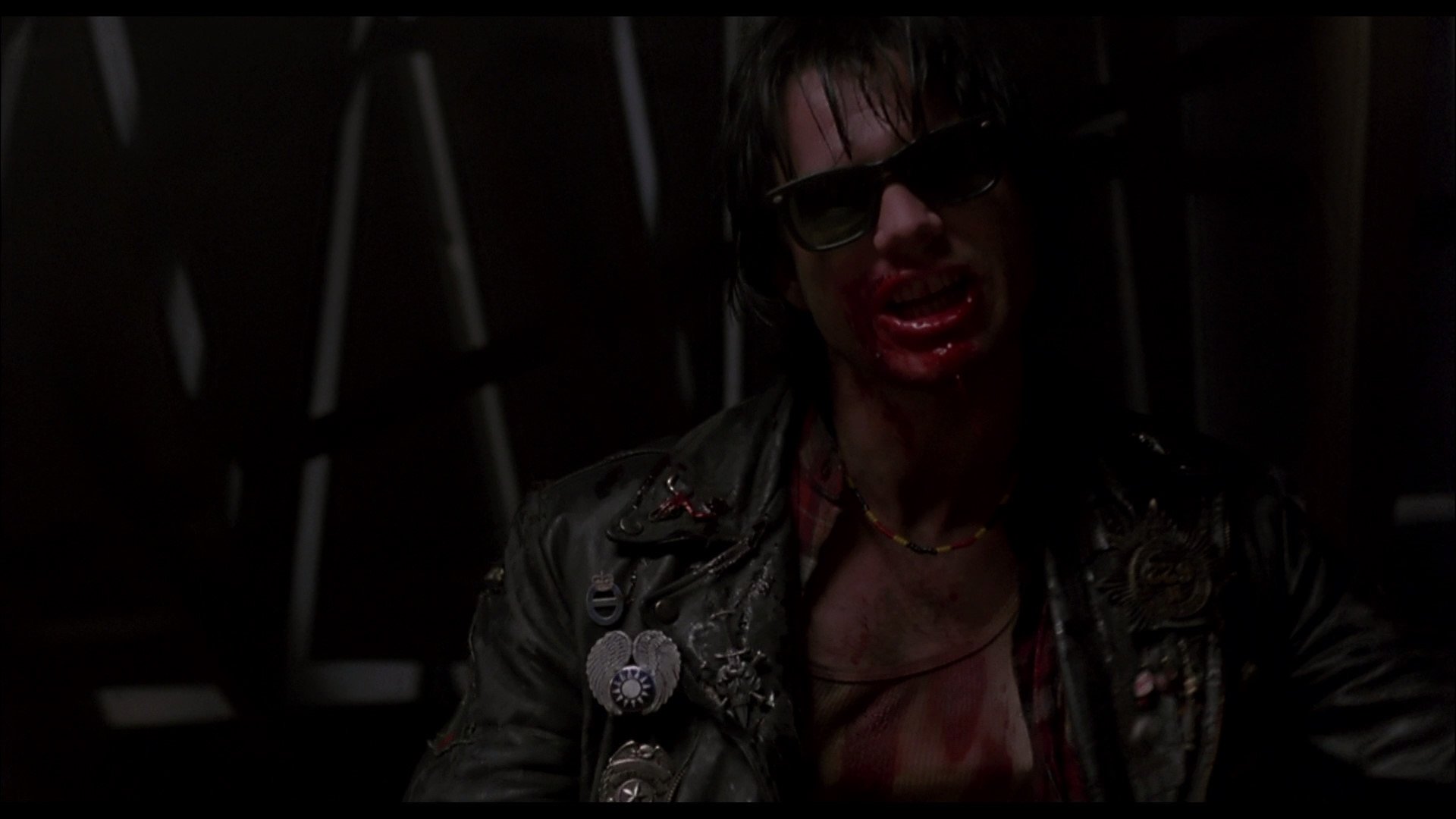
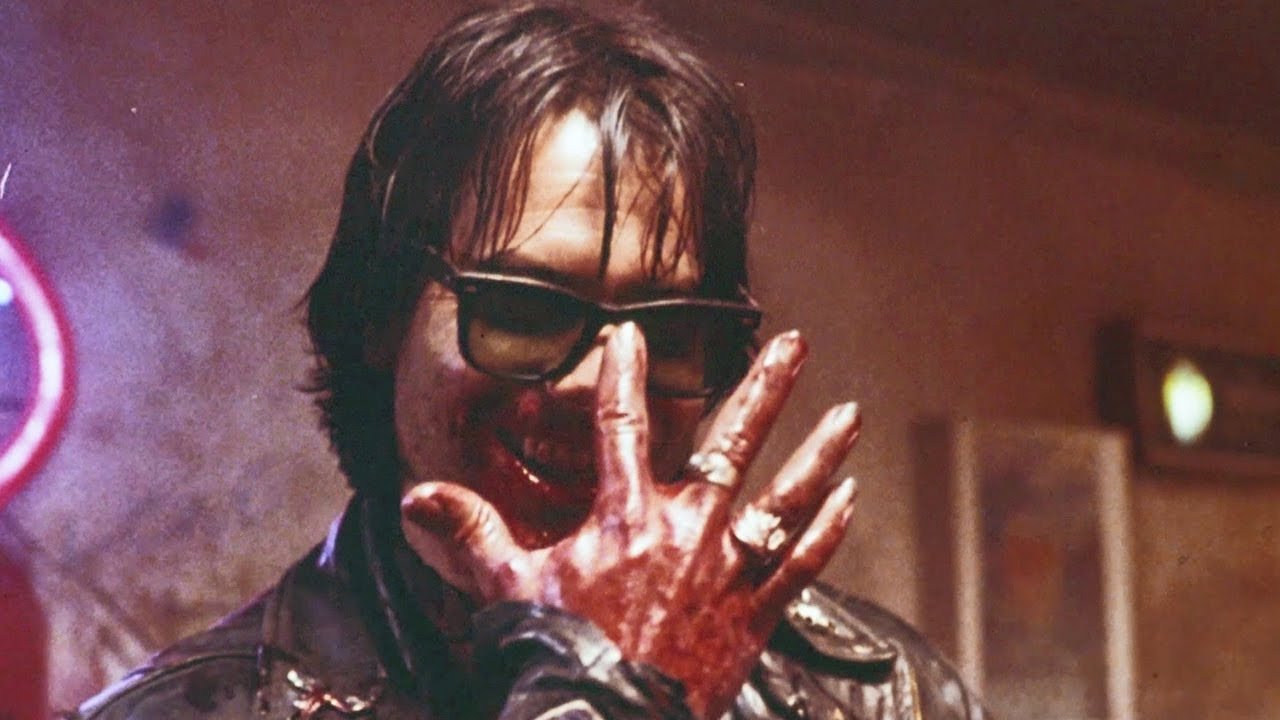
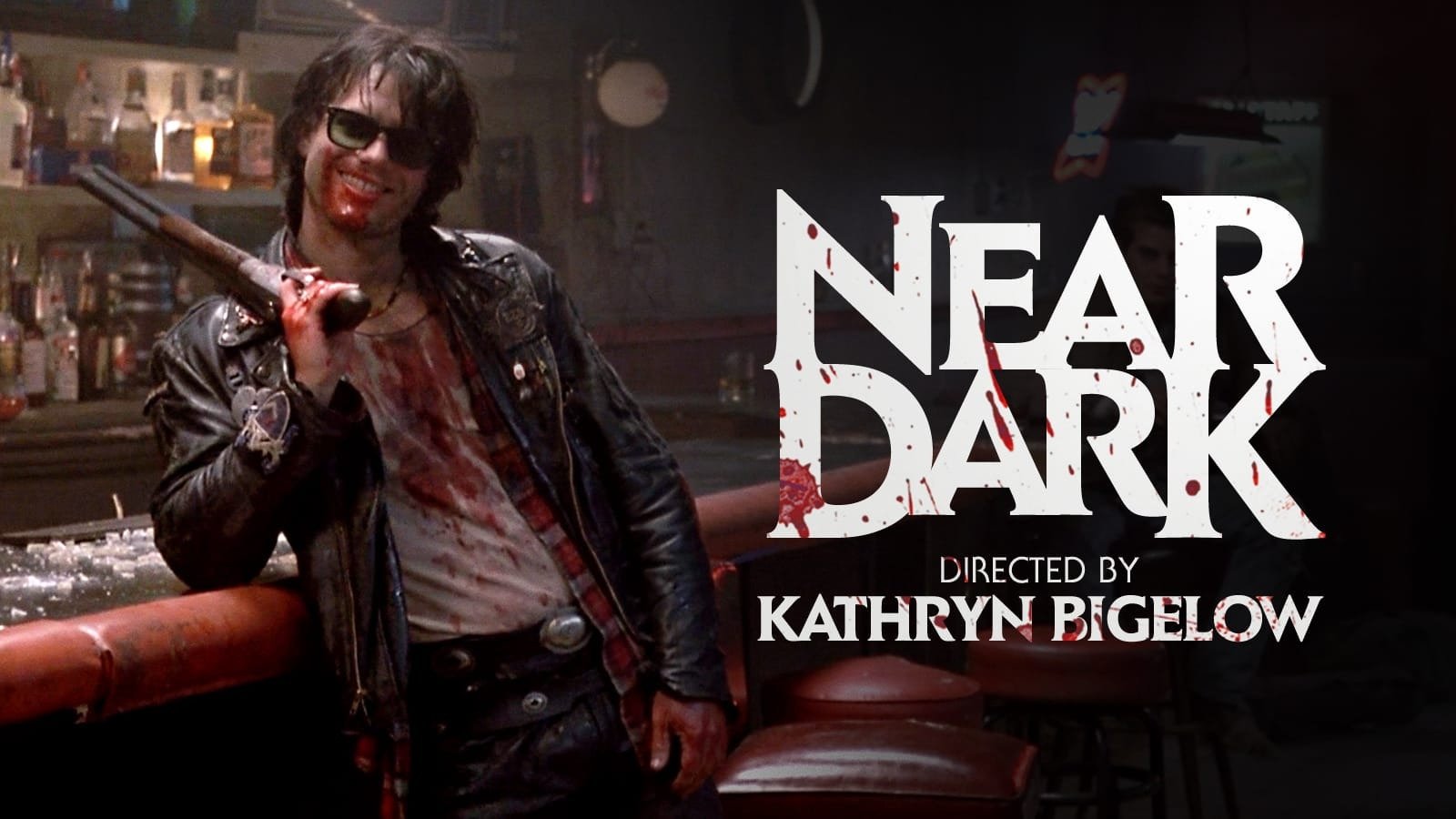
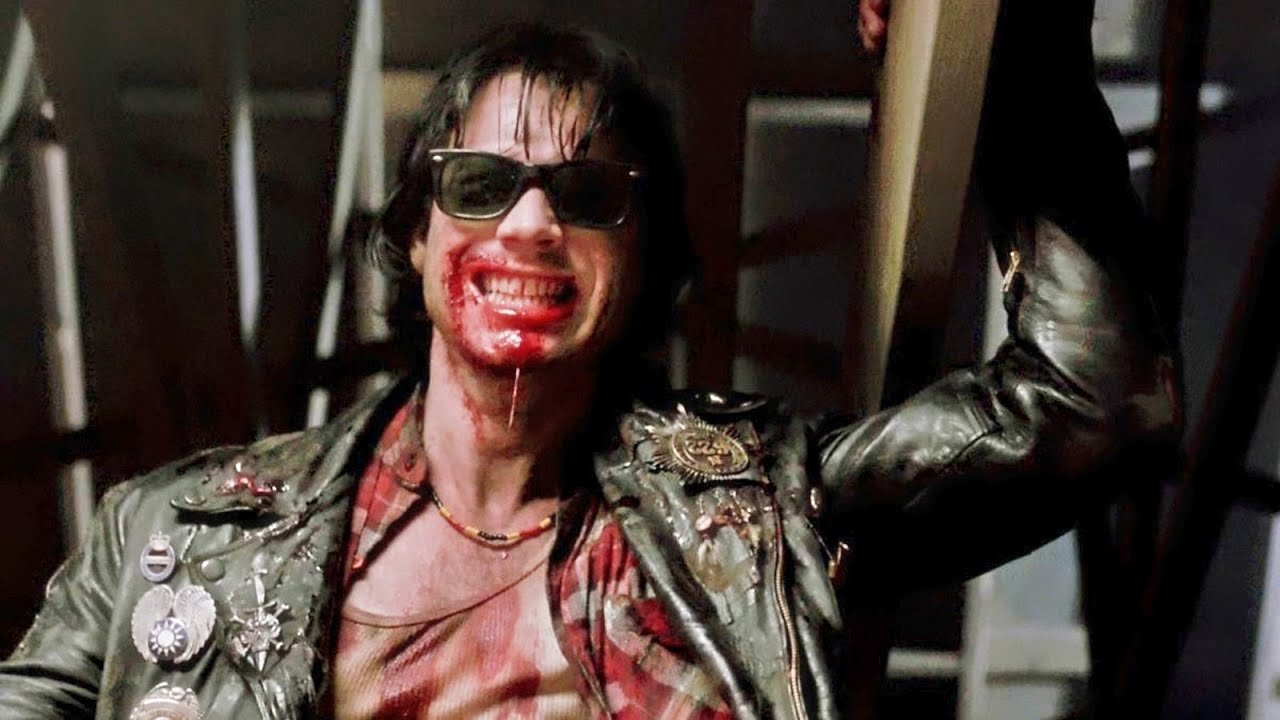
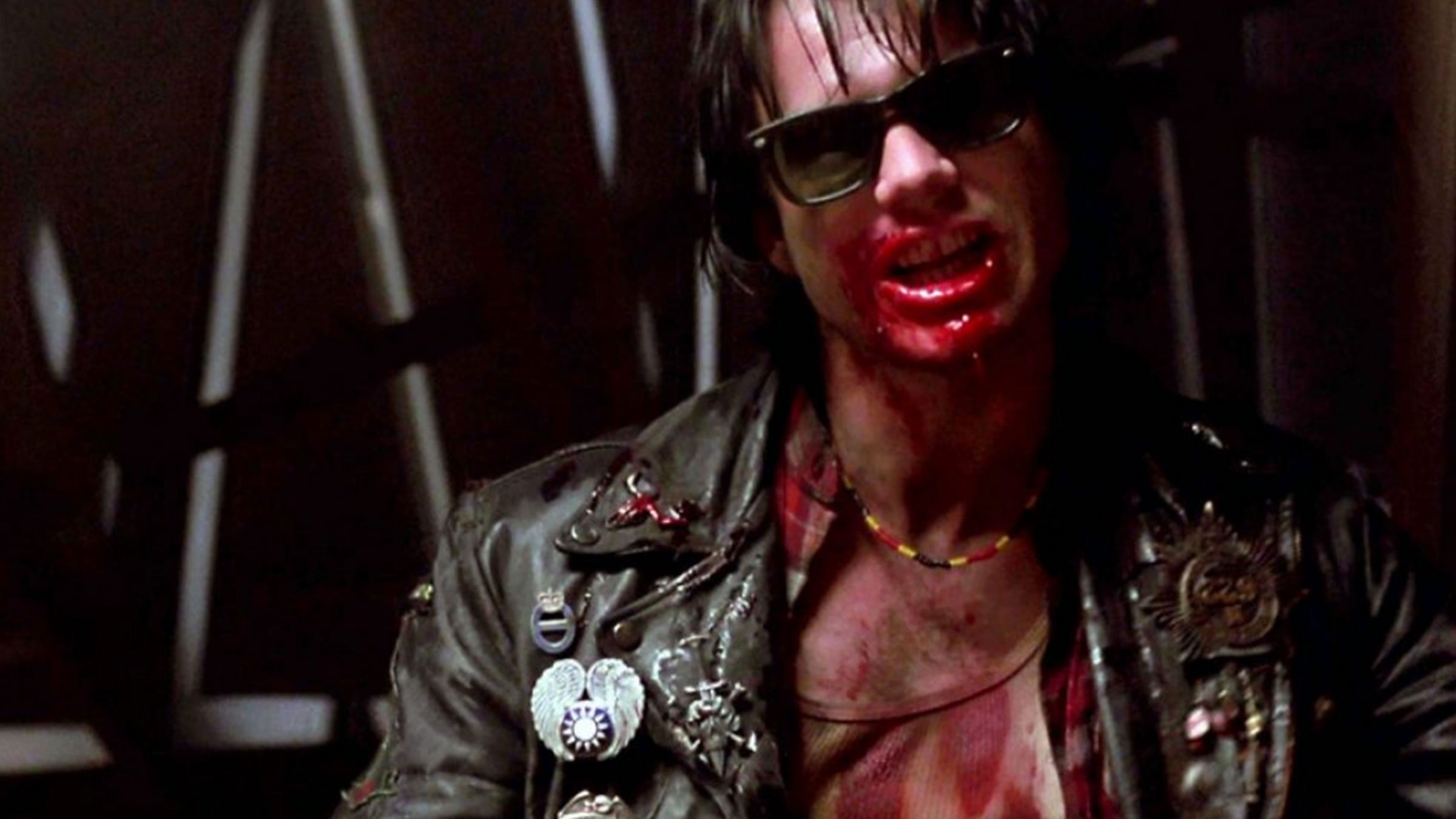
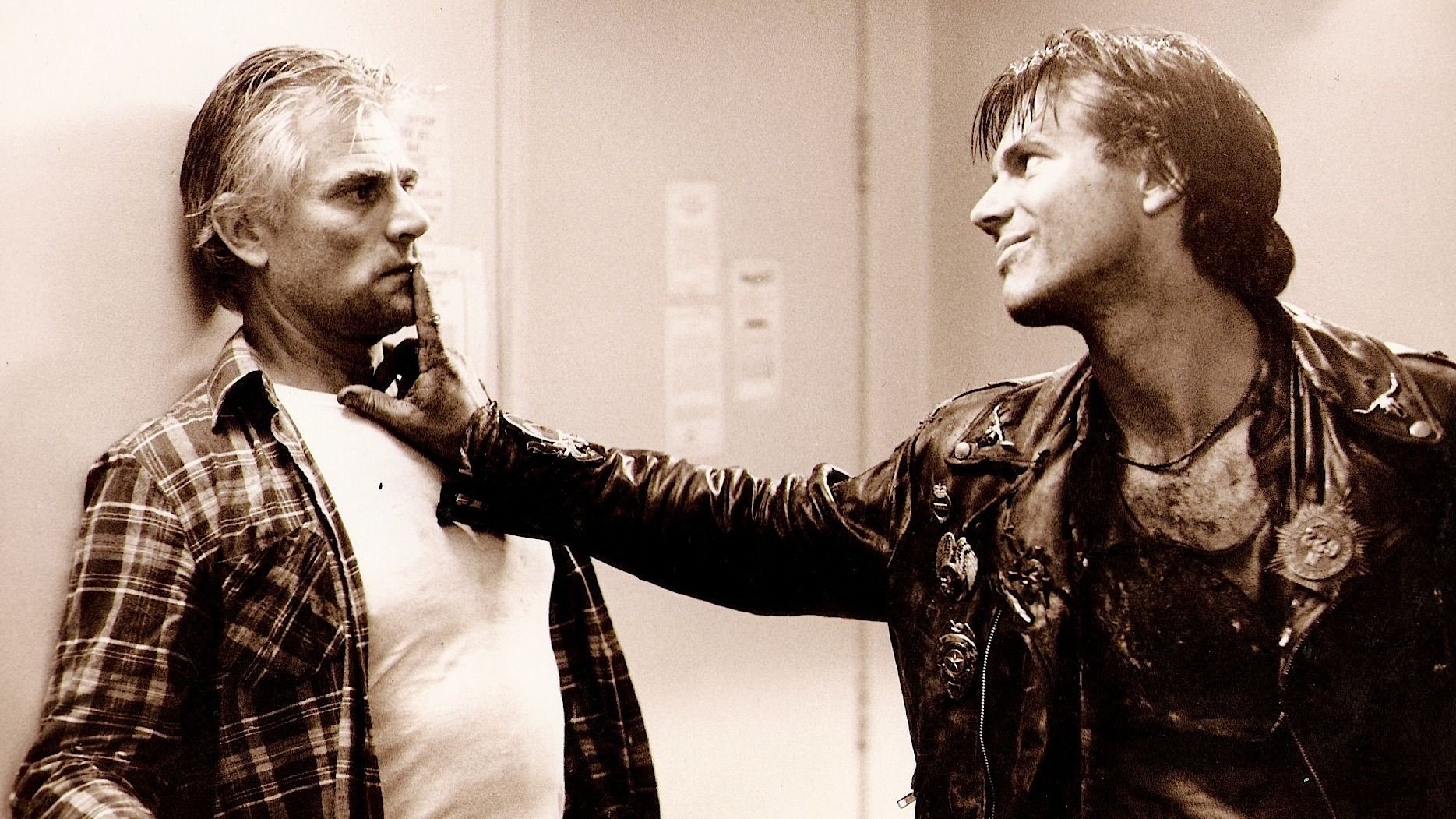
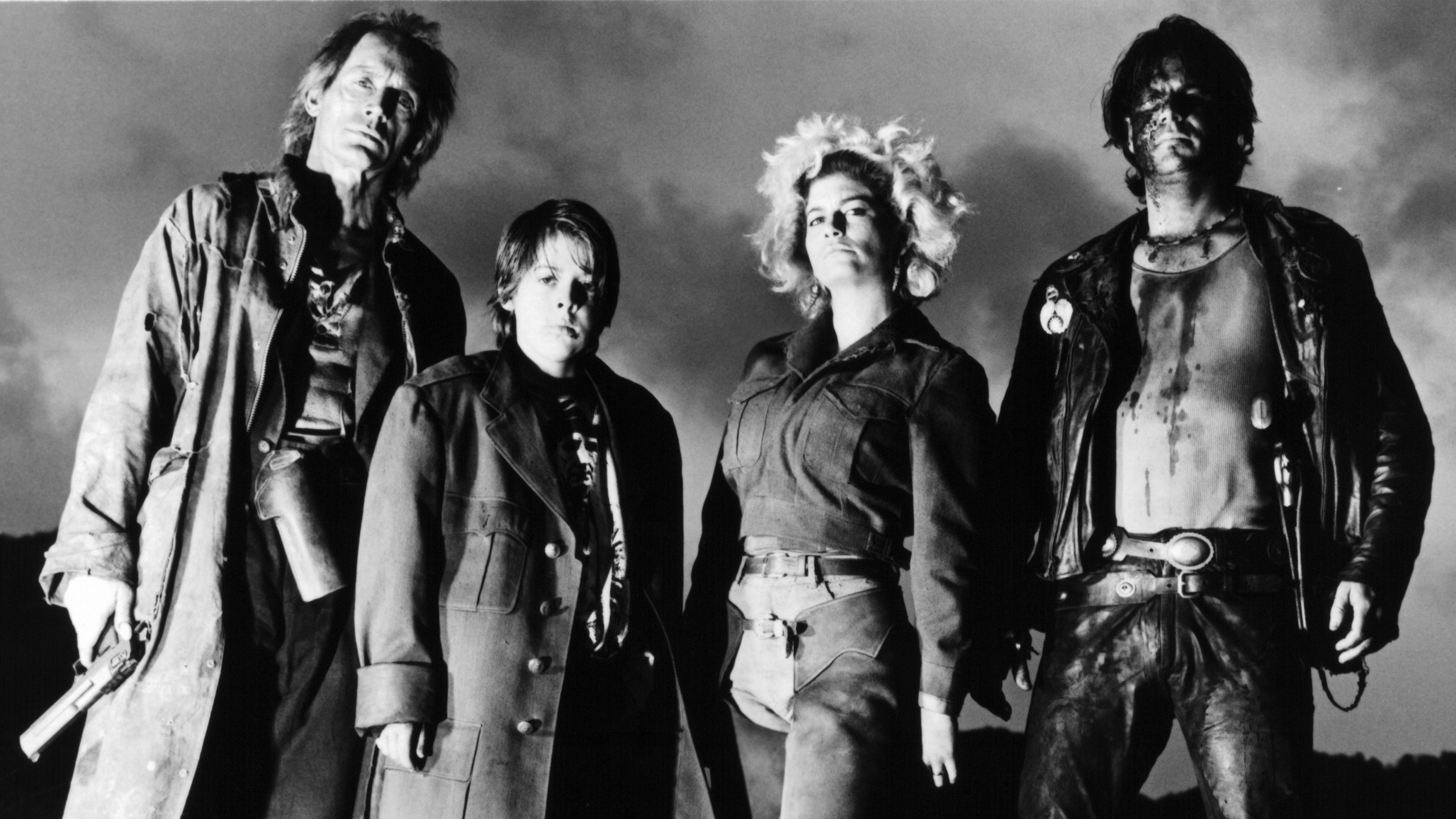
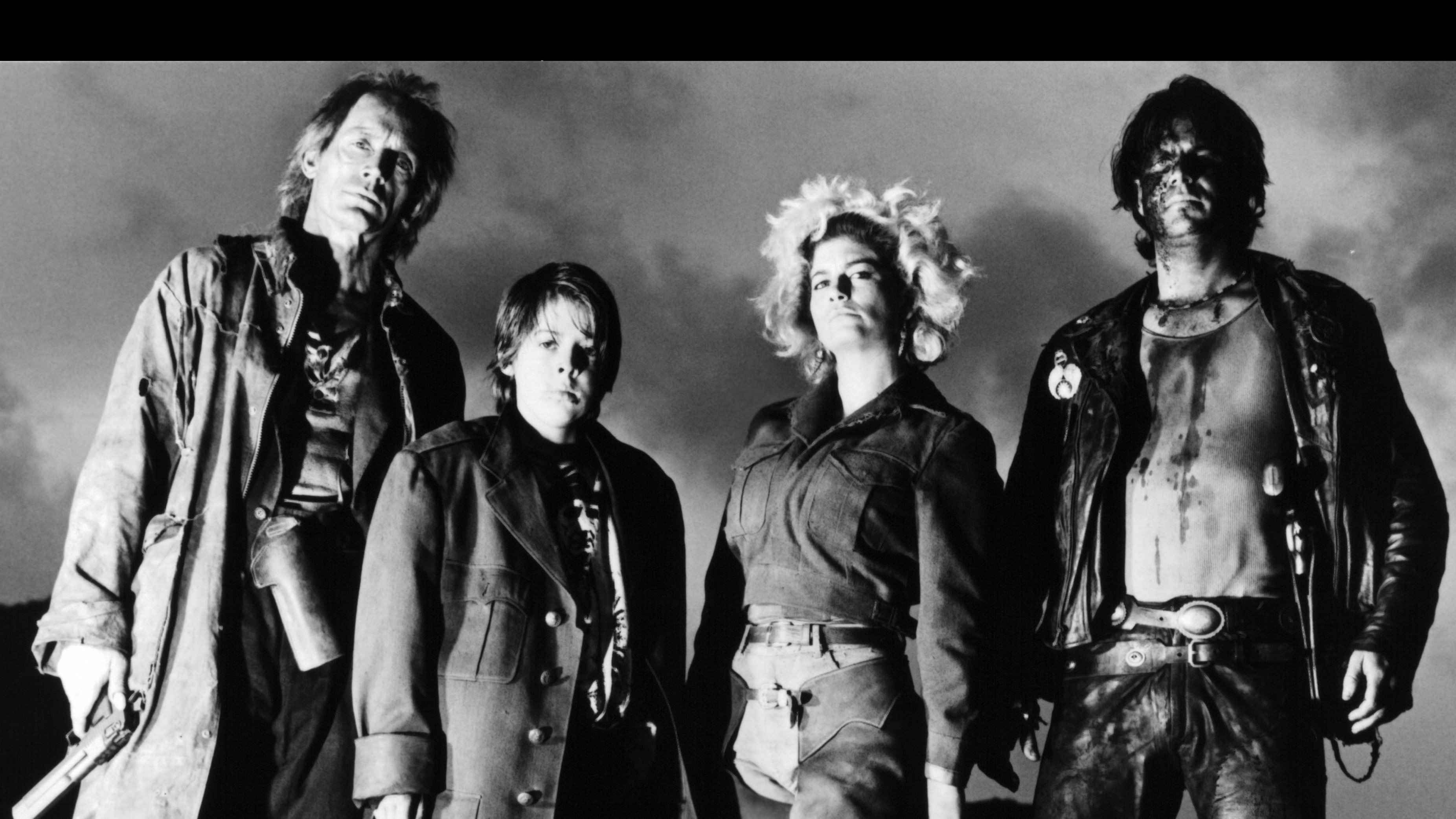
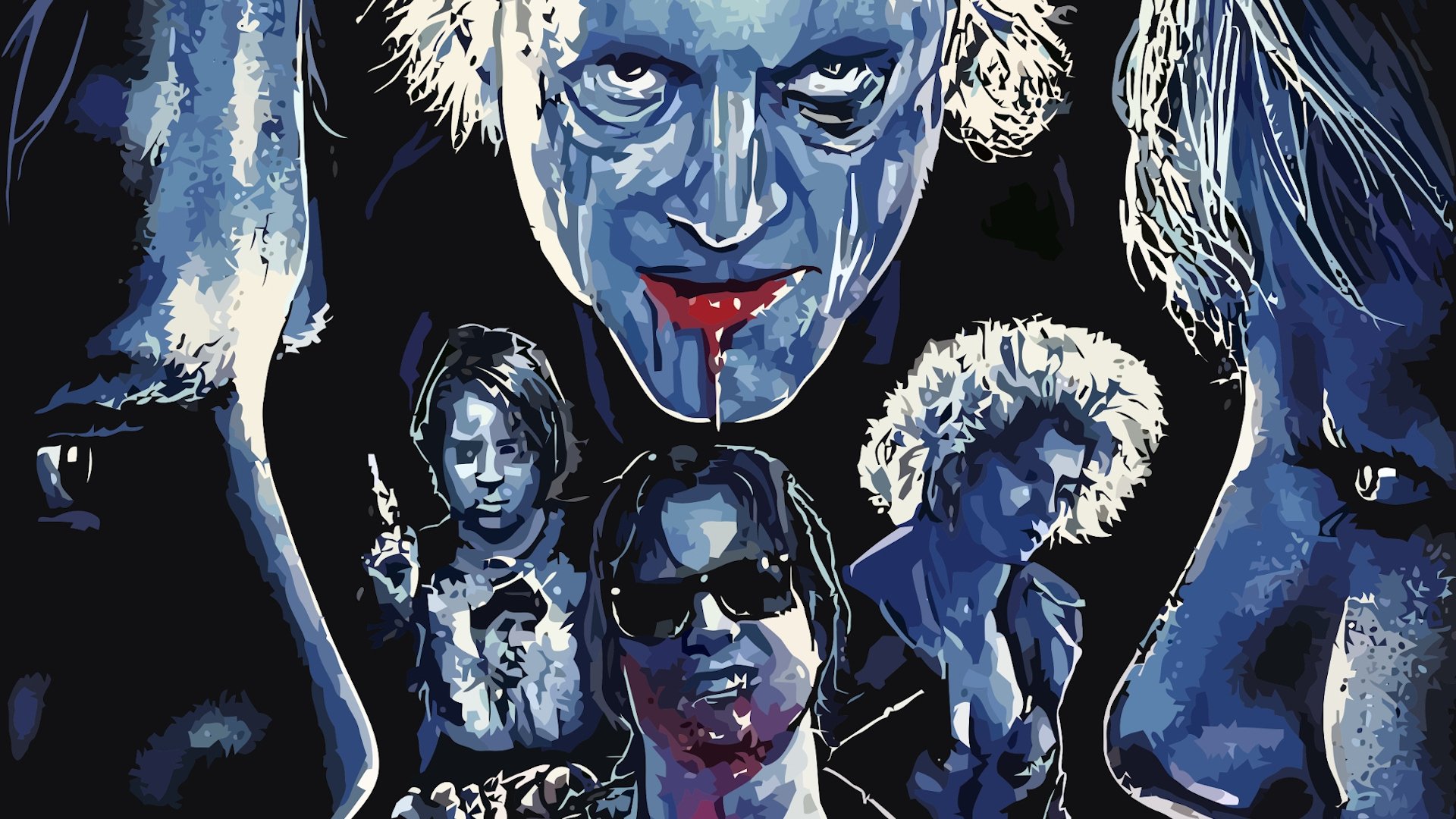
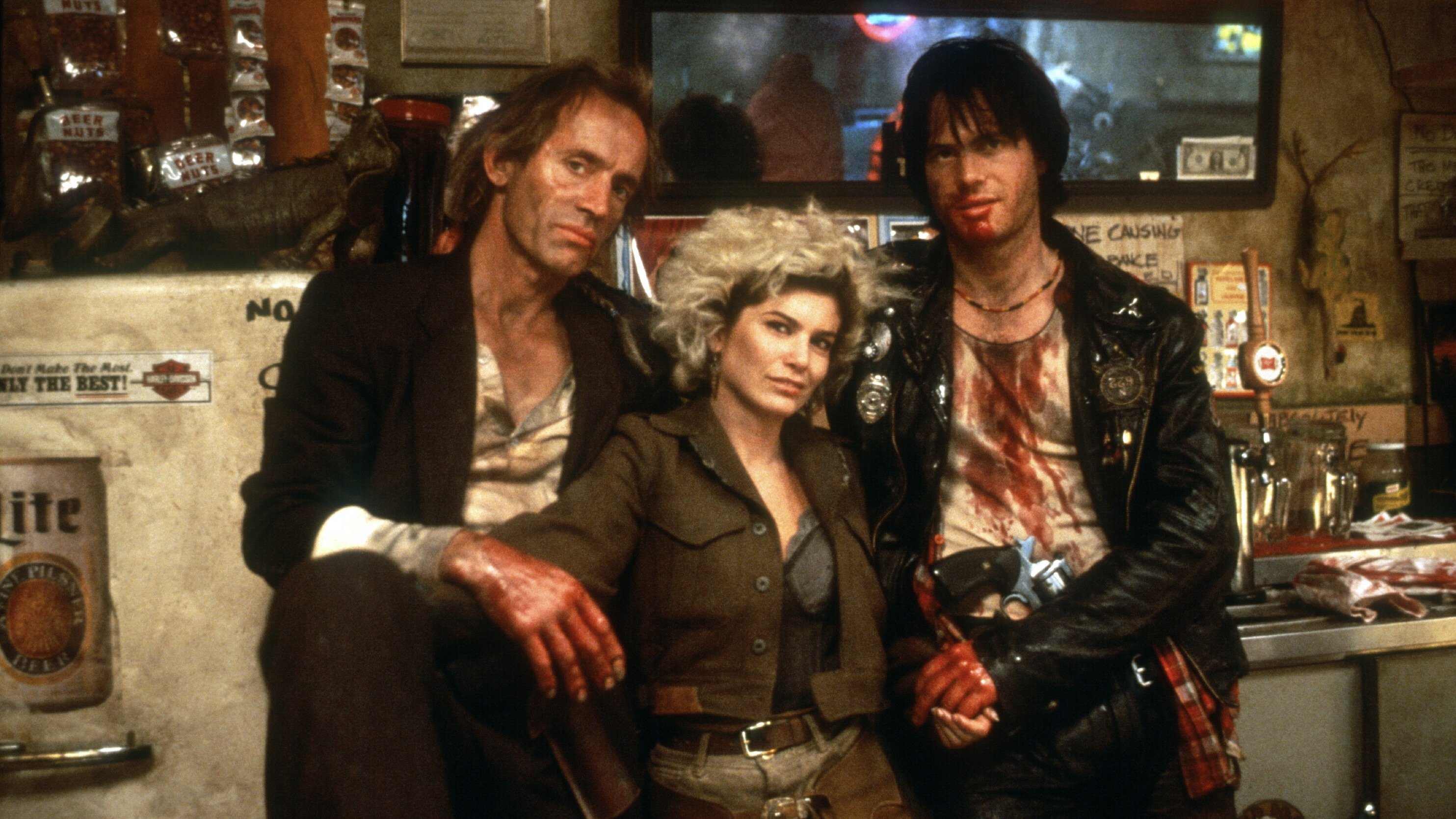
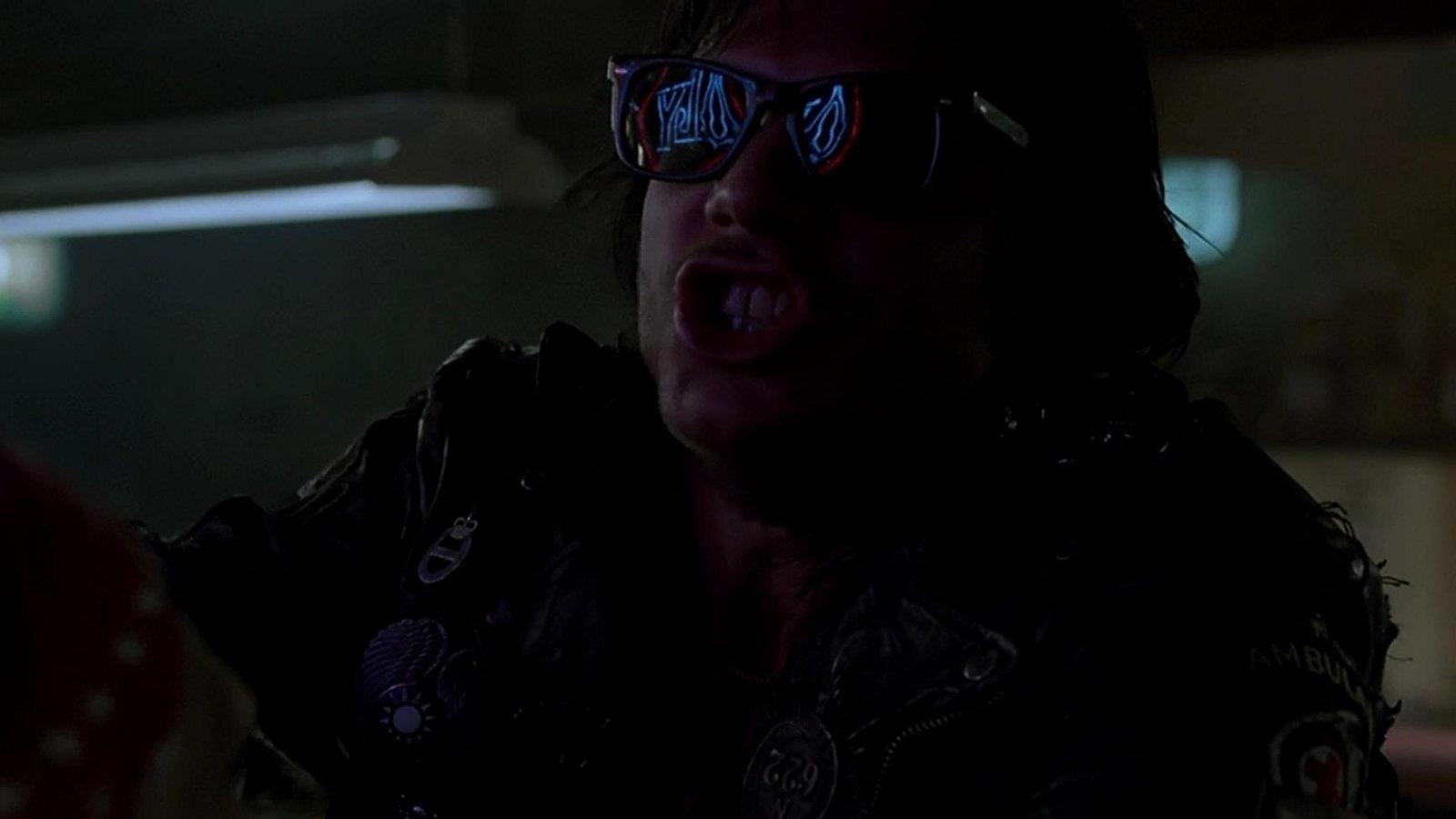
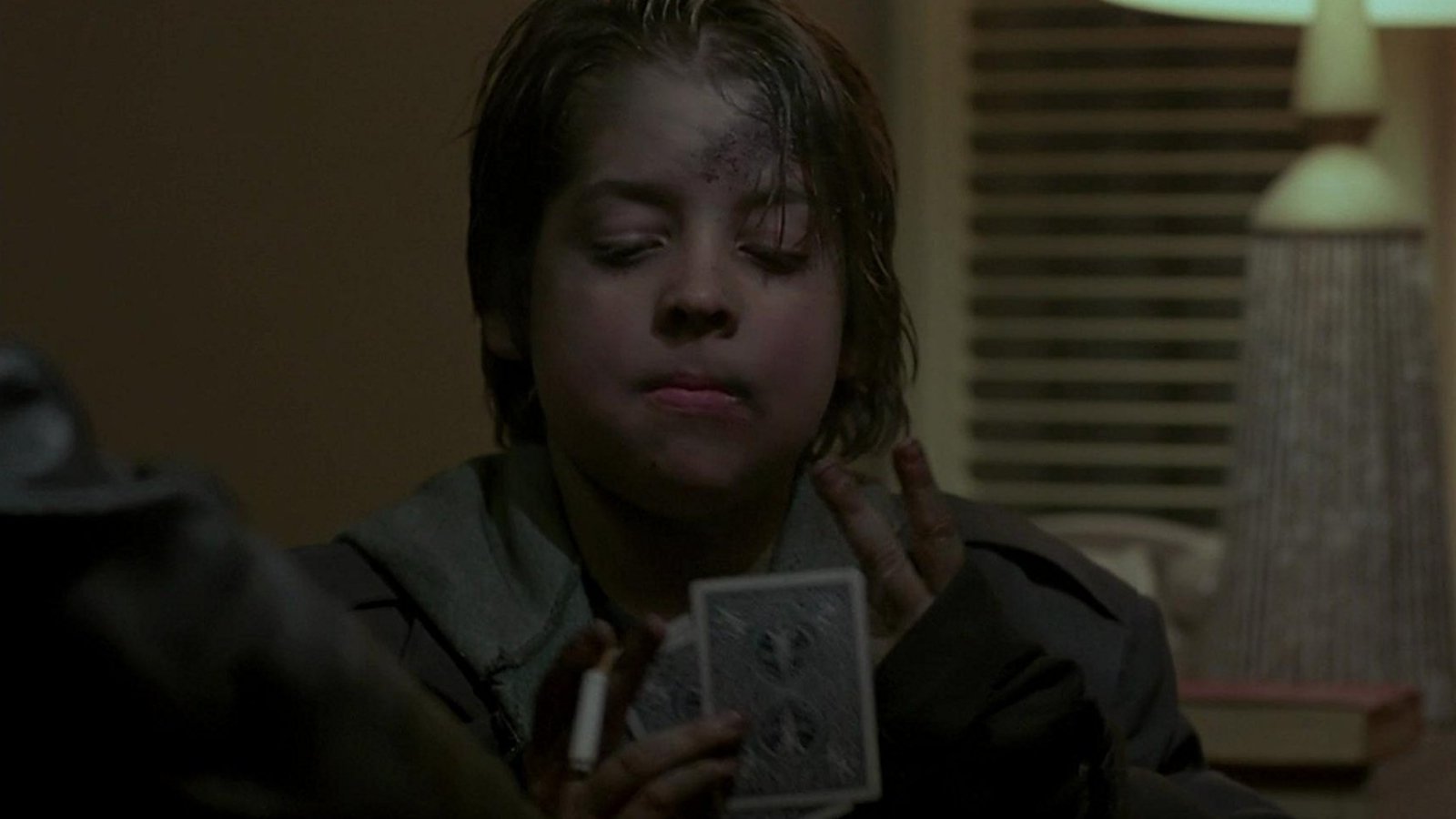
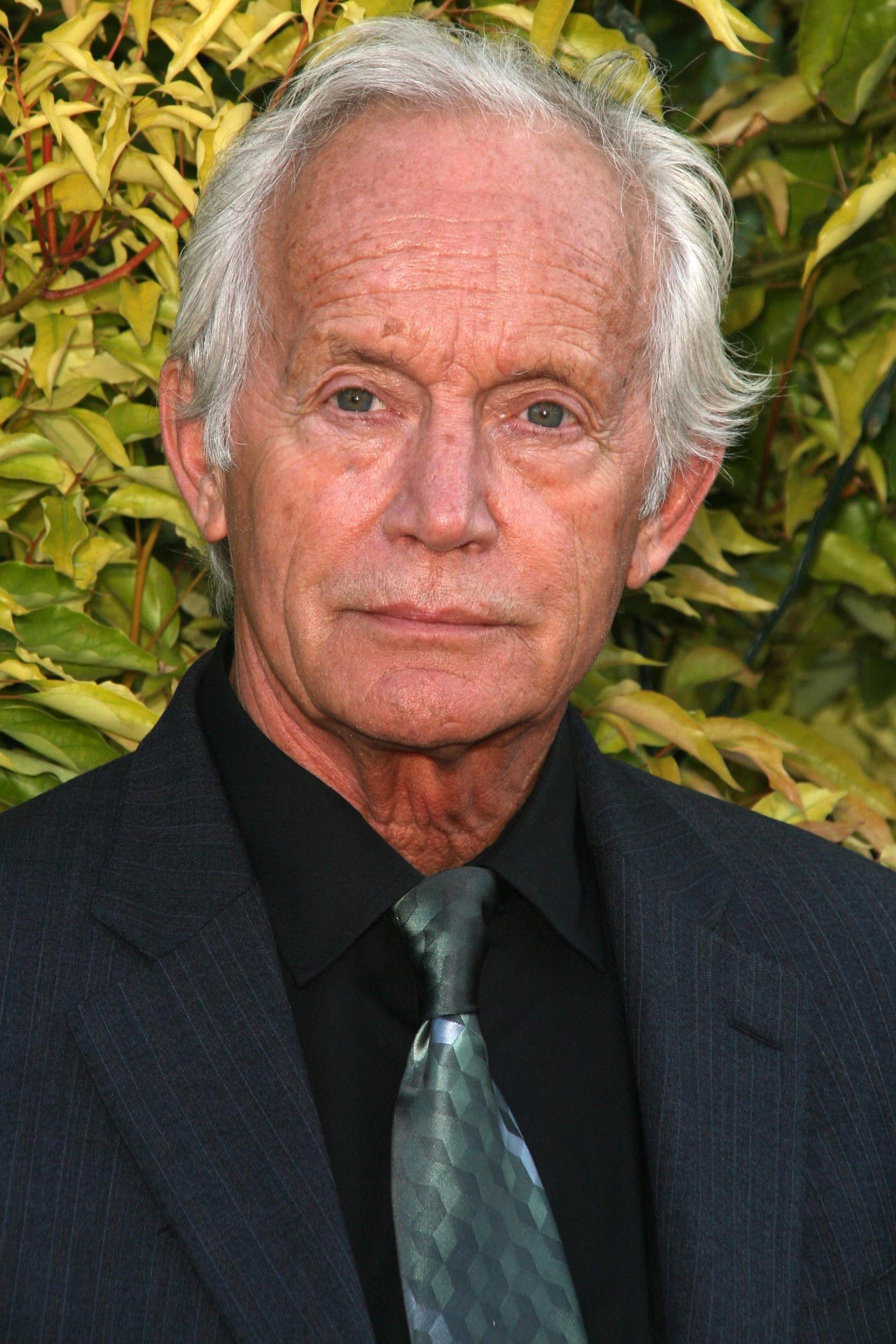
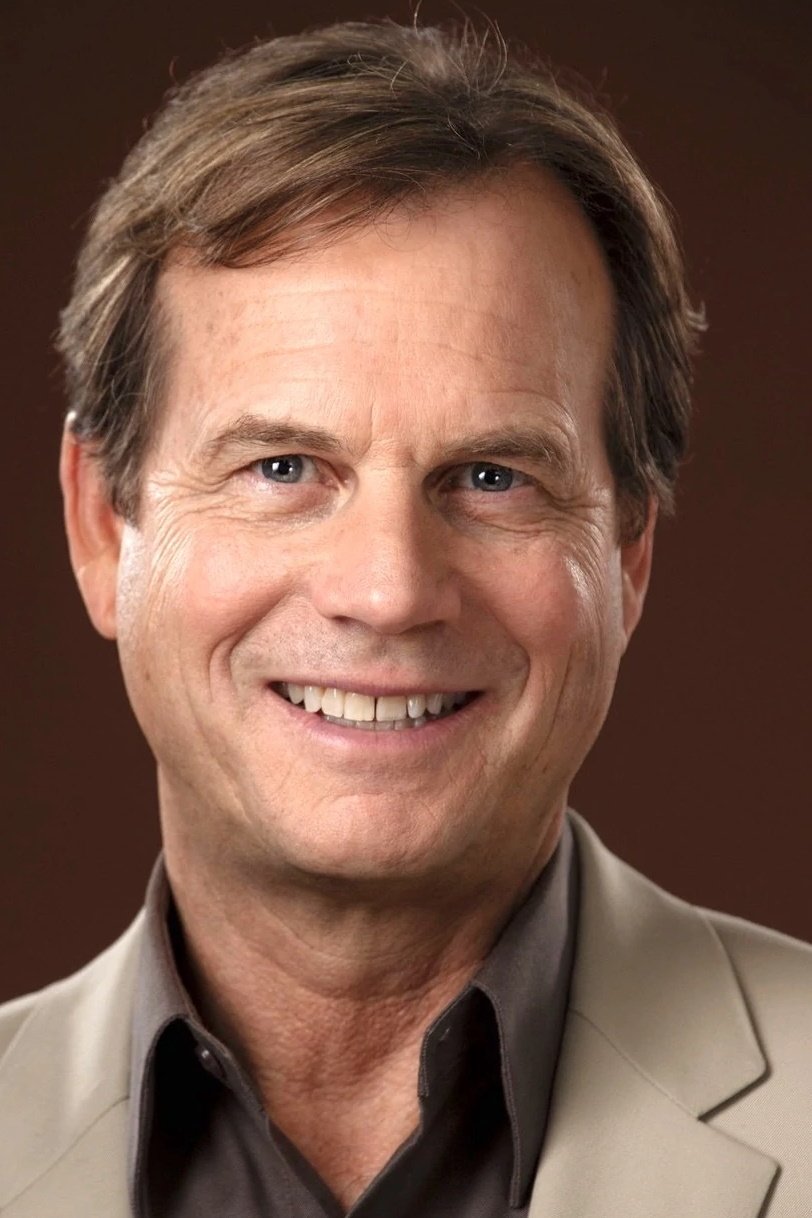
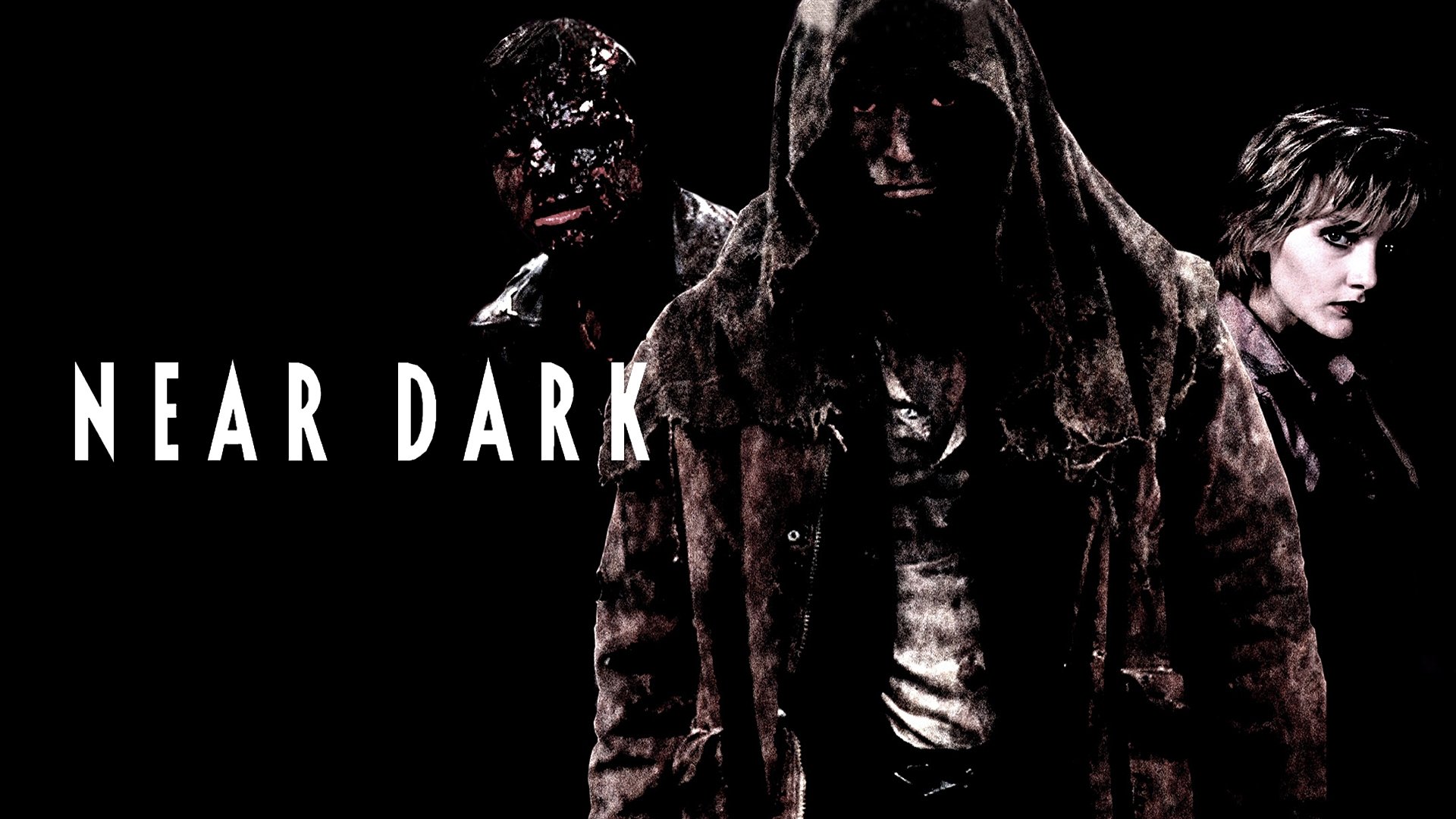
The travelling vampires resemble a family held together through habit, aggression and shared appetite. Lance Henriksen’s Jesse Hooker leads with the confidence of a seasoned outlaw; Jenette Goldstein’s Diamondback offers a fierce, practical presence beside him. Bill Paxton plays Severen as a particularly exuberant killer who enjoys turning an encounter into a prolonged display of power. Homer, played by Joshua John Miller, has the outward appearance of a boy while behaving like an experienced and resentful adult. Their relationships are closer to those of an itinerant criminal gang than an aristocratic household governed by a solitary vampire master.

Henriksen, Paxton and Goldstein had previously worked together in James Cameron’s Aliens (1986), giving the group an existing screen association that Bigelow could redirect toward horror. The performances help make the travellers socially recognizable even when their behaviour becomes repellent. In his interview with Icons of Fright, Red observed that the violent characters sometimes overshadowed Caleb, an imbalance he regarded as a limitation of the finished film. That retrospective judgment is valuable precisely because it distinguishes the writers’ intended point of identification from the force of the actors’ collective presence.

The roadhouse massacre exposes the gang’s relation to ordinary human society. Their arrival interrupts a small gathering of people whose vulnerability becomes clear only when attempts at resistance fail. Severen treats the room as an arena for improvisation, and the murders grow out of the group’s confidence that no one present can stop them. Yet Caleb’s hesitation prevents the episode from functioning solely as a triumphant outlaw spectacle. The victims’ terror remains central to its horror, while the gang’s jokes and performances reveal how far they have transformed slaughter into recreation.

The Landscape, Darkness and Adam Greenberg’s Photography

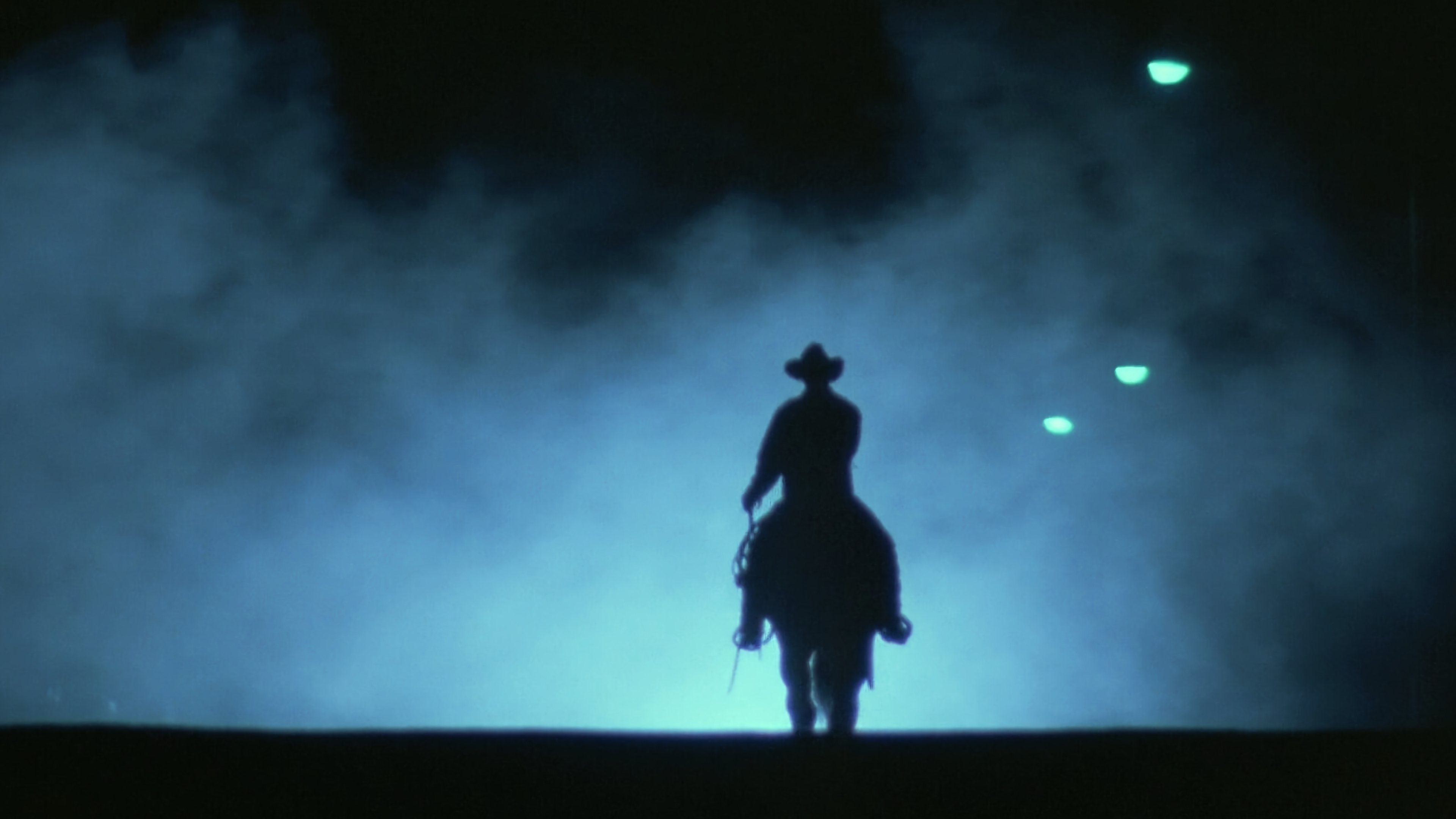
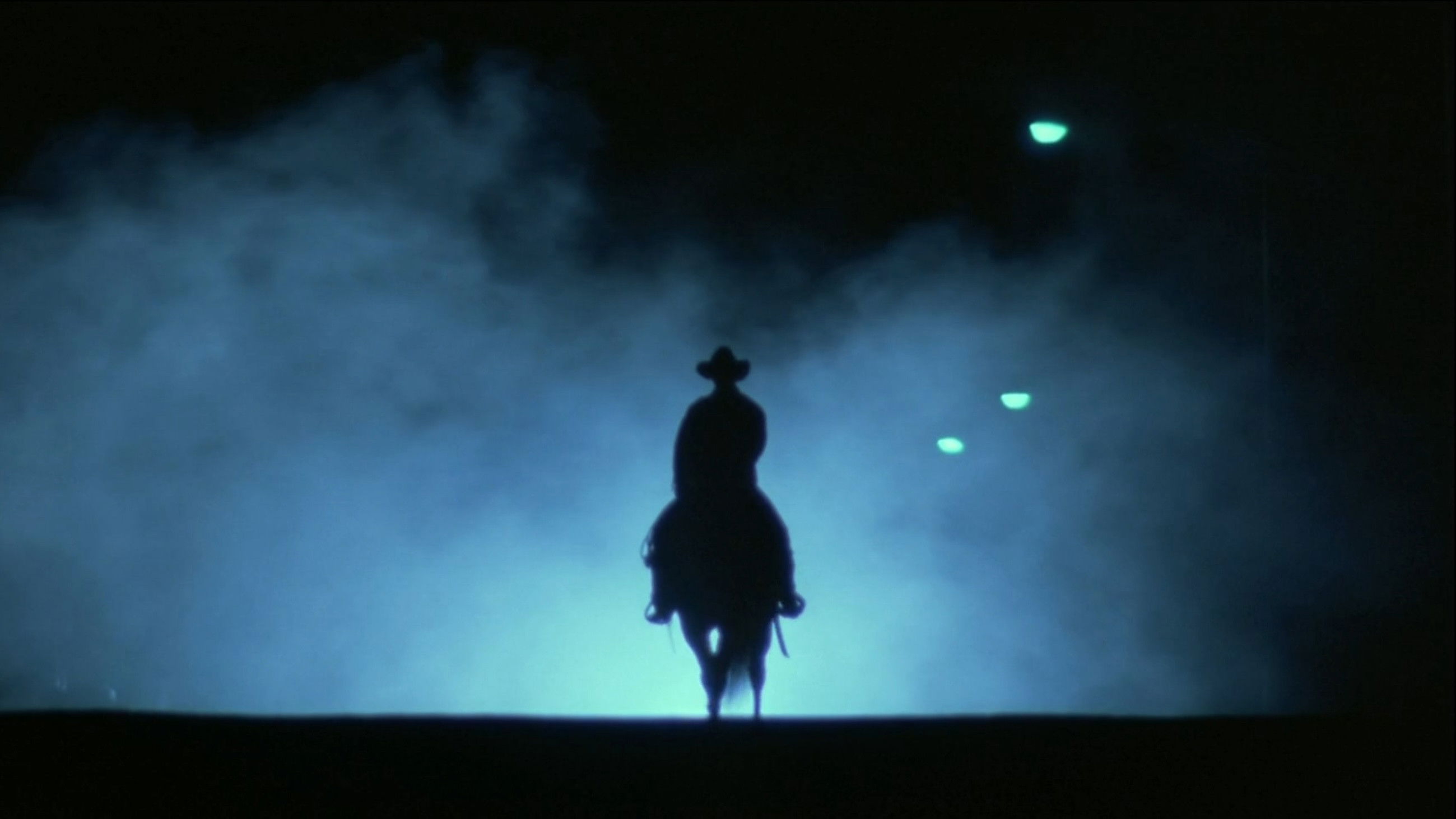
Near Dark was photographed in 1986 and early 1987, with locations in Arizona and the Los Angeles area standing in for the story’s rural American environment. The film draws much of its identity from wide roads, open fields, isolated buildings and the illuminated margins of small towns. Cinematographer Adam Greenberg, who had shot The Terminator (1984), gives the nocturnal passages dense blacks punctuated by lamps, headlights and neon. The darkness allows the travellers a measure of freedom, while the gradual arrival of light threatens them even in settings that appear to offer shelter.

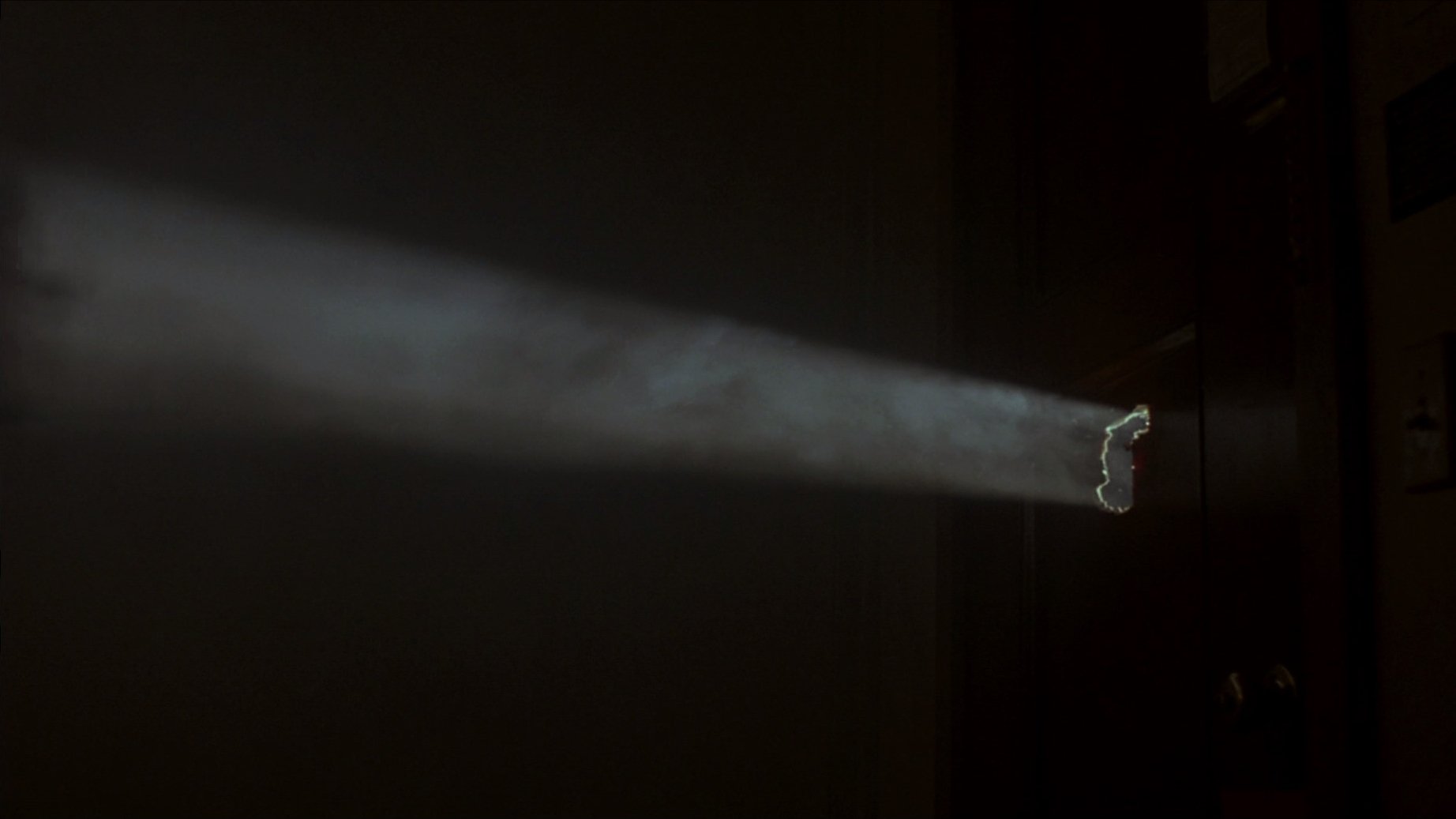
Bigelow storyboarded the film extensively, an approach she later discussed in her Directors Guild interview. The preparation is particularly apparent in the siege of a motel, where police bullets pierce walls and roofs without immediately disabling the vampires. The openings admit shafts of sunlight that become more dangerous than the gunfire. The sequence depends on the viewer understanding the geometry of the room and the changing position of the sun. Its apparent safety is progressively destroyed by something that does not behave like a conventional weapon, linking an action-film shootout to the supernatural rules established earlier.

The filmmakers also use shifting light to communicate the brief intervals in which their characters can act. Mae’s first encounter with Caleb becomes urgent as dawn approaches; later escapes require covered vehicles and rapid movement between pockets of shade. The film’s desert imagery and heated colours place it closer to a contemporary road movie than a Gothic period drama. Stacey Abbott’s study, excerpted in the BFI’s programme notes, compares its combination of horror, outlaw romance and Western imagery with earlier films about fugitives. Those associations describe an identifiable visual and narrative tradition, while Greenberg’s handling of darkness makes the vampire premise physically immediate.

Practical Effects, Burning Skin and Physical Violence

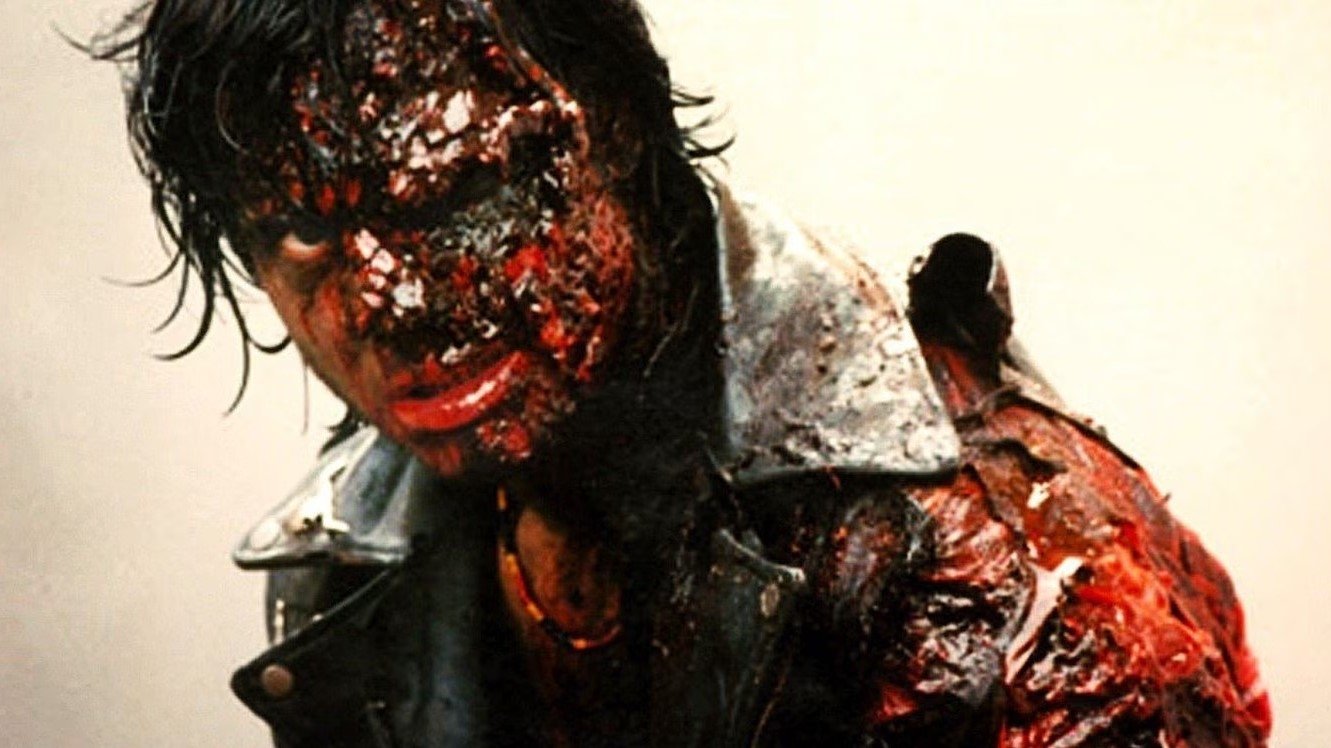
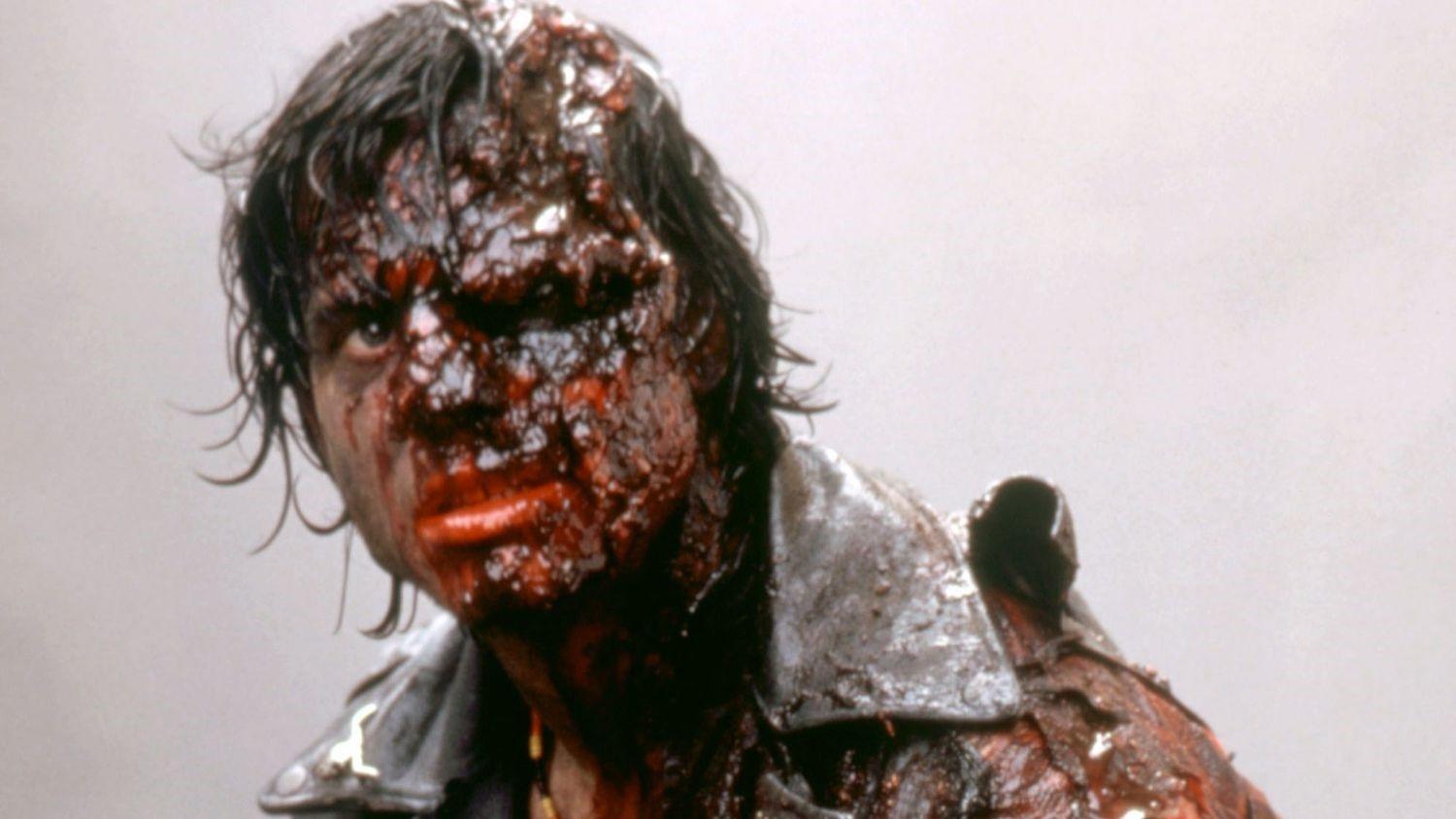
The film’s daylight effects required actors to appear to smoke and burn while remaining mobile during action scenes. Canadian makeup-effects artist Gordon Smith described his work as extending beyond prosthetics into practical problem-solving across costumes and other materials placed before the camera. In a 2012 interview he explained that Near Dark presented the special challenge of making performers appear to catch fire in an era before digital compositing became routine. Bigelow’s 1987 interview with Kevin Lally supplies additional context: she wanted a self-contained, non-toxic smoke effect suitable for performers including minors, and recruited Smith after admiring his previous makeup work.

The violence uses physical damage to reinforce the travellers’ mixture of power and fragility. Flesh can be burned by a narrow opening, while bullet wounds and ordinary blows often fail to end a confrontation. Severen’s bodily destruction during the later pursuit has a different emphasis from the injuries the gang inflicts on its victims: even these apparently invulnerable predators can be killed when the established conditions are turned against them. Smith’s testimony supports describing the effort to produce burning and smoky effects before the camera, but it does not justify attributing every stunt, optical composite or shot to his department alone.

The roadhouse sequence was also a production undertaking. The structure had to accommodate extended violence and fire effects, and contemporary production histories describe a set constructed for that purpose. Bigelow later recalled the responsibility of coordinating stunts and dangerous effects around a cast that included children. The sequence’s force depends on precise staging as well as gore: victims have little space to escape, the gang disperses around them and Caleb is required to witness the massacre at close quarters. The film’s practical methods thereby support its central horror conceit, giving apparently familiar people a capacity for cruelty that feels materially present.

Tangerine Dream and the Sound of the Night

The original score was composed and performed by Tangerine Dream, the German electronic-music group associated at the time with Edgar Froese, Christopher Franke and Paul Haslinger. Film credits reproduced by the BFI identify the group as responsible for the music, while archival film records also name the three musicians. Their synthesizer-led sound contributes a sustained atmosphere of movement through darkness, frequently allowing a melodic phrase or repeated electronic pulse to carry a scene across open roads and empty streets. The music is central to the film’s romantic tone as well as to its sense of physical danger.

The score’s relationship with the image changes according to which family is being followed. Caleb and Mae’s nocturnal journeys benefit from sustained electronic textures that can make isolation appear briefly attractive. Scenes of pursuit and assault require more insistent rhythmic pressure, connecting the soundtrack with the editing and movement of vehicles. Tangerine Dream’s contribution differs from the orchestral Gothic vocabulary often associated with earlier vampire films, reinforcing the contemporary setting and the group’s status as restless travellers. These are audible functions of the completed film, rather than claims about specific equipment or sessions for which no reliable production records have been established here.

Sound design also gives the vampires’ environment a distinctive scale. Engines, gunfire and breaking structures dominate confrontations that might have been treated as purely supernatural apparitions in another film. At the roadhouse, ordinary music and barroom noise coexist with increasing violence; in the motel sequence, the impact of bullets is followed by the more alarming consequence of sunlight entering the room. The contrast between everyday sound and impossible injury helps the film maintain its Western and thriller elements while remaining unmistakably a story of the undead.

Release, Censorship, Reception and Horror Legacy

Near Dark screened at the Toronto film festival in September 1987 and entered American theatrical distribution the following month. De Laurentiis Entertainment Group acquired domestic distribution rights, but the film performed modestly at the box office. Accounts of its release place that disappointment beside the wider commercial success of Joel Schumacher’s The Lost Boys, another 1987 film that relocated vampires into contemporary American life. The productions differ substantially in tone and design, making their proximity in the release calendar historically useful without proving that one directly caused the other’s commercial result.

The intensity of the violence produced classification disputes. Turner Classic Movies reports that Bigelow made limited changes following an initially severe response from the American ratings board. The British Board of Film Classification records a cinema version examined in August 1987, a 1988 videocassette submission marked as altered, and later home-video submissions of differing durations. These are separate entries: their running times cannot by themselves identify the amount or precise content of every cut. The available primary record does, however, establish that at least one British home-video presentation was changed for classification.

Contemporary critics disagreed sharply. A Variety response praised its revision of the vampire picture, while the New York Times objected to its combination of styles and extensive violence; Stacey Abbott reconstructs this debate from period reviews. Early institutional recognition was also notable: the Museum of Modern Art included Near Dark in its Cineprobe programme in April 1988, alongside a presentation of Bigelow’s earlier work. The film’s subsequent cult reputation is grounded in that sustained attention to its genre hybridity, nocturnal photography and fierce ensemble performances. Its treatment of vampirism as outlaw life remains an important point of reference within discussions of late-twentieth-century horror.

References

  1. British Film Institute / BFI Film Classics Near Dark — Stacey Abbott

    An excerpt from Abbott’s film study discussing the Western, Gothic and road-movie hybrid, the two families, contemporary criticism, and the 1988 MoMA Cineprobe screenings.

  2. Kevin Lally on Film Kathryn Bigelow Breaks Through with a Genre Mashup — Kevin Lally

    Republished original 1987 interview with Bigelow covering the Western conception, screenplay, storyboarding, cast, daylight effects, Gordon Smith and filming with dangerous stunts.

  3. Icons of Fright / Robert V. Galluzzo Icons Interview: Writer / Director Eric Red

    Firsthand 2008 discussion of co-writing with Bigelow, the modern outlaw-vampire premise, the motel shootout, the clan’s characterization and the roadhouse sequence.

  4. That Shelf Interview: Makeup Artist Gordon Smith — Phil Brown

    Original 2012 interview with the effects artist on the film’s on-camera smoke, burning bodies, material realism and the practical demands of Bigelow’s production.

  5. Primary UK classification record distinguishing the 1987 theatrical submission, an altered 1988 videocassette version and later home-video presentations.

Cast

View Full Cast & Crew →

Release & Distribution

Production Companies (3)

  • DEG US
  • F/M
  • Near Dark Joint Venture

Distributors (1)

  • Dino De Laurentiis Company US

Release History (10)

Release DateTerritoryRelease TypeFormatDistributorCertificationNotes
1987-10-02 United States Theatrical — — R
1988-01-08 United Kingdom Theatrical — — 18
1988-06-02 Germany Theatrical — — 18
1988-07-14 Australia Theatrical — — R 18+
1988-08-10 Italy Limited Theatrical — — — Turin
1988-08-24 Italy Theatrical — — —
1988-10-29 Japan Theatrical — — —
1988-11-09 France Theatrical — — 12
1991-01-15 South Korea Theatrical — — 18
2002-04-05 United States Physical — — R
...pray for daylight.