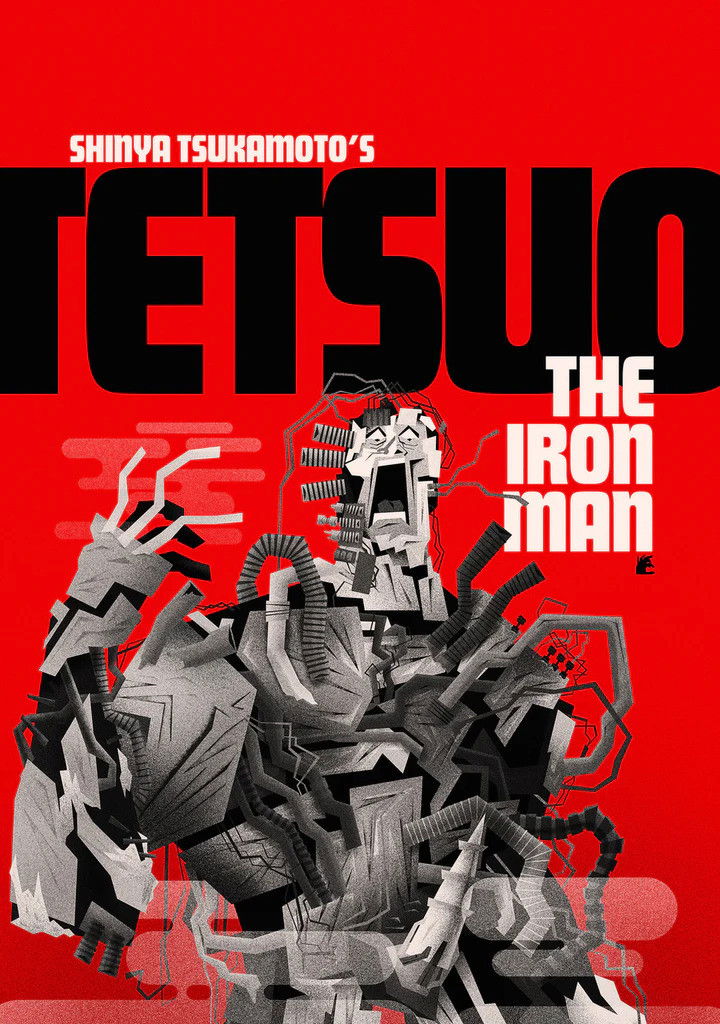
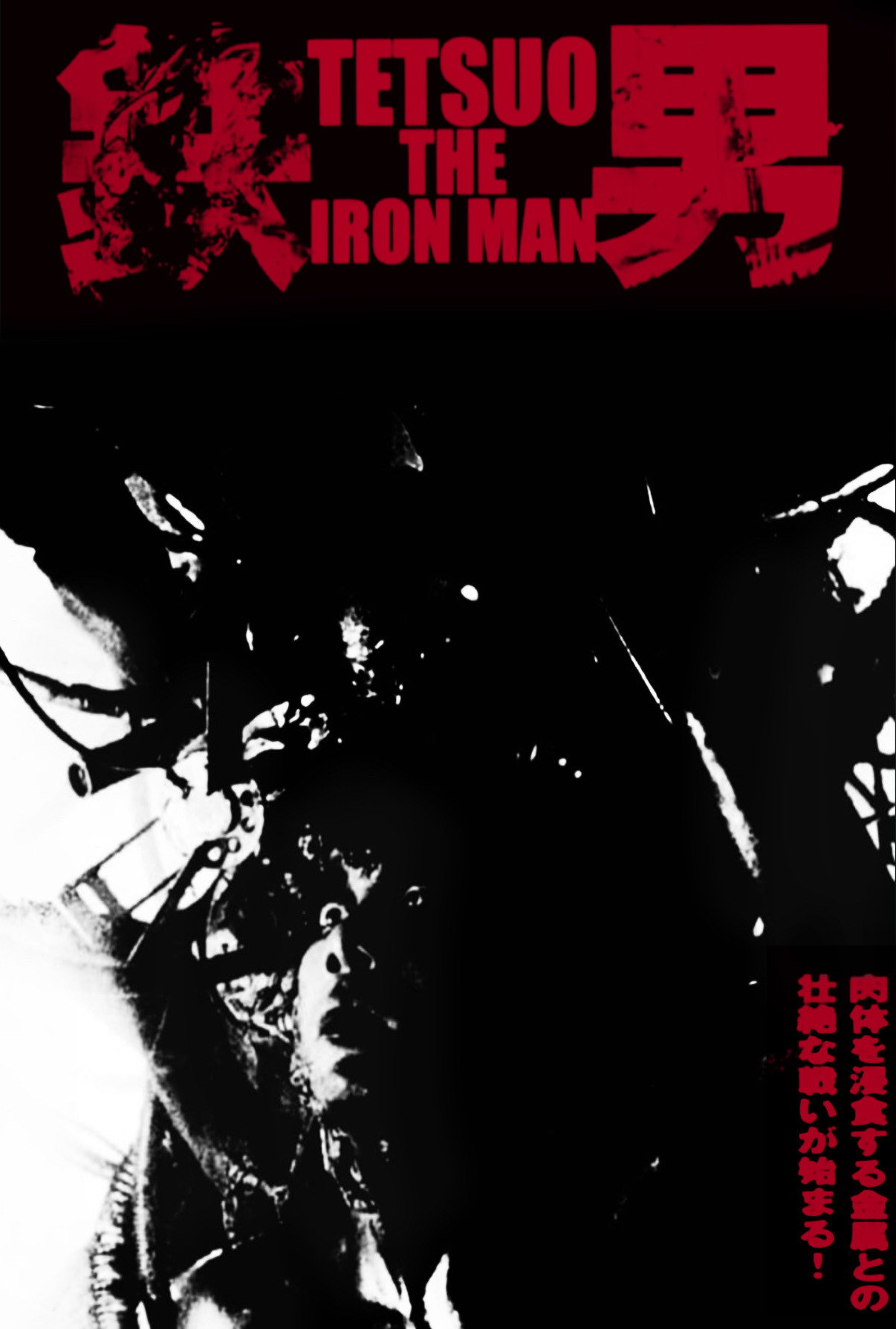
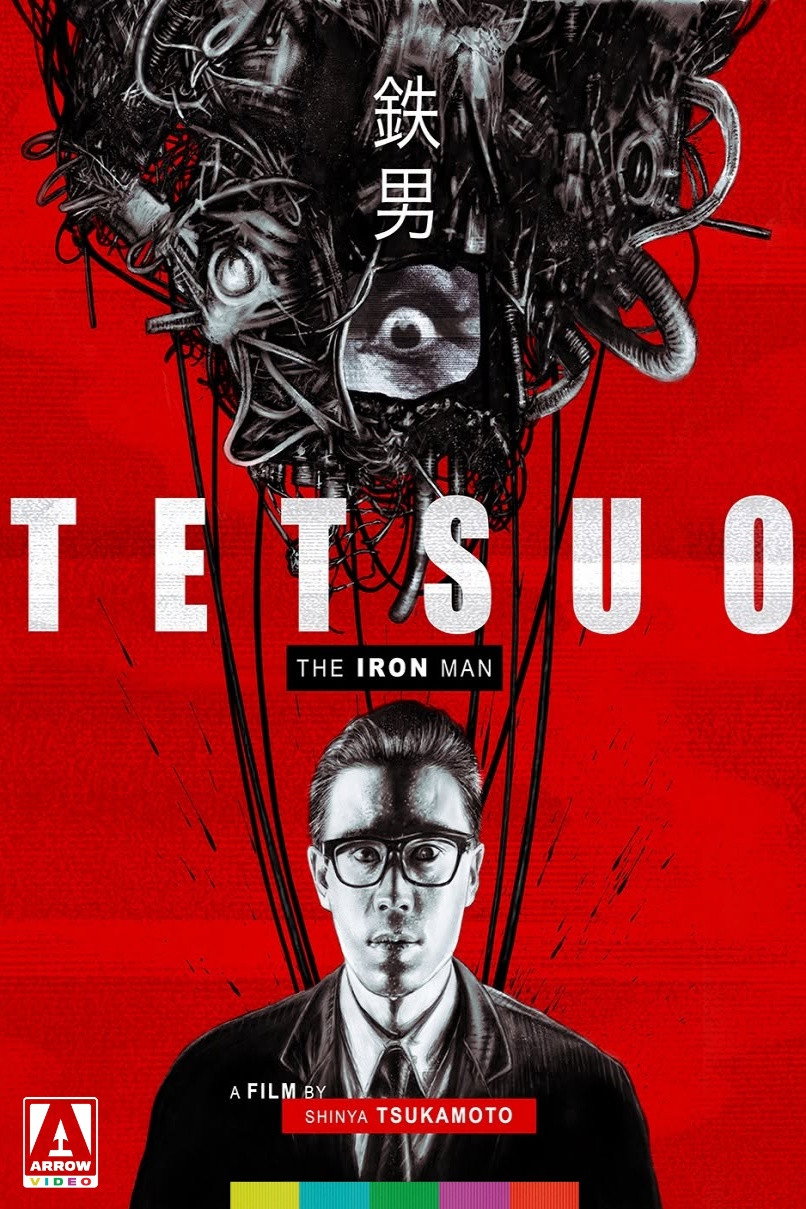
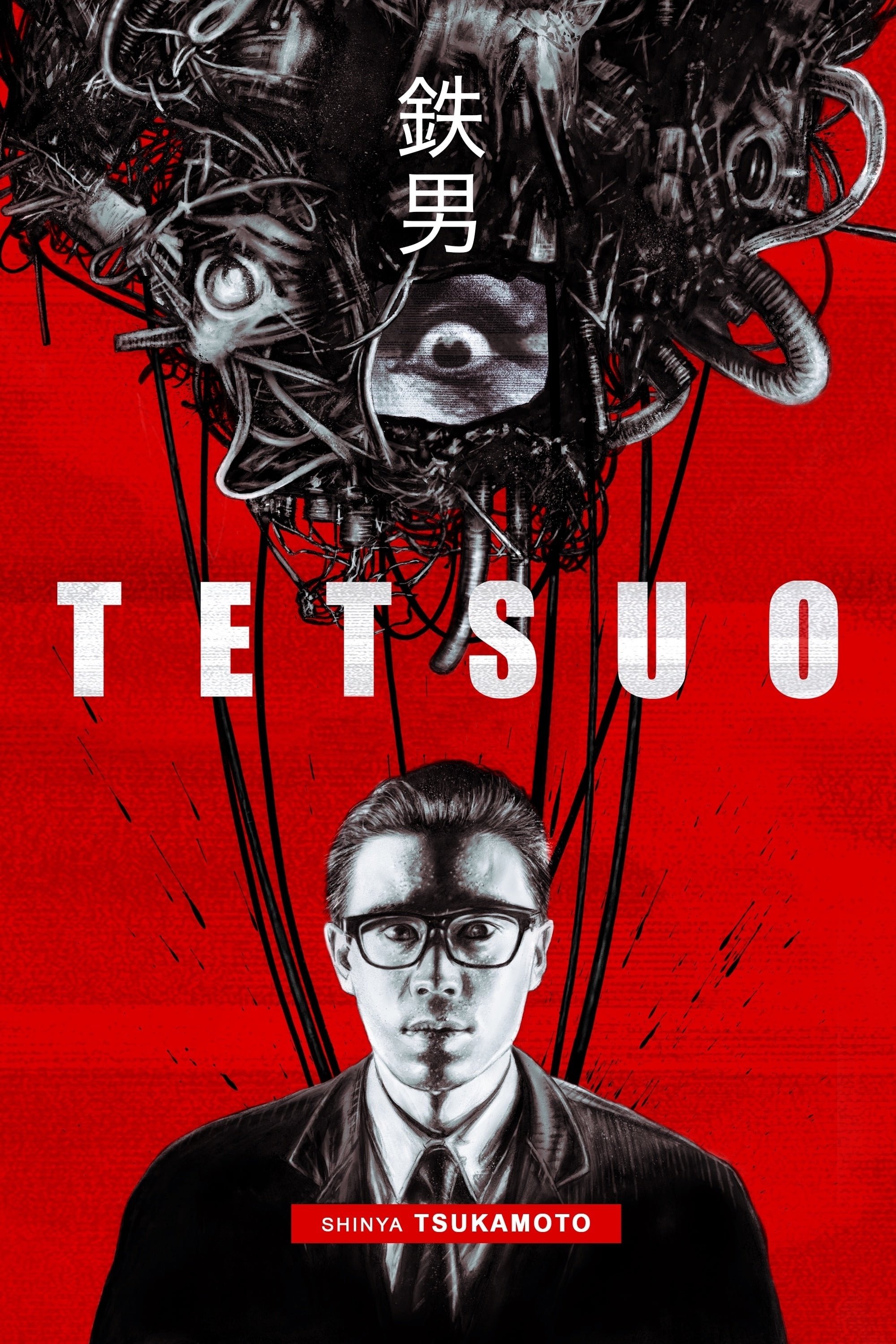
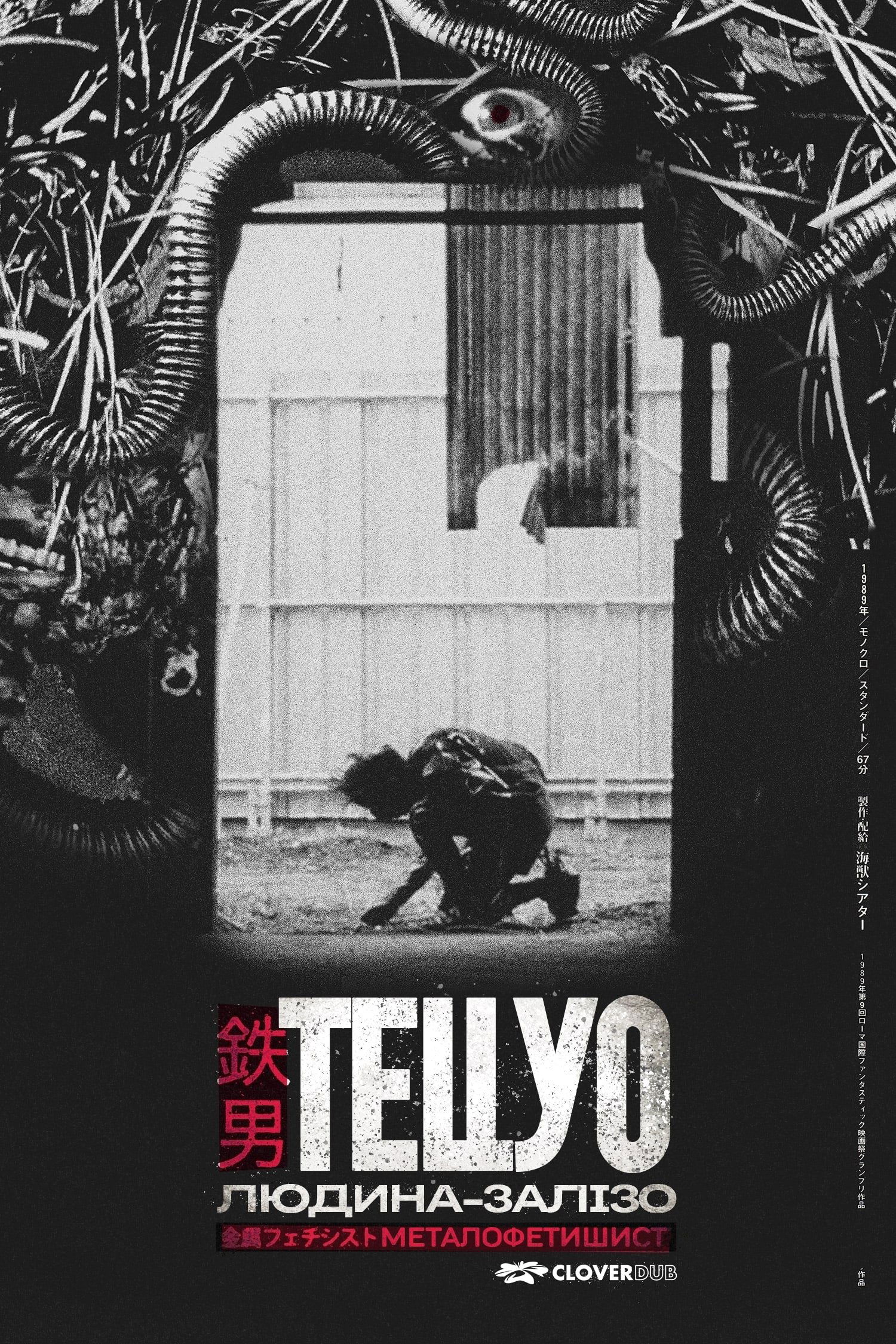
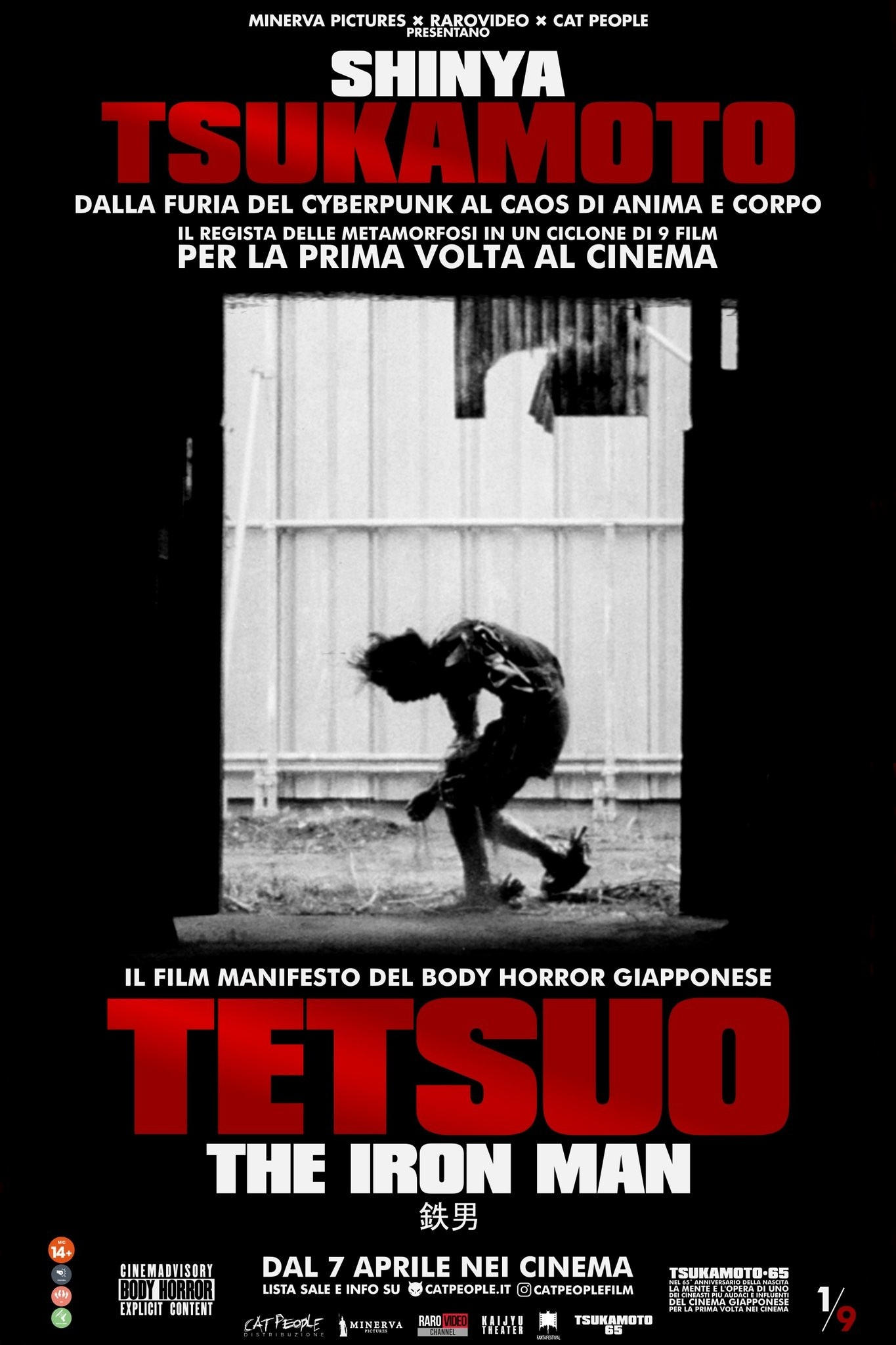
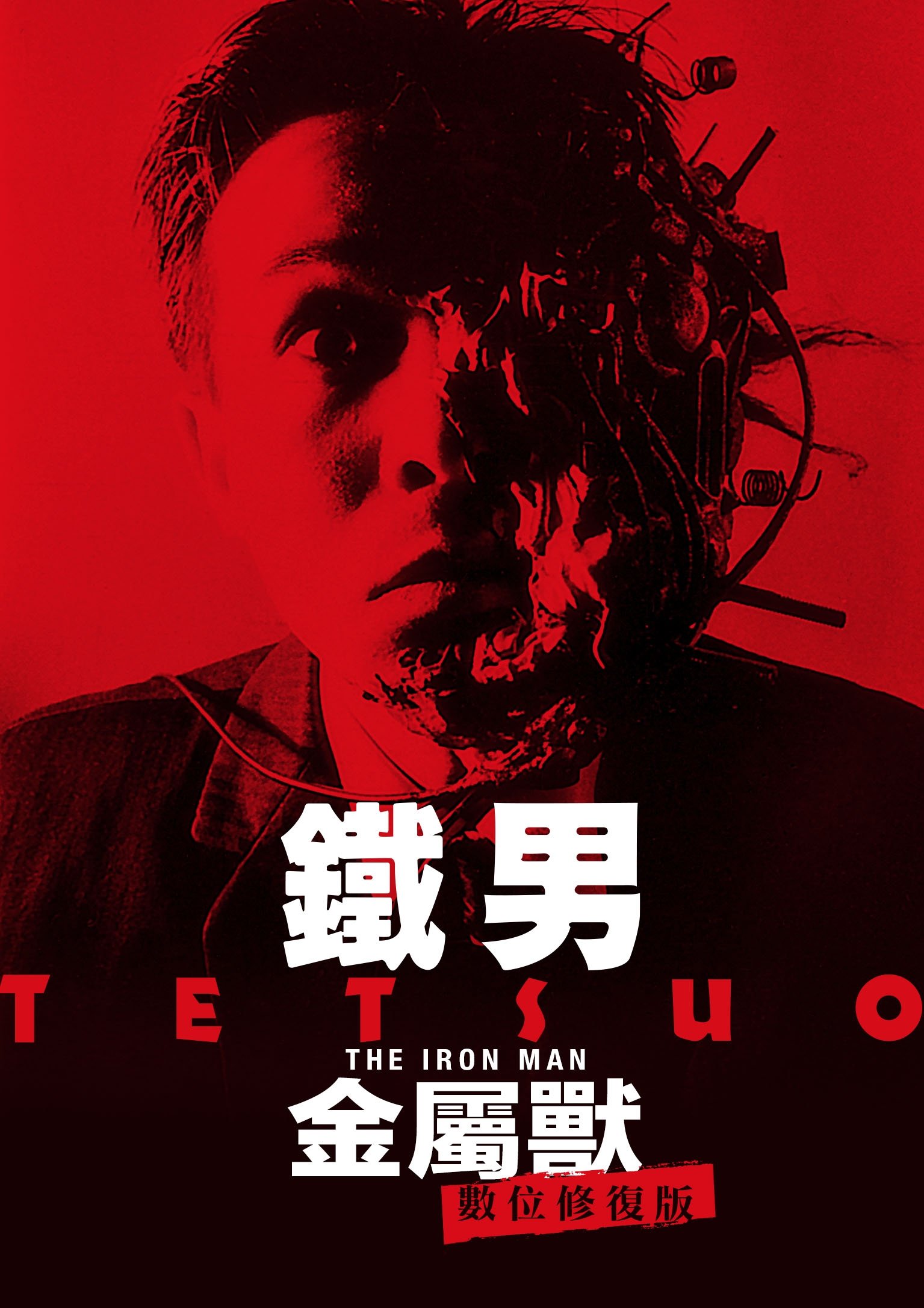
Production & DIY Filmmaking
Tetsuo emerged from the intensely independent creative environment Tsukamoto had already developed through Super 8 filmmaking and his Kaijyu Theatre group. Before making the feature, he had explored related ideas through stage work and short films in which ordinary bodies collided with machinery and urban space. The Japanese Film Database identifies the direct basis for Tetsuo as Tsukamoto's 1986 8mm film The Phantom of Regular Size, which already featured the idea of a human body invaded by metal and included performers who would return for the larger project.
The move to 16mm represented a step upward in format rather than a move into conventional production. Tsukamoto still worked with extremely limited resources and assumed an extraordinary number of responsibilities himself. Official Japanese credits list him as director, producer, screenwriter, cinematographer, lighting technician and editor, while Kei Fujiwara also contributed cinematography and performed in the film. Much of the shooting took place inside Fujiwara's own inexpensive apartment, a location that had also been used for Tsukamoto's earlier work.
Production extended across roughly eighteen months. Cast and crew members often lived where they were shooting, turning the filmmaking process into an exhausting communal undertaking. Accounts preserved by the BFI describe members of the crew gradually abandoning the production as conditions became increasingly difficult. Tomorowo Taguchi, who played the salaryman and deliberately avoided living permanently on set, recalled arriving to discover that the lighting crew had disappeared and taking over lighting duties himself. By the final stages, Tsukamoto was carrying out much of the frame-by-frame animation alone. The conditions help explain why Tetsuo feels less like a normally organized low-budget film than a physical artifact assembled through persistence.
From The Phantom of Regular Size to Tetsuo
The film does not attempt to expand its earlier short-film ideas by adding conventional narrative complexity. Instead, Tsukamoto concentrates them. The metal fetishist's self-mutilation, the salaryman's transformation and their eventual confrontation form only a skeletal plot. Individual events frequently operate through association rather than conventional causality, and extended dialogue is largely unnecessary because bodies, objects, editing and sound perform much of the storytelling.
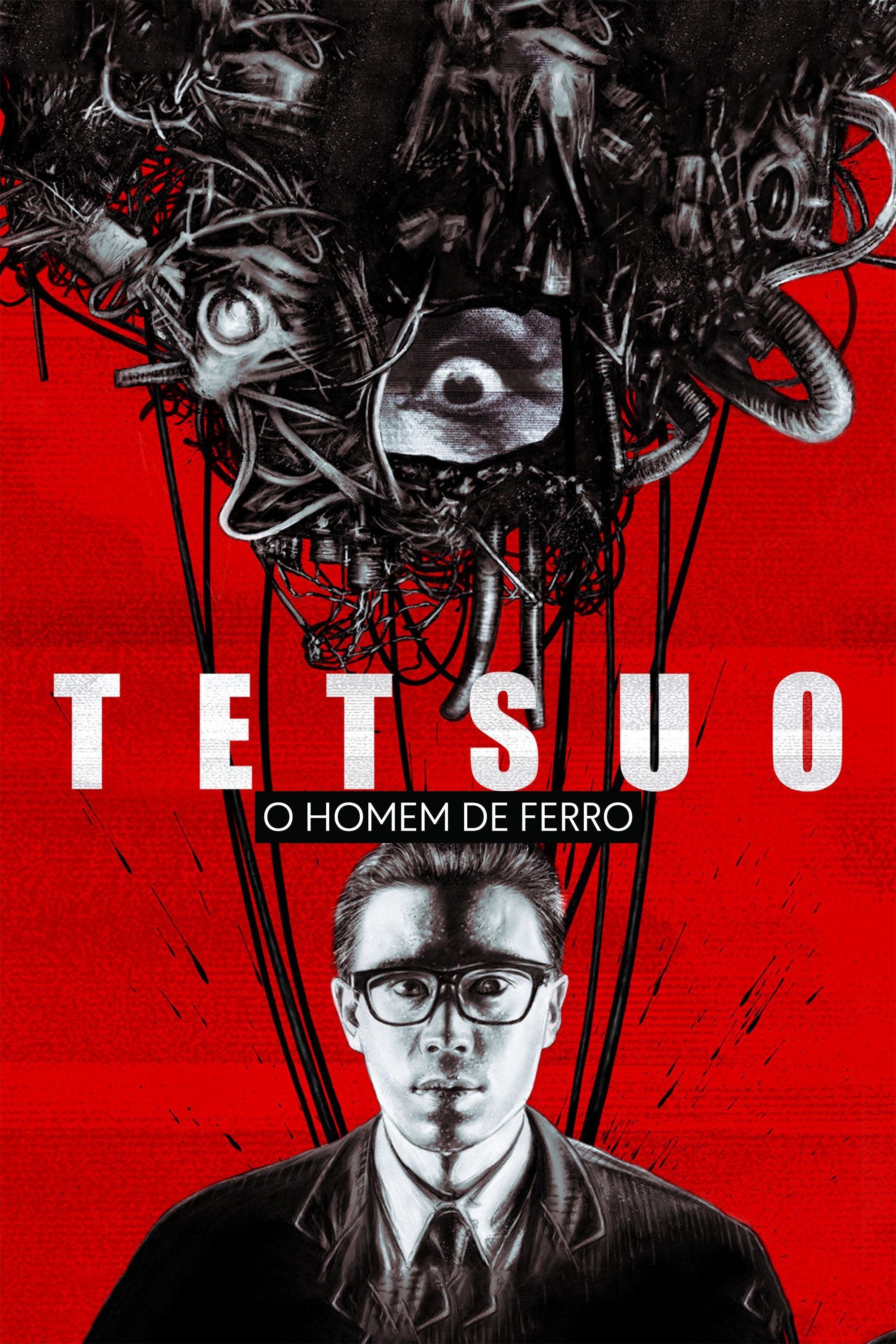
That economy also prevents the transformation from being reduced to a clearly explained infection or scientific process. After the hit-and-run incident, the salaryman's body simply begins to betray him. A metallic growth appears while he shaves; machinery develops beneath his flesh; encounters with other characters become increasingly sexual and violent. The exact relationship between the metal fetishist's revenge and the physical mutation remains deliberately unstable. Tetsuo is interested less in establishing rules than in destroying the distinction between man and machine.
The film's narrative lineage also connects to Tsukamoto's theatrical background. Kaijyu Theatre had already explored what Tsukamoto later described as themes that would subsequently be labelled cyberpunk. The exaggerated performance, accelerated movement and direct physicality of Tetsuo preserve something of that stage energy even after being transformed through editing and animation. The actors do not simply inhabit a realistic world in which strange events happen. Their gestures, screams and movements become elements within the film's larger mechanical rhythm.
Black-and-White 16mm & Stop-Motion
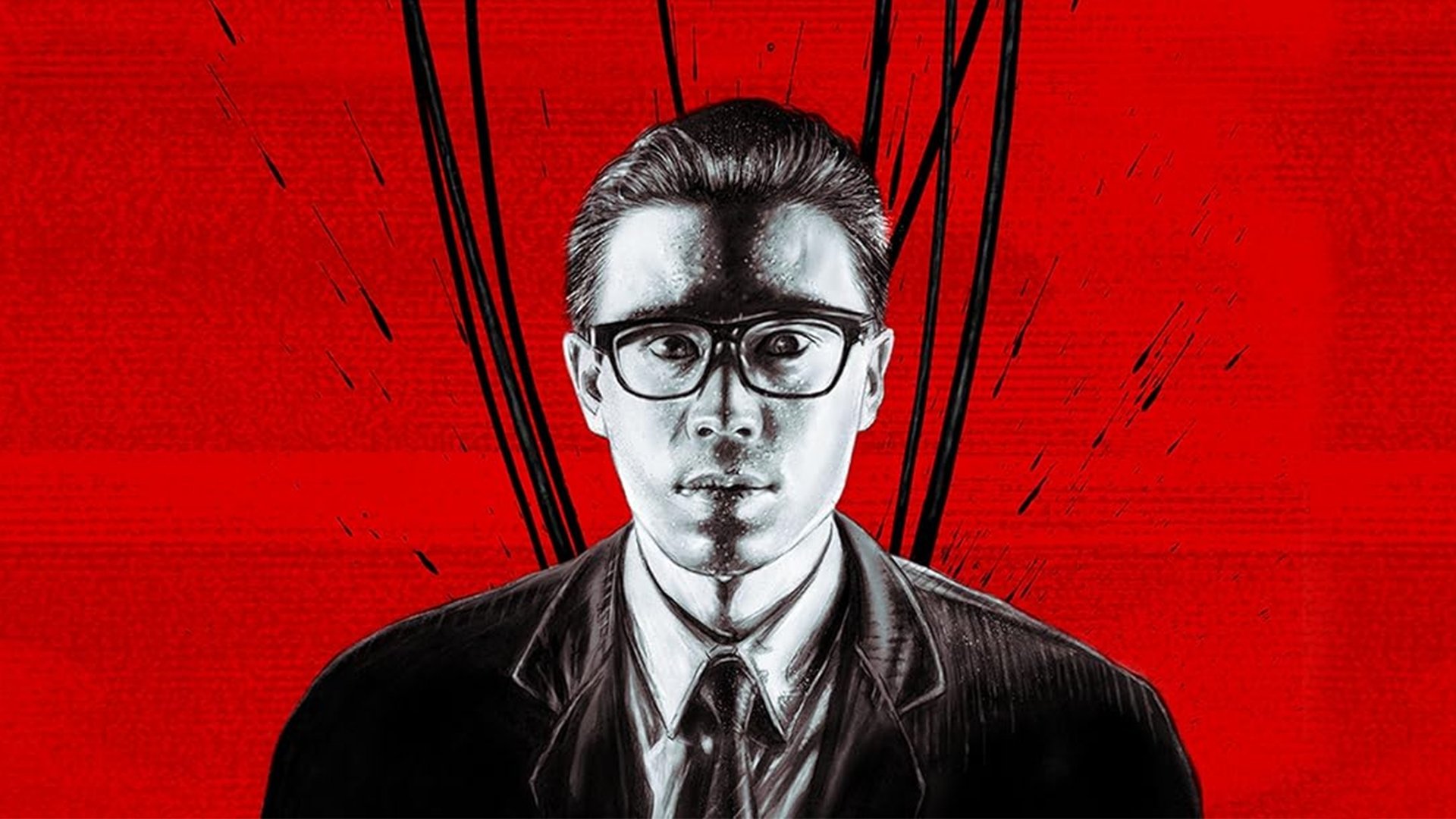
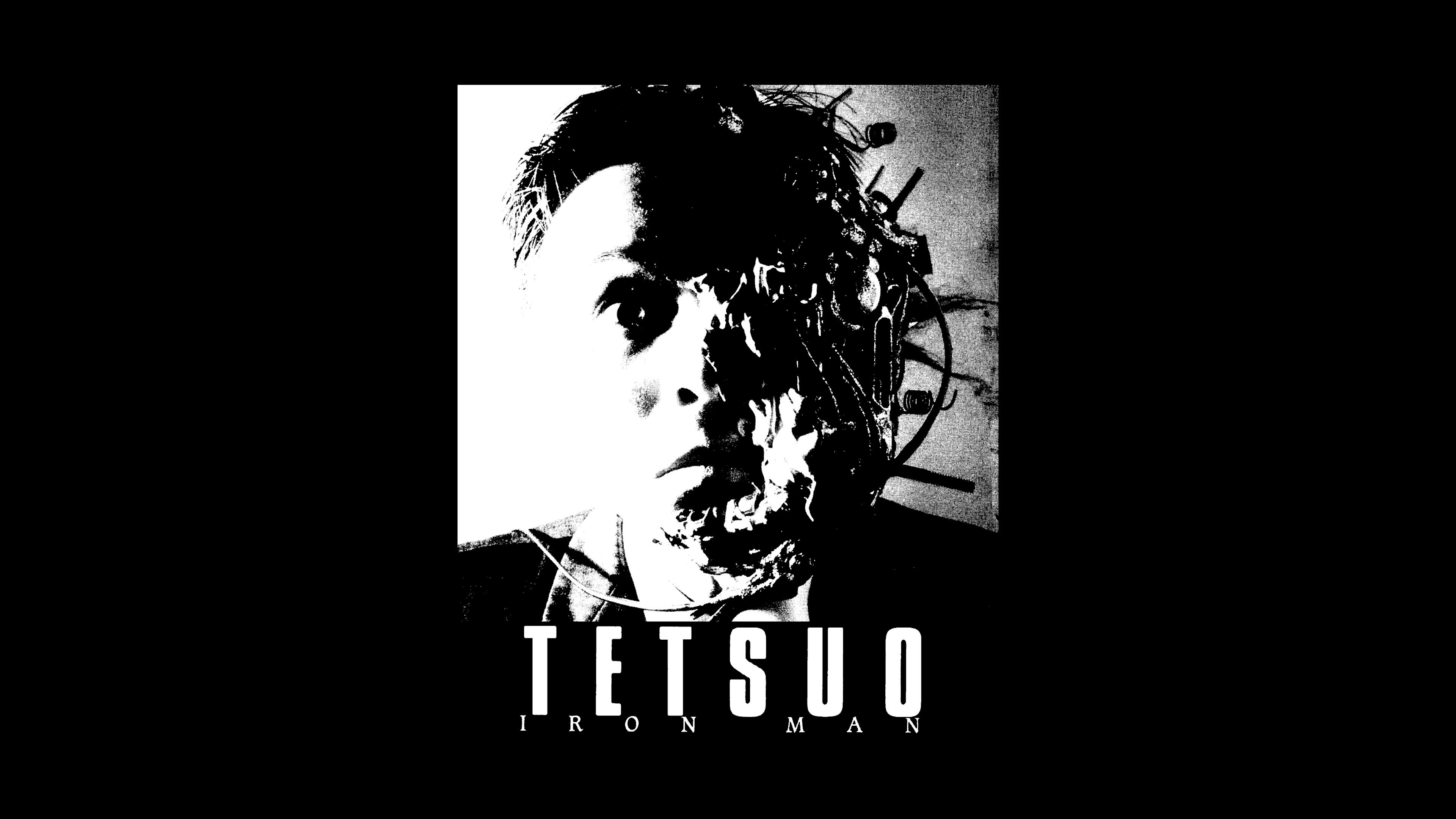
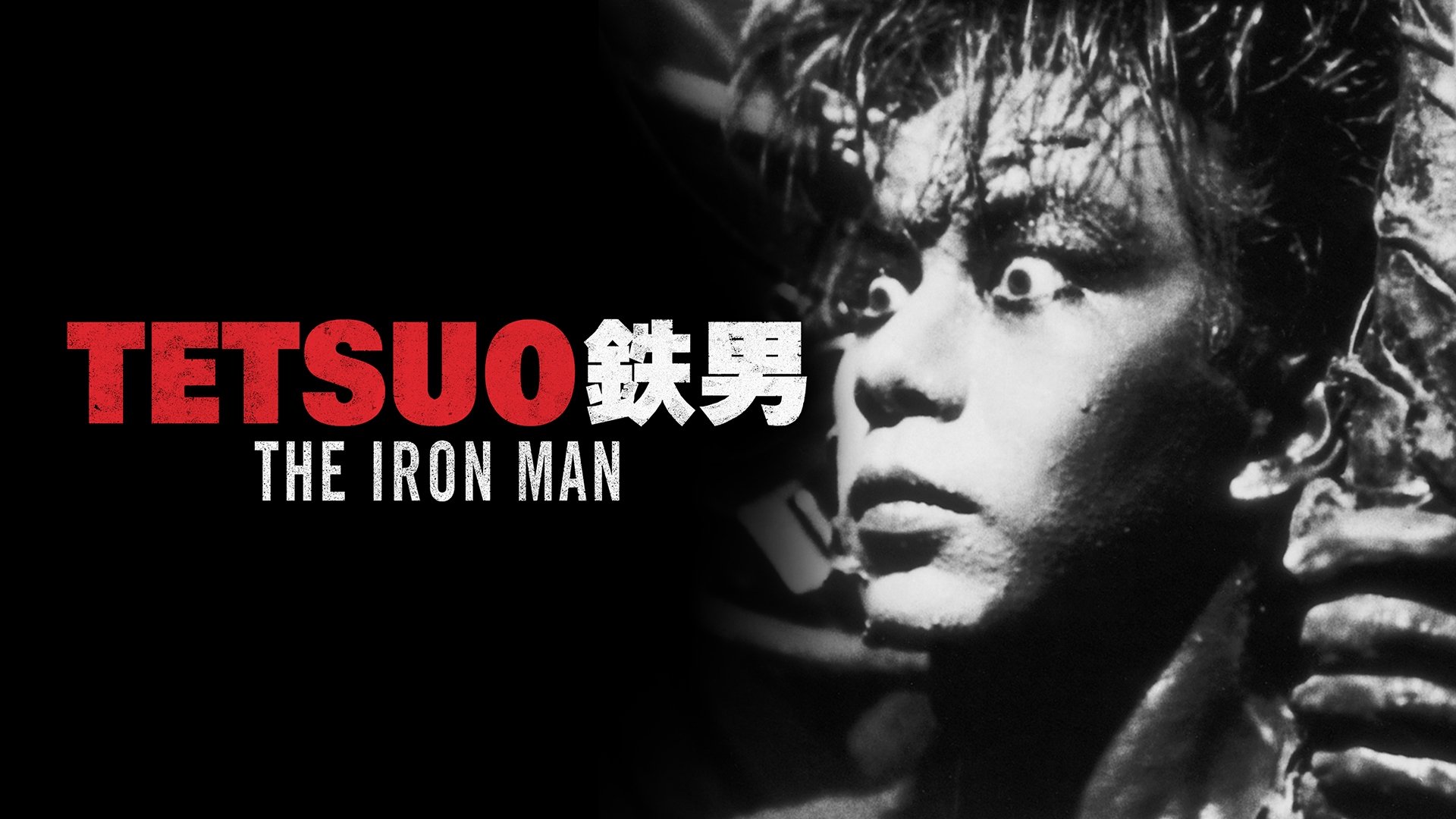
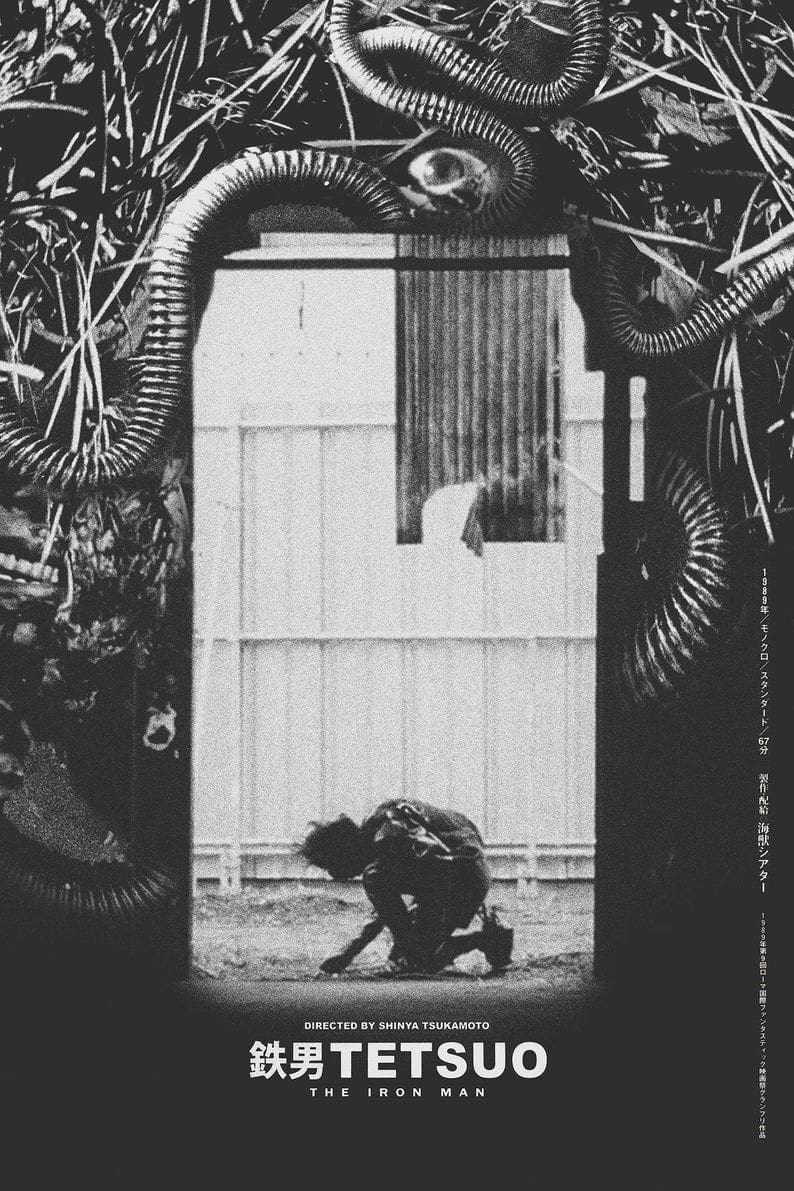
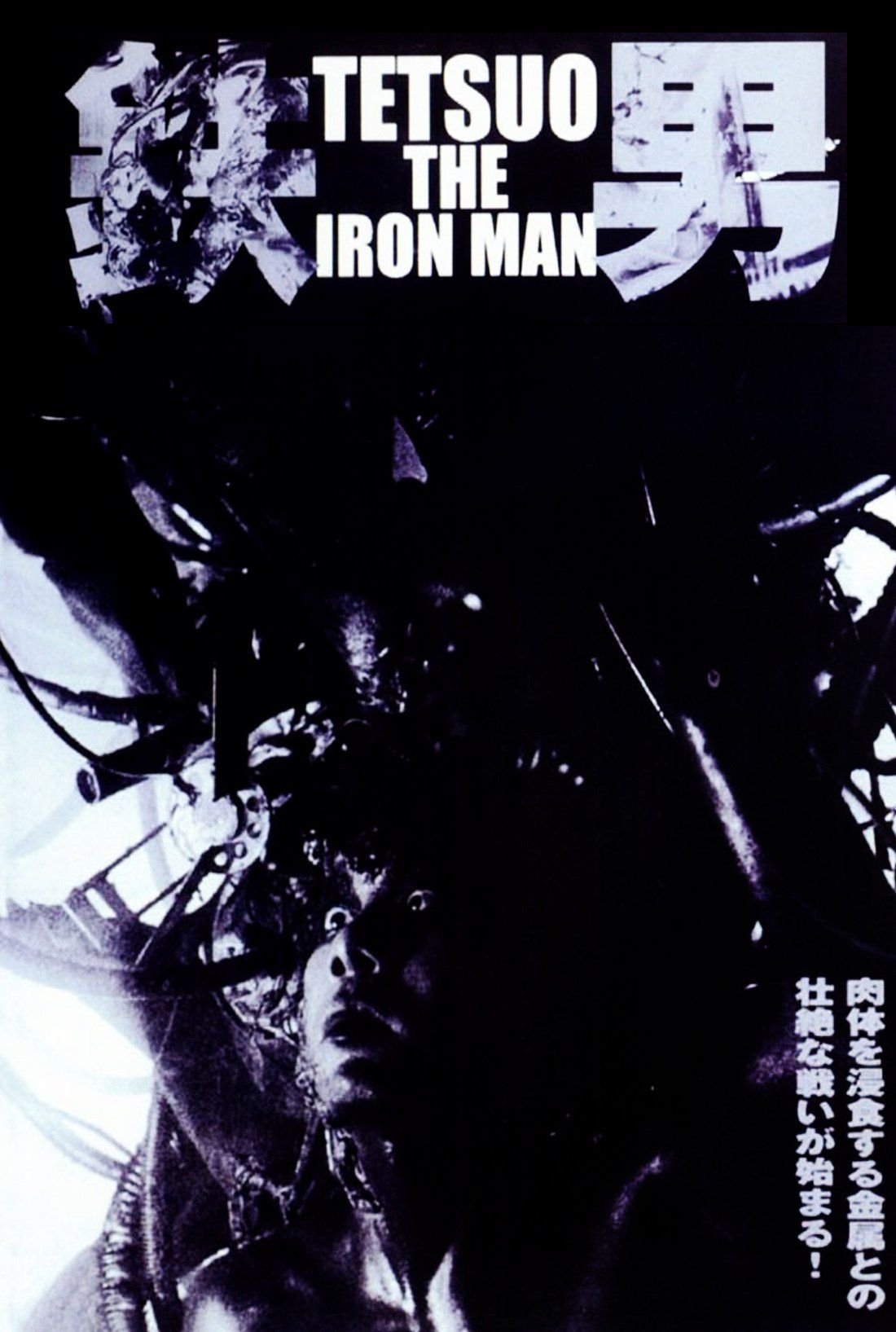
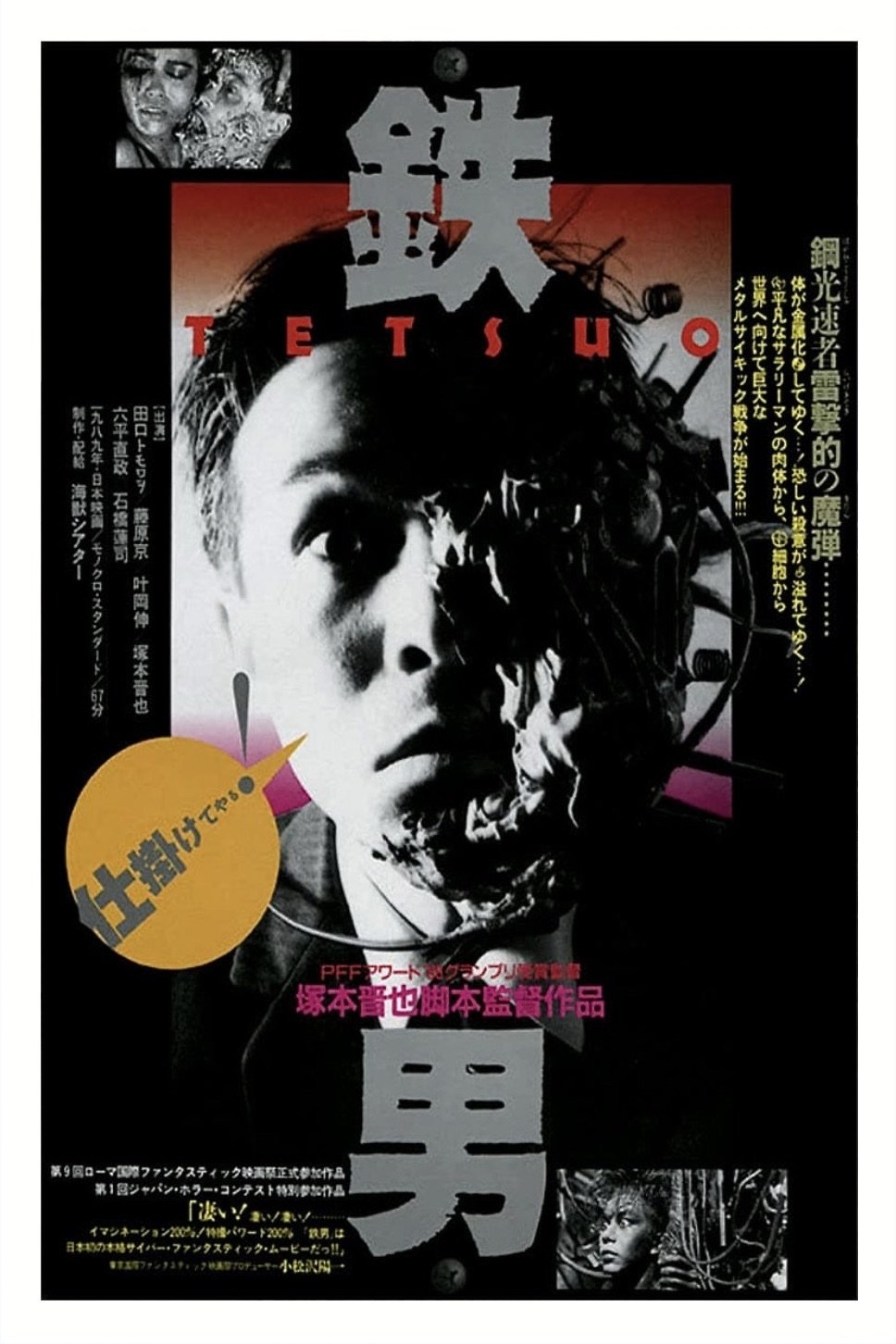
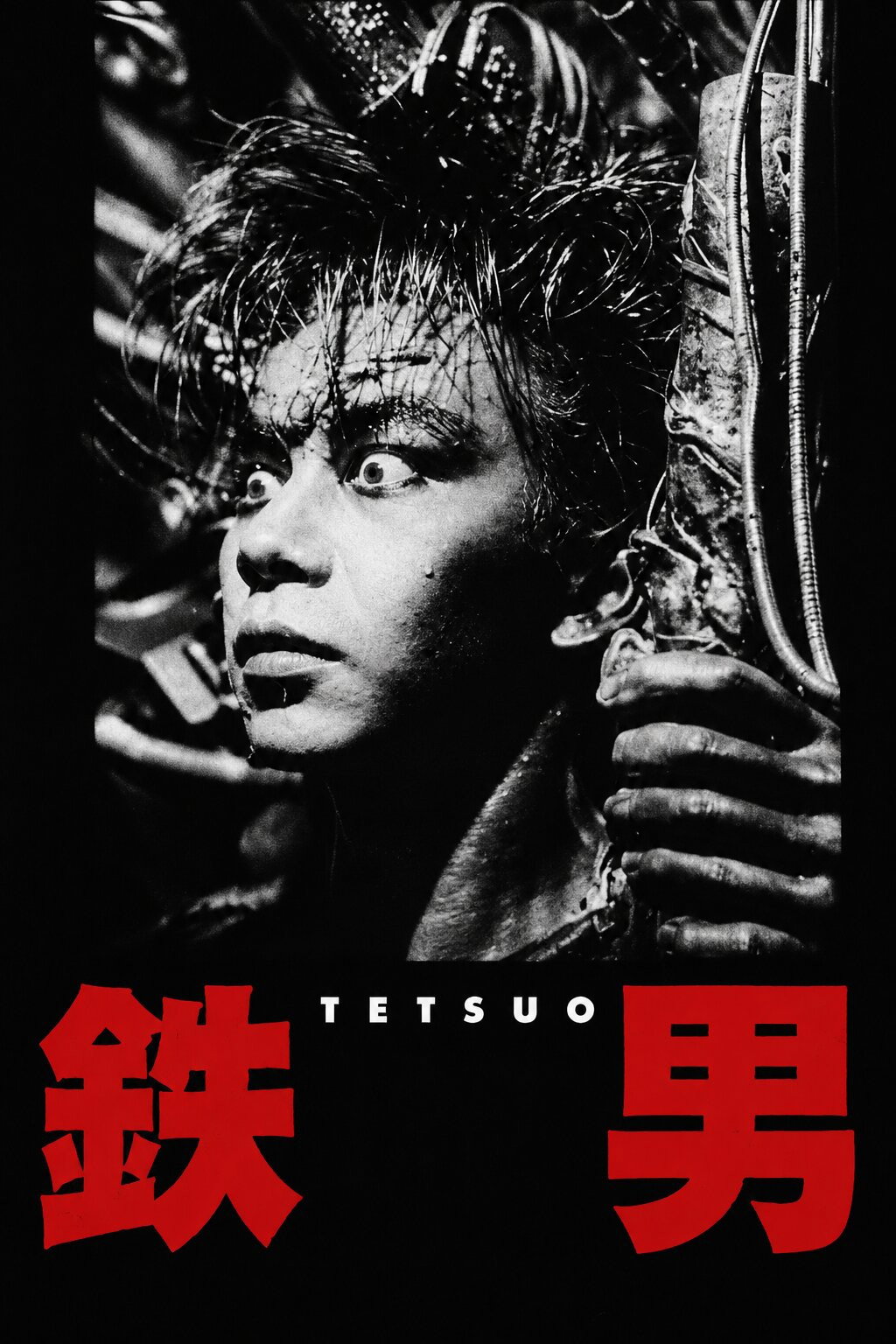
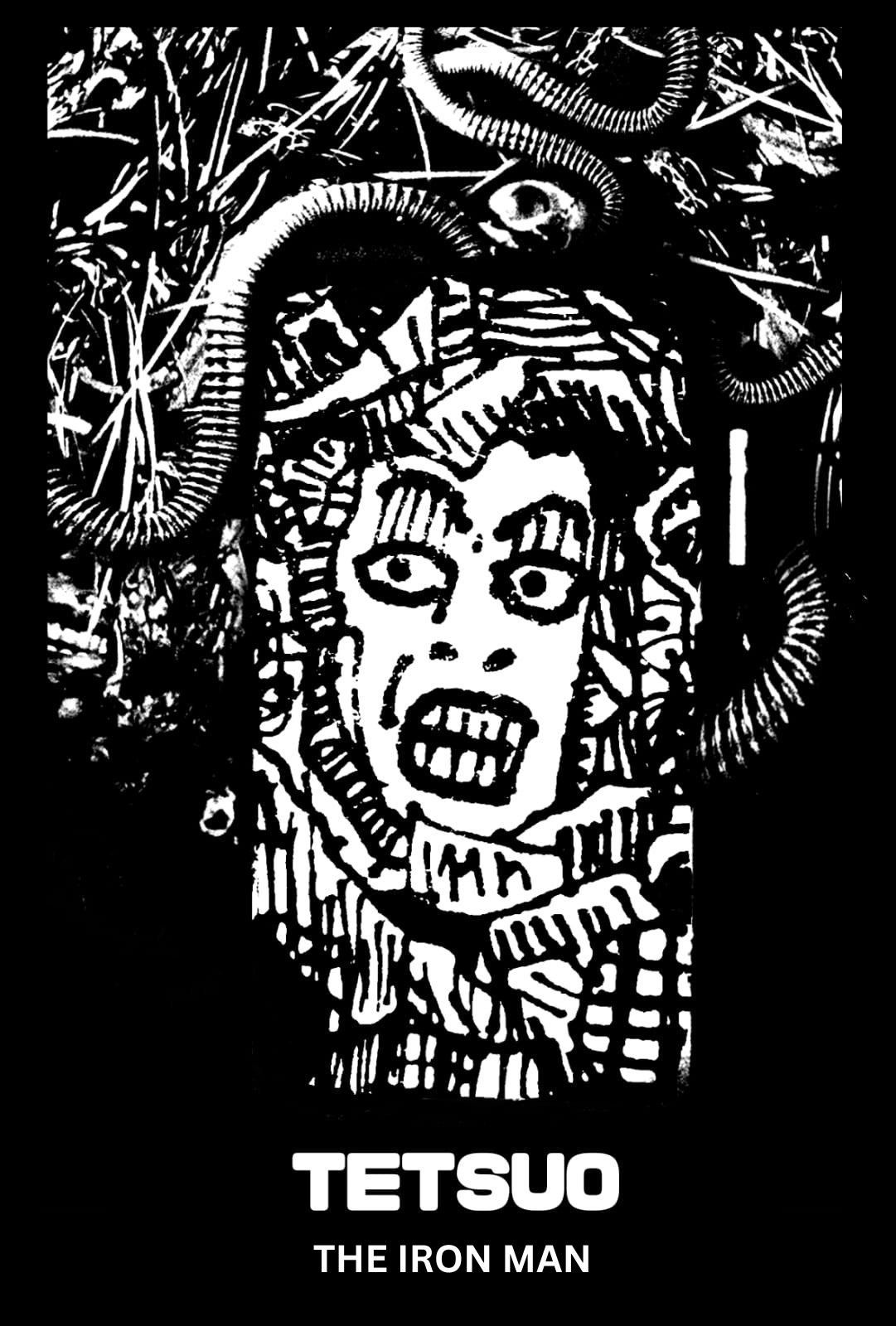
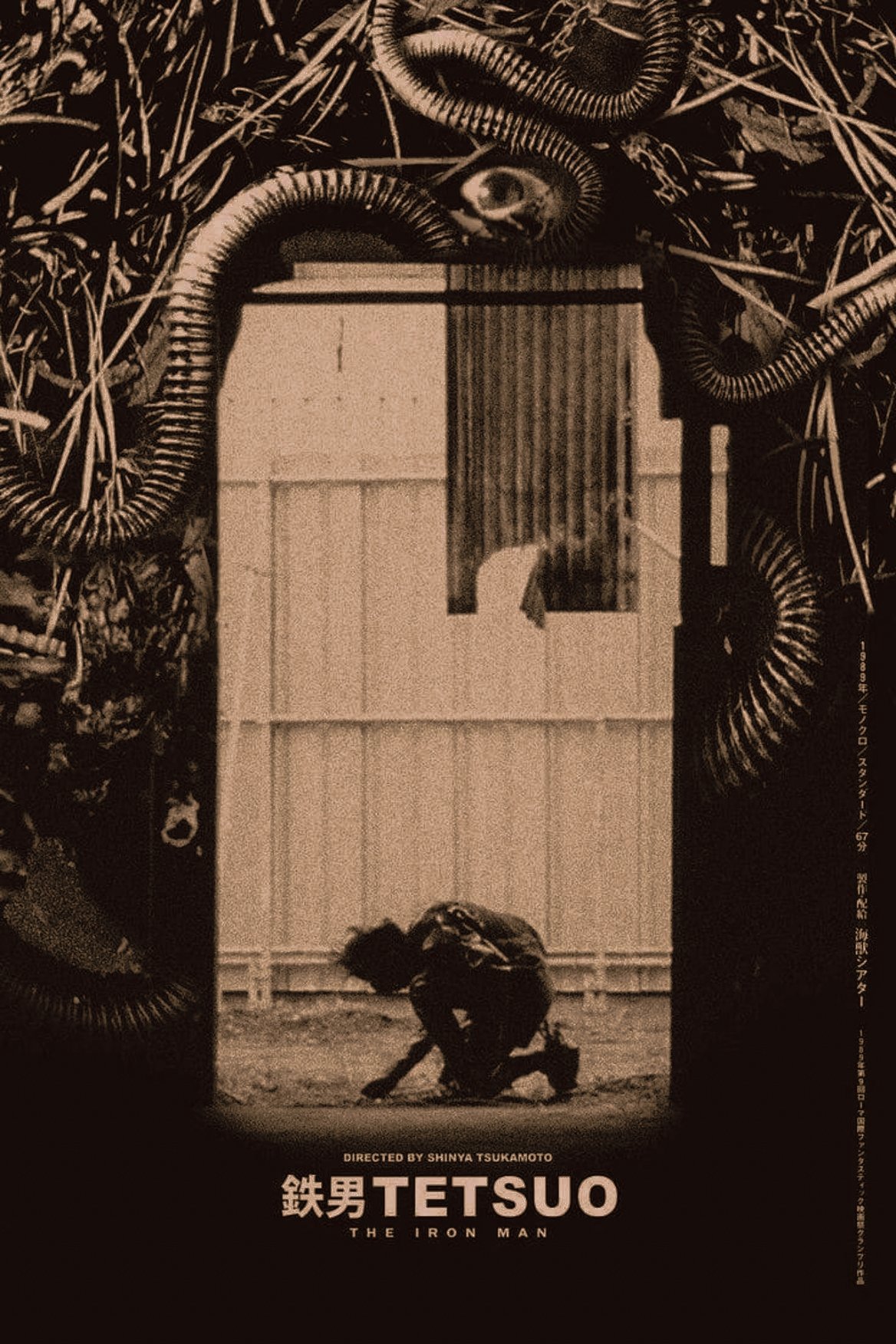
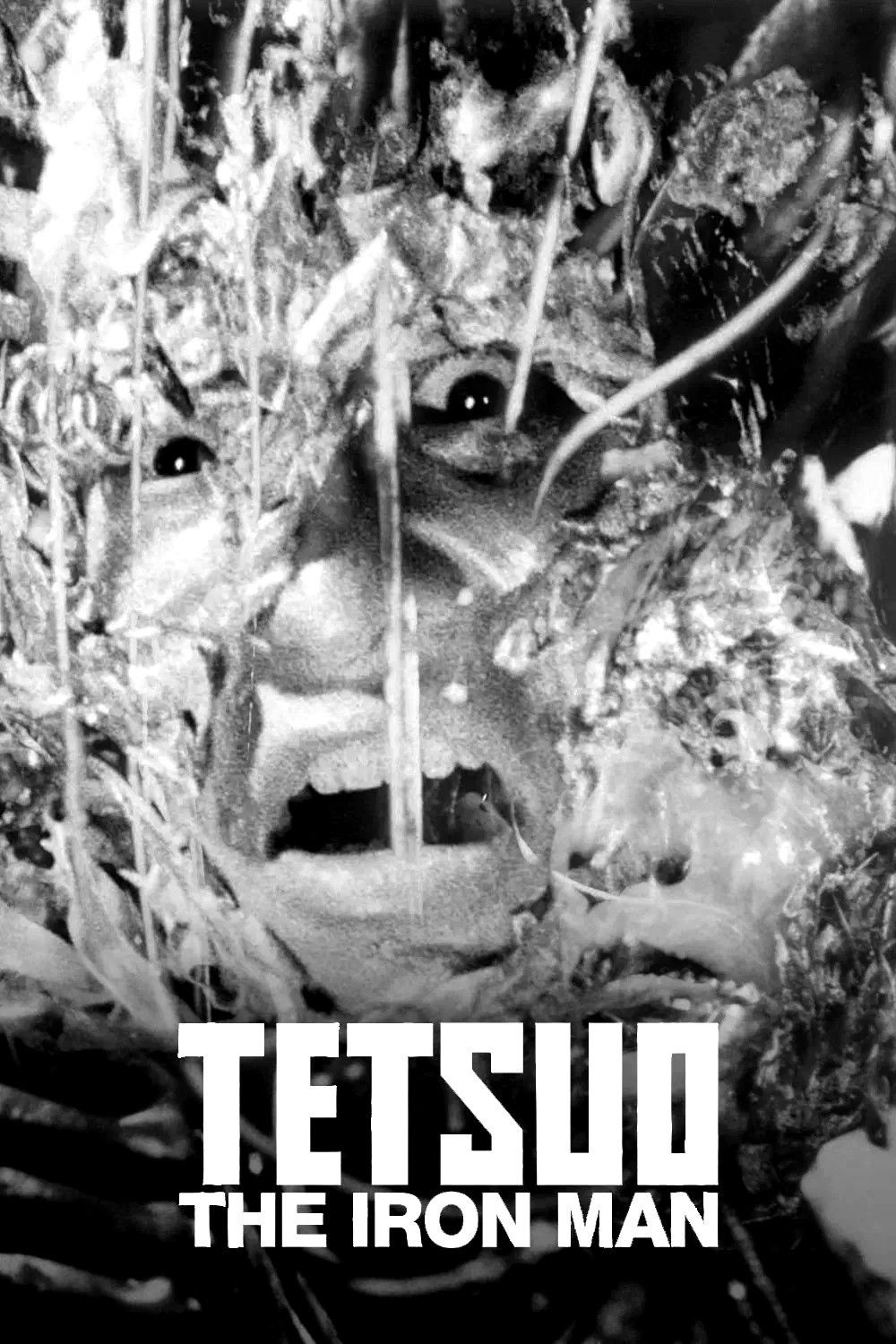
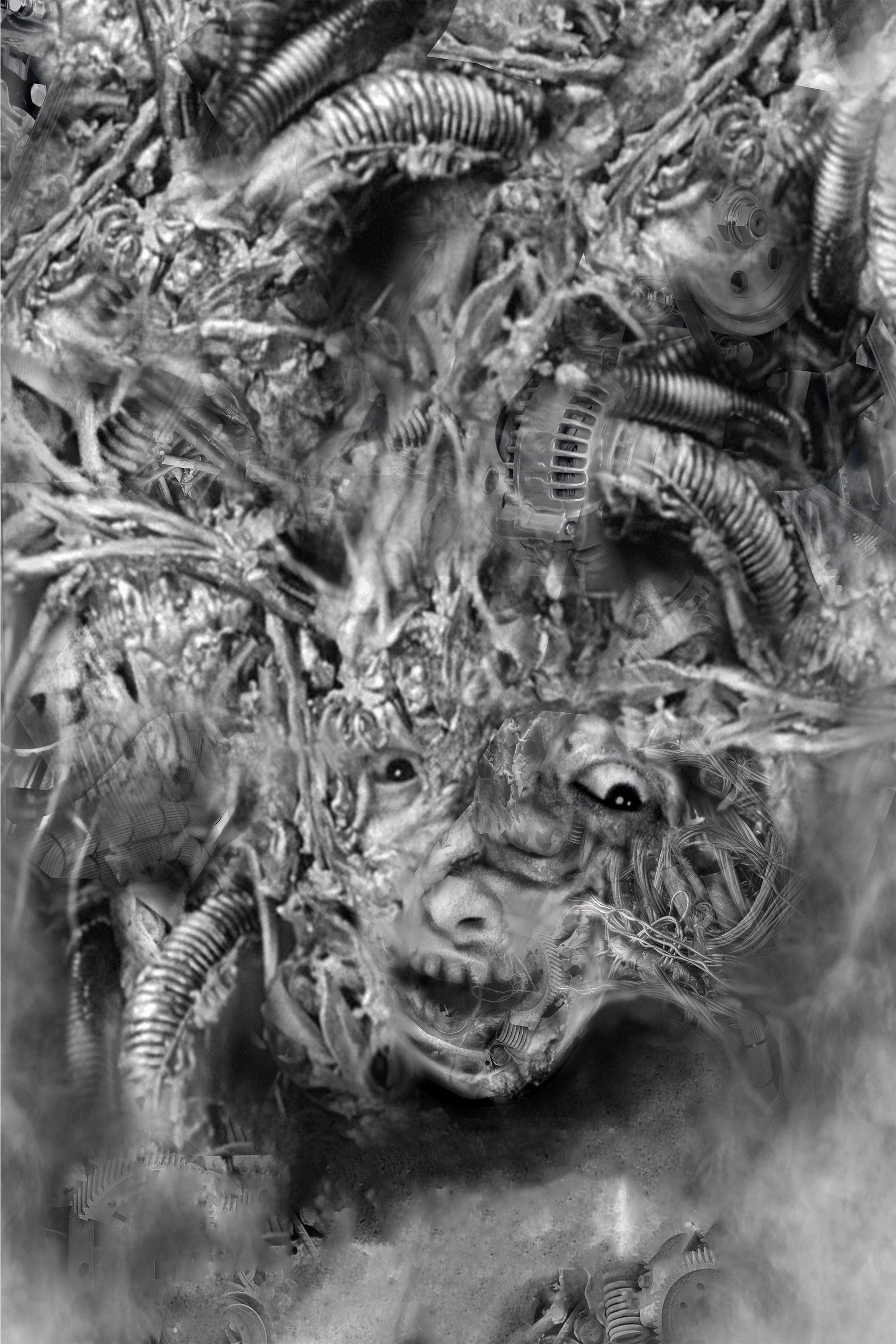
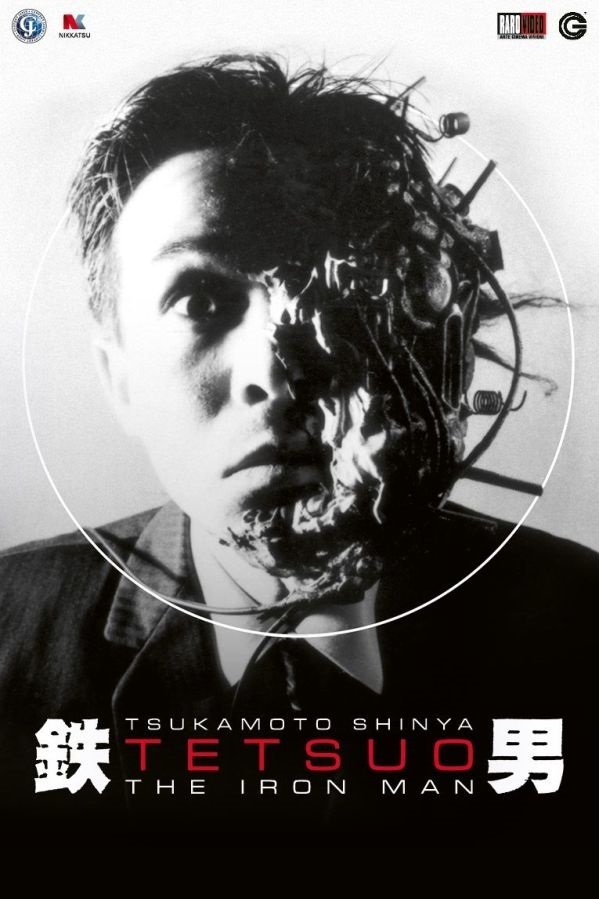
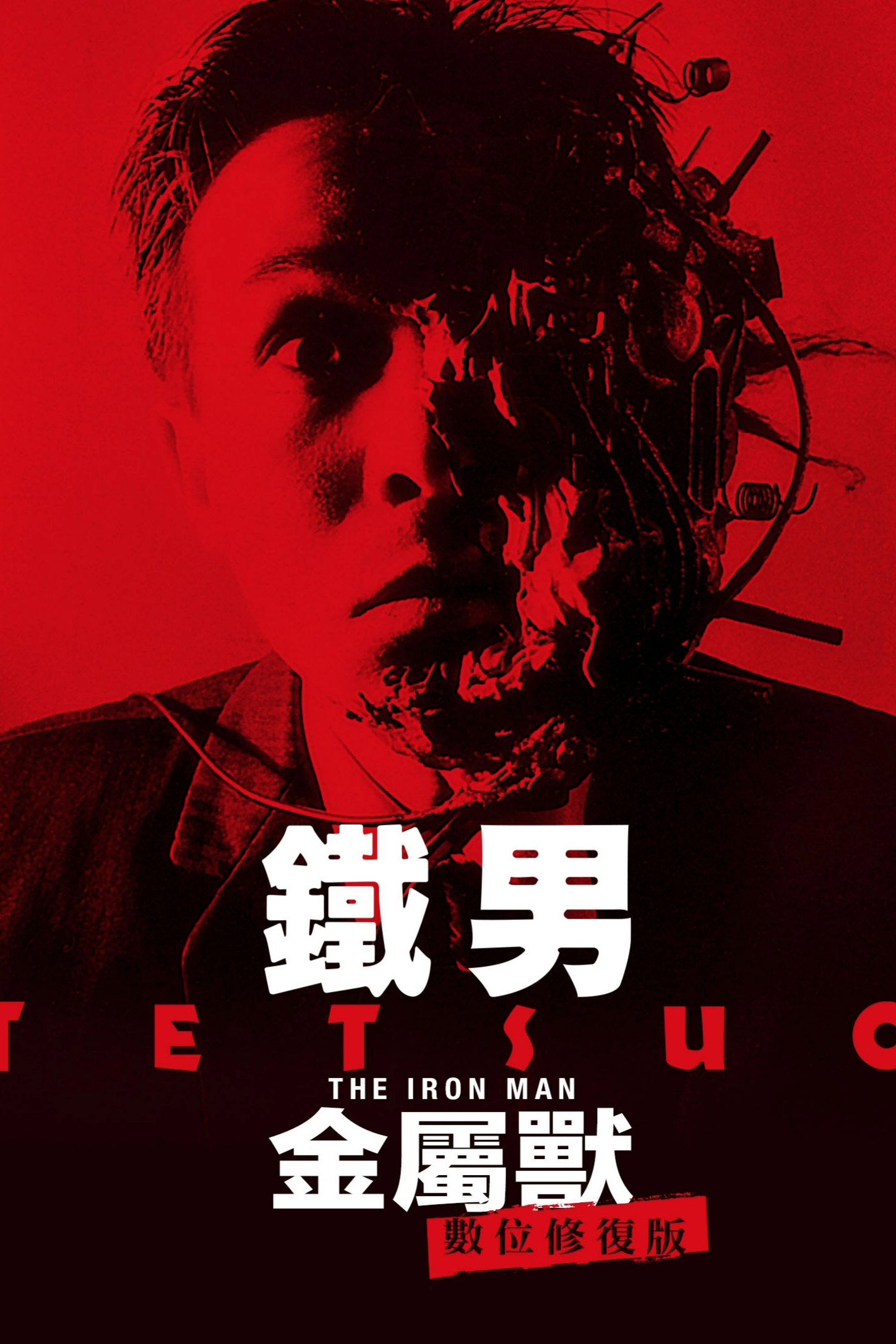
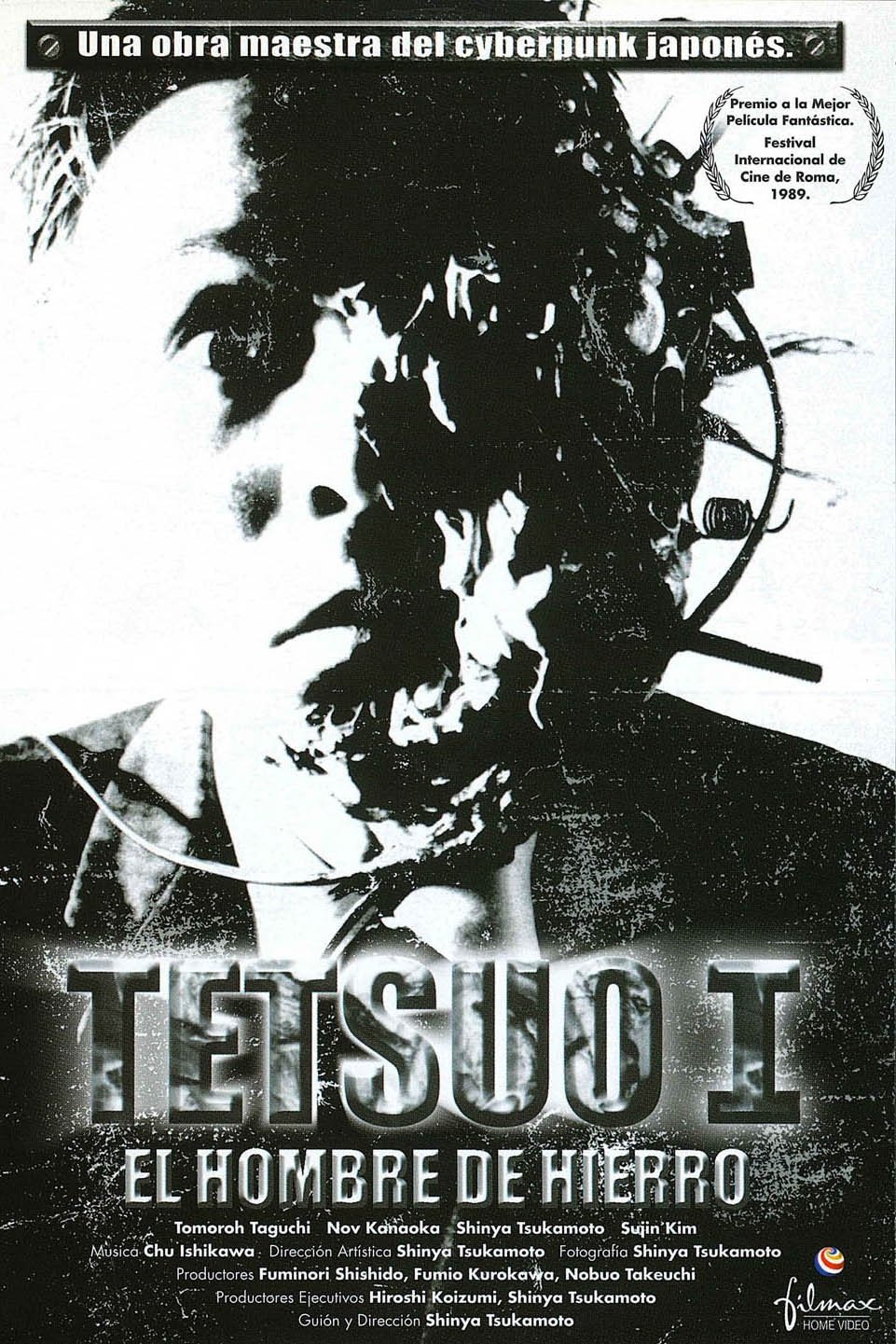
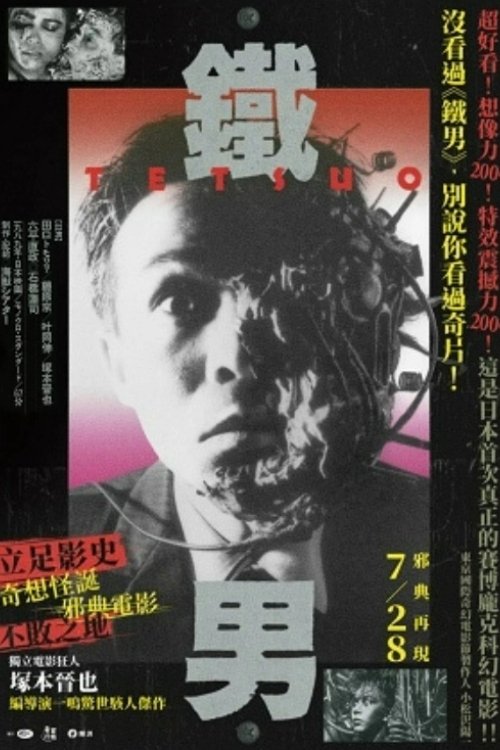
Tetsuo's visual language is inseparable from the limitations under which it was produced. Tsukamoto shot in high-contrast black and white on 16mm, turning the relatively coarse image into an aesthetic advantage. Rusted surfaces, electrical wires, pipes, concrete, skin and mechanical parts collapse into a single range of silvers, blacks and whites. Because flesh and metal inhabit the same monochrome image, the transformation often seems to begin before the narrative explicitly acknowledges it.
The camera rarely offers the detached, orderly geography associated with mainstream science fiction. Movement is abrupt, perspectives are compressed and editing fragments bodies and spaces into a barrage of details. Tsukamoto repeatedly combines ordinary live action with frame-by-frame movement, sending characters racing through streets and industrial landscapes at unnatural speed. The technique turns the human figure into something partly mechanical even before the characters have physically transformed.
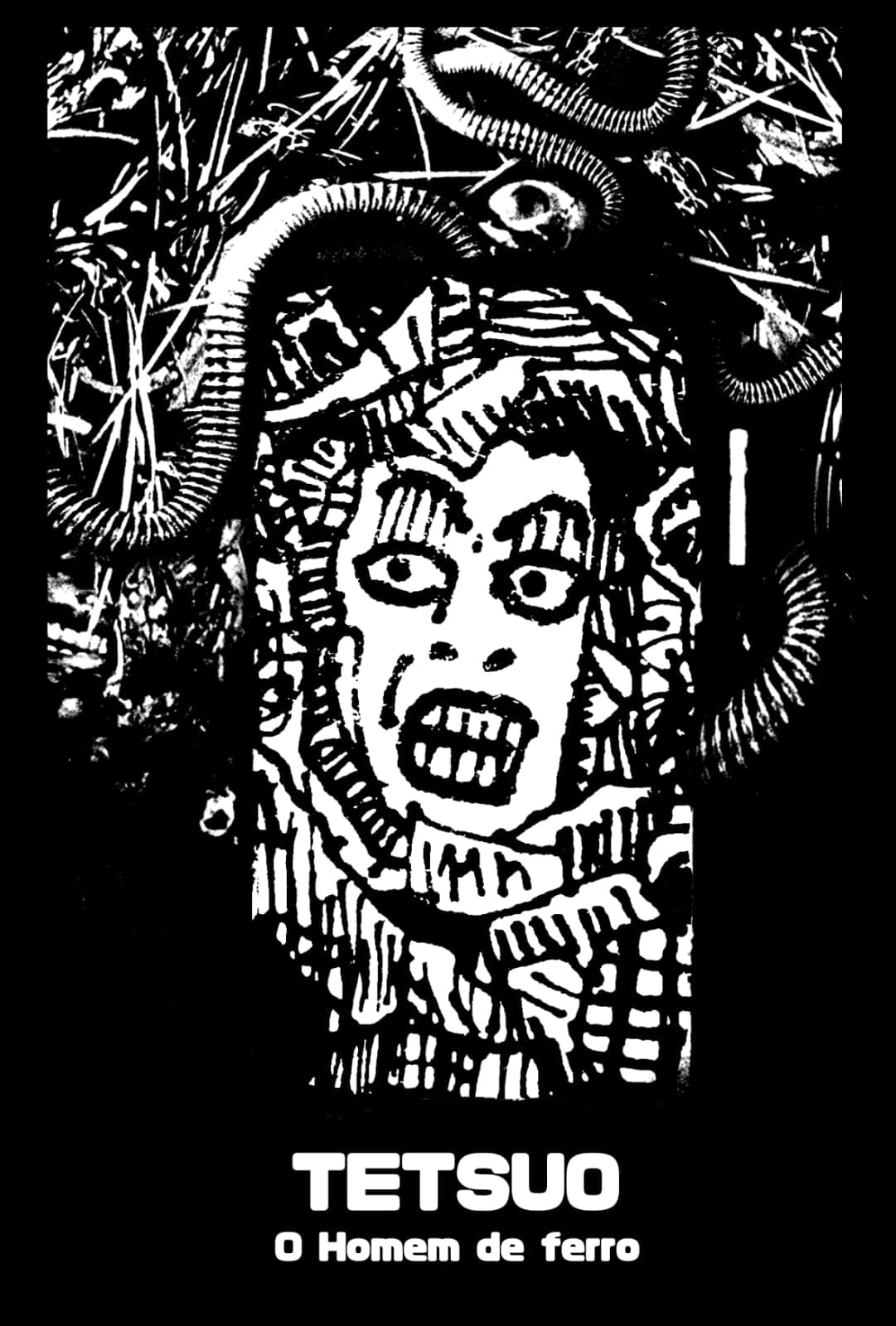
The stop-motion work is particularly important because it gives the city and its machinery an aggressive agency. Objects are attached directly to performers, mechanical debris accumulates around bodies and animation converts ordinary movement into frantic bursts. The result deliberately exposes rather than disguises the physical construction of the effects. Tetsuo does not ask the viewer to believe that its machinery is seamless; its jagged fabrication is part of its horror.
Tsukamoto's official description of the film refers to its frame-by-frame imagery as having a machine-gun rhythm. That description captures the essential relationship between form and subject. Tetsuo is not merely about mechanization. Its editing, photography and animation make the film itself behave like an unstable machine.
Body Horror, Sexuality & the Machine
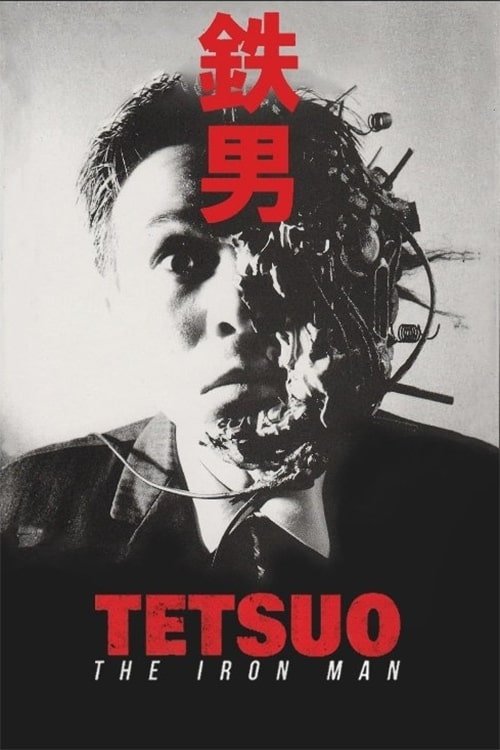
The transformations in Tetsuo are violent, but they are also explicitly sexual. Penetration recurs throughout the film: metal is inserted into flesh, new structures burst outward from the body and mechanical forms replace or distort sexual anatomy. The notorious drill transformation makes the connection impossible to treat as accidental. Technology is neither simply a weapon nor an external threat; it becomes part of desire.
This distinguishes Tetsuo from science-fiction narratives in which machines threaten to replace humanity from outside. The salaryman is horrified by what is happening to him, yet the film continually blurs fear, excitement, aggression and erotic fascination. The metal fetishist begins by deliberately inserting metal into his own body. His desire for transformation precedes the salaryman's involuntary mutation, suggesting that the human-machine merger can represent obsession as much as contamination.
Tsukamoto has subsequently described his early work as being strongly concerned with the relationship between human beings and urban or technological environments. Tetsuo translates that concern into body horror. Tokyo is largely stripped of recognizable landmarks and glossy modern architecture. Instead, the environment consists of railway infrastructure, industrial debris, cables, concrete and confined interiors. The city does not surround the characters so much as penetrate them.
The final fusion pushes that idea to its extreme. Individual identity becomes secondary to the creation of a new metallic organism whose ambition is no longer merely personal revenge. Flesh and technology cease competing and instead form a grotesque alliance. The film's famous closing promise to transform the world into rust turns what began as an intimate physical mutation into an apocalyptic fantasy of total mechanization.
Music & Sound
Chu Ishikawa's score is fundamental to Tetsuo's impact. Tsukamoto later explained that he already had a concept for the film's music built around sampling and manipulated sounds when he began searching for a collaborator. He encountered Ishikawa through that process and initially associated him primarily with metallic, clanging sound. The collaboration became far more extensive than expected: Ishikawa would go on to score most of Tsukamoto's subsequent films.
The decision to emphasize metallic percussion is inseparable from the imagery. The soundtrack seems to extend the machinery visible on screen. Percussive impacts, industrial rhythms and electronic textures give movement to inanimate objects and help connect editing, animation and physical transformation. The city sounds as though it is participating in the mutation.
Tsukamoto has repeatedly rejected the idea that music should simply sit beneath images. He has described picture and sound as equal priorities and compared the desired experience of his film music to being inside a club listening to a live performance. With Tetsuo this principle is especially apparent. Ishikawa's score does not soften transitions or explain emotion. It intensifies the film's speed and makes its repeated collisions of flesh and metal physically exhausting.
Release & the Fantafestival Breakthrough
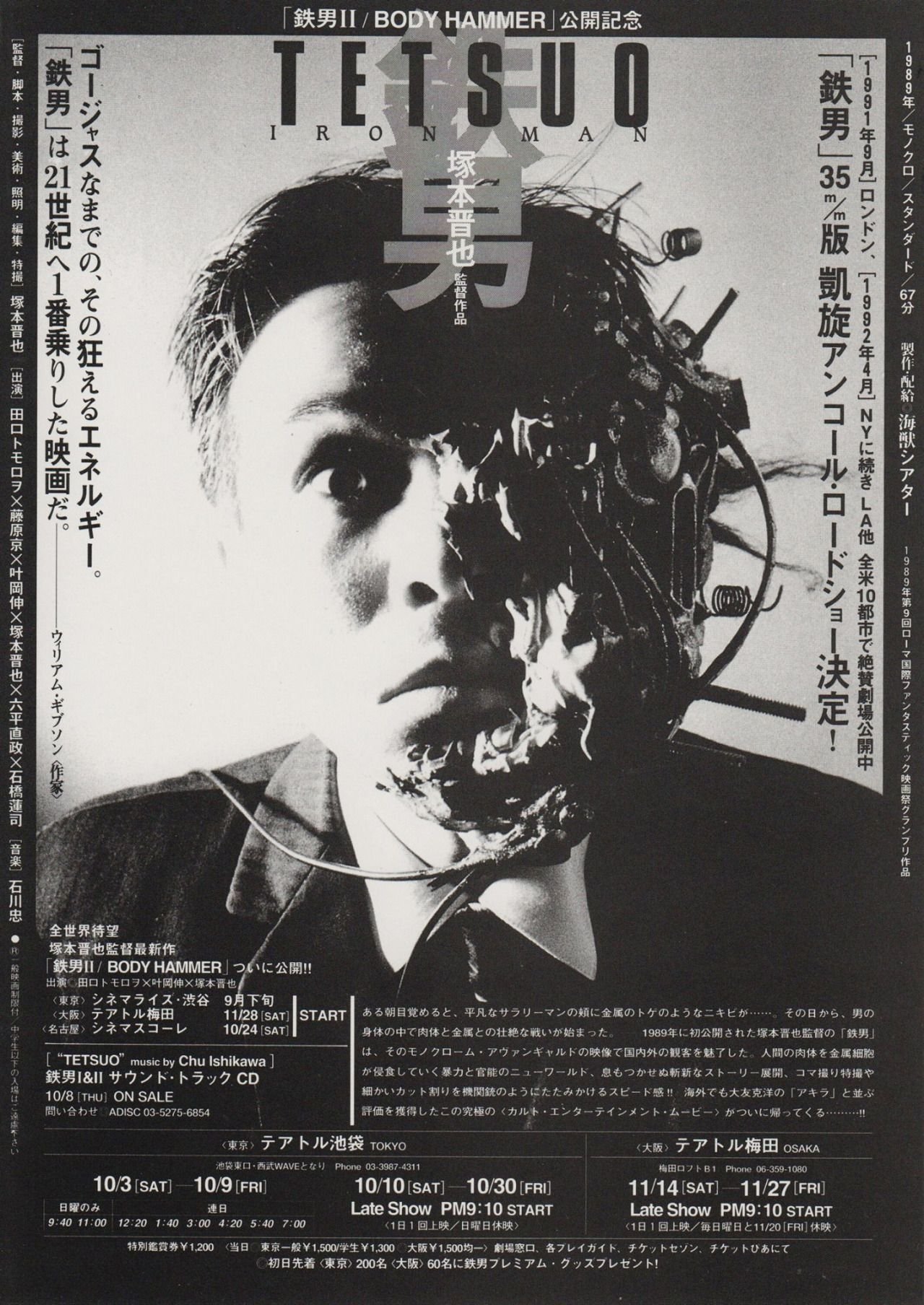
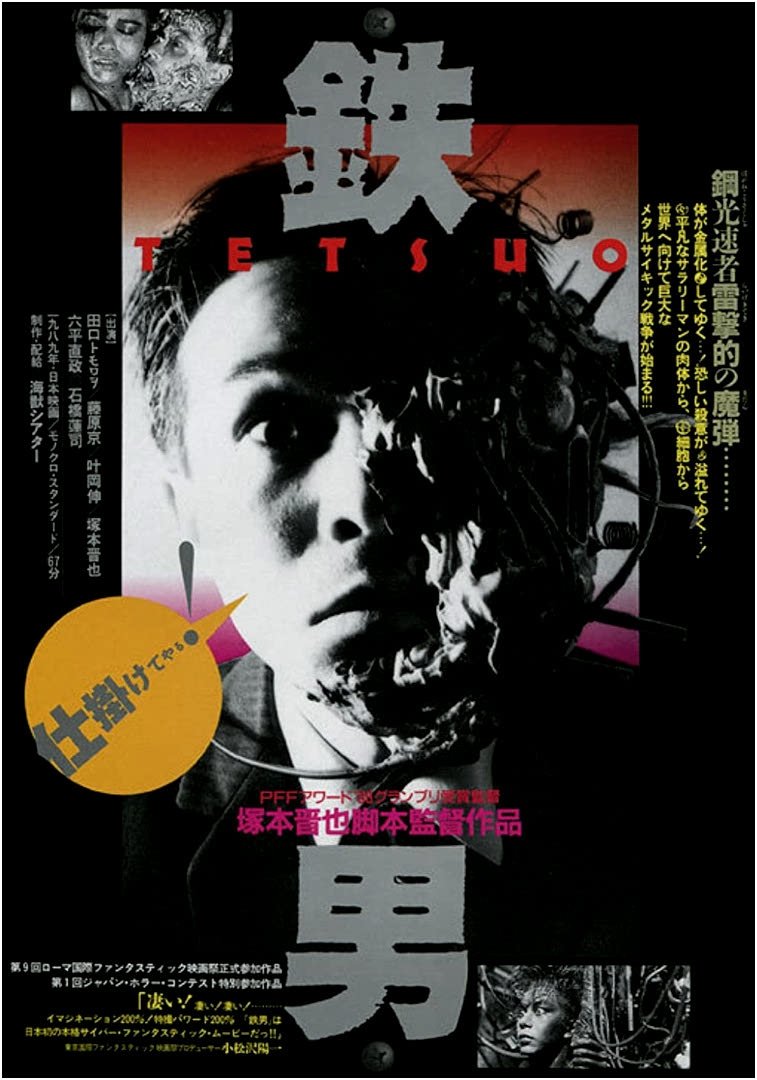
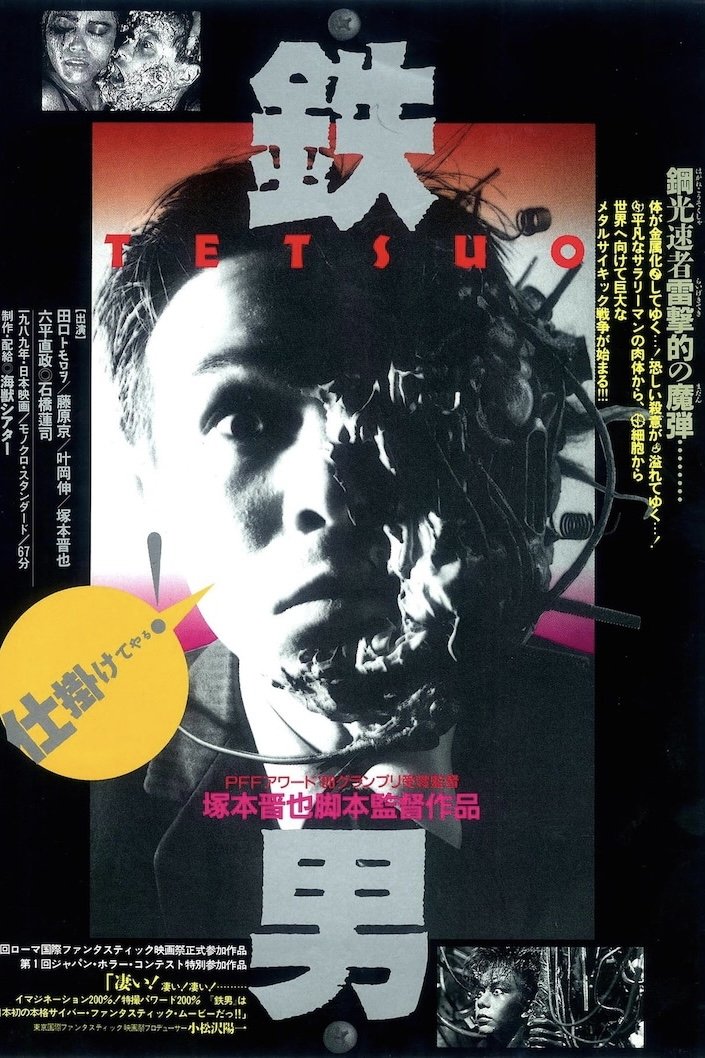
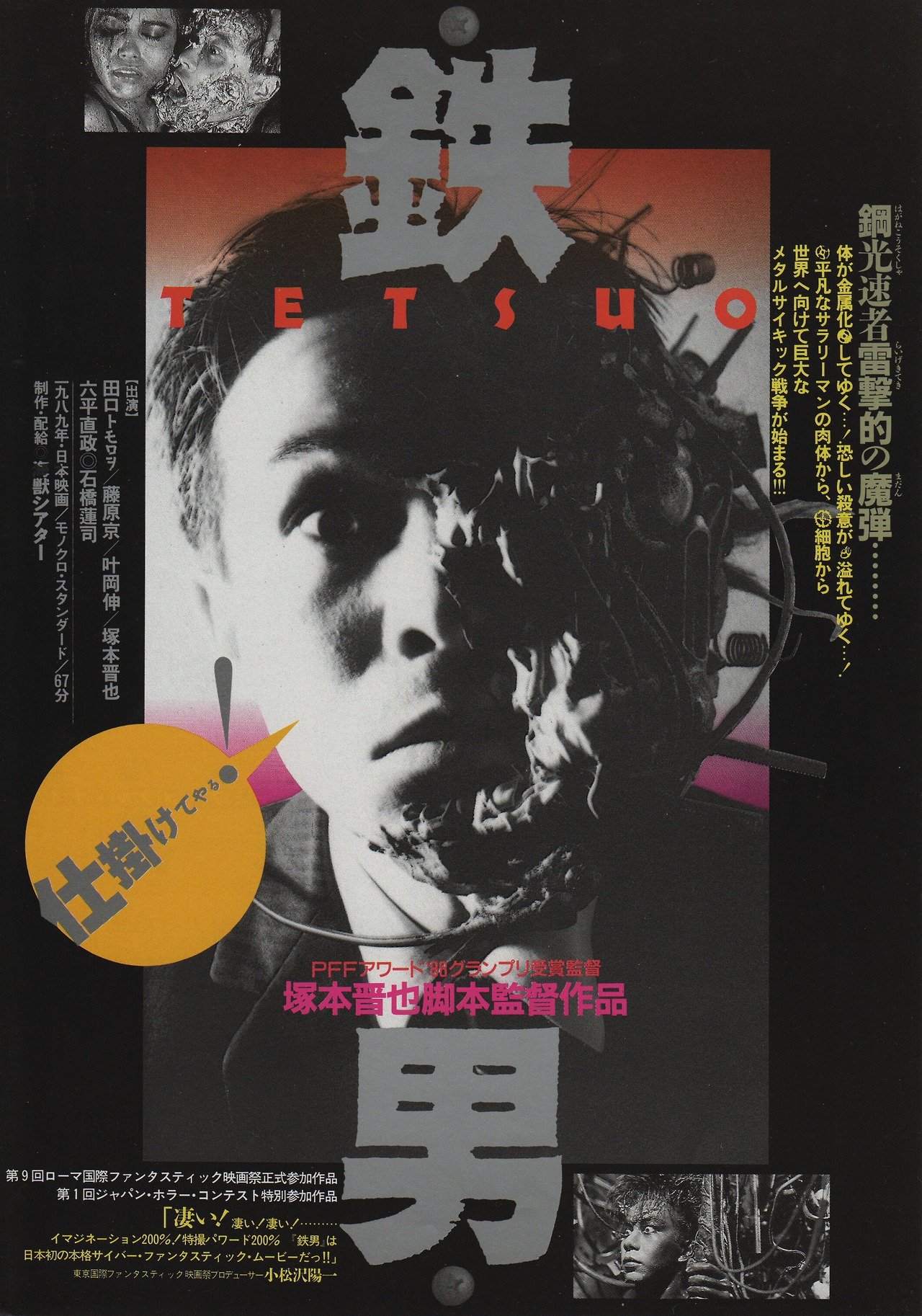
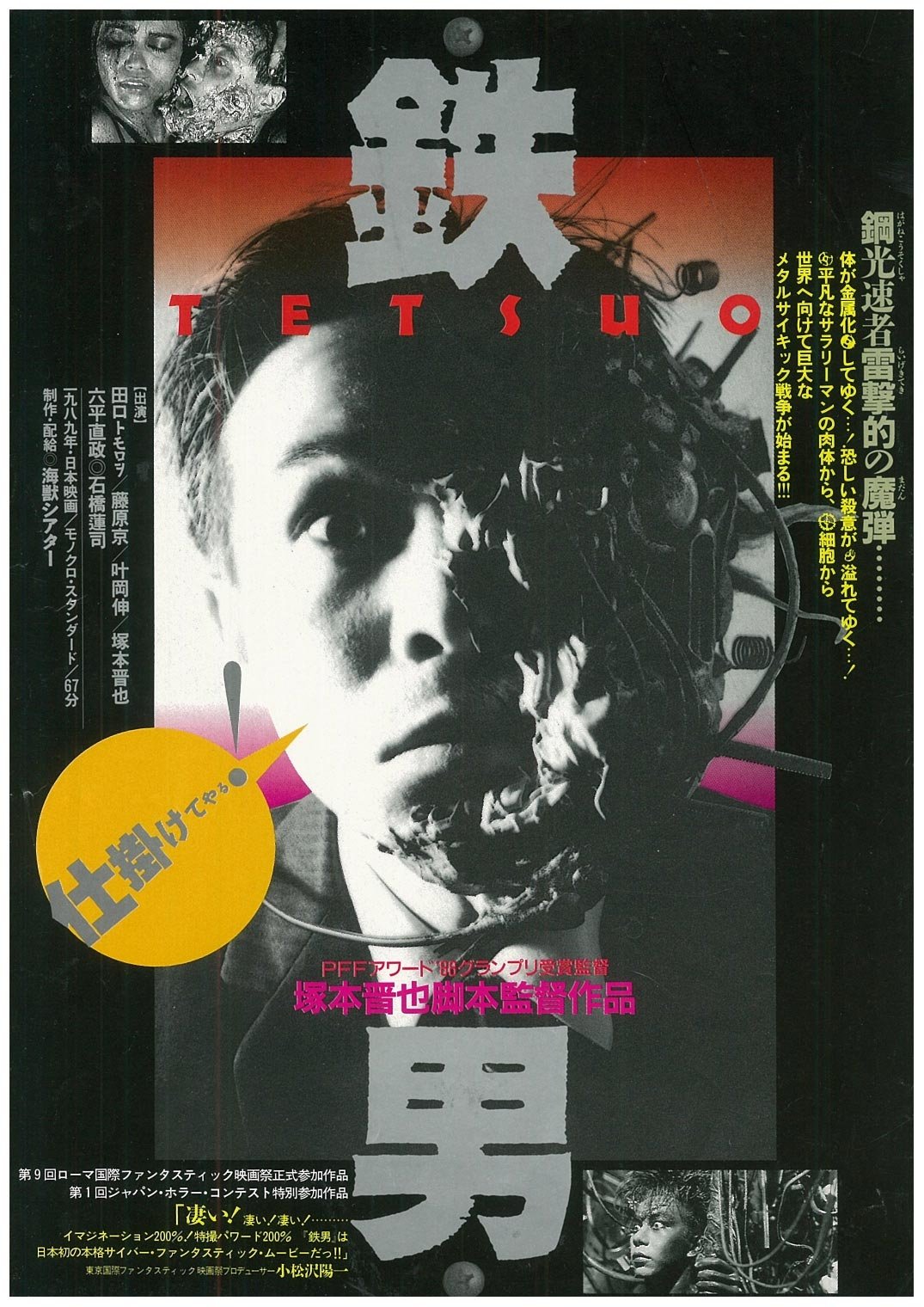
The official Japanese records date Tetsuo to 1989. Kaijyu Theatre handled both production and Japanese distribution, and the film opened at Tokyo's Nakano Musashino Hall on July 1, 1989. The official Tsukamoto archive records a 67-minute running time, black-and-white photography and an original 16mm production, with 35mm prints also prepared for exhibition. Some international catalogues identify the film as 1988, reflecting the period in which it was completed, but its documented Japanese theatrical release belongs to 1989.
Its international breakthrough occurred almost immediately. Tetsuo was submitted to the ninth Fantafestival in Rome, where it won the festival's Best Film award in 1989. The festival's official archive confirms the victory, placing Tsukamoto's tiny independent production ahead of a programme that included established international genre filmmakers.
The importance of the award went beyond a festival trophy. Both the Japanese Film Database and Tsukamoto's own archive identify the Rome success as the event that brought the director to international attention. A film made over many months in apartments and improvised locations suddenly had recognition outside Japan, providing Tsukamoto with a pathway into the global festival and cult-film circuit that its domestic production circumstances could scarcely have guaranteed.
Legacy & Japanese Cyberpunk
Tetsuo is now routinely treated as a landmark of Japanese cyberpunk and body horror. Its monochrome 16mm imagery, frantic editing and disturbing stop-motion offer the opposite of expansive futuristic world-building: where other cyberpunk works construct technologically advanced cities, Tsukamoto reduces the conflict between humanity and technology to a body trapped inside an industrial landscape. The Japanese Film Database similarly identifies it as the film that brought Tsukamoto international recognition.
Its position beside Akira is particularly revealing. Both emerged at the end of the 1980s and involve explosive transformations of the body through technological imagery, yet their methods could hardly be more different. Akira realizes a vast metropolitan world through extraordinarily detailed animation; Tetsuo works with apartments, streets, scrap metal and one 16mm camera. Tsukamoto's official site nevertheless places the two works together as Japanese cult standards associated with the emergence of cyberpunk.
Tetsuo also established a group of ideas Tsukamoto would repeatedly revisit: the body as a site of violent transformation, urban alienation, repressed sexuality, speed, physical performance and the simultaneous attraction and terror of technology. He returned directly to its mythology with Tetsuo II: Body Hammer in 1992 and Tetsuo: The Bullet Man in 2009, while films such as Tokyo Fist and Bullet Ballet transformed the same concern with bodily aggression into different forms.
Its influence is difficult to reduce to a single movement, which is precisely why broad claims should be treated cautiously. What is clear is that Tetsuo demonstrated how cyberpunk and body horror could be produced without expensive futuristic production design. Its scraps of metal, aggressive editing, monochrome 16mm photography, stop-motion and industrial music created a language that felt technologically diseased rather than technologically advanced. More than three decades later, the film remains distinctive because its vision of mechanization is not clean, digital or abstract. Technology enters the body as rust, noise, penetration and pain.