Prison (1987)

US
HORROR FILM Thriller Drama Crime
6.0/10 1 votes
Runtime
102 min
Release
December 8, 1987
Budget
$4,000,000
Revenue
$354,704
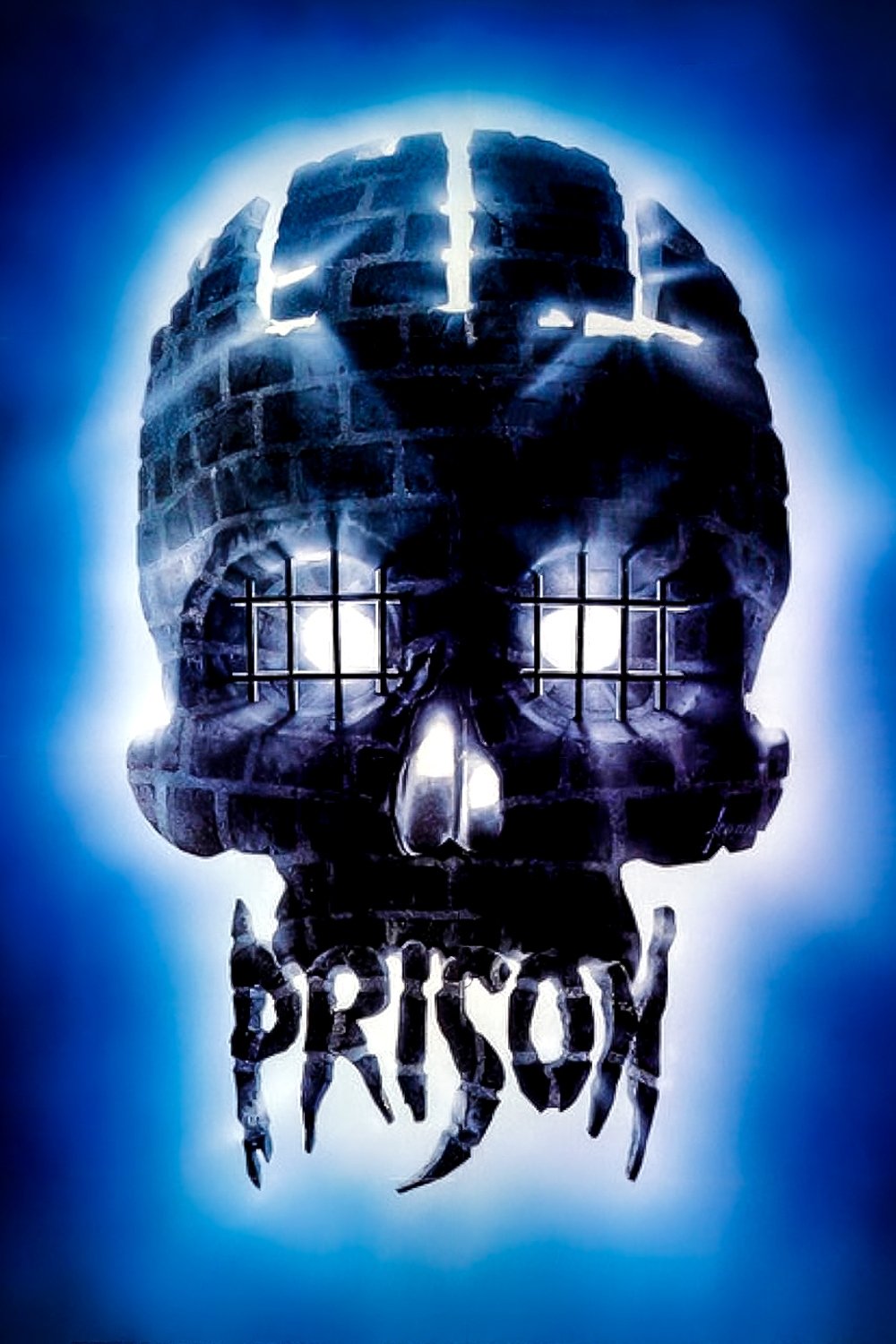
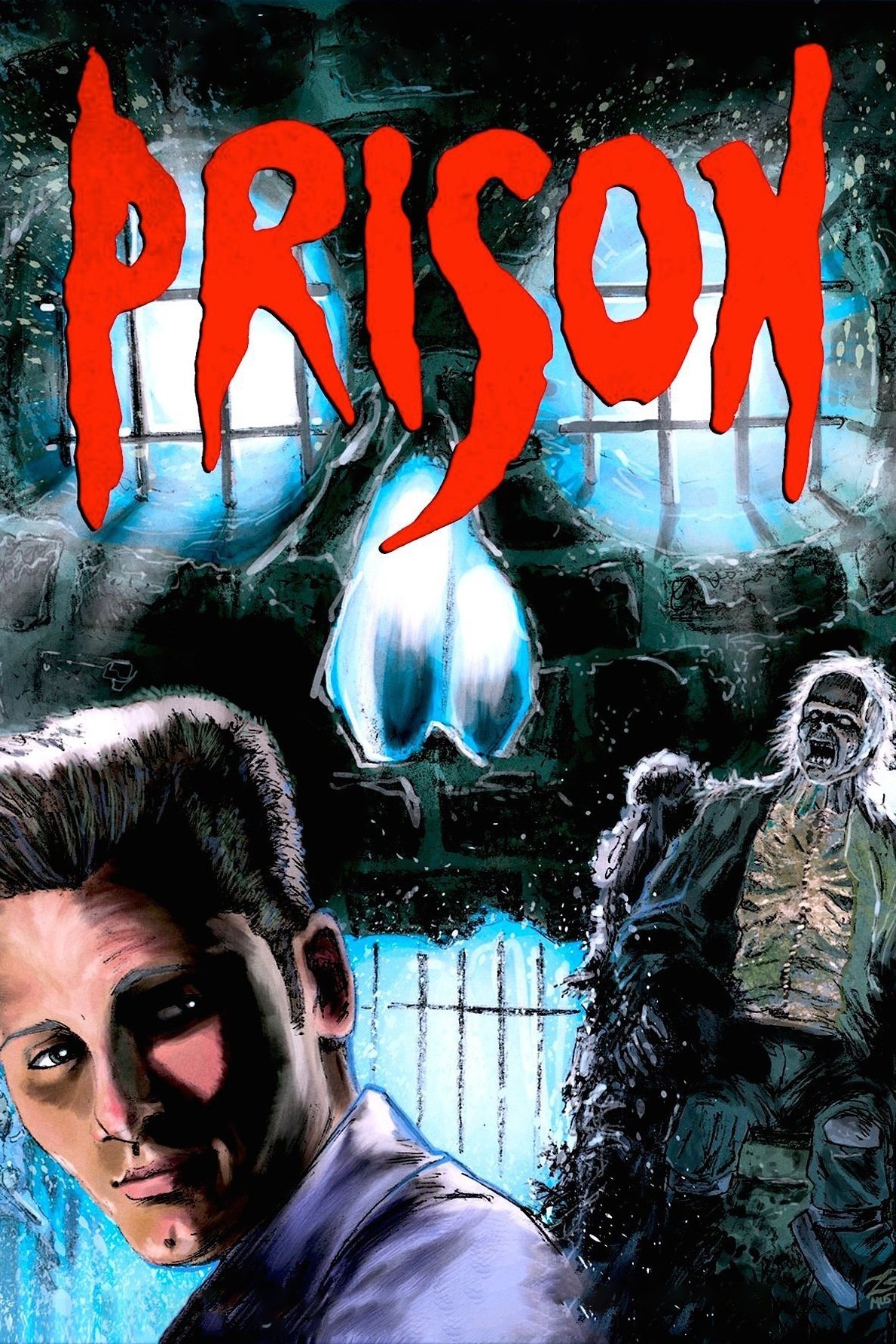
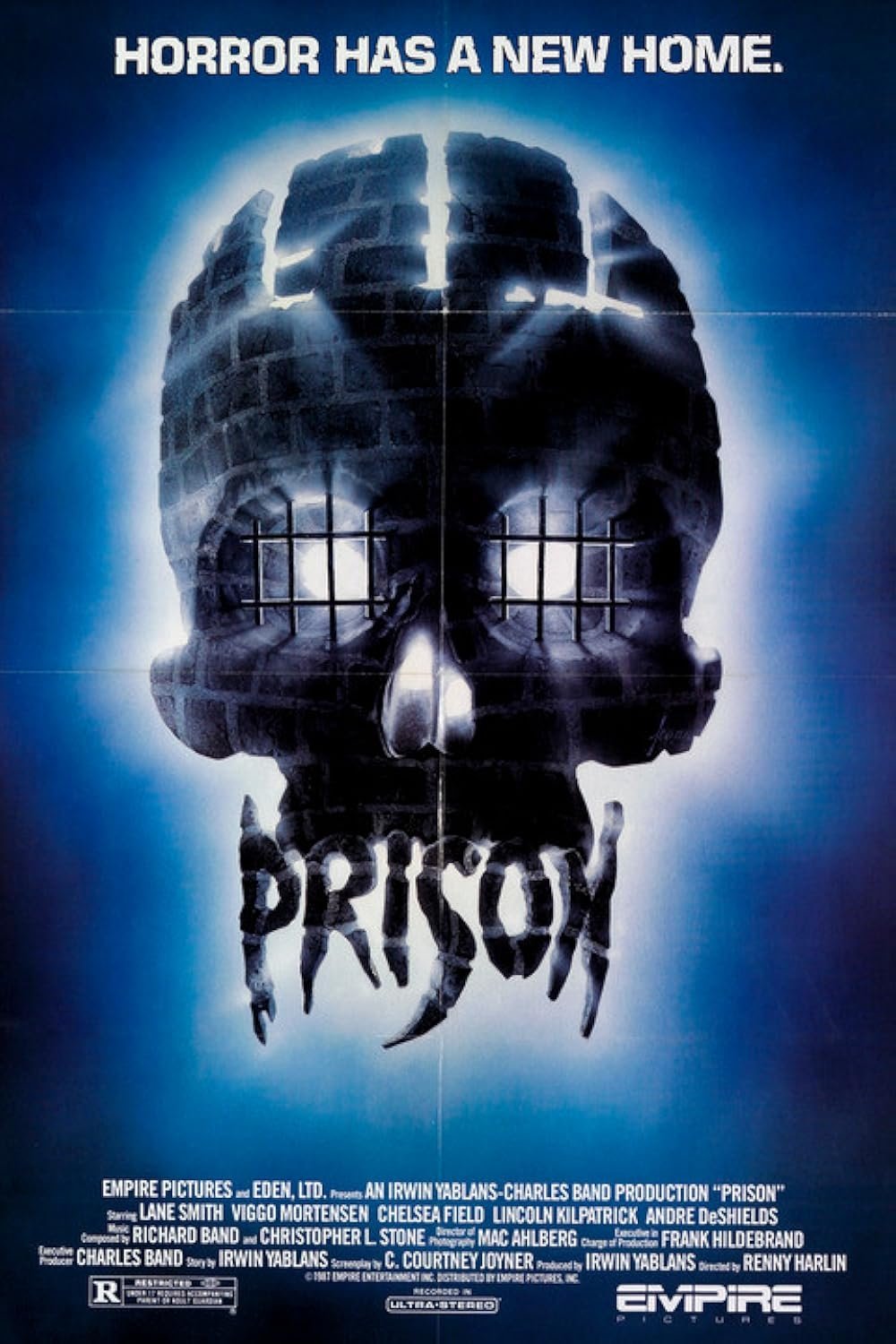
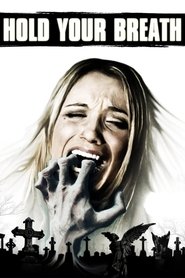
Prison (1987) poster
Director
Plot

After Charles Forsythe was sent to the electric chair for a crime he didn't commit, he forever haunts the prison where he was executed. Flash forward several years when the prison is reopened, under the control of its new warden Eaton Sharpe, a former security guard who framed Charlie. When prisoners are ordered to break down the wall to the execution room, they unknowingly release the angry spirit of Charles Forsythe, a powerful being distributing his murderous rage to all, leading up to the Warden himself.

Alternative Titles
Prisión: Un paso adelante en terror (Argentina) — Home Video Title Condenação do Além (Brazil) — Home Video Title Duro de Prender (Brazil) 鬼哭山河 (China) — Chinese Věznice (Czechia) — Czech Prison - Rückkehr aus der Hölle (Germany) Dødens fanger (Denmark) — Danish Vangla (Estonia)
Show all 26 alternative titles Presidio (Spain) Vankila (Finland) 鬼哭山河 (Hong Kong SAR China) — Chinese Börtönhalál (Hungary) — Hungarian Fejjel a falnak (Hungary) — Television Title プリズン (Japan) 킬 나이트 (South Korea) — Korean La prisión del terror (Mexico) Maximum Penalty (Philippines) Wiezienie (Poland) — Polish Zatvor (Serbia) Тюрьма (Russia) — Russian Upplopp i Credemorefängelset (Sweden) — Swedish Väznica (Slovakia) — Slovak Тюрьма (Russia) Korku Hapishanesi (Türkiye) — Turkish 鬼哭山河 (Taiwan) Trại Giam Chết Chóc (Vietnam)

Trailers & Videos

2 videos

Film Guide & Analysis

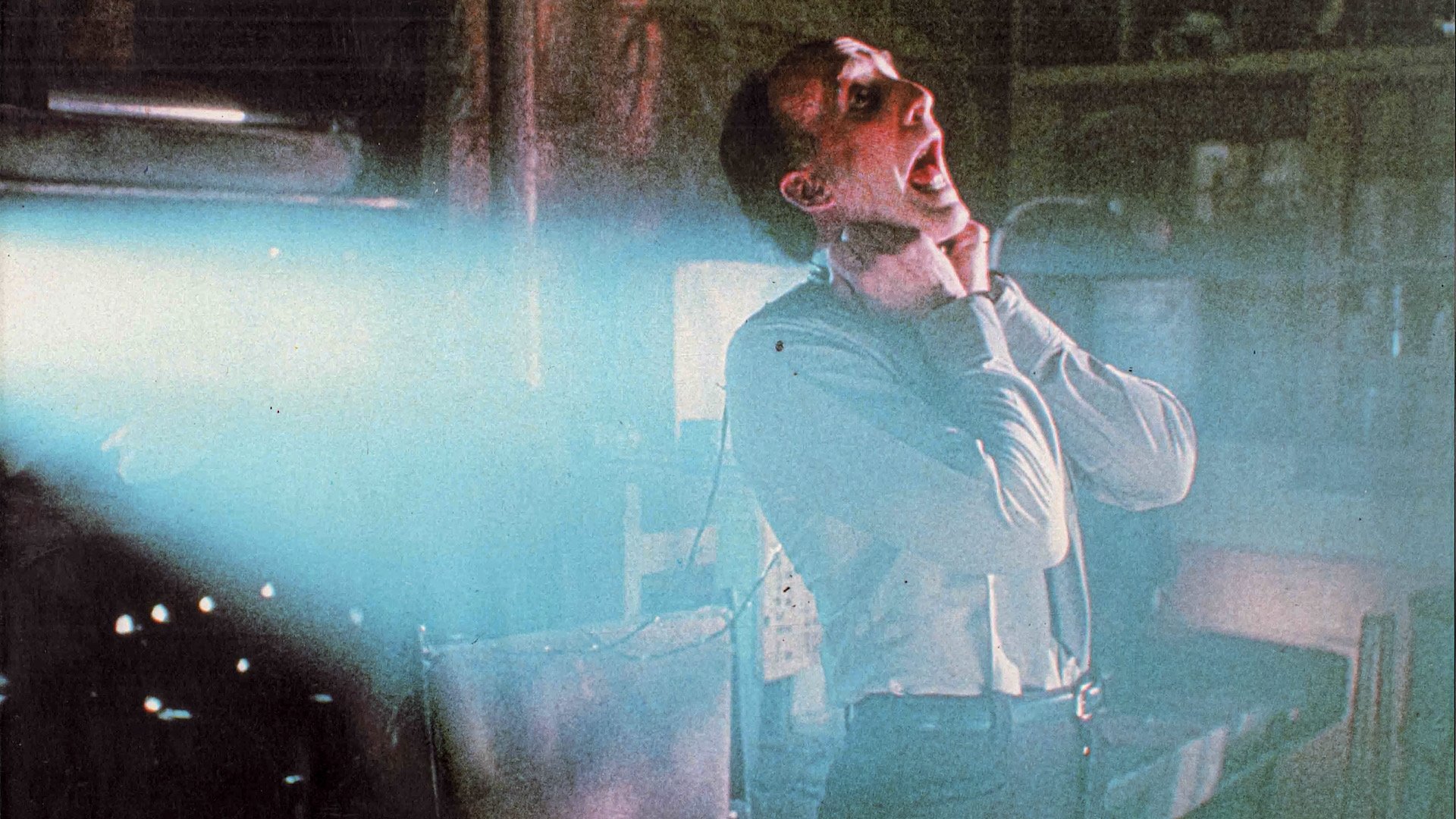
Renny Harlin turned a decommissioned Wyoming penitentiary into a full-scale supernatural effects environment, combining Mac Ahlberg's shadow-heavy photography, John Carl Buechler's prosthetics, Kane Hodder's stunt work and aggressively practical mechanical effects.

Prison occupies an unusual position within late-1980s American horror. Producer Irwin Yablans began with the idea that a prison itself could provide a setting as inherently frightening as the suburban spaces he had explored through Halloween, while screenwriter C. Courtney Joyner transformed the premise into a supernatural story rather than another conventional masked-killer film. The result combines prison drama, revenge ghost story and effects-driven horror. When the abandoned Creedmore Penitentiary is reopened because of overcrowding, Warden Ethan Sharpe returns to a building connected with the execution of Charles Forsythe, an innocent prisoner whose death Sharpe helped enable. Breaking through the sealed execution chamber releases a force that turns the institution itself into a weapon.

The production is technically more ambitious than its limited release history suggests. Renny Harlin was still at the beginning of his American career and worked with cinematographer Mac Ahlberg, production designer Philip Duffin, special makeup supervisor John Carl Buechler, mechanical-effects supervisor Eddie Surkin and stunt coordinator Kane Hodder inside the abandoned Wyoming State Prison in Rawlins. Harlin later described a thirty-six-day shoot with a relatively small crew and an effects strategy based heavily on solving problems physically in front of the camera. The prison's real concrete corridors, cells, execution spaces and industrial infrastructure gave those effects a level of scale that would have been difficult to reproduce on studio stages. Practical location, stunt work, prosthetics, mechanical effects and optical animation consequently operate as one system rather than as separate attractions.

Development and Harlin's American Break

Irwin Yablans developed Prison after deciding that incarceration itself offered unusually strong horror potential. According to production history preserved by the American Film Institute, he concluded that a prison had not yet been exploited fully as the central environment of a supernatural horror feature and hired C. Courtney Joyner to write the screenplay. Harlin later remembered Yablans approaching him during a difficult period early in his career and saying that he wanted to develop him into a new John Carpenter. For Harlin, who had made Born American in Finland but had not yet directed a feature on American soil, Prison became an intensive introduction to the Hollywood production system.

Harlin and Joyner researched both prison movies and horror films while developing the material. Their central decision was to maintain a recognizable prison environment before allowing supernatural action to destabilize it. The inmates still deal with guards, overcrowding, punishment, parole and institutional power; the ghost does not immediately replace those conflicts. This structure gives Warden Sharpe's authority dramatic importance because the supernatural violence grows out of an earlier abuse of the same institution he now controls.

Production records disagree substantially about the precise budget. Contemporary trade material cited by AFI reported a six-million-dollar production, while Harlin later remembered making the film for approximately 1.1 million dollars in thirty-six days with a crew of roughly fifty. Because those figures cannot be reconciled confidently, the more useful production fact is the evident constraint under which the filmmakers operated. Harlin has repeatedly described the shoot as an exercise in inventing practical solutions quickly, often without the time or money to rebuild an effect if the first method failed.
The Wyoming State Prison as Production Design

Principal photography began on May 18, 1987 at the abandoned Wyoming State Prison in Rawlins. Built in the nineteenth century and closed in 1982 after a modern replacement opened nearby, the complex offered the production genuine cell blocks, corridors, yards and execution infrastructure on a scale impossible to obtain economically through conventional set construction. The prison's history also supplied exactly the physical deterioration required by the story. Concrete, steel, pipes and worn institutional surfaces already carried decades of use before the art department began modifying them.

Philip Duffin's production design therefore operated partly through selection and alteration rather than complete fabrication. Rooms could be redressed, walls breached and existing architectural features incorporated directly into scenes. The filmmakers were working in a building no longer required to function as an active prison, allowing them considerably greater freedom to damage or adapt parts of the structure than they would have possessed in an operational institution. That freedom is visible in the way supernatural effects appear to emerge directly from walls, cells and mechanical systems rather than from isolated effects stages.

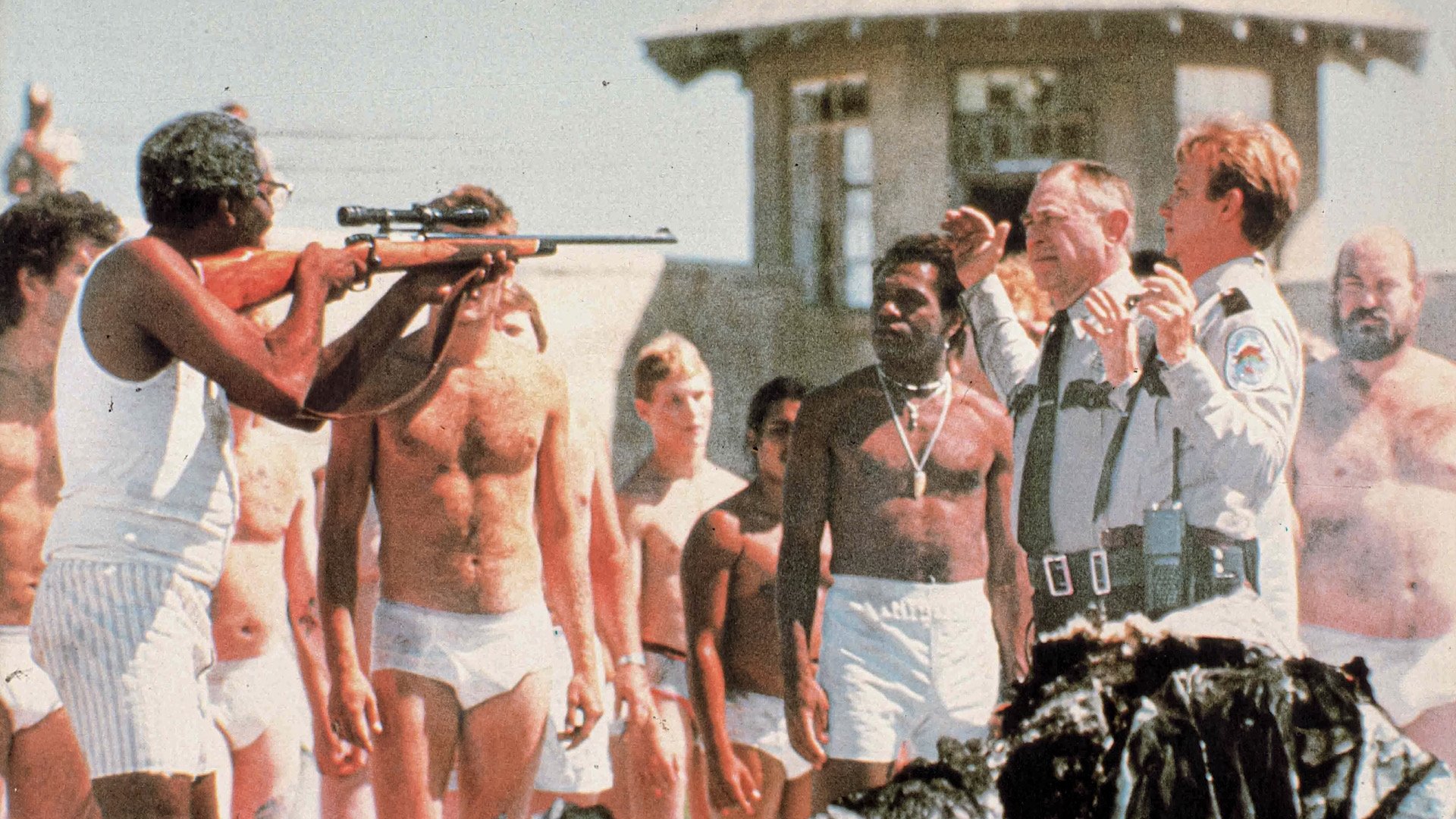
The location also affected casting and crowd scale. Harlin needed enough prisoners to make the reopened penitentiary feel genuinely populated, and the production eventually used real inmates from a nearby working institution when ordinary extras were insufficient. AFI confirms that both prisoners and prison personnel participated. Their presence gives yard and cell-block scenes a density that would have been expensive to manufacture entirely through professional background casting. The film's institutional realism is therefore partly documentary: actual prison architecture and people familiar with incarceration occupy the same frame as the fictional supernatural story.

Mac Ahlberg, Camera and In-Camera Staging

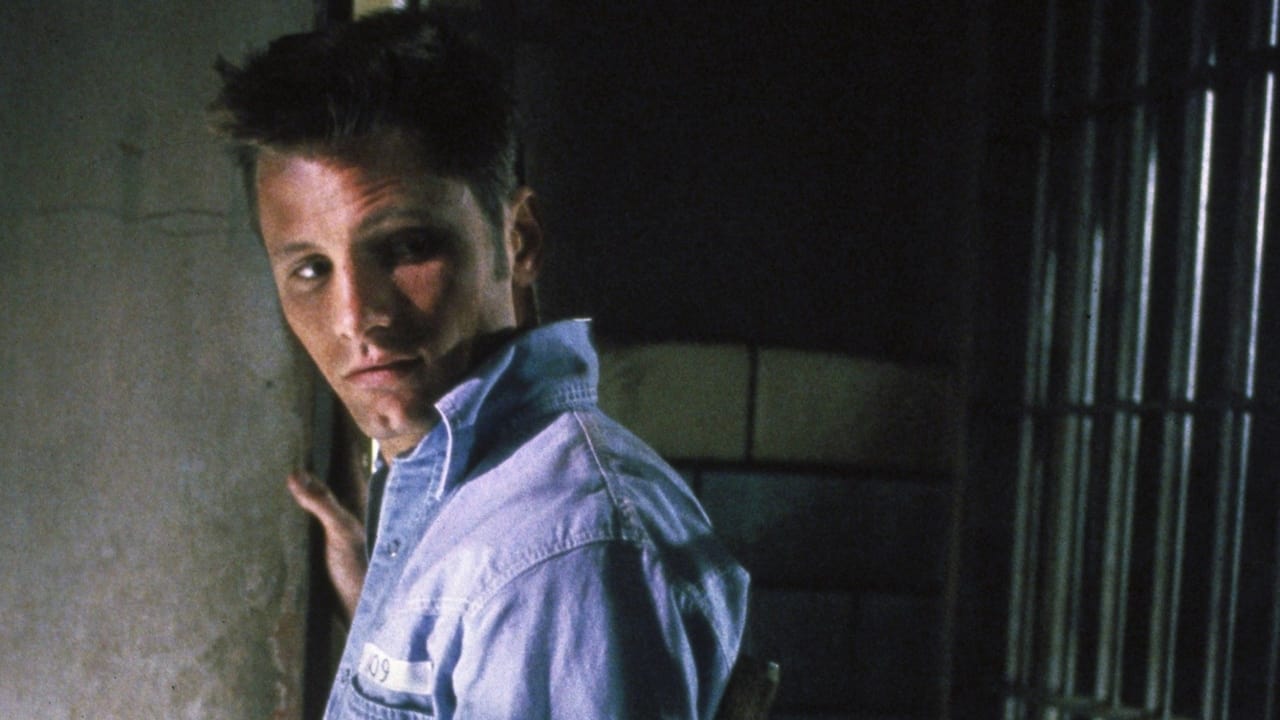
Swedish cinematographer Mac Ahlberg photographs the penitentiary as a network of depth, vertical barriers and hard surfaces rather than simply a collection of dark rooms. Bars repeatedly divide characters inside the frame, while narrow corridors create strong perspective lines that allow distant movement or light to become threatening before its source can be identified. Because the production possessed a real multi-level prison, Ahlberg could photograph staircases, galleries and cell tiers with genuine spatial relationships rather than relying constantly on isolated pieces of scenery.

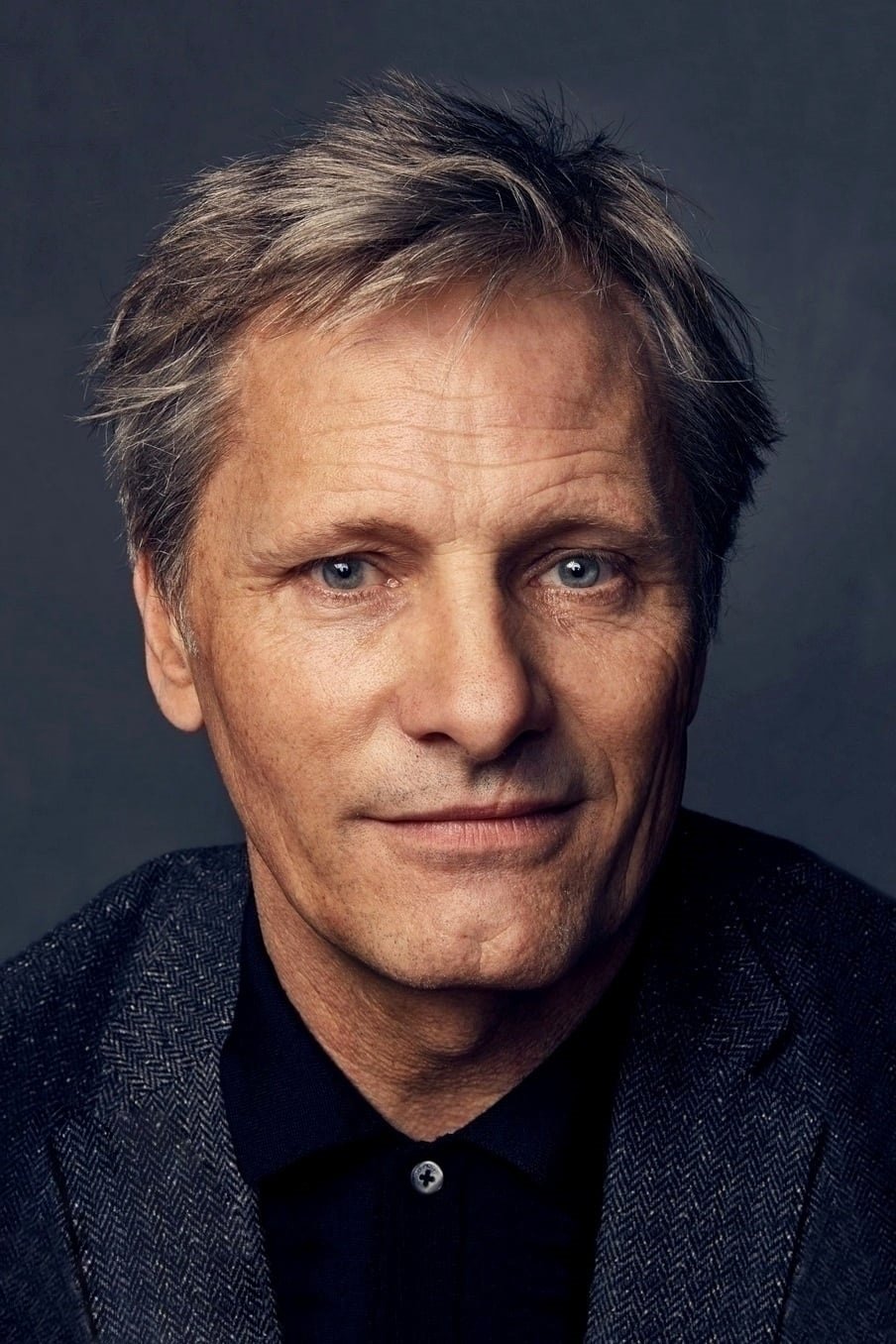
Harlin was already interested in dynamic camera movement and effects achieved during photography. The opening execution sequence uses a long subjective approach toward the electric chair, placing the viewer in the position of the condemned prisoner before the story has explained the historical event. Harlin later revealed a small technical compromise inside the shot: because the camera itself represented the prisoner's viewpoint, Viggo Mortensen could not simultaneously place his own hands naturally in front of the lens, so the hands visible during the move belonged to other people positioned around the camera.

That concern with building effects into the shot became important to Harlin's next film, A Nightmare on Elm Street 4: The Dream Master. He later recalled showing Prison to New Line executives, who specifically questioned him about how he had achieved so much material in camera and whether he could control ambitious effects within a restricted budget. Prison therefore functions technically as a bridge between Harlin's early European filmmaking and the elaborate horror-action style he would develop immediately afterward.

Mechanical Effects and In-Camera Illusion

The supernatural killings required the prison itself to appear increasingly alive. Etan Enterprises, supervised by Eddie Surkin, handled special mechanical effects, while Mechanical & Make-up Imageries contributed animatronics and modeling. Additional animation by Kevin Kutchaver, Allen Blyth and Bob Sheridan supplemented the physical work. The division of labor allowed Harlin to combine moving props, lighting, practical smoke, prosthetics and optical elements without depending on a single effects methodology.

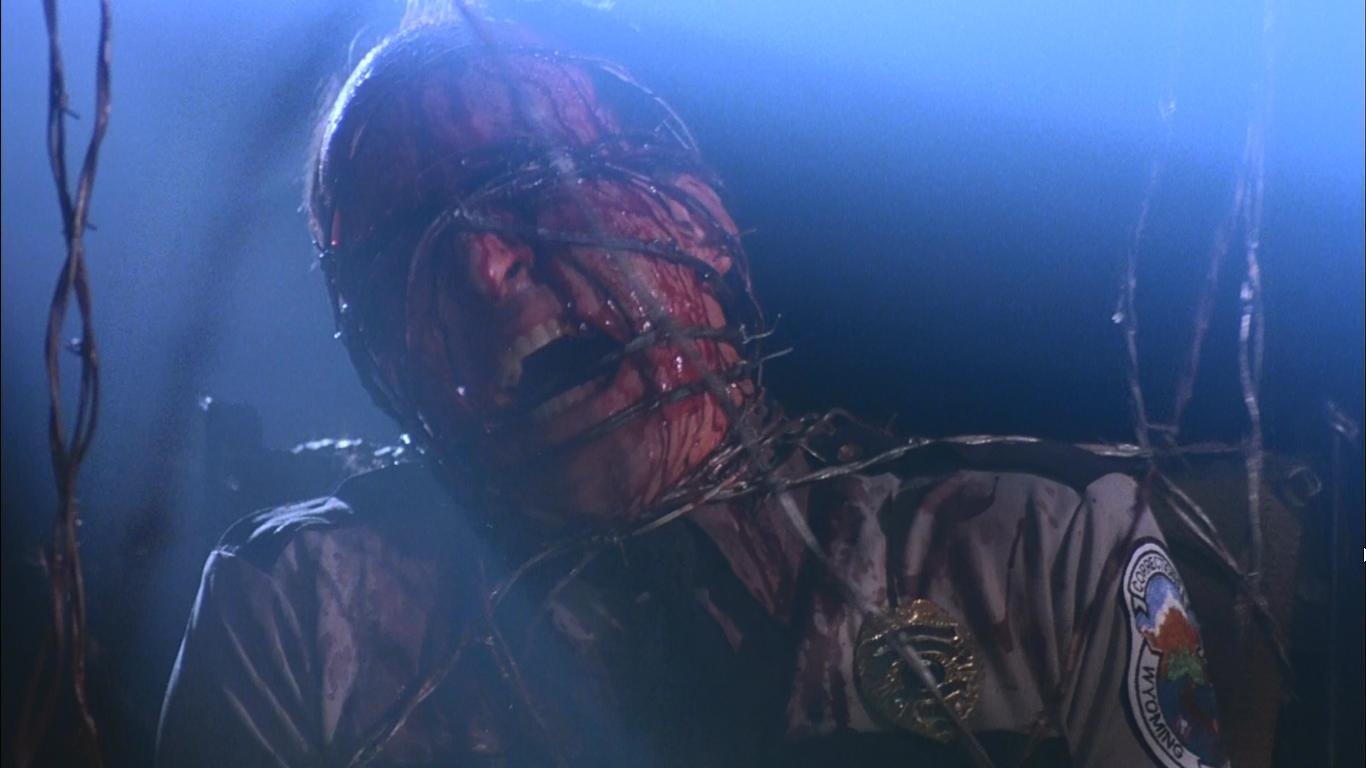
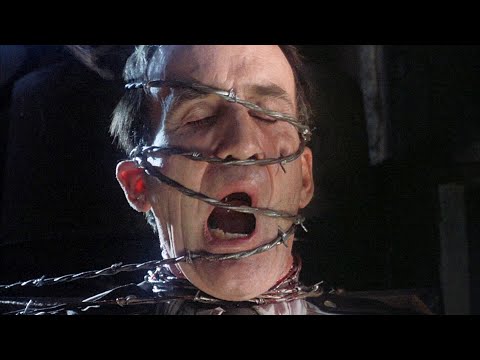
Harlin later described several solutions in precise terms. For the sequence in which barbed wire behaves like a living weapon, the filmmakers photographed the action in reverse. Wire could be positioned or manipulated safely in one direction and then appear to coil or attack when the footage was reversed. The technique is mechanically simple but depends heavily on choreography because performers, wire and camera movement must all look plausible once temporal direction is inverted.

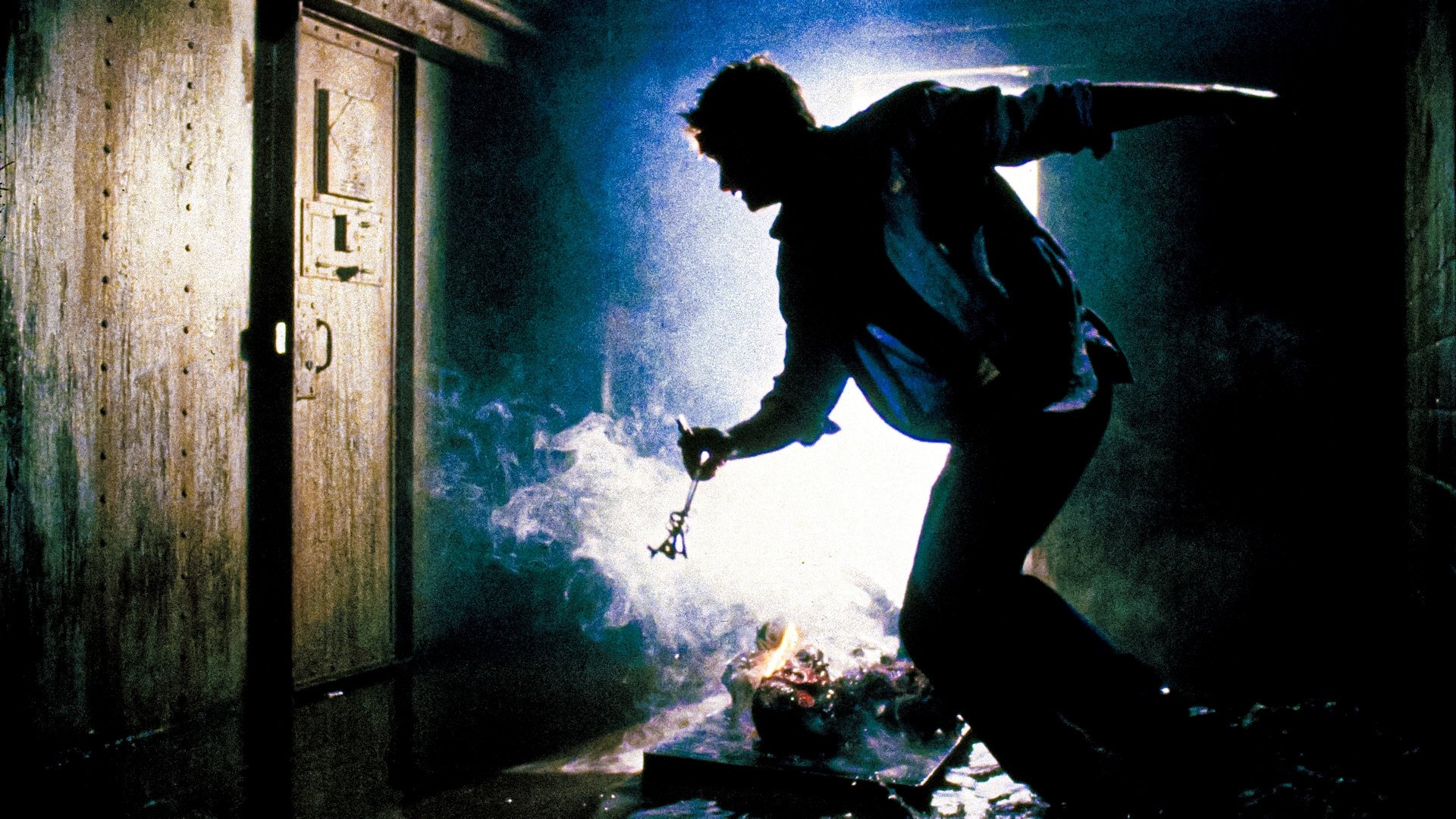
The death inside the overheated cell used an entirely different method. The crew constructed an artificial version using opaque plastic. Glue spread across the floor supplied a distorted reflective surface, smoke obscured boundaries and extremely intense lighting created the impression that the room itself was becoming incandescent. Harlin remembered the effect as an example of the production inventing solutions through trial and error. The sequence works because lighting, material choice, smoke, performance and editing all contribute small pieces of the illusion rather than any single expensive mechanism carrying the entire shot.

Buechler, Hodder, Prosthetics and Stunts

John Carl Buechler supervised the special makeup effects through Mechanical & Make-up Imageries, supported by artists including John Criswell, Hal Miles, Jeff Kennemore and Scott Wheeler. The department needed to provide burned bodies, supernatural deterioration and the final physical manifestation of Forsythe without abandoning the grounded texture created by the real prison. Buechler's work therefore emphasizes damaged human anatomy rather than a completely abstract ghost design.

Kane Hodder was simultaneously the production's stunt coordinator and one of its most physically important performers. He later explained that the budget made it impractical to transport large numbers of specialized stunt people to Wyoming for isolated shots, so he personally executed much of the stunt workload. Viggo Mortensen also performed a considerable amount of his own physical work. This gave action scenes a direct relationship between principal performers, practical environments and stunt choreography rather than requiring constant substitution.

Buechler eventually asked Hodder to perform Forsythe during the supernatural climax. Hodder described the makeup as a full-body suit combined with seven prosthetic pieces on the head, dentures and contact lenses, requiring hours of application. He had never previously performed such an extensive creature role and discovered that he enjoyed acting through physical restriction and heavy makeup. The experience became historically significant beyond Prison itself. When Buechler later directed Friday the 13th Part VII: The New Blood, he remembered Hodder's ability to perform stunts and communicate beneath prosthetics and recommended him for Jason Voorhees, beginning the association that would define Hodder's horror career.

Music, Release and Cult Afterlife

Richard Band and Christopher L. Stone composed the score, with Band also credited as conductor. The production credits specify that the music was composed and performed entirely using the AudioFrame system supplied by WaveFrame Corporation, making the soundtrack another technically modern element inside a film visually dominated by nineteenth-century architecture and mechanical effects. Prison was recorded in Ultra-Stereo, with an unusually extensive sound-postproduction team responsible for effects editing, ADR, Foley and final rerecording. The contrast between synthesized score, metallic prison ambience and supernatural sound gives the location an acoustic identity as strong as its visual one.

The film's distribution was far weaker than the production suggested. AFI records a regional New York opening on March 4, 1988 and a Los Angeles opening on May 20, noting that the picture performed poorly during its initial release. Box Office Mojo records only $345,704 in domestic theatrical revenue. Harlin later explained that financial trouble involving one of the companies behind the film severely damaged its release prospects. Prison initially reached relatively few theatrical viewers.

Its reputation developed gradually through VHS, repertory screenings and later home-video rediscovery. Harlin recalled carrying a VHS copy himself to meetings because the film had not received the exposure he expected; that copy ultimately helped demonstrate his abilities to the producers of A Nightmare on Elm Street 4. Scream Factory finally gave Prison a major American Blu-ray and DVD release in 2013, including Harlin commentary and the retrospective documentary Hard Time: The Making of Prison with Harlin, Yablans, Joyner, Hodder, Buechler, Charles Band and other crew members.

That later documentation has made the film particularly valuable as a record of practical horror production. Prison captures Harlin before large Hollywood budgets, Hodder immediately before Jason, Buechler during the peak period of his effects work and Empire Pictures attempting a larger-scale supernatural thriller inside a genuine location. Its theatrical career was minor, but its technical history is unusually rich: an abandoned penitentiary became production design, performers became stunt personnel, physical materials substituted for expensive optical solutions and the restrictions of independent filmmaking directly shaped the film's most memorable horror images.

Cast

View Full Cast & Crew →

Release & Distribution

Distributors (1)

  • Empire International Pictures US

Release History (9)

Release DateTerritoryRelease TypeFormatDistributorCertificationNotes
1987-10-28 Italy Premiere — — — MIFED
1987-12-08 United Kingdom Theatrical — — 18
1988-03-04 United States Limited Theatrical — — R New York City, New York
1988-03-30 Germany Physical — — 18 Video Premiere
1988-09-23 Ireland Theatrical — — —
2000-01-29 Germany TV — — 18 RTL 2
2016-02-25 Germany Physical Blu-ray — 18 Koch Media Blu-Ray
2018-02-08 Germany Physical DVD, Blu-ray — 18 Koch Media DVD & Blu-Ray
2023-12-11 Italy Physical — — —
Horror has a new home.