A Sequel after Wes Craven
The change in leadership was a substantial part of the production's identity. Craven had directed every previous theatrical Scream, and the principal actors' shared history with him gave their return personal weight. Radio Silence, the collective comprising Bettinelli-Olpin, Gillett and producer Chad Villella, came to the project through its relationship with James Vanderbilt and the producers of Ready or Not. In a January 2022 Filmmaker interview, Villella said the group received the screenplay through that connection and accepted the opportunity after reading it. Their account establishes an unusually direct route from an existing creative partnership to the stewardship of a long-running franchise.
The filmmakers described honoring Craven as a continuing practical concern. They studied his interviews and approached earlier collaborators, including editor Patrick Lussier, while Kevin Williamson participated as an executive producer. These consultations gave the newcomers a means of understanding how apparently casual dialogue, spatial tension and changes in rhythm could coexist. Their remarks are expressions of the team's intentions, not an independent verdict that it reproduced its predecessor's achievements. The distinction matters in a series whose identity had rested heavily on one director's sensibility. Inheritance became a production problem as well as the explicit subject of the screenplay.
Filming in Wilmington, North Carolina, introduced additional pressures. According to the directors' production interview, some planned sequences changed because the film was shot during the pandemic, although the central story survived largely intact. The restricted working environment affected the construction of large interior scenes and the division of space between departments. These circumstances distinguish the 2022 production from the previous cycle without explaining every choice as a consequence of health protocols. Radio Silence's account emphasizes continuity of the original script, permitting the finished film's thematic direction to be attributed to decisions made before the cameras began rolling.
The Requel and Its Discontent
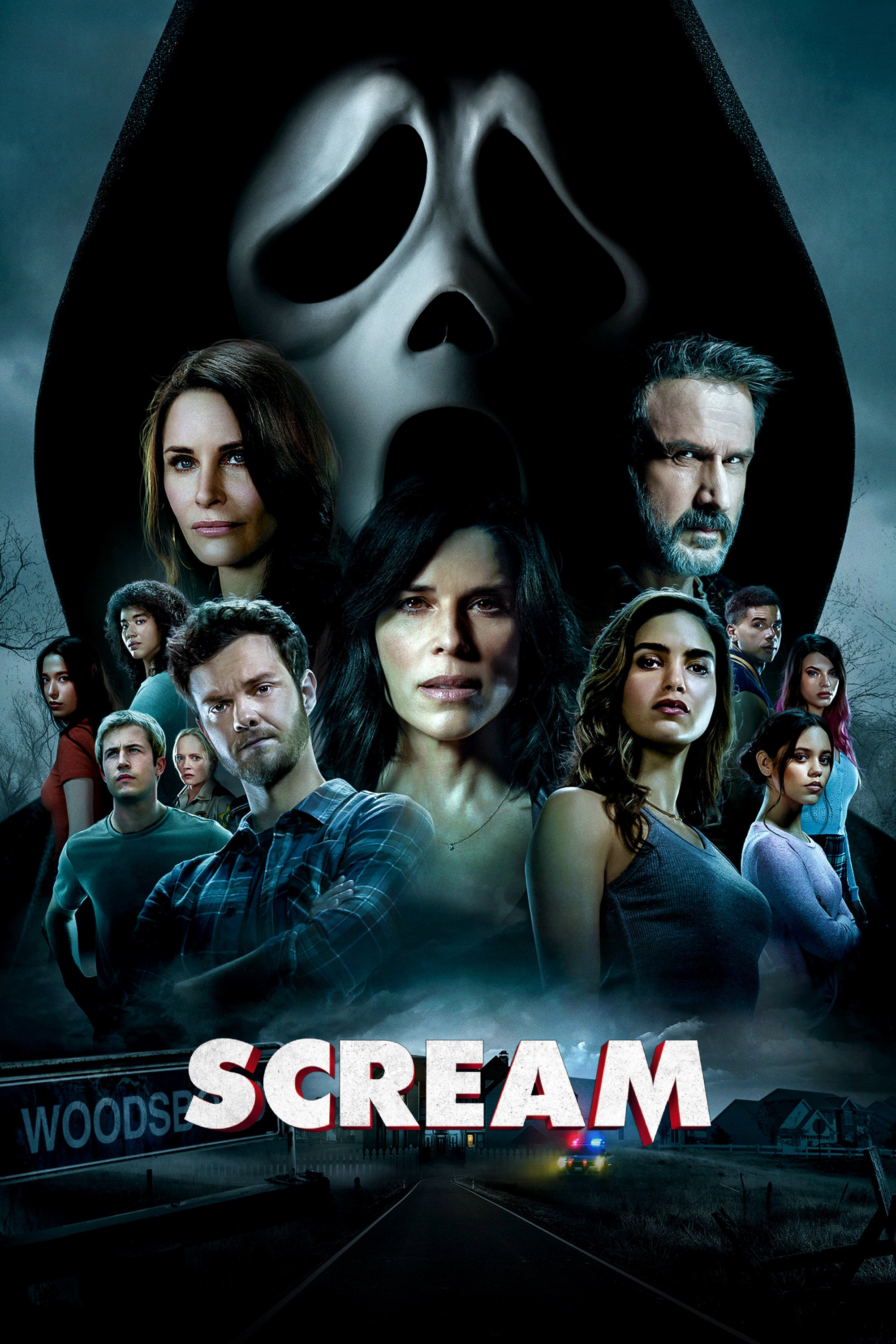
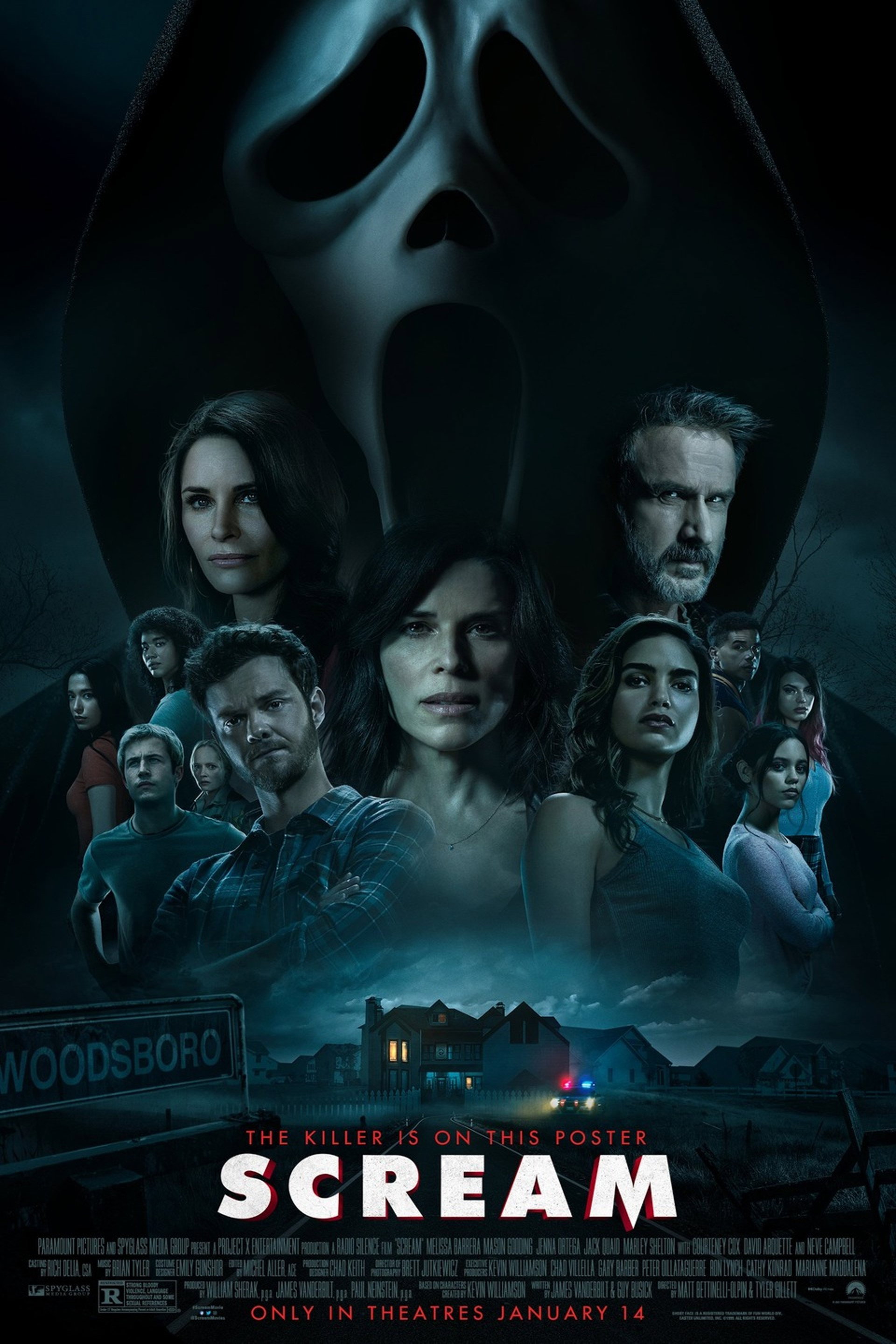
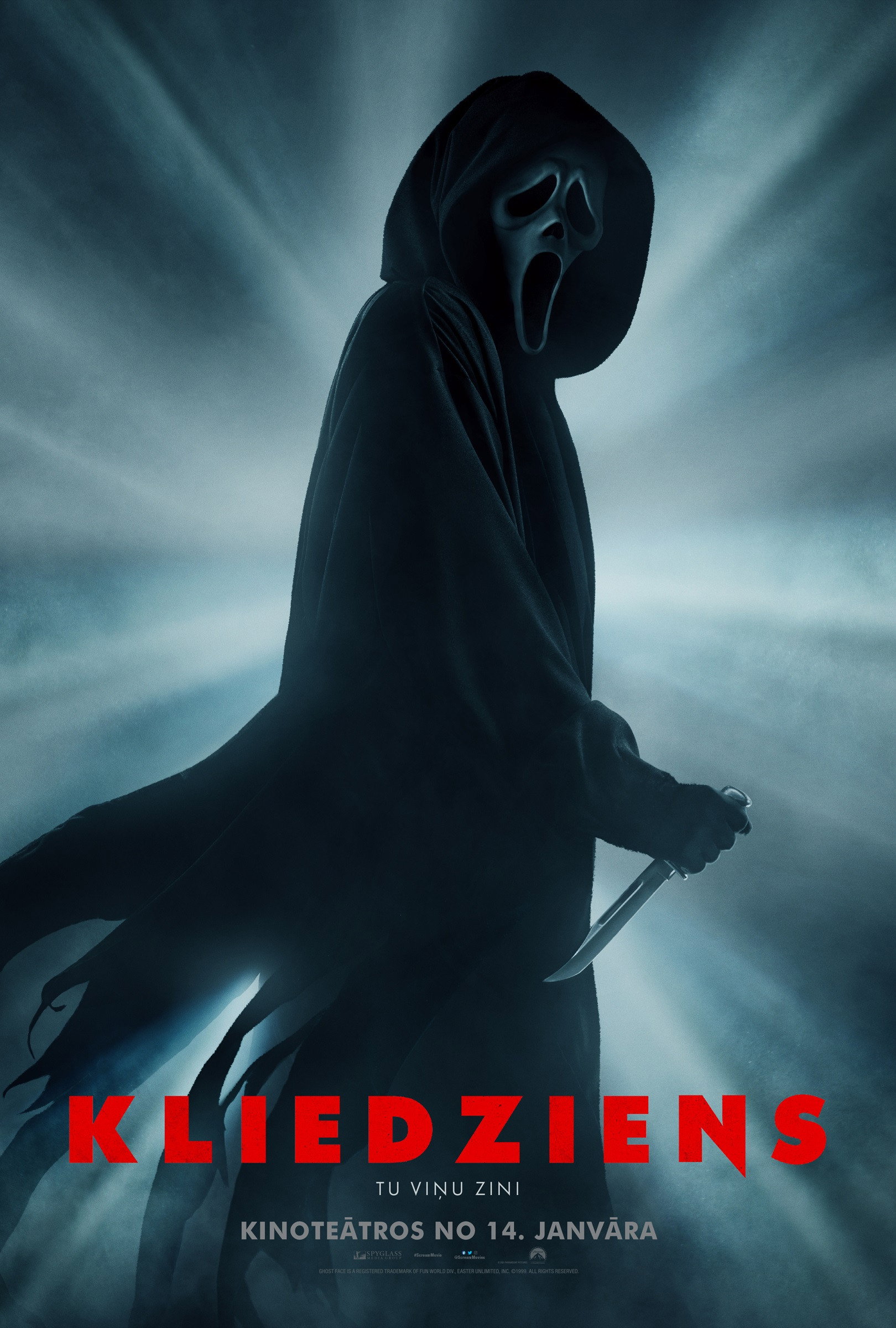
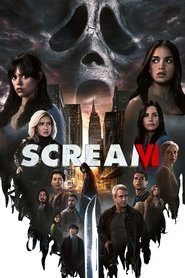
Vanderbilt and Busick built their script around a form they called the requel: a continuation that borrows the narrative shape and iconography of an earlier hit while presenting new protagonists. In a substantial Fangoria interview, they recalled watching all four preceding films together, taking separate notes and discovering that they had identified similar priorities. They wanted Woodsboro to remain central and chose to spend time establishing younger characters before the established survivors arrived. The deliberately unnumbered title performs the same balancing act outside the story, welcoming viewers who might hesitate at an installment bearing the number five.
The writers also identified hostile fan behavior as a timely subject. Scream's fictional Stab movies have their own disappointed followers, and the new murders turn dissatisfaction with a franchise into a violent attempt to control its direction. The script makes room for contemporary debate about what kinds of horror deserve prestige, including the vocabulary of so-called elevated horror. These discussions are not presented as an authoritative distinction between valuable and disposable films. The writers described the label as divisive and emphasized that their characters' arguments arise from changing audience habits. The irony is deliberate: the film is itself a revival shaped by the audience expectations it examines.
This premise expands the self-referential method established in 1996. Earlier entries connected violent acts with movie knowledge, journalism and the commercial exploitation of survivors. The 2022 installment directs attention toward viewers who regard their preferred version of a story as something they are entitled to enforce. Its whodunit remains grounded in familiar clues, apparent alibis and the Ghostface costume, but the social setting has changed. Such a strategy allows the sequel to address the franchise's own revival without treating nostalgia as a sufficient reason for another killing spree. Whether the critique remains convincing is a separate question from the screenwriters' documented aims.
Tara, Sam and an Altered Opening
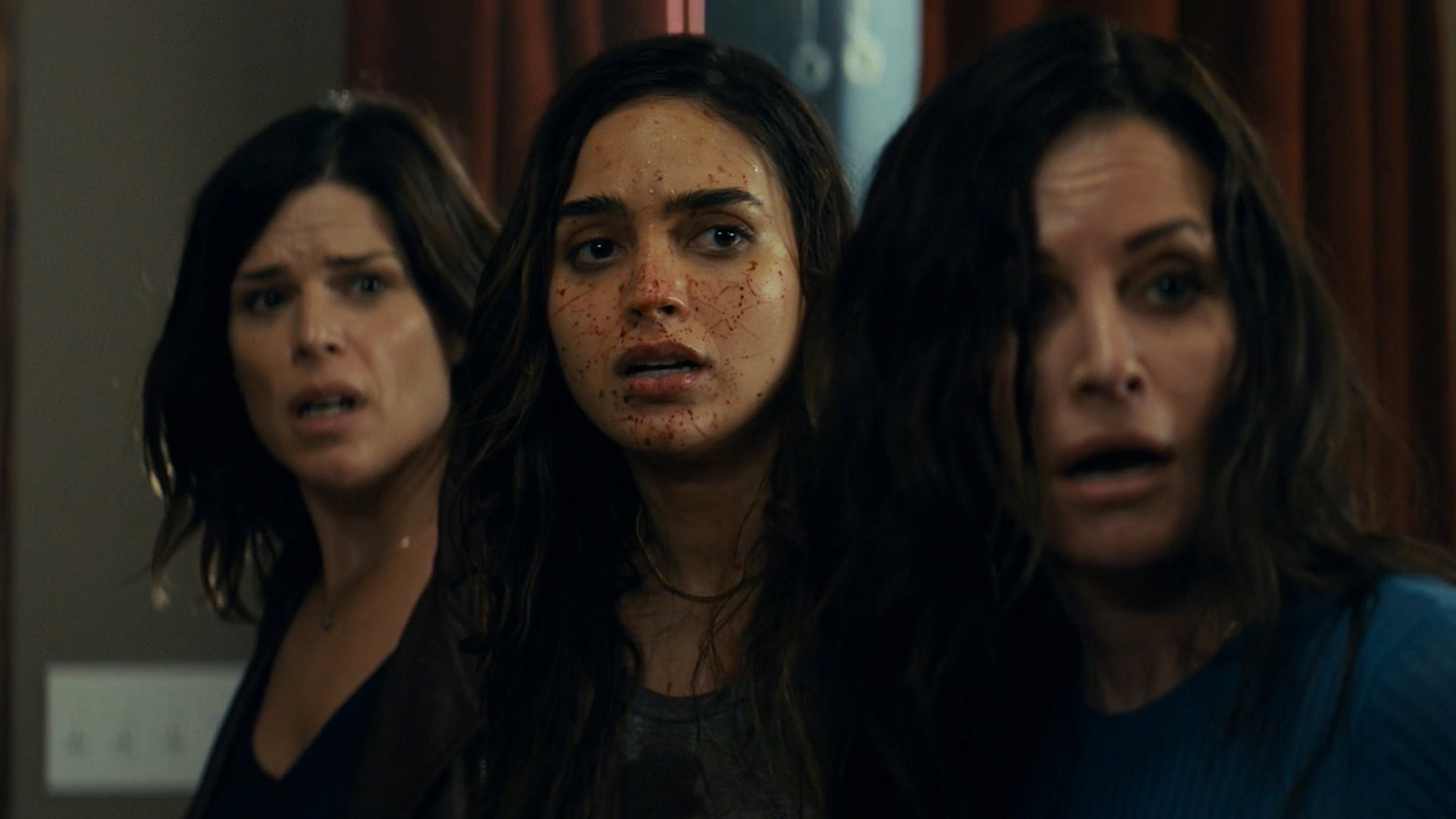
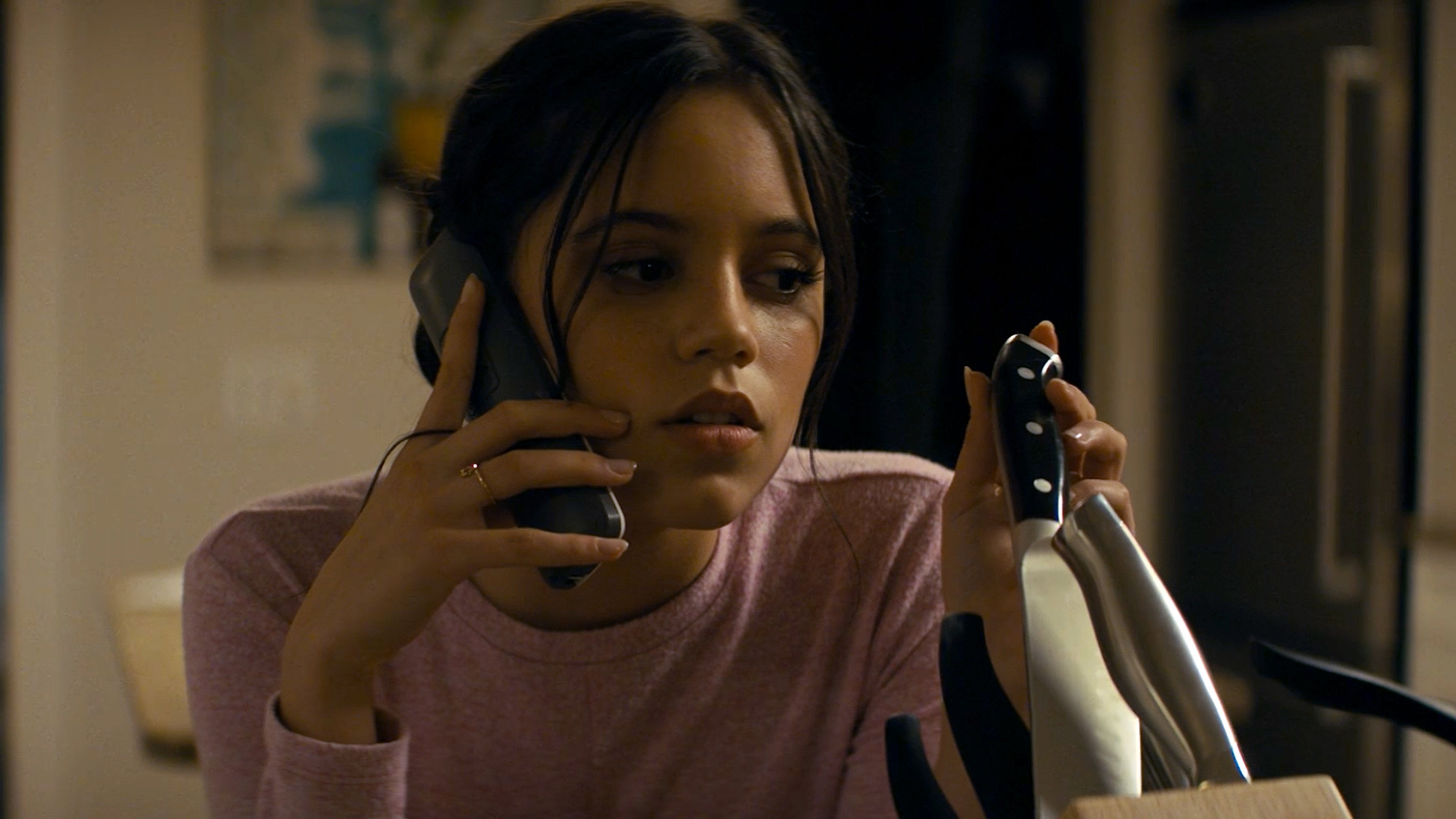
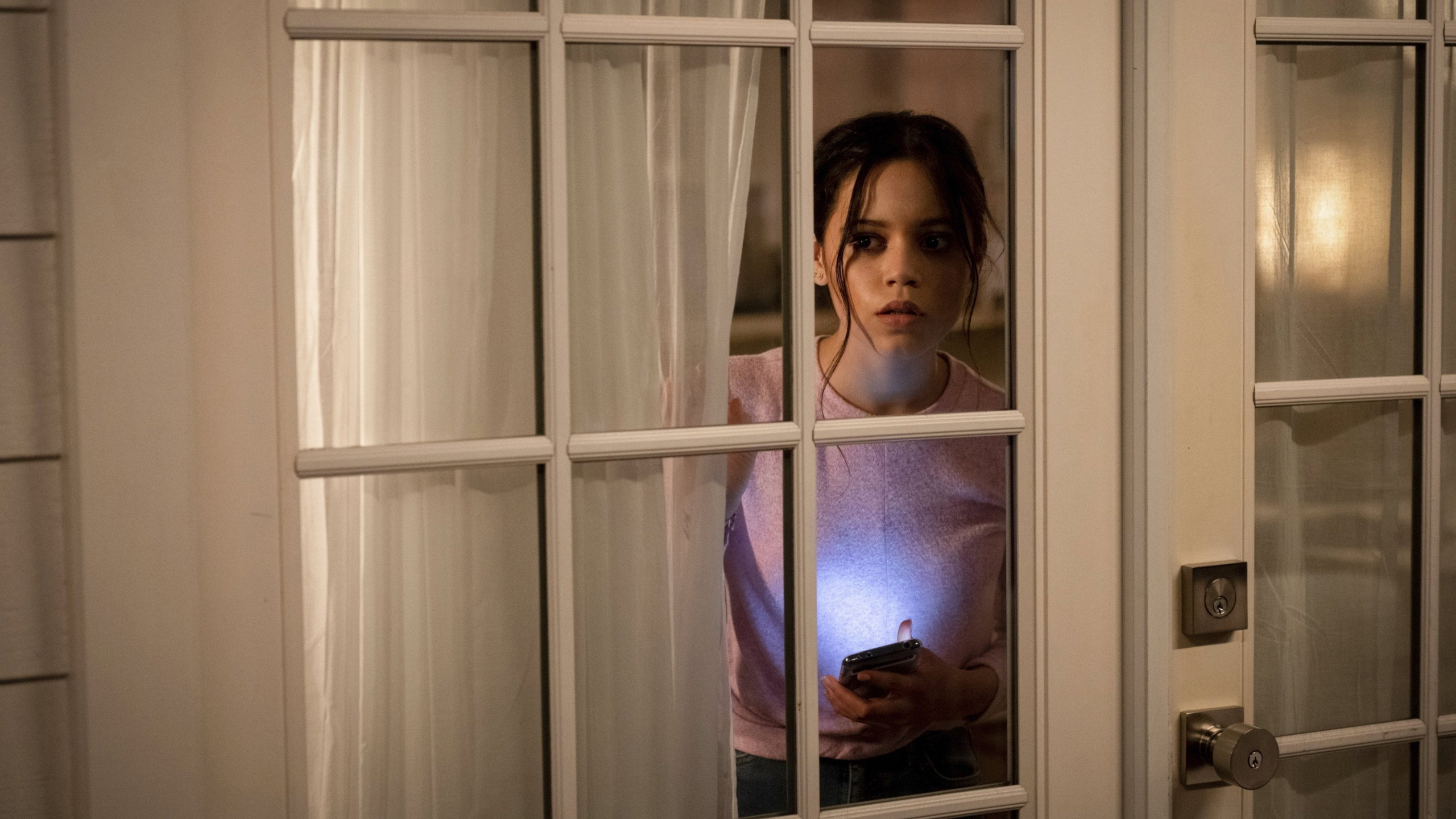
The first attack revisits the series' famous telephone ritual, replacing Casey Becker with Tara Carpenter and updating the argument over horror taste. The threat travels through a house whose ordinary rooms become progressively less secure. In the 1996 film the apparent opening star is murdered, immediately undermining expectations about a familiar performer. Tara, by contrast, survives severe injuries. This change creates an immediate link between the initial violence and Sam's return, shifting the drama from a self-contained prologue toward the sisters' relationship. It also shows that recognizable staging need not lead to an identical outcome.
Sam's place within the franchise history is more complicated than Sidney Prescott's role as a survivor. The screenplay introduces a connection to Billy Loomis and uses her fear of that inheritance as a source of conflict. In Fangoria, the writers explained that they developed this idea to create a protagonist whose history would be distinct from Sidney's experience. Their testimony makes the intention clear, while the scenes themselves invite scrutiny of how a family association can shape someone's self-image. The film treats a notorious killer's legacy as a pressure placed upon a living person, an approach that parallels its broader anxiety about being defined by an established story.
Photography and Reconstructed Spaces
Cinematographer Brett Jutkiewicz, who had worked with the directors on Ready or Not, described a visual approach that acknowledged earlier Scream films without reproducing their lighting exactly. In an April 2022 interview with Filmmaker, he said the production retained anamorphic photography and selected Panavision G Series lenses that had been adjusted to introduce a softer, older character. Jutkiewicz tested multiple Panavision anamorphic families before choosing the adjusted lenses. Their characteristics connected the resulting images with the widescreen identity established across the previous installments.
Jutkiewicz gave specific examples of creating suspense through camera movement and motivated light. During Tara's opening ordeal, a cooler mobile-phone glow contrasted with warmer illumination inside the house, and Steadicam movement allowed the camera to follow her through connected spaces. His description explains how the viewer's awareness of an unseen presence could develop without plunging every room into darkness. The hospital interiors posed a different problem: the production built significant portions on a stage and incorporated unusual handrail lighting drawn from visual references. These details make the film's appearance a matter of documented decisions about spatial legibility and color, not a generic claim that the image was modernized.
The return to Stu Macher's house required physical reconstruction. Villella told Filmmaker that the design department sent surveyors to the original California location before reproducing substantial portions of the building in Wilmington. A local Port City Daily feature added testimony from set decorators who sought matching fabrics, furnishings and interior details, working around supply shortages. The result was a practical environment that viewers familiar with the 1996 finale could identify through its architecture. Its reuse also gives the new climax a material version of the movie's central question: how closely must a revival resemble its model before that resemblance becomes part of its danger?
Physical Horror and the Return of Ghostface
The violence retains the recognizable Ghostface combination of a human attacker, a knife and an often vulnerable body. Unlike an apparently invulnerable supernatural slasher, the assailant moves through ordinary rooms and can be obstructed by doors, furniture and the movements of another person. These limits create opportunities for the directors to stretch an anticipated attack. The repeated use of thresholds and possible hiding places turns household geography into a suspense device. Such scenes depend on giving the audience enough information to imagine where the killer might emerge, then delaying the point at which that suspicion is confirmed.
The production used substantial physical effects to make the injuries register within those spaces. A January 2022 Port City Daily report quoted makeup artist Jeff Goodwin of Bearded Skull Makeup and FX Group, who said he and special-effects department head Rick Pour proposed a particularly forceful injury gag that had not been specified in the original script. Goodwin described drawing on a technique from earlier work and requiring little computer imagery for the result. His recollection supports an account of practical collaboration, without proving that every wound in the picture was mechanically achieved. The film's degree of violence also matters to its treatment of survival: characters may know the slasher rules and still experience lasting physical harm.
Release and Contemporary Reception
Paramount released Scream in the United States on January 14, 2022, during a period when theatrical attendance continued to be affected by the pandemic. The Numbers records a domestic opening weekend of $30,018,805 and a North American theatrical total of $81,641,405. These are ticket-revenue figures, not the producers' net earnings. The opening was substantially larger than that of Scream 4 in 2011, demonstrating renewed commercial interest in the property despite the long interruption and the change of directors. A comparison of opening weekends alone cannot establish which specific features of the new film persuaded audiences to attend.
In her January 2022 Los Angeles Times review, Katie Walsh praised the sequel's continued ability to combine brutal murders with a self-conscious discussion of genre and franchise culture. She also noted a division of attention between newcomers and established characters, leaving some motivations underdeveloped. That assessment is a contemporary critic's judgment, distinct from the filmmakers' claims about their intentions. The film's release consequently illustrates a productive tension in legacy horror: the past supplies recognizable emotional stakes, while the introduction of a younger cast demands time and autonomy. Scream (2022) offers a documented example of this negotiation through its writing, technical design and immediate reception.