Mondo Cane (1962)

IT
HORROR FILM Documentary
SUBGENRES SHOCKUMENTARY
Runtime
105 min
Release
March 30, 1962
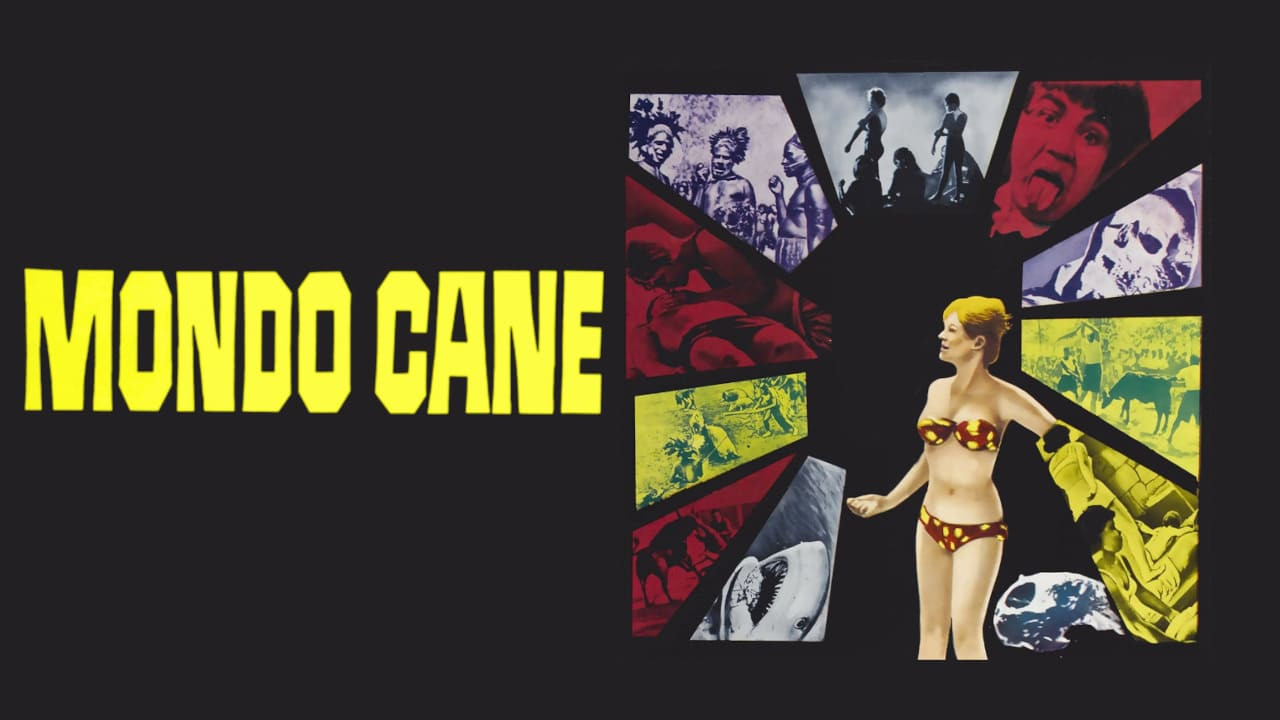
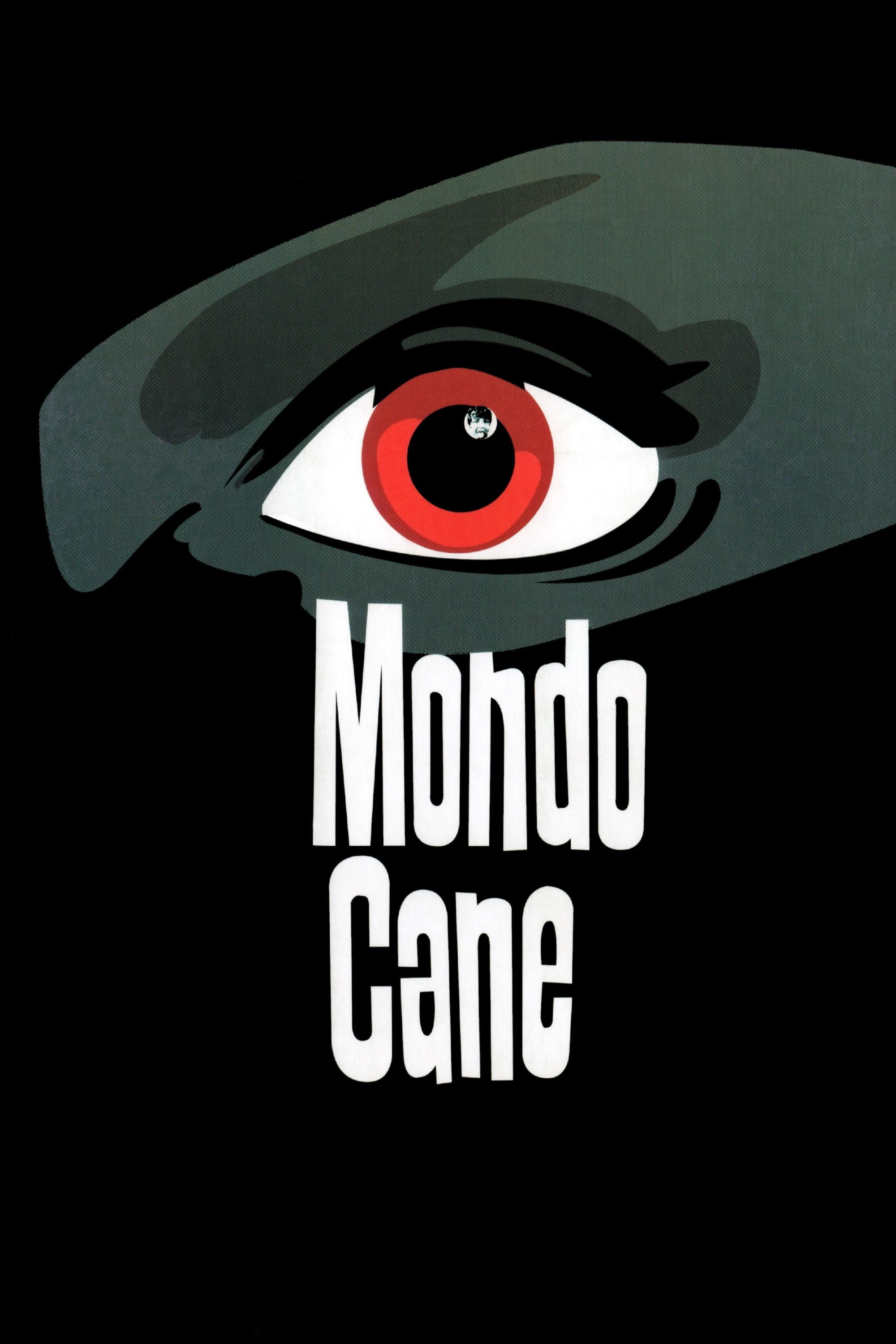
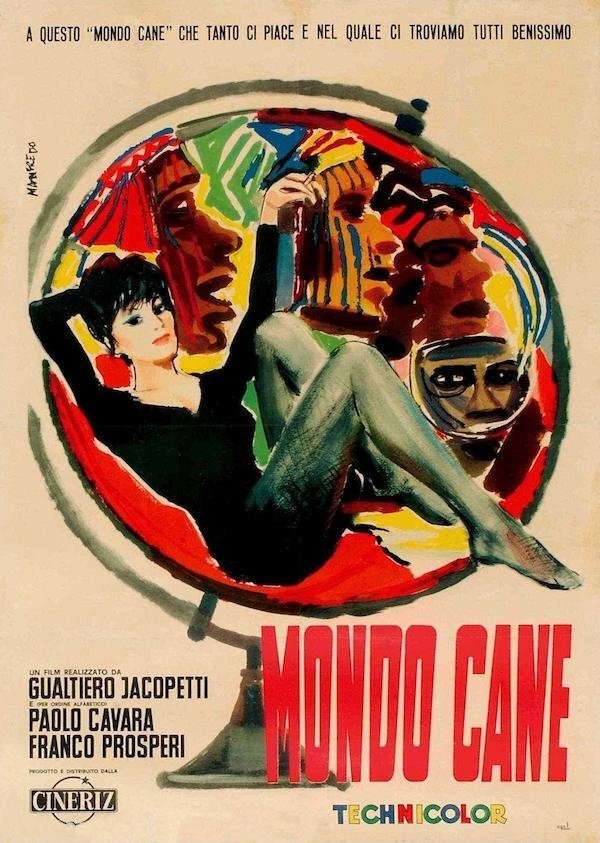
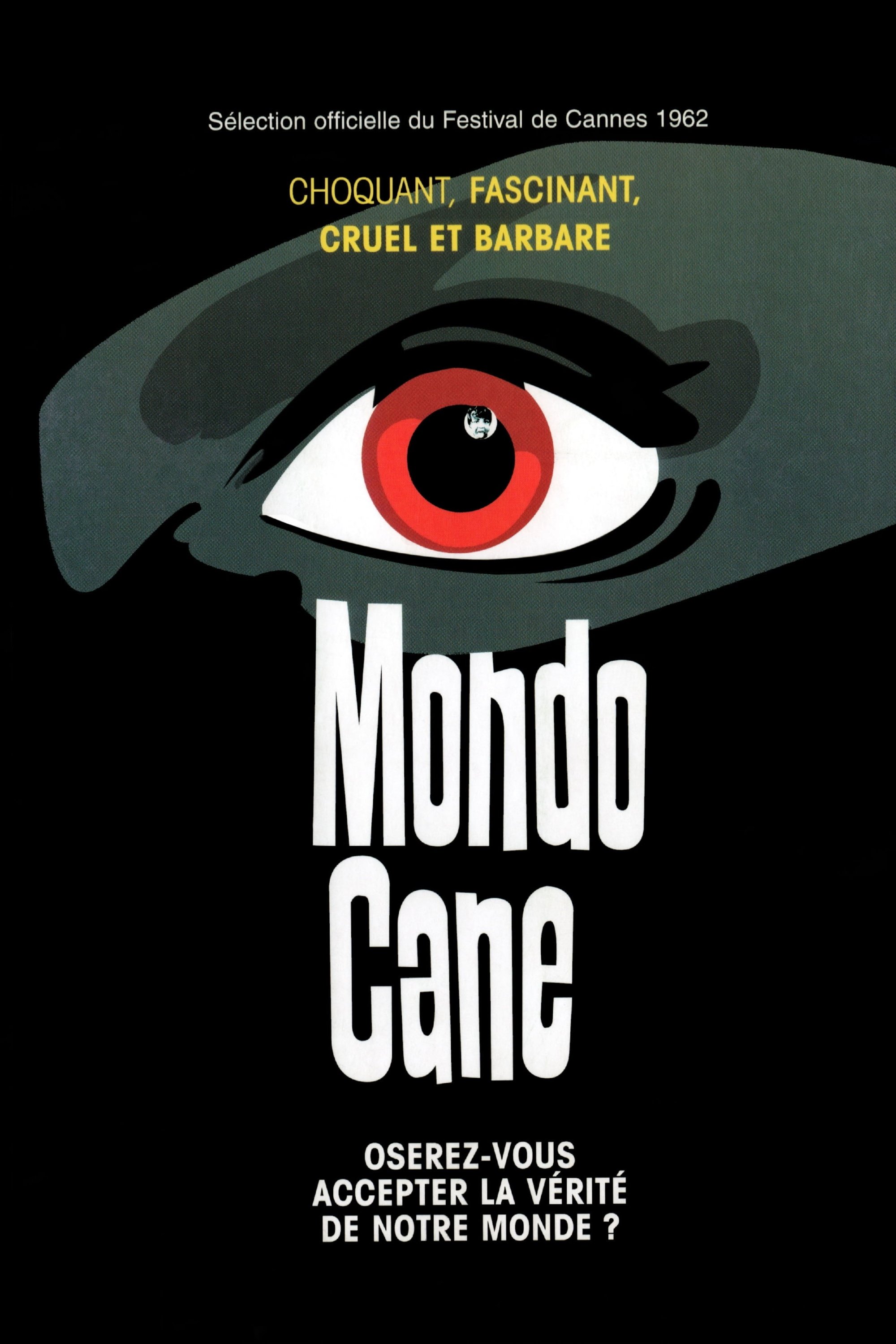
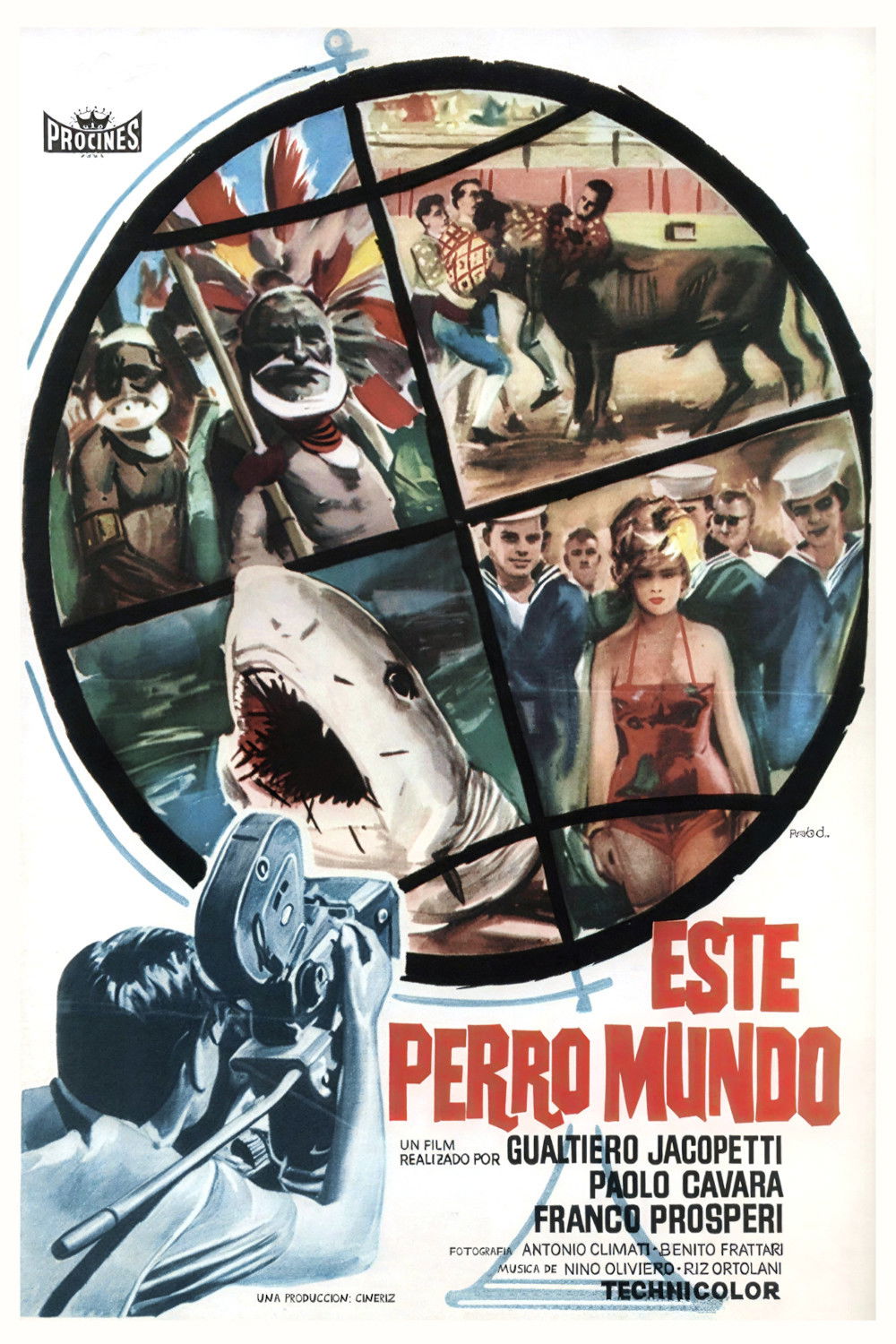
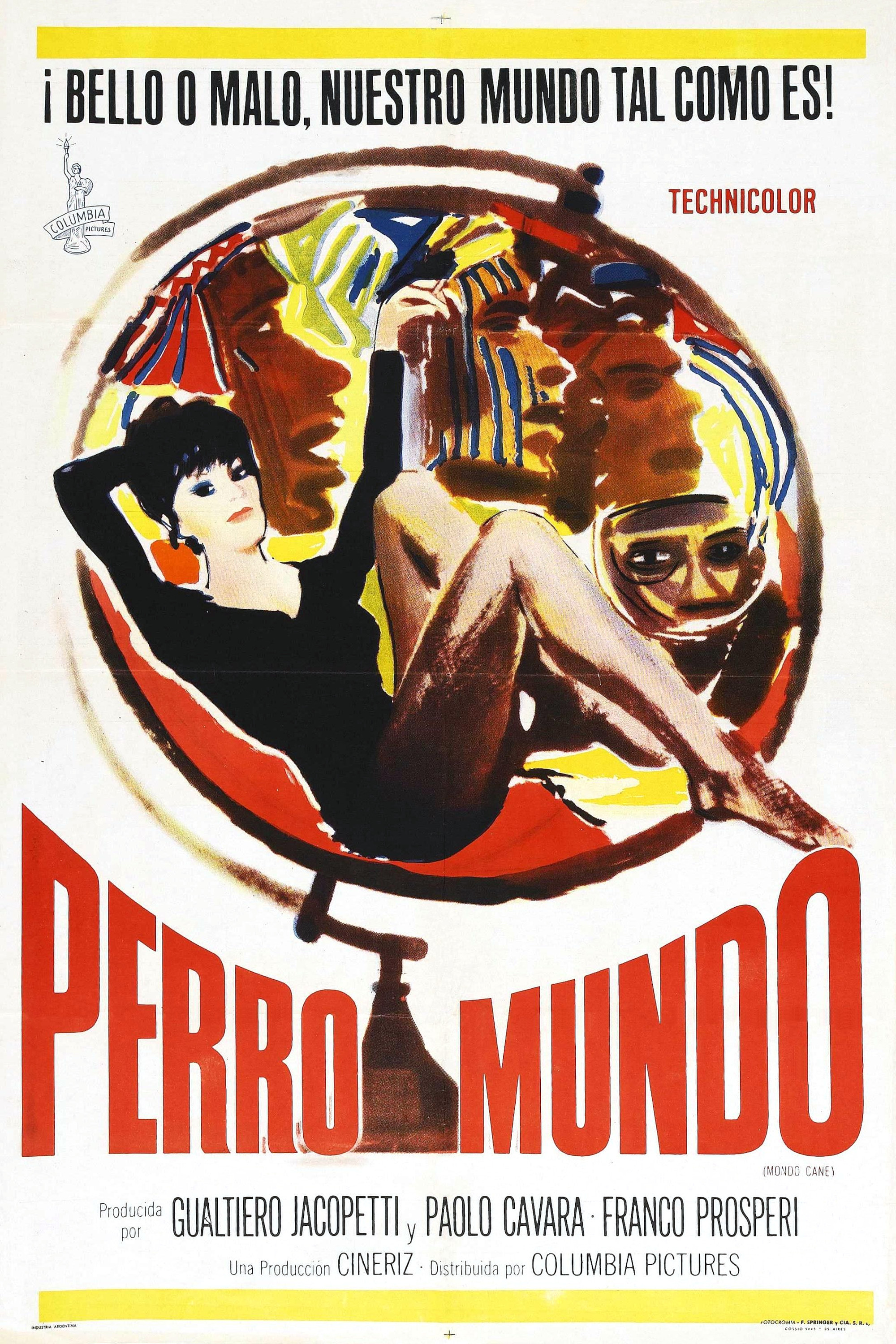
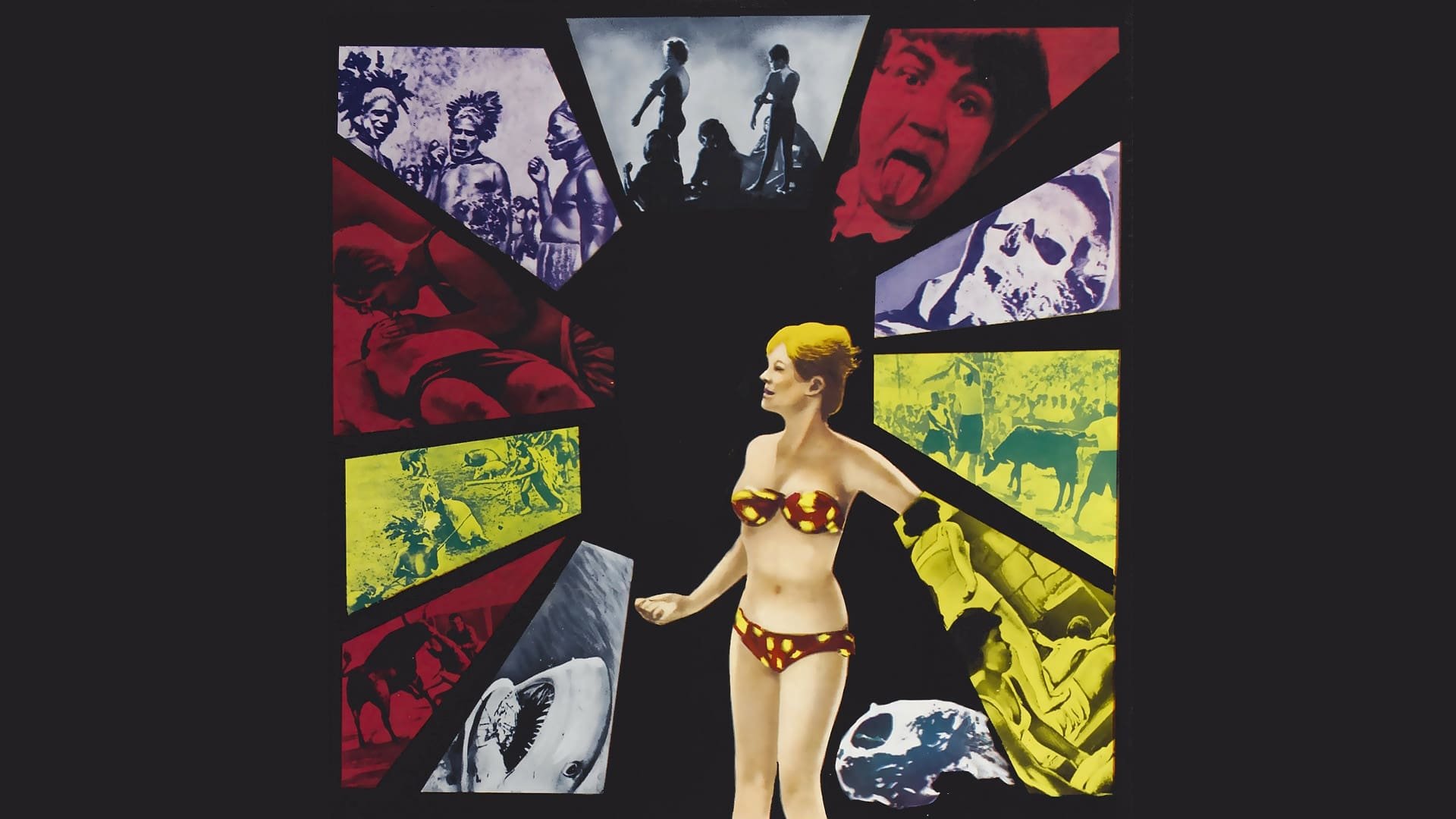
Mondo Cane (1962) poster
Production Company
Cineriz
Plot

A documentary consisting of a series of travelogue vignettes providing glimpses into cultural practices throughout the world intended to shock or surprise, including an insect banquet and a memorable look at a practicing South Pacific cargo cult.

Alternative Titles
Mundo Cão (Brazil) — Portuguese 世界残酷奇谭 (China) — Chinese Este perro mundo (Spain) — Spanish A Dog's World (United Kingdom) Kutya világ (Hungary) — Hungarian 世界残酷物語 (Japan) — Japanese 몬도가네 (South Korea) — Korean Perro mundo (Mexico) — Spanish
Show all 13 alternative titles Pieski swiat (Poland) — Polish Собачий мир (Russia) — Russian Det grymma livet (Sweden) — Swedish A Dog's Life (United States) Mondo Cane No. 1 (United States)

Trailers & Videos

2 videos

Film Guide & Analysis

The 1962 shock-documentary that shaped the mondo cycle through sensational montage, disputed truth claims, cultural satire and Riz Ortolani's celebrated music.

Mondo Cane (1962) transformed the travel documentary into a deliberately unsettling cinema of spectacle. Gualtiero Jacopetti, Paolo Cavara and Franco Prosperi assembled encounters with unfamiliar customs, public entertainments, animals and death into a succession of sharply contrasting episodes. The film promised a truthful account of contemporary life while placing every image inside an aggressively authored arrangement of narration, music and editing. Its shocks often come from actual social practices or visible suffering, but the meaning assigned to those images belongs to the filmmakers. That tension made the work a reference point for the later mondo cycle and for the more graphic exploitation documentaries that followed.

Its importance to horror history lies in the commercial presentation of disturbing reality as a theatrical attraction. Scenes of injured animals, bodily vulnerability and ritual spectacle invite responses usually cultivated by fictional horror, even though the production advertised itself as documentary reportage. The boundaries between observation, performance and construction remain central to the film's reputation. An Italian success presented in competition at Cannes, it also prompted censorship disputes abroad and gave rise to a widely recorded theme song. These very different outcomes reflect a film whose formal sophistication cannot be separated from its ethically contentious way of looking at other people.

Journalism, Travel and a New Film Form

The origins of Mondo Cane belong to a specific moment in postwar Italian cinema. Nonfiction filmmakers had already taken cameras into regions and communities seldom represented by commercial features, while popular travelogues offered audiences glimpses of nightlife and foreign customs. Alessandro Blasetti's Europa di notte (1959) was one important precursor. Jacopetti had contributed commentary to that film and brought experience from newspaper journalism and satirical newsreels. The Centro Sperimentale di Cinematografia situates his method within the publicity-conscious, rapidly expanding media culture of Italy's economic boom. The project's international itinerary grew from this existing reportage tradition, then made provocation the organizing principle.

The three credited directors came to the material with different kinds of expertise. Jacopetti supplied the corrosive editorial sensibility associated with his magazine and newsreel work. Prosperi had a background in naturalistic research, significant for a film repeatedly concerned with animals and human treatment of them. Cavara was involved in filmmaking and location work; the later drama L'occhio selvaggio (1967) revisited the world of sensational reportage from a critical angle. Antonio Climati and Benito Frattari photographed the material, which was arranged into a theatrical feature rather than a chronicle of a single journey. Credits alone cannot establish which collaborator conceived every sequence, and the finished work should not be reduced to Jacopetti as an isolated author.

The film's title evokes a hostile or degraded world while giving the production a memorable commercial identity. It also allows the subject to range from fashionable Western culture to communities in the Pacific without a continuous location, narrator-character or investigative argument. This flexibility became a defining feature of the series. Each episode could be selected for surprise, outrage or dark amusement, while the overall package promised a tour of realities normally kept outside an ordinary cinema program.

Editing and the Claim of Objectivity

The film opens with a dog being pulled into a kennel, an image that places distress before any extended explanation. A declaration of documentary truth accompanies the spectacle, asserting that the camera has recorded the world as it is. Subsequent episodes repeatedly undermine the apparent neutrality of that claim through their arrangement. A location is introduced by the voice-over, its behavior is condensed into a few striking images, and a sudden change of setting produces a new emotional response. Jacopetti's term for such transitions was the shock cut. The device relies on contrast between subjects as much as on the disturbing quality of the footage itself.

In one often discussed transition, mourners at an American pet cemetery are placed against the spectacle of dogs being selected as food in Taiwan. The resulting accusation of inconsistency is created in the editing room. Viewers are invited to judge both groups rapidly, without much opportunity to examine the local circumstances of either practice. Long geographical distances and distinct social meanings are compressed into an apparently self-evident punch line. The film's newsreel-like confidence makes this compression seem observational, although the argument is produced by a sequence of choices about context, duration and juxtaposition.

Sound contributes to the same manipulation. Added effects and emphatic narration can make an encounter feel immediate even when the audience cannot know what was recorded synchronously. Film historian Mark Goodall identifies rapid zooms, postproduction sounds and abrupt musical changes as essential parts of Jacopetti's approach. The promise of unmediated truth consequently sits beside conspicuous technical intervention. Later scholarship has questioned the authenticity of some mondo footage, and Jacopetti defended the use of supplementary shots in retrospective interviews. Such testimony explains his stated method; it does not authenticate every individual scene or provide grounds for labeling each passage either genuine or staged.

Animals, Bodies and Cultural Display

A recurring source of horror is the encounter between humans and animals. The film includes material involving injured wildlife, slaughter and the consumption of animals, presented as evidence of cruelty or disturbing difference according to the setting. Its sustained attention to physical suffering has an immediate effect on spectators because an animal's distress is difficult to treat as an ordinary performance. Yet the work also moves among affectionate attitudes toward pets and practices that its narration portrays with revulsion. The oscillation encourages viewers to compare societies, while concealing how strongly the filmmakers control the terms of comparison.

Scenes set in Papua New Guinea and other distant locations belong to the travelogue's older practice of presenting people as exotic exhibits. The camera often concentrates on striking communal actions instead of identified individuals with their own explanations. A sequence involving Pacific cargo-cult beliefs is particularly revealing: the film interprets aspirations associated with aircraft and material goods as visual marvels for an international audience. The historical circumstances of those beliefs cannot be reconstructed from the montage alone. The documentary voice provides an easy explanation of a complex subject, framed for amusement, surprise and sometimes fear.

The camera is no less interested in eccentricity closer to home. Spectators see fashionable consumers, celebrity adoration and episodes of sexual display alongside images of unfamiliar rituals. The contrast lets the commentary ridicule the supposed sophistication of affluent societies while maintaining a privileged position from which to judge others. Gaia Giuliani's study in Modern Italy reads such choices through the gendered and racial hierarchies of postwar Italian culture. That is a scholarly interpretation of the films' viewpoint, not a claim that every recorded participant was acting under the directors' instructions. The documentary's cultural importance includes the problematic perspectives through which its subjects were made visible.

Music and Emotional Counterpoint

Riz Ortolani and Nino Oliviero's score is integral to the way Mondo Cane guides emotional responses. The production repeatedly places graceful melodic writing against footage whose content is harsh or grotesque. This contrast can make a distressing scene seem tragic, perversely lyrical or bitterly ironic, depending on the preceding images and the commentator's attitude. A musical passage therefore performs part of the editorial work usually assigned to narration. The national film archive identifies this counterpoint as one of the central techniques behind the film's extraordinary impact, a reason the music should be considered alongside the selection and organization of images.

The best-known musical legacy is the theme that became the song More. Its subsequent popularity gave audiences a way to encounter the film's music without seeing its most disturbing material. The Academy of Motion Picture Arts and Sciences records a nomination at the 1964 ceremony for Best Original Song, listing Ortolani and Oliviero as composers and Norman Newell as lyricist. The award went instead to Call Me Irresponsible from Papa's Delicate Condition. The nomination belongs to the song associated with the 1962 film; it does not mean the documentary won an Academy Award or that its entire original score received that particular nomination.

This separation between picture and music matters to the film's cultural reach. A theme suitable for mainstream performance escaped the context of animal suffering and satirical travel reportage that gave it dramatic force. In its original setting, the same lyrical quality could sharpen the discomfort created by the images. The soundtrack helps explain how the production functioned simultaneously as an exploitation attraction, a technically ambitious feature and an unexpected source of popular music.

Festival Exposure and Censorship

Mondo Cane reached Italian cinemas in 1962 and entered the official competition at that year's Cannes Film Festival. The festival's archive lists Jacopetti, Cavara and Prosperi together as directors. Participation placed an abrasive popular documentary in a program associated with international art cinema and gave the picture an unusually prominent setting for its mixture of travelogue and provocation. The Centro Sperimentale's retrospective describes it as a major commercial success and notes the divided response to its treatment of cruelty. Precise worldwide earnings vary in secondary accounts, so a verified comprehensive gross should not be inferred from the film's reputation alone.

The British classification history demonstrates why national release records must be treated separately. Under the title Mondo Cane No 1, a submission by Gala Film Distributors was found unsuitable for classification by the British Board of Film Classification on August 30, 1962. A later entry for Mondo Cane records a 91-minute cinema version classified on November 27, 1963, with cuts. Those entries establish a rejected submission followed by a different classified presentation; they do not specify every removed shot or prove that the two submitted versions had identical contents before editing. The Italian film's longer running times and the British shortened record should therefore remain distinguishable.

Controversy also surrounded the film's presentation of cultural practices and suffering. The reputation of documentary truth made these images potentially more troubling than fabricated violence in an ordinary genre picture. At the same time, the irreverent commentary and the compression of encounters into punch lines attracted criticism on ethical grounds. Release history cannot be reduced to a single universal ban or one fixed length: local authorities judged particular submissions, and the material circulated through different theatrical and later home-viewing formats.

Reception, Satire and Ethical Objections

Mondo Cane's reception was marked by tension between admiration for its technique and hostility toward its worldview. A historical appraisal preserved by the Centro Sperimentale describes an intentional cruelty in the way social events and even natural phenomena are filtered through pain and destruction. The picture could be approached as savage satire of consumer culture, but the same images often depend on degrading descriptions of people presented as foreign or unfamiliar. The film's criticism of Western habits does not automatically neutralize the racial assumptions embedded in its depiction of other communities. Its provocations work through that unresolved relationship.

One reason the material remains analytically useful is the contrast between the filmmakers' declared journalistic purpose and the extremely selective information supplied to viewers. In a 2003 interview with The Guardian, Jacopetti described himself as a journalist attempting to communicate reality through cinema. He also rejected accusations of wholesale fabrication while acknowledging the use of additional close shots to connect material in his nonfiction work. These are retrospective statements by the filmmaker, made decades after the initial release. They establish how he defended his practice, while independent scholarship offers different assessments of its reliability and political implications.

Giuliani argues that the mondo films repeatedly cast non-Western cultures and changing social roles as spectacles seen from a dominant white, masculine viewpoint. Her analysis places the productions in the context of Italy's economic expansion, decolonization and debates about sexuality. Reading the film this way does not require treating every individual scene as false. It asks instead who was entitled to provide the explanation, which forms of behavior received mocking commentary, and how editing transformed participants into representatives of entire societies. Such questions have become unavoidable in accounts of the film's place in documentary history.

Influence on Exploitation and Horror

The commercial success of Mondo Cane encouraged filmmakers to reproduce its international itinerary, confrontational subjects and repeated promise of forbidden knowledge. The title supplied the name for a recognizable kind of exploitation documentary, although sensational travel films already existed before 1962. Its collaborators pursued related projects, including Mondo Cane 2 and Women of the World, while Jacopetti and Prosperi later brought the formula into more explicitly political territory with Africa Addio. These follow-ups should be understood as separate films with their own production histories. Their existence demonstrates how a distinctive editorial model became a repeatable commercial proposition.

The connection to horror is especially important in the later development of shockumentaries, cannibal cinema and compilations marketed around filmed death. Mondo Cane did not invent the camera's ability to record violence, and its original format was wider than the catalogue of fatalities associated with subsequent death films. It did establish an attractive theatrical vocabulary for framing disturbing footage: abrupt changes in tone, authoritative explanation, sensational advertising and the implication that the audience was seeing what respectable entertainment withheld. Future producers adapted these methods to increasingly specialized material. Resemblance between films is a matter of format and commercial history, not proof that any later event was caused by a specific sequence.

The work also circulated beyond the immediate exploitation cycle. Its hard editorial contrasts helped establish a recognizable aesthetic of mass entertainment built around purportedly unfiltered reality, later debated by documentary critics and historians. Scholarly reconsiderations now examine the film both as a formal achievement and as evidence of attitudes toward gender, colonialism and cultural difference. Its historical significance lies in that combination. Mondo Cane made the construction of documentary reality itself part of a popular spectacle, creating a model later horror and nonfiction filmmakers would alternately imitate, intensify and challenge.

References

  1. Centro Sperimentale di Cinematografia Cinquant'anni dopo Mondo cane

    Italian national film archive retrospective on the film's journalistic origins, co-directors, visual method, contemporary criticism and the soundtrack's counterpoint.

  2. Cambridge University Press / Modern Italy Razza cagna: mondo movies, the white heterosexual male gaze, and the 1960s-1970s imaginary of the nation

    Gaia Giuliani's peer-reviewed study examines editing, colonial perspectives, gender, spectacle and mondo cinema's position within Italian documentary history.

  3. The Guardian See the world stripped bare!

    Steve Rose interviews Gualtiero Jacopetti directly and examines the production's shock cuts, contested factual claims, added sound and commercial legacy.

  4. British Board of Film Classification Mondo Cane No 1: 1962 classification decision

    Original BBFC record documenting that Gala Film Distributors' 1962 submission was considered unsuitable for classification; a separate BBFC record documents a shorter cut version in 1963.

  5. Academy of Motion Picture Arts and Sciences The 36th Academy Awards (1964): Music (Song)

    Primary Academy record identifying the nomination for More and crediting Riz Ortolani, Nino Oliviero and Norman Newell.

Connections

Cast

View Full Cast & Crew →

Release & Distribution

Production Companies (1)

  • Cineriz IT

Distributors (1)

  • Cineriz IT

Release History (5)

Release DateTerritoryRelease TypeFormatDistributorCertificationNotes
1962-03-30 Italy Theatrical — — —
1962-08-22 France Theatrical — — —
1962-09-12 Japan Theatrical — — —
2009-01-07 France Physical DVD — 12 DVD
2025-03-04 France Physical Blu-ray — 12 Blu-Ray
It enters a hundred incredible worlds where the camera has never gone before!