Ealing Studios and the Development of the Anthology
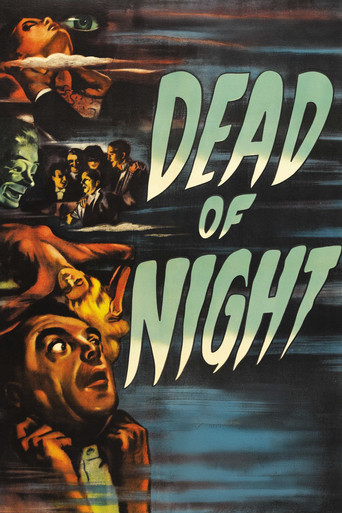
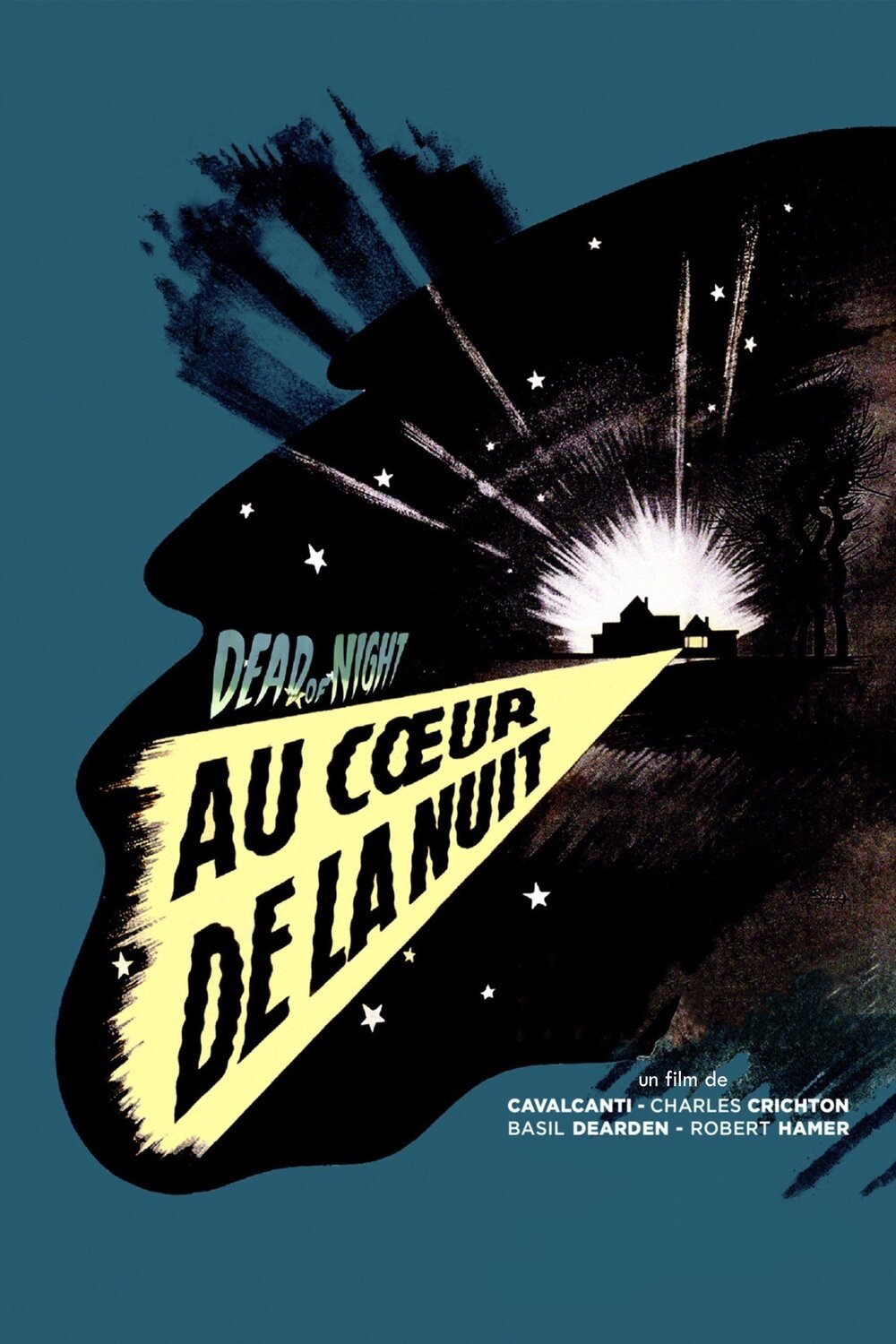
Ealing Studios was principally associated with documentaries, wartime productions and character-driven British dramas when producer Michael Balcon authorized Dead of Night. The company had already explored supernatural material in The Halfway House (1944), directed by Basil Dearden and Alberto Cavalcanti, in which travellers encounter an apparently ordinary inn whose occupants possess an extraordinary history. Its reception encouraged further interest in a production assembled around unsettling experiences. British wartime restrictions on horror classification and exhibition had also limited opportunities for overtly macabre films, making the new project unusual within the national industry.
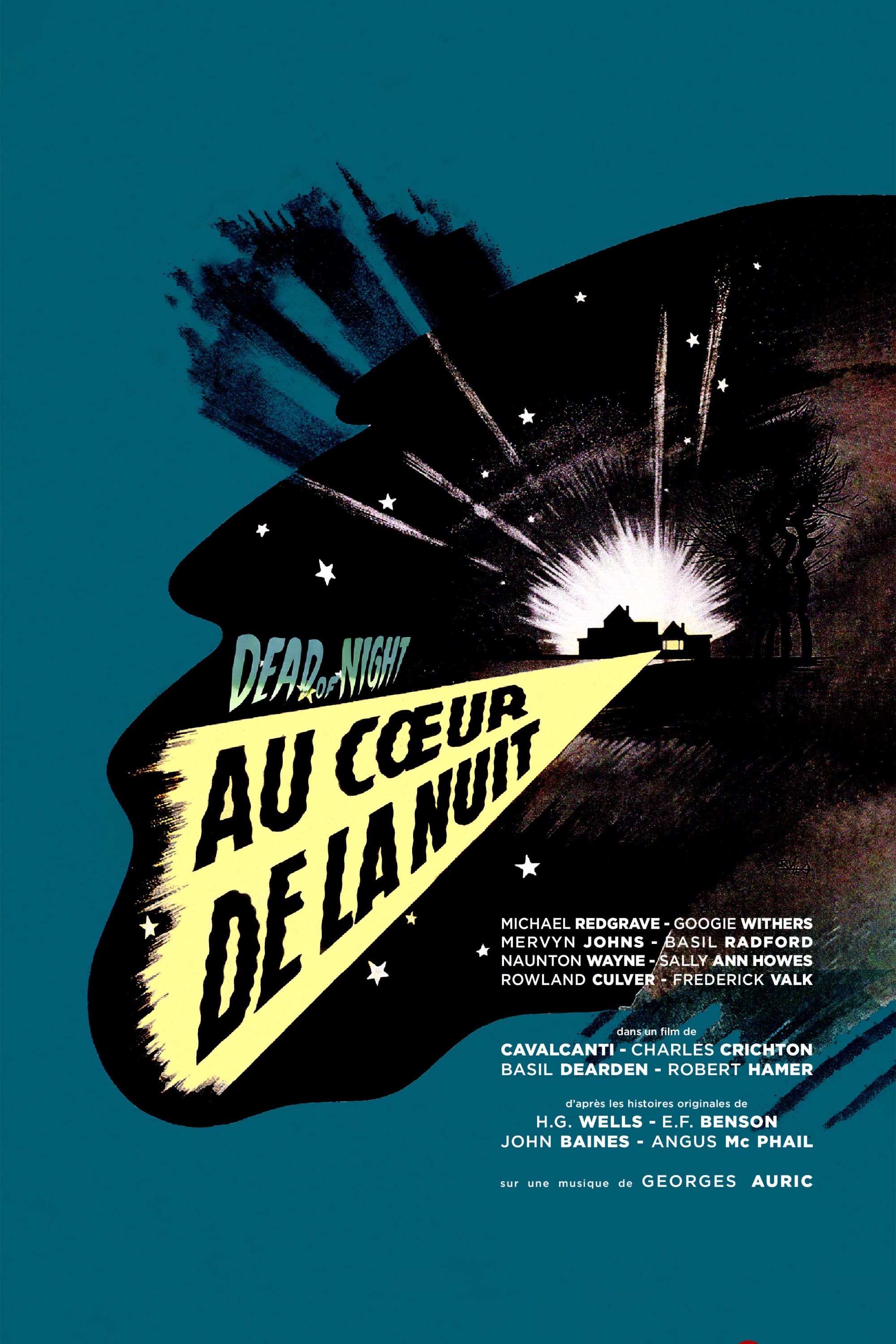
Dead of Night was organized as a collaborative production involving four directors and several writers. Dearden directed the framing narrative and The Hearse Driver, while Cavalcanti handled The Christmas Party and The Ventriloquist’s Dummy. Robert Hamer directed The Haunted Mirror, and Charles Crichton directed The Golfing Story. The screenplay was credited to John Baines and Angus MacPhail, with additional dialogue by T. E. B. Clarke. Baines supplied the two stories involving the mirror and the ventriloquist. Other episodes developed material associated with E. F. Benson, H. G. Wells and MacPhail.
According to historical programme notes published by the British Film Institute, the production initially possessed its five principal stories without a satisfactory means of connecting them. MacPhail developed the framing narrative, drawing partly on the recurring-dream structure associated with Benson’s supernatural fiction. The decision gave the material a stronger dramatic identity than a simple succession of unrelated short films. It also created a role for several characters who would otherwise have appeared only in their individual stories. The resulting construction allowed Ealing to bring together different directing styles while maintaining a continuous atmosphere of uncertainty.
Walter Craig and the Recurring Nightmare
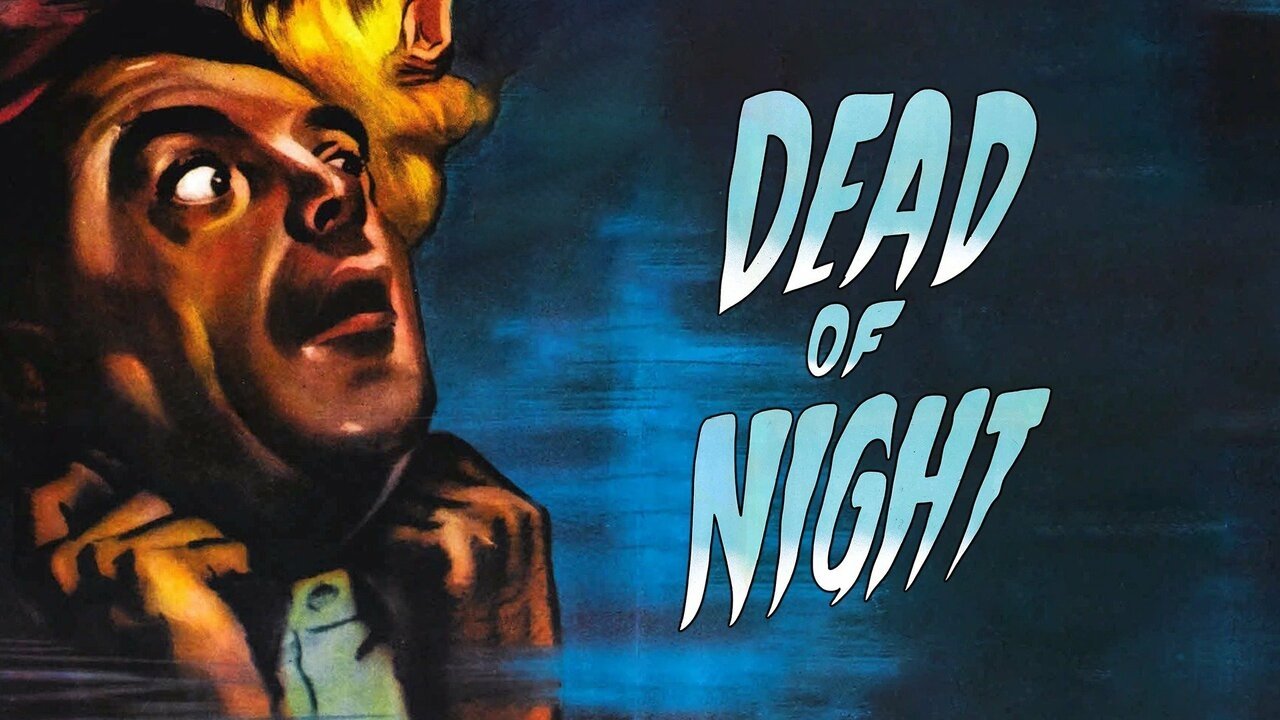
The framing narrative begins when architect Walter Craig arrives at Pilgrim’s Farm for a professional appointment with Eliot Foley. He experiences an immediate sense of recognition despite apparently having never visited the property. Once inside, he realizes that he has seen the other guests in a recurring dream. Their ordinary conversations become increasingly disturbing as Craig predicts details that seem to confirm his recollections. Mervyn Johns plays the architect as a man struggling to remain composed while anticipating a catastrophe whose exact nature he cannot remember.
The guests respond to his story by recounting experiences that challenge conventional explanations of reality. Their accounts become the five separate episodes. Dr. van Straaten, a psychiatrist portrayed by Frederick Valk, argues for rational interpretations and questions the reliability of supernatural testimony. His objections establish a conflict between psychological explanation and extraordinary experience that continues throughout the film. The stories do not all support the same understanding of the supernatural: some contain apparent evidence of ghosts, while others permit an interpretation involving disturbed perception or divided personality.
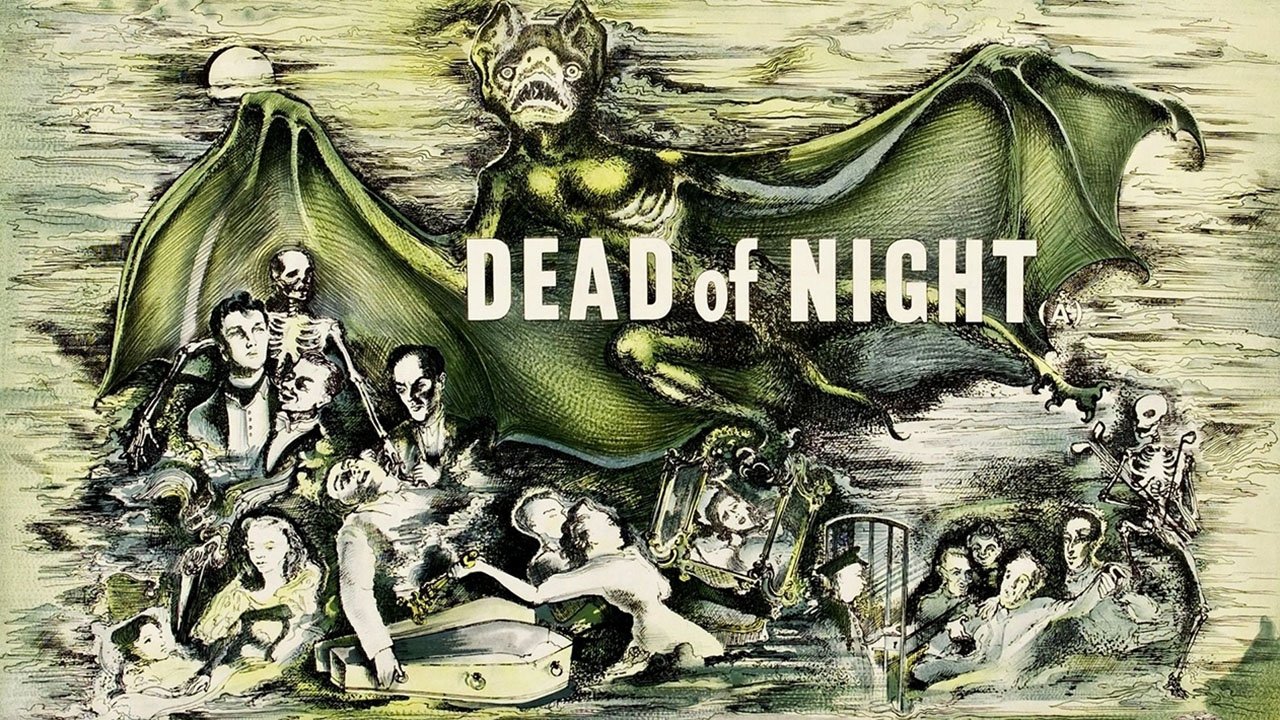
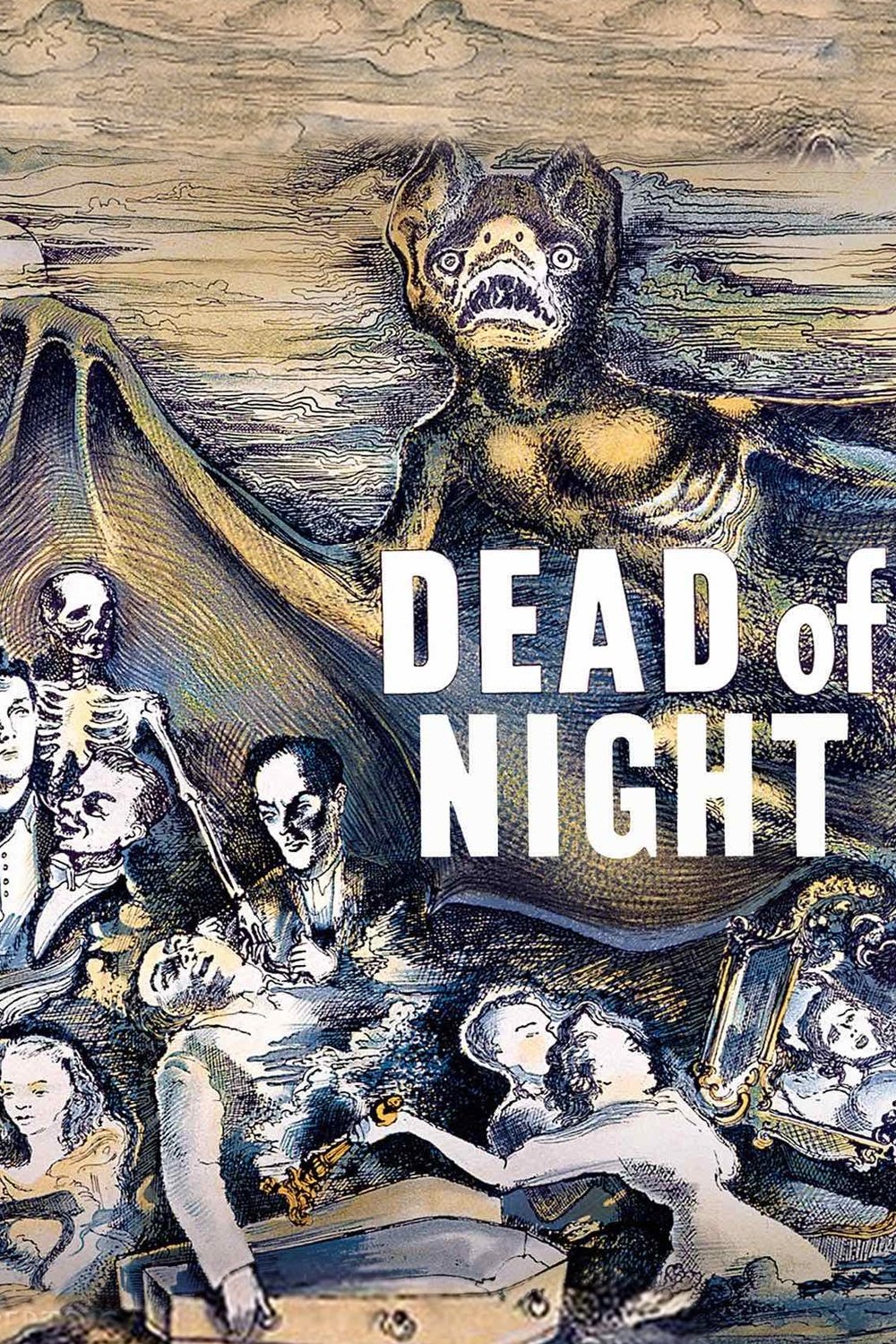
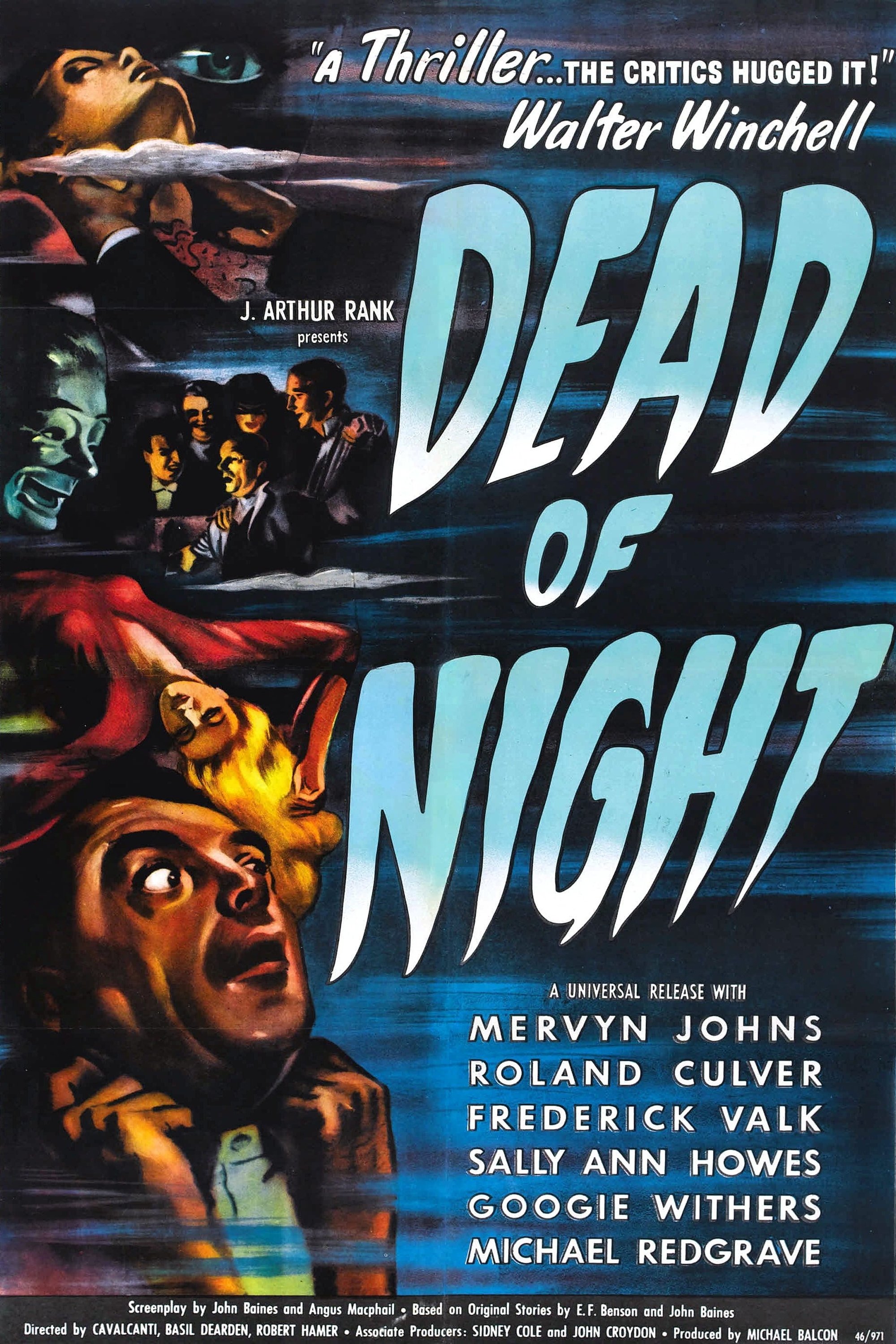
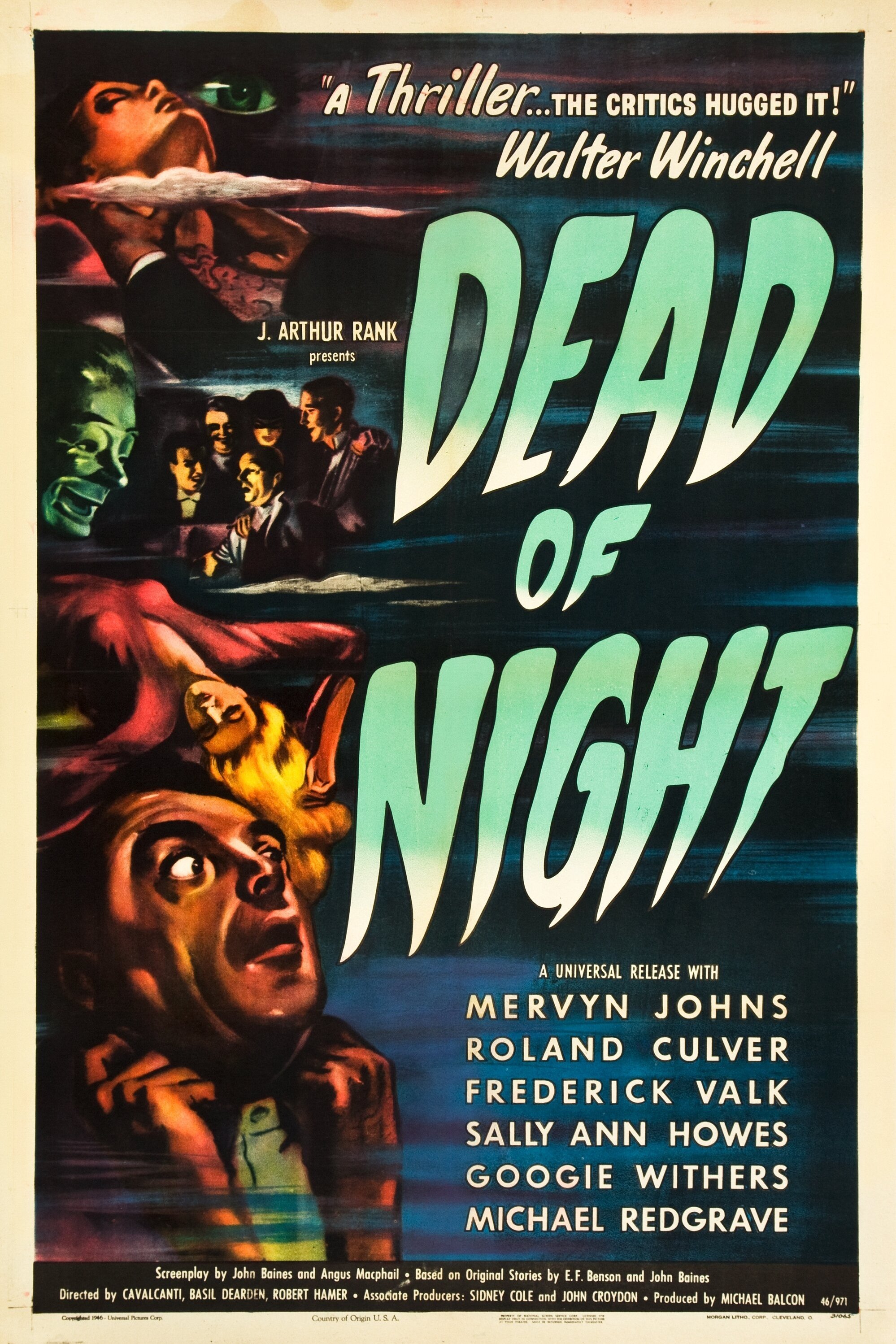
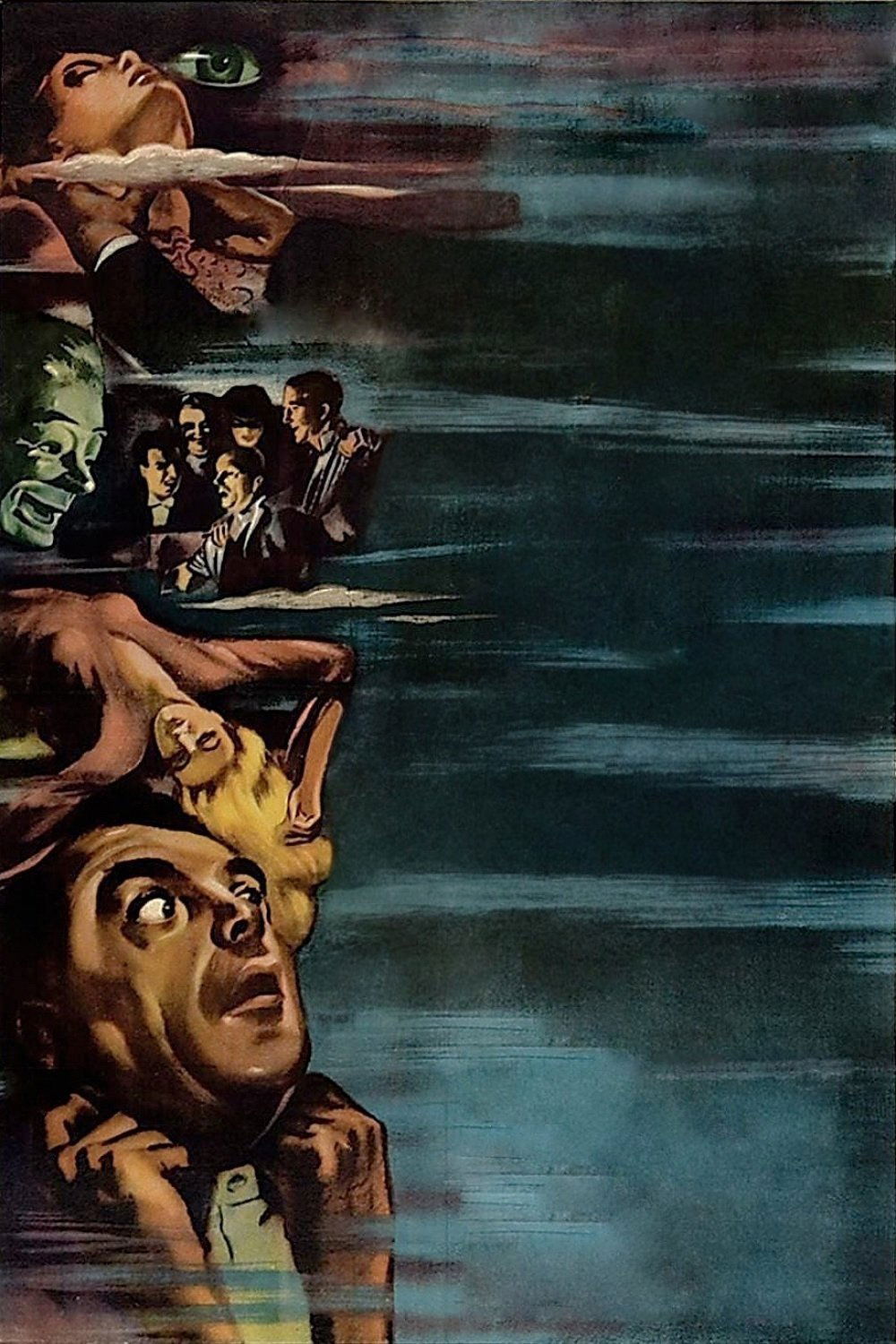
The conclusion returns to Craig’s mounting anxiety. His fear culminates in an eruption of violence against the psychiatrist, followed by a nightmare sequence in which characters and objects from the separate stories invade the framing narrative. Craig then awakens at home, apparently relieved to discover that the events were a dream. A telephone call sends him to a country house for a professional appointment, repeating the journey with which the film began. The circular ending leaves him trapped within an experience whose beginning and conclusion can no longer be distinguished. Its effect depends on the preceding stories becoming part of a single threatening psychological environment.
The Hearse Driver and The Christmas Party
The Hearse Driver, directed by Basil Dearden, adapts E. F. Benson’s short story The Bus-Conductor, first published in 1906. Hugh Grainger, portrayed by Anthony Baird, is recovering from a motor-racing accident when he sees an old-fashioned hearse outside his hospital window. Its driver, played by Miles Malleson, offers him a place with an apparently casual invitation. After leaving hospital, Grainger encounters the same man working as a bus conductor. Recognizing the warning, he refuses to board. The vehicle subsequently crashes, confirming the significance of the earlier vision.
The episode establishes supernatural horror through repetition and delayed recognition. The driver’s ordinary manner makes his invitation more disturbing when the same words are heard in a different setting. The contrast between the Victorian appearance of the hearse and the modern bus connects an older tradition of death omens with contemporary transport. Dearden relies on the protagonist’s reaction to establish the connection rather than explaining the origin of the premonition. The story’s brief running time also demonstrates how an anthology can establish a complete supernatural incident without requiring an extended account of its causes.
Alberto Cavalcanti’s The Christmas Party follows Sally O’Hara, played by Sally Ann Howes, during festivities at a large house. A game of hide-and-seek brings her into an unfamiliar part of the building, where she encounters a lonely boy named Francis Kent. She attempts to comfort him before discovering that he belongs to an earlier period and was murdered by his sister. The incident draws on the historical case of Francis Saville Kent, whose death in 1860 became a major British criminal investigation. The episode introduces Gothic horror into the apparently safe surroundings of a childhood celebration. Its shadowed interiors, deserted rooms and restrained apparition establish fear through the discrepancy between the house’s cheerful gathering and the violence concealed in its past.
The Haunted Mirror and The Golfing Story
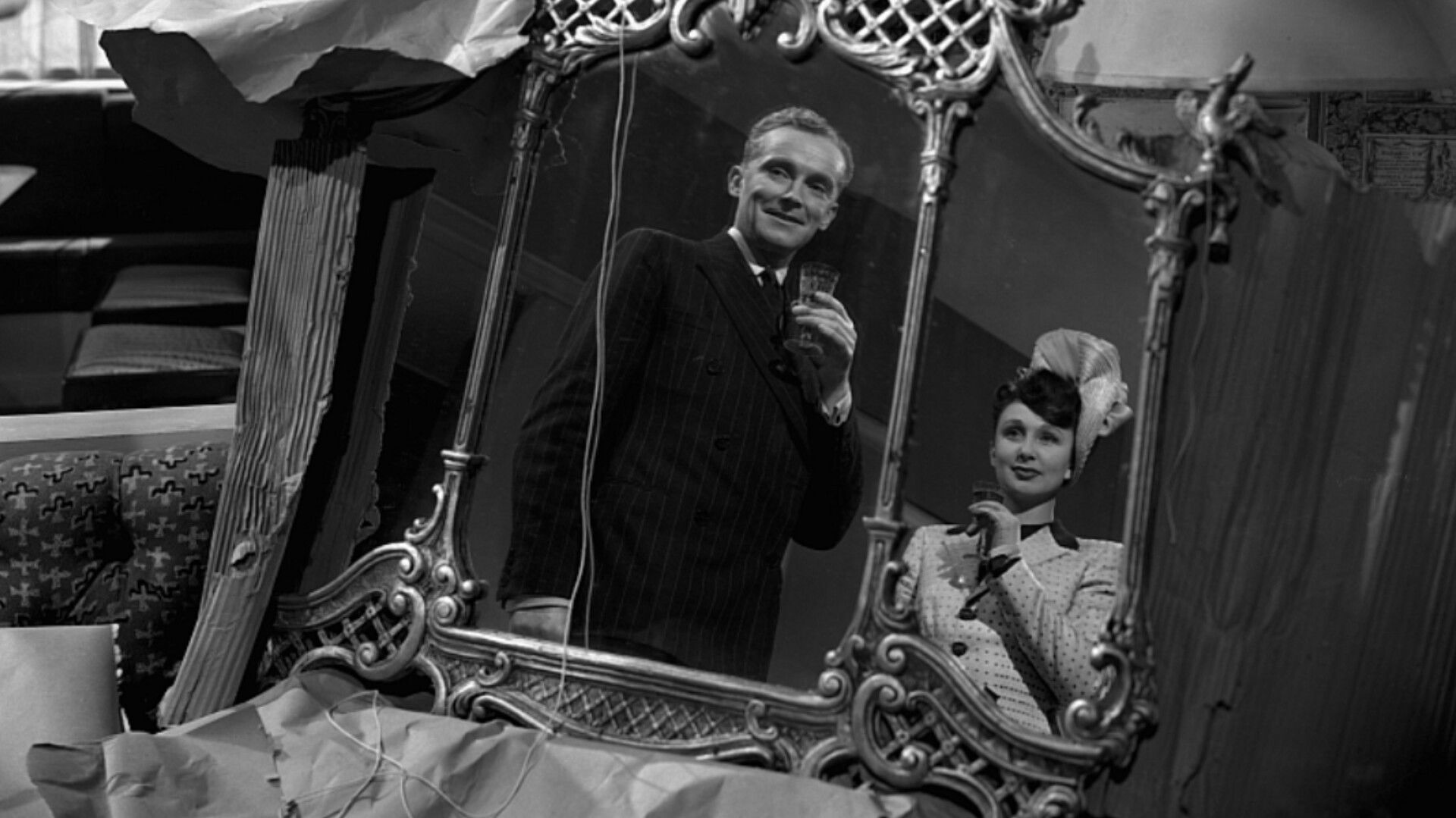
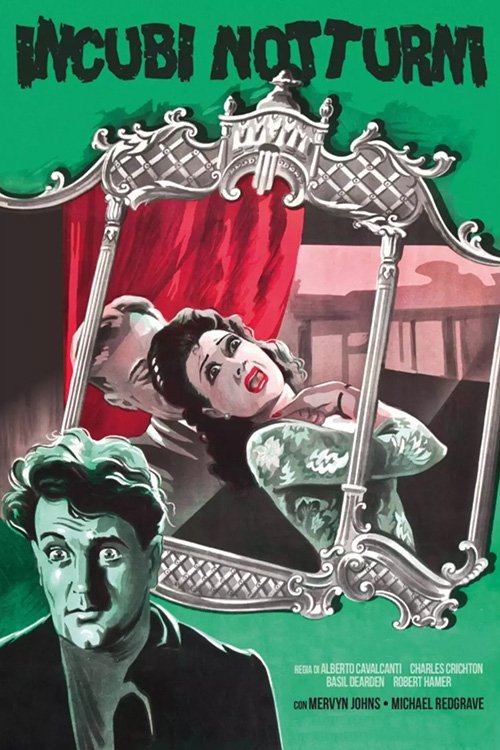
Robert Hamer’s The Haunted Mirror concerns Joan and Peter Cortland, portrayed by Googie Withers and Ralph Michael. Joan gives Peter an antique mirror, unaware that it carries the influence of a previous owner. When Peter looks into it, the reflected room gradually differs from the one surrounding him. He becomes increasingly disturbed and develops a violent hostility toward Joan. An investigation of the mirror’s history reveals its association with an earlier marriage marked by jealousy and murder. The supernatural threat appears capable of reproducing that violence through a new husband.
Hamer makes the mirror’s transformation central to the episode. Its apparent reflection offers evidence of a room that no longer exists, creating an intrusion of the past into the present. The effect also changes the meaning of Peter’s familiar domestic surroundings, since the dangerous influence is encountered through an ordinary household object. Joan eventually interrupts his attempt to strangle her by breaking the mirror. The destruction ends the immediate danger, giving the story a resolution that contrasts with the unresolved anxiety of the framing narrative. The episode was Hamer’s first credited directing assignment and displays the visual control later associated with his Ealing work.
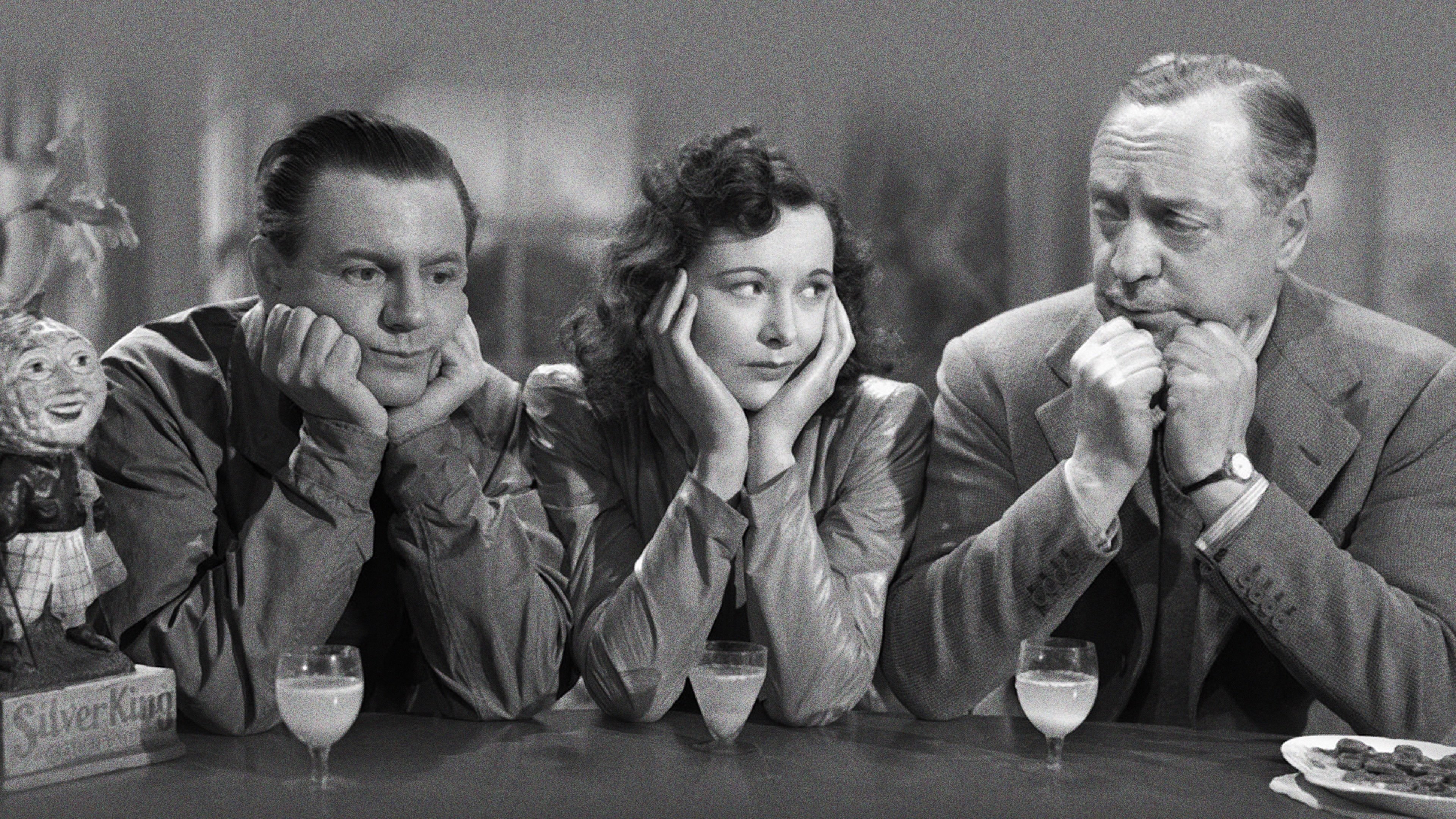
Charles Crichton’s The Golfing Story introduces a comic variation on supernatural possession. George Parratt and Larry Potter, played by Basil Radford and Naunton Wayne, compete in a golf match to determine which will marry Mary Lee. George wins through deception, and Larry subsequently drowns himself before returning as a ghost to torment his rival. The episode loosely adapts material by H. G. Wells and exploits the familiar comic partnership of Radford and Wayne. Its light treatment of death and supernatural revenge produced a striking contrast with the surrounding stories. Contemporary British reviewers sometimes welcomed the relief, although later criticism has frequently judged the episode less effective than the anthology’s more threatening material.
The Ventriloquist’s Dummy and Divided Identity
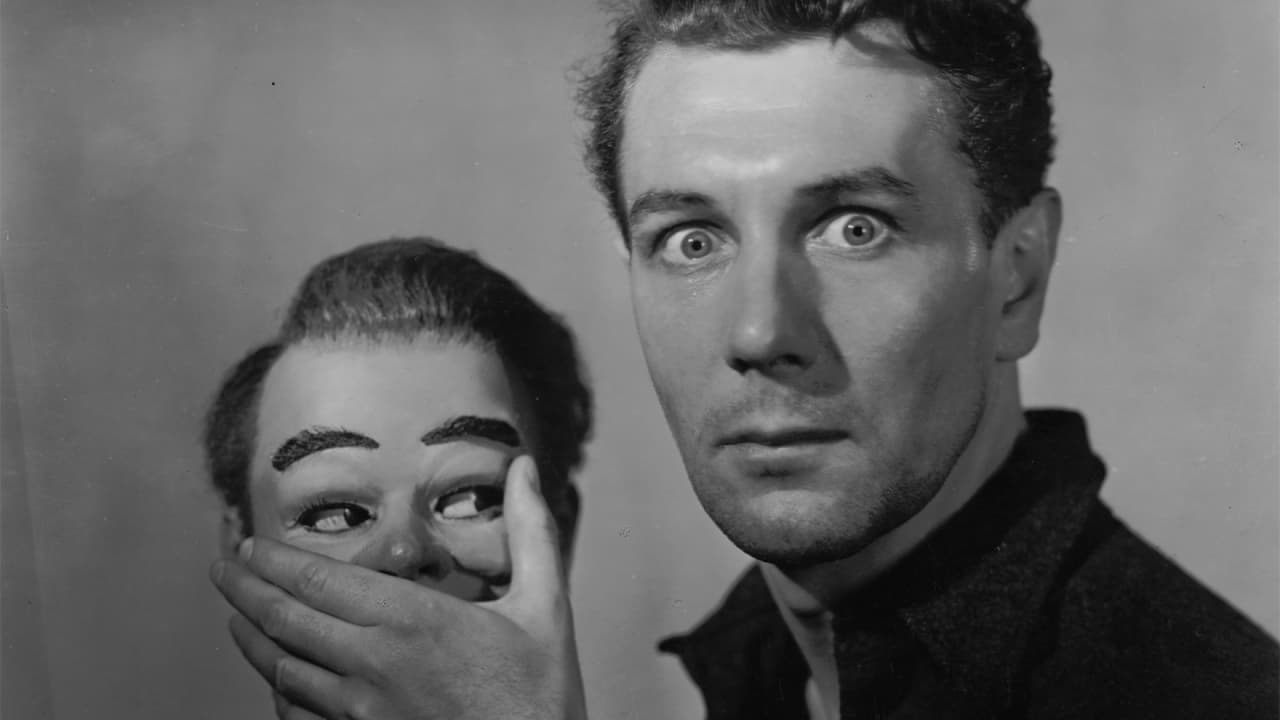
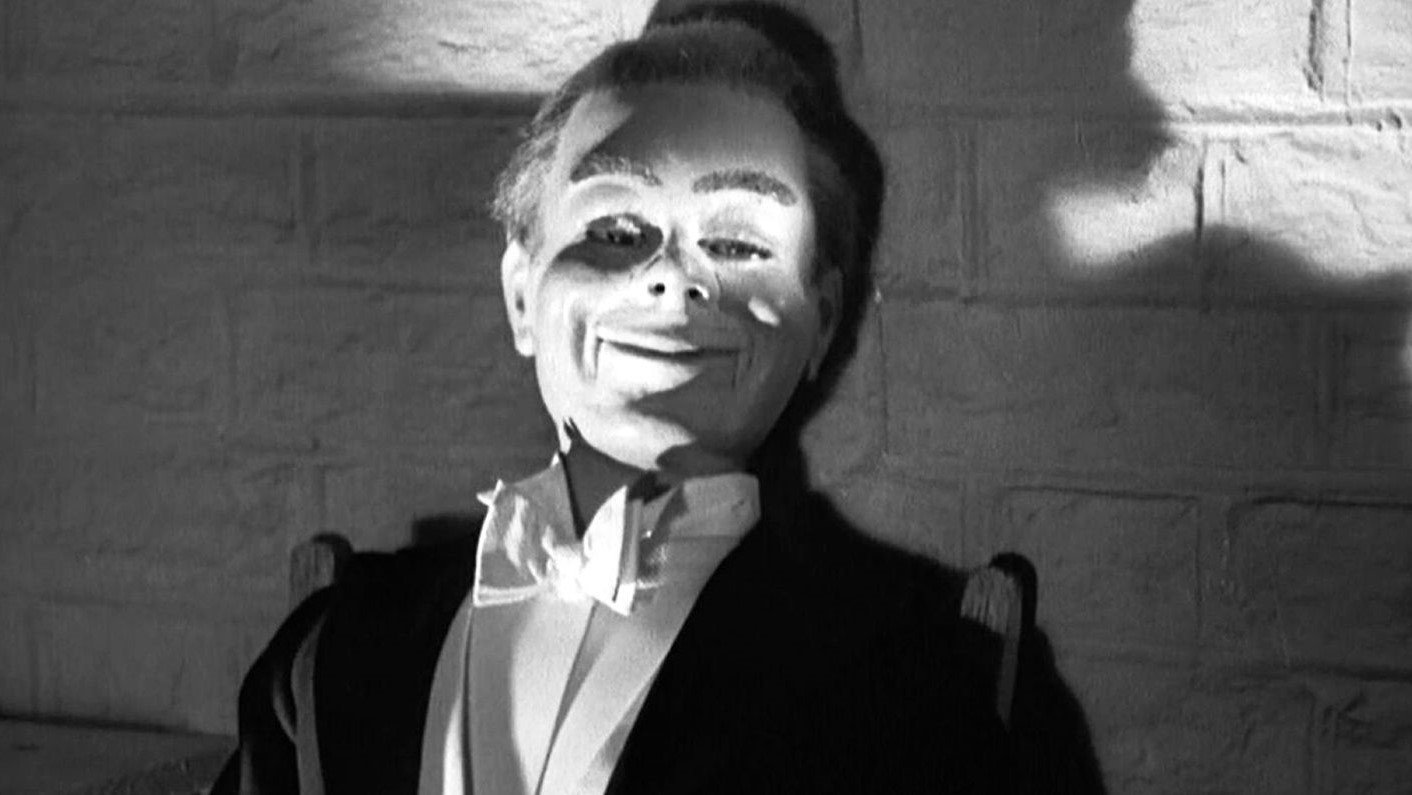
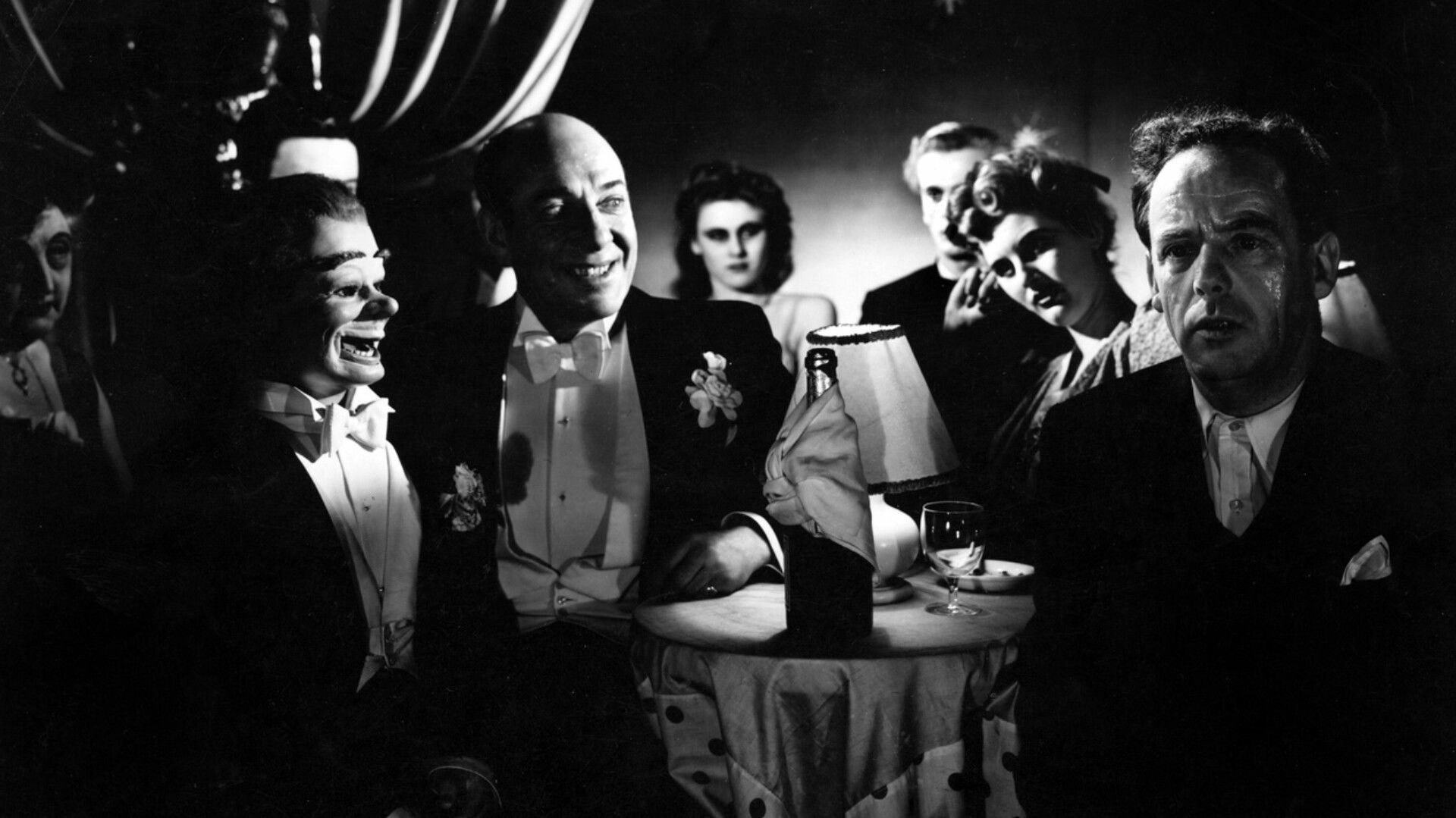
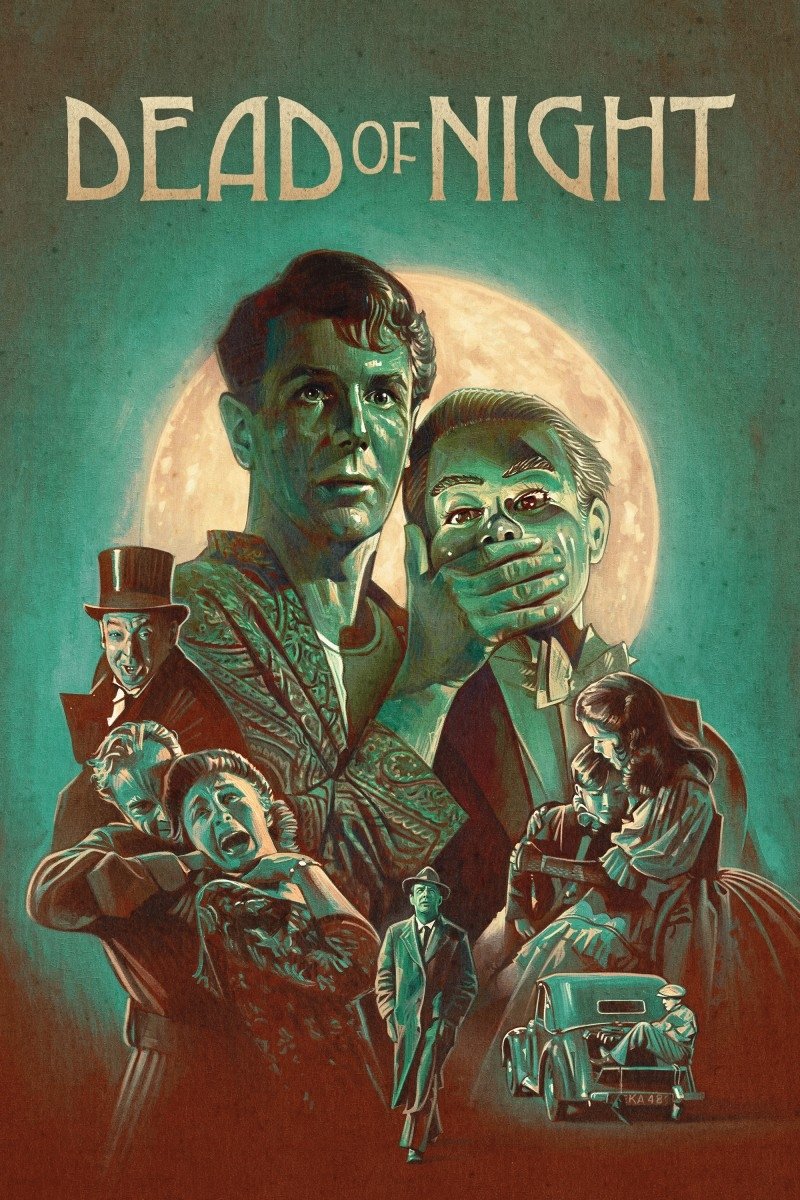
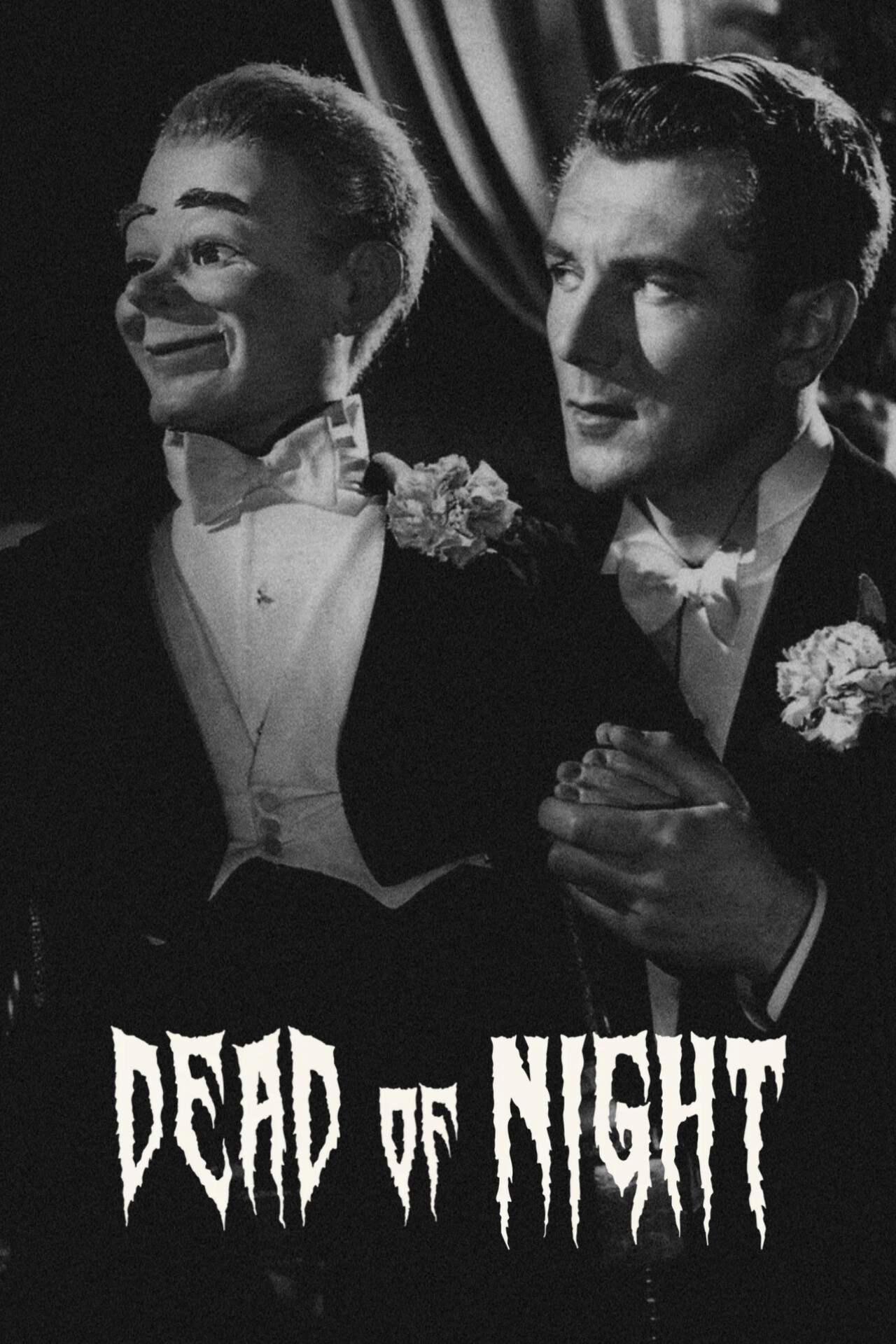
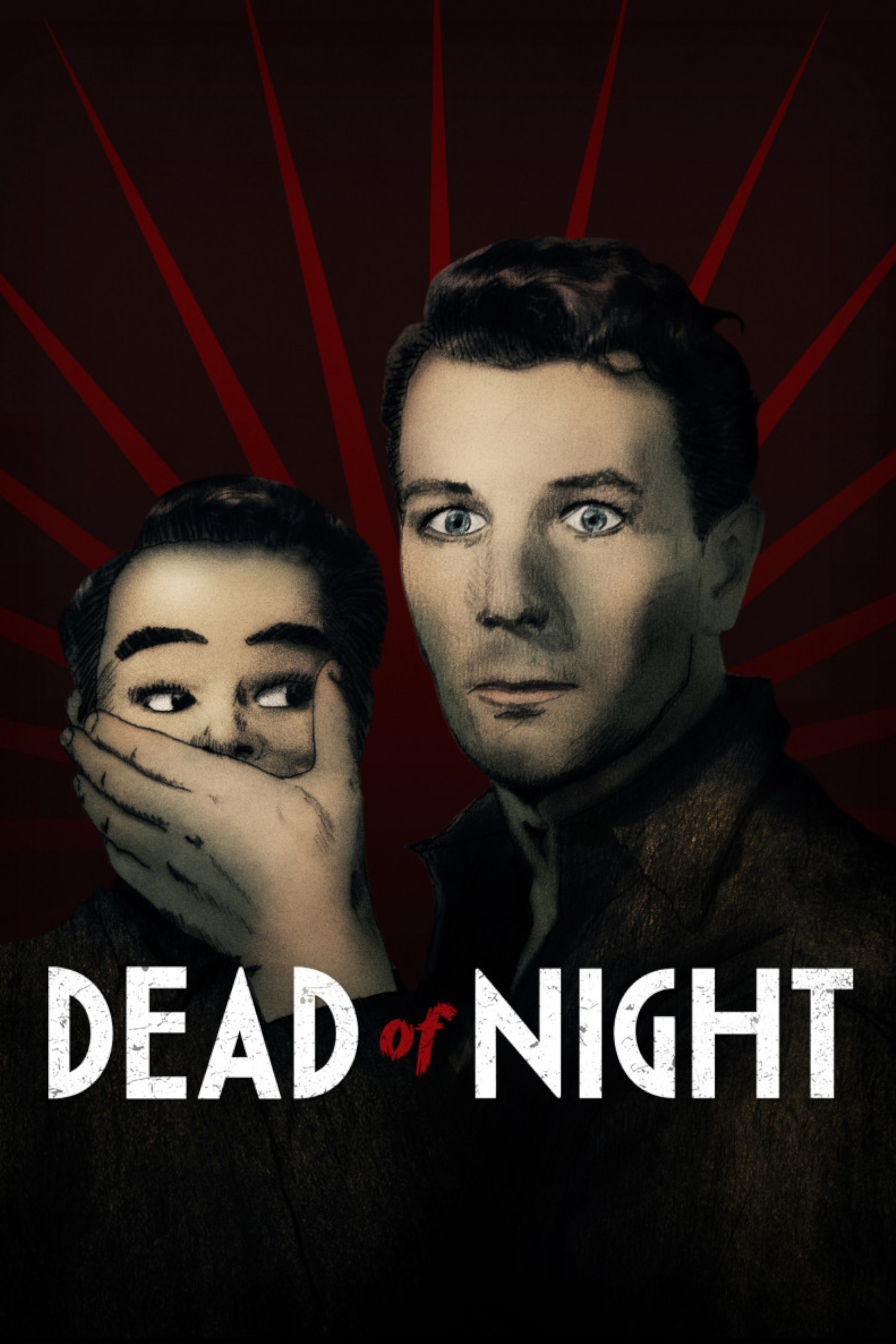
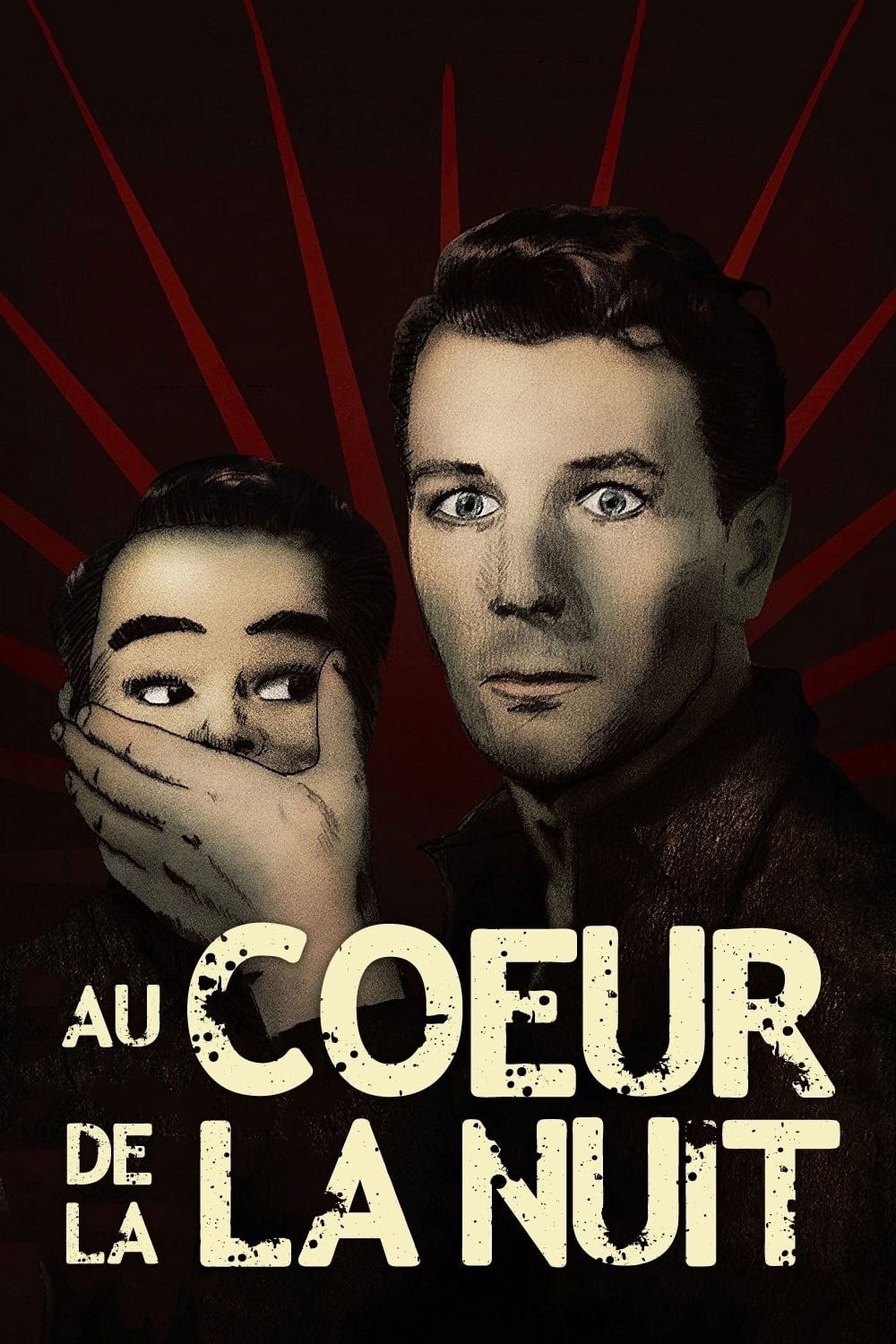
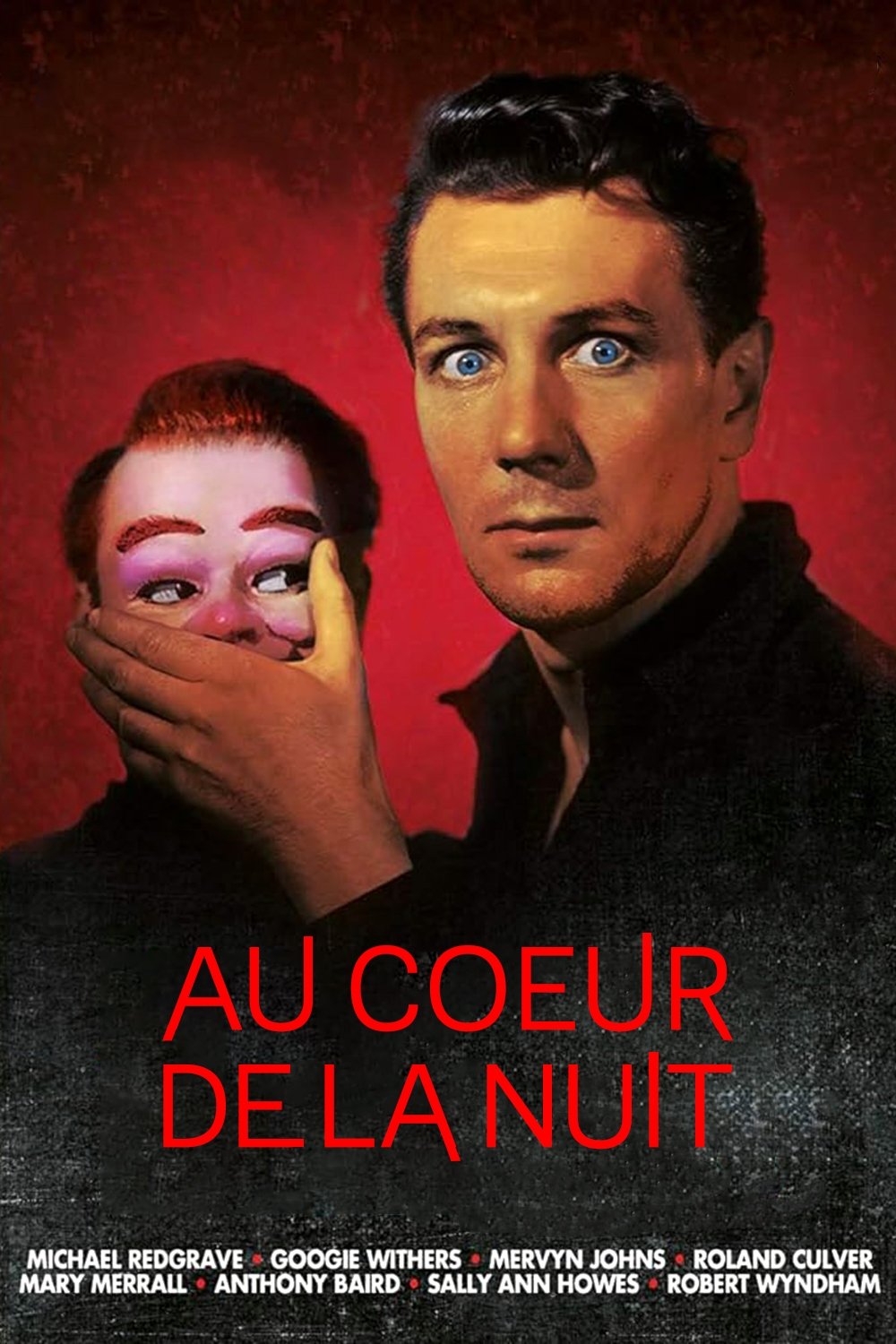
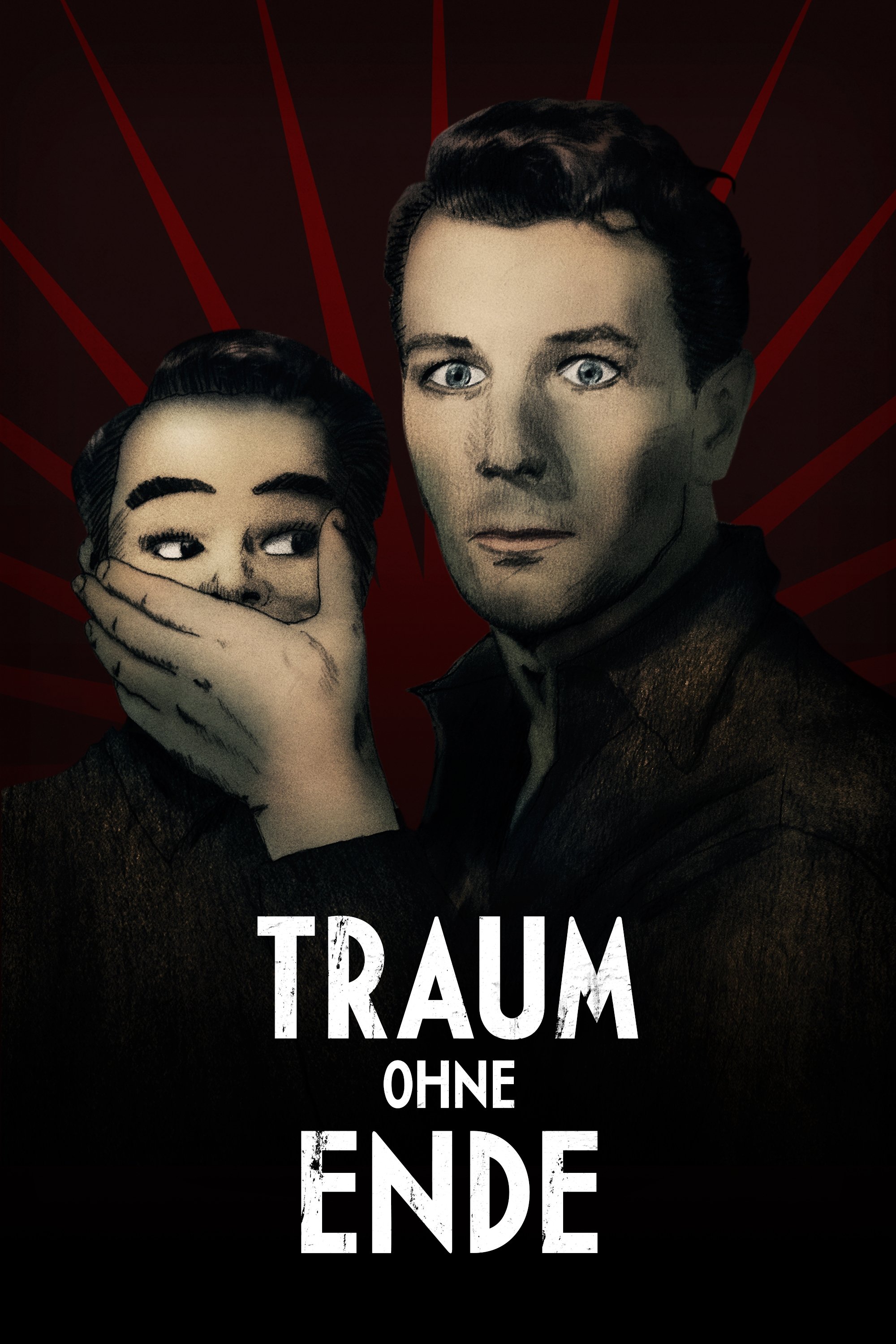
Alberto Cavalcanti’s The Ventriloquist’s Dummy is the anthology’s most extensively discussed episode. Michael Redgrave portrays Maxwell Frere, a nightclub entertainer whose stage partner is a wooden dummy named Hugo. Their performance depends on an increasingly hostile exchange in which Hugo appears to possess independent intentions. When the dummy expresses interest in working with another ventriloquist, Sylvester Kee, Frere becomes intensely jealous. The professional relationship deteriorates into apparent rivalry between the performer and the object through which he speaks.
Frere eventually shoots Kee and is placed under psychiatric observation. Dr. van Straaten attempts to determine whether the performer genuinely believes Hugo possesses an independent personality or has divided his own identity between himself and the dummy. The investigation examines incidents in which Hugo appears to move or speak without Frere’s conscious participation. Cavalcanti allows the possibility of supernatural agency to remain disturbing even when a psychological explanation becomes increasingly plausible. The final encounter with the dummy culminates in Frere destroying its wooden face, after which he speaks in Hugo’s voice. The reversal makes the performer appear possessed by the personality he previously controlled.
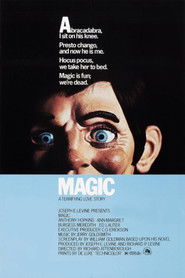
Redgrave prepared for the role with assistance from professional ventriloquist Peter Brough, whose stage partnership with the dummy Archie Andrews was well known to British audiences. Richard Harland Smith’s production history for Turner Classic Movies records that Cavalcanti initially wanted Hugo to resemble Redgrave, although the completed figure more closely recalled Brough’s dummy. The same account identifies John McGuire as a performer used for moments requiring the figure to move independently. Redgrave’s performance gives Frere a convincing deterioration, particularly through changes in his speech, posture and response to Hugo’s apparent autonomy. The episode subsequently became an important reference point for horror stories involving sinister dolls and ventriloquists, including Magic (1978).
Photography, Editing, Music, and Horror Technique
The anthology’s visual continuity depended on experienced Ealing technicians working across stories directed by different filmmakers. Stanley Pavey and Douglas Slocombe received principal photography credits, with Jack Parker among the camera personnel. Michael Relph supervised the art direction, while Charles Hasse edited the film. Black-and-white lighting allows individual episodes to establish distinctive environments, from the ordinary hospital room in The Hearse Driver to the threatening domestic reflections of The Haunted Mirror. The Christmas Party uses large interior spaces and darkness to suggest the persistence of an earlier tragedy within a functioning family home.
The framing narrative provides visual connections between the individual stories. Its country-house setting initially appears reassuring, but repeated close attention to Craig’s reactions gradually changes its character. During the climax, images associated with the separate tales are assembled into a sequence of disturbing transformations. The editing disrupts the apparent separation between stories, making the audience experience the anthology as a single nightmare. This method gives the ending a purpose beyond explaining Craig’s earlier premonitions. It also rewards the preceding changes of tone by bringing their imagery together at the moment when his fear becomes uncontrollable.
Georges Auric composed the score, performed by the London Philharmonic Orchestra under conductor Ernest Irving. Auric’s music accompanies the changes between comedy, conventional supernatural suspense and psychological disturbance without making their differences disappear. The soundtrack also gives important dramatic functions to voices and recurring sounds. The hearse driver’s familiar invitation acquires a fatal significance through repetition, while Hugo’s voice gradually becomes more independent of the performer’s apparent intentions. The score and recorded dialogue therefore contribute to the film’s exploration of identity and anticipation. Each episode establishes an audible sign of danger, while the framing narrative connects those separate experiences through Craig’s growing apprehension.
Release, Censorship, Versions, and Historical Significance
Dead of Night entered British cinemas in September 1945, opening in London on September 9. Contemporary release records commonly identify a running time of approximately 102 to 104 minutes. The British Board of Film Classification records an original cinema submission dated August 2, 1945, with a running time of 103 minutes and a notation that cuts or alterations were required. The surviving classification entry does not provide a complete account of those changes. Later British video submissions have different recorded durations, making it necessary to distinguish actual editorial alterations from variations in projection and playback speed.
The American release in June 1946 circulated in a substantially shortened form. Research by the University of Kent’s Melodrama Research Group, citing contemporary issues of New Movies, identifies The Christmas Party and The Golfing Story as the two episodes removed. The resulting version ran approximately 77 minutes. Their absence also affected the relationship between the framing narrative and the final nightmare montage, which retained imagery associated with the original compilation. Subsequent television and home-video presentations generally restored the five-story structure. Some secondary accounts have incorrectly identified The Haunted Mirror as one of the removed episodes; the contemporary documentation supports the removal of the Christmas and golfing stories.
The original British reception was broadly favourable. Historical programme notes from the British Film Institute preserve praise from the Monthly Film Bulletin and The Spectator, while also documenting criticism of the framing narrative. Several contemporary reviewers particularly admired The Haunted Mirror and The Ventriloquist’s Dummy. The anthology later became an important precedent for the British horror portmanteau, notably the productions associated with Amicus during the 1960s and 1970s. Its circular construction also attracted attention outside film criticism: physicists Fred Hoyle, Hermann Bondi and Thomas Gold reportedly discussed the film while developing ideas associated with steady-state cosmology. This historical anecdote concerns the film’s intellectual reception rather than a demonstrated scientific validity of its fictional narrative.
Preservation and reissue programmes have supported the film’s continued circulation. StudioCanal announced a new 4K restoration for its Vintage Classics release in 2025. Silver Salt Restoration scanned surviving 35 mm elements at 4K and undertook extensive digital repair of damage, missing frames, dirt and fluctuations in image density. The new edition also included historical documentaries and discussions of the soundtrack and anthology format. These materials contribute to the study of a production whose significance extends beyond its famous ventriloquist episode. Dead of Night established a model for linking individual supernatural stories through a larger narrative and demonstrated how uncertainty, character performance and carefully arranged images could sustain horror within the resources of a British studio production.