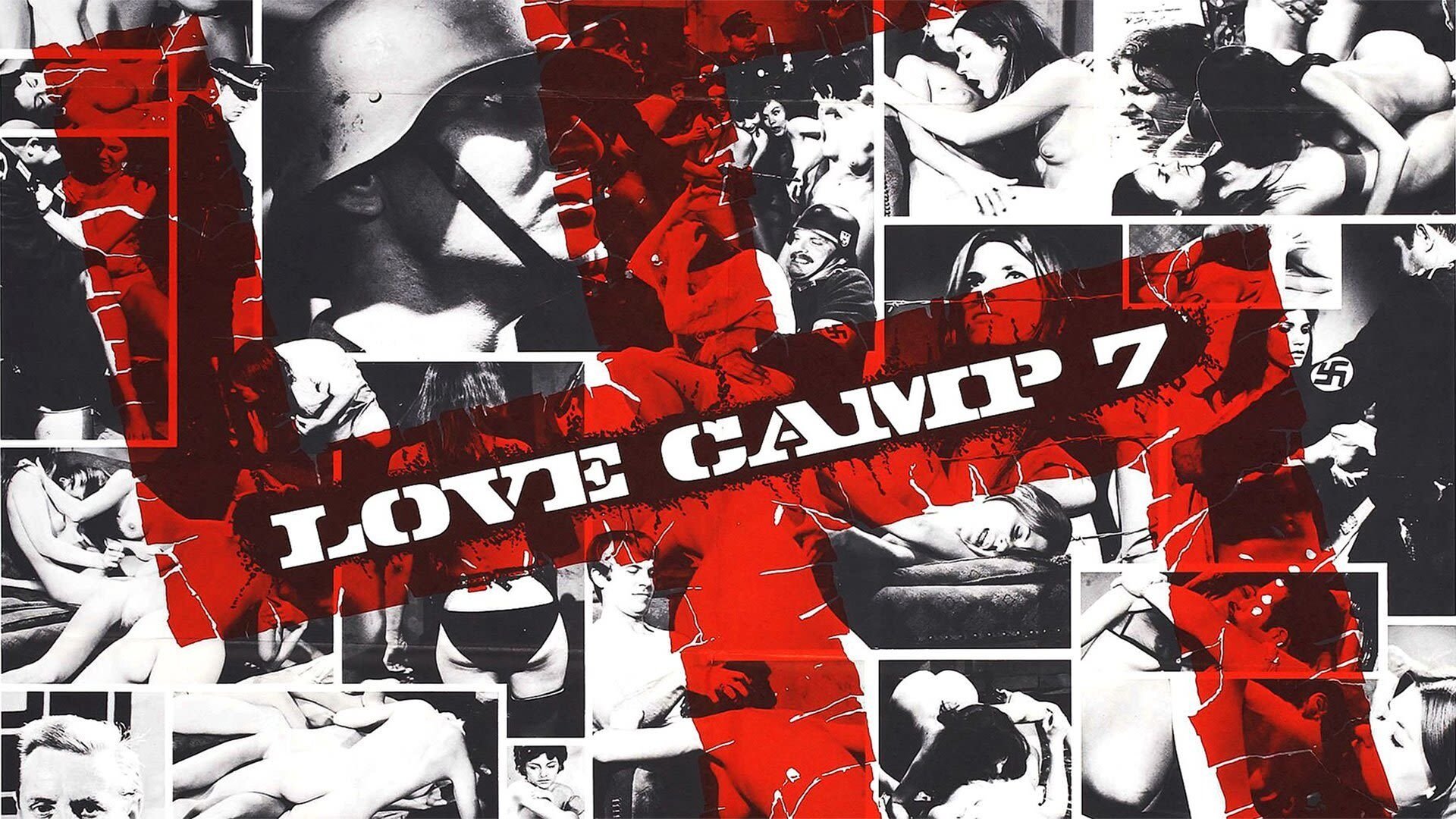
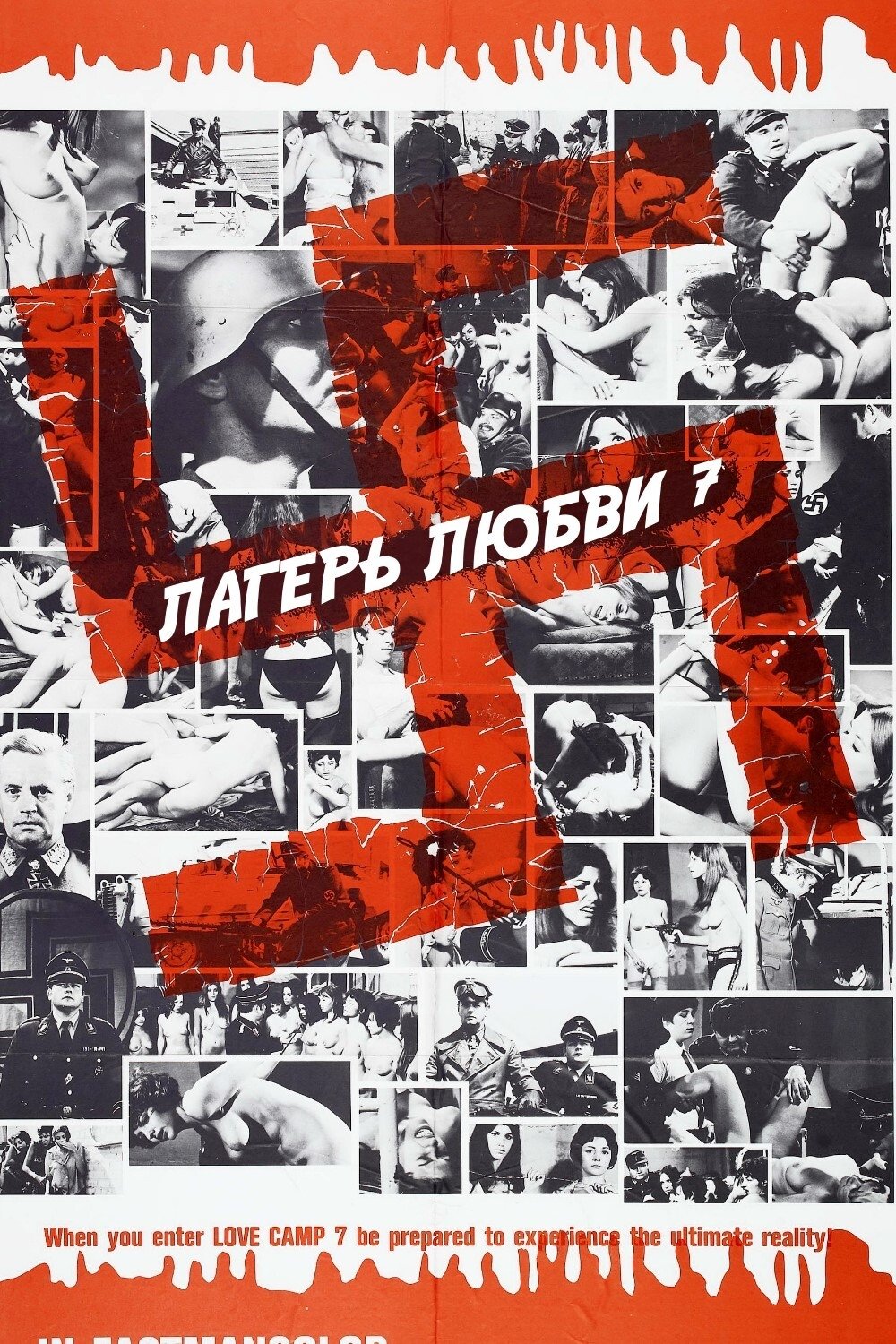
Lee Frost, Bob Cresse and the American Exploitation Origins
Love Camp 7 developed within the American exploitation industry during the late 1960s, when independent producers increasingly combined sexual material with established dramatic genres. The film was associated with Olympic International Films, with Bob Cresse responsible for production and sharing screenplay credits with Wes Bishop, also known professionally as Wesdon Bishop. Lee Frost directed and photographed the production. Cresse additionally played the camp commandant, making his involvement extend beyond writing and financing into the performance of institutional authority. The American Film Institute identifies several companies associated with the film's circulation, including Olympic International Films, Cinex International Film Distributors and Republic Amusements Corporation. These records establish its independent production context without resolving the precise financial arrangements among the participating companies.
The production drew upon two established forms of exploitation cinema. Women-in-prison films had developed stories around the confinement of female characters within institutions where guards and administrators could exercise extensive control over their bodies. Roughies combined sexualized imagery with aggression, intimidation and physical abuse, creating material intended for adult-oriented exhibition. Love Camp 7 brought those conventions into a fictional Nazi detention facility. Banwell and Fiddler identify the combination as a formative development in Nazisploitation, particularly through its use of Nazi uniforms and historical persecution to intensify the established imagery of sexual domination. Its historical significance consequently rests upon a specific configuration of existing commercial practices rather than the invention of exploitation cinema itself.
The film's original chronology requires a distinction between published records. The American Film Institute catalogs Love Camp 7 under 1968, while the British Board of Film Classification identifies 1969 as its production year. The latter date has become the more familiar identification in subsequent filmographies and international circulation. These records do not establish the reason for the discrepancy or independently confirm a universal theatrical opening date. Surviving credits and commercial material are more useful for identifying the production participants and the intended market than for reconstructing a complete shooting calendar. Reliable documentation of the exact budget, filming locations and detailed production schedule remains insufficient for a definitive account of those matters.
Concentration-Camp Imagery and the Commercial Use of Historical Atrocity
The film appropriates the visual environment of Nazi imprisonment to organize scenes of institutional sexual violence. Military uniforms, guarded interiors and compulsory examinations establish a hierarchy in which prisoners have virtually no control over their circumstances. The surrounding historical references provide a recognizable framework for the fiction, but the presentation is shaped primarily by exploitation conventions. The film's claim to be based on factual events belongs to its promotional framing and should not be interpreted as proof that the fictional camp or its incidents reconstruct a documented wartime institution. The historical reality of Nazi persecution and the commercial representation of that persecution are separate matters requiring different forms of evidence.
In their study published in Holocaust Studies, Stacy Banwell and Michael Fiddler examine how the camera constructs the female prisoners as objects of observation. They identify repeated attention to involuntary exposure, physical intimidation and the contrast between military clothing and the prisoners' limited protection. The uniforms function as immediate visual markers of control, while the presentation of vulnerable bodies repeatedly places the spectator within a system organized around their display. The authors connect these devices to established feminist theories of cinematic looking, particularly the relationship between the controlling gaze and the objectification of women. Their argument concerns the visual structure of the completed work rather than a documented statement of Frost's intentions.
The distinction between representation and historical fact is especially important because the film uses the Nazi concentration-camp setting as a source of sexual spectacle. The real history of Nazi camps involves systematic persecution, forced labor and mass murder, while the film employs selected elements of that history within an invented espionage framework. Its fictional treatment does not provide evidence of particular wartime practices. The tension has subsequently become a central subject of academic research into Nazisploitation. Banwell and Fiddler examine how the use of recognizable historical iconography can lend apparent authenticity to invented scenarios while directing attention toward the bodies of prisoners rather than the documented mechanisms and consequences of genocide.
Gender, Sexual Coercion and Competing Academic Interpretations
An important early analysis appeared in 1996, when Barb Serfozo and Henry Farrell presented their paper From Sex-Vixens to Senators: Representation in Nazi Porn and the Discourse of the American Right Wing. The authors examined Love Camp 7 alongside Ilsa, She Wolf of the SS to investigate the relationship between sexualized fascist imagery and representations of gendered authority. Their discussion pays particular attention to costume, the treatment of prisoners as interchangeable bodies and the difference between the visibility of male and female nudity. They argue that the film repeatedly establishes male characters as controlling subjects while female characters are positioned as objects of domination. Their analysis also considers how the apparent performance of submission operates within fantasies of power.
Serfozo and Farrell introduce a complication concerning the representation of consent. Their interpretation suggests that the fantasy of domination presupposes some form of agency in the person being dominated, even when the fictional circumstances eliminate meaningful freedom of choice. They identify a contradiction between the commercial fantasy constructed by the film and the historical situation it invokes. A prisoner held under Nazi authority cannot be understood as participating in a freely negotiated sexual relationship. The authors therefore distinguish the representation of apparent willingness from the actual conditions of coercion. This distinction is essential to their argument and prevents their discussion of sadomasochistic imagery from being reduced to a claim that the imprisoned characters consent to their abuse.
Banwell and Fiddler revisited these questions in their later study, challenging interpretations that treat the apparent cooperation of prisoners as evidence of consensual sexual exchange. Their examination of the film's contrasting representations of the two undercover agents emphasizes how fear, strategic compliance and unequal power complicate the meaning of visible behavior. They argue that the film ultimately reproduces a gender hierarchy in which masculine authority determines the conditions of female agency. Their interpretation differs in emphasis from Serfozo and Farrell's earlier discussion of the symbolic relationship between domination and consent. Together, the two studies provide a substantial record of critical disagreement about how coercion, performance and the viewing position operate within the film.
Love Camp 7 and the Development of Nazisploitation Cinema
The film occupies an early position in the history of Nazi-themed exploitation because it joined the women-in-prison format to a concentration-camp setting before the better-known cycle of the mid-1970s. Banwell and Fiddler identify Love Camp 7 as a foundational example of this combination. Its approach differs from conventional war films concerned with military operations or historical reconstruction. The emphasis falls instead on the visual spectacle of confinement and the abuse of prisoners. This distinction helped establish the recognizable imagery through which later Nazisploitation productions would be marketed. The film can consequently be considered historically important to the formation of a particular exploitation formula without assuming that it directly inspired every subsequent production using Nazi iconography.
The later expansion of the cycle followed several overlapping paths. The Canadian production Ilsa, She Wolf of the SS (1975) intensified the association between Nazi authority, captivity and sexually sadistic spectacle. Italian filmmakers developed a related group of productions during the middle and late 1970s, including SS Experiment Camp, SS Camp 5: Women's Hell and Gestapo's Last Orgy. Those films also emerged from the Italian industry's established exploitation practices and from earlier European representations of fascism in films such as The Damned and The Night Porter. Similarities in themes and commercial presentation are therefore historically significant, but they do not automatically demonstrate direct creative borrowing from Frost's production.
The distinction between the American and Italian trajectories is important to the history of the subgenre. Love Camp 7 emerged from a domestic exploitation environment already familiar with women-in-prison stories and roughies. The subsequent Italian cycle developed within a different national industry, where producers frequently adapted recognizable international formulas to rapidly assembled genre films. The common use of Nazi imagery created a visible connection among productions with differing backgrounds. Academic criticism has examined that relationship through the interaction of commercial entertainment, sexual representation and the cultural memory of fascism. Love Camp 7 remains a useful early case because it demonstrates the combination of these elements before the subgenre expanded internationally.
Italian Cuts, British Refusals and International Censorship
The international circulation of Love Camp 7 produced a series of documented censorship decisions. In Australia, official classification records identify a refused public-exhibition application dated February 1, 1974, for a 76-minute 35mm version. The record does not establish the precise editorial relationship between that submission and longer editions circulating elsewhere. Italian documentation provides more detailed evidence of specific intervention. The film was submitted in a dubbed version under the title Camp 7 - Lager femminile in February 1976. The first reviewing commission requested the removal of sexually explicit sequences and postponed its decision pending the alterations. On February 20, the commission recorded the removal of 220 meters of film and authorized public exhibition with an adults-only restriction.
In Britain, Love Camp 7 became associated with the Director of Public Prosecutions video nasties campaign during the early 1980s. Its inclusion among titles linked to successful obscenity prosecutions reflected the enforcement of the Obscene Publications Act, a legal mechanism distinct from formal BBFC classification. The film was subsequently submitted for British home-video approval in August 2002. The Board refused classification after determining that the sexual violence was sufficiently pervasive that ordinary cuts would not resolve its concerns. The decision concerned the submitted 99-minute version and did not constitute an international prohibition. Its reasoning also demonstrated that British regulators were evaluating the sexualized presentation of abuse rather than simply counting scenes of physical violence.
The BBFC reconsidered the film on March 13, 2020, when Screenbound Pictures submitted a 96-minute version for video-on-demand distribution. Classification was again refused. In its published explanation, the Board identified the repeated presentation of non-consensual sexual activity as a central feature of the work and concluded that removing individual sequences would be insufficient to address the problem. The decision provides a direct contemporary statement of the regulatory concerns surrounding the film. The differing running times of the Australian, Italian and British submissions should not be used to reconstruct a definitive international editing history without examination of the underlying prints. The available documents establish specific censorship interventions, while leaving the exact relationships among the surviving versions unresolved.